

Submitted:
29 May 2023
Posted:
31 May 2023
You are already at the latest version
Abstract
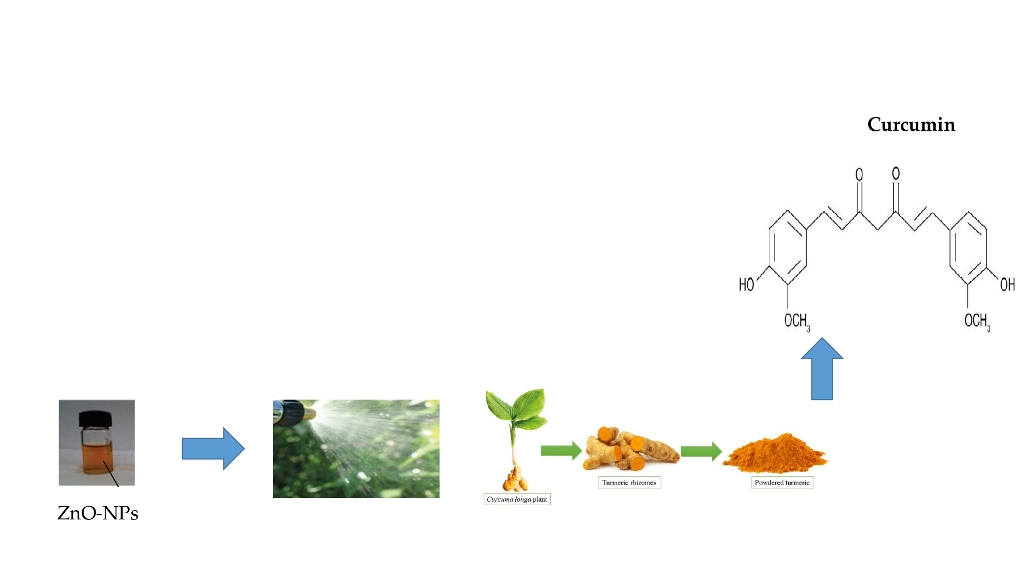
Incorporating nanoparticles into plant cultivation has been shown to improve growth parameters and alter the bioactive component compositions of many plant species, including Curcumin longa. The aim of the current study was to investigate the effects of foliar application of zinc oxide na-noparticles on the content of bioactive compounds and their antibacterial activities against poten-tial bacterial pathogens. To this end, C. longa leaves were treated with different doses of ZnO NPs to see how they affected bioactive component composition. The effect of different doses of ZnO NPs on the accumulation of bisdemethoxycurcumin, demethoxycurcumin, and curcumin in etha-nolic extracts of C. longa rhizomes was evaluated using high-performance liquid chromatography (HPLC). When compared to the control treatment, foliar spraying with (5 and 40 mgL-1) ZnO NPs increased bisdemethoxycurcumin, demethoxycurcumin, and curcumin levels by approximately (2.69 and 2.84), (2.61 and 3.22), and (2.90 and 3.45) fold, respectively. It was looked at to see if the ethanolic extracts made from the plantlets might change in terms of their phytochemical makeup and antibacterial properties. Furthermore, the results revealed that C. long-ZnO-NPs displayed antibacterial activity against S. aureus and P. aeruginosa tested bacterium strains, but made little attempt against E. coli. The MIC for P. aeruginosa was 100 g/mL. Time-kill studies also revealed that ZnO-NPs at 4 MIC killed P. aeruginosa, Actinobacteria baumannii, and Bacillus sp. after 2 hours, while S. aureus did not grow when treated with 4xMIC of the extract for 6 hours. The strongest antibacterial activity was seen with extract from plantlets grown without nanoparticles for P. aeruginosa, whereas it was seen with extract from plantlets grown in the presence of 5 mg/L ZnO-NPs for E. coli, S. aureus, and P. aeruginosa. These findings show that ZnO-NPs are a pow-erful enhancer of bioactive compound production in C. longa, a trait that can be used to combat antibiotic resistance in pathogenic bacterial species.
Keywords:
Curcumin longa
; Zinc oxide
; Antibacterial
; nanoparticles
1. Introduction
More attention has been devoted recently to the potential of nanotechnology in plant biotechnology. Substances between 0.1 and 100 nm in size are referred to as nanomaterials. Plants' responses to nanomaterials and nanoparticles vary widely depending on their size, shape, application technique, chemical properties, and physical qualities. (Vijayakumar. M. D et al. 2022). Zinc oxide nanoparticles (ZnO-NPs) are a particular kind of NP that has sparked the curiosity of plant researchers. Despite their phytotoxicity, the application of ZnONPs significantly promoted plant growth (Fizan et al., 2021). Several phytotoxic effects of ZnO-NPs were outlined by Fizan et al. (2021). Interestingly, in the presence of modest concentrations of ZnO-NPs, beneficial effects on plant growth were documented in several of the published studies (Yang. G et al 2021; Liu. L et al. 2022; Azmat A et al. 2022). Numerous studies have shown that ZnO-NPs improve a variety of plant processes, including germination rates, growth rates, yields, organ development, somatic embryogenesis, somaclonal variation, genetic transformation, and the production of secondary metabolites (Wu. Q et al. 2023; Khan. F.et al 2022) or field applications (Šebesta,M et al, 2021; Hosseinpour. A et al. 2022; Yang et al. 2020). .
The application of metal nanomaterials resulted in multiple beneficial impacts. For example, the use of zinc oxide nanoparticles increased wheat seedlings' resistance to the effects of drought stress (Kausar et al., 2023) , and stimulated nickel removal by Sorghum bicolor: metal ecotoxic potential and plant response. (Doria-Manzur et al., 2023). Additionally, green synthesised silver-zinc oxide nanocomposites from Curcuma longa extract show anti-oxidant, antibacterial, and antibiofilm potential against multi-drug-resistant enteroaggregative Escherichia coli (Arya et al., 2023).
The incidence of microbial infections has multiplied by many orders of magnitude over the course of the last decade as a direct result of the development of multidrug resistance. In addition, one of the most critical challenges in green nanotechnology is the development of a method that is both easy on the environment and efficient in producing various metal oxide nanoparticles.
The effectiveness of zinc oxide nanoparticle-coated aligners as an antimicrobial agent against Streptococcus mutans and Candida albicans has been recently studied (Anita et al., 2023). They reported that the maximal antibacterial impact wasn't seen until 2 days after application of the ZnO-nanocoated aligners, and it lasted for 7 days after that. The impact on Candida albicans was not very significant. It seems that using ZnO-coated aligners as a method to promote antibacterial activity against S mutans is a promising strategy (Anita, et al., 2023). Infections caused by Acinetobacter baumannii may occur in the blood, the urinary system, and the lungs (pneumonia), in addition to wounds located in other areas of the body. Additionally, it is able to "colonise" or live within a patient without causing infections or symptoms, particularly in respiratory secretions (sputum) or open wounds.
Curcuma longa, a popular medicinal herb, belongs to the Zingiberaceae family (Chattopadhyay et al., 2004). Known popularly as "turmeric," C. longa is a spice and colouring component that is well-known for its medicinal properties (Shama. N et al., 2022). Turmeric has three major curcuminoids: curcumin (diferuloyl methane), demethoxycurcumin, and bisdemethoxycurcumin (Mei Zhang, 2022). Curcumin, the most important component, is responsible for turmeric's biological benefits. Curcumin has a melting point of 184 ° C. It is water insoluble but soluble in ethanol and acetone (Joe et al., 2004). Curcumin, a powerful antioxidant with anti-inflammatory, antioxidant, and anti-platelet properties, is regarded as the turmeric herb's most bioactive and soothing component. S. albus and S. aureus were suppressed by C. longa oil at doses of 1 to 5,000. (Guerrini. A et al., 2023). Turmeric contains anti-inflammatory and antibacterial properties as a consequence. Numerous studies on the impact of ZnO-NPs on various biological systems revealed that ZnO-NPs improved seed germination, seedling growth, and altered various chemicals in medicinal plants (Wu et al. 2023; Khan 2022).
However, little is known about the impacts of ZnO-NPs application on the bioactive compound contents of C. longa. Therefore, the present research aimed at the antibacterial properties of turmeric rhizome extract after it was treated with different doses of ZnO-NPs during culture. The research also analyses the influence of ZnO-NPs on the biochemical composition of C. longa extract and its relevance to antibiosis.
2. Materials and Methods
2.1. Plant Materials and Extract preparation
Turmeric rhizomes were sown into sandy soil, and foilar spraying with various concentrations of ZnO NPs (0.0, 5, 10, 20, and 40 mgl-1) was conducted three times during vegetative development at King Faisal University in Saudi Arabia (khattab et al., 2023). After eight months of culture, the rhizomes generated by various ZnO NPs treatments, as well as the control, were (khattab et al., 2023).
One gramme of homogenised air-dried rhizome powder was added to a 28 millilitre stoppered culture tube and defatted with 30 mL of ethanol for one day while shaking at 100 rpm on a rotary shaker. The extracts were filtered using a 0.2-micrometer syringe filter.
2.2. Determination of Curcumin, Bisdemethoxycurcumin and Demethoxycurcumin Contents by High-Performance Liquid Chromatography (HPLC)
The curcumin, bisdemethoxycurcumin, and demethoxycurcumin contents of air-dried C. longa rhizomes powder from three plants randomly chosen from each treatment (control and 5, 10, 20, and 40 mgL-ZnO NPs) were determined according to the methods described by (Jayaprakasha et al ., 2002).
2.3. Determination of Nanozinc Curcumin Ethanolic Extract Antimicrobial Activity by Disc Diffusion Assay
2.3.1. Disc Diffusion Assay
The bacterial strains of S. aureus, E. coli ATCC 8739, Pseudomonas aeruginosa, Actinobacteria baumannii, and Bacillus sp. were obtained from the College of Medicine, King Faisal University. The cultivation of all the bacterial strains was performed in nutrient broth (Sigma Aldrich, Cat. No. 7014), and the disc diffusion assay was performed according to Rad, Z.M. et al., 2021). An amount of 100 μL of overnight bacterial culture was inoculated into 10 mL of nutrient broth, and the cultures were grown at 37 °C at a speed of 200 rpm till the turbidity of the culture reached 0.3 at 600 nm. Subsequently, 5 mL of the homogenous bacterial culture of each of the bacterial strains was poured onto individual nutrient agar plates, and each of the plates was gently swirled to ensure that the culture was spread evenly on the agar. Eighteen agar plates were inoculated with each bacterial strain. All inoculated plates were left unsealed in the biosafety cabinet for excess liquid to absorb into the agar before placing the test solution discs onto the agar. A set of four discs of 6 mm diameter, containing various test solutions were placed onto the agar surface of each inoculated plate. The negative control disc contained the DMSO:water (v:v 1:1) solution. The positive control disc containing 10 µg of imipenem (cat. no. 7052) was purchased from Condalab, Madrid, Spain. All plates were then incubated at 37 °C overnight before the diameters of the zones of inhibition were measured.
2.3.2. Minimum Inhibitory Concentration Test (MIC)
For the duration of the night, strains were grown in nutrient broth. Curcumin (5 mg/ml) stocks in water were generated after being treated with ZnO-NPs stocks (Aldayel and El Semary, 2020., Aldayel. M. F, 2022).
2.3.4. Time-Kill Test of ZnO-NPs
After mixing C. longa ZnO-NPs with nutrient broth medium containing 1.5 x 10⁸ CFU/mL of bacterial inoculum, the mixture was kept at 37 °C at doses of 0, 0.5, 1, 2, and 4 MIC for S. aureus and P. aeruginosa. A 0.1 mL medium was grown on Müller-Hinton agar and incubated at 37 °C for 24 hours under different conditions.
2.4. Statistical analyses
The experiment is designed as a complete randomised trial. Two-way analysis of variance (ANOVA) in Statistica 6 (StatSoft Inc.) is used to analyse the results of all of the measures. A probability threshold p=0.05 was used to determine whether or not there was a statistically significant difference in mean scores between the treatment groups (Varghese. S et al., 2023).
3. Results
3.1. HPLC Results
High-performance liquid chromatography (HPLC) was used to find out how different doses of ZnO NPs affected the accumulation of bisdemethoxycurcumin, demethoxycurcumin, and curcumin in ethanolic extracts of C. longa rhizomes.
Figure 1.
HPLC chromatogram of C. longa organic extract subjected to 20 ppm ZnO NPs. Display the curcuminoids bisdemethoxycurcumin (Bi), dimethoxycurcumin (De), and curcumin (Cu).
Figure 1.
HPLC chromatogram of C. longa organic extract subjected to 20 ppm ZnO NPs. Display the curcuminoids bisdemethoxycurcumin (Bi), dimethoxycurcumin (De), and curcumin (Cu).
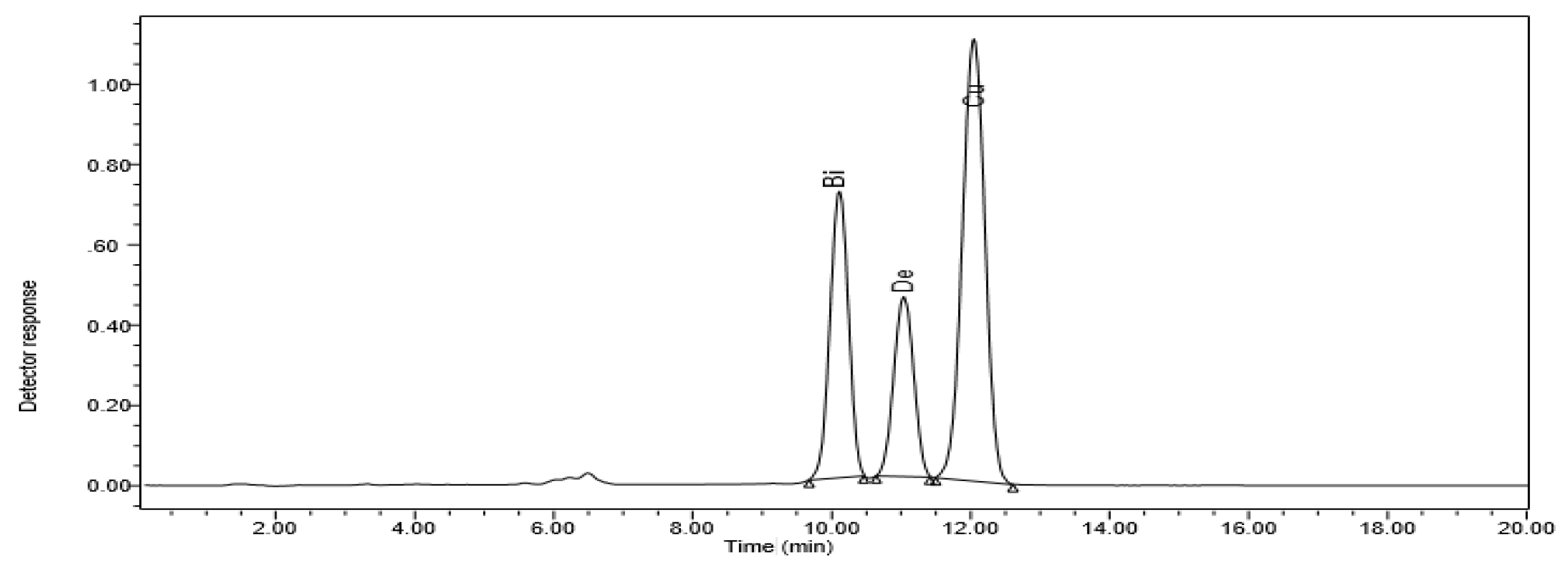
When compared to the control treatment, all concentrations of ZnO NPs significantly increased bisdemethoxycurcumin, demethoxycurcumin, and curcumin levels by approximately (2.79 and 2.85), (2.65 and 2.94), and (2.78 and 3.17) fold, respectively. (Figure 2). As the concentrations of ZnO NPs increased, so did the levels of bisdemethoxycurcumin, demethoxycurcumin, and curcumin.
High-performance liquid chromatography (HPLC) was used to find out how different doses of ZnO NPs affected the buildup of bisdemethoxycurcumin, demethoxycurcumin, and curcumin in ethanolic extracts of C. longa rhizomes. When compared to the control treatment, all concentrations of ZnO NPs significantly increased bisdemethoxycurcumin, demethoxycurcumin, and curcumin levels (Figure 2).
Compared to the control treatment, spraying the leaves with 5 and 40 mgL1 ZnO NPs increased the levels of bisdemethoxycurcumin, demethoxycurcumin, and curcumin by about 2.69 and 2.84 times, 2.61 and 3.22 times, and 2.90 and 3.45 times, respectively.
3.2. Antibacterial Susceptibility
Figures 3 A and B show the outcomes of the agar disc diffusion method-based antibacterial test of the C. long-ZnO-NPs against E. coli, S. aureus, and P. aeruginosa with MICs of 100 µg/mL. The data showed that, with the exception of P. aeruginosa, for which the MIC was 100 g/mL, C. long-ZnO-NPs demonstrated antibacterial efficacy against S. aureus, and P. aeruginosa examined bacterium strains, but there was no effort in E. coli. Additionally, the outcomes of time-kill experiments demonstrated that P. aeruginosa, , Actinobacteria baumannii, and Bacillus sp. were killed by ZnO-NPs at 4 MIC after 2 h (Figures 2A, 2C and 2d), whereas S. aureus showed no growth when treated with 4xMIC of the extract after 6h (Figure 3B),
Figure 3.
A The time-kill curve plots of P. aeruginosa, after the exposure to the C. longa-ZnO-NPs.
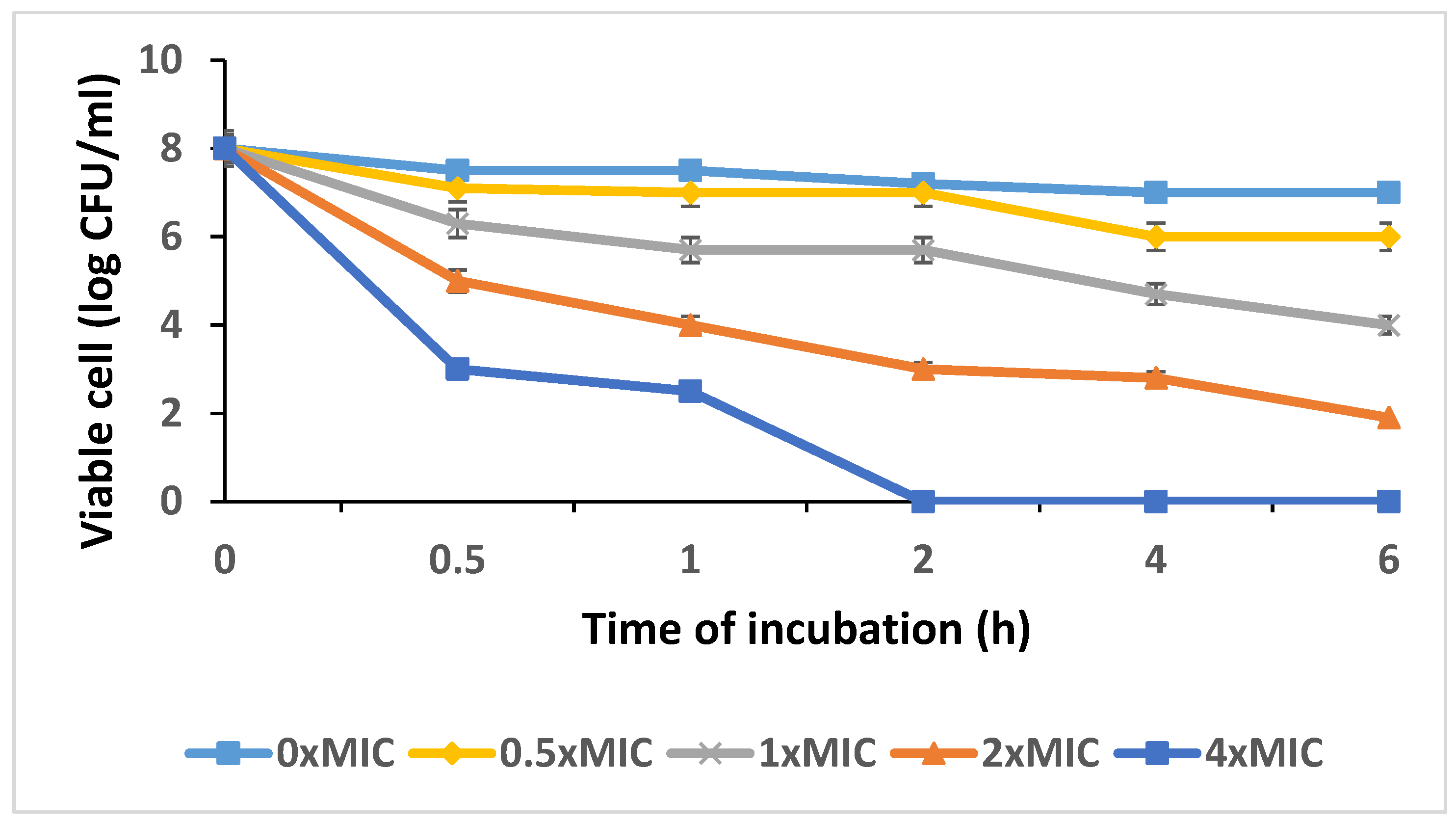
Figure 3.
B The time-kill curve plots of S. aureus, after the exposure to the C. longa-ZnO-NPs.
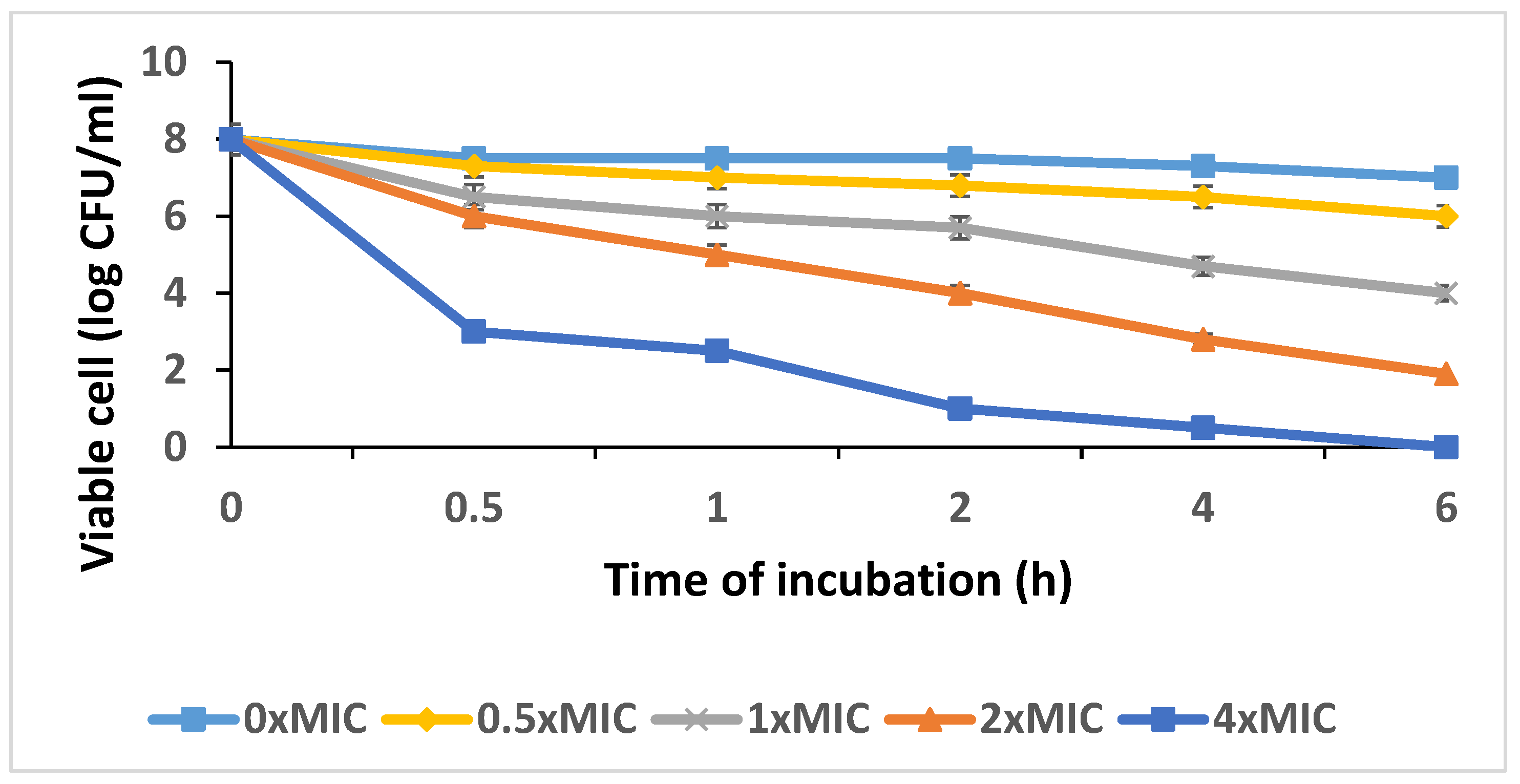
Figure 3.
C The time-kill curve plots Actinobacteria baumannii after the exposure to the C. longa-ZnO-NPs.
Figure 3.
C The time-kill curve plots Actinobacteria baumannii after the exposure to the C. longa-ZnO-NPs.
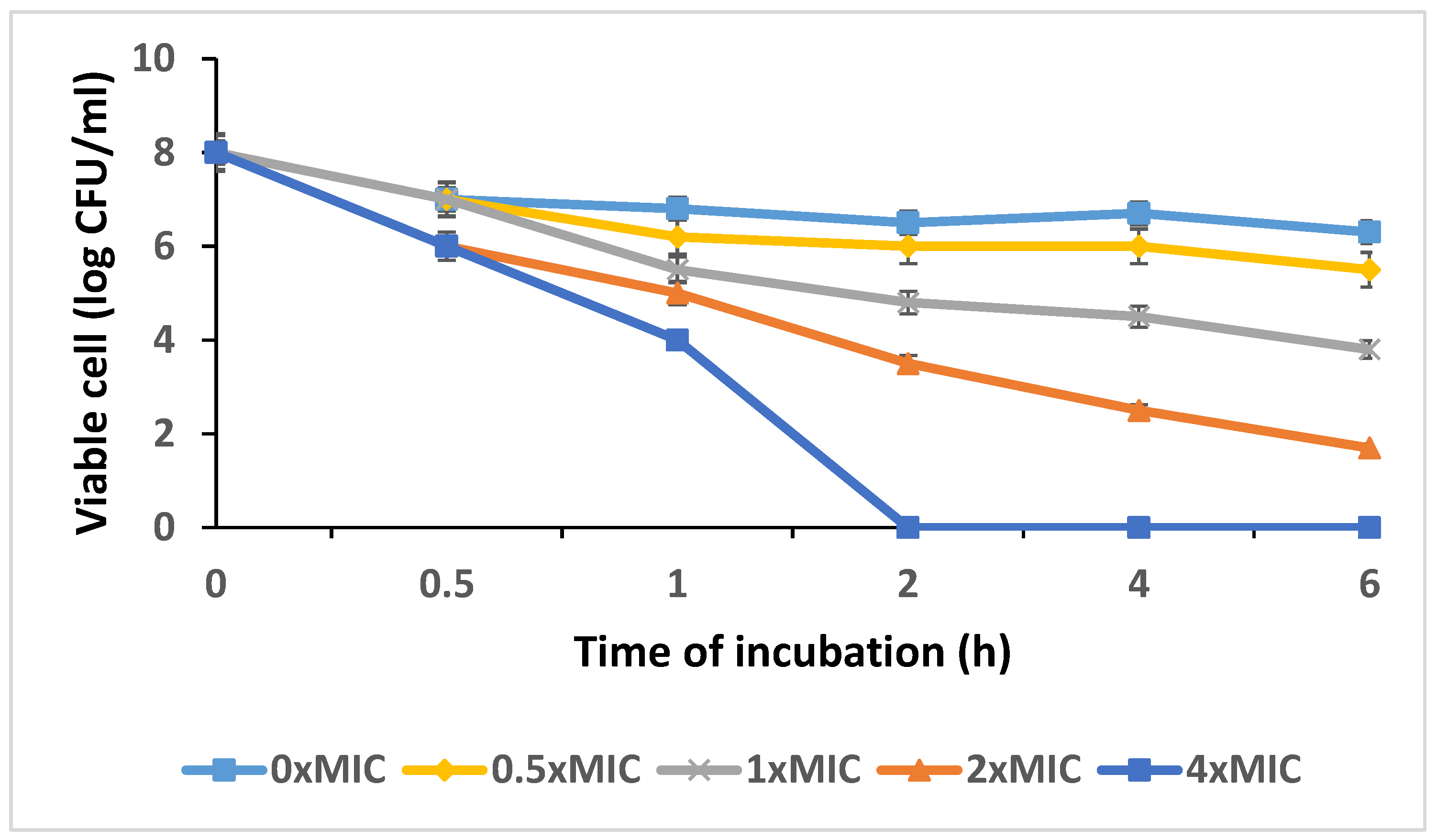
Figure 3.
D The time-kill curve plots of Bacillus sp after the exposure to the C. longa-ZnO-NPs.
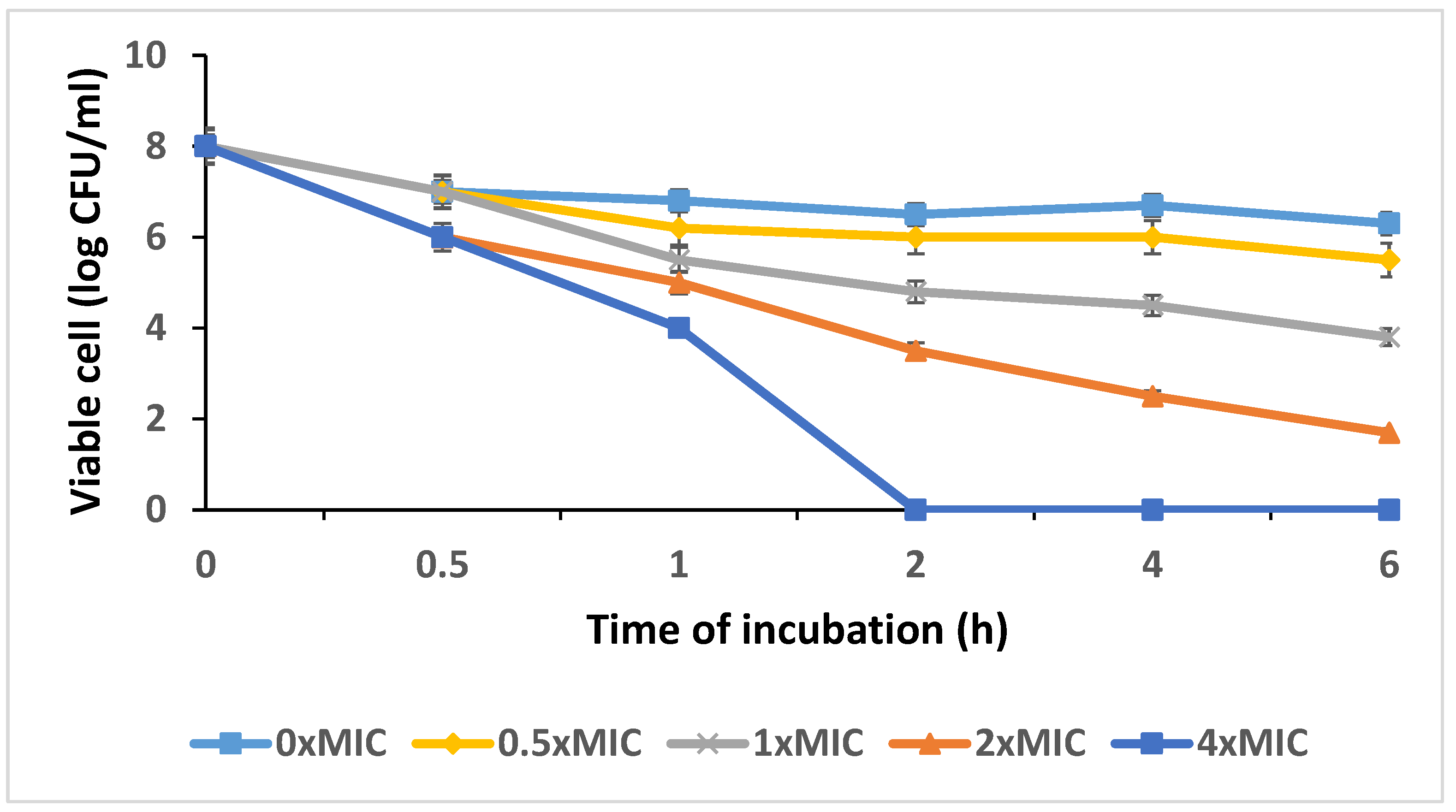
3.3. The Effect of Nanoparticles on the Antimicrobial Activity of Curcumin Ethanolic Extract
Disc diffusion experiments (Table 1) were used to measure the antibacterial activity against S. aureus, E. coli, Pseudomonas aeruginosa, Actinobacteria baumannii, and Bacillus sp. They showed that ethanolic fruit extracts from zinc nanoparticles of curcumin plants had different levels of antibacterial activity. Plant extracts not treated with zinc nanoparticles (control) were more effective against all pathogen bacteria tested (S. aureus and E. coli, Pseudomonas aeruginosa, Actinobacteria baumannii, and Bacillus sp.). Plant extracts treated with zinc nanoparticles were more effective against S. aureus. Ethanolic extracts of plants treated with zinc nanoparticles showed a rise in curcumin content (Figure 3), which led to improved antibacterial activity against S. aureus (nearly on par with that exhibited by 10 g of Imipenem), but not against E. coli or Pseudomonas aeruginosa. Anti-E. coli activity was shown to be diminished in plant extracts treated with 5, 10, 20, or 40 ug/l compared to control plant extracts.
4. Discussion:
Because of the behaviour of microbes, treating a number of bacterial diseases throughout the world may be difficult due to multidrug resistance (MDR). Because of this issue, the scientific community has been more focused on the development of other antibacterial drugs that can function in lieu of MRSA. There is a wide selection of well-known antibacterial medications available on the market. However, a significant portion of the world's populace is unable to benefit from the use of these antibacterial drugs because of their toxicity, high cost, and unfriendly nature towards the environment. In addition to that, another significant challenge is the development of antibiotic resistance in bacterial populations. Microorganisms that are resistant to many drugs, sometimes known as superbugs, acquire resistance to conventional medicines that are typically used. Staphylococci are thought to be the most common organisms responsible for infections that are associated with biofilms. As a result, the development of novel antibacterial materials that are trustworthy in terms of cost, friendly to the environment, and technologically sophisticated are potential solutions for the treatment of bacterial diseases. One promising approach to combating superbugs is to modulate the metabolic pathways of medicinal plants by applying non-metals in order to boost the production of bioactive compounds. In the current study, the effects of foliar application of zinc oxide nanoparticles on the concentration of the bioactive components as well as the antibacterial activity against bacterial pathogens were investigated.
As a member of the lactam family of antibiotics, imipenem is effective against both Gram-positive and -negative bacteria, including those that are MRSA- and other antibiotic-resistant (Kaskatepe. B., and Ozturk. 2023). Our disc diffusion assay results were in accordance with this, as the Imipenem discs exhibited 18, 10, and 15 mm of inhibition zones against S. aureus, E. coli, and Pseudomonas aeruginosa, respectively. The antimicrobial activity of ethanolic and ethanolic extracts of curcumin zinc nanoparticles from fruits against various bacteria species, including S. aureus, E. coli and Pseudomonas aeruginosa, has been previously reported (Zang J. et al., Adamczak. A. et al., 2020). In a study of ethanolic extracts (Mirzahosseinipour. M.M.,2021), the authors observed bigger inhibition zones in plates inoculated with Pseudomonas aeruginosa compared to those of E. coli. In contrast, in another study with ethanolic extract (Rad, Z.M., 2021), the authors observed inhibition zones of similar sizes between plates inoculated with S. aureus and Pseudomonas aeruginosa, which is consistent with the observation in the current study. The increase in active component content in the ethanolic extracts from zinc nanoparticles of curcumin resulted in an increase in antimicrobial activity against S. aureus as well as Pseudomonas aeruginosa, but not E. coli. Mirzahosseinipour et al. (2021) also observed similar results, whereby increases in active content in the zinc nanoparticles ethanolic extract had a lower enhancing effect on antimicrobial activity towards E. coli compared to that of S. aureus and Pseudomonas aeruginosa. C. longa extract has been shown to have antibacterial activity against Gram-positive and Gram-negative bacteria, including those responsible for human illnesses and antibiotic resistance [Trigo-Gutierrez et al., 2021]. Various antimicrobial mechanisms are suggested for the antimicrobial activities of C. longa extract, including inhibition of bacterial biofilms and quorum sensing, damage of cell wall and/or cell membrane, interference with cellular processes via DNA and protein targeting, and lipid peroxidation [Zheng et al., 2020].
Bacterial biofilms are made up of cell aggregates that connect to an interface or a surface and get enmeshed in a self-produced matrix of extracellular components, such as polysaccharides and proteins [Kranjec et al., 2021]. In challenging environments, such as those that include antimicrobial compounds, it is vital for bacteria to develop biofilm in order to continue their existence [Kranjec et al., 2021]. Biofilms may protect bacteria from being killed by antimicrobials. According to the findings of our investigation, the antibiofilm-forming activity demonstrated by C. longa extract was comparable to that of its antibacterial activity. The capacity of bacteria to form biofilms, rather than the bacteria themselves existing as free organisms, has been related to the development of antibiotic resistance in bacteria. Because biofilm has the ability to render antimicrobials ineffective [Kranjec et al., 2021]., antimicrobial agents cannot reach bacterial cells when biofilm is present. This prevents antimicrobial agents from killing bacteria. The creation of biofilm is a multistage process that includes adhesion, maturation/proliferation, and separation, as has been shown by a significant body of research. Infections caused by S. aureus that are linked with biofilms often entail the establishment of nonspecific antibiotic resistance via biofilm [Kranjec et al., 2021]. As C. longa extract is used to inhibit the production of biofilm, this would therefore restrict the development of antibiotic resistance in bacteria.
The antimicrobial activity of as-formed zinc oxide nanoparticles (ZnO-NA) against gram-positive Staphylococcus aureus and gram-negative Acinetobacter baumannii has been investigated. The developing aerobic pathogen Acinetobacter baumannii is capable of causing serious infectious diseases. This organism is a member of the Neisseriaceae genus. Due to its pathogenic potential, including its propensity to cling to surfaces, develop biofilms, demonstrate antimicrobial resistance, and collect genetic material from other genera, it is a complex and tough pathogen to manage and remove. Staphylococcus aureus (family: Staphylococcaceae) is another bacteria that may cause significant illness (Rani et al., 2023). It is responsible for a wide variety of infections, including those of the blood, bones, and joints, as well as pneumonia.
5. Conclusions
The potential of ZnO-NPs as growth and multiplication promoters for C. longa was investigated. These NPs affect the phytochemical profiles of the ethanolic extracts made from the rhizome produced from different ZnO NP treatments. The outcomes showed that ZnO-NPs were the best enhancer for C. longa's active compound. Our HPLC investigations revealed that the phytochemical profiles in the ethanolic extracts of C. longa plantlets treated with NPs were altered, which is consistent with observations from several plant species. The biologically distinct antibacterial activity of these ethanolic extracts against Pseudomonas aeruginosa, S. aureus, E. coli, Actinobacteria baumannii, and Bacillus sp. was also a biological reflection of the differences in the phytochemical contents of these extracts. The phytochemical compositions of the ethanolic extracts made from the C. longa plantlets have changed due to the application of ZnO NPs, and these compositional differences have led to the different antimicrobial activities of these extracts. These results demonstrate that ZnO-NPs significantly increase bioactive compound production in C. longa, a quality that can be exploited in the fight against antibiotic resistance in pathogenic bacterial species.
Author Contributions
M.A. conceptualization, methodology, writing—reviewing and editing, supervision, project administration and funding acquisition. writing—original draft preparation, writing—reviewing and editing.
Funding
'This work was supported by the Deanship of Scientific Research, Vice Presidency for Graduate Studies and Scientific Research, King Faisal University, Saudi Arabia [Grant No. 3139]'.
Data Availability Statement
Available from the corresponding author upon request.
Acknowledgments
'This work was supported by the Deanship of Scientific Research, Vice Presidency for Graduate Studies and Scientific Research, King Faisal University, Saudi Arabia [Grant No.3139]'.
Conflicts of Interest
The authors declare no conflict of interest.
References
- Anita, P., Sathyanarayana, H. P., Kumar, K., Ramanathan, K., & Kailasam, V. (2023). Antimicrobial efficacy of zinc oxide nanoparticle-coated aligners on Streptococcus mutans and Candida albicans. American Journal of Orthodontics and Dentofacial Orthopedics, 163(3), 338-346. [CrossRef]
- Doria-Manzur, A., Sharifan, H., & Tejeda-Benitez, L. (2023). Application of zinc oxide nanoparticles to promote remediation of nickel by Sorghum bicolor: metal ecotoxic potency and plant response. International Journal of Phytoremediation, 25(1), 98-105. [CrossRef]
- Kausar, A., Hussain, S., Javed, T., Zafar, S., Anwar, S., Hussain, S., ... & Saqib, M. (2023). Zinc oxide nanoparticles as potential hallmarks for enhancing drought stress tolerance in wheat seedlings. Plant Physiology and Biochemistry, 195, 341-350. [CrossRef]
- Arya, P. R., Abishad, P., Unni, V., Bibin, M., Marita, D., John, L., ... & Rawool, D. (2023, March). Antioxidant, Antibacterial and Antibiofilm Potential of Green Synthesized Silver-Zinc Oxide Nanocomposites from Curcuma longa extract against Multi-Drug Resistant Enteroaggregative E. coli. In Med. Sci. Forum (Vol. 3). [CrossRef]
- Rani, N., Rani, S., Patel, H., Yadav, S., Saini, M., Rawat, S., & Saini, K. (2023). Characterization and investigation of antioxidant and antimicrobial activity of zinc oxide nanoparticles prepared using leaves extract of Nyctanthes arbor-tristis. Inorganic Chemistry Communications, 150, 110516. [CrossRef]
- Kranjec, C.; Morales Angeles, D.; Torrissen Mårli, M.; Fernández, L.; García, P.; Kjos, M.; Diep, D.B. Staphylococcal Biofilms: Challenges and Novel Therapeutic Perspectives. Antibiotics 2021, 10, 131. [CrossRef]
- Yin, W.; Wang, Y.; Liu, L.; He, J. Biofilms: The microbial “protective clothing” in extreme environments. Int. J. Mol. Sci. 2019, 20, 3423. [CrossRef]
- Trigo-Gutierrez JK, Vega-Chacón Y, Soares AB, Mima EGdO. Antimicrobial Activity of Curcumin in Nanoformulations: A Comprehensive Review. International Journal of Molecular Sciences. 2021; 22(13):7130. [CrossRef]
- Zheng, D.; Huang, C.; Huang, H.; Zhao, Y.; Khan, M.R.U.; Zhao, H.; Huang, L. Antibacterial mechanism of curcumin: A review. Chem. Biodivers. 2020, 17, 2000171. [CrossRef]
- Jayaprakasha GK, Jagan Mohan Rao L, Sakariah KK. Improved HPLC method for the determination of curcumin, demethoxycurcumin, and bisdemethoxycurcumin. J Agric Food Chem. 2002 Jun 19;50(13):3668-72. PMID: 12059141. [CrossRef]
- Aldayel. M. F, M. S. Alsobeg and A. Khalifa.2020. In vitro antibacterial activities of silver nanoparticles synthesised using the seed extracts of three varieties of Phoenix dactylifera. Brazilian Journal of Biology, 82, pp. 1-8. [CrossRef]
- Aldayel. M and El Semary. N. (2020). UV irradiation-promoting effect on the antibacterial activity of cyanobacterial extracts against plant pathogens: a first record. Egyptian Journal of Biological Pest Control, 30(132): 1-4. [CrossRef]
- Adamczak. A , arowski. M.O and Karpin ́ski. T.M.2020. Curcumin, a Natural Antimicrobial Agent with Strain-Specific Activity. Pharmaceuticals, 13, 153:1-12. [CrossRef]
- Alonso-Español, A.; Bravo, E.; Ribeiro-Vidal, H.; Virto, L.; Herrera, D.; Alonso, B.; Sanz, M. The Antimicrobial Activity of Curcumin and Xanthohumol on Bacterial Biofilms Developed over Dental Implant Surfaces. Int. J. Mol. Sci. 2023,24,2335. [CrossRef]
- Azmat A, Yashfa Tanveer, Humaira Yasmin, Muhammad Nadeem Hassan, Asim Shahzad, Munagala Reddy, Ajaz Ahmad.2022. Coactive role of zinc oxide nanoparticles and plant growth promoting rhizobacteria for mitigation of synchronized effects of heat and drought stress in wheat plants.Chemosphere.297.pages 1-17. [CrossRef]
- Chattopadhyay, Ishita, et al. “Turmeric and Curcumin: Biological Actions and Medicinal Applications.” Current Science, vol. 87, no. 1, 2004, pp. 44–53. JSTOR, http://www.jstor.org/stable/24107978. Accessed 24 Nov. 2022.
- Faizan. M, Fangyuan. YU, Chen. C, Ahmad. F, Shamsul. H.2021. Zinc Oxide Nanoparticles Help to Enhance Plant Growth and Alleviate Abiotic Stress: A Review. 22(5):362-375. [CrossRef]
- Guerrini, A.; Tacchini, M.; Chiocchio, I.; Grandini, A.; Radice, M.; Maresca, I.; Paganetto, G.; Sacchetti, G. A Comparative Study on Chemical Compositions and Biological Activities of Four Amazonian Ecuador Essential Oils: Curcuma longa L. (Zingiberaceae), Cymbopogon citratus (DC.) Stapf, (Poaceae), Ocimum campechianum Mill. (Lamiaceae), and Zingiber officinale Roscoe (Zingiberaceae). Antibiotics 2023,12,177. [CrossRef]
- Hosseinpour. A, Kamil Haliloglu, Kagan Tolga Cinisli, Guller Ozkan, Halil Ibrahim Ozturk, Alireza Pour-Aboughadareh and Peter Poczai. 2022. Application of Zinc Oxide Nanoparticles and Plant Growth Promoting Bacteria Reduces Genetic Impairment under Salt Stress in Tomato (Solanum lycopersicum L. ‘Linda’). Agriculture.10 (521) pp. 1-16. [CrossRef]
- Islam. F, Aklima Akter, Sheikh Shohag, Md. Jalal Uddin, Md. Rezaul Islam, Mohamed H. Nafady, Saikat Mitra, Arpita Roy, Talha Bin Emran and Simona Cavalu.2022. Exploring the Journey of Zinc Oxide Nanoparticles (ZnO-NPs) toward Biomedical Applications. Materials. 15, 2160. [CrossRef]
- Joe. B, Vijaykuma. M and Lokesh. B. (2004). Biological properties of Curcumin-cellular and molecular mechanisms of action. Critical Reviews in Food Science and Nutrition, 44 (2): 97-111. [CrossRef]
- Kaskatepe. B and Ozturk. S.2023. Assessment of synergistic activity of rhamnolipid and linezolid against methicillin-resistant Staphylococcus aureus in-vitro and in-vivo with Galleria mellonella larvae model. Microbial Pathogenis.174. [CrossRef]
- Khattab, S.; Alkuwayti, M.A.; Yap, Y.-K.; Meligy, A.; Bani Ismail, M.; El Sherif, F. Foliar Spraying of ZnO Nanoparticals on Curcuma longa Had Increased Growth, Yield, Expression of Curcuminoid Synthesis Genes, and Curcuminoid Accumulation. Horticulturae 2023, 9, 355. [CrossRef]
- Khan, F.; Shariq, M.; Asif, M.; Siddiqui, M.A.; Malan, P.; Ahmad, F. Green Nanotechnology: Plant-Mediated Nanoparticle Synthesis and Application. Nanomaterials2022,12,673. [CrossRef]
- Liu. L, Hai Nian, Tengxiang Lian.2022. Plants and rhizospheric environment: Affected by zinc oxide nanoparticles (ZnO NPs). A review.Plant Physiology and Biochemistry. 185. Pages 91-100.
- Mirzahosseinipour. M.M, Khorsandi. K, Mehrgan. R.H, Ghazaeian.M, Shahidi. F.K.2020. Antimicrobial photodynamic and wound healing activity of curcumin encapsulated in silica nanoparticles. Photodiagnosis and Photodynamic Therapy, 29: 1-14. [CrossRef]
- Mei Zhang, Xiaolin Zhang, Taoran Tian, Qi Zhang, Yuting Wen, Junyao Zhu, Dexuan Xiao, Weitong Cui Yunfeng Lin .2022. Anti-inflammatory activity of curcumin-loaded tetrahedral framework nucleic acids on acute gouty arthritis.8.pp. 368-380. [CrossRef]
- NAGAJYOTHI, P.C., LEE, S.-E., AN, M. and LEE, K.-D., 2012. Green synthesis of silver and gold nanoparticles using Lonicera Japonica flower extract. Bulletin of the Korean Chemical Society, vol. 33, no. 8, pp. 2609-2612. [CrossRef]
- NETHRADEVI, C., SIVAKUMAR, P. and RENGANATHAN, S., 2012. Green synthesis of silver nanoparticles using Datura metal flower extract and evaluation of their antimicrobial activity. Int. J. Nanomater. Biostruct., vol. 2, pp. 16-21.
- Rad, Z.M.; Nourafcan, H.; Mohebalipour, N.; Assadi, A.; Jamshidi, S. Effect of salicyllc acid foliar application on phytochemical composition, antioxidant and antimicrobial activity of Silybum marianum. Iraqi J. Agric. Sci. 2021, 52, 63–69. [CrossRef]
- Šebesta,M, Kolencˇík,M, Sunil, B.R, Illa, R, Mosnácˇek, J, Ingle, A.P, Urík, M. Field Application of ZnO and TiO2 Nanoparticles on Agricultural Plants. Agronomy 2021, 11,2281. [CrossRef]
- Sharma, N.; Gupta, N.; Orfali, R.; Kumar, V.; Patel, C.N.; Peng, J.; Perveen, S. Evaluation of the Antifungal, Antioxidant, and Anti-Diabetic Potential of the Essential Oil of Curcuma longa Leaves from the North-Western Himalayas by In Vitro and In Silico Analysis. Molecules2022,27,7664. [CrossRef]
- Varghese Sandhya Alice, Harikrishnan Pulikkalparambil, SanjayMavinkere Rangappa, Jyotishkumar Parameswaranpillai, Suchart Siengchin.2023. Antimicrobial active packaging based on PVA/Starch films incorporating basil leaf extracts.Materialstoday Proceedings. 72(6).pp. 3056-3062. [CrossRef]
- Vijayakumar. M. D, G. J. Surendhar, L. Natrayan, Pravin P. Patil, P. M. Bupathi Ram, and Prabhu Paramasivam.2022. Evolution and Recent Scenario of Nanotechnology in Agriculture and Food Industries. Journal of Nanomaterials ,2022, 1-17. [CrossRef]
- WuQingnan, Chenjie Fan , Hezhong Wang, Yanlai Han, Fuju Tai, Jiakai Wu, Hui Li, Rui He.2023. Biphasic impacts of graphite-derived engineering carbon-based nanomaterials on plant performance: Effectiveness vs. nanotoxicity.advanced agrocnem.Inpress. [CrossRef]
- Yang.G, Haiyan Yuanb, Hongting Ji, Hongjiang Liu, Yuefang Zhang, Guodong Wang, Liugen Chen, Zhi Guo.2021. Effect of ZnO nanoparticles on the productivity, Zn biofortification, and nutritional quality of rice in a life cycle study. Plant Physiology and Biochemistry.163. Pages 87-94. [CrossRef]
- Zhang, J.; Zheng, P.; Li, J.; Yang, Y.; Zeng, S.; Qiu, J.; Lin, S. Curcumin-Mediated Sono-Photodynamic Treatment Inactivates Listeria monocytogenes via ROS-Induced Physical Disruption and Oxidative Damage. Foods 2022, 11,808. [CrossRef]
Figure 2.
Effects of zinc oxide nanoparticles (ZnO NPs) treatments on bisdemethoxycurcumin, demethoxycurcumin and curcumin (ug/ml) accumulation of C. longa. * Means followed by the same letter within a column are not significantly different at 0.05 level of probability according to Duncan's test.
Figure 2.
Effects of zinc oxide nanoparticles (ZnO NPs) treatments on bisdemethoxycurcumin, demethoxycurcumin and curcumin (ug/ml) accumulation of C. longa. * Means followed by the same letter within a column are not significantly different at 0.05 level of probability according to Duncan's test.
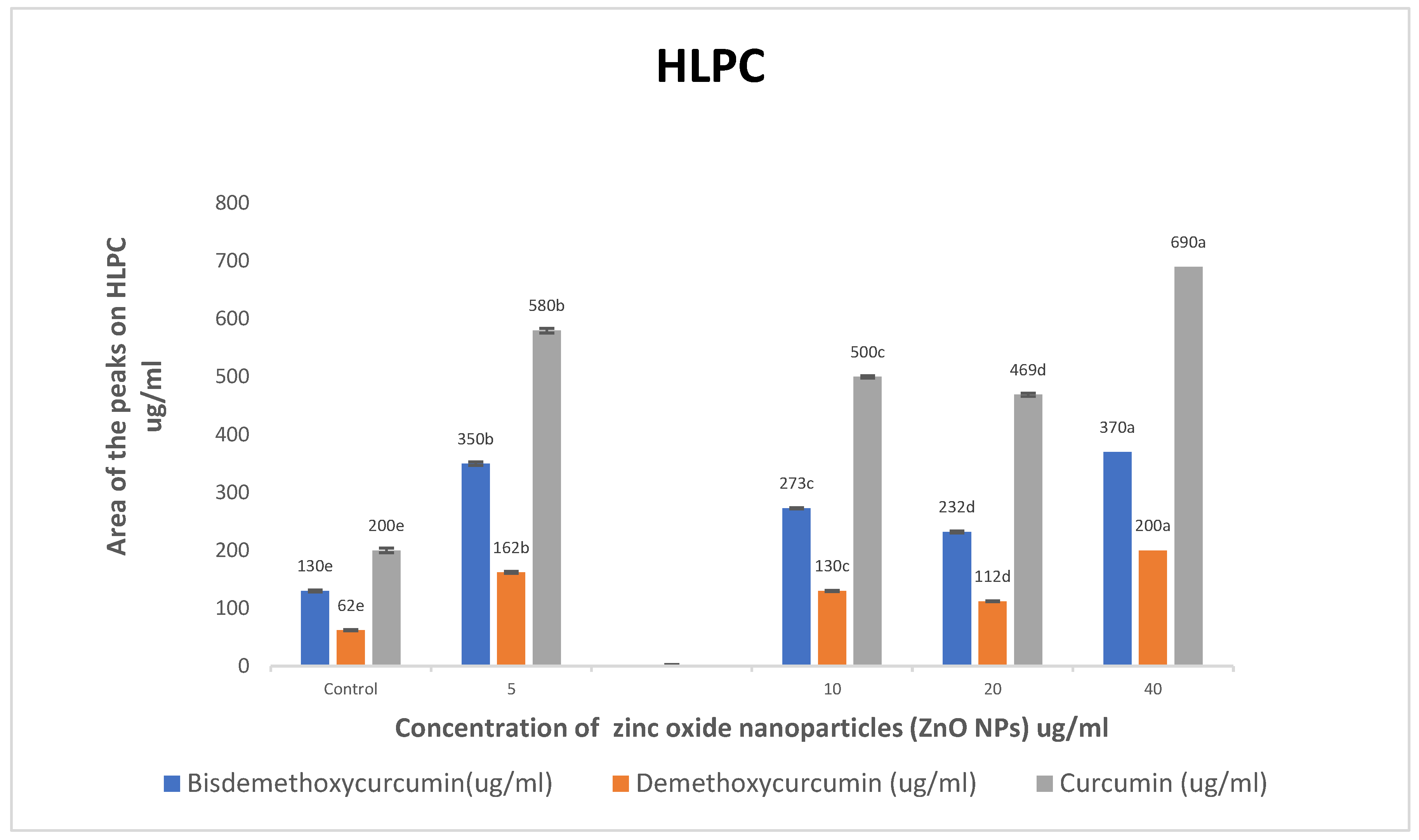

Table 1.
Zone of inhibition (mm) exhibited by various test solutions on plates inoculated separately with Staphylococcus aureus (S. aureus), Escherichia coli ATCC8739 (E. coli), Pseudomonas aeruginosa, Actinobacteria baumannii, and Bacillus sp. Each of the mean measurements was obtained from the average of 18 replicate plates. The test solution positive control was 10 µg of imipenem. Five curcumin extract test solutions (5 mg/L) were prepared from ethanolic fruit extracts from three individual plants of each of the control and No discs containing the test solution negative control (DMSO: water, v:v: 1:1) produced an inhibition zone, in all 18 replicate plates.
Table 1.
Zone of inhibition (mm) exhibited by various test solutions on plates inoculated separately with Staphylococcus aureus (S. aureus), Escherichia coli ATCC8739 (E. coli), Pseudomonas aeruginosa, Actinobacteria baumannii, and Bacillus sp. Each of the mean measurements was obtained from the average of 18 replicate plates. The test solution positive control was 10 µg of imipenem. Five curcumin extract test solutions (5 mg/L) were prepared from ethanolic fruit extracts from three individual plants of each of the control and No discs containing the test solution negative control (DMSO: water, v:v: 1:1) produced an inhibition zone, in all 18 replicate plates.
| Test Solution | Inhibition Zone (mm) | ||||
|---|---|---|---|---|---|
| S. aureus | E. coli | Actinobacteria baumannii | Bacillus sp | Pseudomonas aeruginosa | |
| Curcumin extract (control) | 3±1f * | 6 ±2 b | 4±2 | 5±2 | 7 ±2 f |
| Curcumin extract 5 mg/L | 12±1b | 5 ±2 c | 8±1 | 10±3 | 13 ±1b |
| Curcumin extract 10 mg/L | 11±1c | 0±0 | 13±2 | 14±1 | 9±1d |
| Curcumin extract 20 mg/L | 7±2e | 0±0 | 10±1 | 9±2 | 8±1e |
| Curcumin extract 40 mg/L | 9±1d | 0±0 | 8±3 | 7±2 | 10±1c |
| Imipenem 10 µg | 18 ±3 a | 10 ±2 a | 18±2 | 17±2 | 15 ±2 a |
* Means followed by the same letter within a column are not significantly different at 0.05 level of probability according to L.S.D. test.
Disclaimer/Publisher’s Note: The statements, opinions and data contained in all publications are solely those of the individual author(s) and contributor(s) and not of MDPI and/or the editor(s). MDPI and/or the editor(s) disclaim responsibility for any injury to people or property resulting from any ideas, methods, instructions or products referred to in the content. |
© 2023 by the authors. Licensee MDPI, Basel, Switzerland. This article is an open access article distributed under the terms and conditions of the Creative Commons Attribution (CC BY) license (http://creativecommons.org/licenses/by/4.0/).
Copyright: This open access article is published under a Creative Commons CC BY 4.0 license, which permit the free download, distribution, and reuse, provided that the author and preprint are cited in any reuse.


