

Submitted:
22 May 2023
Posted:
23 May 2023
You are already at the latest version
Abstract
Greenery-covered towers are a new generation of tall buildings characterized by substantial integration of vegetation. They aim to improve the quality of urban life by reducing air pollution, enhancing biodiversity, creating microclimates, and providing aesthetic and psychological benefits. This paper examines the innovative design approaches of greenery-covered towers, drawing on examples from different countries and contexts. It analyzes the technical, environmental, social, and economic aspects of these projects, as well as the challenges and opportunities they pose for the future of sustainable architecture. The paper concludes that greenery-covered towers should be further developed and refined to become a potential solution for addressing dense cities’ environmental and health issues.
Keywords:
high-rise buildings
; vegetation
; advantages
; disadvantages
; biophilic design
; sustainability
; greenwashing
1. Introduction
People demand reconnecting with Nature due to urban intensification, energy crises, health problems, artificial digital proliferation, and environmental degradation [1,2,3,4,5]. Our cities seek greenery and urban forestry as tools for reducing energy consumption, improving aesthetics, and absorbing carbon and fine dust to enhance air quality, among other reasons [6,7]. Living in densely populated cities and spending long hours with electronic devices can create a sense of alienation and stress [2,3]. On the other hand, Nature can contrast the artificial and hectic “urban jungle” by providing a space for relaxation, exploration, and inspiration [7,8]. People can restore their mental and physical well-being and appreciation for the natural world by reconnecting with Nature [6].
COVID-19 has exposed the vulnerability of urban environments and stressed the importance of creating green and healthy spaces for people [9,10]. The pandemic of COVID-19 has underlined the need for green and healthy spaces through biophilic design that connects people with Nature [11]. Biophilic design is an approach that integrates natural elements and processes into the built environment, enhancing the well-being and resilience of the inhabitants [12,13]. By applying biophilic design principles, such as using natural vegetation, plants, shrubs, sounds, and smells, we can create spaces that foster a sense of connection with Nature and promote physical and mental health [14].
Urban areas are responsible for around 70% of global CO2 emissions, and buildings and cars are among the main culprits [4,5] (Figure 1). Looking at cities from Google Earth view, you notice that they resemble deserts [15,16]. Cities are getting denser, leaving little space for “horizontal” landscaping and planting [17]. We are struggling for green space, and architects, landscape architects, planners, and engineers have had to get creative in using the vertical plane for planting. They explore vertical gardening, making lush vegetation and trees grow on the upper floors and roofs [18,19]. They have been designing new projects that bring Nature and gardens, usually found on ground level, onto the high-rise building, allowing users to reconnect with Nature and create natural environments in the sky [20,21,22].
Stefano Boeri, the inventor of the vertical forest concept, has suggested several mega visions that expand on his initial model in Milan, Italy. For example, he has proposed Liuzhou Forest City for a Chinese city of about one and a half million inhabitants in the mountainous Southern province of Guangxi -- one of the world’s most smog-affected urban areas due to excessive industrialization and overpopulation. The masterplan shows an urban composition, covering an area of 175 hectares along the Liujiang River, comprising offices, houses, hotels, hospitals, and schools almost entirely enclosed by plants and trees of various varieties and sizes. The Liuzhou Forest City will host about 40,000 trees and one million plants from more than 100 species. It promises to absorb nearly 10,000 tons of CO2 and 57 tons of microparticles yearly, simultaneously producing about 900 tons of oxygen, thereby combating severe air pollution problems [23].
Further, Stefano Boeri has recently proposed a Vertical Forest prototype for arid climates, specifically the MENA (Middle East and North Africa) region. The project involves constructing two towers – 190- and 150-m high, respectively, that integrate 2,640 trees and 27,600 shrubs while employing intelligent watering systems, hydroponic technologies, and renewable energy [23]. The architect claims that the project will help combat the air quality problem in Dubai. The announcement of building Dubai Vertical Tower is timely as it coincides with the United Nations Climate Change Conference, the 28th session of the Conference of the Parties (COP 28), which will occur in Dubai in 2023 from 30 November until 12 December.
STH BNK by Beulah in Melbourne, Australia, will become the first vertical garden to exceed 300 meters and reach supertall status. It will become the world’s first-ever supertall vertical garden. The project consists of two twisting towers (366 and 288 meters) that rise above the Yarra River, connected by a sky bridge. They house a variety of residential, commercial, and retail spaces, as well as a wellness hub and a vertical school. Designed by UN Studio and Cox Architecture, the mixed-used towers would feature dramatic planting across their levels and become the tallest skyscrapers in the country. Over five and a half kilometers of vertical gardens and sky parks will extend as high as 365 meters above street level. Construction has begun and is anticipated to be completed in 2028 [24].
2. Goals and Objectives
As integrating greenery into tall buildings becomes a growing trend, growing confusion arises concerning this new building typology. The proponent of this architectural design approach claims the greenery-covered tower model offers multiple benefits, including improving the health of people and the environment and mitigating climate change challenges. Greenery-covered tall buildings have many benefits, such as purifying the air, reducing ambient temperature and noise, reducing stress, boosting productivity, and showing a longer residence time. Green coverings can significantly reduce other pollutants in the air as well, including soot and dust.
Simultaneously, a growing concern is that this could be a new “greenwashing” propaganda. Integrating greenery in high-rises incurs higher construction and maintenance costs. Trees are popular and can help soften developments. Architects sticking trees on new building renders is becoming a bit of a “joke” [25,26]. Many new projects need public, political, and commercial support in their early stages, and ensuring an excellent reception to renders in the media can help win over those constituencies. For some, it feels like just adding a few trees at the render stage is a move to win a project proposal, reassure local communities, close real estate deals, and boost Instagram’s live counts. Some projects are pitched as a lush addition to the concrete urban jungle [25]. However, their greenery feels far from the renders after being built. Other projects go for a sprinkling of trees rather than attempting a full-blown forest, and the finished results can often end up a long way from what was shown in design renders [27].
Therefore, the goal of this paper is to:
- Offer an overall introduction to the greenery-covered towers.
- Map out major projects that integrate greenery into tall buildings.
- Highlight and examine the “innovative” greenery architectural elements and systems.
- Discuss the opportunities, challenges, and greenwashing of this architectural model.
This work is the first in academic literature to integrate hitherto disparate sources of knowledge on the subject. As the new model persists, this review study forms an essential foundation for future empirical investigation.
3. Methods
A quantitative analysis of the buildings’ performances would be helpful. However, quantitative assessments of the performance of the examined buildings are complex and unattainable since data about the actual performance of buildings are unavailable. Building owners hesitate to share utility bills for privacy issues or to protect themselves from exposure if the building does not stand up to claims, honors, and certifications it received for its design, e.g., LEED certification. Also, many utility bills show the summation of usage; for example, energy consumption does not show the breakdown of use among elevators, HVAC, lights, appliances, etc. A common problem with the claims of “sustainable” design is that they are often based on computer-based projection models, which are not transparent or reliable. These models use variables that are determined by formulas hidden in a “black box” [28,29], which may introduce errors, biases, or uncertainties [30].
Moreover, these models do not reflect the actual performance of the building in terms of energy consumption, carbon emissions, or other environmental impacts but only what the building design anticipated [28,31]. Therefore, this study retreats to a discussion at the idea level by conducting a literature review. Luckily, literature sources are increasingly abundant as the online environment is flourishing. To meet the study’s goals, this paper reviews vast sources of information about the topic, including academic literature, architectural magazines, websites, blogs, documentaries, and videos.
In conducting the review, there have to be selection criteria for picking projects for examination. Here are the primary criteria:
- The building should exhibit extensive greenery covering a sizable portion of the building’s envelope.
- Trees and plants should be part of a grand design scheme that aims for sustainability and are not being sprinkled over the building in the rendering stage as an afterthought. Planting was not just “icing on the cake.”
- The building is 10+ stories.
- The project received national and international recognition, certification, and awards.
- The project construction is completed, and the building is inhabited.
After examining the literature, the study identifies two dozen projects while applying the above criteria. Table 1 lists these projects chronologically to trace the development and evolution of this building typology across the globe.
Ideally, it would be helpful to examine all the listed buildings. However, due to the space limit in a single article, the author had to select a few projects for examination. The selection process aimed to include diversity in function (residential, office, hotel, etc.), geographic locations, and designs to address a broader range of greenery features [32,33,34]. To further narrow the selection, the study inquired about the popularity of each building via conducting Internet searches. The author’s academic and professional experiences in high-rise development have reinforced the selection process. Some studies have suggested that selection processes informed by rich professional (practical) and theoretical (research) experience are valuable and welcome [35,36,37,38]. The results suggested three buildings: Bosco Verticale, Milan, Italy, by Stefano Boeri Architetti; ACROS Fukuoka Prefectural International Hall, Fukuoka, Japan, by Emilio Ambasz; and Oasia Downtown, Singapore, by WOHA. Certainly, Bosco Verticale has become the most popular project that sparked interest in this innovative building typology worldwide. Similarly, the ACROS in Japan was one of the earliest and bold examples of this green building typology. Since its completion in 1995, it has received appreciation and admiration, passing the test of time [35]. Likewise, Oasia Downtown in Singapore is a representative example of the many “skyrise greenery” projects that are taking place in Singapore [36] because of its original design and dedication to sustainability. All buildings in Table 1 are worth examination, and follow-up studies are encouraged.
4. Case Studies
4.1. Bosco Verticale, Milan, Italy
Bosco Verticale (Vertical Forest) is the pioneering and most representative of the greenery-covered high-rise building model. Its boldness, significant height, and extensive greeneries have promoted this project among the most remarkable (Figure 2). Bosco Verticale was Stefano Boeri’s invention. It is considered a revolutionary project -- a model for a sustainable residential building -- that sparked and inspired other projects worldwide. Located in Milan, Italy, Bosco Verticale comprises two residential towers (27 and 19 stories, respectively 112 and 80 meters high) completed in 2014 [23,39]. The main feature of the towers is their vast, staggered, overhanging balconies, each around three meters long. These spacious balconies fit massive outdoor tubs for vegetation and permit the growth of larger trees -- giving the towers a forest-like appearance. As such, the buildings integrate 800 trees, each standing 3, 6, or 9 meters (10, 20, or 30 feet) tall, and a diverse assortment of shrubs and flowers. Plants total about 15,000 perennials and ground-covering plants, and 5,000 bushes. The project offers 30,000 m2 of woodland on a 3,000 m2 footprint [40].
Years after completion, Bosco Verticale created a habitat populated by several animal species, including over 1,600 bird and butterfly specimens, creating an outpost of spontaneous flora and fauna recolonization in the metropolis. The plant-based facades filter the Sun’s rays, creating a comfortable indoor microclimate. Greeneries generate oxygen, absorb CO2 and microparticles, and “regulate” humidity. In addition, the project uses an energy system that produces electricity by employing photovoltaic panels. The demand for irrigation is also centralized; a “smart” system tracks the needs of the plants [41].
The plants’ colors and shapes create an iridescent landmark visible from afar in every season. This trait has made Milan’s Vertical Forest a new symbol in just a few years. The choice of plants and trees on the towers’ sides and floors reflect aesthetic and practical requirements to adapt to the facades’ orientation and heights. The botanical part resulted from three years of research with botanists and ethnologists. It started in the summer of 2010 when the plants that would go on the towers were grown in a special botanical “nursery” near Peverelli Nursery and garden center to get them used to living in conditions like those in their natural habitat [42].
Since its completion, Bosco Verticale has received several recognition, certification, and awards for its innovative and sustainable design. Some of the most notable ones are [43]:
- The International High-rise Award in 2014, which honors the best skyscraper in the world.
- The LEED Gold certification in 2015, which is a globally recognized standard for green buildings.
- The Best Tall Building Worldwide award in 2015, which is given by the Council on Tall Buildings and Urban Habitat to the most outstanding tall building of the year.
- The Architizer A+ Award in 2016, which is a popular choice award for architecture and design projects.
- The CTBUH Urban Habitat Award in 2016, which recognizes tall buildings that contribute positively to the urban environment and enhance the quality of life of their inhabitants.
4.2. ACROS Fukuoka Prefectural International Hall, Fukuoka, Japan
Located in the heart of Fukuoka City, Japan, the ACROS Fukuoka Prefectural International Hall is a hub for international, cultural, and informational interaction. It aimed to provide an innovative solution to a prevalent urban issue: combining a developer’s desire for lucrative site use with the public’s need for open green space. By developing an innovative agro-urban model, Fukuoka’s strategy satisfies both objectives.
Designed by pioneering green architect Emilio Ambasz, the ACROS (Asian Cross Roads Over the Sea) is a 17-story civic center building that was completed in 1995. The building integrates nearly 100,000 square-meter of park space onto fifteen stepped, vegetated terraces with staircase-shaped rooftops that climb the full height of the building [14]. Each terrace floor contains an array of gardens for meditation, relaxation, and escape from an overcrowded city. The terraces are connected by upwardly spraying water jets to create a ladder-like climbing waterfall to mask the ambient noise of the city (Figure 3). Open to the public, the building culminates with a magnificent rooftop observation deck, providing a breathtaking view of the bay of Fukuoka, the mountains, and the surrounding natural landscape. With spacious green roof terraces, the building provokes the image of a lush green mountain that extends into the adjacent park – making the park and the building inseparable. Since the project’s construction, it has become a new landmark for the city [44].
Growing media depth ranges between 12” and 24″. When first constructed, there were 76 varieties totaling 37,000 plants. After 25 years of completion, birds brought in seeds and boosted vegetation to 120 types, totaling 50,000 plants in the step garden [45]. A thermal environment measurement survey was conducted on the garden by collecting data from longwave and shortwave radiation meters, ultrasonic three-dimensional wind speed and temperature meters, and scintillometers set up on the top, tenth, sixth, and fifth levels. The study found a difference of 15°C between the surface temperatures of the exposed surfaces and plant-covered areas, concluding that the greenery suppresses a rise in the surrounding air temperature [46].
ACROS Fukuoka Prefectural International Hall has received several recognitions, certifications, and awards for its innovative and sustainable architecture. Some of them are [47]:
- The Good Design Award (G-Mark) in 1995 from the Japan Industrial Design Promotion Organization.
- The Green Globe Award in 1996 from the American Society of Landscape Architects.
- The Award for Excellence in 1997 from the Urban Land Institute.
- The Award of Merit in 1998 from the International Downtown Association.
- The LEED Gold certification in 2011 from the U.S. Green Building Council.
4.3. Oasia Downtown, Singapore
The Oasia Hotel Downtown is a lush tower of green in the middle of Singapore’s congested Central Business District (CBD). It serves as a model for land use intensification in tropical cities. This “living tower” presents an alternative representation to the sleek and sealed skyscrapers that sprang out of the West. Oasia Downtown is a 27-story (190 meters) office building that was completed in 2016. As an integral aspect of the development’s internal and external material palette, landscaping is used extensively, creating a haven for avian and mammalian wildlife and supporting biodiversity in the urban environment with a Green Plot Ratio of 1,100% [48]. The tower’s red aluminum mesh covering is meant to serve as a backdrop, emerging from behind the 21 different species of creepers that cover it. These creepers provide nectar and pollen for the birds and insects that live in the area [49]. The building’s peak is not a flat surface but a tropical bower full of flowers and other soft and vibrant plants. Shade is provided by vegetation, which helps absorb heat, maintain a comfortable temperature, and clean the air (Figure 4).
Each sky garden is designed as a verandah on an urban scale, shielded at a high level by the sky garden that precedes it and with open sides for visual transparency. The architects alternated 30 m (98 ft) open-air sky gardens with the vegetated façade, and they also used several energy-efficient fans to move breeze and cool air around the tower. As a result, instead of being contained in internalized air-conditioned spaces, the public areas become practical, comfortable, tropical environments with plants, natural light, and fresh air [50].
The Oasia Downtown building has received recognition, certification, and awards for its innovative and green design. Some of them are [51]:
- BCA Green Mark Platinum Award (2016)
- CTBUH Best Tall Building Award for Asia and Australasia (2017)
- CTBUH Urban Habitat Award (2018)
- RIBA International Prize (2018) Finalist
- Architizer A+ Awards (2019) Jury Winner
5. Discussion
The discourse of building designers and developers paints a positive image of the innovative aspects of the reviewed buildings. Writers of reports announcing awards to buildings emphasize the new “sustainable” elements, including the benefits of greenery integration in the design. Indeed, greenery offers many environmental and health advantages and benefits for humans and other living beings.
- - Reducing air pollution by absorbing carbon dioxide and releasing oxygen.
- - Lowering the temperature and humidity by providing shade and evapotranspiration.
- - Preventing soil erosion and water runoff by stabilizing the ground and retaining moisture.
- - Enhancing biodiversity by providing habitats and food sources for various animals and insects.
Some of the health benefits of greenery are [54]:
- - Improves mental health by reducing stress, anxiety, and depression.
- - Boosting physical health by encouraging outdoor activities, exercise, and recreation.
- - Fostering social health by creating interaction, communication, and community-building opportunities.
- - Promoting aesthetic health by beautifying the surroundings and creating a sense of harmony and well-being.
Much of the intended discussion in this paper tackles the issues at the idea level by examining the design concept and application. However, the less explored aspects concern the disadvantages of integrating greenery in tall buildings, a typology that this paper focuses on. The below section evokes a greenwashing conversation by raising concerns about important issues such as the construction costs, maintenance, and viability of the greenery-cover towers. This conversation could form a foundation for future empirical research as data becomes available.
First, the added construction costs for accommodating plants and trees, irrigation systems, and maintenance should be examined. The building design should account for and adjust for its tree’s increase in weight and size. “In absolute terms, trees 100 cm in trunk diameter typically add 10 kg to 200 kg of aboveground dry mass each year (depending on species), averaging 103 kg annually. This is nearly three times the rate for trees of the same species at 50 cm in diameter and is the mass equivalent to adding an entirely new tree of 10–20 cm in diameter to the forest each year” [54, p.15]. A tree’s weight is much more significant when leaves are on it. Therefore, structurally, buildings incorporating trees require special consideration and additional strengthening and reinforcement.
In the case of Bosco Verticale in Milan, to ensure trees’ stability in the wind, they are tethered to the building using steel wires. Once the superstructure was complete, the largest and most vulnerable trees were restrained within steel safety cages and strapped in place (Figure 5). According to the ARUP’s structural engineers, “While all the medium and large trees have a safety cable to prevent the tree from falling in case the trunk breaks, the largest trees in those locations most exposed to wind have safety steel cages that restraint the root-bulbs and prevent them from overturning under major windstorms” [55]. Overall, the plant- and tree-covered buildings should be built more potent than ordinary structures, adding construction costs.
Further, some scholars have questioned the effectiveness of large balconies, particularly in unfriendly weather locations. In places that experience overly cold or hot weather, tenants will likely not use these balconies and will be rendered a waste of space. Even on a single day, the temperature may vary substantially, limiting their use time. Also, the wind is usually more robust at higher altitudes, so balconies on higher floors could be less useable [56]. Unlike the project renderings showing tenants using balconies, a review of photographs of many tall buildings with balconies shows little use. A simple Internet image-based search exposes this issue – it is a no-brainer.
When the interior space is small, tenants may convert balconies into enclosed spaces, hurting the original design of the building – a phenomenon documented worldwide [56]. Still, at the idea level, vegetation may occupy a sizable portion of balconies, raising questions about their cost-benefit effectiveness (Figure 6). In Bosco Verticale, researchers [57] have critiqued balconies for occupying a sizable portion of each floor plan (Figure 7). Similarly, studies [58] have critiqued Singapore’s Oasia Hotel for dedicating 40% of its volume to green, open-air terraces, significantly reducing the number of hotel rooms that can fit in the building and reducing the return on investment (ROI).
Vegetated balconies with lush plants and sizable trees could substantially block sunrays and natural daylight from entering indoor spaces, demanding artificial light and increasing electricity bills. In addition, large, cantilevered balconies cast a substantial shadow exacerbating sunray blocking and making indoor spaces feel gloomy. As such, a large, cantilevered balcony or terrace with heavy vegetation could be a deadly combination, reducing natural light and sunrays that enter indoor spaces. In the case of Bosco Verticale, balconies cantilever 3.5 meters with a thickness of 28 centimeters, making this issue severe (Figure 8).
The amount of greenery in the building’s four facades seems equal regardless of their solar orientation. The southern, northern, western, and eastern facades have similar amounts of vegetation, where light and solar conditions differ. Green design teaches that each façade should receive different treatment to address solar orientation adequately. Eastern and western facades may need vertical fins to protect from sunrays, southern facades may need light shelves, while northern facades (which do not receive sunrays) need none. A similar problem prevails in Oasia Downtown in Singapore. The building’s four facades receive the same architectural and planting treatment, violating sustainable design principles. Likewise, in the case of the ACROS Building, plants, and trees veil blocks the whole southern façade from sunlight, leaving indoor spaces gloomy. It also prevents natural ventilation rendering indoor space unhealthy (Figure 9). The benefits of sun exposure are producing vitamin D in the skin in reaction to UVB rays, lowering blood pressure, suppressing hunger, and reducing the risk of obesity, type 2 diabetes, and certain autoimmune disorders [47].
There are other issues to consider when building high-rises to accommodate trees (e.g., environmental costs), including carbon emissions in producing steel and concrete used in construction. In the case of the Bosco Verticale, one study [43] estimated that the concrete production used to build the towers’ balconies emitted 990 tons of CO2. Meanwhile, the integrated trees and plants sequester 18 tons of CO2 annually. Therefore, the tower would need approximately 55 years to offset the carbon footprint of its balconies alone [42].
Overall, the vegetated balcony concern is essential because many greenery-covered towers have embraced this architectural element in their design [29]. Examples of projects that integrated vegetated balconies include The Met in Bangkok, Thailand; Newton Suites in Singapore; IDEO Morph 38 in Bangkok, Thailand; Eden in Singapore; Sky Green Residential & Retail Tower in Taichung City, Taiwan; Trudo Vertical Forest in Eindhoven, Netherlands; Easyhome Huanggang Vertical Forest City Complex in Huanggang, Hubei province and Qiyi City Forest Gardens development in China, among others. Proposed buildings with vegetated balconies include Dubai Vertical Tower in Dubai, UAE; Arboricole building in Angers City, the western part of France; and Ravel Plaza in Amsterdam. Notably, the vegetated balcony concept is copied in tall buildings regardless of climatic conditions. For example, plants may require extra care in a hot climate, such as in Dubai, or a cold climate, like the Netherlands.
Fire is another critical concern. Indeed, another challenge posed by this new building type, with large amounts of potentially flammable organic matter attached to facades, is fire. Many national building codes demand that designers and engineers prevent fire from being able to spread up a building through its external cladding or facade or to design systems that protect occupants and the structure’s overall integrity. Any added plants or trees must be maintained to meet those specific local codes. Typically, that translates to keeping them to a particular size, preventing them from becoming too dry and incorporating the correct fire suppression and evacuation systems. Regular pruning and irrigation help to mitigate the risk of fire, as does ensure that the soil contains a relatively low percentage of organic matter.
Innovative projects face passing building code requirements. Design justification is needed since they were not built before, and developers and architects need the authorities’ backing. For example, some claim Bosco Verticale received the government’s support because it was built before the Millan Expo [60]. Therefore, the local authorities supported the project as a showcase project for the city, which doesn’t always happen. It is another game for cities with strict building codes, such as New York City or a historic district that advocates preserving the historic fabric and prohibits “outlier” buildings, such as buildings with very different perceptual characteristics [61].
Singapore is an excellent case illustrating the government’s support for integrating greenery in buildings, including tall ones. The Skyrise Greenery Incentive Scheme (SGIS) provides funding of up to 50% of installation costs for rooftop greenery and vertical greenery projects on existing buildings, with a cap of $200 per square meter for rooftop greenery and $500 per square meter for vertical greenery. SGIS was introduced in 2009 by NParks to increase the greenery provision in Singapore [62]. More than 200 buildings have benefited from SGIS, and projects supported include edible community rooftop gardens, recreational and therapeutic rooftop gardens, extensive green roofs, and lush verdant green walls. Some project examples include Oasia Hotel Downtown, Khoo Teck Puat Hospital, the National Parks Board (NParks) headquarters, and the School of the Arts. With these various initiatives and support from developers, building professionals, and owners, Singapore is well into achieving a target of 200 hectares of sky greenery by 2030 and towards a greener biophilic Singapore [62,63].
Time is money, and “innovative” buildings require additional construction time. Because of adding complexity to the design, the construction time often increases. For example, the Bosco Verticale project in Milan took five years to complete, whereas a project of the same size not integrating greenery takes about three years in the same city [60]. As such, prolonging the period of construction incurs additional costs. Innovation models, expertise, and techniques are needed to reduce costs and improve the efficiency of constructing this model. Overall, “horizontal” landscaping costs are often lower than vertical landscaping.
5.1. Maintenance
One of the critical issues for the success of this building prototype is the continuous maintenance demanded by plants and trees. Living and perpetually growing vegetation may threaten the façade’s integrity and cover windows, preventing natural light from entering indoor spaces. Bosco Verticale boasts of creating a forest in the sky. However, as mentioned earlier, the dilemma is that having the forest too close to indoor spaces blocks sunlight, an essential element for healthy living. At any rate, plants need to be pruned over time -- trees must be trimmed to avoid façades. Otherwise, plants may hurt wall surfaces and turn them into habitats for potentially invasive species and insects.
Simply put, gardens need gardeners. The rooftop garden of the ACROS building was critiqued for requiring constant watering, pruning, and pest control [37,64]. Some examples of this building typology have received no maintenance, leading to unfortunate results. For instance, some plant- and tree-covered high-rises in Chengdu, China, experienced a lack of maintenance and care for their plantings. Consequently, these buildings suffered from securing adequate clientele. Many people abandoned or refused to live in them.
In the case of Oasia Downtown Singapore, the green façade that covers the building is a massive vertical garden that requires maintenance. This creates some noise and disturbance for the hotel guests. Moreover, the greenery attracts insects and birds that may pose a health and safety risk for the guests and staff. Vegetation may invite undesirable insects, pets, and even snakes that would render these buildings unsafe and unwanted human habitats. Even what seems to be a small problem, such as the spread of mosquitoes, could disinvite people from living in these high-rise buildings. Maintenance measures must be taken against these issues.
Vertical gardening requires specialized gardeners. Richard Hassell explained that this building typology involves a team of flying gardeners who are both “Spidermen” and experts with local vegetation. He referred to the Vertical Forest example, where they fly around the building every four months. They hang by rope from the roof’s edge, descend, and jump between balconies. As mentioned earlier, the Vertical Forest has exploded with wildlife since its construction, providing a habitat for over 1600 birds and butterfly species. However, that in itself does create a maintenance issue [31].
Notably, most of the completed towers of the plant- and tree-covered prototype are young and have not passed the test of time. The wear and tear effect may create problems in the irrigation system, such as water leak, which could be a serious problem in high-rise buildings since water leak affects multiple floors below [65] (Figure 10). Similarly, the roots of trees and plants may go out of control over time and cause cracks in the building’s structure and facades. Further, the building should prevent harmful mold. Under some circumstances, certain types of molds, such as Stachybotrys and Aspergillus, can produce poisons known as mycotoxins [66]. Severe sickness could occur because of mycotoxin exposure. Therefore, the building’s façade should be permanently sealed to prevent undesirable molds and insects from crawling into interior spaces. Any required repair at higher altitudes entails higher costs and troubles.
5.2. Watering
Depending on the water requirement for different plants, availability of rainwater, and local fees, water costs could be high, making this prototype unaffordable to some segments of society. For example, in tropical regions (as with Singapore), growing trees and plants are relatively more effortless due to supportive climatic conditions that feature an abundance of rainwater and humidity. To reduce water consumption, architects should choose indigenous plants that require minimal watering. Shading could be crucial to cut watering costs. As such, employing shading devices and elements, such as screens and light shelves, could help reduce watering costs and improve the health of plants. Similarly, water sensors, collecting rainwater, and recycling greywater for irrigating plants and trees should also be considered to reduce watering costs. Also, solar-powered irrigation systems should be examined since they may offer a nature-based solution (NBS) for sustainable water management.
5.3. Plants’ Health
Disease can affect any plant, whether wild or cultivated. When infected by a disease, plants can become ill, just like humans. Plant disease is described as the state of improper local or systemic physiological functioning of a plant resulting from the continuous, sustained ‘irritation’ generated by phytopathogenic organisms. There is a wide range of plant-infecting bacteria, fungi, viruses, and nematodes. Some infections infest the roots from below ground, while others thrive in the air and attack the plant’s leaves [67]. Pathogens affecting plants, and the variants of those pathogens that have arisen over time, are a constant source of discoveries for plant pathologists. Plant healthcare gives plants the essential nutrients to flourish while safeguarding them from insects and illness [68]. The treatments incorporate fertilization, insect control, and disease prevention. It is necessary to treat destructive plant pests when they are active each year to contribute to population reduction and maintain the health of plants. If we don’t take this precaution, there’s a good chance that the plant’s existence will be cut short by illnesses or pests that are harmful to it. As such, sustaining the health of plants entails added burden and cost.
As weather conditions alter at higher altitudes, the health conditions of trees and plants are in question. The lack of space for root growth could impact the health of large trees. Similarly, establishing light/shade balance becomes an issue of concern. Overall, selecting the right plants for each façade and elevation is important. In the case of One Central Park in Sydney, the French botanist Patrick Blanc carefully selected the plants on the tower that suit Sydney’s habitat, local climate, and seasons. By using acacias (wattles) and poa (grasses) on upper levels and Goodenia (hop bush) and viola (native violet) lower down, the vegetation is tuned to its place and growing environment successfully. More than 1,100 square meters of walls support many species of plants, most native to Sydney [69,70]. So far, these plants have shown resilience in withstanding hot, dry, and windy Australian summers.
5.4. Experiencing Nature
Innovative methods to bring Nature into sky living are appreciated [71]. However, they may not offer tenants the whole experience of interacting with Nature. For example, planting in greenery-covered high-rises rely on artificial watering systems, deriving residents from the natural experience of watering plants, checking on their needs for water, and observing the effects of watering them on their growth and well-being [72]. Watering plants activates interest in weather conditions (sunny, cloudy, rainy, etc.) and awareness of solar orientation and sun path [73,74]. Similarly, professional gardeners carry out pruning, obviating residents’ interactive experience with plants and trees. Checking on plants’ health is a caring human experience. Residents may want to check plants’ growth, needs, and soil conditions. Similarly, they may enjoy “digging” and planting their own vegetation. Tenants may want to perform seeding, transplanting, pruning, and harvesting. These tasks and aspects of interacting with vegetation can positively affect human well-being, cognition, and psychology [75,76]. Further, plants seem to be given in these buildings, and tenants have no say in choosing the ones they love and desire.
Some people have acrophobia, the fear of heights that can cause significant distress and impairment. People with acrophobia may experience panic attacks, nausea, dizziness, sweating, trembling, and difficulty breathing when exposed to high places or situations involving height. Consequently, they may not feel comfortable interacting with Nature in vegetated balconies and terraces on the upper floors [75]. Interacting with Nature involves engaging all our senses, being present at the moment, and feeling awe and gratitude for the natural world [77]. Planting trees and vegetation in the sky offers a partial natural experience that can benefit the health and well-being of city dwellers, as well as reduce air pollution and carbon emissions. As such, this solution has some limitations and challenges to achieving biophilic design by not offering a fully immersive experience with Nature [78].
6. Conclusions
This paper reviewed significant projects that represent the greenery-covered high-rise building model. These projects are widely recognized for their design excellence and have received awards from major tall-building organizations. The examination identifies green design features, mainly vegetative schemes, which grant the building a clear identity and make it an iconic landmark. The architects, engineers, developers, and building owners argue that these buildings help to mitigate climate change challenges. Trees and plants sequester carbon dioxide, reduce the problem of flash flooding, filter air, and supply oxygen. Politicians may back up these projects for their merits. Increasingly, cities oppose all-glass skyscrapers because of their environmental harm [79,80]. For example, Bill de Blasio, former New York City Mayor (from 2014 to 2021), has proposed a bill to ban all-glass skyscrapers to decrease NYC’s greenhouse emissions by 30 percent [81]. According to de Blasio, all-glass towers are “incredibly inefficient” since so much energy escapes through the glass – they are the city’s primary source of greenhouse gas emissions. Toronto, Canada, has been encouraging using timber framing -- highly compressed wood, called cross-laminated timber wood, which is extremely strong-- in constructing high-rise buildings [82,83]. In the Netherlands, Utrecht has gone further, requiring all buildings to have green or solar roofs [84]. In Singapore, the government supports structures that integrate greenery by covering up to half the cost [85,86]. As a result, nearly all new buildings are rich in vegetation. Living walls are sprouting in many European cities [87,88].
The reviewed projects in this article leave us with two legacies: one positive and one negative. The upside is that this could be the future of dense areas with limited “horizontal” land, as in the case of Singapore. Notably, in these projects integrating greeneries into structures is not a cosmetic treatment to enhance the appearance of the building. It is integral to the design process. The visual expression in this model stems from genuine “green” design objectives to improve environmental and human health. These projects differ from those that sprinkle plants and trees on buildings to make them look cool! However, the negative legacy concerns high costs and heavy maintenance. “Vertical planting” is far more expensive than “horizontal planting.” Integrating plants in towers requires complex engineering solutions to support the plants’ weight and movement and incorporate irrigation systems. Plant maintenance involves regular pruning, fertilizing, pest control, and replacement. Integrating greeneries and associated irrigation systems in tall buildings requires unique expertise and technical knowledge. Repairing and upgrading these systems and maintaining plants demand operational and maintenance costs. Water costs could also be considerable. We need to reduce the carbon footprint in the construction of these buildings. Some architects are experimenting with wood structures instead of concrete structures. There are possibilities to end up with ingenious architectural solutions for the future of our cities. The impact of the greenery-covered tower model remains to be seen but may become more seriously sought after as the fight against climate change grows in urgency.
Author Contributions
Single-author article.
Funding
No Funding.
Data Availability Statement
Not Applicable.
Acknowledgments
The author thanks the Buildings Journal for its support.
Conflicts of Interest
No Conflict of Interest.
References
- Bissell, D. (2020). Affective platform urbanism: Changing habits of digital on-demand consumption. Geoforum, 115, 102-110. [CrossRef]
- Pretty, J. (2012). The earth only endures: On reconnecting with Nature and our place in it. Earthscan.
- Treré, E. (2021). Intensification, discovery and abandonment: unearthing global ecologies of dis/connection in pandemic times. Convergence, 27(6), 1663-1677. [Google Scholar] [CrossRef]
- Wu, D. , Lin, J. C., Oda, T., & Kort, E. A. (2020). Space-based quantification of per capita CO2 emissions from cities. Environmental Research Letters, 15(3), 035004. [Google Scholar] [CrossRef]
- Bellucci, F., Bogner, J. E., & Sturchio, N. C. (2012). Greenhouse gas emissions at the urban scale. Elements, 8(6), 445-449. 6. [CrossRef]
- Molla, M. B. (2015). The value of urban green infrastructure and its environmental response in urban ecosystem: A literature review. International Journal of Environmental Sciences, 4(2), 89-101.
- Lehmann, S. (2021). Growing biodiverse urban futures: Renaturalization and rewilding as strategies to strengthen urban resilience. Sustainability, 13(5), 2932. [Google Scholar] [CrossRef]
- McPhearson, P. T. (2011). Toward a sustainable New York City: Greening through urban forest restoration. Sustainability in America’s Cities: Creating the green metropolis, 181-203.
- Slater, S. J. , Christiana, R. W., & Gustat, J. (2020). Peer Reviewed: Recommendations for keeping parks and green space accessible for mental and physical health during COVID-19 and other pandemics. Preventing chronic disease, 17.
- Jevtic, M. , Matkovic, V., Paut Kusturica, M., & Bouland, C. (2022). Build Healthier: Post-COVID-19 Urban Requirements for Healthy and Sustainable Living. Sustainability, 14(15), 9274. [CrossRef]
- Haase, A. (2020). Covid-19 as a social crisis and justice challenge for cities. Frontiers in Sociology, 5, 583638. [Google Scholar] [CrossRef]
- Downton, P. , Jones, D., Zeunert, J., & Roös, P. (2017). Biophilic design applications: Putting theory and patterns into built environment practice. KnE Engineering, 59-65. [CrossRef]
- Dalay, L. , & Aytaç, G. (2022). Biophilic Design: Integrating Nature Into the Urban Environment. In Emerging Approaches in Design and New Connections With Nature (pp. 1-19). IGI Global.
- Kellert, S. R. (2008). Dimensions, elements, and attributes of biophilic design. Biophilic design: the theory, science, and practice of bringing buildings to life, 3-19.
- Hawken, P. (Ed.) . (2017). Drawdown: The most comprehensive plan ever proposed to reverse global warming. Penguin.
- Li, X. , Zhang, C., Li, W., Ricard, R., Meng, Q., & Zhang, W. (2015). Assessing street-level urban greenery using Google Street View and a modified green view index. Urban Forestry & Urban Greening, 14(3). 675-685. [CrossRef]
- Hopkins, G. , & Goodwin, C. (2011). Living architecture: Green roofs and walls. Csiro Publishing.
- Blanc, P. (2008). The vertical garden: From Nature to the city. WW Norton & Company.
- Benjamin, L. L. , Dakin, K., & Pantiel, M. (2013). The professional design guide to green roofs. Timber Press.
- Fell, D. (2011). Vertical gardening: grow up, not out, for more vegetables and flowers in much less space. Rodale.
- Hesslerová, P., Pokorný, J., Huryna, H., Seják, J., & Jirka, V. (2022). The impacts of greenery on urban climate and the options for use of thermal data in urban areas. Progress in Planning, 159, 100545. [CrossRef]
- Guan, X., Roös, P., & Jones, D. S. (2018, January). Biophilic city, vertical city, forest city? Towards an Architectree. In IFLA 2018: Biophilic City, Smart Nation, and Future Resilience, Proceedings of the 55th International Federation of Landscape Architects World Congress, Singapore, 13–21 July 2018. Singapore: International Federation of Landscape Architects.
- Stefano Boeri Achitetti, https://www.stefanoboeriarchitetti.net/en/project/dubai-vertical-forest/.
- BEULAH, Tallest Vertical Garden in the World. https://beulahinternational.com/tallest-vertical-garden-inthe- world/.
- Christine Beldon, Why Architects Put Trees on Buildings, https://www.theb1m.com/video/why-architectsput-trees-on-buildings.
- Koolhaas, R. , & Foster, H. (2016). Junkspace with running room. New York Review of Books.
- Miller, T. (2017). Greenwashing culture. Routledge.
- Goldsby, H. J. , Sawyer, P., Bencomo, N., Cheng, B. H., & Hughes, D. (2008, March). Goal-based modeling of dynamically adaptive system requirements. In 15Th annual IEEE international conference and workshop on the engineering of computer based systems (ecbs 2008) (pp. 36-45). IEEE.
- Jacob, J. , Bartholmai, B. J., Rajagopalan, S., Brun, A. L., Egashira, R., Karwoski, R.,... & Hansell, D. M. (2016). Evaluation of computer-based computer tomography stratification against outcome models in connective tissue disease-related interstitial lung disease: a patient outcome study. BMC medicine, 14(1), 1-13. [CrossRef]
- Clarkson, P. M. , Ponn, J., Richardson, G. D., Rudzicz, F., Tsang, A., & Wang, J. (2020). A textual analysis of US corporate social responsibility reports. Abacus, 56(1), 3-34. [CrossRef]
- Jumper, J., Evans, R., Pritzel, A., Green, T., Figurnov, M., Ronneberger, O., ... & Hassabis, D. (2021). Highly accurate protein structure prediction with AlphaFold. Nature, 596(7873), 583-589. [CrossRef]
- Flannery, J. A. (2015). Bosco verticale. Eco-landscape design, 52-61.
- Golasz-Szolomicka, H. , & Szolomicki, J. (2019, September). Vertical Gardens in High-Rise Buildings–Modern Form of Green Building Technology. In IOP Conference Series: Materials Science and Engineering (Vol. 603, No. 2, p. 022067). IOP Publishing. [CrossRef]
- Varrato, Z. (2017). A firm for the future. Penn Sustainability Review, 1(9), 5.
- Belogolovsky, V. (2020). ACROS Fukuoka Prefectural International Hall by Emilio Ambasz turns 25 STIRworld. Retrieved April, 21, 2022.
- Agrimonti, L. M. (1995). The Limitations of Daubert and Its Misapplication to Quasi-Scientific Experts, A Two-Year Case Review of Daubert v. Merrell Dow Pharmaceuticals, Inc., 113 S. Ct. 2786 (1993). Washburn LJ, 35, 134.
- Lenfestey, N. F. , Denham, M. E., Hall, K. K., & Kamerow, D. B. (2013). Expert opinions on the role of facility design in the acquisition and prevention of healthcare-associated infections. HERD: Health Environments Research & Design Journal, 7(1_suppl), 31-45. [CrossRef]
- Lanzotti, A., Carbone, F., Grazioso, S., Renno, F., & Staiano, M. (2018). A new interactive design approach for concept selection based on expert opinion. International Journal on Interactive Design and Manufacturing (IJIDeM), 12, 1189-1199. [CrossRef]
- Ishween, A. (2021). Grays to greens: A place where humans and Nature coexist A case study of Bosco Verticale, Milan, India. Descriptio, 3(1).
- Belcher, R. N. , Fornasari, L., Menz, S., & Schroepfer, T. (2018). Birds use of vegetated and non-vegetated high-density buildings—a case study of Milan. Journal of Urban Ecology, 4(1), juy001.
- Tokuç, A. , & İnan, T. (2017, October). A Green Outlook to Tall Building Facades via Milan’s “Vertical Forest”. Conference paper: International Advanced Technologies Symposium (IATS).
- Pribadi, M. A. , Septina, A. D., Lugina, M., & Indartik, I. (2021, November). Vertical forest: green open space alternative in urban area development. In IOP Conference Series: Earth and Environmental Science (Vol. 909, No. 1, p. 012012). IOP Publishing. [CrossRef]
- [43], Treccozzi, D. (2017). A luxury penthouse beyond the woods. COMPASSES, 25(July), 128-133.
- Majerska-Pałubicka, B. , & Latusek, E. (2021). Intelligence-Based Design Illustrated with Examples of ACROS Fukuoka, KKL Luzern and MICA Changsha Buildings—A Multicriterial Case Study. Buildings, 11(4), 135. [CrossRef]
- Mabon, L. , Kondo, K., Kanekiyo, H., Hayabuchi, Y., & Yamaguchi, A. (2019). Fukuoka: Adapting to climate change through urban green space and the built environment? Cities, 93, 273-285. [CrossRef]
- Prefectural, ACROS Fukuoka, Architekten Hermann Kaufmann, Better Business Bureau, Arthur Blank, Gordon Brailsford, Brock Commons, Brock Environmental Center, Building Standard Act, Bullitt Center, and Carlie Bullock-Jones. “30 The Bond, 185.” catalyst 18, no. 202: 204.
- Velazquez, L. (2016). ACROS Fukuoka Prefectural International Hall. Sky Gardens Blog.
- Wong, M. S. , Hassell, R., & Phua, H. W. (2018). Oasia Hotel Downtown, Singapore: A Tall Prototype for the Tropics. CTBUH Research Paper, (III), 12-19.
- Abel, C. (2010). The vertical garden city: towards a new urban topology. CTBUH journal, 2(1), 20-30.
- Schröpfer, T. , Menz, S., Schröpfer, T., & Menz, S. (2019). Impact on Urban Ecosystems. Dense and Green Building Typologies: Design Perspectives, 79-82.
- Sanjaya, R. , Siwi, S. H., Lianto, F., & Bambang, S. M. (2020, December). Reintroducing Urban Wildlife through Green Façade Technology in Vertical Housings. In IOP Conference Series: Materials Science and Engineering (Vol. 1007, No. 1, p. 012019). IOP Publishing. [CrossRef]
- Tan, P. Y. , Jim, C. Y., & Jim, C. Y. (2017). Greening Cities. Singapore: Springer Singapore.
- Irvine, K. N. , & Warber, S. L. (2002). Greening healthcare: Practicing as if the natural environment really mattered. Alternative Therapies in Health and Medicine, 8(5), 76.
- Grinde, B. , & Patil, G. G. (2009). Biophilia: does visual contact with nature impact on health and well-being? International journal of environmental research and public health, 6(9), 2332-2343. [Google Scholar] [CrossRef]
- ARUP, https://www.arup.com/projects/bosco-verticale.
- Irwin, P. , Kilpatrick, J., Robinson, J., & Frisque, A. (2008). Wind and tall buildings: negatives and positives. The structural design of tall and special buildings, 17(5), 915-928.
- Visser, M. (2019). The geography of vertical forests: Exploring the green city (Master’s thesis).
- Haykal, M. , & Lissimia, F. (2021). Implementasi Konsep Eko-Arsitektur pada Bangunan Oasia Hotel Singapore. Jurnal Lingkungan Binaan Indonesia, 10(2), 100-109. [CrossRef]
- Croci, E. , & Lucchitta, B. (Eds.). (2021). Nature-Based Solutions for More Sustainable Cities–A Framework Approach for Planning and Evaluation.
- Boros, J. , & Mahmoud, I. (2021). Urban design and the role of placemaking in mainstreaming nature-based solutions. Learning from the Biblioteca degli Alberi case study in Milan. Frontiers in Sustainable Cities, 3, 635610. [CrossRef]
- NYC Codes, https://www.nyc.gov/site/buildings/codes/nyc-code.page.
- Zingoni de Baro, M. E. (2022). Singapore Case Study. In Regenerating Cities: Reviving Places and Planet (pp. 163-206). Cham: Springer International Publishing.
- Yi, C. (2020). Re-Imagining Nature in Dense, High Rise Urban Environment: the Present and Future of Green Building Infrastructure in Singapore.
- Lin, B. B. , Philpott, S. M., & Jha, S. (2015). The future of urban agriculture and biodiversity-ecosystem services: Challenges and next steps. Basic and applied ecology, 16(3), 189-201. [CrossRef]
- Yussof, N. A. M., & Ho, H. W. (2022). Review of Water Leak Detection Methods in Smart Building Applications. Buildings, 12(10), 1535. [CrossRef]
- Jarvis, B. B., & Miller, J. D. (2005). Mycotoxins as harmful indoor air contaminants. Applied microbiology and biotechnology, 66, 367-372. [CrossRef]
- Raskin, I. , Ribnicky, D. M., Komarnytsky, S., Ilic, N., Poulev, A., Borisjuk, N.,... & Fridlender, B. (2002). Plants and human health in the twenty-first century. TRENDS in Biotechnology, 20(12), 522-531. [CrossRef]
- Kim, Y. C. , Leveau, J., McSpadden Gardener, B. B., Pierson, E. A., Pierson III, L. S., & Ryu, C. M. (2011). The multifactorial basis for plant health promotion by plant-associated bacteria. Applied and Environmental Microbiology, 77(5), 1548-1555. [Google Scholar]
- Olanrewaju, O. S. , Ayangbenro, A. S., Glick, B. R., & Babalola, O. O. (2019). Plant health: feedback effect of root exudates-rhizobiome interactions. Applied microbiology and biotechnology, 1 03, 1155-1166. [Google Scholar] [CrossRef]
- Manso, M. , & Castro-Gomes, J. (2015). Green wall systems: A review of their characteristics. Renewable and sustainable energy reviews, 41, 863-871. [CrossRef]
- Parker, D. , & Wood, A. (Eds.). (2013). The tall buildings reference book. Routledge.
- Wood, A. , Bahrami, P., & Safarik, D. (2014). Green walls in high-rise buildings: An output of the CTBUH sustainability working group. Images Publishing.
- Khazraie, S. (2017). An Analytical Approach to Vertical Green Systems in High Rise Buildings (Master’s thesis, Eastern Mediterranean University EMU-Doğu Akdeniz Üniversitesi (DAÜ)).
- Gutiérrez, J. , Villa-Medina, J. F., Nieto-Garibay, A., & Porta-Gándara, M. Á. (2013). Automated irrigation system using a wireless sensor network and GPRS module. IEEE transactions on instrumentation and measurement, 63(1), 166-176. [CrossRef]
- Kahn Jr, P. H. , & Weld, A. (1996). Environmental education: Toward an intimacy with nature. Interdisciplinary Studies in Literature and Environment, 165-168.
- McAdams, D. P., & Powers, J. (1981). Themes of intimacy in behavior and thought. Journal of Personality and Social Psychology, 40(3), 573.
- Kupfer, J. H. (2003). Engaging nature aesthetically. Journal of aesthetic education, 37(1), 77-89.
- Sparkes, A. C. (2009). Ethnography and the senses: Challenges and possibilities. Qualitative research in sport and exercise, 1(1), 21-35. [CrossRef]
- Wood, A. (2015). Rethinking the skyscraper in the ecological age: Design principles for a new high-rise vernacular. International journal of high-rise buildings, 4(2), 91-101.
- Al-Kodmany, K. (2018). Sustainability and the 21st century vertical city: A review of design approaches of tall buildings. Buildings, 8(8), 102. [CrossRef]
- Mays, J. C. (2019). De Blasio’s ‘Ban’on Glass and Steel Skyscrapers Isn’ta Ban at All. The New York Times.
- Azarbayjani, M. , & Thaddeus, D. J. (2022). One Floor at a Time: Cross-Laminating a Sustainable Future for Mass Timber in North America. The Importance of Wood and Timber in Sustainable Buildings, 225-283.
- Poirier, E., Moudgil, M., Fallahi, A., Staub-French, S., & Tannert, T. (2016, August). Design and construction of a 53-meter-tall timber building at the university of British Columbia. In Proceedings of the world conference on timber engineering, Vienna, Austria (pp. 22-25).
- Osseweijer, F. J. , Van Den Hurk, L. B., Teunissen, E. J., & Van Sark, W. G. (2017). A review of the Dutch ecosystem for building integrated photovoltaics. Energy procedia, 111, 974-981. [CrossRef]
- Shukla, A. K. , Sudhakar, K., Baredar, P., & Mamat, R. (2017). BIPV in Southeast Asian countries–opportunities and challenges. Renewable energy focus, 21, 25-32. [CrossRef]
- Wang, Y. (2017). Potential barriers and limitations of skyrise greenery retrofit in Singapore’s public housing sector.
- Bassas, E. C., Patterson, J., & Jones, P. (2020). A review of the evolution of green residential architecture. Renewable and Sustainable Energy Reviews, 125, 109796. [CrossRef]
- Lacroix, R. N. , Stamatiou, E., & Planner, A. D. T. (2007). Green architecture and sustainable development: Applications & perspectives. In Proc. of the 3rd IASME/WSEAS Int. Conference on Energy, Environment, Ecosystems and Sustainable Development (pp. 603-606).
Figure 1.
Global CO2 Emissions by Sector. (Graph by author).
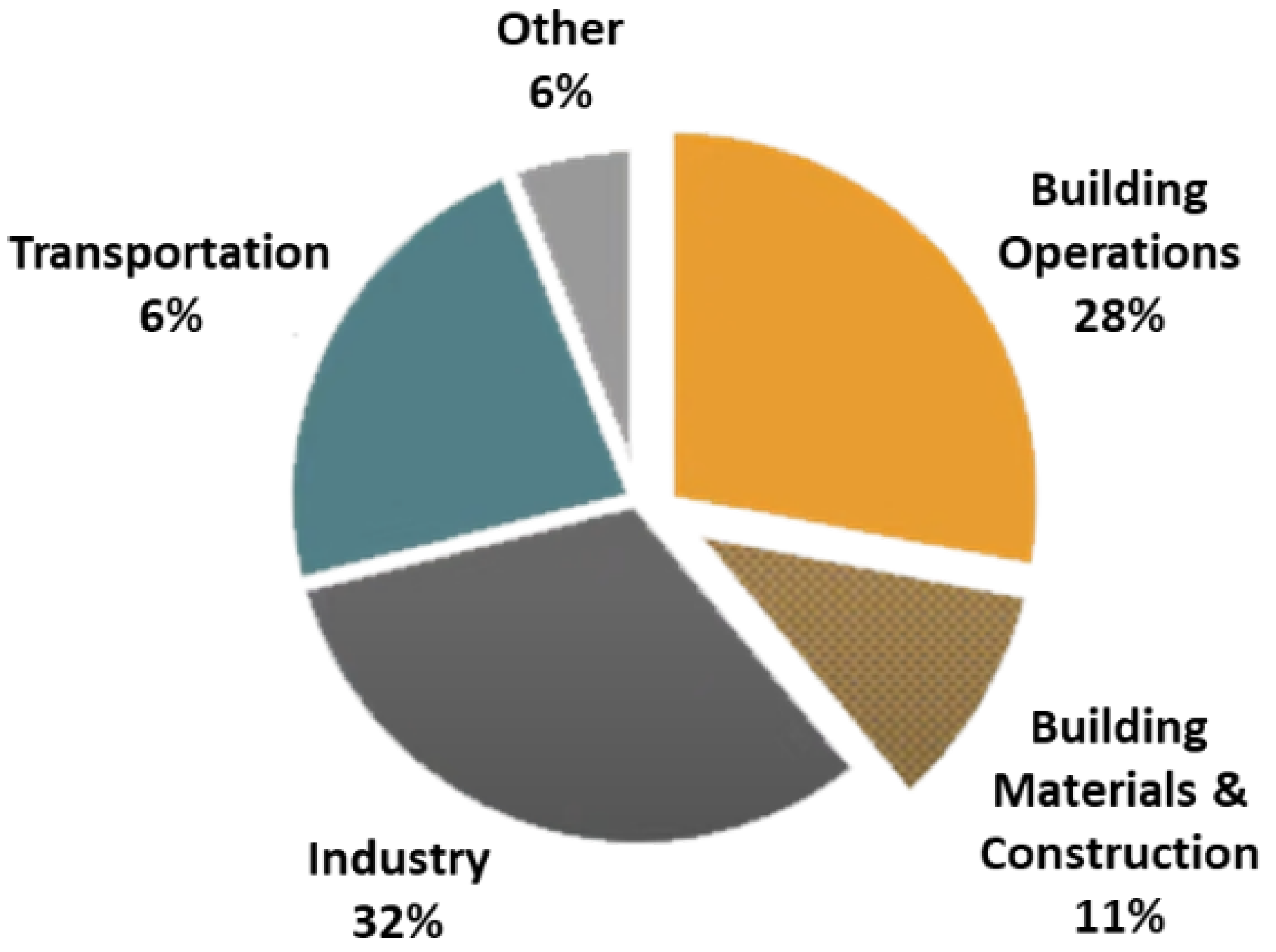
Figure 2.
Bosco Verticale (Vertical Forest) in Milan, Italy. The towers’ facades feature extensive vegetation. (Sketch by author).
Figure 2.
Bosco Verticale (Vertical Forest) in Milan, Italy. The towers’ facades feature extensive vegetation. (Sketch by author).
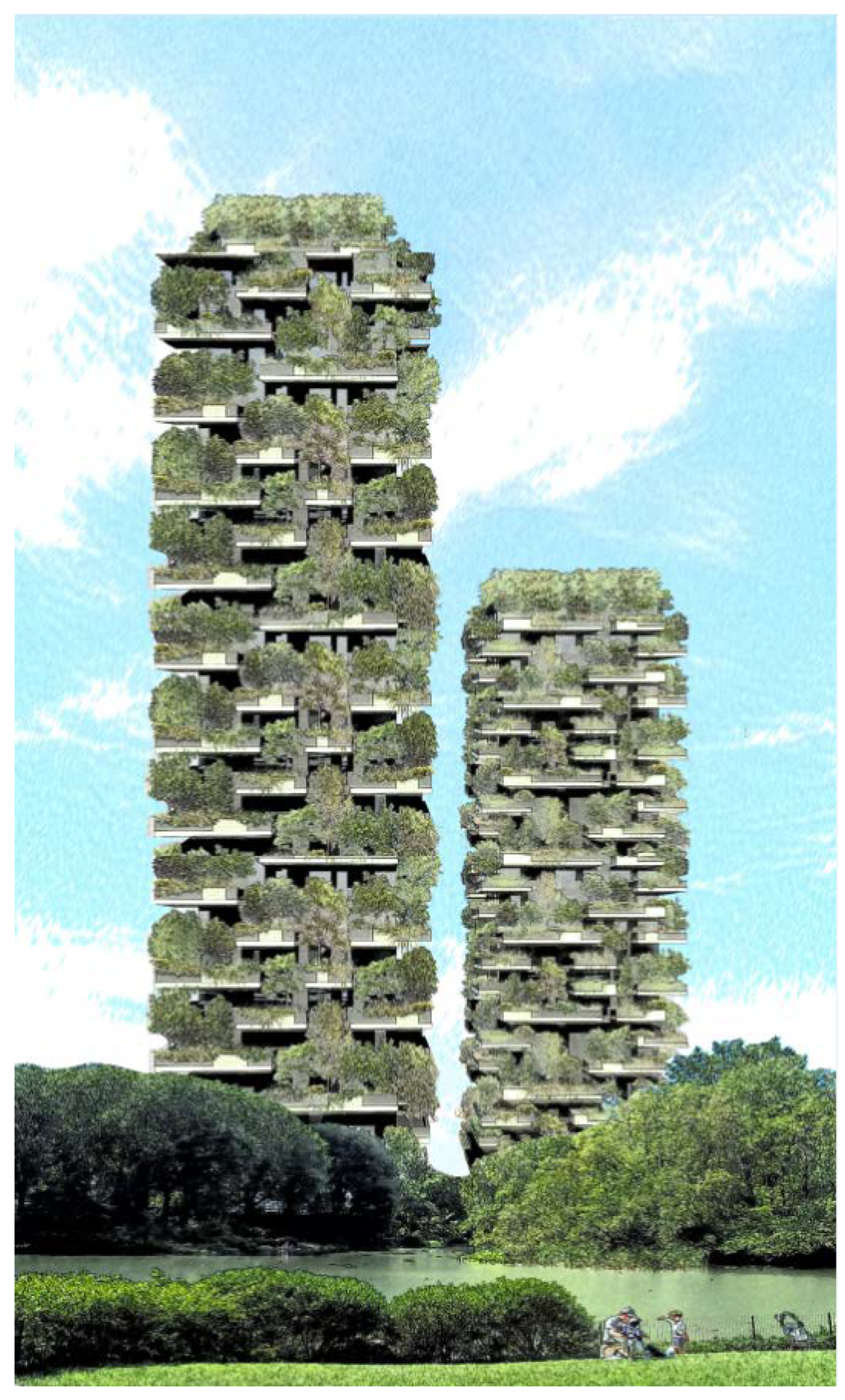
Figure 3.
ACROS Fukuoka Prefectural International Hall in Fukuoka, Japan. (Sketch by author).
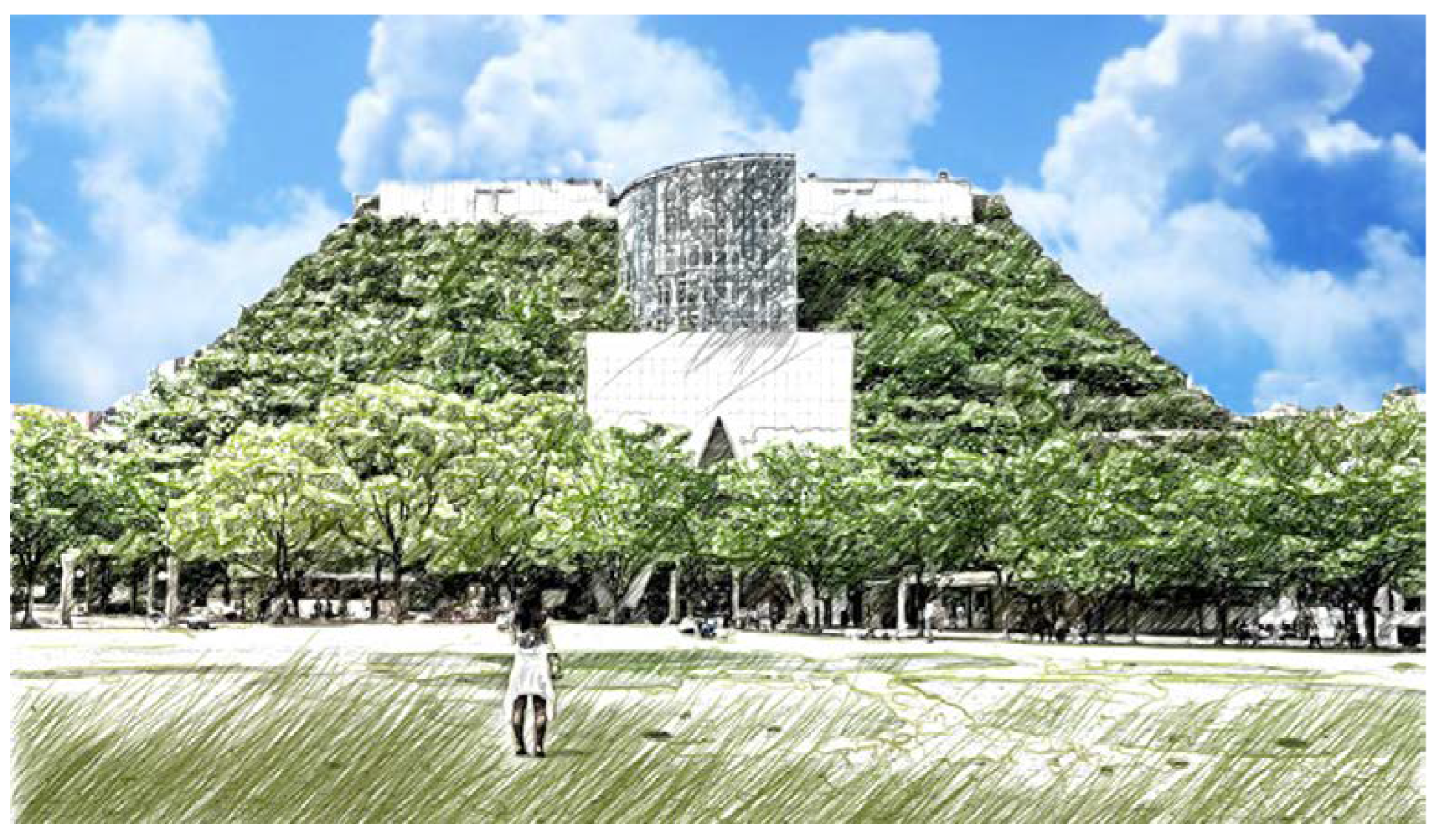
Figure 4.
Oasia Downtown in Singapore. (Photo by author).
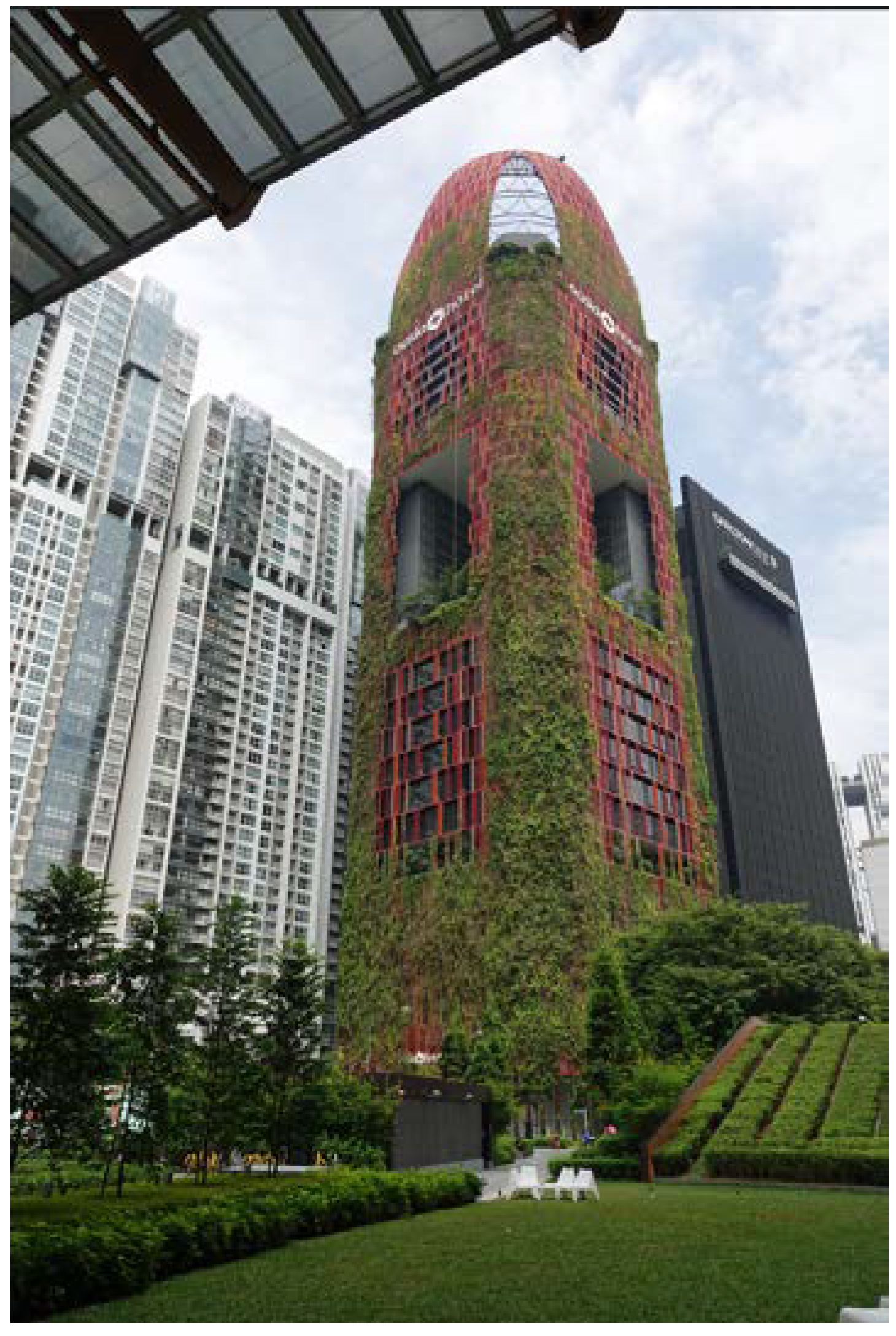
Figure 5.
Planters in Bosco Verticale. (Sketch by author).

Figure 6.
Integrating vegetation may occupy valuable and limited space on balconies. (Sketch by author).
Figure 6.
Integrating vegetation may occupy valuable and limited space on balconies. (Sketch by author).
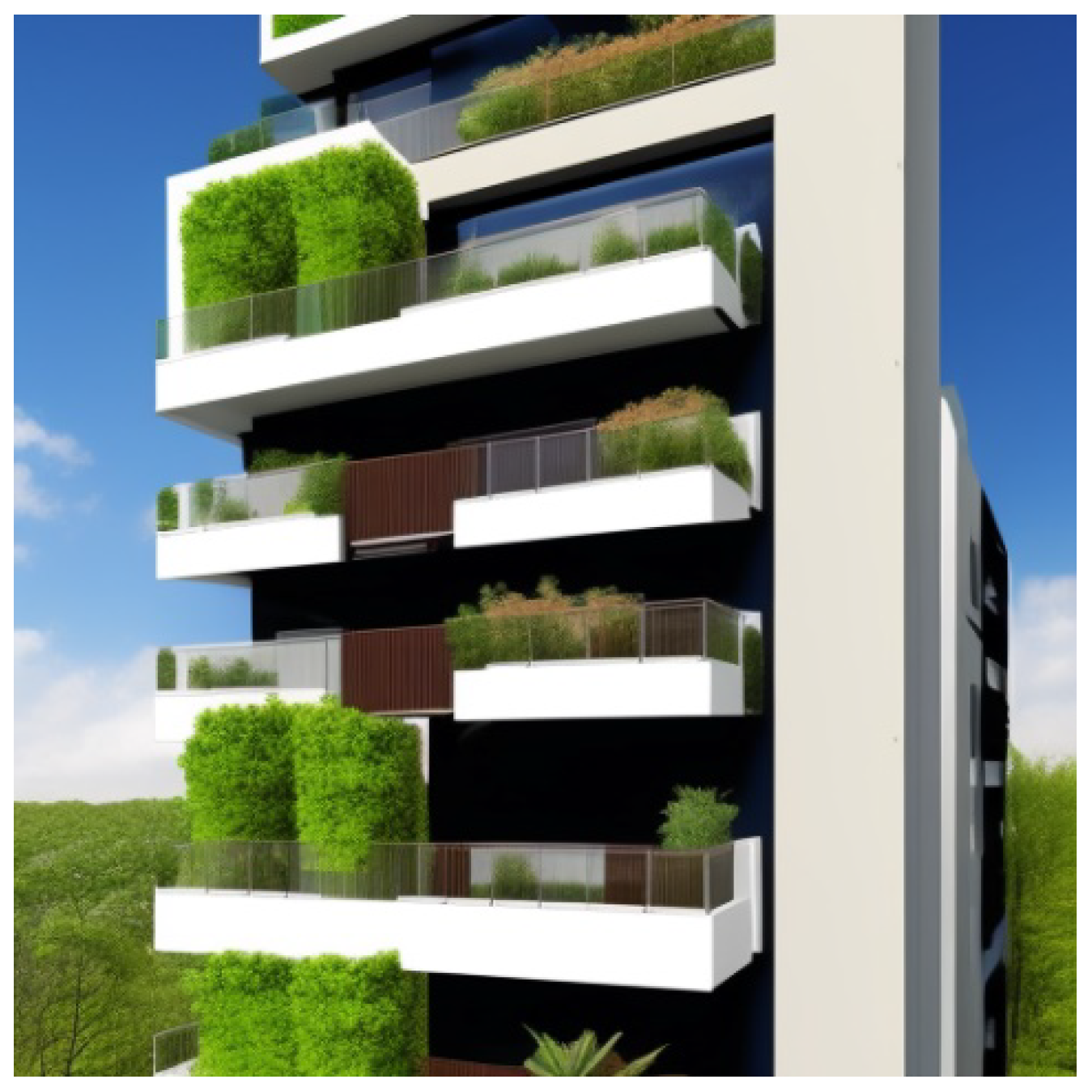
Figure 7.
Balconies occupy a sizable portion of every floor plan in Bosco Verticale. (Sketch by author).
Figure 7.
Balconies occupy a sizable portion of every floor plan in Bosco Verticale. (Sketch by author).
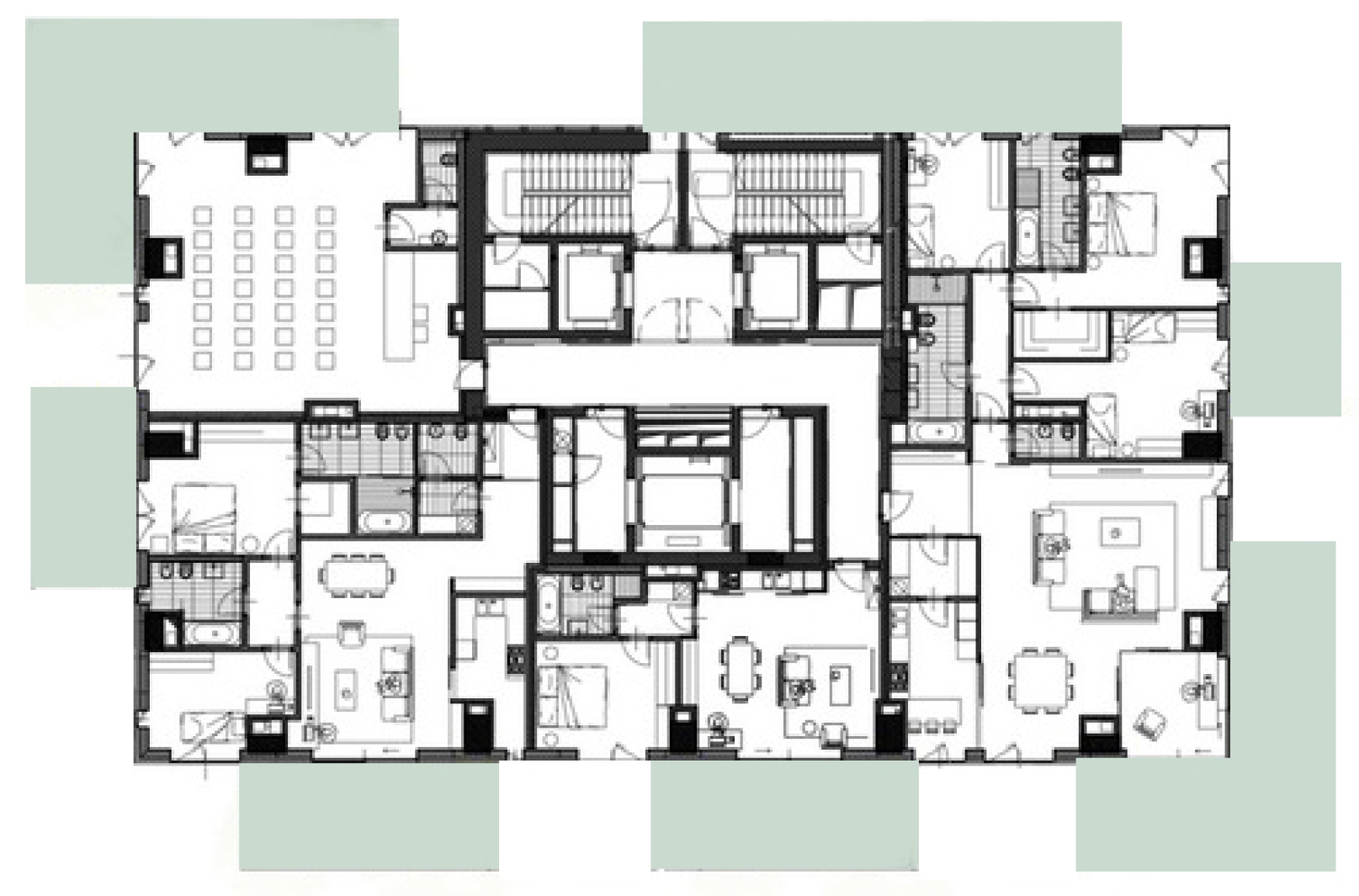
Figure 8.
Large, cantilevered balconies, lush greenery, and tall trees block sunrays and natural daylight from Bosco Verticale’s indoor spaces. (Sketch by author).
Figure 8.
Large, cantilevered balconies, lush greenery, and tall trees block sunrays and natural daylight from Bosco Verticale’s indoor spaces. (Sketch by author).
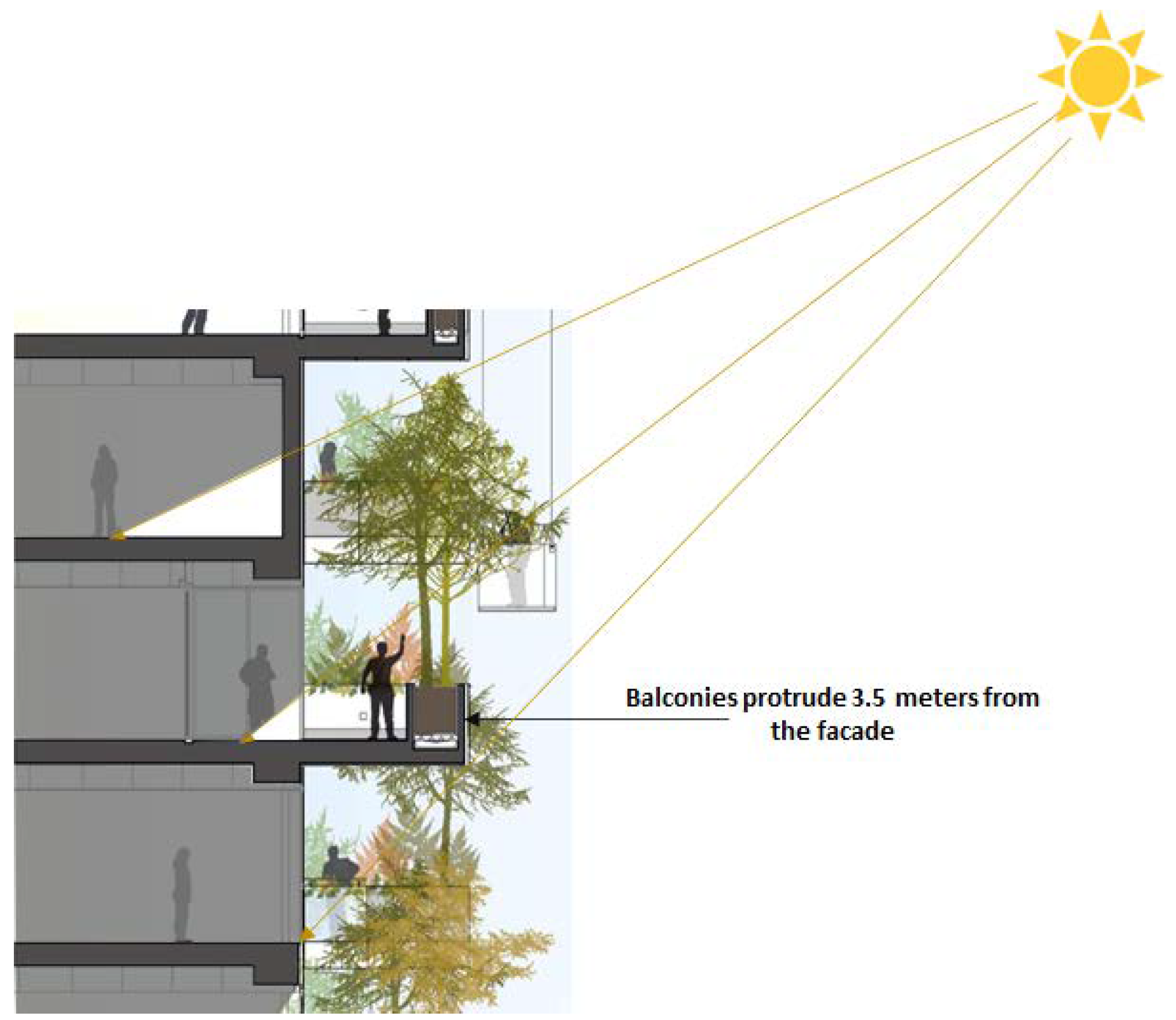
Figure 9.
The vegetated terraces block sunrays and natural daylight from entering ACROS’s indoor spaces. (Sketch by author).
Figure 9.
The vegetated terraces block sunrays and natural daylight from entering ACROS’s indoor spaces. (Sketch by author).
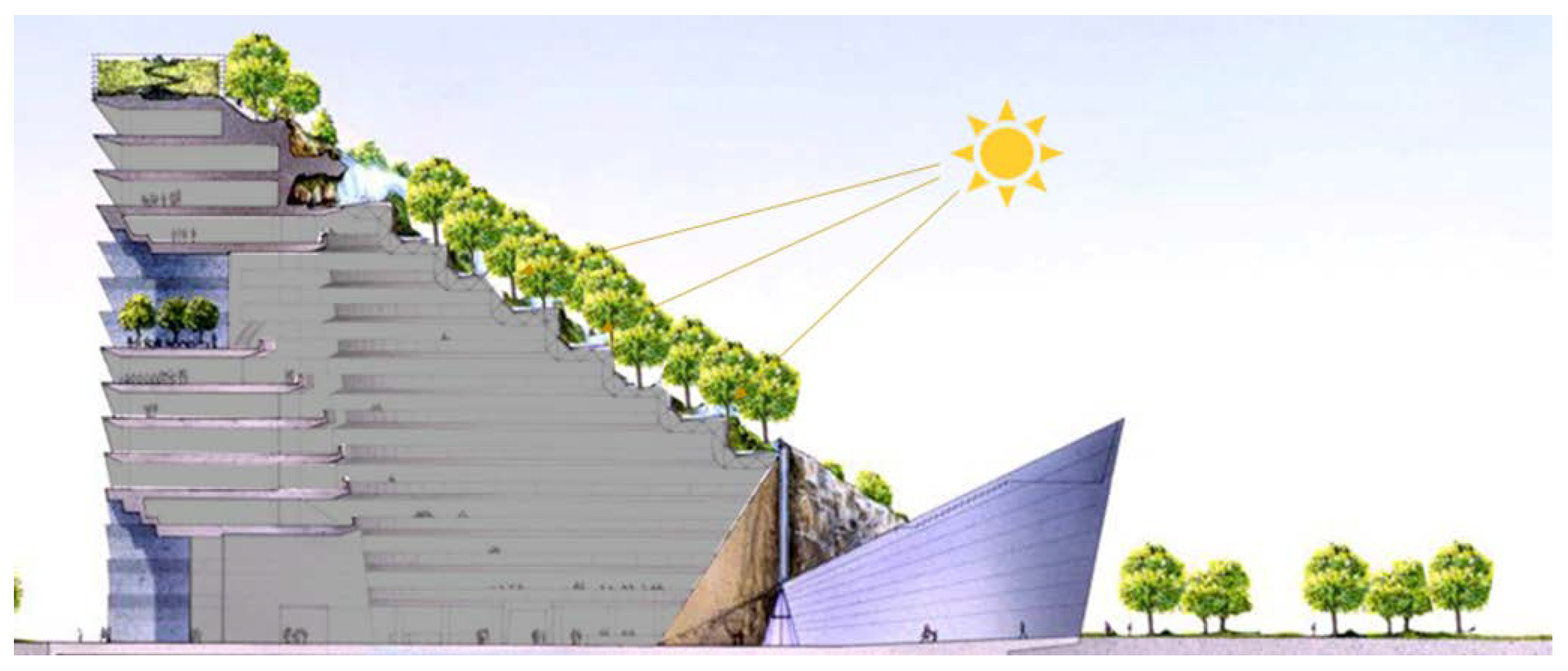
Figure 10.
Integrating trees and plants in structures requires special treatment to avoid water leakage. (Sketch by author).
Figure 10.
Integrating trees and plants in structures requires special treatment to avoid water leakage. (Sketch by author).

Table 1.
Major Greenery-Covered Towers. (Compiled by author).
| # | Building Name | Location | Architect | number of floors | function | Year of Completion |
|---|---|---|---|---|---|---|
| 1 | Consorcio Building | Santiago, Chile | Enrique Browne and Borja Huidobro | 17 | Office | 1993 |
| 2 | ACROS Fukuoka Prefectural International Hall | Fukuoka, Japan | Emilio Ambasz | 17 | Civic Center | 1995 |
| 3 | The Met | Bangkok, Thailand | WOHA | 36 | Residential and Hotel | 2005 |
| 4 | Newton Suites | Singapore | WOHA | 36 | Residential | 2007 |
| 5 | School of the Arts Singapore (SOTA) | Singapore | WOHA | 10 | Educational | 2009 |
| 6 | Khoo Teck Puat Hospital | Singapore | CPG Consultants, in collaboration with RMJM | 10 | Hospital | 2010 |
| 7 | One Central Park | Sydney, Australia | Jean Nouvel | 34, 14 | Residential | 2013 |
| 8 | CDL’s Tree House | Singapore | CDL | 24 | Residential | 2013 |
| 9 | Bosco Verticale, “Vertical Forest” | Milan, Italy | Stefano Boeri Architetti | 27, 19 | Residential | 2014 |
| 10 | CapitaGreen in by. -story hotel and building, completed in. | Singapore | WOHA | 16 | Office | 2014 |
| 11 | Santalaia | Bogotá, Columbia | Exacta Proyecto Total | 11 | Residential | 2015 |
| 12 | M6B2 Tower of Biodiversity | Paris, France | Maison Edouard François | 18 | Residential | 2016 |
| 13 | Oasia Downtown | Singapore | WOHA | 27 | Office | 2016 |
| 14 | ParkRoyal on Pickering | Singapore | WOHA | 16 | Hotel and Office | 2016 |
| 15 | Clearpoint Residencies | Colombo, Sri Lanka | Arosha Perera | 47 | residential | 2017 |
| 16 | Huaku Sky Garden | Taipei, Taiwan | WOHA | 38 | Residential | 2017 |
| 17 | Kampung Admiralty | Singapore | WOHA | 11 | Residential/Mixed-use | 2017 |
| 18 | The Tao Zhu Yin Yuan | Taipei, Taiwan | Vincent Callebaut | 21 | Residential | 2017 |
| 19 | Rosewood Tower in by. | São Paulo, Brazil | Jean Nouvel | 22 | Hotel | 2018 |
| 20 | '1000 trees’ | Shanghai, China | Heatherwick Studio | 10 | Mixed-use | 2019 |
| 21 | Sky Green Residential & Retail Tower | Taichung City, Taiwan | WOHA | 26 | Mixed-use | 2019 |
| 22 | Eden | Singapore | Heatherwick Studio | 26 | Residential | 2020 |
| 23 | Trudo Vertical Forest | Eindhoven, Netherlands | Stefano Boeri Architetti | 19 | Residential | 2021 |
| 24 | Easyhome Huanggang Vertical Forest City Complex | Huanggang, Hubei province, China | Stefano Boeri Architetti | 28 | Mixed-use | 2022 |
Disclaimer/Publisher’s Note: The statements, opinions and data contained in all publications are solely those of the individual author(s) and contributor(s) and not of MDPI and/or the editor(s). MDPI and/or the editor(s) disclaim responsibility for any injury to people or property resulting from any ideas, methods, instructions or products referred to in the content. |
© 2023 by the authors. Licensee MDPI, Basel, Switzerland. This article is an open access article distributed under the terms and conditions of the Creative Commons Attribution (CC BY) license (http://creativecommons.org/licenses/by/4.0/).
Copyright: This open access article is published under a Creative Commons CC BY 4.0 license, which permit the free download, distribution, and reuse, provided that the author and preprint are cited in any reuse.


