

Submitted:
13 May 2023
Posted:
15 May 2023
You are already at the latest version
Abstract
This study mostly analyzes the pragmatic viewpoints of speech acts and language functions through Halliday’s (1975) language functions and Searle’s (1976) speech acts were adapted to analyze the functional aspects of the conversations and it was also intended to explore the teachers’ perception toward teaching and learning English as a Foreign Language (EFL) learners’ textbooks and the teacher’s components of communicative knowledge regarding the functions of language in daily activity. The participants of this paper consisted of thirteen Sunrise 10, 11, 12 grades of Kurdish teachers at high school English in Iraqi Kurdistan. Through semi-structured interview, it was found that the conversations in the mentioned textbooks are insufficient from the pragmatic point of view. Some recommendation for the textbook designers, teachers, material developer were raised to make up the shortcomings of the textbooks. The findings reveal that the conversation texts in Sunrise textbooks are not meeting the systematic standard of pragmatic competence the English language learners and the book designer must be recommended to be aware of those shortcomings of the textbook series if they are required to develop their speaking skills in both student and activity series. The implications of this paper can be helpful in comparing the results of this study with other similar studies to check if there is a universal pattern in performing the speech acts and language functions and the interest to Kimberley Education for Life learners in increasing their knowledge of pragmatics in general and the role of language functions and speech acts investigated in this study.
Keywords:
EFL
; language functions
; speech acts
; teacher’s perception
; textbook evaluation
1. Introduction
Language is a communication tool used by human beings to convey and share different ideas. In broader sense, it enables the human beings to understand one another. Language is one of the essential sources for socialization as it allows social interaction and the formation of social relationships. In learning language, pragmatics can explore the natural ability of the language learners how to interact in proper context. As stated “Pragmatics studies how people comprehend and produce a communicative act or speech act in a concrete speech situation which is usually a conversation” [1]. Some scholars are of the opinion that the general theme of pragmatics is to focus on functional language. Overall, the language plays a vital part in human civilization and is crucial for human development and progress.
Classroom speech acts and language functions are two main issues for both teacher and students as it gives information on the type of interaction they perform inside the classroom. Hence, it shows the quality of verbal interaction in the classroom [2]. It is worth noting that several research also claims that students’ language development is greatly influenced by the use of various language functions in the classroom during the interaction between teachers and students [3]. Teacher’s language knowledge is another key factor in determining the future success of teaching and learning. Teachers who are a non-native speaker of English undergoes difficulties in conveying the message through lessons and making the learners understand the instructions in English language.
Since textbooks are key resources in teaching and learning English for teachers and students’ environment, they have a tremendous role in English Language Teaching (ELT) curriculum and assist process of learning and teaching. According to the study [4], “textbooks are the main sources that can convey the knowledge and information to the learners in an easy and organized way”. Sometimes, it is difficult to identify the role of textbooks inside the classroom accurately. As a matter of fact, it is important for teachers to choose a textbook which is appropriate for the class activity. Therefore, the chosen textbooks become an important tool during classroom teaching. They provide a base for knowledge dissemination and support the learning process both inside and outside of the classroom system thereby, promoting critical thinking skills of the learners.
This study is anticipated to indicate the lack of both speech acts and language functions in Sunrise textbooks and to contribute to the betterment of utilizing textbooks in teaching and learning English, especially in Kurdistan region of Iraq as English as a Foreign Language (EFL). Every textbook has its own weakness and strength relating to the activities, materials as well as exercises. It is also stated that books have the function as a stationary to write the important information and can be utilized in the human life. Textbook has a huge effect on the student’s overall talent in managing different activities regarding English textbook. The textbooks help in providing a common terminology for the learners as well as the instructors [5]. The use of common terminology through these textbooks are helpful when the classroom has diverse set of students.
To achieve different learning objectives, textbooks should be authentic, useful, and meet student’s needs. Additionally, the importance of language textbooks in the development of target language pragmatic knowledge is also significant. However, the previous analyses of language textbooks have pointed out that many textbooks tend to offer classroom learners little opportunity for learning L2 pragmatics [6,7,8,9,10,11,12]. The mentioned studies clarify that language textbooks presents speech acts unfairly. The language textbooks are an important tool for the acquisition and development of language skills. These textbooks help to provide the structure and organization of language skills and helps to enhance vocabulary learning. Therefore, it helps in self learning.
A study concluded that the presentation of speech acts in EFL/ESL textbooks was pragmatically unsatisfactory since they were not supported well with contextual information, nor they provided explicit meta-pragmatic discussion [13]. In line with the textbooks, the teacher’s perception simply means the natural ability to process provide stimuli to become aware of something after experiencing it. The language textbooks provide a variety of practice materials which includes different forms of language exercises, comprehension passages and writing exercises. This form of material that is provided in the language textbooks helps students with opportunities to enhance their language skills. Students can use such skills for practicing conversation in the learnt language.
The factors influencing perception are functional/personal, structural, and cultural factors. First, functional/personal factors consist of needs, experience, motivation, hope, attention, emotion, and situation. Second, structural factors consist of intensity of stimulus, quantity of the stimulus, and the contradiction of stimulus. Cultural factor is a factor in which an individual life get shaped and leads to a specific way communication pattern [14]. It is also seen through different research that the language textbooks often have such cultural information related to the target language that it helps the learner to get a deeper understanding of the language as well as the culture of the native people. These textbooks provide extensive set of vocabulary to help the learners develop their vocabulary and spoken skills in the language that they are learning.
In assessment of educational perspectives, teachers’ perceptions play a vital role. Furthermore, they are the main factor in learning and teaching; therefore, their role and viewpoints are significant in identifying the limitations which occurs in educational environment as well as teacher’s educational development. Researches have underlined a position which teachers’ perceptions hold in education and agreed that teachers’ perceptions influence teachers’ practice, judgment and decision making [13,15]. There are sufficient research examining teacher’s perception in EFL as well as learner’s professionals’ perception toward the textbook. The teacher’s perception has significant impact on the quality of classroom teaching. A positive perception would result in better learning process.
Educational sustainability is a thoughtful model for the betterment of human life. Education is a tool that adds value consciously to the human life creating a balance among society, environment, and economy [16]. It is a continuous process of learning which can be sustainable through sharing. Language is a skill and a powerful tool that controls the communication. The reasoning, judgment, and intellectual capacity of individuals may lead to the sustainability of education. Today educational system is required to be shifted with a concern towards sustainability [17]. Pedagogical techniques are the basic structure for knowledge dissemination and the language is the carrier, though both are equally important for the standardization. The three core requirements are students understanding of sustainability, students’ ability to recognize interdependency for sustainability and a multidisciplinary mindset to evolve with sustainability.
The teacher’s perception regarding the textbooks plays a significant role in the classroom teaching. It helps the teachers to plan their teaching lessons more effectively. The teachers can use these textbooks for effective communication with their students and help the students to grasp the subject matter deeply [18]. Therefore, the researchers were concerned in indicating problems toward using English textbooks and troubles that confronts teachers in using them. Teachers must be aware of what they perceive and believe when conducting their daily teaching. This means that teachers’ perceptions are the basis for teacher to form judgment or make decisions. In addition, teachers’ perceptions result in how teachers deal with shortcomings in their teaching situations [13]. The lack of proper understanding and implementation of the teaching and learning from English textbooks may deviate from the educational sustainability.
The problem cited is solved answering some intriguing questions as:
- What are the types of both speech acts and language functions in the conversation sections included in the EFL Textbooks?
- How frequently each language function and speech acts are used?
- What is the range of speech acts and how are they distributed in the textbooks?
- What are the perceptions of the teachers regarding the pragmatic information in the textbooks they teach?
The research aims to analyze the conversation section of Sunrise textbooks in Northern Iraq, through Halliday’s (1975) language function [19], and Searle’s (1976) speech act theory [20] to find out whether the textbooks match with the learner’s current needs and the teacher’s perception toward the textbook they teach.
The research is presented in five sections. The first section is Introduction, providing the basic idea about the research and the concept discussed, followed by research problem, questions, and the research aim. The second section is the Theoretical Framework providing a detailed discussion about the base for the research and the importance of conceptual parameters adopted for this study. The third section is the Methods, basically discussing the throughout process for the study the technical justifications for the current study. The fourth section is the Result based on the analysis of data. The last section is fifth section i.e., the Conclusion which provides the final understanding about the study and research outcomes. The very first part is the abstract presenting the snapshot of the study, followed by relevant keywords, and the last is references for all cited texts within the study.
2. Theoretical Framework
Speech acts are needful functions serve to complete the communication. A speech act may be of different form and formats being a word or many words forming a sentence as required at different situation. Speech acts vary from one language to another, which makes this challenging when a learner applies the same acts to second language. The phrases and expressions of the second language and the influence of culture may not be the same [21]. So, assuming that there is a universal rule in the speech act may misguide a learner. Not only the specific communication for business or any other requirements rather the basic communication of greetings, apologies and introduction are also controlled by speech acts. Language learners also are inclined to their first language recognizing the facts based on their prenotions. This situation leads to misinterpretation of understanding and the speech act fails to communicate.
The knowledge constituents are presented (Figure 1) as the required criteria for the educational sustainability. The four most important criteria are the requirement subject matter, pedagogical, contextual, and curricular [22]. Teachers’ ability to use the material for EFL teaching also determines the implementation of textbook learning in fulfilling the curricula goals. The subject matter is representing knowledge of the language, knowledge of non-linguistic, and the knowledge about the text. The second constituent is the pedagogical which carries the teaching and learning strategies, instructions comprehension, and the quality of learning among students [23]. The third constituent is contextual which represents students’ knowledge, their proficiency in language, interest, need and preference, and the knowledge on materials. The fourth is the curricular focuses on knowledge of materials among teachers on two specified categories identification of contents and analyzing the curriculum.
2.1. The role of Speech Acts and Language Functions in EFL Classroom
The role of speech acts becomes an important issue for the instructors to assist their learners to perform teaching behaviors during the class interaction. In another word, instructor’s role of interaction inside the classroom must be taken into consideration. However, in EFL classroom setting, such as in Indonesia, teachers and students should pay attention to several things, such as idiomatic expressions and cultural norms [24]. The mentioned factors could be a problem to their learners it they do not grasp the power of utterance. Precisely, the research conducted highlights different ways in complimenting between Americans and Persians which proved that culture contributes to different style of language use [25]. With all the mentioned factors, the instructor’s skills are one of the important aspects which determine the success in the language learning and teaching process.
In foreign classroom environment, the instructor’s responsibility as a non-native speakers of English sometime faces difficulties in conveying the message and make the learners to grasp the knowledge in target language. Another study finds that Indonesian students get misunderstanding toward the teacher’s use of speech acts in the classroom for uttering speech acts inappropriately [2]. Various interpretations may come into students’ mind only from a simple utterance spoken by the teacher. Sometimes, the teacher wants to deliver her message indirectly, the students can understand in different ways [26]. When the instructor produces various utterance, he tries to inquire his learners to perform an action. The EFL learning implementation among learners seeks commitment from both ends as teachers and learners [27].
EFL teaching and learning is also influenced by metadiscourse of speech acts and language. The framework proposed a combination of 16 functions of discourse as personal metadiscourse [28]. This framework discusses over the text as pronouns, or nouns with reference to their different forms. Finally, the categories considered for the implementation are broadly divided as Metatext and Audience interaction showing 4 subcategories altogether (Figure 2). Several studies incorporated this model for comparison in spoken and written text. Nevertheless, the comparison was conducted in two different disciplines also. Monologic and dialogic communications also compared to justify the competence of this model [29]. Functional categorization framing the interactions in-between teachers and students are referenced to validate the model. The efficiency of the model makes it acceptable among researchers of EFL.
2.2. The role of Textbooks in Teaching and Learning
The role of textbook is of great significance in teaching and learning pedagogy. There are different resources that help a teacher in achieving his/her educational objective in the classroom and textbook is one of those resources [30]. It is the sole discretion of a teacher to employ different teaching tools and resources and decide when and how to use these resources. The role of the textbooks becomes even more important when a new topic is being discussed in the classroom. Moreover, there are variety of textbooks that are available for each topic and the teacher has the option to choose from the available textbooks that can be used to teach the same topic. The textbooks have an extensive impact on the achievement of curriculum objectives [31]. Textbook materials and the methodology of teaching together intend the learners to positively grasp the language.
It has been concluded in several research that the textbooks should include different examples and illustrations from the real world and must be written in a simple language to make it convenient for both the teacher and the student to understand it. It has also been observed that if the educational material i.e., the textbooks are well structured and arranged systematically the learning process will be much easier and more successful [32]. It is very important to consider the developmental stage of the students while opting for a particular textbook as the intellectual capacities of the students vary. Therefore, the gradual learning is crucial [26]. However, the books are considered as the agent for change and more than that the agent for conversion. A textbook is the determinant of learning methods and the content to be taught. In fact teaching and learning process is completely structured by the textbook [33].
There are many researchers who have emphasized over the changing role of textbooks in the current era. The key issues discussed are the evolution of information and communication technology and that with the usage of digital devices, where does the textbook study exist? It is suppressing the usage of textbook in academic environment, and the teachers are also victim of this [34]. Not only this but with the changing time, the content of digital sources also has changed making the whole concept of textbook as absurd. Students’ knowledge is based on the textbook, as they use this as the most basic source of learning [35]. The changing practices are impacting students’ habit to read books to explore information and strengthen their knowledge.
The study conducted to assess the teachers learning through the online teaching, which showed that teachers were not able to perform, and it was difficult for them in online engagement. Technological Pedagogical Content Knowledge (TPACK) model proposed and studied for the justification on the importance of contents in textbooks as an essential part for the professional development of teachers [36]. The model provides three bases for knowledge as Technology Knowledge (TK), Content Knowledge (CK), and Pedagogical Knowledge (PK) consisting of seven components (Figure 3). EFL teaching investigated through the TPACK framework for the inclusion of information and communication technologies [37]. There are studies providing self-assessment tools based on TPACK for the evaluation of EFL teachers for their teaching competence and the usage of technological devices and supporting aids.
2.3. Teacher’s Role in Evaluating the Textbook
In this process, it is the teacher’s ability to enhance the student’s skills and manage the environment of the classroom by engaging teaching and learning activities. Teacher’s knowledge background and life experience directly have an influence by their thoughts. It could affect their goals, teaching procedures, materials, classroom interactions, their roles in the classroom, and their students as well [38]. To be able to address the research problem of this study, it is very important to identify the teacher’s perception toward the textbook they teach and their experience in that area. According to numerous studies on the textbooks, their role in language teaching and the teacher’s viewpoint in the process [9]. The findings of several previous studies showed that the textbook used in the classroom is considered suitable to the students’ need, teachers’ need, syllabus and examination. Modifying task, adding, and omitting the materials are the strategies of the teachers in adapting the textbook in the classroom.
The level of difficulties faced by the teachers is the material difficulties and aids limitation for teaching. Another study reviewed the comparison of the teachers’ perspectives and the students’ perspectives of the textbook using in-depth interviews [39]. The negative results showed that the teachers emphasized the fact that teaching with textbooks saves them a lot of time. On the other hand, the students enjoyed working with textbooks because it helps them to work in advance using the materials from the textbook. The teachers might confront difficulty to manage the classroom material and performing different activities with the lack of textbook. Inevitably, the textbook has an important role in learning and teaching activities.
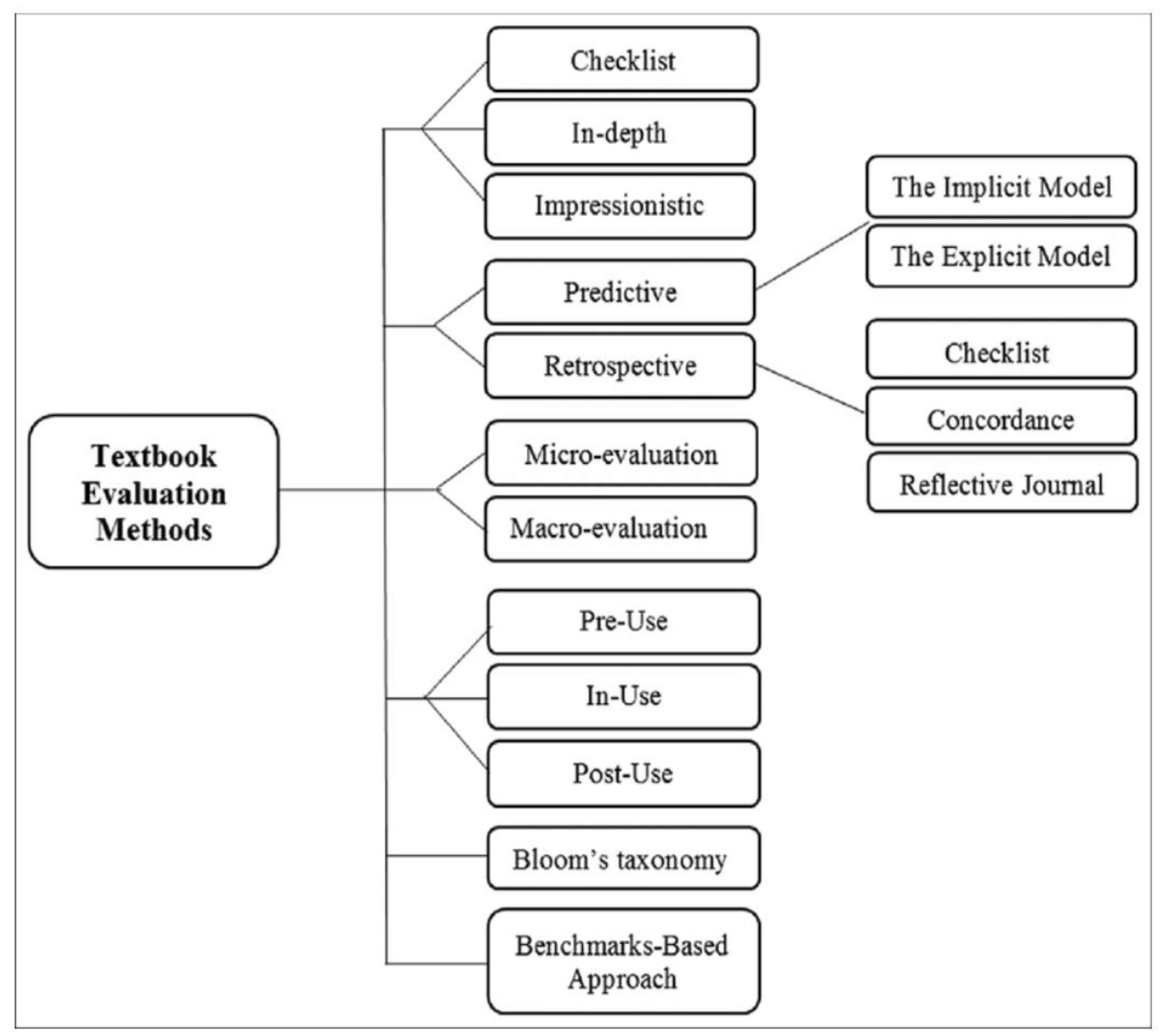
As shown (Figure 4), there are three primary approaches to conduct a textbook analysis, and they are checklist, in-depth and impressionistic methods. The main objective of predictive evaluation is too further the process of decision making by identifying the most suitable materials for a given set of objectives by involving the assessment of the potential of a textbook before it is being adopted. The objective of a retrospective evaluation is related to the accuracy of a previous predictive evaluation and to identify the available opportunities for the improvement of the predictive tools for further use. An additional evaluation framework has been proposed which includes micro-evaluation and macro-evaluation [40].
The micro-evaluation approach involves a detailed empirical evaluation of a given teaching task chosen by the teacher while the macro approach refers to a comprehensive appraisal to assess the overall effectiveness of the textbook. The evaluation of textbooks is further classified into pre-use, while-use or in-use and after-use types which is based on the intended purposes of the evaluation [40]. The use of bloom’s taxonomy can be extended to the field of education with the aim of supporting both the experienced and inexperienced teachers in promoting critical thinking skills. Last step in the textbook evaluation methods is the benchmark-based approach which is used to identify the intended learning objectives. This method enables the educators to determine whether the textbooks align with these goals.
Figure 4.
Textbook Evaluation Methods [40].
Figure 4.
Textbook Evaluation Methods [40].
2.4. Sunrise Textbook Implementation in Kurdistan
The Kurdistan Region of Iraq has made the usage of Sunrise textbooks obligatory for High School students. The application of Sunrise 10, 11 and 12 in the system of education becomes an important element that requires close attention to achieve the objectives in learning and teaching process. It is the responsibility of teachers and school principals in choosing the most suitable syllabus for the classroom [41]. During the different activities inside the classroom, the teachers might confront some obstacles in applying the material from Sunrise considering the EFL learner’s ability and competency in learning. Moreover, every textbook has its weak and strong points when it is compared with other textbooks in terms of materials, vocabulary, and activities [42]. Since it has weaknesses, they cannot always be the only source of learning and cannot meet all the student’s needs. In teaching and learning environment, it becomes a challenge for the English teachers to apply only textbooks and develop the students’ requirement atmosphere.
In the application of Sunrise textbooks, there might be some different possibilities of the classroom environment in utilizing the Textbook as the only source to teach English. (Figure 5). Some of the EFL teachers depends exclusively on the textbooks and go after the rules and regulations. Furthermore, the overall designing of the textbook’s activities is sometimes very difficult to be performed in the education process due to the learner’s competency [43]. In addition, the EFL teachers should formulate their own material suitable to the classroom expectations [44]. The Sunrise has its acceptance and criticism in among the teaching fraternity of Kurdistan Region of Iraq. Most of the study appreciates the implementation of Sunrise positively, as it is benefiting EFL learners in Kurdistan. Rather the criticism is more to the academic environment in Kurdistan of Iraq, which is incompetent for the implementation of English Foreign Language at the school level [45].
3. Method and Materials
This study was conducted at KRG high school regarding their English textbooks in Erbil. Sunrise textbooks is considered as an English textbook material in both teaching and learning environment. It was observed that the English teachers in this region used an extra English textbook beside the Sunrise textbook. Another study makes a comparison between EFL and ESL textbooks [12]. It believes that textbooks rarely provide enough information for learners to successfully acquire pragmatic competence. The comparison of EFL and ESL textbooks reveals that although the amount of pragmatic information is small across all texts, a larger percentage of content of EFL texts are devoted to pragmatic information.
The material in this study has come from Sunrise high school English textbooks which consists of different units. These textbooks were published by Macmillan in 2011. All speech acts and language functions in these textbook series were analyzed. Every unit begins with a conversation, every dialogue is followed up by another dialogue in which students are required to make statements and complete conversations according to the context. Moreover, in some parts of the conversation section the meanings of some words have been translated by the end of the student books. The paper focused on the teacher’s perception toward the pragmatic information in the textbooks they teach.
3.1. Data Collection Procedure
All speech acts and language functions in these textbook series were analyzed through Halliday’s (1975) language function [19], and Searle’s (1976) speech act theory [20] to find out whether the textbooks match with the learner’s current needs and expectancies. Sunrise textbooks 10, 11, 12 consists of ten, nine and six eight respectively. Part two, a semi-structured interview was used to collect data for one of the main research questions on the teacher’s perception toward the textbooks. In this type of interview, validity, and reliability changes according to the repetition of the same words in each question, upon conveying equivalence of meaning [46]. It is this equivalence of meaning which helps to standardize the semi-structured interview and facilitate comparability.
Both Kurdish and English languages were used in the interviews. It took approximately 20-25 minutes for each interview depending on teacher’s ideas [47]. The whole interview was audio-recorded for data analysis and data collection. Altogether thirteen teachers (males and females) from public and private schools were the participants in this study. The age of the teachers ranges from 28 to 39 years old with the experience from 3 to 6 years of teaching. They have different cultural background and knowledge. This section elaborates on how data is collected authentically from the teacher’s view points towards the textbook series they teach. The data collection is natural and empirical, and it is based on concrete information [48]. Therefore, to get an accurate data, semi structure interview was the most suitable instrument to gain their perceptions.
3.2. Data Analysis Procedure
This study is mainly qualitative research based on the data collected from the textbook. There are some statistical analyses presented for the clarity on data. The speech acts including Directives, Assertive, Commissive, Expressive, Declaratives in English language textbook series titles “Sunrise10, 11, 12” are incorporated. The primary source of data for this study was the textbooks. Therefore, the whole study has been carried out by careful inspection of the conversations sections which included in the book series of Sunrise based on Searle’s (1976) speech acts [20], and Halliday’s (1975) language functions models [19]. Its purpose is to find out all types of speech acts and language functions occurred in the aspects of conversations.
Primarily, in this study some basic statistical analysis of sub-category of Searle’s (1976) speech act taxonomy [20], and Halliday’s (1975) language function [19] model as well as their percentages and frequencies shown in different tables and presented in different figures. This type of research will clarify deep analysis of the data collected. However, to reveal the frequency of data, this research also applies quantitative one [49] except the data which is gained from questionnaire quantitatively analyzed to take the overall perception of 10, 11, 12 grade Kurdish teachers of English toward the textbooks.
4. Results and Findings
4.1. Role of Language Functions in EFL High School
The language functions which were included in Sunrise English textbooks, the following finding were obtained: the results depict that the Sunrise high school English textbooks include various language functions. The language functions include talking about personal information, introducing oneself, position, talking about places, dress, color, weight, age, free time, and talking about transportation and asking about different jobs. Among the textbooks Sunrise 10 presented more functions of language than Sunrise 11 and Sunrise 12 respectively. Sunrise 10 presented (9/18), Sunrise 11 (6/18), Sunrise 12 (3/18). This study’s first research question was the types of language functions in the conversation sections in Iraqi Kurdish high school English textbook (Figure 6).
Some of the language functions throughout the mentioned textbooks did not have any pattern. Introducing cover about 15 percent of language functions in the textbook series, how to introduce yourself, to talking about personal information, to how to talk about other people (Sunrise 10), followed by talking about personal experience (Sunrise 12). Getting acquainted with other people cover about 18 percent of language function, asking someone’s name, asking someone’s family, find out about other people, asking about someone’s place, position, title, job. Then, choosing and buying clothes, describing situation, discussing about housework jobs, and talking about requests and orders, talking about the price of things cover more than 9 percent of language functions in Sunrise 10 and Sunrise 11 (talking about time, climate, place, talking about sequence of events, making new friends, discussing about planets and space travel) also each covers 10 percent of language functions.
Lastly, there are other functions of language which include “talking about materials, dimension, shapes, introducing friends, talking about age, color, events, supporting different arguments, talking about sports, talking about requests and orders, talking about transportation, and talking about different job, comparing time periods, describing past events. According to the textbooks are the key component in most language programs, in a broader sense he argues that textbooks serve as the basis for much of the language input learners receive and the language practice that occur in the classroom [50].
4.2. Functional Language and Speech Acts
The research question intended at shaping whether there was consistency among the textbooks for each unit regarding the content and what speech acts were shown and at what level. It displays that except declarative speech act, all types of speech act occur in the conversations of Sunrise (10, 11, 12) textbooks, the other four kinds of speech acts were observed in the conversation section such as declaratives, commissive, directives, and expressive. Regarding the other research questions which focuses on the frequency and the percentage of the speech acts and language functions with level of the textbooks. The role of functional language and speech acts (Figure 7) is shown below.
In other words, the missing of declarative speech acts can be considered as an important failure in the book series. According to Cutting (2002) declarative speech acts are used frequently in everyday communication. They are words and expressions that change the world by their very utterance, such as “I bet,” “I declare,” “I resign,” “I announce,” “I pronounce,” and many other utterances which are used in different contexts. The absence of speech acts of declaratives will not help language learners to develop their pragmatic competence.
As seen (Figure 7) no imaginative function in the conversation sections of the textbooks emerged. Since the imaginative function is not administered, so the frequency and the percentage are zero, which is one of the main failures of these textbooks. Regarding the language functions in these textbooks, other types of language functions were observed in the conversation’s sections such as 13.36% instrumental, 6.53% regulatory, 15.07 % interactional, 21.10 % personal, 23.11 % heuristic, 21.10 % representational and 0 % imaginative.
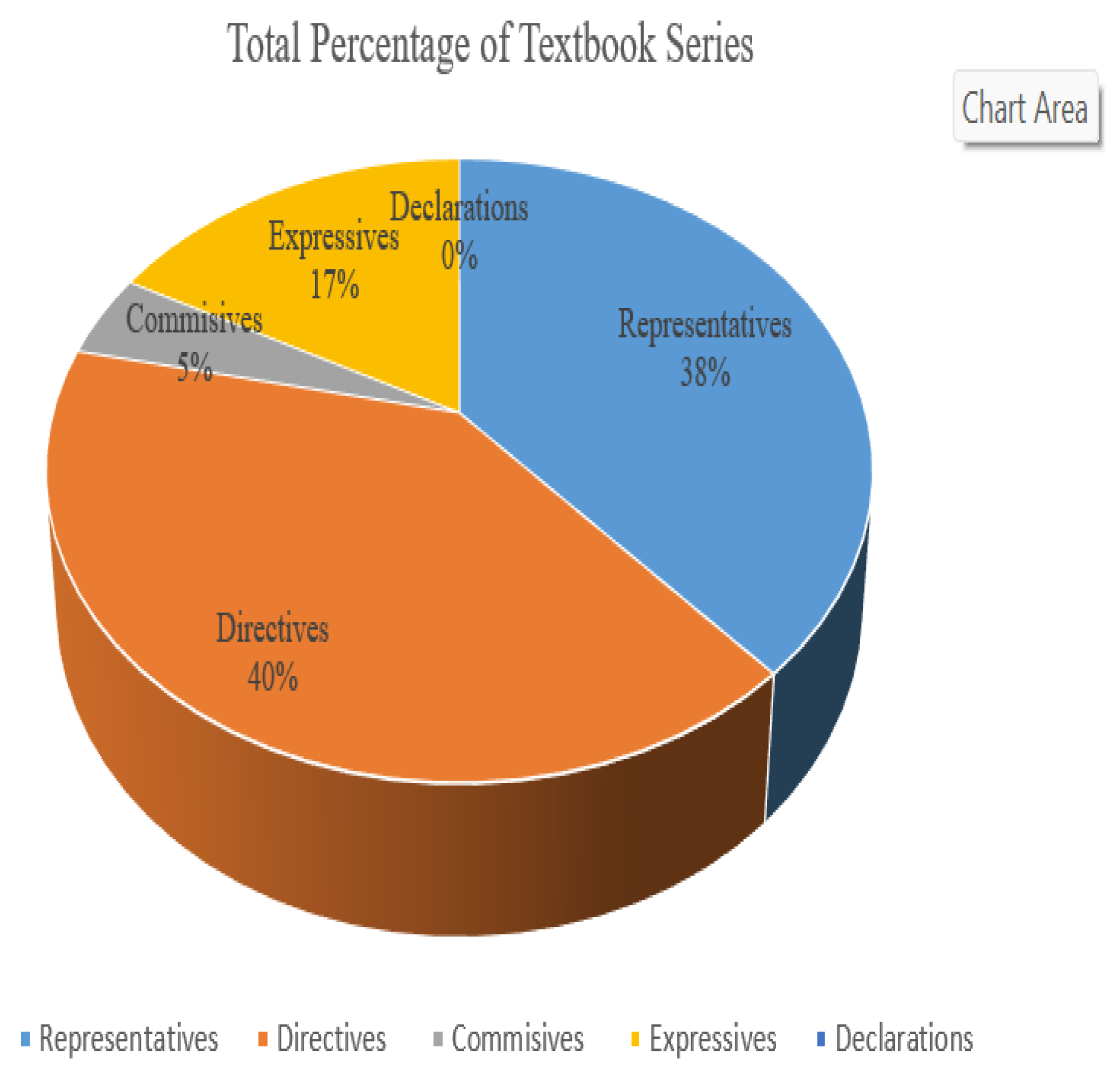
As it is clarified, the percentage and the frequency of speech acts are not the same, such as, 40 % directives, 17.2% expressive, 38.4% representative, 4.4 % commissive in Sunrise textbooks. According to the findings, of frequency and percentage of speech acts in the conversation section are not equal. As it is mentioned in the second research question, there were missing sample of declarative speech acts in the conversation textbook, the percentage of other types of speech acts in all four types are also not equal. The highest percentage belongs to the directive speech acts with 40 percent, while the lowest percent belongs to commissive speech acts with 4.4% percent. Since the textbooks misses declarative one, Searle (1976) [20] believes that all types of speech acts are frequently used in everyday communication, and states that different kinds of situations or contexts lead us to use different types of speech acts to maintain the basic relationships in our social lives.
4.3. Thoretcial Support to Functional Language and Speech Acts
According to Halliday and Cutting, a good conversation consists of all the language functions with an equal distribution throughout the textbook. Furthermore, a functional language contains all real conversation in almost all situations of Halliday’s language function. Therefore, a good textbook includes all types of language functions which is equally divided in the conversation texts to make learners to interact and promote their pragmatic competence in the speaking skills. For instance, if a learner wants to learn English with a specific number of various conversations texts, it is suitable for the textbook to carry all types of language functions.
As the study concludes, considering this definition, it can be said that interactional competence not only makes the use of structural rules of language, but also runs the psycho-linguistic and socio-linguistic functions of language which help to provide accuracy and clarify to the mutual comprehension of the speech acts covered in the course of a conversation [51]. Thus, the so called ‘functional competence’, involves the ability to establish the tie between the question and its equivalence in particular real-life situation, recognizing the speaker’s intention by evaluating his/her body language, awareness of the semiotic symbols used, types of social interaction, the communicative functions of language, acting accordingly and appropriately. It is crucial for the textbook to include all types of language functions to increase the pragmatic competence of the language learners.
The functions of language analysis are to consider and to understand the idea of that language in a broader sense. In other words, a single sentence cannot fully analyze without considering its context. It is necessary, in the sequence of understanding the values of second language teaching as well as learning, to understand the variables in comprising communicative competence can be applicable with different methods [52,53,54,55]. Guerin asserts in terms of the type of sampling and the criterion for this sample to be analyzed, this equality in the distribution of language functions and speech acts must be based on topical or thematic contexts [56]. These contexts in these textbooks are in the same line with different units or chapters of the books, each of which deals with a particular and real-life topic or theme. Crystal considered pragmatics as the study of the communicative action in its sociocultural context. Which means individuals must have some sort of pragmatic competence which helps them to utilize the language in various aspects of communication.
4.4. Teacher’s Perception on Textbooks
Another main important research questions were the teacher’s perception toward the textbooks they teach. In this type of questions, teacher’s serve five main functions), one of them is providing teachers with the general purpose of the teaching material, second encouraging the development of teaching skills needed for utilizing class material, third providing guidance to use the material, fourth assisting teachers in understanding the structure of the course material and the contribution of each lesson to the overall course, finally providing linguistic and cultural information as necessary for the effective use of the material in class. From that perspective, both textbooks and activity books are main source of language functions and speech acts especially in the EFL context [57].
The system of education is teacher centered system and grammar is taught throughout chapters. Teachers believed that enhancing the methodology of communicative language improve their competence of communication. In other words, they preferred different kinds of tasks and activity such as role play, pair work activities, group discussion and participating in different kinds of debates. These kinds of study conducted [58]. Overall analysis of this study, both textbooks does not provide EFL learners with the required knowledge to utilize the language in different aspects of communication.
The teachers who participated in this study have perceived and found many weak points and insufficiencies in the texts which have been creating an obvious barrier in front of the teachers in the process of teaching. It was believed that the Sunrise textbooks cannot fulfill the students’ lifelong dreams and goals to learn good English. The students cannot rely on the Sunrise textbooks to learn English, as well as the English teachers understand the fact and know the truth, however, they cannot do anything because this syllabus has been provided by Ministry of Education of KRG.
In the process of teaching Sunrise textbooks, the teachers face another problem in the section of conversation. In this section, the English teachers should improve the capacity of students to understand the topics of the conversations and dialogues. However, the textbooks offer a very few topics to listen and understand, besides, they do not impress the students and they cannot draw the attention of the students due to the lack of ineffective topics. In addition, there is also a lack of activities and exercises to push the students to listen carefully and to make them do the exercises and answer the questions. Due to these reasons, most of the time; the teachers skip this section, and they neglect it. Because they think that it is a kind of unusable part of the Sunrise texts, and they cannot improve their student’s capacity to understand English conversations and English dialogues.
As some experienced high school English teachers mentioned, they felt the boredom and dissatisfaction of the students when they have tried to teach the listening parts. The students are passive, and they do not take part in the lesson actively. They do not pay attention to the topics, and they just want to pass the time without active participation. The conversation sections are also included in Sunrise textbooks need to be taught through communicative language teaching. The topics which are provided to practice speaking help the teachers to apply and connect the materials with real life and making a meaningful conversation about the topics.
4.4. Findings of the Reserach
The findings of this paper reveal that the conversation texts in Sunrise textbooks are not meeting the systematic standard of pragmatic competence the English language learners and the book designer must be recommended to be aware of those shortcomings of the textbook series if they are required to develop their speaking skills in both student and activity series. Regarding pragmatic competence, Sunrise (10, 11, 12) has crucial problem for each unit. Therefore, pragmatic competence which used in different contextual level within the limits of speech acts and language functions. Both speech acts and language functions are not equally distributed throughout the units which pays close attention to one of the most crucial themes in everyday life.
In fact, this section enables the students to think and express their thoughts, viewpoints and ideas about the topics and interchange their information, experiences, and skills. It encourages the students to engage into the conversations and try to describe the topics from their own perspective. As a weak point, the speaking section is mostly limited and related to either the reading or grammar section. Learners are obliged to talk about a particular point, instead, they need to practice freely and authentically. There are plenty of ideas that could be found in daily life conversation. The way learners use the language really matters, if the conversation part is not interesting for them, it would be challenging for the teachers to get them to be able to use the language communicatively and accurately.
There are many perspectives to point out which are all the strong and weak points of sunrise curriculum, including the quality of teaching and the misconception of teaching the language by teachers. During those years of experience, they have achieved an interesting experience on how to teach sunrise accurately and appropriately. Furthermore, the qualified successful teacher is someone who makes the sphere of learning inside classroom more interesting and considers the students’ ability of understanding.
Therefore, they are inseparable part of the class. Since, the textbooks can give a positive impact to the students’ overall activities when it was related to the teacher’s viewpoints. Sunrise textbooks consists of two books, Student book and Activity book, the teachers and the students should pay a great attention of both as well. Because they complete each other, and the students should follow the instructions of their teachers to do exercises, activities, and tasks of both books. The Activity Books is the outline of the activities and tasks of the Student Book. When the students do the exercises and tasks of the Activity Book, it will help them to understand and learn much about the different parts and tasks of the Student Book. It is believed that Activity Book of Sunrise curriculum is considered as a strong point of the curriculum and complete the mission to teach the students.
5. Conclusion and Pedagogical Implications
From research findings, there is an awareness among the textbook’s designers in Iraqi Kurdistan. Since the world became a small village and communication in English is required from every aspect of life. Best materials and textbooks must be prepared for the learners to be able to communicate efficiently when they get acquainted with people from different cultures. Since Sunrise high school English textbooks are not necessarily used for communication base, as a result they are not conversation oriented. The number of speech acts in Sunrise 10, 11, 12 is 117, 86, 47 respectively. This shows that directives and representatives shape the main parts of speech acts in the textbook series with 40% and 38.4% respectively. While the other speech acts carry a small percentage such as, expressive by 17.2% and commissive by 4.4% respectively.
The language functions which are included in Sunrise 10, 11, 12 displayed the following results. A total number of 18 language functions are included in Sunrise 10, 11, 12 which starts by talking about personal information to making suggestions and talking about sequence of events and so on. Among the mentioned textbooks, Sunrise 10 presented nine out of eighteen language functions than both Sunrise 11 (6/18), Sunrise 12 (3/18). Thus, the distribution of speech acts with the level of the book series are not justified. Then, choosing and buying clothes, describing situation, discussing about housework jobs, and talking about requests and orders, talking about the price of things cover more than 9 percent of language functions in Sunrise 10 and Sunrise 11 (talking about time, climate, place, talking about sequence of events, making new friends, discussing about planets and space travel) also each covers 10 percent of language functions.
Lastly, there are other functions of language which include “talking about materials, dimension, shapes, introducing friends, talking about age, color, events, supporting different arguments, talking about sports, talking about requests and orders, talking about transportation, and talking about different job, comparing time periods, describing past events. Language functions in Sunrise 10, 11, 12 are presented in a way that most of the time the power of sender to the receiver is not clear. To enhance the pragmatic competence of the students, two important factors are required to be developed, one is socio pragmatic, the other is pragma-linguistic, the role of speech acts are important in that aspect. However, the role of speech acts in the system of education in KRG is very limited. So, the findings elucidated that these textbook series are not appropriate for students to communicate easily. Therefore, in terms of language functions these textbook series have certain shortcomings.
From the studies that have been carried out, Language and culture are interrelated. Therefore, teaching a foreign language is indivisible from teaching its cultural and social norms. The results of the research study will assist both ESL/ EFL teachers to share thoughtful attention to pragmatic information, enhance student’s perception toward language functions and speech acts throughout the textbooks.
The implications of this paper can be viewed from different perspectives: First through comparing the results of this study with other similar studies, it is possible to figure out whether there is a universal pattern in performing the speech acts and language functions. Second, the findings of the study can be of interest to Kimberley Education for Life (KEFL) learners interested in increasing their knowledge of pragmatics in general and the role of language functions and speech acts investigated in this study. They can increase the quality of their interactions by learning how to utilize certain speech acts aptly in different situations. Different cultures have different perceptions and interpretations of their own textbooks. Therefore, the findings of the research can assist textbook designers, policy makers and the ministry of education to realize the limitations of the textbook from the mentioned perspectives.
Author Contributions
Conceptualization, A.S.T. and B.M.; methodology, U.S.S.; software, B.M.; validation, A.S.T.; formal analysis, A.S.T.; investigation, U.S.S.; resources, B.M.; data curation, A.S.T.; writing—original draft preparation, U.S.S; writing—review and editing, U.S.S.; visualization, A.S.T.; supervision, B.M.; project administration, A.S.T.; funding acquisition, U.S.S. All authors have read and agreed to the published version of the manuscript.
Funding
Researcher’s resources.
Institutional Review Board Statement
Not applicable.
Informed Consent Statement
Not applicable.
Data Availability Statement
Not applicable.
Conflicts of Interest
The authors declare no conflict of interest.
References
- Jianda, L. Developing a Pragmatics Test for Chinese EFL Learners. Language Testing 2007, 24, 391–415. [Google Scholar] [CrossRef]
- NM, I.S.; Suarnajaya, I.W. An Analysis of Speech Acts Used by the Seventh-Grade Teacher of SMPN 2 Bangli in EFL Classroom Interaction. JERE 2020, 4, 49. [Google Scholar] [CrossRef]
- Sundari, H. Classroom Interaction in Teaching English as Foreign Language at Lower Secondary Schools in Indonesia. ALLS 2017, 8, 147. [Google Scholar] [CrossRef]
- Ahmadi, A.; Derakhshan, A. EFL Teachers’ Perceptions towards Textbook Evaluation. TPLS 2016, 6, 260. [Google Scholar] [CrossRef]
- Singh, S.; Singh, U.S.; Nermend, M. Sustainability in a Digitized Era Analyzing the Moderation Effect of Social Strata and Digital Capital Dependence on Digital Divide. Sustainability 2022, 14, 14508. [Google Scholar] [CrossRef]
- Incorporating Pragmatics in English Language Teaching: To What Extent Do EFL Course Books Address Speech Acts? IJALEL 2014, 4. [CrossRef]
- Bardovi-Harlig, K. Evaluating the Empirical Evidence: Grounds for Instruction in Pragmatics? In Pragmatics in Language Teaching; Rose, K.R., Kasper, G., Eds.; Cambridge University Press, 2001; pp. 13–32. ISBN 978-0-521-80379-3. [Google Scholar]
- Diepenbroek, L.G.; Derwing, T.M. To What Extent Do Popular ESL Textbooks Incorporate Oral Fluency and Pragmatic Development. TESL 2014, 30, 1. [Google Scholar] [CrossRef]
- Febriantini, W.A.; Prayogo, J.A. Teacher’s Perception toward the Use of English for Communication Science Book. Jur.Pend.Teo.Pen.Peng. 2020, 5, 1298. [Google Scholar] [CrossRef]
- Ekin, M.T.Y. Do Current EFL Coursebooks Work for the Development of L2 Pragmatic Competence? The Case of Suggestions. Procedia—Social and Behavioral Sciences 2013, 93, 1306–1310. [Google Scholar] [CrossRef]
- Poupari, Z.; Bagheri, M.S. Correlation of Speech Acts and Language Functions in Top Notch Series vs. ILI Textbooks from a Pragmatic Point of View. IJEL 2013, 3, p72. [Google Scholar] [CrossRef]
- Vaezi, R.; Tabatabaei, S.; Bakhtiarvand, M. A Comparative Study of Speech-Acts in the Textbooks by Native and Non-Native Speakers: A Pragmatic Analysis of New Interchange Series vs. Locally-Made EFL Textbooks. TPLS 2014, 4, 167–180. [Google Scholar] [CrossRef]
- Dissertation.Pdf.
- Husni PSIKOLOGI KOMUNIKASI.Pdf.
- Barcelos, A.M.F. Researching Beliefs About SLA: A Critical Review. In Beliefs about SLA; Kalaja, P., Barcelos, A.M.F., Eds.; Educational Linguistics; Springer Netherlands: Dordrecht, 2003; Volume 2, pp. 7–33. ISBN 978-1-4020-4750-3. [Google Scholar]
- Jeronen, E. Sustainability and Sustainable Development. In Encyclopedia of Corporate Social Responsibility; Idowu, S.O., Capaldi, N., Zu, L., Gupta, A.D., Eds.; Springer Berlin Heidelberg: Berlin, Heidelberg, 2013; pp. 2370–2378. ISBN 978-3-642-28035-1. [Google Scholar]
- Quinn, F.; Castéra, J.; Clément, P. Teachers’ Conceptions of the Environment: Anthropocentrism, Non-Anthropocentrism, Anthropomorphism and the Place of Nature. Environmental Education Research 2016, 22, 893–917. [Google Scholar] [CrossRef]
- Nermend, M.; Singh, U.S.; Singh, S. Educational Background as Decision Criteria in Selection of Private Sector Healthcare Service Providers. Procedia Computer Science 2022, 207, 4651–4659. [Google Scholar] [CrossRef]
- Martin, J.R. Types of Structure: Deconstructing Notions of Constituency in Clause and Text. In Computational and Conversational Discourse; Hovy, E.H., Scott, D.R., Eds.; NATO ASI Series; Springer Berlin Heidelberg: Berlin, Heidelberg, 1996; Volume 151, pp. 39–66. ISBN 978-3-642-08244-3. [Google Scholar]
- Searle, J.R. Speech Acts: An Essay in the Philosophy of Language, 1st ed.; Cambridge University Press, 1969; ISBN 978-0-521-09626-3. [Google Scholar]
- The Center for Advanced Research on Language Acquisition (CARLA): Pragmatics and Speech Acts. Available online: https://carla.umn.edu/speechacts/definition.html (accessed on 12 May 2023).
- Li, Z.; Xu, Y. Sustaining the Effective Use of Materials in Language Classrooms: A Conceptual Understanding of Teacher Knowledge for Materials Use. Sustainability 2021, 13, 8115. [Google Scholar] [CrossRef]
- Singh, S.; Singh, G.A. Assessing the Impact of the Digital Divide on Indian Society: A Study of Social Exclusion. Research in Social Change 2021, 13, 181–190. [Google Scholar] [CrossRef]
- Hidayat, A. Speech Acts: Force Behind Words. English Education.
- Morady Moghaddam, M. Responses to Compliments in Online English Chat: A Comparison between Iranian EFL Learners and Native English Speakers. Journal of Multicultural Discourses 2019, 14, 167–187. [Google Scholar] [CrossRef]
- Singh, S.; Singh, U.S.; Nermend, M. Decision Analysis of E-Learning in Bridging Digital Divide for Education Dissemination. Procedia Computer Science 2022, 207, 1970–1980. [Google Scholar] [CrossRef]
- Wijaya, K.F. Exploring EFL Teachers Perspectives on Collaborative Learning Activities in Senior High School Contexts. JET 2021, 7, 118–132. [Google Scholar] [CrossRef]
- Wu, X.; Yang, H. Unpacking the Functions of Personal Metadiscourse in Teachers’ Classroom Discourse. Sustainability 2022, 14, 13502. [Google Scholar] [CrossRef]
- Shankar Singh, U.; Sahin, O. A Literary Excavation of University Brand Image Past to Present. IJSSES 2017, 3. [Google Scholar] [CrossRef]
- New Horizons in Subject-Specific Education: Research Aspects of Subject-Specific Didactics, 1st ed.; Lipovec, A., Batič, J., Kranjec, E., Eds.; University of Maribor Press, 2020; ISBN 978-961-286-358-6. [Google Scholar]
- Hadar, L.L. Opportunities to Learn: Mathematics Textbooks and Students’ Achievements. Studies in Educational Evaluation 2017, 55, 153–166. [Google Scholar] [CrossRef]
- Pazilah, F.N.P.; Hashim, H.; Yunus, M.Md. Using Technology in ESL Classroom: Highlights and Challenges. CE 2019, 10, 3205–3212. [Google Scholar] [CrossRef]
- Phuc, H.H. The Practice of English Language Teaching 4th Edition—Jeremy Harmer.
- Torkar, G.; Kovač, M.; Kovač Šebart, M. The Role of Textbooks in Teaching and Learning Processes. CEPSj 2022, 12, 7–10. [Google Scholar] [CrossRef]
- Shelestova, T.Y.; Zhetpisbayeva, B.A. The Effect of Illustrations and Simulations in English Course Books in a Kazakhstani Context on Primary School Students English Language Achievement. iejee 2017, 10, 163–174. [Google Scholar] [CrossRef]
- Chen, J.; Li, D.; Xu, J. Sustainable Development of EFL Teachers’ Technological Pedagogical Content Knowledge (TPACK) Situated in Multiple Learning Activity Systems. Sustainability 2022, 14, 8934. [Google Scholar] [CrossRef]
- Contemporary Literacies and Technologies in English Language Arts Teacher Education: Shift Happens!—CITE Journal.
- Ramazani, M. Teachers’ Perceptions of Using English Textbooks for Iranian Technical and Vocational College Students. Procedia-Social and Behavioral Sciences 2013, 70, 1748–1762. [Google Scholar] [CrossRef]
- Ossiannilsson, E.; Altinay, Z.; Altinay, F. 8. Transformation of Teaching and Learning in Higher Education towards Open Learning Arenas: A Question of Quality. In Open Education: International Perspectives in Higher Education; Blessinger, P., Bliss, T., Eds.; Open Book Publishers, 2016; pp. 159–178. ISBN 978-1-78374-278-3. [Google Scholar]
- Gholami, R.; Noordin, N.; Rafik-Galea, S. A Thorough Scrutiny of ELT Textbook Evaluations: A Review Inquiry. IJELS 2017, 5, 82. [Google Scholar] [CrossRef]
- Omer, T.M.S.; Jukil, A.M. Theoretical Perspectives on Learning: Sunrise Program as an Example for Learning English in the Iraqi Kurdistan Region. IJPR 2019, 23, 617–630. [Google Scholar] [CrossRef]
- Hassan, F.R.; Ghafor, O.F. ASSESSING THE SUITABILITY OF “SUNRISE” PROGRAMME TO THE KURDISH LEARNERS OF THE SEVENTH BASIC GRADE IN THE SCHOOLS OF ERBIL CITY.
- Download Sunrise10, Sunrise 11 and Sunrise 12 Sound Files. Download Sunrise10, Sunrise 11 and Sunrise 12 sound files.
- Saeed, K.A. Teachers’ Evaluation and Perceptions on Adaptation of Sunrise Coursebook at Sulaymaniyah Governorate in Kurdistan Region of Iraq.
- Ali Saeed, K. Evaluation of the Sunrise Coursebook Series by Teachers in the Sulaymaniyah Governorate in the Kurdistan Region of Iraq. AWEJ 2022, 1, 59–74. [Google Scholar] [CrossRef]
- Denzin, N.K. The Research Act: A Theoretical Introduction to Sociological Methods, 1st ed.; Routledge, 2017; ISBN 978-1-315-13454-3. [Google Scholar]
- A Study Assessing the Brand Loyalty Creation by Promotion Mix for KOTON Brand. jxu 2020, 14. [CrossRef]
- Singh, S.U. COST ESTIMATION USING ECONOMETRIC MODEL FOR RESTAURANT BUSINESS. QME 2019, 20, 209–216. [Google Scholar] [CrossRef]
- Singh, U.S.; Bradosti, H. Acceptability of Banking Operations in Iraqi Kurdistan. Research Journal of Finance and Accounting 2015, 6, 276–286. [Google Scholar]
- Richards, J.C.; Schmidt, R.W. Longman Dictionary of Language Teaching and Applied Linguistics, 0 ed.; Routledge, 2013; ISBN 978-1-315-83383-5. [Google Scholar]
- Deda, N. The Role of Pragmatics in English Language Teaching. Pragmatic Competence. AJIS 2013. [Google Scholar] [CrossRef]
- Piwowarski, M.; Singh, U.S.; Nermend, K. Application of EEG Metrics in the Decision-Making Process. International Conference on Computational Methods in Experimental Economics 2018, 187–199. [Google Scholar]
- Piwowarski, M.; Miłaszewicz, D.; Łatuszyńska, M.; Borawski, M.; Nermend, K. Application of the Vector Measure Construction Method and Technique for Order Preference by Similarity Ideal Solution for the Analysis of the Dynamics of Changes in the Poverty Levels in the European Union Countries. Sustainability 2018, 10, 2858. [Google Scholar] [CrossRef]
- Alsakaa, A.A.; Borawska, A.; Borawski, M.; Łatuszyńska, M.; Piwowarski, M.; Babiloni‖, F.; Nermend, K. Cognitive Neuroscience Techniques in Determining the Right Time of Advertising. IOP Conf. Ser.: Mater. Sci. Eng. 2020, 671, 012033. [Google Scholar] [CrossRef]
- Nermend, K.; Piwowarski, M.; Borawski, M. Decision Making Methods in Comparative Studies of Complex Economic Processes Management. eijs 2020, 652–664. [Google Scholar] [CrossRef]
- Guerin, B. Language Use as Social Strategy: A Review and an Analytic Framework for the Social Sciences. Review of General Psychology 2003, 7, 251–298. [Google Scholar] [CrossRef]
- Cunningsworth, A.; Kuse, P. Evaluating Teachers’ Guides. ELT Journal 1991, 45, 128–139. [Google Scholar] [CrossRef]
- Meihami, H.; Khanlarzadeh, M. Pragmatic Content in Global and Local ELT Textbooks: A Micro Analysis Study. SAGE Open 2015, 5, 215824401561516. [Google Scholar] [CrossRef]
Figure 1.
Knowledge constituents [22].
Figure 1.
Knowledge constituents [22].
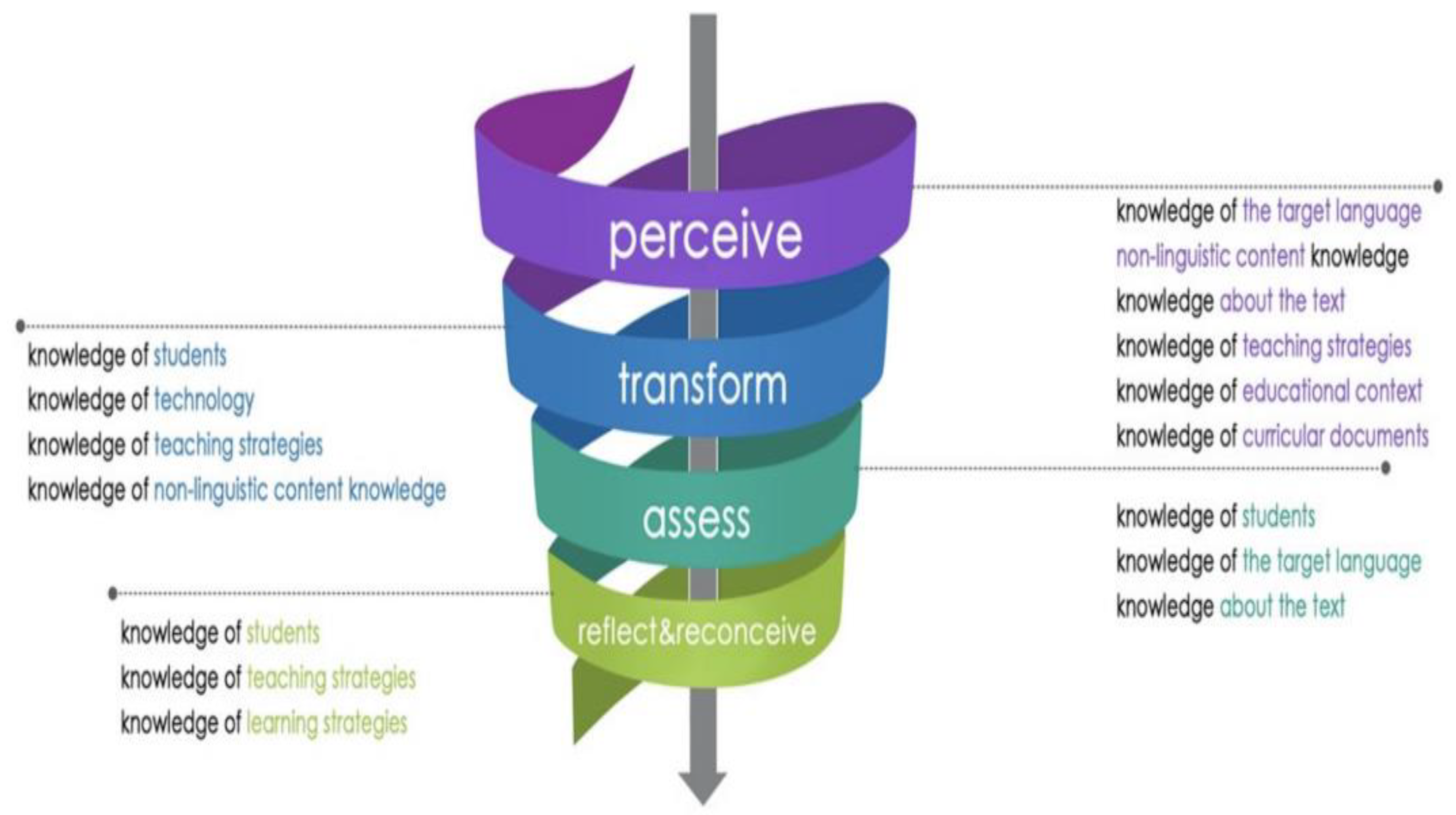
Figure 2.
Metadiscursive discourse functions [28].
Figure 2.
Metadiscursive discourse functions [28].
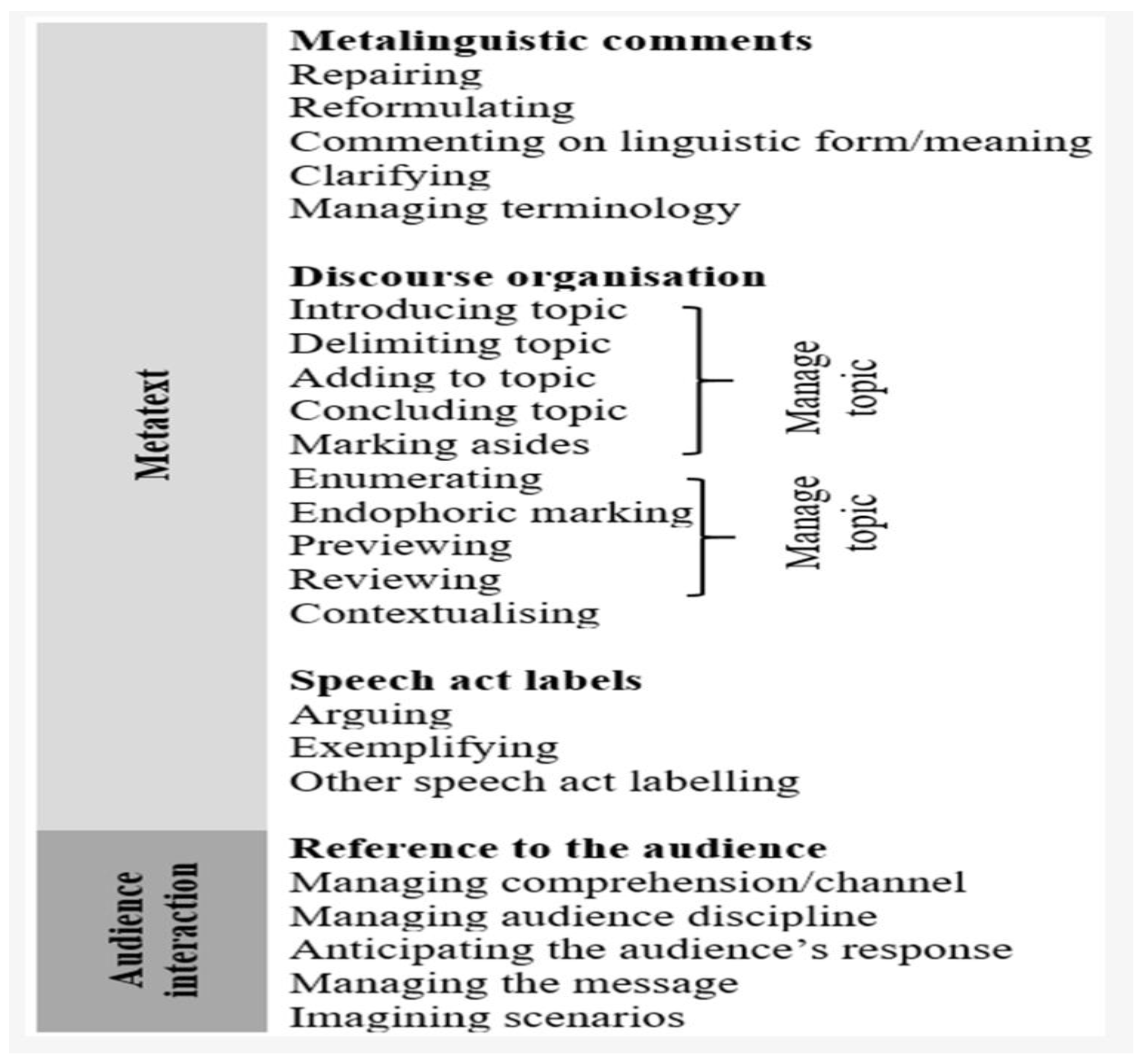
Figure 3.
Technological Pedagogical Content Knowledge [36].
Figure 3.
Technological Pedagogical Content Knowledge [36].
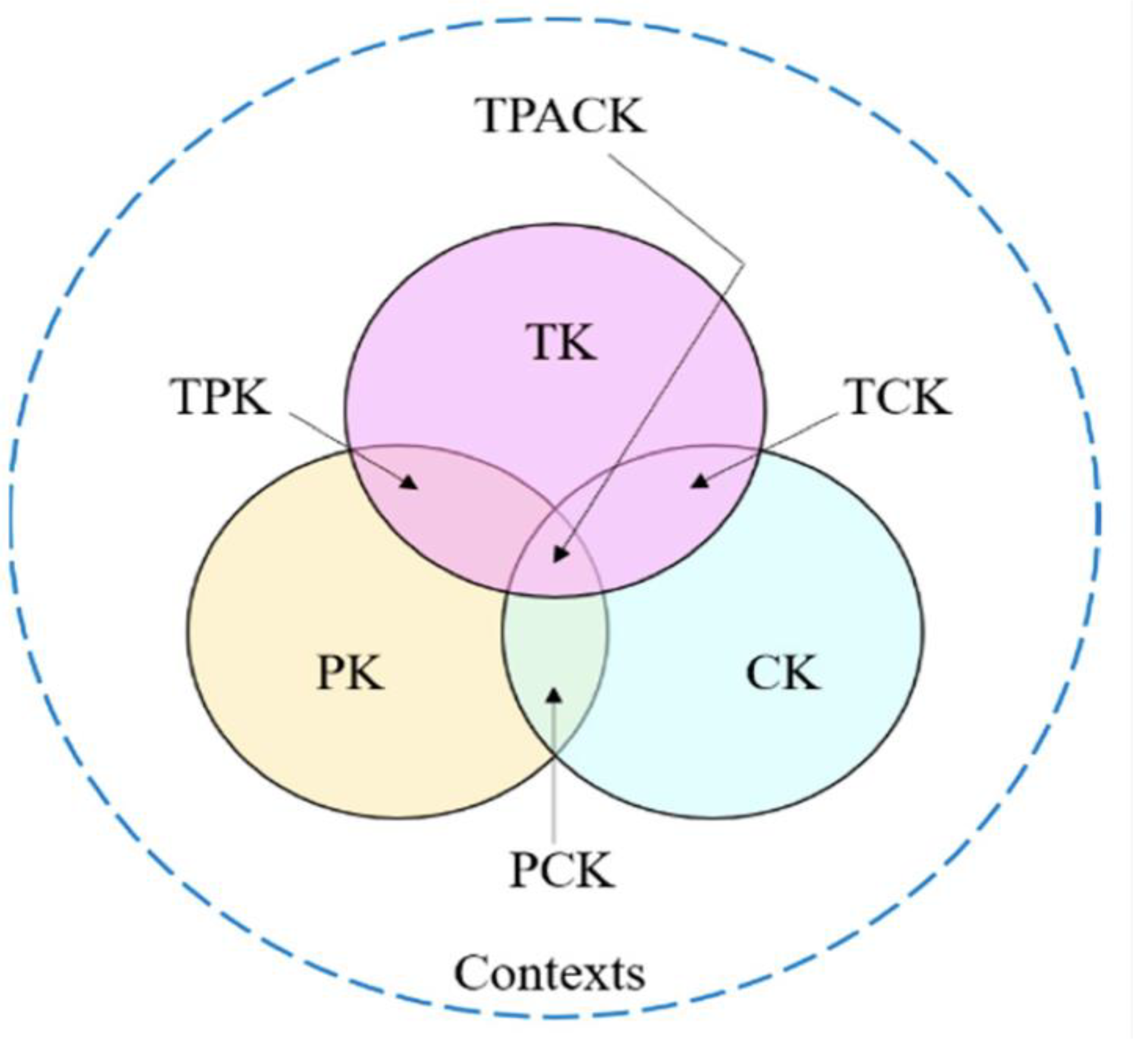
Figure 5.
Sunrise Textbooks [43].
Figure 5.
Sunrise Textbooks [43].

Figure 6.
Language Functions in the Conversation Sections. Source: Author’s Observation.
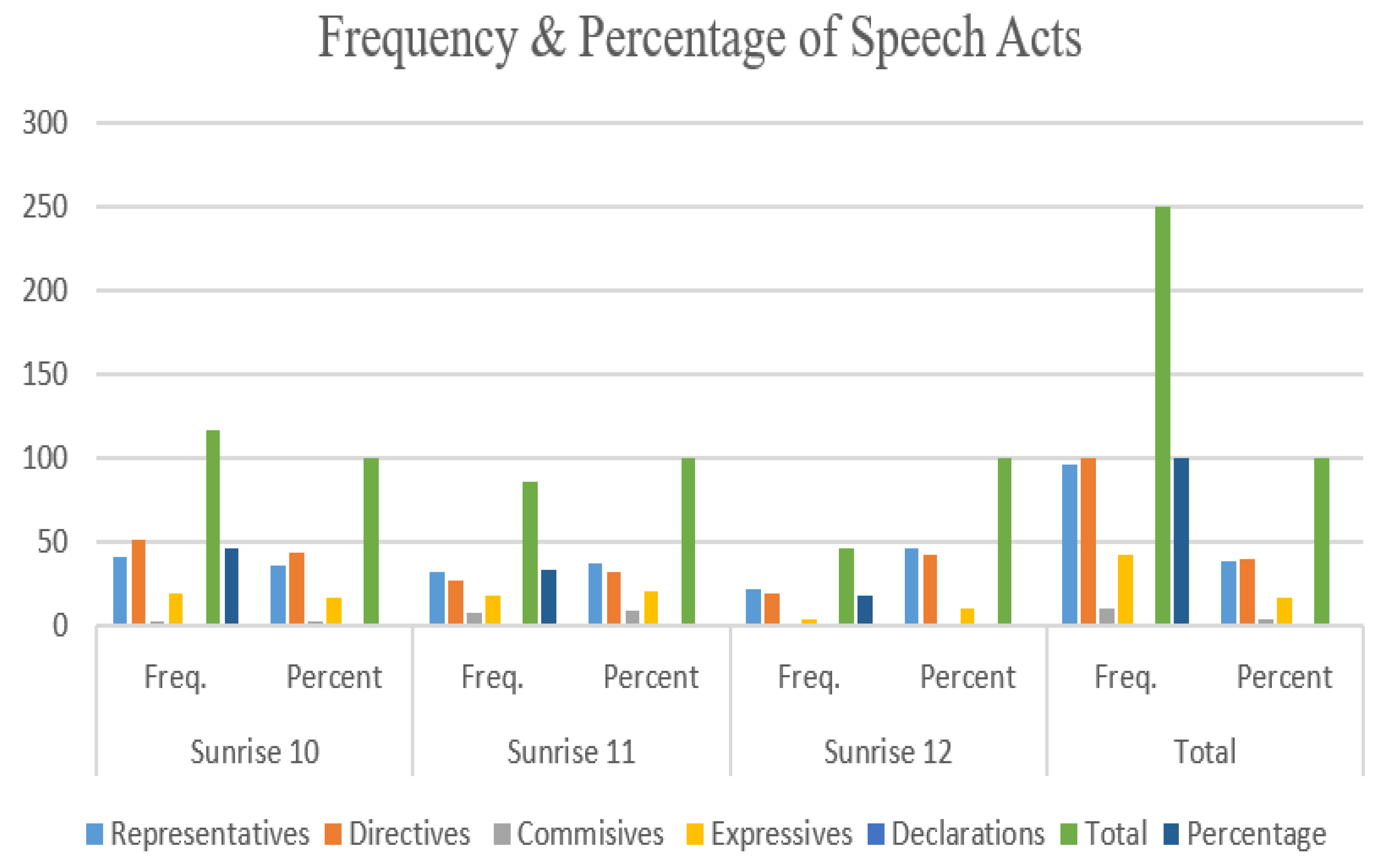
Figure 7.
Role of Functional Language and Speech Acts. Source: Author’s Observation.
Disclaimer/Publisher’s Note: The statements, opinions and data contained in all publications are solely those of the individual author(s) and contributor(s) and not of MDPI and/or the editor(s). MDPI and/or the editor(s) disclaim responsibility for any injury to people or property resulting from any ideas, methods, instructions or products referred to in the content. |
© 2023 by the authors. Licensee MDPI, Basel, Switzerland. This article is an open access article distributed under the terms and conditions of the Creative Commons Attribution (CC BY) license (http://creativecommons.org/licenses/by/4.0/).
Copyright: This open access article is published under a Creative Commons CC BY 4.0 license, which permit the free download, distribution, and reuse, provided that the author and preprint are cited in any reuse.


