

Submitted:
03 May 2023
Posted:
11 May 2023
You are already at the latest version
Abstract
The luminescent properties of photocured aliphatic and aromatic network polycarbonate methacrylates containing organic fluorescent dyad have been studied. The dyad molecule includes two photosensitive fragments – tetraarylimidazole with a hydroxy group and azomethinocoumarin, in each of which excited state intramolecular proton transfer occurs, which leads to the appearance of two emissions - blue and green. It was established that the ratio of the intensities of these emissions depends on the excitation wavelength, as well as on the length, flexibility and polarity of the matrix oligomeric bridges.
Keywords:
optical materials
; oligocarbonate methacrylates
; organic dyad
; ESIPT
; tunable fluorescence
1. Introduction
Main directions of oligocarbonate methacrylates studies were initiated by Al. An. Berlin, that were further successfully elaborated, the mechanism of the formation of oligocarbonate methacrylates was verified that open wide possibilities for the control of the properties of these types of oligomers. Oligocarbonate methacrylates were modified to improve their thermal and thermal-oxidative stability [1,2,3,4,5]. Now oligocarbonate methacrylates occupy a special place among photopolymerizable acrylic monomers due to their good polymerization ability, lack of coloring, non-toxicity and actual properties of the network polymers formed from them. Good dielectric characteristics, high impact resistance, low specific gravity, high thermal stability, fire safety, ease of processing, good sound insulation performance, resistance to chemical and mechanical influences, environmental and biological safety determine the wide demand for these polymers in various areas of production of new materials. They can be used for fixing, encapsulation and sealing of various products, repair, assembly of threaded products, sealing of pipelines and connections, for encapsulation and moisture protection of the assemblies and modules of different devices in electronic equipment [6].
They are also widely used for the manufacturing of optical products, coatings, especially in the conditions of radiation and photoinitiation [4,7]. Their application in stereolithography is described, for example, the layer–by-layer manufacture of parts from liquid oligomers, including oligocarbonate methacrylate, using an excimer XeCl laser (λ = 308 nm) [8]. Now photopolymerization processes such as direct laser writing, three-dimentional micromashining, optical elements fabrication, data recording and storage are widely distributed and they all use oligocarbonate methacrylates compositions [9,10]. Moreover, a functionalized five-membered cyclic carbonates can be a precursors for a wide variety of polymers [7]. Moreover, recently a near-infrared photopolymerization in the depth of photocurable composition on the base of oligocarbonate methacrylate and upconversion nanoparticles has been developed to produce scaffolds for biomedical applications [11].
At the same time, organic luminophors can be rightfully attributed to the number of important materials of the new technology [12,13,14,15,16]. They have found application in nuclear physics, quantum electronics, fluorescent flaw detection, in the aniline and plastics industry, in biology and medicine, and for many other special purposes.
Earlier [17] we have synthesized a luminescent dyad, the molecule of which includes two different photosensitive fragments – tetraarylimidazole with a gilroxy group and azomethinocoumarin, in each of which intramolecular proton transfer in the excited state (ESIPT) occurs. The photosensitive fragments are connected by a diphenyl oxide bridge, which prevents the transfer of energy between them [18]. The formula of the studied dyad is given below.
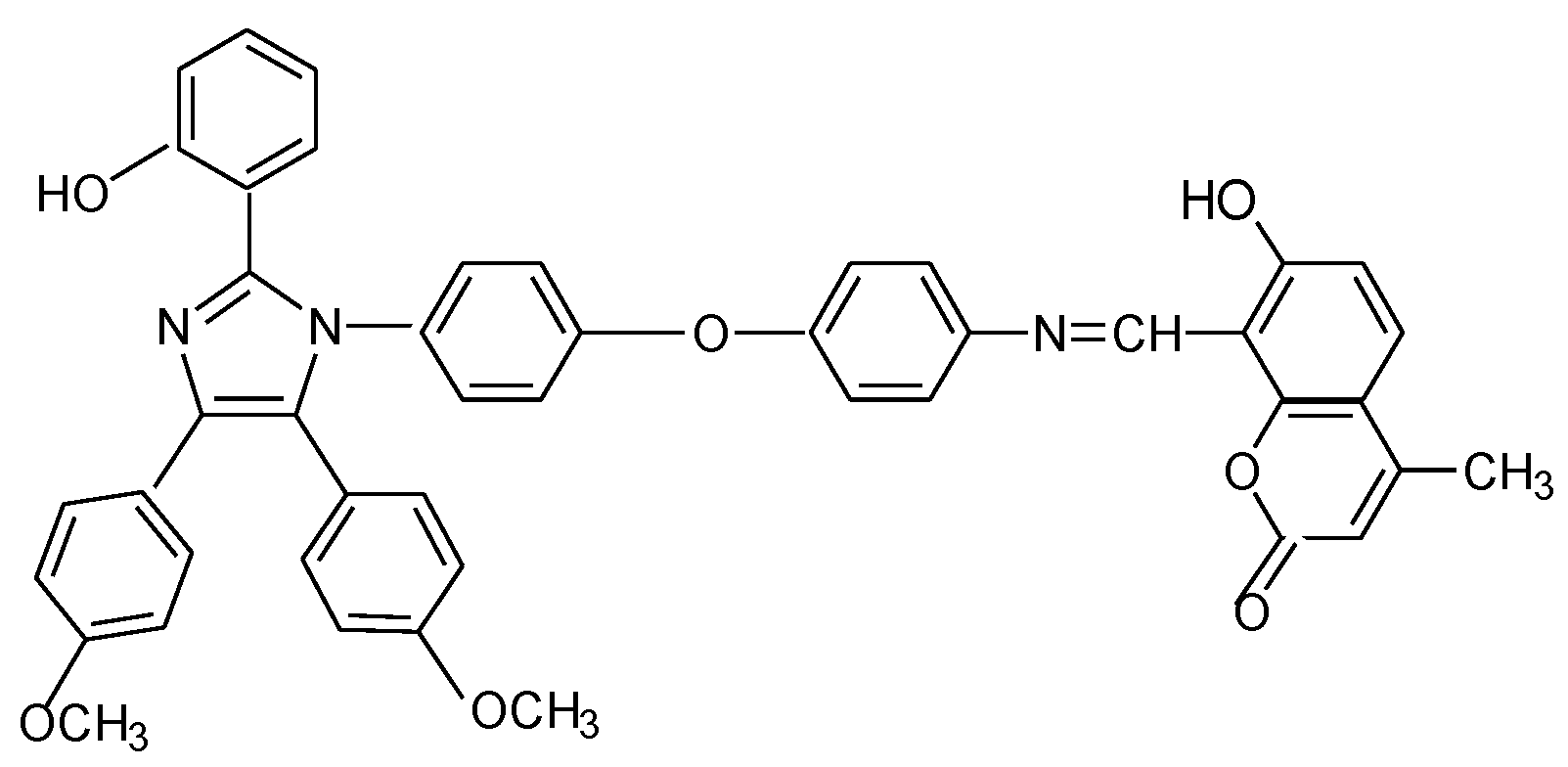
The spectral-luminescent properties of the dyad in solutions were described in [17] and in linear acrylic polymers in [19]. It was shown that this compound is characterized by dual fluorescence, which manifests itself in solutions, in photo-cured linear polymer matrices, and in matrices of network polymers obtained by photo-curing of oligoesteracrylates. It was established that dyad’s fluorescence depends on the properties of the medium and the excitation wavelength. Taking into account the intensive development of luminescent materials, the increase in demand for them and the growth of requirements for their characteristics, the possibility of introducing a phosphor into oligocarbonate methacrylates and studying the features of the manifestation of the luminescent properties of the dyad in the network polymers of oligocarbonate dimethacrylates is of great interest.
2. Materials and methods
CH2Cl2 was spectroscopic grade and was purchased from Acros Organics. Photoinitiator Darokur 4265 was purchased from Aldrich. Steady-state UV-Vis fluorescence was measured using spectrofluorimeter Cary Eclipse (Varian) with optical slit width =5 nm. All measurements were carried out at room temperature. The used to produce polymer matrices oligocarbonate methacrylates were synthesized according to the method described in [20].
The purity of the used oligomers = 97 %, all reagents were tested chromatographic before use. Polymer films with the addition of the compound under study were prepared by the photopolymerization of monomers in the presence of additions of luminophore dyad in methile chloride (followed by its removal) and photoinitiator Darokur 4265. The photocuring was performed upon irradiation by a DRT- 1000 UV lamp through a PS 13 filter for 3 min, which provided the depth of curing of 92 – 98 % and preservation of absorption spectra of dyad in monomer. The concentration of dyad in all experiments was 10-4 mol/l, the concentration of the photoinitiator was 1 weit %. The thickness of the resulting polymer film was 800 - 900 microns.
3. Results and Discussion
Polymers of oligocarbonate methacrylates with a general formula were studied in this work:
СН2=С(СН3)-СО О-СН2СН2О-СО О R О-СО-О-СН2СН2О-СОС(СН3)=СН2:
ОCМ-1 R = -C2Н4-
ОCМ-2 R = - (C2Н4)О(C2Н4)
ОCМ-2/1 R = - [(C2Н4) О(C2Н4)- О-СО-О(C2Н4)О(C2Н4)- О-СОО(C2Н4)О(C2Н4)]-
ОCМ-7 R = -C6Н4- пoдсoединение в мета-пoлoжение
ОCМ-5 R = -C6Н4-С(СН3)2- C6Н4-
All compounds are carbonic acid esters and contain carbonate groups (-O-CO-O-). The presence of two end methacrylic groups in each molecule ensures the formation of a spatial grid of polymethacrylate chains connected by transverse oligomeric blocks during polymerization. That is, the studied polycarbonate methacrylates differ in the nature, length, flexibility, and polarity of oligomeric bridges. Polymers obtained from OCM-1, OCM-2 and OCM-2/1 are aliphatic polymers, and polymers obtained from OCM-7 and OCM-5 contain aromatic fragments. In addition, the content of simple ether bonds in the composition of polymers affects not only the physical properties of the polymer , but also, as we have shown earlier , its luminescent characteristics. Table 1 shows the luminescent properties of photo-cured oligocarbonate methacrylates containing a luminescent dyad.
As can be seen from the data given in the Table 1, the luminescent dyad in almost all the studied photo–cured samples of oligocarbonate methacrylates is characterized by two emission bands, which can be attributed to proton transfer structures in both luminophore fragments - imidazole (ESIPT band 1 c λmax =450 nm) and coumarin one (ESIPT band 2 c λmax =535 nm) (Scheme 1).
Let's start with the consideration of aliphatic polymers properties. As can be seen from the data presented in Figure 1, the fluorescence intensity in the aliphatic polymer OCM 1 with the smallest link length depends on the excitation wavelength. The most intense blue band with a maximum at 450 - 460 nm under short wavelength excitation has only an asymmetric long wavelength shoulder, which transforms into a clearly defined green band of 530 - 550 nm at λex = 350 - 360 nm.
The change of the oligomeric bridge from C2H4 in polymeric films obtained by photocuring of OCM 1 to (C2H4)-O–(C2H4) in polymeric films obtained by photocuring of in the OCM 2 is characterized by an increase in the flexibility of the film and is accompanied by a change in the luminescence spectrum, which is presented in Figure 2.
In this case, the fluorescence of the dyad in the OCM 2 polymer film is characterized by the presence of two radiation bands of 450 and 550 nm in the wavelength range of irradiation from 330 to 440 nm. Here, the fluorescence intensity is noticeably less than in the more rigid polymer film OCM 1. It should be noted that an increase in the irradiation wavelength contributes to the redistribution of the ratio of fluorescence intensities.
The use of oligocarbonate methacrylate OCM 2/1 as a matrix for the introduction of dyad is characterized by an elongation of the oligomeric bridge in the polymer molecule due to an increase in the number of simple ether bonds and carbonate groups. This leads to a change in the fluorescence spectrum of the dyad (Figure 3), which becomes similar to the spectrum in the most rigid polymer OCM 1 (Figure 1).
It is seen from the spectrum, the fluorescence of the dyad in the polymer obtained from OCM 2/1 is characterized by a sufficiently intense blue band with a maximum at 450 nm and a less intense long-wavelength band with a maximum at 530 nm. The intensity of the bands depends on the excitation wavelength. At the same time, in the entire studied wavelength range of irradiation, the intensity of short-wave emission remains higher than the intensity of long-wave. As it was established [21], the stiffness, strength of the polymer and the modulus of elasticity in the considered series are greatest in the polymer with the shortest oligomeric block, i.e. in OCM 1. Under these conditions, the highest intensity of dyad emission is observed in the imidazole band. In the polymer film obtained from oligomer with a flexible oligomeric block, i.e. OCM 2, dual fluorescence with maxima at 350 and 550 nm is observed. However, the intensity of the imidazole band is more than 2 times less than in OCM 1. And observed fluorescence of the coumarin fragment is. close to imidazole fluorescence ntensity.
In the polymer matrices with the longest flexible oligomeric bridge OCM 2/1, only one imidazole luminescence band is observed again. This is probably due to the intermolecular interaction of long oligomeric blocks in network polymers, leading to the formation of associates capable of tightening the polymer, as described in [22]. From the data obtained for the studied aliphatic polycarbonate methacrylates, it can be seen that OCM 2 is the most suitable for the observation of double fluorescence.
Next, we consider the luminescent properties of the dyad in polymer matrices of OCM containing aromatic fragments in an oligomeric polymer block. Figure 4 shows the luminescence spectra of the dyad in polymer films of aromatic oligocarbonate methacrylates OCM 5 and OCM 7. It can be seen that two emissions are observed in both of these matrices, the ratio between the intensities of which depends on the excitation wavelength.
In the fluorescence spectrum of the dyad in a polymer obtained from OCM 7, characterized by the presence of one aromatic fragment in an oligomeric block, in contrast to the spectra observed in the aliphatic polymer matrices described above, in the case of λex = 330 nm the radiation intensity in both bands is almost the same, and at λex = 350 nm, the long-wavelength emission band prevails. In the fluorescence spectrum of the dyad in the polymer matrix OCM 5, the oligomeric block of which is characterized by the presence of two aromatic fragments, there is a completely clear predominance of the long -wavelength radiation band, as in the case of OCM 7. At the same time, the emission intensities in the short -wavelength band of 450 nm for OCM 7 and OCM 5 are close and are 240 and 230 - 270, respectively. Thus, it can be seen that an increase in the number of aromatic fragments in the polymer medium affects only the efficiency of the ESIPT process in the azomethinocoumarin fragment and does not affect ESIPT in the imidazole.
Polymers obtained from OCM 1 and OCM 7 have the shortest oligomeric bridges in the structure of aliphatic and aromatic polycarbonate methacrylates, which causes the most rigid structures in the considered series. Figure 5 shows a comparison of the fluorescence spectra of the dyad in these two matrices.
To clarify the influence of the polymer matrix nature on the luminescent properties , it is also interesting to compare the fluorescence of the dyad in OCM 5 and the previously studied PhEA – 2,2-bis[4-(acryloxy-diethoxy)phenyl]propane , the formula of which is given below
СH2=CНCOО(CH2CH2О)2 -С6Н4- С(СН3)2- С6Н4-(СН2 CH2О)2 ООССН=СН2 PhEА
As can be seen from the PhEA formula, the oligomeric bridges in the polymers PhEA and OCM 5 are absolutely identical. The difference lies in the presence of carbonate and methacrylic groups in OCM 5 and polymerizationable acrylic groups in FhEA. The data shown in Figure 5 and Figure 6 indicate the influence of aromatics in combination with a carbonate group in a polymer medium on the manifestation of a long-wavelength luminescence band. The results shown in Figure 7 indicate the influence of the nature of oligomeric bridges in network polymers on the peculiarities of the manifestation of the luminescent properties of the dyad introduced into the polymer.
A comparison of the fluorescent properties of the dyad in the matrices of OCM 2, characterized by the presence of a simple ether bond, and OKM 5, containing two aromatic fragments (Figure 7), once again indicates the feature we observed earlier: in the presence of a simple ether bond the intensity of the short-wavelength emission band with a maximum at 450 nm increases, and the combination of aromatics with a carbonate group leads to the growth of long-wavelength emission at 550 nm.
4. Conclusions
It has been found that in all studied polycarbonate methacrylates, two emissions are observed, which are caused by excited state intramolecular proton transfer (ESIPT) in both luminophore fragments – imidazole (450 nm band) and coumarin (535 nm band). It has been shown that the ratio of emission intensities depends on the nature of the polymer matrix and the excitation wavelength. It has been found that in aliphatic polycarbonate methacrylates the fluorescence intensity of the imidazole fragment increases and the proton transfer efficiency in the azomethin-coumarin fragment decreases (which needs space for the molecule to rotate) with increasing polymer stiffness. It has been found that in aliphatic polycarbonate methacrylate, with increasing of polymer stiffness the fluorescence intensity of the imidazole fragment increases and the proton transfer efficiency in the azomethinocoumarin fragment decreases. Also it has been shown that in the matrixes containing simple ether bonds, the intensity of short-wave emission increases, while in the matrixes containing aromatic fragments in combination with carbonate groups, the intensity of the long-wave fluorescence band increases.
Funding
This work was supported by Russian Ministry of Education and Science, State Tasks of N.N. Semenov Federal Research Centre for Chemical Physics and of 2 Emanuel Institute of Biochemical Physics.
Conflicts of Interest
The authors declare no conflict of interest.
References
- Berlin, A.A.; Korolyov, H.V.; Kefeli, T.Y.; et al. . Acrylic oligomers and materials based on them. 1983, Khimiya, Moscow, [In Russian].
- Berlin, A.A.; Sivergin, Yu.V.; Kefeli, T.Y.; Marshavin, N.L.; Sokolovskaya, N.B.; Alimpieva, Ye.S. Effect of the structure of oligo(carbonate-methacrylates) on the mechanical properties of their polymers. Polymer science USSR 1971, 13, 3006–3016. [Google Scholar] [CrossRef]
- Berlin, A.A.; Kefeli, T.Y.; Sukhareva, L.A. Investigation of the structure and properties of crosslinked polymers based on oligocarbonate methacrylates in film formation. Journal of macromolecular science – chemistry 1977, 11, 977–997. [Google Scholar] [CrossRef]
- Prishcheva, N.D.; Khoromskaya, V.A.; Shiryayeva, G.V.; Kefeli, N.Ya.; Berlin, A.A. Radiation hardening of oligoester acrylate and oligocarbonate methacrylate systems. Polymer scienece USSR, 1980, 22, 2536–2541. [Google Scholar] [CrossRef]
- Zapadinskii, B.I. The development of Al. An. Berlin’s ideas in the synthesis of polymerizable oligomers. Polymer Science Series D 2007, 49, 222–234. [Google Scholar] [CrossRef]
- Avramenko, V.L.; Podhornaya, L.F.; Karandashov, O.N. Photocurable polymer composite materials with an improved combination of strength and service properties. Functional materials. 2020, 27, 587–594. [Google Scholar]
- Florjanczyk, Z,; Rokicki, G,; Parzuchowski, P.G.; Mazure-Budzynska, M.; Debowski, M. Polymer materials based on carbone dioxide: a brief review of studied carried out at the faculty of chemistry, Warsaw university of technology. Polymers 2022, 14, 718. [CrossRef] [PubMed]
- Evseev, A.V.; Markov, M.A. Layer-by-layer manufacture of parts from liquid photopolymerisable compositions by XeCl laser radiation. Quantum Electronics. 1994, 24, 458–461. [Google Scholar] [CrossRef]
- Rot, A.; Zaks, I.; Wielgosz, Z. Photopolymer coatings for optical discs. Progress in Organic coatings 1993, 21, 285–294. [Google Scholar] [CrossRef]
- Rocheva, V.V.; Koroleva, A.A., Savelyev, A.G.; Khaydukov, K.V.; Generalova, A.N.; Nechaev, A.V.; Guller, A.E; Semchishen, V.A.; Chichkov, B.N.; Khaydukov, E.V. High-resolution 3D photopolymerization assisted by upconversion nanoparticles for rapid prototyping applications. Scientific reports 2018, 8, 3663.
- Savelyev, A.G.; Semchishev, V.A.; Nechaev, A.V.; Khaydukov, K.V.; Demina, P.A.; Generalova, A.N.; Khaydukov, E.V. Near-infrared photopolymerization assisted by upconversion nanophosphores for biomedical applications. EPJ Web of Conferences 2018, 190, 04018. [Google Scholar] [CrossRef]
- Zhao, J.; Ji, S. , Chen, Y.; Guo, H.; Yang, P. Excited state intramolecular proton transfer (ESIPT): from principal photophysics to the development of new chromophores and applications in fluorescent molecular probes and luminescent materials. Phys Chem Chem Phys. 2012, 14, 8803–8817. [Google Scholar] [CrossRef] [PubMed]
- Wu, J.; Liu, W.; Ge, J.; Zhang, H.; Wang, P. New sensing mechanisms for design of fluorescent chemosensors emerging in recent years. Chem Soc Rev. 2011, 40, 3483–3495. [Google Scholar] [CrossRef] [PubMed]
- Mukherjee, S.; Thilagar, P. Organic white-light emitting materials. Dyes and Pigments. 2014, 110, 2–27. [Google Scholar] [CrossRef]
- Park, S.Y.; Won, M.; Kang, C.; Kim, J. S/; Lee, M.H. A coumarin-naphthalimide hybrid as a dual emissive fluorescent probe for hNQO1. Dyes and Pigments. 2019, 164, 341–345. [Google Scholar] [CrossRef]
- Kwon, J.E.; Park, S.; Park, S.Y. Realizing molecular pixel system for full-color fluorescence reproduction: RGB-emitting molecular mixture free from energy transfer crosstalk. J.Am. Chem. Soc. 2013, 135, 11239–11246. [Google Scholar] [CrossRef] [PubMed]
- Levin, P.P.; Liubimov, A.V.; Shashkov, A.S.; Mardaleishvili, I.R.; Venidiktova, O.V.; Shienok, A.I.; Koltsova, L.S.; Astafiev, A.A.; Barachevsky, V.A.; Zaichenko, N.L. Multiple fluorescence of tetraarylimidazole and azomethinocoumarin dyad with dual excited-state intramolecular proton transfer. Dyes and pigments 2020, 183, 108716. [Google Scholar] [CrossRef]
- Park, S.; Kwon, J.E.; Kim, S.H.; Seo, J.; Chung, K.; Jang, D.J.; Medina, B.W.; Giecher, J.; Park, S.Y. A white-light-emitting molecule: frustrated energy transfer between constituent emitting centers. J. Am. Chem. Soc. 2009, 131, 14043–14049. [Google Scholar] [CrossRef] [PubMed]
- Matveeva, I.A.; Shashkova, V.T.; Liubimov, A.V.; Liubimova, G.V.; Koltsova, L.S.; Shienok, A.I.; Zaichenko, N.L. Peculiarities of the Manifestation of Multiple Luminescence of Organic Compounds in Photocured Acrylic Polymers. Russian Journal of Physical Chemistry B. 2019, 13, 803–811. [Google Scholar] [CrossRef]
- Shashkova, V.T.; Koval’chuk, O.S.; Tseitlin, G.H.; Zapadinski, B.I. The mechanism of formation of carborane- containing oligo(carbonate methacrylates). Polymer Sci.A. 1997, 39, 737–743. [Google Scholar]
- Zubov, P.I.; Sukhareva, L.A. Structure and properties of polymer coatings. 1982, Khimiya, Moscow. (In Russian).
- Korolev, G.V.; Mogilevich, M.M.; Golikov, I.V. Network polyacrylates. 1995., Khimiya, Moscow. (In Russian).
Scheme 1.
Schematic representation of ESIP processes in the dyad.
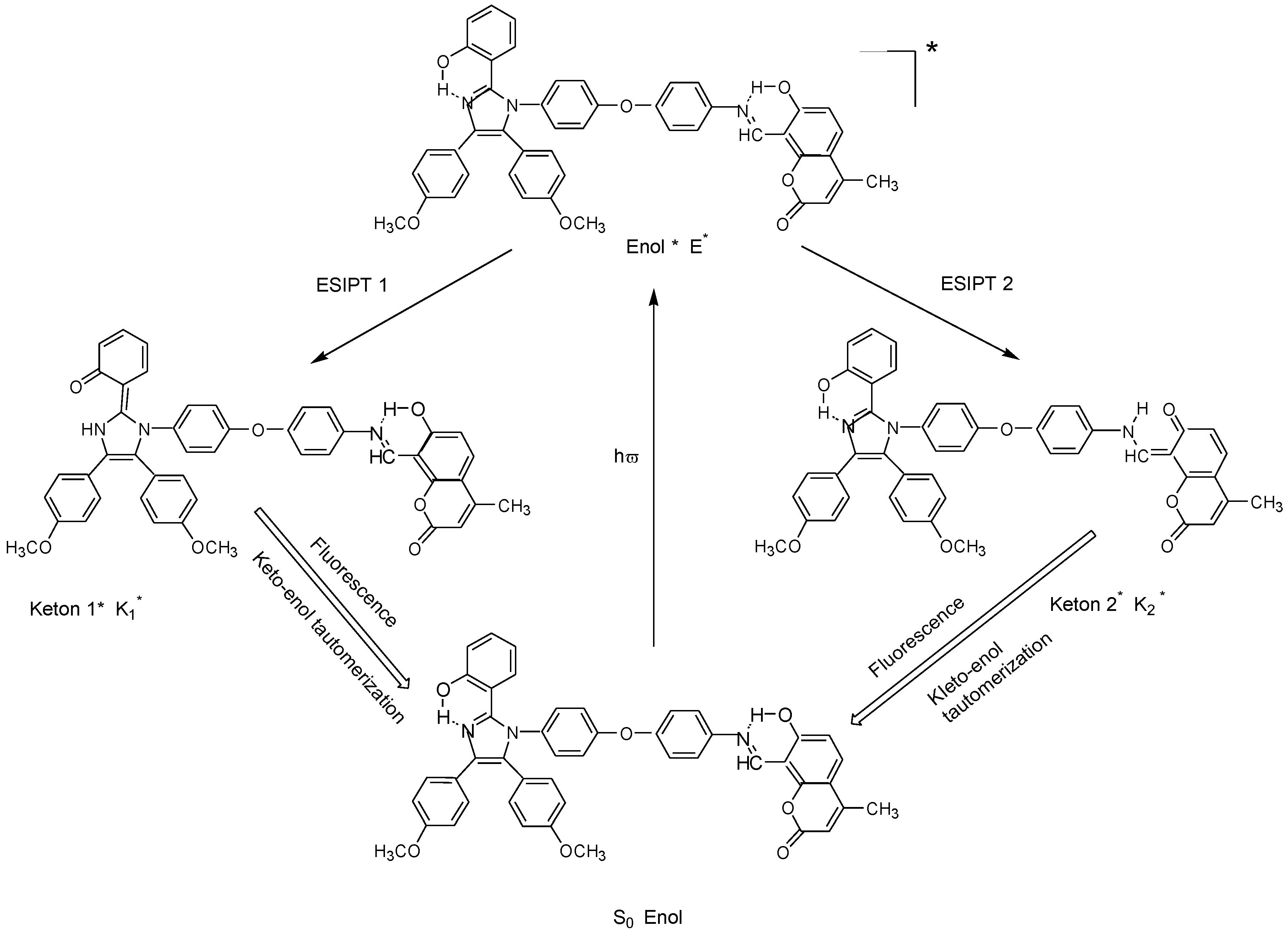
Figure 1.
Luminescence spectra of dyad in the polymer films obtained by photocuring of OCM 1, at λex = 330 nm (1), 340 nm (2), 350 nm (3), and 360 nm (4).
Figure 1.
Luminescence spectra of dyad in the polymer films obtained by photocuring of OCM 1, at λex = 330 nm (1), 340 nm (2), 350 nm (3), and 360 nm (4).
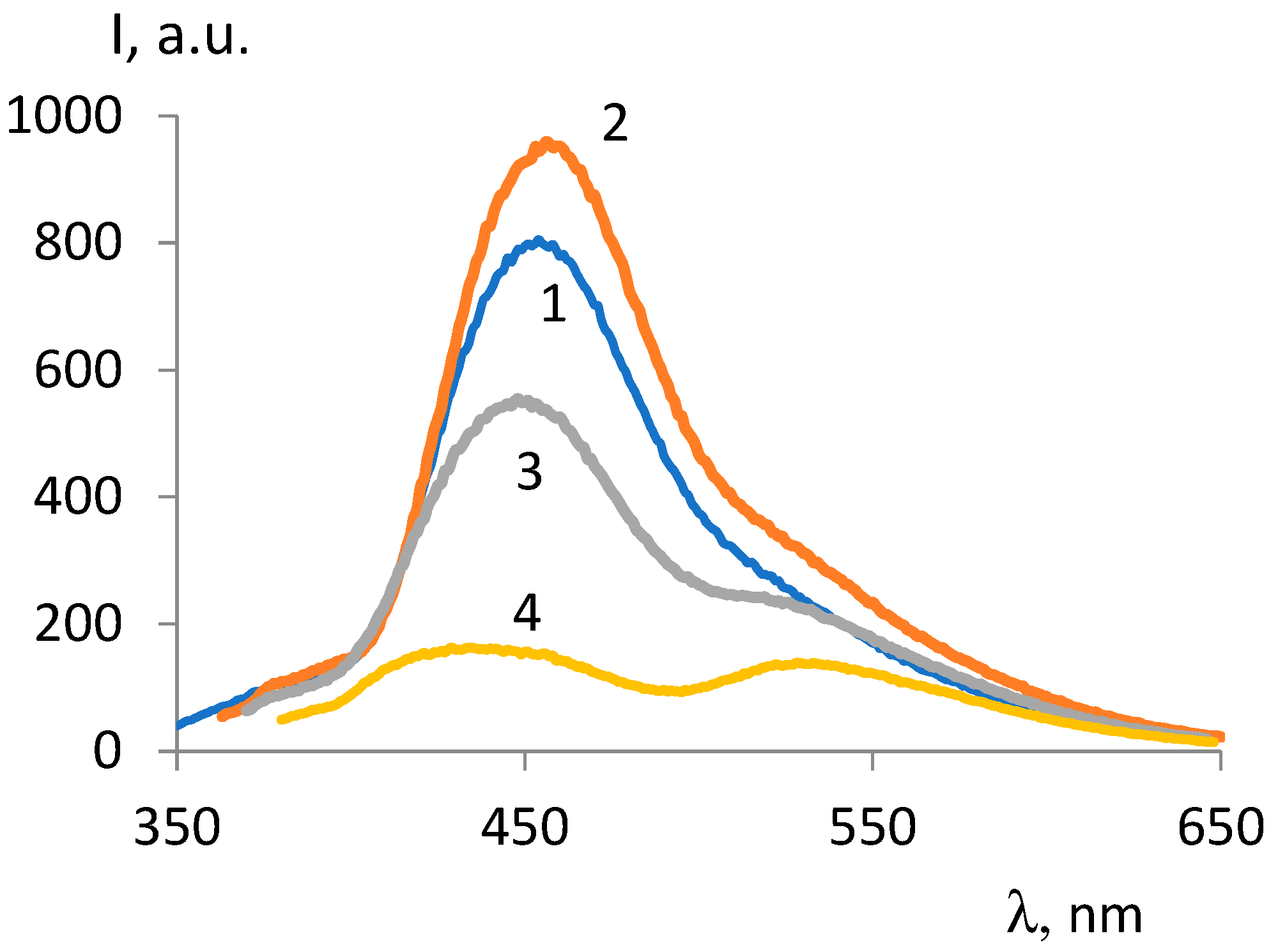
Figure 2.
Luminescence spectra of dyad in the polymer films obtained by photocuring of OCM 2, at λex = 330 nm (1), 340 nm (2), 350 nm (3), and 360 nm (4).
Figure 2.
Luminescence spectra of dyad in the polymer films obtained by photocuring of OCM 2, at λex = 330 nm (1), 340 nm (2), 350 nm (3), and 360 nm (4).
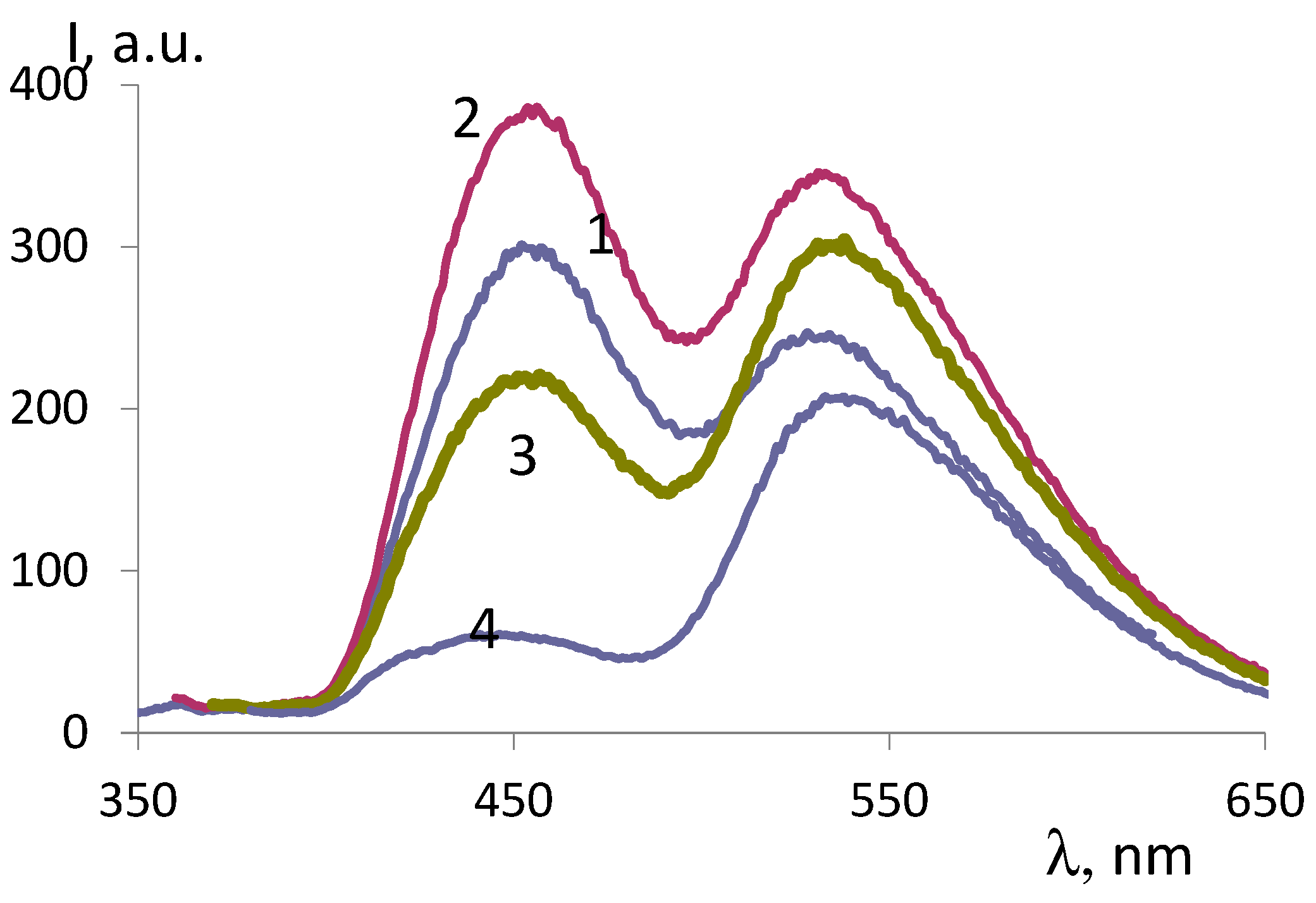
Figure 3.
Luminescence spectra of dyad in the polymer films obtained by photocuring of OCM 2/1 at λex = 330 nm (1), 340 nm (2), 350 nm (3), and 360 nm (4).
Figure 3.
Luminescence spectra of dyad in the polymer films obtained by photocuring of OCM 2/1 at λex = 330 nm (1), 340 nm (2), 350 nm (3), and 360 nm (4).
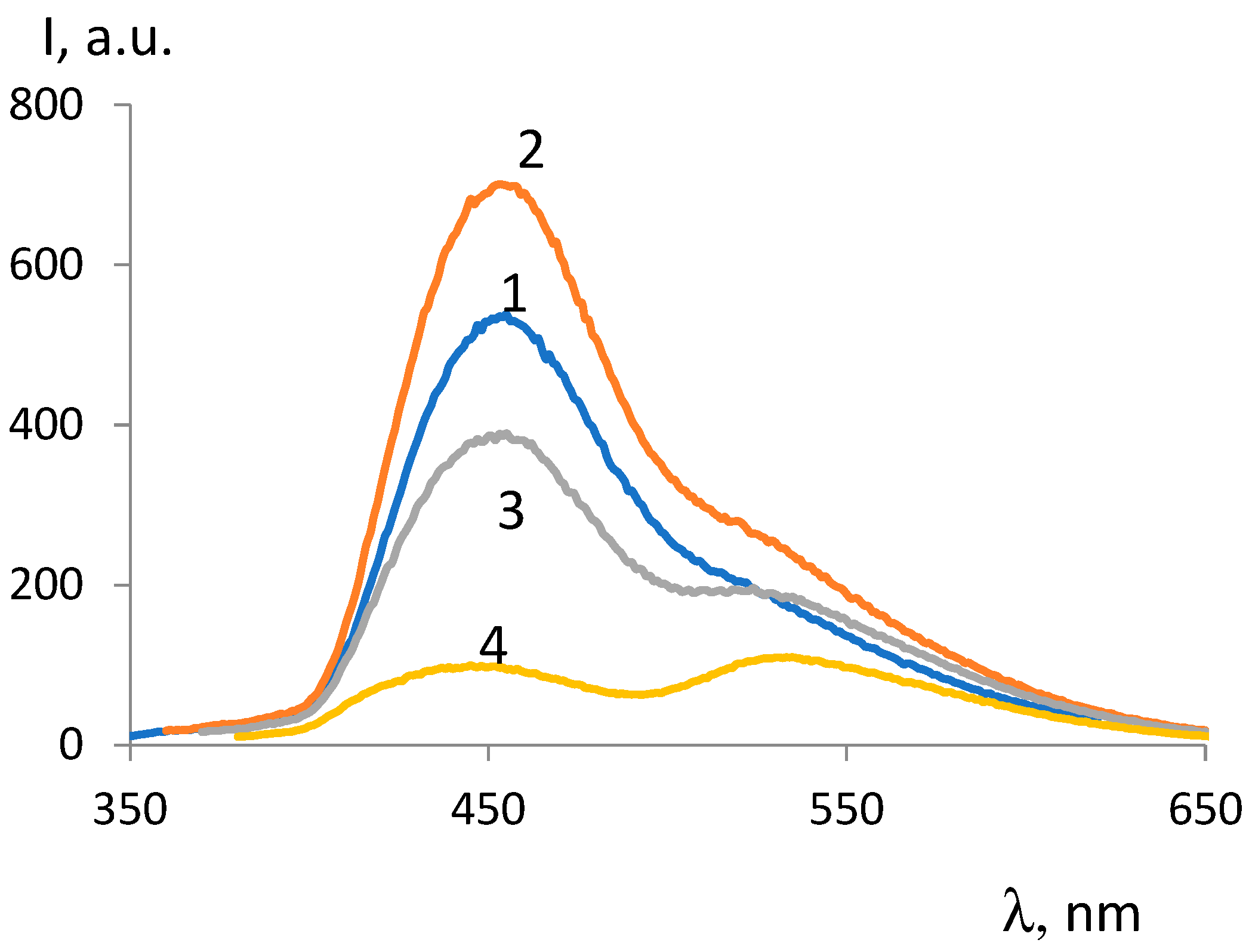
Figure 4.
Luminescence spectra of dyad in the polymer films obtained by photocuring of OCM 7 (1, 2) and ОCМ 5 (3, 4) at λex = 330 nm (1, 3) and 350 nm (2,4).
Figure 4.
Luminescence spectra of dyad in the polymer films obtained by photocuring of OCM 7 (1, 2) and ОCМ 5 (3, 4) at λex = 330 nm (1, 3) and 350 nm (2,4).
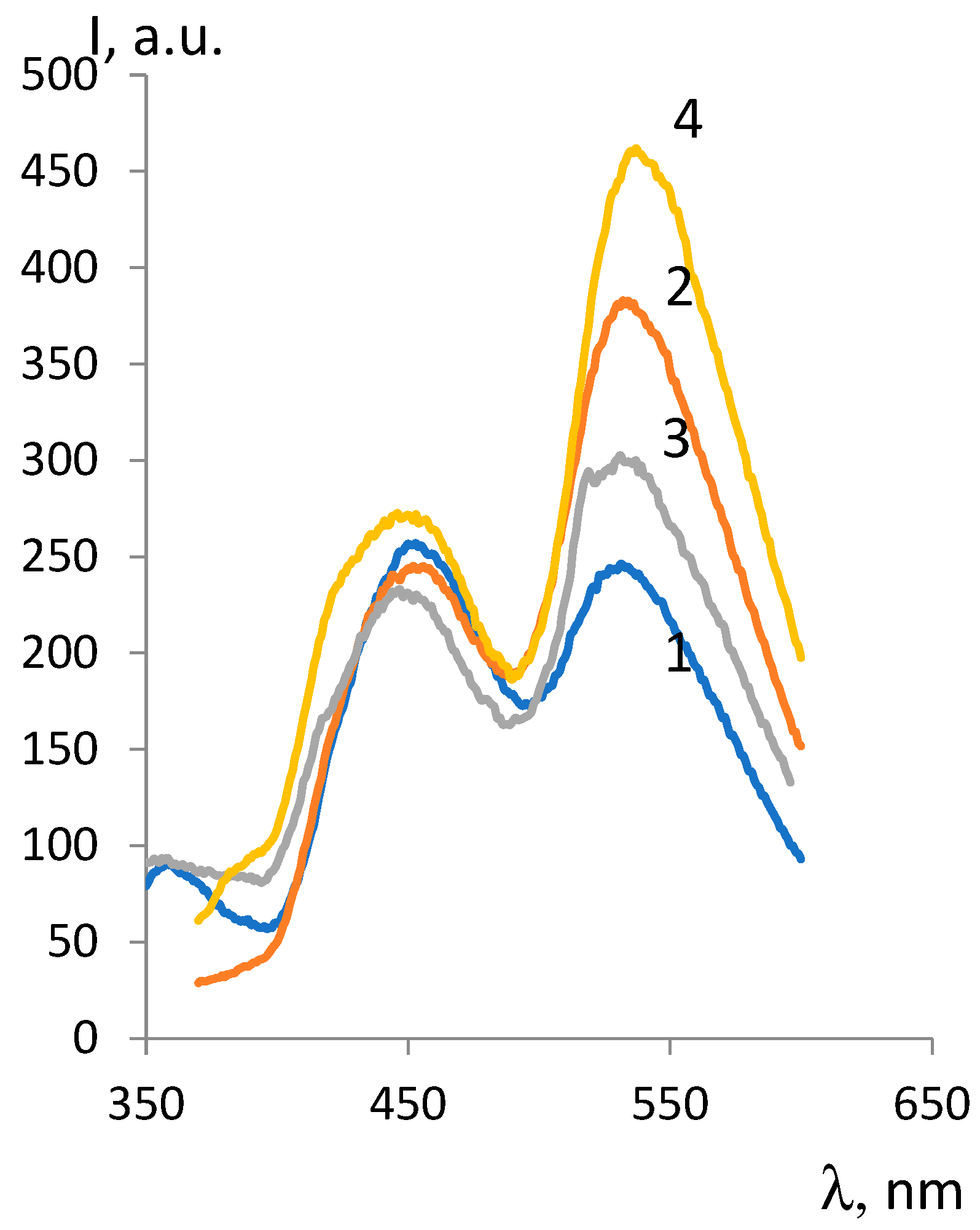
Figure 5.
Luminescence spectra of dyad in the polymer films obtained by photocuring of aliphatic OCM 1 (1) and aromatic ОCМ 7 (2) at λex = 330 nm.
Figure 5.
Luminescence spectra of dyad in the polymer films obtained by photocuring of aliphatic OCM 1 (1) and aromatic ОCМ 7 (2) at λex = 330 nm.
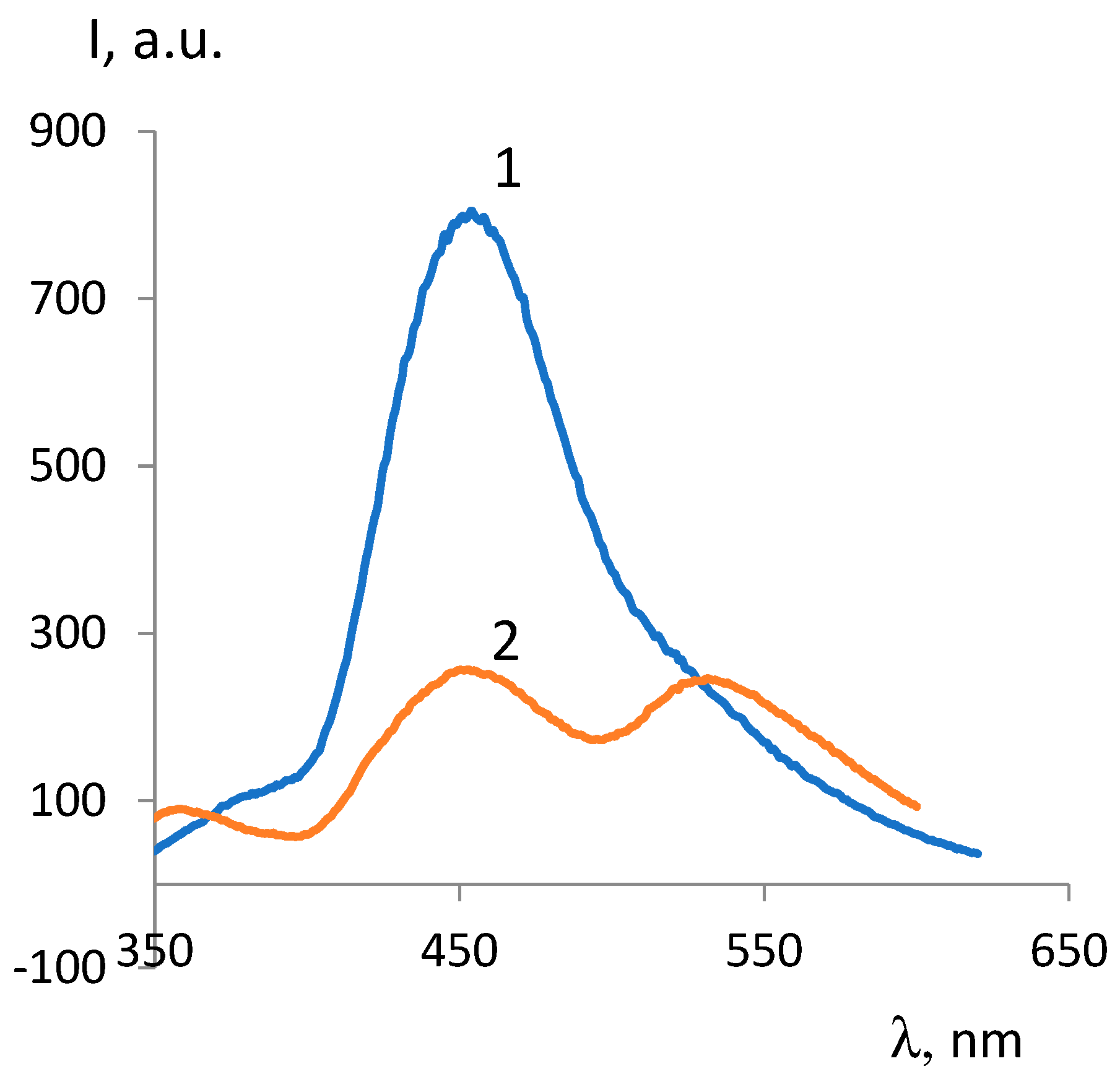
Figure 6.
Luminescence spectra of dyad in the polymer films obtained by photocuring of aromatic PhEА (1) and ОCМ 5 (2) at λex = 330 nm.
Figure 6.
Luminescence spectra of dyad in the polymer films obtained by photocuring of aromatic PhEА (1) and ОCМ 5 (2) at λex = 330 nm.
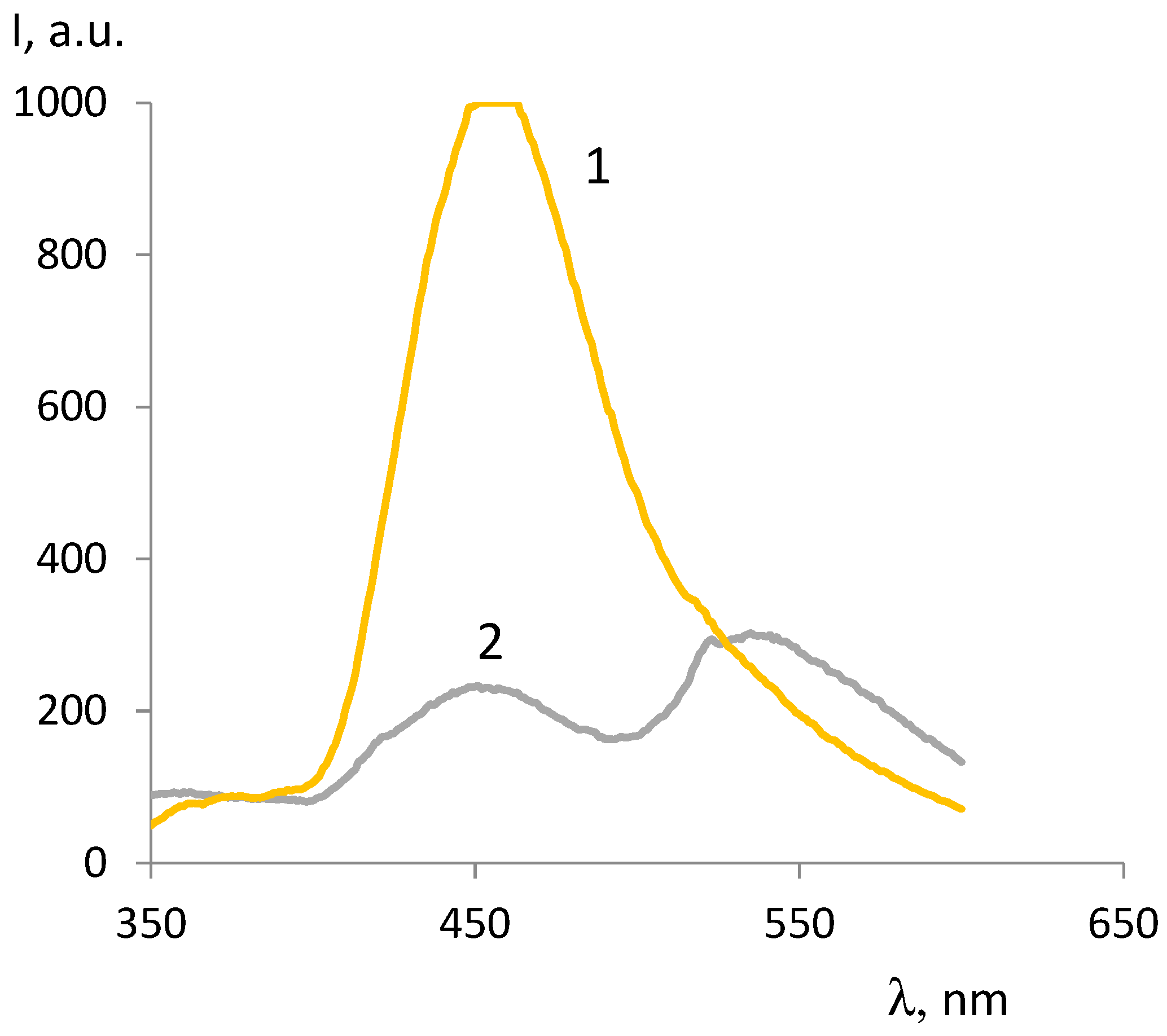
Figure 7.
Luminescence spectra of dyad in the polymer films obtained by photocuring of ОCМ 1 (1), ОCМ 2 (2), ОCМ 2/1 (3), ОCМ 7 (4) and ОCМ 5 (5) at λex = 330 nm.
Figure 7.
Luminescence spectra of dyad in the polymer films obtained by photocuring of ОCМ 1 (1), ОCМ 2 (2), ОCМ 2/1 (3), ОCМ 7 (4) and ОCМ 5 (5) at λex = 330 nm.
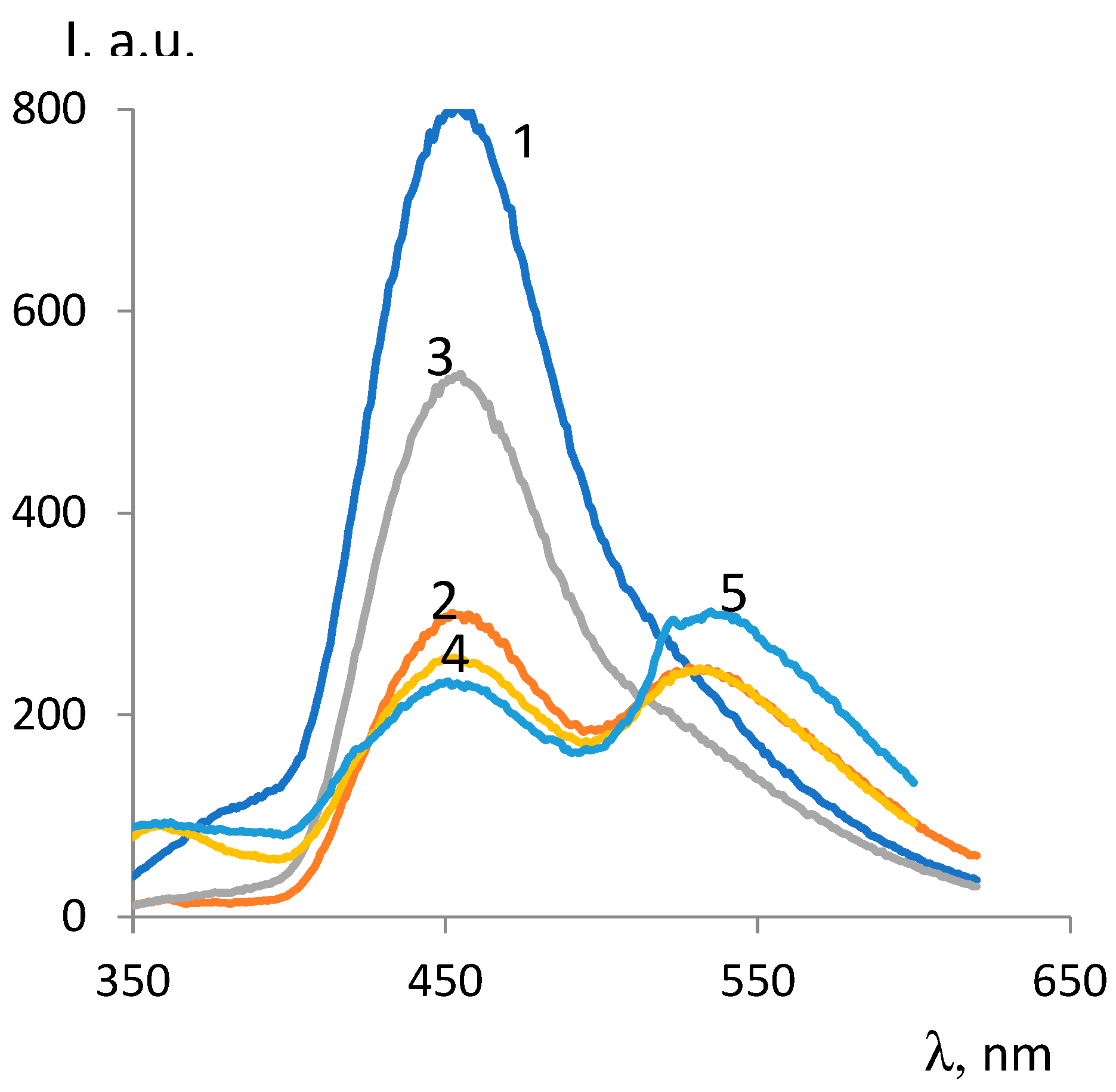

Table 1.
The fluorescence intensity of the dyad in photo-cured oligocarbonate methacrylates at different excitation wavelengths.
Table 1.
The fluorescence intensity of the dyad in photo-cured oligocarbonate methacrylates at different excitation wavelengths.
| ОCМ | ММ | Fluorescence intensity, λex =330 nm |
Fluorescence intensity,, λex=350 nm |
||
|---|---|---|---|---|---|
| 450 nm band | 535 nm band | 450 nm band | 535 nm band | ||
| ОCМ-1 | 374 | 802 | - | 534 | 249 |
| ОCМ-2 | 418 | 296 | 240 | 217 | 296 |
| ОCМ-7 | 420 | 257 | 246 | 245 | 383 |
| ОCМ-5 | 540 | 239 | 303 | 273 | 462 |
| ОCМ2/1 | 683 | 529 | - | 383 | 193 |
Disclaimer/Publisher’s Note: The statements, opinions and data contained in all publications are solely those of the individual author(s) and contributor(s) and not of MDPI and/or the editor(s). MDPI and/or the editor(s) disclaim responsibility for any injury to people or property resulting from any ideas, methods, instructions or products referred to in the content. |
© 2023 by the authors. Licensee MDPI, Basel, Switzerland. This article is an open access article distributed under the terms and conditions of the Creative Commons Attribution (CC BY) license (https://creativecommons.org/licenses/by/4.0/).
Copyright: This open access article is published under a Creative Commons CC BY 4.0 license, which permit the free download, distribution, and reuse, provided that the author and preprint are cited in any reuse.


