
Submitted:
03 May 2023
Posted:
04 May 2023
You are already at the latest version
Abstract
Smart mechatronics system in agriculture can be traced back to the mid-1980s, when research into automated fruit harvesting systems began in Japan, Europe, and the United States. Since then, impressive advances have been made smart mechatronics systems. Furthermore, smart mechatronics systems are promising areas, as results, we were intrigued to learn more about them. Consequently, the purpose of this study was to examine the smart mechatronic systems that have been applied to agricultural areas so far, with inspiration from smart mechatronic system in other sectors. To get an overview of the current state of the art, benefits and drawbacks of the smart mechatronics systems, various approaches were investigated. Moreover, smart mechatronic modules, and various networks applied in agriculture processing were examined. Finally, we were explored how the data retrieved using the one-way analysis of variance related to each other. The result showed that there were strong related keywords for different journals. The virtually limited use of sophisticated mechatronics in the agricultural industry, and at the same time, the low production rate, the demand for food security has fallen dramatically. Therefore, the application of smart mechatronics system in agricultural sectors would be taken into consideration in order to overcome these issues.
Keywords:
mechatronics
; robotics system
; automation
; robotics
; agriculture mechanism
1. Introduction
One of the most fundamental basic necessities for humans has continued to be eating. And thus, agriculture continues to be the main source of food. In order to ensure the consumers' safety and health, food has progressed. Moreover, from merely having enough numerous desirable qualities and forms, has been explained [1,2,3]. As a result, scientific and technological developments have considerably aided agricultural advancements. Consequently, it is referred as "smart agriculture" (precision agriculture) [4,5,6]. According to the works of [7,8,9], the use of mechatronics (automation and artificial intelligence) in agriculture has been inspired. In addition, mechatronics practices and goods now differ greatly from those of a few decades ago. Additionally, modern products and processes are being produced with a multidisciplinary perspective. To include growing quantities of integration, sophistication, robustness, intelligence, feedback, have been targeted[10,11,12]. Because, the term "mechatronics" was created from the word’s "mechanism”, “computer”, “control theory", and "electronics" [13]. The results of mechatronics in agriculture to expand the range of production from subsistence to commercial production, processing, packaging, storage, and delivery, reduce human drudgery. This were involved in farm work, do more work in less time, improve efficiency and timeliness of field, and post-harvest operations, as explained by [14,15,16]. However, one of the main causes of low agricultural productivity in most of the developing countries are the lack of suitable machinery, accordingly [17,18,19].
Further, modernization is often mistakenly thought to benefit only industrialized countries with highly mechanized agriculture. Developing countries often rely on a large number of imported agricultural machinery that are largely unsuitable for small farms. Lack of automation, such as mechatronics systems, is one of the concerns that needs to be addressed. Numerous small, medium, and even large-scale farms have lower production capacities. It may be avoided if the owner used automation on their particular farm. In order to carry out more advanced automation (optimized) in the future, this rationale compelled us to see an overview of mechatronics application in agriculture [20,21,22].
According to [23,24,25], to meet the demands of agricultural output, smart mechatronics might be very important in society. For many years, industrial production and goods have been more efficient and less expensive thanks in large part to automation and robotics. Similar changes have been occurring in the agriculture sector over the last few years, with self-guiding tractors and harvesters. And that are GPS and vision-based already being sold commercially. More recently, researchers have begun to experiment with autonomous systems that integrate tasks like planting, spraying, mowing, and weeding with others like thinning, trimming, and harvesting. Moreover, robotic platforms that workers ride have been demonstrated to be twice as efficient as workers using ladders in the fruit production sector, for instance.
Consequently, smart mechatronic components are crucial in agriculture. It is utilized in aquaculture production, food processing, building environmental management, irrigation systems, tractor and industrial systems, and grain drying. By lowering human and environmental error through the use of mechatronics, we can increase the number of productions (damaged produce) as reflected by [26,27,28,29]. Using current technology in advanced farming, especially on a broad scale, can help a nation achieve food security.
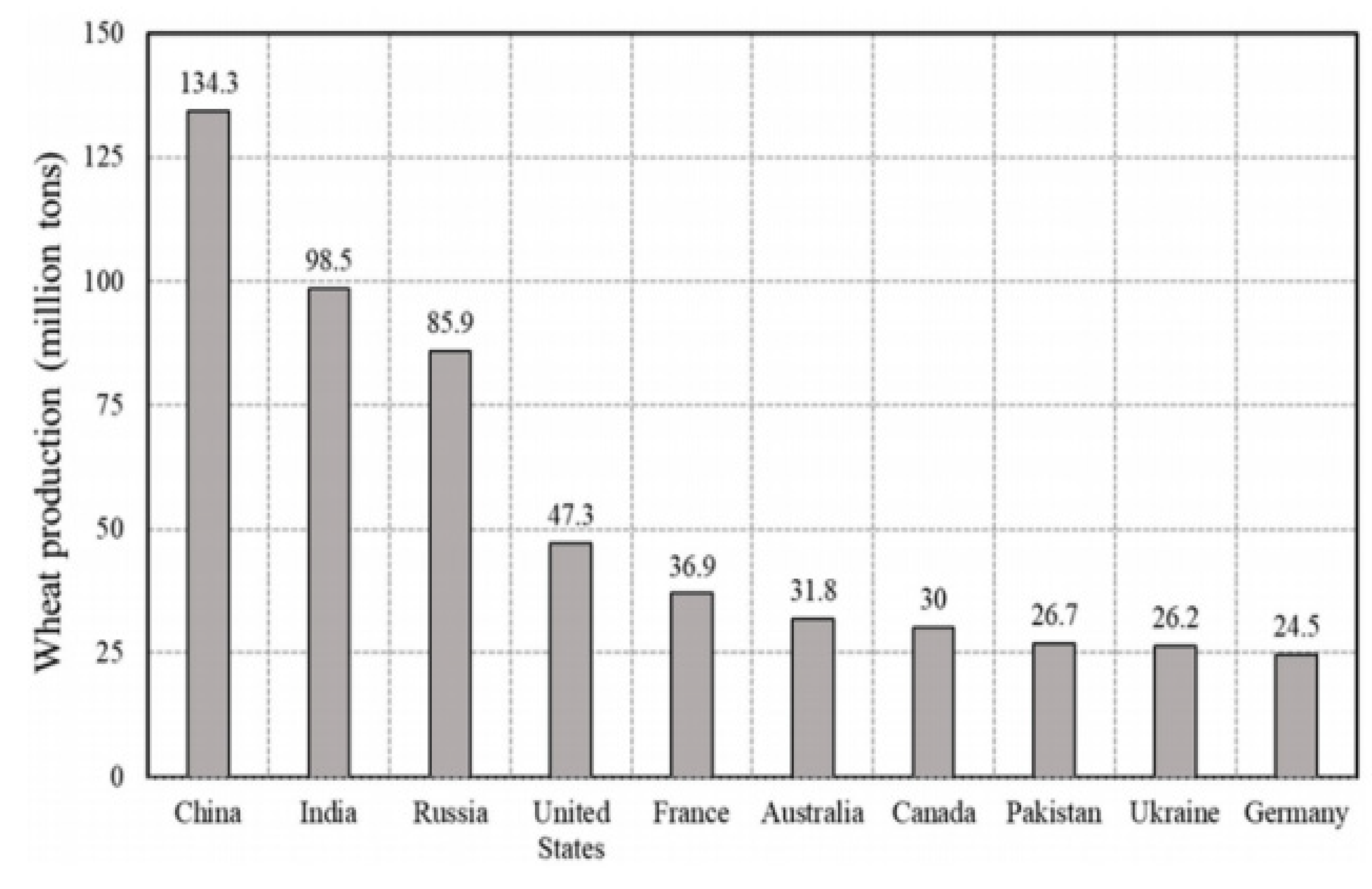
According to the Food and Agriculture Organization (FAO) estimates that 821 million people worldwide are underfed based on current trends in food security. Because lack of using the mechatronics application in the agriculture sectors; the 2020 Global Hunger Index (GHI) report has been shown that many African countries are experiencing severe hunger, including Ethiopia, Kenya, Sudan, Somalia, Nigeria and Mali, etc. on the other hands, most of the European countries were expected to produce maximums, and feed the rest of the world. To condense the idea figure 1 has been displayed [30,31,32,33].
Figure 1.
Total wheat production in the top ten countries in 2021 [32].
Figure 1.
Total wheat production in the top ten countries in 2021 [32].
The main goal of smart mechatronics systems (precision agriculture) were the problem of uniform application of farm inputs under changing field conditions. It has been used to observe and measure various information and communication technologies (satellite, GPS, GIS, sensors, electronic systems, computer, camera). In addition, interpreting the differences between crops or animals; and use decision-making information to manage the agriculture components. These components are soil, water, farm inputs, microclimate, environment, machinery and machinery-related parameters to achieve optimal and sustainable crop and livestock production. Moreover, precision agriculture is essentially about monitoring, measuring, responding to intra- and intra-farm variation. It refers to the management of a field despite adverse conditions with the aim of increasing production. The profit in crop production or livestock production without signs of soil degradation[34,35,36]. The results of smart agriculture are not to achieve the same production everywhere. Rather, direct the precise input needed to achieve site-specific returns to increase long-term revenue for that site with minimal input. Precision agriculture has been seen as an observation, impact assessment and timely strategic response to subtle variation in the causal components of agricultural production. Furthermore, the process and thus can extend several farms and can be applied to the pre- and post-production aspects of the farm. Consequently, precision agriculture are classified into eight sections based on applications accordingly [37,38,39,40]. These are
Guidance systems: This allows exact directing inside the field, and helps avoid covering application zones.
Precise Sowing: With precise sowing, a consistent number of seeds sown, accurate alignment of seeds (with the same spacing) and the variation of sowing density can be accomplished.
Fertilizer application: The volume of fertilizer to be applied is adjusted to the real nutritional status inside the field.
Plant protection: Variation of pesticides (herbicide, fungicide and insecticide) within a field
Soil management: Tillage (ploughing intensity/depth) according to the soil properties
Irrigation: Precise irrigation according to the soil water status.
Yield mapping: For quality control of the management decisions and yield.
Documentation: All taken actions can be documented precisely for each management zone, including the information about the total amount of material and working hours.
Autonomous farm machinery
Modern technology has developed autonomous machines and equipment that can be used in agriculture with little or no human intervention. They are based on robotic technology and can process real-time farm data and then carry out the corresponding agricultural process, which includes cultivation, planting, sowing, weeding, fertilizing and spraying, among others. Some of these revolutionary technological developments, from autonomous agricultural machines to the use of digital agriculture, include: GPS-enabled tractors can be used in modern agriculture to achieve controlled cultivation that provides a uniform land width for uniform planting and/or sowing, uniformly applied. fertilizer and crop spraying. In addition, these tractors have an advanced mechanism that allows independent control of engine and machine speed. And a GPS-based remote-controlled robot that integrates built-in autonomous navigation software[41,42,43,44].
Drone supported farming
Through drone supported farming, aerial photography can be done with IoT compatible aerial drones to create agricultural vegetation indices, field mapping and remote farm monitoring. Drones can also integrate IoT sensors to provide highly accurate and real-time farm data on parameters such as weather, crop height, water saturation, pest and weed detection, etc., which is important for crop growth stages, zoning and crop classification. monitoring, seeding and spraying [45].
Smart dairy Farm
A smart dairy farm with automated milking, feed mixing, feed wagons, manure handler and animal monitoring and can be realized with the following mechatronic systems:
Automatic milking machine, which creates a faster and more convenient milking system, combined with real-time quality and quantity data collection. The suggestions of these milk analytical parameters visible on the screen can be very important in monitoring the daily nutrition of the cattle and also provides an assessment of the general health status of the cattle. Operation of the milking machine [46], [47].
IoT-enabled:Livestock monitoring is achieved by fitting cattle with ear tag chip sensors that collect, among other things, body blood pressure, pulse, temperature and rumination activity. Cattle health analysis can then be performed based on ML algorithms to identify potential individual herd infections, cattle heads and recommend potential treatment options. In this way, the farmer can check the health status of the livestock. One of these Zoetis systems is implemented with chip placement using SMARTBOW technology[48,49,50,51].
Smart poultry farm
includes automatic egg collection, automatic distribution of food and water, and an automatic monitoring system that precisely maintains the desired environmental conditions of the poultry farm. The main technological implementations of the intelligent poultry farm system include (1) IoT sensors that monitor real-time environmental conditions, including ammonia gas, humidity, light, temperature, etc., (2) an integrated GPRS module that provides convenient remote monitoring, and (3) Comes with GSM modules so that the grower can monitor developments in a timely manner and receive intruder warnings if possible[52,53,54,55].
Smart greenhouses
The latest greenhouse technology can be integrated with the new integration of IoT-based solar energy smart greenhouse system. Automation technologies that a smart greenhouse system integrates into sustainable agriculture include (1) the use of IoT sensors to collect greenhouse data on environmental parameters such as humidity, temperature, light, soil moisture, concentration and pH, (2) photovoltaic-thermal. (PVT) solar system to generate photovoltaic energy, which is necessary for the operation of the electrical system and thus economical, in Wireless Sensor Network (WSN) nodes that provide cloud storage and thus enable remote control of the greenhouse system[29], [56].
Smart farm irrigation
Mechatronics and automation technologies can be used to develop and deploy a modern smart irrigation system that operates on real-time field data by combining and deploying the following technologies: (1) IoT-based sensor modules distributed at strategic locations (i.e., nodes). ) in the farm. ) collect various parameters including temperature, humidity, soil moisture and water level, and (2) CoT-based thermal imaging, which enables remote field surface temperature mapping and water content analysis. in different regions and therefore offers a technique that favors less irrigated areas to ensure equal distribution of water in the field[56,57,58].
Smart farm warehouse
A smart warehouse can help implement effective monitoring and control in the farm. With the help of IoT sensors, automatic and timely reordering of farm supplies and machinery spare parts can be done, which ensures continuous operation of the farm, reducing farm breakdowns, minimal waste of time and lower inventory costs[57,58,59,60].
In addition, RFID (Radio Frequency Identification) sensors can be used to clearly mark the farm's produce, enabling safe and accurate tracking of the farm's produce throughout the supply chain, i.e. from the field to the stock shop and then to the sellers who distribute, it to consumers [14], [15]. In addition, an IoT-based storage system can automatically monitor farm crop conditions to create optimal conditions to reduce postharvest losses, improve yields, and increase farm productivity as reflected in [61,62,63].
Therefore, this intelligent warehouse technology implementation in the farm can ensure that there is (1) agricultural evaluation metrics where points and indexes can be given to the farmer and consumer based on value-based activities, (2) goal setting. feedback based on farm processes and/or products, and (3) RFID-based blockchain sustainability, providing food tracking from farm harvest and storage to delivery and distribution to consumers [64,65].
Auto-steering
The tractors that combine GIS-based terrain mapping shown in Figure 5 can be used for a range of field operations, from cultivation to harvesting. These autonomous tractors [18] have a 3D laser scanner, GPS-enabled cameras, and other multiple sensors that detect various parameters such as terrain and weather conditions [63,64,65,66,67].
Harvesting machinery
Similar to a combination with an integrated camera surveillance system, the can be used to provide the operator with a wider field of view while working in the field. This improved machine control range improves machine performance in the field. In addition, a robotic harvester with advanced GPS integration and improved accuracy has been developed, which may be another good candidate for automating farm harvesting operations [68,69,70].
Precision farming: with the introduction of digital agriculture, real-time and accurate information can be collected from the field, which leads to the development of data-based agriculture. This information can be used to determine soils and crops to improve productivity, monitor progress, predict yields and use natural resources optimally to achieve environmental sustainability. Finally, implementing precision agriculture can help reduce resource wastage and increase farm profit margins[71,72,73].
Farming productivity: modern automated farming methods contribute greatly to the mechanization of agriculture and fulfill the operational needs of the farm. Although these technological innovations are very reliable, production stops when agricultural machinery or agricultural systems fail. However, these failures or malfunctions occur periodically and third-party service providers may provide remote troubleshooting, maintenance and repair. The farmer may also be advised to keep a large inventory of machine spare parts to minimize machine downtime and ensure that work continues even after a breakdown. The result of the implementation of agricultural technical systems is an increase in farm yields and thus productivity[72,73,74].
Knowledge gap: It is possible that farmers may find it difficult to adapt to digital farming technology, interpret computerized results, and this may also cause operational difficulties due to various integrated technical systems. This may require the farmer to invest in practical training and introduction to the use of agricultural machinery, and even learn the basic concepts of calculation to effectively operate, implement and operate agricultural systems. Sometimes these workouts can be time consuming, difficult, stressful or even inadequate [75,76,77].
Employment opportunities: The downside is that the introduction of new farming techniques will render agricultural workers detrimentally unemployed. The fact that these farming systems are almost completely autonomous means that less human labor is required. Therefore, a balance can be sought between the level of implementation of mechanized agricultural systems and the needs related to threatened food security[70,71,72,73,74,75,76,77,78].
Land use: the use of highly mechanized, faster and large-scale farm automation technology and machinery can result in more land being used for useful and productive agriculture. As more land is cultivated due to the introduction of agricultural machinery and the need for human labor is reduced, farm yields increase, which in turn ensures better returns for farmers and food sustainability for the Kenyan economy [79,80].
Mobile applications: With the latest smartphone technology, farmers can now more easily and conveniently integrate farm automation technologies with remote monitoring from their smartphones and tablets [81,82,83].
However, the aforementioned publications suggested that many earlier studies were more concerned with the modules than the control systems where the system would function best. The application of the mechatronic system and its impacts on agriculture were not taken into account. In some research papers we found, un-recommended modules were used in mechatronics, which were not suitable for high performance. Thus, excessive setting, a short attention span, excessive multitasking, a risk of privacy invasion, the ability to limit learning and develop a dependence, time wasters, and other diversions.
We therefore intended to evaluate these issues using several approaches. The objective of this paper was to investigate the state of the art in the application of smart mechatronics systems in agriculture sectors. It was intended to understand how the agricultural sectors are inspired by mechatronics system applications and intelligence systems. And how the production rates will be increased with incorporation of smart mechatronics system. Why not the existing systems were not address the food security issue so far.
The result could be used by researches and extension workers to advise agricultural sectors on the best application of mechatronics systems in agriculture. Agriculture technology is rapidly affecting industry due to public knowledge of the demands for food consumers. Significantly increased applications of modern mechatronic systems in the agricultural sectors will be recommended. Because of this, modern, complex methods are necessary. Precision agriculture (PA), a development in mechatronics, is currently playing a significant role in the agricultural industries. Since the development of mechatronics systems, precision agriculture (PA) has minimized labor and decreased crop costs by maximizing production. The benefit of mechatronic system integration in agricultural sectors, however, is the reward of doubling efficiency when compared to manually controlled machines. In which there has been a revolution in how agricultural sectors are currently cultivated, tended to, and harvested. Additionally, there is currently very little application of mechatronic engineering technologies in agriculture. The importance of mechatronic systems in agricultural areas, which will be increased production rates and lower poverty rates, cannot be overstated early. To achieve the goals, we have been searched different related papers on different data bases. Based on the obtained related papers, analysis of variance was conducted to identified the relationship statically, based on the keywords. Finally, the conclusion and recommendations were drawn.
The remainder of this paper is structured as follows: methods are completed in section 2, results and discussion, have been presented in section3. Whereas conclusion and recommendation have been drawn in section 4.
2. Methods
In order to approach the current work concepts, several literature review articles were being acquired through SCOPUS, Dimension, PubMed, WOS (web of science), Crossreff, and Google Scholar. Keywords and searching string were developed and used for searching the published papers. After searching the papers, repeated papers were eliminated and exclusion were made. After that, we have been started writing the paper. Finally, a compelling argument and conclusion have been reached. We finally assessed 88 various contemporary literature publications in order to carry out the current task, and based on the prior research, we have been arrived at a conclusion.
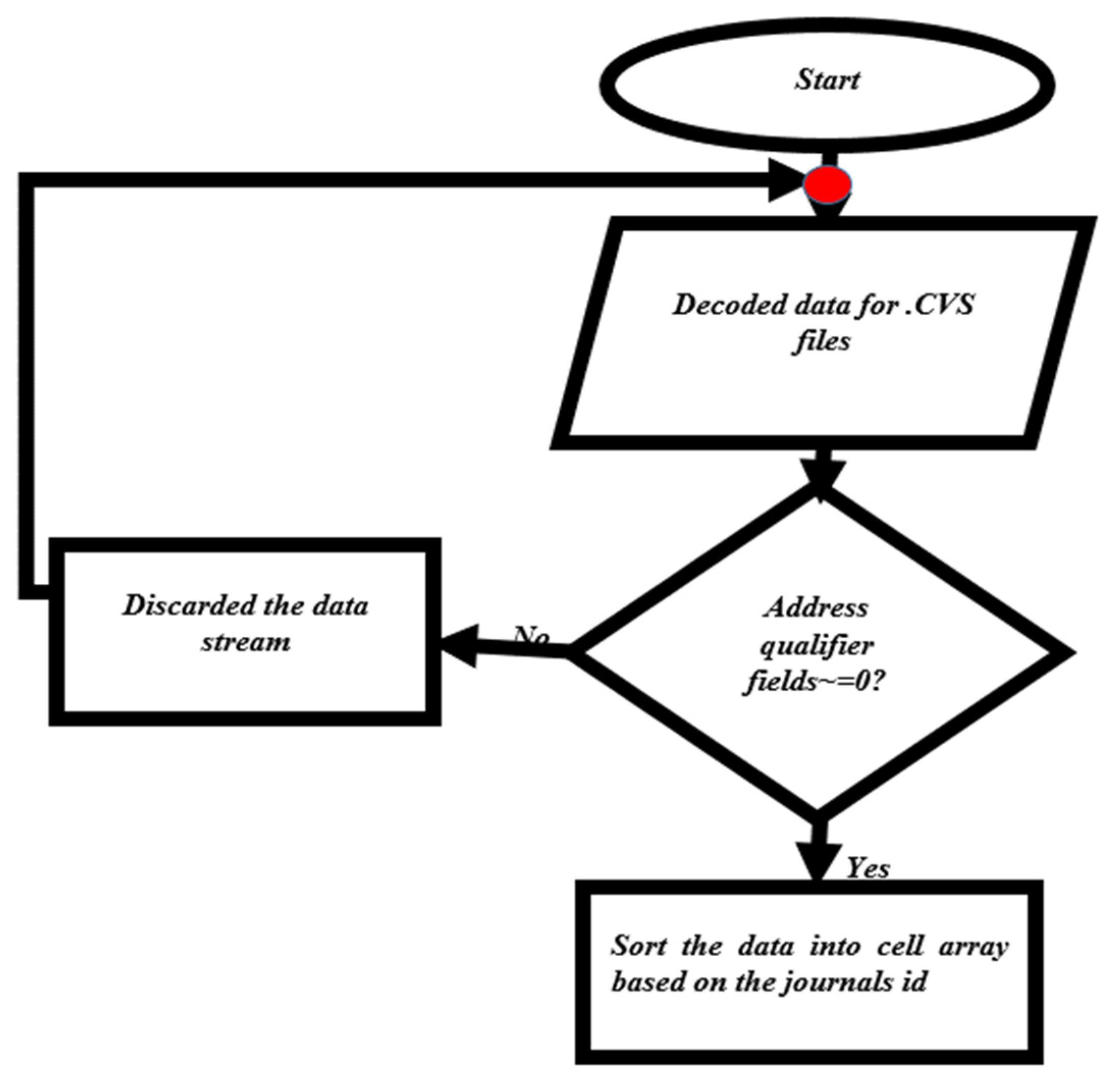
In Excel, there are four options for document filtering. These techniques have been demonstrated as fellow: conceal data on the grid, table filtering, table slicer filtering, and chart filtering directly. Figure 2 showed the current work that has been done using filtering techniques for slicers. Because Slicers offer buttons, we might be used them to filter table or PivotTables. Slicers provide rapid filtering in addition to displaying the filtering state, which makes it simple to comprehend what is being displayed at any given time.
In our worksheet, table slicers add buttons to a filtering experience. This makes it simple for us to click through our data and view various portions. First, click anywhere inside the table to start building a slicer. Choose the Table Tools Design tab from the Ribbon. After selecting the author, title, publication, volume number, year of publication, and publisher checkboxes, click Insert Slicer and then OK.
The databases of SCOPUS, Dimension, PubMed, WOS (web of science), Crossreff, and Google Scholar are used in these papers. Mostly SCOPUS database were utilized due its quality. Moreover, the publisher we have been focused were Elsevier, springer, and science director. According to the methods we used, 25% of the publications came from the Elsevier publisher, while 20% came from the springer publisher, 20% came from the science director publisher, 10% came from the academic journal’s publisher, 15% came from the MDPI publisher, and 10% came from another publisher.
Beginning with the Figure 2, we downloaded a large number of articles and saved them as CSV files. Next, we sort the different journals by the years in which they were published. Journal tiles were also taken into consideration. The data would be organized into cell arrays based on our criteria if the publishing years are within the last twenty years. If the data stream is older than twenty years, discard it and go back to the decoded data files. According to the methods, agricultural machinery accounted for 40% of the papers, and mechatronic farming was the subject of 37.5% of the papers. Furthermore, it was discovered that 22.7% articles included mechatronic systems with higher levels of sophistication, like artificial intelligence systems.
Figure 2.
Data sorting and filtering flow chart depicting the steps used to filter and sort the data.
Figure 2.
Data sorting and filtering flow chart depicting the steps used to filter and sort the data.
Overall, 385 papers were gathered from sources like Elsevier, springer, science director, academics journals, MPDI, and more. The remaining 88 publications were eliminated for the current work after being vetted based on the methodologies. Twenty of the 88 papers discussed the situation of the agricultural system at the time, and 35 papers discussed agriculture machinery. The use of mechatronics in agriculture were discussed in 33 publications, whilst more sophisticated mechatronic systems that included artificial intelligence systems were discussed in 20 publications. The last 22 years, or from 2000 until 2022, have been this paper focus.
3. Results and discussion
There are two primary components to the topic under this section. First the following conversations have been developed based on the techniques we previously demonstrated. Secondly, we have been examined some of the research's findings and discovered it.
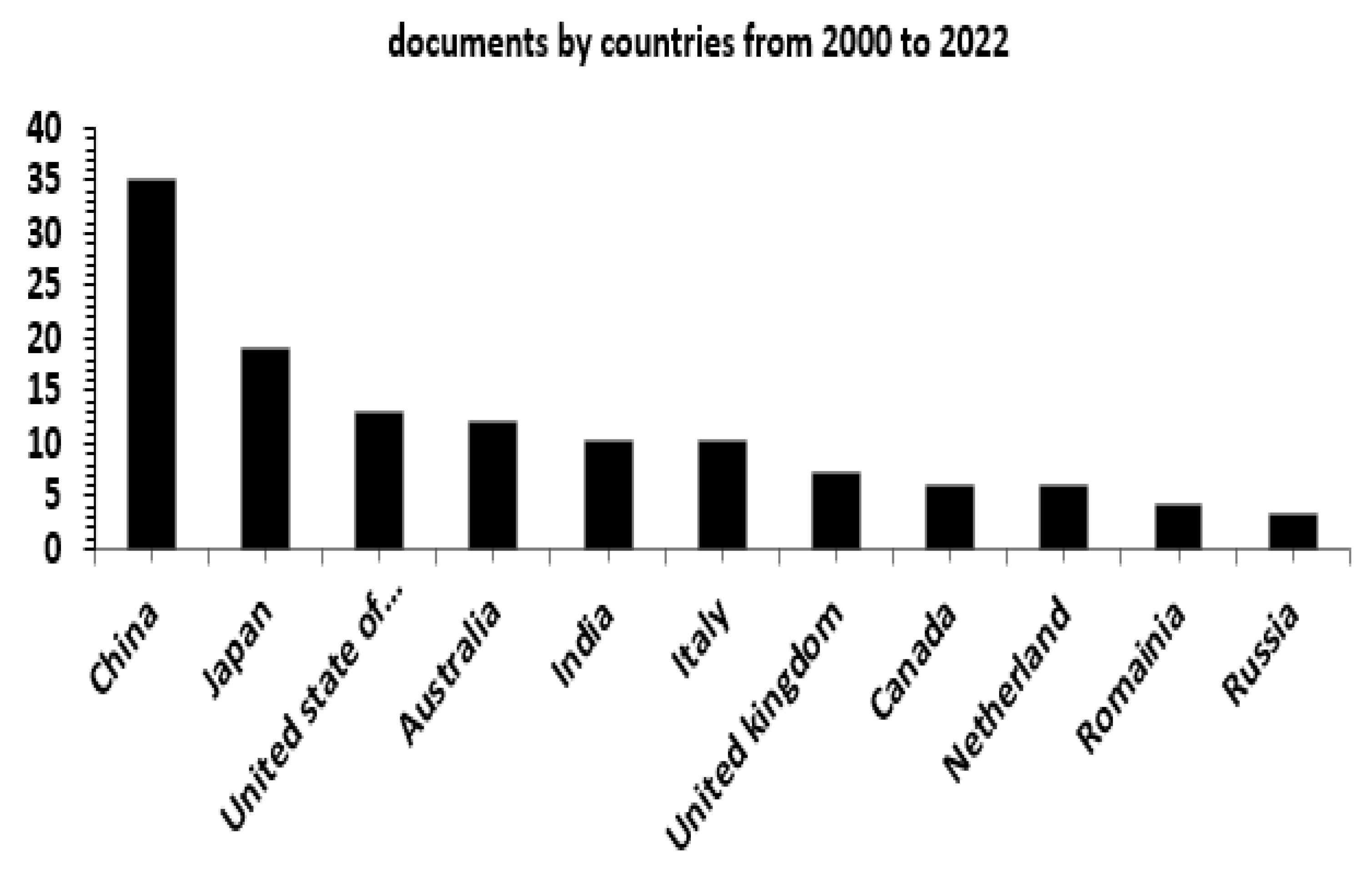
According to figure 3, China is the first country to spend 28% of its time on the mechatronics and agricultural sectors. Japan led the way with 15.2% of the global mechatronics and agricultural research market. Additionally, the United States and Australia are 10.4% and 9.6%, respectively. While the UK contributes roughly 5.6%, India and Italy are each responsible for about 8%. Also responding were Romania with 3.2%, Canada and the Netherlands with 4.8%, and each other. Finally, Russia contributed 2.4%, concentrating on the agriculture and mechatronics sectors. This statistic showed that Asia received 62% of the content responses, while North America received only 18%. European responses came in at roughly 13%, and Australia contributed at about 7%. We have not yet responded to the remaining material.
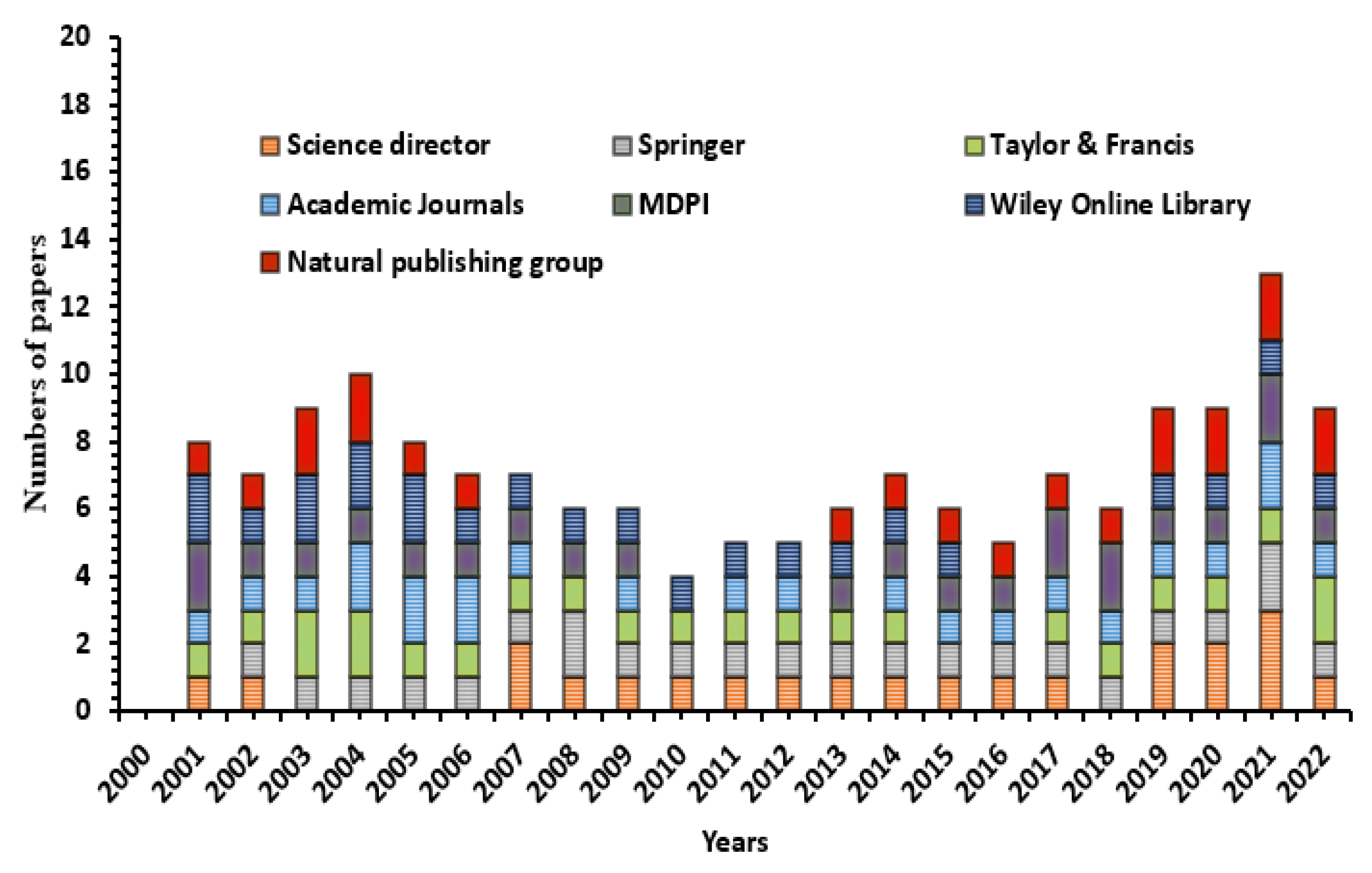
We generalized from figure 4 that the studies are related in some ways. This indicates that the publications we collected have similar key words. The vertical axis showed the number of papers associated to each other, and the horizontal axis represented the years for various publications. The papers we pulled from the Elsevier publisher also had a 20% average key word correlation with scientific director, springer, Taylor & Francis, and acedamic journals, compared to a 40%, 30%, and 5% correlation with MDPI, wiley online library, and natural publishing group for the year 2018. Additionally, in 2019 Elsevier's publishers has a 30%, 20%, 30%, 10%, and 22% relationship with the publishers of Science Director, Springer, Taylor & Francis, and Academia-Europeana. While the relationships between MDPI, the Wiley Online Library, and the Natural Publishing Group publishers were, respectively, roughly 30%, 5%, and 20%.
Science Director, Springer, Taylor & Francis, and acedamic journals publishers were associated to Elsevier publisher for the year 2020 with 20%, 10%, 9%, 12%, and 30%, respectively. In contrast, there was a 40%, 20%, and 20% correlation between MDPI, the Wiley Online Library, and the Natural Publishing Group publishers, respectively. In addition, Elsevier's publisher in 2021 had a 10%, 10%, 20%, 20%, and 25% relationship with scientific director, springer, Taylor & Francis, and acedamic journals, respectively. The correlation between MDPI, the Wiley Online Library, and the Natural Publishing Group publisher was roughly 5%, 30%, and 40%, respectively.
Finally, for the year 2022, Elsevier's publisher had a 10%, 20%, 30%, 25%, and 15% correlation with scientific director, springer, Taylor & Francis, and acedamic journals, respectively. Meanwhile, the relationships between MDPI, Wiley Online Library, and Natural Publishing Group publishers were roughly 5%, 30%, and 20%, respectively. As a result, the retrieved publishers contained key terms that were closely related to one another.
Figure 4.
Distribution of papers per years using different publishers on mechatronics engineering areas.
Figure 4.
Distribution of papers per years using different publishers on mechatronics engineering areas.
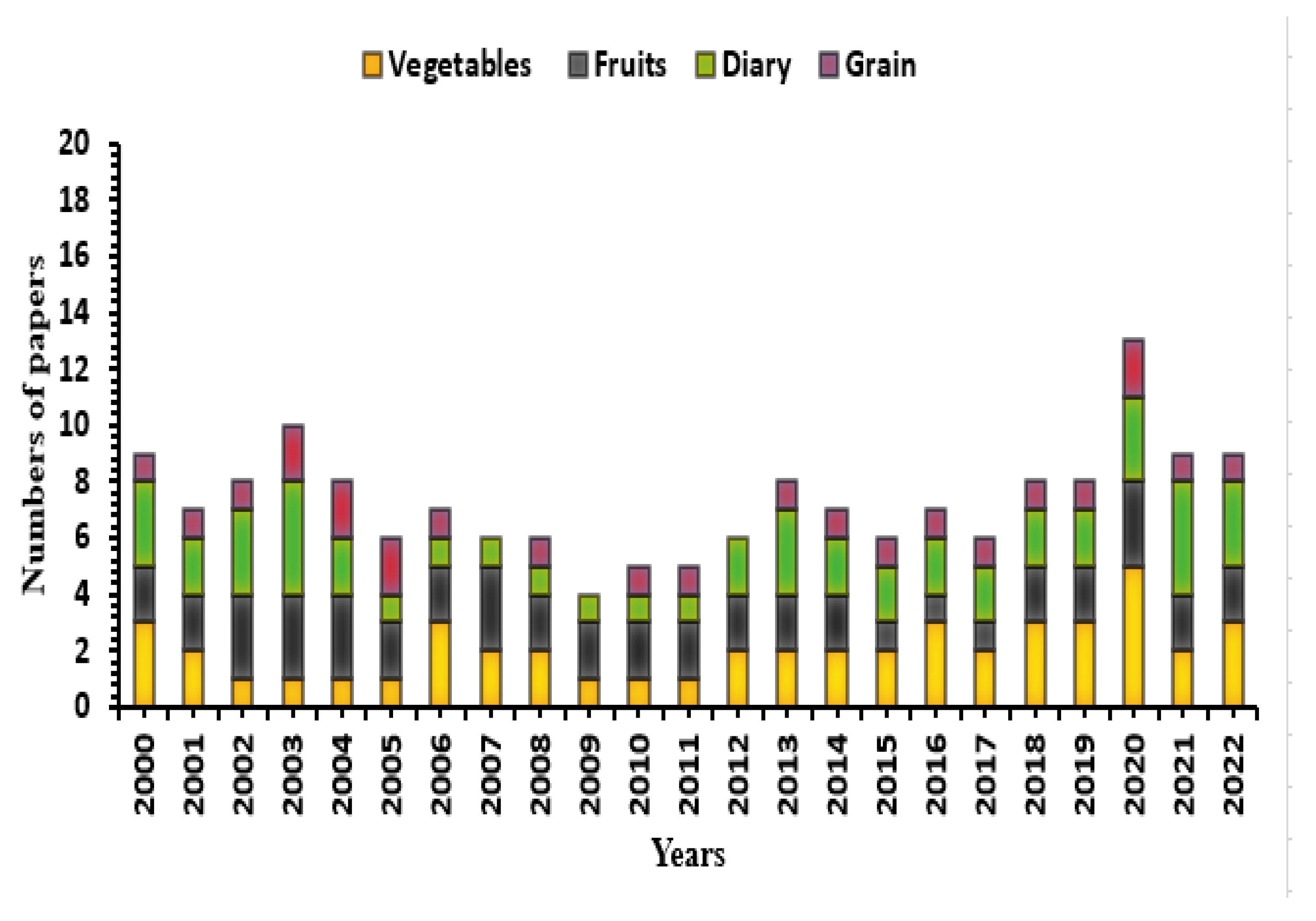
The graphic depiction of publications each year is displayed in Figure 5 for vegetables, fruits, dairy products, and, grains. The vertical axis shows number of papers as acquired from various journals' publisher per year, while the horizontal axis shows years of publication. According to the legend, the sheets covered vegetables, fruits, dairy products, and, grains respectively. From left to right, the papers linked to vegetables are shown in yellow, while the papers relating to Fruits are shown in gray. Green-colored papers dealt with diaries, whereas purple-colored papers dealt with grains.
Figure 5.
Distribution of published papers on different agricultural sectors on Mechatronics engineering areas.
Figure 5.
Distribution of published papers on different agricultural sectors on Mechatronics engineering areas.
As shown in table 1, co-occurrence analysis is just the counting of paired data across a group of publications. As a result, co-occurrence in this sense refers to the above-chance probability of two terms from a text corpus occurring together in a specific order. In this work, co-occurrence is viewed as a sign of semantic proximity. The many papers were related to one another by keywords, as shown in Table 1. The square of the deviations from the mean is the variance. It assesses the variation amongst the papers from which we extracted data.

Table 1.
analysis of variance single factor summary.
| Groups | Count | Sum | Average | Variance |
|---|---|---|---|---|
| Elsevier | 6 | 30 | 5 | 25.2 |
| Science director | 6 | 26 | 4.333333 | 18.66667 |
| Springer | 6 | 30 | 5 | 26.4 |
| Taylor & Francis | 6 | 24 | 4 | 16.4 |
| Academic Journals | 6 | 16 | 2.666667 | 7.466667 |
| MDPI | 6 | 20 | 3.333333 | 11.06667 |
| Wiley Online Library | 6 | 12 | 2 | 4.4 |
| Natural publishing group | 6 | 18 | 3 | 9.2 |
The variability between or within data bases is measured using the sum of the squared (SS) formula. Degrees of freedom in this context refer to the number of databases less one, which gives us the number of databases between the journals. In this instance, mean squared measures the average variation in journals or data sources.
n, number of observations, value in a sample, and mean value of a sample mathematically .
SS is the sum of square root
df degree of freedom, MS mean squared. It could be obtained as Where F statistics showed that one way analysis of variation.
Hypothesis test which was represented in P-value. For this work all the P-value are greater the 0.05 alpha value. And there is no significant different in terms of key words. Therefore, all the extracted data bases were recommendable to review advanced mechatronics for agricultures technology. The data collected from Elsevier VS Natural publishing group, and Science director VS Wiley Online Library
Were showed significant difference. It means that the key words are not exactly similar at all.
Table 2.
analysis of variance between and within distribution.
| Source of Variation | Between Groups | Within Groups |
|---|---|---|
| SS | 50.66667 | 594 |
| DF | 7 | 40 |
| MS | 7.238095 | 14.85 |
| F | 0.487414 | |
| P-value | 0.837994 | |
| F-Critical | 2.249024 |
Table 3.
analysis of variance distribution(p=5%).
| Journals | P value (T test) |
|---|---|
| Elsevier VS Science director | 0.00571622985 |
| Elsevier VS springer | 0.00808887445 |
| Elsevier VS Taylor & Francis | 0.00445838342 |
| Elsevier VS Academic Journals | 0.0072884353 |
| Elsevier VS Wiley Online Library | 0.0152502285 |
| Elsevier VS Natural publishing group | 0.028509211 |
| Elsevier VS MDPI | 0.0152502285 |
| Science director VS springer | 0.00784477935 |
| Science director VS Taylor & Francis | 0.00765504048 |
| Science director VS Academic Journals | 0.0115077114 |
| Science director VS Wiley Online Library | 0.033730391 |
| Science director VS Natural publishing group | 0.00783927935 |
| Science director VS MDPI | 0.0273139223 |
| springer VS Taylor & Francis | 0.00619543748 |
| springer VS Academic Journals | 0.0128122349 |
| springer VS Wiley Online Library | 0.0057756315 |
| springer VS Natural publishing group | 0.18690481 |
| springer VS MDPI | 0.026225475 |
| Taylor & Francis VS Academic Journals | 0.0252072 |
| Taylor & Francis VS Wiley Online Library | 0.0115077114 |
| Taylor & Francis VS Natural publishing group | 0.0370555053 |
| Taylor & Francis VS MDPI | 0.00523742436 |
| Academic Journals VS Wiley Online Library | 0.00681057161 |
| Academic Journals VS Natural publishing group | 0.00724465826 |
| Academic Journals VS MDPI | 0.0455366344 |
| Wiley Online Library VS Natural publishing group | 0.0397203841 |
| Wiley Online Library VS MDPI | 0.0172003292 |
| Natural publishing group VS MDPI | 0.00492681049 |
Moreover, the "concept of connected farm service," a management system for farms and agricultural machinery, was proposed as a result of the incorporation of modern mechatronics systems in agriculture. In particular, the development of the server software and mobile application software for the agricultural machinery service management system involved installing a remote monitoring terminal on large, intelligent agricultural gear. Additionally, mechatronics technology was used in conventional agricultural production to offer important data on topics like managing agricultural machinery operations, managing agricultural machinery in real-time, and identifying the requirements for agricultural machinery operation and control. These systems allow for remote monitoring of field conditions and agricultural machinery operating conditions, which increases agricultural production. By handling all measured data from installed sensors on farms, farm management information systems (FMISs) based on mechatronics systems have been proposed to help farmers make effective decisions. This technology was utilized to deliver financial analysis findings to farmers based on big data analysis and data collected on goods such as machinery, seeds, herbicides, and fertilizers that are used on farms. The multi-intelligent control system (MICS) was introduced for the management of water resources in the agriculture sector since water constraints have increased fast. The proposed system, which is based on mechatronics, has been used to manage all water resources by tracking and regulating water use and reservoir water levels. According to reports, the technology may save up to 60% of water and has given a satisfying solution for water management in the agricultural sector. In addition, prior research on monitoring in agriculture has been divided into studies on soil, animals, fields, greenhouses, and pests. In order to manage resources like irrigation, water quality, and the environment of farms and greenhouses, mechatronic systems are employed in agriculture. Agriculture has used control systems in particular to maintain ideal growth conditions so that farms' high-quality produce can thrive4. Conclusion and recommendation.
So far, we have discussed the applications of mechatronics in agricultural sectors. The agricultural sector is rapidly becoming an industrial sector. Advanced (smart mechatronics systems) technologies are needed to transform agricultural sectors into industrial sectors. Consequently, the applied mechatronic system for agricultural sectors has been identified. Various existing researches have been highlighted under this article. In addition, the implementation of the mechatronic system and its effects on agriculture have been highlighted so far. Based on the available articles, it can be concluded that most researchers have used the new mechatronics application in agriculture, but some components are not recommended. For example, Arduino. Because the performance of Arduino is less compared to other mechatronic devices, where agricultural machinery becomes most efficient. Second, most researchers used binary bits to turn the system on and off. Because it is a single unit of information that is either 0 or 1 (off or on, false or true, low or high), the behavior of the circuit slows down the mechatronic computation. Although modern agriculture has used various mechatronic components such as networks. Therefore, the agricultural system has sometimes become a smart technology. The two nations with the greatest attention paid to the agriculture and mechatronics sectors are China and Japan. This makes Asia content the first in the world to deal with the mechatronics and agricultural sectors. Most nations, but especially those in Africa, must concentrate on the agriculture and mechatronics industries to take into account their populations. However, bits of quantum computing, which accelerates mechatronic computing, were not taken into account. Quantum computing pieces make agriculture the most advanced mechatronics application. Because of its quantum mechanics-based circuit behavior. Until now, researchers have used various modules such as programmable logic controllers and the like different network topology. Different research papers mentioned above were obtained from different data base. Moreover, the relations based keywords were investigated. The relations were analysis by using analysis of variance. The obtained probability (p value) showed that less than 0.05. this indicated that strong evidence against the null hypothesis, as there is less than a 5% probability the null is correct. In order to narrow the gap, it’s advisable to use smart mechatronics system in agriculture Therefore, it is better to use incorporation of machine learning algorithms with wireless network communication for the most effective agricultural mechatronics applications in the future. That is why all scientists deal with citation problems, the agricultural sector becomes high-tech and responds to the Food and Agriculture Organization (FAO) [87,88].
References
- S. Banu, “Precision agriculture: tomorrow’s technology for today’s farmer,” J. Food Process. Technol., vol. 6, no. 8, p. 1, 2015. [CrossRef]
- L. Philip and F. Williams, “Remote rural home based businesses and digital inequalities: Understanding needs and expectations in a digitally underserved community,” J. Rural Stud., vol. 68, pp. 306–318, 2019. [CrossRef]
- G. Castellanos, M. Deruyck, L. Martens, and W. Joseph, “System assessment of WUSN using NB-IoT UAV-aided networks in potato crops,” IEEE Access, vol. 8, pp. 56823–56836, 2020. [CrossRef]
- M. Li, R. R. Shamshiri, M. Schirrmann, and C. Weltzien, “Impact of camera viewing angle for estimating leaf parameters of wheat plants from 3D point clouds,” Agriculture, vol. 11, no. 6, p. 563, 2021. [CrossRef]
- E. Anastasiou, A. Castrignanò, K. Arvanitis, and S. Fountas, “A multi-source data fusion approach to assess spatial-temporal variability and delineate homogeneous zones: A use case in a table grape vineyard in Greece,” Sci. Total Environ., vol. 684, pp. 155–163, 2019. [CrossRef]
- N. M. Betzek, E. G. de Souza, C. L. Bazzi, K. Schenatto, A. Gavioli, and P. S. G. Magalhães, “Computational routines for the automatic selection of the best parameters used by interpolation methods to create thematic maps,” Comput. Electron. Agric., vol. 157, pp. 49–62, 2019. [CrossRef]
- M. Hasan, B. Tanawala, and K. J. Patel, “Deep learning precision farming: Tomato leaf disease detection by transfer learning,” in Proceedings of 2nd international conference on advanced computing and software engineering (ICACSE), 2019. [CrossRef]
- K. Johansen, M. G. Ziliani, R. Houborg, T. E. Franz, and M. F. McCabe, “CubeSat constellations provide enhanced crop phenology and digital agricultural insights using daily leaf area index retrievals,” Sci. Rep., vol. 12, no. 1, pp. 1–12, 2022. [CrossRef]
- J. Jiang et al., “Analysis and evaluation of the image preprocessing process of a six-band multispectral camera mounted on an unmanned aerial vehicle for winter wheat monitoring,” Sensors, vol. 19, no. 3, p. 747, 2019. [CrossRef]
- R. Rayhana, G. G. Xiao, and Z. Liu, “Printed sensor technologies for monitoring applications in smart farming: A review,” IEEE Trans. Instrum. Meas., vol. 70, pp. 1–19, 2021. [CrossRef]
- S. Abba, J. Wadumi Namkusong, J.-A. Lee, and M. Liz Crespo, “Design and performance evaluation of a low-cost autonomous sensor interface for a smart iot-based irrigation monitoring and control system,” Sensors, vol. 19, no. 17, p. 3643, 2019. [CrossRef]
- M. H. Tunio et al., “Potato production in aeroponics: An emerging food growing system in sustainable agriculture forfood security,” Chil. J. Agric. Res., vol. 80, no. 1, pp. 118–132, 2020. [CrossRef]
- N. Singh and A. N. Singh, “Odysseys of agriculture sensors: Current challenges and forthcoming prospects,” Comput. Electron. Agric., vol. 1 71, p. 105328, 2020. [CrossRef]
- I. M. PARTS, “Small farm mechanization systems development, adoption and utilization”.
- S. Mittal, “Global Review of Agricultural Policies”.
- G. A. Graham, “Farming systems research bibliography of Kansas State University’s vertical file materials: Revised,” 1986.
- V. Kumar, G. Mahajan, and B. S. Chauhan, “Rice Weeds and Their Management,” in Rice Production Worldwide, Springer, 2017, pp. 361–392. [CrossRef]
- M. H. Razali, S. Roslan, A. S. M. Abd Halim, and H. Basit, “Design and Development of Mechatronic Application in Agricultural Irrigation Device,” World J. Eng. Technol., vol. 4, no. 03, p. 450, 2016. [CrossRef]
- S. Mekhilef, R. Saidur, A. Safari, and W. Mustaffa, “Biomass energy in Malaysia: Current state and prospects,” Renew. Sustain. Energy Rev., vol. 15, no. 7, pp. 3360–3370, 2011. [CrossRef]
- N. Saba, M. Jawaid, K. R. Hakeem, M. T. Paridah, A. Khalina, and O. Y. Alothman, “Potential of bioenergy production from industrial kenaf (Hibiscus cannabinus L.) based on Malaysian perspective,” Renew. Sustain. Energy Rev., vol. 42, pp. 446–459, 2015. [CrossRef]
- C. Szász, “Last generation mechatronics: A two-level platform-based reconfigurable technology approach,” Recent Innov. Mechatron., vol. 5, no. 1., pp. 1–7, 2018. [CrossRef]
- M. Z. Jin and Z. W. Zhao, “Achieving Flexible Reconfiguration via Mechatronic Modules,” in Applied Mechanics and Materials, 2010, vol. 26, pp. 1215–1219. [CrossRef]
- N. A. Kharrata, M. M. Chaabaneb, R. Plateauxa, C. Karrab, J.-Y. Choleya, and M. Haddarb, “Control vibration of a three-axis robot using the topological modeling,” in The Second International Conference on Acoustics and Vibration, 2018.
- S. Al-Fedaghi and A. Abdullah, “A Unifying Model for Mechatronic Systems Specification,” in Applied Mechanics and Materials, 2015, vol. 789, pp. 803–811. [CrossRef]
- R. Isermann, “Automotive Mechatronic Systems–General Developments and Examples (Mechatronische Systeme in Kraftfahrzeugen–Allgemeine Entwicklungen und Beispiele),” -Autom., vol. 54, no. 9, pp. 419–429, 2006. [CrossRef]
- S. T. Magwaza, L. S. Magwaza, A. O. Odindo, and A. Mditshwa, “Hydroponic technology as decentralised system for domestic wastewater treatment and vegetable production in urban agriculture: A review,” Sci. Total Environ., vol. 698, p. 134154, 2020. [CrossRef]
- R. S. Krishnan, E. G. Julie, Y. H. Robinson, S. Raja, R. Kumar, and P. H. Thong, “Fuzzy logic based smart irrigation system using internet of things,” J. Clean. Prod., vol. 252, p. 119902, 2020. [CrossRef]
- F. A. Khan, “A review on hydroponic greenhouse cultivation for sustainable agriculture,” Int. J. Agric. Environ. Food Sci., vol. 2, no. 2, pp. 59–66, 2018. [CrossRef]
- A. Pawlowski, J. L. Guzman, F. Rodríguez, M. Berenguel, J. Sánchez, and S. Dormido, “Simulation of greenhouse climate monitoring and control with wireless sensor network and event-based control,” Sensors, vol. 9, no. 1, pp. 232–252, 2009. [CrossRef]
- M. K. Sott et al., “A bibliometric network analysis of recent publications on digital agriculture to depict strategic themes and evolution structure,” Sensors, vol. 21, no. 23, p. 7889, 2021. [CrossRef]
- J. Karpagam, I. I. Merlin, P. Bavithra, and J. Kousalya, “Smart irrigation system using IoT,” in 2020 6th International Conference on Advanced Computing and Communication Systems (ICACCS), 2020, pp. 1292–1295. [CrossRef]
- A. Fareed, M. G. Ullah, A. Hussain, M. Zaidi, and M. Baig, “Smart irrigation care unit,” in 2017 First International Conference on Latest trends in Electrical Engineering and Computing Technologies (IN℡LECT), 2017, pp. 1–5.
- M. B. Murugan, M. K. Rajagopal, and D. Roy, “IoT Based Smart Agriculture and Plant Disease Prediction,” in Journal of Physics: Conference Series, 2021, vol. 2115, no. 1, p. 012017. [CrossRef]
- O. Arogundade et al., “A Mobile-Based Farm Machinery Hiring System,” in Proceedings of Second International Conference on Computing, Communications, and Cyber-Security, 2021, pp. 213–226. [CrossRef]
- C. Karmokar, J. Hasan, S. A. Khan, and M. I. I. Alam, “Arduino UNO based smart irrigation system using GSM module, soil moisture sensor, sun tracking system and inverter,” in 2018 International Conference on Innovations in Science, Engineering and Technology (ICISET), 2018, pp. 98–101. [CrossRef]
- C. A. Bolu, J. Azeta, F. Alele, E. O. Daranijo, P. Onyeubani, and A. A. Abioye, “Solar powered microcontroller-based automated irrigation system with moisture sensors,” in Journal of Physics: Conference Series, 2019, vol. 1378, no. 3, p. 032003. [CrossRef]
- A. Khanna, “Agro-based sensor’s deployment for environmental anticipation: An experimental effort for minimal usage of water within agricultural practices,” culture, vol. 4, no. 3, pp. 219–236, 2020. [CrossRef]
- A. Bechar and C. Vigneault, “Agricultural robots for field operations: Concepts and components,” Biosyst. Eng., vol. 149, pp. 94–111, 2016. [CrossRef]
- A. Bechar and C. Vigneault, “Agricultural robots for field operations. Part 2: Operations and systems,” Biosyst. Eng., vol. 153, pp. 110–128, 2017. [CrossRef]
- J. A. Thomasson, C. P. Baillie, D. L. Antille, C. R. Lobsey, and C. L. McCarthy, Autonomous technologies in agricultural equipment: A review of the state of the art. American Society of Agricultural and Biological Engineers St. Joseph, MI, USA, 2019. [CrossRef]
- A. F. dos Santos et al., “Use of real-time extend GNSS for planting and inverting peanuts,” Precis. Agric., vol. 20, no. 4, pp. 840–856, 2019. [CrossRef]
- D. Bochtis, C. A. G. Sorensen, and D. Kateris, Operations management in agriculture. Academic Press, 2018.
- C. Sun, “Research on investment decision-making model from the perspective of ‘Internet of Things+ Big data,’” Future Gener. Comput. Syst., vol. 107, pp. 286–292, 2020. [CrossRef]
- X. Zhang, Z. Cao, and W. Dong, “Overview of edge computing in the agricultural internet of things: Key technologies, applications, challenges,” Ieee Access, vol. 8, pp. 141748–141761, 2020. [CrossRef]
- R. Hassan, F. Qamar, M. K. Hasan, A. H. M. Aman, and A. S. Ahmed, “Internet of Things and its applications: A comprehensive survey,” Symmetry, vol. 12, no. 10, p. 1674, 2020. [CrossRef]
- A. Augustin, J. Yi, T. Clausen, and W. M. Townsley, “A study of LoRa: Long range & low power networks for the internet of things,” Sensors, vol. 16, no. 9, p. 1466, 2016. [CrossRef]
- W.-S. Kim, W.-S. Lee, and Y.-J. Kim, “A review of the applications of the internet of things (IoT) for agricultural automation,” J. Biosyst. Eng., vol. 45, no. 4, pp. 385–400, 2020. [CrossRef]
- P. Asghari, A. M. Rahmani, and H. H. S. Javadi, “Internet of Things applications: A systematic review,” Comput. Netw., vol. 148, pp. 241–261, 2019. [CrossRef]
- A. Čolaković and M. Hadžialić, “Internet of Things (IoT): A review of enabling technologies, challenges, and open research issues,” Comput. Netw., vol. 144, pp. 17–39, 2018. [CrossRef]
- S. Kumar, P. Tiwari, and M. Zymbler, “Internet of Things is a revolutionary approach for future technology enhancement: A review,” J. Big Data, vol. 6, no. 1, pp. 1–21, 2019. [CrossRef]
- S. Kanagasingham, M. Ekpanyapong, and R. Chaihan, “Integrating machine vision-based row guidance with GPS and compass-based routing to achieve autonomous navigation for a rice field weeding robot,” Precis. Agric., vol. 21, no. 4, pp. 831–855, 2020. [CrossRef]
- C. Duarte-Galvan et al., “Advantages and disadvantages of control theories applied in greenhouse climate control systems,” Span. J. Agric. Res., vol. 10, no. 4, pp. 926–938, 2012. [CrossRef]
- J. Li, L. Li, H. Wang, K. P. Ferentinos, M. Li, and N. Sigrimis, “Proactive energy management of solar greenhouses with risk assessment to enhance smart specialisation in China,” Biosyst. Eng., vol. 158, pp. 10–22, 2017. [CrossRef]
- X. Tong, Z. Sun, N. Sigrimis, and T. Li, “Energy sustainability performance of a sliding cover solar greenhouse: Solar energy capture aspects,” Biosyst. Eng., vol. 176, pp. 88–102, 2018. [CrossRef]
- U. Ramani, “User Friendly with Zigbee Technology Control Agricultural Automation using Lab view,” Ann. Romanian Soc. Cell Biol., pp. 7854–7861, 2021.
- C. Bersani, C. Ruggiero, R. Sacile, A. Soussi, and E. Zero, “Internet of Things Approaches for Monitoring and Control of Smart Greenhouses in Industry 4.0,” Energies, vol. 15, no. 10, p. 3834, 2022. [CrossRef]
- R. Aafreen, S. Y. Neyaz, R. Shamim, and M. S. Beg, “An IoT based system for telemetry and control of Greenhouse environment,” in 2019 International Conference on Electrical, Electronics and Computer Engineering (UPCON), 2019, pp. 1–6.
- M. R. Palattella et al., “Internet of things in the 5G era: Enablers, architecture, and business models,” IEEE J. Sel. Areas Commun., vol. 34, no. 3, pp. 510–527, 2016. [CrossRef]
- J. Ruan and Y. Shi, “Monitoring and assessing fruit freshness in IOT-based e-commerce delivery using scenario analysis and interval number approaches,” Inf. Sci., vol. 373, pp. 557–570, 2016. [CrossRef]
- L. Shi, G. Shi, and H. Qiu, “General review of intelligent agriculture development in China,” China Agric. Econ. Rev., 2018. [CrossRef]
- F. H. Khan, M. A. Pasha, and S. Masud, “Advancements in microprocessor architecture for ubiquitous AI—An overview on history, evolution, and upcoming challenges in AI implementation,” Micromachines, vol. 12, no. 6, p. 665, 2021. [CrossRef]
- A. L. Tamiru and F. M. Hashim, “Application of bat algorithm and fuzzy systems to model exergy changes in a gas turbine,” in Artificial intelligence, evolutionary computing and metaheuristics, Springer, 2013, pp. 685–719. [CrossRef]
- R. Sivarethinamohan, D. Yuvaraj, S. Shanmuga Priya, and S. Sujatha, “Captivating profitable applications of artificial intelligence in agriculture management,” in International Conference on Intelligent Computing & Optimization, 2021, pp. 848–861.
- M. Sugano, “Elemental technologies for realizing a fully-controlled artificial light-type plant factory,” in 2015 12th International Conference & Expo on Emerging Technologies for a Smarter World (CEWIT), 2015, pp. 1–5. [CrossRef]
- G. A. Helfer, J. L. V. Barbosa, D. Alves, A. B. da Costa, M. Beko, and V. R. Q. Leithardt, “Multispectral cameras and machine learning integrated into portable devices as clay prediction technology,” J. Sens. Actuator Netw., vol. 10, no. 3, p. 40, 2021. [CrossRef]
- A. Islam and S. Y. Shin, “Bus: A blockchain-enabled data acquisition scheme with the assistance of uav swarm in internet of things,” IEEE Access, vol. 7, pp. 103231–103249, 2019. [CrossRef]
- O. Debauche et al., “Data management and internet of things: A methodological review in smart farming,” Internet Things, vol. 14, p. 100378, 2021. [CrossRef]
- O. Debauche, S. Mahmoudi, P. Manneback, and A. Assila, “Fog IoT for Health: A new Architecture for Patients and Elderly Monitoring.,” Procedia Comput. Sci., vol. 160, pp. 289–297, 2019. [CrossRef]
- O. Debauche, S. Mahmoudi, S. A. Mahmoudi, P. Manneback, and F. Lebeau, “A new edge architecture for ai-iot services deployment,” Procedia Comput. Sci., vol. 175, pp. 10–19, 2020. [CrossRef]
- A. Terenzi, S. Cecchi, and S. Spinsante, “On the importance of the sound emitted by honey bee hives,” Vet. Sci., vol. 7, no. 4, p. 168, 2020. [CrossRef]
- S. Cecchi, S. Spinsante, A. Terenzi, and S. Orcioni, “A smart sensor-based measurement system for advanced bee hive monitoring,” Sensors, vol. 20, no. 9, p. 2726, 2020. [CrossRef]
- O. Debauche, S. Mahmoudi, S. A. Mahmoudi, P. Manneback, J. Bindelle, and F. Lebeau, “Edge computing and artificial intelligence for real-time poultry monitoring,” Procedia Comput. Sci., vol. 175, pp. 534–541, 2020. [CrossRef]
- M. El Moulat, O. Debauche, S. Mahmoudi, L. A. Brahim, P. Manneback, and F. Lebeau, “Monitoring system using internet of things for potential landslides,” Procedia Comput. Sci., vol. 134, pp. 26–34, 2018. [CrossRef]
- R. Tashakkori, A. S. Hamza, and M. B. Crawford, “Beemon: An IoT-based beehive monitoring system,” Comput. Electron. Agric., vol. 190, p. 106427, 2021. [CrossRef]
- O. Debauche, S. Mahmoudi, P. Manneback, and F. Lebeau, “Cloud and distributed architectures for data management in agriculture 4.0: Review and future trends,” J. King Saud Univ.-Comput. Inf. Sci., 2021.
- A. Villa-Henriksen, G. T. Edwards, L. A. Pesonen, O. Green, and C. A. G. Sørensen, “Internet of Things in arable farming: Implementation, applications, challenges and potential,” Biosyst. Eng., vol. 191, pp. 60–84, 2020.
- O. Bongomin et al., “Industry 4.0 disruption and its neologisms in major industrial sectors: A state of the art,” J. Eng., vol. 2020, 2020. [CrossRef]
- R. K. Singh, R. Berkvens, and M. Weyn, “AgriFusion: An architecture for IoT and emerging technologies based on a precision agriculture survey,” IEEE Access, vol. 9, pp. 136253–136283, 2021. [CrossRef]
- H. Mao, L. Zhou, R. Ying, and D. Pan, “Time Preferences and green agricultural technology adoption: Field evidence from rice farmers in China,” Land Use Policy, vol. 109, p. 105627, 2021. [CrossRef]
- H. Li, D. Huang, Q. Ma, W. Qi, and H. Li, “Factors influencing the technology adoption behaviours of litchi farmers in China,” Sustainability, vol. 12, no. 1, p. 271, 2019. [CrossRef]
- L. Qian, H. Lu, Q. Gao, and H. Lu, “Household-owned farm machinery vs. outsourced machinery services: The impact of agricultural mechanization on the land leasing behavior of relatively large-scale farmers in China,” Land Use Policy, vol. 115, p. 106008, 2022. [CrossRef]
- K. Zhang, Y. Li, H. Wei, L. Zhang, F.-M. Li, and F. Zhang, “Conservation tillage or plastic film mulching? A comprehensive global meta-analysis based on maize yield and nitrogen use efficiency,” Sci. Total Environ., vol. 831, p. 154869, 2022. [CrossRef]
- L. Yu, C. Chen, Z. Niu, Y. Gao, H. Yang, and Z. Xue, “Risk aversion, cooperative membership and the adoption of green control techniques: Evidence from China,” J. Clean. Prod., vol. 279, p. 123288, 2021. [CrossRef]
- M. Chen, Y. Cui, S. Jiang, and N. Forsell, “Toward carbon neutrality before 2060: Trajectory and technical mitigation potential of non-CO2 greenhouse gas emissions from Chinese agriculture,” J. Clean. Prod., vol. 368, p. 133186, 2022. [CrossRef]
- M. E. Gözütok, “Designing Programmable Logic Controller for Data Acquisition and Control,” PhD Thesis, Izmir Institute of Technology (Turkey), 2010.
- T. Adame, A. Bel, B. Bellalta, J. Barcelo, and M. Oliver, “IEEE 802.11 AH: The WiFi approach for M2M communications,” IEEE Wirel. Commun., vol. 21, no. 6, pp. 144–152, 2014. [CrossRef]
- G. A. Akpakwu, B. J. Silva, G. P. Hancke, and A. M. Abu-Mahfouz, “A survey on 5G networks for the Internet of Things: Communication technologies and challenges,” IEEE Access, vol. 6, pp. 3619–3647, 2017. [CrossRef]
- L. Chettri and R. Bera, “A comprehensive survey on Internet of Things (IoT) toward 5G wireless systems,” IEEE Internet Things J., vol. 7, no. 1, pp. 16–32, 2019. [CrossRef]
Disclaimer/Publisher’s Note: The statements, opinions and data contained in all publications are solely those of the individual author(s) and contributor(s) and not of MDPI and/or the editor(s). MDPI and/or the editor(s) disclaim responsibility for any injury to people or property resulting from any ideas, methods, instructions or products referred to in the content. |
© 2023 by the authors. Licensee MDPI, Basel, Switzerland. This article is an open access article distributed under the terms and conditions of the Creative Commons Attribution (CC BY) license (http://creativecommons.org/licenses/by/4.0/).
Copyright: This open access article is published under a Creative Commons CC BY 4.0 license, which permit the free download, distribution, and reuse, provided that the author and preprint are cited in any reuse.


