

Submitted:
01 May 2023
Posted:
02 May 2023
You are already at the latest version
Abstract
Polylactic acid (PLA) was modified with three types of MVOs, which are the epoxidized soybean oil (ESBO), maleinized sunflower oil (MSO) and maleinized olive oil (MOO), at different weight fractions. A co-rotating twin screw extruder was used to produce composite materials by melt mixing process. The effect of MVOs content, from 2.5% to 10%, on the morphology, mechanical properties, density and water absorption were investigated in detail. Addition of ESBO and maleinized vegetable oils leads to a slight decrease in density of PLA from 1.252 to 1.231 g/cm3. As the concentration of MVO in PLA increases, the amount of water absorption also increased and the highest water absorption value was observed in P10MSO. In general, the elastic modulus (EM) was slightly changed by the addition of MVO to PLA, while the tensile strength (TS) decreased. Due to the plasticizing effect of MVOs, an increase in the Izod impact strength was obtained.
Keywords:
polylactic acid(PLA)
; modified vegetable oils (MVO)
; maleinization
; mechanical properties
1. Introduction
Many petroleum-based non-biodegradable thermoplastic polymers are widely used in many daily and industrial areas, which food, automotive, defense, construction industries etc. The most used thermoplastics are Polypropylene (PP), Polyamide types (PA6, PA6.6, PA12 etc.), Polycarbonate (PC), Polyvinyl chloride (PVC) [1,2]. These polymers have some advantages and disadvantages, as given in Table 1.
Recently, studies and productions on environmentally friendly polymers have started due to these disadvantages and the understanding of sustainable and renewable environment. Materials produced from renewable resources are widely used in the literature as bio-based /non bio-based polymers and biodegradable/non- biodegradable polymers [3,4]. An overview of biopolymers is shown in Figure 1.
In particular, the degradation of fossil-based polymers in nature continues for a long time, which leads to cruel environmental and ecological problems. Therefore, biodegradable and bio-based polymers have recently received great attention as an alternative to these materials, due to the increase in polymeric waste in our daily lives and environmental concerns [5]. Nowadays, Poly(lactic acid) (PLA), a biodegradable polymer synthesized from agricultural products, is the most widely used biopolymer in the world [5,6,7]. The degradation time of PLA in nature, which can eventually turn into water, carbon dioxide and humus, is about 90 days [8,9]. The extrusion grade PLA has tensile strength 50-70 MPa, Young's modulus 2-3 GPa, glass transition temperature (Tg) of 55-65oC, melting temperature of 170-175oC, semi-crystalline and hydrophobic properties [5,6,7]. In particular, the mechanical properties of PLA polymer can replace non-biodegradable and fossil-derived polymers such as polyethylene (PE), polypropylene (PP), and polyethylene terephthalate (PET) and polystyrene (PS). On the other hand, PLA polymer has some disadvantages such as cost, low Tg and brittleness [12,13].
Some studies are being carried out to eliminate these disadvantages. For example,
- Polyvinyl alcohol (PVA), Thermoplastic starch (TPS), Poly(butylene succinate) (PBS), Poly(butylene succinate-co-adipate) (PBSA), Poly(butyl acrylate) (PBA) and Poly(butylene adipate) with various polymers blending with polymers such as -co- terephthalate) (PBAT),
- Various compatibilizers; Compounding with grafted maleic anhydride (Mah) and methylene diphenyl diisocyanate (MDI),
- Various plasticizers; Compounding acetyl(tributyl citrate) (ATBC) with poly(ethylene glycol) (PEG),
- Improving the crystal structure with nucleating agents,
In order to reduce the brittleness of PLA polymer, various fossil-based plasticizers are used in the market. Many different modified vegetable oils (MVO) (epoxidized, maleicized, acrylated, hydroxylated, etc.) have positive environmental effects and have been successfully used as renewable plasticizers. MVOs are used in many areas of daily life. It is used especially because it provides flexibility to thermoplastic polymers (such as PVC, PLA), makes it cheaper and is not harmful to human health [16].Some MVO’s are commercially available, including epoxidized soybean oil (ESBO), epoxidized linseed oil (ELO) and malenized linseed oil(MLO) [10,11]. While the epoxide ring of epoxidized vegetable oils (EVO) could be assingned to the interactions between the terminal hydroxyl(-OH) groups in PLA and the epoxy groups of EVO through hydrogen bonding interactions, maleic anhydride groups of malenized vegetable oils (MaVO) could react with the terminal -OH groups in PLA. As shown in Figure 2, both oils provide chain elongation in the PLA polymer.
Many researchers have concentrated on the plasticization efficiency and effects of EVO, MaVO, and other MVOs. According to Cardenell-Verdu et al., adding 10% maleinized cottonseed oil (MCSO) to PLA reduced the elastic modulus (EM) from 1.64 GPa to 1 GPa and the tensile strength (TS) from 48.6 MPa to 38 MPa [10]. Bouti et al. [12] reported similar results when using 10-40% epoxidized sunflower oil (ESO) as a PLA plasticizer.
According to scientific studies, MVO added to PLA has improved the impact resistance. Pawlak et al. revealed that 10% MLO added to PLA increased the impact resistance (Charpy) from 31 kJ/m2 to 48 kJ/m2 [13]. Garcia-Garcia et al. [14] have obtained similar results from using common PLA plasticizers such as epoxidized karanja oil (EKO). It was determined that the impact resistance of 10% EKO added PLA increased from 40 kJ/m2 to 47 kJ/m2.
In this study first aim focuses on the the maleinization process of sun flower oil(SO) and olive oil (OO) to produce maleinized sunflower oil (MSO) and maleinized olive oil (MOO). The second aim of the study, three of MVOs, which are the ESBO, maleinized sunflower oil (MSO) and maleinized olive oil (MOO) as plasticizer, are added to PLA via co-rotating twin screw extruder to investigate the effects on mechanical properties of the PLA-ESBO, PLA-MSO and PLA-MOO blend.
2. Results and Discussion
2.1. Density results
Densities of PLA composites added modified vegetable oil (MVO) are shown in Table 2. ESBO, MOO and MSO have densities of 0.999, 1.005 and 1.034 g/cm3, respectively. It was observed that the densities of MVO added PLA composites also decreased. For example, densities of ESBO added PLA composites were decreased from 1.252 to 1.240 g/cm3.
2.2. Water absorption results
Figure 3 shows the percentage of water absorbed of (a) PLA-ESBO, (b) PLA-MOO, (c) PLA-MSO (d) All samples at 270 h. According to the Figure 1(d), it was seen that the water absorption value of EPLA was lower than that of PLA. The multi-extruded PLA was subjected to a water absorption test by Badia et al. [16] at various temperatures. According to reports, when the number of extrusions increases at each temperature, the water absorption behavior diminishes. This is likely to be caused by the PLA polymer's increased crystal structure upon extrusion [17]. While the amount of water in the composites increased rapidly in the first 50 hours, the water absorption values between 50-270 hours were found to be between 0.4-0.5%. From the results, it was observed that the percentage of water absorption of the composites increased with the increase in the MVO. When the water absorption capacity of the composites at 270 hours was examined, the maximum water absorption capacity of 10% by weight was determined for the PLA-MSO composite. This is due to the fact that MVO oils' plasticizing effect reduces the adverse affects of PLA chains during extrusion. Water absorption values are evaluated since the inclusion of MVO improves the mobility of PLA polymer chains [18] and increases the possibility of hydrogen bonding in the structure.
2.3. FTIR results
The FTIR spectra of the ESBO, OO, MOO, SO and MSO are shown in Figure 4. The FTIR bands corresponding to the chemical structures of ESBO, OO, MOO, SO and MSO are summarized in Table 3. EBSO has some important bands at 1740 and 822 cm-1 and these can be attributed to C=O stretching and C–O–C symmetric bending (oxirane), respectively. The similar bands are seen in the studies of Zhang et al.[19] and Nosal H. et al. [20].
The FTIR spectra of SO, MSO, OO and MOO are very similar. It is known that the important bands for SO and OO are C=C–H stretching vibrations at 3008 cm-1 and C=O stretching vibrations at 1742 cm-1. After the reaction, two new bands are seen at 1781 and 1861 cm-1 and these bands can be attributed to C=O stretching (maleic acid copolymerization). These indicate that the reaction between vegetable oils and MAH is satisfactory [23,24].
The FTIR spectra of modifed vegetable oils added PLA composites are shown in Figure 5, Figure 6 and Figure 7. Bands of the modified vegetable oils added PLA composites are the same as the characteristic bands of PLA. Characteristic bands of the ESBO are C–O–C symmetric bending (oxirane) at 822cm-1, and MSO and MOO are C=O stretching (maleic acid copolymerization) at 1781 and 1861 cm-1 [22,23] These characteristic bands were not be observed in the FTIR spectra of PLA composites. These disappearing peaks indicate a chemical interaction between PLA and modified oils.
2.4. Tensile test results
The effect of the amount of ESBO, MOO and MSO oil added into PLA on the tensile properties of PLA such as Tensile strength (TS) and Elastic modulus (EM) are given in Figure 8 and Table 6. As shown in Table 6, TS values of PLA and EPLA were obtained to be 66.51 and 48.05 MPa, respectively. While the reduction in TS of PLA is approximately 27.76% , the EM value of PLA is changed slightly. Zenkiewicz and et al. reported that, the similar reduces were found in TS. The PLA polymer is subjected to shear stress during the extrusion process and the catalyst residue is decomposed by heat and oxygen. This can cause degradation and breaks in the PLA polymer chain [32].
The TS values of P2.5ESBO, P5ESBO, P7.5ESBO and P10ESBO are 59.33, 59.83, 58.93 and 56.14 MPa, respectively. The TS value of PLA is higher than that of the ESBO added PLA composites. Hovewer, the EM values of P7.5ESBO and P710ESBO are decreased slightly. Carbenell-verdu et al added 10% by weight epoxidized cottonseed oil (ECSO) to PLA and observed a greater than 22% reduction in TS of PLA. Also, while the EM value of pure PLA is 3600 MPa, the EM value of plasticized PLA containing 10% by weight ECSO is 3400 MPa and there is a decrease. These dramatic desreases in TS and EM is directly related to polymer-plasticizer interactions. Because the epoxy groups of the epoxidized vegetable oil can interact with the hydroxyl groups located in the end chains of PLA. If the oxirane oxygen content of the epoxidized vegetable oil increases, these interactions increase [9]. Fathilah et al. determined a decrease in both TS and EM values of PLA samples added ESBO between 5 and 30% by weight. This is due to local plasticization by microdroplets of low molecular weight ECSO dispersed in PLA [25]. As was also seen in Figure 9 and Table 6, while the TS values of P2.5MOO, P5MOO, P7.5MOO and P10MOO composites were obtained to 47.78, 48.03, 56.84 and 45.38 MPa, the EM values of these composites were 2227.08, 2108.36, 2122.65, and 2120.28 MPa, respectively. Moreover, the TS values for P2.5MSO, P5MSO, P7.5MSO and P10MOO composites are found to be about 52.97, 57.98, 55.65 and 54.71 MPa, whereas the EM values for these composites were 1995.50, 2252.97, 2165.87 and 2219.72 MPa. According to this experimental results, the addition of MVO into the PLA polymer partially reduces the TS values, while the EM values change between 2000-2200 MPa. This shows that there is an interaction between PLA polymer and MVO.
In the study by Chieng et al., both TS and EM of PLA composites with added epoxidized palm oil were observed to decrease. The effect of plasticizer additives in this decrease is explained by two theories. The first theory; the theory of lubricity is that the plasticizer acts as a lubricant to reduce friction and accelerates the mobility of the polymer chain by reducing deformation. The other theory is the gel theory, which extends the lubricity theory. In this theory, a plasticizer disturbs and replaces polymer–polymer interactions (hydrogen bonds, van der Waals or ionic forces, etc.) that hold polymer chains together, and consequently polymer gel structure change and flexibility increase [26]. Similarly, Dominici et al. manufactured epoxidized linseed oil (ELO) and maleinized linseed oil (MLO) added bioplastics. The highest TS values was found the addition of 5 wt % ELO and MLO plasticizers into PLA. The EM of all composites decreased regularly. These changes indicate that the polymer matrix reacts with ELO and MLO. Thanks to the interactions between ELO plasticizer and lignin in the bioplastic, the mechanical deformation of the new material is reduced. In MLO plasticizers, it acts as a lubricant between PLA chains [27].
Quiles-Carrillo et al. reported that the highest TS was found for 5 wt% maleinized hemp seed oil (MHO) added PLA composies as 75 MPa while the TS values of 2.5%, 7.5% and 10% added PLA composites were found to be approximately 72, 65 and 60 MPa, respectively. There was also little variation between the EM values of MHO added PLA. The increase and decrease in both TS and EM were thought to be related to the chain lengthening effect provided by MHO oil [28]. As the MAH groups presenting in MHO react with PLA chains –OH groups, linear chains lengthen, branched or cross-linked new high molecular weight structures can be formed to as shown in Figure 9.
2.5. Izod impact test results
The results of the impact tests represent a combination of two effects, both fracture resistance associated with mechanical strength and deformation ability, which is directly related to ductility behavior [24,27].
The results of Izod absorbed energy (kJ/m2) obtained from the Izod impact test for ESBO, MOO and MSO added PLA composites are given in Figure 10 and in Table 4. The results of Izod absorbed energy of PLA and EPLA are found as 13.04 and 12.90 kJ/m2, respectively. Similar results was also reported by M. Zenkiewicz et al. It can be said that the reasons for this decrease in impact strength is due to degradation of the catalyst residue by heat and oxygen, and the shear stress during the extrusion process [29].
The results of Izod absorbed energy of P2.5ESBO, P5ESBO, P7.5ESBO and P10ESBO are obtained as 14.20, 14.48, 14.64 and 15.71 kJ/m2, respectively. As compared to the impact test result of PLA, the values increased by 8.84%, 11.02%, 12.02% and 20.44%, respectively. The results of Izod impact absorbed energy of P2.5MOO, P5MOO, P7.5MOO and P10MOO are as 12.48, 15.88, 17.42 and 18.12 kJ/m2, respectively.
Figure 10.
Variation on Izod impact-adsorbed energy of PLA, EPLA and ESBO, MOO and MSO added PLA composites.
Figure 10.
Variation on Izod impact-adsorbed energy of PLA, EPLA and ESBO, MOO and MSO added PLA composites.
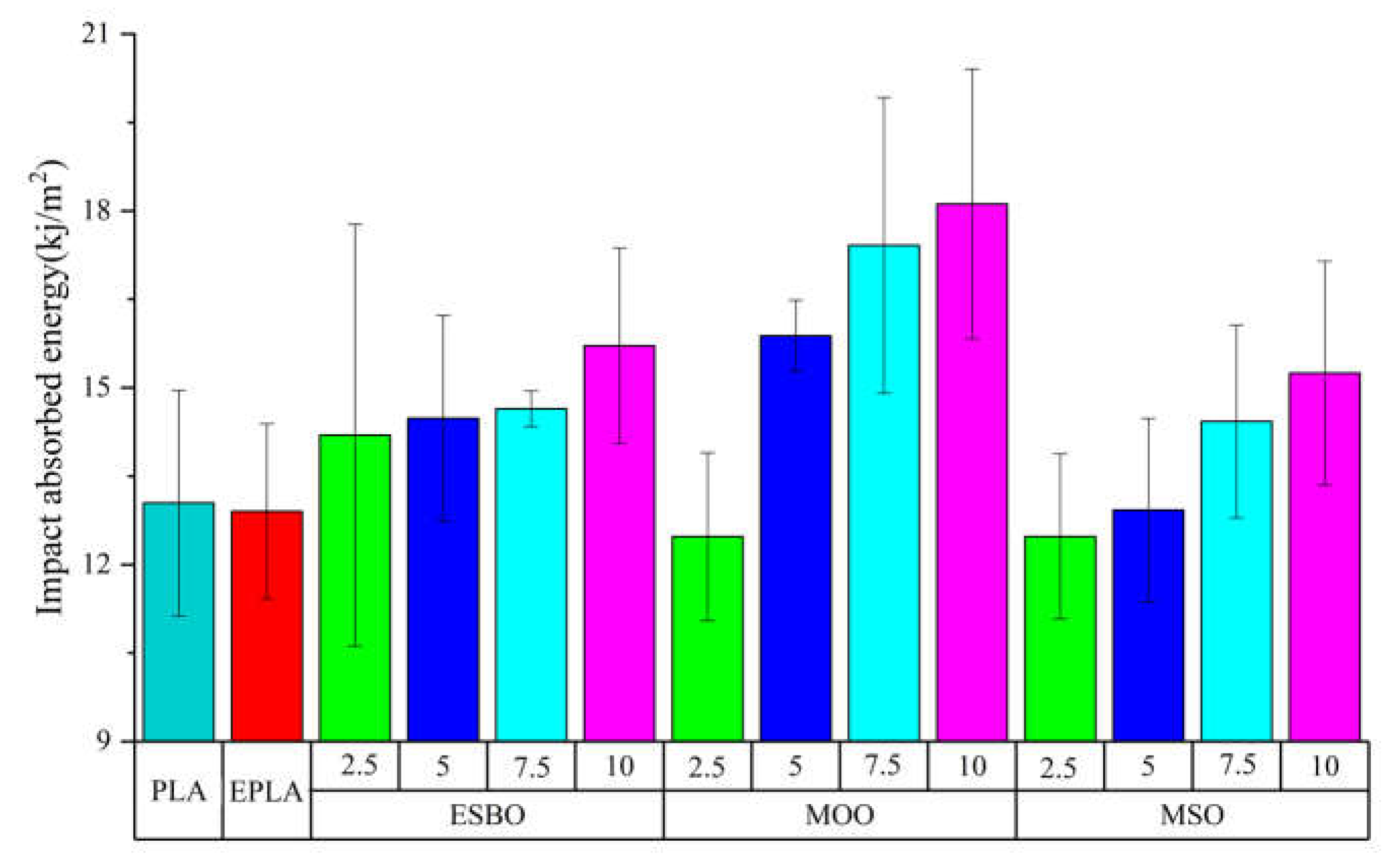
It should be noticed that occurs an increase in absorbed energy values with the MOO content used. Especially for P10MOO, it can be seen that the amount of energy absorbed increased by 38.90%. The results of Izod absorbed energy of of P2.5MSO, P5MSO, P7.5MSO and P10MSO are 12.48, 12.93, 14.43 and 15.25 kJ/m2, respectively. Especially for P10MSO, it can be seen that the amount of energy absorbed increased by 16.89%.It can be said that the increase in the impact strength of MVO-added PLA polymer may have resulted in the interaction of the epoxy groups of epoxidized vegetable oils and the -OH groups of the PLA matrix of maleic anhydride groups of maleicized vegetable oils, which may have concluded in improved interfacial adhesion and thus increased impact strength [30,31,32]. It can be said that the reason for the increase in the amount of energy absorbed is due to the plasticizing effect of ESBO, MSO and MOO oils in PLA. It was observed that the impact strength of PLA after adding ESBO, MOO and MSO was generally increased according to the unnotched Izod impact value of PLA. Quiles-Carrilo et al. point out that the Charpy impact values of the modified vegetable oil (acrylated epoxidized soybean oil) added matrix are higher than the that of the unadded matrix [33]. Similar trend was also reported by M Ferri et al. [34]. It stated that this increase was due to the plasticizing effect of the modified vegetable oil.
Figure 10.
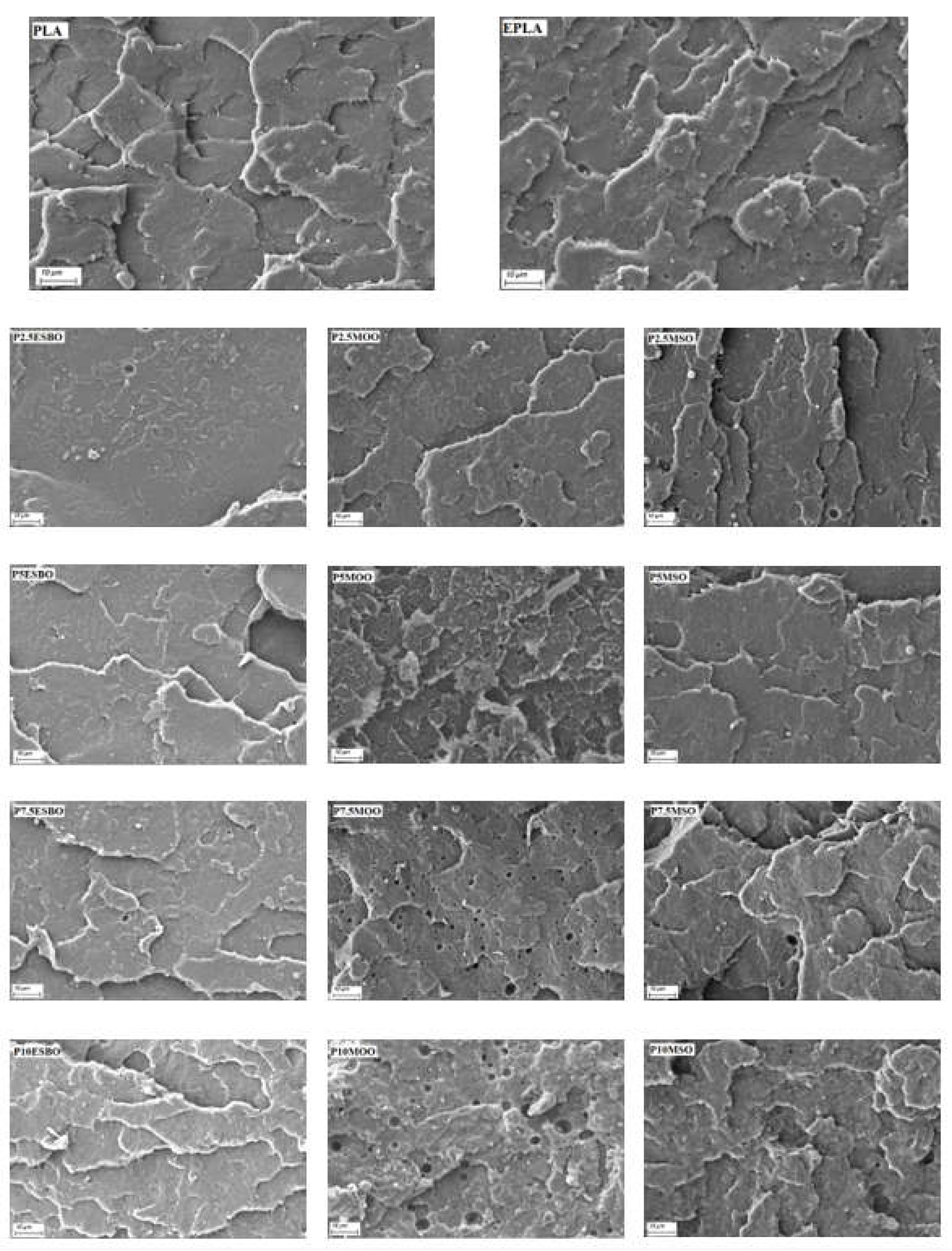
The rupture surfaces of PLA, EPLA and modified vegetable oil added PLA after tensile tets.
Figure 10.
The rupture surfaces of PLA, EPLA and modified vegetable oil added PLA after tensile tets.
2.6. Scanning electron microscopy (SEM) analysis
The rupture surfaces of PLA, EPLA and modified vegetable oil added PLA are shown in Figure 11. SEM images of PLA and EPLA samples are similar. These fracture surfaces are like appearance of a fractured brittle material. It was observed that the rupture surfaces of the modified vegetable oil added PLA became rougher. Due to the presence of plastic deformation and voids, PLA composites with modified vegetable oil have a more ductile properties. It showed that after a certain amount of plasticizer, PLA was saturated with plasticizer and phase separation took place. As a result, spherical shapes were observed in the SEM image of the P7.5MOO composite. These have a negative effect on the overall mechanical properties [26,34].
3. Materials and Methods
3.1. Materials
A biodegradable polylactic acid (PLA Ingeo TM Biopolymer 3251D by NatureWorks) was used in pellet form as base material for injection molding process. It shows a melt flow index of 35 g/10 min at 190 °C and a density of 1.24 g/cm3. Maleic Anhydride (MAH) was purchased from Sigma- Aldrich. Epoxidized soybean oil (EBSO) were supplied from Plastifay Kimya in Turkey. Olive oil and sunflower oil were obtained from Turgutlu-Manisa and Pazaryeri- Bilecik in Turkey, respectively.
3.2. Maleinization of vegetable oils
Firstly, 300 g of vegetable oil were placed in the three neck round flask. Then the central neck was placed in the reflux condenser, the second neck was connected to thermometer used to measure the temperature throughout the reaction and the last neck was used to add MAH. The reaction was carried out in an inert atmosphere with nitrogen gas.
The oil was heated to 220oC using a magnetic stirrer with heating and then 27 g of MAH was added to this oil. After this mixture was kept at 220oC for 4 hours in an inert atmosphere, the mixture was cooled to room temperature and filtered through a tea strainer. MSO, MOO and ESBO can be seen in Figure 11.
3.3. Manufacturing of composites
Table 7 summarizes the compositions and codes used for the PLA plasticized with ESBO, MSO and MOO. PLA granules were dried at 60 °C for 12 h in a oven before extrusion process. The ESBO, MOO, MSO and PLA were physically premixed before being fed into the first zone of the extruder. Modified vegetable oil added PLA composites were prepared by using a twin screw extruder (Polmak Plastik-Turkey) with screw diameter of 18 mm and L/D ratio of 40. The extruder parameters of production were shown in Table 8.
The composite plates were manufactured by the help of hydraulic hot and cold press at 190 °C for 180 s between 40 and 120 bar pressure in hot press, then composite plates were cooled at 20 °C for 120 s at 120 bar pressure in cold press.
3.4. Density measurement
The densities of samples were measured with a Shimadzu-Aux321 balance according to ISO 1183 by using Archimedes principle method. Each measurement was repeated three times. The density measurement was calculated using Equtaion (1) where mair is the sample mass in air, mwater is mass of the sample is when it is completely immersed in water and ρwater is the density of water at 23oC.
3.5. Water absorption test
The water immersion process was applied to the samples at certain periods. The samples were immersed to deionized water at a temperature of 23 ± 2 °C. After taken out the samples from water, they were waited 10 min in the room temperature for drying and then weighed. The percent moisture was calculated using Equation (2) where m0 is the initial mass and mf is the mass after immersing and drying [15].
3.6. Fourier transform infrared (FTIR) spectroscopy
Fourier transform infrared (FTIR) spectroscopy was carried out on a Thermo Scientific Nicolet iS50 FT-IR spectrophotometer within the range of 4000–400 cm-1, with 4 cm-1 spectral resolution and 32 scans per spectrum.
3.7. Tensile test
Tensile properties of pure PLA, and PLA composites added modifed vegetable oils were tested with a Shimadzu Autograph AG-IS Series universal testing instrument with a 5 kN load cell, according to ISO 527-2 standards whose size is Type 1B, but the sample thickness is 2mm. Crosshead speed of the instrument was 50 mm/min. All tests were done at ambient temperature and the reported results are averaged values of at least five samples.
3.8. Izod impact test
The Izod impact strength was measured with a pendulum impact tester having a 5.5 J hammer (Instron Ceast 9050, USA) according to the ISO 180 standards whose size is 80 mm x 10mm x 2 mm. The five samples were tested to obtain an average value to be reported.
3.9. Scanning electron microscopy (SEM) analysis
The tensile fractured surface morphology of composites were observed by using a scanning electron microscope (SEM) (Carl Zeiss 300VP, Germany) operating at 2.5 kV. A thin layer of gold was coated on the fractured surface of the composites by using an automatic sputter coater (Quorum Q150 RES) before SEM observation. Then, the SEM observation was performed at 1000 x magnification to understand the morphological changes caused by ESBO, MSO and MOO.
5. Conclusions
This research work assesses the usefulness of epoxidized soybean oil (ESBO), maleinized sun oil (MSO), and maleinized olive oil (MOO) as plasticizers for PLA composites. The conclusions drawn from this study are as follows:
- The density of the composites increased as MVO's weight fraction decreased from 1.252 to 1.231 g/cm3, while water absorption by the composites increased as MVO's weight fraction increased from 0.37 to 0.47 %.
- The FTIR spectra of the all composites were similar.
- The TS value of EPLA, which was measured at 48.05 MPa, increased to 59.83 MPa in P5ESBO composite, 56.84 MPa in P7.5MOO composite, and 57.98 MPa in P5MSO.
- The change in EM in MVO-added PLA composites was not significant. The EM values of the materials vary between 2000 and 2200 MPa.
- The impact strength of EPLA increased with the addition of the MVOs.
Author Contributions
İbrahim ŞEN: Conceptualization, Investigation, Methodology, Writing - review & editing, Resources, Project administration, Writing - original draft; Metehan ATAGÜR : Formal analysis, Software; Sibel TUNA :Formal analysis; Murat EROĞLU:Formal analysis; Meral AKKOYUN :Investigation, Methodology; Kutlay SEVER: Conceptualization, Investigation, Methodology, Writing - review & editing, Resources, Project administration, Writing - original draft
Funding
This study was financially supported by Izmir Katip Celebi University, Department of Scientific Research Projects (BAP Project number: 2019-TDR-FEBE-0013).
Institutional Review Board Statement
Not applicable.
Informed Consent Statement
Not applicable.
Data Availability Statement
The experimental data provided in this work are available in articles.
Conflicts of Interest
The authors declare no conflict of interest.
Sample Availability
The samples are available from the authors.
References
- Pilla, S. Handbook of bioplastics and biocomposites engineering applications; John Wiley & Sons, 2011. [Google Scholar]
- Jamshidian, M.; Tehrany, E.A.; Imran, M.; Jacquot, M.; Desobry, S. Poly-Lactic Acid: production, applications, nanocomposites, and release studies. Compr Rev food Sci food Saf 2010, 9, 552–571. [Google Scholar] [CrossRef] [PubMed]
- Babu, R.P.; O’Connor, K.; Seeram, R. Current progress on bio-based polymers and their future trends. Prog Biomater 2013, 2, 8. [Google Scholar] [CrossRef] [PubMed]
- Association, E.B. Frequently Asked Questions on Bioplastics. Berlin Eur Bioplastic Assoc 2015, 1–20. [Google Scholar]
- Ren, J.; Fu, H.; Ren, T.; Yuan, W. Preparation, characterization and properties of binary and ternary blends with thermoplastic starch, poly (lactic acid) and poly (butylene adipate-co-terephthalate). Carbohydr Polym 2009, 77, 576–582. [Google Scholar] [CrossRef]
- Jiang, L.; Wolcott, M.P.; Zhang, J. Study of biodegradable polylactide/poly (butylene adipate-co-terephthalate) blends. Biomacromolecules 2006, 7, 199–207. [Google Scholar] [CrossRef]
- Zhang, N.; Zeng, C.; Wang, L.; Ren, J. Preparation and properties of biodegradable poly (lactic acid)/poly (butylene adipate-co-terephthalate) blend with epoxy-functional styrene acrylic copolymer as reactive agent. J Polym Environ 2013, 21, 286–292. [Google Scholar] [CrossRef]
- Hamad, K.; Kaseem, M.; Ayyoob, M.; Joo, J.; Deri, F. Polylactic acid blends: The future of green, light and tough. Prog Polym Sci 2018, 85, 83–127. [Google Scholar] [CrossRef]
- Carbonell-Verdu, A.; Samper, M.D.; Garcia-Garcia, D.; Sanchez-Nacher, L.; Balart, R. Plasticization effect of epoxidized cottonseed oil (ECSO) on poly(lactic acid). Ind Crops Prod 2017, 104, 278–286. [Google Scholar] [CrossRef]
- Carbonell-Verdu, A.; Garcia-Garcia, D.; Dominici, F.; Torre, L.; Sanchez-Nacher, L.; Balart, R. PLA films with improved flexibility properties by using maleinized cottonseed oil. Eur Polym J 2017, 91, 248–259. [Google Scholar] [CrossRef]
- Carbonell-Verdu, A.; Bernardi, L.; Garcia-Garcia, D.; Sanchez-Nacher, L.; Balart, R. Development of environmentally friendly composite matrices from epoxidized cottonseed oil. Eur Polym J 2015, 63, 1–10. [Google Scholar] [CrossRef]
- Bouti, M.; Irinislimane, R.; Belhaneche-Bensemra, N. Properties Investigation of Epoxidized Sunflower Oil as Bioplasticizer for Poly (Lactic Acid). J Polym Environ 2022, 30, 232–245. [Google Scholar] [CrossRef]
- Pawlak, F.; Aldas, M.; Parres, F.; López-Martínez, J.; Arrieta, M.P. Silane-functionalized sheep wool fibers from dairy industry waste for the development of plasticized pla composites with maleinized linseed oil for injection-molded parts. Polymers (Basel) 2020, 12, 2523. [Google Scholar] [CrossRef]
- Garcia-Garcia, D.; Carbonell-Verdu, A.; Arrieta, M.P.; López-Martínez, J.; Samper, M.D. Improvement of PLA film ductility by plasticization with epoxidized karanja oil. Polym Degrad Stab. 2020. [Google Scholar] [CrossRef]
- Tengsuthiwat, J.; Asawapirom, U.; Siengchin, S.; Karger-Kocsis, J. Mechanical, thermal, and water absorption properties of melamine–formaldehyde-treated sisal fiber containing poly (lactic acid) composites. J Appl Polym Sci 2018, 135, 45681. [Google Scholar] [CrossRef]
- Badia, J.D.; Santonja-Blasco, L.; Martínez-Felipe, A.; Ribes-Greus, A. Hygrothermal ageing of reprocessed polylactide. Polym Degrad Stab 2012, 97, 1881–1890. [Google Scholar] [CrossRef]
- Pantani, R.; Sorrentino, A. Influence of crystallinity on the biodegradation rate of injection-moulded poly (lactic acid) samples in controlled composting conditions. Polym Degrad Stab 2013, 98, 1089–1096. [Google Scholar] [CrossRef]
- Balart, J.F.; Montanes, N.; Fombuena, V.; Boronat, T.; Sánchez-Nacher, L. Disintegration in compost conditions and water uptake of green composites from poly (lactic acid) and hazelnut shell flour. J Polym Environ 2018, 26, 701–715. [Google Scholar] [CrossRef]
- Zhang, C.; Ding, R.; Kessler, M.R. Reduction of epoxidized vegetable oils: A novel method to prepare bio-based polyols for polyurethanes. Macromol Rapid Commun 2014, 35, 1068–1074. [Google Scholar] [CrossRef]
- Nosal, H.; Nowicki, J.; Warzała, M.; Semeniuk, I.; Sabura, E. Synthesis and characterization of alkyd resins based on Camelina sativa oil, glycerol and selected epoxidized vegetable oils as functional modifiers. Prog Org Coatings 2016, 101, 553–568. [Google Scholar] [CrossRef]
- Tarhan, İ.; Bakır, M.R.; Kalkan, O.; Kara, H. Multivariate Modeling for Quantifying Adulteration of Sunflower Oil with Low Level of Safflower Oil Using ATR-FTIR, UV-Visible, and Fluorescence Spectroscopies: A Comparative Approach. Food Anal Methods 2021, 14, 361–371. [Google Scholar] [CrossRef]
- Xing, C.; Matuana, L.M. Epoxidized soybean oil-plasticized poly(lactic acid) films performance as impacted by storage. J Appl Polym Sci 2016, 133, 1–8. [Google Scholar] [CrossRef]
- Alarcon, R.T.; Vinícius de Almeida, M.; Rinaldo, D.; Bannach, G. Synthesis and thermal study of polymers from soybean, sunflower, and grape seed maleinated oil. Eur J Lipid Sci Technol 2017, 119, 1–6. [Google Scholar] [CrossRef]
- Ferri, J.M.; Garcia-Garcia, D.; Montanes, N.; Fenollar, O.; Balart, R. The effect of maleinized linseed oil as biobased plasticizer in poly(lactic acid)-based formulations. Polym Int 2017, 66, 882–891. [Google Scholar] [CrossRef]
- Ali, F.; Chang, Y.W.; Kang, S.C.; Yoon, J.Y. Thermal, mechanical and rheological properties of poly (lactic acid)/epoxidized soybean oil blends. Polym Bull 2009, 62, 91–98. [Google Scholar] [CrossRef]
- Chieng, B.W.; Ibrahim, N.A.; Then, Y.Y.; Loo, Y.Y. Epoxidized vegetable oils plasticized poly(lactic acid) biocomposites: Mechanical, thermal and morphology properties. Molecules 2014, 19, 16024–16038. [Google Scholar] [CrossRef]
- Dominici, F.; Samper, M.D.; Carbonell-Verdu, A.; Luzi, F.; López-Martínez, J.; Torre, L.; Puglia, D. Improved toughness in lignin/natural fiber composites plasticized with epoxidized and maleinized linseed oils. Materials (Basel) 2020. [CrossRef]
- Quiles-Carrillo, L.; Blanes-Martínez, M.M.; Montanes, N.; Fenollar, O.; Torres-Giner, S.; Balart, R. Reactive toughening of injection-molded polylactide pieces using maleinized hemp seed oil. Eur Polym J 2018, 98, 402–410. [Google Scholar] [CrossRef]
- Zenkiewicz, M.; Richert, J.; Rytlewski, P.; Moraczewski, K.; Stepczyńska, M.; Karasiewicz, T. Characterisation of multi-extruded poly(lactic acid). Polym Test 2009, 28, 412–418. [Google Scholar] [CrossRef]
- Mahmud, S.; Long, Y.; Abu Taher, M.; Xiong, Z.; Zhang, R.; Zhu, J. Toughening polylactide by direct blending of cellulose nanocrystals and epoxidized soybean oil. J Appl Polym Sci 2019, 136, 48221. [Google Scholar] [CrossRef]
- Liminana, P.; Garcia-Sanoguera, D.; Quiles-Carrillo, L.; Balart, R.; Montanes, N. Development and characterization of environmentally friendly composites from poly (butylene succinate)(PBS) and almond shell flour with different compatibilizers. Compos Part B Eng 2018, 144, 153–162. [Google Scholar] [CrossRef]
- Tejada-Oliveros, R.; Balart, R.; Ivorra-Martinez, J.; Gomez-Caturla, J.; Montanes, N.; Quiles-Carrillo, L. Improvement of Impact Strength of Polylactide Blends with a Thermoplastic Elastomer Compatibilized with Biobased Maleinized Linseed Oil for Applications in Rigid Packaging. Molecules 2021, 26, 240. [Google Scholar] [CrossRef] [PubMed]
- Quiles-Carrillo, L.; Duart, S.; Montanes, N.; Torres-Giner, S.; Balart, R. Enhancement of the mechanical and thermal properties of injection-molded polylactide parts by the addition of acrylated epoxidized soybean oil. Mater Des 2018, 140, 54–63. [Google Scholar] [CrossRef]
- Ferri, J.M.; Samper, M.D.; García-Sanoguera, D.; Reig, M.J.; Fenollar, O.; Balart, R. Plasticizing effect of biobased epoxidized fatty acid esters on mechanical and thermal properties of poly(lactic acid). J Mater Sci 2016, 51, 5356–5366. [Google Scholar] [CrossRef]
Figure 1.
Overview of biopolymers.
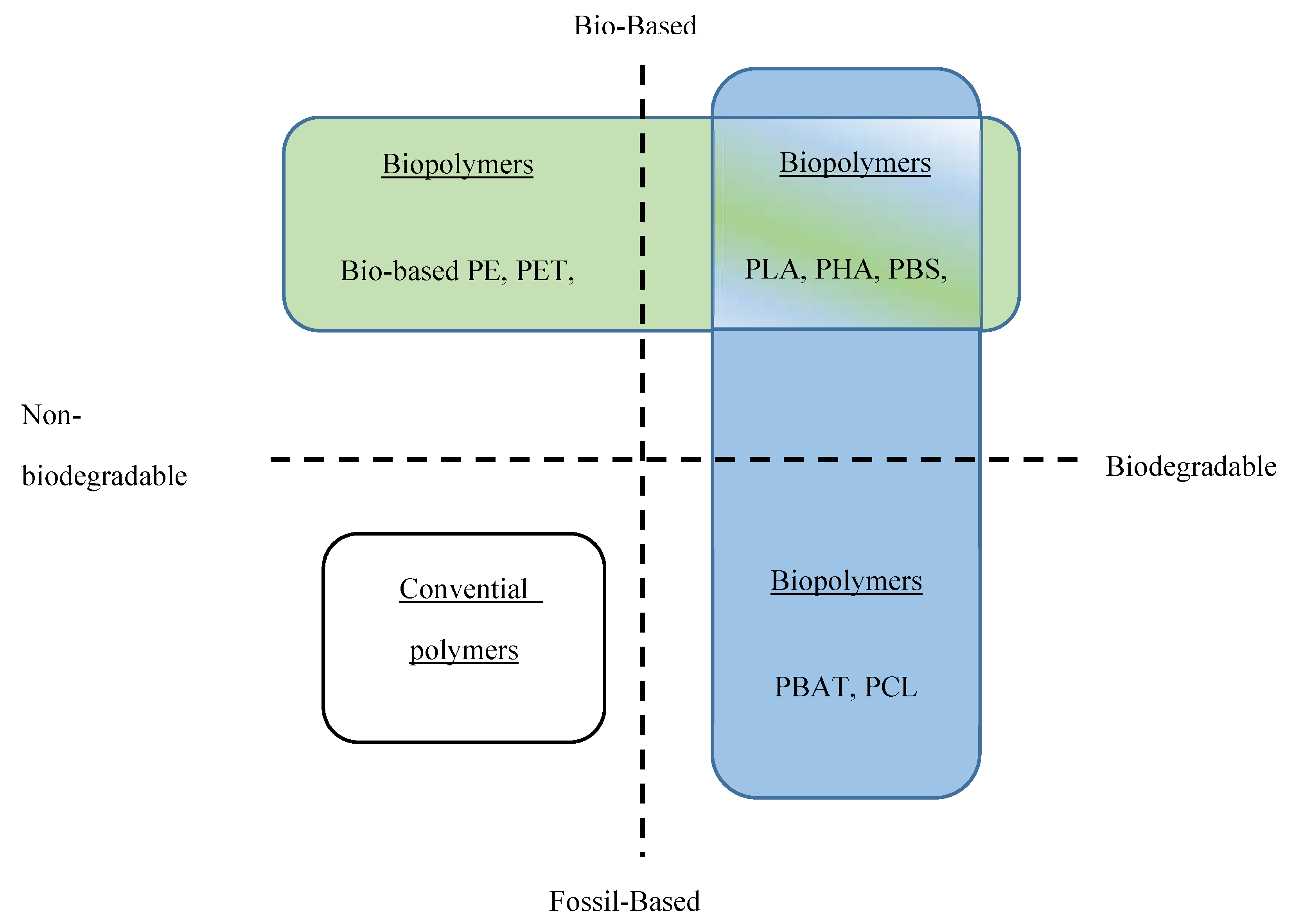
Figure 2.
Proposed reaction for a chain extension effect that MaVO and EVO could provide by reaction with -OH terminal groups in PLA.
Figure 2.
Proposed reaction for a chain extension effect that MaVO and EVO could provide by reaction with -OH terminal groups in PLA.
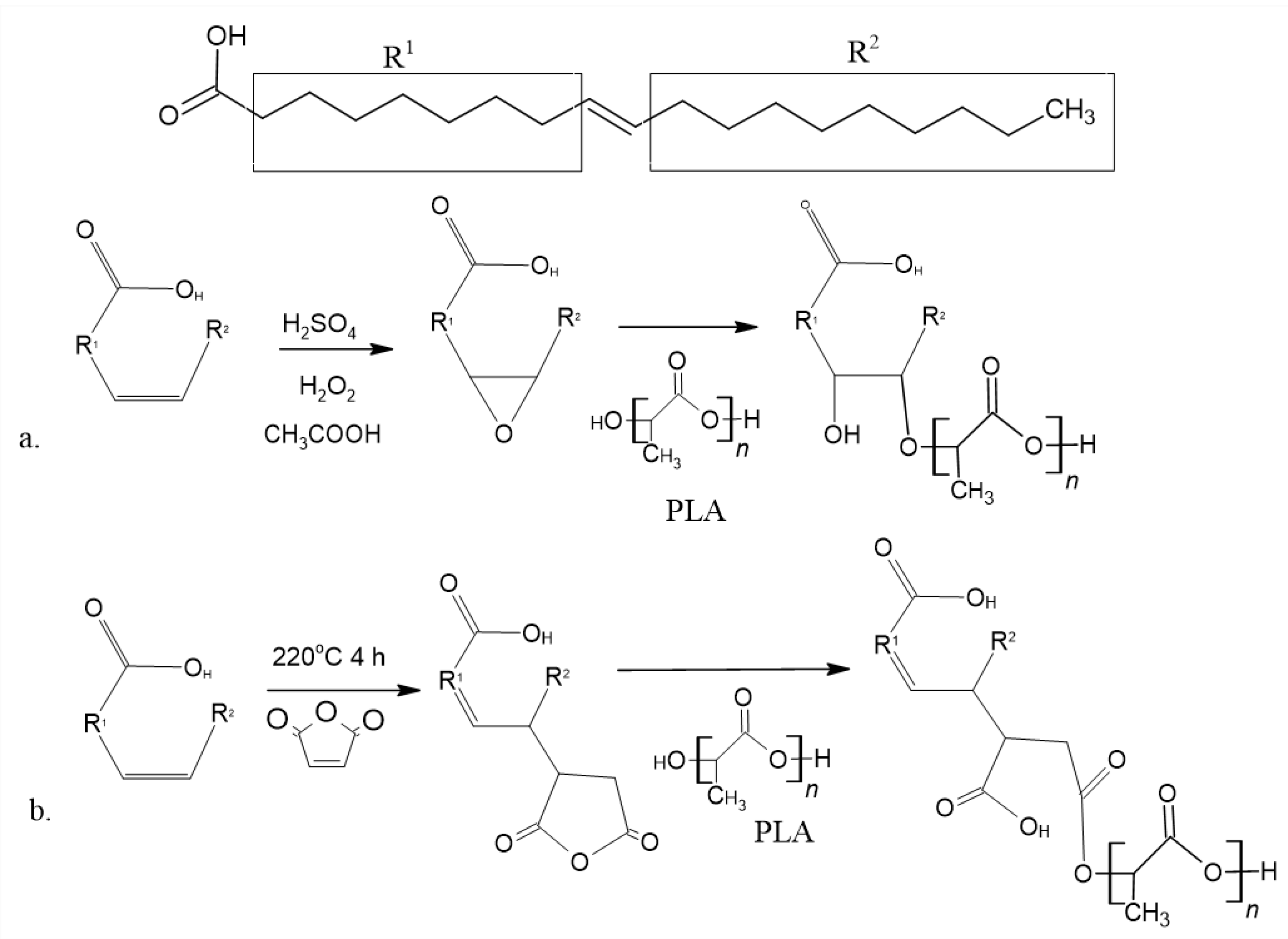
Figure 3.
Water absorption graph of (a) PLA-ESBO, (b) PLA-MOO, (c) PLA-MSO (d) All samples at 270 h.
Figure 3.
Water absorption graph of (a) PLA-ESBO, (b) PLA-MOO, (c) PLA-MSO (d) All samples at 270 h.
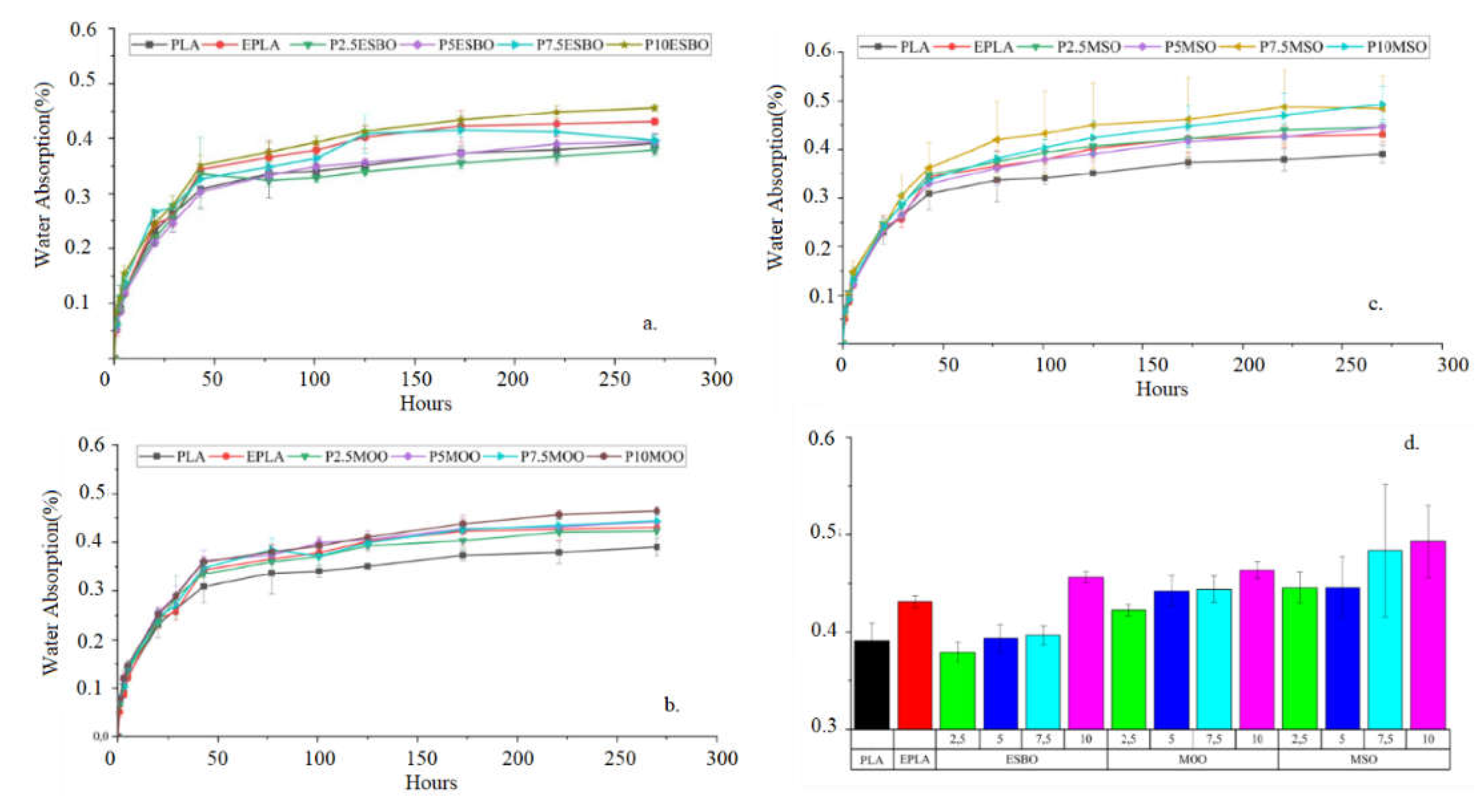
Figure 4.
FT-IR spectra of EBSO, OO, MOO, SO and MSO.
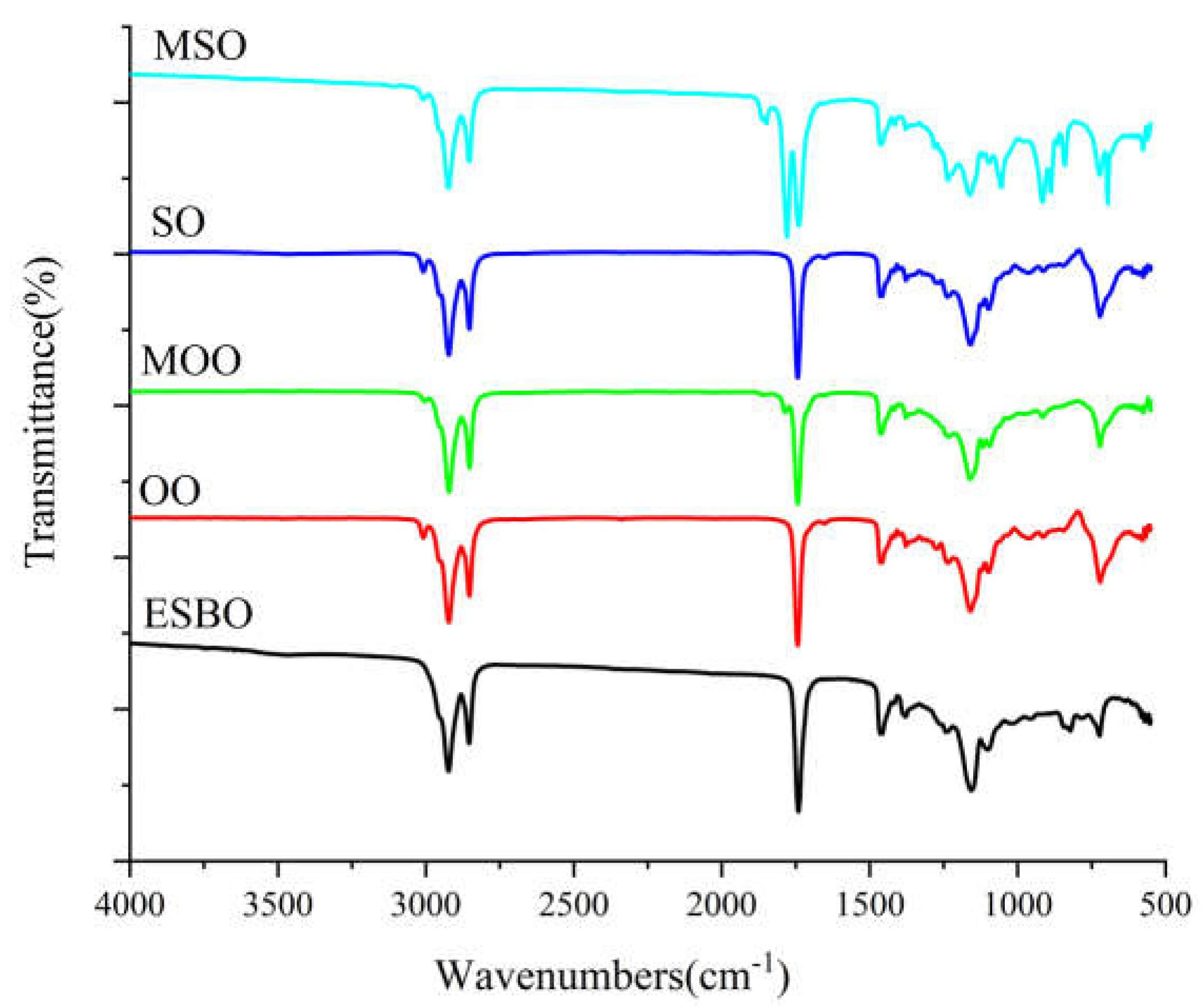
Figure 5.
FT-IR spectra of ESBO added PLA composites.

Figure 6.
FT-IR spectra of MSO added PLA composites.
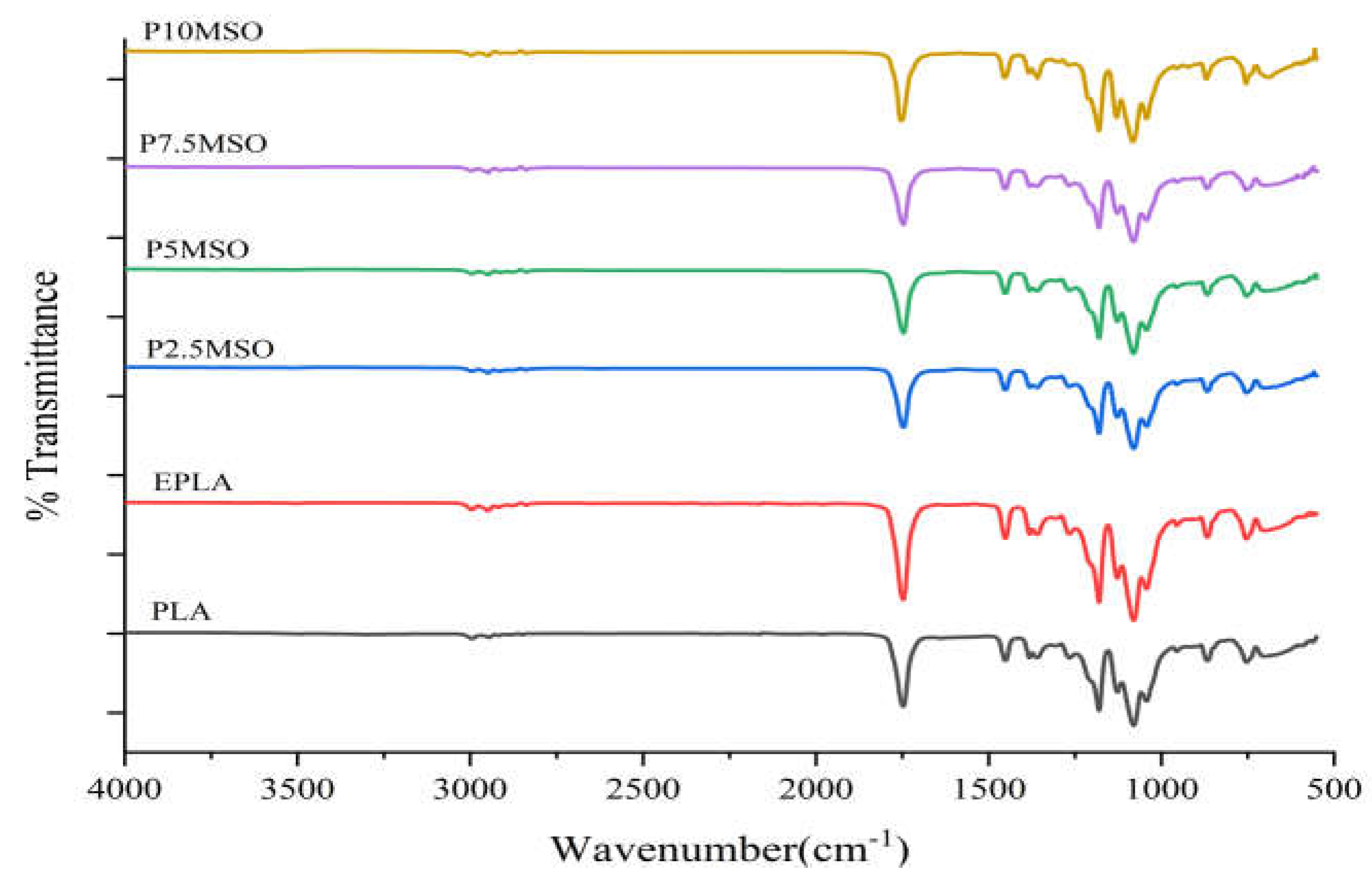
Figure 7.
FT-IR spectra of MOO added PLA composites.
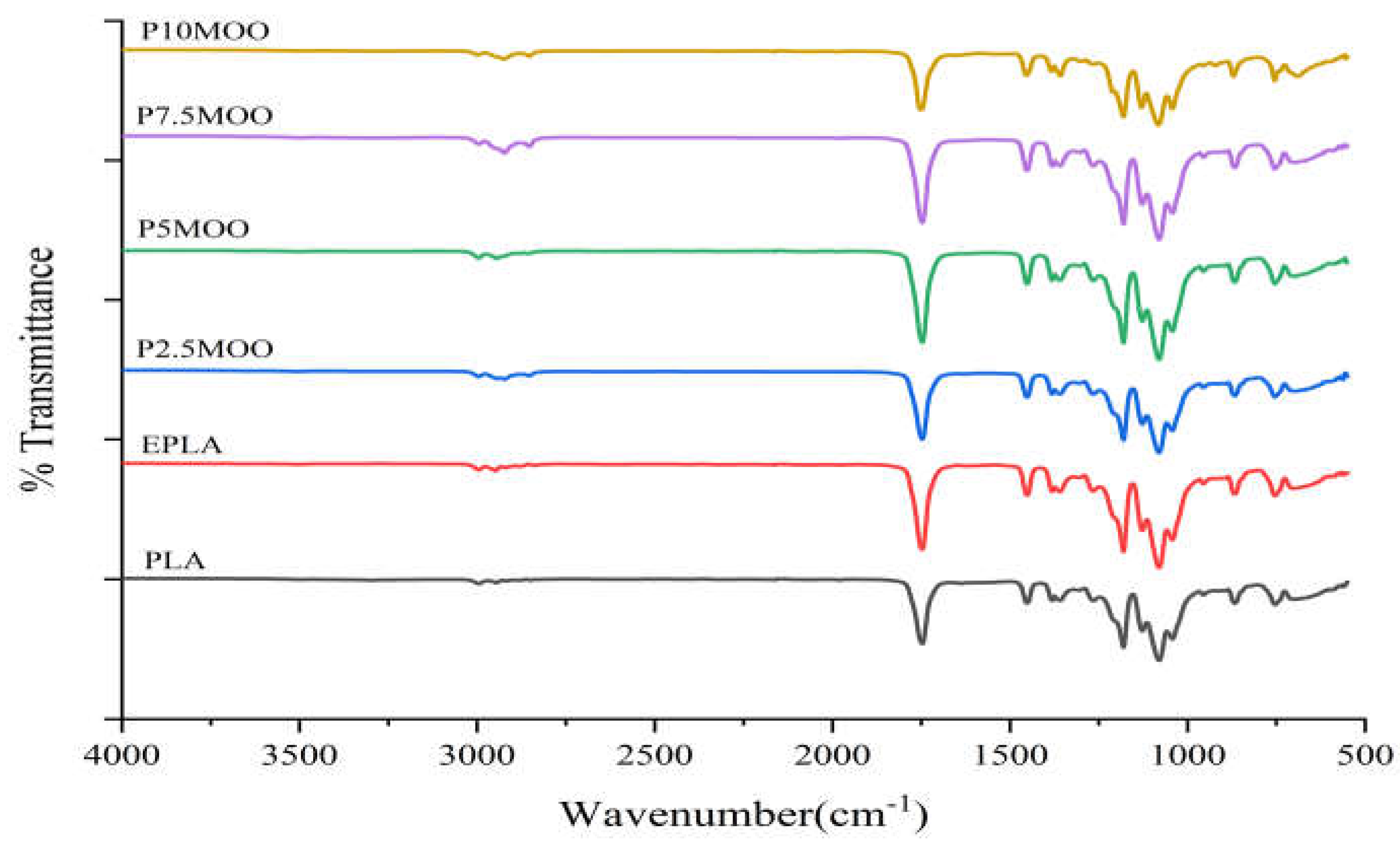
Figure 8.
Variation on Tensile strength(a) and Elastic modulus(b) of ESBO, MOO and MSO added PLA composites.
Figure 8.
Variation on Tensile strength(a) and Elastic modulus(b) of ESBO, MOO and MSO added PLA composites.
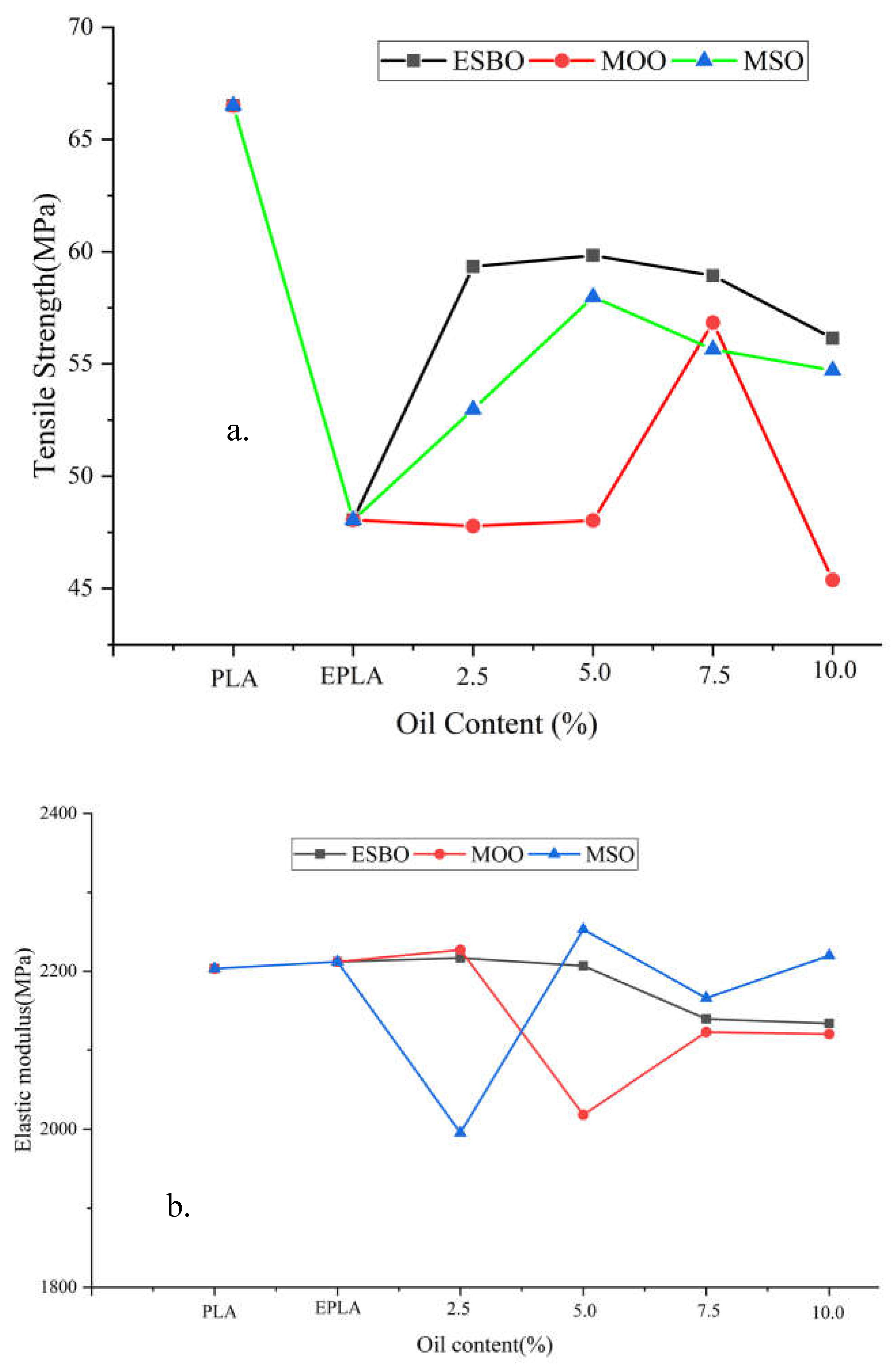
Figure 9.
Schematic representation of the chain-extension that may occur between MHO oil and PLA polymer[28].
Figure 9.
Schematic representation of the chain-extension that may occur between MHO oil and PLA polymer[28].
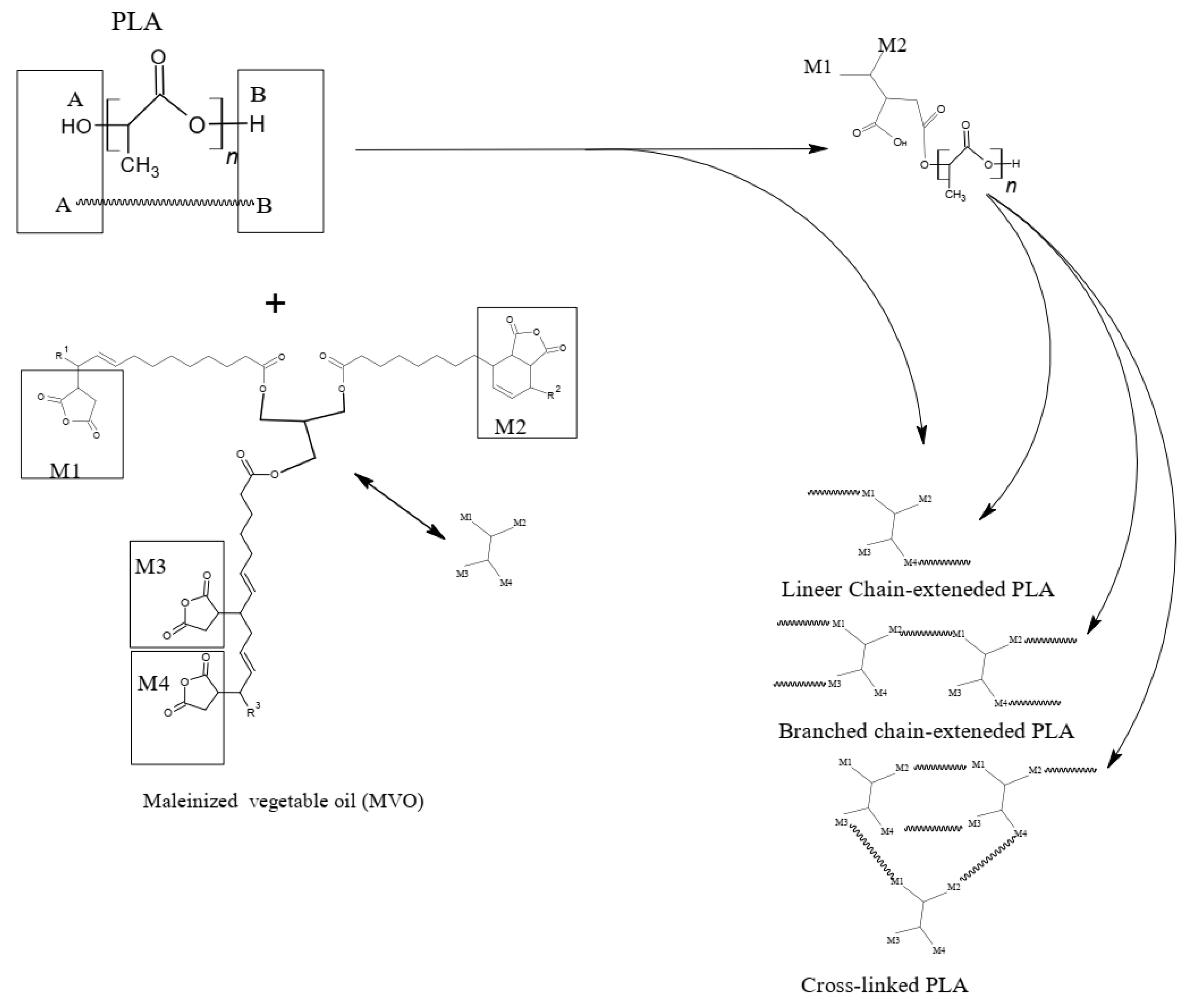
Figure 11.
Images of SO, OO and modified vegetable oils.
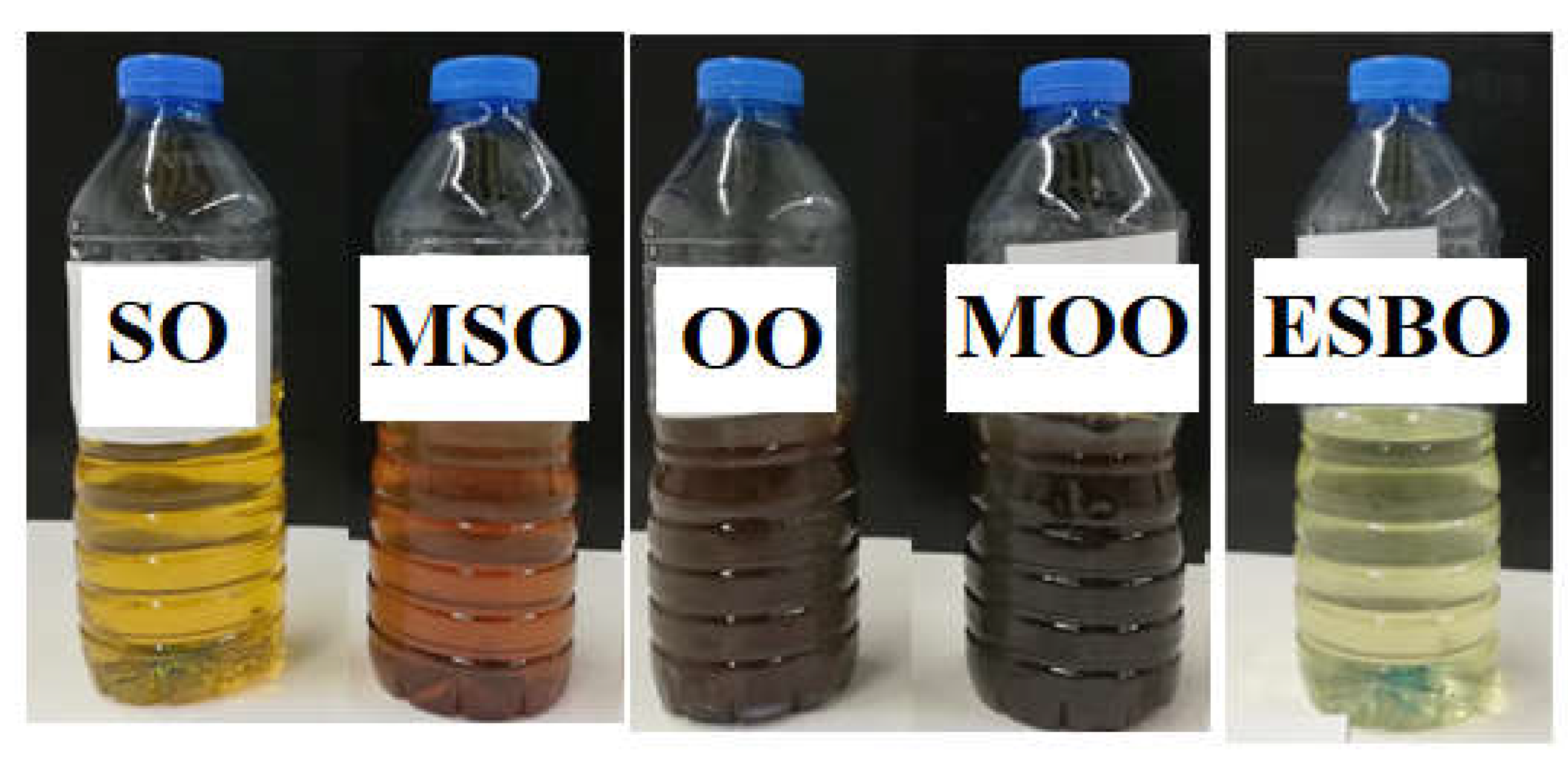

Table 1.
Advantages and disadvantages of non-biodegradable thermoplastic polymers [2].
Table 1.
Advantages and disadvantages of non-biodegradable thermoplastic polymers [2].
| Advantages | Disadvantages |
|---|---|
|
|
Table 2.
Densities of MVO added PLA composites.
| Oil Content (%) | Density(g/cm3) | ||
|---|---|---|---|
| ESBO | MOO | MSO | |
| Modified oil | 0.999±0.001 | 1.034 ±0.002 | 1.034±0.001 |
| PLA | 1.252±0.001 | 1.252±0.001 | 1.252±0.001 |
| EPLA | 1.243±0.007 | 1.243±0.007 | 1.243±0.007 |
| 2.5 | 1.242±0.008 | 1.245±0.003 | 1.246±0.004 |
| 5 | 1.241±0.003 | 1.238±0.011 | 1.246±0.002 |
| 7.5 | 1.238±0.006 | 1.233±0.001 | 1.245±0.001 |
| 10 | 1.240±0.002 | 1.231±0.008 | 1.241±0.005 |
Table 3.
Wavenumbers(cm-1) and assigments of characteristic absorption bands of FTIR spectra for ESBO, OO, MOO, SO and MSO.
Table 3.
Wavenumbers(cm-1) and assigments of characteristic absorption bands of FTIR spectra for ESBO, OO, MOO, SO and MSO.
| Wavenumbers (cm-1) | Assignments | ||||
|---|---|---|---|---|---|
| ESBO | OO | MOO | SO | MSO | |
| 3008 | 3004 | 3008 | 3008 | C=C–H stretching [19,21] | |
| 2923 | 2923 | 2922 | 2923 | 2923 | C–H(for CH2 and CH3) stretching [21,22] |
| 2854 | 2853 | 2853 | 2853 | 2853 | |
| - | - | 1861 | - | 1862 | C=O stretching (maleic acid copolymerization) [23,24] |
| - | - | 1781 | - | 1781 | |
| 1741 | 1743 | 1742 | 1743 | 1742 | C=O stretching (glyceride ester group)[20,23] |
| 1457 | 1464 | 1463 | 1464 | 1464 | C–H(–CH2 and –CH3) bending [22] |
| 1378 | 1377 | 1377 | 1377 | 1377 | |
| 1245 | 1236 | 1235 | 1236 | 1234 | C–O–C stretching [22] |
| 1157 | 1159 | 1160 | 1159 | 1161 | |
| 822 | - | - | - | - | C–O–C symmetric bending (oxirane) [22] |
| 723 | 721 | 722 | 721 | 722 | (CH2)n rocking vibration[22] |
Table 6.
Tensile test and unnotched Izod impact results of ESBO, MOO and MSO added PLA.
| Tensile Strength (MPa) |
Elastic modulus (MPa) |
Izod Impact (kJ/m2) |
|
|---|---|---|---|
| PLA | 66.51±2.1 | 2203.28±109.36 | 13.04±1.91 |
| EPLA | 48.05±5.7 | 2211.86±66.91 | 12.90±1.48 |
| P2.5ESBO | 59.33±7.43 | 2216.79±51.2 | 14.20±3.58 |
| P5ESBO | 59.83±3.26 | 2206.72±13.68 | 14.48±1.74 |
| P7.5ESBO | 58.93±4.51 | 2139.43±191.88 | 14.64±0.30 |
| P10ESBO | 56.14±2.17 | 2133.81±60.43 | 15.71±1.66 |
| P2.5MOO | 47.78±10.19 | 2227±44.90 | 12.48±1.42 |
| P5MOO | 48.03±2.82 | 2018.36±48.21 | 15.88±0.60 |
| P7.5MOO | 56.84±1.1 | 2122.65±82.51 | 17.42±2.51 |
| P10MOO | 45.38±1.28 | 2120.28±28.23 | 18.12±2.29 |
| P2.5MSO | 52.97±5.33 | 1995.50±158.94 | 12.48±1.40 |
| P5MSO | 57.98±0.85 | 2252.97±100.05 | 12.93±1.56 |
| P7.5MSO | 55.65±1.11 | 2165.87±153.85 | 14.43±1.63 |
| P10MSO | 54.71±3.22 | 2219.72±163.02 | 15.25±1.90 |
Table 7.
The compositions and codes used for the PLA plasticized with ESBO, MSO and MOO.
| Sample code | PLA(wt%) | ESBO(wt%) | MSO(wt%) | MOO(wt%) |
|---|---|---|---|---|
| PLA | 100 | - | - | - |
| EPLA | 100 | - | - | - |
| P2.5ESBO | 97.5 | 2.5 | - | - |
| P5ESBO | 95 | 5.0 | - | - |
| P7.5ESBO | 92.5 | 7.5 | - | - |
| P10ESBO | 90 | 10.0 | - | - |
| P2.5MOO | 97.5 | - | 2.5 | - |
| P5MOO | 95 | - | 5.0 | - |
| P7.5MOO | 92.5 | - | 7.5 | - |
| P10MOO | 90 | - | 10.0 | - |
| P2.5MSO | 97.5 | - | - | 2.5 |
| P5MSO | 95 | - | - | 5.0 |
| P7.5MSO | 92.5 | - | - | 7.5 |
| P10MSO | 90 | - | - | 10.0 |
Table 8.
The extruder parameters of production.
| Melting Temperature (oC) |
Zone Temperature(oC) | Rotating Speed (rpm) |
||||||||||
|---|---|---|---|---|---|---|---|---|---|---|---|---|
| Die | 9 | 8 | 7 | 6 | 5 | 4 | 3 | 2 | 1 | Feeding | ||
| 220-225 | 170 | 175 | 180 | 185 | 190 | 195 | 195 | 190 | 185 | 180 | 70 | 150 |
Disclaimer/Publisher’s Note: The statements, opinions and data contained in all publications are solely those of the individual author(s) and contributor(s) and not of MDPI and/or the editor(s). MDPI and/or the editor(s) disclaim responsibility for any injury to people or property resulting from any ideas, methods, instructions or products referred to in the content. |
© 2023 by the authors. Licensee MDPI, Basel, Switzerland. This article is an open access article distributed under the terms and conditions of the Creative Commons Attribution (CC BY) license (http://creativecommons.org/licenses/by/4.0/).
Copyright: This open access article is published under a Creative Commons CC BY 4.0 license, which permit the free download, distribution, and reuse, provided that the author and preprint are cited in any reuse.


