

Submitted:
27 April 2023
Posted:
28 April 2023
You are already at the latest version
Abstract
Recently, the popularity of fermented foods has increased significantly. Lactofermented vegetable juice products are particularly important for our diet. The combination of the richness of the ingredients derived from vegetable juices and the products formed during lactic fermentation is a valuable source of nutrients. This study aimed to analyse the selected properties of fermented beetroot, carrot, and beetroot-carrot juices. The juices obtained from beetroot and carrot were fermented with bacterial strains Lactiplantibacillus plantarum or Levilactobacillus brevis. Density, extract, dry matter content, pH, total acidity, pigments (betalain or carotenoids), color, and LAB count were measured in the samples. The results obtained in this study showed that the used LAB strains were capable of fermenting the analyzed juices. It was proven that Lactiplantibacillus plantarum was a better strain for fermentation ion of vegetable juice. This might have been influenced by the fermentation temperature and the duration of the fermentation. However, this strain had a lower effect on carotenoids, which are water-insoluble pigments, than Lactiplantibacillus plantarum. The opposite observation was made for betalain, a water-soluble pigment with nitrogen in its structure.
Keywords:
beetroot
; carrot
; juice
; lactic acid fermentation
; carotenoids
; betalain
; color
1. Introduction
Lactic fermentation involves the decomposition of organic matter, through the action of enzymes, into simple compounds; anaerobic conditions for the process are a prerequisite. The process is conducted by various types of lactic acid bacteria, which use enzymes to convert simple sugars and disaccharides into lactic acid and other compounds [1,2]. Bacteria from the genera Bifidobacterum, Lactobacillus, Leuconostoc and Lactococcus (e.g. Lacticaseibacillus paracasei subsp. paracasei, Lacticaseibacillus rhamnosus, L. plantarum) are most commonly used. Lactic acid bacteria (LAB) is the key organisms in LA fermentation, while they produce lactic acid, the main product of carbohydrate fermentation [3,4].
Lactic acid bacteria are a group of microorganisms distinguished by their metabolic properties. They obtain energy through the process of lactic fermentation. A distinction is made between homofermentative and heterofermentative bacteria [5]. Lactic acid bacteria and their metabolites are recognized as safe (GRAS) and are used in food as natural preservatives. Thanks to LAB, it is possible to inhibit the growth of pathogenic microorganisms in food production or extend their shelf life [6]. Lactic fermentation bacteria are a group that has been distinguished for sugar fermentation under microaerophilic and anaerobic conditions with lactic acid [4,7]. The metabolism of sugars is a common characteristic linking these microorganisms, but also the fact that they are Gram positive and catalase negative, do not spore and tolerate low pH.Lactic bacteria have either the shape of bacilli (e.g. Lactobacillus) or cocci (Lactococcus, Streptococcus), while Bifidobacterium can be Y- or V-shaped [8]. The therapeutic properties of bacteria are determined by the production of bacteriocins, the synthesis of hydrogen peroxide, the property of lowering the pH of the gastrointestinal tract, and the production of low molecular weight metabolic products [9]. The most commonly used LAB strain is Lactiplantibacillus plantarum, which belongs to the Lactobacillaceae family. They are rod-shaped bacteria with cells approximately 3-8 μm long and 0.9-1.2 μm wide. They are classified as thermophiles and can grow at a pH range of 3.4-8.8 [10]. L. plantarum belongs to the group of facultative heterofermentative bacteria. Studies show that these species contribute to maintaining the balance of gastrointestinal flora, improve host immunity and nutrient absorption, lowering cholesterol levels, and alleviating lactose intolerance. These species are capable of synthesizing bioactive compounds such as exopolysaccharides, bacteriocins, γ-aminobutyric acid, folic acid and riboflavin, and thus can be used for food preservation [11]. Another valuable strain is the Levilactobacillus brevis, which belongs to the Lactobacillaceae family. These are Gram-positive, rod-shaped bacteria. They carry out heterofermentative, during which they synthesize lactic acid, carbon dioxide and ethanol [12]. These bacteria belong to mesophiles. They show optimal growth for an environment where the pH is in the range of 4-6 [13]. L. brevis has been classified as a bacterium whose consumption improves human immune function [14].
The bottom of the nutritional pyramid mainly contains vegetables and fruits. Therefore, as a substrate for the fermentation they are very. Doctors and nutritionists highlight several health benefits of fermented foods. Among these advantages are the low-calorie content, the reduction of pH in the intestines and the richness in vitamins C and B. In recent years, fermented cereal-based beverages have attracted a great deal of interest. This need arose when thinking about improving the quality of life of people who are allergic to milk protein, lactose intolerance, or preventing the rise of cholesterol levels[15]. Sources for including raw materials without lactose can be cereals, vegetables and fruit and juices. Fermented fruit and vegetable juices are valued by consumers despite their strong flavor. They are valued for their high nutritional value, the content of polyphenols, flavonoids, antioxidants, and minerals, and low sodium, cholesterol, and fat. Fermented vegetable/fruit juices contain high amounts of components such as sugars and short-chain organic acids [16]. The most popular fermented vegetable drinks are carrot and beetroot juices. However, kombucha, which is a fermented, non-alcoholic beverage made from tea with a bacterial colony and a special yeast culture called 'SCOBY', is also popular [17].
Beetroot and carrot are among the most commonly harvested vegetables in Poland. For this reason, we selected beetroot and carrot for the study, as well as a mixture of both juices. The selection was also based on the composition of information about each juice and its potential health properties. In addition, the choice was made for juices made from the most available in the country. Beetroot juices have a high fibre content of 0.7-1.1 g fresh weight, folic acid, vitamins A, C, E, K and B vitamins, as well as mineral salts such as zinc, iron, sodium potassium, magnesium, phosphorus and calcium. Beetroot juice has a cytotoxic effect, which is the agent's ability to disrupt cell function against cancer cells. In addition, it is believed health-promoting effects, such as anti-stress and, anti-atherosclerosis, lowering cholesterol levels and regulating blood clotting. As a result of fermentation, the number of lactic acid bacteria increased in beetroot juice [18]. In a study by Klewicka, et al. [19], LAB from the genera Leuconostoc, Lactobacillus and Pediococcus were found. The fermentation process involves changes in pH and can also affect the content of betalain pigments, thus indirectly changing the color parameters [20].
On the other hand, carrot juices are appreciated for their content of many biologically active compounds, as well as for their vitamin content such as vitamins A, C, and B, β-carotene content, carotenoids and elements such as zinc, calcium, sodium, potassium, iron, magnesium, copper and lead [21,22]. In the study by Gientka, et al. [23] fresh carrot juices were investigated. They found mesophilic microorganisms ranging from 3.1 to 10.0 log CFU/mL, while no pathogenic microflora was detected. Michalczyk, et al. [24] concluded that carrot juices can be used as substitute for fresh vegetables due to their high stability in terms of nutrient content during storage.
The aim of the study was to analyze the physical and chemical properties of fermented beetroot, carrot and beetroot-carrot juices. The juices obtained from beetroot and carrot were fermented with bacterial strains of L. plantarum or L. brevis. The level of changes in extract, density, pigment content and type, and color juices were tested. To better understand the fermentation process, a daily analysis of pH, total acidity, and the microbial count was made. The research hypothesis assumes the influence of varying process conditions (pH, acidity) on dye degradation. Furthermore, it was assumed that selected bacterial strains have identical effects on the mentioned changes.
2. Materials and Methods
2.1. Materials
Beetroot (Beta vulgaris) and carrot (Daucus carota) were purchased from the local market (Warsaw, Poland). Two different strains were used as inoculum for fermentation: Lactiplantibacillus plantarum ATCC 4080 (LP) and Levilactobacillus brevis DSMZ 20053 (LB). The strains were obtained from the American Type Culture Collection (ATCC, Manassas, Virginia, USA) and German Collection of Microorganisms and Cell Cultures GmbH (DSMZ, Braunschweig, Germany).
2.2. Technological Treatment
2.2.1. Juice Preparation
The juice was obtained after pressing raw vegetables in commercial single-screw juicer NS-621CES (Kuvings, Daegu, Korea). In this device separation of juice from pomace took place. The juice was used in this study. Three types of juice were used for further research: beetroot, carrot and a mixture of both in proportion 1:1 v/v. All juices were pasteurized process at 80 ° C for 30 minutes in an autoclave PHCBI MLS – 3751 (PHC Europe B.V., Etten-Leur, Netherlands) to remove the autochthonous microflora. The juices were then cooled to room temperature 25°C ±2.
2.2.2. Juice Fermentation Process
Before the addition of inoculum, 2% m / v NaCl was added directly to the cooled juice. Then inoculum in the amount of 1% of the juice volume was added. This amount of inoculum matched the 1 × 10⁸ CFU/mL of the bacterial count. 50 mL jars were closed and placed in an incubator (BD-S115, Binder, Tuttlingen, Germany) with temperature of 28 °C for 7 days. Analysis of each parameter was made on each day of the fermentation process. For this reason, 7 sterile 50 mL jars were prepared for each juice for one inoculum strain. All experiments were made in triplicate.
2.3. Analytical Method
2.3.1. Solid Soluble Content and Density of the Juices
The solid soluble content in juices was measured with a Pocket Refractometer PAL-3 (ATAGO Instruments, Tokyo, Japan). Density was measured using a Densito 30 PX densitometer (Mettler Toledo, Schwerzenbach, Switzerland). All measurements were performed in triplicate.
2.3.2. pH Measurement
The pH value was analysed using a SevenCompact s210 pH meter (Mettler Toledo, Schwerzenbach, Switzerland). Three analyses were made for each juice.
2.3.3. Total Acidity
The total acidity of the juices was tested by the potentiometric method. Solution of 0.1 M sodium hydroxide was added to the sample til a pH of 8.1 was reached. The result was calculated in g of lactic acid per 100 g of juice dry matter. The measurement was performed in triplicate.
For the measurement of total acidity, the titration method with 0.1 M NaOH was used. This measurement was made in triplicate for each sample.
2.3.4. Color Parameters
The color analysis of the juices was made in CR-5 (Konica Minolta Sensing Inc., Osaka, Japan) in the CIE L*a*b* system. Parameters used were: calibration at black and white color, illuminant D65, angle of observation 2 °,. All measurements were made in 5 repetitions.
2.3.5. Indication of the Number of Lactic Acid Bacteria
For the enumeration of living cells, method of the total count by pour plate was used.. Dilution of juice by sterile saline (0.85% NaCl, Biomaxima, Poland) was made. The samples were put onto plates with de Man Rogosa and Sharpe Agar (MRS, Biomaxima, Poland) and incubated at 28° C ± 1 °C for 48 h ± 4h. The number of grown colonies was counted (ProtoCOL 3 - Automatic colony counting and zone measuring, Synbiosis, USA) and recorded as log CFU/mL. The samples were analyzed in triplicates.
2.3.6. Bacteria Morphology
After 24 h of culture, the bacteria were stained with crystal violet. The image was taken at 600 magnification on an OPTA-TECH microscope (Warsaw, Poland). OptaView7 software was used to measure cell length and width.
2.3.7. Pigment Content
The daily content of betalain and carotenoids was measured by spectrophotometric methods.
- Betalains
The calculation was made by spectrophotometric method presented by Janiszewska-Turak, et al. [25]. 0.5 g of juice was diluted to a volume of 50 ml with phosphate buffer pH 6.5. Extractions were carried out using a Multi Reax mechanical stirrer (Heidolph, Schwabach, Germany) for 10 min. The solution was centrifuged (5000 x g, 5 min) and the absorbance at 438, 538 and 600 nm was measured. The content of red betanins and yellow vulgaxanthines in 100 g of juice dry substance was calculated. The analysis was done in tiplicate.
- 2.
- Carotenoids analysis
The total carotenoid content (TCC) was measured according to methodology [26,27] based on spectrophotometric measurements. A specific wavelength used for carotenoid detection was used, 450 nm (Spectronic 200; Thermo Fisher Scientific Inc., Waltham, MA, USA). The juice was extracted twice with acetone and petroleum ether. The blank absorbance was measured at 450 nm for the ether. The results were showed as mg β-carotene/100 g of juice dry substance. The analysis was performed in triplicate.
2.3.8. Pigment Identification
Liquid chromatography was used to identify the dyes in fresh juice and juice fermented on the 3rd and 7th day.
Betalains were analyzed with method presented by Janiszewska-Turak, et al. [28] while carotenoids with method of Janiszewska-Turak, et al. [29] .
For the determination of betalains, 1 g of juice was extracted with a mixture of 0.2% formic acid and acetonitrile. Waters SunFire C8 column (5 μm, 250 x 4.6 mm) with a mobile phase flow (0.2% formic acid, acetonitrile) of 1 mL/min in a gradient used for separation.
Carotenoid analysis was conducted with the extraction by acetone/hexane 1:1 (v/v) containing butylated hydroxytoluene (0.5 g/L) added in three portions of 10 mL to the 5mL of sample. GFor water residues removing the organic phases were washed with 50 g/L of sodium chloride solution . Before analysis samples were evaporated in vacuo, as dissolved in isopropanol and membrane filtered (0.2 µm). Measurements were made in triplicate.
2.4. Statistical Treatment
The data in tables and figures were expressed as the mean ± standard deviation. R platform was used for Pearson’s rank correlation analysis (p < 0.05) made as well as plots obtained.
Statistical data was evaluated using the Statistica 13 software (TIBCO Software Inc., Palo Alto, California, USA). To assess the significance of the differences analysis of variance such as the one-way ANOVA and HDS Tuckey test was carried out at the p < 0.05 level of significance.
3. Results
Fermentation
A 7-day fermentation of vegetable juices was carried out, daily checking the count of lactic bacteria. Figure 1 shows the count of lactic acid bacteria in fermented vegetable juices in the next days of fermentation. The LAB count was converted to log CFU/mL. The initial count of lactic acid bacteria in fermented juices ranged from 6.18 to 6.78 log CFU/mL. In the case of fermentation of beetroot juice and carrot-beetroot juice, no differences were observed between the juice inoculation variants, while carrot juice contained a higher number of L. brevis bacteria in the first days of fermentation, and a higher number of L. plantarum was observed from the sixth day of fermentation. In carrot juice inoculated with L. brevis on the third day of fermentation, an increase in the number of bacteria was observed from 7.96 to 9.19 log CFU / mL. While on the sixth, day a decrease in the number of bacteria from 8.67 to 7.34 log CFU/mL was seen. In carrot juice inoculated with L. plantarum, the number of bacteria increased on the fourth day of fermentation from 6.33 to 8.39 log CFU/mL. In beetroot juice inoculated with L. brevis, the number of bacteria increased during fermentation by 2 log cycles. In beetroot juice inoculated with L. plantarum, an increase in the number of bacteria was observed on the fifth day of fermentation from 7.39 to 8.76 log CFU/mL. In carrot-beetroot juice inoculated with L. brevis, an increase in the number of bacteria was observed over the fermentation time by about 2 log cycles. The number of bacteria in carrot-beet juice inoculated with L. plantarum increased on the second day of fermentation from 6.94 to 7.97 log CFU/mL and decreased on the seventh day from 8.99 to 7.84 log CFU/mL. An increase in the number of bacteria in the juice samples was observed between the zero and the third day of fermentation.
On the last day of fermentation, the highest concentration of L. brevis bacteria was found in beetroot juice - 8.73 log CFU/mL. In conclusion, the highest number of lactic acid bacteria was observed on the third and fourth days of fermentation. In most variants of this process, after this time, fermentation can be completed. Juices fermented with the use of L. brevis were characterized by a greater number of bacteria in the initial days of the process, while in the final days a greater number of L. plantarum bacteria was observed in tested juices. Morphologically, L. brevis cells were larger (4.3 µm long and 0.99 µm thick) while L. plantarum was smaller (1.99 µm by 0.88 µm) (Figure 2).
The results of this study are similar to those described by Garcia, et al. [30]. They showed that the number of L. plantarum bacteria in the pumpkin puree on the fourth day of fermentation was between 7 and 8 log CFU/mL. In the study by Janiszewska-Turak, et al. [29], the number of LABs in fermented beetroot juice was determined to range from 6.5 to 8.0 log CFU/mL, similar results were obtained by Chabłowska, et al. [31] where the number of L. plantarum was also higher than L. brevis. L. plantarum count ranged from 3.33x10⁹ to 7.33x10⁹ CFU/mL depending on the species, while L. brevis was 1.6x10⁹ CFU/mL Chabłowska, et al. [31].Physical properties of juices
The highest extract value was recorded for beetroot juice and the lowest for carrot juice (Table 1 and Table 2).
The extract value is related to the number of soluble substances contained in the juice. The extract values for the individual juices varied slightly during the fermentation process. The extract values for the mixture were between those of carrot juice and beetroot juice, which is related to its composition of 50% carrot juice, and 50% beetroot juice. According to table data, there are more water soluble substances in beetroot juice compared to carrot juice [32,33]. In addition, during the process of lactic fermentation with lactic acid bacteria, a conversion of reducing sugars and/or sucrose, to lactic acid, and possible by-products, depends on the used LAB. The lack of drastic changes in the extract content is related to the gradual fermentation process. However, the sugars content can be replaced by the presence of lactic acid, which is also water-soluble, that is, it will be detectable as a result of the °Brix determination [34-36]. The solid soluble content can also depend on the type of cultivar, the harvest time, the maturity of the vegetable and the weather that prevails during the growth of the vegetable [37-40]. Kazimierczak, et al. [40] tested the dry matter of beetroot juices. Their values were much lower than in our experiments (data not shown). Moreover, the data presented here for extract and density are also higher than in our previous study [28] which can be related to the time of experiments made and in conclusion to the maturity of the vegetables.
The lowest density was observed for the carrot and mixture juice. However, after inoculation with LAB the values changed. The lowest was observed for carrot juice inoculated with L. brevis and the highest for beetroot juice regardless of the used strain (Table 1 and Table 2). Analysis of density throughout the fermentation process showed the smallest changes in juice density. No significant variation in density values was observed throughout the fermentation process depending on the type of juice analyzed and the bacterial strain used. The carrot juice fermented with the L. brevis strain was the one in which significant density changes were observed. Statistical analysis showed a significant increase only for the final days of juice fermentation, but no clear trend was observed either for the juice in question or all the juice types analyzed. Density is directly related to the composition of the juice and is proportional to the dry matter content of the sample volume.
An increase in total acidity was observed in all samples (Figure 3). Higher values were observed for juices fermented with L. plantarum than with L. brevis. This may indicate faster lactic acid production by L. plantarum bacteria compared to the L. brevis strain. It should be noted that this parameter (titratable acidity) is a method which measures presence of titratable acids in the product and mainly depends on the type and concentration of acids originally present in the raw material as well as those produced in the fermentation process [41,42]. As described in the literature, the amount of lactic acid produced during fermentation depends on: the amount of available sugar present in the medium, the type of lactic acid bacteria developing, and others present or added to the medium substances that enhances or inhibit lactic acid production. Higher TA presented in Figure 3 for carrot juices can be related to the presence of malic acid which can be present in low concentrations in carrot juice. This acid could be converted to lactic acid in a decarboxylase reaction during fermentation by some LAB strains [41,42] and can change the overall value in the total acid content measurement. In our research, bacterial strains are heterofermentative strains (e.g. L brevis) and facultatively heterofermentative (L. plantarum). The first can produce acetic acid and ethanol, which reduce yields which are treated in here as a by-products , while the second one, uses glucose to produce lactic acid [43].
In each of the juices during the fermentation process, a decrease in pH values was observed on the next day of the process, regardless of the juice and the used bacterial strain (Figure 3). However, a faster decrease in values was observed for juices inoculated with L. plantarum compared to juices inoculated with L. brevis. The lowest pH level of 3.3 was recorded for beetroot juice fermented with L. plantarum after 7 days. Carrot juices were characterized by higher pH values compared to beetroot juices or their mixture. The pH value is directly related to the lactic acid content observed in the juices during the growth of the LAB. Similar values for fresh beetroot juices were seen by Marszałek, et al. [44] and for carrot juice by Tanguler, et al. [45]. Moreover, Tanguler, et al. [45] have observed the same trend with pH and total acidity as in our research.
More obtained juices had good storage potential, while pH decreased below 4.5, which is a factor that determines the vegetable juices’ stability [42].
What’s more, a high correlation of TA with pH was observed, the faster the total acidity increase the faster the pH decrease (Figure 3). This was confirmed by Pearson's correlation coefficient which for that relation was for L. plantarum and L. brevis: for beetroot juices -0.96 and -0.65; for mixture juices -0.81 and -0.84; for carrot juice -0.94 and -0.92, respectively (Figure 4 a, b and c).
The individual components of the total color can be determined by the L*, a* and b* values (Table 1 and Table 2). L* represents the brightness of the tested juice; a* represents the proportion of red/green color; if the value is negative it indicates a predominance of the green color component, when a* is positive it is related to the red color, and the b* component represents the proportion of yellow (+b*) or the blue color (-b*). The analysis of the color components showed that the highest brightness values were seen for carrot juices (L* of about 31-37) and the darkest were beetroot juices (L* of 2.5-7.5). Juices made by mixing beetroot juice with carrot juice in a 1:1 ratio were more similar in brightness to beetroot juices than to carrot, also influenced by other color components affecting the overall color of the juice (here closer to that of beetroot juice than a carrot). The greatest changes in color components a* and b* were observed during the fermentation process of beetroot juice and its mixture with carrot juice. Both components changed, with both the redness and yellowness coefficients differing from the values that define fresh juice. No clear trend was observed during the process. However, the post-fermentation values were higher than the baseline values in the juice. No effect of strain type on changes in color coefficients was observed. The color coefficients are related to the pigment content and solid substances dissolved in juices [2,28,46,47].
A correlation was observed between color coefficients and the day of fermentation for juices inoculated with L. brevis (Pearson's correlation coefficient values higher than 0.6) (Figure 4 a, b and c), which could be related also to the pigment behavior during the fermentation process (described in the next part of the article).
Pigment Behavior during Fermentation
Analysis of pigment content was made during each day of the fermentation process, however (Figure 5). Pigment identification was made for selected days (0, 3rd and 7th day of the process; Figure 6).
In the literature, pigments such as carotenoids and betalains are mentioned to be sensitive to low pH values. However, betalains show higher stability at low pH compared to carotenoids [4,36,48]. In the presented research differentiation between used lactic acid bacteria strains on pigment behavior was observed. However, in all tested samples decrease in pigment values was observed.
In beetroot juices fermented with L. brevis the greatest decrease in betalains content value, relative to the start of fermentation was seen. While for beetroot juice inoculated with L. plantarum, different relationships were observed. In those juices, the decrease was slower and similar for both pigment components (red and yellow pigments). The relationships for the yellow pigments in the beetroot juice were analogous to those seen in the red pigments (Figure 5). There is a possibility that glucose obtained from betanin after the hydrolyzation process is used, which can occur in lower pH values, while betanin is a glucoside, and during hydrolyzation, glucose and betanidin are created, which can be a good source of sugar for LAB strains. In the juices higher increase in bacteria, count was observed for L. brevis than for L. plantarum, which could be more correlated with the decrease in pigment than total acidity and pH.
The presence of yellow coloration is associated with the presence of the head colorant vulgaxanthin. It was found in the tested products. Similar results were obtained for fermented beetroot juice by Czyżowska, et al. [49], and Sawicki and Wiczkowski [50], while Czyżowska, et al. [51] did not observe vulgaxanthin It in its other study. In the study by Sawicki and Wiczkowski [50], this compound gone after the 5th day of red beetroot juice fermentation.
Correlation between betanin (red pigment), vulgaxanthin-I (yellow pigment) and the day of the fermentation was the highest and it was related to this pH content (Figure 4 a). The highest values for Pearson's correlation coefficient’s were seen for L. brevis than for L. Plantarum. Values for juices inoculated with L. brevis correlation between colour coefficient’s and beetroot pigments was seen for L*(-0.7) for a* (-0.96) and for b* ( -0.57) (Figure 4 a).
Analysis of beetroot juice pigment compounds before fermentation showed the presence of betanin, isobetanin, vulgaxanthin-I, vulgaxanthin-II, and some other vulgaxanthin compounds (Figure 6). After fermentation presence of neobetanin was stated. In all samples, slightly decrease of betanin and vulgaxanthin-I were observed, while increase of isobetanin and vulgaxanthin-II were seen. During the fermentation process an increase in neobetanin was observed, it is known that noebetanin may result from the formation of a double bond in betanin or isobetanin; this binding can occur in the same place, resulting in obtaining the same product [52].
In carrot juices, a low decrease in carotenoid content was observed during 7 days of the fermentation process. In the beginning, higher decreases were observed for juices inoculated with L. plantarum than with L. brevis, however, in both cases the decrease was statistically significant. What more, during the fermentation process in juices with L. brevis from the second day the decrease was not observed, while in juices with L. plantarum till the end of the process fluctuation of the values were observed (Figure 5). Analysis of pigment compounds shows the presence of β- and α-carotene as well as a small amount of lutein (Figure 6). Slightly small decreases were observed for β- and α-carotene.
There were no significant correlations between the content of dyes and individual color factors, regardless of the tested juice. However, high values of correlation coefficients with pH values (positive) and total acidity values (negative) and an average correlation with the amount of bacteria TBC (negative) were observed for carrot juices (Figure 4c).
In juices based on beetroot and carrot, similar trends with carotenoids were observed, independently from the used bacteria strain. However, a lower degradation of the betalain was seen. Higher values were observed for juices inoculated with L. plantarum than with L. brevis (Figure 5). All detected pigment compounds in carrot and beetroot juices were seen also in mixture juices. The same relation was observed in all juices from fermented mixtures after fermentation neobetanin was detected, while in fresh juice it was not observed (Figure 6).
The higher stability of betalain pigments in mixed juices could be linked to the high antioxidant properties of carotenoid pigments.
In mixed juices, as in the case of carrot juices, no correlation was observed between colour coefficients and individual types of dyes. Only in the case of the analysis of the influence of the fermentation process on the content of dyes, carotenoids (negative) and betanin (negative) were shown, however, only when L. plantarum was used as a strain, for L. brevis such relationships were not observed (Figure 4b).
4. Conclusions
Analysis of the results allow us to conclude that the LAB strains Lactiplantibacillus plantarum and Levilactobacillus brevis are capable of fermenting beetroot, carrot, and a mixture of these juices. Lactiplantibacillus plantarum has proven to be the best strain for fermenting vegetable juices. Juices inoculated with this strain showed much higher measurement stability and the fermentation itself took place in a shorter time (pH values are set faster). Furthermore, juices fermented with this strain retained high and stable levels of betalain pigments. Levilactobacillus brevis proved to be an inferior strain for vegetable juices. Its measurements were often unstable, the slow drop in pH and the lower level of total acidity were indicative of slower lactic fermentation. This may have been influenced by the fermentation temperature and the duration of fermentation. However, this strain had a lower influence on carotenoids, which are pigments insoluble in water, than Lactiplantibacillus plantarum. However, reverse observation was made for betalain, a water-soluble pigment with nitrogen in its structure.
Author Contributions
Conceptualization, E.J.T.; K.P.; methodology, E.J.T.; K.P.; K.R.; Ł.W.; validation, E.J.T.; K.P.; K.R.; Ł.W.; formal analysis, E.J.T.; K.P.; Ł. W.; U.T.; investigation E.J.T.; K.P. K.R; resources, E.J.T.; K.P.; data curation, E.J.T.; K.P.; K.R.; A.S.; Ł. W.; writing—original draft preparation, E.J.T.; K.P.; K.R.; A.S.; Ł. W. U.T.; D.W.R.; M.G.; writing—after revision E.J.T.; K.P.; K.R.; A.S.; Ł. W. U.T.; D.W.R.; M.G visualization, E.J.T.; K.P.; A.S.; supervision, E.J.T.’ D.W.R.; All authors have read and agreed to the published version of the manuscript.
Funding
This research received no external funding.
Institutional Review Board Statement
Not applicable.
Informed Consent Statement
Not applicable.
Data Availability Statement
Data available from the corresponding author.
Acknowledgments
The authors would like to thank Tomasz Zakrzewski and Adriana Kuć for their help in carrying out some of the analyses. Research equipment was purchased as part of the “Food and Nutrition Centre—modernisation of the WULS campus to create a Food and Nutrition Research and Development Centre (CŻiŻ)” co-financed by the European Union from the European Regional Development Fund under the Regional Operational Programme of the Mazowieckie Voivodeship for 2014-2020 (Project No. RPMA.01.01.00-14-8276/17).
Conflicts of Interest
The authors declare that they have no conflict of interest.
References
- Khubber, S.; Marti-Quijal, F.J.; Tomasevic, I.; Remize, F.; Barba, F.J. Lactic acid fermentation as a useful strategy to recover antimicrobial and antioxidant compounds from food and by-products. Curr. Opin. Food Sci. 2022, 43, 189–198. [Google Scholar] [CrossRef]
- Garcia, C.; Remize, F. Lactic acid fermentation of fruit and vegetable juices and smoothies: Innovation and health aspects. In Lactic Acid Bacteria in Food Biotechnology; Elsevier: Amsterdam, The Netherlands, 2022; pp. 27–46. [Google Scholar]
- Güney, D.; Güngörmüşler, M. Development and comparative evaluation of a novel fermented juice mixture with probiotic strains of lactic acid bacteria and Bifidobacteria. Probiotics Antimicrob. Proteins 2021, 13, 495–505. [Google Scholar] [CrossRef] [PubMed]
- Jackson, R.S. Chapter 7 - Fermentation. In Wine Science, 5th Ed.; Jackson, R.S., Ed.; Academic Press: Warsaw, Poland, 2020; pp. 461–572. [Google Scholar]
- Papadimitriou, K.; Alegría, Á.; Bron, P.A.; Angelis, M.d.; Gobbetti, M.; Kleerebezem, M.; Lemos, J.A.; Linares, D.M.; Ross, P.; Stanton, C.; et al. Stress Physiology of Lactic Acid Bacteria. Microbiol. Mol. Biol. Rev. 2016, 80, 837–890. [Google Scholar] [CrossRef] [PubMed]
- Agriopoulou, S.; Stamatelopoulou, E.; Sachadyn-Król, M.; Varzakas, T. Lactic acid bacteria as antibacterial agents to extend the shelf life of fresh and minimally processed fruits and vegetables: Quality and safety aspects. Microorganisms 2020, 8, 952. [Google Scholar] [CrossRef] [PubMed]
- García Méndez, M.G.; Morales Martínez, T.K.; Ascacio Valdés, J.A.; Chávez González, M.L.; Flores Gallegos, A.C.; Sepúlveda, L. Application of Lactic Acid Bacteria in Fermentation Processes to Obtain Tannases Using Agro-Industrial Wastes. Fermentation 2021, 7. [Google Scholar] [CrossRef]
- Pfeiler, E.A.; Klaenhammer, T.R. The genomics of lactic acid bacteria. Trends Microbiol. 2007, 15, 546–553. [Google Scholar] [CrossRef]
- Othman, M.; Ariff, A.B.; Rios-Solis, L.; Halim, M. Extractive fermentation of lactic acid in lactic acid bacteria cultivation: A review. Front. Microbiol. 2017, 8, 2285. [Google Scholar] [CrossRef]
- Landete, J.M.; Rodríguez, H.; Curiel, J.A.; de las Rivas, B.; de Felipe, F.L.; Muñoz, R. Degradation of phenolic compounds found in olive products by Lactobacillus plantarum strains. In Olives and Olive Oil in Health and Disease Prevention; Elsevier: Amsterdam, The Netherlands, 2021; pp. 133–144. [Google Scholar]
- Cui, Y.; Wang, M.; Zheng, Y.; Miao, K.; Qu, X. The Carbohydrate Metabolism of Lactiplantibacillus plantarum. Int. J. Mol. Sci. 2021, 22, 13452. [Google Scholar] [CrossRef]
- Zheng, J.; Wittouck, S.; Salvetti, E.; Franz, C.; Harris, H.M.B.; Mattarelli, P.; O'Toole, P.W.; Pot, B.; Vandamme, P.; Walter, J.; et al. A taxonomic note on the genus Lactobacillus: Description of 23 novel genera, emended description of the genus Lactobacillus Beijerinck 1901, and union of Lactobacillaceae and Leuconostocaceae. Int. J. Syst. Evol. Microbiol. 2020, 70, 2782–2858. [Google Scholar] [CrossRef]
- Feyereisen, M.; Mahony, J.; Lugli, G.A.; Ventura, M.; Neve, H.; Franz, C.M.; Noben, J.-P.; O’Sullivan, T.; van Sinderen, D. Isolation and Characterization of Lactobacillus brevis Phages. Viruses 2019, 11, 393. [Google Scholar] [CrossRef]
- Shi, Z.; Guan, N.; Sun, W.; Sun, T.; Niu, L.; Li, J.; Ge, J. Protective Effect of Levilactobacillus brevis Against Yersinia enterocolitica Infection in Mouse Model via Regulating MAPK and NF-κB Pathway. Probiotics Antimicrob. Proteins 2022, 1–15. [Google Scholar] [CrossRef]
- Gernet, M.; Gribkova, I.; Kobelev, K.; Nurmukhanbetova, D.; Assembayeva, E. Biotechnological aspects of fermented drinks production on vegetable raw materials. Известия Нациoнальнoй академии наук Республики Казахстан. Серия геoлoгии и технических наук 2019, 1, 223–230. [Google Scholar] [CrossRef]
- Alves, R.C.; Rodrigues, F.; Antónia Nunes, M.; Vinha, A.F.; Oliveira, M.B.P.P. State of the art in coffee processing by-products. In Handbook of Coffee Processing By-Products; 2017; pp. 1–26.
- Lavefve, L.; Marasini, D.; Carbonero, F. Microbial ecology of fermented vegetables and non-alcoholic drinks and current knowledge on their impact on human health. Adv. Food Nutr. Res. 2019, 87, 147–185. [Google Scholar]
- Sionek, B. Ocena możliwości produkcji fermentowanego soku z buraka ćwikłowego z dodatkiem szczepów bakterii probiotycznych i potencjalnie probiotycznych rodzaju Lactobacillus®. Postępy Tech. Przetwórstwa Spożywczego 2020, 1, 74–81. [Google Scholar]
- Klewicka, E.; Motyl, I.; Libudzisz, Z. Fermentation of beet juice by bacteria of genus Lactobacillus sp. Eur. Food Res. Technol. 2004, 218, 178–183. [Google Scholar] [CrossRef]
- Gościnna, K.; Walkowiak-Tomczak, D.; Czapski, J. Wpływ warunków ogrzewania roztworów koncentratu soku z buraka ćwikłowego na parametry barwy i zawartość barwników betalainowych. Apar. Badaw. I Dydakt. 2014, 19, 183–189. [Google Scholar]
- Ramos-Andrés, M.; Aguilera-Torre, B.; García-Serna, J. Biorefinery of discarded carrot juice to produce carotenoids and fermentation products. J. Clean. Prod. 2021, 323. [Google Scholar] [CrossRef]
- Wan, Y.-J.; Xu, M.-M.; Gilbert, R.G.; Yin, J.-Y.; Huang, X.-J.; Xiong, T.; Xie, M.-Y. Colloid chemistry approach to understand the storage stability of fermented carrot juice. Food Hydrocoll. 2019, 89, 623–630. [Google Scholar] [CrossRef]
- Gientka, I.; Chlebowska-Śmigiel, A.; Sawikowska, K. Zmiany jakości mikrobiologicznej soków marchwiowych podczas próby przechowalniczej. Bromatol. I Chem. Toksykol. 2012, 45. [Google Scholar]
- Michalczyk, M.; Macura, R.; Fiutak, G. Wpływ warunków przechowywania na zawartość składników bioaktywnych w nieutrwalonych termicznie sokach owocowych i warzywnych. Żywność Nauka Technol. Jakość 2017, 24, 41–50. [Google Scholar] [CrossRef]
- Janiszewska-Turak, E.; Rybak, K.; Grzybowska, E.; Konopka, E.; Witrowa-Rajchert, D. The Influence of Different Pretreatment Methods on Color and Pigment Change in Beetroot Products. Molecules 2021, 26, 3683. [Google Scholar] [CrossRef]
- Janiszewska-Turak, E.; Witrowa-Rajchert, D. The influence of carrot pretreatment, type of carrier and disc speed on the physical and chemical properties of spray-dried carrot juice microcapsules. Dry. Technol. 2021, 39, 439–449. [Google Scholar] [CrossRef]
- Rybak, K.; Wiktor, A.; Pobiega, K.; Witrowa-Rajchert, D.; Nowacka, M. Impact of pulsed light treatment on the quality properties and microbiological aspects of red bell pepper fresh-cuts. LWT - Food Sci. Technol. 2021, 149. [Google Scholar] [CrossRef]
- Janiszewska-Turak, E.; Walczak, M.; Rybak, K.; Pobiega, K.; Gniewosz, M.; Woźniak, Ł.; Witrowa-Rajchert, D. Influence of Fermentation Beetroot Juice Process on the Physico-Chemical Properties of Spray Dried Powder. Molecules 2022, 27, 1008. [Google Scholar] [CrossRef]
- Janiszewska-Turak, E.; Tracz, K.; Bielińska, P.; Rybak, K.; Pobiega, K.; Gniewosz, M.; Woźniak, Ł.; Gramza-Michałowska, A. The Impact of the Fermentation Method on the Pigment Content in Pickled Beetroot and Red Bell Pepper Juices and Freeze-Dried Powders. Appl. Sci. 2022, 12, 5766. [Google Scholar] [CrossRef]
- Garcia, C.; Guerin, M.; Souidi, K.; Remize, F. Lactic Fermented Fruit or Vegetable Juices: Past, Present and Future. Beverages 2020, 6. [Google Scholar] [CrossRef]
- Chabłowska, B.; Piasecka-Jóźwiak, K.; Rozmierska, J.; Szkudzińska-Rzeszowiak, E. Initiated lactic acid fermentation of cucumbers from organic farm by application of selected starter cultures of lactic acid bacteria. J. Res. Appl. Agric. Eng. 2012, 57, 31. [Google Scholar]
- USDA1. Beet raw, FDC ID: 169145 Available online:. Available online: https://fdc.nal.usda.gov/fdc-app.html#/food-details/169145/nutrients (accessed on 25 April 2022).
- USDA3. Available online: https://fdc.nal.usda.gov/fdc-app.html#/food-details/170393/nutrients (accessed on 25 April 2022).
- Niakousari, M.; Razmjooei, M.; Nejadmansouri, M.; Barba, F.J.; Marszałek, K.; Koubaa, M. Current Developments in Industrial Fermentation Processes. In Fermentation Processes: Emerging and Conventional Technologies; Koubaa, M., Barba, F.J., Roohinejad, S., Eds.; Wiley: Hoboken, NJ, USA, 2021; pp. 23–96. [Google Scholar]
- Koubaa, M. Introduction to Conventional Fermentation Processes. In Fermentation Processes: Emerging and Conventional Technologies; Koubaa, M., Barba, F.J., Roohinejad, S., Eds.; Wiley: Hoboken, NJ, USA, 2021; pp. 1–21. [Google Scholar]
- Sajjad, N.; Rasool, A.; Fazili, A.B.A.; Eijaz Ahmed Bhat, E. Fermentation of fruits and vegetables. Plant Arch. 2020, 20, 1338–1342. [Google Scholar]
- Carrillo, C.; Wilches-Pérez, D.; Hallmann, E.; Kazimierczak, R.; Rembiałkowska, E. Organic versus conventional beetroot. Bioactive compounds and antioxidant properties. LWT - Food Sci. Technol. 2019, 116. [Google Scholar] [CrossRef]
- Hallmann, E.; Marszałek, K.; Lipowski, J.; Jasińska, U.; Kazimierczak, R.; Średnicka-Tober, D.; Rembiałkowska, E. Polyphenols and carotenoids in pickled bell pepper from organic and conventional production. Food Chem. 2019, 278, 254–260. [Google Scholar] [CrossRef]
- Kazimierczak, R.; Siłakiewicz, A.; Hallmann, E.; Srednicka-Tober, D.; Rembiałkowska, E. Chemical composition of selected beetroot juices in relation to beetroot production system and processing technology. Not. Bot. Horti Agrobot. Cluj-Napoca 2016, 44, 491–498. [Google Scholar] [CrossRef]
- Kazimierczak, R.; Hallmann, E.; Lipowski, J.; Drela, N.; Kowalik, A.; Pussa, T.; Matt, D.; Luik, A.; Gozdowski, D.; Rembialkowska, E. Beetroot (Beta vulgaris L.) and naturally fermented beetroot juices from organic and conventional production: Metabolomics, antioxidant levels and anticancer activity. J. Sci. Food Agric. 2014, 94, 2618–2629. [Google Scholar] [CrossRef]
- Rakin, M.; Baras, J.; Vukašinović-Sekulić, M.; Maksimović, M. The examination of parameters for lactic acid fermentation and nutritive value of fermented juice of beetroot, carrot and brewer’s yeast autolysate. J. Serbian Chem. Soc. 2004, 69, 625–634. [Google Scholar] [CrossRef]
- Xu, Y.; Hlaing, M.M.; Glagovskaia, O.; Augustin, M.A.; Terefe, N.S. Fermentation by Probiotic Lactobacillus gasseri Strains Enhances the Carotenoid and Fibre Contents of Carrot Juice. Foods 2020, 9, 1803. [Google Scholar] [CrossRef]
- Verce, M.; De Vuyst, L.; Weckx, S. Comparative genomics of Lactobacillus fermentum suggests a free-living lifestyle of this lactic acid bacterial species. Food Microbiol. 2020, 89, 103448. [Google Scholar] [CrossRef]
- Marszałek, K.; Krzyżanowska, J.; Woźniak, Ł.; Skąpska, S. Kinetic modelling of polyphenol oxidase, peroxidase, pectin esterase, polygalacturonase, degradation of the main pigments and polyphenols in beetroot juice during high pressure carbon dioxide treatment. LWT-Food Sci. Technol. 2017, 85, 412–417. [Google Scholar] [CrossRef]
- Tanguler, H.; Cankaya, A.; Agcam, E.; Uslu, H. Effect of temperature and production method on some quality parameters of fermented carrot juice (Shalgam). Food Biosci. 2021, 41. [Google Scholar] [CrossRef]
- Tumbas Šaponjac, V.; Čanadanović-Brunet, J.; Ćetković, G.; Jakišić, M.; Vulić, J.; Stajčić, S.; Šeregelj, V. Optimisation of Beetroot Juice Encapsulation by Freeze-Drying. Pol. J. Food Nutr. Sci. 2020, 70, 25–34. [Google Scholar] [CrossRef]
- Pimentel, T.C.; Klososki, S.J.; Rosset, M.; Barão, C.E.; Marcolino, V.A. 14 - Fruit Juices as Probiotic Foods. In Sports and Energy Drinks; Grumezescu, A.M., Holban, A.M., Eds.; Woodhead Publishing: 2019; pp. 483–513.
- Marszałek, K.; Woźniak, Ł.; Wiktor, A.; Szczepańska, J.; Skąpska, S.; Witrowa-Rajchert, D.; Saraiva, J.A.; Lorenzo, J.M.; Barba, F.J. Emerging Technologies and Their Mechanism of Action on Fermentation. In Fermentation Processes: Emerging and Conventional Technologies; Koubaa, M., Barba, F.J., Roohinejad, S., Eds.; Wiley: Hoboken, NJ, USA, 2021; pp. 117–144. [Google Scholar]
- Czyżowska, A.; Klewicka, E.; Libudzisz, Z. The influence of lactic acid fermentation process of red beet juice on the stability of biologically active colorants. Eur. Food Res. Technol. 2006, 223, 110–116. [Google Scholar] [CrossRef]
- Sawicki, T.; Wiczkowski, W. The effects of boiling and fermentation on betalain profiles and antioxidant capacities of red beetroot products. Food Chem. 2018, 259, 292–303. [Google Scholar] [CrossRef]
- Czyżowska, A.; Siemianowska, K.; Śniadowska, M.; Nowak, A. Bioactive Compounds and Microbial Quality of Stored Fermented Red Beetroots and Red Beetroot Juice. Pol. J. Food Nutr. Sci. 2020, 70, 35–44. [Google Scholar] [CrossRef]
- Stintzing, F.C.; Conrad, J.; Klaiber, I.; Beifuss, U.; Carle, R. Structural investigations on betacyanin pigments by LC NMR and 2D NMR spectroscopy. Phytochemistry 2004, 65, 415–422. [Google Scholar] [CrossRef] [PubMed]
Figure 1.
The number of lactic acid bacteria during fermentation. Different indexes for series such as a, b, c and othermean statistically significant differences at the level of p < 0.05.
Figure 1.
The number of lactic acid bacteria during fermentation. Different indexes for series such as a, b, c and othermean statistically significant differences at the level of p < 0.05.
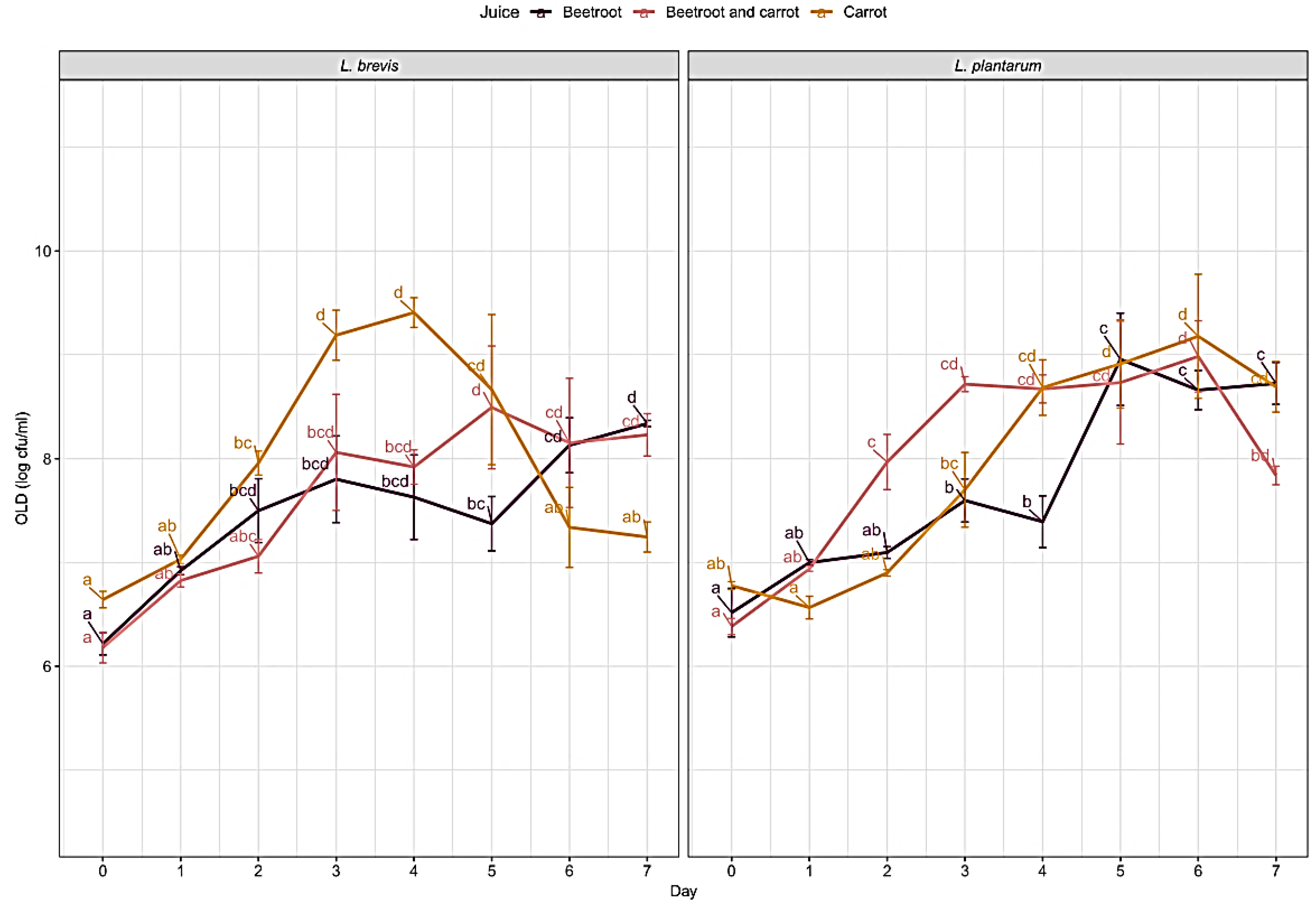
Figure 2.
Bacteria morphology.
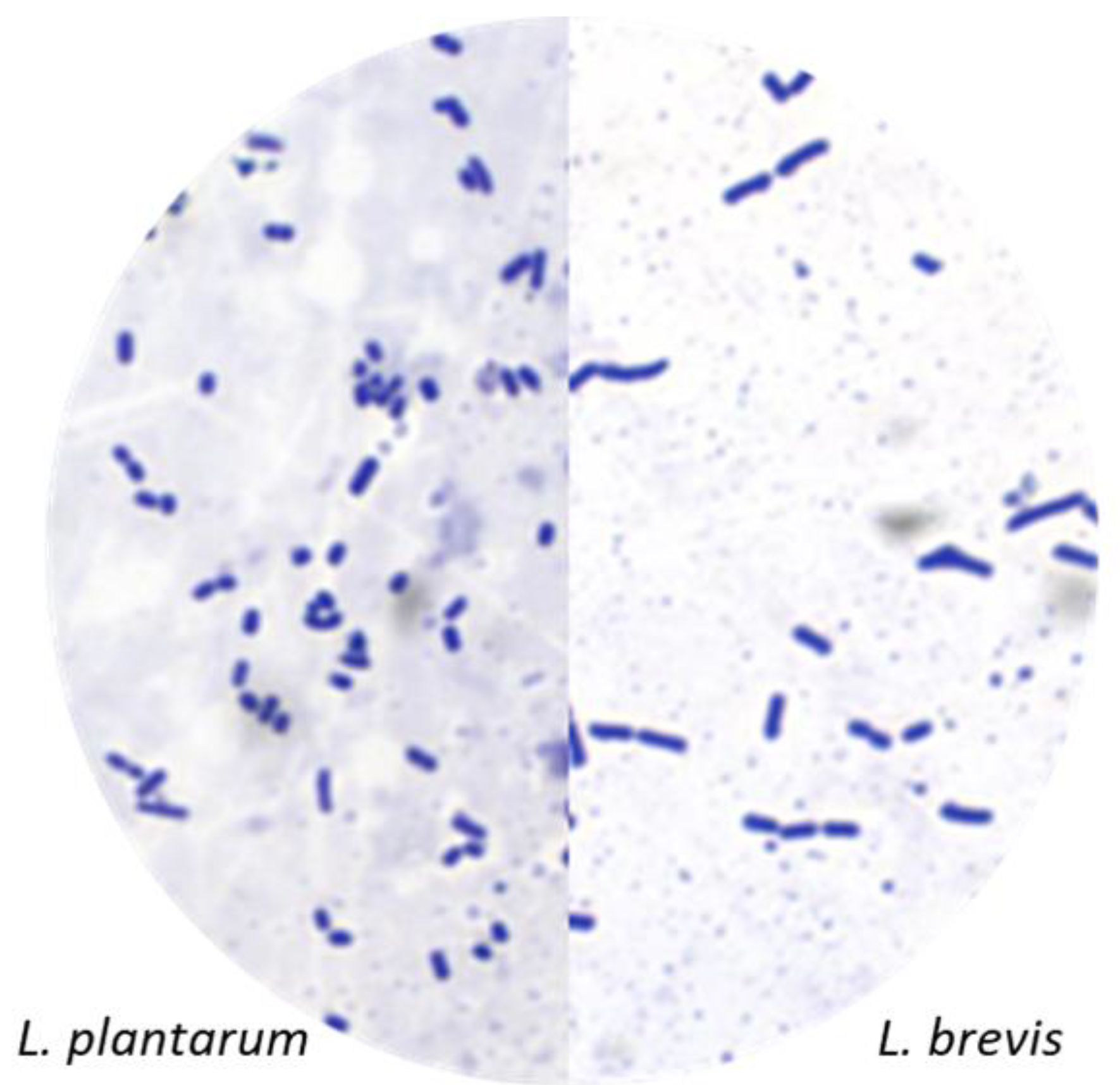
Figure 3.
Total acidity (g lactic acid/100g d.m.) and pH (-). Different indexes (a, b, c and other ) for series showed statistically significant differences for values at the level of p < 0.05.
Figure 3.
Total acidity (g lactic acid/100g d.m.) and pH (-). Different indexes (a, b, c and other ) for series showed statistically significant differences for values at the level of p < 0.05.
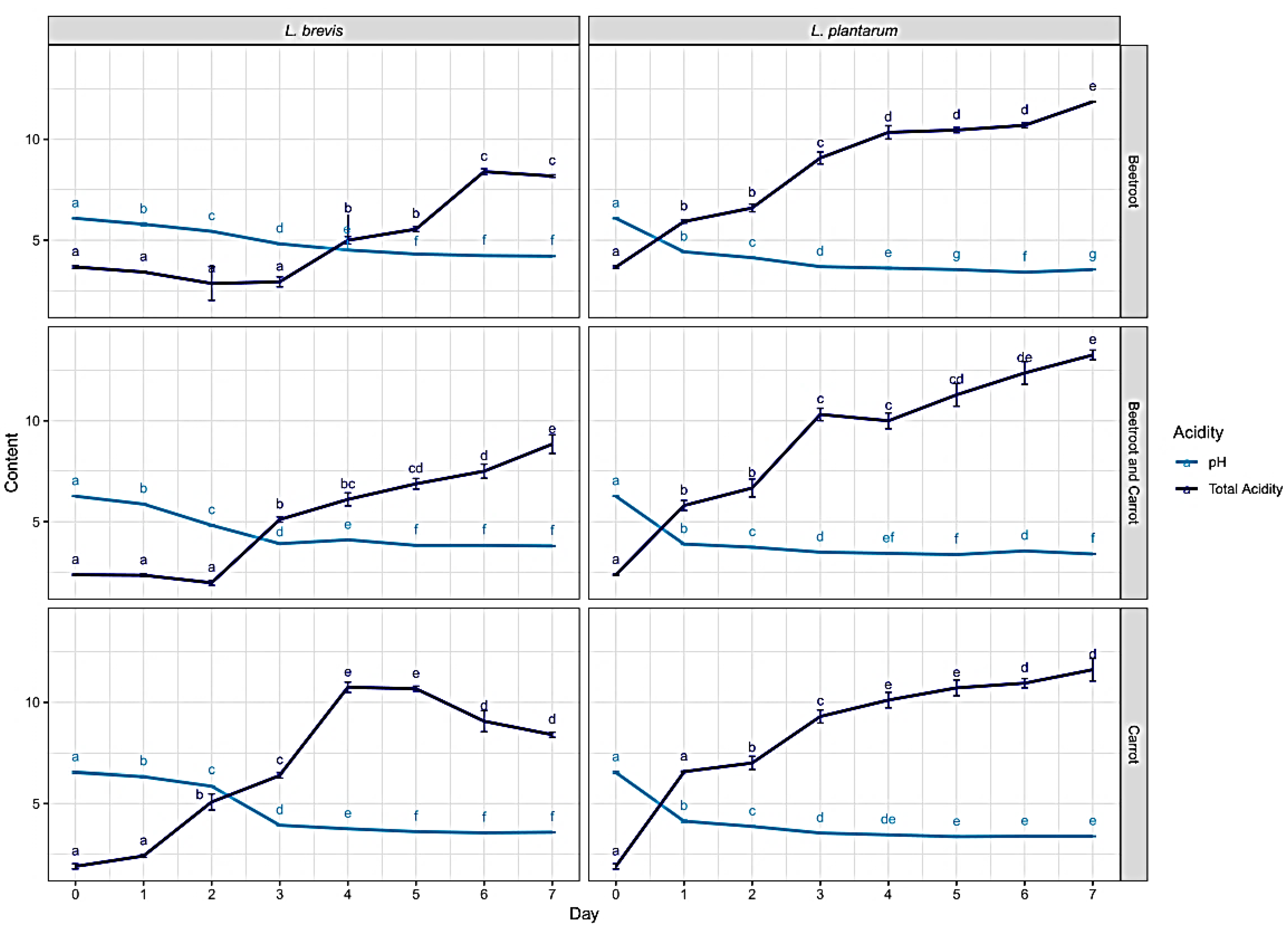
Figure 4.
Correlations with selected parameters for (a) beetroot juices,(b) mixture juices, and (c) carrot juices.
Figure 4.
Correlations with selected parameters for (a) beetroot juices,(b) mixture juices, and (c) carrot juices.
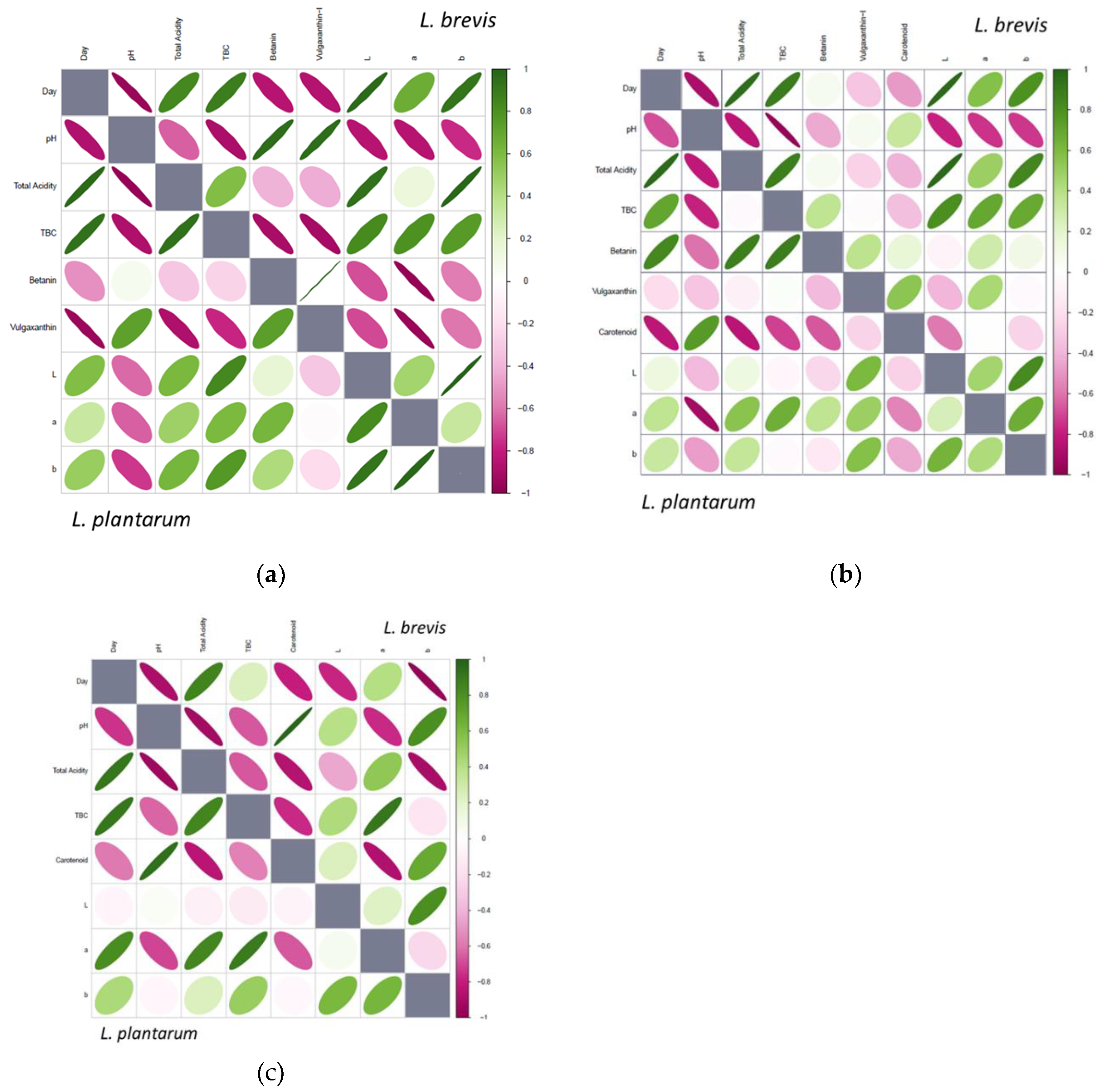
Figure 5.
Kinetic behavior of pigment content. Different indexes (a, b, c and other ) for series showed statistically significant differences for values at the level of p < 0.05.
Figure 5.
Kinetic behavior of pigment content. Different indexes (a, b, c and other ) for series showed statistically significant differences for values at the level of p < 0.05.
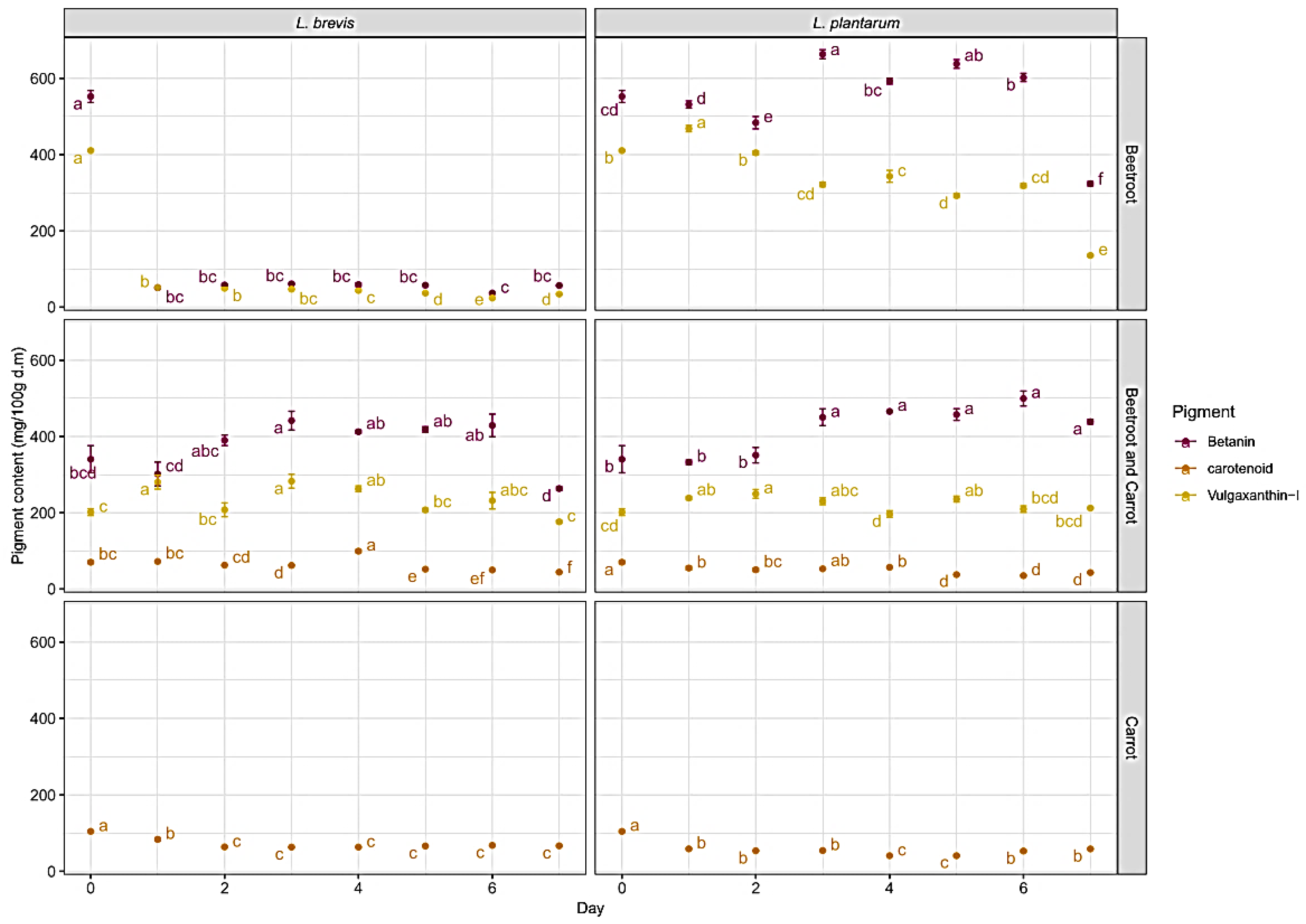
Figure 6.
Pigment identification.
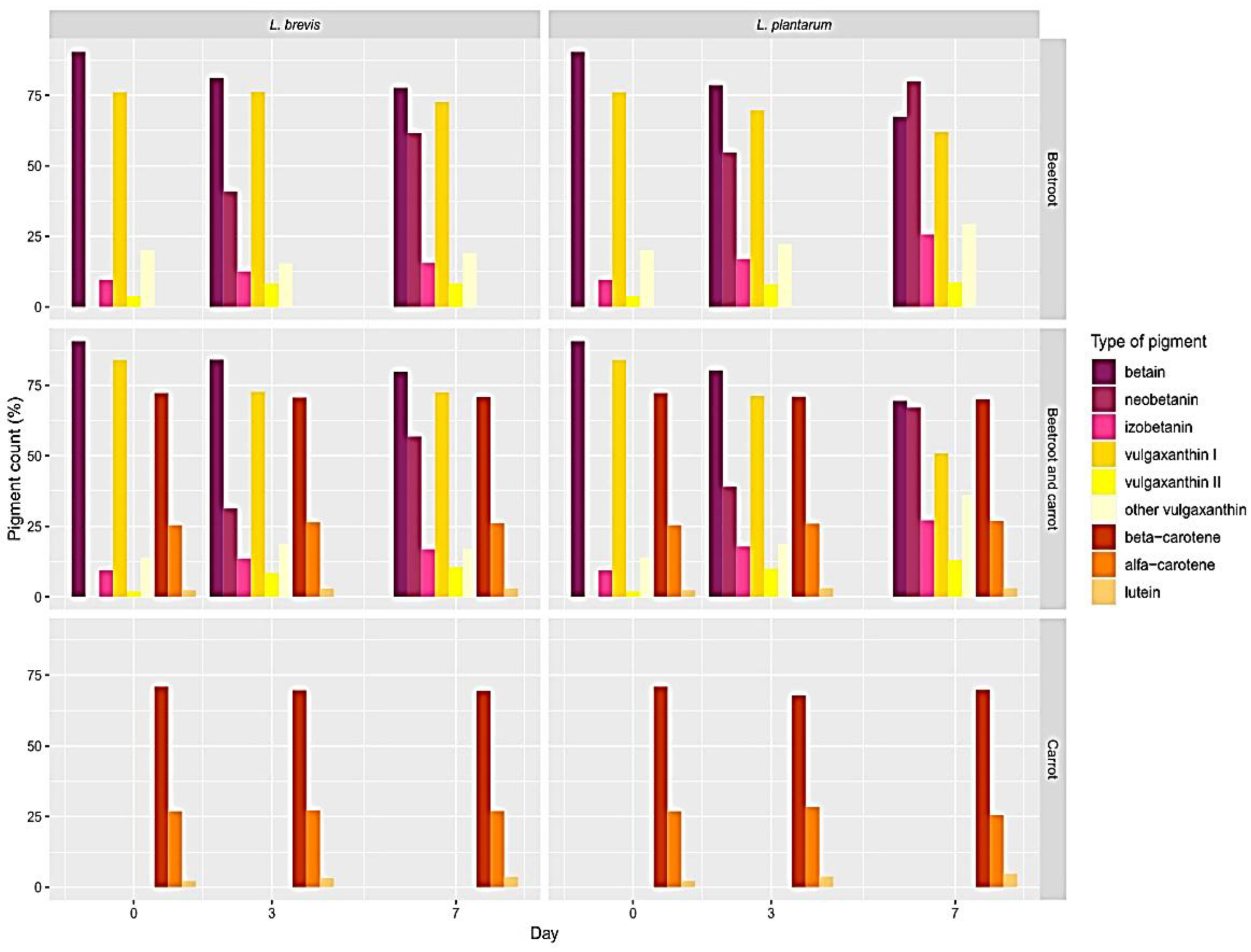

Table 1.
Selected physical properties of juices fermented with Lactiplantibacillus plantarum.
| Day | Beetroot juice | ||||||||
|---|---|---|---|---|---|---|---|---|---|
| Fresh | Lactiplantibacillus plantarum | ||||||||
| 0 | 1 | 2 | 3 | 4 | 5 | 6 | 7 | ||
| Extract (°Brix) | 10.4±0.2a | 10.9±0.1b | 10.9±0.1b | 10.9±0.1b | 10.8±0.1b | 11.0±0.1b | 10.6±0.1a | 10.7±0.2a | |
| Density (kg/m3) | 1041±0a | 1041±1a | 1040±1a | 1045±0cd | 1043±1b | 1046±0d | 1045±0bc | 1044±0bcd | |
| Color | L* | 2.5±0.1a | 2.4±0.1a | 2.8±0.1b | 2.8±0.1b | 3.1±0.1c | 4.1±0.1d | 3.1±0.1c | 3.1±0.0c |
| a* | 7.8±0.2a | 7.6±0.4a | 9.7±0.2c | 10.6±0.3d | 10.2±0.2cd | 12.5±0.2e | 10.4±0.2d | 8.6±0.2b | |
| b* | 1.4±0.1a | 1.6±0.3ab | 1.8±0.1b | 1.9±0.1b | 1.6±0.2ab | 2.4±0.1c | 1.9±0.1b | 1.7±0.1b | |
| Day | A mix of beetroot and carrot juice | ||||||||
| Fresh | Lactiplantibacillus plantarum | ||||||||
| 0 | 1 | 2 | 3 | 4 | 5 | 6 | 7 | ||
| Extract (°Brix) | 10.0±0.2a | 10.5±0.1bc | 10.6±0.2bc | 10.6±0.1bc | 10.5±0.3bc | 10.3±0.2b | 10.2±0.1c | 10.4±0.1b | |
| Density (kg/m3) | 1033±1b | 1030±2a | 1030±0a | 1036±0de | 1043±0f | 1035±0cd | 1037±0e | 1034±0c | |
| Color | L* | 8.1±0.0ab | 8.8±0.3c | 8.8±0.1cd | 8.2±0.1b | 8.4±0.1b | 9.1±0.1d | 7.9±0.1a | 8.9±0.1cd |
| a* | 15.5±0.0a | 24.6±0.1f | 24.5±0.2ef | 24.9±0.2f | 24.1±0.3de | 23.0±0.1c | 23.8±0.1d | 22.3±0.2b | |
| b* | 6.3±0.0a | 7.4±0.0d | 7.2±0.1d | 7.0±0.3d | 6.3±0.1ba | 7.0±0.1cd | 6.7±0.1bc | 7.8±0.2e | |
| Day | Carrot juice | ||||||||
| Fresh | Lactiplantibacillus plantarum | ||||||||
| 0 | 1 | 2 | 3 | 4 | 5 | 6 | 7 | ||
| Extract (°Brix) | 9.7±0.1a | 10.5±0.0b | 10.6±0.1bc | 10.8±0.0c | 10.6±0.3bc | 10.5±0.3b | 10.4±0.1b | 10.9±0.1c | |
| Density (kg/m3) | 1033±1bc | 1033±1bc | 1031±2a | 1031±0ab | 1030±1a | 1036±0d | 1035±1cd | 1032±1ab | |
| Color | L* | 33.7±0.0cd | 34.1±0.5de | 34.6±0.1e | 32.5±0.2a | 32.8±0.2ab | 35.3±0.1f | 33.2±0.1bc | 33.6±0.1c |
| a* | 23.0±0.0a | 23.5±0.1b | 23.5±0.0b | 25.3±0.3c | 25.1±0.3c | 27.1±0.1e | 26.0±0.3d | 25.4±0.2c | |
| b* | 36.5±0.2b | 35.5±0.1a | 35.6±0.0a | 35.4±0.5a | 35.2±0.3a | 38.4±0.1c | 36.8±0.3b | 36.6±0.2b | |
a, b, c and other —different indexes for each row mean statistically significant differences for values at the level of p < 0.05.
Table 2.
Selected physical properties of juices fermented with Lactiplantibacillus brevis.
| Day | Beetroot juice | ||||||||
|---|---|---|---|---|---|---|---|---|---|
| Fresh | Levilactobacillus brevis | ||||||||
| 0 | 1 | 2 | 3 | 4 | 5 | 6 | 7 | ||
| Extract (°Brix) | 10.4±0.2c | 10.9±0.3a | 10.9±0.2ab | 10.8±0.2ab | 10.8±0.3ab | 10.6±0.1bc | 10.3±0.1cd | 10.1±0.1d | |
| Density (kg/m3) | 1041±0a | 1040±1a | 1040±3a | 1041±1a | 1043±0a | 1041±1a | 1053±0b | 1041±0a | |
| Color | L* | 2.5±0.1a | 2.5±0.1a | 2.8±0.2b | 3.7±0.1c | 5.3±0.0d | 5.1±0.1e | 4.0±0.0f | 7.5±0.1g |
| a* | 7.8±0.2b | 7.9±0.3a | 7.4±0.3a | 10.5±0.2d | 12.9±0.e | 10.1±0.0c | 10.9±0.2d | 9.7±0.0c | |
| b* | 1.4±0.1a | 1.5±0.2a | 1.0±0.1a | 1.8±0.1b | 3.6±0.1d | 3.3±0.1d | 2.5±0.1c | 5.7±0.1e | |
| Day | A mix of beetroot and carrot juice | ||||||||
| Fresh | Levilactobacillus brevis | ||||||||
| 0 | 1 | 2 | 3 | 4 | 5 | 6 | 7 | ||
| Extract (°Brix) | 10.0±0.2a | 10.2±0.1b | 10.5±0.1a | 10.7±0.0c | 10.7±0.1c | 10.7±0.2c | 10.6±0.1c | 10.4±0.1abc | |
| Density (kg/m3) | 1033±1ab | 1033±2abc | 1031±0a | 1035±0c | 1034±0bc | 1032±0ab | 1033±1ab | 1045±0d | |
| Color | L* | 8.1±0.0a | 8.2±0.1a | 8.2±0.1a | 8.6±0.4ab | 8.6±0.5ab | 8.9±0.3bc | 9.3±0.4cd | 9.6±0.1d |
| a* | 15.5±0.0a | 19.6±0.2c | 19.8±0.2c | 22.4±0.3f | 21.5±0.1e | 18.8±0.1b | 21.1±0.2d | 21.0±0.1d | |
| b* | 6.3±0.0a | 6.0±0.2c | 6.0±0.2c | 8.2±0.5f | 8.0±0.6e | 6.6±0.2b | 8.9±0.3d | 9.0±0.1d | |
| Day | Carrot juice | ||||||||
| Fresh | Levilactobacillus brevis | ||||||||
| 0 | 1 | 2 | 3 | 4 | 5 | 6 | 7 | ||
| Extract (°Brix) | 9.7±0.1a | 10.8±0.2cd | 10.7±0.1bc | 11.0±0.1d | 10.8±0.1cd | 10.4±0.1bc | 10.5±0.0bc | 10.3±0.1b | |
| Density (kg/m3) | 1033±1e | 1029±0d | 1022±0b | 1025±1c | 1022±0b | 1028±0d | 1035±1f | 1018±1a | |
| Color | L* | 33.7±0.0c | 37.3±0.1g | 35.7±0.2f | 34.1±0.2d | 31.7±0.2a | 33.2±0.0b | 34.6±0.0e | 32.0±0.2a |
| a* | 23.0±0.0a | 23.5±0.2a | 25.0±0.3b | 25.9±0.3c | 22.8±0.5a | 24.6±0.1b | 27.7±0.1d | 24.4±0.5b | |
| b* | 36.5±0.2d | 35.3±0.3c | 37.9±0.3e | 35.5±0.3c | 30.1±0.6a | 33.0±0.2b | 37.4±0.1e | 32.5±0.5b | |
a, b, c and other —different indexes for each row mean statistically significant differences for values at the level of p < 0.05.
Disclaimer/Publisher’s Note: The statements, opinions and data contained in all publications are solely those of the individual author(s) and contributor(s) and not of MDPI and/or the editor(s). MDPI and/or the editor(s) disclaim responsibility for any injury to people or property resulting from any ideas, methods, instructions or products referred to in the content. |
© 2023 by the authors. Licensee MDPI, Basel, Switzerland. This article is an open access article distributed under the terms and conditions of the Creative Commons Attribution (CC BY) license (http://creativecommons.org/licenses/by/4.0/).
Copyright: This open access article is published under a Creative Commons CC BY 4.0 license, which permit the free download, distribution, and reuse, provided that the author and preprint are cited in any reuse.


