

Submitted:
26 April 2023
Posted:
26 April 2023
You are already at the latest version
Abstract
Abstract: Self-regulated Learning has become one of educational psychology's most critical research areas. Contemporary research indicates that student creativity is crucial to the success of arts education. However, there is limited research on creativity in arts education in Self-regulated Learning. Therefore, this study aims to define the creativity characteristics that determine the quality of students’ work. This study implemented a creative competition in painting and composition for first-year undergraduates. It evaluated the characteristics of creativity during the three main phases of the task: planning, execution, and completion. We discovered through semi-open questionnaires (n=178),and using the content analysis method. According to the competition results, the students with the highest scores in Flow, Inspiration, and Idea Generation in the Performance phase had the best quality work. In the Forethought phase, Analogical Thinking and Idea Generation worked best for most students, while in the Performance phase, Flow Sense, Idea Generation, and Idea Manipulation worked best.Data on creativity characteristics at different work phases and final quality might adequately guide and organize educational procedures. These findings can serve as a theoretical foundation for quantifying the creativity phase in Self-regulated Learning and offer arts educators a reference for creativity instruction.
Keywords:
creativity
; three-phase SRL model
; think-aloud
; arts education
; education quality
; work quality.
1. Introduction
Creativity has been identified as one of the 21st-century learner's essential talents and the key to success in higher education [1]. Throughout the past decade, creativity research has increased enormously [2]; academics have broadened their definitions of creativity and improved their assessment methods and techniques for fostering creativity. Artistic performance has always been a crucial aspect of artistic practice, but its significance has grown in the age of invention [3,4]. The development of creativity as a catalyst for promoting students' thinking and decision-making is an essential area of study in the present day [5]. The COVID-19 epidemic has prompted a rise in digital technology engagement and accessibility [6,7,8]. According to research, changes in the school sector due to the pandemic can have a good influence on creative development, with the most effective initiatives focusing on cognitive processes [9,10,11,12]. The findings demonstrate that a person's creativity can be enhanced through targeted learning strategies [13], which encourages the selection of the most efficient techniques for creative development.
In this article, First, we will review the research on the creative processes and the creative different assessment techniques within a Self-regulated Learning. Second, by analyzing the self-regulated learning, three phases of the creative process were identified, and different assessment techniques were matched for each phases. Finally, the quasi-experimental teaching will identify and discuss the characteristics of students' creativity within the Self-regulated Learning in creative art practice.
2. Literature Review
2.1. Creativity and Creative Art Practice
There should be a distinction between "creativity," "creative process," and "creative process tactics." Creativity encompasses the interplay between the abilities and behaviors of a person (or group of individuals) and their environment in which a novel, in-demand, and the socially meaningful product is produced [2,14,15]. The creative process combines internal (psychological) knowledge and external (behavioral) expressions that create a unique and significant product or concept. Creative process methods are vectors for fostering and developing the creative process [2]. Sawyer's Eight Stages, or the thirteen creative process tactics presented by Root-Bernstein and Root-Bernstein, are examples of such strategies [2,3,16].
An artist's work is an interactive process that includes study, idea generating, the fabrication of sketches and drafts, and analysis of these elements [3]. This cyclical technique entails dexterous work with the medium's materials and attention to subtleties that emerge during the work [17]. In addition, the artist's labor involves a degree of risk: the end product does not necessarily correspond to what was envisioned before beginning work. An artist's creative process is a synthesis of abilities, activities, and surroundings through which an artist or group of artists produce a new work [2]. The lack of a defined sequence of actions, task structure, and final success criterion has been identified as a distinguishing characteristic of the artist's creative process [3,18]. Education in the arts entails the ability to participate in the creative process, which will result in a fruitful outcome [18]. Self-regulation learning enables successful participation in the creative process in art education, as self-regulation is the distinguishing characteristic between a novice and an expert artist [3].
2.2. Self-regulated Learning (SRL) and self-report measures
Students' control, accountability, and appraisal of their academic accomplishments to take corrective action are self-regulated learning skills [2]. The superior academic achievement of pupils with greater self-regulation is cited as evidence of the significance of such skills [19]. In addition, the increased availability of information and the introduction of Internet+ technologies heighten the need for self-control. The cyclical structure of SRL's cognitive, metacognitive, motivational, affective, and behavioral processes enables the student to attain specific learning objectives [3]. Each of these processes can be studied independently, but their interaction in the learning process can provide a comprehensive picture of learning dynamics. SRL is a skill that can be acquired with practice and is crucial to educational quality and academic achievement [20,21].
Methodology has been a constant topic in SRL research [22]. Self-report measures are commonly used to assess different aspects of SRL, including students' use of cognitive and meta-cognitive strategies, their self-efficacy beliefs and learning motivation. Princh proposed MSLQ model to assess college students' motivation and use of learning strategies for the first time. The reliability and validity of the questionnaire were also assessed [23,24]. Ben Eliyahu & Linnenbrink- Garcia demonstrated in the ISRL model how self-regulatory abilities are limited through depletion [25]. By using the RLQ and weekly journals, McCardle and Hadwin examined the similarities and differences in students' accounts of their metacognitive processes, in which the weekly journals were focused on students' reflections on the previous week and their plans for the next week [22,26]. Lichtinger and Kaplan adopted interviews and classroom assignments to track the use of learning strategies, made qualitative classroom observations of engagement processes, and stimulated recall interviews [25,27]. As claimed by Karabenick, a more productive approach involves examination of self-reported processes to ensure the validity of the constructs and thus the legitimacy of inferences drawn from these measures [28].
SRL has become one of the most important areas of research in educational psychology [29]. At the same time, a considerable number of variables influencing learning (e.g. self-efficacy, volition, and cognitive strategies) are examined within a comprehensive and holistic approach. Panadero explored the commonalities between different SRL theories. Firstly, the SRL model forms an integrated and coherent framework, within which research can be conducted and upon which students can be educated to be more strategic and successful. Secondly, the SRL model exists at different stages of student development or levels of education. Therefore, scholars and teachers need to apply differential effects of these SRL models and theories in order to improve students’ learning and SRL skills [30,31,32].
2.3. Review of the creative process and the creative assessment measurement techniques
The creative process is analyzed as a particular series of thoughts and behaviors that results in a new product [33,34,35]. Some studies divide the creative process into four stages: problem definition, unconscious data processing, idea generation, and conscious idea testing [36]. Several studies have demonstrated that the creative process comprises various heterogeneous subprocesses, including idea generation and investigation [37]. It distinguishes between generating and selected subprocesses and involves problem comprehension, idea production, and planning [38,39]. It incorporates iteration, experimentation, exploration, intuition, and idea emergence in a more modern model [18].
In general, existing research on creativity covers predominantly divergent thinking abilities [40,41,42,43], while consideration of processes that are not included in divergent thinking received much less attention [44]. The phenomenon is referred to as the defined gap. The sub-processes unrelated to divergent thinking are reported to be active elements of the creative process, and they can most effectively develop creativity in a well-defined sequence [42].
Divergent Thinking (DT) generates ideas in response to a single problem [43]. There are many approaches to DT assessments; the most widely used are tests where tasks include open-ended problems in different modalities [41,44]. Among these assessment tools, the most popular for many decades have been the Wallach-Kogan Creativity Tests – WKCT [45] or the Torrance Tests of Creative Thinking - TTCT [46]. The weakness of DT tests is that they use available content and do not reflect open problems and later stages of creativity [42]. Thus, although the DT score is an empirically confirmed indicator of successful creative activity, it does not fully reflect the creativity phenomenon [43]. DT tests are not designed to measure the use of specific strategies, processes, or other factors that promote creativity; in fact, DT tests cannot measure the actual creative process [2].
Since early creativity studies conventionally viewed the creative process in terms of cognitive operations, self-regulated processes were neglected [37]. Recent research has aimed to fill this void. It has been observed that a person employs different action strategies and ways of thinking before (setting goals, planning), during (emotion management, control), and after (evaluation) a specific task, which lends credence to the concept of self-regulation phases [47]. The creative process has begun to be considered within the broader framework of self-regulated learning, which confirms that the creative process can be learned and, second, that creative process strategies can be incorporated into general learning strategies Numerous SRL models have been created, with Zimmerman, Pintrich, Winne and Hadwin being the most influential [48]. According to Zimmerman's social cognitive model (Figure 1.a), SRL is comprised of three cyclical phases (forethought, performance, and self-reflection. Self-Regulated Learning, or SRL, is a model developed by Zimmerman that acts as a theoretical framework to describe how individuals govern their own learning process through a variety of cognitive and metacognitive processes. The learner's ability to control their own cognition, motivation, and behavior during the learning process is emphasized by the model. Using the SRL framework developed by Zimmerman and Martinez-Pons recent research is based [49,50]. The four phases of Pintrich's social cognitive model (Figure 1.b) (forethought, monitoring, control, and reflection) suggest that students can control their cognition, motivation, behavior, and learning environment [22]. Pintrich was one of the first scholars to empirically examine the connection between SRL and motivation [51], in terms of theory and the absence of a connection between motivation and cognition [23,51,52]. Another significant contribution made by Pintrich to the subject of SRL is the creation of equipment to measure SRL (MSLQ) [51]. More recently, two evaluations indicated that the MSLQ is the most frequently used instrument for measuring both SRL and self-efficacy, this demonstrates the significant influence of Pintrich's work on SRL [52]. Winne and Hadwin's model (Figure 1.c) consists of four phases: task definition, setting of learning goals and plans, enaction of learning strategies, and adapting [53]. While asserting the goal-directed nature of SRL and the effects of self-regulatory actions on motivation, Winne and Hadwin's model of SRL has a strong metacognitive perspective that recognizes self-regulated students as active learners who manage their own learning through monitoring and the use of (meta)cognitive strategies primarily. [54,55]. It has been frequently utilized, particularly in studies utilizing computer-supported learning environments [56].
DiBenedetto compares Rhodes’s theory of creativity with Bandura’s social cognitive theory. Discusses the nature of creativity using Zimmerman and Schunk’s three-phase model of self-regulation to show how students effectively learn to create art within academic walls [57]. Boldt studied artistic creativity outside of DT [43]; graduate students performed a creative drawing task, and their thought processes were explored using the Think-Aloud method. Think-Aloud revealed the activity of many creative sub-processes in students: idea generation, choice, evaluation, clarification, synthesis, comparing to others, and knowledge application in the subject area [53]. The first four sub-processes (idea generation, choice, evaluation, and clarification) accounted for 82% of the observed processes [44].
Research on the relationship between self-regulation and creativity confirms that creativity is strongly correlated with time management, self-control in task performance, and persistence and does not correlate with personal disorganization [58,59,60]. Thus, the positive impact of time management skills (a sign of self-regulation) on creativity is reported [61,62]. In addition, self-concordant goals associated with creativity, resulting from a student’s independent choice, improve the motivation for learning [63,64]. Self-regulated learners develop successful learning strategies and control their behavior to achieve their goals [59].
Progress in art education depends on improving the work quality so corrective actions can be taken with quantitative data on the development of creativity characteristics in different phases of creative activity [65]. This research aimed to identify student creativity characteristics through different creative process measurement techniques within SRL, which determine the quality of their final product. It is necessary to study the aspects of creativity at different stages (phases) of the creative competition: before, during, and afterwards.
To reach the objectives, the researcher will answer the following questions:
RQ1: Within a SRL, in different competition phases (Forethought phase, Performance phase, Self-Reflection phase), which creative process measurement technique were chosen?
RQ2: Within a SRL, in different competition phases (Forethought phase, Performance phase, Self-Reflection phase), the distinctive characteristics of creativity.
The Focus of the Present Study
The researchers used two sets of SRL measures: Ability Measures and Event Measures [2]. Ability Measures include student self-reports, student ratings compiled by teachers, and retrospective interviews. They allow evaluating global or subject-specific aspects of the SRL or the creative process but often not in real-time. Event Measures include event logs or diaries, direct observations, think-aloud protocols, and interview micro-analysis [2,66]. Event Measures are task-specific, context-specific, and real-time. Figure 2 schematically shows the study design based on Zimmerman’s model.
3. Materials and Methods
3.1. Measurement
Two questionnaires were used for Ability Measures: Cognitive Processes Associated with Creativity (CPAC) by Miller and the Creative Self-Regulation (CRL) questionnaire by Zielińska et al. [34,67]. The Cognitive Processes Associated with Creativity (CPAC) scale was developed based on empirical evidence from a large number of studies involving the cognitive components of creativity training. The source of the CPAC questionnaire consisted of 28 items related to such sub-processes as Idea Manipulation, Sensory, Flow, Analogical Thinking, Idea Generation, and Incubation. The scale was chosen as it met the needs of this study for the analysis of creativity characteristics. The authors transformed the primary source for the research purpose: expanded Idea Generation, and replaced Sensory with Inspiration. They used a 22-item CPAC questionnaire, Cronbach’s alpha; the internal consistency for the 22-item full scale was 0.841. On a Likert scale, the students rated the items between 1 (never) and 10 (always). CPAC corresponds to the Forethought phase.
To investigate the characteristics of creativity in artistic practice during the self-reflection phase, we used Zelenka's CRL questionnaire. The original CRL questionnaire contained 34 items covering three phases: before, during, and after the project. The researchers used only the third part of the questionnaire, Self-Reflection (Phase 3: Self-Reflection). They also expanded the list of questions and removed the polar questions; Cronbach’s alpha was 0.789. Participants rated each item from 1 (not at all) to 10 (exactly).
In this study, the Event Measures included Think-Aloud protocols, Personal Diaries (both – Phase 2: Performance), and the competition's Jury Scores (Phase 3: Self-reflection). The Think-Aloud method involves speech-based modeling of thought processes. Even though some thought processes are unconscious, faster than speech, and sometimes difficult to interpret verbally, Think-Aloud is recognized as an effective method for obtaining information regarding the comprehension of cognitive processes and sub-processes during creative activities [2,31]. Using the content analysis method, the authors analyzed the Think-Aloud records based on the presence and frequency of specific terms and the counting and categorization of synonyms. The researchers used narrative analysis to focus on the speech, narrative changes, key details, and the presentation of these elements [68,69].
The personal Diary was a collection of 14 questionnaires; the paper by Benedeket al. served as its theoretical foundation [70]. In the study he used a personal diary approach to examine the motivations and reasons for creativity in the field of art and design. Participants completed the Diary daily: one day equals one questionnaire. The questionnaire consisted of thirteen questions: Q1-3 for self-perception of the work result per day, % (100 if the artist was completely satisfied with their work), Q4-5 for the experience gained, and Q6-Q13 for work-related subprocesses. Participants ranked the items from 1 (very poor) to 10 (excellent) (excellent). The Think-Aloud protocols are a particular method; the initial assignment was to take notes thrice daily (before, during, and after work). The participant's records, however, did not contain a three-phase approach; instead, they served as an explanation of a Personal Diary created primarily once per day after filling out the Diary or during/immediately after the creative competition.
3.2. Participants
The research was conducted at a Chinese university with the participation of 178 first-year students aged 18 to 26. The study was conducted at X University in China with 178 first-year students in the School of Art and Media Animation department. Ninety-seven (97) females and eighty-one (81) males between 18 and 26 of ages participated. The ethics committee's approval was obtained.
3.3. Procedure
During the first meeting, the participants were given a 15-minute introduction and explanation of the study's goals and objectives. The instructor then explained how to complete the CPAC questionnaires and answered all the students' questions. The participants learned the competition conditions at the subsequent meeting. Within fourteen days, they must complete a painting assignment on the theme "Emotions" and create an abstract-decorative composition on the same theme. Additionally, each participant received a Personal Diary containing 14 ES questionnaires to be completed at the end of each working day. The students then worked for two weeks. They kept a daily journal/recorded Thinking-Aloud on their smartphones. The two-week competition allowed for an extended examination of the creative process. After two weeks, the participants presented their works to a panel of three independent experts. They scored them on a 10-point scale based on artistic merit and adherence to the theme "Emotions" (1 – very bad, 10 – excellent). The jury members' assessments of the work's quality (0.78 intraclass correlation coefficient) and relevance to the theme were highly reliable (intra-class correlation coefficient 0.84). Every day, participants must independently record their thoughts before, during, and after work and complete a Personal Diary at the end of the day. The Personal Diary was comprised of fourteen identical 13-item questionnaires. The questionnaire summarises CPAC with the same categories (Appendix 1). According to Zimmerman, after the competition, the participants completed the Creative Self-Regulation questionnaire regarding the post-work phase [34,35].
4. Data Analysis and Results
First, Cronbach's alpha and composite reliability (CR) were determined for the reliability analysis. Each Cronbach's alpha exceeded 0.8. Each composite reliability (CR) exceeded 0.7. Additionally, each average variance extracted (AVE) exceeded 0.5 (see Table 1). Therefore, it can be justified that the findings of the variables are reasonable, and the items are retained.
The KMO and Bartlett's test was carried out to analyze the questionnaire's validity. The results are obtained as shown in Table 2 below. The KMO value for this part of the questionnaire was 0.825, and Bartlett's spherical test chi-square value was 619.889, with a degree of freedom of 178 and a significance of 0.000<0.05, which indicates that the data passed the validity test and is suitable for subsequent factor analysis.
ANOVA (Analysis of Variance) was performed on the measured data matrix, and Intra-Class Correlation (ICC) values ranging from 0 to 1 were obtained. Intraclass correlation (ICC) is a statistical tool that indicates the ability of an experimental method to measure systematic inter-subject differences. However, it does not account for significant random inter-subject individual variations [71]. ICC < 0.5 denotes a weak correlation, 0.5-0.75–is an average correlation, 0.75-0.9 – is a good correlation, and > 0.90 – is an excellent correlation.
The student's t-test for dependent samples (p<0.05) was used to compare the studied sub-processes according to CPAC (before the competition) and the sub-processes from the Personal Diary questionnaires (during the competition).
4.1. Personal Diary and think-aloud records
One participant (0.56%) completed the task early, one day before the deadline, and filled out 13 questionnaires; 20.2% completed 8- 12 questionnaires, and 2.3% completed fewer than eight questionnaires. 52% of the participants provided think-aloud records for each of the 14 days, 31% – for 8- 14 days, and 17% – for fewer than eight days. Personal Diary's descriptive statistics are shown in Table 3.
Think-Aloud records mainly explain and expand on this table; some significant transcripts of these records will be presented in the Discussion. Table 1 demonstrates that, during each working day, the positive Work Self-Perception (61. 12%) and Positive Experience (6. 14 versus 2.97 for Negative) dominated among the artists. Participants were involved in the work, enjoyed it (Flow Sense), and regularly looked for ways to solve problems using analogical thinking.
4.2. Cognitive Processes Associated with Creativity questionnaire
Table 4 displays descriptive statistics regarding students' CPAS responses. Before the competition began, students relied on Idea Manipulation and Analogical Thinking the most. The T-test between the CPAS and Personal Diary subprocesses revealed statistically significant differences in Idea Manipulation, Flow, Idea Generation, and Comparing to Others.
4.3. Creative Self-Regulation (CRL) questionnaire, Self-Reflection phase
Table 5 presents CRL data (Self-Reflection). This final questionnaire received the highest scores from respondents: the majority wanted to share their results and deemed the competition interesting. In addition, the participants were extremely self-critical, as no one gave a score above average for complete satisfaction with their results.
4.4. Influence of creativity characteristics on the work quality
The relationship between the studied creativity characteristics and work quality is depicted in Table 6. In the first column are the per-phase creativity characteristics, and in the second column are the intra-class correlation coefficients.
Students with high Flow, Inspiration, and Idea Generation in the Performance phase received the highest final scores in the competition. In contrast, those with low Flow, Inspiration, and Idea Generation received low scores. The results demonstrated a strong correlation between these indicators and the jury's score. Analogical Thinking and Idea Generation in the Forethought and Analogical Thinking of the Performance and Reflection phases strongly correlate with the work quality. Idea Manipulation, Inspiration, and Flow of the Forethought phase Compared to Others of the Performance phase correlate moderately with the work quality. The remaining indicators are not predictive of the work quality.
5. Discussion
The study evaluated the creativity characteristics at different task phases using various measurement techniques and a compilation of data on the essential creativity characteristics for a specific task phase. During the Performance phase, Idea Generation was rated very highly by respondents. Due to the significance of Idea Generation for divergent thinking, this sub-process has been studied extensively in the past and deemed a central aspect of creative processes and highly conducive to creative outcomes [72,73,74]. After generating ideas, individuals choose which ones to implement in their work. It has been demonstrated that convergent thinking contributes to the effectiveness of teaching creativity [74,75], and Idea Manipulation was also rated very highly by respondents in this study. Experienced artists reported that rework was necessary to improve the quality of their work, and Personal Diaries indicate that their colleagues concur: problem-solving and rework were rated above average [34,76]. It is advantageous to abandon predetermined ideas when they become impractical [77]. Questions regarding implementing ideas in the Forethought phase and rejecting some ideas in the Performance phase were not highly valued in this study, possibly due to a lack of artistic experience or laziness. The student's high scores support this conclusion for rejecting unsuccessful ideas, which were awarded by the jury. Here is the content of a student's Think-Aloud audio recording that received the highest possible jury score: "I spent several days laboring over the expression of emotion in "Tears of a Mother." I had to redraw the sketch numerous times to make it believable. The initial concept was a mother's tears upon saying goodbye to her grown children. Still, as I drew, my thoughts centered on the war and military mothers, and I ultimately allowed them to materialize. I spent considerable time revising and am finally pleased with the result today."
Several key entry points have been identified as supporting artistic creation [57] chance, criticism, a heuristic approach, and inspiration. Chance produces discoveries in the development of creativity. For instance, French artist Louis Daguerre discovered a latent image by accidentally spilling mercury in a cabinet containing silver-plated copper plates; this discovery served as the basis for creating the photograph [77]. In this study, randomness was measured by combining ideas (Idea Manipulation), and CPAS scores were higher before the competition began (Phase 1: Forethought) than during it (Phase 2: Competition) (Phase 2: Performance). Thus, it is evident that the student's expectations of themselves before the competition exceeded their expectations during the competition. The evidence is confirmed by audio recordings made by students: "When I learned the creative task, I immediately began to scroll through great number of ideas in my head throughout the day, thinking about them; some were lost, others I wrote down for myself, and I even drew different emotions in my dreams at night. After the competition began, the work began to spin; however, this was not the case for me; my ideas were organized in my head.”
The second stated entry point is criticism; the entire creative process, almost every stroke of the artist, is accompanied by criticism: self-criticism, criticism from peers, criticism from professionals and drawing analogies between one’s own and other works [76]. In Personal Diaries, students’ answers do not show high activity in Comparing to Others in the Performance phase. Perhaps the reason is that the students were limited to the competition, which did not include group work. They could see the results of others only at the competition completion when they had no opportunity to compare with others. Also, Comparing to Others in the Forethought phase does not exceed the average level, so the students were not prepared for comparison, most likely, having no successful experience of comparison and criticism. It can be assumed that if these were experienced artists, they would have rated this parameter higher, as in the works of their colleagues [31,78]. “Today, I saw another student's work with the same emotion as mine. Honestly, I just looked to see if we have significant differences. I found them and calmed down, and we had completely different jobs. I do not care about her quality. I will work on mine”.
The third point of entry is the Heuristic Approach. Through trial and error, excellent works are created. Unsatisfied with his work, the Austrian expressionist artist Egon Schiele threw them into the fireplace and burned them until he created a drawing that met his specifications [79]. This study includes the Analogical Thinking category item "Return to the previous stage if the problem becomes stuck," corresponding to the Heuristic Approach. Although most participants gave it average ratings, it is interesting to note that those who received the highest scores from the jury rated it higher than 7 points in the Forethought phase, indicating that they were convinced of the significance of this strategy for success.
Finally, previous studies have focused in part on research into the everyday creativity of adolescents, without exploring much of the characteristics of specific domains. [80]. Given that "creativity is characterised by discontinuity and task-specific development during this period" [81], the strategies obtained from previous studies are more typical for young people and everyday creativity than for more specialised creative functions [82]. Previous research has demonstrated the existence of domain-specific personality characteristics [83]. Artists and scientists, for instance, tend to be receptive and motivated, but artists may also be unruly and independent, while scientists can be domineering and conceited. University students (late adolescents/young adults) who self-report creative behaviors in the daily, performing arts, and intellectual domains have a varied association with personality characteristics [84]. This is the reason why this study is focused on creativity traits in self-regulated learning primarily in arts education.
6. Research limitations
This research comes with a few constraints. First, the authors could not convince the participants to record three Thinking-Aloud phases; at best, each participant supplemented the questionnaire with notes from their Diary at the end of the workday. Some participants provided documents created in only one or two days. Second, despite being one of the measures of the experimental method's reliability, the intra-class correlation coefficient does not account for inter-subject differences if they result from individual random variations or measurement method bias [85]. Cronbach's tests minimized the possibility of bias in measurement methods, but random variations in the questionnaire could undermine the reliability of the results if they were large enough.
7. Conclusions
This study aimed to establish the characteristics of students' creativity within the SRL that influence the quality of their competitive tasks on "Emotions." In the Forethought phase (planning before the competition), the Cognitive Processes Associated with Creativity (CPAC) questionnaire was used. In the Performance phase (competition execution) – Personal Diaries and Think-Aloud records; and in the Self-Reflection phase (after the completion of the competition), the Creative Self-Regulation (CRL) questionnaire was utilized. The findings indicate significant differences in the development of creativity characteristics during the various phases of competition. According to the respondents, the best sub-processes for the Forethought phase were Analogical Thinking and Idea Generation. The best sub-processes for the Performance phase were Flow Sense, Idea Generation, and Idea Manipulation. After the competition, positive impressions dominated the participants, including a desire to participate and share their work. Students with the highest Flow, Inspiration, and Idea Generation scores during the Performance phase produced the highest quality work. Very weak correlations were observed between Sex, Age, and Idea Manipulation in the Performance phase, Compared to Others in the Forethought phase and work quality. This paper can be used as a theoretical foundation for a phase-by-phase study of creative processes in SRL. It is also helpful for teachers seeking ways to develop students' creative thinking. Teachers may be aware of which sub-processes are more practical to stimulate during a particular phase of creative activity and consider this when designing lessons to advance the educational process for their students. Additional research may investigate different creative process measurement techniques for four-phase SRL models.
Author Contributions
Conceptualization, C.W. and X.Z.; methodology, C.W.; software, C.W.; validation, C.W. and X.Z.; formal analysis, C.W.; investigation, C.W.; resources, C.W.; data curation, C.W.; writing—original draft preparation, C.W.; writing—review and editing, C.W.; visualization, C.W.; supervision, Y.P. All authors have read and agreed to the published version of the manuscript.
Funding
This research was funded by China Heilongjiang Philosophy and Social Science Research Planning Project, grant number 22YSC325 and Harbin Normal University Undergraduate Professional Talent Training Program Research Reform Project, grant number XJGRYK2022043.
Institutional Review Board Statement
The study was conducted in accordance with the Declaration of Helsinki, and approved by the Ethics Committee of Harbin Normal University (protocol code HBNUT-ART-2022-007 and date of approval 1 September 2022).
Informed Consent Statement
Informed consent was obtained from all subjects involved in the study.
Data Availability Statement
Not applicable.
Conflicts of Interest
The authors declare no conflict of interest.
References
- Egan, A.; Maguire, R.; Christophers, L.; Rooney, B. Developing creativity in higher education for 21st century learners: A protocol for a scoping review. International. Journal. of. Educational. Research. 2017, 82, 21–27. [Google Scholar] [CrossRef]
- Rubenstein, L.D.; Callan, G.L.; Ridgley, L.M. Anchoring the creative process within a self-regulated learning framework: Inspiring assessment methods and future research. Educational. Psychology. Review. 2018, 30, 921–945. [Google Scholar] [CrossRef]
- Greene, J.A.; Freed, R.; Sawyer, R.K. Fostering creative performance in art and design education via self-regulated learning. Instructional. Science. 2019, 47, 127–149. [Google Scholar] [CrossRef]
- Lehmann, J.; Gaskins, B. Learning scientific creativity from the arts. Palgrave. Communications. 2019, 5, 96. [Google Scholar] [CrossRef]
- Al-Samarraie, H.; Hurmuzan, S. A review of brainstorming techniques in higher education. Thinking. Skills. and. Creativity, 2018, 27, 78–91. [Google Scholar] [CrossRef]
- Noehrer, L.; Gilmore, A.; Jay, C.; Yehudi, Y. The impact of COVID-19 on digital data practices inmuseums and art galleries in the UK and the US. Humanities. and. Social. Sciences. Communications. 2021, 8, 1–10. [Google Scholar] [CrossRef]
- Rashid, S.; Sunishtha, S.Y. Impact of Covid-19 pandemic on higher education and research. Indian. Journal. of. Human. Development. 2020, 14, 340–343. [Google Scholar] [CrossRef]
- Salas-Pilco, S.Z.; Yang, Y.; Zhang, Z. Student engagement in online learning in Latin American higher education during the COVID-19 pandemic: A systematic review. Br. J. Educ. Technol. 2022, 53, 593–619. [Google Scholar] [CrossRef]
- Noehrer, L.; Gilmore, A.; Jay, C.; Yehudi, Y. The impact of COVID-19 on digital data practices in museums and art galleries in the UK and the US. Humanities. and. Social. Sciences. Communications. 2021, 8. [Google Scholar] [CrossRef]
- Hatip, A. The transformation of learning during covid-19 pandemic towards the new normal era. In Proceeding International Webinar on Education 2020; Universitas Muhammadiyah Surabaya, 2020; pp. 18–28.
- Khamis, T.; Naseem, A.; Khamis, A.; Petrucka, P. The COVID-19 pandemic: a catalyst for creativity and collaboration for online learning and work-based higher education systems and processes. Journal. of. Work-Applied. Management. 2021, 13, 184–196. [Google Scholar] [CrossRef]
- Ritter, S.M.; Mostert, N. Enhancement of creative thinking skills using a cognitive based creativity training. Journal. of. Cognitive. enhancement. 2017, 1, 243–253. [Google Scholar] [CrossRef]
- Said-Metwaly, S.; Van den Noortgate, W.; Kyndt, E. Methodological issues in measuring creativity: A systematic literature review. Creativity. Theories–Research. Applications. 2017, 4, 276–301. [Google Scholar] [CrossRef]
- Ma, H.H. A synthetic analysis of the effectiveness of single components and packages in creativity training programs. Creativity. Research. Journal. 2006, 18, 435–446. [Google Scholar] [CrossRef]
- Glăveanu, V.P. Rewriting the language of creativity: The Five A's framework. Review. of. General. Psychology. 2013, 17, 69–81. [Google Scholar] [CrossRef]
- Sawyer, R.K. The science of human innovation: Explaining creativity; New York: Oxford University Press, 2012. [Google Scholar]
- Cross, N. Design thinking: Understanding how designers think and work. Berg, 2011.
- Sawyer, R.K. An interdisciplinary study of group creativity. In The nature of human creativity; Cambridge University Press, 2018; pp. 280–290. [CrossRef]
- DiBenedetto, M.K. Self-regulation in secondary classrooms: Theoretical and research applications to learning and performance. In Connecting self-regulated learning and performance with instruction across high school content areas. Springer; pp. 3–23. [CrossRef]
- Schunk, D.H.; Greene, J.A. Historical, contemporary, and future perspectives on self-regulated learning and performance. In Handbook of self-regulation of learning and performance. Routledge, 2017; pp. 1–15. [CrossRef]
- McCombs, B.L. Self-regulated learning and academic achievement: A phenomenological view. In Self-regulated learning and academic achievement. Routledge, 2013, pp. 63–117.
- Karabenick, S.A.; Zusho, A. Examining approaches to research on self-regulated learning: conceptual and methodological considerations. Metacognition. and. Learning. 2015, 10, 151–163. [Google Scholar] [CrossRef]
- Pintrich, P.R. Multiple goals, multiple pathways: The role of goal orientation in learning and achievement. Journal. of. Educational. Psychology. 2000, 92, 544. [Google Scholar] [CrossRef]
- Pintrich, P.R.; Smith, D.A.; Garcia, T.; McKeachie, W.J. Reliability and predictive validity of the Motivated Strategies for Learning Questionnaire (MSLQ). Educational. and. psychological. measurement. 1993, 53, 801–813. [Google Scholar] [CrossRef]
- Ben-Eliyahu, A.; Bernacki, M.L. Addressing complexities in self-regulated learning: A focus on contextual factors, contingencies, and dynamic relations. Metacognition. and. Learning. 2015, 10, 1–13. [Google Scholar] [CrossRef]
- McCardle, L.; Hadwin, A.F. Using multiple, contextualized data sources to measure learners’ perceptions of their self-regulated learning. Metacognition. and. Learning. 2015, 10, 43–75. [Google Scholar] [CrossRef]
- Kaplan, A.; Lichtinger, E.; Gorodetsky, M. Achievement goal orientations and self-regulation in writing: An integrative perspective. Journal. of. Educational. Psychology. 2009, 101, 51. [Google Scholar] [CrossRef]
- Karabenick, S.A.; Woolley, M.E.; Friedel, J.M.; Ammon, B.V.; Blazevski, J.; Bonney, C.R.; De Groot, E.; Gilbert, M.C.; Musu, L.; Kempler, T.M.; Kelly, K.L. Cognitive processing of self-report items in educational research: Do they think what we mean? Educational. Psychologist. 2007, 42, 139–151. [Google Scholar] [CrossRef]
- Paris, S.G.; Paris, A.H. Classroom applications of research on self-regulated learning. In Educational psychologist. Routledge, 2003; pp. 89-101.
- Panadero, E. A review of self-regulated learning: Six models and four directions for research. Frontiers. in. psychology. 2017, 422. [Google Scholar] [CrossRef] [PubMed]
- Panadero, E.; Alonso Tapia, J. How do students self-regulate?: review of Zimmerman‟ s cyclical model of self-regulated learning. Anales. De. psicologia. 2014, 30, 450–462. [Google Scholar] [CrossRef]
- Panadero, E.; Klug, J.; Järvelä, S. Third wave of measurement in the self-regulated learning field: When measurement and intervention come hand in hand. Scandinavian. Journal. of. Educational. Research. 2016, 60, 723–735. [Google Scholar] [CrossRef]
- Bishop, L. Collaborative musical creativity: How ensembles coordinate spontaneity. Frontiers. In. Psychology. 2018, 9, 1285. [Google Scholar] [CrossRef]
- Crilly, N. Creativity and fixation in the real world: A literature review of case study research. Design. Studies. 2019, 64, 154–168. [Google Scholar] [CrossRef]
- Jia, X.; Li, W.; Cao, L. The role of metacognitive components in creative thinking. Frontiers. in. Psychology. 2019, 10, 2404. [Google Scholar] [CrossRef]
- Sukawi, Z.; Khoiri, A.; Haryanto, S.; Sunarsi, D. Psychoanalytic conceptual framework: a critical review of creativity in modeling inquiry training. Jurnal. Konseling. Dan. Pendidikan. 2021, 9, 28–35. [Google Scholar] [CrossRef]
- Finke, R.A.; Ward, T.B.; Smith, S.M. Creative cognition: Theory, research, and Applications; Bradford: The MIT Press, 1992. [Google Scholar]
- Ndiung, S.; Dantes, N.; Ardana, I.; Marhaeni, A.A.I.N. Treffinger creative learning model with RME principles on creative thinking skill by considering numerical ability. International. Journal. of. Instruction. 2019, 12, 731–744. [Google Scholar] [CrossRef]
- Fürst, G.; Ghisletta, P.; Lubart, T. Toward an integrative model of creativity and personality: Theoretical suggestions and preliminary empirical testing. The. Journal. of. Creative. Behavior. 2016, 50, 87–108. [Google Scholar] [CrossRef]
- Beaty, R.E.; Zeitlen, D.C.; Baker, B.S.; Kenett, Y.N. Forward flow and creative thought: Assessing associative cognition and its role in divergent thinking. Thinking. Skills. And. Creativity. 2021, 41, 100859. [Google Scholar] [CrossRef]
- Frith, E.; Kane, M.J.; Welhaf, M.S.; Christensen, A.P.; Silvia, P.J.; Beaty, R.E. Keeping creativity under control: Contributions of attention control and fluid intelligence to divergent thinking. Creativity. Research. Journal. 2021, 33, 138–157. [Google Scholar] [CrossRef]
- Palmiero, M.; Fusi, G.; Crepaldi, M.; Borsa, V.M.; Rusconi, M.L. Divergent thinking and the core executive functions: a state-of-the-art review. Cognitive. Processing. 2022, 23, 341–366. [Google Scholar] [CrossRef] [PubMed]
- Said-Metwaly, S.; Fernández-Castilla, B.; Kyndt, E.; Van den Noortgate, W.; Barbot, B. Does the fourth-grade slump in creativity actually exist? A meta-analysis of the development of divergent thinking in school-age children and adolescents. Educational. Psychology. Review. 2021, 33, 275–298. [Google Scholar] [CrossRef]
- Boldt, G. Artistic creativity beyond divergent thinking: Analysing sequences in creative subprocesses. Thinking. Skills. and. Creativity. 2019, 34, 100606. [Google Scholar] [CrossRef]
- Wallach, M.A.; Kogan, N. Modes of thinking in young children. New York: Holt, Rinehart and Winston, 1965.
- Torrance, E.P. Torrance tests of creative thinking: Norms-technical manual. Personnel Press, 1966.
- Zielińska, A.; Lebuda, I.; Ivcevic, Z.; Karwowski, M. How adolescents develop and implement their ideas? On self-regulation of creative action. Thinking. Skills. and. Creativity. 2022, 43, 100998. [Google Scholar] [CrossRef]
- Panadero, E.; Jesús, A.T. How do students self-regulate?: review of Zimmerman’s cyclical model of self-regulated learning. Anales. de. psicologia. 2014.
- Zimmerman, B.J.; Martinez-Pons, M. Construct validation of a strategy model of student self-regulated learning. Journal. of. Educational. Psychology. 1988, 80, 284. [Google Scholar] [CrossRef]
- Zimmerman, B.J.; Martinez-Pons, M.A.N.G.E.L. Perceptions of efficacy and strategy use in the self-regulation of learning. Student. Perceptions. In. the. classroom. 1992, 185–207. [Google Scholar]
- Garcia, T.; Pintrich, P.R. Self-Schemas, Motivational Strategies and Self-Regulated Learning, 1993.
- Broadbent, J.; Sharman, S.; Panadero, E.; Fuller-Tyszkiewicz, M. How does self-regulated learning influence formative assessment and summative grade? Comparing online and blended learners. The. Internet. and. Higher. Education. 2021, 50, 100805. [Google Scholar] [CrossRef]
- Greene, J.A.; Azevedo, R. A theoretical review of Winne and Hadwin’s model of self-regulated learning: New perspectives and directions. Review. of. educational. research. 2007, 77, 334–372. [Google Scholar] [CrossRef]
- Hadwin, A.F.; Winne, P.H. CoNoteS2: A software tool for promoting self-regulation. Educational. Research. and. Evaluation. 2001, 7, 313–334. [Google Scholar] [CrossRef]
- Winne, P.H.; Allyson, F.H. nStudy: Tracing and supporting self-regulated learning in the Internet. International. Handbook. of. Metacognition. and. Learning. technologies. 2013, 293–308. [Google Scholar]
- Panadero, E.; Kirschner, P.A.; Järvelä, S.; Malmberg, J.; Järvenoja, H. How individual self-regulation affects group regulation and performance: A shared regulation intervention. Small. Group. Research. 2015, 46, 431–454. [Google Scholar] [CrossRef]
- DiBenedetto, M.K. Self-regulation in secondary classrooms: Theoretical and research applications to learning and performance. In Connecting self-regulated learning and performance withinstruction across high school content areas. Springer, 2018; pp. 32–23. [CrossRef]
- Hay, L.; Duffy, A.; Mcteague, C. A systematic review of protocol studies on conceptual design cognition: Design as search and exploration. Design. Science. 2017, 3, e10. [Google Scholar] [CrossRef]
- Yeh, Y.C.; Lin, C.F. Aptitude-treatment interactions during creativity training in elearning: How meaning-making, self-regulation, and knowledge management influence creativity. Journal. of. Educational. Technology. Society. 2015, 18, 119–131. [Google Scholar]
- Fü rst, G.; Paolo, G.; Todd, L. Toward an integrative model of creativity and personality: Theoretical suggestions and preliminary empirical testing. The. Journal. of. Creative. Behavior. 2016, 50, 87–108. [Google Scholar] [CrossRef]
- Zampetakis, L.A.; Bouranta, N.; Moustakis, V.S. On the relationship between individual creativity and time management. Thinking. Skills. and. Creativity. 2010, 5, 23–32. [Google Scholar] [CrossRef]
- Kizilcec, R.F.; Mar, P.S.; Jorge, J. Maldonado. Self-regulated learning strategies predict learner behavior and goal attainment in Massive Open Online Courses. Computers. Education. 2017, 104, 18–33. [Google Scholar] [CrossRef]
- Hon, A.H. Enhancing employee creativity in the Chinese context: The mediating role of employee self-concordance. International. Journal. of. Hospitality. Management. 2011, 30, 375–384. [Google Scholar] [CrossRef]
- Xiao, Y.; Min, Y. Formative assessment and self-regulated learning: How formative assessment supports students' self-regulation in English language learning. System. 2019, 81, 39–49. [Google Scholar] [CrossRef]
- Forthmann, B.; Jendryczko, D.; Scharfen, J.; Kleinkorres, R.; Holling, H. Creative ideation, broad retrieval ability, and processing speed: A confirmatory study of nested cognitive abilities. Intelligence. 2019, 75, 59–72. [Google Scholar] [CrossRef]
- DiBenedetto, M.K.; Dale, H.S. Assessing academic self-efficacy. Academic Self-Efficacy in Education: Nature, Assessment, and Research. Singapore: Springer Singapore, 2022; pp. 11–37. [CrossRef]
- Miller, A.L. A self-report measure of cognitive processes associated with creativity. Creativity. Research. Journal. 2014, 26, 203–218. [Google Scholar] [CrossRef]
- Kuypers, K.P.C.; Riba, J.; de la Fuente Revenga, M.; Barker, S.; Theunissen, E.L.; Ramaekers, J.G. Ayahuasca enhances creative divergent thinking while decreasing conventional convergent thinking. Psychopharmacology. 2016, 233, 3395–3403. [Google Scholar] [CrossRef] [PubMed]
- Benedek, M.; Jauk, E.; Kerschenbauer, K.; Anderwald, R.; Grond, L. Creating art: An experience sampling study in the domain of moving image art. Psychology. of. Aesthetics. Creativity. and. the. Arts. 2017, 11, 325–334. [Google Scholar] [CrossRef]
- Scott, G.; Leritz, L.E.; Mumford, M.D. The effectiveness of creativity training: A quantitative review. Creativity Research Journal, 2004, 16, 361–388. [Google Scholar] [CrossRef]
- Liljequist, D.; Elfving, B.; Skavberg Roaldsen, K. Intraclass correlation–A discussion and demonstration of basic features. PloS. one. 2019, 14, e0219854. [Google Scholar] [CrossRef]
- Lassig, C.J. Approaches to creativity: How adolescents engage in the creative process. Thinking. Skills. and. Creativity. 2013, 10, 3–12. [Google Scholar] [CrossRef]
- Fürst, G.; Ghisletta, P.; Lubart, T. The creative process in visual art: A longitudinal multivariate study. Creativity. Research. Journal. 2012, 24, 283–295. [Google Scholar] [CrossRef]
- Scott, G.; Leritz, L.E.; Mumford, M.D. The effectiveness of creativity training: A quantitative review. Creativity. Research. Journal. 2004, 16, 361–388. [Google Scholar] [CrossRef]
- Wang, K.; Jeffrey, V.N. A literature review on individual creativity support systems. " Computers in Human Behavior 2017, 74, 139–151. [Google Scholar] [CrossRef]
- Cawelti, S. Modeling artistic creativity: An empirical study. Journal. of. Creative. Behavior. 1992, 26, 83–94. [Google Scholar] [CrossRef]
- Lehmann, J.; Gaskins, B. Learning scientific creativity from the arts. Palgrave. Communications. 2019, 5, 96. [Google Scholar] [CrossRef]
- Ang, T. Photography: The Definitive Visual History. Dorling Kindersley Ltd, 2022.
- Steiner, R. Egon Schiele, 1890-1918: the midnight soul of the artist. Taschen, 2000.
- Glaveanu, V.P.; Hanson, M.H. .; Baer, J.; Barbot, B.; Clapp, E.P.; Corazza, G.E.; Hennessey, B.; Kaufman, J.C.; Lebuda, I.; Lubart, T. Advancing creativity theory and research: A socio-cultural manifesto. The. Journal. of. Creative. Behavior, 2020; 54, 741–745. [Google Scholar] [CrossRef]
- Barbot, B.; Heuser, B. Creativity and identity formation in adolescence: A developmental perspective. In The creative self. Academic Press, 2017; pp. 87–98.
- Agnoli, S.; Zanon, M.; Mastria, S.; Avenanti, A.; Corazza, G.E. Enhancing creative cognition with a rapid right-parietal neurofeedback procedure. Neuropsychologia. 2018, 118, 99–106. [Google Scholar] [CrossRef] [PubMed]
- Feist, G.J. A meta-analysis of personality in scientific and artistic creativity. Personality. and. social. psychology. review. 1998, 2, 290–309. [Google Scholar] [CrossRef]
- Ivcevic, Z.; Mayer, J.D. Mapping dimensions of creativity in the life-space. Creativity. Research. Journal. 2009, 21, 152–165. [Google Scholar] [CrossRef]
- Liljequist, D.; Elfving, B.; Skavberg Roaldsen, K. Intraclass correlation–A discussion and demonstration of basic features. PloS. one. 2019, 14, e0219854. [Google Scholar] [CrossRef]
Figure 1.
Cyclic SRL models: a – Zimmerman, b – Pintrich, and c – Winne and Hadwin.
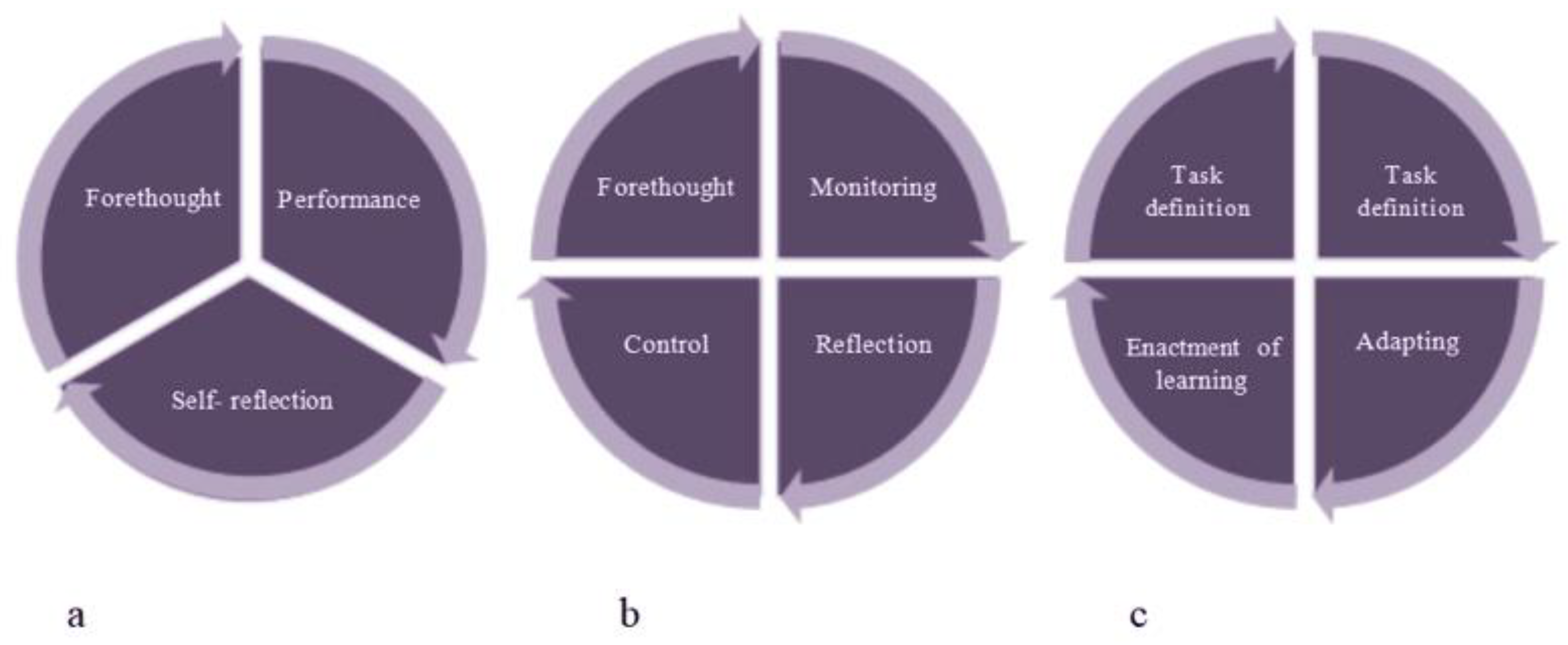
Figure 2.
Cyclic SRL models: a – Zimmerman, b – Pintrich, and c – Winne and Hadwin.
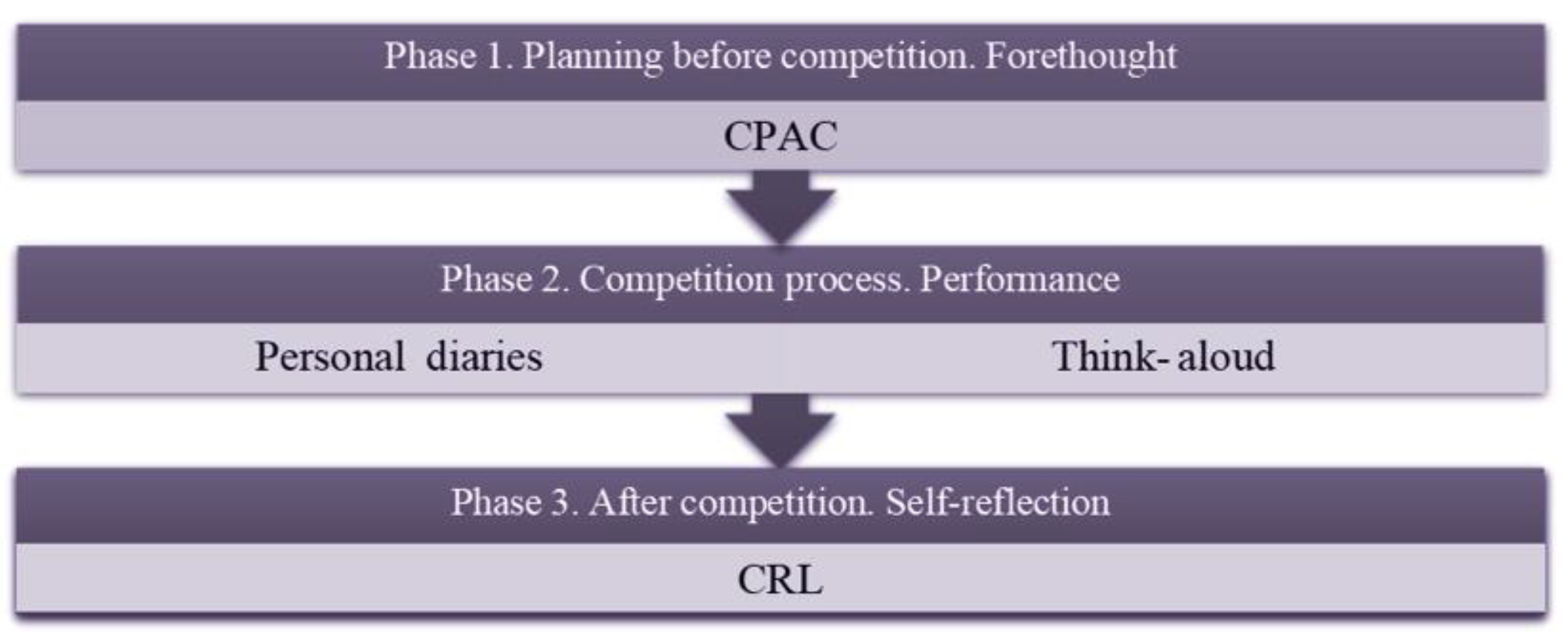

Table 1.
Discriminant validity.
| Items | Variables | Std. | Cronbach .𝛼 | AVE | CR |
|---|---|---|---|---|---|
| Q1-Q4 | Idea Manipulation | 0.69 | 0.884 | 0.506 | 0.732 |
| Q5-Q7 | Inspiration | 2.02 | 0.839 | 0.525 | 0.789 |
| Q8-Q10 | Flow | 3.16 | 0.811 | 0.502 | 0.768 |
| Q11-Q14 | Analogical Thinking | 1.26 | 0.824 | 0.513 | 0.734 |
| Q15-Q20 | Idea Generation | 0.32 | 0.829 | 0.569 | 0.835 |
| Q21-Q22 | Comparing to Others | 0.48 | 0.841 | 0.558 | 0.713 |
Table 2.
Validity analysis (KMO and Bartlett’s test).
| Kaiser-Meyer-Olkin Measure of Sampling Adequacy | 0.825 | |
|---|---|---|
| Bartlett’s Test of Spherical | Approx. Chi-Square | 619.889 |
| df | 120 | |
| Sig. | 0.000 | |
Table 3.
Descriptive statistics for Personal Diaries.
| Items | Sample mean | Std. | Intra-clas | Correlation | |
|---|---|---|---|---|---|
| No. | Correlation Coefficient | With Work Self- perception | |||
| Q1-Q3 | Work Self-Perception | 61.12 | 14.55 | .64 | - |
| Q4 | Positive Experience | 6.14 | 3.17 | .34 | .21 |
| Q5 | Negative Experience | 2.97 | 0.51 | .45 | .06 |
| Q6 | Idea Manipulation | 6. 15 | 2.44 | .39 | .08 |
| Q7 | Inspiration | 5.12 | 1.56 | .26 | .19 |
| Q8 | Flow Sense | 6.44 | 0.89 | .35 | .15 |
| Q9 | Analogical Thinking | 6.85 | 0.43 | .51 | .23 |
| Q10 | Not looking for an easy way Trying to implement as many ideas |
4.30 6.16 |
2.20 1.96 |
.26 .42 |
.14 .26 |
| Q11 | As possible, looking for solutions to problems | 6.29 | 1.14 | .36 | .34 |
| Q12 | Redoing | ||||
| Q13 | Comparing my work to others | 4.19 | 0.83 | .48 | .19 |
Table 4.
CPAC statistics.
| Items | Sub-process under study | Sample for the process | Std. | T-criterion |
|---|---|---|---|---|
| Q1-Q4 | Idea Manipulation | 5.15 | .69 | .001* |
| Q5-Q7 | Inspiration | 5.88 | 2.02 | .052 |
| Q8-Q10 | Flow | 5.40 | 3.16 | .001* |
| Q11-Q14 | Analogical Thinking | 6.96 | 1.26 | .516 |
| Q15-Q20 | Idea Generation | 6.31 | .32 | 0.02* |
| Q21-Q22 | Comparing to Others | 4.20 | .48 | .048* |
Table 5.
CRL statistics (Self-Reflection).
| Items | Questions | Sample mean | Std. |
|---|---|---|---|
| Q1 | I want to share my work. | 7.14 | .99 |
| Q2 | I am completely satisfied with my work. | 3.26 | 3.15 |
| Q3 | It was interesting to work on the competition. | 7.09 | 1.63 |
| Q4 | I have unrealized ideas for the next project. | 6.22 | 2.29 |
| Q5 | I know how to do better next time. | 5.30 | 3.40 |
Table 6.
Correlation between per-phase creativity characteristics and the jury’s scores for the competition.
Table 6.
Correlation between per-phase creativity characteristics and the jury’s scores for the competition.
| Items | Std. |
|---|---|
| Idea Manipulation (Forethought) | .56 |
| Inspiration (Forethought) | .41 |
| Flow (Forethought) | .59 |
| Analogical Thinking (Forethought) | .83 |
| Idea Generation (Forethought) | .77 |
| Comparing to Others (Forethought) | .32 |
| Idea Manipulation (Performance) | .38 |
| Inspiration (Performance) | .88 |
| Flow (Performance) | .92 |
| Analogical Thinking (Performance) | .79 |
| Idea Generation (Performance) | .91 |
| Comparing to Others (Performance) | .44 |
| Self-Reflection | .68 |
| Gender | .22 |
| Age | .17 |
Disclaimer/Publisher’s Note: The statements, opinions and data contained in all publications are solely those of the individual author(s) and contributor(s) and not of MDPI and/or the editor(s). MDPI and/or the editor(s) disclaim responsibility for any injury to people or property resulting from any ideas, methods, instructions or products referred to in the content. |
© 2023 by the authors. Licensee MDPI, Basel, Switzerland. This article is an open access article distributed under the terms and conditions of the Creative Commons Attribution (CC BY) license (http://creativecommons.org/licenses/by/4.0/).
Copyright: This open access article is published under a Creative Commons CC BY 4.0 license, which permit the free download, distribution, and reuse, provided that the author and preprint are cited in any reuse.


