

Submitted:
17 April 2023
Posted:
17 April 2023
You are already at the latest version
Abstract
(1) Background: The issue of human adaptation to the Arctic environmental factors is relevant. The adaptation can be assessed through dynamic monitoring of the functional state of a person during his/her stay there. The vitamin D level in blood is one of the markers of the functional reserves of the human body and can contribute to more successful adaptation in the Arctic. (2) Methods: The study involved 38 participants in the scientific and educational expeditionary project "Arctic Floating University-2021". Blood collection for determination of vitamin D content was carried out at the beginning of the expedition. A dynamic study was carried out for 20 days in the morning and in the evening during a marine scientific expedition to the Arctic. The main parameters of the functional state of the participants were assessed using instrumental psychophysiological, projective and questionnaire methods. Statistical methods: Mann-Whitney U-test, correlation analysis using the Spearman coefficient. (3) Results: It was found that at the beginning of the expedition, the functional state of participants with severe vitamin D deficiency is characterized by a shorter average duration of RR intervals and reduced SDNN values, which may indicate a higher level of regulatory mechanisms tension. The pronounced differences in the nature of the dynamic series of objective and projective working capacity parameters were manifested most clearly. According to the subjective questionnaire characteristics of well-being, activity and mood, no significant features of the participants with vitamin D deficiency were revealed. (4) Conclusion: The participants with vitamin D deficiency in blood are characterized by a reduced adaptive capacity during the expedition to the Arctic.
Keywords:
functional state of a person
; stress
; working capacity
; vitamin D
; dynamic monitoring
; adaptation
; the Arctic
1. Introduction
Adaptation and human activity in the Arctic have been the subject of many studies. This fact can be explained by the extreme nature of Arctic climatic and geographical conditions, including low temperatures combined with intense winds and high humidity, sudden changes in barometric pressure, polar day and polar night, etc. [1,2,3]. These studies have gained particular relevance in the context of climate change in the Arctic and its consequences for humans and their health [4,5,6,7,8,9,10]. In this connection, research into the impact of climate change in the Arctic and adaptation to it is of great importance for practitioners in the field of labor protection and management of enterprises operating in the Arctic.
The results of polar medicine research [11,12] reflect the importance of monitoring the functional (psycho-physiological) states of people living and carrying out professional activities in the extreme conditions of the Arctic region and subarctic territories. Adaptation to adverse climatic and geographical conditions and maintaining high working capacity are associated with an increase in the intensity of energy costs, metabolic and other costs of the body, and hence an increase in the need for a sufficient amount of functional reserves and their rapid mobilization.
The polysyndrome of depletion of the body's adaptive reserves under the influence of factors of "high latitudes" is called the "polar stress syndrome", the main component of which is oxidative stress [11]. According to V.I. Khasnulin and his colleagues, who studied these problems for many years, the specificity of this syndrome is due to the fact that in the North the effect of negative environmental factors on the human body can be traced in a sequence different from the sequence of the adaptation syndrome development formulated by G. Selye [13,14]. Thus, adaptive and disadaptive processes in the North begin not in the central nervous system (as is commonly believed), but at the molecular-cellular level of the organism. Gradually, malfunctioning of internal organs develops, which then leads to an imbalance in the work of endocrine glands, blood vessels, heart and other life-supporting systems. Psycho-emotional tension completes the picture of changes in this case.
The features of adaptation to extreme natural and climatic conditions of the Arctic can be observed when studying the dynamics of the state of participants in scientific expeditions. A study by Bulgarian scientists found that participants' perceived stress levels at the beginning of an Antarctic expedition were significantly higher compared to the results at the end of the expedition. A high level of perceived stress has the greatest impact on anxiety levels in study participants [15]. In another study, the dynamics of stress and recovery reactions and their relationship with the perception of environmental development during one year of polar wintering of expedition members in various environmental conditions of the subantarctic and Antarctic polar stations was studied. The studies showed that stress and recovery reactions of winterers were characterized by different dynamics depending on the severity of the environment [16]. The features of the cardiovascular system in participants of high-latitude expeditions have been established as markers of positive and physiologically adequate adaptation shifts in the autonomic regulation of the cardiovascular system [17]. Multiple stressors play quite a big role in adaptation to climate change in the Canadian Arctic [18]. Effective coping strategies used during the extreme Antarctic expedition were described in [19].
According to ongoing studies [20], at least half of the planet's population has some degree of vitamin D deficiency, the average level in this country is only 22.4 ng/ml [21]. Holick et al. note that with increasing age, the percentage of the population with severe vitamin D deficiency also increases, reaching 80–90% [22]. The content of vitamin D in blood can also act as a marker of the functional reserves of the human body and is an important element in maintaining human health in the Arctic. Vitamin D deficiency is associated with various diseases, such as cardiovascular disease [23], metabolic syndrome, type 2 diabetes mellitus, infectious/inflammatory diseases, autoimmune diseases and cancer [24; 22] It should be noted that vitamin D sufficiency affects the functioning and regulation of reproductive functions in both women and men [25]. The main factors affecting the availability of vitamin D include: place of residence, namely geographical latitude, season of the year, insolation level, nutritional habits of the population, age, and concomitant diseases, for example, gastrointestinal ones [26].
According to R.M. Baevsky, functional reserves are understood as “... informational, energy, metabolic resources of the body, providing its specific adaptive capabilities. In order to mobilize these resources under changing environmental conditions, a certain tension of regulatory systems is necessary. It is the degree of tension of regulatory systems necessary to maintain homeostasis that determines the current functional state of a person." Evaluation and prediction of the functional state of the whole organism according to the cardiovascular system study data is based on the fact that hemodynamic changes in various organs and systems occur earlier than the corresponding functional disorders. The study of the processes of temporal organization, coordination and synchronization of information, energy and hemodynamic processes in the cardiovascular system makes it possible to identify the very initial changes in the control link of the whole organism. The cardiovascular system with its regulatory apparatus is considered to be an indicator of adaptive reactions of the whole organism; its regulation reflects all levels of control of physiological functions [27]. The cardiovascular system is the coordinating bond between the controlling and controlled links.
However, the relationship between vitamin D deficiency and successful adaptation to activities in extreme conditions has been discussed much less, which is an omission [28,29]. Unfavorable working conditions, such as shift work, irregular working hours and a rotation system are all important social issues throughout the world [30]. A prospective study conducted in the UK showed that long working hours, change of location, isolation and lack of free time lead to the development of depressive and anxiety symptoms in workers [31]. At the same time, studies in the regions of the Far North and in the North-West of Russia revealed a lack of vitamin D in military personnel [32]. Several studies have established an epidemiological relationship between blood vitamin D levels, shift work, and work patterns [33,34].
The goal of our study is to identify the features of the functional state of participants during a sea expedition to the Arctic region with the level of vitamin D in blood.
To achieve this goal, the features of the averaged (over the entire period) indicators of functional states in the group of participants with vitamin D deficiency will be determined, and the relationship between individual indicators of the dynamics of functional states and vitamin D level in the blood of the expedition participants will be revealed.
Research hypotheses:
1. We assume that the indicators of positive characteristics of functional states in expedition participants with severe vitamin D deficiency in blood will be significantly lower, and those of negative characteristics - higher.
2. We expect that the lower the level of vitamin D, the worse the participants of the expedition retain positive characteristics of functional states. At the same time, the dynamics of functional states will be most pronounced when measured by objective and projective methods.
The positive characteristics of the functional states of the expedition members are: the optimal level of the general functional state of the body, operator working capacity, working capacity, favorable levels of well-being, activity and mood. The negative characteristics of the participants’ functional states include negative levels of the general functional state of the body, the presence of a stressful state, the presence of unproductive neuromuscular activity (SO), reduced levels of well-being and activity, as well as depressed mood.
2. Materials and Methods
2.1. Sample
The dynamic study was carried out on the research expedition vessel "Mikhail Somov" for 20 days in the morning and evening from June 11 to June 30, 2021. Expedition route: Arkhangelsk - Cape Zhelaniya (Novaya Zemlya) - Graham Bell Island (Franz Josef Land (FJL)) – Hayes island (FJL) – Hooker island (FJL) - Arkhangelsk. The route in the Barents Sea included helicopter landings on the islands for scientific research.
The study involved 38 people (18 men and 20 women aged 20 to 72 years, average age 33.4 ± 2.1 years), including participants in the scientific and educational expedition project "Arctic Floating University-2021", National Park "Russian Arctic", participants of the project "Master of the Arctic" and crew members. A medical check-up was a prerequisite for participation in sea expeditions. It was to identify contraindications to the relevant working conditions. After the check-up the study participants were allowed to join the expedition, therefore all of them could be considered conditionally healthy people.
All the study participants completed the questionnaires consisting of the following sections: date of birth, gender, place of residence, as well as questions about the intake and frequency of intake of bioactive food supplements containing vitamin D.
The participation in the study was voluntary. All the participants signed an information consent and consent to the processing of personal data. The research program and methods were reviewed by the ethics committee of the Northern State Medical University of the Ministry of Health of Russia (Arkhangelsk, Russia) and recommended for use (protocol No. 04-06-21 dated 09.06.2021).
2.2. Methods
2.2.1. The biochemical method for assessing the content of vitamin D in the blood of expedition participants
In the present study, vitamin D in the blood of the expedition members was measured once as an indicator of their working capacity. The collection of blood samples to determine the content of vitamin D was carried out at the beginning of the expedition period (the first three days of the study) by the specialists with a medical degree.
The biochemical method that involves testing the concentration of vitamin D in blood. Venous blood samples were taken by medical personnel in 9 ml Improvacuter vacutainers (Guangzhou, China). A whole blood sample was taken from each subject, from which, after centrifugation (3000 rpm), a blood serum sample was obtained. The serum was then transferred to 1.5 ml Ssibio cryotubes (Londai, USA) and frozen to -25 ºC before transport. Transportation to the place of analysis was carried out in medical cooler bags at -25 ºC without defrosting.
The study was performed by high working capacity liquid chromatography with tandem mass spectrometric detection (HPLC-MS/MS). Liquid chromatograph Agilent 1200 (USA), mass spectrometer AB Sciex 3200 MD (Singapore). In the course of sample preparation, precipitation of blood proteins and subsequent solid-phase extraction take place, which makes it possible to remove all interfering components [35]. The used control material was manufactured by Recipe (Munich, Germany) for the determination of 25-OHD3 and 25-OHD2 vitamins for mass spectrometric studies LOT 1207 REF MS7080.
Vitamin D sufficiency was assessed on the basis of the following criteria: vitamin D content within 30–80 ng/ml was considered normal, the range of 20–30 ng/ml corresponded to deficiency, 10–19 ng/ml -- to shortage and values less than 10 ng/ml -- to severe shortage [36].
2.2.2. Substantiation of an integrated approach to assessing the functional states of expedition members
Within the framework of the structural-integrative approach, the FS is understood as a relatively stable structure of updated internal funds for a certain period of time, characterizing the mechanisms of activity regulation that have developed in a particular situation and determining the effectiveness of solving problems [37].
The dynamics of functional states is the replacement of one set of reactions by another set of reactions. At the same time, we are talking not just about a set of parameters that describe the dynamics, but about trends in the nature of the relationship between them as elements of an integral structure [38]. The characteristics of functional states are indicators of the autonomic, endocrine and cardiovascular systems, measured in a certain period of time, as well as stress, working capacity, and others. These characteristics reflect the amount of physiological reserves available to a person and the degree of realization of the potential opportunities for performing activities. A decrease in working capacity can be considered as a sign of deterioration in the functional state [38]. The working capacity dynamics allows one to see at what psycho-physiological "cost" a particular result of an activity is achieved, and in general to assess whether an activity corresponds to a specialist's capabilities [39].
To date, the question of the scope and choice of methods for studying functional states is debatable. Traditionally, the technology of dynamic monitoring of functional states includes three groups of methods [38; 40-43]:
1) methods of instrumental psychophysiological diagnostics, which are considered the most reliable, since they register changes at the level of physiological and psychophysiological systems, in particular, analysis of heart rate variability and working capacity assessment based on sensorimotor response;
2) subjective-evaluative (questionnaire) methods, which make it possible to qualitatively study the state and mood of a person at the level of their subjective sensations and experiences;
3) psychological projective methods that allow assessing the functional state of a person through their unconscious experiences.
Thus, an integrated approach to the assessment of functional states involves the study of the characteristics of states in dynamics by different methods. The use of a comprehensive assessment is especially in demand when studying the dynamics of a person’s functional states when working in the Arctic due to the specifics of northern stress (polar stress syndrome), when negative changes that occur can be recorded, but not realized at the subjective level [43].
An integrated approach to assessing the parameters of the functional state of the expedition participants involved the use of objective psychophysiological and psychological (projective and subjective-evaluative) research methods:
1. Psychophysiological methods using the apparatus for psychophysiological testing UPFT-1/30 "Psychophysiologist" (MTD "Medicom", Russia, Taganrog):
1.1. The method of variational cardiointervalometry (“VCM”), which helps to assess the general functional state, in particular the state of the autonomic nervous system of the expedition participants, based on the analysis of ECG parameters of the heart rhythm of the subjects [44]. The interpretation of the results of the method was carried out on the basis of two statistical indicators of temporal analysis: the average duration of RR intervals between sinus contractions (RRNN) and the standard deviation of the duration of RR intervals between sinus contractions (SDNN), as well as on the basis of an integral indicator reflecting the level of the functional state (UFS). NN in the name of the indicators means a number of normal intervals "normal to normal" with the exception of extrasystoles [27]. The RRNN indicator, measured in milliseconds, reflects the end result of numerous regulatory influences on the heart and the circulatory system [41]. A deviation from an individual norm usually signals an increase in the load on the circulatory apparatus or the presence of pathological abnormalities, which are negative manifestations of the functional state of a person. According to this indicator, it is possible to assess the level of regulatory capabilities, the ratio of the sympathetic and parasympathetic divisions of the autonomic nervous system and draw a conclusion about the heart rhythm (normocardia, tachycardia or bradycardia) [44]. The SDNN indicator, expressed in milliseconds, also characterizes heart rate variability and helps to assess the degree of tension of regulatory mechanisms by assessing the total effect of heart rate regulation by autonomous and central control circuits. The normal values of this indicator are in the range of 40-80 ms. An increase or decrease in SDNN can be associated with both the autonomic regulation circuit and the central one (with both sympathetic and parasympathetic influences on the heart rhythm). As a rule, an increase in SDNN indicates an increase in autonomic regulation, that is, an increase in the influence of breathing on the heart rhythm, and a decrease in SDNN, on the contrary, is associated with an increase in sympathetic regulation, which suppresses the activity of the autonomic circuit. A sharp decrease in SDNN is due to a significant strain on regulatory systems [27]. The integral indicator “functional state level” (FSL) is calculated on the basis of a multiplicative convolution in accordance with the algorithm and evaluates the general functional state of the human body according to the parameters of its cardiac activity. It is expressed in scores from 0 to 5 [44].
1.2. The "Complex visual-motor reaction" ("CVMR-35") technique, which allows assessing the level of operator working capacity of a person according to two alternative parameters of a complex visual-motor reaction [44]. A two-color indicator (red or green) was used as a stimulator (light stimuli), The stimuli were presented sequentially. The color for presentation was selected automatically, in random order. The number of stimuli was 35. The first 5 stimuli were the training ones and were not included in the calculation [44]. In our study operator working capacity is understood as working capacity under conditions of increased concentration of attention and high speed of decision-making as part of assessing the level of sensorimotor qualities. High working capacity in this case implies high-quality (error-free) and fast execution of the test task. To analyze the data of the "CVMR-35" method, we used the following main integral criteria for assessing sensorimotor reactions: the level of activity quality (error-free) in the range of values from 1 to 5 points; the working capacity level in the range of values from 1 to 5 points; as well as quantitative data: the total number of errors and the average reaction time (ms).
2. The psychological method was used to assess the characteristics of the functional state based on the self-report of the participants, as well as to assess the state of the autonomic nervous system, stress and working capacity of the participants based on the questionnaire and the projective method as an alternative to hardware research methods.
2.1. M. Luscher's color test [45,46] using interpretation coefficients developed by G.A. Aminev [47] for this technique. The test belongs to the group of projective methods. To analyze the current state of the participants based on the color choices of M. Luscher's test, interpretative coefficients developed by G.A. Aminev were used. On the basis of factor analysis, he singled out the following coefficients: heteronomy, concentricity, balance of personality traits, balance of the autonomic (vegetative) nervous system, working capacity, and the presence of a stressful state. All these coefficients are calculated according to the corresponding formulas that reflect a particular combination of colors.
The methodology for working coefficients is based on Walneffer 's research [48]. In our previous study, their calculations, rationale and practical significance are presented [43,49,50].
2.2. The questionnaire for self-assessment of states “Well-being. Activity. Mood” (WAM) [51], developed by V.A. Doskin, N.A. Lavrentieva, V.B. Sharay and M.P. Miroshnikov. The methodology is based on the self-report of the studied participants according to three parameters (well-being, activity and mood), which characterize the state in a specific period of time. The methodology contains 30 pairs of characteristics that are opposite in meaning (for example, "Feeling good - Feeling bad", "Passive - Active", "Good mood - Bad mood"). The subjects are asked to correlate their state in a specific period of time according to a number of characteristics on a multi-stage scale (3 2 1 0 1 2 3), which is located between thirty pairs of these characteristics. Well-being is understood as a set of subjective characteristics regarding health, strength, endurance or fatigue, reflecting the degree of physiological and psychological comfort of a person's condition. Activity is one of the areas of manifestation of a temperament, which is characterized by mobility, speed and pace of functions, as well as the intensity and volume of human interaction with the physical and social environment. Mood is a set of characteristics of the emotional state.
Table 1 presents the positive and negative characteristics of the functional states of the expedition members, which were evaluated and analyzed in the study.
2.3. Procedure
The collection of blood samples in order to determine the content of vitamin D was carried out at the beginning of the expedition period (the first three days of the study) by specialists with a medical degree. A comprehensive assessment of the functional state of the expedition members was carried out twice a day (morning and evening) during the entire 20-day expedition period.
To test the first hypothesis, we divided all study participants (n=38) into 2 groups depending on the content of vitamin D in their body. The first group included the participants with severe vitamin D deficiency (indicator values up to 20.0 ng/ml), the second group consisted of the participants whose vitamin D value was above 20 ng/ml. As a result, 22 people were included in the first group, and 16 -- in the second.
The groups were compared by all parameters (objective, subjective, projective) measured on the first and last day of the study, as well as by individual average values of the parameters for the entire period. To compare the samples, a non-parametric Mann-Whitney U-test was used.
To test the second hypothesis, a correlation analysis was carried out with the calculation of Spearman's correlation coefficients between the level of vitamin D in blood and individual indicators of the dynamics of functional states among the expedition members. These individual trend scores were calculated for each participant based on the overall trend of observations (twice a day, daily) as follows. For each member of the expedition, for each parameter, a regression equation was constructed with the calculation of a coefficient that reflects the average increase in the indicator per unit of time. Graphically, this ratio shows the slope of the trend line. Thus, the larger the coefficient, the higher the growth (with positive values) or the preservation (with negative values) of the indicator in the dynamics of observation. As an example, let's consider the dynamics of the sensorimotor reaction time indicator ("CVMR-35") during a 20-day period (Figure 1).
Statistical data processing was carried out using the SPSS 23.00 software package and the Microsoft Excel software package. The following statistical methods were applied: descriptive statistics, exploratory analysis, comparative analysis using the non-parametric Mann-Whitney U-test, and correlation analysis using the Spearman rank correlation coefficient.
3. Results
3.1. Vitamin D status among expedition members
We studied 38 serum samples taken from the expedition team (women — 20 (52.6%), men — 18 (47.4%)) from 18 cities of the Russian Federation.
The minimum value was 9.9 ng/ml, the maximum -- 56.2 ng/ml, the mean concentration of vitamin D in the entire sample was 21.8 ng/ml, and the median -- 18.7 ng/ml. Figure 2 shows the distribution of the values of this parameter in the sample.
Vitamin D deficiency was found in 22 participants (57.9% of the sample), 11 participants (28.9%) were deficient, and only 5 participants (13.2%) had an optimal level of vitamin D, all data obtained for the level of 25-hydroxy (calciferol) in serum and the ratio with the participants' sex are summarized in Table 2.
According to the processing of questionnaires of participants, a statistically significant relationship between the concentration of vitamin D in serum and the intake of vitamin-mineral complexes was not found. However, it is worth noting that according to the questionnaire, all 5 participants with an optimal level of vitamin D in blood took vitamins containing vitamin D regularly. Of the 11 participants who were found to be vitamin D deficient, only 2 participants (18.2%) noted vitamin D consumption in the questionnaire. One of them (a man) consumed vitamin D regularly and systematically - the concentration of vitamin D in blood reached an almost optimal level - 29.49 ng/ml, and the other male participant had a lower than optimal level of vitamin D. The questionnaire confirmed the non-constant use of this vitamin. Vitamin D deficiency was found in 22 expedition members, 19 of which, according to the questionnaires, did not take vitamin D.
The findings suggest that 80% of women and more than 90% of men are deficient in vitamin D. In women and men, the median concentration of vitamin D was only 1% lower (18.4 ng/ml and 18.6 ng/ml, respectively).
According to the classification, the United Nations distinguishes the following age groups: 15-24; 25-34; 35-44; 45-54; 55-64, 65-74 and 75+ years old [52]. In our study, the minimum age of respondents is 18 years old, which is due to a number of reasons: 1) in Russia, the age of majority is 18, and participation in research does not require the consent of a parent or a legal representative; 2) the criterion for participation in the expedition is the age of 18 years and older. Therefore, all study participants were divided into 6 age groups (ten-year groups): 18-24, 25-34, 35-44, 45-54, 55-64, 65-74. There were no participants older than 74 years in the study, the distribution by age group is shown in Figure 3.
The study was dominated by participants from the 18-24 and 25-34 age groups, which constituted 34.2% and 31.6%, respectively, while the remaining 4 groups amounted to 34.2%.
In the age group of 18-24 years, the range of vitamin D concentration in blood serum was 9.9-25.0 ng/ml. Among this age group, vitamin D deficiency was the highest and amounted to almost 70%, in one participant the level of vitamin D concentration was 9.90 ng/ml, which corresponds to severe deficiency. Almost a third of the members of this age group were found to be deficient in vitamin D. The median concentration of vitamin D was 15.2 ng/ml, in men the median concentration was 14% higher than in women and amounted to 17.8 ng/ml and 15.2 ng/ml, respectively.
In the group of 25-34 years, the range of vitamin D concentration in the blood was 12.2-35.7 ng/ml. Half of the participants were deficient in vitamin D, more than 40% were deficient in this vitamin, and only one participant had an optimal level (35.7 ng/ml). The median concentration in men was also higher than in women by 8% and amounted to 20.9 ng/ml and 19.2 ng/ml, respectively.
In the 35-44 age group, the range of serum vitamin D concentration was 17.3 to 56.2 ng/ml. Half of the participants had an optimal level of vitamin D in blood, and the remaining half were deficient. The median concentration in this age group was 36.6 ng/ml.
In the 45-54 age group, the range of vitamin D concentration in blood was 12.3-34.7 ng/ml. Only one participant had an optimal level of vitamin D (34.7 ng/ml), while half of the members of this group were found to be deficient. The median vitamin D concentration was 21.1 ng/ml
An interesting fact is that all the women in this age group showed only the optimal level. Not a single male member had the optimal level of vitamin D, with more than 60% having a deficient level. The median concentration of vitamin D in women was more than 2 times higher than in men, 39.3 and 17.3 ng/ml, respectively.
The 55-64 age group was represented by two participants. The man had a 12.9 ng/ml concentration vitamin D, which corresponds to deficiency. The woman had an optimal level of vitamin D concentration -- 43.9 ng/ml.
The group of 65-74 years consisted only of men. The concentration of vitamin D in their blood was 25.9 ng/ml, which corresponds to deficiency.
3.2. A comparative analysis of objective indicators of the functional state of the participants with different levels of vitamin D in blood
In order to characterize heart rate variability of the two groups, we conducted a series of comparative analyses. The groups were compared according to the objective parameters of the VCM. For comparison, measurements were used on the first and the last day of the study, as well as the average values for the parameters of this technique. Thus, according to the integral indicator "functional state level" no significant differences were found between the groups. Statistically significant differences in the groups with different levels of vitamin D were identified on the first day of the study (morning measurement) in terms of the average duration of RR intervals between sinus contractions (RRNN) and the standard deviation of the duration of RR intervals between sinus contractions (SDNN). The results are shown in Table 3.
According to the data in Table 2, on the first day of the study (morning measurement), the average length of the RR intervals between sinus beats (RRNN) was higher in the participants with a more pronounced vitamin D level than in the participants with a deficiency (p = 0.05). The groups also differ in terms of the standard deviation of the duration of RR intervals between sinus beats (SDNN). At the beginning of the expedition (the first day of the study), SDNN indicators in the first group members with severe vitamin D deficiency were not only lower (38.77 ± 6.385 ms) than in the second group members, but even below the norm (Figure 4).
Decreased SDNN values in group 1 with vitamin D deficiency reflect the presence of a pronounced tension in regulatory systems. The adaptive capabilities of the organisms of these participants are provided at a higher level of tension of regulatory systems, which leads to an increased consumption of the functional reserves of the body. In the second group, as a whole, the values for this parameter (71.88 ± 17.649 ms) correspond to the norm and do not fall below the median value of the indicator values in the first group.
Thus, significant differences in the functional resources of the organisms of the expedition participants were revealed objectively (based on the results of vitamin D content in blood). At the next stage of the study, a comparative analysis of the positive and negative characteristics of the functional states of the expedition participants with a deficiency and an optimal level of vitamin D in the blood was carried out.
In order to characterize the operator performance of the participants in the two groups, we conducted a similar series of comparative analyses according to the Mann-Whitney test. The groups were compared in terms of quantitative and integral parameters of CVMR-35. There were no significant differences between the two groups in all declared parameters.
3.3. Comparative analysis of subjective and projective indicators of the functional state of participants with different vitamin D levels
We conducted a series of comparative analyses to assess the functional states of the participants in the two groups in terms of vitamin D levels based on the characteristics of "well-being", "activity" and "mood" (WAM method). According to the results of the analysis, no statistically significant differences were found in these parameters on the 1st and 20th days of the study (beginning and end of the expedition), and no significant differences were found in the average values of these characteristics. This means that the perceived self-assessment of the functional states of the participants does not differ significantly in groups with different levels of vitamin D.
Also, no statistically significant differences were found between the participants of the two groups in terms of projective indicators (M. Luscher color test) in the dynamics of morning and evening measurements on the first and last days of the study and in the average values of the participants for these parameters.
Thus, the first hypothesis of the study was partially confirmed. According to the positive characteristics of the functional states of participants with different levels of vitamin D in blood, measured by objective, projective and subjective methods, no statistically significant differences were found. Statistically significant differences were found in the negative characteristics of functional states (according to the objective data of the ECM method): participants with severe vitamin D deficiency on the first day of the study (morning measurement) had a low standard deviation of the duration of RR intervals between sinus contractions (SDNN), which indicates the presence of tension in the regulatory mechanisms.
3.4. The relationship between the degree of vitamin D content in the blood of the participants in a sea expedition and their functional state indicators
To test the second hypothesis, a correlation analysis was carried out. Since the data on vitamin D blood levels of participants are not normally distributed, Spearman's rank correlation coefficient was used to analyze the relationships. As a result of the correlation analysis in terms of vitamin D content in the blood of participants, statistically significant correlations with individual coefficients of the dynamics of observations were revealed by objective (hardware) and projective (unconscious) methods. The analysis included the indicators of the first and last days of the study, which reflect the initial (at the start of the expedition) and final (at the final stage of the voyage) levels of psychophysiological resources, as well as the average increases in the main characteristics of functional states during the entire expedition (in the morning and evening measurements). Figure 5 shows the corresponding correlation pleiad.
As can be seen from the data in Figure 5, direct links (moderate in strength) were revealed between vitamin D content and objective indicators that characterize heart rate variability: the SDNN indicator on the 1st day of the study (morning and evening measurements) and the average duration RR-intervals (RRNN) on the 19th day of the study (evening measurement). Such a relationship may indicate that with reduced values of vitamin D in the blood of participants, disturbances in heart rate variability may become more pronounced against the background of an increase in the sympathetic division of the autonomic nervous system, tension and overstrain of regulatory mechanisms. Thus, a pronounced deficiency of vitamin D may be one of the markers of a decrease in the regulatory capabilities of the cardiovascular system.
Assessing the relationship between the indicator of vitamin D content and objective performance indicators, the following patterns should be noted. The shorter the average reaction time (ms), the faster a participant performs a complex visual-motor test, that is, the higher the speed of his sensorimotor reaction. A moderate inverse relationship between vitamin D level in blood and the increase in the indicator, reflecting the average reaction time (ms) in the morning dynamics and in the dynamics of the entire study period, may indicate that the response time to sensory stimuli may increase with reduced vitamin D levels. That is, vitamin D deficiency can negatively affect the speed of reactions to stimuli. This is also evidenced by a direct relationship between the vitamin D index and the increase in the integral objective indicator "Performance level" during the study period.
The vitamin D content indicator has a moderate direct relationship with the increase in the projective indicator of working capacity in the dynamics of evening measurements. This means that the higher vitamin D content, the easier the participants maintain psychological performance, measured at an unconscious level. The negative projective characteristic of the state of stress demonstrated a negative relationship in support of our hypothesis. The lower the level of vitamin D, the faster the stress increases when working in extreme climatic and geographical conditions of the Arctic.
4. Discussion
Vitamin D deficiency and insufficiency in serum was detected in more than 85% of study participants. The median was 18.7 ng/ml, which corresponds to a deficient state. The optimal level of 25-hydroxy (calciferol) was more typical for women and amounted to 20% in the female sample, while in the male sample only 5.6% of the participants had an optimal level. The medians were almost equal and amounted to 18.4 ng/ml and 18.6 ng/ml for women and men, respectively. It should be noted that the sample includes 20 women and 18 men, so the percentage is presented not for the entire sample as a whole, but in accordance with gender. In a study by Kondratiev et al., conducted in St. Petersburg, vitamin D levels in men and women were almost at the same level; no statistically significant differences were found. The general trends indicated lower concentrations of vitamin D in men, regardless of season and age. In women, the lowest vitamin D content is observed in old age, regardless of the season of the year [53,54,55].
Our study revealed and described significant relationships between the nature of the dynamics of objective and projective indicators of the functional state of expedition members with the content of vitamin D in their blood. The differences between objective, projective and subjective indicators of the functional states in the groups with and without severe vitamin D deficiency were also described.
Direct links were found between the level of vitamin D and objective indicators that characterize heart rate variability. The average duration of RR intervals between sinus beats is longer in the participants with vitamin D levels above 20 ng/mL than in the participants with a severe deficiency. SDNN scores in vitamin D deficient participants were almost twice as low as those in the second group. This is supported by Li Ye Chen and et.al., who found that vitamin D deficiency is associated with a lower SDNN compared to that of the sufficient group. The reason may be that vitamin D deficiency is associated with a decrease in the functions of the parasympathetic system [56]. Moreover, Canpolat et. al. reported that vitamin D deficiency can impair the cardiac autonomic function despite the absence of overt cardiac involvement and symptoms [57].
It is worth noting that the relatively small number of similarly designed studies combined with small sample sizes makes it difficult to compare and generalize the results of this study with those of other expeditions. At the same time, the data obtained contribute to the discussion on the mutual influence of vitamin D content in blood and the functioning of the human cardiovascular system. The question of the relationship between vitamin D content and performance and stress indicators is also subject to discussion.
A relatively small sample size could be a possible limitation of this study. Larger samples, collected during future expeditions in other regions, could help us to study this problem in more depth.
5. Conclusion
The assessment of the functional state was carried out according to different indicators: objective, subjective and projective. At the same time, significant differences between the groups with different vitamin D levels were revealed only in terms of objective parameters of expedition members' functional state. Hypothesis 1 was confirmed. At the beginning of the expedition, the functional state of the participants with severe vitamin D deficiency is characterized by a shorter average duration of RR intervals and reduced values in terms of the standard deviation of the duration of RR intervals between sinus contractions (RMSD/SDNN), which indicates a higher level of tension regulatory mechanisms.
According to the results of the correlation analysis, the most pronounced differences in the nature of the dynamic series of the parameters of the operator's performance (indicators of speed and average response time) were most clearly manifested. It was found that with reduced vitamin D levels, the performance of visual-motor tasks by the participants tends deteriorate from the beginning to the end of the expedition. A relationship was found between the indicators of vitamin D in the blood of the participants with an average increase in the projective indicator of working capacity in the dynamics of evening measurements and an inverse relationship with an increase in the projective indicator of stress in the dynamics of morning measurements.
The obtained results and conclusions make it possible to expand the possibilities for assessing the psychological risks of failures in adaptation to professional activities in the Arctic, as well as to develop practical recommendations.
Author Contributions
Conceptualization, Simonova N. and Korneeva.Y.; methodology, Simonova N.; software, Simonova N.; Kirichek M.; validation, Simonova N.; Kirichek M.; formal analysis, Simonova N.; Kirichek M.; investigation, Simonova N.; resources, Simonova N.; Korneeva.Y.; Sorokina T..; data curation, Kirichek M.; Trofimova A.A.; Trofimova A.N.; Korobitsyna R.; writing—original draft preparation, Simonova N.; Kirichek M.; Trofimova A.A.; Korneeva Y.; Trofimova A.N.; Korobitsyna R.; Sorokina T.; writing—review and editing, Simonova N.; Kirichek M.; Trofimova A.A.; Korneeva Y.; Trofimova A.N.; Korobitsyna R.; Sorokina T.; visualization, Kirichek.M.; supervision, Simonova.N.; project administration, Korneeva Y.; funding acquisition, Korneeva.Y. All authors have read and agreed to the published version of the manuscript.” Please turn to the CRediT taxonomy for the term explanation. Authorship must be limited to those who have contributed substantially to the work reported. Simonova N.; Kirichek M.; Trofimova A.A.; Korneeva Y.; Trofimova A.N.; Korobitsyna R.; Sorokina T.
Funding
This research was funded by Ministry of Science and Higher Education of the Russian Federation, grant number FSRU-2020-006.
Institutional Review Board Statement
The study was conducted in accordance with the Declaration of Helsinki, and approved by the Institutional Review Board (or Ethics Committee) of NAME OF INSTITUTE (protocol code XXX and date of approval).” for studies involving humans. OR “The animal study protocol was approved by the Institutional Ethics Committee of the Northern State Medical University of the Ministry of Health of Russia (Arkhangelsk, Russia) and recommended for use (protocol No. 04-06-21 dated 09.06.2021).
Informed Consent Statement
Informed consent was obtained from all subjects involved in the study.
Data Availability Statement
Certificate of registration of the database 2022621401, 07 June 2022. Application No. 2022621296 dated 07 June 2022. Dynamics of functional states and psychological adaptation of the participants of the marine expedition to the Arctic region.
Acknowledgments
The study was supported by the scientific and educational project "Arctic Floating University - 2021" on the R/V "Mikhail Somov". We are grateful to the study participants for showing interest in our study and deciding to participate in it.
Conflicts of Interest
The authors declare no conflict of interest.
References
- Gjelten, H.; Nordli, Ø.; Isaksen, K.; Førland, E.; Sviashchennikov, P.; Wyszyński, P.; Prokhorova, U.; Przybylak, R.; Ivanov, B.; Urazgildeeva, A. Air temperature variations and gradients along the coast and fjords of western Spitsbergen. Polar Research. 2016, 35, 29878. [Google Scholar] [CrossRef]
- Padrtová, B.; Trávníčková, Z. The Arctic Research Report: Political-Security, Economic and Scientific-Research Aspects. Analysis for the Ministry of Foreign Affairs of the Czech Republic; Institute of International Relations: Prague, Czech Republic, 2017. [Google Scholar]
- Korneeva, Y. The Adverse Environmental Impact Factors Analysis on Fly-In-Fly-Out Personnel at Industrial Enterprises. Int. J. Environ. Res. Public Health. 2022, 19, 997. [Google Scholar] [CrossRef] [PubMed]
- Descamps, S.; Aars, J.; Fuglei, E.; Kovacs, K.; Lydersen, C.; Pavlova, O.; Pedersen, Å.; Ravolainen, V.; Strøm, H. Climate change impacts on wildlife in a High Arctic archipelago – Svalbard, Norway. Global Change Biology 2017, 23, 490–502. [Google Scholar] [CrossRef]
- Pecl, G.T.; et al. Biodiversity redistribution under climate change: Impacts on ecosystems and human well-being. Science 2017, 355, eaai9214. [Google Scholar] [CrossRef] [PubMed]
- Thierfelder, T.; Evengård, B. CLINF: an integrated project design. In Nordic Perspectives on the Responsible Development of the Arctic: Pathways to Action (ed. Nord, D.C.); Springer International Publishing: New York, USA, 2021; pp. 71–92. [Google Scholar] [CrossRef]
- Ma, Y.; Destouni, G.; Kalantari, Z.; et al. Linking climate and infectious disease trends in the Northern. Arctic Region. Sci Rep. 2021, 11, 20678. [Google Scholar] [CrossRef] [PubMed]
- Omazic, A.; et al. Identifying climate-sensitive infectious diseases in animals and humans in Northern regions. Acta Vet. Scand 2019, 61, 53. [Google Scholar] [CrossRef]
- Harper, S.L.; Cunsolo, A.; Babujee, A.; et al. Climate change and health in North America: literature review protocol. Syst Rev. 2021, 10, 3. [Google Scholar] [CrossRef] [PubMed]
- Harper, S.L.; Wright, C.; Masina, S.; Coggins, S. Climate change, water, and human health research in the Arctic. Water Secur. 2020, 10, 100062. [Google Scholar] [CrossRef]
- Hasnulin, V.I. Human health and cosmogeophysical North factors. Human ecology. 2013, 12, 3–13. [Google Scholar] [CrossRef]
- Atkov, O.Y.; Gorokhova, S.G.; Serikov, V.V.; Alchinova, I.B.; Polyakova, M.V.; Pankova, N.B.; Karganov, M.Yu. , Baranov, V.M. Results of medical and psychophysiological studies during the circumnavigation of the Arctic flight. Bulletin of the Russian Academy of Medical Sciences. 2019, 74, 261–271. [Google Scholar] [CrossRef]
- Selye, H. Stress without distress; Lippincott: Philadelphia, USA, 1974. [Google Scholar]
- Rochette, L.; Dogon, G.; Vergely, C. Stress: Eight Decades after Its Definition by Hans Selye: “Stress Is the Spice of Life”. Brain Sciences. 2023, 13, 310. [Google Scholar] [CrossRef] [PubMed]
- Domuschieva-Rogleva, G.; Iancheva, T.; Shopov, A. Dynamics of anxiety and perceived stress among the participants in the xxv Antarctic expedition. Journal of Applied Sports Sciences. 2017, 2, 31–41. [Google Scholar] [CrossRef]
- Nicolas, M.; Martinent, G.; Palinkas, L.; Suedfeld, P. Dynamics of stress and recovery and relationships with perceived environmental mastery in extreme environments. Journal of Environmental Psychology. 2022, 83, 101853. [Google Scholar] [CrossRef]
- Pankova, N.B.; Alchinova, I.B.; Cherepov, A.B.; Yakovenko, E.N.; Karganov, M.Y. Cardiovascular system parameters in participants of Arctic expeditions. Int J Occup Med Environ Health. 2020, 33, 819–828. [Google Scholar] [CrossRef] [PubMed]
- Lede, E.; Pearce, T.; Furgal, C.; et al. The role of multiple stressors in adaptation to climate change in the Canadian Arctic. Reg Environ Change 2021, 21, 50. [Google Scholar] [CrossRef]
- Smith, N.; Kinnafick, F.; Saunders, B. Coping Strategies Used During an Extreme Antarctic Expedition. Journal of Human Performance in Extreme Environments 2017, 13, 1. [Google Scholar] [CrossRef]
- Tishova, Y.A.; Vorslov, L.O.; Zhukov, A.Y.; Kalinchenko, S.Y. The prevalence of D-hormone (25OHD3) deficiency in obese patients in Russia: a retrospective population-based study. In Materials of the VII International Congress ISSAM; RUDN University: Moscow, Russia, 2013; pp. 78–79. [Google Scholar]
- Nikolaeva, V.V.; Tereshchenko, L.F.; Volobuev, V.V. The role of vitamin D in the development of dental diseases (literature review). Medical sciences/Colloquium-journal 2019, 10, 66–69. [Google Scholar] [CrossRef]
- Hossein-nezhad, A.; Holick, M.F. Vitamin D for health: A global perspective. Mayo Clin Proc. 2013, 88, 720–755. [Google Scholar] [CrossRef]
- Zittermann, A.; Trummer, C.; Theiler-Schwetz, V.; Lerchbaum, E.; März, W.; Pilz, S. Vitamin D and Cardiovascular Disease: An Updated Narrative Review. Int J Mol Sci. 2021, 22, 2896. [Google Scholar] [CrossRef]
- Anderson, J.L.; May, H.T.; Horne, B.D.; Bair, T.L.; Hall, N.L.; Carlquist, J.F.; et al. Relation of Vitamin D deficiency to cardiovascular risk factors, disease status, and incident events in a general healthcare population. Am J Cardiol. 2010, 106, 963–968. [Google Scholar] [CrossRef]
- Merhi, Z.; Doswell, A.; Krebs, K.; Cipolla, M. Vitamin D alters genes involved in follicular development and steroidogenesis in human cumulus granulosa cells. J Clin Endocrinol Metab. 2014, 99, E1137–E1145. [Google Scholar] [CrossRef] [PubMed]
- Malyavskaya, S.I.; Zakharova, I.N.; Kostrova, G.N.; Lebedev, A.V.; Golysheva, E.V.; Suranova, I.V.; Maykova, I.D.; Evseeva, E.A. Provision with vitamin D of the population of different age groups living in the city of Arkhangelsk. Questions of modern pediatrics. 2015, 15, 681–685. [Google Scholar] [CrossRef]
- Baevsky, R.M.; Ivanov, G.G.; Chireikin, L.V.; Gavrilushkin, A.P.; Dovgalevsky, P.Ya., Kukushkin, Yu.A.; Mironova, T.F.; Prilutsky, D.A.; Semenov, A.V.; Fedorov, V.F.; Fleishman, A.N.; Medvedev, M.M. Analysis of heart rate variability using various electrocardiographic systems (part 1). Bulletin of arrhythmology. 2001, (24), URL: http://www.vestar.ru/article.jsp?id=126 (date of access: 02.09.2022). 2022.
- Jeong, H.; Hong, S.; Heo, Y.; Chun, H.; Kim, D.; Park, J.; et al. Vitamin D status and associated occupational factors in Korean wage workers: Data from the 5th Korea National Health and Nutrition Examination Survey (KNHANES 2010-2012). Ann Occup Environ Med. 2014, 26, 28. [Google Scholar] [CrossRef] [PubMed]
- Ward, M.; Berry, D.J.; Power, C.; Hyppönen, E. Working patterns and Vitamin D status in mid-life: A cross-sectional study of the 1958 British birth cohort. Occup Environ Med. 2011, 68, 902–907. [Google Scholar] [CrossRef] [PubMed]
- Bannai, A.; Tamakoshi, A. The association between long working hours and health: A systematic review of epidemiological evidence. Scand J Work Environ Health. 2014, 40, 5–18. [Google Scholar] [CrossRef] [PubMed]
- Virtanen, M.; Ferrie, J.E.; Singh-Manoux, A.; Shipley, M.J.; Stansfeld, S.A.; Marmot, M.G.; et al. Long working hours and symptoms of anxiety and depression: A 5-year follow-up of the Whitehall II study. Psychol Med. 2011, 41, 2485–2494. [Google Scholar] [CrossRef]
- Aganov, D.S.; Tyrenko, V.V.; Toporkov, M.M. The level of vitamin D in military personnel serving in the far north of the Russian Federation. Medico-biological and socio-psychological problems of safety in emergency situations 2020, 1, 64–69. [Google Scholar] [CrossRef]
- Alefishat, E.; Abu Farha, R. Determinants of vitamin d status among Jordanian employees: Focus on the night shift effect. Int J Occup Med Environ Health. 2016, 29, 859–870. [Google Scholar] [CrossRef]
- Romano, A.; Vigna, L.; Belluigi, V.; Conti, D.M.; Barberi, C.E.; Tomaino, L.; et al. Shift work and serum 25-OH vitamin D status among factory workers in Northern Italy: Cross-sectional study. Chronobiol Int. 2015, 32, 842–847. [Google Scholar] [CrossRef]
- Singh, R.J.; Taylor, R.L.; Reddy, G.S.; Grebe, S.K. C-3 epimerase can account for a significant proportion of total circulating 25-hydroxyvitamin D in infants, complicating accurate measurement and interpretation of vitamin D status. J Clin Endocrinol Metab. 2006, 91, 3055–3061. [Google Scholar] [CrossRef]
- Holick, M.F.; Binkley, N.C.; Bischoff-Ferrari, H.A.; Gordon, C.M.; Hanley, D.A.; Heaney, R.P.; Murad, M.H.; Weaver, C.M. Evaluation, treatment, and prevention of vitamin D deficiency: An Endocrine Society clinical practice guideline. J Clin. Endocrinol. Metab. 2011, 96, 1911–1930. [Google Scholar] [CrossRef] [PubMed]
- Leonova, A.B. Structural-integrative approach to the analysis of human functional states. Bulletin of Moscow University. Ser. 14. Psychology. 2007, 1, 87–103. [Google Scholar]
- Prokhorov, A.O.; Valiullina, M.E.; Gabdreeva, G.S.; Garifullina, M.M.; Mendelevich, V.D. Psychology of States; Publishing house "Cogito-Center": Moscow, Russia, 2011. [Google Scholar]
- Dubrovinskaya, N.V.; Farber, D.A.; Bezrukikh, M.M. Psychophysiology of the child: Psychophysiological foundations of children's valueology; Humanitarian publishing center VLADOS: Moscow, Russia, 2000. [Google Scholar]
- Raspopin, E.V. Methods of studying and evaluating mental states. News of the Ural Federal University. Ser. 1, Problems of education, science and culture 2016, 22, 129–137. [Google Scholar]
- Boyko, I.M.; Mosyagin, I.G. Psychophysiological flight safety in the European North of Russia: monograph; Publishing house of the Northern State Medical University: Arkhangelsk, Russia, 2011. [Google Scholar]
- Mosyagin, I.G.; Khugaeva, S.G.; Boyko, I.M. Psychophysiological strategies of adaptive professiogenesis of trawl fleet sailors in the conditions of the Arctic North: monograph; Publishing house of the Northern State Medical University: Arkhangelsk, Russia, 2013. [Google Scholar]
- Korneeva, Y.; Simonova, N. Job stress and working capacity among fly-in-fly-outworkers in the oil and gas extraction industries in the Arctic. International Journal of Environmental Research and Public Health 2020, 17, 7759. [Google Scholar] [CrossRef] [PubMed]
- Methodological guide A_2556-02_MS. Psychophysiological testing device UPFT-1/30. - "Psychophysiologist"; NPKF "Medicom MTD": Taganrog, Russia, 2004.
- Luscher, M.; Scott, I. The Luscher Color Test; Random House: New York, USA, 1969. [Google Scholar]
- Sobchik, L.N. Color selection method. Modification of the eight-color Luscher test. Practical guidance; Rech: St. Petersburg, Russia, 2001. [Google Scholar]
- Aminev, G.A. Instruction and interpretation of the eight-color test based on mathematical processing. Mathematical methods of engineering psychology 2010, 3, 19–24. [Google Scholar]
- Wallnofer, H. Der Luscher-Farbtest zur Diagnose des vegetativen Verhaltens. Arzt. Prax. 1966, 18, 2348–2352. [Google Scholar]
- Korneeva, Y. The Job Performance of Fly-In-Fly-Out Workers in Industrial Enterprises (on the Example of Oil and Gas Production, Diamond Mining Production, and Construction). Safety. 2022, 8, 76. [Google Scholar] [CrossRef]
- Korneeva, Y.; Simonova, N. Analysis of Psychological Risks in the Professional Activities of Oil and Gas Workers in the Far North of the Russian Federation. Behav. Sci. 2018, 8, 84. [Google Scholar] [CrossRef]
- Doskin, V.A.; Lavrent’eva, N.A.; Miroshnikov, M.P.; Sharay, V.B. Test of differentiated self-assessment of the functional state. Quest. Psychol. 1973, 6, 141–145. [Google Scholar]
- Provisional guidelines on standard international age classifications; United nations: New York, USA, 1982; Series M, No.74.
- Suplotova, L.A.; Avdeeva, V.A.; Pigarova, E.A.; Rozhinskaya, L.Y.; Troshina, E.A. Vitamin D deficiency in Russia: the first results of a registered, non-interventional study of the frequency of vitamin D deficiency and insufficiency in various geographic regions of the country. Problems of Endocrinology. 2021, 67, 84–92. [Google Scholar] [CrossRef]
- Apostolakis, M.; Armeni, E.; Bakas, P.; Lambrinoudaki, I. Vitamin D and cardiovascular disease. Maturitas. 2018, 115, 1–22. [Google Scholar] [CrossRef] [PubMed]
- Kondratieva, E.I.; Loshkova, E.V. Vitamin D deficiency: gender characteristics. Endocrinology: news, opinions, training 2021, 10, 18–25. [Google Scholar] [CrossRef]
- Chen, L.Y.; Ye, X.H.; Cheng, J.L.; Xue, Y.; Li, D.; Shao, J. The association between vitamin D levels and heart rate variability in patients with type 2 diabetes mellitus. Medicine (Baltimore). 2022, 101, e30216. [Google Scholar] [CrossRef] [PubMed]
- Canpolat, U.; Özcan, F.; Özeke, O.; et al. Impaired cardiac autonomic functions in apparently healthy subjects with vitamin D deficiency. Ann Noninvasive Electrocardiol. 2015, 20, 378–385. [Google Scholar] [CrossRef]
Figure 1.
Dynamics of the reaction time indicator of the research participant during the expedition period.
Figure 1.
Dynamics of the reaction time indicator of the research participant during the expedition period.
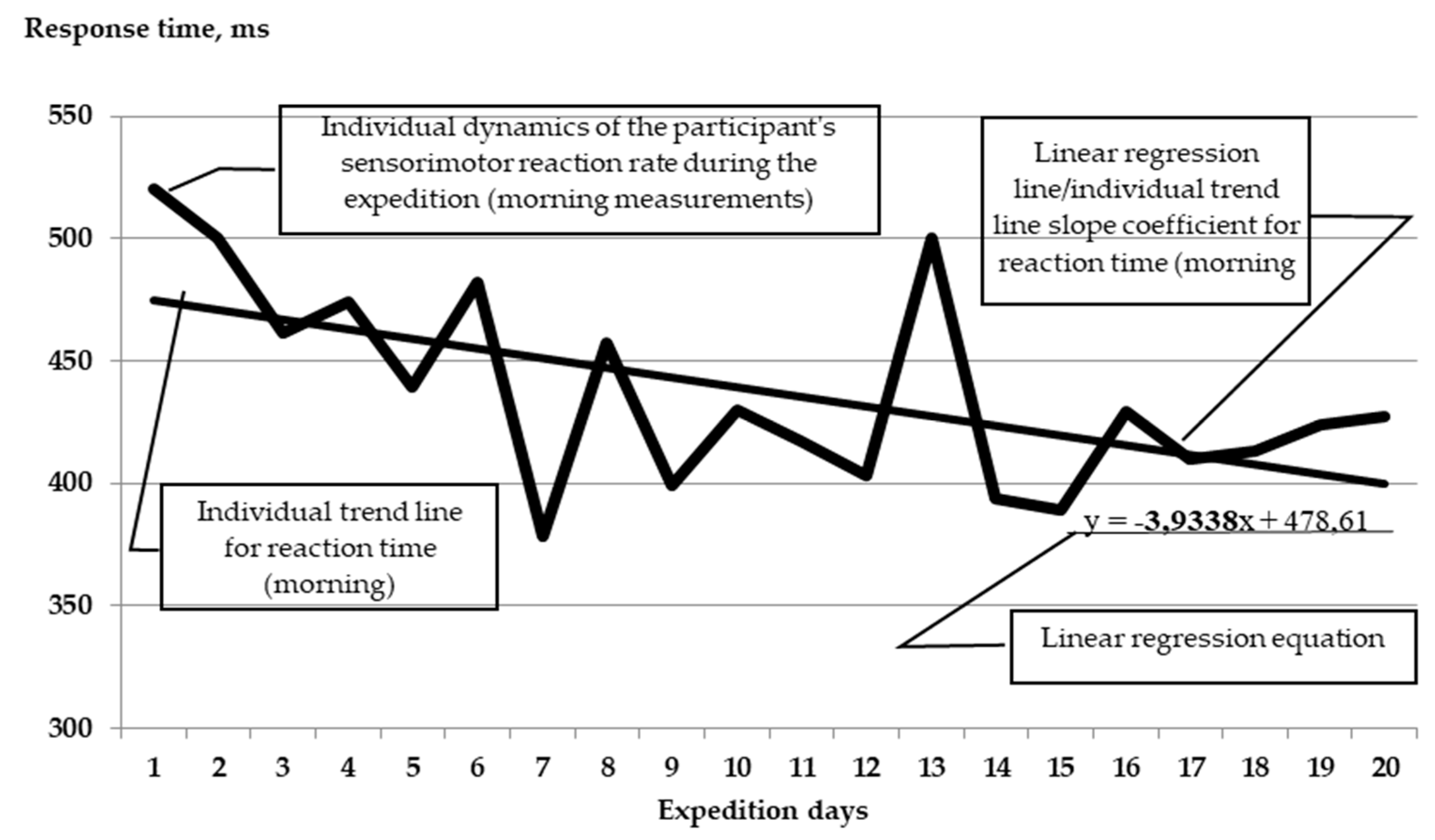
Figure 2.
Sample distribution by vitamin D content. Note: Data outliers reflect those participants who were found to have higher optimal vitamin D levels (values are 56.2 ng/mL; 54.9 ng/mL; 43.9 ng/ml).
Figure 2.
Sample distribution by vitamin D content. Note: Data outliers reflect those participants who were found to have higher optimal vitamin D levels (values are 56.2 ng/mL; 54.9 ng/mL; 43.9 ng/ml).
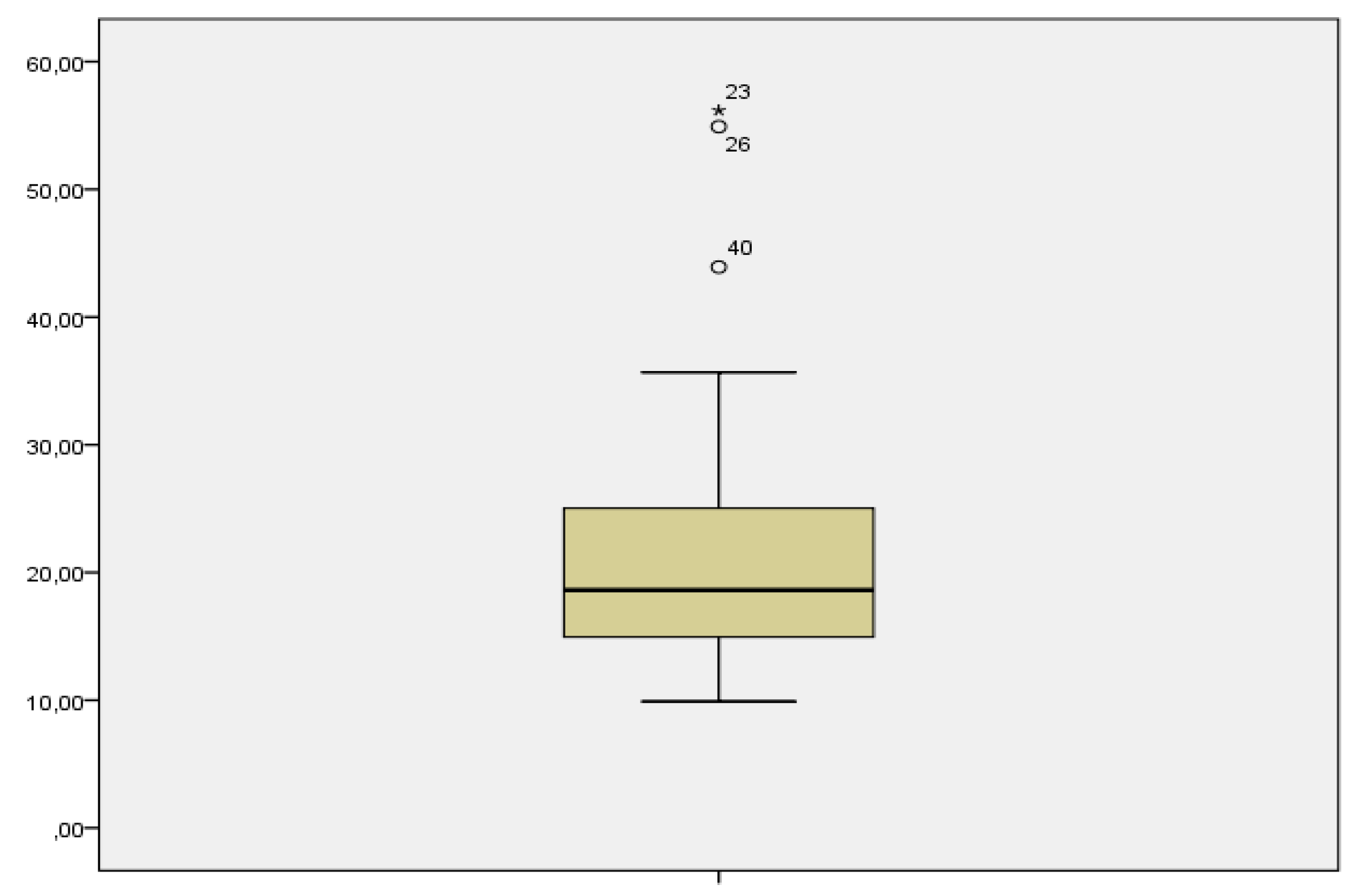
Figure 3.
Distribution of expedition members by age and gender.
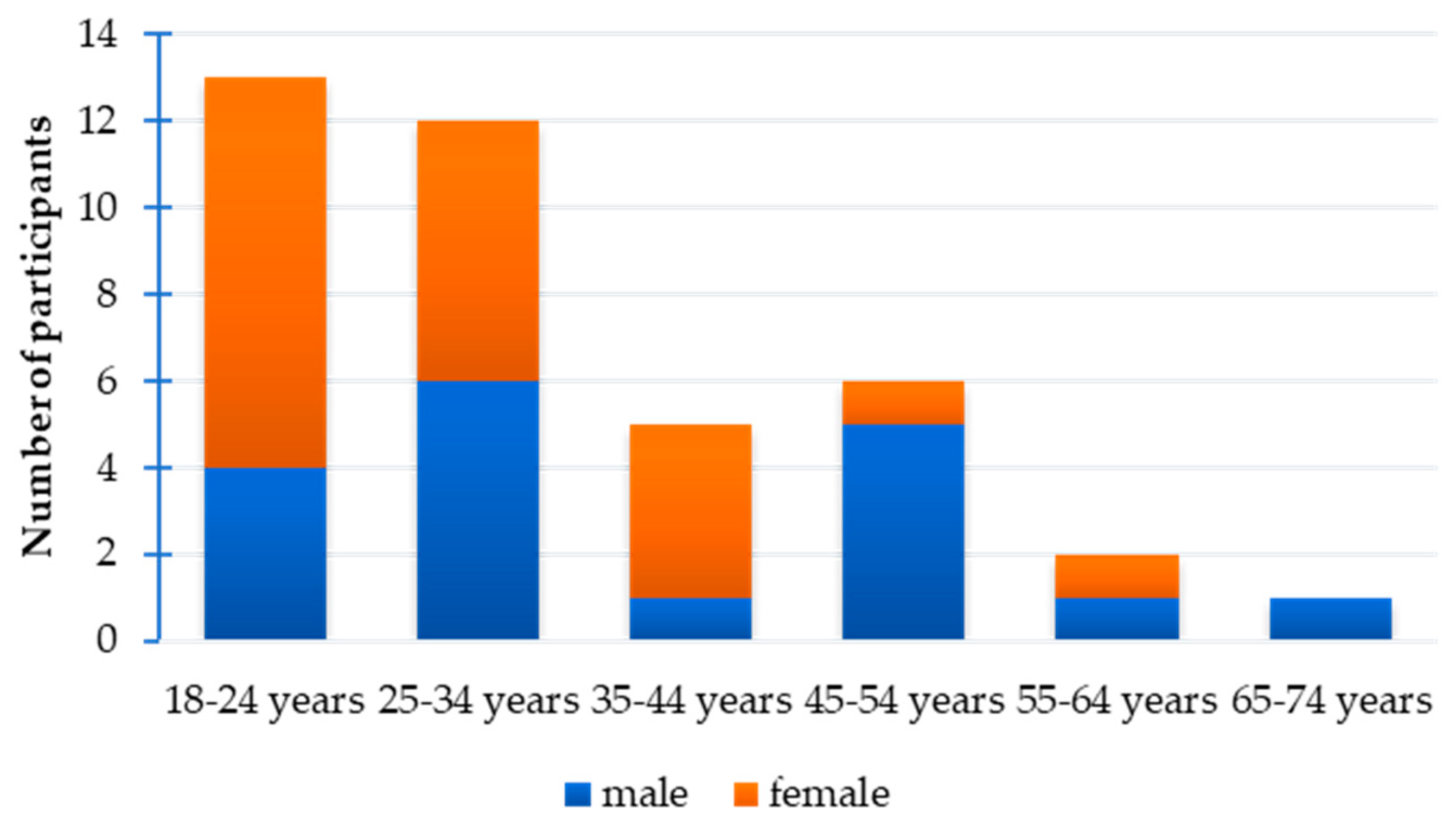
Figure 4.
Diagrams of the distribution of RMS/SDNN parameter values in the first and second groups (day 1, morning measurement).
Figure 4.
Diagrams of the distribution of RMS/SDNN parameter values in the first and second groups (day 1, morning measurement).
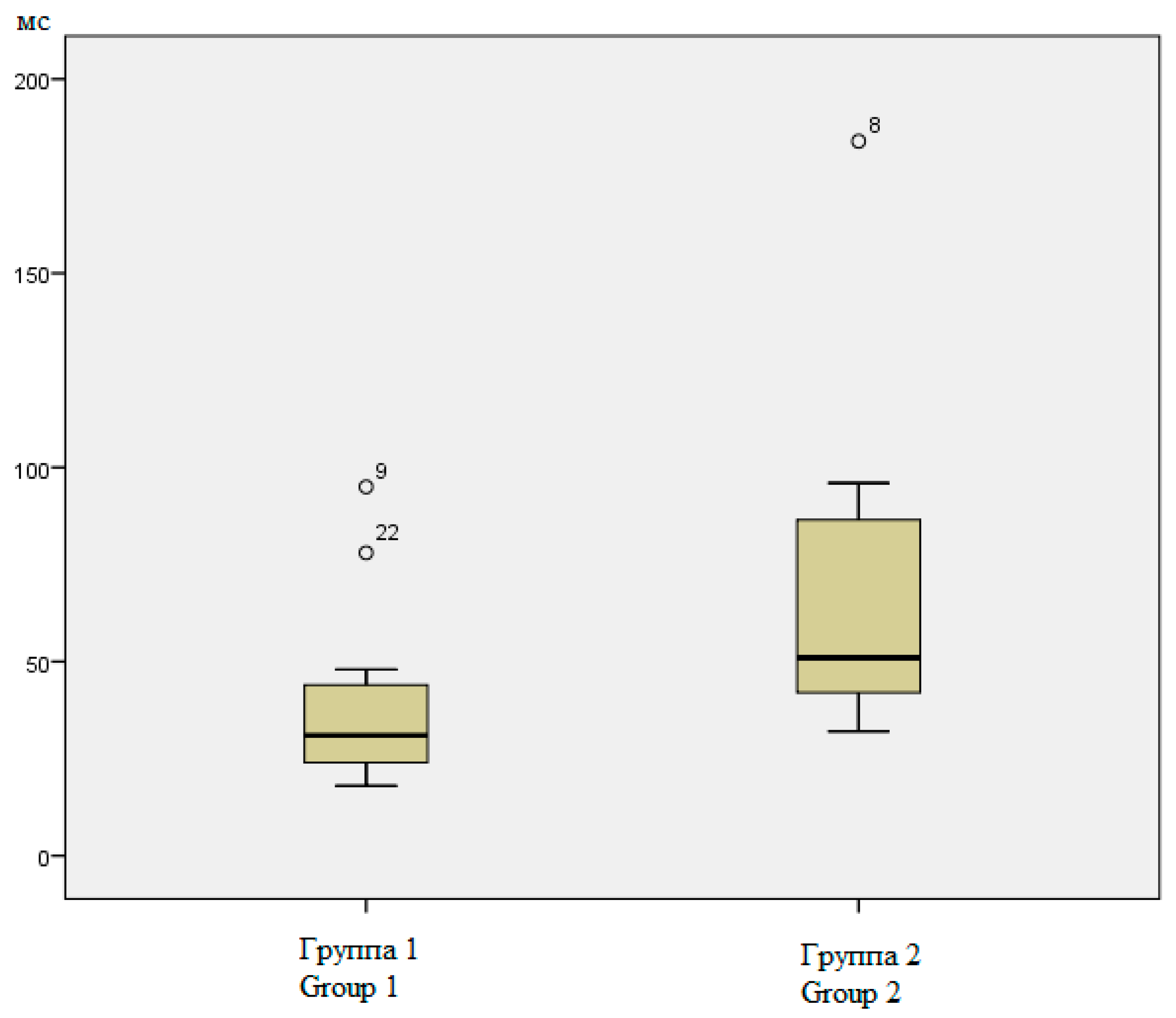
Figure 5.
Correlation pleiad of the relationship between vitamin D level in blood and the nature of the dynamics of objective and projective indicators of expedition members' functional states.
Figure 5.
Correlation pleiad of the relationship between vitamin D level in blood and the nature of the dynamics of objective and projective indicators of expedition members' functional states.
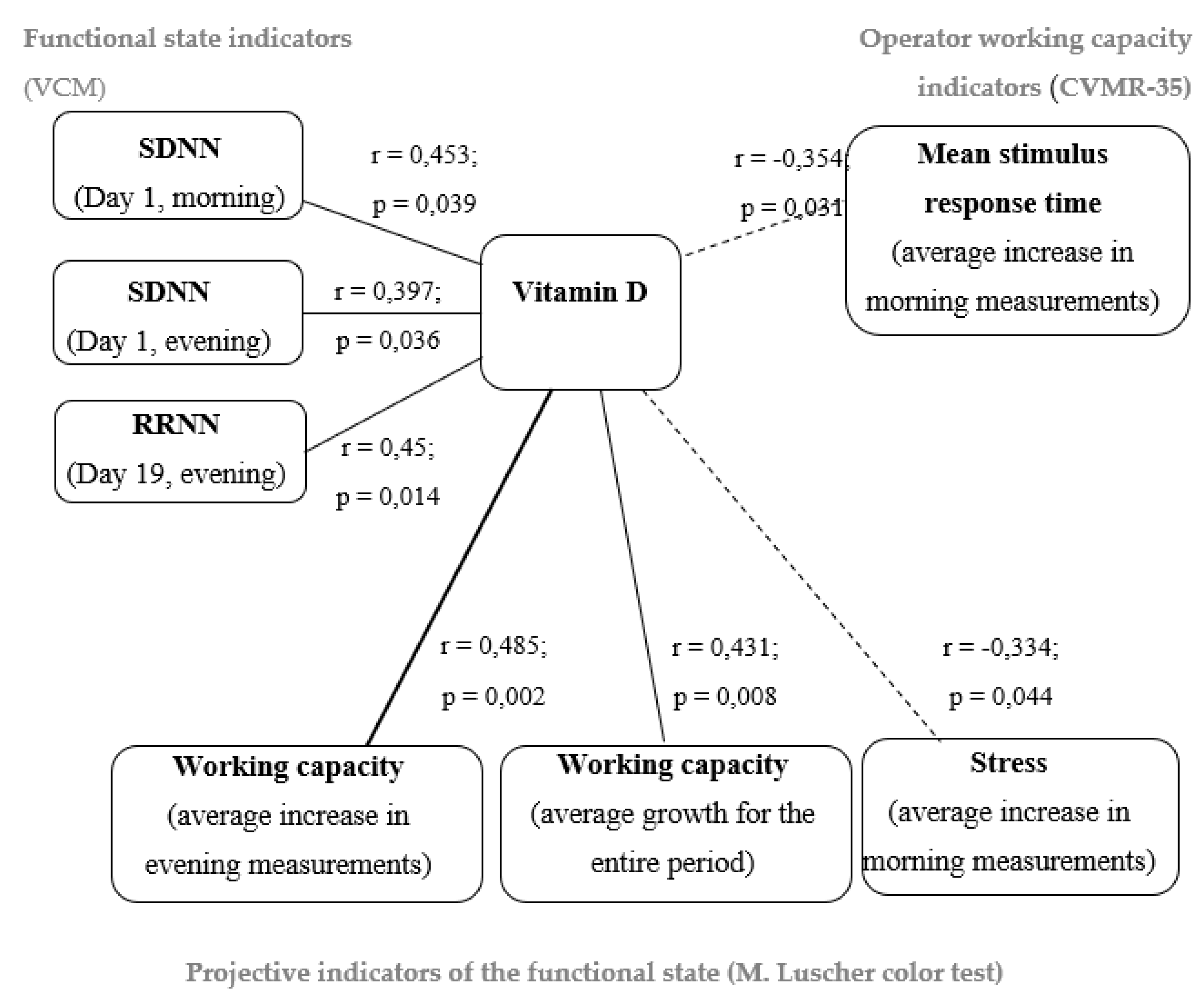

Table 1.
Positive and negative characteristics of the functional states of the expedition members.
| Method | Positive characteristics of the functional state | Negative characteristics of the functional state |
|---|---|---|
| VCM | optimal and close to optimal level of the general functional state of the body | from the permissible and critical levels of the general functional state of the organism |
| CVMR-35 | medium and high levels of operator working capacity | reduced and low levels of operator working capacity |
| M. Luscher's technique | medium and high working capacity | stressful state, unproductive neuromuscular activity (SO), reduced and low working capacity |
| WAM methodology | medium and high levels of well-being, activity and mood | reduced and low levels of well-being, activity and mood |
Table 2.
Vitamin D levels in expedition members.
| Gender | Percentage of the total number of men or women | ||
| Optimal vitamin D level | Insufficient level of vitamin D | Vitamin D deficiency | |
| Women | 20,0% | 20,0% | 60,0% |
| Men | 5,6% | 38,9% | 55,5% |
Table 3.
Results of a comparative analysis of objective indicators of the functional state ("VCM") in groups with different levels of vitamin D in the blood of the expedition members.
Table 3.
Results of a comparative analysis of objective indicators of the functional state ("VCM") in groups with different levels of vitamin D in the blood of the expedition members.
| Parameter | Group 1 (vitamin D value to 20 ng/ml) M ± SE |
Group 2 (Vitamin D values above 20 ng/ml) M ± SE |
Mann–Whitney U-test value | Significance of differences (2-tailed) p |
Norms |
| RRNN | 715,00 ± 27,607 | 812,13 ± 38,433 | 25,000 | 0,050 | 667- 1000 - Normocardia |
| (Day 1, morning freeze) | 38,77 ± 6,385 | 71,88 ± 17,649 | 18,500 | 0,015 | 40-80 мc |
Note: the table presents the values only for the parameters with significant differences.
Disclaimer/Publisher’s Note: The statements, opinions and data contained in all publications are solely those of the individual author(s) and contributor(s) and not of MDPI and/or the editor(s). MDPI and/or the editor(s) disclaim responsibility for any injury to people or property resulting from any ideas, methods, instructions or products referred to in the content. |
© 2023 by the authors. Licensee MDPI, Basel, Switzerland. This article is an open access article distributed under the terms and conditions of the Creative Commons Attribution (CC BY) license (http://creativecommons.org/licenses/by/4.0/).
Copyright: This open access article is published under a Creative Commons CC BY 4.0 license, which permit the free download, distribution, and reuse, provided that the author and preprint are cited in any reuse.


