
Submitted:
01 March 2023
Posted:
09 March 2023
You are already at the latest version
Abstract
In recent years, given the enormous competition for new products and services, many companies have begun to behave more creatively in an aim to be the best in the market. “Guerrilla marketing” refers to an advertising technique that uses unconventional and cost-effective approaches, employing a variety of strategies that reduce costs. Since the emergence of this concept in the second half of the last century, substantial research has looked into its application and usefulness. This study presents a systematic survey of the field of marketing and advertising: by analyzing the main scientific publications on guerrilla marketing through content analysis in the Web of Science, Scopus, and EBSCO databases. One hundred and sixty-four articles were analyzed in depth and divided into two separate lists: one with publications corresponding to Hutter and Hoffmann’s first classification, and another corresponding to the new variables that emerged from the in-depth study that was carried out. As a consequence, a new taxonomy is proposed for the field, based on the identification of some novel variables characterizing the different existing approaches.
Keywords:
Guerrilla marketing
; Viral marketing
; Ambient marketing
; Stealth marketing
; Street marketing
; Bibliometric analysis
Introduction
Traditional marketing strategies are becoming less and less effective for two main reasons (Hutter and Hoffmann, 2014): firstly, consumers are becoming saturated with information, exposed to some 3,000 advertising messages per day; and secondly, the tedious similarity of advertisements decreases the probability that an advertisement will bear an impact on viewers. For these reasons many authors highlight the need to develop “attention marketing”, which tries to surprise consumers in order to capture their attention (Baltes and Leibing, 2008; Hutter and Hoffmann, 2011).
Guerrilla marketing is the brainchild of marketing expert Jay C. Levinson (1984), describing unusual marketing campaigns that promise great effect with limited investment. The term guerrilla derives from the special type of warfare, in which atypical tactics are used to achieve objectives inside the enemy. Konrad Zerr (2003) was one of the first to approach the term guerrilla marketing from a scientific perspective in German-speaking countries. He defines guerrilla marketing as a global marketing mixed strategy, under which a basic market-cultivating marketing-policy attitude consciously seeks out new, unconventional, even frowned-upon ways of applying instruments off the usual routes.
According to Hutter and Hoffmann (Hutter and Hoffmann, 2011), guerrilla marketing comprises “several communication policy instruments designed to create a surprise effect for as many people as possible at comparatively low costs, in order to achieve a very high guerrilla effect (ratio of advertising benefits and advertising costs).” Gokerik et al. (2018) maintains that guerrilla marketing is surprising, ideally spectacular, rebellious and contagious, which makes it highly demanded by marketing managers of large companies. Guerrilla marketing aspires to reach the widest possible audience, be it in concerts, public parks, sporting events, festivals, beaches or shopping centers (Davis and Davis, 2021). A key element of guerrilla marketing is choosing the perfect time and place to run a campaign in order to avoid potential legal problems. Guerrilla marketing can therefore involve indoor or outdoor events, an ambush event or experiential one, hopefully getting the public to interact with a specific brand.
The general aim of this work is to appraise the situation of guerrilla marketing through a review and detailed analysis of the main output in first two decades of the 21st century, covering the most representative viewpoints of the field of marketing. To achieve this goal, this manuscript is organized into three main sections. The first focuses on describing guerrilla marketing and its main precursors since its origin in 1960. Next, we offer a survey of the literature, in turn divided into the five main subsections defined by Hutter and Hoffmann (Hutter and Hoffmann, 2011): Viral Marketing, Ambient Marketing, Stealth Marketing, Street Marketing and Ambush Marketing. These are the groups that have yielded more content throughout the twenty years analyzed. The third section presents an analysis of the main variables that stand out throughout the review. Although some are not included in the main classification of the types of guerrilla marketing, they may have considerable relevance in terms of the scientific production in recent years, and are therefore sound candidates for an updated taxonomy of the field. These variables are: surprise, emotional excitement, humor, informative content/clarity, brand awareness, creativity/credibility and word of mouth (WOM). Finally, a brief section on conclusions and limitations is given, indicating some lines for future work.
Conceptual Motivations
Historical developments
The concept of guerrilla marketing was enunciated by Jay Conrad Levinson in the 1980s (Levinson, 1984; Tam and Khuong, 2015; Dinh and Mai, 2016). To establish the framework, it is important to reflect the history of marketing from the beginning: as early as 4000 BC, the Egyptians were printing sales letters on papyrus. What we know today as guerrilla marketing is, however, a relatively new concept that stems from 20th century marketing literature (Gupta and Singh, 2017).
“Guerrilla art” is an aggressive art form that implies filling the spaces of a public area with various types of graffiti. First seen in New York and Los Angeles, the street art impulse is now a worldwide phenomenon spurred heavily by hip-hop and punk subcultures in the 1980s (Bigat, 2012). In the late 1980s, advertising agencies started to hire guerrilla artists to develop products and advertising strategies. The demand for these creative and inspired artists grew, as they knew how to capture the attention of the pedestrian public and how to connect emotionally with customers. In short, street art played an important role in the rise of guerrilla marketing.
Internet technology in the mid-1990s provided an extra opportunity for guerrilla marketing to gain a competitive foothold. The Internet took guerrilla marketing to new, unexpected heights and facilitated two-way communication. When social networks appeared in the late 1990s as a by-product of the Internet revolution (especially since the launch of SixDegrees.com as the first social network), emerging sites like Facebook or YouTube were perceived as new venues for guerrilla research, utilizing artistic talent as a marketing tool. Meanwhile, the early 2000s saw a very important shift in terms of “who was using guerrilla marketing”; such strategies were no longer just a resort for small companies having scarce resources, and large firms with huge budgets and market shares began to rely on its unprecedented effectiveness (Bigat, 2012; Gupta and Singh, 2017).
Guerrilla Marketing: Concept
The term “guerrilla marketing” is derived from a combat-related base term, “guerrilla” —a group of unconventional military tactics that rely on surprise attacks. Guerrilla marketing also resembles marketing warfare (Ries and Trout, 1986). According to Patalas (2006) and Baltes and Leibing (2008), guerrilla marketing comprises unusual approaches to gain influence with a limited budget as compared to “traditional” marketing campaigns. This innovative method (Caudron, 2001; Hallisy, 2006; Kuttelwascher, 2006) holds opportunities for information services (Tompson, 2003; Bieselin, 2005). Levinson et al. (2010) underline the prospect of achieving usual objectives, e.g., satisfaction or profit, with unusual techniques, such as investing greater energy and creativity instead of just money. Hence, the concept was soon adopted by small businesses working with small budgets (Langer, 2006); yet over the years, good yields made it popular among large global brands with high profits. Among others, Nike, Audi and IKEA have applied this concept in every phase of their marketing strategies (Tam and Khuong, 2015). Guerrilla marketing applies surprising product placements and memorable events, plus eye-catching street graphics, to effectively grab customers’ attention (Baltes and Leibing, 2008; Wanner, 2011).
The attitude of customers towards advertisements in traditional channels —billboards, newspapers — has suffered from excessive exposure (Shenk, 1998; Marsden, 2006). The growing fatigue towards marketing communication, leading many customers to routinely avoid it (e.g., skipping YouTube ads), has forced companies to adopt new methods and strategies (Johansson, 2004). Creative and innovative habits are needed to reach potential customers, engage with them and connect them to their messages, for example, through advertising stunts and innovative product development (Martin and Smith, 2008). Guerrilla marketing currently stands as a novel means of cluster breaking and message transmission (Gökerik et al., 2018).
Internet and social media make guerrilla marketing initiatives more noticeable. Although effective campaigns can go viral and reach hundreds of millions of viewers through these new media, there is again an element of risk for brands, whose campaign message may be misinterpreted by customers. When a campaign is not well designed or directed at the wrong viewers, it can prove detrimental for the brand image (Shang et al., 2006).
Goals of Guerrilla Marketing:
According to Ay and Unal (2002), the main objective of guerrilla marketing is to increase communication through popular, empirical, acrobatic, drawing and ambient marketing, giving rise to positive feelings among customers that will have an impact on sales. Unlike word-of-mouth marketing or viral marketing, the potential of street marketing is not yet fully defined, and its benefits and advantages have hardly been quantified (Saucet and Cova, 2015). Some authors purport that it produces real impacts at a lower cost than those associated with conventional marketing campaigns (Ay et al., 2010).
Guerrilla art aims to create awareness of individuals on broad issues without extra financial investment, while guerilla marketing entails advertising and promoting individual products or services with the intention to increase sales and business income. Guerrilla marketing efforts aspire to a common good through creativity displayed in public arenas, prepared almost as a hobby, without generating expenses to anyone. But when such efforts are used to generate guerrilla advertisement by companies, they are paid accordingly. In sum, while guerrilla marketing aims at profit, guerrilla art is goal-inspired (Yüksel, 2010; Gupta and Singh, 2017). Many guerrilla artists who once strove to change society have since been hired by companies and are well paid as key parts of the assembly line of production and profit (Heper, 2008; Wernick and Akınhay, 1996).
The Internet and social media have facilitated two-way communication and marketing workshops to maximize attention. Customer response to guerrilla marketing activities can thereby be appraised and improved. Social media platforms such as YouTube enable companies to upload innovative and creative promotional videos evaluated in terms of the ‘likes, comments, shares and subscribers’ (Gupta and Singh, 2017), whether for small and medium-sized companies, or big brands such as Coca-Cola and McDonalds. Because the aim is for guerrilla marketing to generate a lasting impression on the individuals exposed to it, eventually a brand image takes shape, ultimately leading to better and faster diffusion through word of mouth. This makes it likewise very useful for non-profit initiatives, e.g., to spread awareness about issues such as AIDS, tobacco use, or social injustice (Gupta and Singh, 2017). As long as creativity and innovation continue to attract attention, guerrilla marketing will serve to make businesses, or awareness, grow.
Representative examples
Ries and Trout (1986) highlight Red Bull as one example of guerrilla marketing. This Austrian soft drink brand, produced near Salzburg, had an innovative advertisement campaign and was quickly recognized as a source of energy and refreshment, through the sponsorship of major sporting events. It now prevails in this sector on an international level, even organizing sporting events such as air races or extreme windsurfing. Also noteworthy is the ongoing battle for market leadership between Pepsi and Coca Cola, often involving guerrilla marketing to generate consumer impact. Multiple examples can be found in the auto industry, cigarette brands, or cultural events.
The German company Henkel, which produces SIL stain remover, took advantage of the 2006 the World Cup, held in Germany. Henkel supported the Brazilian national football team in a very creative way: Brazilian samba dancers wearing Bra-SIL clothing and images walked around Berlin and Munich on the day the respective football teams played their matches. Henkel assumed that a team drawing public attention to Germany’s most famous dye would be happy to get ample promotion in return (Henkel, 2006).
As pointed out by Dholakia and Dholakia (2004), the fact that mobile phones have grown predominant for browsing or business transactions has helped guerrilla marketing to get closer to customers. IDEA Cellular Ltd., a leading mobile phone operator in India, teamed up with two major coffee chains (Barista and Café Coffee Day) to raise awareness of the importance of using less paper in order to save trees. They offered menus and promotion details on shoppers’ mobile phone screens under the label of “green guerrilla marketing” (Gupta and Singh, 2017).
Some original businesses, seeing the allure of guerilla marketing, adopted it to improve brand building (Gupta and Singh, 2017). The Nespresso advertisement on billboards is an example of traditional marketing, while the Nespresso advertisement at a bus stop applies guerrilla marketing communication. To evaluate the impact of each approach, the Nespresso ads were used simultaneously, as an A/B test. The result was that the guerrilla marketing ad generated a higher impact than the billboard ad (Spahic and Parilti, 2019).
Methodology
Data compilation began with a search for articles containing (in the title, abstract, or authors’ keywords) the term “guerrilla marketing”, as we observed in the main publications that it is the most widely used term for this strategy, and as recommended by Hutter and Hoffmann (2011). The search was conducted in the Web of Science (WOS), Scopus and EBSCO databases (Paul and Rialp-Criado, 2020). To ensure the quality of the survey, we restricted our analysis to academic journals that had a peer-review process (Podsakoff et al., 2005) and were written in English.
To graphically represent the evolution of the concept of guerrilla marketing and develop an up-to-date situation map, we set as the time limit since the year 2000. This allowed us to follow the scientific production of guerrilla marketing in the 21st century. However, some articles from before 2000 were consulted to help contextualize the characteristics of the types of guerrilla marketing analyzed. As for the search criteria, the date of publication was limited to January 1, 2000, giving 263 articles (134 from WOS, 45 from SCOPUS, and 84 from EBSCO) that were reviewed by an international and specialized team of five experts, following the recommendations of Graneheim and Lundman (2004).
Among all the retrieved documents we excluded book chapters, book reviews, conference proceedings, editorial notes, and doctoral dissertations (López-Duarte et al., 2016; Vlacic et al. 2021). The final list thus includes 164 articles published in academic journals between 2000 and 2021. A deeper analysis of their content led us to conclude that 80 articles focus on the 5 groups resulting from the first field segmentation developed by Hutter & Hoffmann (2011), whereas 86 articles deal with new topics not originally characterized. Analysis of the latter papers allowed us to derive new variables of interest that characterize recent developments in the field. The attention of researchers in this field is on the rise, as evidenced by a remarkable increase in academic output (see Figure 1 and Figure 2), which can be interpreted as interest in the development of this subject as well as in its foundations (Tranfield et al., 2003; Patriotta, 2020).

Table 1.
Assignments of the first 80 papers to the guerrilla marketing categories by Hutter and Hofmann (2011).
Table 1.
Assignments of the first 80 papers to the guerrilla marketing categories by Hutter and Hofmann (2011).
| Types of Marketing Guerilla | Authors/Articles | Total |
|---|---|---|
| Viral Marketing | Hoyer and Brown (1990); Domingos (2005); Lindgreen and Vanhamme, (2005); Kraus et al., (2010); Hutter and Hoffmann (2011); Sajoy, (2013); Fong and Yazdanifard (2014); Kadyan and Aswal (2014); Sharma and Sharma (2015); Katke (2016); Gupta and Singh (2017); Ahmed et al. (2020); Khosravi and Ranjbar (2020); Soommro et al. (2021); Farooqui, (2021). | 15 |
| Ambient Marketing | Holt (2002); Hutter and Hoffmann (2011); Hutter and Hoffmann (2014); Sajoy, (2013); Sharma and Sharma (2015); Farooqui, R. (2021); Shelton and Warner (2016); Semenescu and Martinsson, (2012); Turk et al. (2016); | 9 |
| Stealth Marketing | Kaikati and Kaikati (2004); Rotfeld (2008); Swanepoel et al. (2009); Roy and Chattopadhyay (2010); Sharma and Sharma (2015); Walia and Singla (2017); Farooqui, R. (2021). | 7 |
| Street Marketing | Levinson (1984); Donthu et al. (1993); Bhargava and Donthu (1999); Shankar and Horton (1999); Donthu et al. (2003); Moor (2003); Veloutsou and O’Donnell (2005); Taylor et al. (2006); Krautsack (2007); Levinson (2007); Gambetti (2010); Hutter and Hoffmann (2011); Wilson and Till (2011); Roux et al. (2013); Grant (2014); Saucet and Cova (2015); Dinh and Mai (2015); Iqbal and Lohdi (2015); Rauwers and van Noort, (2016); Ahmed et al. (2020); Roux and Saucet (2020); Farooqui, R. (2021). | 22 |
| Ambush Marketing | Sandler and Shani (1989,1993); IOC (1993); Meenaghan (1994); Payne (1998); Meenaghan (1998); Shani and Sandler (1998); Lyberger and McCarthy (2001); Crow and Hoek (2003); Crompton (2004); Hartland and Skinner (2005); Séguin et al. (2005); Bhattacharjee and Rao (2006); McKelvey and Grady (2008); Séguin and O’Reilly (2008); Ellis et al. (2011); Gombeski et al. (2011); Chadwick and Burton’s (2011); Ujwala (2012); Hartland and Williams-Burnett (2012); Sajoy, (2013); Dickson et al., 2015); Sharma and Sharma (2015); Nufer (2016); Khosravi and Ranjbar (2020); Soomro et al. (2021); Farooqui, R. (2021). | 27 |
Table 2 shows the distribution of the articles according to the different variables of interest extracted from the articles analyzed, which could constitute new categories or at least qualify the previous categories. A total of 84 articles were considered, although some pertain to more than one category simultaneously given the characteristics of the research carried out.
We used the VOS Viewer tool developed by Waltman and Van Eck (2012) at Leiden University (https://www.vosviewer.com/) to analyze keywords related to guerrilla marketing from the data contained in the database (See Figure 3). VOS Viewer allows users to design scientific maps based on network data to uncover interesting patterns and gain insights into the analyzed discipline. Our VOS Viewer map served to identify the most important keywords in guerrilla marketing: buzz marketing, ambient marketing, ambush marketing, social media, surprise, media, strategy, brand, attitude, innovative marketing communication, etc.
The process developed to attain the map of the keywords related to guerrilla marketing (Cobo et al., 2012) is as follows:
- Data retrieval: documents were exported from the Web of Science
- Prepressing: data reduction and keyword grouping.
- Network extraction: co-occurrence of keywords.
- Normalization: equivalence index and association strength.
- Mapping: clustering
- Analysis and Visualization: keyword projection.
- Interpretation: Discussion and interpretation of the generated data.
Co-word analysis is an influential method for discovering, describing, and visualizing the relations among terms, words, and topics in diverse scientific fields (Whittaker, 1989; Callon et al., 1991) Authors Coulter et al. (1998) point out that this method declines the space of keywords to an established network of diagrams that professionally display the strongest relations between the words.
We used the co-occurrence matrix in the VOS viewer software to carry out co-word analysis (Cobo et al., 2011). Keywords co-occurrence can lead to a visualization of interconnected or common concepts/words. We obtained 470 items, divided into 46 clusters, and links to 2307, as well as a total link strength of 295 from the 134 documents exported from the WOS. Moreover, once the map was built, VOSViewer permits its examination over four views such as Label view, Density view, Cluster density view, Scatter view.
It is more difficult to pin down the origins of “viral marketing”. In 1996, an article entitled The Virus of Marketing was published by Jeffrey Rayport, who drew an analogy between the behavior of a virus (biological or computer virus) and a new approach to marketing based on six rules:
- Stealth is the essence of market entry;
- What’s up-front is free: payment comes later;
- Let the behaviors of the target community carry the message;
- Look like a host, not a virus;
- Exploit the strength of weak ties;
- Invest to reach the tipping point.
Kaplan and Haenlin (2011) report on a lack of consensus regarding the definition and scope of viral marketing. Other authors refer to it as “word-of-mouse” (Goldenberg, Libai, & Muller, 2001), buzz marketing (Thomas, 2004), stealth marketing (Kaikati & Kaikati, 2004), and word-of-mouth marketing (Kozinets et al., 2010). Actually, as we shall see later on, in the framework of variables of interest, these concepts differ substantially.
In the broader context of guerrilla marketing, viral marketing attempts to produce a conversation about a specific brand or product (Soomro et al., 2021). Kadyan and Aswal (2014) hold that it involves numerous marketing activities and campaigns that elicit an exceptional response from customers, so amazing that it goes viral quickly, like a wildfire. Viral marketing is all about attracting a vast amount or array of viewers; it “digs” a place in the customer’s consciousness by making a campaign that fascinates social network participants (Domingos, 2005). As Ahmed et al. (2020) confirm, the advent of interactive digital media —social networks, mobile marketing, email marketing and other types of interactive digital media channels— has made it easy to scatter marketing messages to widespread audiences.
Hoyer and Brown (1990), Hutter and Hoffmann (2011), and Gupta and Singh (2017) focus more on a type of viral marketing known as buzz marketing, which generates diffusion influence. The targeted recipients are influenced by a compelling message (or buzz agents) that bears an impact on the emotions of customers, who then share their opinions with others (Fattal, 2018). Social media marketing would be a type of viral or buzz marketing, making popular messages, posts, images or videos go viral and attract the attention of the general public (Ahmed et al., 2020).
Ambient Marketing
In 1996, the British agency Concord Advertising, whose clients were pushing hard for new solutions for communication campaigns, established the (then innovative) concept of “ambient” for outdoor advertising (Gambetti, 2010; Sharma and Sharma, 2015; Shelton et al., 2016). Hutter and Hoffmann (2011) describe ambient marketing as a tool meant to surprise people by putting advertisements in unexpected places, following the fundamental notions of guerrilla combat strategies.
Both street and ambient marketing seek to generate experiences in the urban environment, an interactive link where brands build their values based on direct relationship values, i.e., dialogue and personalization of the message (Shelton et al., 2016).
Initially, ambient marketing was a low-cost method yet cost-effective strategy entailing large doses of creativity (Semenescu and Martinsson, 2012). Successful ambient marketing depends on key, attractive geographical locations (Turk et al., 2016) and can be seen as the guerrilla form of traditional outdoor advertising, for instance along main roadways (Hutter and Hoffmann, 2011). Nowadays, surprises, creativity, appeal and imagination are the most important ingredients of ambient advertising (Holt, 2002).
Stealth Marketing
Roy and Chattopadhyay (2010) have focused on stealth marketing as an alternative strategy under guerilla marketing methods, in which businessmen contract celebrities for their advertisements —hence, also known celebrity marketing (Walia and Singla, 2017). Kaikati and Kaikati (2004) refer to stealth marketing as masked/undercover marketing, and assign it to a subcategory of covert marketing. In turn, Skiba et al. (2019) underline that there is no agreement on the definition of stealth/covert marketing.
Kaikati and Kaikati (2004) and Rotfeld (2008) moreover propose that a stealth marketing campaign can cut through the clutter of traditional advertising. One example of stealth marketing would be covert product display in famous television movies or shows in which artists visibly consume a brand-name product and thereby subconsciously peak awareness for that brand (Soomro et al., 2021).
Street Marketing
According to Saucet and Cova (2015), the origin of street guerrilla marketing can be traced to flyers or messages about rare goods. Modern street guerrilla marketers may design surprising street events that exploit places or performances to generate exclusive entertainment (Grant, 2014) or rely on new technologies, for example mobile phone applications, to generate digital projections (Koeck and Warnaby, 2014). Street guerrilla marketing uses features, objects and brand ambassadors in the urban environment in an advanced way to incite client engagement (Roux and Saucet, 2020). The classification and estimation of modern street guerrilla marketing are not precisely reflected in the advertising literature yet.
Recently, however, Moor (2003), Krautsack (2007), Levinson (2007), Dinh and Mai (2015), and Ahmed et al. (2020) have depicted street graphics as a contemporary form of graffiti. Painting attractive or amusing messages on walls is known to seize the attention of customers. Levinson (1984) goes as far back as 4000 B.C. to link street graphic approaches to Egyptian traders, who marketed their products with colorful and attractive murals. Today, 3D images or spray painting stand as fairly innovative trends to be seen on bridges, transport modes, skyscrapers, or other prominent urban elements. In 1968, street graphics in France played an important role during student protests, as they did in Iran in 1970, “verbalizing” complaints about repressive leaders (Iqbal and Lohdi, 2015).
In Pakistan, Coca-Cola was the first to introduce street graphics: through wall paintings and painted coolers in public places. The courier company TCS managed to paint a huge water tank with its theme color and brand name in front of Karachi’s Quaid-e-Azam airport (Ahmed et al., 2017; Edge, 2018; Qureshi et al., 2018). As affirmed by Iqbal and Lohdi (2015), the trend of using street graphics has become very popular, and big brands effectively use this sort of guerrilla advertising at pedestrian crossings or overpasses, choosing clever themes to make themselves known to potential consumers.
Authors Roux et al. (2013) hold that street guerilla marketing is essentially a modern out of home (OOH) medium. Promoters, objects, sponsors, in a town environment, seduce in an attractive, creative and innovative way, securing client engagement through novelty, surprise and bemusement (Gambetti, 2010). Street marketing and OOH advertising both confirm outdoor locations and movement as elements of communication on the street (Saucet and Cova, 2015). It is therefore useful to analyze the features of OOH advertising to gain a better understanding of street guerrilla marketing. In addition, there are similarities between contemporary street guerrilla marketing and conventional OOH advertising platforms, particularly in terms of creative flexibility, visual influence, mobile audience exposure, geographic scope of target markets, and the role of support media (rather than lead media) in campaigns (Donthu et al., 1993; Bhargava and Donthu, 1999; Donthu et al., 2003; Veloutsou and O’Donnell 2005; Taylor et al., 2006; Wilson and Till, 2011). Still, modern street guerrilla marketing can be distinguished from traditional OOH advertising, with its emphasis on affordability and diffusion through word-of-mouth (WOM) (Rauwers and van Noort, 2016).
Furthermore, Hutter and Hoffman (2011) state that Street guerrilla marketing is an interactive communication method that classically begins with exposure on the streets from where customers feast the advertising message to peers, though OOH advertising hardly outcomes in the diffusion of the message. Additionally, examining the possible tools, communication influence and results are important to understanding the assessment of street guerrilla marketing operations. In understanding these, it is likely to discover possible evaluation procedures that can be connected to street guerrilla marketing experiences (Shankar and Horton, 1999; Gambetti, 2010; Hutter and Hoffmann, 2011).
Ambush Marketing
According to Meenaghan (1994), the concept of Ambush Marketing, first appearing in the early 1990s, surrounds a widespread practice in the field of sponsorship, namely, associating a brand with an event or property without having paid for the right to be a sponsor. The company thus saves significant costs and tries to passing them on to the official sponsor. Ambush marketing is most often applied in sporting events (Dickinson et al., 2015) and has been a topic of study in recent years (Nufer, 2016; Soomro et al., 2021). Authors Chadwick and Burton (2011) describe ambush marketing as an organization’s attempts to exploit attention, friendliness, awareness, etc., created through some connotation with a property or event, despite the fact that the organization has no direct or official connection to that property or event. Payne (1998) addresses the ethical matters underlying ambush marketing.
Definitions may interfere with understanding and measuring the impact of customer attitudes. While Crow and Hoek (2003) confirm that ambush marketing can be a legitimate competitive response, for Ujwala (2012) ambush marketing merely allows promotion without the payment of sponsorship and other costs. It may, however, take on dissimilar forms (Soomro et al., 2021). According to Chadwick and Burton (2011), ambush marketing can be direct, indirect or accidental. And it is most likely to appear in one form or another at a major event of any company or mega-sport. Today, “ambushes” tend to be daring and border on il/legality, although there are ways to stay within the law. Governments, sponsors, and event owners spend large resources on ambush marketing prevention (Hartland and Skinner, 2005; Bhattacharjee and Rao, 2006; McKelvey and Grady, 2008; Ellis et al., 2011; Gombeski et al., 2011; Hartland and Williams-Burnett, 2012; Dickson et al., 2015).
Ambush marketing within the sports industry has developed a strategy that diverts from the purchase of official sponsorship rights (Séguin et al., 2005). Sport “holders” are rightly concerned that ambush marketing reduces the value of their belongings, and can induce disorder at sporting events, harming the industry on the whole (IOC, 1993; Séguin and O’Reilly, 2008). To this regard, Meenaghan (1998) states that major events offer a diversity of advertising opportunities, providing a perfect venue for ambush marketing. Crompton (2004) classifies seven likely ambush opportunities comprising: accidental ambush, sponsorship by entities other than the organizing body, thematic advertising and indirect illusion, buying advertising time in and around broadcasts of the event, creating a counter-attraction, sponsoring the broadcast of an event, buying advertising space in venues close to the event. In the context of the Olympic Games, it is not uncommon for all these ambush methods to be used together to generate the desired impact.
Previous studies on ambush marketing, such as those by Sandler and Shani (1989, 1993) or Shani and Sandler (1998), report that companies active in ambush marketing tend to perform better than companies who claim they do not engage in it. More recent studies, such as that of Crompton (2004), having analyzed the effectiveness of recall studies, suggest that a brand is more likely to be remembered with ambush marketing than with basic sponsorship. Further studies, including those of Lyberger and McCarthy (2001) and Séguin et al. (2005), attest to a high level of user misunderstanding regarding sponsorship. Interestingly, Shani and Sandler (1998) claim that the customer does not care about ambush marketing and that Olympic planners are largely responsible for the lack of customer awareness and attention towards sponsors.
Variables of interest in Guerrilla Marketing
Surprise effect
The surprise effect in guerrilla marketing communication is the most significant element. Attracting customers’ attention and surprise through exciting advertising is the goal of the company’s funneled work and effort (Hutter and Hoffmann, 2011). Along the lines of Derbaix and Pham (1991), surprise can be the antidote to an overexposure to information and advertising. Luxton and Drummond (2000) specify that customers are surprised when a) the location of advertising is unknown or unexpected (location); b) it involves unusual systems (creativity); and/or c) it is the first and only advertising action developed (temporal).
Surprise would thus be a contextual consequence of the deviation of awareness and expectation. Considering the theory of schema congruence, the differences between schemas and stimuli suggest that in conjunction with surprise, rare stimuli are managed more intensely than common ones. When advertising is understood and perceived in an unexpected manner, a favorable attitude towards the brand will be formed, resulting in the development of a purchase intention (Nagar, 2015; Nunthiphatprueksa, 2017).
Some may surprise customers by sending shocking messages (Ay et al. 2010), humor, or counter-logic (Katke, 2016). Other studies —Dinh and Mai’s (2015), Yildiz’s (2017) — argue that surprise has an effect on message credibility, as well as having positive effects on purchase intent (Yildiz, 2017). The unexpectedness produced by guerrilla ads may evoke an “aha” or “wow” (Nufer, 2013). This type of reaction to ambient marketing lies at the core of the guerrilla marketing philosophy (Druing and Fahrenholz, 2008). According to Halkias and Kokkinaki (2014), surprise elicits more elaborate information processing when there is some inconsistency between an advertisement and the related expectations. Nagar (2015) furthermore states that when a message is read inversely from what is expected, more positive attitudes towards the brand can be harvested, resulting in greater buying intentions. The theoretical background of the essence of surprise has been scarcely addressed to date (Itti and Baldi, 2008), though humor is surely one important ingredient (Spahic and Parilti, 2019).
Emotional Arousal
Emotional arousal is employed to ultimately direct favorable customer behavior (Isen and Shalker, 1982). It comes in the immediate aftermath of viewers’ exposure to advertising (Muehling and Laczniak, 1988). When embodied in a message, it may prove more influential than the content itself, creating an optimistic attitude toward a given brand, hence a favorable effect on purchase intention (Heath, 2007; Niazi et al., 2012; Tam and Khuong 2015).
Mandler (1995) holds that innovation entails emotional consequences that make it possible to estimate whether an advertisement will be rejected or accepted by customers. Two dimensions, arousal and valence, are highlighted by Feldman (1995), the former referring to concrete norms, the latter to an almost bodily arousal. Indeed, research has shown that optimistic moods have a very positive relationship with satisfactory evaluations of stimuli (Isen and Shalker, 1982). Yet studies tend to overlook the exact feelings (valence-focus) and appraise the other measure (arousal-focus). One exception would be the study by Sorensen (2008), using the PAD model (the arousal dimension) of Mehrabien and Russell (1974). Accompanied by the other two emotional variables explained above (mood and surprise), the emotion arousal variable is proposed to capture a general picture of customers’ moods and their attitudes towards guerrilla ads (Dinh and Mai, 2015).
Humor
This is upheld by Nunthiphatprueksa (2017) as a most noteworthy variable of study. Experts believe that the effect of humor enhances buyer attention, proving to be a powerful tool in advertising planning (Sternthal and Craig, 1973). Notwithstanding, humor in advertising must be used with care. It should appear in initial stages of advertising, being used less for established products (Chan, 2011). Repetition of a humorous advertisement can produce adverse effects. One of the key elements of humor is creativity (West et al., 2008); together they lead to promising attitudes towards a brand and increase purchase intention (Eisend, 2011; Eisend et al., 2014).
Furthermore, companies and marketers must capture the attention of their customers before requiring product knowledge on their part (Pieters et al., 2002). In this sense, Sternthal and Craig (1973) underline the relevance of humor as a set of stimulus properties that can be controlled by means of humor devices. According to Eisend et al. (2014), humorous ads inspire a more optimistic attitude that foments purchase intention. Clearly, humor —as an element of creativity— bears an influence on consumer behavior (Dinh and Mai, 2015).
Information Content/ Clarity
Wiryawan and Wardana (2020) argue that clarity of message is the main drive behind guerrilla marketing. According to (Dinh and Mai, 2015) the concept of clarity is related to the degree to which viewers understand the message put forth in advertisements. They may be fun, novel or relevant, but if a message lacks clarity, the advertisement may very well prove counterproductive.
The research by Dinh et al. (2015) explores this concept of clarity; when advertisements are novel, because creativity is well founded, it may be that people do not understand the messages delivered. A study conducted by Tam and Khuong (2015) about Message Clarity in a guerrilla marketing context signaled a positive and significant effect on purchase intensity among the Y generation (born between 1980 and 2000). Another study just a year later (Tam and Khuong, 2016) concludes that message clarity does not affect diffusion or have as much relevance in the case of Generation Z (those born after 2001). This gap deserves further analysis in the future.
Measuring message clarity must take into account an individual’s ability to understand, and as pointed out by Hafer et al. (1996), interpreting a composite message calls for some cognitive effort. In short, for customers to envisage and desire a brand or product through advertisements, they must understand the message.
Guerrilla Mobile
For some time, guerrilla marketers have tested means of effective communication involving technology. In fact, guerrilla marketing encouraged participatory customer connection in the context of viral and guerrilla mobile marketing (Katke, 2016). For instance, proximity marketing using Bluetooth technology can instantly engage users in a campaign. Such campaigns nowadays can be more effective and user-friendly than billboards or other large-scale advertising tools, while at the same time producing the element of surprise because of an unfamiliar communication.
Short message services (SMS) and multimedia messaging services (MMS) can be used for sending discounts and coupons by companies, driving Internet marketing as a tool to increase customer confidence by offering something for free (Ujwala, 2012). In addition, the use of cell phones allows the marketer a wide range of possibilities for customer relationship management and marketing campaigns. SMS or MMS can be sent, for example, to the cell phone at the moment a website visitor fills in interaction information on a service provider’s web page. Companies get valuable information about the customer that can be converted into a message offering some discount on the service once requested in a certain store. The solution is simple, cheap and technically not very demanding. Still, this type of campaign does not necessarily meet all the shared standards of guerrilla marketing campaigns, as the element of surprise may be missing (Katke 2016).
One of the greatest worldwide markets is that of mobile phones, relying on wireless internet connection or Wi-Fi (Smith et al., 2011). They permit vendors or businesses to adopt another network of advertising (Grewal et al., 2016). Knowing the identity and inclinations of phone owners, companies can choose an optimal time to reach out through advertisement. By using innovative technology, marketing campaigns have quickly gone mobile. Messages applicable to online guerrilla marketing are (Katke, 2016; Spahic and Parilti, 2019): coupons and discounts, proximity marketing by Bluetooth, and creative and surprising photos using SMS and MMS. These strategies are well suited to small and medium-sized companies having limited budgets for marketing actions, allowing them to compete with larger businesses. That is, they mean smart thinking for small and medium businesses (Ujwala, 2012).
Brand Awareness
Brand Awareness, connected to memory, refers to the customer’s capacity to recognize a given brand under diverse conditions, and implies a tendency to buy that product or service (Kotler and Keller, 2016). If there is no brand awareness, there will be no transaction (Rossister and Percy, 1987). Navrátilová and Milichovský (2015) state that the key purpose of Guerilla Marketing campaigns is to raise client awareness and interest in the brand and product.
Brand awareness includes two sub-factors: brand recall and brand recognition. Although it is a challenging task, especially for start-ups, micro and small businesses, even large-scale companies find it difficult to retain their brand in the attention of customers. Yet brand awareness intensifies the effectiveness and competition of numerous marketing activities and campaigns (Keller et al., 2011; Fattal, 2018; Ahmed et al., 2020) by increasing the likelihood that customers will make purchase decisions and buy again (Hoyer and Brown, 1990).
Numerous studies indicate the effects of guerrilla marketing on brand awareness and consumers’ purchase intention: Chen and Chang (2008), Chi et al. (2009), Ling et al. (2010), Wang and Yang (2010), Jalilvand et al. (2011), Mokhtari (2011), Yaseen et al. (2011), Shah et al. (2012), Mahesh and Amulya (2013), Malik et al. (2013), Adeleye and Fagboun (2014), Roozy et al. (2014), Naeini et al., (2015), Petahiang (2015), Ahmed et al. (2017), Yildiz (2017), Ahmed et al. (2020), Noorlitaria et al. (2020), Selan et al. (2021), among others. Virtually all of these research studies conclude that a guerrilla marketing strategy positively influences brand awareness and customer purchase. If advertising is credible, innovative, surprising and creative, it positively affects brand awareness.
Creativity/ Credibility
There are different types of credibility, including medium credibility (Zhang et al., 2014), advertising credibility and advertisement content credibility (or message credibility) (Dinh and Mai, 2015), and source credibility (Housholder and LaMarre, 2014). According to MacKenzie and Lutz (1989), advertisement content credibility is the extent to which the customer accepts claims made about the brand as honest, realistic and believable, so that one must discern between what is promised and what is delivered (Herbig and Milewicz, 1995). Credibility has a positive influence on customer attitudes towards advertising and raises purchase (Tsang et al., 2004). Unclear or incomprehensible information will be perceived as unbelievable and have a negative effect on customer behaviour (Cronkhite and Liska, 1976). Therefore, no matter how original, creative and attractive Guerilla Marketing ads may be, or how shocking or surprising they are, their impact depends on a rational quantity of message credibility (Dinh and Mai, 2015).
The use of appropriate media helps to enhance the credibility of the advertisement and, in turn, positively influences the attitude towards the advertisement and the brand (Dahlén et al., 2008). Consequently, credibility is envisioned in Dinh and Mai’s (2015) research model as an intermediary between guerrilla marketing characteristics and WOM behavior, to confirm the hypothesis that when guerrilla elements are effective, they will send the information to others.
Jackson and Messick (1967) affirm that novelty is a mutual form of creativity as well as the first standard for determining whether a product is creative and attractive. It calls for deviation from the norm, plus intelligent and innovative individuality (Stoltman, 1991). As a component of creativity, innovation positively influences advertising effectiveness and, if meaningful, positively influences customer attitude and behavior (Ang et al., 2012). The ingredient of research innovation is therefore essential (Dinh and Mai, 2015).
Relevance is likewise crucial. It may be understood as the suitability of an innovative advertisement, through which its creativity is estimated (Ang and Low, 2000). According to Heckler and Childers (1992), relevance marks the similarity of how the information in an advertisement contributes to or reduces the advertising message. An ad must demonstrate something meaningful about the product for its novelty to generate creativity (Haberland and Dacin, 1992). When creativity is constructed, its influence on purchase behavior is predictable (Till and Baack, 2005). Moreover, experts and researchers agree that creativity is a powerful tool to solve the problem of advertising saturation (Smith et al., 2007).
Information credibility it therefore tied to the honesty of the message (Grewal et al., 1994; Kim et al., 2016; Ma and Atkin, 2017; Gökerik, 2018) and is a key element in the Information Acceptability Model (IACM) (Sussman and Siegal, 2003; Shu, 2014; Chung et al., 2015). Individuals are inclined to consider beneficial information when they observe that it is reliable information (Jin et al., 2009; Castillo et al., 2013), a relationship also confirmed by the IACM (Erkan and Evans, 2016). Previous research has explored the importance of information credibility; Awad and Ragowsky (2008) found it to be the key cause in customers’ decision-making method, while Wathen and Burkell (2002) reflect that information credibility is the influence that originates from persuasion.
WOM/E-WOM
There are important differences between viral marketing and word-of-mouth marketing. According to Helm (Helm, 2000), word-of-mouth (WOM) is an old concept within marketing and merchandising and refers to a form of interpersonal communication between consumers regarding their personal experiences with a company or a product. It is a complex phenomenon, and in general, is not something that can be directly controlled. Ferguson (2008) carries out an analysis of the results obtained from applying both viral and word-of-mouth marketing strategies, clearly identifying each of them separately.
Arndt (1967) specified that WOM is person-to-person communication in which the person obtaining information about a product, brand or service from a communicator considers the information as non-commercial. WOM is a vital part of a marketing procedure —customers are very likely to follow the advice of others when they decide to buy a product (Cheema and Kaikati, 2010). WOM has been shown to be more effective in influencing customer behavior than traditional advertising networks (Herr et al., 1991) and for remembering and retaining customers over time (Trusov et al., 2009). Nonetheless, Villanueva et al. (2008) state that existing traditional marketing approaches often ignore WOM communication between customers. Further communication methods, such as buzz marketing or viral marketing, rely on the power of WOM (Helm, 2000), as well as guerrilla marketing (Gruber, 2004).
In addition, WOM is widely recognized as critical for building communication and marketing approaches. The advent of the Internet and the spread of social media have added a new electronic projection to traditional WOM, hence E-WOM (Aprilia and Kusumawati, 2021; Soomro et al., 2021). According to Holland (2016), there have been some changes in traditional marketing methods and brand strategies, most notably influencers who select electronic means to communicate. As pointed out by Al Mana and Mirza (2013), E-WOM takes in online feedback, opinions, comments, reviews, online ratings and knowledge sharing on the Internet. Companies that spent a lot of money on traditional advertising campaigns now use social media to get WOM endorsement (Sass, 2013). According to Torlak et al. (2014), E-WOM helps users to be more productive, effective, credible and efficient by sharing information themselves.
Because guerrilla marketing emphasizes the ease of attracting the attention of recipients to the message, it inspires them to take WOM action (Ahuja et al., 2007). A promotional approach that adopts unusual locations with a concentrated WOM campaign is more likely to disseminate products in the market (Baltes and Leibing, 2008). There are two types: inbound WOM is the pre-purchase WOM obtained from third parties, while outbound WOM is the post-purchase WOM offered to third parties (Maru File et al., 1994). These two types of WOM will depend on customers’ willingness to achieve their goal, which in turn depends on the connection (bond) that customers maintain; the bond is strong in personal relationships with family, relatives and friends (Chung and Tsai, 2009), and a weak bond refers to one-person bases, e.g., newspapers, magazines, outsiders (De Matos and Rossi, 2008).
An interesting study was developed by Kamau and Bwisa (2013) in Kenya involving word of mouth, the authors confirming that WOM had a strong influence for attracting and retaining customers. In addition, this marketing technique helps to build a stronger relationship among customers. Walia and Singla (2017) found that guerrilla marketing has several subclasses and categories, such as viral marketing, buzz marketing, and WOM, and that the latter has a significant impact on consumers, making it a powerful marketing tool.
Conclusions
Research related to guerrilla marketing has undergone tremendous growth in the last few years. Our review of academic contributions on this topic over the course of this century indicates a spike in the number of articles published since 2000. Academic interest has been accompanied by a corresponding commercial increase in attention paid by large companies such as Netflix, HBO, or McDonalds, to name a few, to reach their target audience. Therefore, the increasingly accumulated knowledge about guerrilla marketing offers the opportunity to consider, analyze and evaluate existing publications.
The main purpose of this survey was to examine the research on guerrilla marketing in order to provide a comprehensive analysis of the existing literature on the field. By conducting a very careful and comprehensive content analysis, the relevant literature published between 2000 and 2021 is reviewed, and its analysis allows for the following conclusions.
Firstly, the review of scientific production usually provides an introduction to the existing literature on guerrilla marketing that can be quite attractive to researchers, particularly those working in the field of marketing, providing a good resource for research aims. Secondly, we found throughout the analysis that there is no standardization of the term “guerrilla marketing”. Numerous first-level articles use the term in different ways, not under a fixed pattern, simply applied as the authors think it fits. This finding, which could be seen as a handicap, has helped us realize that scientific information systems clearly identify the term and permitted us to retrieve the articles indistinctly.
As a result of the visualization carried out with the VOS Viewer tool, we were able to discover new variables considered in the most recent publications, which allowed us to further analyze the articles so as to make this review more complete and exhaustive. It is precisely in the content analysis that the nine variables identified and later analyzed were revealed as the ones most present in the articles considered. Only one of them, WOM, matched one of the five categories previously established by Hutter and Hoffmann, viral marketing. This clearly reflects the evolution of the field in the past decade, since these two authors introduced their taxonomy in 2011. Even in the specific case of WOM, we considered it as a different variable to account for the more electronic and updated nature of the scientific publications analyzed.
Based on the bibliographical review carried out, new research topics can be proposed that could provide interesting results given the growing interest in the topic analyzed. One line might be the analysis of competition within different markets such as audiovisual, digital platforms, and large fast food brands. Another line that could give results of interest would be an in-depth analysis of consumer behavior using techniques such as sentiment analysis (Liu, 2020). Finally, we are already working on the bibliometric analysis of this subject, taking as a starting point the time of the first publication to the present day.
We consider that, like most studies, this research has certain limitations. Although we see that the approach itself is well suited to this study, it does not impose sufficient restrictions in terms of time or subject matter. Hence, the first limitation we encounter lies in the methodological approach to content analysis, inevitably affected by a certain degree of subjectivity on the part of the author (Furrer et al., 2020). Secondly, the search was conducted using the most generic term possible, which can provide a very broad overview of the entire scientific production in the field. For example, it does not focus on any specific subfields of guerrilla marketing such as viral marketing or street marketing, which may signal an opportunity for other researchers to conduct an in-depth review of these more specific sub-fields. Thirdly, while literature reviews usually include research from high-impact scientific journals, they do not usually account for work published in book chapters or conference proceedings, which may lead to a certain bias in the research (Kepes et al., 2012; Vlacic et al., 2021).
Although our research has these limitations, we also propose some directions that can serve to gain a better understanding of this topic, always present in the marketing discipline but sometimes hard to approach.
Finally, our reflections on the future of guerrilla marketing, conveyed throughout this work, coincide in that it has become a key element both from an academic point of view —yielding thorough and in-depth research— as well as in the marketing strategies of large and small companies that have recently discovered its potential. Understanding how much progress has been made in this area is undoubtedly a key element for continuing to innovate in the world of marketing.
Acknowledgments
This work has been funded by the Spanish Ministry of Science, Andalusian Government University of Granada, the Spanish Ministry of Science, Innovation and Universities, the Spanish National Agency of Research (AEI), and European Regional Development Funds (ERDF) under grants SIMARK (P18-TP-4475) and CONFIA (PID2021-122916NB-I00).
Agreement
Co-authors are aware of and agree to open access posting on Preprints.org.
References
- Adeleye, A., & Fagboun, L. (2014). Guerrilla marketing: A sustainable tool for entrepreneurs and marketing practitioners. Ondo Journal of Science and Science Education, Ondo, 4 (1), 44, 54.
- Ahmad, N., Ahmed, R., Jahangir, M., Moghani, G., Shamim, H., & Baig, R. (2014, August). Impacts of Guerrilla advertising on consumer buying behavior. In Information and Knowledge Management (Vol. 4, No. 8).
- Ahmed, R. R., Qureshi, J. A., Štreimikienė, D., Vveinhardt, J., & Soomro, R. H. (2020). Guerrilla marketing trends for sustainable solutions: Evidence from SEM-based multivariate and conditional process approaches. Journal of business economics and management, 21(3), 851-871. [CrossRef]
- Ahmed, R. R., Vveinhardt, J., & Streimikiene, D. (2017). Interactive digital media and impact of customer attitude and technology on brand awareness: evidence from the South Asian countries. Journal of Business Economics and Management, 18(6), 1115-1134. [CrossRef]
- Ahuja, R. D., Michels, T. A., Walker, M. M., & Weissbuch, M. (2007). Teen perceptions of disclosure in buzz marketing. Journal of Consumer Marketing. [CrossRef]
- Al Halbusi, H., & Tehseen, S. (2018). The effect of electronic wordof-mouth (EWOM) on brand image and purchase intention: A conceptual paper. Socioeconomic Challenges, 2(3), 83-94. https://doi.org/10.21272/sec.3 (2).83-94.2018. [CrossRef]
- Al Mana, A. M., & Mirza, A. A. (2013). The impact of electronic word of mouth on consumers’ purchasing decisions. International Journal of Computer Applications, 82(9).
- Ang, S. H., Leong, S. M., Lee, Y. H., & Lou, S. L. (2014). Necessary but not sufficient: Beyond novelty in advertising creativity. Journal of Marketing Communications, 20(3), 214-230. [CrossRef]
- Aprilia, F., & Kusumawati, A. (2021). Influence of Electronic Word of Mouth on Visitor’s Interest to Tourism Destinations. The Journal of Asian Finance, Economics, and Business, 8(2), 993-1003.
- Armstrong, G., & Kotler, P. (2005). Marketing: an introduction (7th ed.). Prentice Hall.
- Arndt, J. (1967). Role of product-related conversations in the diffusion of a new product. Journal of marketing Research, 4(3), 291-295. [CrossRef]
- Awad, N. F., & Ragowsky, A. (2008). Establishing trust in electronic commerce through online word of mouth: An examination across genders. Journal of management information systems, 24(4), 101-121. [CrossRef]
- Ay, C., Aytekin, P., & Nardali, S. (2010). Guerrilla marketing communication tools and ethical problems in guerilla advertising. American Journal of Economics and Business Administration, 2(3), 280-286. [CrossRef]
- Ay, C., & Unal, A. (2002). New marketing approach for SMEs: Guerilla marketing. Journal of Management and Economics, 9, 75-85.
- Baltes, G., & Leibing, I. (2008). Guerrilla marketing for information services? New Library World, 16. 109(1/2), 46-55. [CrossRef]
- Berlyne, D.E. (1960), Conflict, Arousal and Curiosity, MacGraw-Hill, New York, NY. [CrossRef]
- Besemer, S., & O’Quin, K. (1986). Analyzing Creative Products: Refinement and test of a judging instrument. Journal of Creative Behavior, 20(2), 115-26. [CrossRef]
- Bhargava, M., & Donthu, N. (1999). Sales response to outdoor advertising. Journal of Advertising Research, 39(4), 7-7.
- Bhattacharjee, S., & Rao, G. (2006). Tackling ambush marketing: The need for regulation and analysing the present legislative and contractual efforts. Sport in Society, 9(1), 128-149. [CrossRef]
- Bigat, E. C. (2012). Guerrilla advertisement and marketing. Procedia-Social and Behavioral Sciences, 51, 1022-1029. [CrossRef]
- Burke, R. R., & Srull, T. K. (1988). Competitive interference and consumer memory for advertising. Journal of consumer research, 15(1), 55-68. [CrossRef]
- Callon, M., Courtial, J. P., & Laville, F. (1991). Co-word analysis as a tool for describing the network of interactions between basic and technological research: The case of polymer chemistry. Scientometrics, 22(1), 155-205. [CrossRef]
- Caudron, S. (2001), “Guerrilla tactics”, Industry Week, Vol. 250 No. 10, pp. 52-6.
- Castillo, C., Mendoza, M., & Poblete, B. (2013). Predicting information credibility in time-sensitive social media. Internet Research. [CrossRef]
- Chadwick, S., & Burton, N. (2011). The evolving sophistication of ambush marketing: A typology of strategies. Thunderbird International Business Review, 53(6), 709-719. [CrossRef]
- Cheema, A., & Kaikati, A. M. (2010). The effect of need for uniqueness on word of mouth. Journal of Marketing Research, 47(3), 553-563. [CrossRef]
- Chan, F. F. Y. (2011). The use of humor in television advertising in Hong Kong.
- Chen, C. F., & Chang, Y. Y. (2008). Airline brand equity, brand preference, and purchase intentions—The moderating effects of switching costs. Journal of Air Transport Management, 14(1), 40-42. [CrossRef]
- Chi, H. K.; Yeh, H. R. and Yang, Y. T. (2009), “The Impact of Brand Awareness on Consumer Purchase Intention: The Mediating Effect of Perceived Quality and Brand Loyalty”, The Journal of International Management Studies, 4(1), 135-144. [CrossRef]
- Chung, C. M., & Tsai, Q. (2009). The effects of regulatory focus and tie strength on word-of-mouth behavior. Asia Pacific Journal of Marketing and Logistics. [CrossRef]
- Chung, N., Han, H., & Koo, C. (2015). Adoption of travel information in user-generated content on social media: the moderating effect of social presence. Behavior & Information Technology, 34(9), 902-919. [CrossRef]
- Cobo, M. J., López-Herrera, A. G., Herrera-Viedma, E., & Herrera, F. (2011). An approach for detecting, quantifying, and visualizing the evolution of a research field: A practical application to the fuzzy sets theory field. Journal of informetrics, 5(1), 146-166. [CrossRef]
- Cobo, M.J., López-Herrera, A.G., Herrera-Viedma, E. and Herrera, F. (2012), “SciMAT: a new science mapping analysis software tool”, Journal of the American Society for Information Science and Technology, Vol. 63 No. 8, pp. 1609-1630, doi: 10.1002/asi.22688. [CrossRef]
- Coulter, N., Monarch, I., & Konda, S. (1998). Software engineering as seen through its research literature: A study in co-word analysis. Journal of the American Society for Information Science, 49(13), 1206-1223. [CrossRef]
- Crompton, J. L. (2004). Sponsorship ambushing in sport. Managing Leisure, 9(1), 1-12. [CrossRef]
- Cronkhite, G., & Liska, J. (1976). A critique of factor analytic approaches to the study of credibility. Communications Monographs, 43(2), 91-107. [CrossRef]
- Crow, D., & Hoek, J. (2003). Ambush marketing: A critical review and some practical advice. Marketing Bulletin, 14(1), 1-14.
- Dahlén, M. (2005). The medium as a contextual cue: Effects of creative media choice. Journal of advertising, 34(3), 89-98. [CrossRef]
- Dahlén, M., Rosengren, S., & Törn, F. (2008). Advertising creativity matters. Journal of Advertising Research, 48(3), 392–403. doi:10.2501/s002184990808046x. [CrossRef]
- Davis, S., & Davis, F. (2021). The Effect of Guerrilla Marketing On Company Share Prices: An Event Study Analysis. Journal of Advertising Research, 61(3), 346-361. [CrossRef]
- Derbaix, C., & Pham, M. T. (1991). Affective reactions to consumption situations: A pilot investigation. Journal of economic Psychology, 12(2), 325-355. [CrossRef]
- De Matos, C. A., & Rossi, C. A. V. (2008). Word-of-mouth communications in marketing: a meta-analytic review of the antecedents and moderators. Journal of the Academy of marketing science, 36(4), 578-596. [CrossRef]
- Dholakia, R. R., & Dholakia, N. (2004). Mobility and markets: emerging outlines of m-commerce. Journal of Business research, 57(12), 1391-1396. [CrossRef]
- Dickson, G., Naylor, M., & Phelps, S. (2015). Consumer attitudes towards ambush marketing. Sport Management Review, 18(2), 280-290. [CrossRef]
- Dinh, T. D., & Mai, K. N. (2015). Guerrilla marketing’s effects on Gen Y’s word-of-mouth intention–a mediation of credibility. Asia Pacific Journal of Marketing and Logistics. [CrossRef]
- Domingos, P. (2005). Mining social networks for viral marketing. IEEE Intelligent Systems, 20(1), 80-82.
- Donthu, N., Cherian, J., & Bhargava, M. (1993). Factors influencing recall of outdoor advertising. Journal of advertising research, 33(3), 64-73.
- Drüing, A., & Fahrenholz, K. (2008). How and by whom are the evolved success factors of the Guerilla Marketing philosophy from the 1980’s used today and do they stand a chance in the business future? Bachelor thesis, Dept. Business Administration, Saxion Uni., Enschede, The Netherlands.
- Edge, C. (2018). Engage in free and Guerrilla marketing. In Build, run, and sell your apple consulting practice (pp. 199–227). Charles Edge.
- Eisend, M. (2011). How humor in advertising works: A meta-analytic test of alternative models. Marketing letters, 22(2), 115-132. [CrossRef]
- Eisend, M., Plagemann, J., & Sollwedel, J. (2014). Gender roles and humor in advertising: The occurrence of stereotyping in humorous and nonhumorous advertising and its consequences for advertising effectiveness. Journal of advertising, 43(3), 256-273. [CrossRef]
- Elliott, M. (2003). Playing by Mogadishu rules. Time, 161(14), 63-63.
- Ellis, D., Scassa, T., & Séguin, B. (2011). Framing ambush marketing as a legal issue: An Olympic perspective. Sport Management Review, 14(3), 297-308. [CrossRef]
- Erkan, I., & Evans, C. (2016). The influence of eWOM in social media on consumers’ purchase intentions: An extended approach to information adoption. Computers in human behavior, 61, 47-55. [CrossRef]
- Farooqui, R. (2021). The Role of Guerilla Marketing for Consumer Buying Behavior in Clothing Industry of Pakistan using Structural Equation Modeling (SEM). South Asian Journal of Management, 15(1), 52-68. [CrossRef]
- Fattal, A. L. (2018). Guerrilla marketing: counterinsurgency and capitalism in Colombia. University of Chicago Press.
- Feldman, L. A. (1995). Valence focus and arousal focus: individual differences in the structure of affective experience. Journal of personality and social psychology, 69(1), 153. [CrossRef]
- Ferguson, R. (2008). Word of mouth and viral marketing: taking the temperature of the hottest trends in marketing. Journal of consumer marketing. 25(3):179-182. [CrossRef]
- Fong, K., & Yazdanifard, R. (2014). The review of the two latest marketing techniques; viral marketing and guerrilla marketing which influence online consumer behavior. Global Journal of Management and Business Research. 14 (2-E).
- Furrer, O., Kerguignas, J. Y., Delcourt, C., & Gremler, D. D. (2020). Twenty-seven years of service research: a literature review and research agenda. Journal of Services Marketing, available online ahead of print: Doi: 10.1108/JSM-02-2019-0078. [CrossRef]
- Gambetti, R. C. (2010). Ambient communication: How to engage consumers in urban touch-points. California Management Review, 52(3), 34-51. [CrossRef]
- Gilitwala, B., & Nag, A. K. (2021). Factors influencing youngsters’ consumption behavior on high-end cosmetics in China. The Journal of Asian Finance, Economics, and Business, 8(1), 443-450.
- Gokerik, M., Gurbuz, A., Erkan, I., Mogaji, E., & Sap, S. (2018). Surprise me with your ads! The impacts of guerrilla marketing in social media on brand image. Asia Pacific Journal of Marketing and Logistics, 30(5), 1222-1238. https://doi.org/10.1108/APJML-10-2017-0257. [CrossRef]
- Goldenberg, J., Libai, B., & Muller, E. (2001). Talk of the network: A complex systems look at the underlying process of word-of-mouth. Marketing letters, 12(3), 211-223. [CrossRef]
- Gombeski Jr, W., Wray, T., & Blair, G. (2011). Prepare for the ambush! Marketing health services, 31(2), 24-28.
- Graneheim, U. H., & Lundman, B. (2004). Qualitative content analysis in nursing research: Concepts, procedures and measures to achieve trustworthiness. Nurse Education Today, 24(2), 105–112. [CrossRef]
- Gupta, R. (2019) Exploring the Relationship between Ambient Marketing Practices and Behavioural Intentions.
- Gupta, H., & Singh, S. (2017). Sustainable practices through green guerrilla marketing–an innovative approach. Journal on Innovation and Sustainability RISUS, 8(2), 61-78. [CrossRef]
- Gutiérrez, J. S., Díaz, R. V., & Gutiérrez-Salcedo, M. (2019). The effect of guerrilla marketing strategies on competitiveness: restaurants in Guadalajara, Mexico. Journal of Competitiveness Studies, 27(1), 3-18.
- Grant, P. S. (2016). Understanding branded flash mobs: The nature of the concept, stakeholder motivations, and avenues for future research. Journal of Marketing Communications, 22(4), 349-366. [CrossRef]
- Grewal, D., Gotlieb, J., & Marmorstein, H. (1994). The moderating effects of message framing and source credibility on the price-perceived risk relationship. Journal of consumer research, 21(1), 145-153. [CrossRef]
- Gruber, M. (2004). Marketing in new ventures: theory and empirical evidence. Schmalenbach business review, 56(2), 164-199. [CrossRef]
- Haberland, G. S., & Dacin, P. A. (1992). The development of a measure to assess viewers’ judgments of the creativity of an advertisement: A preliminary study. ACR North American Advances.
- Hafer, C. L., Reynolds, K. L., & Obertynski, M. A. (1996). Message comprehensibility and persuasion: Effects of complex language in counterattitudinal appeals to laypeople. Social Cognition, 14(4), 317-337. [CrossRef]
- Halkias, G., & Kokkinaki, F. (2014). The degree of ad–brand incongruity and the distinction between schema-driven and stimulus-driven attitudes. Journal of Advertising, 43(4), 397-409. [CrossRef]
- Hallisy, B. H. (2006). Taking it to the streets: Steps to an effective and ethical guerilla marketing campaign. Public Relation Tactics, 13(3), 13.
- Hartland, T., & Skinner, H. (2005). What is being done to deter ambush marketing? Are these attempts working? International Journal of Sports Marketing and Sponsorship.
- Hartland, T., & Williams-Burnett, N. (2012). Protecting the Olympic brand: Winners and losers. Journal of Strategic Marketing, 20(1), 69-82. [CrossRef]
- Heath, R. (2007). Emotional Persuasion in advertising: A hierarchy-of-processing model. Bath, VB: University of Bath.
- Heper, C. O. (2008). Gerilla Tasarım Bağlamında Gerilla Tasarımın Analizi. Yayınlanmamış Yüksek Lisans Tezi, Eskişehir: Anadolu Üniversitesi Sosyal Bilimler Enstitüsü Grafik Ana Bilim Dalı.
- Herbig, P., & Milewicz, J. (1995). To be or not to be... credible that is:: a model of reputation and credibility among competing firms. Marketing Intelligence & Planning.
- Helm, S. (2000). Viral marketing-establishing customer relationships by’word-of-mouse’. Electronic markets, 10(3), 158-161. [CrossRef]
- Henkel. (2006), Fussball-Weltmeisterschaft – Sil unterstützt brasilianische Elf, available at: www.henkel.de/cps/rde/xchg/SID-0AC8330A-0253EF13/henkel_de/hs.xsl/5566_DED_HTML.htm and www.bra-sil.de.
- Herr, P. M., Kardes, F. R., & Kim, J. (1991). Effects of word-of-mouth and product-attribute information on persuasion: An accessibility-diagnosticity perspective. Journal of consumer research, 17(4), 454-462. [CrossRef]
- Holland, D. (2016 April 26). Word of mouth marketing association. https://womma.org/social-media-marketing-word-mouthmarketing/.
- Housholder, E. E., & LaMarre, H. L. (2014). Facebook politics: Toward a process model for achieving political source credibility through social media. Journal of Information Technology & Politics, 11(4), 368-382. [CrossRef]
- Hoyer, W. D., & Brown, S. P. (1990). Effects of brand awareness on choice for a common, repeat-purchase product. Journal of consumer research, 17(2), 141-148. [CrossRef]
- Hutter, K., & Hoffmann, S. (2011). Guerrilla marketing: The nature of the concept and propositions for further research. Asian Journal of Marketing, 5(2), 39–54. [CrossRef]
- Hutter, K., & Hoffmann, S. (2014). Surprise, surprise. Ambient media as promotion tool for retailers. Journal of Retailing, 90(1), 93-110. [CrossRef]
- IOC International Olympic Committee (1993) ‘Ambush marketing’, Marketing Matters, Vol. 3, pp.1–8.
- Iqbal, S., & Lohdi, S. (2015). The impacts of guerrilla marketing on consumers’ buying behavior: a case of beverage industry of Karachi. The International Journal of Business & Management, 3(11), 120.
- Isen, A. M., & Shalker, T. E. (1982). The effect of feeling state on evaluation of positive, neutral, and negative stimuli: When you “accentuate the positive,” do you “eliminate the negative”? Social Psychology Quarterly, 45(1), 58–63. https://doi.org/10.2307/3033676. [CrossRef]
- Itti, L., & Baldi, P. (2009). Bayesian surprise attracts human attention. Vision research, 49(10), 1295-1306. [CrossRef]
- Jackson, P.W. & Messick, S. (1967), “The person, the product, and the response: conceptual problems in the assessment of creativity”, in Kagan, J. (Ed.), Creativity and Learning, Beacon Press, Boston, MA, pp. 1-9.
- Jalilvand, M. R., Samiei, N., & Mahdavinia, S. H. (2011). The effect of brand equity components on purchase intention: An application of Aaker’s model in the automobile industry. International business and management, 2(2), 149-158.
- Jin, X. L., Cheung, C. M., Lee, M. K., & Chen, H. P. (2009). How to keep members using the information in a computer-supported social network. Computers in Human Behavior, 25(5), 1172-1181. [CrossRef]
- Johansson, J. K. (2004). In your face: How American marketing excess fuels anti-Americanism. Financial Times/Prentice Hall.
- K. Zerr. (June 2018). Guerilla Marketing in der Kommunikation: Kennzeichen, Mechanismen und Gefahren. [Online]. Available: http://www.guerilla-marketing-portal.de/doks/pdf/Guerilla-Zerr.pdf.
- Kaplan, A. M., & Haenlein, M. (2011). Two hearts in three-quarter time: How to waltz the social media/viral marketing dance. Business horizons, 54(3), 253-263. [CrossRef]
- Kadyan, A., & Aswal, C. (2014). New buzz in marketing: go viral. International Journal of Innovative research & Development, 2(1), 294-297.
- Kaikati, A. M., & Kaikati, J. G. (2004). Stealth marketing: How to reach consumers surreptitiously. California management review, 46(4), 6-22. [CrossRef]
- Kamau, S. M., & Bwisa, H. M. (2013). Effects of guerilla marketing in growth of beauty shops: Case study of Matuu Town, Machakos County, Kenya. International Journal of Academic Research in Business and Social Sciences, 3(2), 279.
- Katke, K. (2016). Effective marketing communication: a special reference to social media marketing. Asia Pacific Journal of Research, I (XLI), 151-157.
- Keller, K. L., Parameswaran, M. G., & Jacob, I. (2011). Strategic brand management: Building, measuring, and managing brand equity. Pearson Education India.
- Kepes, S., Banks, G. C., McDaniel, M., & Whetzel, D. L. (2012). Publication bias in the organizational sciences. Organizational Research Methods, 15(4), 624–662. [CrossRef]
- Kim, M. J., Chung, N., Lee, C. K., & Preis, M. W. (2016). Dual-route of persuasive communications in mobile tourism shopping. Telematics and Informatics, 33(2), 293-308. [CrossRef]
- Khosravi, A., & Ranjbar, A. (2020). The Role of Guerrilla Marketing in Consumer Purchase Behavior of Electronic Products. (Case: Gen Y’s Customers in Tehran). Brand Management, 7(2), 151-182.
- Koeck, R., & Warnaby, G. (2014). Outdoor advertising in urban context: spatiality, temporality and individuality. Journal of Marketing Management, 30(13-14), 1402-1422. [CrossRef]
- Kotler, P., & Keller, K.L. (2016). Marketing Managemet. Edisi 15 Global Edition. Pearson.
- Kozinets, R. V., De Valck, K., Wojnicki, A. C., & Wilner, S. J. (2010). Networked narratives: Understanding word-of-mouth marketing in online communities. Journal of marketing, 74(2), 71-89. [CrossRef]
- Kuttelwascher, F. (2006). Mao für Kapitalisten. Zeitschrift für Marketing, 49(7), 30-34.
- Kraus, S., Harms, R., & Fink, M. (2010). Entrepreneurial marketing: moving beyond marketing in new ventures. International Journal of Entrepreneurship and Innovation Management, 11(1), 19-34. [CrossRef]
- Krautsack, D. (2007). Ambient media-how the world is changing. Admap, 488, 24.
- Langer, R. (2006). Stealth marketing communications: is it ethical? In Strategic CSR communication (pp. 107-134). Djøf Forlag.
- Levinson, J. C. (2007). Guerrilla Marketing: Easy and Inexpensive Strategies for Making Big Profits from Your Small Business, pp 6-10.
- Levinson, J.C., Adkins, F. and Forbes, C. (2010), Guerrilla Marketing for Nonprofits, Entrepreneurs Media, Irvine, CA.
- Levinson, C. J. (1984). Guerrilla marketing: secrets of making big profit from your small business(3rd ed.). Houghton Mifflin Company.
- Lindgreen, A., & Vanhamme, J. (2005). Viral marketing: The use of surprise. Advances in electronic marketing, 122-138.
- Ling, K. C., Piew, T. H., & Chai, L. T. (2010). The determinants of consumers’ attitude towards advertising. Canadian social science, 6(4), 114-126.
- Liu, B. (2020). Sentiment analysis: Mining opinions, sentiments, and emotions. Cambridge University Press.
- López-Duarte, C., González-Loureiro, M., Vidal-Suárez, M. M., & González-Díaz, B. (2016). International strategic alliances and national culture: Mapping the field and developing a research agenda. Journal of World Business, 51(4), 511–524. [CrossRef]
- Luxton, S., & Drummond, L. (2000). What is this thing called ‘Ambient Advertising’. Visionary Marketing for the 21st Century: Facing the Challenge, ANZMAC, 735.
- Lyberger, M. R., & McCarthy, L. (2001). An assessment of consumer knowledge of, interest in, and perceptions of ambush marketing strategies. Sport Marketing Quarterly, 10(3), 130-137.
- Ma, T. J., & Atkin, D. (2017). User generated content and credibility evaluation of online health information: a meta analytic study. Telematics and Informatics, 34(5), 472-486. [CrossRef]
- MacKenzie, S. B., & Lutz, R. J. (1989). An empirical examination of the structural antecedents of attitude toward the ad in an advertising pretesting context. Journal of marketing, 53(2), 48-65. [CrossRef]
- Mahesh, L., & Amulya, M. (2013). Impact of brand awareness on purchase intention: A study on mobile phone users in Mysore. EXCEL International Journal of Multidisciplinary Management Studies, 3(4), 106-116.
- Malik, M. E., Ghafoor, M. M., Hafiz, K. I., Riaz, U., Hassan, N. U., Mustafa, M., & Shahbaz, S. (2013). Importance of brand awareness and brand loyalty in assessing purchase intentions of consumer. International Journal of business and social science, 4(5).
- Mandler, G. (1995), “Origins and consequences of novelty”, in Smith, S.M. , Ward, T.B. and Finkle, R.A. (Eds), The Creative Cognitive Approach , MIT Press, Cambridge, MA, pp. 9-25.
- Martin, K. D., & Smith, N. C. (2008). Commercializing social interaction: The ethics of stealth marketing. Journal of Public Policy & Marketing, 27(1), 45-56. [CrossRef]
- Maru File, K., Cermak, D. S., & Alan Prince, R. (1994). Word-of-mouth effects in professional services buyer behaviour. Service Industries Journal, 14(3), 301-314. [CrossRef]
- Marsden, P. (2006), “Introduction and summary”, in Kirby, J. and Marsden, P. (Eds), Connected Marketing: The Viral, Buzz, and Word of Mouth Revolution, Elsevier, Oxford, pp. 16-37.
- McKelvey, S., & Grady, J. (2008). Sponsorship program protection strategies for special sport events: Are event organizers outmaneuvering ambush marketers? Journal of Sport Management, 22(5), 550-586. [CrossRef]
- McKnight, H., & Kacmar, C. (2006, January). Factors of information credibility for an internet advice site. In Proceedings of the 39th Annual Hawaii International Conference on System Sciences (HICSS’06) (Vol. 6, pp. 113b-113b). IEEE.
- McQuarrie, E. F., & Mick, D. G. (1992). On resonance: A critical pluralistic inquiry into advertising rhetoric. Journal of consumer research, 19(2), 180-197. [CrossRef]
- Meenaghan, T. (1998). Ambush marketing: Corporate strategy and consumer reaction. Psychology & Marketing, 15(4), 305-322. [CrossRef]
- Meenaghan, T. (1994). Point of view: ambush marketing: immoral or imaginative practice? Journal of Advertising Research, 34(5), 77-89.
- Mehrabian, A., & Russell, J. A. (1974). An Approach to Environmental Psychology. (MIT Press: Cambridge, MA.).
- Mercanti-Guérin, M. (2008). Consumers’ perception of the creativity of advertisements: development of a valid measurement scale. Recherche et Applications en Marketing (English Edition), 23(4), 97-118. [CrossRef]
- Moor, E. (2003). Branded spaces: the scope of ‘new marketing’. Journal of Consumer Culture, 3(1), 39-60. [CrossRef]
- Mokhtari, M. A. (2011). Analysis of Brand Awareness and Guerrilla Marketing In Iranian SME.
- Muehling, D. D., & Laczniak, R. N. (1988). Advertising’s immediate and delayed influence on brand attitudes: Considerations across message-involvement levels. Journal of advertising, 17(4), 23-34. [CrossRef]
- Naeini, A., Azali, P. R., & Tamaddoni, K. S. (2015). Impact of brand equity on purchase intention and development, brand preference and customer willingness to pay higher prices. Management and Administrative Sciences Review, 4(3), 616-626.
- Nagar, K. (2015). Consumers’ evaluation of ad-brand congruity in comparative advertising. Journal of International Consumer Marketing, 27(3), 253-276. [CrossRef]
- Navrátilová, L., & Milichovský, F. (2015). Ways of using guerrilla marketing in SMEs. Procedia-Social and Behavioral Sciences, 175, 268-274. [CrossRef]
- Niazi, M. A. K., Ghani, U., & Aziz, S. (2012). The emotionally charged advertisement and their influence on consumers’attitudes. International Journal of Business and Social Science, 3(1).
- Noorlitaria, G., Pangestu, F. R., Fitriansyah, U. S., & Mahsyar, S. (2020). How does brand awareness affect purchase intention in mediation by perceived quality and brand loyalty? Journal of Critical Reviews, 7(2), 103-109.
- Nufer, G. (2016). Ambush marketing in sports: an attack on sponsorship or innovative marketing? Sport, Business and Management: An International Journal.
- Nufer, G. (2013). Guerrilla marketing—Innovative or parasitic marketing. Modern Economy, 4(9), 1-6. [CrossRef]
- Nunthiphatprueksa, A. (2017). Is guerilla marketing worth investing? The impacts of guerilla marketing on purchase intention. The determinants of career growth: The case study of spa businesses, 39.
- Ozer, S., Oyman, M., & Ugurhan, Y. Z. C. (2020). The surprise effect of ambient ad on the path leading to purchase: Testing the role of attitude toward the brand. Journal of Marketing Communications, 26(6), 615-635. [CrossRef]
- Parida, P. (2011). Understanding Word-of-Mouth in Online Communities a Tool for Brand Building through Social Marketing. Kushagra International Management Review, 1(1), 37.
- Patalas, T. (2006). Guerilla-Marketing-Ideen schlagen Budget: Auf vertrautem Terrain Wettbewerbsvorteile sichern. Cornelsen.
- Patriotta, G. (2020). Writing impactful review articles. Journal of Management Studies, available online ahead of print: Doi: 10.1111/joms.12608. [CrossRef]
- Paul, J., & Rialp-Criado, A. (2020). The Art of Writing Literature review: What do we know and What do we need to know? International Business Review, available online ahead of print: Doi: 10.1016/j.ibusrev.2020.101717. [CrossRef]
- Payne, M. (1998). Ambush marketing: The undeserved advantage. Psychology & Marketing, 15(4), 323-331. [CrossRef]
- Petahiang, I. L. (2015). The Influence of Brand Awareness and Perceived Risk Toward Consumer Purchase Intention On Online Store (Case Study Of The Customer At Feb Unsrat Manado). Jurnal Berkala Ilmiah Efisiensi, 15(4).
- Pieters, R., Warlop, L., & Wedel, M. (2002). Breaking through the clutter: Benefits of advertisement originality and familiarity for brand attention and memory. Management science, 48(6), 765-781. [CrossRef]
- Podsakoff, P., Mackenzie, S., Bachrach, D., & Podsakoff, N. (2005). The influence of management journals in the 1980s and 1990s. Strategic Management Journal, 26(5), 473–488. [CrossRef]
- Powrani, K., & Kennedy, F. B. (2018). The effects of Guerrilla marketing on generation y consumer’s purchase intention. Asian Journal of Economics, Business and Accounting, 1-12.
- Prendergast, G., Ko, D., & Siu Yin, V. Y. (2010). Online word of mouth and consumer purchase intentions. International journal of advertising, 29(5), 687-708. [CrossRef]
- Prévot, A. (2009). Effects of Guerrilla Marketing on brand equity. Available at SSRN 1989990. [CrossRef]
- Qureshi, J. A., Qureshi, M. S., & Qureshi, M. A. (2018). Mitigating risk of failure by expanding family entrepreneurship and learning from international franchising experiences of Johnny Rockets: a case study in Pakistan. International Journal of Experiential Learning & Case Studies, 3(1), 110-127. [CrossRef]
- Rauwers, F., & van Noort, G. (2016). The underlying processes of creative media advertising. In Advances in Advertising Research (Vol. VI) (pp. 309-323). Springer Gabler, Wiesbaden.
- Rayport, J. (1996). The virus of marketing. Fast Company, 31.
- Ries, A., & Trout, J. (1986). Marketing warfare. Journal of Consumer Marketing, 3(4), 77-82. [CrossRef]
- Rossiter, J.R., and Percy, L. (1987). Advertising and Promotion Management. New York: McGraw-Hill.
- Rotfeld, H. J. (2008). The stealth influence of covert marketing and much ado about what may be nothing. Journal of public policy & marketing, 27(1), 63-68. [CrossRef]
- Roozy, E., Arastoo, M. A., & Vazifehdust, H. (2014). Effect of brand equity on consumer purchase intention. Indian J. Sci. Res, 6(1), 212-217.
- Roux, T., van der Waldt, D. L. R., & Ehlers, L. (2013). A classification framework for out-of-home advertising media in South Africa. Communicatio, 39(3), 383-401. [CrossRef]
- Roy, A., & Chattopadhyay, S. P. (2010). Stealth marketing as a strategy. Business Horizons, 53(1), 69-79. [CrossRef]
- Roux, T., & Saucet, M. (2020). From dancing on the street to dating online: Evaluating the effects and outcomes of guerrilla street marketing. Available at SSRN 3592374. [CrossRef]
- Rushkoff, D. (1996). Media virus! Hidden agendas in popular culture. Random House Digital, Inc.
- Sandler, D. M., & Shani, D. (1993). Sponsorship and the Olympic Games: The consumer perspective. Sport marketing quarterly, 2(3), 38-43.
- Sandler, D.M. and Shani. D. (1989) ‘Olympic sponsorship vs ambush marketing: who gets the gold?’ Journal of Advertising Research, August/September, pp.9–14.
- Sass, E. (2013). Social media affects purchase decisions, ARF finds. http://www.mediapost.com/publications/article/191791/social-media-affects-purchase-decisions-arf-finds.html#axzz2JmP0ED3r.
- Saucet, M., & Cova, B. (2015). The secret lives of unconventional campaigns: Street marketing on the fringe. Journal of Marketing Communications, 21(1), 65-77. [CrossRef]
- Séguin, B., Lyberger, M., O’Reilly, N., & McCarthy, L. (2005). Internationalizing ambush marketing: The Olympic brand and country of origin. International Journal of Sport Marketing and Sponsorship, 6(4), 216-230.
- Séguin, B., & O’Reilly, N. J. (2008). The Olympic brand, ambush marketing and clutter. International Journal of Sport Management and Marketing, 4(1), 62-84. [CrossRef]
- Sajoy, P. B. (2013). Guerrilla marketing: A theoretical review. Indian Journal of Marketing, 43(4), 42-47.
- Selan, C. V., Lapian, S. L. J., & Gunawan, E. M. (2021). The effects of guerilla marketing on consumer purchase intention with brand awareness as a mediating variable in pt. solusi transportasi Indonesia (GRAB). Jurnal EMBA: Jurnal Riset Ekonomi, Manajemen, Bisnis dan Akuntansi, 9(4), 385-396.
- Shah, S. S. H., Aziz, J., Jaffari, A. R., Waris, S., Ejaz, W., Fatima, M., & Sherazi, S. K. (2012). The impact of brands on consumer purchase intentions. Asian Journal of Business Management, 4(2), 105-110.
- Shang, R. A., Chen, Y. C., & Liao, H. J. (2006). The value of participation in virtual consumer communities on brand loyalty. Internet research. [CrossRef]
- Shani, D., & Sandler, D. M. (1998). Ambush marketing: is confusion to blame for the flickering of the flame? Psychology & Marketing, 15(4), 367-383. [CrossRef]
- Shankar, A., & Horton, B. (1999). Ambient media: advertising’s new media opportunity? International Journal of Advertising, 18(3), 305-321. [CrossRef]
- Sharma, R., & Sharma, S. K. (2015). Influence of guerrilla marketing on cell phone buying decisions in urban market of Chhattisgarh-A study. International Journal in Management & Social Science, 3(11), 417-427.
- Shenk, D. (1998). Data smog: Surviving the information glut: Harper San Francisco.
- Shu, W. (2014). Continual use of microblogs. Behaviour & Information Technology, 33(7), 666-677. [CrossRef]
- Skiba, J., Petty, R. D., & Carlson, L. (2019). Beyond deception: Potential unfair consumer injury from various types of covert marketing. Journal of Consumer Affairs, 53(4), 1573-1601. [CrossRef]
- Smith, R. E., MacKenzie, S. B., Yang, X., Buchholz, L. M., & Darley, W. K. (2007). Modeling the determinants and effects of creativity in advertising. Marketing science, 26(6), 819-833. [CrossRef]
- Smith, M. L., Spence, R., & Rashid, A. T. (2011). Mobile phones and expanding human capabilities. Information Technologies & International Development, 7(3), pp-77.
- Soomro, Y. A., Baeshen, Y., Alfarshouty, F., Kaimkhani, S. A., & Bhutto, M. Y. (2021). The Impact of Guerrilla Marketing on Brand Image: Evidence from Millennial Consumers in Pakistan. The Journal of Asian Finance, Economics and Business, 8(4), 917-928.
- Sørensen, J. (2008). Measuring emotions in a consumer decision-making context approaching or avoiding. Aalborg University, Denmark.
- Sussman, S. W., & Siegal, W. S. (2003). Informational influence in organizations: An integrated approach to knowledge adoption. Information systems research, 14(1), 47-65. [CrossRef]
- Sternthal, B. and Craig, C.S. (1973), Humour in advertising. Journal of Marketing, Vol. 37 No. 4, pp. 12-18. [CrossRef]
- Stoltman, J.J. (1991), Advertising effectiveness: the role of advertising schemas. In Childers, T.L. et al. (Eds), Marketing Theory and Applications, 2, 317-318. American Marketing Association, Chicago, IL.
- Spahic, D., & Parilti, N. The impact of guerilla marketing practices on consumer attitudes and comparison with traditional marketing communication: a practice. Journal of Banking and Financial Research, 6(1), 1-24.
- Swanepoel, C., Lye, A., & Rugimbana, R. (2009). Virally inspired: A review of the theory of viral stealth marketing. Australasian Marketing Journal, 17(1), 9-15. [CrossRef]
- Tam, D. D., & Khuong, M. N. (2015). The Effects of Guerilla Marketing on Gen Y’s Purchase Intention--A Study in Ho Chi Minh City, Vietnam. International Journal of Trade, Economics and Finance, 6(4), 191. [CrossRef]
- Tam, D. D & Khuong, M.N. (2016), ―Guerrilla marketing’s effects on Gen Y’s word-of-mouth intention – a mediation of credibility, Asia Pacific Journal of Marketing and Logistics, 28 (1), 4-22.
- Taylor, C. R., Franke, G. R., & Bang, H. K. (2006). Use and effectiveness of billboards: Perspectives from selective-perception theory and retail-gravity models. Journal of advertising, 35(4), 21-34. [CrossRef]
- Thomas Jr, G. M. (2004). Building the buzz in the hive mind. Journal of Consumer Behaviour: An International Research Review, 4(1), 64-72. [CrossRef]
- Till, B. D., & Baack, D. W. (2005). Recall and persuasion: does creative advertising matter? Journal of advertising, 34(3), 47-57. [CrossRef]
- Tompson, S. (2003). Guerrilla marketing: Agile advertising of information services. Information outlook, 7(2).
- Torlak, O., Ozkara, B. Y., Tiltay, M. A., Cengiz, H., & Dulger, M. F. (2014). The effect of electronic word of mouth on brand image and purchase intention: An application concerning cell phone brands for youth consumers in Turkey. Journal of Marketing Development and Competitiveness, 8(2), 61.
- Trusov, M., Bucklin, R. E., & Pauwels, K. (2009). Effects of word-of-mouth versus traditional marketing: findings from an internet social networking site. Journal of marketing, 73(5), 90-102. [CrossRef]
- Tsang, M. M., Ho, S. C., & Liang, T. P. (2004). Consumer attitudes toward mobile advertising: An empirical study. International journal of electronic commerce, 8(3), 65-78. [CrossRef]
- Ujwala, B. (2012). Insights of guerrilla marketing in business scenario. International Journal of Marketing, Financial Services & Management Research, 1(10), 120-128.
- Veloutsou, C., & O’Donnell, C. (2005). Exploring the effectiveness of taxis as an advertising medium. International Journal of Advertising, 24(2), 217-239. [CrossRef]
- Villanueva, J., Yoo, S. & Hanssens, D.M. (2008). The impact of marketing induced vs word-of-mouth customer acquisition on customer equity, Journal of Marketing Science, 45 (1), 48-59.
- Vlačić, B., Corbo, L., e Silva, S. C., & Dabić, M. (2021). The evolving role of artificial intelligence in marketing: A review and research agenda. Journal of Business Research, 128, 187-203. [CrossRef]
- Walia, P., & Singla, L. (2017). An analytical study on impact of guerrilla marketing among middle aged smart-phone users. International Journal of Advanced Scientific Research and Management, 2(4).
- Waltman, L., & Van Eck, N. J. (2012). A new methodology for constructing a publication-level classification system of science. Journal of the American Society for Information Science and Technology, 63(12), 2378-2392. [CrossRef]
- Wang, X., & Yang, Z. (2010). The effect of brand credibility on consumers’ brand purchase intention in emerging economies: The moderating role of brand awareness and brand image. Journal of global marketing, 23(3), 177-188. [CrossRef]
- Wanner, M. (2011). More than the consumer eye can see: Guerrilla advertising from an agency standpoint. The Elon Journal of Undergraduate Research in Communications, 2(1), 103-109.
- Wathen, C. N., & Burkell, J. (2002). Believe it or not: Factors influencing credibility on the Web. Journal of the American society for information science and technology, 53(2), 134-144. [CrossRef]
- Wernick, A., & Akınhay, O. (1996). Promosyon kültürü: reklam, ideoloji ve sembolik anlatım. Bilim ve Sanat.
- West, D. C., Kover, A. J., & Caruana, A. (2008). Practitioner and customer views of advertising creativity: same concept, different meaning? Journal of Advertising, 37(4), 35-46. [CrossRef]
- Whittaker, J. (1989). Creativity and conformity in science: Titles, keywords and co-word analysis. Social Studies of Science, 19(3), 473-496. [CrossRef]
- Wilson, R. T., & Till, B. D. (2011). Effects of outdoor advertising: Does location matter? Psychology & Marketing, 28(9), 909-933. [CrossRef]
- Wiryawan, G. N. D., & Wardana, I. M. (2020). The Influence of Guerrilla Marketing on Word of Mouth Activities Mediated By Adverstising Credibility–Study on Generation Z in Denpasar. American Journal of Humanities and Social Sciences Research, 4(11), 49-60.
- Yaseen, N.; Tahira, M.; Gulzar, A. and Anwar, A. (2011), “Impact of Brand Awareness, Perceived Quality and Customer Loyalty on Brand Profitability and Purchase Intention: A Resellers’ View”, Interdisciplinary Journal of Contemporary Research in Business, 3(8), 833-839.
- Yildiz, S. (2017). Effects of guerrilla marketing on brand awareness and consumers’purchase intention. Global Journal of Economics and Business Studies, 6(12), 177-185.
- Yüksel, A. (2010) Dystopia Created by Guerrilla Art and Guerrilla Advertising as a Utopia, Master thesis, Institute of Fine Arts, Marmara University, Istanbul.
- Zerr K (2003) Guerilla-Marketing in der Kommunikation – Kennzeichen, Mechanismen und Gefahren. In: Kamenz U (Hrsg) Applied Marketing. Springer, Berlin, S 583-590.
- Zhang, H., Zhou, S., & Shen, B. (2014). Public trust: A comprehensive investigation on perceived media credibility in China. Asian Journal of Communication, 24(2), 158-172. [CrossRef]
Figure 1.
the first 80 articles considered were classified according to the typology proposed by Hutter and Hoffmann. Approximately half of these articles fall into the street marketing and ambush marketing groups, while the least addressed categories within guerrilla marketing would be ambient marketing and stealth marketing.
Figure 1.
the first 80 articles considered were classified according to the typology proposed by Hutter and Hoffmann. Approximately half of these articles fall into the street marketing and ambush marketing groups, while the least addressed categories within guerrilla marketing would be ambient marketing and stealth marketing.
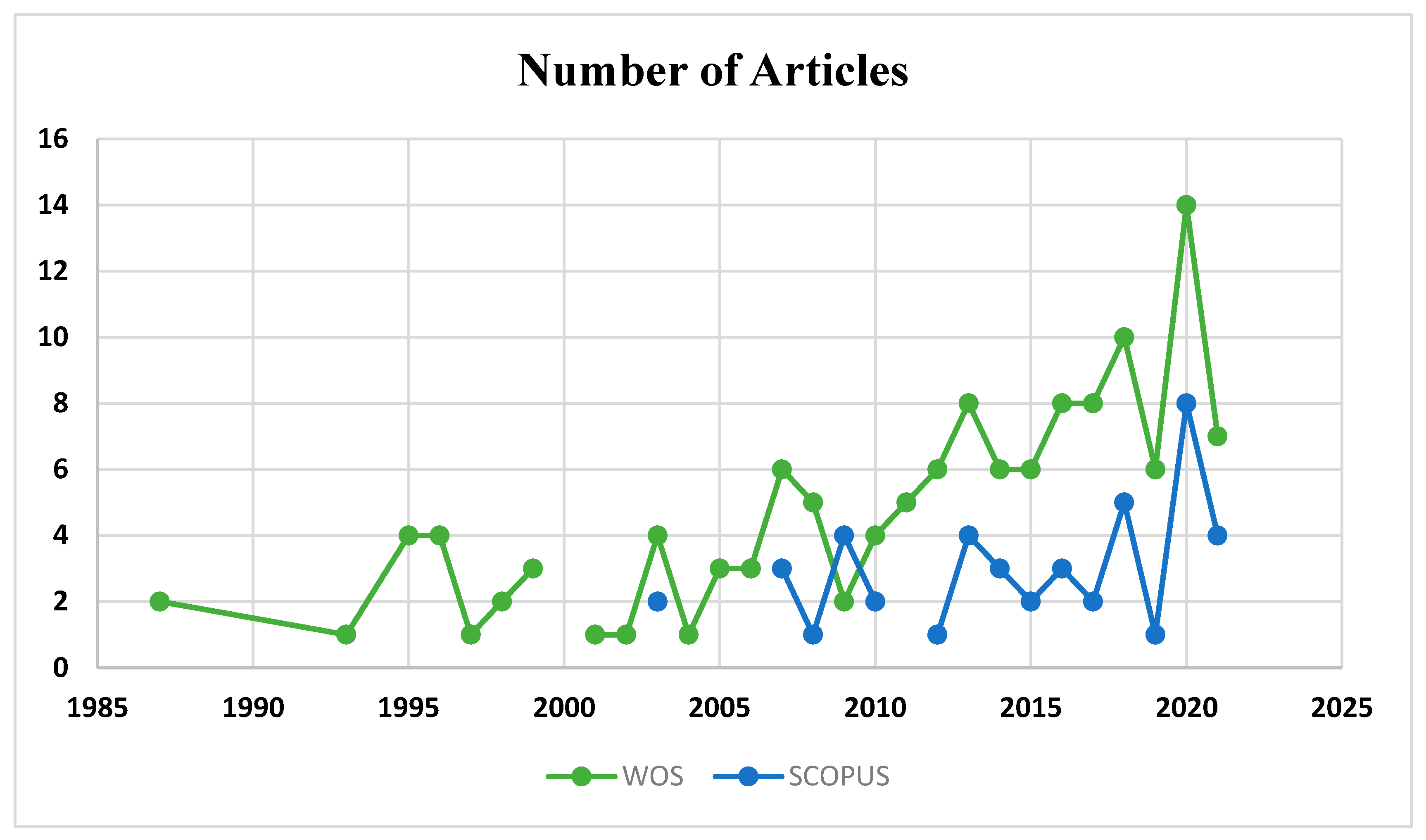
Figure 3.
Douglas Rushkoff (Rushkoff, 1996) published “Media Virus”, a work in which he describes how information can spread through networks, “infecting” them with an “ideological code” camouflaged behind an entertaining appearance. Accordingly, such viruses transfer underlying elements of popular mass culture that overlap the real nature and intention of contents.
Figure 3.
Douglas Rushkoff (Rushkoff, 1996) published “Media Virus”, a work in which he describes how information can spread through networks, “infecting” them with an “ideological code” camouflaged behind an entertaining appearance. Accordingly, such viruses transfer underlying elements of popular mass culture that overlap the real nature and intention of contents.
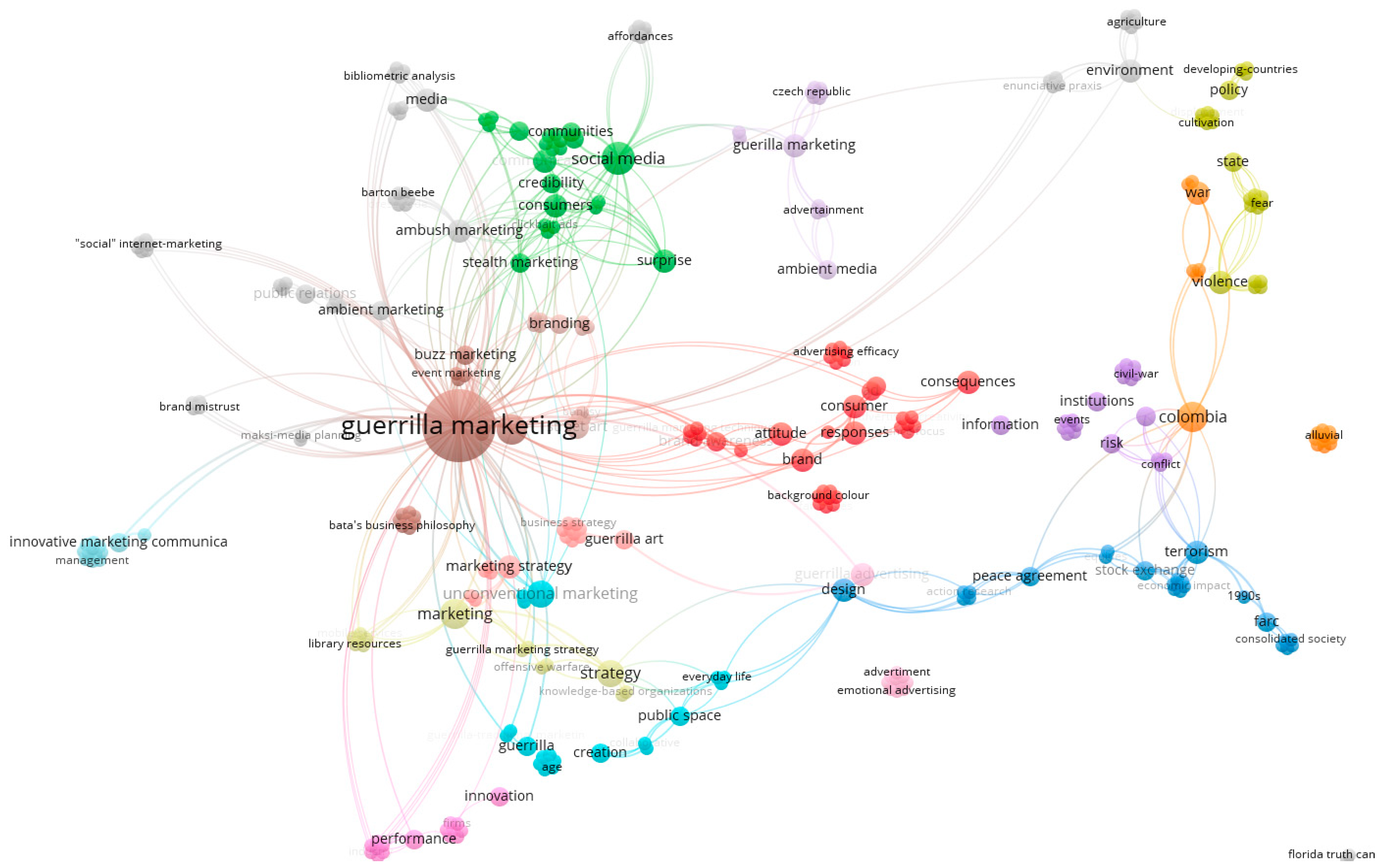
Table 2.
Assignments of the 84 papers to the new variables of interest on guerrilla marketing.
| Variables of Marketing Guerilla | Authors/Articles | Total |
|---|---|---|
| Surprise Effect | Itti and Baldi (2008); Ay et al. (2010); Dinh and Mai (2015); Katke (2016); Yildiz (2017); Spahic and Parilti (2019); Nagar, (2015); Nunthiphatprueksa, (2017); Nufer (2013); Druing and Fahrenholz, (2008); Halkias and Kokkinaki (2014). | 10 |
| Emotional Arousal | Isen and Shalker, (1982); Muehling and Laczniak (1988); Niazi et al. (2012); Tam and Khuong (2015); Dinh and Mai (2015); Heath, (2007); Sorensen, (2008). | 7 |
| Humor | West et al. (2008); Chan (2011); Eisend (2011); Eisend et al. (2014); Dinh and Mai (2015); Nunthiphatprueksa (2017); Pieters et al. (2002). | 7 |
| Information’s Content/ Clarity | Hafer et al. (1996); Dinh and Mai (2015); Dinh et al. (2015); Nunthiphatprueksa, (2017); Wiryawan and Wardana (2020); Tam and Khuong (2015); Tam and Khuong (2016). | 7 |
| Guerrilla Mobile | Ujwala (2012); Katke (2016); Spahic and Parilti (2019); Smith et al. (2011); Grewal et al. (2016) | 3 |
| Brand Awareness | Rossister and Percy (1987); Chen and Chang (2008); Chi et al. (2009), Prevot (2009); Wang and Yang (2010); Ling et al. (2010); Jalilvand et al. (2011); Mokhtari (2011); Shah et al. (2012); Malik et al. (2013); Navrátilová and Milichovský (2015); Kotler and Keller (2016); Ahmed et al. (2017); Yildiz (2017); Fattal (2018); Ahmed et al. (2020); Noorlitaria et al. (2020). | 17 |
| Creativity/ Credibility | Jackson and Messick (1967); MacKenzie and Lutz (1989); Wathen and Burkell (2002): Tsang et al. (2004); McKnight and Kacmar (2006); Smith et al. (2007); Dahlén et al. (2008); Mercanti-Guerin (2008); Prendergast et al. (2010); Zhang et al. (2014); Tam and Khuong (2015); Dinh and Mai (2015); Kim et al. (2016); Ma and Atkin (2017); Gökerik (2018). | 15 |
| WOM | Herr et al. (1991); Helm (2000); Gruber (2004); Ahuja et al. (2007); Villanueva et al. (2008); Baltes and Leibing (2008); Cheema and Kaikati (2010); Kamau and Bwisa (2013); Dinh and Mai (2015); Helm (2000); Ferguson (2008); Trusov et al. (2009); Gruber, (2004); Aprilia and Kusumawati, (2021); Al Mana and Mirza (2013); Torlak et al. (2014); Chung and Tsai (2009); Walia and Singla (2017). | 18 |
Disclaimer/Publisher’s Note: The statements, opinions and data contained in all publications are solely those of the individual author(s) and contributor(s) and not of MDPI and/or the editor(s). MDPI and/or the editor(s) disclaim responsibility for any injury to people or property resulting from any ideas, methods, instructions or products referred to in the content. |
© 2023 by the authors. Licensee MDPI, Basel, Switzerland. This article is an open access article distributed under the terms and conditions of the Creative Commons Attribution (CC BY) license (http://creativecommons.org/licenses/by/4.0/).
Copyright: This open access article is published under a Creative Commons CC BY 4.0 license, which permit the free download, distribution, and reuse, provided that the author and preprint are cited in any reuse.


