

Submitted:
05 March 2023
Posted:
06 March 2023
You are already at the latest version
Abstract
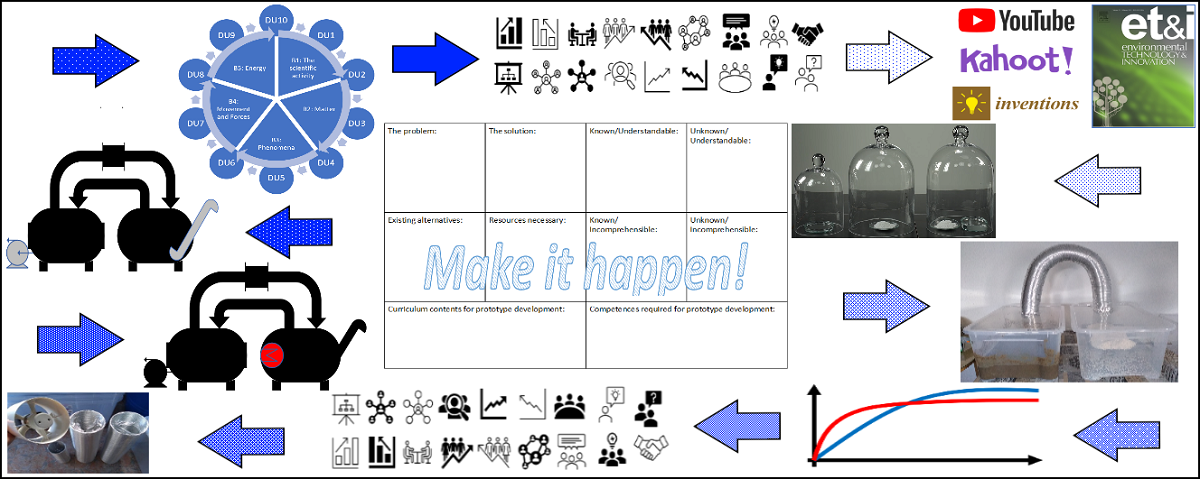
Education is one of the most important tools available to policymakers and non-governmental bodies to promote a change in the behavior of society and to address the climate crisis, in line with the 4th and 13th Sustainable Development Goals of the United Nations 2030 Agenda. Project-based learning (PBL) addresses real and global challenges and allows the academic and professional formation of students. As part of the reflection stage of the educational action research method using the Business Canvas Model (BMC), pedagogic deficiencies were identified in the PBL and a didactic proposal was elaborated to emulate the interaction of students with the ecosystems of society. A prototype for improving the management of organic manures as soil amendments was initially developed, to provide the students with a quick start on the first steps of the proposed project. In the 10 sessions designed for the PBL (Make it happen!), the students elaborate a more sophisticated artifact in response to the demands of potential clients, as per the outcomes of the primary market research (5th session). Active teaching methods and tools, such as a modified template of the BMC with the Rumsfeld’s matrix, aid the metacognition of students and their competences development. In a double session of the PBL, the primary market research is organized with key stakeholders of the agroindustry to enquire about the feasibility of the implementation of the technological solution and the logistics at farm level. Finally, the evaluation relies on the suitability of the upgraded prototype to respond customers’ demands.
Keywords:
Educational action research
; unregistered community design
; shared intellectual property
; cooperative learning
; K-16 students
; net-zero emissions
1. Introduction
Agriculture is responsible of 30 % of all greenhouse gas (GHG) emissions (Lal, 2021). Particularly, a vast number of mitigating technologies have been developed to improve the management of animal slurry as soil amendment, reduce the consumption of industry-based mineral fertilizers, and enhance the circular economy (Finzi et al., 2019; Kavanagh et al., 2021; Moure Abelenda et al., 2021b; Moure Abelenda and Aiouache, 2022). Inappropriate handling of this material would otherwise contaminate the atmosphere, leading to more global warming, and pollute the underground water, causing eutrophication and low potability standards for domestic use. Despite this flourished new market, commercialization of an environmental technology is not an easy task, given the tight margin of profits and the risk of investment (Moure Abelenda and Amaechi, 2022). On the other hand, the market size of the educational technology sector has largely expanded (Millora, 2010; Zwaan, 2017) and it was 20.1 billion of USD in 2021 (Brighteye Ventures, 2022); thereby, many entrepreneurial projects can be reoriented and further pursued to impact society by improving the quality of education, in line with the 4th Sustainable Development Goal of the United Nations 2030 Agenda. Entrepreneurs can only develop this flexible and versatile model for commercialization through educational action research. The 3 phases that are defined for implementation of new didactic tools and teaching methods are: reflection, execution, and evaluation (Botella Nicolás and Ramos Ramos, 2019; Elliot John, 1991; Pelton, 2010; Tejedor et al., 2019). In the first phase of reflection and planning, it is necessary to identify the educational needs of students (e,g, lack of intrinsic motivation to learn) and/or the shortcomings of the pedagogic methodologies (e.g. excessive propaedeutic approach). There are intrinsic and extrinsic factors associated with the contents of the curriculum and the motivation of the students: the first are inherent to the individuals and the second are given to them externally. To address a set of challenges and constrains of the current educational practices, a didactic proposal is elaborated and subsequently executed. Finally, the evaluation stage involves assessing the students’ performance and the effectiveness of the teaching approach followed by additionally collecting students’ feedback (Botella Nicolás and Ramos Ramos, 2019; Curtis et al., 2010).
A hands-on approach or learning-by-doing offers the greatest chances of intrinsically motivating K-16 students of secondary school education (Fernández-Martín et al., 2022). Particularly, project-based learning (PBL) is one of the best methods to teach because it emulates the problems that students will be facing in personal and professional real-life (Kokotsaki et al., 2016). Moreover, this active teaching-learning method can be justified from the point of view of many other purposes of the teacher or the self-learning student (Nasyrova et al., 2019; Ortiz Ocaña, 2016, p. 202). For example, PBL allows to improve the contextualization of the contents of the curriculum to avoid alternative conceptions in science (Tsai and Chou, 2002) and to promote the cognitive conflict, as described by Piaget’s theory of cognitive development and how students process information: disequilibrium, accommodation and assimilation (Renner et al., 1986). When implementing the PBL, it is essential to deal with primary sources of information and to conduct informational interviews to potential clients for the design of the artifact. Unfortunately, to the authors’ knowledge, these practices are not currently included in the PBL. It is clear that the type of egg drop projects (McCormack, 1973) purely focused on scientific aspects of the design of the artifact, does not help the students to understand their role in the society. The primary market research for constructivist learning heavily relies on the interactionist posture originally described in Vygotsky’s sociocultural theory of language development (Marginson and Dang, 2017; Morselli and Kakouris, 2022). Particularly, the implementation of the primary market research in the PBL or inquiry-based learning (IBL) should scaffold students’ learning and provide them independence from the facilitator to come up with more original and ingenious artifacts (Kokotsaki et al., 2016; Sahin, 2013). Thereby, the teacher should not be a guide but to be an apprentice, who learns together with the working groups on the feasibility (considering technical, economic, and social aspects) of the artifact in question (Jalinus et al., 2017).
In addition to deal with the deficiencies of the classical PBL methodology, for the sake of attaining the intrinsic motivation of the participants in the active learning, the didactic design should prove the real contribution that students can have in the society, when they apply the content of the curriculum and the key competences for lifelong learning (European Parliament, 2006): communication in the mother tongue, communication in foreign languages, mathematical competence and basic competences in science and technology, digital competence, learning to learn, social and civic competences, sense of initiative and entrepreneurship, and cultural awareness and expression. New approaches are often introduced by schoolteachers and university lecturers to enhance the formation of the students and reinforce the weak points, with the purpose of helping them in their future career after leaving the educational system (Batstone, 2013; Csík et al., 2016). Martínez et al. (2022) applied a modified template of the Business Model Canvas (BMC) for blended learning in a master in drug discovery. The motivation of their didactic intervention with a BMC-like template was that the students had difficulties to focus their discussions on a relevant matter for the goal of the problem-based learning. For the application of this active method of learning, the 16 students were divided in 3 multidisciplinary groups of 5 to 6 students, to take advantage of the different background of the students. A session of an hour long was devoted to work telematically on the BMC-like template but during the first 30 minutes the students were searching for information online. Therefore, the prior lectures held by experts in drug development were not as effective as if students had the chance of talking to potential customers, which could be retailers as part of a business-to-business marketing model, to understand their needs and demands. Martínez et al. (2022) still found that their pedagogy improved the following competences of students: the ability to work in multi-disciplinary teams, the ability to handle information in a critical and analytical way, the ability to evaluate different criteria and to face decision making or the ability to propose novel approaches in drug discovery. Since the methodology followed was problem-based learning, the student did not prepare an artifact or a product but only a final presentation, hence this didactic intervention was very theoretical. Martínez et al. (2022) did not consider the feedback of student with regard the didactic intervention nor the self-evaluation for their final score. This could have contributed to increase the extrinsic motivation of students, as they understand their final grade will not only depend on the group work but also on their individual performance. Likewise, it would be convenient to consider the co-evaluation student-student in the overall academic achievement. Martínez et al. (2022) consider that the use of BMC-like templates avoids that the most participative students monopolize the discussion. Students’ feedback suggests that the main weakness of the used methodology was the lack of time to search for information before the brainstorming with the BMC-like template and the very limited access to primary sources.
The present investigation assesses the theoretical viability of organizing a didactic proposal on continuing the development of a prototype that mitigates the GHG emissions during the stabilization of manure and slurry, before these organic materials are used as soil amendments. The active method of PBL was enhanced with (a) an adapted BMC template to clearly associate the work with the contents and competences of the curriculum and (b) a primary market research to act as benchmark, to ensure the technology addresses the needs of the potential customers, and to increase its acceptance by the key stakeholders. The title of the didactic intervention: Make it happen!; refers to the fact that the artifact is constructed for a particular purpose, which is demanded by society. However, the problem statement of the present investigation is whether it is appropriate to include professional strategies for entrepreneurship and business development in the early education of students (14 – 15 years old). The secondary objective is to assess the feasibility of the flexible model for the commercialization of the environmental technology in the educational and agro-industrial markets.
2. Materials and methods
2.1. Materials
The development of the proof of concept (POC) was based on previous investigations to improve the management of cattle slurry and anaerobic digestate by means of using a closed chamber (Alejandro Moure Abelenda, 2022; Moure Abelenda et al., 2022, 2021a, 2021c). The 2 commercial products that can be obtained from the artifact that is shown in Figure 1 are the stabilized organic amendment with approximately 45 % moisture and a brine of calcium chloride, with a concentration below 10 mol CaCl2/L. The stabilized manure is used directly for land application purposes (i.e. to restore the soil as a carbon sink with a healthy microbial activity and to enhance the crop growth) or it can be further processed (i.e. 2-mm sieving) to produce a more homogenous material. The condensed brine of calcium chloride is used to fluidize the excess of untreated slurry, which is not processed with this equipment, and to minimize the GHG emissions of this poorly processed material (Kavanagh et al., 2021). The retailing costs of the major items for the manufacturing of the 400-EUR equipment are detailed in Table 1. This equipment is suitable for teaching purposes as part of the PBL (Make it happen!) and for prosumer applications, who clients with a profile between a professional and domestic customer (Hunt et al., 2015; Makul et al., 2021).
2.2. Methods
As part of the reconnaissance stage of the educational action research (Botella Nicolás and Ramos Ramos, 2019; Elliot John, 1991; Pelton, 2010), to identify didactic tools that give response to the lack of intrinsic motivation of students and to the defects the classical PBL, a real entrepreneurial project was pursued following the BMC (Strategyzer, 2020) for the commercialization of the above prototype (Figure 1). The environmental technology was assessed economically with the BMC template and technically during the development of the prototype (Figure 1). The method described by Strategyzer (2020) was followed and the epigraphs of the Lean BMC template are: Problem (list of top 3 problems that the environmental technology addresses); Existing alternatives (list of procedures to solve the problem nowadays); Solution (list of the top 3 features of the environmental technology intended to be commercialized); Key Metrics (Key parameters to be monitored during the operation to the prototype and commercialization); Unique Value Proposition (Single, clear and compelling message that states which the environmental technology is different from which is unique and worth of being bought); High-level concept (catch slogan of the usefulness of the environmental technology); Unfair Advantage (feature of the organization or the prototype that can be easily copied by competitors); Channels (paths to reach the customers); Early Adopters or Beachhead market (list of the characteristics in of the ideal customers that are very keen of implementing the environmental technology at their premises); Cost Structure (list of fixed and variable costs, customer acquisition costs, distribution costs, renting spaces, hiring staff, etc.); and Revenue Streams (list of sources of income, life time value, gross margin, etc.). Filling the BMC template relies on secondary sources of information, suppositions and alternative conceptions of the promotors of the project; hence the experiments resulting from the BMC template consist in reaching the potential customers (i.e. primary market research).
It is important to highlight that when the Lean BMC template was filled for the LabreGando project (Figure S.1), the use of the prototype (Figure 1) for educational purposes as part of a flexible business model was not considered, thus educational institutions were not included as a possible customer segment. Based on the knowledge transfer (empirical) entrepreneurial experience of teacher-promotors, the reconnaissance stage of the educational action research concluded with the didactic proposal of the PBL (Make it happen!) that includes an adapted template of the BMC and the primary market research as key elements. This first phase of reflection and planning is very important because it comprises 5 of the 7 steps of the classical PBL model defined by Jalinus et al. (2017). Since the execution of projects is key for the sustainable development of the society, it is therefore necessary to provide the students with these skills to nurture future promotors and decision makers.
Several adaptations of the BMC template, intended to be use in high school and academia, can be found in literature (Conecta13, n.d.; Csík et al., 2016; Martínez et al., 2022). In addition to the different epigraphs depending on the ultimate purpose of the project, the most important difference between the adapted BMC templates relies primarily on the intended user: whether it is used by teachers to design the PBL or whether is supposed to be employed by students. The adaptation of the BMC template for secondary education (particularly for the level of 14 - 15 years old students) was done by considering the phenomena involved in the functioning of the prototype (Figure 1), the content of the curriculum (Gobierno de España, 2015, pp. 258–262), and the contextualized key competences defined by the European Parliament (2006):
- proficient communication in the same language of the potential clients to make them feel comfortable during the primary market research, to build a clear picture of their problems handling manure and slurry,
- manage several secondary sources of information in different languages to be informed about how other countries are dealing with the global challenge of mitigating the GHG emissions from agriculture,
- calculate mass and energy balances (Woolfolk and Pineda-Alaya, 2014, pp. 48–53) to optimize the performance of the artifact and to minimize the cost of treating the slurry,
- take advantage of the convenience of paper-based and online tools for sharing information (Gamage et al., 2023) and maximize the coordination with the teacher for the operation of the artifact in-between session throughout the whole PBL (Make it happen!): the adapted BMC template is also telematically available,
- get used to the cognitive conflict and appreciate the usefulness of the metacognition during the filling the Rumsfeld’s matrix (top right corner of the adapted BMC template; Figure 2),
- propose novel and original ideas to be assessed by the other group members and improve the own conceptualization of the artifact by considering the feedback and feedforward of peers.
Additionally, it is considered the development of environmental competence of K-16 students, and this can be measured by their level of engagement in the proposed activity (Al-Balushi and Al-Aamri, 2014), and even going beyond with other projects, as promotors of the transformation of society towards sustainability (Tejedor et al., 2019). Otherwise, the focus on the mathematical explanation of the physical and chemical phenomena does not help the students to retain (significant learning) the truly important principles and laws that rule the universe, and lead to loss of engagement and school drop-out without the very basic foundations of science that are required to be an active member of society. A SWOT analysis was included as part of the discussion because this business tool is often used to assess didactic proposals and the effectiveness of application the contents of the curriculum in educational institutions (Forleo and Palmieri, 2019; Safonov et al., 2021); although specifically designed de rubrics, such as the one offered by Jenny and Snyder (2010, pp. 86–87), could be used instead. The SWOT analysis allows to deduce how well the research question was addressed: whether the implementation of business and entrepreneurial strategies would be possible as part of an active teaching-learning method for secondary education.
The intellectual property of the prototype during the whole implementation of the didactic unit is protected by the unregistered design rights in the UK (UK Government, 2022) and the unregistered community design in the EU (EUIPO, 2023a). The encouragement of the feeling of ownership among students is meant to enhance their engagement in the PBL (Make it happen!). It is important to highlight that the legal framework of the UK offers greater protection for this project as it will last 15 years after the date of publication and disclosure of the PBL (Make it happen!), although other people would be able to use the design of the artifact during the last 5 years of protection (UK Government, 2022). The EU legal protection of the unregister community design lasts for 3 years since the publication or disclosure (EUIPO, 2023b; YourEurope, 2022). Ultimately, a general public license (Woern et al., 2018) could be considered if the industrial commercialization is not attained in the subsequent editions of the PBL (Make it happen!). With this type of project, the research will not be relegated to university higher education, since secondary educational institutions will also have an important role in dynamizing society.
3. Results
Based on the teaching experience and the filling of the Lean BMC template for the LabreGando entrepreneurial project (Figure S.1), a modified BMC template (Figure 2) was proposed for K-16 students through the PBL(Make it happen!). The left-hand side of the modified BMC template (Figure 2) refers to the contextual concepts and contents of the curriculum that are needed to develop the technological solution, which could be regarded as hard skills of the students. On the other hand, the right-hand side of the modified BMC template (Figure 2) aims the competences that the students should attain for successfully doing an original contribution to the project, which could be regarded as soft skills. Particularly, this right-hand side includes the Rumsfeld’s matrix to promote the metacognition of the students and the competence learning to learn (de Valk and Goldbach, 2021; Loxdale et al., 2016). According to Morales Bueno and Landa Fitzgerald (2004, p. 154), filling the Rumsfeld’s matrix corresponds with the third, fourth and fifth phases of the PBL. In the academic environment, it is recommended the use of the V heuristic or Gowin Diagram (Álvarez González and Manzano, 2018; Castro Chávez et al., 2015) as an instructional tool to sort out more theoretical problems. Both the Gowin Diagram and the modified BMC template help students to organize their thoughts and design action lines that are part of a consistent roadmap; thereby, these techniques are proposed for the cooperative work of students. The in-person sessions were coordinated with the rotating page technique, which facilitates the transfer of knowledge between peers of the same working group, to fill the adapted BMC template and to construct the common intellectual property that leads to an original contribution in the design of the prototype, to address the industry and society needs (Feijoo et al., 2018). Additionally, several reports and articles from secondary sources of information will be provided to the working (heterogeneous) groups of 5 students to introduce them to the topic of waste management and sustainable use of resources. Group heterogeneity has been found to have a moderating role in the behavior of disruptive students (Adams-Byers et al., 2004; Jonkmann et al., 2009) without affecting negatively to the academic achievements of students with a different sociometric profile (van der Wilt et al., 2018; Wyman and Watson, 2020). In fact, the multiple intelligences theory could justify the heterogenous grouping of students with different talents (Cavas and Cavas, 2020).
The didactic intervention described in Table 2 contextualizes the contents of the curriculum by means of the design of the PBL (Make it happen!), where the teacher plays a horizontal role with regard to the students and behaves like an apprentice, while building the common intellectual property (Jalinus et al., 2017). For the first session of the PBL (Table 2), in addition to provide the working groups with articles and news reports on the current situation of the agroindustry, students are also encouraged to carry out their own search for information, for instance, by means of a web-quest to get an initial idea of the topic and to develop their critical thinking and their point of view. In this way, they will be sufficiently informed to prepare the primary market research and to ensured that the modifications that they plan to apply to the developing prototype correctly address the needs of the potential customers (Kouziokas, 2016; Núñez-Barriopedro et al., 2018). The students rely on the primary market research to center their group discussions around relevant topics for the stakeholders of the agroindustry. The coordination between the members of the group by means of the modified BMC template is essential to improve the leadership in decision making and design smarter action lines. Pursuing a real entrepreneurial project, such as the one of the PBL (Make it happen!), allows the role of the teacher as apprentice, the evolvement of the critical thinking of students, and the incorporation of more original features in the artifact.
Since the 50-minute sessions of the PBL (Make it happen!) are dispersed throughout the course (Table 2), the working groups of promotors will have to coordinate with the teacher, who will continue to operate the equipment according to the instructions given. The limited time and resources represent the budget available for the project that needs to be considered by the working groups to justify, in the best way possible, the modifications applied to the prototype for best suit the potential clients’ conveniences and demands. Overall, the performance of each student in the PBL (Make it happen!) corresponds to 30% of the final mark of the Physics and Chemistry subject. In agreement with the basic methodology of the PBL (Kovácsné Pusztai, 2021), the procedure for the hetero-evaluation of students’ engagement on the PBL (Make it happen!), relies primarily on the justifications provided for the modifications applied to the prototype in the group presentation (50 % of the PBL-grade), during the last double session (100 minutes; Table 2). The assessment of the artifact with a rubric (Table S.1) aids the wider implementation of the project by other teachers, as the PBL (Make it happen!) is designed following the general guidelines of this type of pedagogy (Guo et al., 2020). In addition, the teacher’s diary and a checklist are used to determine the individual participation in the project (20 % PBL-grade): assessment of the quantity and quality of the contributions to the modified BCM template, both in the paper-based and telematic versions available (Table S.1). Forms with ranking scales are passed to the students to express their opinion on self-evaluation (10 % PBL-grade), co-evaluation to other students in their working group (10 % PBL-grade), and co-evaluate the role of the teacher as apprentice (10% PBL-grade). Although in a real project the promotors will only face the questions and comments of the potential clients, the presentation of their POC in front of the students of the other groups allows the triadic supervision as part of the formative and summative stages of the assessment (Gale et al., 2002; Stinchfield et al., 2007). In this way, during the last session all groups present their achievements (Table 2), and they can learn on how other groups are assessed.
A systematic procedure is established to consider the outcomes of the self-evaluation of students and co-evaluations pupil-teacher. A possibility to improve the educational intervention would be to enforce the role of the teacher as a facilitator, who could conduct several Prediction, Observation, and Explanation (POE) experiences on the relevant physicochemical phenomena ruling the functioning of the prototype across the whole PBL (Make it happen!). As defined in Table 2, a POE experience is only planned for the second session on the deliquescence of CaCl2 but similar approach could be applied to the sessions 6, 7, and 8; where students would need to elucidate the aerodynamics, hydrodynamics, and thermal behavior of the artifact that they are constructing (Karamustafaoğlu and Mamlok-Naaman, 2015). POE experiences promote the reflection of the students on the learning process and can be used to deal with alternative conceptions of the students, as this is generally understood as an intrinsic difficulty for the learning process, due the previous experience of the students’ daily life, but might be considered more suitable for kindergarten or primary education (Hong et al., 2014). As such, other methods might need to be considered to prepare the student to take maximum advantage of the interaction with the potential clients. The 4th session was strategically designed to allow the students to modify the prototype before hearing the opinion of potential clients; thereby, this aims to create cognitive conflict due to the different interpretation of the situation for relying only in secondary sources of information. For secondary education, it is more recommended to recognize the IBL as key element of the didactic proposals and for this reason the students’ attitude during the primary market research (double 5th session; Table 2) is recognized as paramount importance in the assessment of their performance on the PBL. An example of cognitive conflict that the project promoter might experience is reducing the volume of the system to process the slurry quicker with shorter residence time, but stakeholders of the agroindustry might demand an equipment with greater capacity to handle their slurry (< 10,000 tonnes/year).
The self-experience of the teacher on building up the POC (Figure 3) and operating it (Figure 4) made possible to identify additional variables that can be optimized (Alejandro Moure Abelenda, 2022), while the students increase their shared intellectual property and they come up with a more original design suitable for handling the slurry at farm level (Table 3). If the time is available, it could be possible the characterization of further downstream steps, like the sieving to get the commercial-grade soil organic amendment (Figure 4e), and determine the specifications in terms of pore size of the sieve and the timing. This also implies assessing the recirculation of the coarse fraction of the stabilized manure as a bulky material to increase the air pockets and to enhance the penetration of the air of the headspace into the stabilizing slurry. This could be a cheaper option to enhance the moisture and gas exchange compared to the use of a propeller or other type of mixing with a high torque specification to be able to stir the very viscous slurry and avoid the crust formation. Moreover, it could be possible to optimize the subsequent downstream processing of the commercial products obtained from the prototype. For example, assessing the performance of the soil organic amendment in terms of crop yield and the elucidation of the downstream processing required for the raw slurry additive: (a) blending ratio of concentrated additive of calcium chloride to water, (b) fluidization level/solid-liquid separation attained (Figure 4d), and (c) algae growth in the slurry lagoon to enable the retention of carbon and the lock up of nutrients (Moghazy et al., 2022). Also, use of a pelletizer for the self-hardened limed slurry after stabilization and subsequently test the mechanical properties of the granular fertilizer which is prepared.
4. Discussion
Active teaching methods that do not have the students as passive actor are the best way of attaining the significant learning and perpetuating their knowledge. Business tools from the entrepreneurial world have been widely applied in schools and academia for the preparation and evaluation of didactic interventions: Deming cycle or PDCA (Plan, Do, Check, and Act), the SWOT (Strengths, Weaknesses, Opportunities, and Threats) analysis, and even the PBL itself can be considered a particular type of case study (Domènech-Casal, 2018). Empowering the students with tools, such as the modified BMC template (Figure 2), where the Rumsfeld’s matrix was embedded, is proposed to help the working groups in the cooperative learning process. Unlike the collaborative working, which implies that the group members become experts in a very narrow aspect of the prototype (e.g. dose of lime to be added to the slurry to enhance the drying and the stabilization processes), with the cooperative learning all the members understand the functioning of the artifact and they holistically optimize their performance (Schoor et al., 2015). The coordination of the promotors of the project is required to fill the modified BMC template in an organized manner with the gyratory paper technique, due to the interrelation of several factors involved in the operation of the prototype (Figure 1): dose of lime, heating, air flow, dose of calcium chloride, etc. Generally, collaborative learning is preferred for big enterprises, where the employees are just in charge of a particular role, and they do not have an overview of the whole process. Cooperative learning or peer learning is more recommended for secondary education and to inspire future leaders (Boud et al., 2014). To ensure the didactic goal of establishing the foundations of the scientific culture, the proposed PBL (Make it happen!) minimizes the mathematic approach that prevents many students from understanding the fundaments of the physicochemical phenomena that rule many of the daily interactions of individuals with the environment and the technology. This active teaching and learning methodology packs the students with the required skills to be functional members of society, enabling its transformation by promoting enthusiastic projects that reach all groups (e.g. veterans, homeless people, etc.) and care about all matters (e.g. animal welfare, sustainable development, etc.).
For unexperienced researchers it is essential to consult primary sources of information before starting to conduct the experimental work (Figure 5). Primary data support the learning process and the construction of scientific interpretations of the physicochemical phenomena, avoiding alternative conceptions (Tsai and Chou, 2002). It also allows to confirm whether the proposed actions are in line with the demands of the customers and to consider their opinion. In this way, minimizing lectures with a propaedeutic approach that lead to a lack of motivation in favor of a constructivist learning method, where pupils are protagonist of the teaching-learning process and they discover the knowledge on the subject that they are dealing with, enhances their engagement, implication, creativity, and contribution. The direct interaction with potential clients allows the students to apply the design thinking methodology focused on the user (Chou, 2018; Kupp et al., 2017); for example, considering that the artifact should fit in the available infrastructure and operate unsupervised to simplify the work of farmers. Synergistically, the envision of the primary market research as a pedagogic outing implies that the PBL was designed for better students’ experience, using a wider ecosystem to scaffold the teaching-learning process (Bosch, 2018; Khammar, 2008). The experienced promoters of the project would have the prior knowledge as an advantage (Figure 5), hence it would recommended to adjust the evaluation of the didactic proposal according to the IBL (Hsu et al., 2015), where the meaningful and authentic questions to solve real world problems are at the center of the active teaching-learning methodology, rather than the development of an artifact (Sahin, 2013).
The technology under development for the upgradation of bio-residues and the enhancement of the circular economy is in line with the current advice from governments to cover the slurry stores (European Commission, 2017; UK Government, 2019) and can be directly applied by farmers at a minimum cost. Thereby, the stabilization technology (Figure 1) eliminates or eases the bureaucratic procedures associated with the application for subsidies. It is important to clarify with the key stakeholders of the agroindustry that the solution that is being offered fits in the infrastructure and logistics at farm level (Figure 6), hence they can easily justify and comply with the policies that all regions are adopting to attain net-zero GHG emission by 2050 (Costa et al., 2022; Reay, 2020; Vats and Mathur, 2022). Figure 6 represents the implementation of 4 prototypes (Figure 1) in a small farm with 20 cattle producing annually 400 tonnes of slurry (95 % moisture) and 0.3 % of this material is valorized as solid organic amendment (45 % moisture). The remaining 99.7 % of the raw slurry should be stabilized in the lagoon with the aqueous solution of 1 M CaCl2 at a rate of 10 L per tonne of raw slurry; otherwise, the suggested business model (Figure S.2) would need to be tuned and twisted accordingly, possibly by increasing the processing capacity by implementing more equipment onsite. Each prototype (Figure 1) that processes 1.35 tonnes of manure (90 % moisture) every year, also consumes of 120 kg of CaCl2, 30 kg of lime (CaO, Ca(OH)2, or CaCO3), and less than1 MWh. The brine is also used to clean the farm stable, at a rate of 10 L of CaCl2 solution (1 M) per ton of raw slurry and the stabilized organic material could be used for cow bedding. More synergies could be considered to reduce the cost of processing, to increase the streams of income, and to provide additional ecosystem services, such as taking advantage of the black fly soldier larvae for stabilization of the organic slurry while offering nests for wild bees (Fangueiro et al., 2021; Pas et al., 2022).
The theoretical evaluation of the didactic proposal, before its application, was performed with a SWOT analysis (Table 4) to present the didactic proposal to potential collaborators and funders. As strengths, the PBL (Make it happen!) constitutes a transversal experience where students are able to spot their planification mistakes by means of conducting metacognition. The evolvement of the critical thinking also helps students in other aspects of their daily life, such as to avoid being manipulated by the mass media and the fake news. With regard to the weaknesses, the didactic intervention could be too ambitious for K-16 students and the only improvement in the methodology would be the advances made on the design of the prototype from an edition to the next one. According to Bronfenbrenner’s ecological systems theory applied to the cognitive development of students, the youngsters have difficulty interacting with other actors of the society that are outside of their mesosystem (Rosa and Tudge, 2013), although curriculum and competences are already designed to work on this problem at a earlier age (Williams et al., 2014). This implies that the scaffolding strategy of the primary market research might not be suitable for secondary education. In terms of opportunities, the innovative intervention in schools can be also ameliorated by considering the opinion of teachers from several departments of the educational institution. Also, the possibility to expand the network of contacts in the agroindustry to enhance the collaboration in future editions of the PBL (Make it happen!). Another opportunity stands from the fact that in the PBL, the teacher is supposed to be an apprentice; hence this opens the possibility of the co-evaluation student-teacher, in addition to traditional teacher-student hetero-evaluation. Moreover, the PBL (Make it happen!) could be adopted even by reticent teachers, who use traditional methods of teaching, since all innovations were subtly introduced in the classical structure of the active teaching-learning method (Jalinus et al., 2017). The international application of the PBL (Make it happen!) is possible because the description of the physico-chemical phenomena that rules the functioning of the artifact (Table 2) is also in agreement with the contents of the curriculum of other countries, such as that of England for the subjects Physics and Chemistry in the key stages 3 and 4 (UK Government, 2014). As threats, in addition to afford the cost of manufacturing the initial prototype (Figure 1), the educative institution should have the appropriate facilities available: laboratory, workshop, and cool room to store the organic residues. It is estimated a total budgeting of 2,000 EUR for implementing the didactic proposal in a class of 30 students.
The SWOT analysis (Table 4) was also useful to address the research question and confirm that the implementation of business and entrepreneurial strategies as part of a teaching-learning methodology for secondary education was possible. Regarding the secondary objective of this investigation, as the minimum viable product is developed and the collaboration of the members of the agroindustry is enhanced, the chances of commercialization of the environmental technology increases but its suitability as an educational tool is reduced, since the scientific principles of the operation of the prototype cannot longer be explained completely with the content of the curriculum of K-16 students. As per the Vygotsky’s theory, it is essential to consider students’ zone of proximal development when designing the didactic activities for pupils at secondary education (Xi and Wang, 2022). However, during elaborating successive editions of the PBL (Make it happen!) it is possible to inspire students to pursue further projects (personal and professional) that target all the groups of the society (e.g. retired, disabled, dissocialized people, etc.), enabling the transformation of communities towards resilience and sustainability. In fact, the instrumentalization of education by policymakers and the authorities at a national or regional level creates consciousness and changes habits and behaviors of society (Ferrari-Lagos et al., 2019; Jakabová et al., 2020; Tony Carusi and Szkudlarek, 2020). The 2nd and 3rd phases of the educational action research remain as future work, being the sample and focus group (Curtis et al., 2010) all the students that participate in the PBL (Make it happen!).
5. Conclusions
The PBL (Make it happen!) allows the development of the prototype in collaboration with members of the agroindustry with unregistered design rights. The functioning of the closed system for stabilizing organic manures before land application was completely explained with the curriculum of 14 – 15 years old students. The implementation of entrepreneurial strategies as part of an active teaching-learning methodology in the Physics and Chemistry subject was necessary to address the lack of intrinsic motivation of students, since the contact with the potential clients offers students an understanding of their important role at the level of secondary education. The flexible model for the commercialization of the environmental technology in the agroindustry and the educational sector is feasible during the first editions of the PBL (Make it happen!), before the elaboration of a more sophisticated equipment that does not rely entirely on the scientific principles which are included in the curriculum of K-16 students.
Supplementary Materials
The following supporting information can be downloaded at the website of this paper posted on Preprints.org.
Author Contributions
Alejandro Moure Abelenda: Conceptualization, Data curation, Formal analysis, Investigation, Methodology, Visualization, Writing – original draft, Writing – review & editing. Farid Aiouache: Writing – review & editing. Daniel Moreno Mediavilla: Writing – review & editing.
Acknowledgements
The authors would like to acknowledge the support received from the Doctoral Prize of the Engineering and Physical Sciences Research Council (EPSRC) of the United Kingdom (Award ref 1945857). The authors would like to acknowledge the support received by Manuel Moure Beiroa and María Dolores Abelenda Mallo for granting access to their premises to develop and operate the prototype as part of the reflection stage of educational action research.
References
- Adams-Byers, J., Whitsell, S.S., Moon, S.M. Gifted Students’ Perceptions of the Academic and Social/Emotional Effects of Homogeneous and Heterogeneous Grouping. Gifted Child Quarterly 2004, 48, 7–20. [CrossRef]
- Al-Balushi, S.M., Al-Aamri, S.S. The effect of environmental science projects on students’ environmental knowledge and science attitudes. International Research in Geographical and Environmental Education 2014, 23, 213–227. [CrossRef]
- Alejandro Moure Abelenda. Promotional video for COP27 in Egypt: Our contribution to net-zero @Lancaster University [WWW Document]. YouTube. 2022. Available online: https://www.youtube.com/watch?v=hUVgL7Q8OKk&t=1s (accessed 11.13.22).
- Álvarez González, E., Manzano, D. Propuesta didáctica para el empleo de la Historia de la Ciencia en la enseñanza del Primer Principio de la Termodinámica en Educación Secundaria. Revista de Educación de la Universidad de Granada 2018, 25, 9–28. [CrossRef]
- Batstone, D.J. Teaching uncertainty propagation as a core component in process engineering statistics. Education for Chemical Engineers 2013, 8, e132–e139. [CrossRef]
- Bosch, R. Designing for a better world starts at school. Rosan Bosch Studio, Copenhagen. 2018.
- Botella Nicolás, A.M., Ramos Ramos, P. Investigación-acción y aprendizaje basado en proyectos. Perfiles Educativos 2019, 41, 109–122. [CrossRef]
- Boud, D., Cohen, R., Sampson, J. (all of the U. of T. (Eds.). Peer Learning in Higher Education. Routledge. 2014. [CrossRef]
- Brighteye Ventures. The European Edtech Funding Report 2022 [WWW Document]. 2022. Available online: https://www.brighteyevc.com/post/the-european-edtech-funding-report-2022 (accessed 12.2.22).
- Castro Chávez, M. de J., Gutiérrez Rodríguez, E.A., Marín Pérez, M., Ramos Morales, P. Impacto de la uve de Gowin en el desarrollo de conocimientos, razonamientos e inteligencias múltiples. Perspectivas docents 2015, 58, 19–30. https://revistas.ujat.mx/index.php/perspectivas/article/view/1196.
- Cavas, B., Cavas, P. Multiple Intelligences Theory—Howard Gardner. 2020, 405–418. [CrossRef]
- Chou, D.C. Applying design thinking method to social entrepreneurship project. Comput Stand Interfaces 2018, 55, 73–79. [CrossRef]
- Conecta13, n.d. Canvas para el diseño de proyectos [WWW Document]. URL https://conecta13.com/canvas/ (accessed 7.20.22).
- Costa, C., Wollenberg, E., Benitez, M., Newman, R., Gardner, N., Bellone, F. Roadmap for achieving net-zero emissions in global food systems by 2022, 2050. Sci Rep 12, 15064. [CrossRef]
- Csík, O., Horváth, L., Misley, H., Nagy, K., Verderber, É. The Business Model Canvas as a Tool for Assessing Curriculum Implementation Effectiveness in a Hungarian Private Secondary School, in: Karlovith, T.J., Torgyik, J. (Eds.), Some Issues in Pedagogy and Methodology. International Research Institute, 2016, pp. 141–145. [CrossRef]
- Curtis, R., Webb-Dempsey, J., Shambaugh, N. Understanding Your Data. In R. P. Pelton (Ed.), Action Research for Teacher Candidates: Using Classroom Data to Enhance Instruction. R&L Education. Plymouth. 2010.
- de Valk, G., Goldbach, O. Towards a robust β research design: on reasoning and different classes of unknowns. Journal of Intelligence History 2021, 20, 72–87. [CrossRef]
- Domènech-Casal, J.D.-C. Retorno a Karlsruhe: una experiencia de investigación con la Tabla Periódica para aprender la estructura y propiedades de los elementos químicos. Revista Eureka sobre enseñanza y divulgación de las ciencias. 2018, 16, 1–18. [CrossRef]
- Elliot John. A practical guide to action research, in: Action Research for Educational Change. McGraw-Hill Education, Buckingham. 1991.
- EUIPO. Unregistered Community Design [WWW Document]. 2023. Available online: https://euipo.europa.eu/ohimportal/en/unregistered-community-design (accessed 2.18.23).
- EUIPO. Registered or unregistered protection? [WWW Document]. Designs in the European Union. 2023. Available online: https://euipo.europa.eu/ohimportal/en/designs-in-the-european-union (accessed 2.18.23).
- European Commission. Best Available Techniques (BAT) conclusions for the intensive rearing of poultry or pigs [WWW Document]. Official Journal of the European Union. 2017. Available online: https://eur-lex.europa.eu/legal-content/EN/TXT/PDF/?uri=CELEX:32017D0302&from=ES (accessed 12.24.22).
- European Parliament. Recommendation of 18 December 2006 on key competences for lifelong learning (2006/962/EC) [WWW Document]. Official Journal of the European Union. 2006. https://eur-lex.europa.eu/legal-content/EN/TXT/PDF/?uri=CELEX:32006H0962&from=ES (accessed 2.23.23).
- Fangueiro, D., Alvarenga, P., Fragoso, R. Horticulture and orchards as new markets for manure valorisation with less environmental impacts. Sustainability 2021, 13, 1436. [CrossRef]
- Feijoo, G., Crujeiras, R.M., Moreira, M.T. Gamestorming for the Conceptual Design of Products and Processes in the context of engineering education. Education for Chemical Engineers 2018, 22, 44–52. [CrossRef]
- Fernández-Martín, F.D., Romero-Rodríguez, J.-M., Gómez-García, G., Navas-Parejo, M.R. (Eds.). Active Methodologies for the Promotion of Mathematical Learning. MDPI. 2022. [CrossRef]
- Ferrari-Lagos, E., Martínez-Abad, F., Ruíz, C. Education to mobilize society for Climate Change action, in: Proceedings of the Seventh International Conference on Technological Ecosystems for Enhancing Multiculturality. ACM, New York, NY, USA, 2019, pp. 966–970. [CrossRef]
- Finzi, A., Riva, E., Bicoku, A., Guido, V., Shallari, S., Provolo, G. Comparison of techniques for ammonia emission mitigation during storage of livestock manure and assessment of their effect in the management chain. Journal of Agricultural Engineering 2019, 50, 12–19. [CrossRef]
- Forleo, M.B., Palmieri, N. The potential for developing educational farms: a SWOT analysis from a case study. Journal of Agricultural Education and Extension 2019, 25, 431–442. [CrossRef]
- Gale, K., Martin, K., McQueen, G. Triadic Assessment. Assess Eval High Educ 2002, 27, 557–567. [CrossRef]
- Gamage, K.A.A., Jeyachandran, K., Dehideniya, S.C.P., Lambert, C.G., Rennie, A.E.W. Online and Hybrid Teaching Effects on Graduate Attributes: Opportunity or Cause for Concern? Educ Sci (Basel) 2023, 13, 221. [CrossRef]
- Gobierno de España. Real Decreto 1105/2014, de 26 de diciembre, por el que se establece el currículo básico de la Educación Secundaria Obligatoria y del Bachillerato, Boletín Oficial del Estado, núm. 2015, 3, 169–546. https://boe.es/boe/dias/2015/01/03/pdfs/BOE-A-2015-37.pdf.
- Guo, P., Saab, N., Post, L.S., Admiraal, W. A review of project-based learning in higher education: Student outcomes and measures. Int J Educ Res 2020, 102, 101586. [CrossRef]
- Hong, J.-C., Hwang, M.-Y., Liu, M.-C., Ho, H.-Y., Chen, Y.-L. Using a “prediction–observation–explanation” inquiry model to enhance student interest and intention to continue science learning predicted by their Internet cognitive failure. Comput Educ 2014, 72, 110–120. [CrossRef]
- Hsu, Y.-S., Lai, T.-L., Hsu, W.-H. A Design Model of Distributed Scaffolding for Inquiry-Based Learning. Res Sci Educ 2015, 45, 241–273. [CrossRef]
- Hunt, E.J., Zhang, C., Anzalone, N., Pearce, J.M.. Polymer recycling codes for distributed manufacturing with 3-D printers. Resour Conserv Recycl 2015, 97, 24–30. [CrossRef]
- Jakabová, S., Oláh, A., Modranský, R. Can education change society? A critical analysis and insights from sociological perspectives. Journal of Studies in Social Sciences and Humanities 2020, 6, 51–65. https://doaj.org/article/954eaaeea68f4a64b58baff7bde04fb4.
- Jalinus, N., Nabawi, R.A., Mardin, A. The Seven Steps of Project Based Learning Model to Enhance Productive Competences of Vocational Students, in: Proceedings of the International Conference on Technology and Vocational Teachers (ICTVT 2017). Atlantis Press, Paris, France, 2017. [CrossRef]
- Jenny, G.C., Snyder, R.C. Developing an Action Research Project. In R. P. Pelton (Ed.), Action Research for Teacher Candidates: Using Classroom Data to Enhance Instruction. R&L Education. Plymouth. 2010.
- Jonkmann, K., Trautwein, U., Lüdtke, O. Social dominance in adolescence: The moderating role of the classroom context and behavioral heterogeneity. Child Dev 2009, 80, 338–355. [CrossRef]
- Karamustafaoğlu, S., Mamlok-Naaman, R. Understanding Electrochemistry Concepts Using the Predict-Observe-Explain Strategy. EURASIA Journal of Mathematics, Science and Technology Education 2015, 11, 923–936. [CrossRef]
- Kavanagh, I., Fenton, O., Healy, M.G., Burchill, W., Lanigan, G.J., Krol, D.J. Mitigating ammonia and greenhouse gas emissions from stored cattle slurry using agricultural waste, commercially available products and a chemical acidifier. J Clean Prod 2021, 294. [CrossRef]
- Khammar, F. Environmental Education: An Alternative to Development in Drylands, in: The Future of Drylands. Springer Netherlands, Dordrecht, 2008, pp. 739–746. [CrossRef]
- Kokotsaki, D., Menzies, V., Wiggins, A. Project-based learning: A review of the literature. Improving Schools 2016, 19, 267–277. [CrossRef]
- Kouziokas, G.N. Technology-based management of environmental organizations using an Environmental Management Information System (EMIS): Design and development. Environ Technol Innov 2016, 5, 106–116. [CrossRef]
- Kovácsné Pusztai, K. Evaluation of Project-Based Learning. Acta Didactica Napocensia 2021, 14, 64–75. [CrossRef]
- Kupp, M., Anderson, J., Reckhenrich, J. Why Design Thinking in Business Needs a Rethink. MITSloan Management Review 2017, 59, 42–44. http://mitsmr.com/2eSnTHA.
- Lal, R. Climate change and agriculture, in: Climate Change. Elsevier, 2021, pp. 661–686. [CrossRef]
- Loxdale, H.D., Davis, B.J., Davis, R.A. Known knowns and unknowns in biology. Biological Journal of the Linnean Society 2016, 117, 386–398. [CrossRef]
- Makul, N., Fediuk, R., Amran, M., Al-Akwaa, M.S., Pralat, K., Nemova, D., Petropavlovskii, K., Novichenkova, T., Petropavlovskaya, V., Sulman, M. Utilization of Biomass to Ash: An Overview of the Potential Resources for Alternative Energy. Materials 2021, 14, 6482. [CrossRef]
- Marginson, S., Dang, T.K.A. Vygotsky’s sociocultural theory in the context of globalization. Asia Pacific Journal of Education 2017, 37, 116–129. [CrossRef]
- Market Business News, n.d. What are unknown unknowns? Definition and examples [WWW Document]. URL https://marketbusinessnews.com/financial-glossary/financial-glossary-u/unknown-unknowns/#:~:text=What%20are%20unknown%20unknowns%3F%20Definition%20and%20examples.%20Unknown,common%20term%20in%20strategic%20planning%20and%20project%20management (accessed 4.26.22).
- Martínez, A.L., Brea, J., Castro, M., García, Á., Santamaría, E., Lestón, Ó., Loza, M.I. An Experience of Using a Canvas-Based Template for Blended-Learning in a Master in Drug Discovery. International Journal of Emerging Technologies in Learning (iJET) 2022, 17, 257–267. [CrossRef]
- McCormack, A.J. Egg Drop: An Invention Workshop. Sci Act 1973, 10, 20–22.
- Millora, M.L. Market Values in Higher Education: A Review of the For-Profit Sector. InterActions: UCLA Journal of Education and Information Studies 2010, 6. [CrossRef]
- Moghazy, R.M., Abdo, S.M., Mahmoud, R.H. Algal biomass as a promising tool for CO2 sequestration and wastewater bioremediation: an integration of green technology for different aspects, in: Handbook of Algal Biofuels. Elsevier, 2022, pp. 149–166. [CrossRef]
- Morales Bueno, P., Landa Fitzgerald, V. Aprendizaje Basado en Problemas. Theoria 2004, 13, 145–157. https://www.redalyc.org/articulo.oa?id=29901314.
- Morselli, D., Kakouris, A. Teaching Entrepreneurship to Undergraduates: A Vygotskian Perspective, in: Theorising Undergraduate Entrepreneurship Education. Springer International Publishing, Cham, 2022, pp. 49–68. [CrossRef]
- Moure Abelenda, A., Aiouache, F. Wood Ash Based Treatment of Anaerobic Digestate: State-of-the-Art and Possibilities. Processes 2022, 10, 147. [CrossRef]
- Moure Abelenda, A., Amaechi, C.V. Manufacturing of a Granular Fertilizer Based on Organic Slurry and Hardening Agent. Inventions 2022, 7, 26. [CrossRef]
- Moure Abelenda, A., Semple, K.T., Herbert, B.M.J., Aggidis, G., Aiouache, F. Valorization of agrowaste digestate via addition of wood ash, acidification, and nitrification. Environ Technol Innov 2022, 28, 102632. [CrossRef]
- Moure Abelenda, A., Semple, K.T., Lag-Brotons, A.J., Herbert, B.M., Aggidis, G., Aiouache, F., 2021a. Alkaline Wood Ash, Turbulence, and Traps with Excess of Sulfuric Acid Do Not Strip Completely the Ammonia off an Agro-waste Digestate. Edelweiss Chemical Science Journal 19–24. [CrossRef]
- Moure Abelenda, A., Semple, K.T., Lag-Brotons, A.J., Herbert, B.M.J., Aggidis, G., Aiouache, F., 2021b. Effects of Wood Ash-Based Alkaline Treatment on Nitrogen, Carbon, and Phosphorus Availability in Food Waste and Agro-Industrial Waste Digestates. Waste Biomass Valorization 12, 3355–3370. [CrossRef]
- Moure Abelenda, A., Semple, K.T., Lag-Brotons, A.J., Herbert, B.M.J., Aggidis, G., Aiouache, F., 2021c. Kinetic study of the stabilization of an agro-industrial digestate by adding wood fly ash. Chemical Engineering Journal Advances. [CrossRef]
- MScTE48. The Mom Test [WWW Document]. YouTube. 2015. Available online: https://www.youtube.com/watch?v=Hla1jzhan78&t=99s (accessed 10.28.22).
- Nasyrova, E.F., Arpentieva, M.R., Demchuk, A. v. Additional education in the self-development of teenagers, in: Proceedings of the 1st International Scientific Practical Conference “The Individual and Society in the Modern Geopolitical Environment” (ISMGE 2019). Atlantis Press, Paris, France, 2019. [CrossRef]
- Núñez-Barriopedro, E., Cuesta-Valiño, P., Penelas-Leguía, A. Co-evaluation, hetero-evaluation and self-evaluation in the area of marketing and market research. 10th International Conference on Education and New Learning Technologies. Palma. 2018; pp. 3443–3448. [CrossRef]
- Ocaña, A.O. Metodología para configurar el modelo pedagógico de la organización escolar: Un debate sobre la formación, la enseñanza y el aprendizaje. Editorial Unimagdalena, Bogotá. 2015. [CrossRef]
- Pas, C., Brodeur, D., Deschamps, M.H., Lebeuf, Y., Adjalle, K., Barnabé, S., Eeckhout, M., Vandenberg, G., Vaneeckhaute, C. Valorization of pretreated biogas digestate with black soldier fly (Hermetia illucens, L; Diptera: Stratiomyidae) larvae. J Environ Manage 2022, 319. [CrossRef]
- Pelton, R.P. An introduction to action research. In R. P. Pelton (Ed.), Action Research for Teacher Candidates: Using Classroom Data to Enhance Instruction. R&L Education. Plymouth. 2010.
- Reay, D.S. Land Use and Agriculture: Pitfalls and Precautions on the Road to Net Zero. Frontiers in Climate 2020, 2. [CrossRef]
- Renner, J.W., Abraham, M.R., Birnie, H.H. The occurrence of assimilation and accommodation in learning high school physics. J Res Sci Teach 1986, 23, 619–634. [CrossRef]
- Rosa, E.M., Tudge, J. Urie Bronfenbrenner’s Theory of Human Development: Its Evolution from Ecology to Bioecology. J Fam Theory Rev 2013, 5, 243–258. [CrossRef]
- Safonov, M.A., Usov, S.S., Arkhipov, S. v.. E-Learning Application Effectiveness in Higher Education. General Research Based on SWOT Analysis, in: 2021 5th International Conference on Education and Multimedia Technology (ICEMT). ACM, New York, NY, USA, 2021; pp. 207–212. [CrossRef]
- Sahin, A. STEM Project-Based Learning: Specialized form of inquire-based learning, in: STEM Project-Based Learning. SensePublishers, Rotterdam, 2013; pp. 59–64. [CrossRef]
- Schoor, C., Narciss, S., Körndle, H. Regulation During Cooperative and Collaborative Learning: A Theory-Based Review of Terms and Concepts. Educ Psychol 2015, 50, 97–119. [CrossRef]
- Stinchfield, T.A., Hill, N.R., Kleist, D.M. The Reflective Model of Triadic Supervision: Defining an Emerging Modality. Counselor Education and Supervision 2007, 46, 172–183. [CrossRef]
- Strategyzer. Business Model Canvas [WWW Document]. Canvases visualize complex business issues simply and collaboratively. Used by millions worldwide. 2020. https://www.strategyzer.com/canvas (accessed 10.29.22).
- Tejedor, G., Segalàs, J., Barrón, Á., Fernández-Morilla, M., Fuertes, M., Ruiz-Morales, J., Gutiérrez, I., García-González, E., Aramburuzabala, P., Hernández, À. Didactic Strategies to Promote Competencies in Sustainability. Sustainability 2019, 11, 2086. [CrossRef]
- Tony Carusi, F., Szkudlarek, T. Education is society … and there is no society: The ontological turn of education. Policy Futures in Education 2020, 18, 907–921. [CrossRef]
- Tsai, C.-C., Chou, C. Diagnosing students’ alternative conceptions in science. J Comput Assist Learn 2002, 18, 157–165. [CrossRef]
- UK Government. How your unregistered designs are protected [WWW Document]. Patents, trademarks, copyright and designs. 2022. URL https://www.gov.uk/unregistered-designs (accessed 2.18.23).
- UK Government. Clean air strategy 2019 [WWW Document]. 2019. URL https://www.gov.uk/government/publications/clean-air-strategy-2019 (accessed 12.24.22).
- UK Government. National curriculum in England: secondary curriculum [WWW Document]. Statutory guidance. 2014. URL https://www.gov.uk/government/publications/national-curriculum-in-england-secondary-curriculum (accessed 3.1.23).
- van der Wilt, F., van der Veen, C., van Kruistum, C., van Oers, B. Popular, rejected, neglected, controversial, or average: Do young children of different sociometric groups differ in their level of oral communicative competence? Social Development 2018, 27, 793–807. [CrossRef]
- Vats, G., Mathur, R. A net-zero emissions energy system in India by 2050: An exploration. J Clean Prod 2022, 352, 131417. [CrossRef]
- Williams, P., Sheridan, S., Sandberg, A. Preschool – an arena for children’s learning of social and cognitive knowledge. Early Years 2014, 34, 226–240. [CrossRef]
- Woern, A.L., McCaslin, J.R., Pringle, A.M., Pearce, J.M. RepRapable Recyclebot: Open source 3-D printable extruder for converting plastic to 3-D printing filament. HardwareX 2018, 4, e00026. [CrossRef]
- Woolfolk, A., Pineda-Alaya, L.E. Psicología educativa, 12th ed. Pearson Educación, México, 2014.
- Wyman, P.J., Watson, S.B. Academic achievement with cooperative learning using homogeneous and heterogeneous groups. Sch Sci Math 2020, 120, 356–363. [CrossRef]
- Xi, J., Wang, X. Development of Landscape Architecture Design Students’ Pro-Environmental Awareness by Project-Based Learning. Sustainability 2022, 14, 2164. [CrossRef]
- YourEurope. Design protection [WWW Document]. Intellectual property. 2022. URL https://europa.eu/youreurope/business/running-business/intellectual-property/design-protection/index_en.htm (accessed 2.18.23).
- Zwaan. Higher Education in 2040. A Global Approach. Amsterdam University Press, 2017. [CrossRef]
Figure 1.
Schematic of the prototype developed based on previous investigations (Moure Abelenda et al., 2022, 2021a, 2021c, 2021b; Moure Abelenda and Aiouache, 2022; Moure Abelenda and Amaechi, 2022).
Figure 1.
Schematic of the prototype developed based on previous investigations (Moure Abelenda et al., 2022, 2021a, 2021c, 2021b; Moure Abelenda and Aiouache, 2022; Moure Abelenda and Amaechi, 2022).
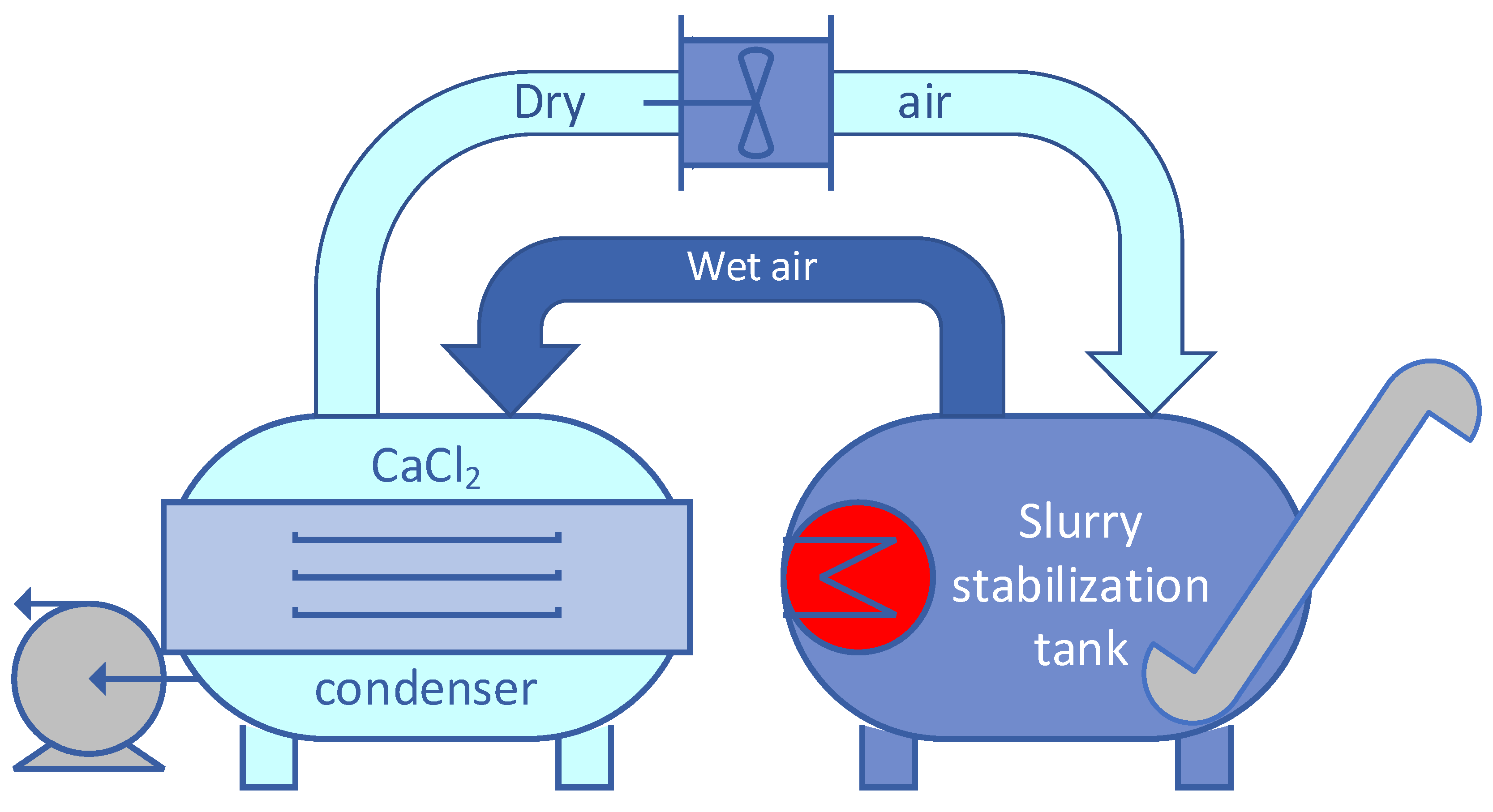
Figure 2.
Modified BMC template designed to be used for high school K-16 students participating in the PBL (Make it happen!).
Figure 2.
Modified BMC template designed to be used for high school K-16 students participating in the PBL (Make it happen!).
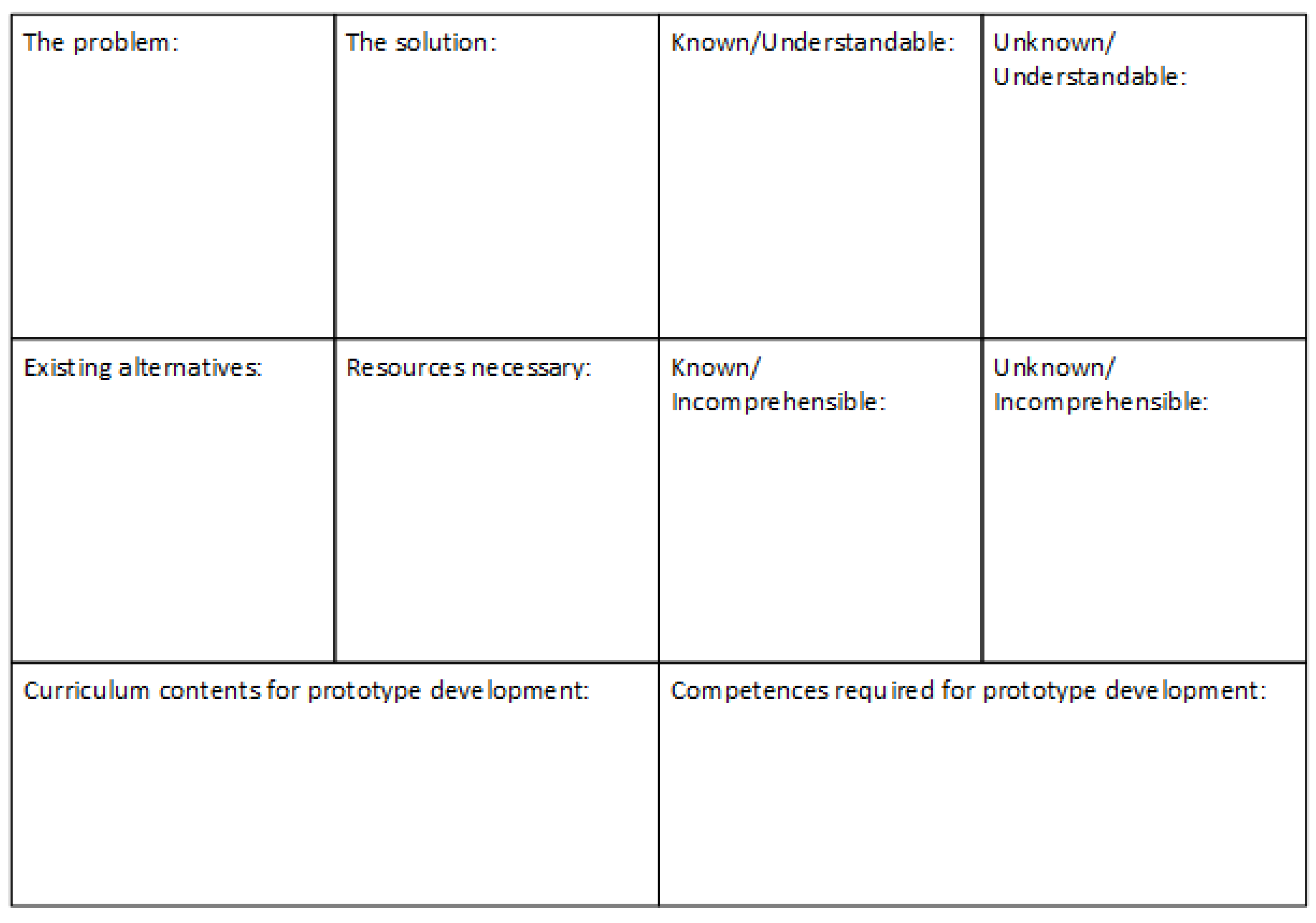
Figure 3.
Development of the prototype (Alejandro Moure Abelenda, 2022): (a) (b) Fixing the heater cable of carbon fiber to the 150-L vessels of stabilization of organic manure with a 60-W glue gun; (c) 50-L prototype (over the table) and 150-L prototype (on the floor) finalized after recovering them with mineral wool for thermal insulation.
Figure 3.
Development of the prototype (Alejandro Moure Abelenda, 2022): (a) (b) Fixing the heater cable of carbon fiber to the 150-L vessels of stabilization of organic manure with a 60-W glue gun; (c) 50-L prototype (over the table) and 150-L prototype (on the floor) finalized after recovering them with mineral wool for thermal insulation.
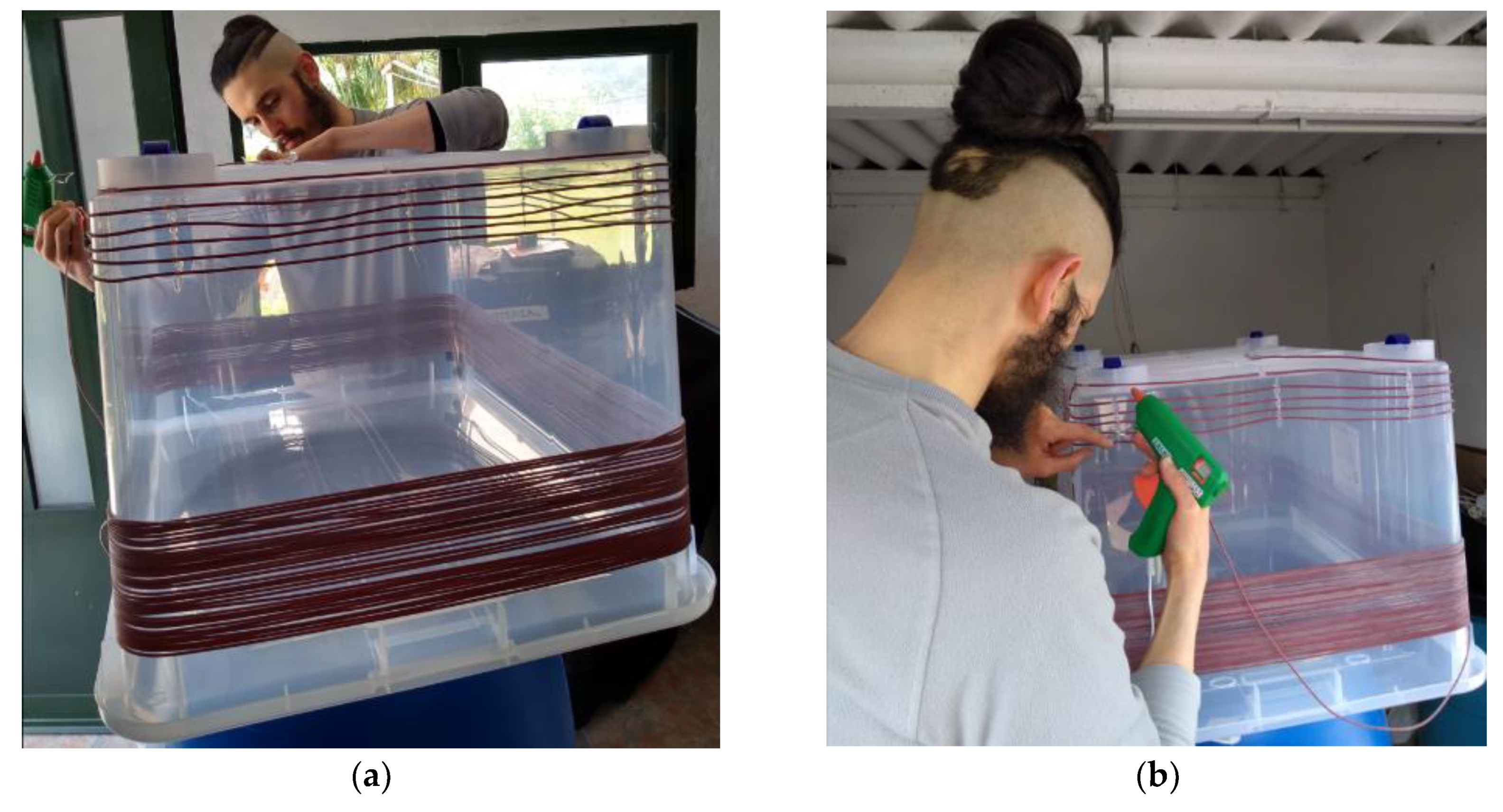
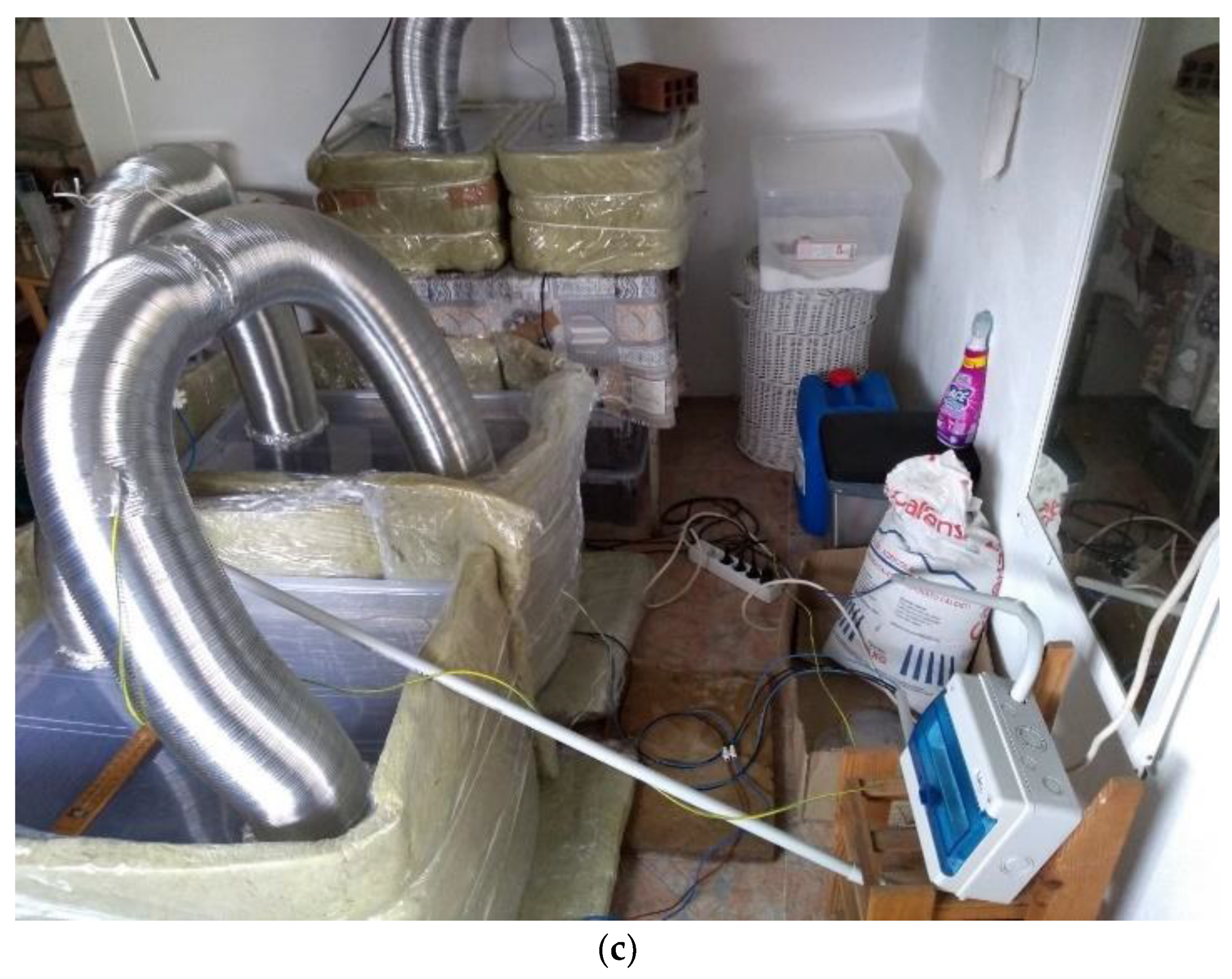
Figure 4.
(a) Fresh organic manure (90 % moisture) in the 150-L stabilization chamber; (b) CaCl2 in the tray of the condensation vessel; (c) stabilized manure after 2 weeks of operation (45 % moisture); (d) testing the CaCl2-brine as additive of fresh slurry, which was generated in the condensate chamber, to avoid crust formation; (e) upgraded soil organic amendment (25 % moisture) after 2-mm sieving.
Figure 4.
(a) Fresh organic manure (90 % moisture) in the 150-L stabilization chamber; (b) CaCl2 in the tray of the condensation vessel; (c) stabilized manure after 2 weeks of operation (45 % moisture); (d) testing the CaCl2-brine as additive of fresh slurry, which was generated in the condensate chamber, to avoid crust formation; (e) upgraded soil organic amendment (25 % moisture) after 2-mm sieving.
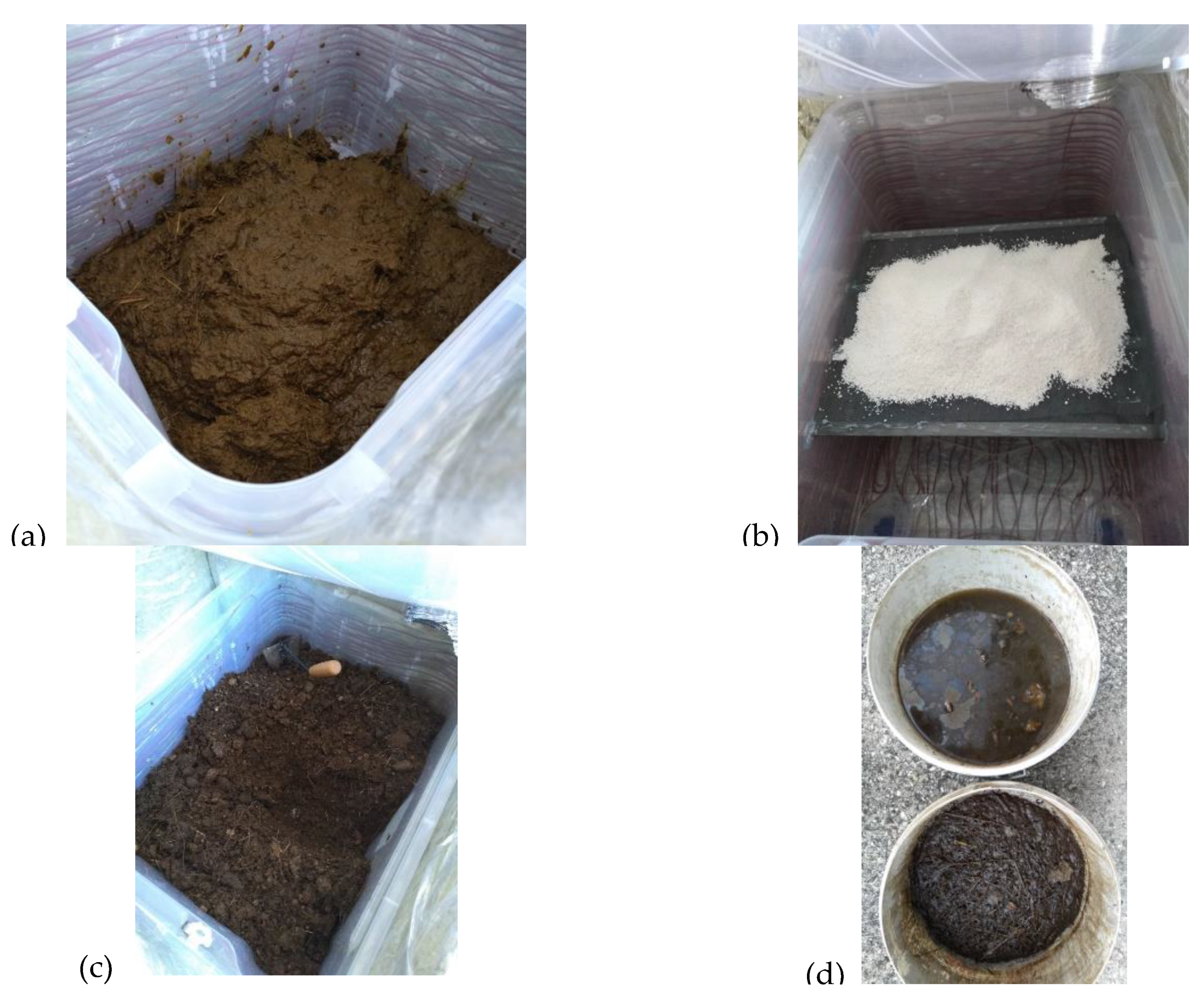
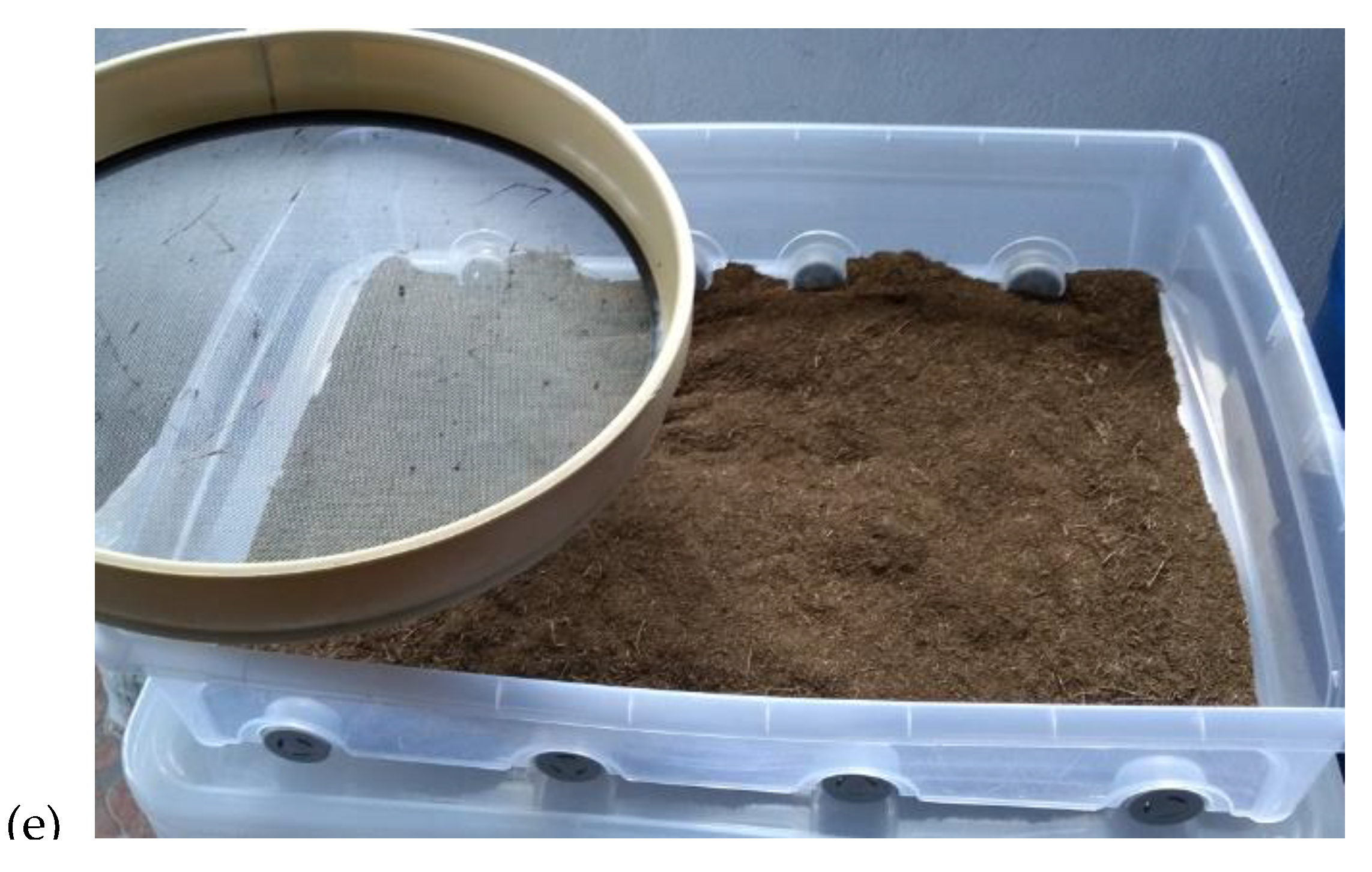
Figure 5.
Workflow for progressing adequately during the PBL, depending on the experience of the apprentice. In the IBL the prototype development is used as means of reflection for proposing better questions.
Figure 5.
Workflow for progressing adequately during the PBL, depending on the experience of the apprentice. In the IBL the prototype development is used as means of reflection for proposing better questions.
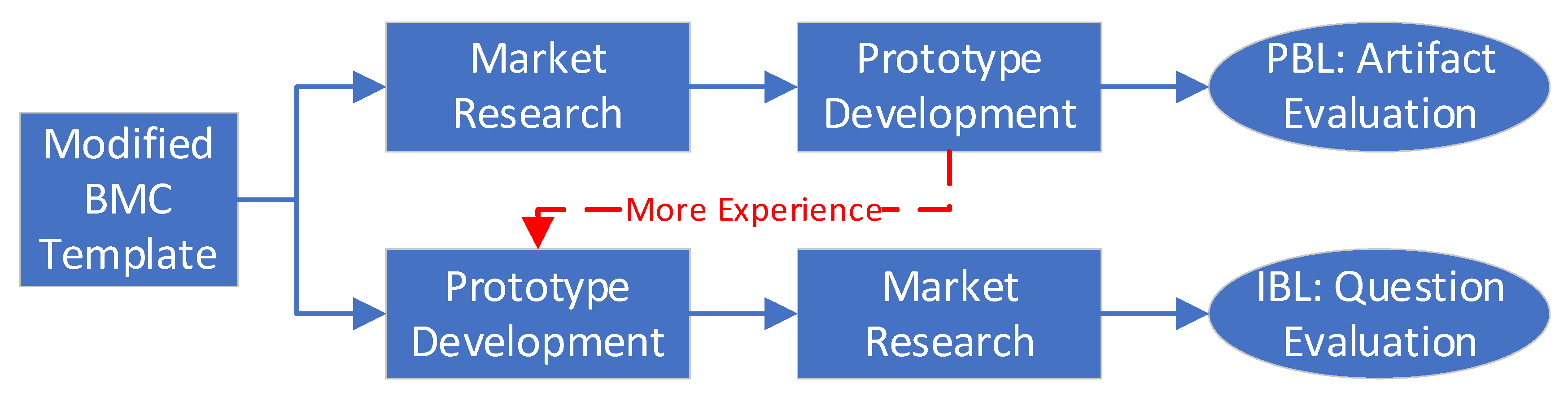
Figure 6.
Operation of 4 prototypes at a small farm (i.e. 20 dairy cows).
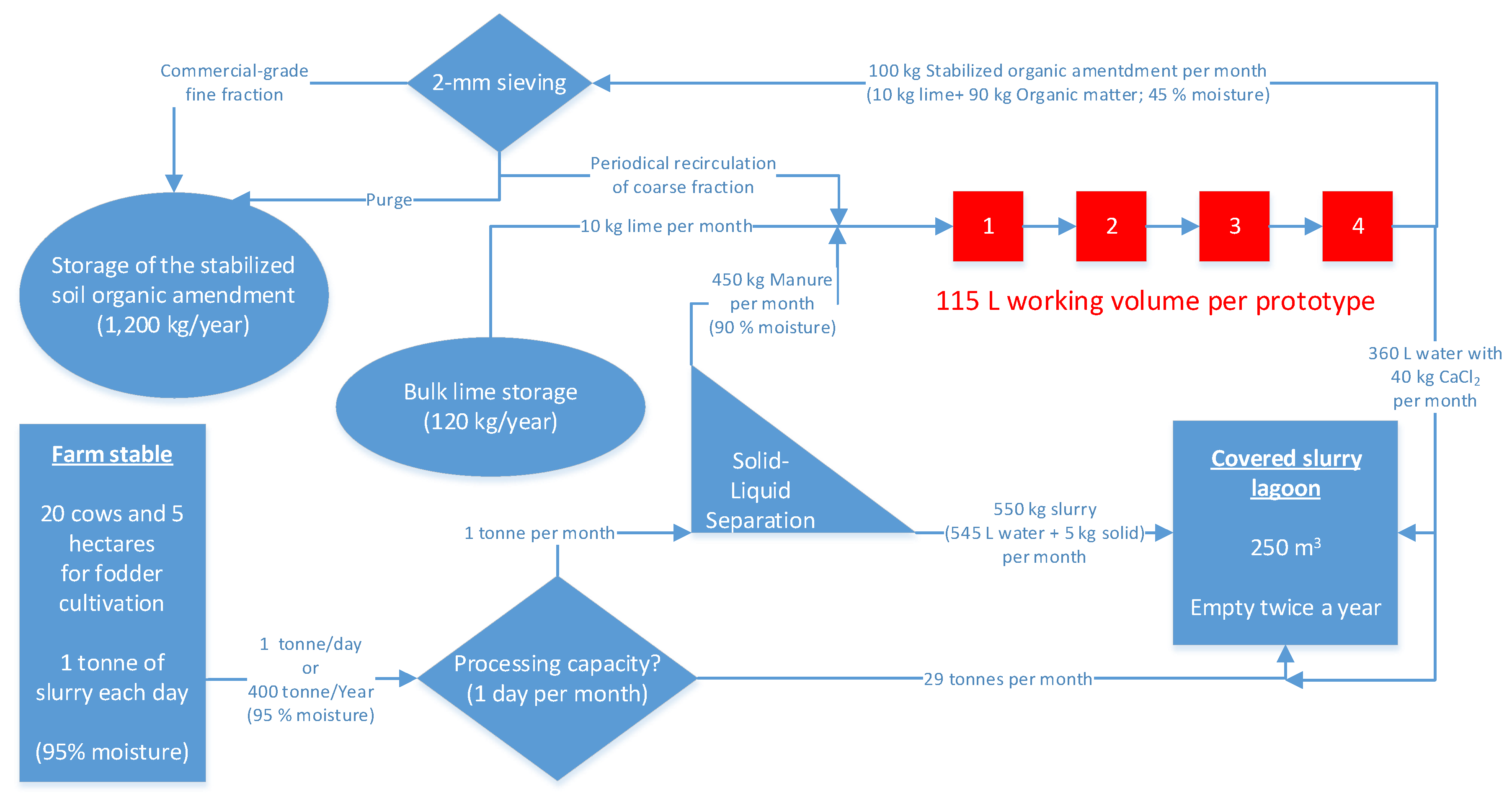

Table 1.
Description of the most representative items required for the manufacturing of the POC shown in Figure 1.
Table 1.
Description of the most representative items required for the manufacturing of the POC shown in Figure 1.
| Quantity | Item description | Price/(EUR) |
|---|---|---|
| 2 | 150-L boxes of high resistance plastic resin for the soil organic amendment stabilization tank and the condensed brine of calcium chloride (Figure 1). | 81.34 |
| 1 | Pack of mineral wool panels (1.35 x 0.6 x 0.04 m) for insulation of the stabilization tank (preserving the high temperature) and the condensation vessel (preventing the increase of the temperature). | 96.37 |
| 2 | 3-m flexible aluminum pipes of 150 mm diameter to connect the 2 vessels and allow the convective transport of moisture from the stabilizing manure to the condensation tank. | 32.00 |
| 2 | 25-kg sacks of lentils of calcium chloride for the operation of the prototype for 3 months. | 45.82 |
| 1 | 150-mm diameter tubular fan inline duct ventilator (45 W) to promote the movement of the air between the headspace of the 2 vessels. | 33.30 |
| 1 | 2-m stainless steel bar to prepare the cradle for the calcium chloride in the condensation vessel. | 8.29 |
| 1 | 3-m glass fiber mosquito netting roll (1 m wide) to use as trays and ensure the better contact of the calcium chloride lentils with the moisture in the air (Figure 4b). Also, to avoid flies reaching the condensation vessel by covering the air conducts. | 6.00 |
| 1 | 100-m carbon fiber heating cable (33ohm/m) coated with silicone gum to operate the stabilization vessel above room temperature. | 57.69 |
| 1 | Cutter and hot melt glue gun (Figure 3b) to modify the plastic boxes as per the requirements of the prototype in Figure 1. | 20.53 |
| 2 | Aluminum tape to seal the connections of the flexible aluminum pipe and the plastic boxes. | 3.15 |
Table 2.
Details of the 10 sessions (50 minutes each) of the PBL (Make it happen!) that will take place during the whole academic year, in agreement with the pages 258 – 262 of the Royal Decree 1105/2014 that established the curriculum of the subject of Physics and Chemistry of 3rd course (14 – 15 years old) of Spanish Secondary Education (Gobierno de España, 2015).
Table 2.
Details of the 10 sessions (50 minutes each) of the PBL (Make it happen!) that will take place during the whole academic year, in agreement with the pages 258 – 262 of the Royal Decree 1105/2014 that established the curriculum of the subject of Physics and Chemistry of 3rd course (14 – 15 years old) of Spanish Secondary Education (Gobierno de España, 2015).
| Block | Didactic unit | Details of the sessions of the PBL (Make it happen!) |
|---|---|---|
| B1: The scientific activity | DU1: The research process | Based on the data available by secondary sources of information (Alejandro Moure Abelenda, 2022; Moure Abelenda et al., 2022; Moure Abelenda and Amaechi, 2022), students share with their working group members their understanding of the situation that the agroindustry is facing, and they start to hypothesize what are the possible solutions. Kahoot! and Socratic method to develop the understanding, increase the intrinsic motivation, and refine hypotheses. |
| B2: Matter | DU2: Aggregation states and separation of mixtures | Prediction, Observation, and Explanation (POE) experience: Appraisal of the underlying phenomenon of the calcium chloride deliquescence, which is widely used as home dehumidifier, particularly in small cupboards and dress rooms. Elucidation of the law of (water) mass conservation. Introduction to the design of a prototype for the dehydration (and stabilization) of a complex blend: Students play with the surface area to volume ratio to obtain a quicker drying and stabilization of manure and slurry (Moure Abelenda and Aiouache, 2022). |
| DU3: Formulation and nomenclature of binary and ternary compounds | Study the role of anhydrous salts in the operation of the artifact: Calcium chloride as dehydrating agent and additive to untreated slurry; Calcium carbonate as pasteurizing agent to keep under control the biological activity as well as enhancing the dehydration. Students can observe the self-hardening effect of quicklime and slaked lime and they can prepare pellets of limed slurry to enhance the rate of drying (greater surface to volume ratio) and prepare a granular fertilizer. | |
| B3: Phenomena | DU4: Physical phenomena and chemical phenomena | By this session of the PBL (Make it happen!), students are able to have an idea of the scientific background of the prototype and they can think about how to improve it: Cooperatively understanding of the kinetic and the equilibrium of the exothermic reaction and the mechanism associated to the colligative properties of ionic solutions. Determination of the reaction stoichiometry: maximum amount of water that calcium chloride is able to retain and the lowest concentration attainable for the condensed brine (< 1 M CaCl2). |
| DU5: The importance of the chemistry in the society and the environmenta | IBL: Double session (100 minutes) for the pedagogic outing associated with the primary market research with key stakeholders of the agroindustry. Initial training to elaborate the questions about the logistics of managing animal slurry at farm level (small and medium size < 500 cattle) and to check whether the POC being developed fits with the current infrastructure for manure management (Market Business News, n.d.; MScTE48, 2015). | |
| B4: Movement and Forces | DU6: Forces and Movement | Understanding how fan propellers promote turbulence and the convective movement of air: inductive convection (behind the fan) and forced convection (in front of the fan). Elucidate how the air flow enhances the rate of drying and stabilization of the organic manure, based on the kinetic-molecular theory that explains the behavior of gases and the mass transfer of substances (e.g. moisture). Students can suggest the best location of the fan in the prototype (Figure 1) and test different flowrates to determine the best performance considering the power consumption. |
| DU7: Simple machines | Assess the possibility of including a screw conveyor or other type of automatic conveyor in the stabilization vessel and/or a centrifugal pump in the condenser, to enable the continuous operation of the prototype. Feeding the equipment with fresh materials is as necessary as periodically purging the stabilized organic amendment and the condensed brine. In order to decrease the residence time of the organic manure a propeller would need to be designed for the stabilization tank, to enable faster kinetics due to continuous mixing. | |
| B5: Energy | DU8: Electricity and electric circuits | The students have the opportunity to design the heating system of the stabilization tank using carbon fiber cable and determining the optimum power consumption, by making use of Ohm’s law and Watt’s law. They need to consider the runaway effect could lead to ignition, as the substrate becomes drier. Consideration of the different mechanisms of heat transfer (via conduction, convection, and radiation) to increase the rate of evaporation, deliquescence, and stabilization. |
| DU9: Transformation and conservation of energy | By this point, the working groups could start to apply modifications to the original prototype before understanding very well all the involved mechanisms or even the opinion of the stakeholders. Since students have limited chances for amelioration of the prototype (as this constrain represents their budget in the project), they need to optimize the whole system considering that the liming of the slurry and the deliquescence process of calcium chloride are exothermic processes. Determination of the overall energy balance and justification of the power consumption of the prototype. The cost of the type of lime (quicklime, slaked lime, or limestone) also needs to be inputted. | |
| B1: The scientific activity | UD10: Sharing and roundtablea | Double session (100 minutes) to allow each group to sell the advances made on the prototype and how these address the demands of the potential clients (15 minutes per group). Discussion on the best approach and best practices. Subsequently, metacognition is promoted with a self-assessment form to assist them on their evaluation of the cognitive conflict experience throughout the whole PBL (Make it happen!), and to understand how their project management skills have improved with this didactic experience. |
aDouble sessions are required for the primary market research and the roundtable.
Table 3.
Expansion of the intellectual property and unregistered design rights (EUIPO, 2023b, 2023a; UK Government, 2022; YourEurope, 2022) by improving the performance of the processing steps.
Table 3.
Expansion of the intellectual property and unregistered design rights (EUIPO, 2023b, 2023a; UK Government, 2022; YourEurope, 2022) by improving the performance of the processing steps.
| Components | Parameters | Targeted conditions |
|---|---|---|
| Incubator (Stabilization tank) | Length of the heating cable of carbon fiber | Maximum operating temperature avoiding runaway of the system leading to ignition. |
| Intensity/voltage/power consumption | Design as per the domestic (220/240 V) or industrial application (if 3-phase electric power available). | |
| Temperature/heating requirements | Accounting the exothermic reactions of lime hydration and carbonation, and brine formation. | |
| Rate of drying/stabilization | Targeted stabilized soil organic amendment: 50 wt.% moisture content or below. | |
| Dose of lime | Just enough to prevent excessive biological activity, which could be indicated by the presence of flies. Assess the use of quicklime, slaked lime, and limestone. | |
| Automatic conveyor | Suitable for the stabilization vessel without decreasing the working volume (i.e. inner space) and the loading rate of fresh slurry. | |
| Recirculation loop | Optimum feeding ratio of fresh slurry to coarse fraction of the stabilized manure obtained by 2-mm sieving. | |
| Condenser (Brine collecting vessel) | Temperature of the vessel and insulation with mineral wool | Based on Le Chatelier’s principle, exothermic reactions are more spontaneous under low temperatures (i.e. room temperature or below). |
| Air flowrate | Fastest retention of moisture and other gases while minimizing the electric power consumption of the blower. | |
| Feeding rate of CaCl2 | Optimum ratio of solid CaCl2 to liquid brine to maximize the absorption of moisture and other gases in the condenser. Targeted brine concentration: < 1 M. | |
| Clean brine | Clear and free of biomass (including flies). In optimum concentration for commercialization and use large scale slurry lagoon at a rate of 1 L brine additive per tonne of slurry. | |
| Centrifugal pump and conveyor | Continuous operation of the prototype: removal of the condensed brine and feeding of CaCl2 lentils. |
Table 4.
SWOT analysis performed for the PBL (Make it happen!).
| Helpful | Harmful | |
|---|---|---|
| Internal | Strengths | Weaknesses |
|
|
|
| External | Opportunities | Threats |
|
|
Disclaimer/Publisher’s Note: The statements, opinions and data contained in all publications are solely those of the individual author(s) and contributor(s) and not of MDPI and/or the editor(s). MDPI and/or the editor(s) disclaim responsibility for any injury to people or property resulting from any ideas, methods, instructions or products referred to in the content. |
© 2023 by the authors. Licensee MDPI, Basel, Switzerland. This article is an open access article distributed under the terms and conditions of the Creative Commons Attribution (CC BY) license (http://creativecommons.org/licenses/by/4.0/).
Copyright: This open access article is published under a Creative Commons CC BY 4.0 license, which permit the free download, distribution, and reuse, provided that the author and preprint are cited in any reuse.


