

Submitted:
23 January 2023
Posted:
27 January 2023
You are already at the latest version
Abstract
Legume seed protein is an important source of nutrition, but it is less digestible than animal protein. Poor protein digestibility in legume seeds and seedlings may partly reflect defences against herbivores. Protein changes during germination typically increase proteolysis and digestibility, by lowering the levels of anti-nutrient protease inhibitors, activating proteases, and breaking down storage proteins (including allergens). Germinating legume sprouts also show striking increases in free amino acids (especially asparagine), but their roles in host defence or other processes are not known. While the net effect of germination is generally to increase the digestibility of legume seed proteins, the extent of improvement in digestibility is species and strain dependent. Further research is needed to highlight which changes contribute the most to improved digestibility of sprouted seeds. Such knowledge could guide the selection of varieties that are more digestible, and also guide the development of food preparations that are more digestible, potentially combining germination with other factors altering digestibility, such as heating and fermentation. Techniques to characterize the shifts in protein make-up, activity and degradation during germination need to draw on traditional analytical approaches, complemented by proteomic and peptidomic analysis of mass spectrometry identified peptide breakdown products.
Keywords:
Plant proteins
; legumes
; protein digestibility
; germination
; peptidomics
; proteomics
1. Introduction
A global shift from animal-based diets towards more plant-based diets is recommended on both environmental and health grounds [1]. Certain seeds, especially legumes, are high in protein content (20–45%) [2] and their production can lead to less greenhouse emissions, water use, and land use compared with animal proteins, leading to an increased focus on plant protein sources [3,4]. Plants contribute many nutritional benefits in addition to their protein content, with higher unsaturated fatty acids, lower cholesterol content, as well as higher dietary fiber, phyto-nutrients and antioxidants [5]. After grains, legumes from the Leguminosae and Fabaceae families represent a major component of plant foods, and complement them nutritionally in terms of amino acid composition [6]. Various legume species are consumed as a part of human diet worldwide. In a typical plant-based diet, they can provide around 33% of dietary protein alongside the carbohydrates, fiber, vitamins and minerals that they also provide [7,8]. Major legume seeds used for human consumption are peas (Pisum sativum), different varieties of beans (Phaseolus vulgaris, Vigna unguiculata, Phaseolus lunatus, Vicia faba), chickpea (Cicer arietinum), lentil (Lens culinaris) and lupin (Lupinus albus) [9,10,11].
However, differences between animal and plant protein sources, in terms of their digestibility and nutritional quality, are frequently highlighted as a potential limitation of plant-based diets. Plant proteins are often less completely digested than animal proteins [12]. Plant seed proteins are likely to have evolved to be difficult to breakdown before germination, to make them less attractive to microbes, insects and other herbivores that may be attracted to them as a food source; but then to release the protein and make it available upon germination. One feature of the seeds contributing to lower digestibility is the presence of protease inhibitors, whose levels may particularly increase in pathogen-exposed plants [13,14]. Another feature is the high protein concentration and low water content, which may create a physical barrier reducing access of digestive proteases to the storage proteins and a third feature is the inherent structures of the storage proteins themselves, including glycosylation and oligomerizations (which may further increase with heating) [15] which may also impede protease access to the protein chain. However, the precise relationship between protein structure and digestibility in legume proteins is incompletely understood [16]. It has been postulated that the higher beta-sheet content of many plant proteins may be associated with poorer digestibility particularly in heated foods, perhaps because heating induces intermolecular beta-sheet association, resulting in oligomerization into aggregates [15,17].
2. Plant Proteins and their alterations during germination
Germination is an important physiological process in plant development. A mature seed germinates when put in proper physiological conditions. The process of germination can be divided into 3 steps. The first step involves i) imbibition, which involves initial absorption of water to hydrate seed and ii) activation of metabolism, with increased respiration and protein synthesis. Imbibition of water makes the seed coats more permeable to oxygen and water. The uptake of water is immediately followed by an increase in respiration, followed by the mobilization of stored reserves including proteins, carbohydrates, lipids and nucleic acids. Thus, the embryo cells resume metabolic activities for growth, while stored food reserves are mobilized and digested by using the energy generated from aerobic respiration.
Seed proteins can be roughly grouped into three types: major storage proteins, proteases, and protease inhibitors. Since protease inhibitors can inhibit the action of human digestive proteases, they are sometimes considered antinutrients [14]. The digestion of food proteins depends on the interplay of these three components. During germination, proteases break down the storage proteins to provide free amino acids and small peptides [18] which can contribute to the synthesis of structural and functional proteins of the developing radicle. It has been postulated that plants and insects are in evolutionary conflict, with plant protease inhibitors acting as a defence against herbivores that adapt to cope with these barriers to proteolysis [19,20,21]. Protease inhibitors may comprise up to 10% of plant protein content [22]. In plant seeds and pulses, proteases digest substrate storage proteins on germination, and plant seed protease inhibitors may play roles both in inhibiting proteolysis pre-germination, and in inhibiting proteolysis by insects or other herbivores. Protease inhibitors can be both proteins themselves, as well as non-protein inhibitors such as phytates [23]. In the following sections we review qualitative and quantitative changes in legume seed proteins during germination.
2.1. Changes in crude protein content during germination
Since legumes are the most important sources of plant proteins, changes in protein content of legumes after germination have drawn a lot of attention. Germination is potentially an inexpensive technique to improve the nutritional quality of legumes and other grains. Table 1 summarises the observation across many legumes that germination typically results in an increase in the dry weight percentage of protein. Increase in protein content may well reflect both the breakdown of fats and carbohydrates, and the de novo synthesis of protein and free amino acids [24].
2.2. Changes in polypeptide molecular weight distributions during germination
Mammila et al investigated the effects of germination on the molecular weight distribution of proteins for various legumes [37]. As shown in Figure 1, germination increased the concentrations of low molecular weight peptides and decreased the concentrations of higher molecular weight proteins/peptides, for all the legumes studied except for kidney bean. These differences are due to different types of proteases and their time of release during the germination process. The morphological and physiological characteristics of different legumes also influences the behaviour of proteases [37].
2.3. Storage protein changes during germination
The amount of proteins present in seeds varies from species to species with legumes having the highest quantity (e.g. up to 40% of dry weight) whereas cereals have relatively low quantities (~10%) [38]. The bulk of legume seed proteins are classed as storage proteins. Storage proteins are stored in single membrane-bound organelles known as protein bodies. Osborne in 1924 classified the seed storage proteins into albumins (soluble in water), globulins (soluble in dilute saline), prolamins (soluble in alcohol/water mixtures) and glutelins (soluble in dilute acids or bases) [22]. Of these, globulins are the most important storage proteins of legumes. According to their sedimentation coefficient (S), legume globulins are classified into 3 sub-categories: 2S, 7S and 11S globulins [39,40] Chickpea consists of 15% to 30% protein [41]. The major proteins found in chickpea are globulins (53–60%), glutelins (19–25%), albumins (8–12%) and prolamins (3–7%) [42]. Chickpea has a relatively low level of sulphur containing amino acids [42,43], which could potentially impact on ease of monomer digestibility, including reduced risk of disulphide-linkage of oligomers during heating.
While it might be anticipated that soluble proteins should show a decline in their percentage of total protein during germination, in fact some soluble protein fractions in certain species can increase (Table 2). Together, these findings across legumes suggest that different species and varieties may adopt different strategies such as activation of different proteases, different rates of proteolysis, and/or alterations to timings of proteolytic events, during germination.
2.4. Changes in free amino acids and protein amino acids during legume germination
Amino acid composition varies widely among seeds [41]. In legumes, while free amino acids can increase markedly in concentration during germination, they are overall a small percentage of the total free and protein amino acids (Table 3). In L culinaris, the total amount of free amino acids was 2.2 mg/g of dry weight which increased to 48.6 mg/g on germination, and a substantial part of that increase is accounted for by asparagine alone (Table 3). Protein amino acids also increased during germination (with total amino acids increasing from 160 to 258 mg/g dry weight), with amino acids lysine and aspartate/asparagine increasing fourfold (Table 3). Thus, the overall picture of change in free and total amino acid change is intriguing, with asparagine markedly increasing in both free and non-free amino acids during germination. To date, no clear hypothesis has been put forward to explain these observations. Further analysis is needed to distinguish whether the increase in non-free amino acids of asparagine is mainly seen in short peptides (such as dipeptides), which seems more likely, or in larger proteins.
Interestingly, while most amino acids increased as a proportion of dry weight during germination, the two sulphur containing amino acids, cysteine and methionine, which are already extremely low in chickpea, appeared to decline further in concentration during germination (Table 3). This raises the possibility that the depletion of these amino acids, which may be intended to disrupt nutrition of potential herbivores, may also remain depleted in the seedling, where the possibility of fungal or insect predation is likely to be high.
While pea shows germination-related changes in free amino acids that are broadly similar to the pattern seen in lentil (Table 4), other species are less similar. The proportion of essential amino acids is relatively stable through chickpea germination (Figure 2). In the common bean, the increase in free asparagine is much more modest (Table 4), while free arginine and free glutamic acid which are high pre-germination then drop after germination. These decreases mainly account for the overall decline in free amino acid concentration after germination in the common bean (48 mg/g to 33, Table 4). Thus, there are clearly marked differences among legume species with regards to changes in free amino acid content during germination.
3. Changes in protein digestibility during legume germination
A review by Sa et al summarizes most of the in vitro and in vivo methods used to calculate protein digestibility [51]. In vivo methods include true digestibility, protein efficiency ratio (PER), protein digestibility corrected amino acid score (PDCAAS) and digestible indispensable amino acid score (DIAAS). PER is calculated by feeding a test protein diet and casein to rats and then calculating the ratio of weight gain and the amount of protein consumed. PDCAAS is calculated as mg (limiting amino acid in 1g of test protein) / mg (same amino acid in 1g of reference protein), multiplied by the fecal true digestibility percentage [52]. The limiting amino acid is the essential amino acid present in the lowest proportion as compared with the reference to a food protein such as egg white. Fecal true digestibility is calculated as the difference in percentage of ingested and excreted amount of nitrogen. In vitro protein digestibility (IVPD) mimics the digestive process occurring in the gastrointestinal tract. It calculates the percentage of protein hydrolyzed in the presence of digestive enzymes [53].
For all species shown in Table 5, except for lentil, there was a moderate increase in in vitro protein digestibility after germination. For some species, this corresponded to almost an additional one fifth of protein being digestible. The increase was seen gradually over chickpea germination, with IVPD of 68% in the seed, to 70% after soaking to 72%, 76% and 79% after 3, 4 and 5 days germination respectively [11].
4. Changes in proteases during legume germination.
Proteases which break down seed proteins should ideally have reasonable efficiency at digesting their major substrates, and should be either localized in or delivered to the protein bodies where storage proteins are located [60]. Proteases are either endopeptidases or exopeptidases. Exopeptidases may be either aminopeptidases or carboxypeptidases.
The major classes of proteases are serine proteases, cysteine proteases, aspartic proteases and metalloproteases, named according to their key enzymatic active site residues. [61,62]. Serine proteases are broadly classified as trypsin-like and subtilisin-like based on their structures. Cysteine proteases are most effective at pH 4-6.5, such as papain. Metalloproteases require divalent metal cations such as Zn2+, Mg2+ or Ca2+.
In mung bean, chickpea, cowpea and lentils up to 3 days of germination [63], endoprotease activity was measured with a casein substrate, and shown to generally increase with germination time (Figure 3). Mung bean endopeptidase and exopeptidase activities increased on germination: endopeptidase activity started increasing after 3rd day, with a 10-to-15-fold increase by day 6; while the carboxypeptidase activity increased by 50% over the 6 days [64].
It remains to be elucidated to what extent the increased enzymatic activities during germination can be accounted for by reductions in protease inhibitors (both proteinaceous and others), by alterations in physiological conditions favoring more efficient enzyme function, by cleavage activation of pro-enzymes into active form, and by increased de novo synthesis of proteases.
5. Changes in protease inhibitors during legume germination
Protease inhibitor proteins constitute about 10% of the total protein content and are present in a high percentage of legume seed proteins [65].The two main groups of legume protease inhibitor groups are Bowman-birk inhibitors (BBI) and Kunitz-type inhibitors, concentrations of which varies with species [66,67]. BBIs are 8–10 kDa double-headed serine protease inhibitors of ~71 amino acids in length, that contain seven disulphide bonds (Figure 5). They have two active sites and inhibit both trypsin and chymotrypsin proteases. Kunitz-type inhibitors are between 8-22 kDa, and have two disulphide bonds and one active site. They reversibly bind to serine, cysteine and aspartic acid proteases, forming stable complexes that can inhibit competitively or non-competitively [68]. Protease inhibitors have inhibitory actions against plant pathogen by antinutritional interactions [69]. They can also cause hyperproduction of digestive enzymes which results in loss of sulfur containing amino acids weakening the insects and finally causing their death [70]. Different classes of pests utilize different digestive enzymes, with some using cysteine proteases while other use serine proteases [68]. The mechanism by which the plant protease inhibitors bind to the insect proteases is similar for all the four classes of inhibitors; aspartic acid protease inhibitors (pepstatins), serine protease inhibitors (serpins), cysteine protease inhibitors (cystatins) and metallo carboxy protease inhibitors [68]. The specificity of the inhibitor-protease interaction depends upon the specificity of proteolytic activity of the proteases [70]. Many naturally occurring protease inhibitors from plants, including legumes, can have also effects on humans [66]. Protease inhibitors severely impact the proteolytic activity in gastrointestinal tract, thereby limiting the nutrients absorption and digestibility [71]. Chickpea, lentil and pea Bowman-Birk inhibitors inhibit in vitro cancer cell growth [70,72,73].
Trypsin inhibitory activity in various legumes typically reduces, but is by no means eliminated, during germination (Table 7). Germination for 48 hours lowered trypsin inhibitory activity by 64% in faba bean [74]. In lentils, trypsin inhibitory activity does not change much in the first 3 days of germination but decreases by up to 18% after 6 days of germination and by up to 45% after 10 days, which may help in supply of new amino acids for growing seedling [75]. In kidney beans, decreases in inhibitor content were observed only after 10 days of germination [76,77]. In cowpea, there was a 19% reduction of trypsin inhibitors after 8 days germination [56].
In addition to the protein-based protease inhibitors, non-protein components also interfere with protein digestion. Firstly, the physical barriers of cell wall and seed coat structures can hinder the proteolysis process [78], and these will undergo changes during germination. Secondly, non-protein anti-nutritional factors (ANFs) include polyphenols, tannins, phytates, lectins and non-starch polysaccharides [51]. While they are likely present in order to deter herbivores (insects or other species), they are likely also to impact on the proteases of the germinating seeds themselves. Non-starch polysaccharides adsorb amino acids and peptides released during protein hydrolysis [51]. Phytates chelate various minerals such as calcium and zinc which are essential cofactors for many digestive enzymes. Phytates thus reduce protein digestibility, but their amounts can be reduced slightly during legume germination by increased expression of phytases [79,80]. A feasible way of increasing phytase activity in legume food preparations is to provide it from cereal grains such as wheat [80], where phytase is much more abundant. Increasing phytase activity is considered in animal feeds, primarily to aid bioavailability of minerals and trace elements [80], rather than reflecting concerns about the effects of phytates on protein digestion. Tannins also serve to reduce protein digestibility in legumes, as well as exerting other effects, however, their concentration can be reduced [81] by simple techniques such as soaking in water and discarding the soaking broth. Other antinutrients that inhibit digestibility include lectins, whose effects can also be reduced by germination [81].
6. Changes in protein allergens during germination
Various nutritionally important foods cause allergic reactions when consumed [85]. Among legumes, peanut is the source of the highest number of allergic proteins, followed by soybean, lentil, chickpea, pea, mung bean, pigeon pea, and lupin in decreasing order of allergenicity [86,87]. The common characteristics of legume allergic proteins are that they are often heat stable, stable to gastrointestinal fluids, water soluble, and glycosylated. They range in molecular weight between 10 to 400 kDa, and are classified into 6 families namely cupins, prolamins, pathogenesis related (PR) proteins, profilins, vicilins and glycins. Of these, cupins and prolamins are seed storage proteins. The properties of various allergic protein families are summarized in Table 8 [85,86,87,88].
Germination results in decreased allergenicity of legumes. Studies by Troszyńska et al (2007) have shown that germination decreases the immunoreactivity of peas by 40% and that of soybeans by 70%. Germination in darkness reduced the immunoreactivity of soybeans by 78% [89]. The electrophoresis bands of pea proteins showed the disappearance of molecular weight of 40kDa fractions and fractions with higher molecular weight in germinated peas. However, vicilin retains its stable structure even after germination and is not hydrolyzed by proteases and thus contributes to the remaining allergenicity even after pea germination. Germination decreased immunoreactivity more significantly for soybeans than for pea [89] possibly because one of the major soy allergens, glycinin, has been shown to be hydrolyzed after 3 days of germination [90].
7. Impact of food processing on protein digestibility
Other than germination, various methods such as cooking, extrusion, autoclaving, irradiation, roasting and fermentation have helped in increasing the digestibility of plant proteins, presumably by deactivating the anti-nutritional factors such as protease inhibitors. They can also improve food flavour and texture. Food processing methods such as autoclaving, cooking, and fermentation moderately increase the in vitro protein digestibility (IVPD) of legumes [51,91]. Aviles-Gaxiola et al classified the various methods to overcome trypsin-inhibitor activity into physical processes (thermal, extrusion, radiation, ultrasound), chemical processes (reducing agents, acids and bases, functionalized polymers) and biological processes (germination, fermentation) [92]. They compared various methods and found that in soybean thermal treatment along with reducing agent metabisulfite was best for reducing trypsin inhibitors whereas in chickpea reducing agent L-cysteine was most effective. Trypsin inhibitors can be reduced by heating at a high temperature and prolonged boiling. Lectins can also be reduced by heat treatments. Phytates can be reduced by soaking in water or fermentation.
While crude and soluble protein content in soymeal increases with fungal or bacterial fermentation [93,94], there is an increase in in vitro protein digestibility from 60.5% to 67% with fungal fermentation and to 76% by bacterial fermentation, associated with increased essential amino acids and decreased allergenicity [95,96]. Fermentation of soybean with Bacillus subtilis increased the in vitro gastrointestinal digestibility by 1.52 fold, increased the amount of soluble peptides, and increased essential amino acids by ∼4%, especially arginine, tyrosine, histidine and phenylalanine [97]. Trypsin inhibitor activity decreased by more than 10 fold from 27.33 TIU/g in the unfermented soya meal to 2.14 TIU/g in Bacillus natto fermented soymeal [98].
8. Conclusions
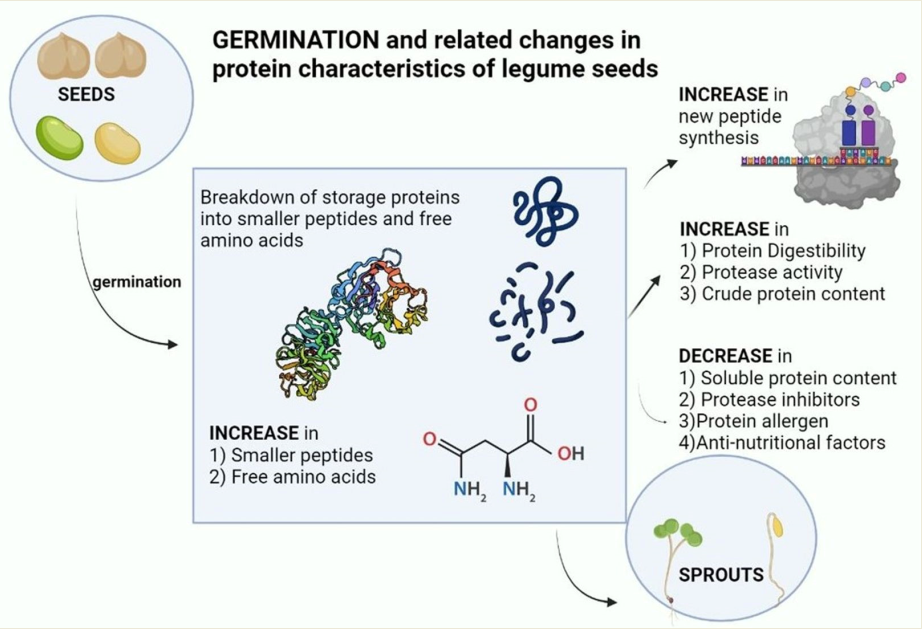
Legumes are good sources of protein, and represent valuable potential substitutes for animal protein production. This increases the impetus to better understand, modify and improve the digestibility and amino acid content of plant protein sources, and their changes during germination. The germination proteolysis programme in legumes represents the culmination of selective forces over millions of years, where seeds are highly adapted to mechanisms of seed dispersion, seed dormancy, predator and pathogen repulsion, and also adapted for the efficient delivery of protein building blocks to the growing seedling. Layered on top of this are the effects of human selection for desirable traits in legume seeds in terms of yield, dietary quality and storage properties. A number of overall features emerge from the literature reviewed here. Legume germination increases the amount of protein, increases the amount of soluble proteins, breaks down high molecular weight polypeptides, increases proteolytic activity, reduces protease inhibitors, increases mammalian digestibility and reduces the amount of allergenic proteins. In some legumes, there is a marked increase of certain free amino acids during germination, particularly asparagine, although the great majority of amino acids in germinated legumes remain bound up in proteins.
Improved knowledge of changes in the legume seed proteome and its changes during germination and other conditions may help guide improvement of their nutritional properties [99]. Mass spectrometry-based proteomics and peptidomics of seeds are versatile tools which can track changes in protein and peptide distributions in seeds during germination [100]. Shotgun proteomics can profile germination-related changes in storage proteins, proteases and protease inhibitors. Peptidomics can identify changes in small peptides and their termini. This has the potential to identify changes in allergenic peptides and in potentially bioactive peptides [101], and to characterise the proteolytic activities that dominate during germination. Application of these emerging technologies alongside established food chemistry approaches has the potential to rapidly uncover and quantify many of the unknown changes that occur during the programme of protein breakdown during germination.
Given the effects of different food processing techniques on protein digestibility, it is of great interest to explore the combined effects of germination with heating, fermentation and other approaches, to identify whether further improvements in digestibility may result. Natural food processing techniques such as heating, germinating and fermenting of legumes [102] or other plant protein sources may be combined in different ways to determine which combinations provide the most effective increase in digestibility. It will be of great interest to determine which traditional existing food preparation techniques [103] may have evolved to have such beneficial effects, and to what extent a more scientifically driven assessment of digestibility of different novel food preparation approaches can unlock additional digestibility.
Author Contributions
Writing—original draft preparation, I.B.; writing—review and editing, I.B., M.O’S.,D.F., D.S.; supervision, M.O’S., D.S.; All authors have read and agreed to the published version of the manuscript.
Funding
This research was funded by fellowship to I.B. CAREER-FIT joint EU Horizon 2020 Marie Sklodowska-Curie and Enterprise Ireland funding, grant Agreement No 847402.
Conflicts of Interest
The authors declare no conflict of interest. The funders had no role in the design of the study; in the collection, analyses, or interpretation of data; in the writing of the manuscript; or in the decision to publish the results.
References
- Nadathur, S.R.; Wanasundara, J.P.D.; Scanlin, L. Proteins in the diet: Challenges in feeding the global population. In Sustainable protein sources; Academic Press, 2017; pp. 1–19. [Google Scholar] [CrossRef]
- Phillips, R.D. Starchy legumes in human nutrition, health and culture. Plant Foods for Human Nutrition 1993, 44, 195–211. [Google Scholar] [CrossRef]
- Day, L. Proteins from land plants–potential resources for human nutrition and food security. Trends in Food Science & Technology 2013, 32, 25–42. [Google Scholar]
- Jones, O.G. Recent advances in the functionality of non-animal-sourced proteins contributing to their use in meat analogs. Current Opinion in Food Science 2016, 7, 7–13. [Google Scholar] [CrossRef]
- Ahnen, R.T.; Jonnalagadda, S.S.; Slavin, J.L. Role of plant protein in nutrition, wellness, and health. Nutrition reviews 2019, 77, 735–747. [Google Scholar] [CrossRef] [PubMed]
- Gepts, P.; Beavis, W.D.; Brummer, E.C.; Shoemaker, R.C.; Stalker, H.T.; Weeden, N.F.; Young, N.D. Legumes as a model plant family. Genomics for food and feed report of the cross-legume advances through genomics conference. 2005. [Google Scholar] [CrossRef]
- Barać, M.; Čabrilo, S.; Pešić, M.; Stanojević, S.; Pavlićević, M.; Maćej, O.; Ristić, N. Functional properties of pea (Pisum sativum, L.) protein isolates modified with chymosin. International journal of molecular sciences 2011, 12, 8372–8387. [Google Scholar] [CrossRef] [PubMed]
- De Pace, C.; Delre, V.; Scarascia Mugnozza, G.T.; Maggini, F.; Cremonini, R.; Frediani, M.; Cionini, P.G. Legumin of Vicia faba major: accumulation in developing cotyledons, purification, mRNA characterization and chromosomal location of coding genes. Theoretical and Applied Genetics 1991, 83, 17–23. [Google Scholar] [CrossRef] [PubMed]
- Boye, J.; Zare, F.; Pletch, A. Pulse proteins: Processing, characterization, functional properties and applications in food and feed. Food research international 2010, 43, 414–431. [Google Scholar] [CrossRef]
- Campos-Vega, R.; Loarca-Piña, G.; Oomah, B.D. Minor components of pulses and their potential impact on human health. Food research international 2010, 43, 461–482. [Google Scholar] [CrossRef]
- Uppal, V.; Bains, K. Effect of germination periods and hydrothermal treatments on in vitro protein and starch digestibility of germinated legumes. Journal of food science and technology 2012, 49, 184–191. [Google Scholar] [CrossRef]
- Tomé, D. Digestibility issues of vegetable versus animal proteins: protein and amino acid requirements—functional aspects. Food and nutrition bulletin 2013, 34, 272–274. [Google Scholar] [CrossRef]
- Jongsma, M.A.; Bolter, C. The adaptation of insects to plant protease inhibitors. Journal of Insect Physiology 1997, 43, 885–895. [Google Scholar] [CrossRef] [PubMed]
- Zhu-Salzman, K.; Zeng, R. Insect response to plant defensive protease inhibitors. Annu. Rev. Entomol 2015, 60, 233–252. [Google Scholar] [CrossRef] [PubMed]
- Carbonaro, M.; Maselli, P.; Nucara, A. Structural aspects of legume proteins and nutraceutical properties. Food Research International 2015, 76, 19–30. [Google Scholar] [CrossRef]
- Deshpande, S.S.; DAMODARAN, S. Structure-digestibility relationship of legume 7S proteins. Journal of Food Science 1989, 54, 108–113. [Google Scholar] [CrossRef]
- Carbonaro, M.; Maselli, P.; Nucara, A. Relationship between digestibility and secondary structure of raw and thermally treated legume proteins: a Fourier transform infrared (FT-IR) spectroscopic study. Amino acids 2012, 43, 911–921. [Google Scholar] [CrossRef] [PubMed]
- Müntz, K. Proteases and proteolytic cleavage of storage proteins in developing and germinating dicotyledonous seeds. Journal of Experimental Botany 1996, 47, 605–622. [Google Scholar] [CrossRef]
- Leo, F.D.; Volpicella, M.; Licciulli, F.; Liuni, S.; Gallerani, R.; Ceci, L.R. PLANT-PIs: a database for plant protease inhibitors and their genes. Nucleic acids research 2002, 30, 347–348. [Google Scholar] [CrossRef]
- Mossé, J.; Baudet, J. Crude protein content and aminoacid composition of seeds: variability and correlations. Plant Foods for Human Nutrition 1983, 32, 225–245. [Google Scholar] [CrossRef]
- Shewry, P.R.; Napier, J.A.; Tatham, A.S. Seed storage proteins: structures and biosynthesis. The plant cell 1995, 7, 945. [Google Scholar] [CrossRef]
- Osborne, T.B. The vegetable proteins; Longmans, Green and Company, 1924. [Google Scholar] [CrossRef]
- Gemede, H.F.; Ratta, N. Antinutritional factors in plant foods: Potential health benefits and adverse effects. International journal of nutrition and food sciences 2014, 3, 284–289. [Google Scholar] [CrossRef]
- Nkhata, S.G.; Ayua, E.; Kamau, E.H.; Shingiro, J.B. Fermentation and germination improve nutritional value of cereals and legumes through activation of endogenous enzymes. Food science & nutrition 2018, 6, 2446–2458. [Google Scholar] [CrossRef]
- Xu, M.; Jin, Z.; Simsek, S.; Hall, C.; Rao, J.; Chen, B. Effect of germination on the chemical composition, thermal, pasting, and moisture sorption properties of flours from chickpea, lentil, and yellow pea. Food Chemistry 2019, 295, 579–587. [Google Scholar] [CrossRef] [PubMed]
- Ferreira, C.D.; Bubolz, V.K.; da Silva, J.; Dittgen, C.L.; Ziegler, V.; de Oliveira Raphaelli, C.; de Oliveira, M. Changes in the chemical composition and bioactive compounds of chickpea (Cicer arietinum L.) fortified by germination. LWT 2019, 111, 363–369. [Google Scholar] [CrossRef]
- Dipnaik, K.; Bathere, D. Effect of soaking and sprouting on protein content and transaminase activity in pulses. International Journal of Research in Medical Sciences 2017, 5, 4271–4276. [Google Scholar] [CrossRef]
- Mansour, E.H. Biological and chemical evaluation of chick pea seed proteins as affected by germination, extraction and α-amylase treatment. Plant Foods for Human Nutrition 1996, 49, 271–282. [Google Scholar] [CrossRef] [PubMed]
- Khalil, A.W.; Zeb, A.; Mahmood, F.; Tariq, S.; Khattak, A.B.; Shah, H. Comparison of sprout quality characteristics of desi and kabuli type chickpea cultivars (Cicer arietinum L.). LWT-Food Science and Technology 2007, 40, 937–945. [Google Scholar] [CrossRef]
- Kumar, Y.; Sharanagat, V.S.; Singh, L.; Mani, S. Effect of germination and roasting on the proximate composition, total phenolics, and functional properties of black chickpea (Cicer arietinum). Legume Science 2020, 2, e20. [Google Scholar] [CrossRef]
- Joshi, P.; Varma, K. Effect of germination and dehulling on the nutritive value of soybean. Nutrition & Food Science 2016. [Google Scholar] [CrossRef]
- Kayembe, N.C.; van Rensburg, C.J. Germination as a processing technique for soybeans in small-scale farming. South African Journal of Animal Science 2013, 43, 167–173. [Google Scholar] [CrossRef]
- Kassegn, H.H.; Atsbha, T.W.; Weldeabezgi, L.T. Effect of germination process on nutrients and phytochemicals contents of faba bean (Vicia faba L.) for weaning food preparation. Cogent Food & Agriculture 2018, 4, 1545738. [Google Scholar] [CrossRef]
- Martínez-Villaluenga, C.; Gulewicz, P.; Frias, J.; Gulewicz, K.; Vidal-Valverde, C. Assessment of protein fractions of three cultivars of Pisum sativum L.: effect of germination. European Food Research and Technology 2008, 226, 1465–1478. [Google Scholar] [CrossRef]
- Tarasevičienė, Ž.; Danilčenko, H.; Jariene, E.; Paulauskienė, A.; Gajewski, M. Changes in some chemical components during germination of broccoli seeds. Notulae Botanicae Horti Agrobotanici Cluj-Napoca 2009, 37, 173–176. [Google Scholar] [CrossRef]
- Moongngarm, A.; Saetung, N. Comparison of chemical compositions and bioactive compounds of germinated rough rice and brown rice. Food chemistry 2010, 122, 782–788. [Google Scholar] [CrossRef]
- Mamilla, R.K.; Mishra, V.K. Effect of germination on antioxidant and ACE inhibitory activities of legumes. Lwt 2017, 75, 51–58. [Google Scholar] [CrossRef]
- Temba, M.C.; Njobeh, P.B.; Adebo, O.A.; Olugbile, A.O.; Kayitesi, E. The role of compositing cereals with legumes to alleviate protein energy malnutrition in Africa. International journal of food science & technology 2016, 51, 543–554. [Google Scholar] [CrossRef]
- Rubio, L.A.; Pérez, A.; Ruiz, R.; Guzmán, M.Á.; Aranda-Olmedo, I.; Clemente, A. Characterization of pea (Pisum sativum) seed protein fractions. Journal of the Science of Food and Agriculture 2014, 94, 280–287. [Google Scholar] [CrossRef] [PubMed]
- Bennetau-Pelissero, C. Plant proteins from legumes. In Bioactive molecules in food; Springer: Cham, 2019; pp. 223–265. [Google Scholar] [CrossRef]
- Roy, F.; Boye, J.I.; Simpson, B.K. Bioactive proteins and peptides in pulse crops: Pea, chickpea and lentil. Food research international 2010, 43, 432–442. [Google Scholar] [CrossRef]
- Hall, C.; Hillen, C.; Garden Robinson, J. Composition, nutritional value, and healthbenefits of pulses. Cereal Chemistry 2017, 94, 11–31. [Google Scholar] [CrossRef]
- Torres-Fuentes, C.; del Mar Contreras, M.; Recio, I.; Alaiz, M.; Vioque, J. Identification and characterization of antioxidant peptides from chickpea protein hydrolysates. Food Chemistry 2015, 180, 194–202. [Google Scholar] [CrossRef]
- Portari, G.V.; Tavano, O.L.; Silva, M.A.D.; Neves, V.A. Effect of chickpea (Cicer arietinum L.) germination on the major globulin content and in vitro digestibility. Food Science and Technology 2005, 25, 807–812. [Google Scholar] [CrossRef]
- Villacrés, E.; Allauca Chávez, V.V.; Peralta, E.; Insuasti, G.; Álvarez, J.; Quelal, M.B. Germination, an effective process to increase the nutritional value and reduce non-nutritive factors of lupine grain (Lupinus mutabilis Sweet). 2015. [Google Scholar] [CrossRef]
- Martínez-Villaluenga, C.; Gulewicz, P.; Frias, J.; Gulewicz, K.; Vidal-Valverde, C. Assessment of protein fractions of three cultivars of Pisum sativum L.: effect of germination. European Food Research and Technology 2008, 226, 1465–1478. [Google Scholar] [CrossRef]
- Afify, A.E.M.M.; El-Beltagi, H.S.; Abd El-Salam, S.M.; Omran, A.A. Protein solubility, digestibility and fractionation after germination of sorghum varieties. Plos one 2012, 7, e31154. [Google Scholar] [CrossRef]
- Rozan, P.; Kuo, Y.H.; Lambein, F. Amino acids in seeds and seedlings of the genus Lens. Phytochemistry 2001, 58, 281–289. [Google Scholar] [CrossRef] [PubMed]
- Fernandez, M.L.; Berry, J.W. Nutritional evaluation of chickpea and germinated chickpea flours. Plant Foods for Human Nutrition 1988, 38, 127–134. [Google Scholar] [CrossRef]
- Kuo, Y.H.; Rozan, P.; Lambein, F.; Frias, J.; Vidal-Valverde, C. Effects of different germination conditions on the contents of free protein and non-protein amino acids of commercial legumes. Food chemistry 2004, 86, 537–545. [Google Scholar] [CrossRef]
- Sá, A.G.A.; Moreno, Y.M.F.; Carciofi, B.A.M. Food processing for the improvement of plant proteins digestibility. Critical reviews in food science and nutrition 2020, 60, 3367–3386. [Google Scholar] [CrossRef] [PubMed]
- Schaafsma, G. The protein digestibility-corrected amino acid score (PDCAAS)—a concept for describing protein quality in foods and food ingredients: a critical review. Journal of AOAC International 2005, 88, 988–994. [Google Scholar] [CrossRef] [PubMed]
- Büchmann, N.B. In vitro digestibility of protein from barley and other cereals. Journal of the Science of Food and Agriculture 1979, 30, 583–589. [Google Scholar] [CrossRef]
- Chitra, U.; Singh, U.; Venkateswara Rao, P. Phytic acid, in vitro protein digestibility, dietary fiber, and minerals of pulses as influenced by processing methods. Plant Foods for Human Nutrition 1996, 49, 307–316. [Google Scholar] [CrossRef] [PubMed]
- Ghavidel, R.A.; Prakash, J. The impact of germination and dehulling on nutrients, antinutrients, in vitro iron and calcium bioavailability and in vitro starch and protein digestibility of some legume seeds. LWT-Food Science and Technology 2007, 40, 1292–1299. [Google Scholar] [CrossRef]
- Kalpanadevi, V.; Mohan, V.R. Effect of processing on antinutrients and in vitro protein digestibility of the underutilized legume, Vigna unguiculata (L.) Walp subsp. unguiculata. LWT-Food Science and Technology 2013, 51, 455–461. [Google Scholar] [CrossRef]
- Shimelis, E.A.; Rakshit, S.K. Effect of processing on antinutrients and in vitro protein digestibility of kidney bean (Phaseolus vulgaris L.) varieties grown in East Africa. Food chemistry 2007, 103, 161–172. [Google Scholar] [CrossRef]
- Setia, R.; Dai, Z.; Nickerson, M.T.; Sopiwnyk, E.; Malcolmson, L.; Ai, Y. Impacts of short-term germination on the chemical compositions, technological characteristics and nutritional quality of yellow pea and faba bean flours. Food Research International 2019, 122, 263–272. [Google Scholar] [CrossRef] [PubMed]
- Onyango, C.A.; Ochanda, S.O.; Mwasaru, M.A.; Ochieng, J.K.; Mathooko, F.M.; Kinyuru, J.N. Effects of malting and fermentation on anti-nutrient reduction and protein digestibility of red sorghum, white sorghum and pearl millet. Journal of Food Research 2013, 2, 41. [Google Scholar] [CrossRef]
- Rawlings, N.D.; Waller, M.; Barrett, A.J.; Bateman, A. MEROPS: the database of proteolytic enzymes, their substrates and inhibitors. Nucleic acids research 2014, 42, D503–D509. [Google Scholar] [CrossRef] [PubMed]
- Rawlings, N.D.; Barrett, A.J. Evolutionary families of peptidases. Biochemical Journal 1993, 290, 205–218. [Google Scholar] [CrossRef]
- Ghavidel, R.A.; Prakash, J.; Davoodi, M.G. Assessment of enzymatic changes in some legume seeds during germination. Agro FOOD Ind Hi Tech 2011, 22, 45–47. [Google Scholar]
- Chrispeels, M.J.; Boulter, D. Control of storage protein metabolism in the cotyledons of germinating mung beans: role of endopeptidase. Plant Physiology 1975, 55, 1031–1037. [Google Scholar] [CrossRef]
- Srikanth, S.; Chen, Z. Plant protease inhibitors in therapeutics-focus on cancer therapy. Frontiers in Pharmacology 2016, 7, 470. [Google Scholar] [CrossRef]
- Leo, F.D.; Volpicella, M.; Licciulli, F.; Liuni, S.; Gallerani, R.; Ceci, L.R. PLANT-PIs: a database for plant protease inhibitors and their genes. Nucleic acids research 2002, 30, 347–348. [Google Scholar] [CrossRef]
- Hellinger, R.; Gruber, C.W. Peptide-based protease inhibitors from plants. Drug Discovery Today 2019, 24, 1877–1889. [Google Scholar] [CrossRef]
- Rustgi, S.; Boex-Fontvieille, E.; Reinbothe, C.; von Wettstein, D.; Reinbothe, S. The complex world of plant protease inhibitors: Insights into a Kunitz-type cysteine protease inhibitor of Arabidopsis thaliana. Communicative & integrative biology 2018, 11, e1368599. [Google Scholar] [CrossRef]
- Lawrence, P.K.; Koundal, K.R. Plant protease inhibitors in control of phytophagous insects. Electronic Journal of Biotechnology 2002, 5, 5–6. [Google Scholar] [CrossRef]
- Kim, J.Y.; Park, S.C.; Hwang, I.; Cheong, H.; Nah, J.W.; Hahm, K.S.; Park, Y. Protease inhibitors from plants with antimicrobial activity. International journal of molecular sciences 2009, 10, 2860–2872. [Google Scholar] [CrossRef]
- Magee, P.J.; Owusu-Apenten, R.; McCann, M.J.; Gill, C.I.; Rowland, I.R. Chickpea (Cicer arietinum) and other plant-derived protease inhibitor concentrates inhibit breast and prostate cancer cell proliferation in vitro. Nutrition and cancer 2012, 64, 741–748. [Google Scholar] [CrossRef]
- Samtiya, M.; Aluko, R.E.; Dhewa, T. Plant food anti-nutritional factors and their reduction strategies: an overview. Food Production, Processing and Nutrition 2020, 2, 6. [Google Scholar] [CrossRef]
- Caccialupi, P.; Ceci, L.R.; Siciliano, R.A.; Pignone, D.; Clemente, A.; Sonnante, G. Bowman-Birk inhibitors in lentil: Heterologous expression, functional characterisation and anti-proliferative properties in human colon cancer cells. Food Chemistry 2010, 120, 1058–1066. [Google Scholar] [CrossRef]
- Clemente, A.; Gee, J.M.; Johnson, I.T.; MacKenzie, D.A.; Domoney, C. Pea (Pisum sativum L.) Protease Inhibitors from the Bowman− Birk Class Influence the Growth of Human Colorectal Adenocarcinoma HT29 Cells in Vitro. Journal of Agricultural and Food Chemistry 2005, 53, 8979–8986. [Google Scholar] [CrossRef]
- Sharma, A.; Sehgal, S. Effect of domestic processing, cooking and germination on the trypsin inhibitor activity and tannin content of faba bean (Vicia faba). Plant Foods for Human Nutrition 1992, 42, 127–133. [Google Scholar] [CrossRef]
- Frias, J.; Diaz-Pollan, C.; Hedley, C.L.; Vidal-Valverde, C. Evolution of trypsin inhibitor activity during germination of lentils. Journal of Agricultural and Food Chemistry 1995, 43, 2231–2234. [Google Scholar] [CrossRef]
- Pusztai, A. Metabolism of trypsin-inhibitory proteins in the germinating seeds of kidney bean (Phaseolus vulgaris). Planta 1972, 107, 121–129. [Google Scholar] [CrossRef]
- Nielsen, S.S.; Liener, I.E. Effect of germination on trypsin inhibitor and hemagglutinating activities in Phaseolus vulgaris. Journal of Food Science 1988, 53, 298–299. [Google Scholar] [CrossRef]
- Gupta, Y.P. Anti-nutritional and toxic factors in food legumes: a review. Plant foods for human nutrition 1987, 37, 201–228. [Google Scholar] [CrossRef]
- Dallas, D.C.; Sanctuary, M.R.; Qu, Y.; Khajavi, S.H.; Van Zandt, A.E.; Dyandra, M.; Frese, S.A.; Barile, D.; German, J.B. Personalizing protein nourishment. Critical reviews in food science and nutrition 2017, 57, 3313–3331. [Google Scholar] [CrossRef]
- Steiner, T.; Mosenthin, R.; Zimmermann, B.; Greiner, R.; Roth, S. Distribution of phytase activity, total phosphorus and phytate phosphorus in legume seeds, cereals and cereal by-products as influenced by harvest year and cultivar. Animal Feed Science and Technology 2007, 133, 320–334. [Google Scholar] [CrossRef]
- Liener, I.E. Implications of antinutritional components in soybean foods. Critical Reviews in Food Science & Nutrition 1994, 34, 31–67. [Google Scholar] [CrossRef]
- El-Adawy, T.A. Nutritional composition and antinutritional factors of chickpeas (Cicer arietinum L.) undergoing different cooking methods and germination. Plant Foods for Human Nutrition 2002, 57, 83–97. [Google Scholar] [CrossRef] [PubMed]
- Pal, R.S.; Bhartiya, A.; ArunKumar, R.; Kant, L.; Aditya, J.P.; Bisht, J.K. Impact of dehulling and germination on nutrients, antinutrients, and antioxidant properties in horsegram. Journal of food science and technology 2016, 53, 337–347. [Google Scholar] [CrossRef]
- Alonso, R.; Aguirre, A.; Marzo, F. Effects of extrusion and traditional processing methods on antinutrients and in vitro digestibility of protein and starch in faba and kidney beans. Food chemistry 2000, 68, 159–165. [Google Scholar] [CrossRef]
- Verma, A.K.; Kumar, S.; Das, M.; Dwivedi, P.D. A comprehensive review of legume allergy. Clinical reviews in allergy & immunology 2013, 45, 30–46. [Google Scholar] [CrossRef]
- John, K.M.; Khan, F.; Luthria, D.L.; Garrett, W.; Natarajan, S. Proteomic analysis of anti-nutritional factors (ANF’s) in soybean seeds as affected by environmental and genetic factors. Food Chemistry 2017, 218, 321–329. [Google Scholar] [CrossRef] [PubMed]
- Sampson, H.A.; O’Mahony, L.; Burks, A.W.; Plaut, M.; Lack, G.; Akdis, C.A. Mechanisms of food allergy. Journal of Allergy and Clinical Immunology 2018, 141, 11–19. [Google Scholar] [CrossRef] [PubMed]
- Astwood, J.D.; Leach, J.N.; Fuchs, R.L. Stability of food allergens to digestion in vitro. Nature biotechnology 1996, 14, 1269–1273. [Google Scholar] [CrossRef] [PubMed]
- Troszyńska, A.; Szymkiewicz, A.; Wołejszo, A. The effects of germination on the sensory quality and immunoreactive properties of pea (Pisum sativum L.) and soybean (Glycine max). Journal of food quality 2007, 30, 1083–1100. [Google Scholar] [CrossRef]
- Wu, Y.M.; Guan, R.X.; Liu, Z.X.; Li, R.Z.; Chang, R.Z.; Qiu, L.J. Synthesis and degradation of the major allergens in developing and germinating soybean seed. Journal of integrative plant biology 2012, 54, 4–14. [Google Scholar] [CrossRef] [PubMed]
- Boye, J.; Wijesinha-Bettoni, R.; Burlingame, B. Protein quality evaluation twenty years after the introduction of the protein digestibility corrected amino acid score method. British Journal of Nutrition 2012, 108(S2), S183–S211. [Google Scholar] [CrossRef]
- Avilés-Gaxiola, S.; Chuck-Hernández, C.; del Refugio Rocha-Pizaña, M.; García-Lara, S.; López-Castillo, L.M.; Serna-Saldívar, S.O. Effect of thermal processing and reducing agents on trypsin inhibitor activity and functional properties of soybean and chickpea protein concentrates. Lwt 2018, 98, 629–634. [Google Scholar] [CrossRef]
- Mukherjee, R.; Chakraborty, R.; Dutta, A. Role of fermentation in improving nutritional quality of soybean meal—a review. Asian-Australasian journal of animal sciences 2016, 29, 1523. [Google Scholar] [CrossRef]
- Hong, K.J.; Lee, C.H.; Kim, S.W. Aspergillus oryzae GB-107 fermentation improves nutritional quality of food soybeans and feed soybean meals. Journal of medicinal food 2004, 7, 430–435. [Google Scholar] [CrossRef]
- Song, Y.S.; Frías, J.; Martinez-Villaluenga, C.; Vidal-Valdeverde, C.; de Mejia, E.G. Immunoreactivity reduction of soybean meal by fermentation, effect on amino acid composition and antigenicity of commercial soy products. Food Chemistry 2008, 108, 571–581. [Google Scholar] [CrossRef]
- Pi, X.; Wan, Y.; Yang, Y.; Li, R.; Wu, X.; Xie, M.; Li, X.; Fu, G. Research progress in peanut allergens and their allergenicity reduction. Trends in Food Science & Technology 2019, 93, 212–220. [Google Scholar] [CrossRef]
- Ketnawa, S.; Ogawa, Y. Evaluation of protein digestibility of fermented soybeans and changes in biochemical characteristics of digested fractions. Journal of Functional Foods 2019, 52, 640–647. [Google Scholar] [CrossRef]
- Ojokoh, A.O.; Yimin, W. Effect of fermentation on chemical composition and nutritional quality of extruded and fermented soya products. International Journal of Food Engineering 2011, 7. [Google Scholar] [CrossRef]
- Altschul, A.M.; Yatsu, L.Y.; Ory, R.L.; Engleman, E.M. Seed proteins. Annual Review of Plant Physiology 1966, 17, 113–136. [Google Scholar] [CrossRef]
- Smolikova, G.; Gorbach, D.; Lukasheva, E.; Mavropolo-Stolyarenko, G.; Bilova, T.; Soboleva, A.; Tsarev, A.; Romanovskaya, E.; Podolskaya, E.; Zhukov, V.; et al. Bringing new methods to the seed proteomics platform: challenges and perspectives. International Journal of Molecular Sciences 2020, 21, 9162. [Google Scholar] [CrossRef] [PubMed]
- Farrokhi, N.; Whitelegge, J.P.; Brusslan, J.A. Plant peptides and peptidomics. Plant biotechnology journal 2008, 6, 105–134. [Google Scholar] [CrossRef]
- Bessada, S.M.; Barreira, J.C.; Oliveira, M.B.P. Pulses and food security: Dietary protein, digestibility, bioactive and functional properties. Trends in Food Science & Technology 2019, 93, 53–68. [Google Scholar] [CrossRef]
- Hemalatha, S.; Platel, K.; Srinivasan, K. Influence of germination and fermentation on bioaccessibility of zinc and iron from food grains. European journal of clinical nutrition 2007, 61, 342–348. [Google Scholar] [CrossRef]
Figure 1.
Changes in molecular weight of different polypeptides after germination at 40°C in various legumes (% of total protein) [Adapted from Mammila et al] [37].
Figure 1.
Changes in molecular weight of different polypeptides after germination at 40°C in various legumes (% of total protein) [Adapted from Mammila et al] [37].
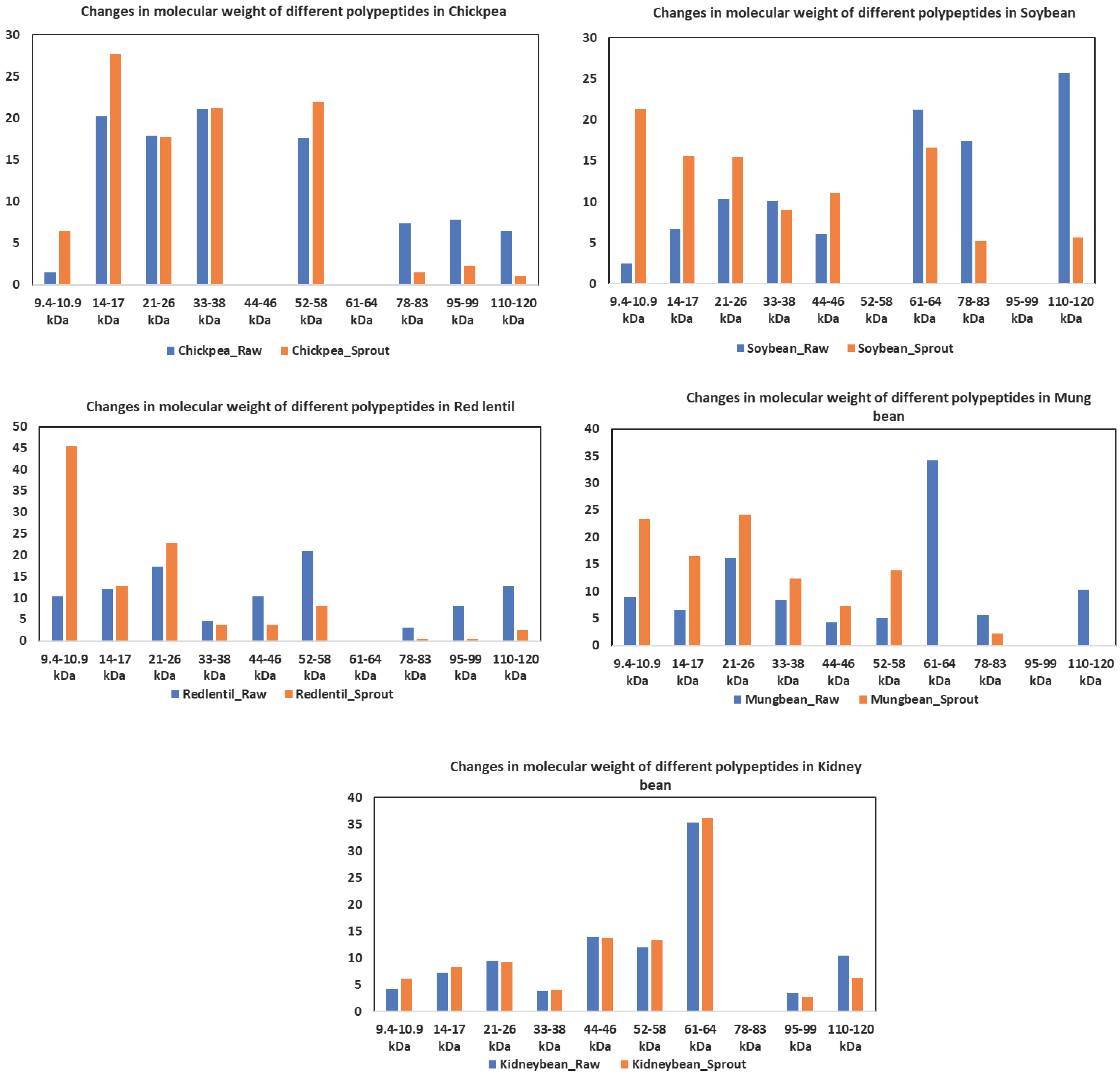
Figure 2.
Changes in essential amino acid content in chickpea after germination [49].
Figure 2.
Changes in essential amino acid content in chickpea after germination [49].
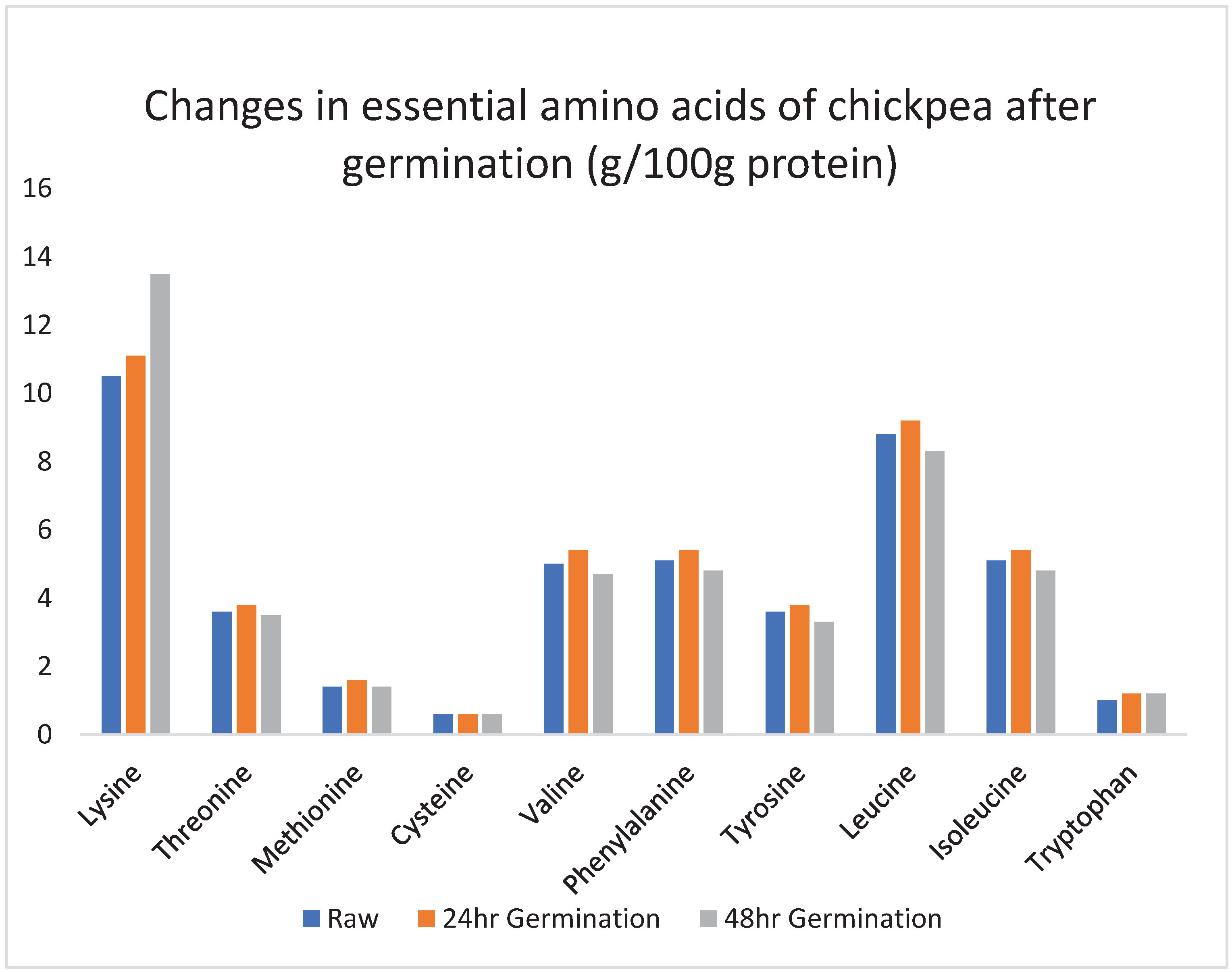
Figure 3.
Changes in protease activity in various legumes upon germination [63].
Figure 3.
Changes in protease activity in various legumes upon germination [63].
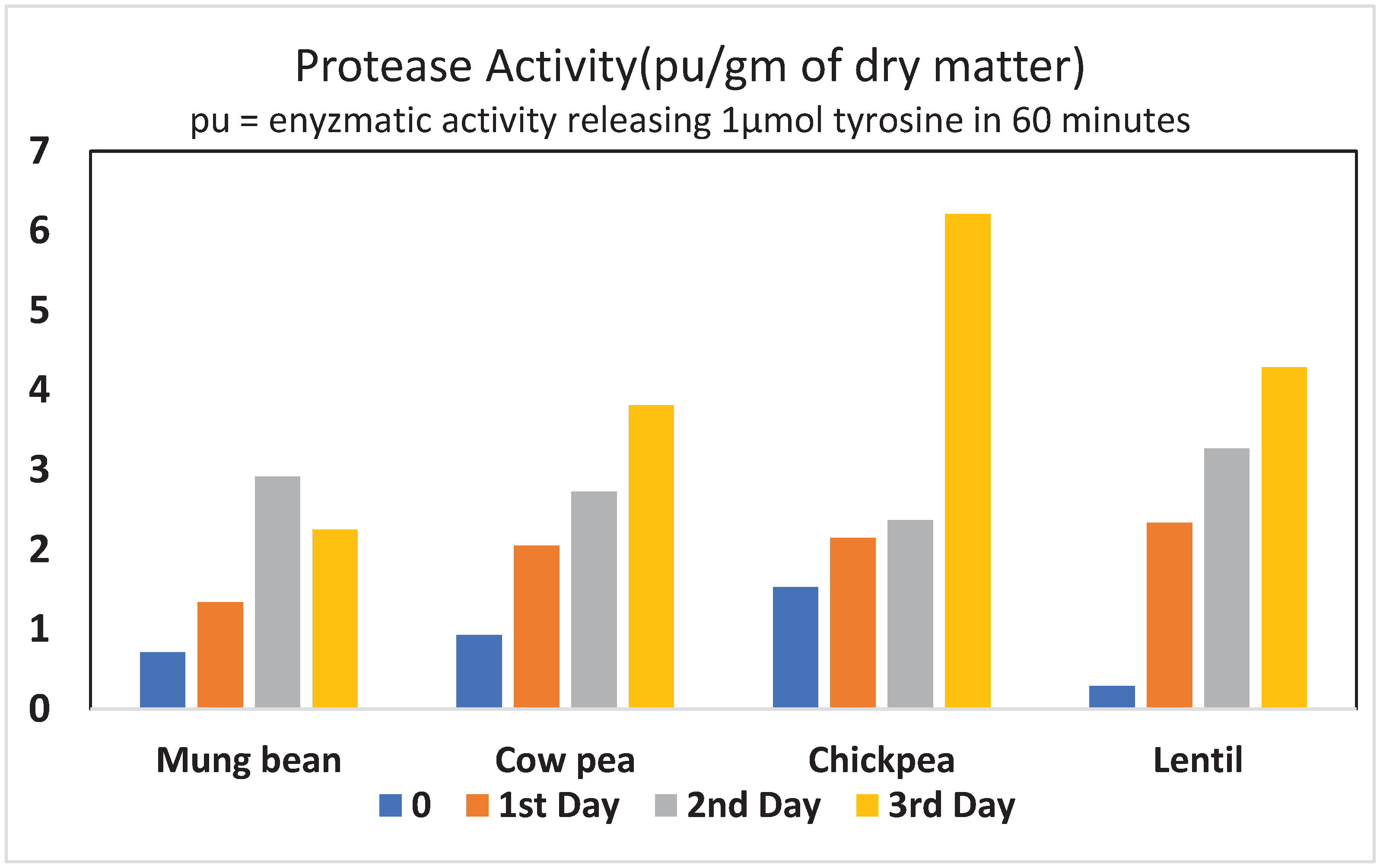
Figure 4.
Bowman-birk inhibitor from pea (PDB id: 1pbi) showing 7 disulfide bonds (yellow).
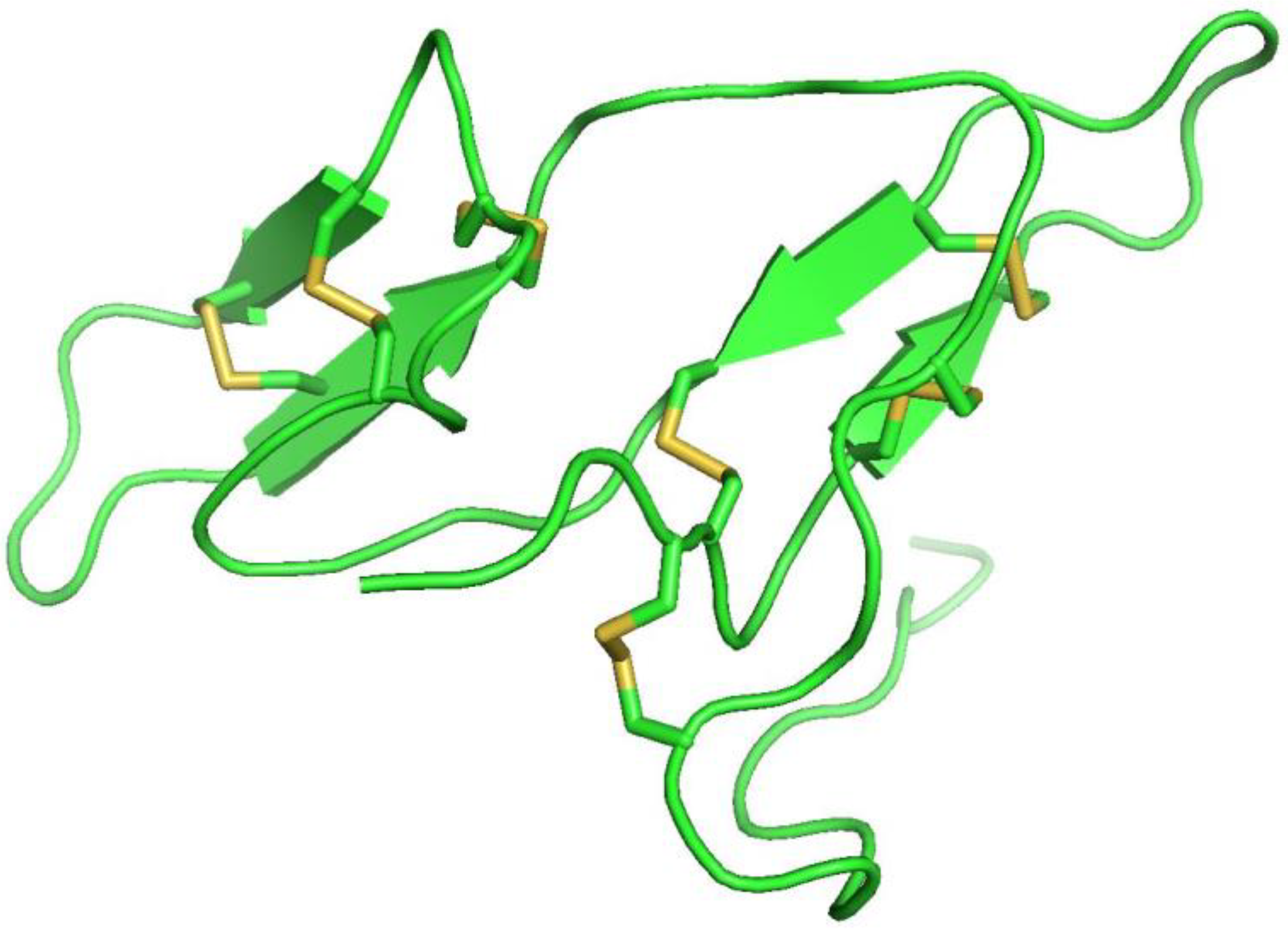
Figure 5.
Changes in protein characteristics of legume seeds on germination (Created with BioRender.com).
Figure 5.
Changes in protein characteristics of legume seeds on germination (Created with BioRender.com).
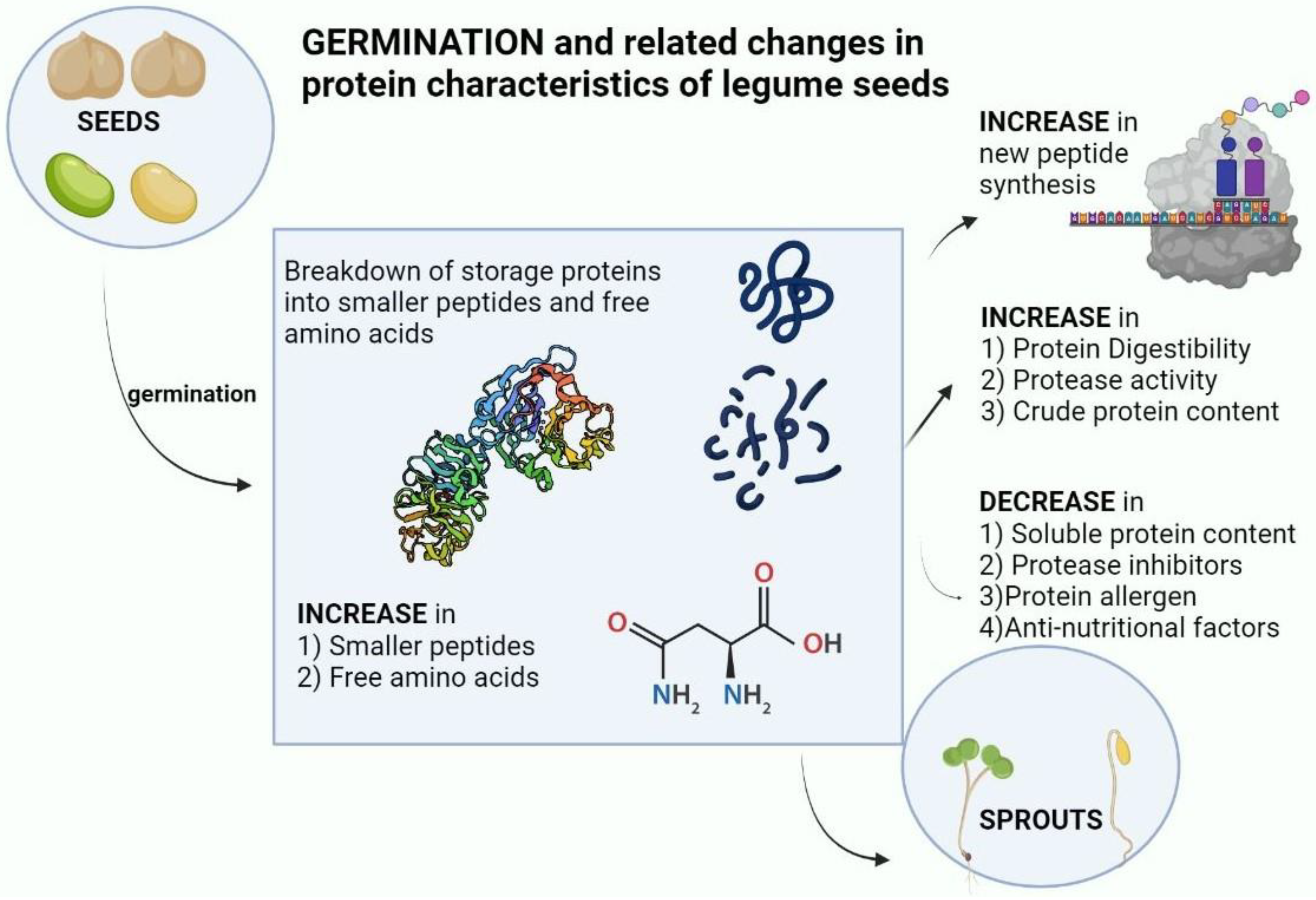

Table 1.
Changes in crude protein content after germination (calculated using Kjeldahl method and expressed as a % of dry weight unless stated).
Table 1.
Changes in crude protein content after germination (calculated using Kjeldahl method and expressed as a % of dry weight unless stated).
| Sprout species | Pre-germination | Post-Germination | References |
|---|---|---|---|
| Chickpea Chickpea desi Chickpea desi |
24.4% 18.4% 32±1.8%* 22.3% ~20% 20.3% 14.8 ± 0.6% ~21% |
27.7% 24.6% 48±0.5%* 24.1% 23.9% 23.6% 15.9 ± 0.4% 24.1% |
Xu et al (2019) [25] Ferreira et al (2019) [26] Dipnaik and Bathere (2017) [27] Mansour (1987) [28] Khalil et al (2007) [29] Uppal et al (2012) [11] Kumar et al (2019) [30] Khalil et al (2007) [29] |
| Mungbean | 22.5±0.9% 22.3% |
36±0.5% 24.9% |
Dipnaik and Bathere (2017) [27] Uppal et al (2012) [11] |
| Cowpea | 30±1.07% 22.5% |
40±0.5% 24.9% |
Dipnaik and Bathere (2017) [27] Uppal et al (2012) [11] |
| Moth bean | 30±1.0% | 40±12.3% | Dipnaik and Bathere (2017) [27] |
| Soybean | 40.2±0.3% 39.1% |
46.3±0.4% 45.1% |
Joshi and Varma (2016) [31] Kayembe et al (2013) [32] |
| Faba bean | 26.4% | 30.6% | Kassegn et al (2018) [33] |
| Pea var ucero var ramrod var agra |
25.4± 0.1% 21.1 ± 0.0% 22.9 ± 0.1% |
27.0 ± 0.1% 22.7 ± 0.1% 22.7 ± 0.1% |
Martinez-Villaluenga et al (2008) [34] Martınez-Villaluenga et al(2008)[34] Martınez-Villaluenga et al (2008)[34] |
| Black gram | 20±1.5% | 36±1.54=% | Dipnaik and Bathere (2017) [27] |
| Broccoli | 26.1% | 29.8% | Taraseviciene et al (2009) [35] |
| Brown Rice | 6.9 ± 0.0% | 8.9 ± 0.2% | Moongngarm et al (2010) [36] |
*Calculated using Biuret method.
Table 2.
Changes in soluble protein fractions (% of total protein) after germination.
| Sprout species | Pre- germination |
Post- Germination |
References |
|---|---|---|---|
| Chickpea (major globulin) | 45.85% | 37.08% | Portari et al (2005)[44] |
| Pea (albumin + globulin) var ucero var ramrod var agra |
28.95% 26.71% 26.67% |
24.9% 22.69% 25.03% |
Martinez-Villaluenga et al (2008)[34] |
| Lupin | 12.81% | 15.7% | Villacrés et al (2015)[45] |
| Sweet lupin (albumin + globulin) Lupinus luteus cv. 4486 Lupinus luteus cv. 4492 Lupinus angustifolius cv.troll Lupinus angustifolius cv.zapato |
36.89% 39.63% 34.9% 35.4% |
39.45% 35.91% 35.2% 29.48% |
Gulewicz et al (2008)[46] |
| Sorghum | 25% | 28% | Afify et al (2012)[47] |
Table 3.
Changes in free amino acids and protein amino acids (mg/g dry weight) in lentil, Lens culinaris, before and after germination [48].
Table 3.
Changes in free amino acids and protein amino acids (mg/g dry weight) in lentil, Lens culinaris, before and after germination [48].
| Free amino acids | Pre- germination |
Post- germination |
all amino acids |
Pre- germination |
Post- germination |
|---|---|---|---|---|---|
| Arg | 0.1 | 0.94 | Arg | 10.61 | 12.11 |
| His | 0.22 | 0.68 | His | 8.74 | 10.79 |
| Ile | 0 | 2.06 | Ile | 6.26 | 11.44 |
| Leu | 0 | 2.05 | Leu | 10.64 | 17.1 |
| Lys | 0 | 0.93 | Lys | 4.54 | 16.99 |
| Met | 0 | 0.26 | Met | 1.49 | 1.02 |
| Cys | 0 | 0 | Cys | 0.4 | 0 |
| Phe | 0 | 2.32 | Phe | 6.7 | 11.56 |
| Tyr | 0 | 1.1 | Tyr | 6.34 | 7.7 |
| Pro | 0.17 | 3.24 | Pro | 11.11 | 10.84 |
| Ser | 0 | 2.64 | Ser | 11.38 | 15.54 |
| Thr | 0.03 | 1.18 | Thr | 5.57 | 7.14 |
| Val | 0 | 2.83 | Val | 8.54 | 13.23 |
| Trp | 0 | 0.52 | Trp | 0 | 0 |
| Ala | 0.45 | 3.21 | Ala | 20.42 | 36.76 |
| Asp | 0.18 | 0.32 | ASX* | 10.96 | 41.39 |
| Asn | 0.51 | 18.96 | |||
| Glu | 0.48 | 3.15 | GLX* | 26.55 | 34.12 |
| Gln | 0 | 1 | |||
| Gly | 0.05 | 1.23 | Gly | 9.77 | 10.77 |
| Total | 2.19 | 48.62 | 160.02 | 258.50 |
Table 4.
Germination-related changes in legume free amino acids (in mg/g dry weight) [50].
Table 4.
Germination-related changes in legume free amino acids (in mg/g dry weight) [50].
| Amino acids | Beans (Phaseolus vulgaris) | Lentils (Lens culinaris) | Pea (Pisum sativum) | |||
|---|---|---|---|---|---|---|
| Germination | Pre- | Post- | Pre- | Post- | Pre- | Post- |
| Alanine | 2.93 | 4.4 | 0.5 | 0.8 | 0.25 | 2.58 |
| Arginine | 13.2 | 2.95 | 0.6 | 1.2 | 3.4 | 3.8 |
| Asparagine | 5.9 | 8.0 | 0.88 | 28.7 | 0.8 | 23.0 |
| Aspartic acid | 4.0 | 2.5 | 0.70 | 1.27 | 1.6 | 5.4 |
| Glutamic acid | 11.2 | 4.09 | 1.34 | 3.93 | 2.0 | 3.5 |
| Glutamine | 0.0 | 1.27 | 0.0 | 1.06 | 0.0 | 2.38 |
| Glycine | 0.50 | 0.09 | 0.08 | 0.35 | 0.07 | 0.30 |
| Histidine | 0.45 | 0 | 0.04 | 0.80 | 0.14 | 0.0 |
| Isoleucine | 0.8 | 0.8 | 0.0 | 0.99 | 0.0 | 0.58 |
| Leucine | 0.6 | 1.2 | 0.0 | 0.61 | 0.01 | 0.52 |
| Lysine | 0.11 | 0.53 | 0.0 | 1.05 | 0.08 | 0.75 |
| Methionine | 0.0 | 0.382 | 0.0 | 0.0 | 0.0 | 0.0 |
| Phenylalanine | 1.0 | 0.8 | 0.0 | 1.04 | 0.15 | 1.16 |
| Proline | 0.8 | 0.8 | 0.23 | 2.91 | 0.53 | 2.23 |
| Serine | 0.1 | 2.0 | 0.0 | 2.43 | 0.02 | 1.51 |
| Threonine | 0.2 | 1.0 | 0.042 | 2.12 | 0.0 | 0.36 |
| Tryptophan | 0.68 | 0.33 | 0.0 | 0.27 | 0.10 | 0.50 |
| Tyrosine | 4.0 | 0.33 | 0 | 0.64 | 0.06 | 0.52 |
| Valine | 2.0 | 1.8 | 0.11 | 2.42 | 0.0 | 1.78 |
| Total | 48.47 | 33.27 | 4.52 | 52.59 | 9.2 | 50.86 |
Table 5.
Changes in vitro protein digestibility (IVPD) after germination.
| Sprout species | Pre-germination | Post-Germination | References |
|---|---|---|---|
| Chickpea | 67.7% 75.4% 64.2±1.8 |
79.0% 86.5% 73.4±0.7 |
Uppal et al (2012)[11] Chitra et al (1996)[54] Ghavidel et al (2007)[55] |
| Mungbean | 66.4% 70.9% |
83.0% 82.7% |
Uppal et al (2012)[11] Chitra et al (1996)[54] |
| Cowpea | 73.3% 71.2 ± 0.1% |
85.7% 73.5±0.4 % |
Uppal et al (2012)[11] Kalpanadevi et al (2013)[56] |
| Soybean | 63.3% | 73.6% | Chitra et al (1996)[54] |
| Pigeon Pea | 69.1% | 85.1% | Chitra et al (1996)[54] |
| Kidney bean | 80.6 ± 0.02% | 87.1 ± 0.03% | Shimelis et al (2006)[57] |
| Yellow pea | 78.6 ± 0.1% | 79.9 ± 0.1% | Setia et al (2019)[58] |
| Faba bean | 78.0 ± 0.2% | 80.4 ± 0.1% | Setia et al (2019)[58] |
| Lentil | 65.6±1.1% | 64.2±1.8% | Ghavidel et al (2007)[55] |
| Green gram | 61.0±1.0% | 72.7±0.8% | Ghavidel et al (2007)[55] |
| Sorghum | 51% | 65% | Afify et al (2012)[47] |
| Red sorghum | 48% | 68.1% | Onyango et al (2013)[59] |
| Pearl Millet | 21.5% | 34.5% | Onyango et al (2013)[59] |
Table 7.
Changes in trypsin inhibitors (in Trypsin inhibitory units/mg of protein) after germination for 72 hours.
Table 7.
Changes in trypsin inhibitors (in Trypsin inhibitory units/mg of protein) after germination for 72 hours.
| Sprout species | Pre-germination | Post-Germination | References |
|---|---|---|---|
| Chickpea |
11.9 |
7.86 |
El-Adawy (2002)[82] |
| Mungbean | 16.5 | 12.8 | El-Adawy et al (2003)[82] |
| Pea | 10.8 | 8.6 | El-Adawy et al (2003) [82] |
| Lentil | 33.3 | 27.3 | El-Adawy et al (2003) [82] |
| Horsegram | 11.5 | 8.4 | Pal et al (2013)[83] |
| Kidney bean Roba variety Awash variety Beshbesh variety |
4.5 20.8 29.2 |
3.8 17.3 24.5 |
Shimelis et al [75] |
| French bean | 3.1 | 2.2 | Alonso et al (1999)[84] |
| Faba bean | 4.4 | 3.3 | Alonso et al (1999)[84] |
| Sorghum Hamra variety |
31.6 |
19.9 |
Osman et al (2013)[78] |
Table 8.
Major allergic protein families of legumes and their significant characteristics.
| Allergic protein family | Characteristics |
|---|---|
| Prolamin superfamily | Largest family of plant food allergens Low molecular weight Sulphur rich Glycosylated Includes 2S storage proteins from legumes, non-specific lipid transfer proteins, protease inhibitors |
| Cupin superfamily | Consists of 2 conserved consensus sequence motifs β barrel structural domain Seed storage proteins of soybeans and peanuts |
| Pathogenesis-related proteins | Comprised of 14 different unrelated protein families. Small size Stable in acidic conditions Increased synthesis during environmental and pathogen stresses |
| Profilins | Small 12-15 kDa MW Highly conserved sequences Cytoplasmic Immunological cross-reactivity with pollens |
| Vicilins | Part of globulin family Anti-fungal, anti-microbial activity |
| Glycilins | Hexamer 300–400 kDa |
Disclaimer/Publisher’s Note: The statements, opinions and data contained in all publications are solely those of the individual author(s) and contributor(s) and not of MDPI and/or the editor(s). MDPI and/or the editor(s) disclaim responsibility for any injury to people or property resulting from any ideas, methods, instructions or products referred to in the content. |
© 2023 by the authors. Licensee MDPI, Basel, Switzerland. This article is an open access article distributed under the terms and conditions of the Creative Commons Attribution (CC BY) license (http://creativecommons.org/licenses/by/4.0/).
Copyright: This open access article is published under a Creative Commons CC BY 4.0 license, which permit the free download, distribution, and reuse, provided that the author and preprint are cited in any reuse.