

Submitted:
13 January 2023
Posted:
16 January 2023
You are already at the latest version
Abstract
Studying Active Transportation (AT) is widespread in America and Europe's research and stud-ies that include Latent variables (LV) are growing to identify exact results of finding what to do to increase the utility of AT. LVs help us to have more accurate research. LVs are defined as psy-chological factors like feeling safe while you ride at night and thus they are not subjective and hard to understand but very important to increase the utility of using AT modes. In this study, most of the previous studies about bicycling have been reviewed. In this research, different var-iables including subjective and LVs are conducted for maximizing the use of bicycle utility and introduced to have better sight for future researchers to deal with modeling AT mode choice. Results represent the importance of having 'will' for using a bicycle, especially in difficult situa-tions and cultural barriers that affect the cycling of women.
Keywords:
Cycling behaviour
; Structural equation modelling (SEM)
; Latent variable
; Individuals travel survey
; Cyclists behavioural analysis
1. Introduction
Cycling is a healthy exercise that provides the physical activity to individuals. Riding to school or work is one of the most time-wisely ways to integrate daily routine life with exercising. On the other hand, fuel consumption in the year 2021 was around 85 million liters per day in Iran, which makes Tehran, the most polluted city in the world for 2 days in 2022 and mostly, has faced unhealthy days during winter. These are reasons for policymakers to think of a solution. Countries like the Netherlands have learned to reduce these problems by investigating active transport (walking or cycling [1]). Active transport (AT) helps provide substantial health benefits to societies [2,3], Reduces the need for new parking lots and roadways, and congestion.
Much research was studied on how to increase using AT. For this purpose, lots of variables were recognized and different categories constructed, but some of them are more complete [4,5] including individual characteristics (variables like; age, gender,..[6]) , household characteristics, trip characteristics, built environment (variables like; density, bus stops,…[7]), season and weather characteristics, and work conditions. Most research has divided variables that affect using AT into objective and subjective variables [8]. In the last decades, many studies have led to study on latent variables (LV) to be more precise in the results of findings, but, they have not all led to consistent results because of varied LVs data sources and methodologies. A latent variable is a variable that is not directly measured [9]. Field of AT has recently become one of the attractive fields of study but still needs to be examined. Earlier studies show that the cycling behavior of regular riders (private bicycle riders) is influenced by environmental factors, including population density, land use mix, green space, cycling facilities, and safety [10]. Besides, the Tehran transport master plan in 2008 was nearly the first governmental study with a section on active transportation. After that, some studies were held on AT and sustainability. The Tehran Municipality's most recent research on green transportation has a solid vision for active transportation. According to the study's findings, reducing traffic is the key to boosting cycling rates. They went on to say that the municipality should act quickly to provide infrastructure for utilizing e-bikes and e-scooters.
This study, therefore, aims to (1) identify the LVs with the most effects on cycling behavior to understand different ways of increasing cycling rate mostly, those which is not identified in previous studies and (2) policy implication and suggestions for transportation planners. The number of working women in Iran has increased from 10% of all workers in 2011 to 16% in 2021, which indicates an increase in women's home-based trips. For this reason, in this article, (3) we made an investigation into the practical hidden factors of "limitations from the family" and "concern about dignity" for the rate of cycling. For this purpose, we adopt a 5-scale Likert analysis for different LVs by a survey and estimate parameters and validate them using confirmatory factor analysis (CFA) and create a structural equation model (SEM).
However, no previous study tried to determine latent variables that relate to family limitations or get the unpleasant feeling of cycling from other people that we have evaluated. This study aims to answer such questions. In the following, some of the important issues reported by the literature are reviewed.
This paper is organized as follows. Section 2, describes the previous studies in variables affecting cycling and section 3, describes the methodologies used. Section 4, analyzes the data and section 5, represents the empirical results. Section 6, make a discussion about the results and compare them with previous studies results. Section 7, concludes the paper and identifies future research directions.
2. Literature Review
2.1. Socio-economic characteristics
Age and gender are some of the most associated variables with bicycling. Age and bicycle travel have been the subject of several studies, with varying results. Although some research has identified a negative relationship between youth and cycling [11], most investigations have shown that youth enhances the chance of cycling [12,13,14,15]. Individuals under the age of 18 do not use private cars, which is one of the important reasons for increasing the use of bicycles to reach their destination. Furthermore, young individuals usually use a bicycle for recreational purposes. Bicycling rates are also affected by gender. Many studies found that males are more likely to use bicycles than females [11,12,13,14,15,16,17,18,19] but, some studies don't confirm this finding [20,21]. This issue cannot be just because of gender. For example, one of the most important reasons why women do not use bicycles is the possibility of bathing at the destination, which is not very important for men [22] . Some studies found that cyclists to work are male in most cases [23,24]. Some studies point the income as a positive factor to increase the rate of cycling where the higher income, the more the cycling rate [25,26] but another study points out that a higher level of study would cause more salary and people with higher income are less likely to bike [27] while other studies think opposite in which individuals with a higher level of education cycle more [24,28].
Emond and Handy [29], found that male students are much more likely to a bicycle than female students. The other factor that prevents us from cycling is obesity which prevents individuals to cycle.
2.2. Trip characteristics
Many studies found a negative effect of long travel time on the likelihood of cycling [30,31,32,33,34]. These studies concluded that long travel time and distance, cause cycling to lose its competitiveness in front of other modes of transportation. Zahran et al. ranked the top 25 counties in the united states by the percentage of workers that bicycle to work as their primary means of transportation. The predicted number of bike commuters declined by 5.8% for every extra minute of the average route time, according to the study's findings [31].Another study found that reducing the travel time of bicycling by increasing the provision of rout facilities, causes more likelihood of bicycling [35]. According to previous research, another important factor in the probability of choosing AT is trip distance. Most studies found that the increase in travel distance reduces the likelihood of bicycling [4,13,18,23,33,34,36,37]. Besides, the research found that short distances will be an advantage of using a bicycle and will reduce the total vehicle/kilometer in Belgium [27]. Some other studies acclaimed that the recreational and social purpose of bicycling has a great effect on the likelihood of bicycling [13,38] but other studies may not see this way [21]. Few studies found the effect of low-cost transport in increasing the cycling rate [33,39].
2.3. Built/natural environment
Some studies found positive signs of the effect of high population density on the likelihood of cycling [37,40,41,42]. Some studies represent the employment accessibility-density that has a positive effect on cycling in business districts[28,43] but some other studies disagree with these results [23]. Proximity to services/recreational areas could be beneficial that makes cycling more attractive [28]. Traffic lights are another reason to prevent the individuals from bike [39]. Some other studies noticed low bicycle usage in areas having high slopes [44,45].
According to the findings, rainy and windy weather has a great negative effect on cycling [35,46]. In contrast, sunny days, especially in summer, attract individuals to bike [33,37]. There are many studies representing the positive effect of cycling infrastructure on increasing the cycling rate [30,47,48].
2.4. Work conditions
Some studies find that employment status is one of the major issues which affects the likelihood of using a bicycle and implies that students and the unemployed would use bicycles more for their trips [6,47,49,50]. Another variable is hours of work, which would decrease the use of a bicycle as the work hours raise [48,51]. Another study reveals that informal workers cycle more frequently[26].
2.5. Latent variables
There are many other subjective variables called latent variables (LV) that were not studied and we identify and analyze them. LVs cannot be directly measured and need an indicator to estimate them. Many studies especially in the last decade worked on these variables [52]. Another research introduced bicycle security and cost importance as new LVs affect the utility of bicycle use [22]. Another study talks about the positive effect of convenience [53,54]. Social norms [55] and cycling ability [12,56] are other variables in bicycling. Some researches talk about perceptions of safety and comfort in which cyclists may face with different situations that puts stress on them and decrease the likelihood of cycling [57,58]. There are few studies about family relationships and psychological problems. For instance, we could only find one paper about the positive effect of the family relationship on cycling [20]. This paper finds and analyzes other psychological factors affecting the cycling rate.
3. Methodology
3.1. Area of study
Currently, in Iran, cycling as a means of urban transportation has a relatively low social image. In Iran, apparently, non-recreational use of this vehicle has decreased. Unlike in the recent past, the attendance of employees at their workplace by bicycle is less observed, which indicates a negative change in its use. In recent years, a 24-kilometer dedicated cycling route was built, and Tehran Municipality, as the trustee of non-motorized transportation infrastructure development, is developing it, although the share of cycling among other modes of transportation in Tehran is less than 1%.
The study area is Tehran, the capital of Iran, which is one of the most populated cities in the Middle East. The industrial growth of this city caused that, based on the official meteorological data, there were only 26 days of clean air last year. Another big problem of this city is its heavy traffic, which despite the creation of BRT lines and new metro stations, its traffic problem has not been solved yet.
As mentioned, the study area is in the city of Tehran, although a smaller area in the center of the city is considered for face-to-face interviews with the interviewees, which can be seen as the red spot in Figure 1. The reason for choosing this range is that it includes different levels of society, including employees and students. On the other hand, this range includes a complete sample of public transportation systems in the country, which makes the statistical sample more accurate.
Methodological steps of the study can be seen in Figure 2.
3.2. The survey
Peer reviewers with expertise in active transportation systems and one psychologist conducted the survey. Approximately six more latent variables were left out of further research due to their repetition and difficulty in establishing indicators. The survey contains different sections; individual characteristics, objective and subjective variables, and latent variables. Considering a confidence interval of 5 and a confidence level of 95 percent sample size for the city of Iran with about 8 million populations is 384 individuals that after collecting the answered surveys and removing incomplete questionnaires, 345 questionnaires could be used for the analysis, which is close to this sample size. Moreover, this amount of sample size is near the suggested Cochran’s formula, which is a good way of choosing sample size [59]. The questionnaire was created through an online questionnaire site and published in Persian and English languages. The link to this questionnaire was sent to 2,128 individuals via text messages and phone calls, that were made via an advertising company to people who had the most traffic (no matter which mode of transport) in the study area in the last month, or their workplaces or homes were in that area. The people's mobile phone service provider (MTN and IRANCELL company), which supplied the location data, sent this information to the individuals. on the other hand, 221 individuals were asked to fill the survey face-to-face in the CBD (central business district) as mentioned in the previous section in two days and with the form of 4 questioning teams on April 28 and 29, 2021 between 8-11 am and 15-18 was done. Questionnaires to respondents were provided to the interviewees online and through tablets and mobile phones.
4. Analysis
The purpose of data analysis and statistical processes is to answer research questions, hypotheses, or objectives. In this section, the obtained data are described and analyzed concerning each question, objective, or hypothesis. The work of analysis is to convert vast, complex, and even incomprehensible data sets into understandable units, patterns, and indicators in research problems. The collected data is presented and analyzed as a table or graph.
The statistical results are presented in this section, and two descriptive and inferential sections. In the descriptive part, demographic and main variables were described using the frequency and frequency percentage, mean and standard deviation, and in the inferential part, the validity and reliability of the questionnaire were checked with confirmatory factor analysis, the relationships among the variables with the Pearson correlation test and the research model. It was tested using the structural equation modeling technique. Data analysis was done using SPSS and Amos software. The maximum level of alpha error for hypothesis testing was determined as 0.05 (p < 0.05).
4.1. Individual characteristics (objective variables)
Table 1 lists many individual characteristics that were provided. According to the results, 45.2% of respondents were men and 54.8% were women. This finding is consistent with Tehran municipal data from 2018, which showed that 50% of the population is made up of men and 50% of women. This finding confirms that the sample used to represent the population is a good one because it closely matches the statistics from the municipal data.
4.2. Latent variables (subjective variables)
According to Table 2, main variables were described using mean and standard deviation statistics. The average range of all variables is from a minimum of 1 (strongly agree) to a maximum of 5 (strongly disagree) according to the 5-Likert scale of answers.
Moreover, the lowest average was the cost factor with a value of 2.19 and the highest average was the will factor with an average of 3.59.
Skewness and kurtosis values were used to determine the state of data distribution (normality). The results are reported in Table 3. In the case of skewness and kurtosis, if the values of these statistics are between -2 and +2, it indicates the normality of the univariate distribution[60].
The results of Kolmogorov-Smirnov test show that all research variables have a normal distribution. Examining the values of skewness and kurtosis shows that according to the fact that the values of kurtosis and also the values of kurtosis of all variables were obtained in the range from +2 to -2, it can be concluded that all the variables have a normal or close to a normal distribution and it can be tested used parametric methods (Pearson's correlation and structural equation modeling with Amos software or covariance-based methods).
5. Result
Using the confirmatory factor analysis test, Pearson correlation test, and structural equation modeling, the validity, and reliability of the questionnaire and the test of relationships among the variables, and the test of hypotheses were studied.
5.1. Confirmatory factor analysis
The validity of the survey was studied using factor load indices, t-value, combined reliability, and mean-variance extracted, and the results are shown in Table 4. Factor load values and other indicators are taken from Figure 3 or the research model test. Factor loadings are computing by calculating the correlation value of the indicators of a structure with that structure. If this value is equal to or greater than 0.40, it indicates that the variance between the structure and its indicators is greater than the variance of the measurement error of that structure. and the validity of that measurement model is acceptable. The important point is that if the researcher encounters values less than 0.40 after calculating the factor loadings between the structure and its indicators, he should modify those indicators (questionnaire questions) or remove them from his research model. The minimum value of factor load was considered to be 0.40.
Cronbach's alpha and composite reliability were used to measure reliability. Since Cronbach's alpha criterion is a traditional criterion to determine construct reliability, the partial least squares method uses a more modern criterion than alpha called composite reliability. The superiority of composite reliability over Cronbach's alpha is that it calculates the reliability of the constructs not in an absolute way but according to the correlation of their constructs with each other. If the composite reliability value is greater than 0.7, it indicates the appropriate internal stability for the measurement models [61].
Average Variance Extracted Index (AVE) was used to check the convergent validity. This index measures the amount of variance that a latent variable obtains from its indicators. Indicators of a certain construct should converge or share a significant fraction of the shared variance, according to the concept of convergent validity. Higher values of this index reflect the convergence validity of the intended structure. The extracted mean-variance index has a value between 0 and 1.
According to the number of factor loadings obtained for all questions, which is more than 0.40 and at a significance level of less than 0.05 (p<0.05) (all t values are greater than 1.96 done), we conclude that the validity of all questions in the questionnaire is confirmed. All questions have a factor load greater than 0.40, which is significant (p>0.05), and consequently, the validity of all questions is confirmed. It should be noted that questions No. 4,5 and 6 of the built/Natural environment variable were removed from the survey and analysis due to the factor loading of less than 0.40 and weak validity.
The survey's dependability is statistically supported by the composite reliability value of more than 0.70, which is the adequate and acceptable value. Cycling is the primary component with the lowest combined reliability of 0.71, while the unpleasant feeling variable is the one with the greatest combined reliability of 0.95. Furthermore, the value of Cronbach's alpha is from a minimum of 0.61 for the variable of using a bicycle to a maximum of 0.96 for the variable of unpleasant feeling, which is a suitable value and shows that the reliability test using the internal correlation method (Cronbach's alpha) confirms the reliability of the questionnaire. Three variables of cyclin, the cost factor and the will factor have Cronbach's alpha value less than 0.70, but because the number of questions of these three variables was small and included only two or three questions (the value of Cronbach's alpha coefficient is affected by the number questions are a variable) and because the questionnaire was made by the researcher, the reliability of these three variables was also confirmed.
The average variance extracted, which measures the convergent validity of the variables, was obtained from a minimum of 0.34 for the cycling variable to a maximum of 0.84 for the unpleasant feeling factor. The results show that the convergent validity values of the three variables of cycling, the will factor, and the dignity factor is of moderate value, and the convergent validity of other variables is a high value. In general, the results show the validity and reliability of the research survey.
5.2. Correlation of variables
Using Pearson's correlation test, the correlation among research variables was investigated. Pearson's correlation test showed that the dependent variable of the research, i.e. cycling, has a significant relationship with all the independent variables in Table 5 (p<0.05). The findings showed that the direction of the relationship between the factor of will and cycling is positive and it shows that by strengthening and improving willpower, the amount of use of cycling increases. With the exception of will, the cycling has a negative correlation with all other factors. Examining the strength of correlations revealed that cycling had the largest relationships with the factors of will (0.57), built/natural environment (0.49), and will (-0.49). Examining the intensity of the correlation among independent variables showed that the correlation between independent variables is moderate or weak and there is no correlation greater than 0.60 between independent variables. Consequently, it can be concluded that there is no problem of multiple collinearities among independent variables and it can be used multivariate methods such as structural equation modeling.
5.3. Examining fit indices
The fit indices of the model are reviewed in Table 6. After estimating the parameters of the model, the question that arises is to what extent the model is compatible with the relevant data. The answer to this question is only possible by examining the fit of the model. Therefore, in the analysis of structural equations, the researcher must ensure the appropriateness of the model after estimating the parameters and before interpreting them. An important point that should be considered in interpreting of fit indices is that the fit of the model should be evaluated via different methods and criteria to check its fit from different dimensions.
In general, by evaluating all fit indices in Table 6, it can be concluded that the obtained fit indices show an acceptable and appropriate fit of the data with the model, and the model can be fitted according to The obtained fit indices considered acceptable.
6. Discussion
Results shown in table 7. Represents that the will factor has a great influence on the cycling rate (Beta=0.71). This seems logical because in some hard situations like rainy/snowy weather will factor plays a significant role in using a bicycle besides all other modes of transport like private cars with higher comfortability. Moreover, the cycling rate among obese individuals is lower [62] which might have a lower will for not being able to lose weight. Will is the only direct factor that positively affects cycling. Another issue that may affect the cycling will is dependents to car and it is not easy to distance yourself to the comfortability of private car[63].

Table 7.
SEM test results (table of coefficients).
| Type of relationship | Standardized beta | Un-standardized beta | standard error | T Value | P value | ||
|---|---|---|---|---|---|---|---|
| Cycling | ← | Built/Natural environment |
-0.53 | -0.31 | 0.045 | 6.82 | <0.001 |
| Cycling | ← | Cost | -0.25 | -0.2 | 0.066 | 2.98 | 0.003 |
| Cycling | ← | Will | 0.71 | 0.49 | 0.067 | 7.33 | <0.001 |
| cycling | ← | Dignity | -0.23 | -0.21 | 0.063 | 3.41 | <0.001 |
| Cycling | ← | Limit by family |
-0.34 | -0.18 | 0.034 | 5.35 | <0.001 |
| cycling | ← | Unpleasant feeling |
-0.19 | -0.1 | 0.029 | 3.35 | <0.001 |
| Cycling | ← | Safety night | -0.26 | -0.29 | 0.073 | 3.93 | <0.001 |
The model estimates illustrate that feeling safe while driving at nigh is a significant factor for increasing the cycling rate. This factor shows that fear of accident or incidents as one the most significant issues for individuals to cycle at night which is in line with the finding in some previous studies[64,65]. Previous research has stated that cycling alone at night, can be unsafe and suggests that group cycling can help increase the desire to cycle[66]. The results showed that the lack of police and the fear of theft at night deter people from cycling, and group cycling can be one of the solutions.
The built/Natural environment factor has the most negative effect on cycling. This means that air/noise pollution and crowded areas cause a lower cycling rate, which is in line with results of previous studies[67,68]. Although, cycling is a strategy for emission and road traffic reduction.
Other estimated variables like unpleasant feeling and dignity still need to be study more in futures.
7. Conclusions
We studied the factors affecting the amount of cycling. In past articles, variables such as age and gender were discussed and little hidden variables have been investigated. In addition to variables such as gender, income, and education, we tried to address variables that are less known but have a high impact on the amount of bicycle use, especially in countries such as Iran with specific cultures.
The results showed that having will directly have a positive effect on the cycling rate. This variable has 3 indicators, the most effective of which shows people's effort to learn (If I want to understand something, I will definitely try to understand it). On the other hand, the cost factor is one of the inhibiting factors that indicate cycling both for people who intend to buy a bicycle and for people who use a shared bike.
Concern for the dignity of those who believe that riding is inappropriate for them given their social level is another aspect. Wearing formal clothing outside the home, which is thought to discourage cycling, is one of its signs. Having the idea that cycling is only for people who have less financial ability or do not have a personal car is another factor, although few people also think that cycling is for people with high incomes who are less busy.
Limitations from the family are another thing that we examined. One of the important indicators is that the family does not spend money to buy bicycles for their children, which is mostly mentioned by teenagers.
Another indicator is that the family does not allow their children to ride bicycles, some families indirectly (I feel that my family is upset about my cycling/ I feel that my family will not allow me to ride a bicycle) and some directly (My family does not pay me to buy a bicycle) prevent their children (in any age) from riding bicycles. This case was raised more among women, both in the teenage years who live with their parents and in the older ages who live with their husbands.
The factor of safety at night also reduces the desire to ride a bicycle, the fear of theft, the lack of sufficient police in the city, and the possibility of more accidents at night are deterrent indicators of this variable.
We tried to examine different variables, of which the cost variable was one of the most important. If we want to look at the research done from an economic point of view, the cost of the household for using the bicycle mode of transportation was examined and it showed that one of the factors that increase the attractiveness is the reduction of cost. On the other hand, by implementing the following policy proposals, we can expect to increase the attractiveness of cycling. The cost of health issues, infrastructure, repair and maintenance of non-motorized transportation is far less than other modes of transportation[69]. By reducing travel time and travel distance, it helps to reduce household expenses.
Variables such as safety night and built/natural environment by reducing the stress of current cyclists and increasing attractiveness for other individual, help to choose this mode of transportation to improve the mental health of the community and experience a higher level of social well-being. The limit by family variable was also investigated, which is one of the problems in the area of this study that even women facing such limitations.
According to the issues mentioned above, we tried to take a step towards the sustainability of the city's transportation cycling is considered as one of the sustainable modes of transportation[70].
Among the most important policies based on the results obtained to increase the attractiveness of cycling, the following can be mentioned:
- 1-
- Increasing the safety of cycling routes, especially in areas where the demand for cycling by women is higher. This gradually creates a positive mentality among the people of the society, which ultimately increases the attractiveness of this mode of transportation. On the other hand, it is possible that the banning of cycling by the family is in terms of the lack of understanding of security in society, and increasing security/safety can make the family satisfied with the cycling of its children or spouse. The main responsible for the development of cycling infrastructure is the deputy transportation department of Tehran Municipality. Its main beneficiary is the only company providing shared bicycles (BDOOD company) that can help Tehran Municipality in investing for developing the infrastructure.
- 2-
- Allocation of government subsidies to buy or apply discounts to the users of shared bicycles by benefits from reducing traffic and air pollution. Responsible for this issue is the transportation deputy of Tehran municipality.
- 3-
- Developing behavior and acculturalization of bicycle use in society via advertisements and the use of it by the senior transport managers of the countries. All decisions that are made in the field of transportation of Tehran city are made by the deputy transportation department of Tehran municipality. which also cooperates with the Deputy of Social and Cultural Affairs of Tehran Municipality in the field of cultural and behavioral development.
We had some limitations during this study as follow:
- 1-
- The information received from the variables in Table 1. is for comparison with 2018 census data to estimate the representativeness of the data collected by the surveys[71,72]. Except for the gender of the individuals, the correct data of other variables from this census were not available. The age of respondents to the questionnaire was not correctly answered in online survey, which was deleted due to incomplete information. However, the obtained data can be used in other researches.
- 2-
- We had limitations of face-to-face questionnaire because of spread of covid-19 pandemic and that’s why we had online survey as well.
- 3-
- There was no accurate data about income, car ownership and other variables (except gender) in table1 about the individuals.
This article does not discuss other significant topics, such as the development of non-motorized transport infrastructure or other subjective factors, although there may be more latent variables that may be examined in further studies.
Author Contributions
Conceptualization, M.R. and S-M.S-H.; methodology, M.R.; software, M.R.; validation, M.R., S-M.S-H and A.N.; formal analysis, M.R.; investigation, M.R.; resources, M.R.; data curation, M.R.; writing—original draft preparation, M.R.; writing—review and editing, M.R.; visualization, M.R.; supervision, M.R.; project administration, M.R.; funding acquisition, S-M.S-H All authors have read and agreed to the published version of the manuscript.
Funding
None.
Institutional Review Board Statement
Not applicable.
Informed Consent Statement
Not applicable.
Data Availability Statement
Not applicable.
Conflicts of Interest
The authors declare no conflict of interest, financial or otherwise.
Appendix A. Key characteristics and limitations of previous studies.
| Reference number | Socio-Economic characteristics | Trip Characteristics | Built/Natural Environment Characteristics | Work condition | Latent variable | ||||||||||||||||||||||
| Age | Gender | Student | Ability to bath | Cycling to work | Income | Education | Travel time | Travel distance | Cost | recreational/Socialpurpose | Density | Bus stop | Infrastructure | Season | Population density | Slope | Traffic light | Wind | Accessibility density | Employment status | Convenience | Social norms | Bicycle security | Perception of safety | Family relationship | Cycling ability | |
| 4 | ֍ | ֍ | |||||||||||||||||||||||||
| 5 | ֍ | ֍ | |||||||||||||||||||||||||
| 6 | ֍ | ֍ | ֍ | ||||||||||||||||||||||||
| 7 | ֍ | ֍ | |||||||||||||||||||||||||
| 1 | ֍ | ֍ | |||||||||||||||||||||||||
| 1 | ֍ | ֍ | ֍ | ||||||||||||||||||||||||
| 1 | ֍ | ֍ | ֍ | ||||||||||||||||||||||||
| 1 | ֍ | ||||||||||||||||||||||||||
| 1 | ֍ | ||||||||||||||||||||||||||
| 1 | ֍ | ||||||||||||||||||||||||||
| 1 | ֍ | ֍ | ֍ | ||||||||||||||||||||||||
| 1 | ֍ | ||||||||||||||||||||||||||
| 1 | ֍ | ||||||||||||||||||||||||||
| 2 | ֍ | ||||||||||||||||||||||||||
| 2 | ֍ | ||||||||||||||||||||||||||
| 2 | ֍ | ֍ | |||||||||||||||||||||||||
| 2 | ֍ | ||||||||||||||||||||||||||
| 2 | ֍ | ֍ | |||||||||||||||||||||||||
| 2 | ֍ | ||||||||||||||||||||||||||
| 2 | ֍ | ֍ | ֍ | ||||||||||||||||||||||||
| 2 | ֍ | ֍ | |||||||||||||||||||||||||
| 2 | ֍ | ||||||||||||||||||||||||||
| 2 | ֍ | ||||||||||||||||||||||||||
| 3 | ֍ | ֍ | ֍ | ||||||||||||||||||||||||
| 3 | ֍ | ֍ | ֍ | ||||||||||||||||||||||||
| 3 | ֍ | ֍ | |||||||||||||||||||||||||
| 3 | ֍ | ֍ | |||||||||||||||||||||||||
| 3 | ֍ | ||||||||||||||||||||||||||
| 3 | ֍ | ||||||||||||||||||||||||||
| 3 | ֍ | ֍ | ֍ | ֍ | |||||||||||||||||||||||
| 3 | ֍ | ֍ | |||||||||||||||||||||||||
| 3 | ֍ | ֍ | |||||||||||||||||||||||||
| 3 | ֍ | ||||||||||||||||||||||||||
| 4 | ֍ | ֍ | ֍ | ||||||||||||||||||||||||
| 4 | ֍ | ||||||||||||||||||||||||||
| 4 | ֍ | ֍ | |||||||||||||||||||||||||
| 4 | ֍ | ||||||||||||||||||||||||||
| 4 | ֍ | ||||||||||||||||||||||||||
| 4 | ֍ | ||||||||||||||||||||||||||
| 4 | ֍ | ||||||||||||||||||||||||||
| 4 | ֍ | ||||||||||||||||||||||||||
| 4 | ֍ | ֍ | |||||||||||||||||||||||||
| 4 | ֍ | ||||||||||||||||||||||||||
| 5 | ֍ | ||||||||||||||||||||||||||
| 5 | ֍ | ||||||||||||||||||||||||||
| 5 | ֍ | ||||||||||||||||||||||||||
| 5 | ֍ | ||||||||||||||||||||||||||
| 5 | ֍ | ||||||||||||||||||||||||||
| 5 | ֍ | ||||||||||||||||||||||||||
| 5 | ֍ | ||||||||||||||||||||||||||
| 5 | ֍ | ||||||||||||||||||||||||||
References
- P. F. Rodrigues, M. C. M. Alvim-Ferraz, F. G. Martins, P. Saldiva, T. H. Sá, and S. I. V. Sousa, "Health economic assessment of a shift to active transport," Environmental Pollution, vol. 258, p. 113745, 2020. [CrossRef]
- B. Giles-Corti, S. Foster, T. Shilton, and R. Falconer, "The co-benefits for health of investing in active transportation," New South Wales Public Health Bulletin, vol. 21, no. 6, pp. 122-127, 2010. [CrossRef]
- R. Buehler, J. Pucher, D. Merom, and A. Bauman, "Active travel in Germany and the U.S. Contributions of daily walking and cycling to physical activity," (in eng), American journal of preventive medicine, vol. 41, no. 3, pp. 241-50, Sep 2011. [CrossRef]
- E. Heinen, K. Maat, and B. Van Wee, "The effect of work-related factors on the bicycle commute mode choice in the Netherlands," Transportation, vol. 40, no. 1, pp. 23-43, 2012. [CrossRef]
- J. D. Hunt and J. E. Abraham, "Influences on bicycle use," Transportation, vol. 34, no. 4, pp. 453-470, 2007. [CrossRef]
- G. Akar, N. Fischer, and M. Namgung, "Bicycling Choice and Gender Case Study: The Ohio State University," International Journal of Sustainable Transportation, vol. 7, no. 5, pp. 347-365, 2013. [CrossRef]
- J. Liu, B. Wang, and L. Xiao, "Non-linear associations between built environment and active travel for working and shopping: An extreme gradient boosting approach," Journal of Transport Geography, vol. 92, p. 103034, 2021. [CrossRef]
- B. Muñoz, A. Monzon, and R. A. Daziano, "The Increasing Role of Latent Variables in Modelling Bicycle Mode Choice," Transport Reviews, vol. 36, no. 6, pp. 737-771, 2016. [CrossRef]
- D. Borsboom, "Latent Variable Theory," Measurement: Interdisciplinary Research and Perspectives, vol. 6, no. 1-2, pp. 25-53, 2008. [CrossRef]
- Y. Sun, A. Mobasheri, X. Hu, and W. Wang, "Investigating Impacts of Environmental Factors on the Cycling Behavior of Bicycle-Sharing Users," Sustainability, vol. 9, no. 6, p. 1060, 2017. [CrossRef]
- R. B. Noland and H. Kunreuther, "Short-run and long-run policies for increasing bicycle transportation for daily commuter trips," Transport Policy, vol. 2, 1995. [CrossRef]
- M. Wardman, M. Page, and l. siu, y, "cycling and urban commuting: results of behavioral mode and rout choice models," university of leeds, institute for transport policies, 2000. [Online]. Available: https://eprints.whiterose.ac.uk/2074/.
- R. Cervero and M. Duncan, "Walking, Bicycling, and Urban Landscapes: Evidence From the San Francisco Bay Area," American journal of public health, vol. 93, pp. 1478-83, 2003. [CrossRef]
- D. A. Rodrı́guez and J. Joo, "The relationship between non-motorized mode choice and the local physical environment," Transportation Research Part D: Transport and Environment, vol. 9, no. 2, pp. 151-173, 2004. [CrossRef]
- L. Frank, M. Bradley, S. Kavage, J. Chapman, and T. K. Lawton, "Urban form, travel time, and cost relationships with tour complexity and mode choice," Transportation, vol. 35, no. 1, pp. 37-54, 2007. [CrossRef]
- M. J. Roorda and D. Passmore, "Including Minor Modes of Transport in a Tour-Based Mode Choice Model with Household Interactions," JOURNAL OF TRANSPORTATION ENGINEERING, 2009. [CrossRef]
- G. Akar and K. J. Clifton, "Influence of Individual Perceptions and Bicycle Infrastructure on Decision to Bike," Transportation Research Record: Journal of the Transportation Research Board, vol. 2140, no. 1, pp. 165-172, 2009. [CrossRef]
- S. L. Handy, Y. Xing, and T. J. Buehler, "Factors associated with bicycle ownership and use: a study of six small U.S. cities," Transportation, vol. 37, no. 6, pp. 967-985, 2010. [CrossRef]
- R. A. Acheampong and A. Siiba, "Examining the determinants of utility bicycling using a socio-ecological framework: An exploratory study of the Tamale Metropolis in Northern Ghana," Journal of Transport Geography, vol. 69, pp. 1-10, 2018. [CrossRef]
- G.-j. de Bruijn, S. P. Kremers, H. Schaalma, W. van Mechelen, and J. Brug, "Determinants of adolescent bicycle use for transportation and snacking behavior," Preventive medicine, vol. 40, no. 6, pp. 658-67, 2005. [CrossRef]
- R. Maldonado-Hinarejos, A. Sivakumar, and J. W. Polak, "Exploring the role of individual attitudes and perceptions in predicting the demand for cycling: a hybrid choice modelling approach," Transportation, vol. 41, no. 6, pp. 1287-1304, 2014. [CrossRef]
- D. Taylor and H. Mahmassani, "Analysis of Stated Preferences for Intermodal Bicycle-Transit Interfaces," Transportation Research Record: Journal of the Transportation Research Board, vol. 1556, 1996. [CrossRef]
- J. Parkin, M. Wardman, and M. Page, "Estimation of the determinants of bicycle mode share for the journey to work using census data," Transportation, vol. 35, no. 1, pp. 93-109, 2007. [CrossRef]
- P. O. Plaut, "Non-motorized commuting in the US," Transportation Research Part D: Transport and Environment, vol. 10, no. 5, pp. 347-356, 2005. [CrossRef]
- P. Hopkinson and M. Wardman, "Evaluating the demand for new cycle facilities," Transport Policy, vol. 3, no. 4, 1996. [CrossRef]
- C. J. Mendiate, J. A. Soria-lara, and A. Monzon, "Identifying clusters of cycling commuters and travel patterns: The case of Quelimane, Mozambique," International Journal of Sustainable Transportation, vol. 14, no. 9, pp. 710-721, 2020. [CrossRef]
- G. Vandenbulcke et al., "Cycle commuting in Belgium: Spatial determinants and ‘re-cycling’ strategies," Transportation Research Part A: Policy and Practice, vol. 45, no. 2, pp. 118-137, 2011. [CrossRef]
- S. Zahran, S. D. Brody, P. Maghelal, A. Prelog, and M. Lacy, "Cycling and walking: Explaining the spatial distribution of healthy modes of transportation in the United States," Transportation Research Part D: Transport and Environment, vol. 13, no. 7, pp. 462-470, 2008. [CrossRef]
- C. R. Emond and S. L. Handy, "Factors associated with bicycling to high school: insights from Davis, CA," Journal of Transport Geography, vol. 20, no. 1, pp. 71-79, 2012. [CrossRef]
- T. Ryley, "Estimating Cycling Demand for the Journey to Work or Study in West Edinburgh, Scotland," Transportation Research Record: Journal of the Transportation Research Board, vol. 1982, pp. 187-193, 2006. [CrossRef]
- G. Rose and H. Marfurt, "Travel behaviour change impacts of a major ride to work day event," Transportation Research Part A: Policy and Practice, vol. 41, no. 4, pp. 351-364, 2007. [CrossRef]
- Lee, H. Park, and K. Sohn, "Increasing the number of bicycle commuters," Proceedings of the Institution of Civil Engineers - Transport, vol. 165, no. 1, pp. 63-72, 2012. [CrossRef]
- R. Buehler, "Determinants of bicycle commuting in the Washington, DC region: The role of bicycle parking, cyclist showers, and free car parking at work," Transportation Research Part D: Transport and Environment, vol. 17, no. 7, pp. 525-531, 2012. [CrossRef]
- M. Börjesson and J. Eliasson, "The value of time and external benefits in bicycle appraisal," Transportation Research Part A: Policy and Practice, vol. 46, no. 4, pp. 673-683, 2012. [CrossRef]
- M. Wardman, R. Hatfield, and M. Page, "The UK national cycling strategy: can improved facilities meet the targets?," Transport Policy, vol. 4, no. 2, pp. 123-133, 1997/04/01/ 1997. [CrossRef]
- R. katz, "Forecasting Demand For Bicycle Facilities," in "Austroads Project," 2001. [Online]. Available: https://trid.trb.org/view/718453.
- Hamre and R. Buehler, "Commuter Mode Choice and Free Car Parking, Public Transportation Benefits, Showers/Lockers, and Bike Parking at Work: Evidence from the Washington, DC Region," Journal of Public Transportation, vol. 17, pp. 67-91, 06/01 2014. [CrossRef]
- L. dell'Olio, A. Ibeas, and J. L. Moura, "Implementing bike-sharing systems," Proceedings of the Institution of Civil Engineers - Municipal Engineer, vol. 164, no. 2, pp. 89-101, 2011. [CrossRef]
- P. Rietveld and V. Daniel, "Determinants of bicycle use: do municipal policies matter?," Transportation Research Part A: Policy and Practice, vol. 38, no. 7, pp. 531-550, 2004. [CrossRef]
- M. Winters, M. Brauer, E. M. Setton, and K. Teschke, "Built environment influences on healthy transportation choices: bicycling versus driving," Journal of urban health : bulletin of the New York Academy of Medicine, vol. 87, no. 6, pp. 969-93, 2010. [CrossRef]
- S. R. Gehrke and K. J. Clifton, "Operationalizing Land Use Diversity at Varying Geographic Scales and Its Connection to Mode Choice," Transportation Research Record: Journal of the Transportation Research Board, vol. 2453, no. 1, pp. 128-136, 2014. [CrossRef]
- Y. Xing, S. L. Handy, and P. L. Mokhtarian, "Factors associated with proportions and miles of bicycling for transportation and recreation in six small US cities," Transportation Research Part D: Transport and Environment, vol. 15, no. 2, pp. 73-81, 2010. [CrossRef]
- M. R. Baltes, "Factors Influencing Nondiscretionary Work Trips by Bicycle Determined from 1990 U.S. Census Metropolitan Statistical Area Data," Transportation Research Record: Journal of the Transportation Research Board, vol. 1538, no. 1, pp. 96-101, 1996. [CrossRef]
- F. Goetzke and T. Rave, "Bicycle Use in Germany: Explaining Differences between Municipalities with Social Network Effects," Urban Studies, vol. 48, no. 2, pp. 427-437, 2010. [CrossRef]
- L. Ma and J. Dill, "Associations between the objective and perceived built environment and bicycling for transportation," Journal of Transport & Health, vol. 2, no. 2, pp. 248-255, 2015. [CrossRef]
- L. dell’Olio, A. Ibeas, M. Bordagaray, and J. d. D. Ortúzar, "Modeling the Effects of Pro Bicycle Infrastructure and Policies Toward Sustainable Urban Mobility," Journal of Urban Planning and Development, vol. 140, no. 2, p. 04014001, 2014. [CrossRef]
- J. E. Schoner and D. M. Levinson, "The missing link: bicycle infrastructure networks and ridership in 74 US cities," Transportation, vol. 41, no. 6, pp. 1187-1204, 2014. [CrossRef]
- V. Moudon et al., "Cycling and the built environment, a US perspective," Transportation Research Part D: Transport and Environment, vol. 10, no. 3, pp. 245-261, 2005. [CrossRef]
- R. Buehler and J. Pucher, "Cycling to work in 90 large American cities: new evidence on the role of bike paths and lanes," Transportation, vol. 39, no. 2, pp. 409-432, 2011. [CrossRef]
- Á. Fernández-Heredia, S. Jara-Díaz, and A. Monzón, "Modelling bicycle use intention: the role of perceptions," Transportation, vol. 43, no. 1, pp. 1-23, 2014. [CrossRef]
- L. H. Engbers and I. J. Hendriksen, "Characteristics of a population of commuter cyclists in the Netherlands: perceived barriers and facilitators in the personal, social and physical environment," International Journal of Behavioral Nutrition and Physical Activity, 2010.
- S. S. Mahdi Rashidi, Ali Nadran, "Do People Desire to Cycle More During the COVID-19 Pandemic? Investigating the Role of Behavioural Characteristics through a Structural Model " The open civil engineering journal, vol. 16, 2022. [CrossRef]
- S. Titze, W. J. Stronegger, S. Janschitz, and P. Oja, "Association of built-environment, social-environment and personal factors with bicycling as a mode of transportation among Austrian city dwellers," Preventive Medicine, vol. 47, no. 3, pp. 252-9, 2008. [CrossRef]
- S. Titze, W. J. Stronegger, S. Janschitz, and P. Oja, "Environmental, social, and personal correlates of cycling for transportation in a student population," (in eng), Journal of physical activity & health, vol. 4, no. 1, pp. 66-79, 2007. [CrossRef]
- J. R. Panter, A. P. Jones, E. M. van Sluijs, and S. J. Griffin, "Attitudes, social support and environmental perceptions as predictors of active commuting behaviour in school children," Journal of epidemiology and community health, vol. 64, no. 1, pp. 41-8, 2010. [CrossRef]
- B. de Geus, I. De Bourdeaudhuij, C. Jannes, and R. Meeusen, "Psychosocial and environmental factors associated with cycling for transport among a working population," Health education research, vol. 23, no. 4, pp. 697-708, 2008. [CrossRef]
- Bigazzi, F. Ausri, L. Peddie, D. Fitch, and E. Puterman, "Physiological markers of traffic-related stress during active travel," Transportation Research Part F: Traffic Psychology and Behaviour, vol. 84, pp. 223-238, 2022. [CrossRef]
- S. LaJeunesse, P. Ryus, W. Kumfer, S. Kothuri, and K. Nordback, "Measuring Pedestrian Level of Stress in Urban Environments: Naturalistic Walking Pilot Study," Transportation Research Record, vol. 2675, no. 10, pp. 109-119, 2021. [CrossRef]
- W. G. Cochran, Sampling techniques. John Wiley & Sons, 2007.
- D. George and P. Mallery, SPSS for Windows step by step : a simple guide and reference, 17.0 update, 10th ed. ed. Boston : Allyn & Bacon (in eng), 2010.
- K. Wright, "An Introduction to Cronbach's α: It's the GLM (Again)!," presented at the Annual Meeting of Southwest Educational 2013.
- D. R. Bassett, J. Pucher, R. Buehler, D. L. Thompson, and S. E. Crouter, "Walking, Cycling, and Obesity Rates in Europe, North America, and Australia," (in English), Journal of Physical Activity and Health, vol. 5, no. 6, pp. 795-814, 2008. [CrossRef]
- Semenescu and D. Coca, "Why people fail to bike the talk: Car dependence as a barrier to cycling," Transportation Research Part F: Traffic Psychology and Behaviour, vol. 88, pp. 208-222, 2022. [CrossRef]
- J. Werneke, M. Dozza, and M. Karlsson, "Safety–critical events in everyday cycling – Interviews with bicyclists and video annotation of safety–critical events in a naturalistic cycling study," Transportation Research Part F: Traffic Psychology and Behaviour, vol. 35, pp. 199-212, 2015. [CrossRef]
- J. M. Wood, A. A. Black, and R. A. Tyrrell, "Increasing the conspicuity of cyclists at night by using bicycle lights and clothing to highlight their biological motion to oncoming drivers," Transportation Research Part F: Traffic Psychology and Behaviour, vol. 90, pp. 326-332, 2022. [CrossRef]
- Heeremans, E. Rubie, M. King, and O. Oviedo-Trespalacios, "Group cycling safety behaviours: A systematic review," Transportation Research Part F: Traffic Psychology and Behaviour, vol. 91, pp. 26-44, 2022. [CrossRef]
- W. Raza, B. Forsberg, C. Johansson, and J. N. Sommar, "Air pollution as a risk factor in health impact assessments of a travel mode shift towards cycling," Global Health Action, vol. 11, no. 1, p. 1429081, 2018. [CrossRef]
- J. Gelb and P. Apparicio, "Cyclists’ exposure to atmospheric and noise pollution: a systematic literature review," Transport Reviews, vol. 41, no. 6, pp. 742-765, 2021. [CrossRef]
- C. Liu, A. Tapani, I. Kristoffersson, C. Rydergren, and D. Jonsson, "Appraisal of cycling infrastructure investments using a transport model with focus on cycling," Case Studies on Transport Policy, vol. 9, no. 1, pp. 125-136, 2021. [CrossRef]
- F. Spotswood, T. Chatterton, A. Tapp, and D. Williams, "Analysing cycling as a social practice: An empirical grounding for behaviour change," Transportation Research Part F: Traffic Psychology and Behaviour, vol. 29, pp. 22-33, 2015. [CrossRef]
- Y. Hatamzadeh, M. Habibian, and A. Khodaii, "Measuring walking behaviour in commuting to work: investigating the role of subjective, environmental and socioeconomic factors in a structural model," International Journal of Urban Sciences, vol. 24, no. 2, pp. 173-188, 2020. [CrossRef]
- Y. Hatamzadeh, M. Habibian, and A. Khodaii, "Walking behavior across genders in school trips, a case study of Rasht, Iran," Journal of Transport & Health, vol. 5, pp. 42-54, 2017. [CrossRef]
Figure 1.
The path of development of Tehran and the place investigated in the research (source: Google earth).
Figure 1.
The path of development of Tehran and the place investigated in the research (source: Google earth).
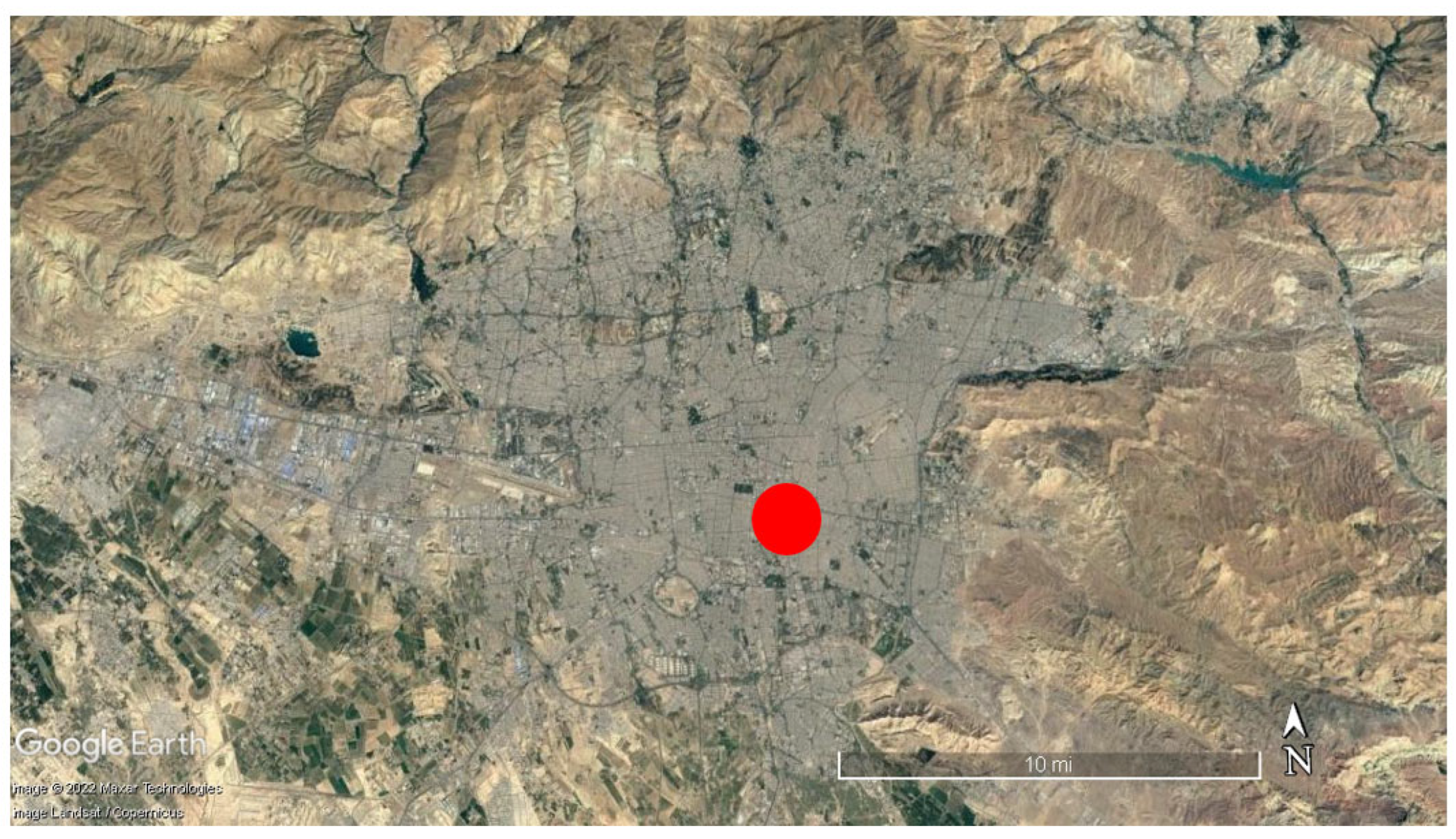
Figure 2.
Data Flow Chart of methodological steps.
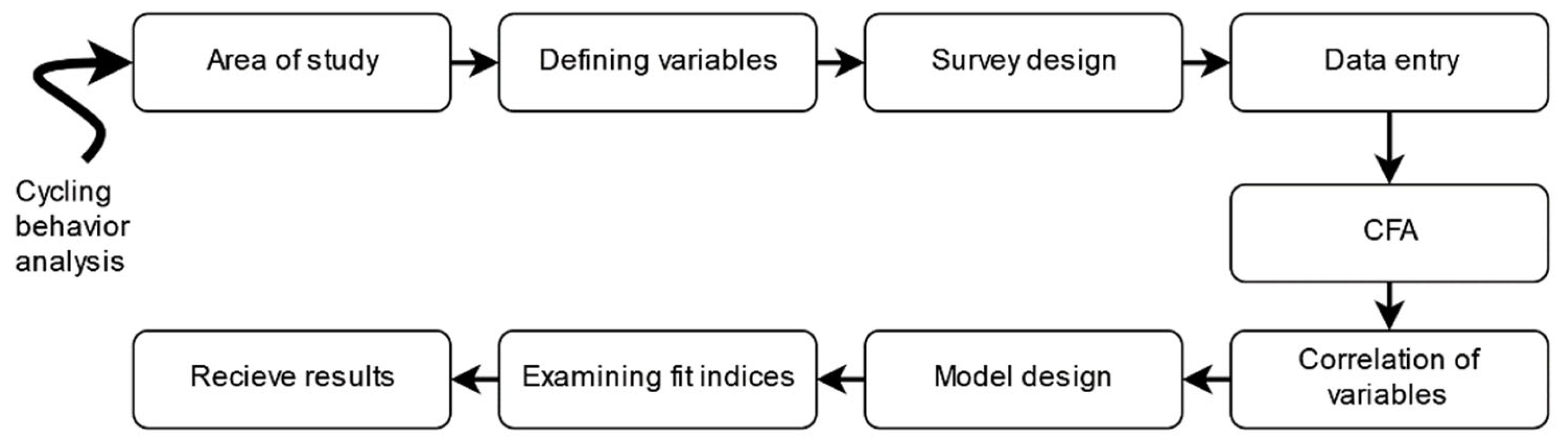
Figure 3.
Experimental research model in the case of standard path coefficients.
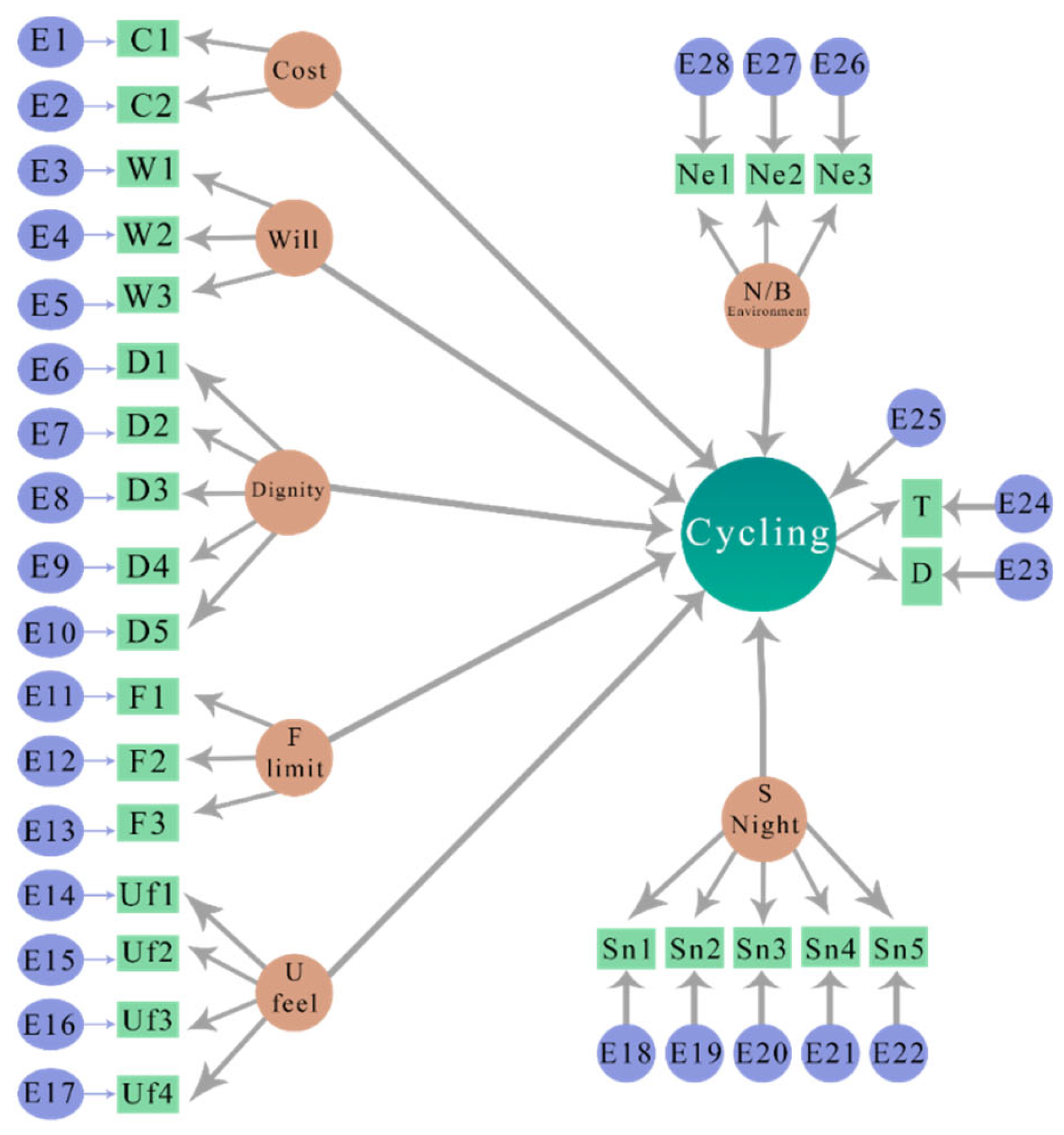
Table 1.
Demographics of obtained data.
| Number | Percent (%) | ||
| Gender | Male | 189 | 45.2 |
| Female | 156 | 54.8 | |
| Marital status | Single | 176 | 51 |
| Married | 169 | 49 | |
| Employment status | Employed | 149 | 43.2 |
| Student | 74 | 21.4 | |
| Working student |
79 | 22.9 | |
| Unemployed | 43 | 12.5 | |
| Education | Under-diploma | 39 | 11.3 |
| Diploma | 68 | 19.7 | |
| Bachelor | 98 | 28.5 | |
| Master | 114 | 33 | |
| PhD | 26 | 7.5 | |
| Income | No income | 15 | 4.3 |
| less than 75 $ | 53 | 15.4 | |
| 75-200 $ | 128 | 37.1 | |
| 200-300$ | 112 | 32.5 | |
| More than 300 $ | 37 | 10.7 | |
| Car ownership | Do not have | 116 | 33.6 |
| Having 1 car | 72 | 20.9 | |
| Having 2 car | 98 | 28.4 | |
| 3 cars or more | 59 | 17.1 | |
| Purpose of trip | work | 70 | 20.3 |
| Education | 63 | 18.3 | |
| Leisure | 59 | 17.1 | |
| socializing | 78 | 22.6 | |
| Shopping and weekend | 75 | 21.7 | |
| BMI | Less than 20 | 28 | 8.1 |
| 20-25 | 126 | 36.5 | |
| 25-30 | 124 | 35.9 | |
| more than 30 | 67 | 19.5 | |
NA: not available.
Table 2.
Defining main variables.
| Main factor | Standard deviation | Average |
|---|---|---|
| cycling | 2.55 | 0.79 |
| Cost | 2.19 | 0.81 |
| Built/Natural environment | 3.52 | 0.98 |
| Will | 3.59 | 0.88 |
| Dignity | 3.4 | 0.87 |
| Limit by family | 3.53 | 1.10 |
| Unpleasant feeling | 2.45 | 1.11 |
| Safety night | 2.37 | 0.92 |
Table 3.
Skewness and kurtosis values to evaluate the normality of the main variables.
| Main factor | Skewness | kurtosis |
|---|---|---|
| Cycling | 0.085 | -0.227 |
| Cost | 0.595 | -0.037 |
| Built/Natural environment | -0.813 | 0.134 |
| Will | -0.65 | 0.456 |
| Dignity | -0.518 | 0.061 |
| Limit by family | -0.605 | -0.409 |
| Unpleasant feeling | 0.667 | -0.137 |
| Safety night | 0.488 | -0.438 |
Table 4.
The results of confirmatory factor analysis: checking the validity and reliability of questionnaire variables.
Table 4.
The results of confirmatory factor analysis: checking the validity and reliability of questionnaire variables.
| Main factor | Item | F.L | AVE | C.R | Cronbach’s a |
| Cycling | Travel time by bicycle per trip | 0.53 | 0.34 | 0.71 | 0.61 |
| The distance you cycle | 0.64 | ||||
| Cost | The cost of cycling (buying a personal bike) is one of my main reasons for not using a bike. | 0.66 | 0.52 | 0.73 | 0.68 |
| The cost of cycling (the cost of using a shared bike) is one of my main reasons for not using a bike | 0.78 | ||||
| Built/Natural environment | In secluded places, I am more interested in cycling | 0.81 | 0.53 | 0.79 | 0.77 |
| I also use a bicycle on days when the weather is polluted | 0.78 | ||||
| I also use a bicycle in places where there is a lot of noise pollution | 0.58 | ||||
| Will | If there is something I don't like, I will still deal with it | 0.52 | 0.44 | 0.72 | 0.68 |
| If I want to understand something, I will definitely try to understand it | 0.78 | ||||
| If I start something, I will definitely finish it | 0.67 | ||||
| Dignity | I always appear outside the house in formal clothes | 0.82 | 0.47 | 0.81 | 0.80 |
| I never leave the house in sports clothes, even to exercise | 0.79 | ||||
| I think cycling is for those who don't have a car | 0.83 | ||||
| I think that cycling is reserved for the wealthy classes of society with lower job stress | 0.43 | ||||
| I think cycling is for those who are in their teens or younger | 0.44 | ||||
| Limit by family | My family does not pay me to buy a bicycle | 0.89 | 0.77 | 0.91 | 0.91 |
| I feel that my family is upset about my cycling | 0.87 | ||||
| I feel that my family will not allow me to ride a bicycle | 0.87 | ||||
| Unpleasant feeling | Other people pay more attention to me when I ride a bike (in a bad way) | 0.85 | 0.84 | 0.95 | 0.96 |
| While cycling, other people make fun of my clothing | 0.92 | ||||
| When cycling, other people object to my clothing | 0.97 | ||||
| While cycling, other people make fun of me because of my gender | 0.93 | ||||
| Safety night | Accidents are more likely to occur while cycling at night | 0.89 | 0.61 | 0.92 | 89/0 |
| There is a higher chance of harassment while cycling at night | 0.96 | ||||
| There are few police at night in the city | 0.93 | ||||
| More thefts occur from cyclists at night | 0.54 | ||||
| I have more anxiety while cycling at night. | 0.46 |
C.R= Composite reliability, AVE: average variance extracted, FL: factor loading.
Table 5.
Pearson correlation matrix between main variables and divergent validity.
| Variables | Cycling | Cost | Built/Natural environment | Will | Dignity | Limit by family | Unpleasant feeling | Safety night |
| Cycling | 0.58 | |||||||
| Cost | -0/34** | 0/72 | ||||||
| Built/Natural environment | -0/49** | /21** 0 |
0/73 | |||||
| Will | 0/57** | /23** -0 |
-0/31** | 0/66 | ||||
| Dignity | -0/45** | 0.06 | 0/27** | /18** 0 |
0/68 | |||
| Limit by family | -0/39** | /33** 0 |
0/45** | /30** -0 |
0/31** | 0/88 | ||
| Unpleasant feeling | -0/19** | /24** 0 |
0.05 | 0.08 | 0/33** | 0/48** | 0/92 | |
| Safety night | -0/25** | 0.07 | 0/25** | 0.07 | 0/24** | 0/37** | 0/16** | 0/78 |
≤ 05/0 = p *,≤ 01/0 = p .**
Table 6.
The fit indices of the research model.
| Interpretation | Result | range Acceptable | Indicator |
| Acceptable fit | 0.91 | > 0.90 ( Greater than 0.90 ) |
GFI (index goodness-of-fit) |
| Acceptable fit | 0.072 | < 0.80 (smaller than 0.80) |
RMSEA (Root mean square error of approximation) |
| Acceptable fit | 0.93 | > 0.90 ( Greater than 0.90 ) |
CFI (fit index comparative) |
| Acceptable fit | 0.92 | > 0.90 ( Greater than 0.90 ) |
NFI (fit index Normed) |
| Acceptable fit | 0.89 | > 0.90 ( Greater than 0.90 ) |
IFI (fit index Incremental) |
| Acceptable fit | 0.71 | > 0.50 ( Greater than 0.50 ) |
AGFI (goodness-of-fit index Adjusted) |
| Acceptable fit | 0.56 | > 0.50 ( Greater than 0.50 ) |
PGFI (goodness-of-fit index Parsimonious) |
| Acceptable fit | 2.56 | 5 ≥ Indicator ≥1 (between 1-5) |
chi-square/DF (Chi-square ratio on the degree of freedom) |
Disclaimer/Publisher’s Note: The statements, opinions and data contained in all publications are solely those of the individual author(s) and contributor(s) and not of MDPI and/or the editor(s). MDPI and/or the editor(s) disclaim responsibility for any injury to people or property resulting from any ideas, methods, instructions or products referred to in the content. |
© 2023 by the authors. Licensee MDPI, Basel, Switzerland. This article is an open access article distributed under the terms and conditions of the Creative Commons Attribution (CC BY) license (http://creativecommons.org/licenses/by/4.0/).
Copyright: This open access article is published under a Creative Commons CC BY 4.0 license, which permit the free download, distribution, and reuse, provided that the author and preprint are cited in any reuse.


