

Submitted:
30 December 2022
Posted:
31 December 2022
You are already at the latest version
Abstract
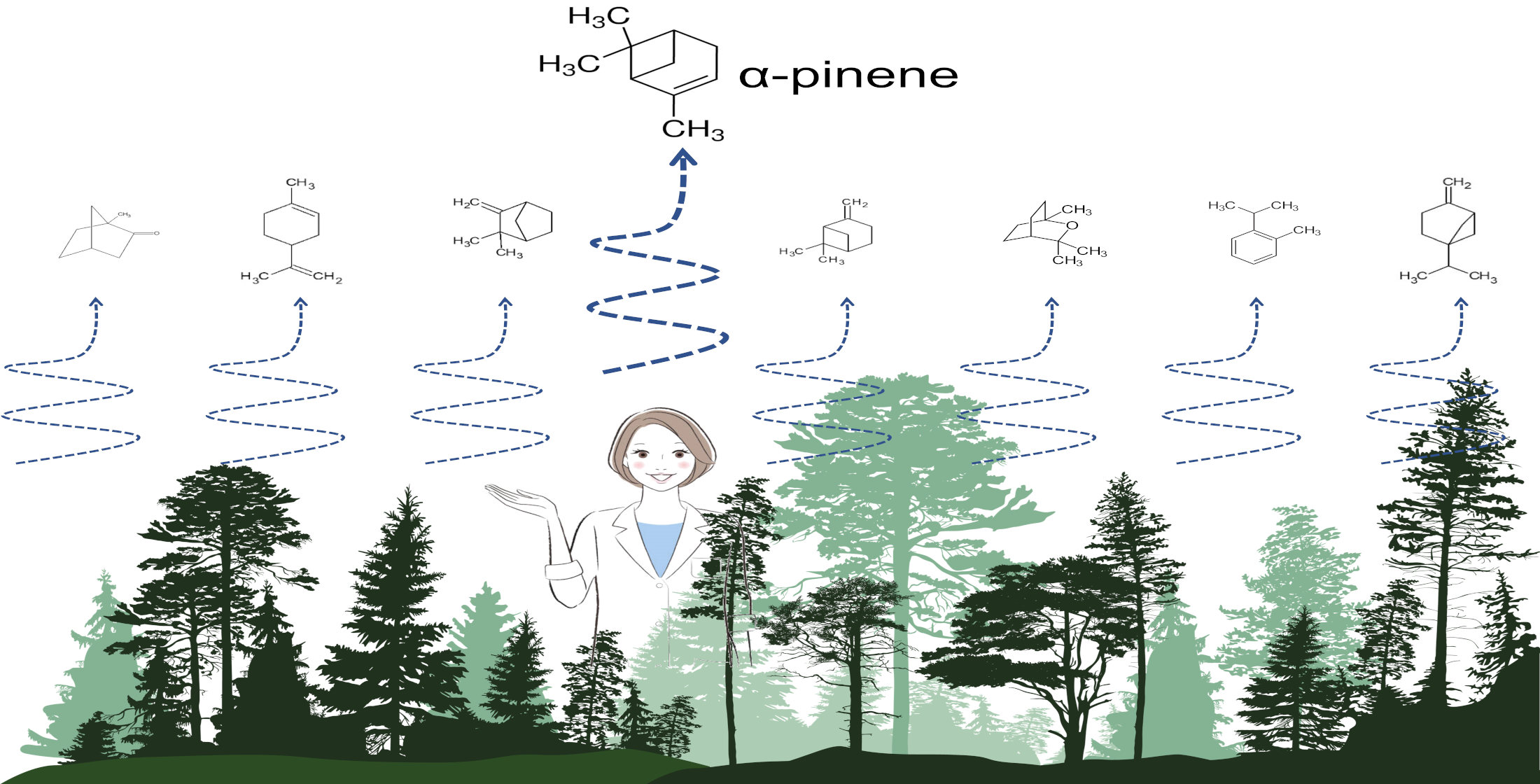
Immersive experiences in green areas and particularly in forests have long been known to produce beneficial effects for human health. However, the exact determinants and mechanisms leading to healthy outcomes remain to be elucidated. The purpose of this study was to investigate whether inhaling plant-emitted biogenic volatile compounds, namely monoterpenes (MTs), can produce specific effects on anxiety. Data from 505 subjects participating in 39 structured forest therapy sessions in different Italian sites, were collected. Monoterpenes air concentration was measured at each site. STAI State questionnaires were administered before and after the sessions as a measure of anxiety. A propensity score matching analysis was then performed, considering an above-average exposure to inhalable air MTs as the treatment: the estimated effect was -1.28 STAI-S points (95% C.I. -2.51 to -0.06, p = 0.04), indicating that the average effect of exposure to high MT air concentrations during forest therapy sessions is to decrease anxiety.
Keywords:
Anxiety
; Biogenic volatile organic compounds
; Forest therapy
; Monoterpenes
; α-Pinene
; Propensity matching.
Copyright: This open access article is published under a Creative Commons CC BY 4.0 license, which permit the free download, distribution, and reuse, provided that the author and preprint are cited in any reuse.