

Submitted:
22 December 2022
Posted:
28 December 2022
You are already at the latest version
Abstract
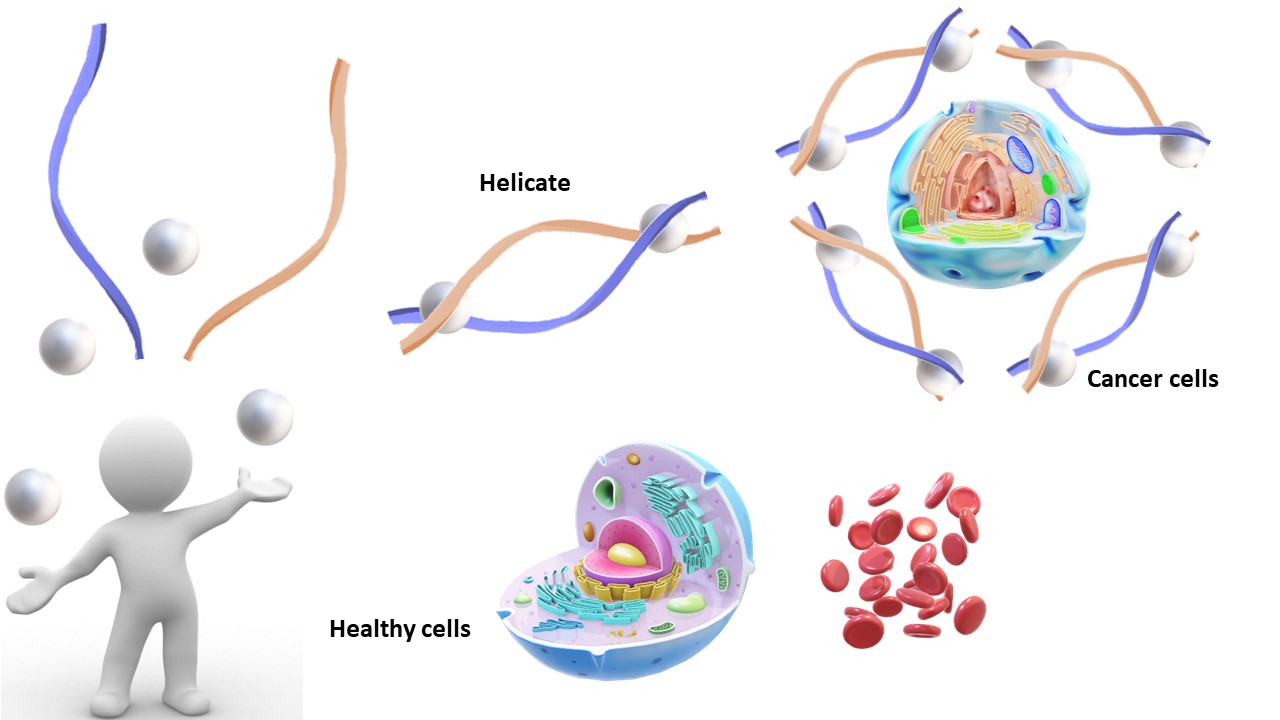
The design of artificial helicoidal molecules derived from metal ions with biological properties is one of the objectives within Metallosupramolecular Chemistry. Herein, we report three zinc helicates derived from a family of bisthiosemicarbazone ligands with different terminal groups, Zn2(LMe)2∙2H2O 1, Zn2(LPh)2∙2H2O 2 and Zn2(LPhNO2)2 3, obtained by an electrochemical methodology. These helicates have been fully characterized by different techniques, including X-Ray diffraction. Biological studies of the zinc(II) helicates such as toxicity assays with erythrocytes and interaction studies with proteins and oligonucleotides were performed, demonstrating in all cases low toxicity and an absence of covalent interaction with the proteins and oligonucleotides. The in vitro cytotoxicity of the helicates was tested against MCF-7 (human breast carcinoma), A2780 (human ovarian carcinoma cells), NCI-H460 (human lung carcinoma cells) and MRC-5 (normal lung human fibroblast), comparing the IC50 values with cisplatin. We will try to demonstrate if the terminal substituent of the ligand precursor exerts any effect in toxicity or in the antitumor activity of the zinc helicates.
Keywords:
bisthiosemicarbazone ligands
; zinc
; helicates
; biological activity.
Copyright: This open access article is published under a Creative Commons CC BY 4.0 license, which permit the free download, distribution, and reuse, provided that the author and preprint are cited in any reuse.


