
Submitted:
29 August 2022
Posted:
30 August 2022
You are already at the latest version
Preprints on COVID-19 and SARS-CoV-2
Abstract
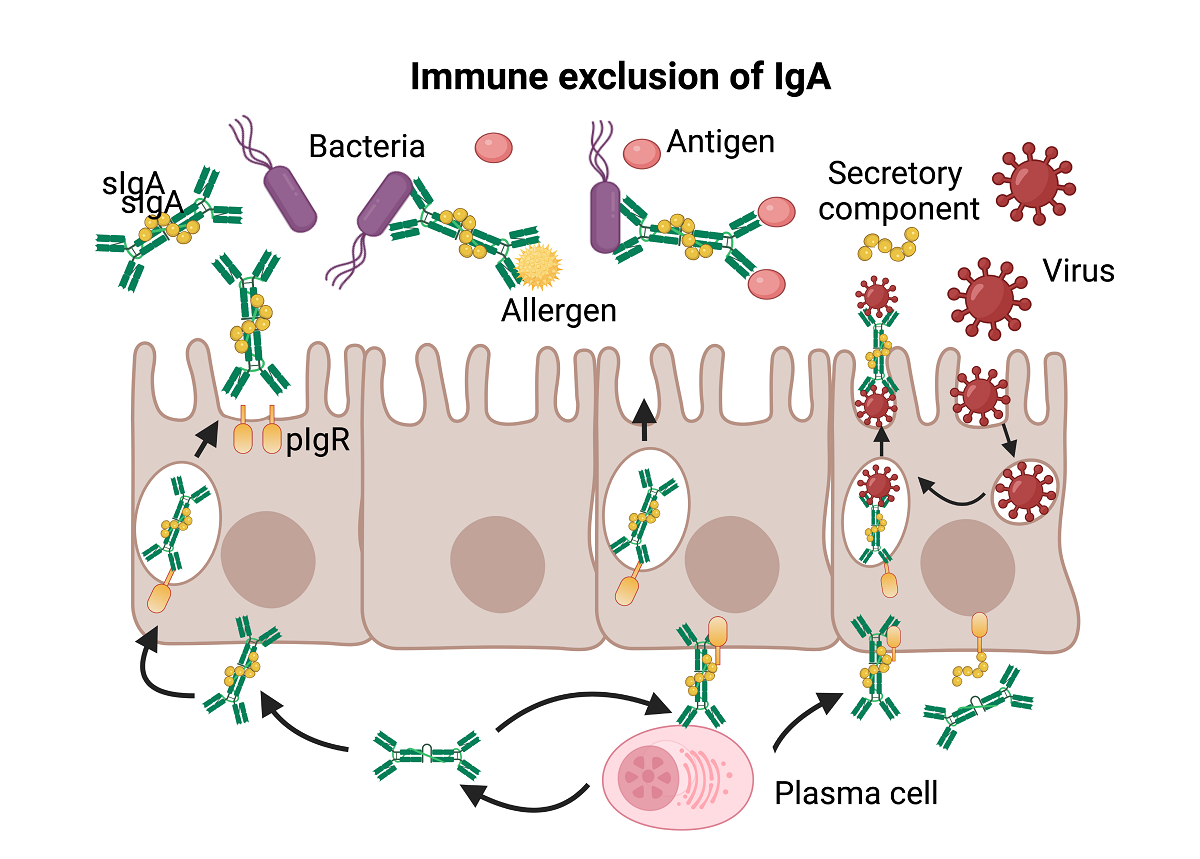
Nasal cavity is a primary checkpoint for the invasion of several respiratory pathogens. Numerous pathogens including SARS-CoV-2, S. pneumonia, S. aureus, etc., adhere to the nasal epithelium or mucus to invade and trigger an infection. IgA serves as the first line of defense against foreign antigens and pathogens. They exhibit cross-reactivity against a diverse variety of antigens through immune exclusion, which intercepts the invasion of pathogens through the mucosal lining. Advances in intranasal immunization technology underscore the elevated neutralizing IgA levels at local and distal mucosa in contrast to the parenteral vaccines. This review highlights the adjuvants that induce IgA class switching and the challenges of maintaining nominal IgA levels at the mucosal surface. Finally, the review features the paradigm-shifting of conventional immunization techniques to IgA-inducing vaccines to enhance protection against homologous and heterologous pathogens.
Keywords:
Secretory IgA
; IgA class switching
; SARS-CoV-2
; respiratory pathogens
; nasal vaccines
; vaccine adjuvants
Copyright: This open access article is published under a Creative Commons CC BY 4.0 license, which permit the free download, distribution, and reuse, provided that the author and preprint are cited in any reuse.


