
Submitted:
14 January 2020
Posted:
15 January 2020
You are already at the latest version
Abstract
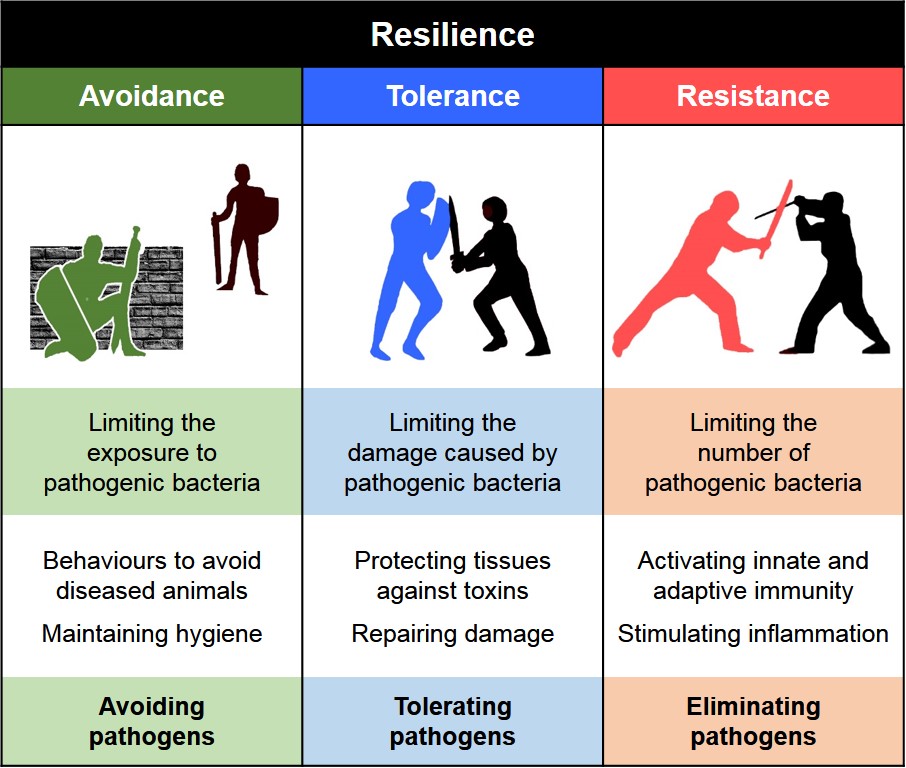
Up to forty percent of dairy cows develop metritis or endometritis when pathogenic bacteria infect the uterus after parturition. However, resilient cows remain healthy even when exposed to the same pathogens. Here, we provide a perspective on the mechanisms that dairy cows use to prevent postpartum uterine disease. We suggest that resilient cows prevent the development of uterine disease using the three complimentary defensive strategies of avoiding, tolerating and resisting infection with pathogenic bacteria. Avoidance maintains health by limiting the exposure to pathogens. Avoidance mechanisms include intrinsic behaviors to reduce the risk of infection by avoiding pathogens or infected animals, perhaps signaled by the fetid odor of uterine disease. Tolerance improves health by limiting the tissue damage caused by the pathogens. Tolerance mechanisms include neutralizing bacterial toxins, protecting cells against damage, enhancing tissue repair, and reprogramming metabolism. Resistance improves health by limiting the pathogen burden. Resistance mechanisms include inflammation driven by innate immunity and adaptive immunity, with the aim of killing and eliminating pathogenic bacteria. Farmers can also help cows prevent the development of postpartum uterine disease by avoiding trauma to the genital tract, reducing stress, and feeding animals appropriately during the transition period. Understanding the mechanisms of avoidance, tolerance and resistance to pathogens will inform strategies to generate resilient animals and prevent uterine disease.
Keywords:
Bovine
; Uterus
; Metritis
; Endometritis
; Resilience
Copyright: This open access article is published under a Creative Commons CC BY 4.0 license, which permit the free download, distribution, and reuse, provided that the author and preprint are cited in any reuse.


