
Submitted:
24 November 2026
Posted:
25 November 2026
You are already at the latest version
Abstract
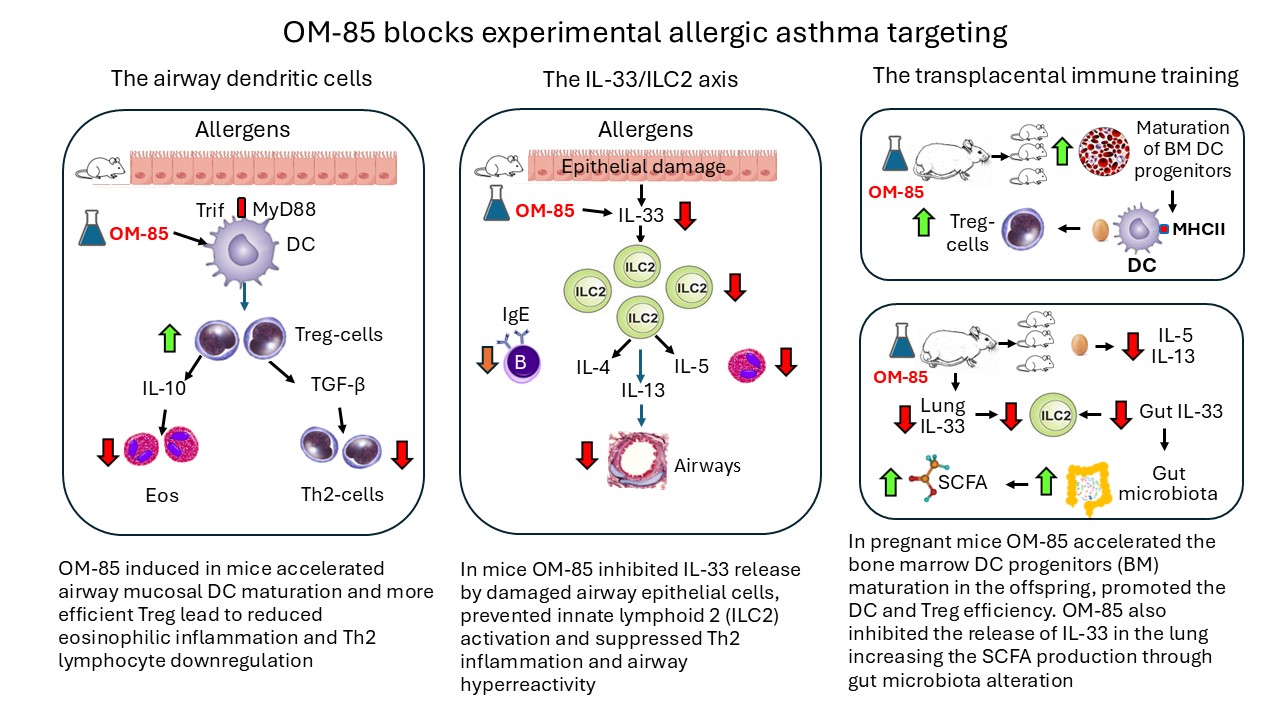
Allergic asthma, a chronic respiratory disease triggered by inhaled allergens, is characterized by airway inflammation and constriction, which result in breathing difficulties, chest tightness. The prevalence of this condition is rising globally, contributing significantly to health and socioeconomic burdens. Conventional pharmacological treatments, including inhaled and systemic glucocorticoids, inhaled bronchodilators and leukotriene inhibitors are effective in controlling symptoms but remain insufficient in targeting the underlying disease mechanisms. Recent research has focused on the immunomodulatory potential of bacterial lysates (BL) that, functioning as pathogen-associated molecular patterns, can modulate both innate and adaptive immune responses. By acting on tolerogenic dendritic cells, supporting regulatory T-cells and inhibiting the release of airway-derived alarmins, BL may offer promising treatment options for people with allergic asthma. OM-85 is the most extensively studied BL in experimental models of allergic asthma, with findings indicating that it may provide protection and help train the immune system. This review examines and discusses findings from translational animal models.
Keywords:
bacterial lysates
; trained immunity
; treg cells type 2 innate lymphoid cells
; gut microbiota
Copyright: This open access article is published under a Creative Commons CC BY 4.0 license, which permit the free download, distribution, and reuse, provided that the author and preprint are cited in any reuse.