Preprint
Article

This version is not peer-reviewed.

Probable Neuropathic Pain and Pain Quality Among Adults Receiving Maintenance Hemodialysis in Saudi Arabia: A Cross-Sectional Study

Submitted:

24 November 2026

Posted:

25 November 2026

You are already at the latest version

Abstract

Background/Objectives: Pain is among the most prevalent and distressing symptoms in patients receiving hemodialysis, yet nursing assessment usually captures pain intensity alone. This study aimed to describe the prevalence of probable neuropathic pain, describe the sensory and affective quality of pain, and identify factors associated with neuropathic pain screening positivity and overall pain burden among adults receiving maintenance hemodialysis in Saudi Arabia. Methods: A cross-sectional study was conducted with a convenience sample of 157 adults in the inpatient and outpatient hemodialysis units of a tertiary hospital in Jeddah, Saudi Arabia, between December 2023 and February 2024. Participants completed the Arabic Short-Form McGill Pain Questionnaire (SF-MPQ) and the Arabic Neuropathic Pain Questionnaire-Short Form (NPQ-SF), using the validated cut-off of ≥0.52. Data were analyzed using non-parametric tests and multivariable logistic and linear regression. Results: Probable neuropathic pain was identified in 20.4% of participants (95% CI 14.8–27.4), increasing to 36.9% with the original cut-off. Tiring-exhausting, heavy, and cramping were the most intense pain descriptors. NPQ-positive participants had markedly higher sensory, affective, and total SF-MPQ scores and pain intensity than NPQ-negative participants (all p < 0.001; Cohen’s d 1.24–1.87). Older age was associated with lower odds of probable neuropathic pain (OR 0.97 per year; 95% CI 0.94–1.00) and, together with higher income, with lower overall pain burden. Conclusions: About one in five patients receiving hemodialysis screened positive for probable neuropathic pain, identifying a subgroup with a substantially heavier sensory and affective pain burden. Brief, validated Arabic instruments can support routine nurse-led, multidimensional pain assessment and timely interprofessional referral in dialysis units.

Keywords: 
;  ;  ;  ;  ;  ;  

1. Introduction

Chronic kidney disease (CKD) is a major global public health problem that affects hundreds of millions of people and contributes substantially to premature mortality and disability [1,2]. As kidney function declines, symptom burden increases and becomes especially pronounced among patients with kidney failure who require hemodialysis [3]. In Saudi Arabia, hemodialysis is the predominant form of kidney replacement therapy, with more than 20,000 patients receiving treatment nationwide [4].
Pain is among the most prevalent and distressing of these symptoms. Pooled estimates place the prevalence of any pain at approximately 63% among patients receiving dialysis [5] and the prevalence of chronic pain at 60.5% among those receiving hemodialysis, with moderate-to-severe pain also common [6]. Pain in this population frequently involves the back, limbs, bones, chest, and head, and it interferes with daily activities [7]. Its sources are diverse and often coexist, including musculoskeletal and metabolic bone disease, vascular disease, dialysis procedures, ischemia, and peripheral neuropathy [8,9]. Despite this burden, pain remains under-assessed and under-treated in dialysis settings [8,10].
The neuropathic component of pain deserves particular attention because it arises from mechanisms distinct from nociceptive pain, including diabetic, uremic, and ischemic neuropathy, and because it calls for different pharmacologic and non-pharmacologic approaches [11,12]. Reported estimates vary widely with the instrument and case definition used. Using the Leeds Assessment of Neuropathic Symptoms and Signs (LANSS), Fleishman et al. [13] found neuropathic characteristics in 61.5% of 336 patients receiving maintenance hemodialysis, and Sadigova et al. [14] reported a neuropathic character in 61.8% of patients with pain. Using the Douleur Neuropathique 4 (DN4), Kitala-Tańska et al. [15] identified probable neuropathic pain in nearly half of dialysis patients with chronic pain. In contrast, specialist pain-physician assessment classified 22.1% of pain diagnoses as neuropathic, with nociceptive pain predominating [16], and a meta-analysis estimated neuropathic pain at 10% across CKD populations [5]. In the multicenter HOPE Consortium Trial, pain in adults receiving hemodialysis occurred at numerous locations and showed substantial musculoskeletal and neuropathic characteristics [17].
Hemodialysis nurses see patients three times a week and are therefore well placed to detect and document pain systematically. However, unidimensional intensity scales cannot distinguish neuropathic features, cramping, or affective distress [18]. The Short-Form McGill Pain Questionnaire (SF-MPQ) captures the sensory and affective dimensions of pain through 15 descriptors [19], whereas the Neuropathic Pain Questionnaire-Short Form (NPQ-SF) screens for neuropathic pain using three discriminating symptoms: tingling pain, numbness, and increased pain due to touch [20]. Both instruments have been translated into and validated in Arabic, and the Arabic NPQ-SF validation identified an optimal cut-off of ≥0.52 rather than the original cut-off of ≥0 [21,22].
This study was guided by two complementary frameworks (Figure 1). The multidimensional model of pain proposed by Melzack and Casey [23] conceptualizes pain as comprising sensory-discriminative, affective-motivational, and cognitive-evaluative dimensions; this model underpins the SF-MPQ and justifies assessing the sensory and affective quality of pain alongside its intensity. The mechanism-based classification of the International Association for the Study of Pain (IASP) distinguishes neuropathic pain—pain caused by a lesion or disease of the somatosensory nervous system—from nociceptive pain, and its grading system designates neuropathic pain as possible, probable, or definite according to the available clinical evidence [24,25]. Within these frameworks, a positive neuropathic screen indicates a distinct pain mechanism that is expected to be associated with greater sensory and affective pain burden, whereas sociodemographic and clinical characteristics are conceptualized as factors that may shape both neuropathic risk and the overall experience of pain.
Pain research among patients receiving hemodialysis in the Arab region is growing. Studies from Saudi Arabia and Palestine have described pain prevalence, severity, interference, and quality of life using the Brief Pain Inventory [26,27], and Saudi nursing studies have examined arteriovenous fistula cannulation pain and its management [28,29]. A companion analysis from the present research project examined the relationship between overall pain severity and quality of life [30], but it did not address the neuropathic component or the sensory and affective quality of pain. To our knowledge, no study has used validated Arabic instruments to characterize both the neuropathic component and the qualitative profile of pain in this population, evidence that is needed to inform culturally appropriate, nurse-led pain assessment in dialysis units.
Therefore, this study aimed to (1) estimate the prevalence of probable neuropathic pain, (2) describe pain quality, (3) compare pain characteristics between patients with and without probable neuropathic pain, and (4) identify factors associated with neuropathic pain screening positivity and overall pain burden among adults receiving maintenance hemodialysis in Saudi Arabia.

2. Materials and Methods

2.1. Study Design

A cross-sectional design was used, and the study is reported in accordance with the Strengthening the Reporting of Observational Studies in Epidemiology (STROBE) statement [31]. This report is a separate analysis from a larger cross-sectional project on pain among patients receiving hemodialysis, in which a single questionnaire package was administered to one sample of participants. A previous publication from the project [30] addressed a different research question—the association between pain severity and quality of life—using the World Health Organization Quality of Life–BREF (WHOQOL-BREF) and the 0–10 pain intensity rating of the SF-MPQ. The present analysis addresses a distinct question and uses variables that were not analyzed or reported in that publication: the three NPQ-SF items and the derived discriminant score, and the 15 SF-MPQ descriptors with their sensory and affective subscales. WHOQOL-BREF data were not used. Because both reports describe the same participants, the sociodemographic and clinical characteristics and the pain intensity rating are necessarily shared and are reported here only to describe the sample and characterize pain burden.

2.2. Setting and Participants

The study was conducted in the inpatient and outpatient hemodialysis units of King Abdulaziz Medical City (KAMC), Ministry of National Guard Health Affairs, Jeddah, Saudi Arabia. A non-probability convenience sample was recruited. Patients were eligible if they were aged 18 years or older, had a confirmed diagnosis of CKD, were receiving maintenance hemodialysis, reported pain, could communicate in Arabic, and provided written informed consent. Patients with cognitive, mental health, or neurological conditions that could affect their ability to understand or complete the questionnaires, or that could confound neuropathic pain assessment, were excluded.
All eligible patients available during the data collection period were approached, and 157 participated. With 157 participants, the 95% confidence interval around the observed prevalence of probable neuropathic pain has a half-width of approximately 6.3 percentage points.

2.3. Instruments

Sociodemographic and clinical data. A structured form recorded age, sex, nationality, education, marital status, employment, monthly income, smoking status, comorbidities (hypertension, diabetes mellitus, heart disease, and others), years since CKD diagnosis, self-reported CKD stage, and hemodialysis frequency per week.
Short-Form McGill Pain Questionnaire (SF-MPQ). The SF-MPQ consists of 15 pain descriptors rated on a 4-point scale (0 = none, 1 = mild, 2 = moderate, 3 = severe), of which 11 are sensory and 4 are affective (tiring-exhausting, sickening, fearful, and punishing-cruel). It also includes a 0–10 pain intensity rating and a 0–5 present pain intensity item [19]. Sensory (range 0–33), affective (range 0–12), and total (range 0–45) scores were calculated by summing the relevant descriptors. Pain intensity ratings were categorized as none (0), mild (1–3), moderate (4–6), and severe (7–10). The Arabic version showed good internal consistency (Cronbach’s α = 0.85) and acceptable validity among patients with chronic pain [22]. In the present sample, Cronbach’s α for the 15 descriptors was 0.92.
Neuropathic Pain Questionnaire-Short Form (NPQ-SF). The NPQ-SF comprises three items—tingling pain, numbness, and increased pain due to touch—each rated from 0 to 100 and entered into a published discriminant function: NPQ-SF score = (0.017 × tingling pain) + (0.015 × numbness) + (0.011 × increased pain due to touch) − 1.302 [20]. In the Arabic validation study, a cut-off of ≥0.52 best distinguished patients with and without neuropathic pain, with a sensitivity and specificity of 71%; test–retest reliability was acceptable (intraclass correlation coefficient = 0.78), although internal consistency was low (α = 0.45–0.48), as expected for a three-item discriminant tool [21]. In line with the IASP grading system [25], an NPQ-SF score of ≥0.52 was defined as probable neuropathic pain, and a sensitivity analysis applied the original cut-off of ≥0.
Both Arabic instruments were used without modification. They had been translated and culturally adapted through forward translation, back-translation, expert review, and pilot testing [21,22]. Permission to use the Arabic forms was obtained before conducting the study.

2.4. Data Collection

Data were collected between December 2023 and February 2024 using a structured, self-administered electronic questionnaire (Google Forms) completed during hemodialysis sessions. Trained research assistants were present to help participants read or clarify items on request, taking care not to influence their responses; this assistance allowed participants with limited literacy or restricted hand movement due to vascular access to take part. All clinical information, including comorbidities and CKD stage, was self-reported. No personal identifiers were collected.

2.5. Data Analysis

Data were analyzed using IBM SPSS Statistics version 25. Continuous variables were summarized as mean ± standard deviation (SD) and median (interquartile range [IQR]), and categorical variables as frequency and percentage. The prevalence of probable neuropathic pain was reported with a 95% Wilson confidence interval (CI). Because pain scores and NPQ-SF item scores were not normally distributed (Shapiro–Wilk test, p < 0.001), NPQ-positive and NPQ-negative groups were compared using the Mann–Whitney U test, and Cohen’s d was calculated from group means and pooled SDs as an effect size index. Categorical variables were compared using the chi-square test or Fisher’s exact test, as appropriate.
Two multivariable models were fitted: a binary logistic regression examining factors associated with probable neuropathic pain, and a multiple linear regression examining factors associated with the SF-MPQ total score as an indicator of overall pain burden. Candidate covariates (age, sex, monthly income, diabetes mellitus, and heart disease) were selected a priori based on previous literature and the study framework. Heart disease was entered in the logistic model because of its potential vascular contribution to neuropathic symptoms; in a sensitivity analysis, adding heart disease to the linear model did not change the results (B = −1.20, p = 0.597). Monthly income was entered as an ordinal variable (four categories). Given 32 outcome events, the logistic model was limited to five predictors (approximately six events per variable). Logistic model fit was assessed with the likelihood-ratio test, the Hosmer–Lemeshow test, and Nagelkerke R², and linear model fit with R², adjusted R², and the F test. Multicollinearity was assessed with variance inflation factors (VIF). Statistical significance was set at p < 0.05 (two-tailed).

2.6. Ethical Considerations

The study was approved by the Institutional Review Board of King Abdullah International Medical Research Center (RB No. IRB/2932/23, and Study number: SP23J/165/11) and by the participating hemodialysis units. All participants provided written electronic informed consent before data collection. Participation was voluntary; participants were informed of their right to withdraw at any time without affecting their care, and no identifiable personal information was collected.

3. Results

3.1. Participant Characteristics

A total of 157 patients participated (Table 1). The mean age was 50.0 ± 13.8 years (range 20–80 years), and nearly half were aged 45–64 years (49.7%). The sample was evenly divided by sex (50.3% male); most participants were Saudi nationals (89.2%), married (65.6%), unemployed (80.3%), and reported a monthly income below 5000 Saudi riyals (SAR) (63.7%). Most had at least one comorbidity (82.8%), most commonly hypertension (70.1%) and diabetes mellitus (36.3%). Most participants (86.0%) did not know their CKD stage, and nearly all (98.7%) received hemodialysis three times weekly.

3.2. Pain Intensity and Pain Quality

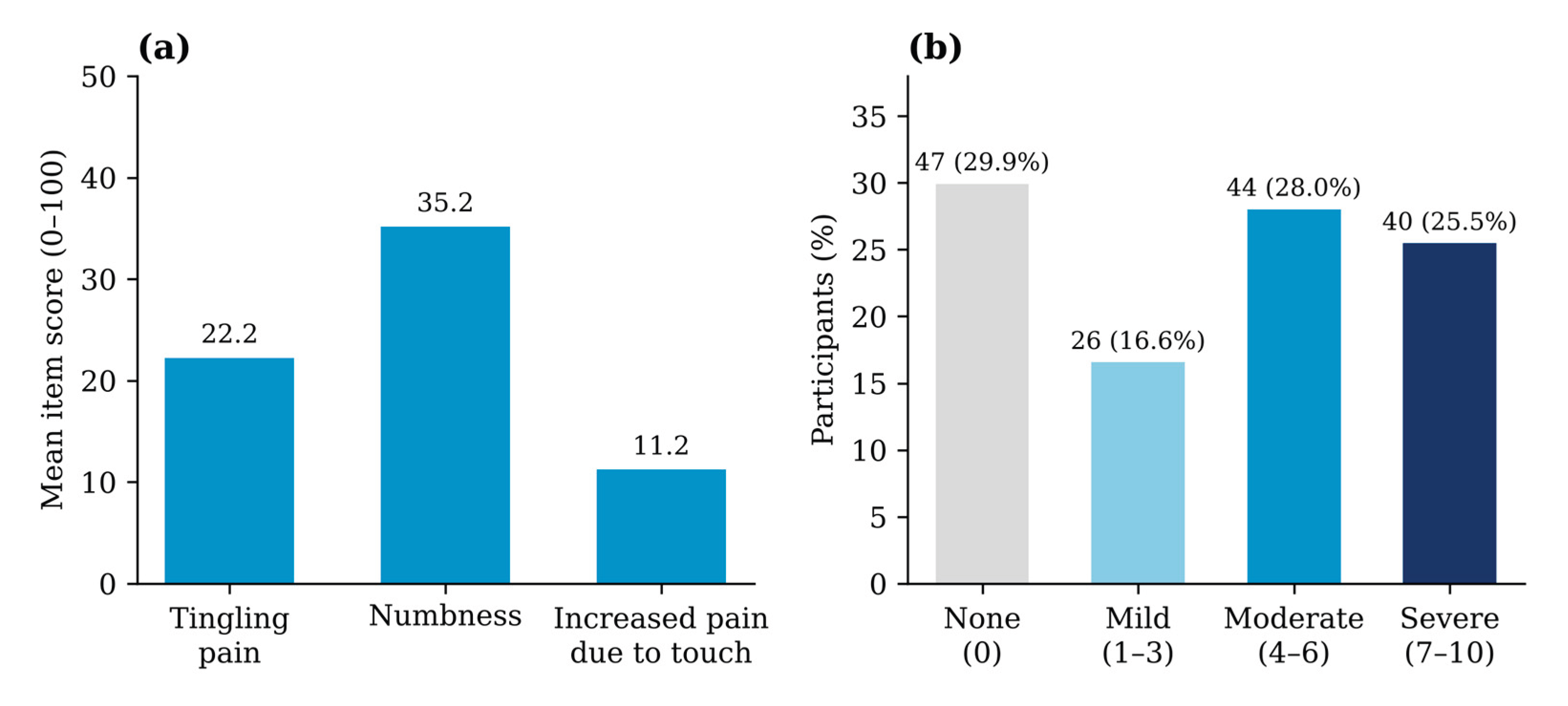
The mean SF-MPQ total score was 11.58 ± 11.02, with a median of 8.00 (IQR 2.00–20.00) (Table 2). Based on the 0–10 pain intensity rating, 47 participants (29.9%) reported no pain at the time of completion, 26 (16.6%) mild pain, 44 (28.0%) moderate pain, and 40 (25.5%) severe pain (Figure 3b). Twenty-one participants (13.4%) reported no pain on any SF-MPQ component (descriptors, intensity rating, and present pain intensity).
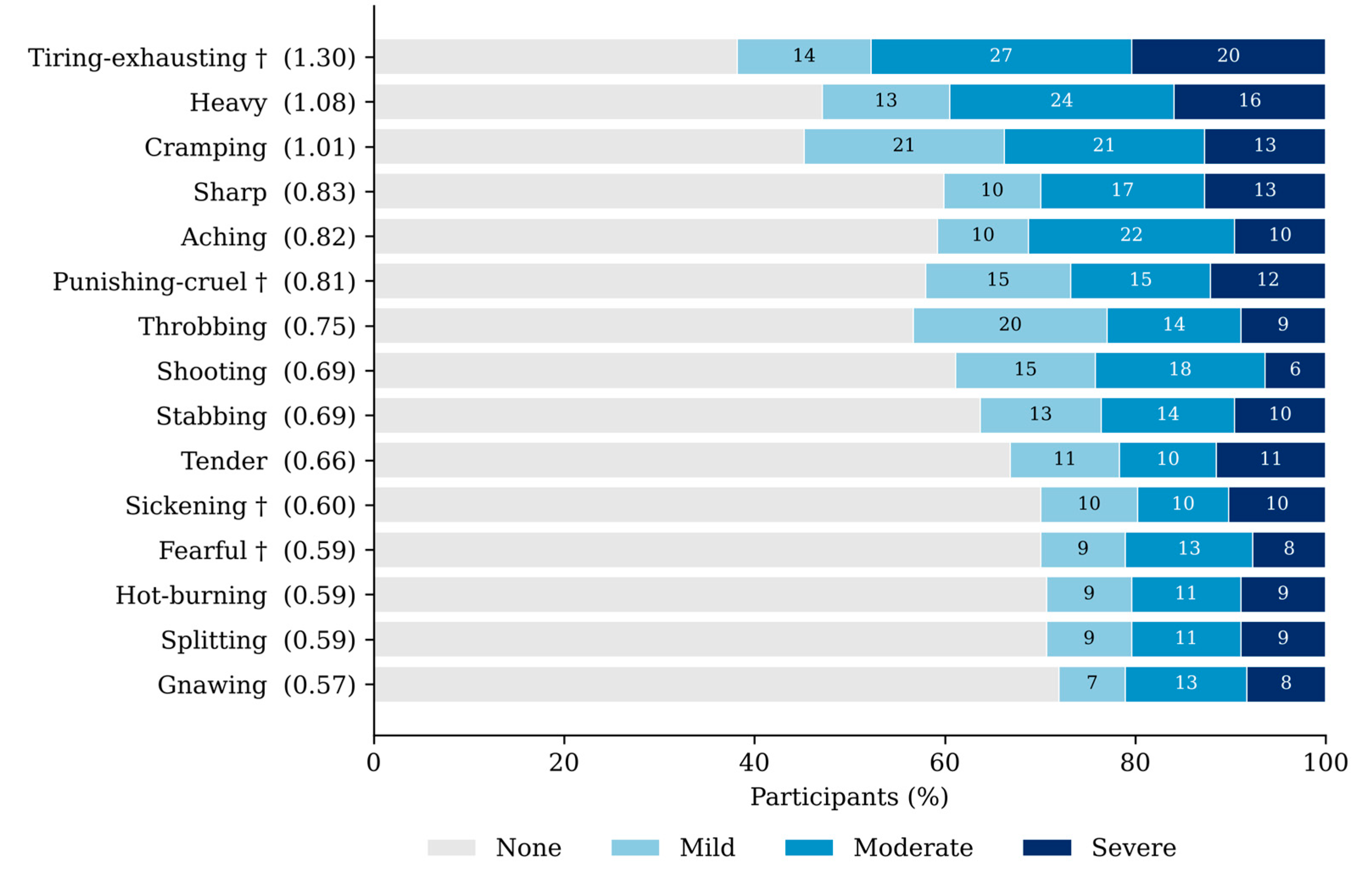
Among the 15 descriptors, tiring-exhausting had the highest mean intensity and was rated moderate or severe by 47.8% of participants, followed by heavy (39.5%) and cramping (33.8%) (Figure 2). Descriptors more classically associated with neuropathic pain, such as hot-burning, shooting, and stabbing, were reported less frequently and with lower intensity at the whole-sample level.

3.3. Prevalence of Probable Neuropathic Pain

Using the validated Arabic cut-off of ≥0.52, 32 of 157 participants screened positive for probable neuropathic pain, a prevalence of 20.4% (95% CI 14.8–27.4). Applying the original cut-off of ≥0 increased the prevalence to 36.9% (n = 58; 95% CI 29.8–44.7). Among the NPQ-SF items, numbness had the highest mean score, followed by tingling pain, whereas increased pain due to touch was least prominent (Table 2; Figure 3a).

3.4. Comparison Between NPQ-Positive and NPQ-Negative Participants

NPQ-positive participants were younger than NPQ-negative participants (45.56 ± 12.24 vs. 51.18 ± 13.92 years; p = 0.047) (Table 3). They also had substantially higher SF-MPQ sensory, affective, and total scores, pain intensity ratings, and present pain intensity (all p < 0.001), with large effect sizes (Cohen’s d 1.24–1.87). No statistically significant differences were observed for sex, nationality, monthly income, diabetes mellitus, hypertension, or heart disease (Table 3), or for education (p = 0.811), marital status (p = 1.000), employment (p = 1.000), smoking status (p = 1.000), and years since CKD diagnosis (p = 0.227).

3.5. Factors Associated with Probable Neuropathic Pain and Pain Burden

In the multivariable logistic regression model, older age was independently associated with lower odds of probable neuropathic pain (adjusted OR 0.97 per year; 95% CI 0.94–1.00; p = 0.044) (Table 4). Heart disease showed a positive but non-significant association (OR 2.42; 95% CI 0.89–6.59; p = 0.085), and sex, income, and diabetes mellitus were not associated with screening positivity. In the multiple linear regression model, older age (B = −0.16; p = 0.018) and a higher income category (B = −2.36; p = 0.014) were independently associated with lower SF-MPQ total scores, whereas sex and diabetes mellitus were not.

4. Discussion

This study used validated Arabic instruments to characterize the neuropathic component and qualitative profile of pain among adults receiving maintenance hemodialysis in Saudi Arabia. Three main findings emerged. First, about one in five participants screened positive for probable neuropathic pain at the validated Arabic cut-off. Second, the overall pain profile was mixed and dominated by tiring-exhausting, heavy, and cramping descriptors rather than classic neuropathic descriptors. Third, neuropathic screening positivity identified a subgroup with a substantially heavier sensory and affective pain burden, supporting the expectation derived from the study framework.
The prevalence of probable neuropathic pain (20.4%) lies between the 10% pooled estimate across CKD populations [5] and the much higher rates of 47–62% reported in hemodialysis cohorts screened with the LANSS or DN4 [13,14,15], and it is close to the 22.1% of pain diagnoses classified as neuropathic by pain specialists in an Italian hemodialysis center [16]. Several factors may explain this variation. Screening instruments differ in content and threshold; the Arabic NPQ-SF cut-off of ≥0.52 is more stringent than the original cut-off, and our sensitivity analysis showed that prevalence nearly doubled (36.9%) under the original threshold. In addition, the denominators differ: several previous studies estimated neuropathic pain only among patients with chronic pain, whereas almost one-third of our participants reported no pain at the time of completion. Finally, pain in hemodialysis is often predominantly nociceptive or musculoskeletal [5,16].
The SF-MPQ descriptor profile supports this mixed-pain interpretation. Tiring-exhausting, heavy, and cramping sensations are consistent with treatment-related fatigue, intradialytic muscle cramps, fluid and metabolic shifts, and chronic musculoskeletal pain, all of which are common in patients with CKD [7,32]. That the leading descriptor was affective rather than sensory suggests that the emotional burden of pain in this population is considerable. Numbness and tingling were nevertheless prominent NPQ-SF items, consistent with the high prevalence of peripheral neuropathy in patients receiving hemodialysis [11] and with evidence that neuropathic and musculoskeletal pain characteristics frequently coexist [17]. The Arabic SF-MPQ validation also found that SF-MPQ scores were only weakly associated with neuropathic pain [22], which underlines the value of pairing it with a dedicated neuropathic screening tool.
The large differences between NPQ-positive and NPQ-negative participants across all SF-MPQ domains, with effect sizes exceeding one standard deviation, are clinically important. Neuropathic screening did not merely identify a different symptom type; it identified patients with a more severe and more distressing pain phenotype. This is consistent with reports linking neuropathic pain in hemodialysis to more painful sites, higher pain intensity, depression, and greater analgesic use [13,15]. In terms of the multidimensional model, the neuropathic subgroup differed not only in sensory intensity but also in affective distress (d = 1.47). Because the NPQ-SF items contribute directly to perceived pain severity, however, part of this association may reflect shared measurement content rather than an independent clinical phenotype.
The association between younger age and higher odds of probable neuropathic pain contrasts with the general expectation that neuropathy increases with age and dialysis vintage [11,13]. Possible explanations include differences in symptom recognition and reporting between age groups, survivor effects among older patients, and unmeasured factors such as primary kidney disease, dialysis adequacy, inflammation, and medication exposure. The upper confidence limit for age was close to 1.00 and the model had a limited number of events per variable; this finding should therefore be regarded as exploratory.
Higher income was independently associated with lower overall pain burden. This is plausible in light of evidence that sociodemographic and psychosocial factors, rather than comorbidity and dialysis variables, are the main correlates of pain interference in hemodialysis [17]. In the companion analysis from this project, pain severity was associated with poorer physical, psychological, and environmental quality of life, and income predicted several quality-of-life domains [30], suggesting that socioeconomic disadvantage, pain burden, and quality of life are closely intertwined in this population. Diabetes mellitus was not associated with probable neuropathic pain. However, diabetes was recorded only as a self-reported comorbidity without information on duration, glycemic control, or neurological examination, and neuropathic pain in hemodialysis may also arise from uremic, ischemic, and radicular causes [11,15].
This study adds two contributions. Methodologically, it shows that the Arabic SF-MPQ and NPQ-SF can be applied together in a dialysis population and that the choice of NPQ-SF cut-off nearly doubles the prevalence estimate, which future studies must take into account. Practically, it shows that a brief neuropathic screen identifies the patients with the greatest pain burden, offering nurses a simple way to prioritize further assessment.

4.1. Implications for Nursing Practice

First, pain assessment in dialysis units should extend beyond a single intensity score. Nurses can integrate the SF-MPQ, to capture sensory and affective quality, and the NPQ-SF, to screen for neuropathic features, into periodic structured assessments—for example, at admission to the unit and at regular intervals thereafter [18]. Both tools take only a few minutes and can be completed at the chairside during routine sessions.
Second, patients who report numbness, tingling, or touch-evoked pain should be flagged for further evaluation because they are likely to carry a heavier overall pain burden. A positive screen should prompt nursing documentation, discussion with the nephrologist, and, where appropriate, referral to pain or neurology services. Third, the prominence of tiring-exhausting, heavy, and cramping descriptors suggests that nursing interventions addressing fatigue, intradialytic cramps, positioning, and fluid management are directly relevant to pain relief. Evidence-based non-pharmacological interventions delivered by nurses, such as cryotherapy for cannulation pain in Saudi hemodialysis settings [28] and Benson’s relaxation technique [33], can complement medical management.
Fourth, because analgesics and gabapentinoids require dose adjustment and close monitoring for accumulation and adverse effects in kidney failure [12,34], nurses play a key role in medication safety and in monitoring treatment response. Finally, the high affective pain burden and the association between lower income and greater pain highlight the need for holistic, psychosocially informed nursing care, timely involvement of social work and psychological support within interprofessional teams, and dialysis nurse education in mechanism-based pain assessment.

4.2. Strengths and Limitations

A strength of this study is the combined use of two validated Arabic instruments, which allowed both the neuropathic component and the multidimensional quality of pain to be characterized in an understudied population. The study also has limitations. First, the cross-sectional design precludes causal inference. Second, convenience sampling from a single center limits generalizability. Third, the NPQ-SF is a screening tool rather than a diagnostic reference standard, and the Arabic version has modest sensitivity and specificity (71%) and low internal consistency; no neurological examination or nerve conduction study was performed, so the term probable neuropathic pain is used throughout. Fourth, all data were self-reported, and pain duration was not recorded, so chronic pain could not be distinguished from acute or intradialytic pain. Sixth, clinically relevant variables—including primary kidney disease, dialysis vintage and adequacy, laboratory parameters, analgesic use, depression, and sleep disturbance—were not available. Seventh, the logistic model had approximately six events per variable, which may yield unstable estimates. Finally, multiple comparisons were performed without adjustment, increasing the risk of type I error in secondary analyses.

5. Conclusions

Neuropathic pain is a common and clinically meaningful component of pain among adults receiving hemodialysis in Saudi Arabia, and its presence marks patients who experience the most severe and distressing pain. Pain in this population is best understood as a mixed sensory and affective experience that intensity scores alone cannot capture. Brief, validated Arabic instruments make multidimensional, mechanism-oriented pain assessment feasible within routine dialysis nursing care, and their adoption could close an important gap between the high prevalence of pain and its recognition. Multicenter, longitudinal studies that combine screening with clinical neurological assessment, and trials of nurse-led assessment and management pathways, are now needed.

Supplementary Materials

The following supporting information can be downloaded at the website of this paper posted on Preprints.org. Table S1: STROBE checklist.

Author Contributions

K.A. Conceptualization, methodology, formal analysis, investigation, data curation, writing—original draft preparation, writing—review and editing, visualization, supervision, project administration. The author has read and agreed to the published version of the manuscript.

Funding

This research received no external funding. Publication fees are supported by KAIMRC.

Institutional Review Board Statement

The study was conducted in accordance with the Declaration of Helsinki and approved by the Institutional Review Board of King Abdullah International Medical Research Center (protocol code SP23J/165/11).

Data Availability Statement

The data presented in this study are available on reasonable request from the corresponding author, subject to approval by the KAIMRC Institutional Review Board, owing to ethical restrictions on sharing patient data.

Guidelines and Standards Statement

This manuscript was drafted against the Strengthening the Reporting of Observational Studies in Epidemiology (STROBE) guidelines for cross-sectional studies [31].

Use of Artificial Intelligence

During the preparation of this manuscript, the authors used Claude (Anthropic) for language editing and data visualization. The authors reviewed and edited all output and take full responsibility for the content of this publication.

Acknowledgments

The authors thank the patients who participated in this study and the nursing staff of the hemodialysis units at King Abdulaziz Medical City, Jeddah, for supporting data collection. Also, the authors thank the nursing students who participated in data collection for this study.

Conflicts of Interest

The authors declare no conflicts of interest.

Abbreviations

The following abbreviations are used in this manuscript:
CI Confidence interval
CKD Chronic kidney disease
DN4 Douleur Neuropathique 4
IASP International Association for the Study of Pain
IQR Interquartile range
KAMC King Abdulaziz Medical City
LANSS Leeds Assessment of Neuropathic Symptoms and Signs
NPQ-SF Neuropathic Pain Questionnaire-Short Form
OR Odds ratio
SAR Saudi riyal
SD Standard deviation
SF-MPQ Short-Form McGill Pain Questionnaire
STROBE Strengthening the Reporting of Observational Studies in Epidemiology
VIF Variance inflation factor
WHOQOL-BREF World Health Organization Quality of Life–BREF

References

  1. GBD Chronic Kidney Disease Collaboration. Global, regional, and national burden of chronic kidney disease, 1990–2017: A systematic analysis for the Global Burden of Disease Study 2017. Lancet 2020, 395, 709–733. [Google Scholar] [CrossRef] [PubMed]
  2. Kovesdy, C.P. Epidemiology of chronic kidney disease: An update 2022. Kidney Int. Suppl. 2022, 12, 7–11. [Google Scholar] [CrossRef] [PubMed]
  3. Almutary, H.; Bonner, A.; Douglas, C. Symptom burden in chronic kidney disease: A review of recent literature. J. Ren. Care 2013, 39, 140–150. [Google Scholar] [CrossRef] [PubMed]
  4. Alzahrani, N.S.; Almarwani, A.M.; Alhowaymel, F.; Alharbi, H.F. The lived experience of middle-aged Saudi patients with end-stage chronic renal disease on hemodialysis treatment. J. Transcult. Nurs. 2023, 34, 263–269. [Google Scholar] [CrossRef] [PubMed]
  5. Lambourg, E.; Colvin, L.; Guthrie, G.; Murugan, K.; Lim, M.; Walker, H.; Boon, G.; Bell, S. The prevalence of pain among patients with chronic kidney disease using systematic review and meta-analysis. Kidney Int. 2021, 100, 636–649. [Google Scholar] [CrossRef] [PubMed]
  6. Davison, S.N.; Rathwell, S.; Ghosh, S.; George, C.; Pfister, T.; Dennett, L. The prevalence and severity of chronic pain in patients with chronic kidney disease: A systematic review and meta-analysis. Can. J. Kidney Health Dis. 2021, 8, 2054358121993995. [Google Scholar] [CrossRef] [PubMed]
  7. dos Santos, P.R.; Capote Júnior, J.R.F.G.; Cavalcante Filho, J.R.M.; Ferreira, T.P.; dos Santos Filho, P.A.B. Pain in patients with chronic kidney disease undergoing hemodialysis: A systematic review. Pain Manag. Nurs. 2021, 22, 605–615. [Google Scholar] [CrossRef] [PubMed]
  8. Davison, S.N.; Koncicki, H.; Brennan, F. Pain in chronic kidney disease: A scoping review. Semin. Dial. 2014, 27, 188–204. [Google Scholar] [CrossRef] [PubMed]
  9. Santoro, D.; Satta, E.; Messina, S.; Costantino, G.; Savica, V.; Bellinghieri, G. Pain in end-stage renal disease: A frequent and neglected clinical problem. Clin. Nephrol. 2013, 79, S2–S11. [Google Scholar] [CrossRef]
  10. Claxton, R.N.; Blackhall, L.; Weisbord, S.D.; Holley, J.L. Undertreatment of symptoms in patients on maintenance hemodialysis. J. Pain Symptom Manag. 2010, 39, 211–218. [Google Scholar] [CrossRef] [PubMed]
  11. Aatif, T.; Labioui, N.; Laasli, H.; Zajjari, Y.; Kabbaj, D.E. Uremic peripheral neuropathy in nondiabetic chronic hemodialysis patients. Ann. Indian Acad. Neurol. 2025, 28, 590–593. [Google Scholar] [CrossRef] [PubMed]
  12. Roy, P.J.; Weltman, M.; Dember, L.M.; Liebschutz, J.; Jhamb, M.; HOPE Consortium. Pain management in patients with chronic kidney disease and end-stage kidney disease. Curr. Opin. Nephrol. Hypertens. 2020, 29, 671–680. [Google Scholar] [CrossRef] [PubMed]
  13. Fleishman, T.T.; Dreiher, J.; Shvartzman, P. Pain in maintenance hemodialysis patients: A multicenter study. J. Pain Symptom Manag. 2018, 56, 178–184. [Google Scholar] [CrossRef] [PubMed]
  14. Sadigova, E.; Ozkurt, S.; Yalcin, A.U. Pain assessment in hemodialysis patients. Cureus 2020, 12, e6903. [Google Scholar] [CrossRef] [PubMed]
  15. Kitala-Tańska, K.; Kania-Zimnicka, E.; Tański, D.; Kwella, N.; Stompór, T.; Stompór, M. Prevalence and management of chronic pain, including neuropathic pain, in dialysis patients with end-stage renal disease. Med. Sci. Monit. 2024, 30, e943808. [Google Scholar] [CrossRef] [PubMed]
  16. Schweiger, V.; Cacciapuoti, M.; Nizzero, M.; Simari, S.; Lombardi, G.; Gottin, L.; Stefani, L.; Martini, A.; Varrassi, G.; Finco, G.; et al. Exploring chronic pain in hemodialysis patients: An observational study based on the new IASP classification for ICD-11. Pain Ther. 2025, 14, 375–385. [Google Scholar] [CrossRef] [PubMed]
  17. Fischer, M.J.; Hsu, J.Y.; Walsh, J.; Cavanaugh, K.L.; Charytan, D.M.; Crowley, S.T.; Cukor, D.; Dember, L.M.; Doorenbos, A.Z.; Esserman, D.; et al. Chronic pain locations, characteristics, and associations with other symptoms in adults receiving maintenance hemodialysis: Findings from the HOPE Consortium Trial. Am. J. Kidney Dis. 2026, 87, 182–198.e1. [Google Scholar] [CrossRef] [PubMed]
  18. Upadhyay, C.; Cameron, K.; Murphy, L.; Battistella, M. Measuring pain in patients undergoing hemodialysis: A review of pain assessment tools. Clin. Kidney J. 2014, 7, 367–372. [Google Scholar] [CrossRef] [PubMed]
  19. Melzack, R. The short-form McGill Pain Questionnaire. Pain 1987, 30, 191–197. [Google Scholar] [CrossRef] [PubMed]
  20. Backonja, M.M.; Krause, S.J. Neuropathic pain questionnaire—Short form. Clin. J. Pain 2003, 19, 315–316. [Google Scholar] [CrossRef] [PubMed]
  21. Terkawi, A.S.; Backonja, M.M.; Abolkhair, A.; Almaharbi, S.; Joy, J.; Foula, F.; Alswiti, M.; Terkawi, Y.S.; Al-Zhahrani, T.; Alghamdi, F.S.; et al. Development and validation of Arabic version of the Neuropathic Pain Questionnaire-Short Form. Saudi J. Anaesth. 2017, 11, S53–S62. [Google Scholar] [CrossRef] [PubMed]
  22. Terkawi, A.S.; Tsang, S.; Abolkhair, A.; Alsharif, M.; Alswiti, M.; Alsadoun, A.; AlZoraigi, U.S.; Aldhahri, S.F.; Al-Zhahrani, T.; Altirkawi, K.A. Development and validation of Arabic version of the Short-Form McGill Pain Questionnaire. Saudi J. Anaesth. 2017, 11, S2–S10. [Google Scholar] [CrossRef] [PubMed]
  23. Melzack, R.; Casey, K.L. Sensory, motivational, and central control determinants of pain: A new conceptual model. In The Skin Senses; Kenshalo, D.R., Ed.; Charles C Thomas: Springfield, IL, USA, 1968; pp. 423–443. [Google Scholar]
  24. Treede, R.-D.; Jensen, T.S.; Campbell, J.N.; Cruccu, G.; Dostrovsky, J.O.; Griffin, J.W.; Hansson, P.; Hughes, R.; Nurmikko, T.; Serra, J. Neuropathic pain: Redefinition and a grading system for clinical and research purposes. Neurology 2008, 70, 1630–1635. [Google Scholar] [CrossRef] [PubMed]
  25. Finnerup, N.B.; Haroutounian, S.; Kamerman, P.; Baron, R.; Bennett, D.L.H.; Bouhassira, D.; Cruccu, G.; Freeman, R.; Hansson, P.; Nurmikko, T.; et al. Neuropathic pain: An updated grading system for research and clinical practice. Pain 2016, 157, 1599–1606. [Google Scholar] [CrossRef] [PubMed]
  26. Khaled, A.; Bakhsh, D.G.; Aljimaee, H.Y.; Abudossah, N.H.A.; Alqahtani, R.S.; Albalawi, R.A.; Makki, S.; Siddiqua, A. Pain and quality of life of patients with end-stage renal disease undergoing hemodialysis in Aseer region, Saudi Arabia. J. Infect. Public Health 2024, 17, 308–314. [Google Scholar] [CrossRef] [PubMed]
  27. Marzouq, M.K.; Samoudi, A.F.; Samara, A.; Zyoud, S.H.; Al-Jabi, S.W. Exploring factors associated with pain in hemodialysis patients: A multicenter cross-sectional study from Palestine. BMC Nephrol. 2021, 22, 96. [Google Scholar] [CrossRef] [PubMed]
  28. Al Amer, H.S.; Dator, W.L.; Abunab, H.Y.; Mari, M. Cryotherapy intervention in relieving arteriovenous fistula cannulation-related pain among hemodialysis patients at the King Khalid Hospital, Tabuk, Kingdom of Saudi Arabia. Saudi J. Kidney Dis. Transpl. 2017, 28, 1050–1056. [Google Scholar] [CrossRef] [PubMed]
  29. Ibrahim, M.B.; Badawi, S.E.A.; Alameri, R.A. Assessment of pain and anxiety during arteriovenous fistula cannulation among hemodialysis patients: A cross-sectional study in Saudi Arabia. J. Multidiscip. Healthc. 2022, 15, 705–718. [Google Scholar] [CrossRef] [PubMed]
  30. Abudawood, K.A.; Albeladi, R.; Alhindi, R.; Alqarni, E.; Aljelaidy, N.; Alghamdi, R.; Alfahmi, M.; Alkathiri, R.; Almasri, N.; Alotaibi, R.; et al. Pain severity and quality of life among patients undergoing hemodialysis. PeerJ 2026, 14, e21892. [Google Scholar] [CrossRef] [PubMed]
  31. von Elm, E.; Altman, D.G.; Egger, M.; Pocock, S.J.; Gøtzsche, P.C.; Vandenbroucke, J.P. The Strengthening the Reporting of Observational Studies in Epidemiology (STROBE) statement: Guidelines for reporting observational studies. Lancet 2007, 370, 1453–1457. [Google Scholar] [CrossRef] [PubMed]
  32. Hsu, H.-J.; Yen, C.-H.; Hsu, K.-H.; Wu, I.-W.; Lee, C.-C.; Hung, M.-J.; Sun, C.-Y.; Chou, C.-C.; Chen, Y.-C.; Hsieh, M.-F.; et al. Factors associated with chronic musculoskeletal pain in patients with chronic kidney disease. BMC Nephrol. 2014, 15, 6. [Google Scholar] [CrossRef] [PubMed]
  33. Rambod, M.; Sharif, F.; Pourali-Mohammadi, N.; Pasyar, N.; Rafii, F. Evaluation of the effect of Benson’s relaxation technique on pain and quality of life of haemodialysis patients: A randomized controlled trial. Int. J. Nurs. Stud. 2014, 51, 964–973. [Google Scholar] [CrossRef] [PubMed]
  34. Raina, R.; Krishnappa, V.; Gupta, M. Management of pain in end-stage renal disease patients: Short review. Hemodial. Int. 2018, 22, 290–296. [Google Scholar] [CrossRef] [PubMed]
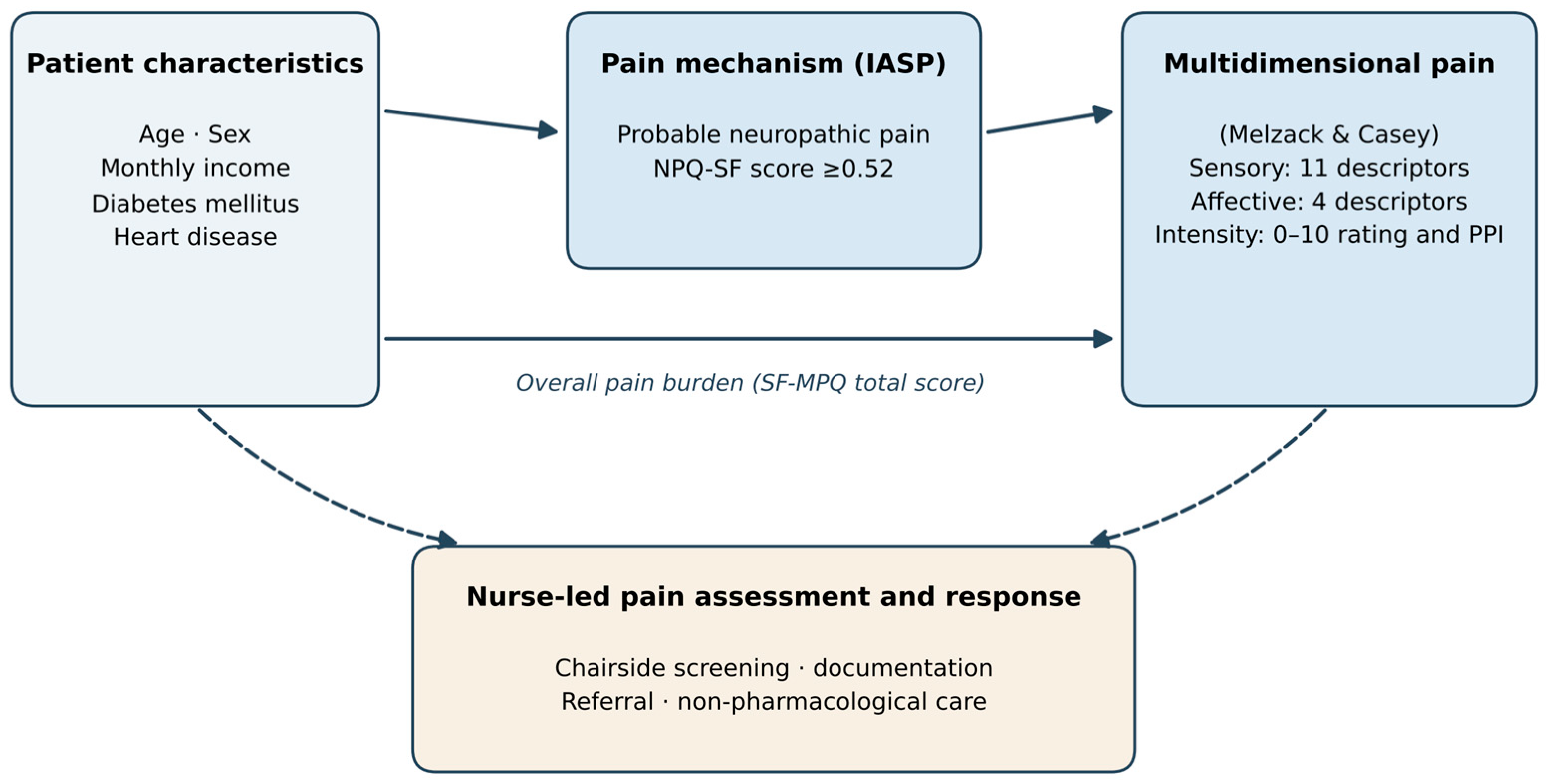
Figure 1. Conceptual framework of the study. Solid arrows show the associations examined; dashed arrows show the intended translation into nursing practice. IASP, International Association for the Study of Pain; NPQ-SF, Neuropathic Pain Questionnaire-Short Form; PPI, present pain intensity; SF-MPQ, Short-Form McGill Pain Questionnaire.
Preprints 246073 g001
Figure 2. Distribution of intensity ratings for the 15 SF-MPQ pain descriptors (N = 157). Descriptors are ranked by mean intensity (0–3), shown in parentheses. Values inside the bars are percentages of participants; segments below 6% are unlabeled. † Affective descriptor; all others are sensory descriptors. SF-MPQ, Short-Form McGill Pain Questionnaire.
Preprints 246073 g002
Figure 3. (a) Mean NPQ-SF item scores (0–100). (b) Distribution of pain intensity ratings categorized as none (0), mild (1–3), moderate (4–6), and severe (7–10) (N = 157). NPQ-SF, Neuropathic Pain Questionnaire-Short Form.
Preprints 246073 g003
Table 1. Sociodemographic and clinical characteristics of participants (N = 157).
Characteristic n (%)
Age (years), mean ± SD 50.04 ± 13.75
Age group (years)
≤24 5 (3.2)
25–44 49 (31.2)
45–64 78 (49.7)
≥65 25 (15.9)
Sex
Female 78 (49.7)
Male 79 (50.3)
Nationality
Saudi 140 (89.2)
Non-Saudi 17 (10.8)
Education
Elementary school 49 (31.2)
Secondary school 20 (12.7)
High school 48 (30.6)
Diploma or higher 40 (25.5)
Marital status
Single 54 (34.4)
Married 103 (65.6)
Employment
Employed 31 (19.7)
Unemployed 126 (80.3)
Monthly income (SAR)
<5000 100 (63.7)
5000–10,000 33 (21.0)
10,001–15,000 12 (7.6)
>15,000 12 (7.6)
Non-smoker 135 (86.0)
Any comorbidity 130 (82.8)
Hypertension 110 (70.1)
Diabetes mellitus 57 (36.3)
Heart disease 30 (19.1)
Other 31 (19.7)
Years since CKD diagnosis
1–6 90 (57.3)
>6 67 (42.7)
Self-reported CKD stage
Stage 2 1 (0.6)
Stage 4 3 (1.9)
Stage 5 18 (11.5)
Unknown 135 (86.0)
Hemodialysis frequency
3 times/week 155 (98.7)
<3 times/week 2 (1.3)
CKD, chronic kidney disease; SAR, Saudi riyal; SD, standard deviation. Comorbidity categories are not mutually exclusive.
Table 2. SF-MPQ and NPQ-SF scores (N = 157).
Measure (possible range) Mean ± SD Median (IQR)
SF-MPQ
Sensory score (0–33) 8.29 ± 8.22 5.00 (2.00–14.00)
Affective score (0–12) 3.29 ± 3.54 2.00 (0.00–5.00)
Total score (0–45) 11.58 ± 11.02 8.00 (2.00–20.00)
Pain intensity rating (0–10) 3.94 ± 3.34 4.00 (0.00–7.00)
Present pain intensity (0–5) 1.57 ± 1.49 1.00 (0.00–2.00)
NPQ-SF
Tingling pain (0–100) 22.23 ± 31.02 0.00 (0.00–40.00)
Numbness (0–100) 35.16 ± 36.37 30.00 (0.00–60.00)
Increased pain due to touch (0–100) 11.21 ± 22.51 0.00 (0.00–10.00)
Discriminant score −0.27 ± 1.03 −0.55 (−1.30 to 0.41)
n (%) 95% CI
Probable neuropathic pain, cut-off ≥0.52 32 (20.4) 14.8–27.4
Probable neuropathic pain, cut-off ≥0 58 (36.9) 29.8–44.7
CI, confidence interval (Wilson method); IQR, interquartile range; NPQ-SF, Neuropathic Pain Questionnaire-Short Form; SD, standard deviation; SF-MPQ, Short-Form McGill Pain Questionnaire.
Table 3. Comparison of characteristics between NPQ-negative and NPQ-positive participants.
Variable NPQ-Negative (n = 125) NPQ-Positive (n = 32) p Cohen’s d
Continuous, mean ± SD
Age (years) 51.18 ± 13.92 45.56 ± 12.24 0.047 a −0.41
SF-MPQ sensory score 5.84 ± 6.19 17.84 ± 8.25 <0.001 a 1.80
SF-MPQ affective score 2.38 ± 2.97 6.88 ± 3.36 <0.001 a 1.47
SF-MPQ total score 8.22 ± 8.51 24.72 ± 9.89 <0.001 a 1.87
Pain intensity rating 3.18 ± 3.17 6.91 ± 2.19 <0.001 a 1.24
Present pain intensity 1.22 ± 1.30 2.97 ± 1.38 <0.001 a 1.33
Categorical, n (%)
Female sex 60 (48.0) 18 (56.2) 0.526 b –
Saudi nationality 112 (89.6) 28 (87.5) 0.752 c –
Monthly income <5000 SAR 74 (59.2) 26 (81.2) 0.126 d –
Diabetes mellitus 46 (36.8) 11 (34.4) 0.961 b –
Hypertension 87 (69.6) 23 (71.9) 0.973 b –
Heart disease 21 (16.8) 9 (28.1) 0.229 b –
NPQ, Neuropathic Pain Questionnaire-Short Form; SAR, Saudi riyal; SD, standard deviation; SF-MPQ, Short-Form McGill Pain Questionnaire. a Mann–Whitney U test. b Chi-square test. c Fisher’s exact test. d Chi-square test across all four income categories.
Table 4. Multivariable regression models of factors associated with probable neuropathic pain and SF-MPQ total score (N = 157).
Variable Probable Neuropathic Pain a SF-MPQ Total Score b
Adjusted OR (95% CI) p B(SE) p
Age (per year) 0.97 (0.94–1.00) 0.044 −0.16 (0.07) 0.018
Monthly income (per category) 0.63 (0.35–1.15) 0.132 −2.36 (0.95) 0.014
Male sex (vs. female) 0.83 (0.36–1.90) 0.663 −2.05 (1.73) 0.239
Diabetes mellitus (yes vs. no) 1.02 (0.39–2.69) 0.962 3.08 (1.92) 0.111
Heart disease (yes vs. no) 2.42 (0.89–6.59) 0.085 Not entered –
Constant – – 23.40 (3.49) <0.001
B, unstandardized regression coefficient; CI, confidence interval; OR, odds ratio; SE, standard error; SF-MPQ, Short-Form McGill Pain Questionnaire. a Binary logistic regression b Multiple linear regression.
Disclaimer/Publisher’s Note: The statements, opinions and data contained in all publications are solely those of the individual author(s) and contributor(s) and not of MDPI and/or the editor(s). MDPI and/or the editor(s) disclaim responsibility for any injury to people or property resulting from any ideas, methods, instructions or products referred to in the content.
Copyright: This open access article is published under a Creative Commons CC BY 4.0 license, which permit the free download, distribution, and reuse, provided that the author and preprint are cited in any reuse.