
Submitted:
24 November 2026
Posted:
25 November 2026
You are already at the latest version
Abstract
Engineered living microbial therapeutics are emerging as programmable platforms for localized drug production and disease-responsive therapeutic delivery. Advances in synthetic biology and metabolic engineering have enabled the development of microbial systems capable of sensing biological signals, modifying metabolic pathways and producing therapeutic molecules within specific physiological environments. However, limited control over microbial localization, variable therapeutic output, host-microbe interactions and biosafety concerns remain significant barriers to clinical translation. This review critically examines microbial chassis selection, metabolic engineering strategies, programmable gene circuits and disease-specific applications of engineered living therapeutics. Particular emphasis is placed on emerging nanoengineered delivery platforms, including biomaterial encapsulation, nanoparticle-microbe hybrids, magnetic guidance and stimuli-responsive nanomaterials which may improve microbial protection, localization and controlled therapeutic delivery. The potential integration of nanotechnology with microbial therapeutics is discussed as a route towards future theranostics applications. Furthermore, the review evaluates computational approaches for microbial engineering including machine learning, metabolic modelling and emerging digital-twin concepts while distinguishing established applications from prospective developments. Key translational challenges involving genetic stability, microbial containment, manufacturing reproducibility, host compatibility, regulatory oversight and long-term safety are critically assessed. Finally, we identify research priorities for developing clinically translatable nanoengineered living microbial systems capable of integrating targeted therapy with diagnostic monitoring.
Keywords:
living microbial therapeutics
; synthetic biology
; intelligent drug delivery
; nanoencapsulation
; artificial Intelligence
; clinical translation
1. Introduction
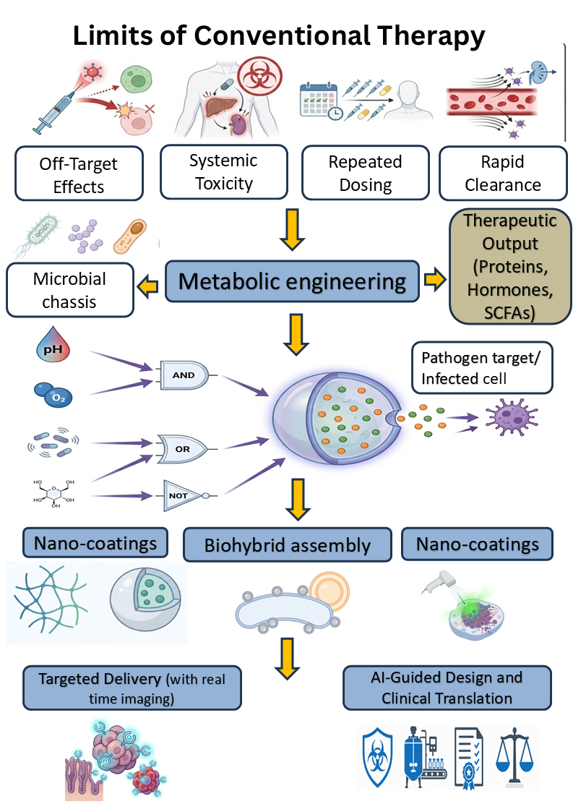
Living microbial therapeutics represent an emerging approach to drug delivery that integrates microbiology, synthetic biology, metabolic engineering, and biomedical therapeutics. Unlike conventional drug-delivery systems, which generally administer preformed therapeutic agents, engineered microorganisms can be designed to produce therapeutic molecules in response to specific physiological or disease-associated signals [1]. Conventional therapeutic approaches may be limited by systemic exposure, repeated dosing requirements, rapid drug clearance, and insufficient accumulation at target tissues [2,3]. Engineered microbial platforms offer opportunities for localized therapeutic production, controlled biological responses, and sustained activity within selected physiological environments. However, their effectiveness depends on microbial viability, genetic stability, host–microbe interactions, tissue localization, and appropriate control of therapeutic expression. Advances in synthetic biology and metabolic engineering have expanded the potential of these platforms, although significant challenges remain before their widespread clinical implementation [4,5].
Drug delivery effectiveness can be influenced by various factors including drug dose, site & route of delivery, stability and release rate [6]. To ensure the efficacy and accuracy of drug delivery, addressing these variables is crucial along with the drawbacks of previous therapeutic methods like drug degradation, rapid clearance, possibility of healthy tissue damage and others [4,7]. These limitations and challenges led to gradual development of controlled, carrier-based, target-specific drug delivery systems.
From passive transport of drugs, therapeutic administrations are transforming into more responsive systems. A live microbial drug delivery system possesses controlled, carrier-driven and targeted delivery of drugs that improves drug availability, drug protection during transport and increases accumulation at specific cells. Live microbial therapeutic is a Stimuli-responsive system that shows drug release ability in response to local physicochemical conditions [8]. These advantageous abilities and traits make microorganisms an active therapeutic platform.
1.1. Evolution of Drug Delivery Systems
Therapeutic Delivery Technology has made substantial progress over the years, countering many drawbacks, initializing from traditional/conventional drug delivery systems to live microbial targeted-drug delivery technology as shown in Figure 1. Previously, the drugs were delivered as immediate-release formulations in different forms like tablets, capsules, conventional injections ointments, and orally-consumable solutions [9,10]. This conventional drug delivery technique aims to release drugs into the body irrespective of dosage convention and delivery site and this ignorance leads to problems like repeated dosing and non-specific exposure. In response to these limitations, the 1950s marked the beginning of a controlled and sustained release drug delivery system [9]. This Spansule Technology (1952) prevents immediate release and instead focuses on controlled 12-hour drug release as shown in Figure 1. To control the access of GI fluid, drug containing units were coated which leads to regulated dissolution of drugs. To prolong its therapeutic action, controlled-release technology has transformed into long-acting injectable and implantable systems which expand drug-effective hours into days, weeks and months. This long-acting technique of therapeutics has led to emergence of drug carrier-driven technique in 1964, that introduced liposomes to encapsulate therapeutic molecules and modify their distribution and also capable of protecting therapeutic molecules by altering pharmacokinetics [11].
From carrier-driven drug delivery systems, therapeutic has made a huge progress to target-specific, stimuli-responsive smart drug delivery systems. Active targeting ensures the modification of the carrier surface and promotes interaction with specific cells/tissues [12]. It increases concentration at desired site and reduces exposure to healthy tissues. At the same time, stimuli-responsiveness ensures the existence of correct biological conditions and the system responds to specific stimulus before releasing its payload. These advances still do not overcome the use of engineered carriers and transport of pre-existing therapeutic payload [13]. This leads to introduction of living microbes as active therapeutic platforms. They are dynamically responsive to disease-associated signals and transform the therapeutic world completely [14].
1.2. Emergence of Living Therapeutics
In healthcare, the establishment of this advancement in drug delivery systems started with probiotics as it uses living microorganisms for health benefits initializing its therapeutic effect based on its naturally occurring properties [15]. Evolution in genetic engineering and molecular biology enable microorganisms to modify and perform specific therapeutic functions. Over these years, the healthy beneficial microbes transformed into engineered effective probiotics and now used as target-specific, controlled live therapeutics [16].
To manage and prevent specific diseases, living therapeutics are designed by intentionally using living microorganisms. These microorganisms can interact with their biological surroundings rather than only focusing on dosing and entering into the body like conventional drugs [17]. The natural abilities of these microbes allow them to potentially colonize specific biological niches; sense disease associated signals and produce and release therapeutic molecules. Enabled by synthetic biology, these engineered live microbial therapeutics possess spatial and temporal control over therapy [16,18]. Probiotics were used to perform natural biological function while modern engineered therapeutics perform defined specific tasks [19]. For instance, engineered Lactococcus lactis secrete IL-10 as disease-associated therapeutic metabolites that expand and work as therapeutic molecules and reach specific sites of targeted disease as a result of metabolic engineering [20,21].
1.3. Why Engineer Microbial Metabolism?
The metabolic pathways possess microbes to positively conduct therapeutic functions. These metabolic pathways influence cells’ capacity to use substrates and produce energy, metabolites and biomolecules [22]. Metabolic engineering suggests that various metabolic pathways are naturally possessed by microorganisms and thus these pathways can potentially be redirected and enhanced. Metabolism magnifies the therapeutic capability of microbes to effectively deliver therapeutics in controlled manner along with applications of their natural properties as metabolism makes microbes breakdown harmful metabolites into healthy therapeutic molecules [4,23].
Living microbial drug delivery systems implement differential properties that advances the therapeutic world from conventional/traditional methods of drug delivery. These effects include self-renewal that affect and maintain the therapeutic microbial population as this trait controls the ability of microorganisms to replicate under favorable conditions. These unique skills continue with localized drug production and stimulus responsiveness that enable engineered microbes to synthesize therapeutic molecules near targeted sites of disease and sense environmental, biological signals respectively [24]. These properties enhance the metabolism during drug delivery and prevent dependence of multiple dosing and exposure of healthy tissues. To elaborate the conceptual work flow of engineered live microbial therapeutics, the process initializes when microbes sense disease-associated signals and activates engineered metabolic pathways that leads to therapeutic production. These characteristics enable microbes to function as dynamic, responsive and metabolically controlled therapeutic platforms by inducing benefits like reduced systemic toxicity and long-term therapeutic effect [25]. These properties and advantages effectively differ live microbial drug delivery from traditional methods.
1.4. Scope and Objectives of the Review
This review examines the significance of living microbial as emerging therapeutic delivery platforms and its various applications in drug delivery. It mainly focuses on the engineering and translation of microorganisms so that their beneficial properties can be used in therapeutic approaches as they possess the ability to perform as biological systems instead of passive drug carriers and can synthesize therapeutic molecules locally. This review will discuss microbial chassis and different therapeutic molecules and metabolites produced by them [3,26]. It will cover the concepts of synthetic biology and metabolic engineering that can modify and alter microbial functions. It will examine how microbes enable controlled and targeted drug delivery and at the same time interact with its biological surroundings. Factors like clinical translation, nanotechnology and AI in therapeutics along with its challenges, limitations and future scope will support this review [27]. As therapeutic molecules production alone does not ensure the intended targeted delivery by engineered microbes, thus, various challenges emerge like maintaining microbial stability and controlled microbial localization for achieving enough therapeutic exposure. Such precise delivery-related limitations lead to a complementary approach of nanoengineering to ensure microbial functioning through nanoencapsulation, nanoparticle-microbe hybrid interaction and stimuli-responsive delivery systems.
The objective of this review is to identify and analyse the potential and limitations of living microbial therapeutics along with metabolic activation of microbes in engineered therapeutics that support microbes to synthesize and deliver therapeutic molecules for targeted disease in controlled manner [28]. This review is to examine the ability of microbial chassis to localize and respond to biological signals to regulate therapeutic active production and release and to understand challenges associated with clinical translation of microbial therapeutics, specifically with biosafety, manufacturing reproducibility, host compatibility and genetic stability. This review identifies the future scope and opportunities for integration microbial engineering along with computational approaches and nanotechnology.
1.5. Literature Search Methodology
An organized literature search was conducted in order to identify research and innovations based on living microbial therapeutics and advance drug delivery systems. The databases concentrated towards this methodology were PubMed, Google Scholar and ScienceDirect. The major keywords used for recognising and selecting the research related to live microbial therapeutics were derived from section headings of manuscripts including nanoencapsulation, microbial chassis, therapeutic and metabolic pathways, gene circuits, synthetic biology and nanoengineered microbes. The publication period was precisely taken between 2020 to 2026 to ensure the focus on recent advances in therapeutic and drug delivery field. Thus, the highly relevant publications to the objectives and subject matter of review were selected. Finally, the original and related research articles and review articles were selected and all duplicated publications and the irrelevant studies to this review topic were successfully excluded. This literature search methodology made this a Narrative review including foundational and research publications with 14th November 2026 as final search date.
1.6. Challenges and Future Scope
Although living microbial therapeutic technology offers various advantages, their clinical applications come with a number of limitations and challenges. Delivering live microbes create challenges that traditional drug carriers don’t imply. This can lead to rapid uncontrolled growth, random colonization and release into the environment [19,29]. Therefore, there is an urgency for biocontainment strategies like kill switches in such drug delivery systems. Estimating precise synthesis of therapeutic molecules in the host body is essential to influence clinical translation of drugs that create the limitation over controllable therapeutic activity of microbes [30]. The next challenge is completely up to the host interaction and immune clearance as the immune system of the host may identify and reject engineered microbial drugs and reduce therapeutic effectiveness. Apart from immune response, therapeutic performance also depends on the host's interactions with existing microbiota [31]. Quality control, manufacturing factors, regulatory approvals and long-term safety are some other clinical and regulatory challenges [8,13].
The integration in synthetic biology and metabolic engineering can enhance the quality and control of live microbial therapeutics. Future research may potentially implement more precision in microbial programs in drug delivery. The work can be improved by focusing on biocontainment and biosafety strategies. Future systems may proceed towards designing microbes to detect multiple disease-specific signals rather than being responsive to particular stimulus [32,33]. The delicacy of clinical trials and regulatory approvals in manufacturing and quality control is essential to be focused on for future perspective [34].
2. Microbial Chassis for Therapeutic Engineering
Microbial chassis are the selected and engineered microorganisms that are used to perform therapeutic functions in the human body. There are various properties that an ideal chassis should own that includes safety, genetic tractability, stability and surviving capability in a targeted physiological environment [35]. Different microbes like bacteria, yeast is used based on their different therapeutic properties for particular diseases. The microbial chassis provide cellular models essential to modify genes, engineer metabolism, sense bio signals and synthesize therapeutic molecules [36]. Every therapeutic application has a particular chassis with differential traits that emerge from the microbial host to expand the range of possible applications.
2.1. Probiotic Bacteria
Probiotic bacteria are one of the most widely investigated living therapeutic chassis. Probiotic bacteria are generally pronounced as an efficiently safe, stable and well-characterized chassis that is associated naturally with human microbiota. They also have wide applications in the food and health sectors. Engineering this chassis is advantageous for various tasks like synthesizing therapeutic metabolites and molecules, metabolism of specific substrates, sensing and responding to physiological signals and maintaining interaction with the host body [37]. Some widely used probiotic chassis include Escherichia coli Nissle 1917, Lactococcus lactis, Bifidobacterium spp., Lactobacillus spp. that produce effective probiotic products including Short-chain fatty acids(SCFAs), Bacteriocins, Organic acids, Exopolysaccharides, Vitamins and other enzymes in order to potentially regulate drug delivery as shown in Table 1 [38,39].
Different therapeutic objectives require a particular probiotic bacterium. To start with E.coli Nissle 1917, it is suggested that this chassis is gradually used in synthetic biology and engineered therapeutics due to its well-stabilized, genetically tractable skills [40,41]. On the other hand, Lactococcus lactis is widely associated with food sector applications as it secretes therapeutic proteins in controlled manner while Bifidobacterium spp. has applications in gastrointestinal microbiota due to its high relevancy in intestinal therapeutic applications [21,42]. Lactobacillus spp. works as a probiotic organism that focuses on mucosal therapeutic applications [43]. Therefore, the core properties of each chassis make it applicable in different domains.
2.2. Anaerobic Therapeutic Bacteria
Anaerobic bacteria can survive in low oxygen conditions like hypoxia which make it uniquely useful for such unfavorable conditions. There are various therapeutics requirements for microbes that can survive and proliferate under low-oxygen situations. One of the most generally used microorganisms in anaerobic conditions is Clostridium spp. [44,45]. It enables preferential activities including regulation and activation of metabolic pathways in specific biological environments and these engineered microorganisms are specifically designed to potentially produce drug delivery molecules like proteins and enzymes including cytokines and prodrug-converting enzymes and deliver these agents gradually to local surroundings [46]. They have spatial ability to perform metabolic functions effectively under hypoxia and synthesize metabolites. However, it comes with a limitation of being pathogenic as some Clostridium species act as pathogen [47]. Thus, there is a major safety concern and genetic attenuation along with control is necessary in case of this chassis.
2.3. Yeast-Based Living Therapeutics
Yeast is basically pronounced as an alternative to bacterial chassis. Being eukaryotic microorganisms, provide them differential cellular properties as compared to bacterial cell [48]. Saccharomyces boulardii is the most common yeast based living therapeutic used in research and development of drug delivery systems as shown in Table 1[49]. It offers an effective and therapeutically potential platform for drug delivery functions. The cellular and genetic traits of yeast hold up synthetic biology concepts as yeast systems offer several benefits required for synthesis of complex biological metabolites [50]. Apart from its cellular properties, there are some abilities of yeast required for effective therapeutic and metabolic functions that are genetic modification, therapeutic control and survival and proliferation in the host [51]. These factors are essential to be considered during its development as living microbial drugs.
2.4. Emerging Non-Conventional Microbial Hosts
Advances in synthetic biology and metabolic engineering lead to great progress in drug delivery systems from conventional drug delivery methods to non-conventional, live microbial therapeutics technology. The research is expanding to make conventional probiotics replaced by microbial hosts that implies various unique characteristics and metabolic pathways for effective therapeutic functions [52]. This technology comes with its own pros and cons among which advantages include alternative process for synthesis of therapeutic molecules, targeted delivery, controlled metabolic pathway and metabolites release and adaptation to biological environment while limitations include safety and regulatory challenges as given in Table 1[53]. Future research is focusing on establishing this technique with better quality and safety.
2.5. Criteria for Selecting A Microbial Chassis
For a particular therapeutic application, a specific microbial chassis is selected based on its structural and functional properties. There are some factors that establish the criteria for selection of an ideal chassis which includes safety, stability, non-pathogenicity, metabolic capacity, genetic tractability, therapeutic production ability. In the human body, the targeted biological environment for every disease is also different and unfavorable thus, for all microbes it is extremely challenging to survive and perform under such conditions [35,54]. Apart from this, immune interaction of host, target colonization, controlled therapeutic release, biocontainment strategies and scalability of production are other elements that need to be considered while selecting a microbial chassis for drug delivery [55]. Rather than just being easy to engineer, an ideal microbial chassis should also match the biological requirements of that therapeutic function. Therefore, proper chassis selection is a very crucial step in live microbial drug delivery systems.

Table 1.
Comparison of microbial chassis used in living microbial therapeutics, highlighting their characteristics, therapeutic applications and key limitations.
Table 1.
Comparison of microbial chassis used in living microbial therapeutics, highlighting their characteristics, therapeutic applications and key limitations.
| Microbial Chassis | Genetic tractability | Colonization behaviour | Therapeutic cargo | Safety considerations | Biocontainment strategies | Evidence maturity | Major limitations | References |
| E.coli Nissle 1917 | Moderate-high, established genetic engineering and expression tools | Facultative anaerobe, intestinal persistence depends on host conditions | Therapeutic proteins, peptides, enzymes, immunomodulatory molecules | Established probiotic-use history, engineered derivatives & independent safety assessment | Auxotrophy, inducible kill switches, controlled lysis systems | Established probiotic clinical use, engineered therapeutic applications mainly preclinical | Variable intestinal persistence, genetic instability and host-dependent therapeutic activity | [40,41] |
| Lactococcus lactis | High in selected strains, suitable for recombinant protein expression | Generally transient gastrointestinal survival with mucosal interaction | IL-10, trefoil factors and other therapeutic proteins | Food-grade history, although safety must be assessed at the strain and construct levels | Nutritional auxotrophy, controlled lysis and growth-dependent containment | Human studies involving selected applications, engineered systems at varying stages | Transient gastrointestinal survival and limited systemic or tissue exposure | [42] |
| Bifidobacterium spp. | Moderate, genetic tools and efficiency vary across species and strains | Adapted to anaerobic gut niches, selected strains show tumour-associated accumulation | Therapeutic proteins, enzymes and prodrug-activating molecules | Generally associated with probiotic use but safety varies across species and strains | Genetic containment and growth-control approaches under investigation | Mainly preclinical for engineered therapeutic applications | Oxygen sensitive, variable colonization and limitations in generic manipulation | [38,39] |
| Lactobacillus spp. | Moderate, engineering efficiency varies between strains | Gut and mucosal association with generally transient persistence | Cytokines, therapeutic peptides, proteins and vaccine antigens | Probiotic history does not guarantee universal safety particularly for engineered strains | Auxotrophy, controlled-growth and other genetic containment approaches | Selected human studies, engineered therapeutic systems mainly preclinical | Variable therapeutic expression, transient persistence and strain-dependent performance | [43] |
| Clostridium novyi-NT | Limited-moderate, genetic manipulation remains challenging | Spores preferentially germinate in oxygen-depleted and necrotic tumour regions | Oncolytic activity and potential local therapeutic delivery | Attenuated strain lacking major alpha-toxin activity, residual infection and inflammatory risks remain | Attenuation, controlled spore germination and growth limitation | Phase-I clinical investigation | Restricted growth to hypoxic regions and incomplete tumour penetration | [44,45] |
| Clostridium sporogenes | Limited-moderate, fewer established engineering tools | Spore germination and growth occur under low-oxygen conditions | Therapeutic proteins and enzyme-prodrug systems | Potential risk of uncontrolled germination and infection under favourable conditions | Attenuation, auxotrophy and controlled growth approaches | Mainly preclinical | Oxygen dependence, restricted colonization and incomplete target-site distribution | [46,47] |
| Saccharomyces boulardii | Moderate, genetic tools adapted from conventional yeast engineering | Survives gastrointestinal passage but generally shows limited long-term persistent | Recombinant proteins, peptides and therapeutic enzymes | Generally used as probiotic but rare fungemia has been reported particularly in vulnerable patients | Auxotrophy and engineered kill switches under investigation | Established probiotic use, engineered therapeutic delivery mainly preclinical | Variable gastrointestinal persistence and host compatibility | [48,49,50] |
| Attenuated Salmonella typhimurium | High in selected strains, established genetic modification approaches | Facultative intracellular behaviour, tumour-associated accumulation varies with strain and host conditions | Tumour antigens, cytokines and immunomodulatory proteins | Residual pathogenicity, systemic toxicity and inflammatory responses remain concerns | Virulence attenuation, auxotrophy and controlled replication | Preclinical and early clinical investigations of selected therapeutic platforms | Inconsistent tumour accumulation, systemic toxicity and immune clearance | [52,53] |
| Attenuated Listeria monocytogenes | Moderate-high in selected strains, established attenuation and engineering approaches | Intracellular entry and interaction with host immune cells | Tumour antigens and immunomodulatory proteins | Intracellular infection potential and inflammatory toxicity require careful control | Virulence attenuation, auxotrophy and controlled replication | Preclinical and early clinical investigation of selected platforms | Infection risk immune clearance and limited control over intracellular persistence | [52,53] |
3. Engineering Microbial Metabolic Systems
A microbial metabolic system is designed by interconnecting a number of metabolic pathways that have capability to generate energy, synthesize biomolecules and utilize substrates. In drug delivery functions, these natural and metabolic abilities may need some alterations in order to perform effectively. Engineering these systems includes insertion of specific metabolic pathways and simultaneously terminating competing pathways [56]. Second is to manage expressions of enzymes according to the requirement of a particular disease. Refocusing metabolic flux in direction of desired products. The approaches towards integration of synthetic biology and metabolic engineering possess programmed microbes for synthesis of therapeutic molecules and can show controlled responsiveness towards biological signals [57]. The following techniques can determine control at various levels over microbial metabolic pathways.
3.1. Synthetic Biology Approaches
Synthetic biology is a branch in modern healthcare that implies the conceptual and practical principles of engineering for biological systems. It designs functional cellular novelty by applying regulated and modular biological components. Synthetic biology is primarily responsible for modification in metabolic pathways and inserting more disease-specific pathways for microbial therapeutics [58]. Engineering a metabolic pathway follows an enzyme-mediated series that initializes by substrate reaction that leads to production and release of intermediate metabolites and results into the final product that is an engineered metabolic pathway. Metabolic pathway engineering using synthetic biology approach involves adding enzymes responsible for genes encoding, dropping and truncating unwanted pathways, reduction and over expression of key enzymes [18,59]. The primary objective of using synthetic biology technologies for establishing metabolism is production of therapeutic molecules by redirecting metabolic flux.
Synthetic biology also focuses on safety-mechanisms and biocontainment strategies along with enhancement of therapeutic functions. Biocontainment and safety-control strategies aim to prevent excess microbial survival and proliferation in the host body or activity of microbes over desired conditions [60]. The biocontainment strategies that can be potentially used are engineered auxotroph, dependency on nutrients, enabling genetic kill switches and particular survival mechanisms. These technologies control and limit the desired expression of therapeutic microbes under suitable range [55,61]. Thus, this system supports both safety-control and programming therapeutic concerns.
3.2. Genome Editing Technologies
Genome editing introduces precision and accuracy in genetic modification of microorganisms that results in their metabolism enhancement. This technology enables more stable and focused modifications due to its effective properties like deleting and inserting therapeutic genes and removal of undesired therapeutic programs [62]. Therefore, genome editing has been proved to be a crucial step for constructing therapeutic microbial strains. This precision-driven genome editing system involves specialized technologies which includes CRISPR-Cas Systems, Base Editing, Prime Editing [4,63]. Metabolic and genome pathways use these technologies to expand precision in therapeutic functions. CRISPR-Cas Systems are RNA-based technologies that allow targeted DNA-sequence modifications that lead to gene alterations and pathway synthesis. While base editing introduces targeted nucleotide modifications without any breakage in DNA double strands [64]. This adds great precision in regulatory sequence modification. On the other hand, prime editing suggests more diverse sequence changes that shows an encouraging approach for specific sequence alterations [65]. Thus, these different properties of each technology make them useful in different and specific conditions.
3.3. Programmable Gene Circuits
The networks that are responsible to control cellular properties and structural functions of microbial therapeutics are considered as programmable gene circuits. They are conceptual references for bio info-processing systems. The components of these technical gene circuits include input biological signals and responsive sensors that identify the input stimulus as shown in Figure 2[66]. Then comes the regulatory processor that sends the response against that bio signal and results in a therapeutic output function. For instance, while discussing a gastrointestinal disease case, the disease signal gets sensed by the circuit sensor and leads to activation of therapeutic sequence that results in release of therapeutic molecules and metabolites that is IL-10 as shown in Figure 2[67]. Although, the activation of gene-circuit does not guarantee secretion of molecules in all cases but successfully ensures the controlled therapeutic gene expression by differentiating between circuit activation’s reporter-based measurement and mean therapeutic output measurement.
Techniques used to design these programmable gene circuits involve logic gates, feedback systems, inducible switches and multi-input circuits [68]. These techniques are altered and specifically used on the basis of their therapeutic activation capabilities. Logic circuits add specificity to drug reaction as it allows response only against some particular signal combinations by connecting environmental stimulus with metabolism activation [69]. Therefore, gene circuit technology enables live microbial therapy to act as controlled-responsive systems instead of continuously active systems.
3.4. Dynamic Metabolic Regulations
Among various desired therapeutic expressions of engineered genes, there are some static expressions that may not be required by metabolic pathways as these expressions can exaggerate the production of molecules. Continuous production of metabolites in uncontrolled excess manner can reduce fitness of microbial therapeutics, create a metabolic burden and lead to production and release of molecules at undesired times [70]. Dynamic metabolic regulation is specialized in modifying sequence expression and metabolic behavior with respect to internal and external surroundings. This allows more control over metabolic flux along with therapeutic synthesis [70,71].
Regulatory entities are responsive to components like pH, oxygen-level, available nutrients, concentration of metabolites and bio signals associated with diseases [72]. The conceptual work flow of dynamic metabolic regulations initializes when a bio signal alters the expression of a particular metabolic pathway whether it leads to activation or suppression of pathway [73]. Since it forms a network that senses environmental stimulus and results in pathway regulation and therapeutic response, therefore it potentially improves effectiveness and limits undesired activity of metabolism. It also separates metabolites’ intracellular synthesis from its extracellular availability due to the reason that substrate availability along with metabolite burden and metabolic pathway activity affects the metabolite production and thus release needs to be analyzed separately.
4. Therapeutic Molecules Produced By Engineered Microbes
Engineered microbes are responsible for the production of various types of molecules due to modification in their genetic sequences and metabolism. Therefore, these therapeutic microbes act as in-situ molecule producers in modern drug delivery systems. The microorganisms and their metabolic pathways determine which therapeutic molecule is to be synthesized among proteins, hormones, neurotransmitters, nucleotides, fatty acids and other metabolites as shown in Figure 3[74]. On-site production of molecules increases the efficiency and reachability of therapeutic action towards targeted biological environments. Various engineered and biosynthetic strategies lead to advances in microbial drug delivery and differ from traditional methods as it includes external production of drug and internal administration [75].
4.1. Proteins and Peptides
Proteins and peptides are the most abundant therapeutic molecules due to their extensive interaction with associated metabolic pathways. These molecules are encoded by engineered microbes as a result of their genetic modification. The microbial chassis produce, retain and release therapeutic molecules based on its design and desired number of metabolites. Some engineered proteins and peptides are growth factors, cytokines and other antimicrobial peptides [34,76]. External and systemic delivery of these therapeutic molecules occasionally leads to instability and unwanted reactions in exposed tissues which adds more benefits to local drug administration techniques. Moreover, its intracellular synthesis and extracellular release are distinguished as extracellular concentration of proteins and its biological activities should be evaluated separately for precise localized release. Also, controlled microbial lysis and these secretion systems are completely separate release mechanisms.
Discussing different categories of proteins and peptides initiates with cytokines which are responsible for regulation of immunogenic reactions. Cytokines also manage inflammatory responses and thus allow microbes to synthesize anti-inflammatory cytokines in the body. For instance, IL-10 is produced by microbes in case of gastrointestinal inflammation [21]. Second is growth factors that possess growth, repair and regeneration of cells and tissues. Moreover, the local administration of molecules is advantageous because it reduces the healthy tissue exposure. The antimicrobial peptides prevent pathogenic reactions on the body and specified engineered microbes synthesize these peptides in suitable and supporting biosynthetic environments [77]. Thus, proteins and peptides potentially enable target-specific and local administration drug delivery systems.
4.2. Neurotransmitters
The molecules that influence the gut-brain axis that are neurotransmitters are controlled and secreted by metabolic pathways of microorganisms. Specific microbes are potentially engineered to produce neurotransmitters and their pioneers. Neurotransmitters are responsible for neural signaling, controlled metabolism and immune responses. Some effectively produced neurotransmitters include GABA, serotonin precursors and Dopamine-related metabolites as shown in Figure 3[78]. GABA is one the most crucial and an inhibitory neurotransmitter that regulates neuronal excitability and its production is influenced by microbial metabolic pathway according to desired and required quantity of molecule on targeted-site. The host physiological processes and gut-brain signalling also get affected by this secreted microbial GABA and thus, its function should not be limited to inhibition of overexpression of therapeutic metabolites. Serotonin precursor synthesis is essentially related to the signal transmission between gut and brain and thus, particular microbes facilitate their controlled production [79]. The biosynthetic and metabolic pathway possesses the modification in synthesis, proliferation and pathway association of dopamine-related metabolites [80]. Therefore, the neurotransmitters that are gut-derived can indirectly affect the communication between gut and brain by entering the nervous system and immune signalling, vagal pathways and other endocrine mechanisms. Since, production and secretion does not ensure direct transfer into the brain, it carries its drawback of blood-brain barrier.
4.3. Short-Chain Fatty Acids
Short-chain fatty acids (SCFAs) are highly relevant to the gastrointestinal reactions and interactions between host and microbes. The major fatty acids synthesized include acetate, propionate and butyrate which establish their control over immune and metabolic pathways along with the intestinal layer of epithelial cells [81]. SCFAs are important metabolites that are potentially produced as a result of enhancement or modification of microbial pathways that wide open a leading theory consisting metabolites of microbes that function as therapeutic molecules or products. The conceptual synthesis mechanism of Short-chain fatty acids flow from modification in microbial pathways and then SCFAs production leads to host-microbe interaction [38,82].
4.4. Hormones
Engineered microbes efficiently produce hormone-based therapeutics that use signaling pathways to transfer and deliver physiological responses. Microbes possess metabolite production into the host body that potentially controls its endocrine signaling. These hormone-related metabolites commonly include examples like peptide hormones, hormone-modulating compounds and insulin-based therapeutic proteins [83]. Hormones are highly sensitive in case of concentration, thus, it is required that these metabolites are produced and delivered appropriately in a controlled manner to prevent various undesired physiological effects [84]. Gene circuits play a major role particularly in dynamic regulation and controlled release of hormone-related therapeutics. It is noticed that these living microbial drugs do not help in manufacturing hormones by administrating microbial therapeutics in the body, it is highly specific and produces therapeutically active hormones only.
4.5. Nucleic Acid Therapeutics
Nucleic acid therapeutics like siRNA, mRNA and CRISPR-related components can potentially influence the genetic functions of target cells and provide them sequential instructions. Living therapeutic microbes serve as biological platforms where production and transport of nucleic acid therapeutics occur [63]. Although, siRNA, mRNA or CRISPR components do not perform functional delivery into mammalian cells. Production of nucleic acids is entirely different from demonstrated gene silencing, genome editing and translation as it helps in cellular uptake, intracellular stability and provides access to required cellular machinery for controlled therapeutic activities. By discussing the individual examples of these engineered nucleic acids-related drugs, it gets specified how this technique advances over conventional methods of production of proteins and metabolites. To initiate with siRNA, it is derived that they inhibit the overexpression of specific genetic sequences by using RNA and they are based on local administration strategies of drugs and are responsible to engage the RNA-induced silencing complex (RISC) [85]. mRNA leads to protein production in the host cell but its limitation is its safety while reaching into the cytoplasm for translation and drug delivery into the cell [86]. On the other hand, CRISPR components possess gene function alteration by acquiring microbial system support. It is required for the essential guide RNA and editing components to reach the correct cellular compartment. It is a highly challenging technique as it requires high safety, efficient targeting and transfer skills and potential stability over other techniques.
For instance, short hairpin RNA (shRNA) was produced by modifying engineered Escherichia coli SVC1 for targeting GFP and gene related to influenza. This bacteria was modified with invasin in order to access mammalian epithelial cells and also used listeriolysin O (LLO) to enable the escape of RNA cargo from phagosome to cytoplasm. Its therapeutic evidence was established by researchers while testing this influenza-targeting shRNA on a mouse. It was experimentally tested in human A549 lung epithelial cells that are responsible for GFP expression so that delivered shRNA can reduce its expression. During this study, the silencing was monitored for up to 96 hours. Thus, this study demonstrates bacterial RNA production along with functional RNA delivery.
The therapeutic performance of engineered microbial systems depends on several sequential processes, including recognition of disease-associated signals, activation of engineered metabolic pathways, synthesis of therapeutic molecules, secretion or controlled release, accumulation at the target site, and induction of a measurable pharmacological response. Successful intracellular production does not necessarily establish extracellular availability, effective tissue exposure, or therapeutic efficacy. Consequently, microbial viability, therapeutic expression, secretion efficiency, local drug concentration, biodistribution, and biological outcomes should be evaluated as distinct parameters when assessing the performance of living microbial therapeutics.
5. Intelligent Drug Delivery Strategies
The simple, continuous conventional therapeutic production covers a number of limitations starting from non-targeted, uncontrollable drug production to unhealthy exposure of tissues and cells [87]. Thus, there is a great need for a reliable solution that is an intelligent drug delivery strategy that can add advancements to the therapeutic world by enabling live microbes to produce therapeutic molecules that are responsive to specific signals and regulate metabolite synthesis in a controlled way. These intelligent therapeutic technologies use different input parameters based on the requirements like environmental conditions, disease-associated metabolites and microbial growth density [88]. The strategies used to enhance therapeutic safety and stability are Constitutive production, Environment-responsive systems, quorum sensing and metabolite sensing as shown in Table 2[89]. These strategies are used on a conditional basis related to for how long and how much metabolite production a specific disease requires.
5.1. Constitutive Drug Production
In constitutive drug production, the genomic sequence responsible for therapeutic production remains active continuously and offers constant molecule production until the viability of microorganisms remains intact [90]. It is highly approachable and feasible to implement as it uses a constitutive promoter which is required in case of sustained therapeutic actions. Although it is potentially effective for a number of diseases, its continuous drug production trait comes with few limitations that initiates without offering any stimulus-based control as given in Table 2 [91,92]. This drawback leads to metabolite burden and overexpression due to excessive production of molecules. Therefore, in many cases more controlled and response-specific strategies are preferred over the constitutive drug production technique.
5.2. Environment-Responsive Drug Release
The environment-responsive drug release systems, unlike constitutive systems, does not depend on continuous drug delivery techniques instead it is more stimulus responsive in which it responds to some specific physicochemical, environmental conditions around the target cell. The systematic and functional mechanism of this system initiates with sensing of environmental signals by its sensing system and this results in activation of its therapeutic gene that possesses the production of therapeutic molecules as shown in Table 2[12]. It senses various environmental signals that make this system responsive to various factors like a pH-responsive system that detects variations in local pH. Next are oxygen-responsive and temperature-responsive systems that depend on conditions like hypoxia along with observing oxygen-level in surroundings and have regulatory systems that are highly temperature sensitive so that the activation of therapeutic genes can occur in case of temperature variation in the environment respectively [93]. Environmental-responsive drug release systems also include inflammation-responsive systems which get activated after sensing an inflammation-associated signal. These advanced responsive systems make drug production extremely specific to desired conditions and more target specific due to their sensing systems [94]. It also potentially inhibits overproduction and overexpression of therapeutic molecules ensuring the safety and stability during drug delivery processes.
To integrate various biological signals prior to the activation of therapeutic gene expression environmental sensing gets integrated with logic-gate circuits [99]. For instance, AND-gate operation ensures that therapeutic expression takes place only when both needed signals are received or detected and OR-gate operation allows expression activation when either of the specific signals is detected. In this way, unintended single environmental signal activation can be inhibited by multi-signal integration. Its drawback lies in its lack of specificity, circuit complexity, metabolic burden and potential signal interference.
5.3. Quorum Sensing-Controlled Therapeutics
Quorum sensing is the cell communication system that uses autoinducers released by bacteria as their cell-to-cell signaling molecules. The concentration of these signaling autoinducers is directly proportional to the population or growth rate of bacteria [87]. For instance, low microbial production, possesses the lack of Quorum sensing signal and insufficient therapeutic production. Engineered microorganisms effectively integrate the Quorum sensing with therapeutically active gene circuits in order to potentially inhibit the production of early-matured therapeutic molecules [95]. A threshold level of quorum signals is required to activate therapeutic sequences and to reach that threshold, a certain amount of microbial population needs to be acquired. In this way, this system actively indicated the indirect relation between microbial population and therapeutic molecule production [96]. Thus, establishing a controlled Quorum-sensing therapeutic is essential to acquire a potentially controlled population-density relation.
5.4. Metabolite-Sensing Systems
Engineered microbes use the metabolite-sensing systems to detect particular metabolites or molecules present in the surrounding. These specific metabolites initialize the therapeutic gene activation as they are certainly associated with specific physiological conditions or diseases [97]. The mechanism of the metabolite sensing system works as a metabolite biosensor that identifies and detects a specific disease-associated molecule and efficiently leads to regulation of the therapeutic gene circuit, whether it activates or represses the therapeutic pathway [98]. This system enhances the live microbial drug delivery technology due to its ability to detect, modify, consume and sometimes produce therapeutic metabolites or molecules as given in Table 2.
Feedback-controlled therapeutic systems work as an extension of the metabolite sensing system where it allows regulation of subsequent gene expression by detection of metabolite levels. In the scenario of negative feedback, the therapeutic production gets reduced as sensed output reaches a predefined threshold and when there is an amplification of initial activation signal and therapeutic signal gets strengthened, we get positive feedback [100,101]. Its limitations include delayed responses, sensor noise, additional metabolic burden and instability, still this integration helps in maintaining desired range of therapeutic output.
Table 2.
Comparative overview of intelligent drug delivery strategies based on their control mechanisms, working principles, advantages and limitations.
Table 2.
Comparative overview of intelligent drug delivery strategies based on their control mechanisms, working principles, advantages and limitations.
| Drug delivery strategy | Trigger/control strategy | Working principle | Response threshold | Response time | Reversibility | Main advantage | Key limitation | References |
| Constitutive drug production | Continuous gene expression | Therapeutic molecules are continuously produced while engineered microbe remains metabolically active, expression doesn’t require external trigger | No external activation threshold, activation depends on promoter activity | Continuous expression, no signal-dependent activation delay, although product accumulation takes time | Limited, expression remains active unless the system is switched off or the microbes is inhibited | Simple design and potentially sustained therapeutic production | Limited temporal control, possible genetic instability, continuous metabolic burden, selection against high-expression cells | [91,92] |
| Environment-responsive delivery | Changes in pH, oxygen, temperature or inflammation-associated signals | Environmental signals regulate the expression of therapeutic gene expression | Depends on sensitivity and activation threshold of environmental sensor | Depends on signal detection, regulatory activation and downstream gene expression | Potentially reversible when the inducing environmental signal disappears | Potentially links drug production to local biological conditions | Signal can vary across tissues and patients, unintended activation and limited signal specificity | [12,93,94] |
| Quorum sensing controlled therapeutics | Accumulation of population-density associated signals | Signaling molecules reach a threshold that activates or modifies therapeutic gene expression | Depends on autoinducer concentration and microbial population density | Depends on microbial growth, signal accumulation and circuit activation | Potentially reversible when autoinducer concentration falls below the activation threshold | Coordinates activity across a microbial population | Depends on population density and local signaling conditions | [87,96] |
| Metabolite sensing systems | Specific metabolites or disease-associated chemical signals | A sensor detects a target molecule and regulates therapeutic pathways | Determined by sensor affinity and the concentration of the target metabolite | Depends on metabolite availability, sensor response and downstream gene expression | Potentially reversible when metabolite concentration decreases | Potential for responses tailored to specific metabolic changes | Sensor specificity and signal availability can limit performance | [97,98] |
| Feedback controlled systems | Therapeutic effect or a related biological signal | Feedback regulates therapeutic output according to changing conditions | Determined by the feedback sensor and its regulatory set point | Depends on sensing, feedback processing, regulatory response, delays can affect control | Potentially reversible through feedback-mediated adjustment of expression | Potential for adaptive control of production | Requires reliable sensing and stable regulatory circuits | [99] |
| Logic gate-based circuits | Combinations of two or more biological inputs | Active therapeutic production is determined by specified logic rules | Requires the specified combination or presence of input signals, depending on the logic gate | Depends on the detection and processing time of individual input and downstream gene expression | Potentially reversible when the required input conditions are no longer satisfied | It ensures selective responses against combinations of signals | Design complexity makes predicting behaviour difficult | [100,101] |
6. Living Microbial Therapeutics for Disease Management
Traditional disease treatment fundamentally depends on small-molecule drugs and biologics, the limitation lies with the systemic exposure, off-target effects, and inadequate positioning at the disease site as give in Table 3 [102]. Living microbial therapies have appeared as a replacement where living microorganisms are employed to serve, avert and direct diseases. As compared to the conventional drugs, these microbiomes can possibly affect the environment.[33]
The area has progressed from the traditional probiotics towards genetically-engineered microbes with precise therapeutic results. Advancement in synthetic biology and genetic engineering permit microorganisms to recognize disease-related signals and give reaction through generating therapeutic molecules at the specific and required site. These kinds of approaches look into metabolic, infections, infectious, inflammatory, and cancer-related diseases.[103]
6.1. Gastrointestinal Diseases
Studies show that gastrointestinal tract (GI) consists of the largest microbial population which also makes GI the primary target and most extensively studied application for engineered microbes.[104] Major research includes Inflammatory bowel diseases (IBD), Graft-versus-host disease, Ulcerative colitis, Crohn’s diseases which affects millions of people worldwide. Immunosuppressants, conventional treatment most of the patients rely on, which often have significant side effects [105]. To which engineering probiotic bacteria provide alternatives through synthetic biology delivering therapeutic molecules directly to the intestinal mucosa [106]. Probiotic bacteria naturally colonize the intestine after the oral administration making it a foremost object for engineered microbial therapeutics which further allow localized treatment with reduced systemic toxicity and improved efficacy [103]. Therapeutic chassis serves as a safe biological platform to treat diseases or to deliver medicines inside the body, example Lactococcus lactis, Escherichia coli Nissle 1917 (EcN), Bacteroides ovatus, lactobacillus reuteri, Bifidobacterium longum as shown in Table 3[107].
Recent technique focused on ways of improving bacterial survival via ways for example encapsulation and biocontainment genetically altered microorganism so they produce therapeutic protein and immunomodulatory cytokines, by making use of domestic gut commensals for uninterrupted therapeutic distribution, and by generating intelligent whole-cell system competent of sensing inflammatory biomarkers and discharging the therapeutics in a supervised way [108]. Cooperatively, these appeals permit for local treatment, help in encouraging mucosal healing, control immune responses, and shrink the systemic side effects related to conventional therapies. Even though additional upgradation and clinical validification are still crucial, these expansions show assurance of engineered microbial therapeutics as cutting-edge precision medicines for the life-term supervision of inflammatory gastrointestinal diseases [109]. For example, Lactococcus lactis genetically engineered to produce interleukin -10 (IL-10) has been considered for the treatment of inflammatory bowel disease. Pre-clinical experiments done on mice that were induced with colitis showed reduction of inflammation of the intestines, making cytokine production at local levels a viable treatment method. In one phase I clinical trial conducted in individuals suffering from crohn’s disease, it was possible to show the feasibility ans safety of IL-10 producing L.lactis [123].
6.2. Cancer Therapy
Cancer is the main cause of mortality worldwide and treatments available like surgery, radiotherapy or chemotherapy are inadequate as per the efficient treatment required. Living microbial therapeutics alter to make improvements on the bases of engineered bacteria [110]. Preferably it works on colonizing the hypoxic and necrotic tumor region which is complex for conventional drugs to access. But with synthetic biology, a lot can be accessed such as the tumor microenvironment, locally delivering therapeutic molecules, activating antitumor immunity and responsibility of intelligent drug delivery systems, all this just by programmed microorganisms [111].
Living microbial therapeutics have this natural ability to accumulate within tumors selectively and also restricting and minimizing their growth in healthy tissue. Researchers mainly engineer bacterial strains to colonize tumors selectively and reduce the bacterial survival outside tumors by auxotrophic mutation which also further improves biosafety with minimal systemic toxicity [59,112]. In localized delivery of therapeutics, main molecules involved are cytotoxic protein, immune stimulators, therapeutic peptides, cytokines & enzymes. These even improve penetration in poorly vascularized tumors which also make this a living drug factory capable of sustained therapeutic delivery [113].
Engineered bacteria also initiate to activate the immune system, make changes and strengthen immune surveillance, monitoring and enhancing exclusive of tumor cells. Here, the microbiome inhibitors such as anti-PD-1 therapy. Other strategies to enhance immunotherapy outcomes are Fecal microbiota transplantation (FMT), probiotics or engineered probiotics [114]. Many researchers also emphasize how the cancer associated with gut microbial dysbiosis and Gut Microbiota Modulation improve and restores gut homeostasis, intensifies immune function & response to anticancer therapies [115]. Chemotherapy, immunotherapy, radiotherapy, probiotics and dietary polyphenols such as quercetin, get together, merge therapies boost therapeutic efficacy, lower drug resistance, and decrease doses of accessible anticancer drugs [116]. For example , engineered E. coli Nissle 1917 has been studied as a microbial chassis for tumor targeting and localized therapy. The preclinical evaluation of the use of immunomodulatory molecules and tumor-responsive gene circuits in engineered bacteria to increase antitumor efficacy has yielded positive results. However, the issues of bacterial persistence, toxicity, variable tumor targeting and lack of clinical trials pose serious challenges. In consequence, the therapeutic efficacy of engineered tumor-targeting bacteria should be considered from the standpoint of preclinical studies only [124].
6.3. Metabolic Diseases
Inconvenience in the biochemical or metabolic routes imply in energy homeostasis, nutrient utilization, and metabolic regulation results in metabolic diseases. Engineered microorganisms have a role in motion in situ therapeutic factories, which is strong in observing metabolic abnormalities and producing therapeutic enzymes, signaling molecules or proteins [117]. Traditionally treatment needed long-standing medication, which frequently fail to correct the fundamental or basic metabolic imbalance. The traditional therapy include dietary modification, pharmacological intervention, or enzyme replacement therapy which covers the disorders such as metabolic syndrome, diabetes, hyperuricemia, hypercholesterolemia, obesity, hyperammonemia, and also inherited metabolic disorders example phenylketonuria(PKU) [118].
Basically, engineered living microbial therapeutics (ELMTs) is providing a programmable therapeutic from altering or converting genetically modified microorganisms which hold the power perceiving metabolic abnormalities, combining and integrating therapeutic molecules straight within the gastrointestinal tract [119]. This work is different from conventional drugs, as in this the living therapeutic is constantly in interaction with the host and gut microbiota, which frequently allow real-time metabolic regulation and long-term disease management [120]. One such example is the creation of SYNB1618 and SYNB1934, which are phenylalanine metabolizers in the form of an engineered bacteria E. coli Nissle 1917 for the treatment of PKU. SYNB1618 underwent early human clinical trials that assessed its safety, tolerability, and phenylalanine-metabolizing activity, whereas SYNB1934 was developed as an improvement to increase phenylalanine metabolism. However, these clinical trials provide proof of the feasibility of engineering microbes to intervene in their metabolic activities, the biomarker changes do not necessarily translate into sustained efficacy in therapy [118].
6.4. Infectious Diseases
Despite the accessibility and availability of antibiotics as well as antiviral drugs for infectious disease it is still a leading global health burden and a primary public health challenge. The rising of antimicrobial resistance(AMR), biofilms-associated pathogen and recurrent infectious pathogens has remarkable decreased the efficiency and capability of traditional therapies living microbial therapeutic proffers a new medical care prototype with the help of engineered microorganisms competent of identifying pathogens, interrupted biofilms, producing antimicrobial molecules, and modulating host immunity as given in Table 3[121]. The modified microbes can colonize in accordance to specific niches, respond to pathogen-derived signals and release therapeutic agents specifically only at infection sites, which thereby results in improving specificity while preserving the normal microbiota. The most common chassis selected according to the infection are bacillus subtilis, Lactobacillus jensenii, Escherichia coli Nissle 1917 and Mycoplasma pneumoniae [122].
Incorporation of biosensing genetic circuit, an important advancement for pathogen detection strategy, involving detection of - Quorum sensing molecules, infectious biomarkers & pathogen metabolites. For example, Pseudomonas aeruginosa produces 3OC12-HSL, modified EcN senses this particular molecule using lasR transcription factor and quorum sensing circuit. Once detected the therapeutic genes are activated automatically, which reduces off-target toxicity, increases specificity and no unnecessary release [102].
Quorum-sensing controlled therapy where bacteria naturally communicate using the quorum sensing where this system is used to control therapeutic release. This helps in increasing treatment precision, self-regulated therapy & population-controlled drug production [61]. Other strategies include targeted Antimicrobial Production involving molecules like pyocin S5, Lysostaphin, Glycoside hydrolases, Dispersin B, etc. And Biofilm Disruption strategies. Some therapies focus on specific organs like Respiratory Infection Therapy and Gastrointestinal Therapy. All this reduces antimicrobial resistance, preserves beneficial microbiota, continuous therapeutic production and target specific killing [36]. For example, engineered E. coli Nissle 1917 has been explored in order to detect and inhibit P. aeruginosa using genetic circuits through quorum sensing. In such circuits, pathogen-related signaling molecules trigger the response against the pathogens, and this shows that it is possible to detect and inhibit pathogens using such circuits. Nonetheless, more research needs to be conducted on issues such as the specificity of biosensor activation, microbial stability, efficacy in infection conditions, and impacts on the indigenous microbiota [121].
Table 3.
Disease-specific application of engineered living microbial therapeutics. Overview of major disease targets engineered microbial chassis, therapeutic engineering strategies, mechanisms of action, delivery platforms, and current stages of preclinical and clinical development.
Table 3.
Disease-specific application of engineered living microbial therapeutics. Overview of major disease targets engineered microbial chassis, therapeutic engineering strategies, mechanisms of action, delivery platforms, and current stages of preclinical and clinical development.
| Disease/representative study | Microbial chassis and engineering strategy | Therapeutic product/delivery | Disease model and principal outcome | Evidence maturity and limitations | References |
| Gastrointestinal diseases - Crohn’s disease |
Engineered Lactococcus lactis LL-Thy12, human IL-10 expression with thymidine- dependent biocontainment. | IL-10, oral administration. | Human Crohn’s disease patients, demonstrated feasibility of localized cytokine delivery and preliminary safety. | Phase I clinical study. Small sample, therapeutic efficacy not established. | [123] |
| Cancer therapy- solid tumors | Nonpathogenic engineered E. coli, quorum-sensing synchronized lysis circuit. | Anti-CD47 nanobody, local bacterial delivery and lysis. | Syngeneic mouse tumor models, tumor regression and systemic antitumor immune responses. | Preclinical-animal study. Limited human validation, bacterial safety and targeting require further evaluation. | [124,125] |
| Neurological disorders- anxiety like behavior | Engineered E. coli Nissle 1917 (EcN-Gadabc), thermosensitive GABA synthesis circuit and nanostructured coating. |
GABA, oral near-infrared responsive delivery. | Restraint-stress mouse model, reduced anxiety like behavior and altered neuroinflammatory markers. | Preclinical- animal study. No demonstrated human therapeutic efficacy, requires validation of long-term safety and stimulation conditions. |
[126,127] |
| Metabolic diseases- phenylketonuria (PKU) | Engineered E.coli Nissle 1917, SYNB1618 with phenylalanine degradation pathway. |
Phenylalanine-metabolizing enzymes, oral live biotherapeutic | Human PKU patients, 34% reduction in labeled phenylalanine exposure in a short-duration Phase II study. | Completed Pase II-NCT04534842. Small, open label study, long-term efficacy unestablished. | [118,119] |
| Infectious diseases- P.aeruginosa infection | Engineered E.coli Nissle 1917 (EcN SED), pathogen-responsive sense-and-kill circuit. | Pyocin S5 dispersin B and lysis protein, oral delivery. | Experiment P. aeruginosa gut infection models pathogen inhibition and biofilm disruption. | Preclinical in vitro and animal studies. Clinical efficacy, microbial persistence and containment require evaluation. | [36,121,122] |
| Autoimmune disorders- psoriasis | Engineered lactococcus lactis expressing recombinant IL-27. | IL-27, oral administration. | Imiquimod- induced psoriasis mouse model, reduced skin inflammation disease severity and inflammation, disease severity and inflammatory cytokines. | Preclinical- animal study. No established human efficacy, Long-term immune effects require evaluation. | [128,129] |
| Rare genetic diseases- PKU (SYNB1934) | Engineered E.coli Nissle 1917, enhanced phenylalanine ammonia-lyase activity. | SYNB1934, oral live biotherapeutic. | Human PKU patients, 43% reduction in labeled phenylalanine exposure in Phase II. | Completed Phase II, Phase III NVT05764239 terminated. Phase III discontinued after an assessment indicating the primary endpoint was unlikely to be met. |
[123,130] |
7. Advanced Delivery Platforms
Advanced delivery platforms serve a crucial function in strengthening the clinical efficacy of engineered live biotherapeutic products (eLBPs). Biomaterial-assisted delivery system, especially microencapsulation and hydrogels technologies, control limitations like poor survival, rapid immune clearance, uncontrolled dissemination, and low colonization efficiency of free microbes by safeguarding them from harsh physiological condition, improving targeting efficiency, regulating controlled therapeutic release and enhancing biosafety [131]. Between these biomaterials, hydrogels have emerged as the most multifaceted platform because they give a hydrated, biocompatible microenvironment that assists microbial viability while permitting nutrient diffusion and therapeutic secretion [132].
7.1. Encapsulation Technologies
Encapsulation is the most foundational strategy utilized for carry through the live microbial therapeutics. Protective biomaterial comprises enclosed engineered microorganisms within them to provide shield from external pressure and environmental strain while protecting and maintaining their metabolic activity [133]. Mainly encapsulation is built to prevent immune-mediated clearance, enhance microbial colonization, improve bacterial survival during storage & protect microorganisms during storage [134]. This gives protection against digestive enzymes, higher endurance to temperature changes, resistance to acidic pH & mechanical stress, and increase viability [135].
There are Natural biomaterials and synthetic biomaterials. Natural biomaterials have outstanding biocompatibility, are biodegradable, hold high water retention and are most suited for probiotic encapsulation. Whereas synthetic biomaterials attain high mechanical strength, tunable degradation, manageable stiffness and improved structure stability [136]. Natural biomaterials include Alginate, Chitosan, Collagen, Hyaluronic acid, etc. Synthetic biomaterials include Polyethylene glycol (PEG), PEGDA, Polyvinyl alcohol (PVA) and Poloxamer 407, etc. Synthetic polymers frequently require modification to improve cell compatibility [30].
Encapsulation Architecture involving encapsulation geometries like Hydrogel microcapsules, bulk hydrogels, hydrogel films, injectable gels, hydrogel patches, microgels, multilayer constructs, lattice structure are selected in accordance to the therapeutic application [137].
7.2. Hydrogel-Based Delivery
Hydrogels are cross-linked three-dimensional polymer networks, able to absorb large amounts of water while preserving structural integrity. The high-water content helps them to sustain microbial metabolism. Engineered microbes firmly resemble natural extracellular material which give hydrated microenvironment, continuous nutrient diffusion, oxygen transport, metabolite exchange mechanical safeguard, and allows diffusion of signaling molecules [138]. Tunable degradation is Hydrogel degradation can be tailored to therapeutic requirements, can be engineered to degrade rapidly, slowly, or remain stable which may also dictate the duration of therapy, release kinetics or material clearance [139].
Biocompatibility brings down the inflammatory response while nurturing microbial viability. The hydrogels design on four critical parameters. Porosity which directs nutrient transport and therapeutic diffusion, crosslinking density which regulates hydrogel stiffness, mechanical stiffness effect bacterial proliferation & therapeutic secretion, and degradation decides duration of therapy.[140]
7.3. Microfluidic Systems
Microfluidic permit fabrication of consistent, unvarying & highly uniform hydrogel particles with accurate and specific command over the size and morphology [141]. Fabrication techniques involve droplet extrusion, electro spraying, emulsion, microfluidic particle generation & co-axial electrospray. Bio fabrication technologies incorporate extrusion bioprinting, electrospinning, vat photopolymerization, casting and these technologies facilitate fabrication of complex architectures, programmable biosensors, spatially organized microbial populations. These all combine benefits in high loading efficiency, core-shell fabrication, monodisperse particle and reproducible encapsulation [142].
7.4. Oral Delivery Strategies
Major concern in oral delivery strategies is given out by the gastrointestinal tract by presenting several barriers covering gastric acid, digestive enzymes, bile salts, etc.[143]. To overcome these difficulties strategies have been designed like pH-responsive hydrogels which release bacteria only after responsive hydrogels which release bacteria only after reaching the intestine [140]. Mucoadhesive coatings of chitosan or thiolate polymers which boosts colon retention and therapeutic window. colon -targeted degradation where the hydrogels degrade only in intestinal pH, ROS-rich inflamed tissue and in enzyme rich colon. All this complies to show smart oral delivery, responsive to pH, ROS, biochemical markers and inflammation allowing disease-specific release [144,145].
7.5. Injectable Living Therapeutics
Injectable hydrogels carrying microorganisms straight into target tissues through slightly invasive injection. Injectable material involve Pluronic F127, Injectable alginate, Thermo-responsive PEG system or Ge-IMA, which enables local delivery, rapid in situ gelation, sustained therapeutic release, reduced systemic toxicity and cavity filling, implying therapeutic application such as wound healing, inflammatory diseases, cancer therapy, etc.[146]. But may also struggle for maintaining injectability, preserving microbial viability, preventing microbial leakage and balancing stiffness & degradation [147].
8. Nanoengineered and Biohybrid Living Therapeutics for Targeted Delivery and Theranostics
Nanotechnology creates a platform for the improvement of living microbial therapeutics due to their combination with functional nanostructured materials, thus allowing the development of multifunctional biohybrid systems [148]. Unlike the conventional biomaterials-based drug delivery mechanisms use components on the scale of bulk material only, nanoengineered microbes contain nanomaterials, such as nanoparticles, nanocoatings, and nanocomposites, which affect the protection and interaction of microbes in their biological surroundings. Based on the nature of composition and design, such nanostructures can increase the stability of microbes, enhance local delivery of drugs and control drug delivery while maintaining microbial viability and metabolism [149].
Nanoparticles, liposomes, nanostructured hydrogels and magnetic nanocomposites have all been considered for microbial protection and site-specific delivery. Nevertheless, their effectiveness in targeted delivery is greatly influenced by factors like material properties, microbes properties, and physiological environment [150]. Moreover, stimuli-responsive nanomaterials may be engineered to release drugs in response to biological stimuli such as pH, temperature, light, and magnetic stimuli. Biohybrid nanoengineered multifunctional platforms that enable the combination of therapy and imaging of microbial activity have been proposed as well, as shown in Table 4. Although these developments have been archived, their clinical implementation still faces difficulties in terms of nanomaterial toxicity, microbial viability, biohybrid stability, biodistribution, and overall biosafety. This makes experimental verification necessary in order to separate what is proved from what is suggested [151].
8.1. Nanostructured Coatings and Protective Encapsulation
Traditional microencapsulation technologies offer protection to viable microorganisms; yet, problems related to permeability, release and targeted delivery have prompted the use of nanoengineered microbial delivery systems. In the case of nanostructured microbial delivery systems, nanomaterials like nanoparticles, coatings on the surfaces at the nanometer level, and nanostructured polymer matrices are used for increased efficacy of the therapy. However, it should be noted that nanoencapsulation of the whole microbe is not always necessary since microbes generally have micrometer-sized dimensions. Hence, there is a need to distinguish between the size of the microbe, individual nanomaterials, and whole nanocarrier system [152]. For example, a micrometer-sized bacterium that is covered with a nanometer thick polymer coating should be considered a nano-engineered microbial system and not a nanometer sized bacterial capsule. It is important to note the difference in dimensions for micro-encapsulation and nanostructured surface engineering. Such protective strategies become especially applicable when it comes to the oral delivery of bacteria as the engineered microorganism will have to survive the effects of stomach acids, digestive enzymes, bile salts, as well as other factors during the process of delivery. [153]. Based on their material composition and surface properties, nanostructured coatings can enhance the mucoadhesive property, interact with the intestinal tissue, and help retain the microbe. Nevertheless, it is not sufficient to assume the extended intestinal residence and better therapeutics effect as consequences of the nano-scale modification [154].
Several nanotechnology approaches have been considered for the delivery of microbes, involving polymeric nanoparticles, nanofibers, lipid-based nanostructures, nanogels, and multilayer nano armor systems. These components can be introduced by means of surface adsorption, electrostatic interactions, layer-by-layer assembly, or incorporation into nanostructured systems. The structural arrangement affects the stability of coatings, microorganisms viability, diffusion of nutrients, and movement of drug molecules. Surface functionalization along with aiming ligand or mucoadhesive polymers additionally may increase the compatibility of the genetically modified organisms with particular gastrointestinal tract environments. However, the success of the targeting strategy is influenced by several factors such as coating formulation and the surface charge [155]. Proper optimization of the physical and structural properties of the nanostructured coating should be considered in order to maintain the functional activity and biological processes of the bacteria. Otherwise, excessive thickness of the nanostructured coatings can inhibit bacterial metabolism and other physiological activities. In addition to being protective in nature, nanostructure films can be designed to react to physiological stimuli, allowing controlled modulation of the permeability and release properties of materials, as explained in section 8.4.
Although these methods have certain benefits, they pose several problems like material toxicity, instability of the coating, inhibition of microbial growth, and metabolic alterations. The protection properties of such systems should be studied using comparative experiments that will include evaluation of the viability of microorganisms, stability of the coating, permeability to nutrients, and secretion of therapeutic molecules. Moreover, the increased viability of the microorganisms in the conditions similar to physiological ones does not guarantee the effectiveness of therapeutic delivery in the organism.
8.2. Nanoparticle–Microbe Conjugation and Biohybrid Assembly
Nanoparticle-microbe hybrid approach acts for appearing classes of living therapeutic platforms that integrate living processes of microorganism with the distinctive physicochemical properties of nanomaterial. Biohybrid systems make use of chemotaxis, self-propulsion, and tissue-penetrating potential of bacteria at the same time as combining functional nanoparticles for external assistance & regulation, target drug delivery, imaging, and stimuli-responsive therapeutic release [158]. In comparison to nanoparticle- mediated delivery carriers, there could be some advantages for motile bacterial biohybrids in terms of mobility and localization at target sites under certain experimental circumstances [159]. Nanoparticle can be attached to the surfaces of microbes either physically, electrically, chemically, or by affinity binding depending on physicochemical features of bacterial surfaces and nanomaterials.
In several studies, genetically modified Escherichia coli MG1655 worked as the biological chassis and was modified to have specific purpose with streptavidin-coated magnetic nanoparticles (MNPs) and biotinylated nanoliposomes (NLs) via a biotin-streptavidin conjugation strategy [160]. Doxorubicin (DOX) was introduced into the nano-liposomes for its anti-cancer properties, whereas indocyanine green (ICG) was used for providing photothermal properties, and therefore, a biocompatible platform was formed for the magnetic guided and stimulus responsive drug delivery system [161]. According to the conjugation method, there was approximately 86% success in achieving dual attachment of magnetic nanoparticles and nanoliposomes without compromising the survival and mobility of bacteria.
In contrast to several bacterial hybrids at the earlier time, the utilization of nanoscale carriers decreased fluidic drag on the bacteria, allowing them to keep their natural propulsion while carrying substantial therapeutic payloads [162]. The combination of magnetic nanoparticles and stimuli-responsive liposomes proves the capability of using bacterial biohybrids in drug delivery. Nevertheless, futher research is necessary to evaluate the efficacy of such systems in terms of nanoparticle binding stability, bacteria survivability, targeting ability and biocompatibility in vivo as given in Table 4[163].
Although nanoparticle-microbe hybrids can offer many advantages, they still have problems that include the detachment of nanoparticles, nonuniform surface loading, changes in the motility of the bacteria, and nanotoxicity. Also, the ability to navigate and deliver drugs in microfluidics or tumor spheroids does not guarantee similar in vivo efficacy. Thus, further studies need to be conducted to examine the stability of biohybrids, their biodistribution and safety.
8.3. Magnetic Guidance and Externally Controlled Localization
Magnetic guidance facilitates external guidance of microbial biohybrid systems through the application of magnetic fields. In several studies magnetic particles connected to E.coli permit active steering of bacterial microrobots all the way between microfluidic channels, collagen matrices, and tumor spheroids without notably influencing their swimming velocity [164,165]. Magnetic field gradients aided accumulation around tumor spheroids on the other hand uniform magnetic field guided bacterial movement. The magnetic biohybrids efficiently enter three-dimensional collagen matrices and confines within tumor tissue, revealing the targeted drug delivery meanwhile decreasing off-target distribution [166]. Magnetic targeting efficiency relies on several factors, such as magnetic field strength and gradient, nanoparticle loading, depth of tissues, and physiology of the physiological environment around the target cells. Promising results have been achieved using microfluidics systems, collagen matrix, and tumor spheroids, but their application in vivo needs further research.
8.4. Stimuli-Responsive Nanocarriers and Controlled Therapeutic Release
Controlled delivery and release of therapeutic agents according to external or internal stimuli is authorized by responsive nanomaterials. Stimuli-responsive nanoliposomes containing DOX and ICG are recruited by the bacterial microrobots. Whereas regional heat generated by ICG, near-infrared (NIR) irradiation led to and triggers structural disruption of the lipid bilayer and fast DOX release [167]. Together with the liposomal system displays pH-responsive behavior, discharging higher amounts of drug under acidic conditions close to the tumor microenvironment as given in Table 4. This dual-responsive platform can prevent early release of drug and control the spatial and temporal release of DOX with enhanced therapeutics efficacy demonstrated in experimental tumor spheroids [168].
Stimuli-responsive nanoencapsulation systems are the new advancement focusing on releasing microorganisms in response to physiological triggers such as pH, digestive enzyme, ionic strength, redox conditions and the smart nanocarriers in this enhances the colonization’s efficiency with temporally controlled release, prolong microbial residence and increase therapeutic efficacy while minimizing the premature release during gastrointestinal transit as shown in Figure 4[156]. Also, the probiotics are transported together with prebiotics, microbial metabolites, polyphenols, or other bioactive compounds enclosed with multifunctional nanocarriers and this is called co-encapsulation strategies [157].
It is important to distinguish between the stimuli-responsive release of live microorganisms and the release of bioactive molecules using microbial biohybrids. Despite their great potential, premature release, variability of physiological triggers, and possible impact on the viability of microorganisms constitute important disadvantages of both approaches.
Table 4.
Nanotechnology-enabled delivery strategies for living microbial therapeutics. Comparison of major nanotechnology-based delivery platforms, their working principles, representative nanomaterials, advantages, and therapeutic applications.
Table 4.
Nanotechnology-enabled delivery strategies for living microbial therapeutics. Comparison of major nanotechnology-based delivery platforms, their working principles, representative nanomaterials, advantages, and therapeutic applications.
| Strategy | Principle | Representative material | Nanoparticle size/dimensions | Imaging modality | Therapeutic payload | Therapeutic application | Experimental validation/development stage | References |
| Nanostructured coating and protective encapsulation | Protects microorganisms using nanoscale coatings or nanostructured matrices and regulates release | Alginate, chitosan, PLGA, lipid-based nanomaterials | Coating thickness, nanoparticle size, and overall microbial carrier dimensions must be distinguished, study-specific values not provided | Not routinely integrated | Engineered microorganisms, therapeutic proteins, microbial metabolites | Oral microbial therapeutics, gastrointestinal diseases | Primarily preclinical, microbial viability, coating stability and release require validation | [153,154,169] |
| Nanoparticle-microbe hybrid systems | Functional nanoparticles conjugated to microbial surfaces through affinity-based or other attachment mechanisms | Magnetic nanoparticles, polymeric nanoparticles, functionalized nanoliposomes | Study specific nanoparticle and liposome diameters not provided | Fluorescence imaging where fluorescent labels are incorporated | Doxorubicin (DOX), indocyanine green (ICG) | Targeted cancer therapy | Preclinical approximately 86% dual attachment reported for an E.coli MG1655 biohybrid system subject to original-study verification | [158,159,163] |
| Magnetic guidance and externally controlled localization | External magnetic fields direct magnetically responsive microbial biohybrids toward target region | Iron oxide magnetic nanoparticles | Study-specific magnetic nanoparticle diameter not provided | Magnetic tracking, MRI only where experimentally demonstrated | Drug-loaded nanoliposomes or other conjugated therapeutic cargo | Tumor targeting and localized drug delivery | Preclinical, magnetic steering and localization investigated in microfluidic channels, collagen matrices, and tumor spheroids | [164,165,166] |
| Stimuli-Responsive Nanocarriers | Physiological or externally applied stimuli trigger therapeutic cargo release | pH-responsive, NIR-responsive, nanocarriers, enzyme-and redox-responsive polymers | Study-specific carriers diameter not provided | Fluorescence-based tracking where validated | DOX, ICG, therapeutic molecules, or encapsulated microorganism | Controlled cancer therapy and gastrointestinal delivery | Preclinical pH- and NIR- triggered drug release investigated in experimental tumor models | [167,168] |
| Imaging-enabled microbial biohybrids | Imaging-active nanoparticles or reporter system enable microbial localization and biodistribution assessment | Fluorescent nanoparticles, magnetic nanomaterials, imaging contrast agents | Dependent or imaging agent, study-specific dimensions required | Fluorescence, MRI, photoacoustic or radionuclide imaging, depending on platform | Imaging labels combined with therapeutic microbial systems | Microbial tracking, tumor localization, biodistribution assessment | Primarily preclinical, imaging signals do not necessarily establish microbial viability or therapeutic efficacy | [169,170,171] |
| Integrated nanoengineered theranostic platforms | Combines imaging functionality and therapeutic delivery within microbial nanomaterial biohybrids | Magnetic nanocarriers, fluorescent nanoparticles, multifunctional liposomes | Study specific nanoparticle diameter and complete biohybrid dimensions required | Fluorescence, MRI, or multimodal imaging, depending on validated design | Chemotherapeutic drugs, immunomodulatory molecules, or engineered microbial therapeutic products | Imaging-assisted cancer therapy and drug delivery | Emerging preclinical platforms, simultaneous imaging and therapy must be distinguished from experimentally demonstrated imaging-guided treatment | [169,170,171] |
9. Imaging-Guided and Theranostic Living Microbial Platforms
Imaging-guided living microbial therapeutics represent an emerging approach to integrating microbial localization, therapeutic delivery, and noninvasive monitoring within a single biological or biohybrid platform. Imaging modalities such as fluorescence and bioluminescence imaging, magnetic resonance imaging (MRI), photoacoustic imaging, and positron emission tomography (PET) have been investigated for tracking microorganisms or associated imaging agents in biological environments. Engineered microbes may express detectable reporter molecules or be functionalized with imaging-active nanoparticles to facilitate localization and biodistribution assessment. However, visualization of microbial distribution does not independently establish microbial viability, therapeutic production, target-site drug exposure, or treatment efficacy. Consequently, the development of clinically meaningful microbial theranostic systems requires experimental validation of both imaging performance and therapeutic outcomes, together with evidence that the imaging information contributes to treatment monitoring or decision-making.
Even though there is great potential for theranostic microbial platforms, there are some challenges that come with them such as imaging sensitivity, tissue penetration, spatial resolution, signal and microbial viability. The imaging signal and contrast agent can survive even after death of microorganisms or be detached from them, thus making it difficult to interpret the distribution and efficacy of therapy. In addition, localization through imaging does not provide evidence for synthesis, secretion and efficacy of therapeutics molecules. Thus, future studies will need to take into account both imaging data and viable microbial counts, production, secretion and efficacy of treatment.
10. Artificial Intelligence and Computational Design
Discussing Artificial intelligence (AI) and computational design has been essential in the modern world and becoming an indispensable tool in synthetic biology and metabolic engineering by escalating the DBTL (Design-build-test-learn) cycle as shown in Figure 5[172]. Previously, metabolic engineering mainly depended on repetitive experimentation to pinpoint ideal pathways, microbial chassis and enzymes, which is definitely protracted, demanding, costly and resource-consuming. AI combines machine learning (ML), computational modeling, system biology and multi-omics data to predict metabolic behavior, improve biosynthetic pathways, build engineered regulatory circuits and refine therapeutic production as given in Table 5[173]. Artificial intelligence (AI)-enabled computational techniques could aid in the rational design of engineered microbial by making predictions about metabolic functioning, proposing suitable engineering methods and optimizing the process. However, their predictions have to be validated experimentally in order to make any therapeutic performance possible [174].
10.1. AI for Metabolic Pathway Design
The underlying reason to use AI for Metabolic Pathways is to maximize the production of therapeutic molecules, metabolites, and enzymes which remarkably improves the system via predicting most favorable biosynthetic pathways, spot metabolic bottlenecks, learning about new metabolic reaction, Enhancement of metabolic flux, and selection of genetic modification ideal host microorganism prior to experiment validation and escalate pathway engineering [175]. To catalyze cellular metabolism before laboratory execution there are various computation models such as dynamic kinetic pathway behavior, bracing time-dependent metabolite concentration functional for small and well-characterized pathways and Constraint-Based models, most part focus on Flux Balance Analysis (FBA) and Stoichiometric network analysis, building Genome-scale metabolic models (GEMs) [176].
The primary job of machine learning here is to estimate optimal biochemical routes linking native metabolites to target therapeutic compounds. The AI-structure, retrosynthesis uses: Transformer models graph neural network and neural networking, Applied for novel pathways discovery, Alternative biosynthetic routes, pathways ranking on the bases of toxicity and yield and also for enzyme solution [177].
Chief AI tools include AlphaFold, Deep learning protein models, Molecules dynamics simulation and directed evolution assisted by ML. Escalates enzyme optimization by preceding substance specific, protein stability, beneficial mutation and catalytic activities enhance therapeutic enzyme performance while reducing experimental screening efforts mainly used for precision drug delivery. Leading benefits include Faster pathways discovery, Higher metabolic efficiency, improved prediction accuracy, escalating therapeutic expansion, lowering experiment workload and essential reasonable engineering of microbial metabolism [178].
The limitations addressed here are dependent on huge, high-quality datasets, insufficient metabolic knowledge, finite & bounded biological interpretability, and largely difficulty of modeling extremely composite and complex regulatory networks [179]. Thus, AI-based predictions about metabolic pathways and enzymes need to be verified experimentally, since computational predictions do not automatically lead to better drug production or performance.
10.2. Machine Learning in Synthetic Biology
Machine learning algorithms master complicated biological relations from massive datasets modification synthetic biology from a primarily experimental discipline to a predictive, Analytical data-driven engineering field, formulating microorganisms with enhanced therapeutic performance [180].
ML assists each stage of Design-Build-Test-Learn (DBTL) cycle through calculating and estimating successful design, bringing down the unnecessary experiments, directing strain optimization with accelerating biological engineering as shown in Figure 5[181].
ML Applied in predicting biosynthetic routes utilizing reaction datasets, chemical structure and enzyme information. It also designs metabolite-responsive biosensors by refining transcription factors, RNA aptamers, promoters, ribosomes binding sites, and dose-responsive characteristics empowering intelligent regulation of therapeutics pathways. AL facilitate Gene Circuit Design distinguishing architectures that maximize pathways performance. Algorithms such as genetic logic gates, feedback loops, dynamic control circuits and regulatory networks decrease metabolic burden while improving therapeutic performance [182].
Deep learning models may support the prediction and optimization of regulatory sequences and gene-expression patterns; however, reliable control of therapeutic expression requires experimental validation of the resulting microbial constructs. It empowers Active learning by picking out the majority of informative experiments rather than randomly testing thousands of microbial designs which permits continuous model improvement, faster optimization and reduces cost [183].
Incorporating robotics, high throughput screening, laboratory automation and machine learning procedures self-optimizing bio foundries efficient in rapid engineering microbial therapeutics. The difficult task includes integration of heterogeneous omics data, model interpretability, little or finite standardized datasets and scalability to complex biological systems. Future development could combine generative AI, autonomous labs, and adaptive computational for a more personalized microbial therapy. Nevertheless, these technologies are still investigative and need to be validated experimentally and clinically [184].
10.3. Digital Twins of Living Therapeutics
A digital twin is a dynamic virtual copy of physical or biological system that combines computation models and real-world data obtained continuously or periodically. In contrast to traditional predictions based on static datasets without needing synchronization, the implementation of a digital twin requires a data link that allows for the virtual model to adapt to changes in the biological system that it is modeling. While digital win technologies are being explored in medicine, continuously updated and clinically validated digital twins could include microbial metabolite synthesis and personalized therapy responses, however such applications have mostly only been proposed to date [185].
The five essential components that differentiate digital twins from a conventional computational model are Patient (Physical system), representing biological systems and described by multifunctional data such as Genomics, Medical imaging, laboratory tests, wearable devices, electronic health recording making biological foundation for interpreting digital twins [186]. Data Connection gathers, coordinates and combines biological data using AI- based quality extraction and data blending techniques response, and assess treatment strategies, combining mechanical models with AI-driven prediction to give rise to individualized clinical insights. Interfaces permit clinicians to interconnect with digital twins through AI-assisted interface large language models by comparing treatment options, visualizing predictions and interpreting model output with uncertainty estimates. Twin synchronization is a distinct characteristic of digital twins [186]. The process of twin synchronization entails the modification of the virtual twin based on biological or clinical data to enhance its similarity to the biological system. It is important to note that predictions from computation are always prone to error and thus need constant evaluation [187].
Medical Digital twin displays potential in Personalizing drug dosing, estimating disease progression, stimulating treatment response, supporting clinical decision-making, continual, uninterrupted patient monitoring, also shows successful application in diabetes and oncology refining treatment planning via constant integrating patient-specific data as shown in Table 5[188]. For engineered living microbial therapies, future digital twin frameworks can be designed to include microbial colonization behaviour, therapeutic metabolite synthesis, and microbe-host interaction mechanism to develop personalized medicine approaches. These are still theoretical concepts and need further experimental verification before clinical application [189].
10.4. Predictive Modeling
Predictive modeling offers computational strategies that empower the simulation of cellular metabolism and prediction of biological phenotype traits. It has become a vital tool for metabolic engineering as it reduces the trial-and-error experiment, which speeds up the Design-Build-Test-Learn (DBTL) cycle, and also helps in the rational design of engineered microbial cell factories. The major Predictive Modeling Approaches contain Constraint-Based Model (CBMs), Dynamic (kinetic) Model and Hybrid Models [190].
Constraint-based-Models like Flux Balance Analysis (FBA), forecast metabolic fluxes utilizing stoichiometry and steady-state assumption. They are prevalent for strain optimization, identifying genetic modifications that increase construction of target metabolites and pathways analysis. Though it is disabled to predict dynamic cellular behavior or metabolite concentration [191]. Dynamic Models include enzyme kinetics, metabolites concentration, and regulatory interchange to excite metabolic changes gradually. Unlike CBMs it can predict cellular behavior, cellular responses to genetic and environment perturbations however need kinetics data with parameter evaluation [191,192].
Hybrid models combine constraint-based models, kinetics models, machine learning algorithms, and omics datasets. This can help to enhance the predictive power of models and overcome some weaknesses inherent in different modeling techniques. However, model accuracy relies upon good data, parameter fitting, and experimentation [193]. These modeling ways stimulate metabolic pathway performance, optimize engineered microbial strains, help in prediction of therapeutic metabolite production, make identification of genetic engineering targets easier and rational design of microbial cell factories for drug precision drug delivery as shown in Table 5[194].
Table 5.
Artificial intelligence and computational tools in living microbial therapeutics. Overview of computational approaches used for microbial engineered, therapeutic optimization, and precision drug delivery.
Table 5.
Artificial intelligence and computational tools in living microbial therapeutics. Overview of computational approaches used for microbial engineered, therapeutic optimization, and precision drug delivery.
| Computational strategy | Function | Application in living therapeutics | Benefits | References |
| AI- assisted metabolic pathway design | Optimizes biosynthetic pathways | Therapeutic metabolite production | Increased yield | [177,178,179,195] |
| Machine learning | Predicts strain performance | Chassis optimization | Reduced experimental time | [182,183,184] |
| Digital twins | Simulates host-microbe interactions | Personalised therapy | Predictive treatment | [185,187,188,189]. |
| Predictive modeling | Forecasts metabolic behaviour | Therapeutic optimization | Rational strain design | [190,191,192] |
| Multi-omics integration | Integrates genomics, proteomics, metabolomics | System-level engineering | Precision medicine | [195] |
11. Clinical Translation
The clinical translation conquers the limitation of traditional probiotics by bringing forth programmable, targeted and durable therapeutic functions of genetically engineered probiotics (GEPs) [196]. The progress in CRISPR/cas genome editing, gene circuit, biosensors, and synthetic biology empower the advancement and evolution of live biotherapeutic output skilled in sensing disease-associated signals and reacting to a stimulus with confined therapeutic actions [66,197]. Thriving clinical translation involves suitable microbial chassis selection, standardized manufacturing under chemistry, robust biocontainment strategies, manufacturing under chemistry, robust biocontainment strategies, manufacturing and controls (CMC) and Good Manufacturing Practice (GMP) guidelines, along with complete biosafety assessment and regulatory approval as shown in Figure 6[198].
11.1. Preclinical Studies
Preclinical estimation direct attention on establishing and functionality, safety, and therapeutic effectiveness of engineered probiotic strain, prior to human testing optimistic therapeutic results have been provided by the animal models for metabolic disorders, inflammatory bowel disease, cancer, infectious diseases and rare genetic disorders [199]. Examples involve IL-10-manufacturing lactococcus lactis for inflammatory bowel disease and SYNB1618, a Escherichia coli Nissle driven stain evolved for phenylketonuria (PKU) [200], which confirmed pharmacodynamic target obligation and bearable short-term safety in preclinical studies. GEMs and ABMs are computation tools which add extra assistance for rational strain design through predicting microbial metabolism, host-microbiome interactions, and therapeutic productivity before clinical testing [201]. Preliminary testing also needs to include an evaluation of genetic stability with long-term presence of the microorganism, horizontal transfer of genes, dose-response effects for colonization and interaction with the host’s immune response and indigenous microbiota. The need for long-term tests on shedding, elimination, and functional stability is imperative.
11.2. Clinical Trials
Clinical appraisal of genetically engineered probiotics is making one’s way rapidly, especially for inflammatory and metabolic disorders. An engineered E. coli Nissle strain SYNB1618 evolved to break down phenylalanine in the patient with PKU [202,203]. Dose-dependent pharmacodynamic activity, target engagement, safety comes under Phase I/II clinical trials, guiding to develop better strain SYNB1934, which has improved into Phase II trials as shown in Figure 6[204]. Prior clinical inquiries using IL-10-producing Lactococcus lactis also showed biological activity and risk-free conditions in Crohn's disease. The need for wide randomized and long-term clinical trials is still essential to create long-term effectiveness, ideal dosing strategies, personalized treatment outcomes and durability of therapeutic action [204]. Clinical testing will also need to consider microbial persistence in a dose-dependent manner, viable cell retrieval, environmental shedding, immune responses of the host, and subsequent clearance after discontinuing therapy. Testing these factors is required for determination of the controllability and sustainability of the engineered microbes' efficacy during therapy.
11.3. Manufacturing Challenges
The successful clinical translation needs a standardized manufacturing procedure to make sure constant and reliable product quality, genomic stability and viability. Manufacturing must obey CMC and GMP agreements while preserving therapeutic functions, strain profile, and trackability during production and storage as shown in Figure 6[205]. Genetic constancy of genetically modified microorganisms remains a remarkable challenge, as loss of engineered operation during manufacturing or distribution may lower therapeutic efficacy [206]. Manufacturing reproducibility depends on a stable control of cell population density, the strain, genetic stability and the efficacy of the therapeutic. Unlike traditional medicines, simply counting viable cells might not sufficiently characterize the efficacy of microbial therapeutics engineered from microbes. Thus, testing of these properties must be included in the quality-control process during manufacturing, storage, and delivery. Regulatory approval and consistent manufacturing are helped by harmonized analytical methods, standardized quality-control procedures and genomic traceability [207].
11.4. Regulatory Landscape
Genetically engineered probiotics are categorized as GMOs (Genetically modified organisms) and hence need careful and diligent regulation rating before clinical usage [208]. Regulatory agencies, such as the U.S. Food and Drug Administration (FDA) and European Medicines Agency (EMA), call for full analysis of host interaction, safety, horizontal gene transfer, environmental containment, and product quality [66,209]. The current administrative foundation primarily addresses conventional live biotherapeutic products and hence depends on advancement to accommodate dynamic microbial therapeutic, programmable genetic circuit and multi-strain engineered microbial system [210]. Evaluation of regulatory issues needs to differentiate live biotherapeutic products that use conventionally produced organisms from those employing genetically modified organisms and nano-microbial combination products. Evaluation of the former entails the identification of the organism, its purity, potency, viability and safety of the product. The latter is evaluated for genetic stability, horizontal gene transfer, biological containment, and environmental shedding. Nanotechnology-based combination products may need additional regulatory evaluations regarding nanomaterials involved.
11.5. Biosafety Considerations
Biosafety carries on the significant challenges in the clinical progress of engineered probiotics [211,212]. Long-term perseverance within the gastrointestinal tract, unplanned colonization, horizontal gene transfer (HGT) disturbance of the native microbiota, and uncontrolled microbial proliferations are the major concerns, minimizing these major risks, researchers have built many containment strategies, together with kill switches, auxotrophic dependencies, genetically stable microbial chassis, and environmental sensor circuits, continuous surveillance of microbial shedding, long-term host responses, and genetic stability is considered crucial to secure safe therapeutic application [213,214]. Long-term colonization by the microbes could result in the generation of genetic mutations, loss of engineered functions, and horizontal transfer of the inserted genetic material to the indigenous microbial population. Moreover, there could be effects of the host's immune response as well as interaction with the indigenous microbiota on microbial survival, therapeutic efficacy, and undesired inflammatory reactions. The environmental release through feces or any other bodily secretions is also an issue of consideration with respect to unwanted spread to others outside the subject being treated. While kill-switches and auxotrophic dependencies represent ways of ensuring containment, their effectiveness needs to be tested through experiments.
11.6. Ethical Considerations
The clinical work of GMOs increases several ethical considerations outside technical safety [213]. Informed consent, traceability, long-term surveillance, and transparent regulatory oversight are important parts to be taken care of. The issue of informed consent needs to be aware of the risk of persistent presence of microorganisms in the environment, as well as uncertainty associated with the biological consequences of this process. Public concerns majorly observing GMOs necessitate effective risk, communication, participatory decision-making and transparent labeling to boost public trust [213,214]. The regulatory and ethical framework must develop alongside advances in synthetic biology to secure responsible, equitable, and safe application of engineered living therapeutics in clinical practice [186].
12. Conclusions
Engineered living microbial therapeutics represent an emerging approach to localized and programmable drug delivery by integrating microbial metabolism, synthetic biology, and disease-responsive therapeutic production. Advances in microbial chassis engineering, metabolic pathway optimization, and programmable gene circuits have expanded the potential of microorganisms to produce therapeutic proteins, peptides, metabolites, and other bioactive molecules within selected physiological environments. Nevertheless, successful therapeutic production does not necessarily ensure efficient secretion, target-site accumulation, or clinically meaningful therapeutic efficacy.
This review highlights the complementary role of nanoengineering in addressing important limitations of living microbial therapeutics. Nanostructured coatings, protective encapsulation, nanoparticle–microbe conjugation, magnetic guidance, and stimuli-responsive nanocarriers offer opportunities to improve microbial protection, localization, and controlled therapeutic delivery. Furthermore, the integration of imaging-active nanomaterials with engineered microorganisms provides a potential foundation for future theranostic systems capable of combining therapeutic intervention with noninvasive monitoring. However, most of these approaches remain at the preclinical stage, and imaging-based localization should not be considered equivalent to demonstrated therapeutic efficacy or validated imaging-guided treatment.
Despite encouraging developments, significant challenges remain concerning microbial viability, genetic stability, therapeutic-output consistency, host–microbe interactions, nanoparticle-associated toxicity, biocontainment, manufacturing reproducibility, and regulatory compliance. Future investigations should prioritize quantitative evaluation of microbial survival, therapeutic production and release, biodistribution, imaging performance, and treatment outcomes under physiologically relevant conditions. Particular attention should also be given to long-term safety and the potential environmental consequences of administering genetically engineered microorganisms.
Computational approaches, including machine learning, metabolic modeling, and emerging digital-twin frameworks, may further support microbial strain optimization, therapeutic pathway design, and prediction of biological responses. However, their practical contribution to living microbial therapeutics requires experimental validation and reliable integration with biological measurements. Ultimately, the clinical translation of nanoengineered living microbial therapeutics will depend on demonstrating that the integration of functional nanomaterials with programmable microorganisms provides measurable improvements in delivery precision, therapeutic efficacy, safety, and treatment monitoring compared with existing therapeutic approaches.
Conflicts of Interest
The authors declare that they have no known competing financial interests or personal relationships that could have appeared to influence the work reported in this manuscript.
Acknowledgments
The authors acknowledge UPES, Dehradun, for providing doctoral fellowship to PS.
Data availability
No new experimental datasets were generated in this review. All data and information discussed were obtained from previously published studies, which are cited in the manuscript. The comparative analyses and proposed conceptual framework are based on the published literature.
AI-use disclosure
During the preparation of this manuscript, the authors used ChatGPT to assist with language editing, grammar correction, and improvement of textual clarity. All scientific content was reviewed, revised, and verified by the authors, who take full responsibility for the final manuscript content.
References
- Yan, X.; Liu, X.; Zhao, C.; Chen, G.-Q. Applications of synthetic biology in medical and pharmaceutical fields. Signal Transduct. Target. Ther. 2023, 8. [Google Scholar] [CrossRef] [PubMed]
- Shen, H.; Aggarwal, N.; Wun, K. S.; Lee, Y. S.; Hwang, I. Y.; Chang, M. W. Engineered microbial systems for advanced drug delivery. Adv. Drug Deliv. Rev. 2022, 187, 114364. [Google Scholar] [CrossRef] [PubMed]
- Guo, P.; et al. Advancement of Engineered Bacteria for Orally Delivered Therapeutics. Small 2023, 19, 2302702. [Google Scholar] [CrossRef] [PubMed]
- “Controlled Drug Delivery Systems: Current Status and Future Directions.”. Available online: https://www.mdpi.com/1420-3049/26/19/5905 (accessed on Sep. 21 2026).
- Baryakova, T. H.; Pogostin, B. H.; Langer, R.; McHugh, K. J. Overcoming barriers to patient adherence: the case for developing innovative drug delivery systems. Nat. Rev. Drug Discov. 2023, 22, 387–409. [Google Scholar] [CrossRef] [PubMed]
- Living Microbial Drugs - Özçelik - 2026 - Chemistry – A European Journal - Wiley Online Library. Available online: https://chemistry-europe.onlinelibrary.wiley.com/doi/10.1002/chem.202503523?utm_source=chatgpt.com (accessed on Sep. 02 2026).
- Advances in Oral Drug Delivery Systems: Challenges and Opportunities. Available online: https://www.mdpi.com/1999-4923/15/2/484 (accessed on Sep. 22 2026).
- Novel Drug Delivery Systems: An Important Direction for Drug Innovation Research and Development. Available online: https://www.mdpi.com/1999-4923/16/5/674 (accessed on Sep. 22 2026).
- Park, H.; Otte, A.; Park, K. Evolution of drug delivery systems: From 1950 to 2020 and beyond. J. Control. Release 2022, 342, 53–65. [Google Scholar] [CrossRef] [PubMed]
- Kaliki, I. S.; Kabissa, J. P.; Singh, P. K.; Sharma, S. Advances in Drug Delivery Systems: Review Article. J. Pharma Insights Res. 2024, 2, 088–095. [Google Scholar] [CrossRef]
- Vargason, A. M.; Anselmo, A. C.; Mitragotri, S. The evolution of commercial drug delivery technologies. Nat. Biomed. Eng. 2021, 5, 951–967. [Google Scholar] [CrossRef] [PubMed]
- Mashele, S. S. Stimuli-Responsive, Cell-Mediated Drug Delivery Systems: Engineering Smart Cellular Vehicles for Precision Therapeutics. Pharmaceutics 2025, 17, 1082. [Google Scholar] [CrossRef] [PubMed]
- Ezike, T. C.; et al. Advances in drug delivery systems, challenges and future directions. Heliyon 2023, 9. [Google Scholar] [CrossRef] [PubMed]
- Gao, J.; Karp, J. M.; Langer, R.; Joshi, N. The Future of Drug Delivery. Chem. Mater. 2023, 35, 359–363. [Google Scholar] [CrossRef] [PubMed]
- Cubillos-Ruiz, A.; et al. Engineering living therapeutics with synthetic biology. Nat. Rev. Drug Discov. 2021, 20, 941–960. [Google Scholar] [CrossRef] [PubMed]
- Huang, S.; Zhao, S.; Zhao, H.; Wen, M.; Guo, Z. Synthetic Biology-Based Engineering Living Therapeutics for Antimicrobial Application. Exploration 2025, 5, e20240045. [Google Scholar] [CrossRef] [PubMed]
- Rutter, J. W.; Dekker, L.; Owen, K. A.; Barnes, C. P. Microbiome engineering: engineered live biotherapeutic products for treating human disease. Front. Bioeng. Biotechnol. 2022, 10. [Google Scholar] [CrossRef] [PubMed]
- Heavey, M. K.; Durmusoglu, D.; Crook, N.; Anselmo, A. C. Discovery and delivery strategies for engineered live biotherapeutic products. Trends Biotechnol. 2022, 40, 354–369. [Google Scholar] [CrossRef] [PubMed]
- Balancing Cell Growth and Product Synthesis for Efficient Microbial Cell Factories - Liu - 2025 - Advanced Science - Wiley Online Library. Available online: https://advanced.onlinelibrary.wiley.com/doi/10.1002/advs.202510649 (accessed on Sep. 24 2026).
- Designing Microbial Cell Factories Through the Application of Metabolic Engineering. Eng. Open Access 2023, 1. [CrossRef]
- Mao, J.; et al. Relieving metabolic burden to improve robustness and bioproduction by industrial microorganisms. Biotechnol. Adv. 2024, 74, 108401. [Google Scholar] [CrossRef] [PubMed]
- Chen, Y.; Lian, J.; Hou, J. Metabolic engineering: Tools and applications. Eng. Microbiol. 2023, 3, 100126. [Google Scholar] [CrossRef] [PubMed]
- Development of live biotherapeutic products: a position statement of Asia-Pacific Microbiota Consortium | Gut. Available online: https://gut.bmj.com/content/74/5/706 (accessed on Sep. 24 2026).
- Konar, D. Chapter Five - Clinical applications of live biotherapeutics: Current trends and future prospects. In Live Biotherapeutics: Advancing Microbial Medicine; Das, B., Ed.; vol. 220, B. Das, Ed., in Progress in Molecular Biology and Translational Science, vol. 220; Academic Press, 2026; pp. 103–138. [Google Scholar] [CrossRef] [PubMed]
- Living Engineered Bacterial Therapeutics: Emerging Affordable Precision Interventions - Srivastava - 2024 - Microbial Biotechnology - Wiley Online Library. Available online: https://enviromicro-journals.onlinelibrary.wiley.com/doi/10.1111/1751-7915.70057 (accessed on Sep. 21 2026).
- Zhao, L.; Xin, J.; Hu, M.; Xue, C.; Dong, N. Programmable microbial therapeutics: advances in engineered bacteria for targeted in vivo delivery and precision medicine. J. Adv. Res. 2026, 85, 539–556. [Google Scholar] [CrossRef] [PubMed]
- Etter, E. L.; Thormann, S.; Venkatraman, S.; Potluru, S. S.; Nguyen, J. Hydrogel platforms for engineered live biotherapeutics: materials, microbial integration and clinical potential. RSC Pharm. 2026, 3, 305–330. [Google Scholar] [CrossRef] [PubMed]
- Hosseinidoust, Z.; Mostaghaci, B.; Yasa, O.; Park, B.-W.; Singh, A. V.; Sitti, M. Bioengineered and biohybrid bacteria-based systems for drug delivery. Adv. Drug Deliv. Rev. 2016, 106, 27–44. [Google Scholar] [CrossRef] [PubMed]
- Wu, L.; Bao, F.; Li, L.; Yin, X.; Hua, Z. Bacterially mediated drug delivery and therapeutics: Strategies and advancements. Adv. Drug Deliv. Rev. 2022, 187, 114363. [Google Scholar] [CrossRef] [PubMed]
- Charbonneau, M. R.; Isabella, V. M.; Li, N.; Kurtz, C. B. Developing a new class of engineered live bacterial therapeutics to treat human diseases. Nat. Commun. 2020, 11, 1738. [Google Scholar] [CrossRef] [PubMed]
- Microbiome Therapeutics Innovation Group and D. Barberio, Navigating regulatory and analytical challenges in live biotherapeutic product development and manufacturing. Front. Microbiomes 2024, 3. [CrossRef] [PubMed]
- Byun, D.; Lee, L. T.; Zhang, C.; Aggarwal, N.; Chang, M. W. Microbial chassis selection for niche-specific engineered live biotherapeutics. Curr. Opin. Microbiol. 2026, 91, 102748. [Google Scholar] [CrossRef] [PubMed]
- Cruz, K. C. P.; Enekegho, L. O.; Stuart, D. T. Bioengineered Probiotics: Synthetic Biology Can Provide Live Cell Therapeutics for the Treatment of Foodborne Diseases. Front. Bioeng. Biotechnol. 2022, 10. [Google Scholar] [CrossRef] [PubMed]
- Huang, Y.; Lin, X.; Yu, S.; Chen, R.; Chen, W. Intestinal Engineered Probiotics as Living Therapeutics: Chassis Selection, Colonization Enhancement, Gene Circuit Design, and Biocontainment. ACS Synth. Biol. 2022, 11, 3134–3153. [Google Scholar] [CrossRef] [PubMed]
- “Engineered Bacteria for Short-Chain-Fatty-Acid-Repressed Expression of Biotherapeutic Molecules | Microbiology Spectrum.”. Available online: https://journals.asm.org/doi/10.1128/spectrum.00049-23 (accessed on Sep. 21 2026).
- Yu, L.; Han, X.; Liu, J.; Yan, X.; Li, T. Engineered Bacteria as Living Materials for Oral Delivery of Peptide Drugs. ACS Appl. Mater. Interfaces 2026, 18, 32196–32216. [Google Scholar] [CrossRef] [PubMed]
- Emerging strategies for engineering Escherichia coli Nissle 1917-based therapeutics: Trends in Pharmacological Sciences. Available online: https://www.cell.com/trends/pharmacological-sciences/abstract/S0165-6147(22)00026-8?_returnURL=https%3A%2F%2Flinkinghub.elsevier.com%2Fretrieve%2Fpii%2FS0165614722000268%3Fshowall%3Dtrue (accessed on Sep. 24 2026).
- Engineering a Novel Probiotic Toolkit in Escherichia coliNissle 1917 for Sensing and Mitigating Gut Inflammatory Diseases | ACS Synthetic Biology | ACS Publications. Available online: https://pubs.acs.org/asbcd6/article/13/8/2376/141890/Engineering-a-Novel-Probiotic-Toolkit-in (accessed on Sep. 21 2026).
- Lactococcus lactis as a New Strategy for Oral Vaccination: Current Insights and Future Perspectives. Available online: https://www.mdpi.com/1999-4923/18/3/307 (accessed on Sep. 24 2026).
- Metabolic engineering of Lactobacilli spp. for disease treatment | Microbial Cell Factories | Springer Nature Link. Available online: https://link.springer.com/article/10.1186/s12934-025-02682-4 (accessed on Sep. 24 2026).
- Singh, S.; Kim, G.-H.; Baek, K.-R.; Seo, S.-O. Anti-Cancer Strategies Using Anaerobic Spore-Forming Bacteria Clostridium: Advances and Synergistic Approaches. Life 2025, 15, 465. [Google Scholar] [CrossRef] [PubMed]
- Theys, J.; Patterson, A. V.; Mowday, A. M. Clostridium Bacteria: Harnessing Tumour Necrosis for Targeted Gene Delivery. Mol. Diagn. Ther. 2024, 28, 141–151. [Google Scholar] [CrossRef] [PubMed]
- Grenda, T.; Grenda, A.; Domaradzki, P.; Krawczyk, P.; Kwiatek, K. Probiotic Potential of Clostridium spp.—Advantages and Doubts. Curr. Issues Mol. Biol. 2022, 44, 3118–3130. [Google Scholar] [CrossRef] [PubMed]
- Potential Health Benefits of Probiotic Strains of Clostridium butyricum. Available online: https://www.mdpi.com/2673-8007/6/4/53 (accessed on Sep. 25 2026).
- Bioengineering of Probiotic Yeast Saccharomyces boulardii for Advanced Biotherapeutics | ACS Synthetic Biology | ACS Publications. Available online: https://pubs.acs.org/asbcd6/article-abstract/14/9/3275/3733653/Bioengineering-of-Probiotic-Yeast-Saccharomyces?redirectedFrom=fulltext (accessed on Sep. 24 2026).
- Heavey, M. K.; et al. Targeted delivery of the probiotic Saccharomyces boulardii to the extracellular matrix enhances gut residence time and recovery in murine colitis. Nat. Commun. 2024, 15, 3784. [Google Scholar] [CrossRef] [PubMed]
- “Microbiome Engineering Using Probiotic Yeast: Saccharomyces boulardii and the Secreted Human Lysozyme Lead to Changes in the Gut Microbiome and Metabolome of Mice,” Microbiol. Spectr. Available online: https://journals.asm.org/doi/10.1128/spectrum.00780-23 (accessed on Sep. 24 2026).
- Palou, R.; et al. A yeast synthetic biotic platform for delivery of therapeutic nanobodies to ameliorate gastrointestinal inflammation. Dis. Model. Mech. 2026, 19, dmm052620. [Google Scholar] [CrossRef] [PubMed]
- Yeh, Y.-H.; Sirk, S. J. Genetic toolbox development for engineering Bacteroides and other bacterial species. Curr. Opin. Microbiol. 2026, 90, 102709. [Google Scholar] [CrossRef] [PubMed]
- Liu, J.; Wang, X.; Dai, G.; Zhang, Y.; Bian, X. Microbial chassis engineering drives heterologous production of complex secondary metabolites. Biotechnol. Adv. 2022, 59, 107966. [Google Scholar] [CrossRef] [PubMed]
- Zhou, Y.; Han, Y. Engineered bacteria as drug delivery vehicles: Principles and prospects. Eng. Microbiol. 2022, 2, 100034. [Google Scholar] [CrossRef] [PubMed]
- Hamese, S.; Mugwanda, K.; Takundwa, M.; Prinsloo, E.; Thimiri Govinda Raj, D. B. Recent advances in genome annotation and synthetic biology for the development of microbial chassis. J. Genet. Eng. Biotechnol. 2023, 21, 156. [Google Scholar] [CrossRef] [PubMed]
- Kim, G. B.; Kim, H. R.; Lee, S. Y. Comprehensive evaluation of the capacities of microbial cell factories. Nat. Commun. 2025, 16, 2869. [Google Scholar] [CrossRef] [PubMed]
- Han, T.; Nazarbekov, A.; Zou, X.; Lee, S. Y. Recent advances in systems metabolic engineering. Curr. Opin. Biotechnol. 2023, 84, 103004. [Google Scholar] [CrossRef] [PubMed]
- Metabolic Engineering and Synthetic Biology for Sustainable Microbial Cell Factories. Available online: https://www.frontiersin.org/research-topics/68555/metabolic-engineering-and-synthetic-biology-for-sustainable-microbial-cell-factories/magazine (accessed on Sep. 27 2026).
- Zou, Z.-P.; et al. Self-Adjusting Engineered Probiotic for Targeted Tumor Colonization and Local Therapeutics Delivery. Adv. Sci. 2025, 12, e06486. [Google Scholar] [CrossRef] [PubMed]
- Zhou, G.; et al. Synthetically Engineered Bacterial Extracellular Vesicles and IL-4-Encapsulated Hydrogels Sequentially Promote Osteoporotic Fracture Repair. ACS Nano 2025, 19, 16064–16083. [Google Scholar] [CrossRef] [PubMed]
- Li, N.; Yin, L.; Wang, J.; Zhang, J.; Tong, Y. Programmable probiotics as next-generation living therapeutics: bridging synthetic biology and precision medicine. Curr. Opin. Biotechnol. 2025, 96, 103375. [Google Scholar] [CrossRef] [PubMed]
- “Engineered probiotics,”. Microb. Cell Fact. 2022, 21. [CrossRef] [PubMed]
- CRISPR-engineered microbiome: living therapeutics revolutionize blood cancer immunotherapy. npj Biofilms Microbiomes 2025, 12, 17–17. [CrossRef] [PubMed]
- “Evaluation of the delivery of an anti-Listeria endolysin via CRISPR-Cas9 engineered probiotic Saccharomyces boulardii | Applied Microbiology and Biotechnology | Springer Nature Link.”. Available online: https://link.springer.com/article/10.1007/s00253-026-13749-6 (accessed on Sep. 27 2026).
- Being a better version of yourself: genetically engineered probiotic bacteria as host defense enhancers in the control of intestinal pathogens. Gut Microbes 2025, 17. [CrossRef] [PubMed]
- “Genetically Engineered Probiotics: Design, Therapeutics, and Clinical Translation.,” SciSpace - Paper. Available online: https://scispace.com/papers/genetically-engineered-probiotics-design-therapeutics-and-4c6oc520f9hb (accessed on Sep. 27 2026).
- Intestinal Engineered Probiotics as Living Therapeutics: Chassis Selection, Colonization Enhancement, Gene Circuit Design, and Biocontainment. ACS Synth. Biol. 2022, 11, 3134–3153. [CrossRef] [PubMed]
- Engineering bacterial theranostics: from logic gates to in vivo applications. Front. Bioeng. Biotechnol. 2024. [CrossRef] [PubMed]
- Engineering bacteria for enhanced tumor therapy: from surface modification to synthetic genetic circuits. J. Hematol. Oncol.J Hematol. Oncol. 2025, 19. [CrossRef] [PubMed]
- Ream, M.; Prather, K. L. J. Engineered autonomous dynamic regulation of metabolic flux. Nat. Rev. Bioeng. 2024, 2, 233–243. [Google Scholar] [CrossRef]
- Ye, Z.; et al. , Two-stage dynamic deregulation of metabolism improves process robustness & scalability in engineered E. coli. Metab. Eng. 2021, 68, 106–118. [Google Scholar] [CrossRef] [PubMed]
- Dynamic Control of Gene Expression with Riboregulated Switchable Feedback Promoters. (2021) | Cameron J. Glasscock | 32 Citations. Available online: https://scispace.com/papers/dynamic-control-of-gene-expression-with-riboregulated-51v7nqwg2o (accessed on Sep. 27 2026).
- Liguori, F.; et al. Dynamic Gene Expression Mitigates Mutational Escape in Lysis-Driven Bacteria Cancer Therapy. Biodesign Res. 2024, 6, 0049. [Google Scholar] [CrossRef] [PubMed]
- Synthetic biology-inspired cell engineering in diagnosis, treatment, and drug development. Signal Transduct. Target. Ther. 2023, 8. [CrossRef] [PubMed]
- Parvin, T.; Sadras, S. R. Advanced probiotics: bioengineering and their therapeutic application. Mol. Biol. Rep. 2024, 51, 361. [Google Scholar] [CrossRef] [PubMed]
- “An antimicrobial peptide expression platform for targeting pathogenic bacterial species (2023) | C. Barnes.”. Available online: https://scispace.com/papers/an-antimicrobial-peptide-expression-platform-for-targeting-3f9zi3br5p (accessed on Oct. 01 2026).
- “Escherichia coli Microcin B17 as a chassis for the development of novel antimicrobial peptides,” SciSpace - Paper. Available online: https://scispace.com/papers/escherichia-coli-microcin-b17-as-a-chassis-for-the-28qe7e2q08 (accessed on Oct. 01 2026).
- “Engineering the gut-brain connection for the future of mental health with psychobiotics,” SciSpace - Paper. Available online: https://scispace.com/papers/engineering-the-gut-brain-connection-for-the-future-of-r5lvbawtwjli (accessed on Oct. 03 2026).
- Alternating magnetic field-responsive engineered probiotics for anxiety therapy via gut-brain axis modulation. J. Nanobiotechnology 2025, 23. [CrossRef] [PubMed]
- “Microbiota-Immune-Brain Crosstalk Synthetic Biology Solutions for Neuroinflammatory Disorders,” SciSpace - Paper. Available online: https://scispace.com/papers/microbiota-immune-brain-crosstalk-synthetic-biology-wnl3u7hyt958 (accessed on Oct. 03 2026).
- Nami, Y.; Shaghaghi Ranjbar, M.; Modarres Aval, M.; Haghshenas, B. Harnessing Lactobacillus-derived SCFAs for food and health: Pathways, genes, and functional implications. Curr. Res. Microb. Sci. 2025, 9, 100496. [Google Scholar] [CrossRef] [PubMed]
- Kang, G.; Zhang, B.; Wu, J.; Wang, L.; Huang, H. Engineering probiotics as living biotherapeutics: a novel paradigm of restoring physiological barriers via targeted short-chain fatty acid delivery. Sci. China Life Sci. 2026, 69, 1789–1792. [Google Scholar] [CrossRef] [PubMed]
- Li, Y.; Wang, Y.; Zhu, S.; Tang, Z. Engineering microbial therapeutics for metabolic disorders: synthetic biology strategies and future direction. Curr. Opin. Biotechnol. 2026, 98, 103440. [Google Scholar] [CrossRef] [PubMed]
- Engineered probiotic restores GLP-1 signaling to ameliorate fiber-deficiency exacerbated colitis. Sci. Adv. 2025, 11, eadx6869–eadx6869. [CrossRef] [PubMed]
- Sun, D.; et al. Utilizing Engineered Bacteria as ‘Cell Factories’ In Vivo for Intracellular RNA-Loaded Outer Membrane Vesicles’ Self-Assembly in Tumor Treatment. ACS Nano 2024, 18, 35296–35309. [Google Scholar] [CrossRef] [PubMed]
- Yeast microcapsule-mediated oral delivery of IL-1β shRNA for post-traumatic osteoarthritis therapy. Mol. Ther. Nucleic Acids 2021, 23, 336–346. [CrossRef] [PubMed]
- Synthetic microbial consortia based on quorum-sensing for disease therapy. Bioresour. Bioprocess. 2025, 12, 125–125. [CrossRef] [PubMed]
- “Paving the way for bacteria-based drug delivery: biohybrid microrobots emerging from microrobotics and synthetic biology,” SciSpace - Paper. Available online: https://scispace.com/papers/paving-the-way-for-bacteria-based-drug-delivery-biohybrid-qf4lb9dt6yio (accessed on Oct. 03 2026).
- Microbial Therapeutics for Cancer: Emerging Strategies and Biomedical Applications. Chem. Commun. 2025. [CrossRef] [PubMed]
- Bacterial live therapeutics for human diseases. Mol. Syst. Biol. 2024. [CrossRef] [PubMed]
- Bacterial therapies at the interface of synthetic biology and nanomedicine | Nature Reviews Bioengineering. Available online: https://www.nature.com/articles/s44222-023-00119-4 (accessed on Oct. 03 2026).
- “Harnessing microbial vectors: advances in bacteria- mediated drug delivery,” SciSpace - Paper. Available online: https://scispace.com/papers/harnessing-microbial-vectors-advances-in-bacteria-mediated-4jbcpv4e9plj (accessed on Oct. 03 2026).
- “Thermal Bioswitches for Non-Invasive Control of Cellular Therapies,” SciSpace - Paper. Available online: https://scispace.com/papers/thermal-bioswitches-for-non-invasive-control-of-cellular-61bd0i8 (accessed on Oct. 04 2026).
- Human Microbiome and Its Medical Applications. Front. Mol. Biosci. 2022, 8. [CrossRef] [PubMed]
- An Engineered Probiotic Consortium Based on Quorum-Sensing for Colorectal Cancer Immunotherapy. Adv. Sci. 2025. [CrossRef] [PubMed]
- Self-Adjusting Engineered Probiotic for Targeted Tumor Colonization and Local Therapeutics Delivery. Adv. Sci. 2025. [CrossRef] [PubMed]
- Engineered Probiotics via Synthetic Biology for the Treatment of Metabolic Diseases. J. Angiother. 2022, 6, 1–8. [CrossRef]
- “Exploring the Potential of Microbial Engineering: The Prospect, Promise, and Essence,” SciSpace - Paper. Available online: https://scispace.com/papers/exploring-the-potential-of-microbial-engineering-the-1znki62t (accessed on Oct. 04 2026).
- Enhancing tumor-specific recognition of programmable synthetic bacterial consortium for precision therapy of colorectal cancer (2024) | Tuoyu Zhou | 11 Citations. Available online: https://scispace.com/papers/enhancing-tumor-specific-recognition-of-programmable-58giafnk75 (accessed on Oct. 12 2026).
- “Engineering Logical Inflammation Sensing and Secreting Circuit for Gut Modulation,” SciSpace - Paper. Available online: https://scispace.com/papers/engineering-logical-inflammation-sensing-and-secreting-o497az4ho2j2 (accessed on Oct. 12 2026).
- “Frontiers | The renaissance of Salmonella-based cancer therapy: convergence of AI, synthetic circuits, and TME remodeling.”. Available online: https://www.frontiersin.org/journals/immunology/articles/10.3389/fimmu.2026.1790215/full (accessed on Oct. 12 2026).
- Özçelik, C. E.; Tunç, N.; Şen, S.; Şeker, U. Ö. Ş. Living Microbial Drugs. Chemistry 2026, 32, e03523. [Google Scholar] [CrossRef] [PubMed]
- Murali, S. K.; Mansell, T. J. Next generation probiotics: Engineering live biotherapeutics. Biotechnol. Adv. 2024, 72, 108336. [Google Scholar] [CrossRef] [PubMed]
- Kim, T. H.; Cho, B. K.; Lee, D.-H. Synthetic Biology-Driven Microbial Therapeutics for Disease Treatment. J. Microbiol. Biotechnol. 2024, 34, 1947–1958. [Google Scholar] [CrossRef] [PubMed]
- Murgiano, M.; et al. Gut Microbiota Modulation in IBD: From the Old Paradigm to Revolutionary Tools. Int. J. Mol. Sci. 2025, 26, 3059. [Google Scholar] [CrossRef] [PubMed]
- Jiang, J.; et al. Synergistic Genetic and Chemical Engineering of Probiotics for Enhanced Intestinal Microbiota Regulation and Ulcerative Colitis Treatment. Adv. Mater. 37, 2417050, 2025. [CrossRef] [PubMed]
- Development of a next generation engineered live microbiome biotherapeutic, e coli nissle 1917-ttr, for ulcerative colitis. Inflamm. Bowel Dis. 2026, 32 Supplement_1. [CrossRef]
- Current and future microbiome-based therapies in inflammatory bowel disease. Curr. Opin. Gastroenterol. 2024, 40, 258–267. [CrossRef] [PubMed]
- Revolutionizing gut health: exploring the role of gut microbiota and the potential of microbiome-based therapies in lower gastrointestinal diseases. Kosin Med. J. 2023. [CrossRef]
- “Microbial Therapeutics in Cancer Treatment - Challenges and Opportunities in Breast Cancer Management,” SciSpace - Paper. Available online: https://scispace.com/papers/microbial-therapeutics-in-cancer-treatment-challenges-and-taqx8o2q5qjh (accessed on Oct. 12 2026).
- Enhancing tumor-specific recognition of programmable synthetic bacterial consortium for precision therapy of colorectal cancer. npj Biofilms Microbiomes 2024, 10. [CrossRef] [PubMed]
- Harnessing Bacterial Agents to Modulate the Tumor Microenvironment and Enhance Cancer Immunotherapy. Cancers 2024, 16, 3810–3810. [CrossRef] [PubMed]
- Bacteria-based immunosuppressive tumor microenvironment reprogramming: a promising dawn in cancer therapy. Microb. Cell Fact. 2025, 24. [CrossRef] [PubMed]
- The Interplay Between the Gut Microbiome and Immunotherapy in Gastrointestinal Malignancies: Mechanisms, Clinical Implications, And Therapeutic Potential. Int. J. Med. Sci. Clin. Res. Stud. 2025, 05. [CrossRef]
- Probiotics and live biotherapeutic products aiming at cancer mitigation and patient recover. Front. Genet. 2022, 13. [CrossRef] [PubMed]
- Engineering Bacteria as Living Therapeutics in Cancer Therapy. Adv. Sci. 2025. [CrossRef] [PubMed]
- Microbiome-based therapeutics for metabolic disorders: harnessing microbial intrusions for treatment. Front. Med. Technol. 2025, 7. [CrossRef] [PubMed]
- Understanding the Role of the Gut Microbiome in Diabetes and Therapeutics Targeting Leaky Gut: A Systematic Review. Cureus 2023. [CrossRef] [PubMed]
- Impact of Gut Microbiome Interventions on Glucose and Lipid Metabolism in Metabolic Diseases: A Systematic Review and Meta-Analysis. Reprod. Dev. Biol. 2024, 14, 1485–1485. [CrossRef] [PubMed]
- “Gut Microbiota and Diabetes Mellitus Τype 1 & 2: Mechanistic Interactions, Clinical Implications, and Novel Therapeutic Approaches,” SciSpace - Paper. Available online: https://scispace.com/papers/gut-microbiota-and-diabetes-mellitus-type-1-2-mechanistic-2ccbri2jxcfn (accessed on Oct. 12 2026).
- Bland, C. M.; Love, B. L.; Jones, B. M. Human microbiome: Impact of newly approved treatments on C. difficile infection. Am. J. Health-Syst. Pharm. AJHP Off. J. Am. Soc. Health-Syst. Pharm. 2025, 82, 174–183. [Google Scholar] [CrossRef] [PubMed]
- The development of live biotherapeutics against Clostridioides difficile infection towards reconstituting gut microbiota. Gut Microbes 2022, 14. [CrossRef] [PubMed]
- Adolfsen, K. J.; et al. Improvement of a synthetic live bacterial therapeutic for phenylketonuria with biosensor-enabled enzyme engineering. Nat. Commun. 2021, 12, 6215. [Google Scholar] [CrossRef] [PubMed]
- Ma, X.; et al. Modular-designed engineered bacteria for precision tumor immunotherapy via spatiotemporal manipulation by magnetic field. Nat. Commun. 2023, 14, 1606. [Google Scholar] [CrossRef] [PubMed]
- Cheng, Q.; et al. Engineered bacteria and bacteria-derived nanomaterials for cancer therapy: Mechanisms, designs and advances. Bioact. Mater. 2026, 55, 1–22. [Google Scholar] [CrossRef] [PubMed]
- You, M.; et al. , The gut microbiota–brain axis in neurological disorders. MedComm 2024, 5, e656. [Google Scholar] [CrossRef] [PubMed]
- Loh, J. S.; et al. , Microbiota–gut–brain axis and its therapeutic applications in neurodegenerative diseases. Signal Transduct. Target. Ther. 2024, 9, 37. [Google Scholar] [CrossRef] [PubMed]
- “Orally-Delivered, Cytokine-Engineered Extracellular Vesicles for Targeted Treatment of Inflammatory Bowel Disease - Liu - 2023 - Small - Wiley Online Library.”. Available online: https://onlinelibrary.wiley.com/doi/abs/10.1002/smll.202304023?utm_source=consensus (accessed on Oct. 15 2026).
- Kim, D.-W.; Jeong, H.-S.; Kim, E.; Lee, H.; Choi, C.-H.; Lee, S.-J. Oral delivery of stem-cell-loaded hydrogel microcapsules restores gut inflammation and microbiota. J. Control. Release 2022, 347, 508–520. [Google Scholar] [CrossRef] [PubMed]
- Development of a synthetic live bacterial therapeutic for the human metabolic disease phenylketonuria | Nature Biotechnology. Available online: https://www.nature.com/articles/nbt.4222 (accessed on Oct. 15 2026).
- Biomaterials and Encapsulation Techniques for Probiotics: Current Status and Future Prospects in Biomedical Applications. Nanomaterials 2023, 13. [CrossRef] [PubMed]
- Novel Developments on Stimuli-Responsive Probiotic Encapsulates: From Smart Hydrogels to Nanostructured Platforms. Fermentation 2022, 8, 117–117. [CrossRef]
- A programmable probiotic encapsulation system enhances therapeutic delivery in vivo. bioRxiv 2021. [CrossRef]
- Sensitive delivery systems and novel encapsulation technologies for live biotherapeutic products and probiotics. Crit. Rev. Microbiol. 2023, 1–14. [CrossRef] [PubMed]
- Engineered Cancer Targeting Microbes and Encapsulation Devices for Human Gut Microbiome Applications. Biochemistry 2022, 61, 2841–2848. [CrossRef] [PubMed]
- “Synthetic Biology-Enabled Engineering of Probiotics for Precision and Targeted Therapeutic Delivery Applications,” SciSpace - Paper. Available online: https://scispace.com/papers/synthetic-biology-enabled-engineering-of-probiotics-for-71l12f5otqnc (accessed on Oct. 13 2026).
- Hydrogels as promising platforms for engineered living bacteria-mediated therapeutic systems. Mater. Today Bio 2022, 16, 100435–100435. [CrossRef] [PubMed]
- Fang, H.; et al. Microenvironment-responsive living hydrogel containing engineered probiotic for treatment of massive bone defects. Bioact. Mater. 2025, 50, 556–570. [Google Scholar] [CrossRef] [PubMed]
- Ingestible Hydrogel-Encapsulated Optogenetic Yeast Controlled by Wearable Electronics Enables Programmable IL-10 Delivery for Inflammatory Bowel Disease Therapy | ACS Applied Materials & Interfaces | ACS Publications. Available online: https://pubs.acs.org/aamick/article-abstract/18/33/45037/5256025/Ingestible-Hydrogel-Encapsulated-Optogenetic-Yeast (accessed on Oct. 13 2026).
- Encapsulation of probiotics with poly-γ-glutamic acid alters gut microbiota and short-chain fatty acid content by maintaining cell viability in the gastrointestinal tract. Food Hydrocoll. 2024, 147, 109328–109328. [CrossRef]
- Chen, Y.; Li, Y.; Lu, H.; Jia, S.; Jiang, Y. New insights into the gut-heart axis: microbial metabolite biomarkers, multi-omics, and engineered bacterial delivery systems. Front. Microbiol. 2026, 17. [Google Scholar] [CrossRef] [PubMed]
- Rosario, J. “Synthetic Biology Platforms for Rapid Prototyping of Therapeutic Microorganisms”. [PubMed]
- Programmable probiotics modulate inflammation and gut microbiota for inflammatory bowel disease treatment after effective oral delivery. Nat. Commun. 2022, 13. [CrossRef] [PubMed]
- Development and Characterization of Pectin-Based Colon Targeted Pellets Containing Lactobacillus Plantarum FNCC-0461. Indones. J. Pharm. 2024, 93–104. [CrossRef]
- Li, M.; et al. Engineered probiotics with sustained release of interleukin-2 for the treatment of inflammatory bowel disease after oral delivery. Biomaterials 2024, 309, 122584. [Google Scholar] [CrossRef] [PubMed]
- Injectable thermo-sensitive hydrogel enhances anti-tumor potency of engineered Lactococcus lactis by activating dendritic cells and effective memory T cells. Bioact. Mater. 2024. [CrossRef] [PubMed]
- Hydrogel-Encapsulated Engineered Microbial Consortium as a Photoautotrophic ‘Living Material’ for Promoting Skin Wound Healing. ACS Appl. Mater. Interfaces 2023, 15, 6536–6547. [CrossRef] [PubMed]
- Pan, J.; et al. , A single-cell nanocoating of probiotics for enhanced amelioration of antibiotic-associated diarrhea. Nat. Commun. 2022, 13, 2117. [Google Scholar] [CrossRef] [PubMed]
- Kumar, S.; Nagendrasai, K.; Kadam, R. V.; Kadam, V. Microbes with a Mission: How CRISPR Is Cleaning Our Waters. 2026, 1. [Google Scholar]
- Chen, S.; et al. Macrophage hitchhiking nanomedicine for enhanced β-elemene delivery and tumor therapy. Sci. Adv. 2025, 11, eadw7191. [Google Scholar] [CrossRef] [PubMed]
- Yavuz, M.; Ütkür, M.; Kehribar, E. Ş.; Yağız, E.; Sarıtaş, E. Ü.; Şeker, U. Ö. Ş. Engineered Bacteria with Genetic Circuits Accumulating Nanomagnets as MRI Contrast Agents. Small 2022, 18, e2200537. [Google Scholar] [CrossRef] [PubMed]
- A single-cell nanocoating of probiotics for enhanced amelioration of antibiotic-associated diarrhea. Nat. Commun. 2022, 13. [CrossRef] [PubMed]
- “Chitosan-Based Biomaterials: Insights into Chemistry, Properties, Devices, and Their Biomedical Applications,”. Mar. Drugs 2023, 21, 147–147. [CrossRef] [PubMed]
- “Nanomaterial-based encapsulation for controlled gastrointestinal delivery of viable probiotic bacteria,” SciSpace - Paper. Available online: https://scispace.com/papers/nanomaterial-based-encapsulation-for-controlled-2hxfu7lhtd (accessed on Oct. 13 2026).
- Cytoprotection of Probiotic Lactobacillus acidophilus with Artificial Nanoshells of Nature-Derived Eggshell Membrane Hydrolysates and Coffee Melanoidins in Single-Cell Nanoencapsulation. Polymers 2023, 15, 1104–1104. [CrossRef] [PubMed]
- Khushbu, S. Das; Debanth, N. From bench to gut: Translational horizons in probiotic nanoencapsulation for enhanced host-microbiome synergy. Biomater. Adv. 2026, 185, 214871. [Google Scholar] [CrossRef] [PubMed]
- “(PDF) Use of Plant Extracts, Bee-Derived Products, and Probiotic-Related Applications to Fight Multidrug-Resistant Pathogens in the Post-Antibiotic Era (2023) | Andréia G. Machado | 17 Citations.”. Available online: https://scispace.com/papers/use-of-plant-extracts-bee-derived-products-and-probiotic-1gd8xogq (accessed on Oct. 13 2026).
- Xu, H.; et al. Nano-Armed Limosilactobacillus reuteri for Enhanced Photo-Immunotherapy and Microbiota Tryptophan Metabolism against Colorectal Cancer. Adv. Sci. 2025, 12, e2410011. [Google Scholar] [CrossRef] [PubMed]
- Zhang, F.; et al. , Nanoparticle-modified microrobots for in vivo antibiotic delivery to treat acute bacterial pneumonia. Nat. Mater. 2022, 21, 1324–1332. [Google Scholar] [CrossRef] [PubMed]
- “Magnetic hyperthermia mediated by Escherichia coli for targeted cancer therapy (2021) | Chung-Jen Chiang | 4 Citations.”. Available online: https://scispace.com/papers/magnetic-hyperthermia-mediated-by-escherichia-coli-for-5eiqid4xbt (accessed on Oct. 13 2026).
- Design and Targeting Strategies in Nanotheranostics for Glioma | ACS Nano Medicine | ACS Publications. Available online: https://pubs.acs.org/anmafm/article-abstract/1/2/382/5090804/Design-and-Targeting-Strategies-in (accessed on Oct. 13 2026).
- Magnetically steerable bacterial microrobots moving in 3D biological matrices for stimuli-responsive cargo delivery | Science Advances. Available online: https://www.science.org/doi/10.1126/sciadv.abo6163?referrer=https%3A%2F%2Fconsensus.app%2F (accessed on Oct. 14 2026).
- Sun, L.; et al. “Smart nanoparticles for cancer therapy,”. Signal Transduct. Target. Ther. 2023, 8, 418. [Google Scholar] [CrossRef] [PubMed]
- Zhang, G.; Liang, P.; Fu, X.; Wang, Y. Precision intervention based on infection site: strategies and advances of magnetic nanomaterials in bacterial therapy. Front. Chem. 14, 1794622. [CrossRef] [PubMed]
- Gwisai, T.; Mirkhani, N.; Christiansen, M. G.; Nguyen, T. T.; Ling, V.; Schuerle, S. Magnetic torque–driven living microrobots for increased tumor infiltration. Sci. Robot. 2022, 7, eabo0665. [Google Scholar] [CrossRef] [PubMed]
- Gong, D.; Celi, N.; Zhang, D.; Cai, J. Magnetic Biohybrid Microrobot Multimers Based on Chlorella Cells for Enhanced Targeted Drug Delivery. ACS Appl. Mater. Interfaces 2022, 14, 6320–6330. [Google Scholar] [CrossRef] [PubMed]
- Wu, D.; et al. Escherichia coli Nissle 1917-driven microrobots for effective tumor targeted drug delivery and tumor regression. Acta Biomater. 2023, 169, 477–488. [Google Scholar] [CrossRef] [PubMed]
- Zhao, T.; et al. , Multistage pH-responsive codelivery liposomal platform for synergistic cancer therapy. J. Nanobiotechnology 2022, 20, 177. [Google Scholar] [CrossRef] [PubMed]
- Rahman, M. Magnetic Resonance Imaging and Iron-oxide Nanoparticles in the era of Personalized Medicine. Nanotheranostics 2023, 7, 424–449. [Google Scholar] [CrossRef] [PubMed]
- Mura, S.; Couvreur, P. Nanotheranostics for personalized medicine. Adv. Drug Deliv. Rev. 2012, 64, 1394–1416. [Google Scholar] [CrossRef] [PubMed]
- Plasmonic Nanotheranostics: Merging Imaging and Therapy on a Unified Platform for Precision Oncology | ACS Applied Bio Materials | ACS Publications. Available online: https://pubs.acs.org/aabmcb/article-abstract/9/7/3159/5115310/Plasmonic-Nanotheranostics-Merging-Imaging-and?redirectedFrom=fulltext (accessed on Oct. 15 2026).
- Liao, X.; Ma, H.; Tang, Y. J. Artificial intelligence: a solution to involution of design–build–test–learn cycle. Curr. Opin. Biotechnol. 2022, 75, 102712. [Google Scholar] [CrossRef] [PubMed]
- Huang, Y.; Ge, R.; Wu, L.; Sun, Y.; Wang, Z.; Cao, M. Machine Learning for Microbial Cell Factories: Pathway Design, Enzyme Engineering, and Metabolic Regulation. ACS Synth. Biol. 2026, 15, 2749–2765. [Google Scholar] [CrossRef] [PubMed]
- Recent advances of engineered bacteria for therapeutic applications: Molecular Therapy. Available online: https://www.cell.com/molecular-therapy-family/molecular-therapy/abstract/S1525-0016(25)00952-9?_returnURL=https%3A%2F%2Flinkinghub.elsevier.com%2Fretrieve%2Fpii%2FS1525001625009529%3Fshowall%3Dtrue (accessed on Oct. 14 2026).
- Jang, W. D.; Kim, G. B.; Kim, Y.; Lee, S. Y. Applications of artificial intelligence to enzyme and pathway design for metabolic engineering. Curr. Opin. Biotechnol. 2022, 73, 101–107. [Google Scholar] [CrossRef] [PubMed]
- Noor, M. S.; et al. Next-generation metabolic models informed by biomolecular simulations. Curr. Opin. Biotechnol. 2025, 92, 103259. [Google Scholar] [CrossRef] [PubMed]
- Schwaller, P.; et al. , Predicting retrosynthetic pathways using transformer-based models and a hyper-graph exploration strategy. Chem. Sci. 2020, 11, 3316–3325. [Google Scholar] [CrossRef] [PubMed]
- Machine Learning for Microbial Cell Factories: Pathway Design, Enzyme Engineering, and Metabolic Regulation | ACS Synthetic Biology | ACS Publications. Available online: https://pubs.acs.org/asbcd6/article-abstract/15/7/2749/5169564/Machine-Learning-for-Microbial-Cell-Factories?redirectedFrom=fulltext (accessed on Oct. 15 2026).
- Sahu, A.; Blätke, M.-A.; Szymański, J. J.; Töpfer, N. Advances in flux balance analysis by integrating machine learning and mechanism-based models. Comput. Struct. Biotechnol. J. 2021, 19, 4626–4640. [Google Scholar] [CrossRef] [PubMed]
- Zalila-Kolsi, I. College of Medical and Health Sciences, Liwa University, Abu Dhabi P.O. Box 41009, United Arab Emirates, Engineered bacteria as living therapeutics: Next-generation precision tools for health, industry, environment, and agriculture. AIMS Microbiol. 2025, 11, 946–962. [Google Scholar] [CrossRef] [PubMed]
- Van Lent, P.; Schmitz, J.; Abeel, T. Simulated Design–Build–Test–Learn Cycles for Consistent Comparison of Machine Learning Methods in Metabolic Engineering. ACS Synth. Biol. 2023, 12, 2588–2599. [Google Scholar] [CrossRef] [PubMed]
- Palacios, S.; Collins, J. J.; Del Vecchio, D. Machine learning for synthetic gene circuit engineering. Curr. Opin. Biotechnol. 2025, 92, 103263. [Google Scholar] [CrossRef] [PubMed]
- Du, Q.; Wang, H.; Jiang, B.; Wang, X. “Advancing genetic engineering with active learning: theory, implementations and potential opportunities,”. Brief. Bioinform. 2025, 26, bbaf286. [Google Scholar] [CrossRef] [PubMed]
- Dhaarani, R.; Reddy, M. K. Progressing microbial genomics: Artificial intelligence and deep learning driven advances in genome analysis and therapeutics. Intell.-Based Med. 2025, 11, 100251. [Google Scholar] [CrossRef]
- Métayer, C.; Ballesta, A.; Martinelli, J. “Data-driven discovery of digital twins in biomedical research,”. Brief. Bioinform. 2026, 27, bbaf722. [Google Scholar] [CrossRef] [PubMed]
- Medical digital twins: enabling precision medicine and medical artificial intelligence - The Lancet Digital Health. Available online: https://www.thelancet.com/journals/landig/article/PIIS2589-7500(25)00028-7/fulltext (accessed on Oct. 15 2026).
- “Journal of Medical Internet Research - Digital Twins for Personalized Medicine Require Epidemiological Data and Mathematical Modeling: Viewpoint.”. Available online: https://www.jmir.org/2025/1/e72411 (accessed on Oct. 15 2026).
- Li, X.; et al. Digital twins as global learning health and disease models for preventive and personalized medicine. Genome Med. 2025, 17, 11. [Google Scholar] [CrossRef] [PubMed]
- Guha, L.; Malik, J. A.; Bose, B. Living drug carriers: Microbial and bioengineered platforms redefining precision therapeutic and immunomodulatory delivery. J. Control. Release 2026, 399, 115274. [Google Scholar] [CrossRef] [PubMed]
- Zhang, J.; et al. Combining mechanistic and machine learning models for predictive engineering and optimization of tryptophan metabolism. Nat. Commun. 2020, 11, 4880. [Google Scholar] [CrossRef] [PubMed]
- Bordbar, A.; Monk, J. M.; King, Z. A.; Palsson, B. O. Constraint-based models predict metabolic and associated cellular functions. Nat. Rev. Genet. 2014, 15, 107–120. [Google Scholar] [CrossRef] [PubMed]
- Choudhury, S.; Narayanan, B.; Moret, M.; Hatzimanikatis, V.; Miskovic, L. Generative machine learning produces kinetic models that accurately characterize intracellular metabolic states. Nat. Catal. 2024, 7, 1086–1098. [Google Scholar] [CrossRef] [PubMed]
- Van Lent, P.; Schmitz, J.; Abeel, T. Simulated Design–Build–Test–Learn Cycles for Consistent Comparison of Machine Learning Methods in Metabolic Engineering. ACS Synth. Biol. 2023, 12, 2588–2599. [Google Scholar] [CrossRef] [PubMed]
- Gu, C.; Kim, G. B.; Kim, W. J.; Kim, H. U.; Lee, S. Y. Current status and applications of genome-scale metabolic models. Genome Biol. 2019, 20, 121. [Google Scholar] [CrossRef] [PubMed]
- He, X.; Liu, X.; Zuo, F.; Shi, H.; Jing, J. Artificial intelligence-based multi-omics analysis fuels cancer precision medicine. Semin. Cancer Biol. 2023, 88, 187–200. [Google Scholar] [CrossRef] [PubMed]
- Bioinspired oral delivery devices. Nat. Rev. Bioeng. 2023, 1, 208–225. [CrossRef]
- Genetically engineered bacterium: Principles, practices, and prospects. Front. Microbiol. 2022, 13. [CrossRef] [PubMed]
- “Precision engineering of microbes for therapeutic applications,” SciSpace - Paper. Available online: https://scispace.com/papers/precision-engineering-of-microbes-for-therapeutic-cfvo7y3jc0f1 (accessed on Oct. 14 2026).
- Probiotic neoantigen delivery vectors for precision cancer immunotherapy. bioRxiv 2023. [CrossRef]
- “Bacteriocin-Producing Probiotics as Precision Antimicrobial Therapeutics: From Lactic Acid Bacteria to Emerging and Engineered Next-Generation Platforms.”. Available online: https://www.mdpi.com/2673-8007/6/9/103 (accessed on Oct. 14 2026).
- “Engineered <em>Escherichia coli </em>Strains as Therapeutic Agents in Reactive Oxygen Species (ROS)-Mediated Glioblastoma Treatment: A Systematic Review of Mechanisms, Efficacy, and Challenges,” SciSpace - Paper. Available online: https://scispace.com/papers/engineered-em-escherichia-coli-em-strains-as-therapeutic-li2er6c1hqwy (accessed on Oct. 14 2026).
- “Development of a mechanistic model to predict synthetic biotic activity in healthy volunteers and patients with phenylketonuria.,” SciSpace - Paper. Available online: https://scispace.com/papers/development-of-a-mechanistic-model-to-predict-synthetic-1a7acaqnk3 (accessed on Oct. 14 2026).
- Escherichia coli Nissle 1917 as a Probiotic Microbial Cell Factory: From Genetic Engineering to Fermentation - ProQuest. Available online: https://www.proquest.com/openview/7e23d42ff0c40a2db3f2927ecbbada8f/1?pq-origsite=gscholar&cbl=2055414 (accessed on Oct. 14 2026).
- “Safety and pharmacodynamics of an engineered E. coli Nissle for the treatment of phenylketonuria: a first-in-human phase 1/2a study.,” SciSpace - Paper. Available online: https://scispace.com/papers/safety-and-pharmacodynamics-of-an-engineered-e-coli-nissle-3pekekn80o (accessed on Oct. 14 2026).
- Bioengineering of bacteria for cancer immunotherapy. Nat. Commun. 2023, 14. [CrossRef] [PubMed]
- “Live Biotherapeutics : importance of formulation and lyophilization parametersand an example of a clinical application,” SciSpace - Paper. Available online: https://scispace.com/papers/live-biotherapeutics-importance-of-formulation-and-1wjm5twuwc (accessed on Oct. 14 2026).
- Engineering oncolytic bacteria as precision cancer therapeutics: design principles, therapeutic strategies, and translational perspectives. Protein Cell 2025. [CrossRef] [PubMed]
- Dangi, S.; Liew, D. S.; Subramaniyan, V.; Narayanan, K. Engineered Escherichia coli as a microbial cell factory for intracellular protein delivery: strains, vectors, mechanisms, and therapeutic applications. Microb. Cell Fact. 2026, 25, 94. [Google Scholar] [CrossRef] [PubMed]
- From lab to law: emerging applications, potential benefits, evolving regulatory framework and challenges for engineered probiotics | Microbial Cell Factories | Springer Nature Link. Available online: https://link.springer.com/article/10.1186/s12934-026-02997-w (accessed on Oct. 15 2026).
- Development of synthetic biotics as treatment for human diseases. Synth. Biol. 2022, 7. [CrossRef] [PubMed]
- Arboleda-García, A.; Alarcon-Ruiz, I.; Boada-Acosta, L.; Boada, Y.; Vignoni, A.; Jantus-Lewintre, E. Advancements in synthetic biology-based bacterial cancer therapy: A modular design approach. Crit. Rev. Oncol. Hematol. 2023, 190, 104088. [Google Scholar] [CrossRef] [PubMed]
- Kong, C.; et al. Microbiome engineering: unlocking therapeutic potential in inflammatory bowel disease. Front. Microbiol. 2025, 16. [Google Scholar] [CrossRef] [PubMed]
- Sharifi, A. H.; et al. Bacterial-based cancer therapy: mechanisms and therapeutic advances. Mol. Biomed. 2026, 7, 121. [Google Scholar] [CrossRef] [PubMed]
- “Implantable Living Materials Autonomously Deliver Therapeutics from Contained Engineered Bacteria,” SciSpace - Paper. Available online: https://scispace.com/papers/implantable-living-materials-autonomously-deliver-h8g4ixxb98fv (accessed on Oct. 15 2026).
- Anyshchenko, A.; Yarnold, J. From ‘mad cow’ crisis to synthetic biology: challenges to EU regulation of GMOs beyond the European context. Int. Environ. Agreem. Polit. Law Econ. 2021, 21, 391–404. [Google Scholar] [CrossRef]
- Engineered bacteria as living therapeutics: Next-generation precision tools for health, industry, environment, and agriculture. AIMS Microbiol. 2025, 11, 946–962. [CrossRef] [PubMed]
- Biorisks Associated with Synthetic Biology: Pathogenic Plasmid Transfer to Probiotic or Starter Cultures. Int. J. Life Sci. Biotechnol. 2024. [CrossRef]
Figure 1.
Evolution of drug delivery from conventional dosage forms to controlled-release, carrier-based and stimuli-responsive systems and finally to living microbial therapeutics.
Figure 1.
Evolution of drug delivery from conventional dosage forms to controlled-release, carrier-based and stimuli-responsive systems and finally to living microbial therapeutics.
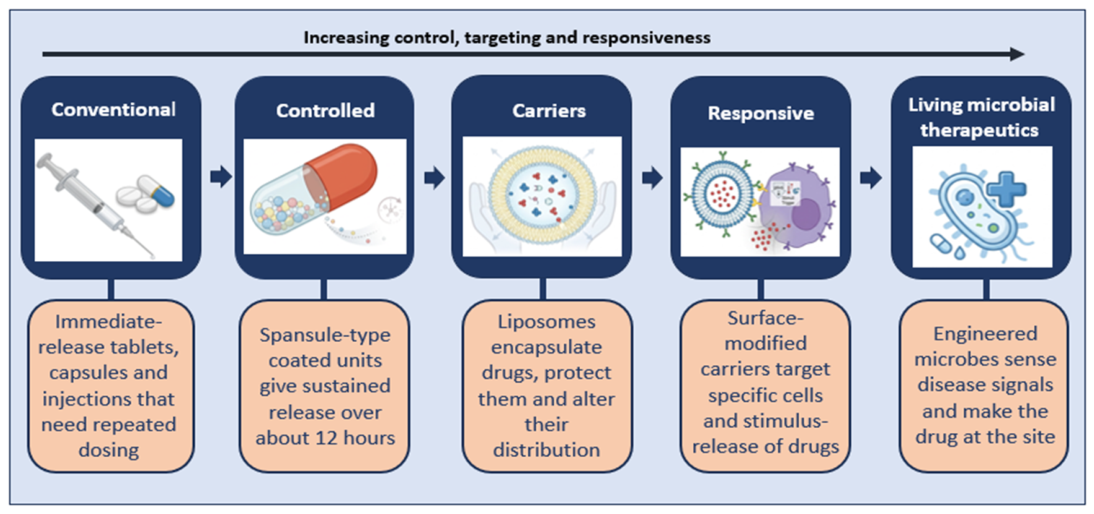
Figure 2.
Programmable gene circuit in an engineered microbe. Disease-associated signals are detected by a sensor, processed by regulatory logic and trigger therapeutic gene expression, with a kill switch providing biocontainment.
Figure 2.
Programmable gene circuit in an engineered microbe. Disease-associated signals are detected by a sensor, processed by regulatory logic and trigger therapeutic gene expression, with a kill switch providing biocontainment.
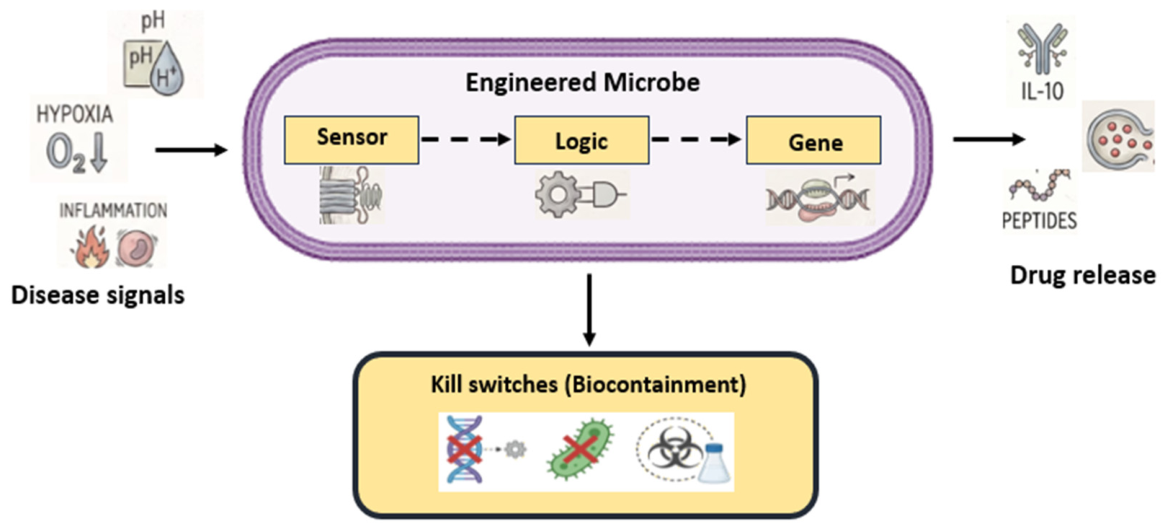
Figure 3.
Classes of therapeutic molecules produced by engineered microbes.
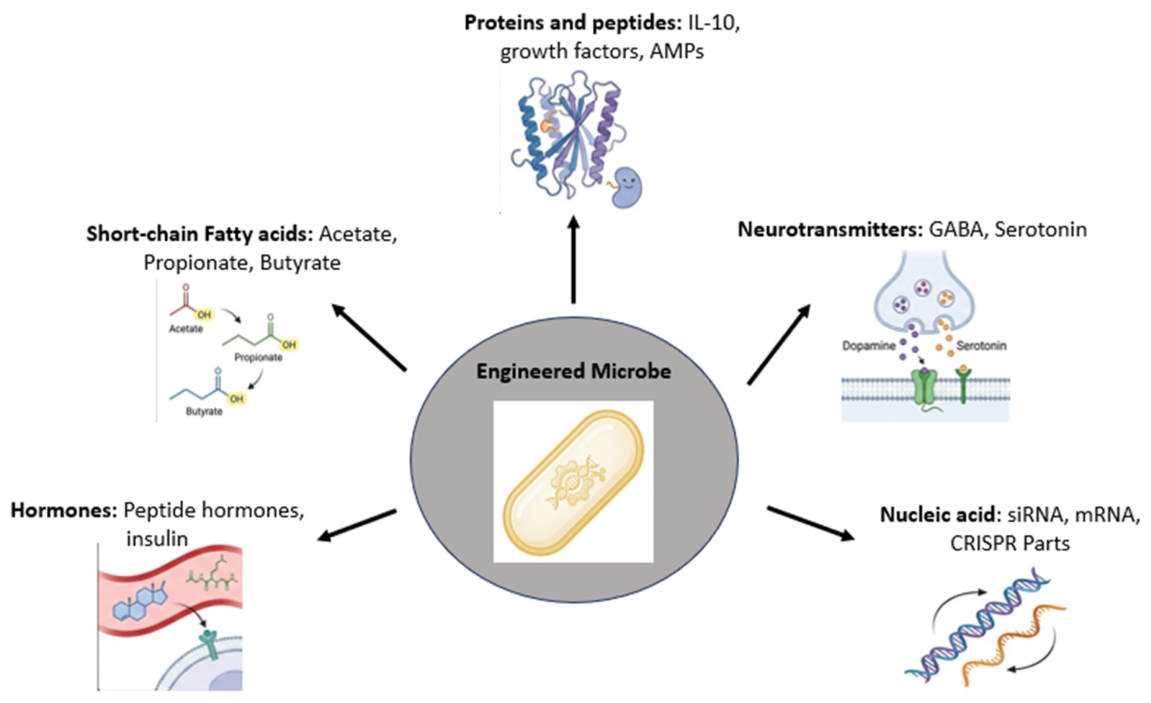
Figure 4.
(A) Magnetic guidance of iron-oxide-loaded microbes toward a target tissue. (B) Stimulus-responsive (pH, light, ultrasound, ROS/enzymes) payload release from microbe-nanomaterial hybrids.
Figure 4.
(A) Magnetic guidance of iron-oxide-loaded microbes toward a target tissue. (B) Stimulus-responsive (pH, light, ultrasound, ROS/enzymes) payload release from microbe-nanomaterial hybrids.
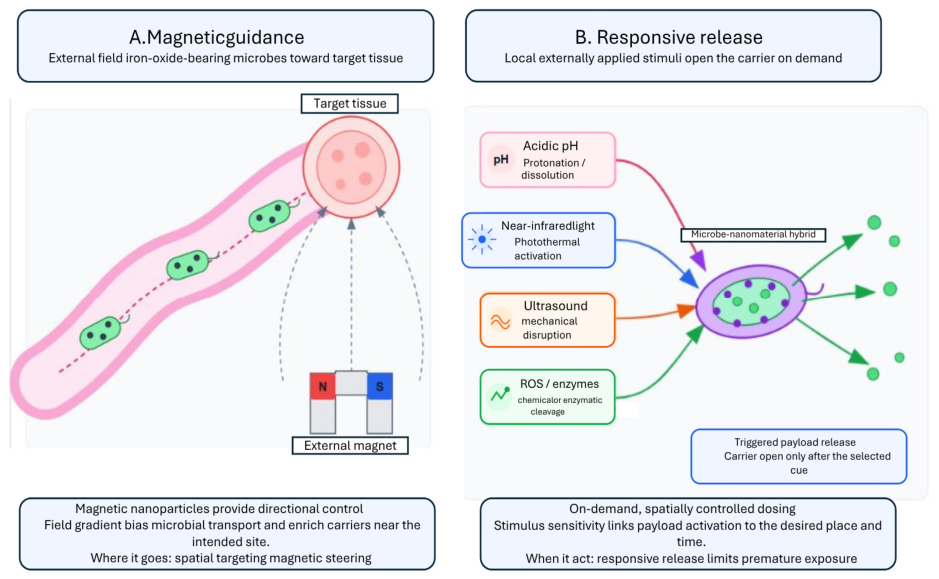
Figure 5.
AI-driven design-build-test-learn (DBTL) cycle for engineering living therapeutics.
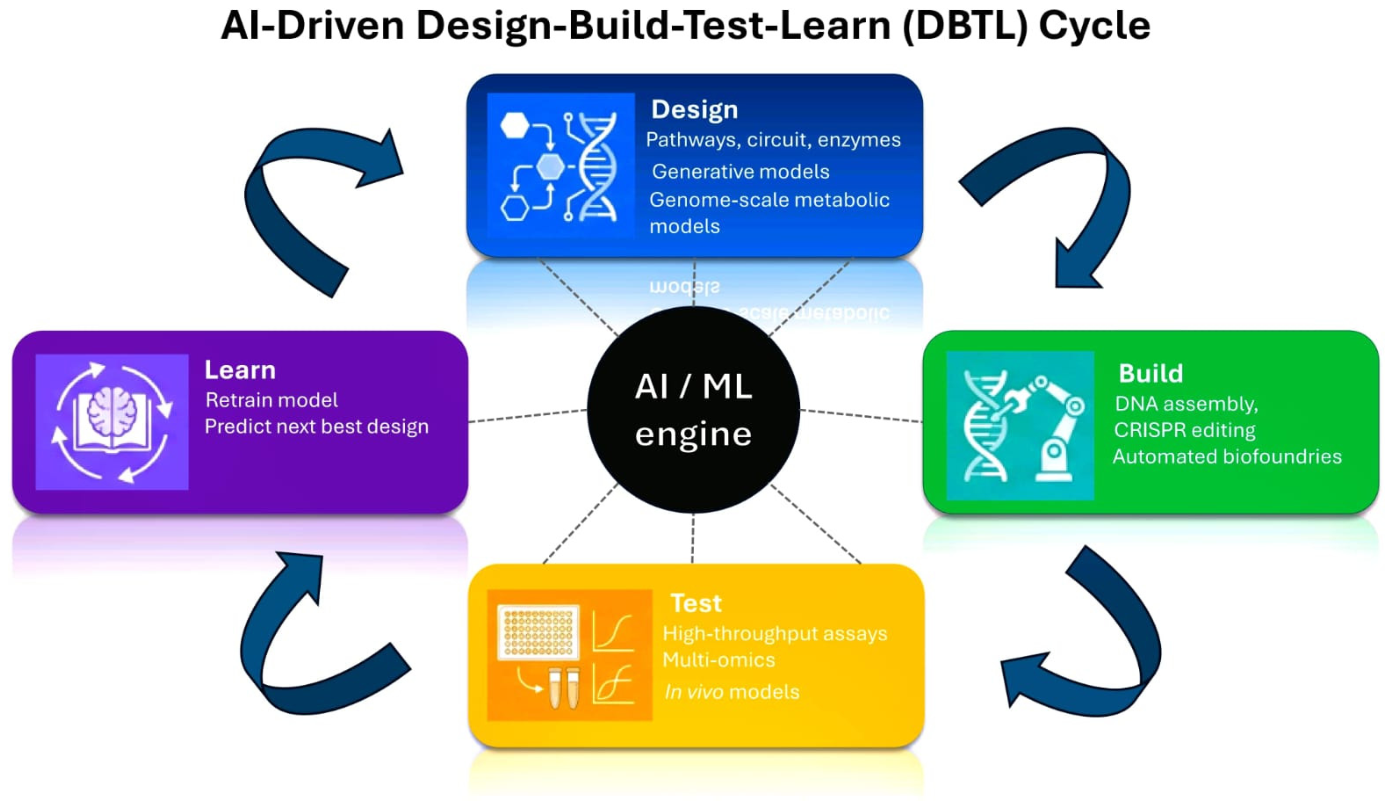
Figure 6.
Translation pipeline from laboratory design to post- market surveillance, with key hurdles at each stage and cross-cutting manufacturing and regulatory requirements.
Figure 6.
Translation pipeline from laboratory design to post- market surveillance, with key hurdles at each stage and cross-cutting manufacturing and regulatory requirements.
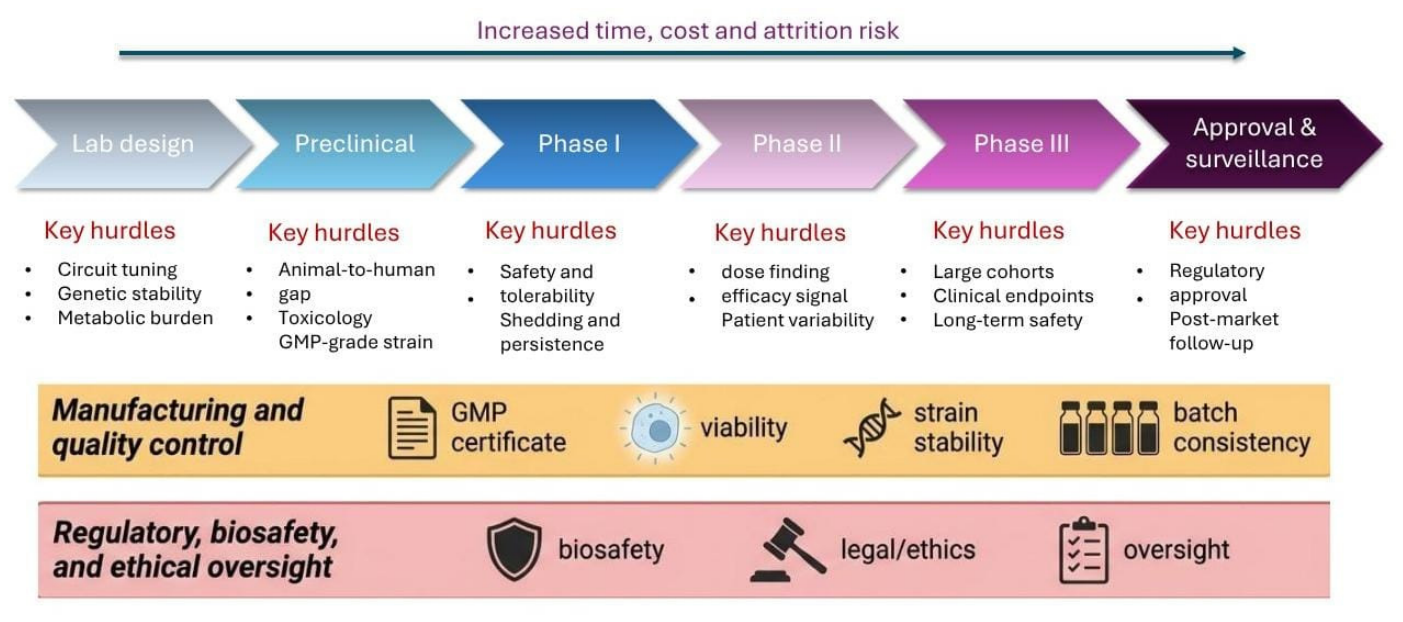
Disclaimer/Publisher’s Note: The statements, opinions and data contained in all publications are solely those of the individual author(s) and contributor(s) and not of MDPI and/or the editor(s). MDPI and/or the editor(s) disclaim responsibility for any injury to people or property resulting from any ideas, methods, instructions or products referred to in the content. |
© 2026 by the authors. Licensee MDPI, Basel, Switzerland. This article is an open access article distributed under the terms and conditions of the Creative Commons Attribution (CC BY) license (http://creativecommons.org/licenses/by/4.0/).
Copyright: This open access article is published under a Creative Commons CC BY 4.0 license, which permit the free download, distribution, and reuse, provided that the author and preprint are cited in any reuse.