

Submitted:
23 November 2026
Posted:
25 November 2026
You are already at the latest version
Abstract
This paper develops and investigates a decentralized platform for managing real estate transactions that combines blockchain technology with multi-criteria decision analysis. The study addresses low liquidity, inefficient intermediaries, non-transparent transactions, and the risk of data falsification in the real estate sector. The study used process modeling methods (DFD, BPMN) to design the system architecture. T. Saaty’s Analytic Hierarchy Process (AHP) was applied to select the optimal buyer based on five criteria: financial capacity, location preferences, property type, time constraints, and transaction risks. A hybrid three-tier data storage model is proposed (the Ethereum/Sepolia blockchain, the IPFS decentralized storage, and a database managed via Prisma ORM). A two-stage transaction mechanism has been implemented, comprising off-chain calculation of buyer ratings with verification of matrix consistency (CR < 0.1) and recording the selected buyer in a smart contract via the setApprovedBuyer function, which prevents unauthorized property purchases by third parties. Experimental testing of the Authentication and RealEstate smart contracts in the Hardhat and Remix IDE environments using the MetaMask extension confirmed the functionality of the listProperty and buyProperty functions, the correctness of fund transfers and transfers of ownership, as well as resistance to brute-force attacks owing to PBKDF2/SHA-256 hashing and the Proof of Stake consensus mechanism. The results confirm the effectiveness of integrating smart contracts to ensure the transparency, security, and decentralization of real estate transactions.
Keywords:
blockchain
; smart contracts
; analytic hierarchy process
; IPFS
; Ethereum
; tokenization
; data protection
1. Introduction
The traditional real estate market depends on numerous intermediaries (real estate agents, notaries, banks), which causes delays, additional costs, and fraud risks. Blockchain automates transactions, reduces third parties, and ensures immutable ownership data.
The technology enables tracing a property’s legally clean history, prevents double selling, and creates a single reliable platform for data exchange. Decentralized registries are particularly critical for Ukraine’s post-war recovery, as they guarantee the integrity of damaged data, reduce corruption risks, and increase investment attractiveness. Integrating a multi-criteria analysis methodology (AHP) ensures objective selection of the optimal buyer based on specified criteria. Developing such a comprehensive platform is a relevant task for improving the transparency, security, and efficiency of real estate management.
Thus, this study will enable practical recommendations for adapting blockchain technology to existing economic and legal systems, as well as identify the main advantages and challenges of this process.
The literature review identifies three key thematic blocks. The first block concerns the organizational and technological challenges of blockchain adoption, including problems of inter-organizational cooperation, financial barriers, and centralization risks. The second block covers data protection and real estate tokenization using cryptographic algorithms (SHA-256, zk-SNARKs), NFTs, and smart contracts. The third block demonstrates the cross-sectoral potential of blockchain technologies in healthcare, e-voting, transport networks, and marketplaces.
Study [1] examines digital transformation processes using the Finnish experience as an example. It shows that the success of blockchain innovations depends less on the technology itself than on aligned strategies, public–private partnerships, and trust between partners.
The authors of [2] examine the integrated application of AI, IoT, VR/AR, and blockchain in real estate, highlighting increased operational efficiency but warning of high costs and cybersecurity risks.
Work [3] analyzes the practical advantages of blockchain for the housing sector (automation, transparency, absence of intermediaries), as well as the challenges hindering mass adoption (the need for expertise and centralization risks).
The researchers in [4] propose a real estate accounting system based on the SHA-256 cryptographic algorithm, which creates an immutable and secure transaction registry.
[5,6] analyze the advantages of property tokenization: converting properties into digital tokens increases market liquidity, simplifies investment, and minimizes costs through smart contracts.
[7] presents a practical implementation of these concepts using the “EquiKey” application (employing NFTs and zk-SNARKs), and [8] proposes a model on the Hyperledger Fabric platform to increase transaction transparency in developing countries.
Beyond the real estate sector, the versatility and security potential of blockchain technologies are confirmed by their successful application in healthcare [9], electronic voting [10], intelligent deep learning systems [11], trust assessment in VANET transport networks [12], and the protection of marketplaces against fraud [13].
This study aims to develop and implement a decentralized, blockchain-based real estate management platform that ensures transparent, secure, and efficient transactions, and to integrate AHP to select optimal buyers.
2. Materials and Methods
The study applies system-analytical and comparative methods to investigate blockchain technologies in the real estate sector; T. Saaty’s Analytic Hierarchy Process for multi-criteria selection of the optimal buyer, with verification of judgment consistency; and process and structural modeling methods (DFD, BPMN) to develop the platform architecture. To ensure data security and storage, the system used cryptographic methods (PBKDF2/SHA-256 hashing, digital signatures, Merkle trees) and IPFS decentralized storage. The practical implementation and performance evaluation of the smart contracts were carried out using software engineering methods and simulation testing in the Hardhat/Sepolia environment with Mocha and Chai. Generative AI (Claude, Anthropic) was used only to translate the manuscript text into English; it was not used for data analysis, design, or interpretation of results.
2.1. Blockchain Technology in the Real Estate Sector
Blockchain technology is relevant in the real estate sector, as it offers significant advantages under current hybrid conditions and complements existing systems. An analysis of modern solutions shows blockchain’s potential to increase transaction transparency, reduce intermediation costs, and improve security. Storing property rights registries on a blockchain minimizes fraud risks and simplifies data management.
A blockchain is a decentralized, distributed digital ledger that stores information as a chain of blocks containing transaction records. Without a central authority and with data distributed among network participants, the system offers stronger data protection. Each network node (participant) holds a copy of the entire ledger, and new changes are made only with the majority’s consent through consensus algorithms. This makes the system resistant to unauthorized actions and attacks.
The blockchain architecture creates an environment in which transaction information is fully public and verifiable by all stakeholders (buyers, sellers, regulators), yet protected against forgery. Consensus algorithms ensure the majority of participants approve new blocks, creating a single version of the truth and preventing individual manipulation.
The cryptographic link between blocks makes recorded transactions immutable. This guarantees the reliability of real estate ownership history without the possibility of retroactive changes. Cryptographic protection provides a high level of security, as an attacker would need to control more than 51% of the network’s computing power to falsify it. A digital signature confirms each transaction’s authenticity, and cryptographic hashes make it impossible to alter data in one block without automatically changing all subsequent blocks. To modify a past block, an attacker would have to redo the proof of work for that block and all subsequent blocks, outpacing honest nodes. In this way, the chain of blocks forms.
Decentralized systems have significant advantages over traditional centralized methods of managing data and transactions in the real estate sector. First, decentralization eliminates the single point of failure. Unlike centralized servers, which are vulnerable to attacks and failures, distributed data storage across many nodes ensures continuous system operation even if individual nodes fail. Second, the public availability of records increases transparency and trust between market participants, allowing the history of ownership and the legitimacy of transactions to be verified independently.
Smart contracts and asset tokenization are innovations that transform traditional processes of real estate management and circulation into automated, transparent, and accessible digital operations. Smart contracts are self-executing program code that runs when clearly defined conditions are met. They eliminate the need to involve multiple intermediaries (notaries, lawyers, escrow agents) by providing escrow of funds, automatic payment verification, re-registration of ownership, and transfer of funds to the seller. This reduces commission costs, speeds up transaction processing, and eliminates the human factor and the possibility of manipulation.
Real estate tokenization is the digital representation of real properties or rights to them in the form of tokens on a blockchain. Tokenization lets you divide a single property into many small shares, making real estate investment accessible to a wide range of small investors (fractional ownership). This significantly increases the liquidity of the typically illiquid real estate market.
NFTs (non-fungible tokens) make it possible to secure unique ownership rights to specific properties, recording the full ownership history, technical condition, and legal encumbrances without the possibility of forgery or duplication. The main advantages of adopting these technologies are high security due to the blockchain’s cryptographic protection, complete transparency of transaction history, global access to investment, and reduced bureaucratic delays.
Let us consider blockchain’s potential in three main areas of the real estate market: land administration, property transactions, and leasing and rental.
In land administration, traditional registries suffer from inefficiency, paper-based bureaucracy, corruption, and the risk of lost or forged documents. According to the World Bank, about 70% of the world’s population lacks formal land ownership rights, creating “dead capital” and hindering economic development.
Using blockchain in the land cadastre makes it possible to create a single, decentralized, immutable platform that chronologically records ownership rights. This increases trust in the system, protects against fraud, and eliminates the human factor. However, implementation faces challenges related to the legal recognition of these registries and the complexity of initially entering property data.
In property transactions (purchase and sale), the main problems are the market’s high illiquidity, dependence on numerous intermediaries (real estate agents, notaries, banks), and lengthy data verification processes. Blockchain-based smart contracts can automate and digitize purchase and sale transactions, making them peer-to-peer (P2P), faster, cheaper, and less error-prone. This also enables cross-border transactions and the formation of a single digital market.
In the leasing and rental sector, processes are usually slow and non-transparent, increasing fraud risk and fueling a shadow market. Smart contracts automate the fulfillment of financial obligations and cash flows between landlords, tenants, and managers.
Thus, blockchain’s key advantages are automation, transparency, the elimination of intermediaries, and new economic opportunities through asset tokenization. At the same time, industry conservatism, the lack of a legal framework, and technical limitations hinder rapid scaling.
The effectiveness of blockchain technologies in the real estate sector depends on the authentication and data protection methods used. Traditional password authentication is vulnerable to guessing and DoS attacks; therefore, symmetric and asymmetric cryptographic algorithms protect data.
Two-factor authentication (2FA) enhances security through one-time passwords (OTP), biometrics, or hardware tokens. However, biometric data cannot be changed if leaked, and SMS codes remain vulnerable to phishing, making local authenticator applications relevant.
Hashing protects passwords, but outdated algorithms (MD5, SHA-1) are vulnerable to rainbow table attacks. To counter this, salting and cryptographic key derivation functions are used, in particular PBKDF2, which hinders mass attacks by means of multiple iterations.
Authentication in blockchain systems is based on a key pair: a public key (the address identifier) and a private key (used to sign transactions digitally). Private keys are stored in hot or cold (hardware) crypto wallets, and multi-signature (multisig) authentication is used for joint asset management.
2.2. Mathematical Model of Buyer Selection Based on AHP
To automate buyer selection in a smart contract and minimize subjectivity, this work proposes applying multi-criteria decision analysis (MCDA) methods, particularly T. Saaty’s Analytic Hierarchy Process (AHP). This method involves constructing a hierarchical structure that combines the overall goal, the evaluation criteria, and the alternatives, providing a systematic approach to solving complex problems and enabling evaluation of potential buyers against a set of financial, time, and risk parameters. Criteria weights are determined by constructing a pairwise comparison matrix based on a special importance scale. Once the matrix is filled in, it is normalized, and the criteria weights are calculated using the normalization formula:
A mandatory stage of AHP is checking the matrix for consistency, which confirms the logical coherence of the user’s judgments. The final calculation of the global weights of the alternatives makes it possible to determine the optimal buyer.
For practical implementation of AHP, specialized software (Expert Choice, Decision Expert) or high-level programming languages (Python with the pyAHP/AHPy libraries) are used to ensure automated calculations and transparent, objective selection.
A mathematical model for MCDA based on Thomas Saaty’s AHP has been developed to systematically identify and select the optimal real estate buyer among several alternatives.
At the first stage, a three-level hierarchical structure was constructed: the top level defines the overall goal (selection of the optimal real estate buyer); the second level comprises the evaluation criteria (financial capacity, location preferences, property type, time constraints, and transaction risks); the third level consists of the alternatives (potential buyers A, B, C).
To assess the relative importance of the criteria, the Saaty scale (1 to 9) was used to construct the pairwise comparison matrix of criteria (Table 1).
Next, the elements of the pairwise comparison matrix were normalized, and the relative weights of the criteria were calculated as the arithmetic mean of the elements in the corresponding rows of the normalized matrix (Table 2).
To ensure the reliability of the obtained weights, check the consistency of the comparison matrix. This is done by calculating the consistency index (CI) and the consistency ratio (CR).
Consistency index (CI):
Consistency ratio (CR):
where λmax is the maximum eigenvalue of the comparison matrix, n is the number of criteria, and RI is the random index, which depends on n.
Calculation example. Suppose that for our matrix λmax = 5.2, n = 5, and RI=1.12 (for n=5).
Since CR < 0.1, the comparison matrix is considered consistent.
After the criteria weights have been determined, the alternatives (buyers) must be evaluated against each criterion. This is also done using pairwise comparisons or direct rating.

Table 3.
Example of the evaluation of alternatives against the “Financial capacity” criterion.
| Client | Rating (1–9) |
| A | 7 |
| B | 5 |
| C | 3 |
These ratings reflect how well each buyer meets the criterion.
After evaluating the alternatives against each criterion, calculate their global weights, which determine each alternative’s overall score. Do this by multiplying each alternative’s local weights by the corresponding criterion weights and summing the results.
where Wi is the global weight of alternative i, ωj is the weight of criterion j, and vij is the score of alternative i on criterion j.
Suppose, for simplicity, that all scores of the alternatives are already normalized (i.e., expressed as percentages or weights): WA ≈ 0.658, WB ≈ 0.549, WC ≈ 0.300.
After calculating each alternative’s global weight, the optimal buyer is selected by comparing these weights. The alternative with the highest global weight is considered the best choice.
Comparing these final scores allowed us to conclude that Buyer A is the optimal choice to conclude the transaction.
To integrate the AHP method with the blockchain network, we developed a two-stage transaction mechanism. In the first stage, the system processes potential buyer criteria off-chain (using the AHP algorithm) and identifies the optimal buyer with the highest global weight Wi. In the second stage, the seller calls the smart contract method setApprovedBuyer(propertyId, buyerAddress), recording the selected buyer’s address on the blockchain. The buyProperty function includes the logical check require(msg.sender == approvedBuyer), which prevents third parties from purchasing the property and ensures execution based on the multi-criteria analysis.
2.3. Architecture of the Decentralized Platform and DFD/BPMN Diagrams
The authorization and authentication module is a fundamental element of the platform that guarantees the reliability, flexibility, and confidentiality of user interaction. The system architecture provides for two main roles, sellers and buyers, whose registration and authentication data are recorded on the blockchain to protect against forgery. Each registered participant receives a unique user identifier, UserID (BuyerID for buyers), linked to their public wallet address and used to verify access rights and store AHP scores.
The seller registration process involves entering basic information, contact details, permit documents, and a confidential password. Based on the information entered, the system generates a blockchain transaction that stores the password hash, the account creation timestamp, and other technical parameters. Seller login follows the “login + password” model, where the entered password is dynamically hashed and compared with the record stored on the blockchain.
Buyer registration follows a similar concept, with a unique identifier generated using a cryptographic hash function:
where H is a cryptographic hash function, BI is the data, PK is the password key, and Timestamp is the timestamp.
Based on the generated UserID (or BuyerID), the system creates a graphical QR code that serves as a convenient “key” for fast, verified identification of the buyer during subsequent transaction operations. Figure 1 presents the data flow diagram of request processing and the interaction of internal processes during client registration or transaction execution.
The client-input processing logic is divided into two key subprocesses. The first subprocess, “Registration and HASH generation” (A11), processes the input personal data using a cryptographic hash function to create a unique BuyerID in compliance with regulatory confidentiality requirements. The second subprocess, “QR code generation” (A12), generates a visual QR code based on the BuyerID and the smart contract address for client verification and records the corresponding transaction on the blockchain.
A decentralized Merkle tree ensures fast verification of the integrity of the recorded buyer data, since any modification to the records instantly changes the chain’s root hash. The generated BuyerID is used in all related platform modules (delivery, reviews, analytics) to identify the buyer without disclosing their sensitive personal information.
Smart contract algorithm development aims to ensure the integrity, confidentiality, and speed of transaction processing in decentralized systems using advanced cryptographic approaches. Security relies on digital signatures using asymmetric cryptography, ensuring that only private-key holders can initiate transactions. At the same time, hash functions prevent tampering with recorded data.
To confirm transactions, the developed system uses the Proof of Stake (PoS) consensus algorithm, which combines high energy efficiency and processing speed because validators must hold a financial stake. Integrating the PoS algorithm into the overall process ensures the transparency, reliability, and immutability of all real estate transactions, as shown in the BPMN diagram in the “Launching contract execution” step (Figure 2).
The smart contract algorithm for user registration involves entering a password and role on the front end, then hashing the password. The contract checks that no record exists for the given address, then creates a new data structure, increments the userCounter, and emits the UserRegistered event. To authenticate, the user calls the authenticateUser method, after which the smart contract looks up the stored record and compares the hashes. If they match, it returns a success result and offers the option to retrieve details via getUserDetails; otherwise, it returns an error message (Figure 3).
The data storage system uses a hybrid three-tier model that combines blockchain smart contracts, the decentralized IPFS network, and an external database to optimize performance and costs. The system implements a hybrid security model. The system stores traditional authorization data (login and password hashes generated using the PBKDF2 algorithm with a cryptographic salt) in a secure external database (Prisma ORM) to ensure fast login and protect against brute-force attacks. In turn, the Authentication smart contract on the blockchain records only the linked public user identifier (BuyerID/SellerID), the user’s system role, and the IPFS hashes of permit documents. This separates private credential storage from public verification of access rights at the smart contract level. Smart contracts record only critical, minimal metadata (password hashes, user roles, IPFS links), since each write operation requires computation and gas expenditure.
To store large volumes of information (scanned documents, photographs of properties), the IPFS decentralized file storage is used, and only the file’s unique IPFS hash is written to the blockchain to confirm its integrity. To enable fast search, filtering, and front-end display, an external database is also used and synchronized with the blockchain by listening to events.
All operations that change the network state require corresponding gas costs, whereas read requests are executed free of charge. Table 4 provides approximate gas costs for the main system operations.
Architectural design defines the system’s overall structure, responsibility distribution, and interactions between its main components. The central element of the architecture is the blockchain network with the deployed smart contracts (Authentication for registration/authentication and RealEstate for managing properties and transactions).
The front-end application serves as the entry point for buyers, sellers, and administrators, hashing confidential data locally before sending it to the network. Dedicated back-end services track smart contract events and quickly synchronize the external database state to display offers to buyers.
This separation of responsibilities (immutable proofs on the blockchain, media files in IPFS, and extended indexes in the database) ensures high security, transaction transparency, and scalability across the decentralized platform.
2.4. Software Implementation of Smart Contracts
The practical implementation of the decentralized real estate management platform uses a hybrid technology stack that combines the modern Next.js (React) web framework for a responsive client interface with back-end tools for working with smart contracts and databases. The platform interacts with the Ethereum blockchain network through the dedicated libraries @thirdweb-dev/react, @thirdweb-dev/sdk, and ethers.js, while the centralized database is managed with Prisma ORM.
The authentication module’s front end is built with React and strict TypeScript typing to prevent development errors. The LoginForm and Register components display the login and registration forms. The authorization page integrates the input form into the overall application layout.
Form state management and validation are implemented using the react-hook-form library in combination with declarative schemas of the zod library. To enable interaction with the decentralized platform, the connection to the test blockchain network is configured first, and the user selects their corresponding Web3 account (wallet) in the MetaMask interface. After the account is confirmed and the user logs in, they are taken to their personal dashboard, where they can access the main property catalog.
The core decentralized logic consists of Solidity smart contracts tested in the Hardhat development environment. The smart contracts ensure transparent execution of operations without unauthorized interference. The Authentication contract stores password hashes, user roles (Seller or Buyer), and unique system identifiers.
The RealEstate contract implements functionality to digitize properties, store IPFS document hashes, and process purchase/sale requests. It interacts with the Authentication contract to verify access rights (for example, only users with the Seller role can create properties).
3. Results and Discussion
The effectiveness of the developed decentralized platform was evaluated through comprehensive testing of the smart contracts on the local Hardhat Network and on the Sepolia test network (Ethereum testnet).
We implemented automated testing of the smart contract functions using the Mocha framework and the Chai library. The test scenarios verified correct user registration, exception handling for repeated registration, and accurate password hash matching during authorization.
3.1. Experimental Study of the AHP Mathematical Model
One important aspect of testing was evaluating system performance and verifying the consistency of the AHP comparison matrix. Using the calculateWeights function, we analyzed the consistency of the comparison matrix for different criterion sets.
Radar charts help visualize how each buyer meets the different criteria. This helps identify each buyer’s strengths and weaknesses across different aspects (Figure 4).
The sensitivity analysis allowed us to assess how changes in criteria scores or weights may affect the final results (Figure 5). This is particularly important in multi-criteria analysis, where judgments may be subjective or vary by situation. When AHP is used to select the optimal buyer, a change in the importance of one or more criteria may change the choice of the optimal buyer.
3.2. Software Implementation and Testing of Smart Contracts
Testing was carried out in the Remix IDE development environment using a local blockchain environment. In the first stage of testing the RealEstate contract, the listProperty function, which registers a new property on the platform, was tested. This function is key, since it is where users’ interaction with the system begins. We selected the user with the address 0x5B3B0a6a701C568545dCfcB03FcB875f56beddC4, who acted as the owner, for testing. The inputs included a property price of 5 ETH, the name “default test”, the category “housing”, an image link, the property address, and a short description. Figure 6 shows the successful function call and transaction execution: the left panel shows the input arguments for the listProperty function, and the right panel shows the generated transaction log and gas costs.
The transaction was executed successfully, as confirmed by the message about its inclusion in the second block of the network. A unique transaction hash was generated, which certified its completion. The total gas cost amounted to 348,731 units, of which 302,244 units were actually consumed.
The function stored all passed data in a Property structure, confirming it operated correctly. In addition, the PropertyListed event was emitted, recording the property’s successful addition to the system. Verification of the stored data showed that each parameter, including the price, address, category, and description, matched the values entered when the function was called.
Using the Remix IDE testing tools, the contract variable state was checked (in particular, propertyIndex = 2, reviewsCounter = 0), confirming accurate data representation and preserved links between properties and user addresses.
In the second stage of testing the RealEstate contract, we tested the buyProperty function, which handles property purchases. In this scenario, a different account executed the purchase transaction. The property with identifier 0, registered at the previous stage, was selected for testing. A new buyer with address 0xAb8483F64d9C6d1EcF9b849Ae677dD3315835cb2 and a balance of 100 ETH initiated the purchase by sending an amount equal to the property price (5 ETH). Figure 7 shows the purchase transaction and its parameters.
The transaction was executed successfully, as indicated by the status “Transaction mined and execution succeeded”. The transaction hash 0x667e90a9cc11984d4d44016f7f994a3adcbb5a26ae8c84ffb4213203eede31db confirmed its inclusion in block number 4. The total gas cost for this operation was 48,074 units, which is expected for this function.
The buyProperty function verified that the amount sent was at least the property price and checked the property owner. After the checks completed, the funds were transferred to the previous owner’s address, and ownership passed to the new buyer. The PropertySold event records the sale, including the property identifier, the addresses of the old and new owners, and the sale amount.
Integrating the client side with the MetaMask wallet ensures the buyer signs transactions when calling the buyProperty function. After the transaction is confirmed in the MetaMask extension, the smart contract transfers 5 ETH to the seller. It automatically updates the property status, confirming the Web3 interface’s full functionality.
Thus, the screenshots presented demonstrate the successful integration of the smart contract with MetaMask, as well as the functionality of adding a new property through the user interface. All stages, from authentication to transaction execution, are performed correctly, indicating the system’s stability. Next steps may include testing other functions, such as updating property information or managing reviews.
4. Conclusions
A decentralized real estate management platform combining blockchain technology with a multi-criteria analysis methodology has been developed and investigated. A hybrid system architecture has been developed. To optimize performance and gas costs, we propose a three-tier data storage model. Blockchain smart contracts record only critical metadata and proofs, such as the UserID, roles, and IPFS hashes. The IPFS decentralized storage is used for media files and documents, while the external database (Prisma ORM) provides fast search and authentication through PBKDF2 hashing.
The AHP mathematical model has been integrated. The Analytic Hierarchy Process automates and objectifies the selection of the optimal buyer based on five main criteria: financial capacity, location, property type, time constraints, and risks. A two-stage mechanism has been implemented, comprising off-chain calculation of buyer ratings and on-chain recording of the selected buyer in the smart contract via the setApprovedBuyer method, which prevents third parties from purchasing the property.
Security and consensus have been implemented. The Proof of Stake algorithm ensures high transaction processing speed and energy efficiency. Digital signatures, cryptographic hash functions, and Merkle trees ensure data integrity and protection against fraud. Successful testing has been carried out. Experimental verification of the Authentication and RealEstate smart contracts in the Hardhat/Sepolia environment confirmed their functionality, the stable execution of the listProperty and buyProperty methods, and the consistency of the comparison matrices (CR < 0.1).
Prospects for further research include integrating the developed decentralized platform with the State Register of Real Property Rights of Ukraine to give smart contracts legal force in post-war reconstruction; introducing Layer-2 solutions and Zero-Knowledge Proofs to minimize fees and increase confidentiality; combining the AHP mathematical model with artificial intelligence for dynamic market analysis; and scaling fractional real estate tokenization through NFTs to attract small and foreign investors.
Author Contributions
Conceptualization, O.K. and M.M.; methodology, O.K.; formal analysis (AHP mathematical model), O.K.; software and system architecture (DFD and BPMN models), M.M.; validation (smart contract and data consistency testing), M.M.; investigation (literature review), O.S.; writing—original draft preparation, O.S.; writing—review and editing, O.K.; visualization, O.S. All authors have read and agreed to the published version of the manuscript.
Funding
This research received no external funding.
Institutional Review Board Statement
Not applicable.
Informed Consent Statement
Not applicable.
Data Availability Statement
The data presented in this study are available on reasonable request from the corresponding author.
Acknowledgments
During preparation of this manuscript, the authors used Claude (Anthropic) to translate the text into English. The authors have reviewed and edited the output and take full responsibility for the content of this publication.
Conflicts of Interest
The authors declare no conflicts of interest.
Abbreviations
The following abbreviations are used in this manuscript:
| AHP | Analytic Hierarchy Process |
| BPMN | Business Process Model and Notation |
| CI | Consistency Index |
| CR | Consistency Ratio |
| DFD | Data Flow Diagram |
| IPFS | InterPlanetary File System |
| MCDA | Multi-Criteria Decision Analysis |
| NFT | Non-Fungible Token |
| ORM | Object–Relational Mapping |
| PBKDF2 | Password-Based Key Derivation Function 2 |
| PoS | Proof of Stake |
| RI | Random Index |
References
- Saari, A.; Sinclair, S.; Leshinsky, R.; Junnila, S. Best practices for blockchain-driven digital transformation in cross-industry settings. Digital Business 2025, 5, 100127. [CrossRef]
- Al-Haimi, B.; Khalid, H.; Zakaria, N.H.; Jasimin, T.H. Digital transformation in the real estate industry: A systematic literature review of current technologies, benefits, and challenges. International Journal of Information Management Data Insights 2025, 5, 100340. [CrossRef]
- Saari, A.; Junnila, S.; Vimpari, J. Blockchain-driven digital transformation in the housing industry. Digital Transformation and Society 2025, 4, 212–231. [CrossRef]
- Margret, M.K.; Aswin, M.E.; Deepak, S.; Hariram, S.; Dhinesh, T. Blockchain-based real estate system. AIP Conference Proceedings 2025, 3204, 050008. [CrossRef]
- Zhang, L.; Ci, L.; Wu, Y.; Wiwatanapataphee, B. The real estate tokenized investment system based on Ethereum blockchain. Peer-to-Peer Networking and Applications 2025, 18, 106334. [CrossRef]
- Liu, A.; Chen, C. From real estate financialization to decentralization: A comparative review of REITs and blockchain-based tokenization. Geoforum 2025, 159, 104193. [CrossRef]
- Patel, K.; Pandey, A.; Nigam, S.; Pal, P.; Patil, P.; Gaikwad, A. EquiKey: A blockchain-based real estate solution. Smart Innovation, Systems and Technologies 2025, 413, 355–369. [CrossRef]
- Hoang, K.N.; Phu, T.N.D.; Minh, T.N.; et al. Blockchain as a collaborative technology—Case studies in the real estate sector in Vietnam. Lecture Notes in Computer Science 2023, 14317, 111–123. [CrossRef]
- Negi, D.; Shah, A.; Rawat, S.; Choudhury, T. Blockchain-based platforms for the healthcare industry. In Blockchain Applications in Healthcare: Innovations and Practices; 2023; Volume 1, pp. 49–63. [CrossRef]
- Lathyan, M.; Sahil; Tonger, R.; Sisaudia, V. Blockchain technology: A new way to secure voter anonymity. In Proceedings of the 2023 5th International Conference on Advances in Computing, Communication Control and Networking (ICAC3N 2023); IEEE, 2023; pp. 1465–1469. [CrossRef]
- Mousa, S.H.; Shati, N.M. Survey of convolutional neural network based on blockchain technology. In Proceedings of the 5th International Conference on Information Technology, Applied Mathematics and Statistics (ICITAMS 2023); IEEE, 2023; pp. 208–213. [CrossRef]
- Sharma, A.; Amaleshwari, U.; Shanmugapriya, R.; Londhe, G.V.; Maaliw, R.R.; Maranan, R. Blockchain-based trust management scheme over the spatiotemporal features of software-defined vehicle network. In Proceedings of the 2023 International Conference on New Frontiers in Communication, Automation, Management and Security (ICCAMS 2023); IEEE, 2023. [CrossRef]
- Yang, G.; Alexandru, L.-A.; Storheim, M. A blockchain-based online trading platform: TrustTrade. In Proceedings of the International Conference on Cloud Computing Technology and Science (CloudCom); IEEE, 2023; pp. 58–62. [CrossRef]
Figure 1.
Data flow diagram (DFD) of the developed system.
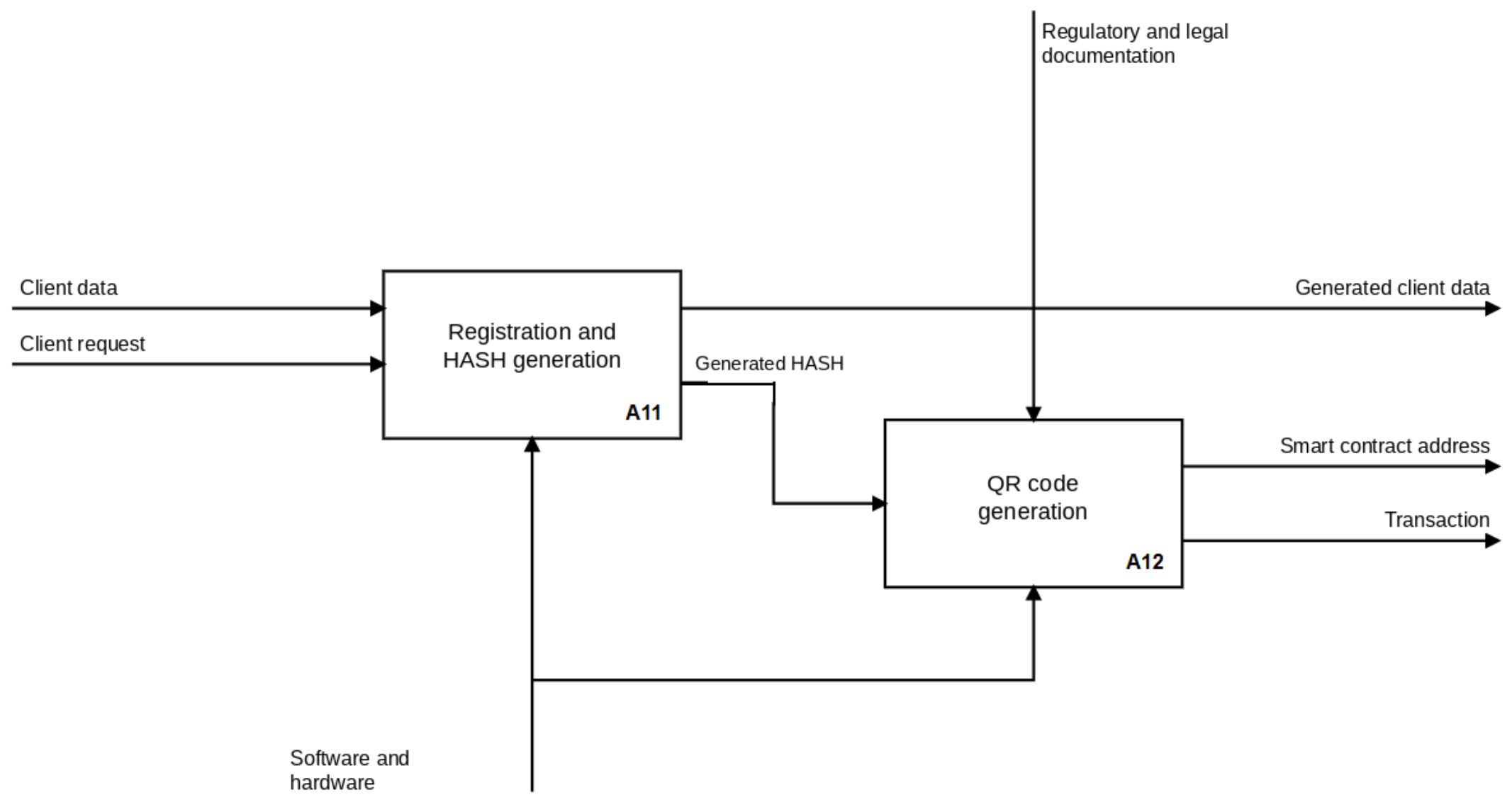
Figure 2.
Process diagram (BPMN) of the developed system.
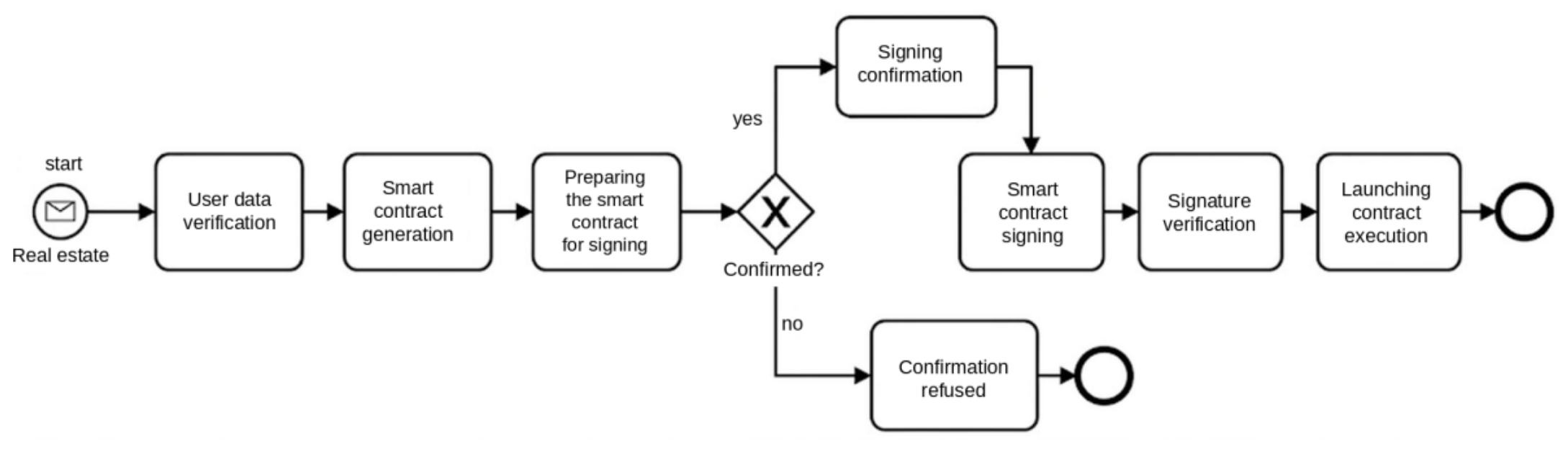
Figure 3.
Flowchart of authorization in the smart contract.
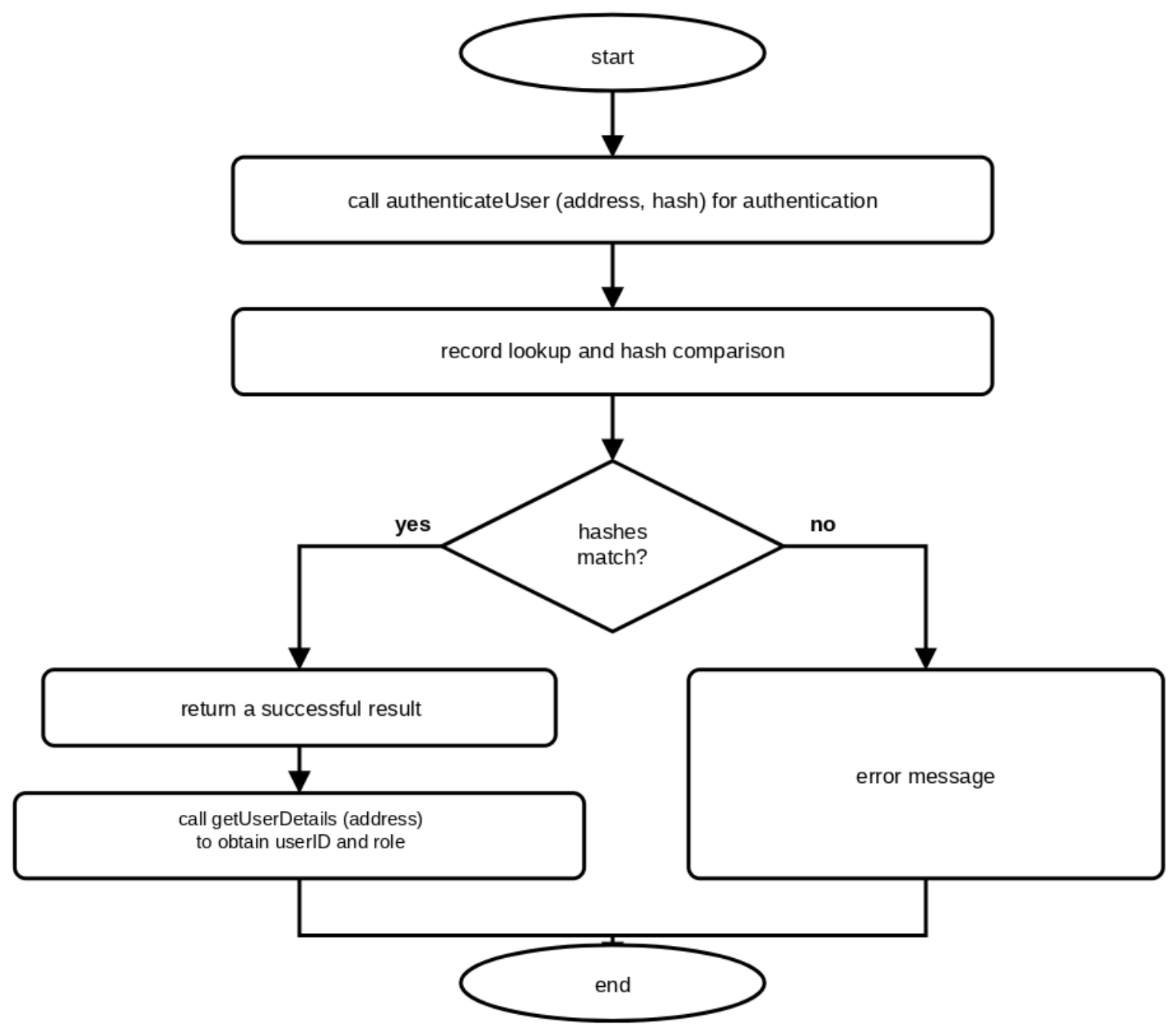
Figure 4.
Radar chart of the AHP results.
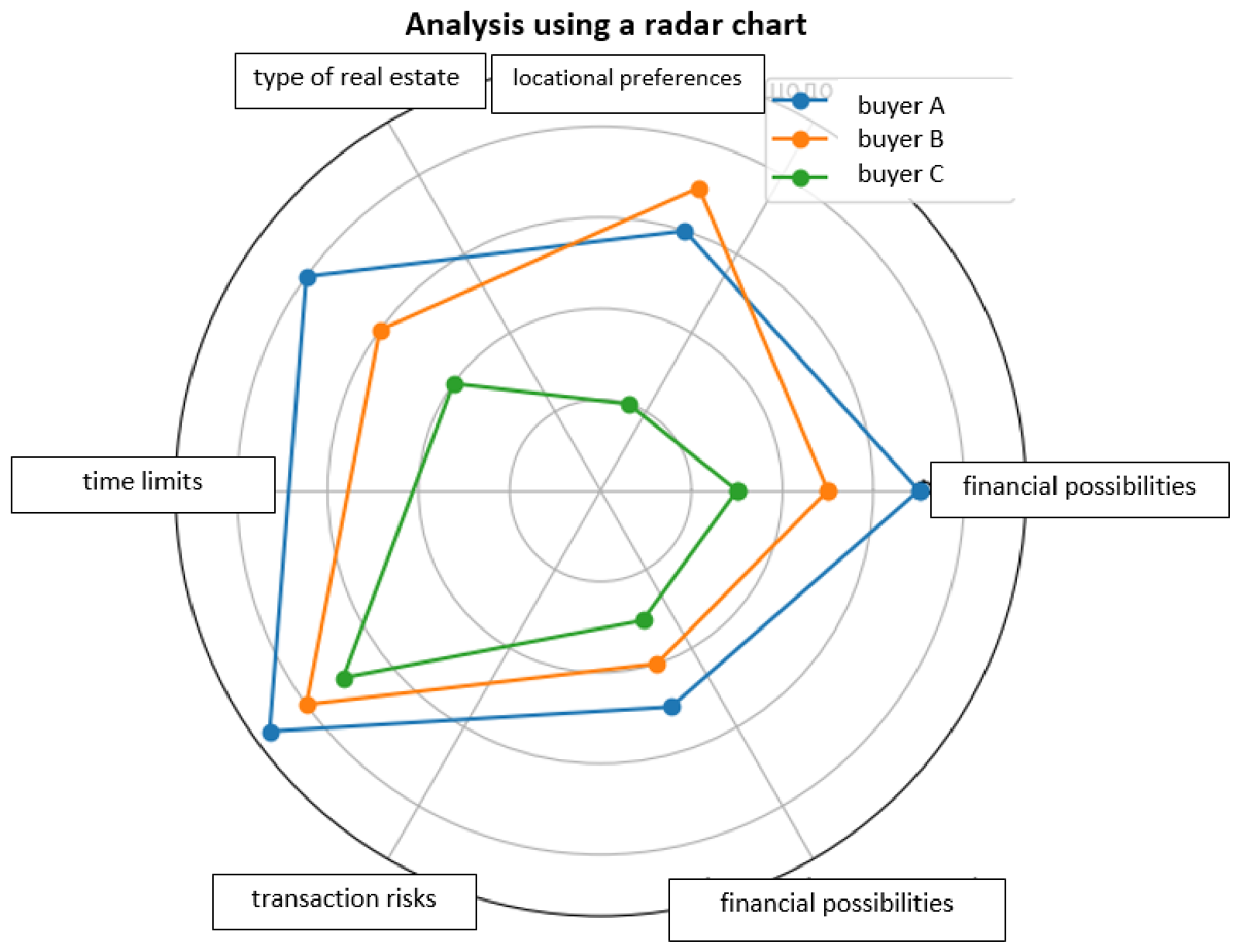
Figure 5.
Sensitivity analysis.
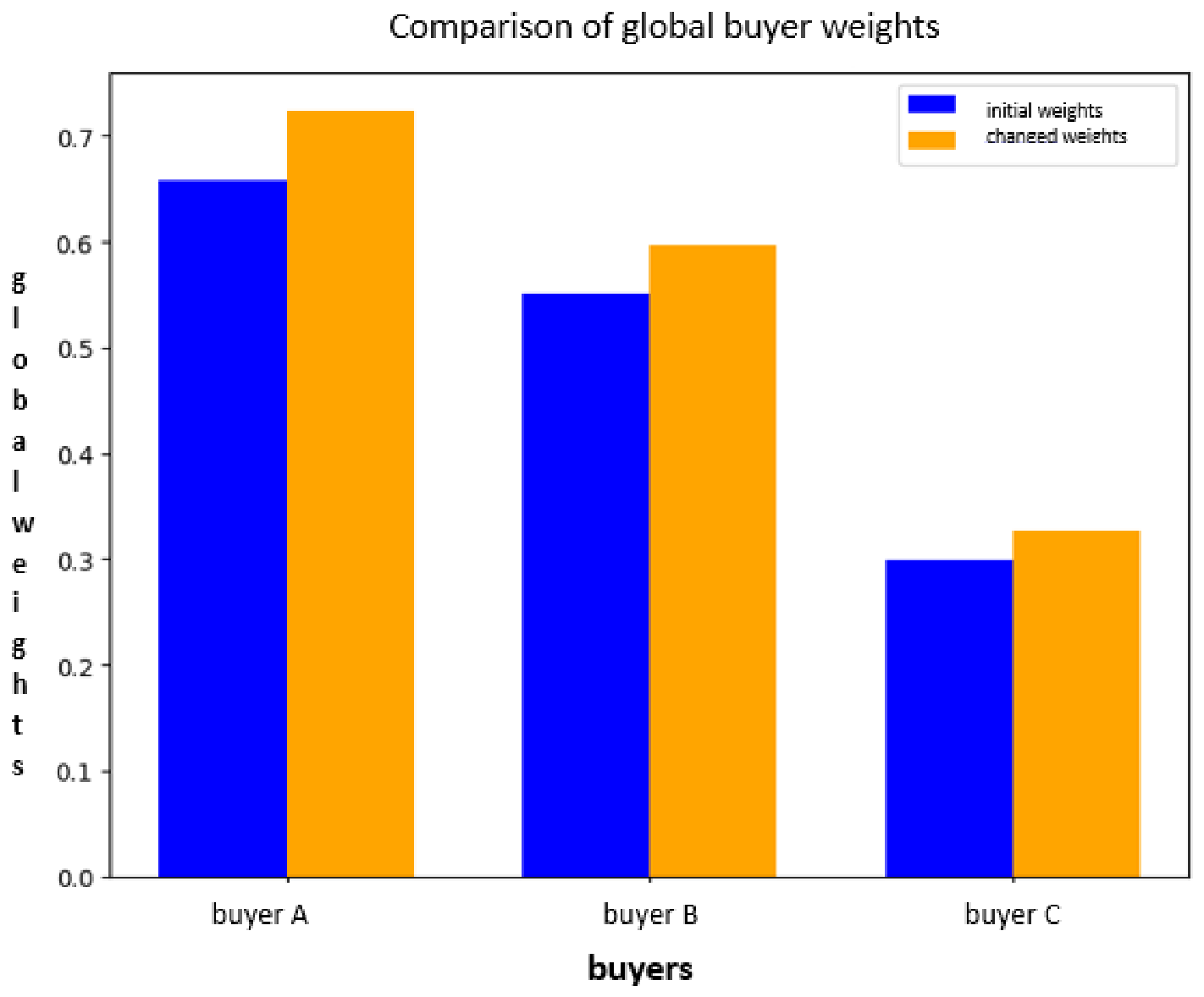
Figure 6.
Successful transaction execution.
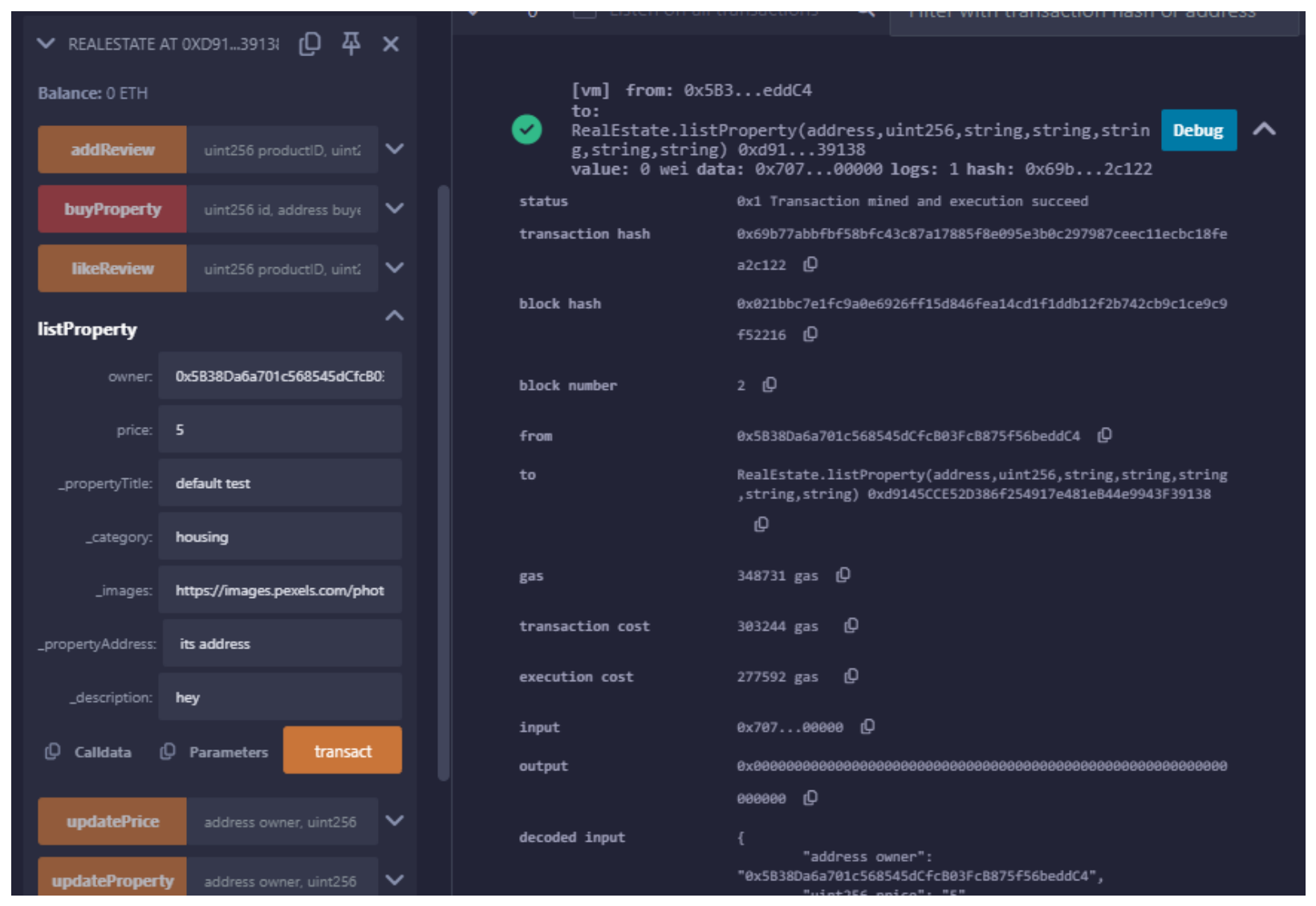
Figure 7.
Transaction execution.
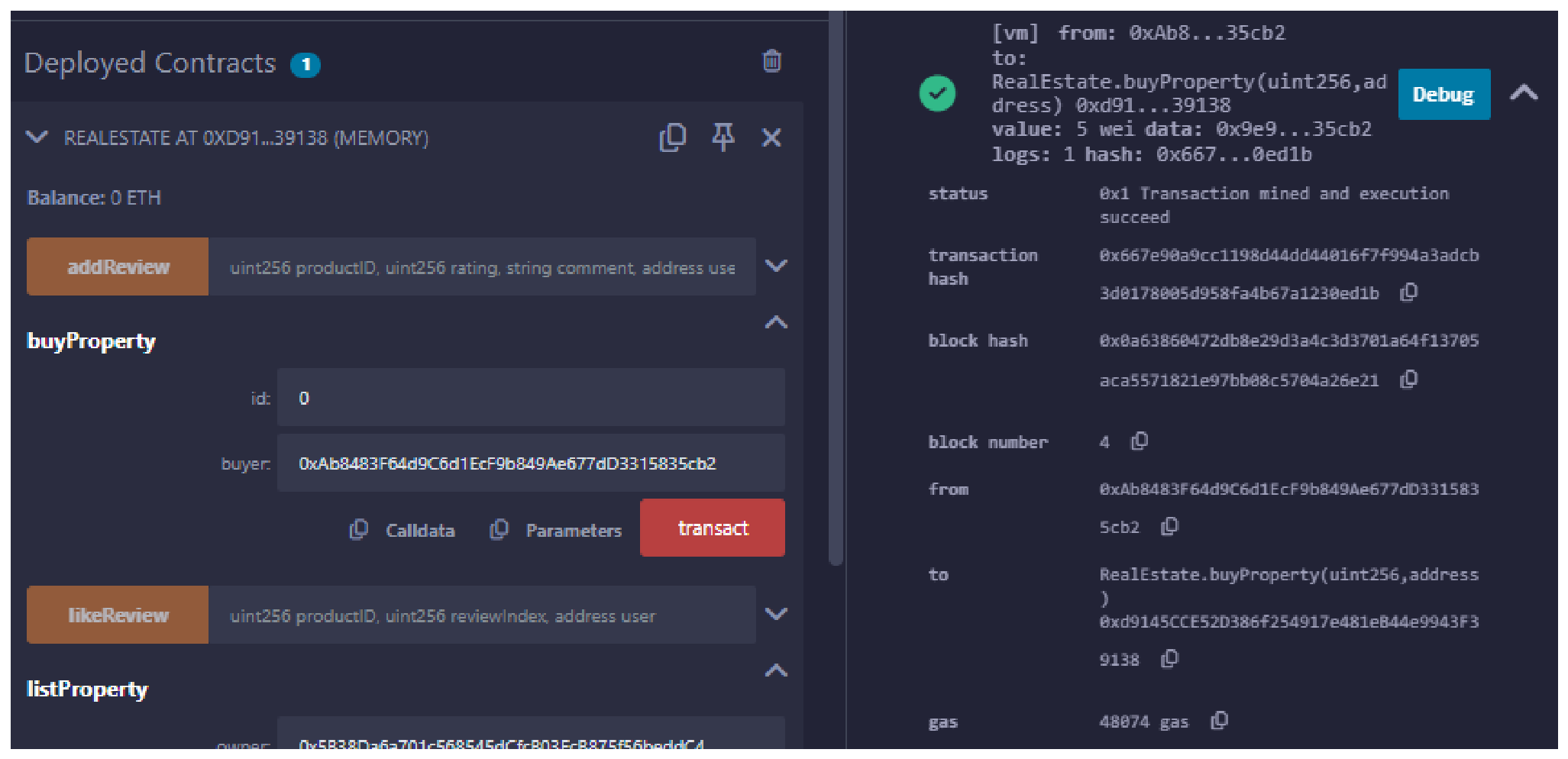
Table 1.
Example of a pairwise comparison matrix of criteria.
| Criterion | Financial capacity | Location preferences | Property type | Time constraints | Transaction risks |
| Financial capacity | 1 | 3 | 5 | 7 | 9 |
| Location preferences | 1/3 | 1 | 3 | 5 | 7 |
| Property type | 1/5 | 1/3 | 1 | 3 | 5 |
| Time constraints | 1/7 | 1/5 | 1/3 | 1 | 3 |
| Transaction risks | 1/9 | 1/7 | 1/5 | 1/3 | 1 |
Table 2.
Example of a normalized matrix.
| Criterion | Financial capacity | Location preferences | Property type | Time constraints | Transaction risks | Mean value (ωj) |
| Financial capacity | 0.560 | 0.642 | 0.525 | 0.429 | 0.360 | 0.503 |
| Location preferences | 0.186 | 0.214 | 0.315 | 0.306 | 0.280 | 0.260 |
| Property type | 0.112 | 0.071 | 0.105 | 0.184 | 0.200 | 0.134 |
| Time constraints | 0.080 | 0.043 | 0.035 | 0.061 | 0.120 | 0.068 |
| Transaction risks | 0.062 | 0.031 | 0.021 | 0.020 | 0.040 | 0.035 |
| Sum | 1.000 | 1.000 | 1.000 | 1.000 | 1.000 | 1.000 |
Table 4.
Gas costs of the main system operations.
| Operation | Approximate gas cost (Gwei)* | Note |
| User registration | ~100 000 | Creating a mapping entry, incrementing the counter |
| Authentication (read-only call) | ~0 | Read-only calls do not consume gas (executed locally via eth_call) |
| Retrieving user details (view) | ~0 | Also read-only |
| Adding a property | ~150 000 – 200 000 | Depends on the number of fields and the amount of storage logic |
| Updating property data | ~80 000 – 120 000 | Costs vary depending on the number of checks and fields |
* Approximate values; actual costs depend on network conditions and contract implementation.
Disclaimer/Publisher’s Note: The statements, opinions and data contained in all publications are solely those of the individual author(s) and contributor(s) and not of MDPI and/or the editor(s). MDPI and/or the editor(s) disclaim responsibility for any injury to people or property resulting from any ideas, methods, instructions or products referred to in the content. |
© 2026 by the authors. Licensee MDPI, Basel, Switzerland. This article is an open access article distributed under the terms and conditions of the Creative Commons Attribution (CC BY) license (http://creativecommons.org/licenses/by/4.0/).
Copyright: This open access article is published under a Creative Commons CC BY 4.0 license, which permit the free download, distribution, and reuse, provided that the author and preprint are cited in any reuse.