
Submitted:
18 November 2026
Posted:
19 November 2026
You are already at the latest version
Abstract
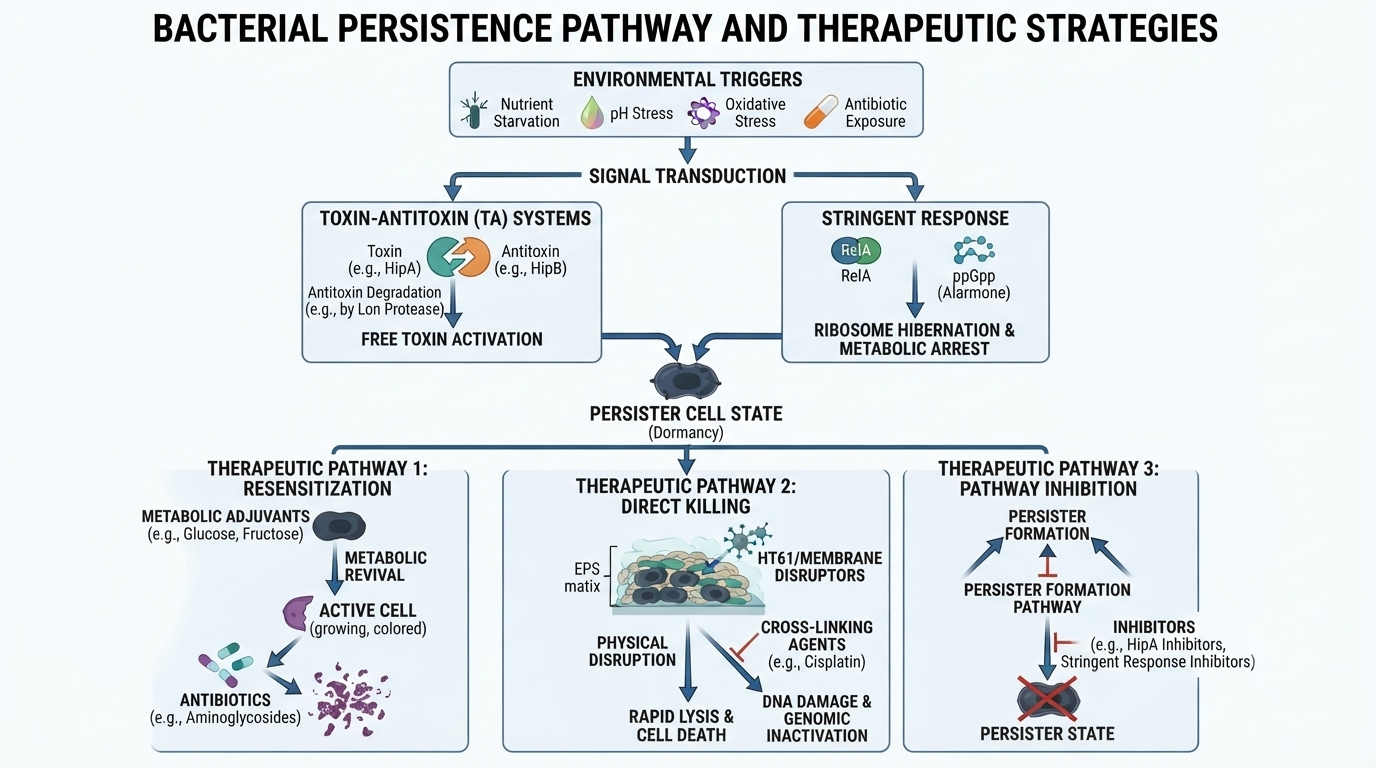
Persister cells are a specialized subpopulation of bacteria that enter a metabolically dormant or slow-growing state, rendering them highly tolerant to conventional bactericidal antibiotics. Consequently, they represent a major obstacle to the successful eradication of chronic and recurrent bacterial infections. Persister cells frequently reside within biofilms, thriving inside protective extracellular polymeric matrices. Their inherent phenotypic and physiological heterogeneity further complicates therapeutic targeting. Overcoming the barriers presented by these recalcitrant, non-dividing bacteria requires innovative strategies that go beyond traditional antibiotic design. This review synthesizes current understanding of persister cell biology, including their genetic regulation, toxin–antitoxin systems, the stringent response, and their interplay with biofilms. Furthermore, we evaluate emerging anti-persister cell strategies, classified into resensitization via metabolic stimulation, direct membrane/target destruction, and inhibition of persister cell formation pathways.
Keywords:
persister cell
; biofilm
; antibiotic tolerance
; dormant bacteria
; antimicrobial stewardship
; toxin–antitoxin system
Copyright: This open access article is published under a Creative Commons CC BY 4.0 license, which permit the free download, distribution, and reuse, provided that the author and preprint are cited in any reuse.