
Submitted:
17 November 2026
Posted:
18 November 2026
You are already at the latest version
Abstract
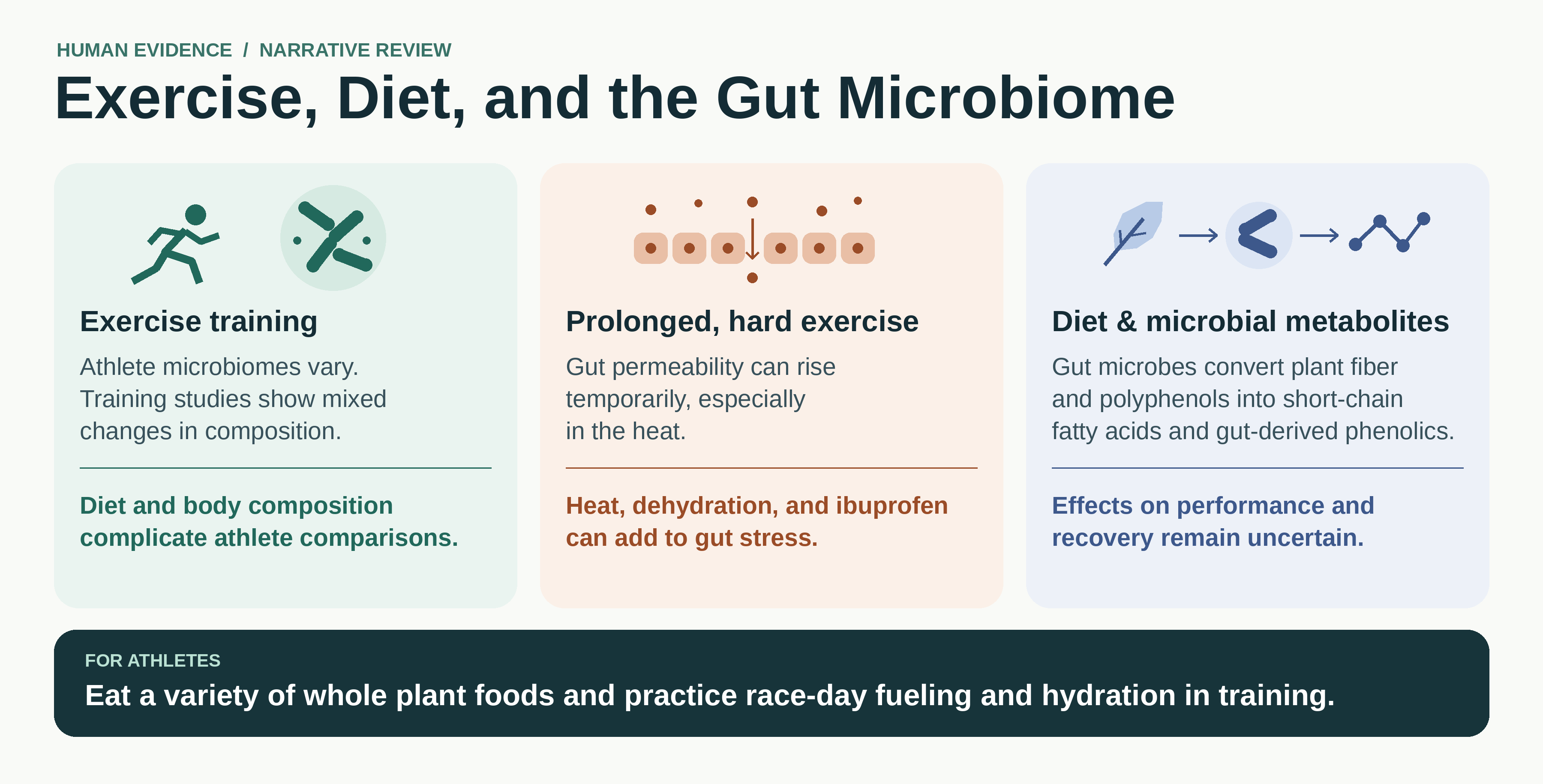
Exercise and the gut microbiome interact through diet, intestinal physiology, microbial metabolism, and host immune responses. Cross-sectional studies consistently find differences in the microbiome of athletes compared to less active adults, but athletes also differ in food intake and body composition. Some human intervention studies indicate that exercise can modify fecal microbial composition and function, but responses are heterogeneous and detectable changes are not consistently observed. Extended, vigorous exercise—particularly in the heat—can temporarily compromise gut barrier in-tegrity, though these short-term disturbances are distinct from long-term microbiome adaptations. Short-chain fatty acids and other microbial metabolites provide plausible links to skeletal muscle and immune function. However, promising mechanistic experiments in animals have not yet translated into consistent evidence that manipulating specific microbes improves human performance. This brief narrative review discusses the human data linking exercise, diet, and the gut microbiome. Sustained exercise and a varied diet rich in plant fibers and polyphenols may support durable gut microbial responses, but the exposure duration required for lasting change remains uncertain. Repeated sam-pling over long time periods, dietary assessment, and functional measurements remain necessary before recommending precision microbiome interventions for athletes.
Keywords:
exercise
; gut microbiome
; athletes
; gut permeability
; short-chain fatty acids
; sports nutrition
Copyright: This open access article is published under a Creative Commons CC BY 4.0 license, which permit the free download, distribution, and reuse, provided that the author and preprint are cited in any reuse.