
Submitted:
16 November 2026
Posted:
18 November 2026
You are already at the latest version
Abstract
To achieve his ideal of the Great Harmony (Datong), Confucius envisioned a society founded on the altruistic principle that “The world belongs to all”. Yet, inherent human self-interest has long rendered this vision utopian. The rise of the decentralized market economy in modern times has reframed the objective of resource allocation toward guiding self-interested individuals to achieve Pareto optimality—a state that resonates deeply with Confucius’ injunction: “Do not impose on others what you yourself do not desire.” Although the conditions for a fully functional decentralized market are highly demanding, advances in information technology and artificial intelligence are increasingly enabling us to approach them, thereby revitalizing the feasibility of a Datong society. However, a critical caveat remains: if general artificial intelligence evolves to serve only a minority rather than all equally, society could be driven in a direction diametrically opposed to the ideal of Great Harmony.
Keywords:
Great Harmony
; Confucianism
; Pareto optimal
; swarm intelligence
; decentralized systems
1. Introduction
Throughout history, human societies have evolved through approximately four distinct structural forms: from hunter-gatherer communities, to slave-based systems, feudal hierarchies, and eventually to diverse forms and degrees of democratic governance. In the contemporary era, the proliferation of digital networks, instant communication, social media, and blog-based echo chambers is profoundly reshaping human social networks—a transformation further accelerated by the emergence of artificial intelligence (AI), including large language models. Despite the growing prominence of AI, the scientific community has yet to reach a consensus on its fundamental role in restructuring society.
Intelligence was long considered an exclusive trait of higher organisms. However, the observed phenomenon of swarm intelligence in slime molds contests this reductionist perspective (Nakagaki et al., 2000). Although composed of single cells and lacking a brain, slime molds can—through environmental interaction—identify the shortest path between two points in a maze (Nakagaki et al., 2000; Jabr, 2012). Swarm intelligence is thus defined as the collective behavior emerging from decentralized, self-organizing systems, wherein individuals adhering to simple rules generate remarkably complex and efficient group outcomes. This phenomenon has been documented across a wide range of biological populations (Bonabeau et al., 1999; Krause et al., 2010), such as ants (Wilson, 1971; Strassmann and Queller, 2007; Garnier et al., 2007), bees (Strassmann and Queller, 2007; Passino et al., 2008; Karaboga and Akay, 2009), birds (Cavagna et al., 2010; Bialek et al., 2012), fish (Couzin et al., 2005; Ward et al., 2008, 2011), and humans (Stanley et al., 2002; Krause et al., 2010; Tao, 2010, 2018; Woolley et al., 2010; Sornette, 2014; Yukalov and Sornette, 2014; Chakraborti et al., 2015; Perc et al., 2017). Inspired by such systems, some scholars have proposed that biological colonies may give rise to “collective minds” (Couzin, 2007; Adolphs, 2009).
As with other species, humans—occupying the apex of the biological chain—also demonstrate swarm intelligence. Over a long evolutionary trajectory, humanity has cultivated a high-level civilization, despite the predominance of self-interested and decentralized individual behavior. The economist Adam Smith was among the first to identify this form of swarm intelligence in human society: in an economy characterized by an advanced division of labor, so long as exchange is permitted, an “invisible hand” directs society toward the most efficient allocation of resources (Smith, 1976). To formalize Smith’s intuition, economists developed neoclassical theory (Mas-Colell et al., 1995), which examines how large numbers of self-interested individuals can achieve a “collective consensus” on resource allocation through production and exchange—a state in which no one can be made better off without making someone else worse off. Economists refer to this “collective consensus” as general equilibrium (Arrow and Debreu, 1954).
The mathematical framework for analyzing general equilibrium derives from the Nash equilibrium in game theory—a context in which self-interested agents reach an “agreement” on resource distribution (Nash, 1950, 1951). Such an agreement may constitute an unstable “compromise” (as in the Nash equilibrium of the prisoner’s dilemma) or a stable “consensus” (i.e., general equilibrium). A central accomplishment of neoclassical economics has been to delineate the fundamental prerequisites for attaining a consensus that satisfies all parties. Nevertheless, sustaining long-term general equilibrium in a decentralized economy driven by self-interest remains highly challenging (Tao, 2016), as summarized in Figure 1.
As illustrated in Figure 1, the six conditions requisite for a decentralized market economy to attain long-term general equilibrium (consensus) can be grouped into three categories (Tao, 2016):
1. Technology-driven conditions: Free information flow, negligible transaction costs, and equal productive capacity among members, as enabled by the society’s technological development.
2. Human nature-driven conditions: The rational agent hypothesis (self-interest) and diminishing marginal utility.
3. Institution-driven conditions: Clearly defined property rights supported by constitutional governance—wherein individuals utilize legally recognized factors of production, engage in open and fair market competition, and benefit from equal legal protection. This necessitates a rule-of-law system grounded in democratic checks and balances.
Among these, the three technology-driven conditions—free information flow, negligible transaction costs, and equal productive capacity—have only recently become attainable through significant advances in information technology and AI. For instance, the advent of e-commerce and big data in the early 21st century drastically reduced transaction costs and enabled low-cost information dissemination. Since 2022, large language models have further facilitated the widespread, low-cost sharing of knowledge and information (Kaplan et al., 2020; Ho et al., 2024), allowing broader segments of the population to attain “comparable” productive capabilities. For example, when specialized skills such as programming are democratized through AI tools like ChatGPT, even less-skilled individuals can achieve similar performance levels (Korinek, 2024; Brynjolfsson et al., 2025). In essence, AI can help equalize human capabilities by substituting for specialized labor.
Notably, the establishment and maintenance of robust constitutional institutions also depend on a certain degree of technological advancement. In this regard, progress in information and AI technologies inherently reinforces the refinement of decentralized market systems—systems whose core function is to facilitate social consensus on resource allocation.
Since the dawn of civilization, the quest for equitable resource distribution has been a profound human aspiration, shared across Eastern and Western cultures. This aspiration culminated during the “Axial Age” (800–200 BCE), which witnessed the rise of Confucianism, Buddhism, Israelite monotheism, and Greek philosophical rationalism. The founders of these traditions—such as Confucius, Buddha, and Plato—independently articulated a “Golden Rule” for an ideal society (Binmore, 2005). As Confucius articulated it: “Do not impose on others what you yourself do not desire” (Legge, 1967; Dai, 2017). Confucius envisioned such a society as the Great Harmony (Datong) and devoted his life to promoting this ideal across warring states, though he never witnessed its realization.
According to Confucius, achieving the Great Harmony required every member of society to uphold the altruistic principle that “The world belongs to all”. Yet this vision conflicts with the inherently self-interested nature of human beings. In contrast, the pre-Qin Legalist school in China embraced human selfishness, advocating stringent administrative laws and punishments. Ultimately, post-Confucian Chinese history largely followed the Legalist trajectory established by thinkers such as Shang Yang, Shen Buhai, Shen Dao, and Han Fei (Tao, 2022).
Attaining a consensus satisfactory to all in a self-interested society demands exceptionally stringent conditions, as depicted in Figure 1. From this standpoint, Confucius’s endeavors were destined to end tragically in his time. Yet, can these demanding conditions be approximated—or even fulfilled—through technological progress? With the rise of modern market institutions and ongoing technological innovation, it has become increasingly feasible to approach such social conditions for collective consensus. The market economy provides an institutional framework through which self-interested individuals can reach agreement on resource allocation, while technology continually enhances the viability of such a system.
We therefore propose that, with rapid advances in information and AI technology, the decentralized market economy outlined in Figure 1 can be progressively realized. Existing literature (Tao, 2016; Tao et al., 2023) demonstrates that in such an ideal decentralized market system, the probability of income acquisition follows an exponential distribution. This distribution reflects “equality of opportunity,” signifying that an individual’s current income is independent of past accumulation—thereby revealing the inherent fairness of opportunity in an ideal decentralized economy (Tao, 2025). Notably, empirical studies (Dragulescu and Yakovenko, 2001; Nirei and Souma, 2007; Shaikh, 2017; Tao et al., 2019) have shown that a substantial proportion of the population in market economies (approximately 90%, mainly comprising low- and middle-income groups) exhibits income structures consistent with the exponential distribution. This pattern, documented across more than 67 countries (Tao et al., 2019), reinforces the view that market-oriented economic systems tend toward exponential income distributions.
Finally, we demonstrate that in the ideal decentralized market system represented in Figure 1, per capita income rises markedly with population size—a manifestation of swarm intelligence (Tao, 2024). More importantly, resource allocation in such a system consistently adheres to the Pareto optimum: no reallocation can improve one individual’s welfare without reducing that of another. This principle resonates with Confucius’s ideal: “Do not impose on others what you yourself do not desire”. In other words, a decentralized market economy, significantly enhanced by modern information and AI technologies, may ultimately realize the Confucian vision of the Great Harmony—even as each member of society remains motivated by self-interest rather than pure altruism.
2. Equal Opportunity and Exponential Distribution
Existing literature (Tao, 2016; Tao et al., 2023) has established that the ideal decentralized market economy system, as depicted in Figure 1, generates an exponential distribution of income probability—hereafter termed the “exponential income distribution.” Although formal proof of this result typically relies on the sophisticated framework of the Arrow–Debreu general equilibrium model (Tao, 2016), we bypass such technical machinery here and derive the exponential distribution directly from the principle of “equality of opportunity,” a defining feature of an ideal market economy.
Suppose an ideal market economy is designed such that the probability P(X ≥ x) of any member earning an income of x satisfies the following “equality of opportunity” property:
where P(X ≥ s + x| X ≥ s) represents the probability that the member’s current income is s + x, given that their past income was s.
This “equality of opportunity” implies that an individual’s current income prospect x is independent of their past accumulation s. This prevents members from leveraging the “Matthew effect” of wealth accumulation to capture income that would otherwise go to others, thereby ensuring fairness of opportunity in income distribution.
Consider two agents, A and B, with initial endowments of $1,000,000 and $1, respectively. Agent A, who may lead an idle lifestyle, is the heir of a billionaire, while Agent B, a diligent individual from an impoverished background, has minimal prior wealth. This establishes a vast disparity in their initial wealth. We then pose the question: Given their current savings, which agent is more likely to earn an additional $10,000 in the future?
Conventional observation suggests that Agent A would be far more likely to earn an additional $10,000, given the advantages conferred by existing wealth. However, under the ideal market regime governed by Equation (1), Agent A’s probability of attaining $10,000 is:
while Agent B’s probability is
From Equation (2) and Equation (3), it follows that:
Thus, despite vast differences in initial wealth, both agents face the same probability of earning $10,000. This exemplifies the core ideal of an opportunity-egalitarian economic system.
What functional form of P(X ≥ x) satisfies property (1)? It is a well-known result in probability theory that the exponential distribution is the unique continuous distribution exhibiting this property (Marsaglia and Tubilla, 1975; Shimizu, 1979; Huang, 1981). Hence, we have:
where 0 ≤ x < +∞ and θ > 0 is a scaling parameter.
Therefore, an economic system in which every member’s income probability follows an exponential distribution achieves “equality of opportunity” in distributional outcomes.
As noted earlier, prior work (Tao, 2016; Tao et al., 2023) confirms that the ideal decentralized system in Figure 1 indeed leads to an exponential income distribution. This implies that the conditions required for an opportunity-fair economy—six in total—are highly stringent. A detailed discussion of how these conditions may be satisfied is deferred to Section 5.
In the next section, we demonstrate that when an economic system exhibits an exponential income structure, it also gives rise to the emergence of “knowledge”.
3. The Emergence of Knowledge
Let us now assume that the income probability of each member in the economic system follows the exponential distribution given in Equation (1). Since the derivative of an exponential distribution is also exponential, the probability density of member income also takes an exponential form. Considering that income levels in the real world are always discrete, we can express the discrete exponential income density based on Equation (5) as:
where x1 < x2<…<xn, and ai denotes the number of households earning xi units of income. μ is a parameter to be determined.
Using Equation (6), the total number of members N and the total output Y (GDP) can be written as:
Equations (7) and (8) show that N and Y are related through the two parameters μ and θ. Consequently, these two equations allow us to express N and Y in differential form (Tao, 2024):
where
Here, T is a new variable.
To ensure that Equation (9) is an exact differential, Equation (10) must satisfy the following condition (Tao, 2024):
Comparing Equations (10) and (11), we obtain:
and
Equation (11) ensures that N and T are independent variables. A rigorous proof can be found in Tao (2024).
To understand the economic meaning of T, consider GDP Y as a function of the collective decisions s = (s1,s2,…sN) of the N members:
Here, the collective decision s represents the general equilibrium reached by the N members—i.e., a consensus on resource allocation, which we will refer to as the “collective consensus”. We restrict our attention to collective consensus because the economic system under study—characterized by an exponential income distribution—is the ideal decentralized system shown in Figure 1, which only produces general equilibrium outcomes, i.e., “collective consensus”.
Using the exponential distribution (6) along with Equations (7), (8), and (11), it can be shown that the joint probability of the N members reaching a collective consensus s is (Tao et al., 2023; Tao, 2024):
where and
Using Equation (10), it can be rigorously proven that (Tao, 2024):
Thus, the economic meaning of T is clear: it measures the information content associated with the event that N members reach a collective consensus s. In information-theoretic terms (Shannon, 1948), it represents the information quantity or entropy of the economic system. Knowledge is generally defined as “useful information”. If ∂Y/∂T ≥ 0 holds—meaning that an increase in information stock raises total output—then T can be interpreted as the knowledge stock. In the endogenous growth literature, knowledge stock is recognized as the most important variable ensuring long-term growth for a country, also referred to as the “technology factor”. Henceforth, we shall refer to T as the knowledge stock. Accordingly, θ in Equation (9) represents the marginal return to technology—the additional social output gained from a one-unit increase in the knowledge stock (i.e., technological improvement).
4. Do Not Impose on Others What You Yourself Do Not Desire
In Section 3, we examined an economic system characterized by the exponential income distribution given in Equation (5), where a new variable T—interpreted as information stock, or knowledge stock—emerges. In this framework, population size N, knowledge stock T, and GDP Y jointly satisfy the partial differential equation (11). Solving this equation elucidates the fundamental mechanisms of economic growth within the system. The specific solution and its interpretation are contingent upon the imposed boundary conditions. In what follows, we evaluate the system against the neoclassical benchmark of Pareto optimality.
Recall that a resource allocation is Pareto optimal if no reallocation can improve at least one individual’s welfare without reducing that of another. This criterion inherently precludes actions that harm others’ interests. Neoclassical economics establishes that, under well-behaved preferences—convex, continuous, and monotonic (Varian, 1992)—the Pareto optimal allocation coincides with the general equilibrium.
According to microeconomic theory, when the economy reaches general equilibrium, the following equality holds (Tao et al., 2023):
A derivation of Equation (18) is provided in Appendix A. We briefly outline its economic interpretation. General equilibrium represents a state in which, under given institutional rules, N agents reach a consensus on resource allocation. At this equilibrium, the marginal rate of technical substitution between labor and capital equals the ratio of the marginal product of labor (reflected in the wage rate) to the marginal product of capital (reflected in the interest rate). The resulting allocation of labor and capital is Pareto optimal: no agent can obtain additional labor income without supplying additional capital, and vice versa. Moreover, since the marginal rate of technical substitution equals the ratio of marginal products, any incremental output from an agent’s labor is precisely counterbalanced by the associated capital input, eliminating arbitrage opportunities. Consequently, a new entrant to the market—endowed with both labor and capital—cannot generate net additional output; that is, ∂Y/∂N > 0 is infeasible. Upon entry, the agent immediately participates in the general equilibrium, where the output attributable to her labor is fully offset by her capital contribution, resulting in zero surplus. Hence, Equation (18) necessarily holds in general equilibrium.
It follows that when the economic system is in general equilibrium, the allocation of labor and capital among agents is optimal, and no reallocation can improve any individual’s welfare without harming another. We therefore conclude that resource allocation in general equilibrium is Pareto optimal. As previously noted, under well-behaved preferences, Pareto optimality is equivalent to general equilibrium. Thus, Equation (18) serves as an indicator that the society has achieved Pareto efficiency.
Notably, over two millennia ago during China’s Spring and Autumn Period, Confucius advanced a principle analogous to Pareto optimality: “Do not impose on others what you yourself do not desire”. Confucius envisioned a harmonious society—Datong, or Great Harmony—free from conflict, where trust and amity prevail. To achieve this ideal, he advocated the ethical standard of “Ren” (benevolence), akin to Plato’s conception of the “Good.” The minimal requirement of “Ren” is precisely the injunction not to harm others in the process of resource allocation—a formulation that aligns closely with the normative foundation of Pareto optimality.
Unfortunately, Confucius’s vision relied on individuals attaining the altruistic ideal that “The world belongs to all” through moral self-cultivation. Given the pervasive influence of self-interest, his efforts remained unrealized in his time.
In contrast to Confucius’s appeal to transcend self-interest, the modern market economy takes human self-interest as a given and seeks to achieve Pareto-optimal resource allocation through institutional design. This offers a new pathway toward realizing the Great Harmony society. By establishing the institutional preconditions outlined in Figure 1—a task increasingly feasible through advances in information and artificial intelligence technologies—it may indeed be possible to fulfill Confucius’s enduring vision.
5. Swarm Intelligence and Economic Growth
To analyze economic growth in a decentralized market economy as conceptualized in Figure 1, we solve the partial differential equation (11) under the general equilibrium condition specified by Equation (18). Prior research demonstrates that, among all solutions to Equation (11), the unique solution consistent with equilibrium condition (18) takes the form (Tao et al., 2023; Tao, 2024):
where a0 and γ are positive constants.
Substituting Equation (19) into Equation (18) yields the general equilibrium condition:
Further substitution of Equation (20) into Equation (19) gives the relationship between per capita income and population under general equilibrium:
Additionally, it follows directly from Equation (19) that the constant γ can be expressed as:
Equation (22) underscores the critical role of knowledge stock T in driving economic growth. In the absence of T, ∂Y/∂T = 0, implying γ = 0. Under this scenario, per capita income Y/N remains constant—a phenomenon known as the Malthusian trap, characterized by long-term stagnation in living standards. Indeed, from 1000 BC to AD 1800, much of the world’s population remained confined to such a state (Clark, 2007; Tao, 2024), as illustrated in Figure 2.
By contrast, if ∂Y/∂T > 0—that is, if knowledge stock T is present—then γ > 0. In this case, Equation (21) indicates that per capita income Y/N increases with population size N. Since the 19th century, many economies have exhibited this pattern of growth, thereby escaping the Malthusian trap, as depicted in Figure 2.
What accounts for this transition?
We posit that the emergence of market economic institutions around 1800—particularly in Great Britain—played a decisive role. These institutions rested on the establishment of private property rights, which enabled lawful and voluntary exchange. Prices thus became an efficient mechanism for information transmission, setting in motion the development of decentralized economic networks.
Unlike in ancient Greece, where personal freedom was espoused yet slavery persisted—undermining universal property rights—a functioning free-market system required the prior abolition of slavery. This shift was partly facilitated by Hebrew religious traditions, which emphasized the inherent equality of all individuals (Tao, 2022). A clearly defined system of property rights thus became a prerequisite for the rise of decentralized markets. As property rights were institutionalized, the foundations for free exchange and price-driven information flows were established, enabling the gradual formation of a decentralized free-market system.
As previously discussed, an ideal decentralized market system generates an exponential income distribution and facilitates a consensus on resource allocation—i.e., general equilibrium. These two attributes jointly enable the superlinear growth captured by Equation (21), whereby per capita income rises with population. This superlinear growth reflects a form of swarm intelligence: in larger populations, each individual contributes, on average, to higher levels of wealth creation.
Therefore, as a society transitions toward a decentralized market economy, it also converges toward this superlinear growth regime. In this sense, we argue that the rise of swarm intelligence—emanating from the shift to a decentralized market structure—enabled humanity to escape the Malthusian trap.
6. The Significance of Artificial Intelligence
From a contemporary standpoint, the market economy of the 19th century was relatively rudimentary, falling considerably short of the criteria for an ideal decentralized market system. Among the six conditions outlined in Figure 1, even with a well-established property rights regime, the requirements of “free flow of information”, “negligible transaction costs”, and “equal productive capacity” remain highly idealized. In particular, “free flow of information” and “negligible transaction costs” could only be approximated through substantial advances in information technology—far exceeding the capabilities of the price-based signaling mechanisms available at the time. The advent of e-commerce and big data technologies in the early 21st century has since markedly reduced transaction costs and enabled low-cost information dissemination, offering meaningful progress toward these ideals.
The requirement of “equal productive capacity”, however, poses a particularly stringent challenge. Neoclassical analyses of general equilibrium do not strictly presuppose identical productive capabilities across individuals or firms (Arrow and Debreu, 1954; Varian, 1992; Mas-Colell et al., 1995); heterogeneity in productive endowments does not necessarily preclude the existence of equilibrium. Yet, to sustain long-term general equilibrium—and to underpin the emergence of an exponential income distribution—a certain degree of productive equality becomes essential (Tao, 2016).
This raises a pertinent question: Is the assumption of “equal productive capacity” practically meaningful?
Recent breakthroughs in large language models since 2022 suggest a promising direction (Kaplan et al., 2020; Ho et al., 2024). Through artificial intelligence, knowledge can be more readily disseminated and assimilated across a broader population, enabling more individuals to attain comparable productive capabilities. In practical terms, AI has advanced to a stage where it can substitute for human labor across numerous domains (Korinek, 2024; Brynjolfsson et al., 2025). For instance, when specialized tasks such as programming are automated by tools like ChatGPT, individuals with limited prior expertise can achieve performance levels similar to those of more skilled practitioners. In this way, AI holds the potential to narrow skill disparities across the population.
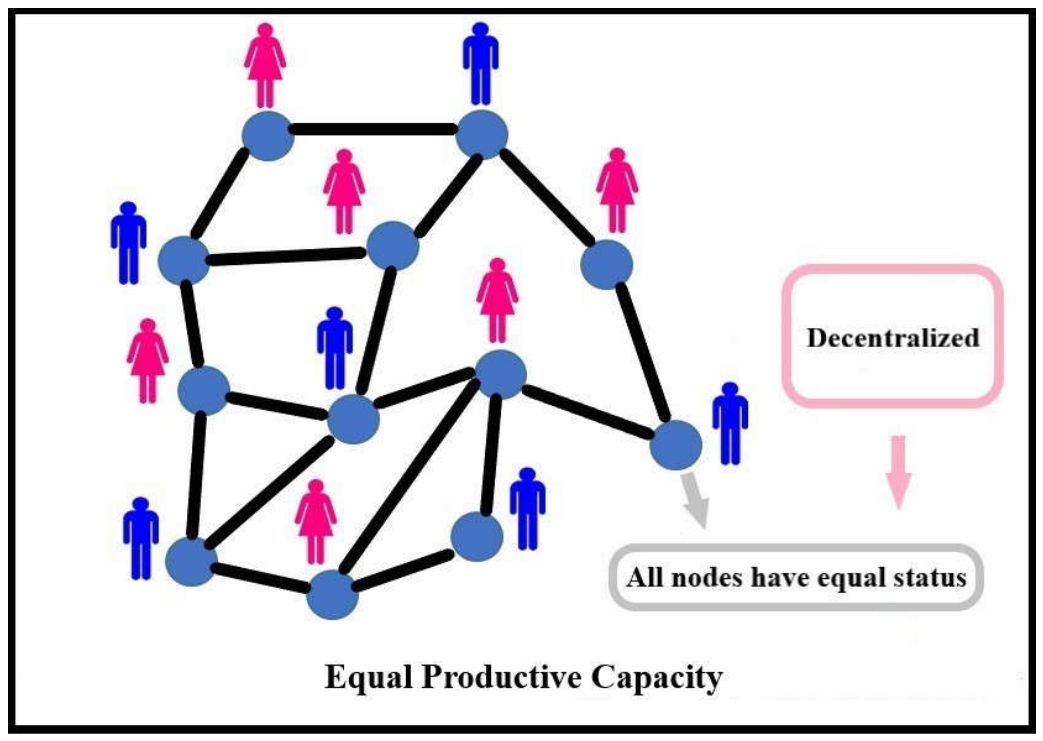
We therefore posit that AI-driven automation could facilitate the convergence of individual productive capabilities. However, achieving this outcome hinges on a critical precondition: AI must be designed to serve all members of society, not merely a privileged minority. Should AI access remain concentrated, existing inequalities would likely be exacerbated, leading to deeper capability divides and distancing society further from the decentralized economic structure envisioned in Figure 3.
Consequently, we argue that the rapid development of AI must be steered by a rational and humanistic framework—one that ensures these technologies are deployed for the benefit of all, thereby fostering greater capability equality. In other words, the fundamental objective of AI should be to evolve into a widely accessible form of general intelligence—often termed Artificial General Intelligence (AGI)—that helps mitigate inherent disparities in human capabilities, even those rooted in innate talent or socioeconomic background.
Once AGI advances along a trajectory that promotes capability leveling, the decentralized socioeconomic system represented in Figure 3 becomes increasingly attainable. In such a system, despite the persistence of individual self-interest, resource allocation consistently conforms to the Pareto optimum—where no one can be made better off without making someone else worse off. This embodies the Confucian maxim: “Do not impose on others what you yourself do not desire”.
In this light, a decentralized market economy, significantly enhanced by information and AI technologies, offers a viable pathway toward realizing the Confucian ideal of Great Harmony (Datong)—even as individuals continue to act in their own self-interest, without recourse to pure altruism. However, whether the development of AGI will indeed follow a trajectory conducive to capability leveling remains a legitimate concern. Market-driven entrepreneurs, responding to commercial incentives, would naturally tend to price AGI capabilities according to performance tiers. Such a pricing structure risks enabling wealthier groups to secure superior AI resources, thereby amplifying existing capability disparities between socioeconomic classes. Should this scenario materialize, it would represent a fundamental departure from the decentralized economic architecture envisaged in Figure 3.
7. Conclusion
This study has examined the feasibility of achieving the Confucian ideal of a “Great Harmony” (Datong) society. Moving beyond the utopian premise that universal altruism is necessary, we propose that such a society can be realized through a mature decentralized market economy—one that harnesses self-interest to advance collective welfare.
We have demonstrated that when a market economy satisfies six key conditions—including free information flow, negligible transaction costs, and equal productive capacity—it generates an exponential income distribution. This distribution reflects equality of opportunity in income acquisition: an individual’s likelihood of earning income is independent of prior wealth accumulation. This mechanism effectively counteracts the “Matthew effect” and ensures distributive fairness.
Moreover, we have shown that a well-functioning decentralized market is not only equitable but also intelligent and efficient. It endogenously produces a collective knowledge stock, which serves as the fundamental driver of superlinear economic growth—enabling societies to escape the Malthusian trap. Crucially, resource allocation in such a system consistently achieves Pareto optimality: no individual can be made better off without making another worse off. This outcome resonates profoundly with the economic implication of Confucius’ golden rule: “Do not impose on others what you yourself do not desire”. In essence, it becomes institutionally impossible to improve one’s well-being at the expense of others.
Admittedly, the six conditions required for a mature decentralized market economy are highly demanding—particularly free information flow, negligible transaction costs, and equal productive capacity. Nevertheless, we contend that ongoing advances in information technology and artificial intelligence are progressively lowering these barriers. For instance, the proliferation of information and big data technologies has enabled near-free information flows and drastically reduced transaction costs. Concurrently, breakthroughs in AI—especially large language models—are making it increasingly feasible to equalize productive capabilities across individuals.
If AI development remains human-centered and universally accessible, it could democratize specialized knowledge and establish a true level playing field in productive capacity. Therefore, a decentralized market economy, augmented by modern technology, offers a viable and pragmatic pathway toward the Great Harmony society. This approach does not require the suppression of self-interest, but rather relies on intelligent institutional design to align individual pursuits with the common good—ultimately delivering a resource allocation system that harmonizes economic efficiency with ethical ideals.
Author Contributions Declaration
Conceptualization: Yong Tao; Methodology: Yong Tao; Investigation: Yong Tao; Writing – original draft preparation: Yong Tao; Writing – review & editing: Yong Tao; Visualization: Yong Tao
Ethics, Consent to Participate, and Consent to Publish declarations
not applicable.
Data Availability Statement
No Data associated in the manuscript.
The Conflict of Interest Statement
The author declares no competing interests.
Appendix A
According to neoclassical economics, total social output Y is a function of labor L, capital stock K, and knowledge stock T, i.e., Y = Y(L,K,T). Its total differential is given by:
where ω = ∂Y/∂L denotes the marginal return to labor, r = ∂Y/∂K denotes the marginal return to capital, and θ = ∂Y/∂T represents the marginal return to technology.
Comparing Equation (A.1) with Equation (9) yields
which can be rewritten as:
where MRTSLK = −dK/dL denotes the marginal rate of technical substitution between labor and capital, and σ = dL/dN.
Equation (A.3) can be rearranged as:
References
- Adolphs, R. The Social Brain: Neural Basis of Social Knowledge. Annu. Rev. Psychol. 2009, 60, 693–716. [Google Scholar] [CrossRef]
- Arrow, K. J.; Debreu, G. Existence of an Equilibrium for a competitive economy. Econometrica 1954, 22, 265–290. [Google Scholar] [CrossRef]
- Bialek, W.; et al. Statistical mechanics for natural flocks of birds. PNAS 2012, 109, 4786–4791. [Google Scholar] [CrossRef]
- Binmore, K. Natural Justice; Oxford University Press: Oxford, 2005. [Google Scholar]
- Bonabeau, E.; Dorigo, M.; Theraulaz, G. Swarm Intelligence: From Natural to Artificial Systems; Oxford University Press, 1999. [Google Scholar]
- Brynjolfsson, E.; Korinek, A.; Agrawal, A. K. A Research Agenda for the Economics of Transformative AI. NBER Working Paper No. 34256. 2025. [Google Scholar] [CrossRef]
- Available online: http://www.nber.org/papers/w34256.
- Cavagna, A.; et al. Scale-free correlations in starling flocks. PNAS 2010, 107, 11865–11870. [Google Scholar] [CrossRef]
- Chakraborti, A.; et al. Statistical mechanics of competitive resource allocation using agent-based models. Phys. Rep. 2015, 552, 1–25. [Google Scholar] [CrossRef]
- Clark, G. A Farewell to Alms: A Brief Economic History of the World; Princeton University Press, 2007. [Google Scholar]
- Couzin, I. D.; et al. Effective leadership and decision-making in animal groups on the move. Nature 2005, 433, 513–516. [Google Scholar] [CrossRef]
- Couzin, I. Collective minds. Nature 2007, 445, 715. [Google Scholar] [CrossRef]
- Liji (Record of Rites); Dai, S., Ed.; Zhonghua Book Company, 2017. [Google Scholar]
- Dragulescu, A.; Yakovenko, V. M. Exponential and power-law probability distributions of wealth and income in the United Kingdom and the United States. Physica A 2001, 299, 213–221. [Google Scholar] [CrossRef]
- Garnier, S.; Gautrais, J.; Theraulaz, G. The biological principles of swarm intelligence. Swarm Intell. 2007, 1, 3–31. [Google Scholar] [CrossRef]
- Ho, A.; et al. Algorithmic Progress in Language Models. arXiv 2024, arXiv:2403.05812. [Google Scholar]
- Huang, J. S. On a “lack of memory” property. Ann. Inst. Stat. Math. 1981, 33, 131–134. [Google Scholar] [CrossRef]
- Jabr, F. How brainless slime molds redefine intelligence. In Scientific American; 2012. [Google Scholar]
- Kaplan, J.; et al. (2020): Scaling Laws for Neural Language Models. arXiv arXiv:2001.08361.
- Karaboga, D.; Akay, B. A survey: algorithms simulating bee swarm intelligence. Artif. Intell. Rev. 2009, 31, 61–85. [Google Scholar] [CrossRef]
- Korinek, A. Economic Policy Challenges for the Age of AI. NBER Work. Pap. 2024, No. 32980. Available online: http://www.nber.org/papers/w32980.
- Krause, J.; Ruxton, G. D.; Krause, S. Swarm intelligence in animals and humans. Trends Ecol. Evol. 2010, 25, 28–34. [Google Scholar] [CrossRef]
- Li Chi. Book of rites. An encyclopedia of ancient ceremonial usages, religious creeds, and social institutions.; Legge, J., Translator; University Books, 1967. [Google Scholar]
- Marsaglia, G.; Tubilla, A. A note on the “lack of memory” property of the exponential distribution. Ann. Probab. 1975, 3, 353–354. [Google Scholar] [CrossRef]
- Mas-Colell, A.; Whinston, M. D.; Green, J. R. Microeconomic Theory; Oxford University Press, 1995. [Google Scholar]
- Nakagaki, T.; Yamada, H.; Toth, A. Intelligence: Maze-solving by an amoeboid organism. Nature 2000, 407, 470. [Google Scholar] [CrossRef]
- Nash, J. Equilibrium points in n-person games. PNAS 1950, 36, 38–49. [Google Scholar] [CrossRef]
- Nash, J. Non-cooperative games. Ann. Math. 1951, 54, 286–295. [Google Scholar] [CrossRef]
- Nirei, M.; Souma, W. A two factor model of income distribution dynamics. Rev. Income Wealth 2007, 53, 440–459. [Google Scholar] [CrossRef]
- Passino, K. M.; Seeley, T. D.; Visscher, P. K. Swarm cognition in honey bees. Behav. Ecol. Sociobiol. 2008, 62, 401–414. [Google Scholar] [CrossRef]
- Perc, M.; et al. Statistical physics of human cooperation. Phys. Rep. 2017, 687, 1–51. [Google Scholar] [CrossRef]
- Shaikh, A. Income distribution, econophysics and Piketty. Rev. Political Econ. 2017, 29, 18–29. [Google Scholar] [CrossRef]
- Smith, A. An Inquiry into the Nature and Causes of Wealth of Nations; University of Chicago Press, 1976. [Google Scholar]
- Sornette, D. Physics and financial economics (1776–2014): puzzles, Ising and agent-based models. Rep. Prog. Phys. 2014, 77, 062001. [Google Scholar] [CrossRef]
- Stanley, H. E.; et al. Self-organized complexity in economics and finance. PNAS 2002, 99, 2561–2565. [Google Scholar] [CrossRef]
- Strassmann, J. E.; Queller, D. C. Insect societies as divided organisms: The complexities of purpose and cross-purpose. PNAS 2007, 104, 8619–8626. [Google Scholar] [CrossRef]
- Tao, Y. Competitive market for multiple firms and economic crisis. Phys. Rev. E 2010, 82, 036118. [Google Scholar] [CrossRef]
- Tao, Y. Swarm intelligence in humans: A perspective of emergent evolution. Physica A 2018, 502, 436–446. [Google Scholar] [CrossRef]
- Tao, Y. Spontaneous economic order. J. Evol. Econ. 2016, 26, 467–500. [Google Scholar] [CrossRef]
- Tao, Y. Emergent Order: The Evolution of Technology and Civilization; Southwest University Press, 2022. [Google Scholar]
- Tao, Y.; et al. Superlinear growth and the fossil fuel energy sustainability dilemma: Evidence from six continents. Struct. Change Econ. Dyn. 2023, 66, 39–51. [Google Scholar] [CrossRef]
- Tao, Y. Public Education, Human Capital, and the Generalized Pareto Distribution of Income. Available at SSRN. 2025. [Google Scholar] [CrossRef]
- Tao, Y.; et al. Exponential structure of income inequality: evidence from 67 countries. J. Econ. Interact. Coord. 2019, 14, 345–376. [Google Scholar] [CrossRef]
- Shimizu, R. On a lack of memory property of the exponential distribution. Ann. Inst. Stat. Math. 1979, 31, 309–313. [Google Scholar] [CrossRef]
- Tao, Y. From Malthusian Stagnation to Modern Economic Growth: A swarm-intelligence perspective. J. Phys. Complex. 2024, 5, 025028. [Google Scholar] [CrossRef]
- Shannon, C. E. (1948): A Mathematical Theory of Communication. Bell Syst. Tech. J. 27, 379–423.
- Varian, H. R. Microeconomic Analysis (Third Edition); Norton & Company, Inc.: New York, 1992. [Google Scholar]
- Ward, A. J. W.; et al. Quorum decision-making facilitates information transfer in fish schools. PNAS 2008, 105, 6948–6953. [Google Scholar] [CrossRef]
- Ward, A. J. W.; et al. Fast and accurate decisions through collective vigilance in fish shoals. PNAS 2011, 108, 2312–2315. [Google Scholar] [CrossRef]
- Wilson, E. O. The Insect Societies; Harvard University Press, 1971. [Google Scholar]
- Woolley, A. W.; et al. Evidence for a Collective Intelligence Factor in the Performance of Human Groups. Science 2010, 330, 686–688. [Google Scholar] [CrossRef]
- Yukalov, Y. I.; Sornette, D. Self-organization in complex systems as decision making. Adv. Complex Syst. 2014, 17, 1450016. [Google Scholar] [CrossRef]
Figure 1.
Six Conditions for Achieving Long-term General Equilibrium.
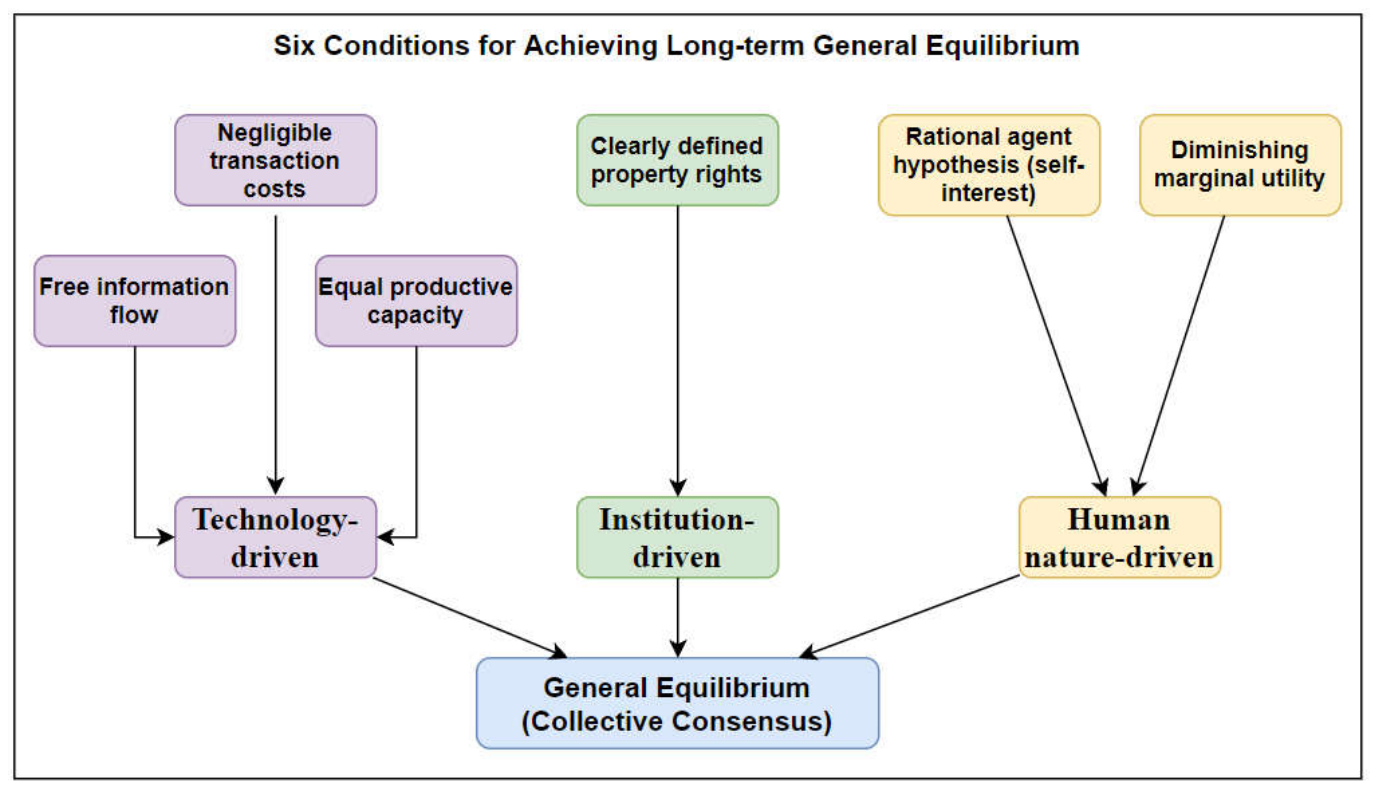
Figure 2.
Malthusian Trap.
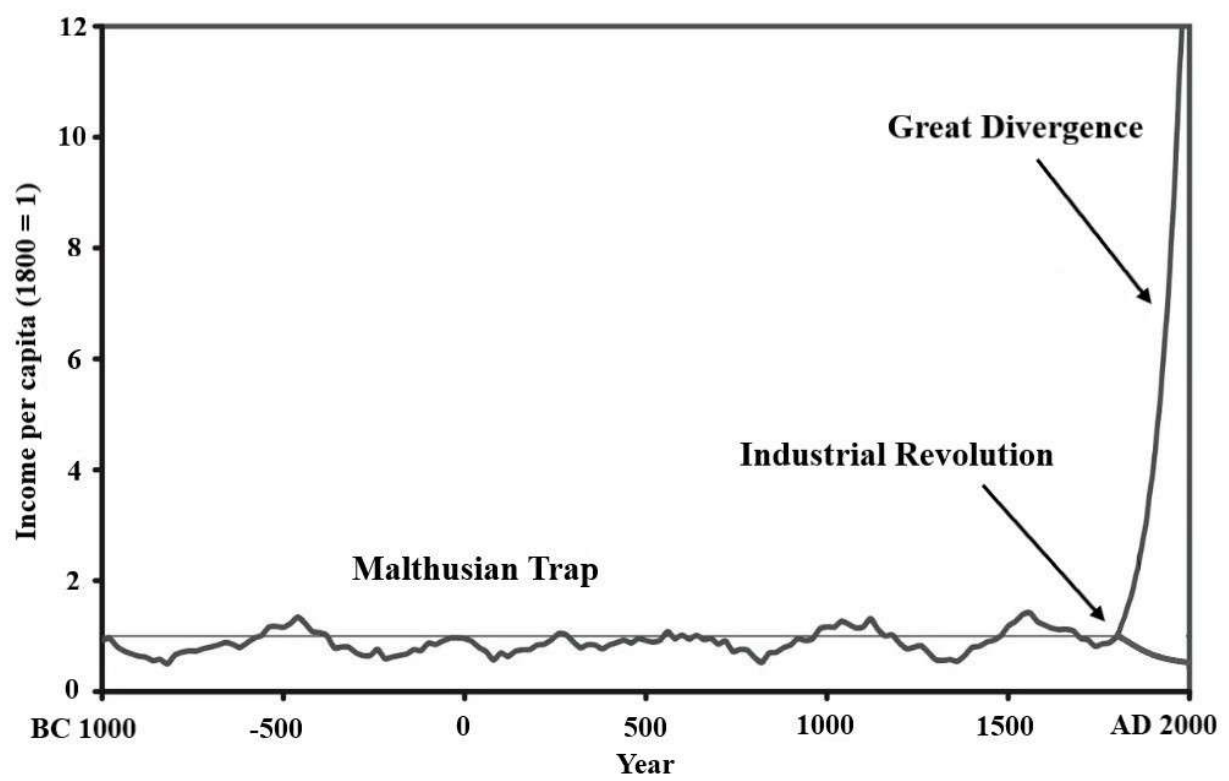
Figure 3.
Structural Characteristics of an Ideal Decentralized Market System.
Disclaimer/Publisher’s Note: The statements, opinions and data contained in all publications are solely those of the individual author(s) and contributor(s) and not of MDPI and/or the editor(s). MDPI and/or the editor(s) disclaim responsibility for any injury to people or property resulting from any ideas, methods, instructions or products referred to in the content. |
© 2026 by the author. Licensee MDPI, Basel, Switzerland. This article is an open access article distributed under the terms and conditions of the Creative Commons Attribution (CC BY) license.
Copyright: This open access article is published under a Creative Commons CC BY 4.0 license, which permit the free download, distribution, and reuse, provided that the author and preprint are cited in any reuse.