

Submitted:
13 November 2026
Posted:
18 November 2026
You are already at the latest version
Abstract
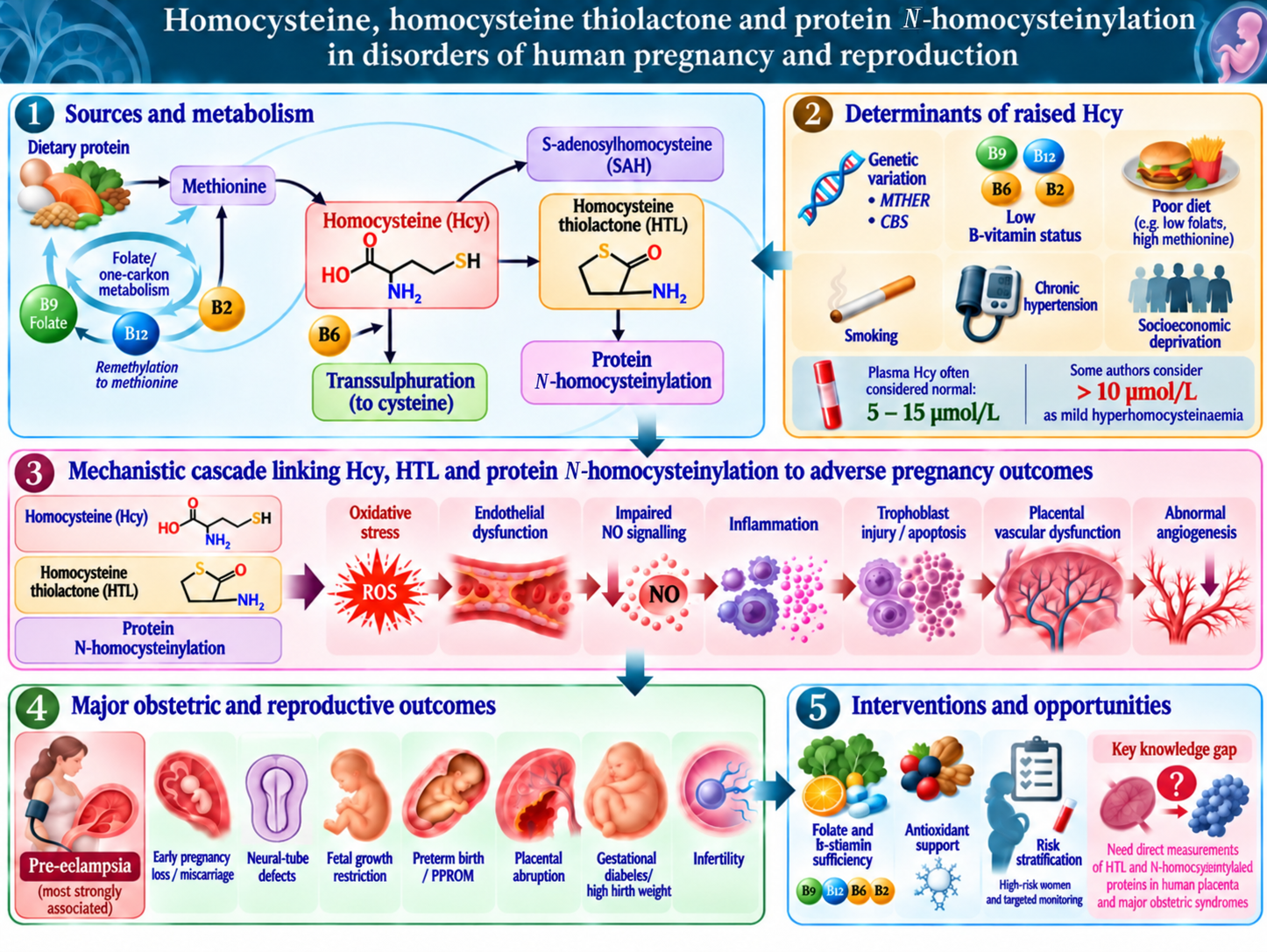
Homocysteine (Hcy) is a non-proteinogenic amino acid formed as a normal intermediate of methionine metabolism. Elevated circulating Hcy concentrations are associated with oxidative stress and endothelial dysfunction, and hyperhomocysteinaemia has been associated with cardiovascular diseases. Normal total plasma concentrations of Hcy are considered lie in the range 5-15 mmol/L, though many consider levels above 10 mmol/L to constitute hyperhomocysteinaemia. One potential mechanism linking elevated Hcy to adverse effects is its conversion to a thiolactone (HTL) that can react with the e-amino groups of lysine residues in essentially any protein, resulting in protein N-homocysteinylation. Hcy levels should thus be kept low (but not eliminated as it is required for cysteine production). Plasma Hcy levels are influenced by genetic variation in enzymes involved in one-carbon and transsulphuration metabolism, particularly in low-activity alleles of methylene tetrahydrofolate reductase (MTHFR) and of cystathionine b-synthase (CBS), as well as by the status of B vitamins including folate (B9), and/or B12, and/or pyridoxine (B6), and/or riboflavin (B2). We here review the extensive evidence linking Hcy, HTL and protein N-homocysteinylation with disorders of pregnancy and reproduction, with a particular focus on pre-eclampsia, where oxidative stress and endothelial dysfunction are prominent and established features. Collectively, the evidence supports the importance of ensuring adequate B vitamin status, especially folate, before and during pregnancy, as well as suitable antioxidants. Interventions targeting Hcy metabolism or associated oxidative stress may offer safe and promising approaches to the prevention and treatment of pregnancy complications, warranting further clinical investigation.
Keywords:
pre-eclampsia
; homocysteine
; homocysteinylation
; hyperhomocysteinaemia
; B vitamins
; oxidative stress
; endothelial dysfunction
; microvascular dysfunction
Copyright: This open access article is published under a Creative Commons CC BY 4.0 license, which permit the free download, distribution, and reuse, provided that the author and preprint are cited in any reuse.