

Submitted:
16 November 2026
Posted:
17 November 2026
You are already at the latest version
Abstract
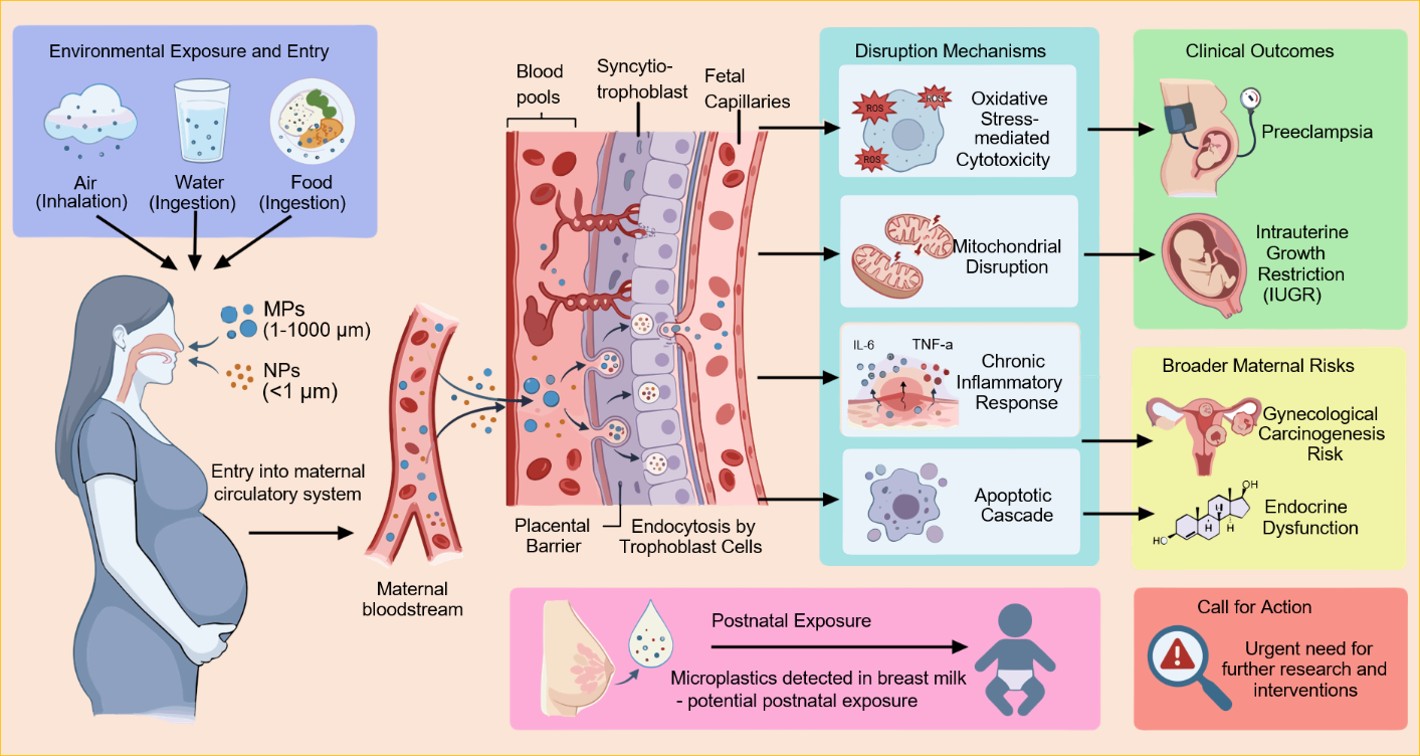
Microplastics (MPs) and nanoplastics (NPs) are environmental contaminants deeply embedded across most biological and environmental ecosystems. Exposure to these particles through inhalation or ingestion can facilitate micro- or nanoplastic (MNP) entry into maternal circulation. During gestation, MNPs can accumulate at the placenta and be endocytosed by trophoblast cells, posing potential risks to maternal and fetal health. In this review, we examine the mechanisms by which MNPs disrupt placental cell structure and function. We highlight key molecular pathways involved in trophoblast dysregulation including oxidative stress-mediated cytotoxicity, mitochondrial disruption, inflammatory signaling, and apoptotic cascades that interfere with function that can collectively contribute to preeclampsia and intrauterine growth restriction (IUGR). In addition, MNPs may contribute to gynecological carcinogenesis through chronic inflammation and hormonal dysregulation. Finally, detection of MNPs in breastmilk highlights potential for postnatal exposure in infancy and underscores the need for further research. Because MNPs can also disrupt innate and adaptive immune cell function more broadly, we interpret trophoblast disruption through an immunological lens throughout this review.
Keywords:
microplastics
; nanoplastics
; placental dysfunction
; trophoblast disruption
; oxidative stress
; gynecological carcinogenesis
; breastmilk exposure
; immune dysregulation
Copyright: This open access article is published under a Creative Commons CC BY 4.0 license, which permit the free download, distribution, and reuse, provided that the author and preprint are cited in any reuse.