
Submitted:
14 November 2026
Posted:
17 November 2026
You are already at the latest version
Abstract
Cholesterol plays a vital role in cellular membranes and serves as a key signaling molecule, positioning itself at the intersection of viral infection and host immunity. Viruses from various families have developed advanced mechanisms to exploit host cholesterol metabolism, manipulating its synthesis, trafficking, and distribution to aid in their entry, replication, and egress. This review consolidates current insights into how viruses, such as coronaviruses, flaviviruses, and hepatitis viruses, commandeer cholesterol-rich membrane domains and biosynthetic pathways, including the SREBP cascade, to create environments conducive to their life cycles. In response, hosts have evolved countermeasures, utilizing interferon-stimulated genes like IFITM3 and CH25H, which produces the antiviral oxysterol 25-hydroxycholesterol, to disrupt cholesterol homeostasis and limit viral spread. We examine the clinical implications of this metabolic struggle, including dyslipidemia, steatosis, and insulin resistance linked to chronic infections like HCV and HIV. Finally, we assess the therapeutic potential of targeting the virus-cholesterol axis, considering the use of repurposed lipid-lowering drugs (e.g., statins, PCSK9 inhibitors) and novel host-directed therapies as broad-spectrum antiviral strategies. This review underscores cholesterol's dual role as both a crucial resource for viruses and a powerful component of the host's antiviral defense.
Keywords:
cholesterol metabolism
; viral pathogenesis
; host-directed therapy
; oxysterols
; antiviral defense
1. Introduction
Cholesterol, an amphipathic sterol lipid, is a crucial component of eukaryotic cell membranes, influencing their fluidity, organization, and function [1,2]. Maintaining cellular cholesterol levels within a narrow physiological range is essential and is achieved through a complex network of regulatory pathways known as cholesterol homeostasis. This balance involves coordinating endogenous synthesis, exogenous uptake, intracellular transport, efflux, storage, and excretion [1]. The primary pathway for de novo synthesis is the mevalonate pathway, a series of nearly 30 enzymatic reactions beginning with acetyl-CoA. The rate-limiting step in this process is catalyzed by 3-hydroxy-3-methylglutaryl-CoA (HMG-CoA) reductase (HMGCR) [1]. Transcriptional regulation of this pathway is controlled by Sterol Regulatory Element-Binding Proteins (SREBPs), which detect sterol levels. When cholesterol levels are low, SREBPs are transported by SREBP cleavage-activating protein (SCAP) from the endoplasmic reticulum (ER) to the Golgi. There, they are cleaved into their active form to regulate genes involved in cholesterol and fatty acid biosynthesis [1,3]. The cholesterol hypothesis, which links high circulating cholesterol to atherosclerotic cardiovascular disease, highlights the importance of this regulation [1]. Cells acquire cholesterol from the bloodstream via receptor-mediated endocytosis of low-density lipoproteins (LDLs) through the LDL receptor (LDLR). The genetic basis of this process was first identified in familial hypercholesterolemia. Proteins such as Proprotein Convertase Subtilisin/Kexin type 9 (PCSK9) regulate this uptake by promoting LDLR degradation [1,4]. In contrast, excess cholesterol is expelled from cells through efflux transporters, primarily the ATP-binding cassette (ABC) transporters ABCA1 and ABCG1 [1].
The intricate trafficking of cholesterol between organelles is essential for maintaining homeostasis and ensuring proper cellular function. Key components in this process include the Niemann-Pick C1 (NPC1) protein, which facilitates cholesterol exit from late endosomes and lysosomes, and the oxysterol-binding protein (OSBP), which manages cholesterol transport between the endoplasmic reticulum (ER) and the Golgi apparatus through interaction with the vesicle-associated membrane protein-associated protein A (VAPA) [5,6]. Additionally, the ER-resident Erlin1/2 complex, which binds cholesterol, has emerged as a significant regulator by limiting cholesterol movement to restrict viral infections [7]. Cholesterol is not evenly distributed within cellular membranes but is concentrated in specialized microdomains known as lipid rafts, including their invaginated subset, caveolae. These platforms, rich in cholesterol and sphingolipids, act as crucial hubs for signal transduction and membrane trafficking by concentrating receptors and signaling molecules [1,8]. The structural integrity of these domains is vital for cellular signaling. For instance, disrupting cholesterol-rich domains with a dominant-negative caveolin mutant has been shown to block H-Ras function [8].
Cholesterol homeostasis plays a pivotal role in membrane biology, cellular signaling, and inflammation, and its dysregulation is linked to various diseases, including cardiovascular conditions, cancer, and neurodegenerative disorders. It also serves as a critical battleground during viral infections [1,2,9]. This review posits that there is a complex, bidirectional relationship between viruses and host cholesterol metabolism. Viruses have developed advanced strategies to exploit these pathways for their replication. For example, West Nile virus (WNV) enhances cholesterol biosynthesis and reallocates cholesterol to its replication sites [10], while Hepatitis C virus (HCV) depends on the accumulation of the cholesterol precursor desmosterol for its replication [11]. Genome-wide screens have identified cholesterol homeostasis as a crucial host pathway for supporting infections by various coronaviruses [12,13]. Conversely, the host immune system has evolved to use these metabolic pathways as effective antiviral defenses [14]. The interferon-inducible protein IFITM3, for instance, exerts its antiviral effects by interacting with VAPA and disrupting the VAPA-OSBP complex, resulting in cholesterol buildup in late endosomes and preventing viral entry [6]. Similarly, the deubiquitylase Usp25 limits influenza virus infection by stabilizing the Erlin1/2 complex, thereby restricting cholesterol flux [7]. This antiviral strategy also applies to symbiotic relationships, as demonstrated by the intracellular bacterium Wolbachia, which disrupts cholesterol trafficking in mosquito cells to inhibit dengue virus replication [15].
This review delves into the intricate interactions between viruses and host cells, focusing on how various viruses manipulate cholesterol biosynthesis, uptake, and intracellular trafficking to facilitate their entry, replication, assembly, and egress. We also analyze the host's countermeasures, emphasizing how innate immune effectors adjust cholesterol homeostasis to establish an antiviral cellular environment. Furthermore, we explore the potential of this host-pathogen conflict to inform the development of innovative, host-directed antiviral therapies. The proven efficacy of cholesterol-lowering drugs in treating cardiovascular disease offers a compelling model for targeting the cholesterol-dependent weaknesses of viruses.
2. Viral Hijacking of Cholesterol Metabolism for Proliferation
Viruses, functioning as obligate intracellular parasites, significantly alter host cholesterol metabolism to facilitate their propagation (Figure 1). For example, the Hepatitis C virus (HCV) circulates as "lipoviroparticles," which are hybrid structures composed of viral particles and host lipoproteins [16]. By targeting cholesterol-rich lipid rafts, viruses exploit these areas as key sites for entry [17]. This manipulation of host cholesterol is evident throughout the viral life cycle, including entry, replication, assembly, and egress, thereby enhancing viral proliferation and aiding in immune evasion [17,19,20].
Lipid rafts play a pivotal role in viral entry. For instance, while SARS-CoV-2 utilizes ACE2 for entry, lipid rafts facilitate this process, though they are not absolutely necessary. In contrast, influenza virus leverages these domains to significantly boost infection efficiency. The reliance of respiratory syncytial virus (RSV) on lipid rafts, however, remains less well-defined [17]. Hepatitis C virus (HCV) exhibits a marked dependency on lipid rafts, utilizing its cholesteryl ester-rich lipoviroparticle structure to interact with lipoprotein receptors. Successful infection necessitates binding to the scavenger receptor class B type I (SRB1), whereas interaction with the LDL receptor does not lead to productive infection. Additionally, depleting cholesterol impairs HCV infection by diminishing the cell surface expression of the entry factor CD81 [16].
A CRISPR-Cas9 screen has pinpointed the cholesterol biosynthesis regulator, SREBP cleavage-activating protein (SCAP), as a crucial host factor for SARS-CoV-2. When SCAP is genetically disrupted, it shields cells from virus-induced death. This dependency is not unique to SARS-CoV-2; SCAP is also vital for the replication of other coronaviruses, such as HCoV-229E, HCoV-NL63, and HCoV-OC43. Consequently, SCAP emerges as a promising pan-coronavirus therapeutic target [13].
Viruses often disrupt cholesterol homeostasis to aid in later replication stages and evade the immune system. Severe infections, such as COVID-19, can impair the anti-inflammatory function of high-density lipoproteins (HDLs) [17]. Similarly, the lipoviroparticle structure of Hepatitis C Virus (HCV) shields it from antibody responses [16]. For virion assembly and egress, viruses manipulate cholesterol distribution. For instance, Respiratory Syncytial Virus (RSV) infection causes cholesterol to accumulate in the endoplasmic reticulum, facilitating viral filament formation [17]. HCV assembly, linked to the VLDL pathway, results in virions where cholesteryl esters make up more than half of the lipid content [16]. Raman spectroscopy of Epstein-Barr virus (EBV)-infected glial cells has shown dynamic, spatiotemporal cholesterol fluctuations. In microglia, peripheral cholesterol levels rise at 2, 6, and 36 hours post-infection (hpi), while nuclear cholesterol increases at 2 and 12 hpi, likely supporting different stages of the viral life cycle [18].
2.1. Manipulation of Cholesterol for Viral Entry and Attachment
Cholesterol-rich membrane microdomains function as conserved docking platforms for viral entry across various virus families (Figure 2) [22,34]. Viruses, including Simian virus 40 (SV40) and several coronaviruses, exploit caveolae—flask-shaped invaginations of the plasma membrane—by utilizing raft-localized receptors like ACE2 and CD13, along with the caveolae structural protein CAV-1, for internalization [21,22,23]. The SARS-CoV-2 S protein further facilitates raft attachment through a ganglioside-binding motif [22]. Hepatitis C virus (HCV) demonstrates a significant dependency on rafts; its cholesteryl ester-rich lipoviroparticles engage scavenger receptor class B type I (SR-BI) for effective entry, while cholesterol depletion hampers infection by reducing the cell surface expression of the crucial entry factor CD81 [16]. Similarly, the influenza virus relies on rafts to enhance infection efficiency [17]. In these systems, cholesterol depletion consistently impairs viral binding by diminishing receptor availability and altering the conformation of entry receptors such as ACE2 [22].
Beyond passive raft exploitation, various virus families have independently developed strategies to utilize the LDLR family for effective entry [24]. A notable instance of this convergent evolution is the ApoE-bridging strategy: both SARS-CoV-2 and HBV exploit host apolipoprotein E (ApoE) as a molecular bridge to LDLR [24]. In ARPE-19 cells, SARS-CoV-2 uses an LDLR-mediated, caveolae-dependent entry pathway that bypasses ACE2, yet is sensitive to cholesterol depletion and 25-HC [25]. Similarly, HBV entry is caveolae-mediated, with a "Trojan horse" pathway recently identified. This involves macrophages internalizing HBV-lipoprotein complexes and re-secreting them with cholesterol, enhancing hepatocyte infection, possibly through ApoE-HBcAg/HBeAg interactions [21,24,26]. In contrast to this indirect approach, JEV and Crimean-Congo hemorrhagic fever virus (CCHFV) directly bind LDLR through their viral glycoproteins [24], with JEV sometimes entering via caveolae [21]. Alphaviruses demonstrate receptor specificity within the LDLR family: GETV targets LDLR, while SFV and EEEV utilize VLDLR [24]. Other lipoprotein receptors, like SR-BI, facilitate gammaherpesvirus entry [27]. Meanwhile, the non-entry SARS-CoV E protein relocates to rafts to activate the inflammasome [22].
Many viruses actively manipulate host cholesterol metabolism to enhance their entry into cells. For instance, Influenza A Virus (IAV) upregulates the RBP4-CD36 axis, which not only increases cellular cholesterol levels but also boosts the expression of sialic acid receptors, both essential for pathogenesis in vivo [28]. Similarly, Coxsackievirus B3 (CVB3) relies on host polyamines for the eIF5A-dependent translation of SREBP2, a key transcription factor in cholesterol biosynthesis. When polyamines are depleted, SREBP2 and cholesterol levels drop, hindering viral attachment; however, this defect can be corrected by adding exogenous cholesterol [29]. Pseudorabies Virus (PRV) also upregulates LDLR through SREBP2 and suppresses cholesterol efflux by downregulating LXR transcription factors. Activation of LXR pharmacologically reduces cellular cholesterol and blocks clathrin-mediated PRV entry, a barrier that can be overcome by replenishing cholesterol [24,30]. Even non-enveloped viruses like reovirus require membrane cholesterol: their uncoating intermediates (ISVP*) directly interact with cholesterol to aid membrane adsorption and pore formation, a process dependent on both CAV-1 and cholesterol [21,31,32].
After internalization, maintaining endosomal cholesterol homeostasis becomes a pivotal checkpoint for numerous viruses. The exit of SARS-CoV-2 from the late endosome/lysosome (LE/Lys) is particularly sensitive to cholesterol levels [23]. The bis-monoacylglycerophosphate (BMP/LBPA), which is abundant in LE/Lys, plays a crucial role in facilitating cholesterol egress through the NPC2-NPC1 transporter axis, a mechanism vital for many enveloped RNA viruses [35]. NPC1 serves as a significant host factor for viruses such as Ebola, reovirus, and SARS-CoV-2 by directly interacting with the viral N protein [22,33,35,36]. Additionally, other regulators like OSBP/ORPs also influence endosomal cholesterol dynamics [35]. Oxysterols further impact this process; for instance, 25-HC inhibits SARS-CoV-2 fusion by preventing cholesterol export from LE/Lys, whereas 27-HC might modify endosomal raft structures [22]. Similarly, HSV-1 infection leads to the accumulation of cholesterol in endolysosomes, and pharmacologically altering these cholesterol pools can inhibit viral entry [37].
2.2. Remodeling Cholesterol Metabolism for Viral Replication and Assembly
Positive-strand RNA viruses, such as picornaviruses and Hepatitis C Virus (HCV), universally manipulate host lipid metabolism to create membranous replication organelles (ROs). These ROs, which manifest as convoluted membrane tubules or cubic membranes, serve as viral factories by concentrating replication machinery and shielding it from innate immune sensors (Figure 3) [9,38,39,40]. The pivotal role of cholesterol in RO formation is highlighted by the observation that overexpressing HMG-CoA reductase alone can induce cubic membranes even without infection [9]. Coronaviruses and West Nile Virus (WNV) specifically redirect cholesterol from the plasma membrane to replication sites [47]. Additionally, WNV alters phospholipids by utilizing host PLA2 to produce lyso-phosphatidylcholine (lyso-PChol), a cone-shaped lipid essential for the membrane curvature required for replication vesicle formation. Inhibition of PLA2 pharmacologically hinders WNV replication, an effect that can be reversed by adding exogenous lyso-PChol [49].
To drive lipogenesis, various viruses activate the SREBP pathway through unique molecular mechanisms. For instance, HCV utilizes the NLRP3 inflammasome to degrade Insig proteins, thus freeing the SREBP-SCAP complex for activation [41]. Concurrently, it exploits the UPR via XBP1 to enhance lipogenesis [20]. This approach is notably prevalent among viruses: RSV, ZIKV, and MARV all increase SREBP-2-mediated cholesterol biosynthesis [44,45,46]. MARV further boosts specific biosynthetic enzymes (HMGCS1, FDFT1, SQLE, DHCR7) and the uptake receptor LDLR [46]. Genome-wide CRISPR screens have pinpointed SREBP regulators SCAP, MBTPS1, and MBTPS2 as essential host factors for the replication of SARS-CoV-2 and OC43 [12], highlighting SREBP dependency as a common trait among coronaviruses [13]. Additionally, the cholesterol-binding protein erlin-1 is crucial for HCV RNA replication [42], and metabolomic profiling of HCV-infected cells reveals significant increases in cholesterol, lathosterol, and sphingoid bases [43]. ASFV steadily raises intracellular cholesterol levels by upregulating lipid synthesis genes, which in turn increases serum cholesterol in infected pigs [50].
Viruses not only stimulate synthesis but also directly hijack cholesterol transport mechanisms to support their replication sites. For instance, picornaviruses utilize an ingenious approach: the viral 3A protein recruits PI4KB, which elevates local PI(4)P levels. This, in turn, attracts OSBP to facilitate cholesterol transport from the ER to replication organelles (ROs) in exchange for PI(4)P [38]. Dengue virus (DENV) enhances a cholesterol-rich intracellular environment through various strategies. In human cells, it inactivates AMPK to prevent the inhibition of HMGCR [47], while in its mosquito vector, it downregulates the cholesterol export receptor LRP-1 [48]. Additionally, DENV relocates FASN to replication sites via an NS3-Rab18 interaction [47]. Hepatitis C virus (HCV) disrupts lipid degradation by downregulating PPARα, aligning with metabolomic findings of reduced coenzyme A and carnitine derivatives [20,43]. The lipid composition is crucial for HCV replication, which is facilitated by saturated and mono-unsaturated fatty acids but hindered by polyunsaturated ones [9,20]. Both picornaviruses and HCV also enhance phosphatidylcholine synthesis [38,43]. Genetic screens have identified LDLR as essential for SARS-CoV-2 and 229E, while NPC1 is vital for 229E [12].
Viruses exhibit remarkable specificity in manipulating lipid stores and cholesterol precursors. For instance, HCV relies on the accumulation of desmosterol, a cholesterol biosynthetic precursor, to facilitate RNA replication [11,52]. Biophysical assays reveal that desmosterol enhances membrane fluidity, a phenomenon confirmed in membranes from HCV-infected cells. This suggests that HCV remodels its replication organelles to create a more fluid membrane environment [52]. In terms of lipid droplets (LDs), the HCV core protein binds directly to LDs to aid in virion assembly [20]. Meanwhile, HEV pORF3 promotes LD biogenesis by upregulating cholesterol pathways, a process crucial for its infectivity [53]. In contrast, DENV and ZIKV initiate lipophagy to mobilize stored lipids from LDs, using them for energy and as components for virion assembly [47]. Interestingly, some viruses lead to net lipid depletion. For example, the Singapore grouper iridovirus (SGIV) significantly reduces LDs, triglycerides, and total cholesterol in the host liver [51].
The host's type I IFN response acts as a counter-offensive by suppressing the SREBP pathway [47]. In contrast, genetic inhibition of SREBPs activates IFN signaling, providing broad viral resistance [47]. To counteract this, WNV may employ cholesterol redistribution to downregulate JAK-STAT signaling [47]. Among specific antiviral metabolites, the IFN-inducible oxysterol 25HC demonstrates broad-spectrum activity by depleting accessible cholesterol [54] and inhibiting PDCoV through the blockade of lipophagy [55]. In the CNS, the neuronal oxysterol 24S-OHC prevents neuroinvasive virus entry by disrupting intracellular cholesterol trafficking [56]. However, the expression of its synthesizing enzyme, CYP46A1, is complex and altered in neurodegenerative diseases [56,57].
2.3. Cholesterol's Role in Viral Egress and Systemic Consequences
Viral assembly and egress are intricately linked with host cholesterol pathways, as illustrated in Figure 4. Hepatitis C virus (HCV) showcases a sophisticated strategy for cholesterol-dependent viral egress by hijacking the very low-density lipoprotein (VLDL) secretory pathway to create hybrid "lipoviroparticles" (LVPs) [20]. These LVPs are rich in cholesteryl esters, which make up more than half of their total lipid content [16]. They associate with apolipoproteins such as apoB and ApoE [20,58], and their formation is affected by host metabolic conditions like insulin resistance [68]. Inhibiting VLDL components—such as apoB, apoE, or microsomal triglyceride transfer protein (MTP)—blocks virion secretion without impacting RNA replication, highlighting the specificity of this egress mechanism [20]. Similarly, respiratory syncytial virus (RSV) redirects cholesterol to the endoplasmic reticulum (ER) to aid in viral filament formation for egress [17]. In contrast, Epstein-Barr virus (EBV)-infected glial cells exhibit dynamic and spatiotemporal cholesterol fluctuations, which likely support various stages of the viral life cycle [18].
Chronic viral infections significantly disrupt host lipid metabolism, leading to systemic dysregulation with clinical implications. For instance, chronic HCV infection is associated with a distinct dyslipidemia characterized by unexpectedly low total and LDL-cholesterol levels [59,60]. This hypolipidemia, driven by the virus, is reversible; eradication of the virus through DAA treatment results in a rapid and substantial increase in serum cholesterol and LDL levels [59,61]. Moreover, related pathologies, such as increased left ventricular mass index and carotid atherosclerosis, show improvement following the cure [62,63]. Similarly, HIV infection and antiretroviral therapy independently affect lipid metabolism. Treated patients often experience metabolic syndrome, even in the absence of obesity as a traditional risk factor [64]. The HIV-1 Nef protein may disrupt cholesterol homeostasis in astrocytes, potentially contributing to neurocognitive disorders [65]. Acute infections also leave metabolic imprints. In the case of COVID-19, dyslipidemia is a risk factor for severe disease, with critically ill patients frequently exhibiting hypocholesterolemia [34,66,67]. Severe COVID-19 can further impair the anti-inflammatory function of HDLs [17]. These findings suggest that both chronic and acute viral infections can disrupt systemic cholesterol homeostasis, leading to significant clinical consequences.
4. Clinical Consequences of Virus-Induced Dyslipidemia
Virus-induced cholesterol manipulation has systemic effects that reach beyond hepatocytes, leading to clinically significant metabolic pathologies. These pathologies impact disease severity, increase comorbidity burdens, and affect long-term outcomes (Figure 6).
Chronic HCV infection serves as a well-documented model for virus-induced metabolic disruption. It is closely linked with hepatic steatosis, insulin resistance (IR), and type 2 diabetes [83,84]. Notably, elevated HOMA-IR independently predicts advanced hepatic fibrosis [85,86]. These metabolic issues arise from the virus's direct interference with hepatocyte metabolism, leading to increased intracellular cholesterol and sphingolipids [43]. The helicase DDX3x has been identified as a key molecular connection between HCV-induced lipid disruption and NAFLD pathogenesis [88]. The clearance of the virus through direct-acting antivirals (DAAs) rapidly reverses many of these metabolic effects. Within weeks, serum LDL levels rise and triglycerides decrease, while total cholesterol, LDL-c, and HDL-c increase, and HOMA-IR decreases [61,87]. However, this metabolic adjustment can result in an atherogenic lipid profile, characterized by an increased LDL/HDL ratio, which requires ongoing monitoring [61]. Baseline LDL levels are directly proportional to viral load and can predict treatment relapse [59]. Post-clearance metabolic resolution varies. In overweight individuals, DAA treatment improves β-cell function but not HOMA-IR, possibly due to the masking effects of obesity [95]. Conversely, non-obese individuals experience significant improvements in HOMA-IR, with the extent of LDL-c increase correlating with the severity of baseline fibrosis [61].
In contrast to other viral infections, hepatic steatosis in chronic HBV is primarily influenced by host metabolic factors rather than direct viral mechanisms. This condition is linked to increased BMI, cholesterol levels, and insulin resistance, with HOMA-IR emerging as the only independent predictor. Importantly, steatosis shows no correlation with viral load or HBeAg status [89]. On the other hand, HEV infection is characterized by reduced serum lipid levels. Interestingly, statin treatment, which is typically used to lower lipids, paradoxically raises viral titers, highlighting the need for caution when considering empirical lipid-lowering therapy [90].
HIV and its treatment add layers of metabolic complexity. Metabolic syndrome is notably more common in patients treated with ART (43.3%) compared to those who are ART-naïve (10%), with insulin resistance (IR) present in 75% of cases. This pathogenesis, however, seems largely independent of obesity [91,92]. The metabolic burden is further intensified by HIV/HCV co-infection, which shows a higher prevalence of IR than HIV mono-infection [93]. In virologically suppressed co-infected patients, elevated PCSK9 levels decrease after DAA treatment, aligning with reduced inflammatory biomarkers but not changes in LDL-C. This suggests that inflammation, rather than lipid levels, drives PCSK9 elevation in this scenario [77]. Neurological complications are also linked to cholesterol. In astrocytes, the HIV-1 Tat protein and cocaine together reduce LXRβ, leading to decreased expression of ApoE and ABCA1. This impairs cholesterol efflux, causing intracellular accumulation and reducing neuronal bioavailability [94]. Additionally, the HIV-1 Nef protein promotes neuroinflammation by stimulating cholesterol biosynthesis while degrading ABCA1. Nef-loaded extracellular vesicles can cross the blood-brain barrier even during suppressive ART [65]. Similarly, HSV-1 induces intracellular cholesterol accumulation, resulting in an Alzheimer's disease-like phenotype with amyloid-beta and hyperphosphorylated tau, which can be inhibited by lowering cholesterol levels [37].
In the context of COVID-19, hypocholesterolemia acts as an indicator of severe disease progression [96]. Transcriptomic analysis of PBMCs from ICU patients showed that survivors had a notable downregulation in the LDL particle receptor pathway, including genes such as PPARG, CD36, and STAB1. This suggests that increased activity in this pathway is a molecular signature associated with mortality [97]. Furthermore, the expression of cholesterol homeostasis genes correlates with disease severity [98,99]. Additionally, SARS-CoV-2 may utilize HDLs and exosomes as "Trojan horses" to breach the blood-brain barrier [100].
5. Therapeutic Strategies Targeting the Virus-Cholesterol Axis
The reliance of various virus families on host cholesterol homeostasis presents a promising therapeutic strategy: targeting host pathways crucial for viral replication, which can be pharmacologically modulated, offers broad-spectrum antiviral potential with a higher genetic barrier to resistance compared to direct-acting antivirals [47,101]. Supporting this strategy, bioinformatic analyses reveal that 36% of active anti-SARS-CoV-2 candidates influence a dual cholesterol/microtubule gene signature [99], and increased serum acid sphingomyelinase activity is observed in chronic HCV patients [109]. This section categorizes therapeutic strategies based on their mechanistic targets rather than individual drugs, highlighting the convergence of various pharmacological approaches on common vulnerability nodes.
The significant reliance of various viruses on host cholesterol and lipid metabolism offers a promising avenue for creating host-directed antiviral therapies. By focusing on cellular pathways that are crucial for the virus yet non-essential or modifiable in the host, these strategies hold the potential for broad-spectrum efficacy and a reduced likelihood of viral resistance. This approach's translational potential is highlighted by the increasing number of repurposed drugs and new molecular targets that successfully interfere with the virus-cholesterol connection (Figure 7).
5.1. Repurposed Drugs Modulating Cholesterol and Lipid Homeostasis
The endolysosomal compartment represents a critical vulnerability exploited by various viruses (Figure 8). Bioinformatic analyses reveal that numerous anti-SARS-CoV-2 compounds influence cholesterol homeostasis [98], with 36% of active candidates affecting a dual cholesterol/microtubule signature [99]. This approach is particularly pertinent for variants like Omicron, which increasingly depend on endocytic entry [23]. Functional inhibitors of acid sphingomyelinase (FIASMAs), such as fluoxetine, amiodarone, and imipramine, inhibit the enzyme, disrupting endolysosomal acidification and leading to cholesterol accumulation. Fluoxetine effectively blocked SARS-CoV-2 entry and propagation in Vero E6 and Calu-3 cells (EC50 < 1 µM; achieving up to 99% reduction in viral titer) and also demonstrated activity against influenza A [105]. This strategy targets the cholesterol transporter NPC1, which SARS-CoV-2 utilizes for endolysosomal exit; its inhibition significantly reduces infection [23,66]. Anti-SARS-CoV-2 drugs consistently upregulate NPC1, indicating a compensatory response to its blockade [98,99]. The mechanism of trapping cholesterol in late endosomes/lysosomes is also employed by itraconazole, clemastine, and haloperidol, which similarly block viral egress [23]. In chronic hepatitis C (HCV) patients, serum acid sphingomyelinase activity is elevated [109]; in this scenario, BCAA supplementation reduced insulin resistance and showed a trend towards lower viral loads and serum triglycerides [110].
Master regulators such as Liver X receptors (LXRs) and the farnesoid X receptor (FXR) are significant targets in viral infection pathways. Cholesterol depletion prompts the relocation of ACE2 from GM1 lipid rafts to PIP2 domains, thereby diminishing SARS-CoV-2 uptake [23]. In iPSC-derived airway organoids, statins like fluvastatin and simvastatin move ACE2 to the cytosol, decreasing the entry and replication of SARS-CoV-2, including its alpha, delta, and omicron variants [81]. However, the effects of statins vary by virus: simvastatin increases Hepatitis E virus (HEV) release and correlates with higher viral loads in patients, as HEV exploits cholesterol reduction to facilitate its release [90]. Additional mechanisms of statins include inhibiting protein prenylation, as seen with simvastatin against H1N1, and reducing lipid droplet production, as atorvastatin does against influenza A [104]. A "ChoMCyto" score, which quantifies a cholesterol/microtubule gene signature, is altered in COVID-19, correlating with disease severity as indicated by SOFA scores, and is partially restored by convalescent serum [98,99]. In contrast, lipidated ApoE enhances infection by directing ACE2 to GM1 rafts, with the ApoE4 genotype associated with severe COVID-19 outcomes [23]. Activation of SREBP2 facilitates SARS-CoV-2 fusion through spike protein processing [66] and connects cholesterol to inflammation by regulating IL-1β and TNF-α [104]. The LXR agonist GW3965 induces ABCA1 expression, which inhibits Newcastle disease virus (NDV) entry and replication; this effect is reversed by cholesterol replenishment [106]. Viruses like NDV and HCMV down-regulate ABCA1 to maintain cholesterol levels [106,107]. Rotavirus increases triglycerides for replication, but FXR agonists such as CDCA and GW4064 inhibit replication in a dose-dependent manner by reducing triglycerides (r² = 0.95); oral CDCA also reduced viral shedding in a mouse model [108].
Cholesterol-modulating drugs, such as statins and PCSK9 inhibitors, have shown promise in combating COVID-19 [23]. A specific transcriptomic signature, characterized by upregulated NPC1 and HMGCS1 and downregulated microtubule genes, has been linked to the anti-SARS-CoV-2 efficacy of monensin (IC50 11 µM) and lomitapide [98,99]. Additionally, bisphosphonates like zoledronic acid inhibit FDPS, potentially reducing SARS-CoV-2 production by blocking GTPase prenylation [104]. Fenofibrate may mitigate COVID-19 by increasing sulfatide levels [104], and the sphingolipid modulator fingolimod (FTY720) is also being explored [104]. PCSK9 inhibitors, including alirocumab, evolocumab, and inclisiran, enhance LDLR recycling [76]. High plasma PCSK9 levels are associated with increased viral load and severity in dengue virus (DENV) by suppressing type I interferon [76]. However, its role in hepatitis C virus (HCV) remains contentious, as alirocumab did not influence HCV entry or replication [40,76]. Future strategies may involve anti-PCSK9 vaccines [76]. HCV uses "lipoviral particles" to enter cells via LDLr and SR-B1 [104]. A CRISPR-Cas9 double knockout of both receptors, but not a single knockout, significantly reduced HCV infection [40]. In these double-knockout cells, simvastatin and fenofibrate together further decreased infectivity [40]. While fenofibrate has minimal impact on HCV, it impairs hepatitis E virus (HEV) release by inducing cholesterol elevation and capsid degradation [90]. In a cohort of HCV patients, statin use did not correlate with viral load but was linked to lower markers of liver damage [40].
NPC1L1 inhibitors show promise in combating COVID-19. Ezetimibe, for instance, not only reduces SARS-CoV-2 entry but is also linked to decreased COVID-19 mortality [23,66]. Similarly, pantethine has been associated with a reduction in infection rates [23]. The interferon-stimulated gene (ISG) CH25H generates 25-hydroxycholesterol (25HC), which inhibits enveloped viruses such as SARS-CoV-2 by blocking viral fusion [23] and HEV by promoting capsid degradation [90]. Additionally, 25HC impedes the non-enveloped encephalomyocarditis virus (EMCV) by preventing penetration [71]. Curcumol, another compound, inhibits EMCV by activating the JAK/STAT pathway, which increases CH25H production and decreases cellular cholesterol levels [71]. Cholesterol trafficking plays a crucial role in the formation of viral replication organelles (ROs). The oxysterol-binding protein (OSBP) is responsible for transferring cholesterol to ROs, which is essential for the replication of picornaviruses and coronaviruses. Inhibitors of OSBP exhibit antiviral properties [66]. Curcumol also disrupts EMCV ROs by reducing cellular cholesterol levels without affecting OSBP or PI4KA levels [71]. Notably, drugs that modulate the cholesterol-cytoskeleton axis, indicated by a high "ChoMCyto" score, are more likely to work synergistically with direct-acting antivirals such as remdesivir. This supports the development of rational combination therapies [98,99].
5.2. Novel Therapeutic Targets in the Virus-Cholesterol Axis
Researchers are identifying novel antiviral targets within host lipid metabolic pathways (Figure 9). This network is further complicated by microRNAs (miRNAs), which post-transcriptionally regulate genes involved in cholesterol homeostasis, thereby presenting additional therapeutic opportunities [78].
The lipid composition of endosomes plays a crucial role in viral entry. Specifically, the phospholipid bis(monoacylglycero)phosphate (BMP) is essential for the infection processes of both SARS-CoV-2 and HIV [35]. Notably, compounds such as progesterone, which elevate endosomal BMP levels, have been shown to inhibit HIV transmission [111].
The Niemann-Pick C1 (NPC1) endosomal cholesterol transporter is a critical target in virology. It functions as an intracellular receptor for filoviruses, such as the Ebola virus (EBOV) [5], and is crucial for the lifecycles of coronaviruses and quasi-enveloped hepatitis A/E viruses ([5,19]). A CRISPR-Cas9 screen has identified several cholesterol pathway components, including NPC1, as essential factors for pan-coronavirus activity [101]. The experimental compound U18666A, which inhibits NPC1, has demonstrated efficacy against EBOV, HCV, and SARS-CoV-1. Additionally, the FDA-approved drug imipramine, also an NPC1 inhibitor, is effective against flaviviruses [5]. Interestingly, for hepatitis E virus (HEV), elevated cholesterol levels unexpectedly hinder viral release [19].
The spatial distribution of cholesterol plays a vital role in cellular processes. The upregulation of Annexin A6 (AnxA6) causes cholesterol to relocate to late endosomes, which subsequently hinders the replication of the influenza A virus (IAV) [72]. Additionally, Caveolin-1, a structural protein found in cholesterol-rich caveolae, is utilized by various viruses, suggesting its potential as a broad-spectrum antiviral target [21].
HCV replication relies on specific host factors, presenting potential therapeutic targets. One such target is the ER protein Erlin-1, which is crucial for initiating RNA replication [42]. Additionally, the cholesterol biosynthesis enzymes DHCR7 and DHCR24 are involved, with DHCR7 inhibition significantly suppressing HCV replication ([11,78]). Furthermore, the SREBP-activating protease SKI-1/S1P is another target, as its inhibition with PF-429242 disrupts lipid droplet formation and reduces HCV infection [3].
An alternative strategy involves enhancing cholesterol catabolism through the StAR/CYP27A1 axis. In this process, StAR aids in transporting cholesterol for conversion into regulatory oxysterols [112]. In apoE−/− mice, overexpressing StAR led to a 19% reduction in serum cholesterol and a 30% decrease in triglycerides. Additionally, it significantly lowered liver lipids and reduced aortic plaques by over 80%, highlighting its therapeutic potential [112].
Hepatitis B virus (HBV) relies on envelope cholesterol for entry and utilizes the bile acid transporter NTCP as its receptor. Additionally, it upregulates SREBP-2 and HMG-CoA reductase [19]. The viral X protein further activates SREBP-1 and PPAR-γ. To ensure chronic persistence, HBV also modulates lipid droplet proteins CIDEB and CIDEC [19].
Flaviviruses, such as the dengue virus (DENV), rely on sterol carrier protein 2 (SCP-2) in mosquitoes [113] and decrease host LRP-1 to elevate intracellular cholesterol levels [48]. In contrast, the Zika virus (ZIKV) activates SREBP-2 and increases the expression of the efflux transporter ABCG1. Suppressing SREBP-2 with fatostatin or boosting ABCG1 using an LXR agonist effectively inhibits ZIKV replication and alleviates chorioretinal lesions in a mouse model [45]. Similarly, respiratory syncytial virus (RSV) also utilizes the SREBP-2 pathway, and its replication is hindered by lovastatin [44]. The traditional Chinese medicine Xuanfei Formula (XFF) demonstrates anti-RSV properties; its phytosterols stabilize the SCAP-INSIG complex, thereby preventing SREBP-2 activation and reducing RSV levels in mice [44]. This pathway features a feedback loop where SREBP-2 activates the miR-183/96/182 cluster, which targets regulators such as INSIG2 [78]. Additionally, other miRNAs, including miR-21, miR-27, and miR-224, inhibit cholesterol synthesis by targeting HMG-CoA reductase [19]. In the case of West Nile virus (WNV), infection triggers phospholipase A2 (PLA2) activation, and PLA2 inhibitors effectively disrupt viral replication [49].
Dysregulated miRNAs during infection can be addressed using 'miRNA mimics' or 'antagomiRs' [78]. For instance, the liver-specific miR-122 promotes HCV replication, and the anti-miR-122 drug miravirsen has successfully reduced HCV viremia in phase II trials. Conversely, miR-122 acts as an antiviral agent against HBV [114]. Additionally, pharmacologically silencing miR-122 can lead to lower serum cholesterol levels [114]. Some viruses encode their own v-miRNAs to manipulate host cholesterol metabolism, offering another potential target for intervention [78]. These biomolecular changes can be detected using techniques such as Raman spectroscopy [18]. On a systemic level, a low-cholesterol diet in chronic HCV patients has been shown to reduce pro-inflammatory Th17 cells, increase regulatory T (Treg) cells, and improve the Th17/Treg balance. This immunomodulation is associated with elevated LXR expression, indicating that dietary modifications can help restore cholesterol homeostasis signaling [115].
6. Conclusion and Future Perspectives
The studies reviewed here highlight a central theme: cholesterol homeostasis is not simply a passive resource hijacked by viruses, but an active battlefield where viral manipulation and host defense intersect. Viruses from nearly every major family, including the lipoviroparticles of HCV [16,20] and the cubic membrane factories of picornaviruses [38], have evolved mechanisms to manipulate cholesterol synthesis, trafficking, and distribution throughout their life cycles. For instance, HBV alters the lipid raft proteome to facilitate its release [116], while enteroviruses utilize the PI4KIIIβ-PI4P-OSBP axis to transport cholesterol to replication sites [117]. At the molecular level, miR-122 plays a dual role in regulating both cholesterol homeostasis and HCV replication [114,118]. Systemically, these viral manipulations can lead to metabolic disorders, as chronic HCV infection is associated with insulin resistance and dyslipidemia, which correlate with viral load [119,120,121].
The host organism actively defends itself rather than remaining a passive victim. It employs the interferon response to initiate cholesterol depletion (25HC), disrupt trafficking (IFITM3, AnxA6, 24HC), and upregulate efflux (LXR-ABCA1), thereby creating an antiviral metabolic state. Translating this understanding into therapeutic strategies is progressing rapidly. Statins, LXR agonists, NPC1 inhibitors, and miRNA-based approaches target different points in the virus-cholesterol pathway, achieving varying levels of success in both preclinical and clinical settings.
Several key areas demand priority investigation. First, advanced lipidomic and proteomic techniques should be employed to spatially and temporally map cholesterol dynamics within viral replication sites, such as HBV-modified lipid rafts, which serve as "virus factories" [116]. This mapping could reveal previously unrecognized vulnerabilities. Second, the development of precise host-directed antivirals (HDAs) requires careful calibration. While OSBP inhibitors like TTP-8307 offer proof-of-concept [117], it's crucial to remember that cholesterol pathways are integral to cellular function. Altering single nodes like hncCEH or StAR can lead to widespread metabolic consequences [112,122]. The primary challenge is to achieve a therapeutic window that disrupts viral processes without causing significant host toxicity. Third, the role of lipid dysregulation in post-viral syndromes is an emerging area of interest. Metabolic disturbances may persist beyond viral clearance, as seen with chronic HCV, which leads to long-term insulin resistance and atherosclerosis [119,120]. This raises the critical question of whether a "metabolic scar" from acute infections like SARS-CoV-2 contributes to post-viral morbidities. Addressing this question is essential for mitigating the long-term health burden of viral diseases.
Author Contributions
Conceptualization, H.X. and J.S.; validation, H.X., Y.Z. and W.Q.; writing—original draft preparation, H.X. and J.S.; writing—review and editing, H.X. and J.S.; visualization, H.X.; supervision, J.S.; project administration, H.X.; funding acquisition, H.X. All authors have read and agreed to the published version of the manuscript.
Funding
This work was supported by National Natural Science Foundation of China (Grant No. 32302865), Natural Science Foundation of Jiangsu Province, China (Grant No. BK20210077).
Data Availability Statement
No new data were created or analyzed in this study. Data sharing is not applicable to this article.
Conflicts of Interest
The authors declare that they have no competing interests.
References
- Duan, Yajun; Gong, Ke; Xu, Suowen; Zhang, Feng; Meng, Xianshe; Han, Jihong. Regulation of cholesterol homeostasis in health and diseases: from mechanisms to targeted therapeutics. Signal Transduct. Target Ther. 2022, 7(1), 265. [Google Scholar] [CrossRef] [PubMed]
- Wang, Yingchun; Gao, Lifen. Cholesterol: A friend to viruses. Int. Rev. Immunol. 2024, 43(4), 248–262. [Google Scholar] [CrossRef] [PubMed]
- Olmstead, Andrea D; Knecht, Wolfgang; Lazarov, Ina; Dixit, Surjit B; Jean, François. Human subtilase SKI-1/S1P is a master regulator of the HCV Lifecycle and a potential host cell target for developing indirect-acting antiviral agents. PLoS Pathog. 2012, 8(1), e1002468. [Google Scholar] [CrossRef] [PubMed]
- Fang, Han; Shi, Mengling; Wang, Cong; Zhang, Saiting; Kong, Na; Ji, Mengyao; et al. PCSK9 potentiates innate immune response to RNA viruses by preventing AIP4-mediated polyubiquitination and degradation of VISA/MAVS. Proc. Natl. Acad. Sci. U S A 2025, 122(8), e2412206122. [Google Scholar] [CrossRef] [PubMed]
- Ahmad, Irfan; Narges Fatemi, Seyede; Ghaheri, Mohammad; Rezvani, Ali; Azizi Khezri, Dorsa; Natami, Mohammad; et al. An overview of the role of Niemann-pick C1 (NPC1) in viral infections and inhibition of viral infections through NPC1 inhibitor. Cell Commun. Signal. 2023, 21(1), 352. [Google Scholar] [CrossRef] [PubMed]
- Amini-Bavil-Olyaee, Samad; Choi, Youn Jung; Lee, Jun Han; Shi, Mude; Huang, I-Chueh; Farzan, Michael; et al. The antiviral effector IFITM3 disrupts intracellular cholesterol homeostasis to block viral entry. Cell Host Microbe 2013, 13(4), 452–64. [Google Scholar] [CrossRef] [PubMed]
- Teo, Qi Wen; Wong, Ho Him; Heunis, Tiaan; Stancheva, Viktoriya; Hachim, Asmaa; Lv, Huibin; et al. Usp25-Erlin1/2 activity limits cholesterol flux to restrict virus infection. Dev. Cell 2023, 58(22), 2495–2509.e6. [Google Scholar] [CrossRef] [PubMed]
- Roy, S.; Luetterforst, R.; Harding, A.; Apolloni, A.; Etheridge, M.; Stang, E.; et al. Dominant-negative caveolin inhibits H-Ras function by disrupting cholesterol-rich plasma membrane domains. Nat. Cell Biol. 1999, 1(2), 98–105. [Google Scholar] [CrossRef] [PubMed]
- Deng, Yuru; Almsherqi, Zakaria A; Ng, Mary M L; Kohlwein, Sepp D. Do viruses subvert cholesterol homeostasis to induce host cubic membranes? Trends Cell Biol. 2010, 20(7), 371–9. [Google Scholar] [CrossRef] [PubMed]
- Mackenzie, Jason M; Khromykh, Alexander A; Parton, Robert G. Cholesterol manipulation by West Nile virus perturbs the cellular immune response. Cell Host Microbe 2007, 2(4), 229–39. [Google Scholar] [CrossRef] [PubMed]
- Rodgers, Mary A; Villareal, Valerie A; Schaefer, Esperance A; Peng, Lee F; Corey, Kathleen E; Chung, Raymond T; et al. Lipid metabolite profiling identifies desmosterol metabolism as a new antiviral target for hepatitis C virus. J. Am. Chem. Soc. 2012, 134(16), 6896–9. [Google Scholar] [CrossRef] [PubMed]
- Wang, Ruofan; Simoneau, Camille R; Kulsuptrakul, Jessie; Bouhaddou, Mehdi; Travisano, Katherine A; Hayashi, Jennifer M; et al. Genetic Screens Identify Host Factors for SARS-CoV-2 and Common Cold Coronaviruses. Cell 2021, 184(1), 106–119.e14. [Google Scholar] [CrossRef] [PubMed]
- Hoffmann, H-Heinrich; Sánchez-Rivera, Francisco J; Schneider, William M; Luna, Joseph M; Soto-Feliciano, Yadira M; Ashbrook, Alison W; et al. Functional interrogation of a SARS-CoV-2 host protein interactome identifies unique and shared coronavirus host factors. Cell Host Microbe 2021, 29(2), 267–280.e5. [Google Scholar] [CrossRef] [PubMed]
- Tanner, Lukas Bahati; Lee, Benhur. The greasy response to virus infections. Cell Host Microbe 2013, 13(4), 375–7. [Google Scholar] [CrossRef] [PubMed]
- Geoghegan, Vincent; Stainton, Kirsty; Rainey, Stephanie M; Ant, Thomas H; Dowle, Adam A; Larson, Tony; et al. Perturbed cholesterol and vesicular trafficking associated with dengue blocking in Wolbachia-infected Aedes aegypti cells. Nat. Commun. 2017, 8(1), 526. [Google Scholar] [CrossRef] [PubMed]
- Popescu, Costin-Ioan; Riva, Laura; Vlaicu, Ovidiu; Farhat, Rayan; Rouillé, Yves; Dubuisson, Jean. Hepatitis C virus life cycle and lipid metabolism. Biology 2014, 3(4), 892–921. [Google Scholar] [CrossRef] [PubMed]
- Camps, Jordi; Iftimie, Simona; Jiménez-Franco, Andrea; Castro, Antoni; Joven, Jorge. Metabolic Reprogramming in Respiratory Viral Infections: A Focus on SARS-CoV-2, Influenza, and Respiratory Syncytial Virus. Biomolecules 2025, 15(7). [Google Scholar] [CrossRef] [PubMed]
- Tiwari, Deeksha; Jakhmola, Shweta; Pathak, Devesh K; Kumar, Rajesh; Chandra, Hem. Jha Temporal. ACS Omega 2020, 5(45), 29547–29560. [Google Scholar] [CrossRef] [PubMed]
- Liou, Je-Wen; Mani, Hemalatha; Yen, Jui-Hung. Viral Hepatitis, Cholesterol Metabolism, and Cholesterol-Lowering Natural Compounds. Int. J. Mol. Sci. 2022, 23(7). [Google Scholar] [CrossRef] [PubMed]
- Syed, Gulam H; Amako, Yutaka; Siddiqui, Aleem. Hepatitis C virus hijacks host lipid metabolism. Trends Endocrinol. Metab. 2010, 21(1), 33–40. [Google Scholar] [CrossRef] [PubMed]
- Xing, Yifan; Wen, Zeyu; Gao, Wei; Lin, Zhekai; Zhong, Jin; Jiu, Yaming. Multifaceted Functions of Host Cell Caveolae/Caveolin-1 in Virus Infections. Viruses 2020, 12(5). [Google Scholar] [CrossRef] [PubMed]
- Palacios-Rápalo, Selvin Noé; De Jesús-González, Luis Adrián; Cordero-Rivera, Carlos Daniel; Farfan-Morales, Carlos Noe; Osuna-Ramos, Juan Fidel; Martínez-Mier, Gustavo; et al. Cholesterol-Rich Lipid Rafts as Platforms for SARS-CoV-2 Entry. Front Immunol. 2021, 12, 796855. [Google Scholar] [CrossRef] [PubMed]
- Grewal, Thomas; Nguyen, Mai Khanh Linh; Buechler, Christa. Cholesterol and COVID-19-therapeutic opportunities at the host/virus interface during cell entry. Life Sci. Alliance 2024, 7(5). [Google Scholar] [CrossRef] [PubMed]
- Yao, Qing; Gong, Jun; Lu, Helin; Liu, Wu; Ding, Liqiong. Advances in molecular regulation and function of LDLR family in viral infection. Front Microbiol. 2025, 16, 1702637. [Google Scholar] [CrossRef] [PubMed]
- Uppal, Sheetal; Postnikova, Olga; Villasmil, Rafael; Rogozin, Igor B; Bocharov, Alexander V; Eggerman, Thomas L; et al. Low-Density Lipoprotein Receptor (LDLR) Is Involved in Internalization of Lentiviral Particles Pseudotyped with SARS-CoV-2 Spike Protein in Ocular Cells. Int. J. Mol. Sci. 2023, 24(14). [Google Scholar] [CrossRef] [PubMed]
- Wang, Jun; Lu, Hongzhou; Li, Qian. Hepatic macrophage niche: a bridge between HBV-mediated metabolic changes with intrahepatic inflammation. Front Immunol. 2024, 15, 1414594. [Google Scholar] [CrossRef] [PubMed]
- Schmalzriedt, Damon L; Johansen, Erika R; Aurubin, Carlie A; Rahlf, Cade R; Stuart, Bradey; Sahoo, Daisy; et al. Gammaherpesvirus infection unveils exaggerated germinal center responses in an SR-BI-deficient host. J. Virol. 2025, 99(7), e0075725. [Google Scholar] [CrossRef] [PubMed]
- Zhao, Hejiao; Zhang, Yalu; Han, Qingbing; Li, Huanan; Liu, Wenjun; Sun, Lei; et al. Retinol binding protein 4 enhances cellular cholesterol uptake to facilitate influenza A virus infection. PLoS Pathog. 2025, 21(10), e1013623. [Google Scholar] [CrossRef] [PubMed]
- Firpo, Mason R; LoMascolo, Natalie J; Petit, Marine J; Shah, Priya S; Mounce, Bryan C. Polyamines and eIF5A hypusination facilitate SREBP2 synthesis and cholesterol production leading to enhanced enterovirus attachment and infection. PLoS Pathog. 2023, 19(4), e1011317. [Google Scholar] [CrossRef] [PubMed]
- Wang, Yi; Li, Guo-Li; Qi, Yan-Li; Li, Li-Yun; Wang, Lu-Fang; Wang, Cong-Rong; et al. Pseudorabies Virus Inhibits Expression of Liver X Receptors to Assist Viral Infection. Viruses 2022, 14(3). [Google Scholar] [CrossRef] [PubMed]
- Jiao, Mengchi; Danthi, Pranav; Yu, Yan. Cholesterol-Dependent Membrane Deformation by Metastable Viral Capsids Facilitates Entry. bioRxiv 2024. [Google Scholar] [CrossRef] [PubMed]
- Jiao, Mengchi; Danthi, Pranav; Yu, Yan. Cholesterol-Dependent Membrane Deformation by Metastable Viral Capsids Facilitates Entry. ACS Infect. Dis. 2024, 10(8), 2728–2740. [Google Scholar] [CrossRef] [PubMed]
- Ortega-Gonzalez, Paula; Taylor, Gwen; Jangra, Rohit K; Tenorio, Raquel; Fernandez de Castro, Isabel; Mainou, Bernardo A; et al. Reovirus infection is regulated by NPC1 and endosomal cholesterol homeostasis. PLoS Pathog. 2022, 18(3), e1010322. [Google Scholar] [CrossRef] [PubMed]
- Stepanova, Ganna; Ghosal, Sayam. COVID-19 and dysregulated cholesterol levels in Type I and Type II diabetes: focus on the difference. Biol. Futur. 2025, 76(4), 497–505. [Google Scholar] [CrossRef] [PubMed]
- Luquain-Costaz, Céline; Rabia, Maxence; Hullin-Matsuda, Françoise; Delton, Isabelle. (monoacylglycero)phosphate, an important actor in the host endocytic machinery hijacked by SARS-CoV-2 and related viruses. Biochimie 2020, 179, 247–256. [Google Scholar] [CrossRef] [PubMed]
- Kelly, Jamie A; Aida-Ficken, Virginia; McMullan, Laura K; Chatterjee, Payel; Shrivastava-Ranjan, Punya; Marot, Stéphane; et al. Mechanisms of action of repurposed Ebola virus antivirals - the roles of phospholipidosis and cholesterol homeostasis. Antivir. Res. 2025, 238, 106167. [Google Scholar] [CrossRef] [PubMed]
- Salgado, Blanca; Izquierdo, Beatriz; Zapata, Alba; Sastre, Isabel; Kristen, Henrike; Terreros, Julia; et al. Cholesterol Modulation Attenuates the AD-like Phenotype Induced by Herpes Simplex Virus Type 1 Infection. Biomolecules 2024, 14(5). [Google Scholar] [CrossRef] [PubMed]
- Belov, George A; Sztul, Elizabeth. Rewiring of cellular membrane homeostasis by picornaviruses. J. Virol. 2014, 88(17), 9478–89. [Google Scholar] [CrossRef] [PubMed]
- Lucian Albulescu, Richard Wubbolts, Frank J M van Kuppeveld, Jeroen R P M Strating Cholesterol shuttling is important for RNA replication of coxsackievirus B3 and encephalomyocarditis virus. Cell Microbiol. 2015, 17(8), 1144–56. [CrossRef] [PubMed]
- Zapatero-Belinchón, Francisco J; Ötjengerdes, Rina; Sheldon, Julie; Schulte, Benjamin; Carriquí-Madroñal, Belén; Brogden, Graham; et al. Interdependent Impact of Lipoprotein Receptors and Lipid-Lowering Drugs on HCV Infectivity. Cells 2021, 10(7). [Google Scholar] [CrossRef] [PubMed]
- McRae, Steven; Iqbal, Jawed; Sarkar-Dutta, Mehuli; Lane, Samantha; Nagaraj, Abhiram; Ali, Naushad; et al. The Hepatitis C Virus-induced NLRP3 Inflammasome Activates the Sterol Regulatory Element-binding Protein (SREBP) and Regulates Lipid Metabolism. J. Biol. Chem. 2016, 291(7), 3254–67. [Google Scholar] [CrossRef] [PubMed]
- Whitten-Bauer, Christina; Chung, Josan; Gómez-Moreno, Andoni; Gomollón-Zueco, Pilar; Huber, Michael D; Gerace, Larry; et al. The Host Factor Erlin-1 is Required for Efficient Hepatitis C Virus Infection. Cells 2019, 8(12). [Google Scholar] [CrossRef] [PubMed]
- Roe, Barbara; Kensicki, Elizabeth; Mohney, Robert; Hall, William W. Metabolomic profile of hepatitis C virus-infected hepatocytes. PLoS ONE 2011, 6(8), e23641. [Google Scholar] [CrossRef] [PubMed]
- Qin, Huan; Luo, Jin; Zhao, Nan; Lou, Wange; Chen, Peng; Wang, Huihao; et al. Xuanfei Formula inhibited RSV infection by normalizing the SREBP2-mediated cholesterol synthesis process. Front Microbiol. 2024, 15, 1387062. [Google Scholar] [CrossRef] [PubMed]
- Singh, Sneha; Wright, Robert E; Giri, Shailendra; Arumugaswami, Vaithilingaraja; Kumar, Ashok. Targeting ABCG1 and SREBP-2 mediated cholesterol homeostasis ameliorates Zika virus-induced ocular pathology. iScience 2024, 27(3), 109088. [Google Scholar] [CrossRef] [PubMed]
- Koch, Benjamin; Filzmayer, Maximilian; Patyna, Sammy; Wetzstein, Nils; Lampe, Sebastian; Schmid, Tobias; et al. Transcriptomics of Marburg virus-infected primary proximal tubular cells reveals negative correlation of immune response and energy metabolism. Virus Res. 2024, 342, 199337. [Google Scholar] [CrossRef] [PubMed]
- Pombo, Joao Palma; Sanyal, Sumana. Perturbation of Intracellular Cholesterol and Fatty Acid Homeostasis During Flavivirus Infections. Front Immunol. 2018, 9, 1276. [Google Scholar] [CrossRef] [PubMed]
- Tree, Maya O; Londono-Renteria, Berlin; Troupin, Andrea; Clark, Kellie M; Colpitts, Tonya M; Conway, Michael J. Dengue virus reduces expression of low-density lipoprotein receptor-related protein 1 to facilitate replication in Aedes aegypti. Sci. Rep. 2019, 9(1), 6352. [Google Scholar] [CrossRef] [PubMed]
- Liebscher, Susann; Ambrose, Rebecca L; Aktepe, Turgut E; Mikulasova, Andrea; Prier, Julia E; Gillespie, Leah K; et al. Phospholipase A2 activity during the replication cycle of the flavivirus West Nile virus. PLoS Pathog. 2018, 14(4), e1007029. [Google Scholar] [CrossRef] [PubMed]
- Chu, Xuefei; Ge, Shengqiang; Li, Yingchao; Zhang, Qin; Cui, Xinyu; Zuo, Yuanyuan; et al. ASFV infection induces lipid metabolic disturbances and promotes viral replication. Front Microbiol. 2024, 15, 1532678. [Google Scholar] [CrossRef] [PubMed]
- Liu, Lin; Zhang, Ya; Yuan, Meng-Di; Xiao, Dong-Miao; Xu, Wei-Hua; Zheng, Qi; et al. Integrated multi-omics analysis reveals liver metabolic reprogramming by fish iridovirus and antiviral function of alpha-linolenic acid. Zool. Res. 2024, 45(3), 520–534. [Google Scholar] [CrossRef] [PubMed]
- Costello, Deirdre A; Villareal, Valerie A; Yang, Priscilla L. Desmosterol Increases Lipid Bilayer Fluidity during Hepatitis C Virus Infection. ACS Infect. Dis. 2016, 2(11), 852–862. [Google Scholar] [CrossRef] [PubMed]
- Xu, Ling-Dong; Zhang, Fei; Miao, Can; Yu, Xinyuan; Zhu, Yezhang; Zhang, Meng-Di; et al. pORF3-driven biogenesis of lipid droplets facilitates HEV infectivity. Cell Rep. 2025, 44(10), 116406. [Google Scholar] [CrossRef] [PubMed]
- Heisler, David B; Johnson, Kristen A; Ma, Duo H; Ohlson, Maikke B; Zhang, Lishu; Tran, Michelle; et al. A concerted mechanism involving ACAT and SREBPs by which oxysterols deplete accessible cholesterol to restrict microbial infection. Elife 2023, 12. [Google Scholar] [CrossRef] [PubMed]
- Zhang, Jia-Lu; Wang, Xue-Fei; Li, Jia-Lin; Duan, Cong; Wang, Jiu-Feng. The cholesterol metabolite 25-hydroxycholesterol suppresses porcine deltacoronavirus via lipophagy inhibition and mTORC1 modulation. Vet. Res. 2025, 56(1), 23. [Google Scholar] [CrossRef] [PubMed]
- Yuan, Yueming; Fang, An; Wang, Zongmei; Wang, Zhihui; Sui, Baokun; Zhu, Yunkai; et al. The CH24H metabolite, 24HC, blocks viral entry by disrupting intracellular cholesterol homeostasis. Redox Biol. 2023, 64, 102769. [Google Scholar] [CrossRef] [PubMed]
- Boussicault, Lydie; Alves, Sandro; Lamazière, Antonin; Planques, Anabelle; Heck, Nicolas; Moumné, Lara; et al. CYP46A1, the rate-limiting enzyme for cholesterol degradation, is neuroprotective in Huntington's disease. Brain 2016, 139 Pt 3, 953–70. [Google Scholar] [CrossRef] [PubMed]
- Chen, Feng; Ke, Qiongwei; Wei, Wenyan; Cui, Lili; Wang, Yan. Apolipoprotein E and viral infection: Risks and Mechanisms. Mol. Ther. Nucleic Acids 2023, 33, 529–542. [Google Scholar] [CrossRef] [PubMed]
- Meissner, Eric G; Lee, Yu-Jin; Osinusi, Anu; Sims, Zayani; Qin, Jing; Sturdevant, Dan; et al. Effect of sofosbuvir and ribavirin treatment on peripheral and hepatic lipid metabolism in chronic hepatitis C virus, genotype 1-infected patients. Hepatology 2015, 61(3), 790–801. [Google Scholar] [CrossRef] [PubMed]
- Sud, Archana; Hui, Jason M; Farrell, Geoffrey C; Bandara, Priyanka; Kench, James G; Fung, Carolyn; et al. Improved prediction of fibrosis in chronic hepatitis C using measures of insulin resistance in a probability index. Hepatology 2004, 39(5), 1239–47. [Google Scholar] [CrossRef] [PubMed]
- El Sagheer, Ghada; Soliman, Elwy; Ahmad, Asmaa; Hamdy, Lamiaa. Study of changes in lipid profile and insulin resistance in Egyptian patients with chronic hepatitis C genotype 4 in the era of DAAs. Libyan J. Med. 2018, 13(1), 1435124. [Google Scholar] [CrossRef] [PubMed]
- Perticone, Maria; Miceli, Sofia; Maio, Raffaele; Caroleo, Benedetto; Sciacqua, Angela; Tassone, Eliezer Joseph; et al. Chronic HCV infection increases cardiac left ventricular mass index in normotensive patients. J. Hepatol. 2014, 61(4), 755–60. [Google Scholar] [CrossRef] [PubMed]
- Petta, Salvatore; Adinolfi, Luigi Elio; Fracanzani, Anna Ludovica; Rini, Francesca; Caldarella, Rosalia; Calvaruso, Vincenza; et al. Hepatitis C virus eradication by direct-acting antiviral agents improves carotid atherosclerosis in patients with severe liver fibrosis. J. Hepatol. 2018, 69(1), 18–24. [Google Scholar] [CrossRef] [PubMed]
- Guaraldi, Giovanni; Squillace, Nicola; Stentarelli, Chiara; Orlando, Gabriella; D'Amico, Roberto; Ligabue, Guido; et al. Nonalcoholic fatty liver disease in HIV-infected patients referred to a metabolic clinic: prevalence, characteristics, and predictors. Clin. Infect. Dis. 2008, 47(2), 250–7. [Google Scholar] [CrossRef] [PubMed]
- Sviridov, Dmitri; Bukrinsky, Michael. Neuro-HIV-New insights into pathogenesis and emerging therapeutic targets. FASEB J. 2023, 37(12), e23301. [Google Scholar] [CrossRef] [PubMed]
- Grewal, Thomas; Nguyen, Mai Khanh Linh; Buechler, Christa. Cholesterol and Cholesterol-Lowering Medications in COVID-19-An Unresolved Matter. Int. J. Mol. Sci. 2024, 25(19). [Google Scholar] [CrossRef] [PubMed]
- Pawłuszkiewicz, Karolina; Faltus, Anita Maria; Augustynowicz, Gabriela; Bielenin, Zofia; Bronowicka-Szydełko, Agnieszka; Madziarska, Katarzyna; et al. COVID-19 Impact on Lipid Profile and Metabolome in Patients with Type 2 Diabetes Mellitus: Mini-Review. Curr. Diabetes Rev. 2026. [Google Scholar] [CrossRef] [PubMed]
- Bridge, Simon H; Sheridan, David A; Felmlee, Daniel J; Nielsen, Søren U; Thomas, Howard C; Taylor-Robinson, Simon D; et al. Insulin resistance and low-density apolipoprotein B-associated lipoviral particles in hepatitis C virus genotype 1 infection. Gut 2011, 60(5), 680–7. [Google Scholar] [CrossRef] [PubMed]
- Singaravelu, Ragunath; Srinivasan, Prashanth; Pezacki, John Paul. Armand-Frappier Outstanding Student Award--The emerging role of 25-hydroxycholesterol in innate immunity. Can. J. Microbiol. 2015, 61(8), 521–30. [Google Scholar] [CrossRef] [PubMed]
- Foo, Cheng Xiang; Bartlett, Stacey; Ronacher, Katharina. Oxysterols in the Immune Response to Bacterial and Viral Infections. Cells 2022, 11(2). [Google Scholar] [CrossRef] [PubMed]
- Zheng, Jiangang; Sun, Panpan; Sun, Na; Hao, Zhili; Fan, Kuohai; Yin, Wei; et al. Curcumol inhibits EMCV replication by activating CH25H and inhibiting the formation of ROs. BMC Vet. Res. 2022, 18(1), 453. [Google Scholar] [CrossRef] [PubMed]
- Musiol, Agnes; Gran, Sandra; Ehrhardt, Christina; Ludwig, Stephan; Grewal, Thomas; Gerke, Volker; et al. Annexin A6-balanced late endosomal cholesterol controls influenza A replication and propagation. mBio 2013, 4(6), e00608-13. [Google Scholar] [CrossRef] [PubMed]
- Mulka, Kathleen R; Queen, Suzanne E; Mangus, Lisa M; Beck, Sarah E; Knight, Audrey C; McCarron, Megan E; et al. A Switch from Glial to Neuronal Gene Expression Alterations in the Spinal Cord of SIV-infected Macaques on Antiretroviral Therapy. J. Neuroimmune Pharmacol. 2024, 19(1), 28. [Google Scholar] [CrossRef] [PubMed]
- Saulle, Irma; Ibba, Salomè Valentina; Vittori, Cecilia; Fenizia, Claudio; Mercurio, Vincenzo; Vichi, Francesca; et al. Sterol metabolism modulates susceptibility to HIV-1 Infection. AIDS 2020, 34(11), 1593–1602. [Google Scholar] [CrossRef] [PubMed]
- Bocchetta, Simone; Maillard, Patrick; Yamamoto, Mami; Gondeau, Claire; Douam, Florian; Lebreton, Stéphanie; et al. Up-regulation of the ATP-binding cassette transporter A1 inhibits hepatitis C virus infection. PLoS ONE 2014, 9(3), e92140. [Google Scholar] [CrossRef] [PubMed]
- Muzammil, Khursheed; Hooshiar, Mohammad Hosseini; Varmazyar, Shirin; Moath Omar, Thabit; Morad Karim, Manal; Aadi, Sadeq; et al. Potential use of proprotein convertase subtilisin/kexin type 9 (PCSK9) inhibition and prevention method in viral infection. Microb. Cell Fact. 2024, 23(1), 90. [Google Scholar] [CrossRef] [PubMed]
- Gandhi, Malini M; Nguyen, Kim-Lien; Lake, Jordan E; Liao, Diana; Khodabakhshian, Aleen; Guerrero, Mario; et al. Proprotein convertase subtisilin/kexin 9 levels decline with hepatitis C virus therapy in people with HIV/hepatitis C virus and correlate with inflammation. AIDS 2024, 38(3), 317–327. [Google Scholar] [CrossRef] [PubMed]
- Meng, Xuan; Eslami, Yeganeh; Derafsh, Ehsan; Saihood, Anwar; Emtiazi, Nikoo; Yasamineh, Saman; et al. The roles of different microRNAs in the regulation of cholesterol in viral hepatitis. Cell Commun. Signal. 2023, 21(1), 231. [Google Scholar] [CrossRef] [PubMed]
- Ahmed, Nadine; Ahmed, Noreen; Pezacki, John Paul. miR-383 Regulates Hepatic Lipid Homeostasis and Response to Dengue Virus Infection. ACS Infect. Dis. 2022, 8(5), 928–941. [Google Scholar] [CrossRef] [PubMed]
- Cheng, Pin-Nan; Sun, Hung-Yu; Feng, I-Che; Chiu, Yen-Cheng; Wang, Sin-Tian; Tan, Dyoness Charmaine; et al. Interdependence of glycemic and lipid modulation in cured chronic hepatitis C patients by direct-acting antiviral agents. J. Microbiol. Immunol. Infect. 2023, 56(1), 20–30. [Google Scholar] [CrossRef] [PubMed]
- Tsai, Ping-Hsing; Sun, Jun-Ren; Chien, Yueh; Chan, Man Sheung; Khor, Winnie; Yang, Hsin-Chou; et al. Modifications of lipid pathways restrict SARS-CoV-2 propagation in human induced pluripotent stem cell-derived 3D airway organoids. J. Adv. Res. 2024, 60, 127–140. [Google Scholar] [CrossRef] [PubMed]
- Song, Byeongwoon. The Cholesterol Transport Inhibitor U18666A Interferes with Pseudorabies Virus Infection. Viruses 2022, 14(7). [Google Scholar] [CrossRef] [PubMed]
- Dai, Chia-Yen; Yeh, Ming-Lun; Huang, Chung-Feng; Hou, Chen-Hsiu; Hsieh, Ming-Yen; Huang, Jee-Fu; et al. Chronic hepatitis C infection is associated with insulin resistance and lipid profiles. J. Gastroenterol. Hepatol. 2015, 30(5), 879–84. [Google Scholar] [CrossRef] [PubMed]
- Koike, Kazuhiko. Hepatitis C as a metabolic disease: Implication for the pathogenesis of NASH. Hepatol. Res. 2005, 33(2), 145–50. [Google Scholar] [CrossRef] [PubMed]
- Hsu, Ching-Sheng; Liu, Chen-Hua; Liu, Chun-Jen; Hsu, Shih-Jer; Chen, Chi-Ling; Hwang, Juey-Jen; et al. Association of metabolic profiles with hepatic fibrosis in chronic hepatitis C patients with genotype 1 or 2 infection. J. Gastroenterol. Hepatol. 2010, 25(5), 970–7. [Google Scholar] [CrossRef] [PubMed]
- Patel, Keyur; Thompson, Alexander J; Chuang, Wan-Long; Lee, Chuan-Mo; Peng, Chen-Yuan; Shanmuganathan, Ganesananthan; et al. Insulin resistance is independently associated with significant hepatic fibrosis in Asian chronic hepatitis C genotype 2 or 3 patients. J. Gastroenterol. Hepatol. 2011, 26(7), 1182–8. [Google Scholar] [CrossRef] [PubMed]
- Chang, Ming-Ling; Kuo, Chia-Jung; Huang, Hsin-Chih; Chu, Yin-Yi; Chiu, Cheng-Tang. Association between Leptin and Complement in Hepatitis C Patients with Viral Clearance: Homeostasis of Metabolism and Immunity. PLoS ONE 2016, 11(11), e0166712. [Google Scholar] [CrossRef] [PubMed]
- Liu, Peihao; Zhang, Yuwei; Tang, Chenxi; Cen, Li; Chen, Yishu; Li, Sha; et al. The DEAD-box helicase DDX3x ameliorates non-alcoholic fatty liver disease via mTORC1 signalling pathway. Liver Int. 2022, 42(8), 1793–1802. [Google Scholar] [CrossRef] [PubMed]
- Yilmaz, Bulent; Koklu, Seyfettin; Buyukbayram, Huseyin; Yalçin, Kendal; Korkmaz, Ugur; Posul, Emrah; et al. Chronic hepatitis B associated with hepatic steatosis, insulin resistance, necroinflammation and fibrosis. Afr. Health Sci. 2015, 15(3), 714–8. [Google Scholar] [CrossRef] [PubMed]
- Glitscher, Mirco; Heiler Martín, David; Woytinek, Kathrin; Schmidt, Benjamin; Tabari, Denna; Scholl, Catharina; et al. Targeting Cholesterol Metabolism as Efficient Antiviral Strategy Against the Hepatitis E Virus. Cell Mol. Gastroenterol. Hepatol. 2021, 12(1), 159–180. [Google Scholar] [CrossRef] [PubMed]
- Idiculla, Jyothi; Ravindra'n, G. D.; D'Souza, Jason; Singh, Girija; Furruqh, Sultana. Diabetes mellitus, insulin resistance, and metabolic syndrome in HIV-positive patients in South India. Int. J. Gen. Med. 2011, 4, 73–8. [Google Scholar] [CrossRef] [PubMed]
- Mewa Kinoo, Suman; Nagiah, Savania; Chuturgoon, Anil; Singh, Bhugwan. Symptomatic gallstones and HIV in black South African women: Changing trends of gallstone disease? South Afr. J. HIV Med. 2021, 22(1), 1208. [Google Scholar] [CrossRef] [PubMed]
- Duong, M.; Petit, J. M.; Piroth, L.; Grappin, M.; Buisson, M.; Chavanet, P.; et al. Association between insulin resistance and hepatitis C virus chronic infection in HIV-hepatitis C virus-coinfected patients undergoing antiretroviral therapy. J. Acquir Immune Defic. Syndr. 2001, 27(3), 245–50. [Google Scholar] [CrossRef] [PubMed]
- Cotto, Bianca; Natarajaseenivasan, Kalimuthusamy; Ferrero, Kimberly; Wesley, Leroy; Sayre, Matthew; Langford, Dianne. Cocaine and HIV-1 Tat disrupt cholesterol homeostasis in astrocytes: Implications for HIV-associated neurocognitive disorders in cocaine user patients. Glia 2018, 66(4), 889–902. [Google Scholar] [CrossRef] [PubMed]
- Sparvoli, Jucéli Márcia Hendges; Sparvoli, Antonio Cardoso; Dumith, Samuel de Carvalho; Pereira, Afonso Alexandre; de Paula, Ana Luisa Machado; Garcia, Laís; et al. Impact of hepatitis C virus eradication with direct-acting antivirals on glycidic metabolism. Arch. Endocrinol. Metab. 2023, 67(3), 314–322. [Google Scholar] [CrossRef] [PubMed]
- Dai, Jun; Wang, Huan; Liao, Ying; Tan, Lei; Sun, Yingjie; Song, Cuiping; et al. Coronavirus Infection and Cholesterol Metabolism. Front Immunol. 2022, 13, 791267. [Google Scholar] [CrossRef] [PubMed]
- Vlasov, Ivan; Panteleeva, Alexandra; Usenko, Tatiana; Nikolaev, Mikhael; Izumchenko, Artem; Gavrilova, Elena; et al. Transcriptomic Profiles Reveal Downregulation of Low-Density Lipoprotein Particle Receptor Pathway Activity in Patients Surviving Severe COVID-19. Cells 2021, 10(12). [Google Scholar] [CrossRef] [PubMed]
- Xing, Jing; Paithankar, Shreya; Liu, Ke; Uhl, Katie; Li, Xiaopeng; Ko, Meehyun; et al. Published anti-SARS-CoV-2 in vitro hits share common mechanisms of action that synergize with antivirals. Brief. Bioinform. 2021, 22(6). [Google Scholar] [CrossRef] [PubMed]
- Xing, Jing; Paithankar, Shreya; Liu, Ke; Uhl, Katie; Li, Xiaopeng; Ko, Meehyun; et al. Published Anti-SARS-CoV-2 In Vitro Hits Share Common Mechanisms of Action that Synergize with Antivirals. bioRxiv 2021. [Google Scholar] [CrossRef] [PubMed]
- Lam, Sin Man; Huang, Xun; Shui, Guanghou. Neurological aspects of SARS-CoV-2 infection: lipoproteins and exosomes as Trojan horses. Trends Endocrinol. Metab. 2022, 33(8), 554–568. [Google Scholar] [CrossRef] [PubMed]
- Hoffmann, H-Heinrich; Schneider, William M; Sánchez-Rivera, Francisco J; Luna, Joseph M; Ashbrook, Alison W; Soto-Feliciano, Yadira M; et al. Functional interrogation of a SARS-CoV-2 host protein interactome identifies unique and shared coronavirus host factors. bioRxiv 2020. [Google Scholar] [CrossRef] [PubMed]
- Varghese, Finny S; Meutiawati, Febrina; Teppor, Mona; Jacobs, Sofie; de Keyzer, Carolien; Taşköprü, Ezgi; et al. Posaconazole inhibits multiple steps of the alphavirus replication cycle. Antivir. Res. 2022, 197, 105223. [Google Scholar] [CrossRef] [PubMed]
- Du, Xiaohong; Zuo, Xiangyang; Meng, Fang; Wu, Fei; Zhao, Xin; Li, Chunfeng; et al. Combinatorial screening of a panel of FDA-approved drugs identifies several candidates with anti-Ebola activities. Biochem Biophys. Res. Commun. 2020, 522(4), 862–868. [Google Scholar] [CrossRef] [PubMed]
- Proto, Maria Chiara; Fiore, Donatella; Piscopo, Chiara; Pagano, Cristina; Galgani, Mario; Bruzzaniti, Sara; et al. Lipid homeostasis and mevalonate pathway in COVID-19: Basic concepts and potential therapeutic targets. Prog. Lipid Res. 2021, 82, 101099. [Google Scholar] [CrossRef] [PubMed]
- Schloer, Sebastian; Brunotte, Linda; Goretzko, Jonas; Mecate-Zambrano, Angeles; Korthals, Nadia; Gerke, Volker; et al. Targeting the endolysosomal host-SARS-CoV-2 interface by clinically licensed functional inhibitors of acid sphingomyelinase (FIASMA) including the antidepressant fluoxetine. Emerg. Microbes Infect. 2020, 9(1), 2245–2255. [Google Scholar] [CrossRef] [PubMed]
- Sheng, Xiang-Xiang; Sun, Ying-Jie; Zhan, Yuan; Qu, Yu-Rong; Wang, Hua-Xia; Luo, Miao; et al. The LXR ligand GW3965 inhibits Newcastle disease virus infection by affecting cholesterol homeostasis. Arch. Virol. 2016, 161(9), 2491–501. [Google Scholar] [CrossRef] [PubMed]
- Sanchez, Veronica; Dong, Jennifer J. Alteration of lipid metabolism in cells infected with human cytomegalovirus. Virology 2010, 404(1), 71–7. [Google Scholar] [CrossRef] [PubMed]
- Kim, Yunjeong; Chang, Kyeong-Ok. Inhibitory effects of bile acids and synthetic farnesoid X receptor agonists on rotavirus replication. J. Virol. 2011, 85(23), 12570–7. [Google Scholar] [CrossRef] [PubMed]
- Grammatikos, Georgios; Mühle, Christiane; Ferreiros, Nerea; Schroeter, Sirkka; Bogdanou, Dimitra; Schwalm, Stephanie; et al. Serum acid sphingomyelinase is upregulated in chronic hepatitis C infection and non alcoholic fatty liver disease. Biochim Biophys. Acta 2014, 1841(7), 1012–20. [Google Scholar] [CrossRef] [PubMed]
- Ocaña-Mondragón, Alicia; Mata-Marín, José Antonio; Uriarte-López, Mario; Bekker-Méndez, Carolina; Alcalá-Martínez, Enrique; Ribas-Aparicio, Rosa María; et al. Effect of branched-chain amino acid supplementation on insulin resistance and quality of life in chronic hepatitis C patients. BioMed Rep. 2018, 8(1), 85–90. [Google Scholar] [CrossRef] [PubMed]
- Chapuy-Regaud, Sabine; Subra, Caroline; Requena, Mary; de Medina, Philippe; Amara, Sawsan; Delton-Vandenbroucke, Isabelle; et al. Progesterone and a phospholipase inhibitor increase the endosomal bis(monoacylglycero)phosphate content and block HIV viral particle intercellular transmission. Biochimie 2013, 95(9), 1677–88. [Google Scholar] [CrossRef] [PubMed]
- Ning, Yanxia; Xu, Leyuan; Ren, Shunlin; Pandak, William M; Chen, Sifeng; Yin, Lianhua. StAR overexpression decreases serum and tissue lipids in apolipoprotein E-deficient mice. Lipids 2009, 44(6), 511–9. [Google Scholar] [CrossRef] [PubMed]
- Fu, Qiang; Inankur, Bahar; Yin, John; Striker, Rob; Lan, Que. Sterol Carrier Protein 2, a Critical Host Factor for Dengue Virus Infection, Alters the Cholesterol Distribution in Mosquito Aag2 Cells. J. Med. Entomol. 2015, 52(5), 1124–34. [Google Scholar] [CrossRef] [PubMed]
- Thakral, Sharda; Ghoshal, Kalpana. miR-122 is a unique molecule with great potential in diagnosis, prognosis of liver disease, and therapy both as miRNA mimic and antimir. Curr. Gene Ther. 2015, 15(2), 142–50. [Google Scholar] [CrossRef] [PubMed]
- Maggio, Roberta; Viscomi, Carmela; Andreozzi, Paola; D'Ettorre, Gabriella; Viscogliosi, Giovanni; Barbaro, Barbara; et al. Normocaloric low cholesterol diet modulates Th17/Treg balance in patients with chronic hepatitis C virus infection. PLoS ONE 2014, 9(12), e112346. [Google Scholar] [CrossRef] [PubMed]
- Xie, Na; Huang, Kai; Zhang, Tao; Lei, Yunlong; Liu, Rui; Wang, Kui; et al. Comprehensive proteomic analysis of host cell lipid rafts modified by HBV infection. J. Proteom. 2012, 75(3), 725–39. [Google Scholar] [CrossRef] [PubMed]
- Albulescu, Lucian; Bigay, Joëlle; Biswas, Bishyajit; Weber-Boyvat, Marion; Dorobantu, Cristina M; Delang, Leen; et al. Uncovering oxysterol-binding protein (OSBP) as a target of the anti-enteroviral compound TTP-8307. Antivir. Res. 2017, 140, 37–44. [Google Scholar] [CrossRef] [PubMed]
- Zhang, Jun; Wang, Qian; Zhao, Xing; Wang, Laidi; Wang, Xingguo; Wang, Jian; et al. MicroRNA-122 targets genes related to goose fatty liver. Poult. Sci. 2018, 97(2), 643–649. [Google Scholar] [CrossRef] [PubMed]
- Maeno, Tadashi; Okumura, Akihiko; Ishikawa, Tetsuya; Kato, Koichi; Sakakibara, Fumihiko; Sato, Ken; et al. Mechanisms of increased insulin resistance in non-cirrhotic patients with chronic hepatitis C virus infection. J. Gastroenterol. Hepatol. 2003, 18(12), 1358–63. [Google Scholar] [CrossRef] [PubMed]
- Miyajima, Ichiro; Kawaguchi, Takumi; Fukami, Ako; Nagao, Yumiko; Adachi, Hisashi; Sasaki, Satoshi; et al. Chronic HCV infection was associated with severe insulin resistance and mild atherosclerosis: a population-based study in an HCV hyperendemic area. J. Gastroenterol. 2013, 48(1), 93–100. [Google Scholar] [CrossRef] [PubMed]
- Hsu, Ching-Sheng; Liu, Chen-Hua; Liu, Chun-Jen; Wang, Chia-Chi; Chen, Chi-Ling; Lai, Ming-Yang; et al. Association of lipid profiles with hepatitis C viral load in chronic hepatitis C patients with genotype 1 or 2 infection. Am. J. Gastroenterol. 2009, 104(3), 598–604. [Google Scholar] [CrossRef] [PubMed]
- Langston, Timothy B; Hylemon, Phillip B; Grogan, W. M. Over-expression of hepatic neutral cytosolic cholesteryl ester hydrolase in mice increases free cholesterol and reduces expression of HMG-CoAR, CYP27, and CYP7A1. Lipids 2005, 40(1), 31–8. [Google Scholar] [CrossRef] [PubMed]
Figure 1.
Schematic overview of viral manipulation of host cholesterol metabolism across the complete viral life cycle. (Left) Structure of a circulating lipoviroparticle (LVP), exemplified by hepatitis C virus (HCV), showing the hybrid architecture of viral RNA core enveloped by a cholesterol ester-rich lipoprotein shell incorporating host apolipoproteins (ApoE, ApoB). (Center) In a host hepatocyte, cholesterol from the circulation and endogenous biosynthesis (e.g., via HMGCR) is exploited at every stage: lipid rafts serve as entry hubs; cholesterol is redirected to support viral replication and assembly complexes in the ER and Golgi; and lipid droplets provide scaffolds for virion assembly. (Right) Progeny virions egress via co-opted host secretory pathways, ultimately driving viral proliferation. This illustrates the comprehensive dependence of viruses on host cholesterol homeostasis from entry through egress.
Figure 1.
Schematic overview of viral manipulation of host cholesterol metabolism across the complete viral life cycle. (Left) Structure of a circulating lipoviroparticle (LVP), exemplified by hepatitis C virus (HCV), showing the hybrid architecture of viral RNA core enveloped by a cholesterol ester-rich lipoprotein shell incorporating host apolipoproteins (ApoE, ApoB). (Center) In a host hepatocyte, cholesterol from the circulation and endogenous biosynthesis (e.g., via HMGCR) is exploited at every stage: lipid rafts serve as entry hubs; cholesterol is redirected to support viral replication and assembly complexes in the ER and Golgi; and lipid droplets provide scaffolds for virion assembly. (Right) Progeny virions egress via co-opted host secretory pathways, ultimately driving viral proliferation. This illustrates the comprehensive dependence of viruses on host cholesterol homeostasis from entry through egress.
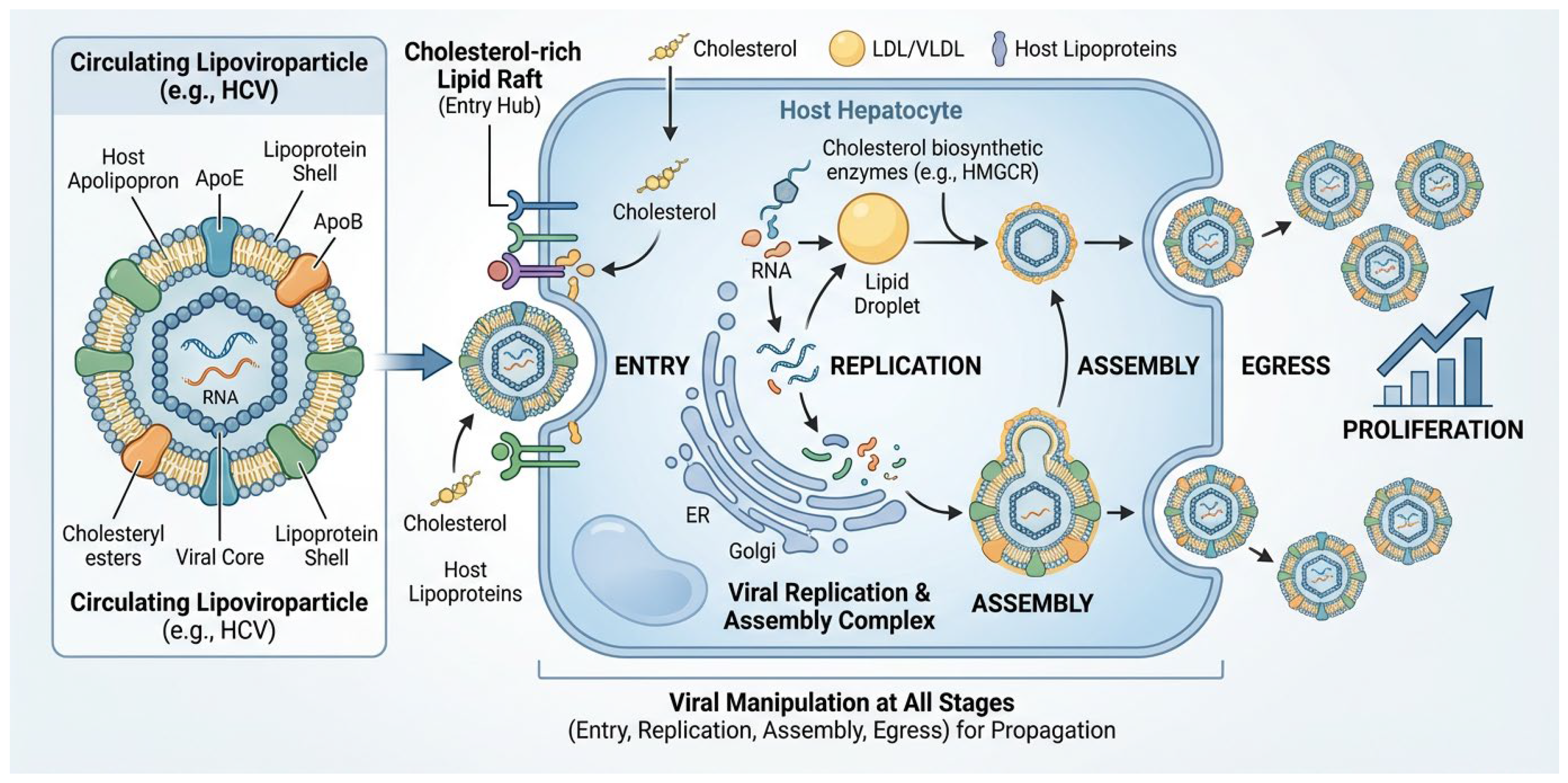
Figure 2.
Mechanisms of cholesterol exploitation for viral entry and attachment. The three-panel schematic illustrates the progressive roles of cholesterol-rich membrane domains in viral invasion. (Left) General host plasma membrane: cholesterol concentrates within lipid rafts (dark blue patches), forming docking platforms that cluster viral receptors and facilitate initial viral attachment. (Center) Caveolae-mediated entry: flask-shaped, cholesterol-rich invaginations structured by caveolin-1 (CAV-1) serve as the internalization route for viruses such as simian virus 40 (SV40). (Right) Coronavirus entry via raft-localized receptors: SARS-CoV-2 and related coronaviruses (e.g., HCoV-229E) exploit lipid rafts to concentrate entry receptors including ACE2 and CD13. The SARS-CoV-2 S protein contains a ganglioside-binding motif that enhances raft attachment, and internalization proceeds via a CAV-1–dependent pathway. Cholesterol depletion disrupts receptor availability and conformation, impairing viral binding and entry.
Figure 2.
Mechanisms of cholesterol exploitation for viral entry and attachment. The three-panel schematic illustrates the progressive roles of cholesterol-rich membrane domains in viral invasion. (Left) General host plasma membrane: cholesterol concentrates within lipid rafts (dark blue patches), forming docking platforms that cluster viral receptors and facilitate initial viral attachment. (Center) Caveolae-mediated entry: flask-shaped, cholesterol-rich invaginations structured by caveolin-1 (CAV-1) serve as the internalization route for viruses such as simian virus 40 (SV40). (Right) Coronavirus entry via raft-localized receptors: SARS-CoV-2 and related coronaviruses (e.g., HCoV-229E) exploit lipid rafts to concentrate entry receptors including ACE2 and CD13. The SARS-CoV-2 S protein contains a ganglioside-binding motif that enhances raft attachment, and internalization proceeds via a CAV-1–dependent pathway. Cholesterol depletion disrupts receptor availability and conformation, impairing viral binding and entry.
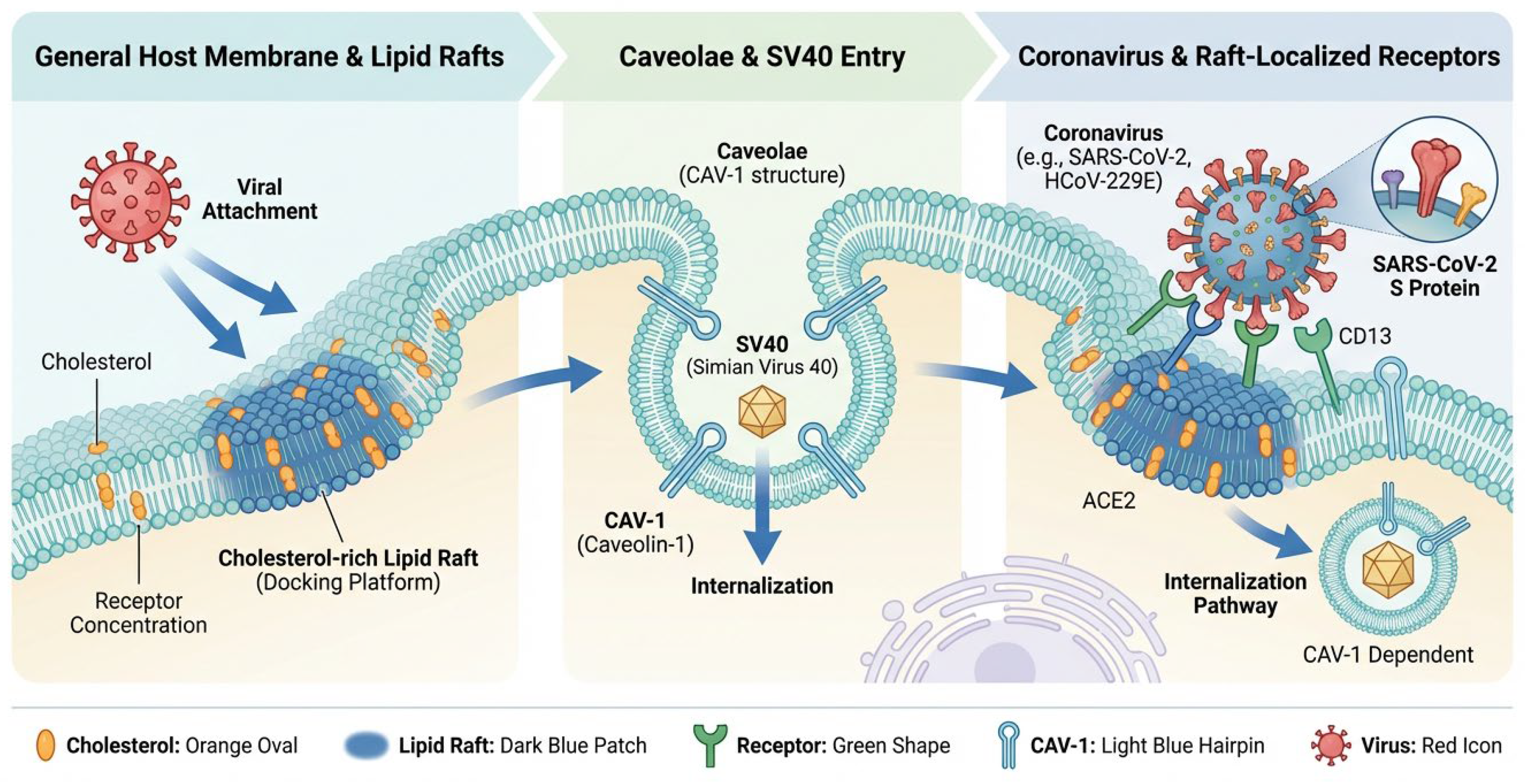
Figure 3.
Remodeling of host cholesterol metabolism for viral replication organelle (RO) formation and virion assembly. Positive-strand RNA viruses (e.g., HCV, picornaviruses) rewire the host cholesterol synthesis pathway upon entry. (Left) In a normal host cell, the mevalonate pathway converts HMG-CoA to cholesterol, maintaining membrane homeostasis. (Center) Following viral entry and metabolic rewiring, the cholesterol synthesis pathway is hyperactivated, with HMG-CoA reductase upregulated to drive cholesterol overproduction and generate modified lipid species. These lipids fuel the construction of membrane-bound replication organelles (ROs)—viral factories appearing as convoluted membrane tubules or cubic membrane structures that concentrate the viral replication machinery while shielding it from host innate defenses. The link between cholesterol and RO biogenesis is underscored by the observation that overexpression of HMG-CoA reductase alone (without virus) can induce cubic membrane formation. (Right) ROs mature into virion assembly sites where viral RNA and capsid proteins are packaged into cholesterol-rich lipid envelopes, culminating in virion production and release.
Figure 3.
Remodeling of host cholesterol metabolism for viral replication organelle (RO) formation and virion assembly. Positive-strand RNA viruses (e.g., HCV, picornaviruses) rewire the host cholesterol synthesis pathway upon entry. (Left) In a normal host cell, the mevalonate pathway converts HMG-CoA to cholesterol, maintaining membrane homeostasis. (Center) Following viral entry and metabolic rewiring, the cholesterol synthesis pathway is hyperactivated, with HMG-CoA reductase upregulated to drive cholesterol overproduction and generate modified lipid species. These lipids fuel the construction of membrane-bound replication organelles (ROs)—viral factories appearing as convoluted membrane tubules or cubic membrane structures that concentrate the viral replication machinery while shielding it from host innate defenses. The link between cholesterol and RO biogenesis is underscored by the observation that overexpression of HMG-CoA reductase alone (without virus) can induce cubic membrane formation. (Right) ROs mature into virion assembly sites where viral RNA and capsid proteins are packaged into cholesterol-rich lipid envelopes, culminating in virion production and release.
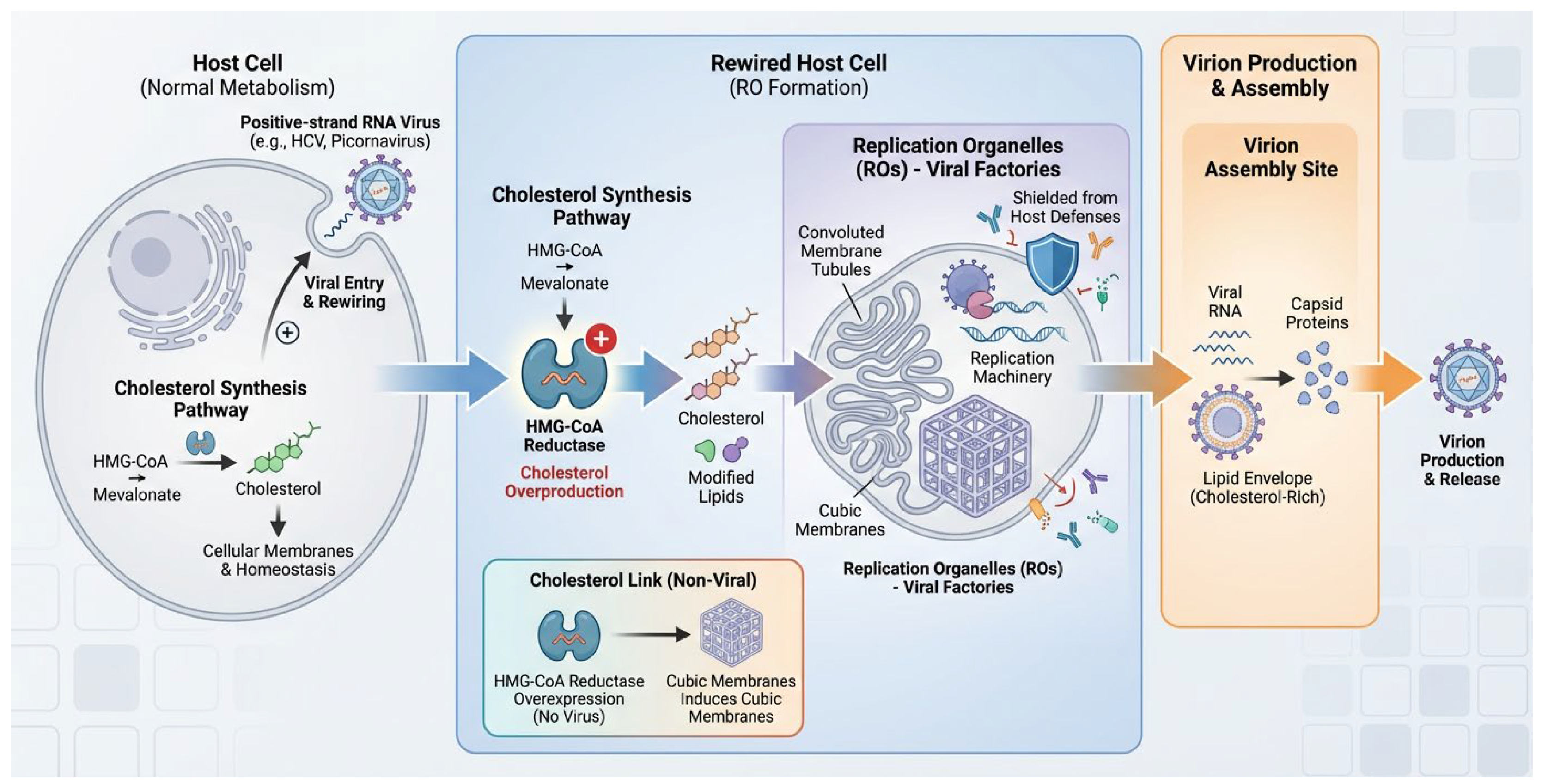
Figure 4.
Cholesterol-dependent viral egress and its systemic metabolic consequences. (Left) Intracellular assembly and egress in a hepatocyte: HCV RNA and proteins are processed through the ER–Golgi network, where virions associate with the VLDL secretory pathway (involving apoB and ApoE) to form hybrid lipoviroparticles (LVPs). Insulin resistance disrupts this pathway, creating a vicious cycle of persistent viral hijacking. (Center) The LVP structure: a lipid-rich, hybrid particle in which HCV RNA is encased within a cholesterol ester core surrounded by a lipoprotein shell displaying host apolipoproteins (ApoE, ApoB), enabling immune evasion and hepatocyte targeting. (Right) Systemic consequences of chronic HCV infection: persistent lipid metabolism hijacking leads to systemic dysregulation and dyslipidemia, manifesting as altered lipoprotein profiles (reduced LDL and HDL) and hepatic steatosis. This metabolic imbalance sustains a cycle of viral persistence and immune evasion, contributing to broader comorbidities including cardiovascular disease, neurological disorders, and metabolic syndrome.
Figure 4.
Cholesterol-dependent viral egress and its systemic metabolic consequences. (Left) Intracellular assembly and egress in a hepatocyte: HCV RNA and proteins are processed through the ER–Golgi network, where virions associate with the VLDL secretory pathway (involving apoB and ApoE) to form hybrid lipoviroparticles (LVPs). Insulin resistance disrupts this pathway, creating a vicious cycle of persistent viral hijacking. (Center) The LVP structure: a lipid-rich, hybrid particle in which HCV RNA is encased within a cholesterol ester core surrounded by a lipoprotein shell displaying host apolipoproteins (ApoE, ApoB), enabling immune evasion and hepatocyte targeting. (Right) Systemic consequences of chronic HCV infection: persistent lipid metabolism hijacking leads to systemic dysregulation and dyslipidemia, manifesting as altered lipoprotein profiles (reduced LDL and HDL) and hepatic steatosis. This metabolic imbalance sustains a cycle of viral persistence and immune evasion, contributing to broader comorbidities including cardiovascular disease, neurological disorders, and metabolic syndrome.
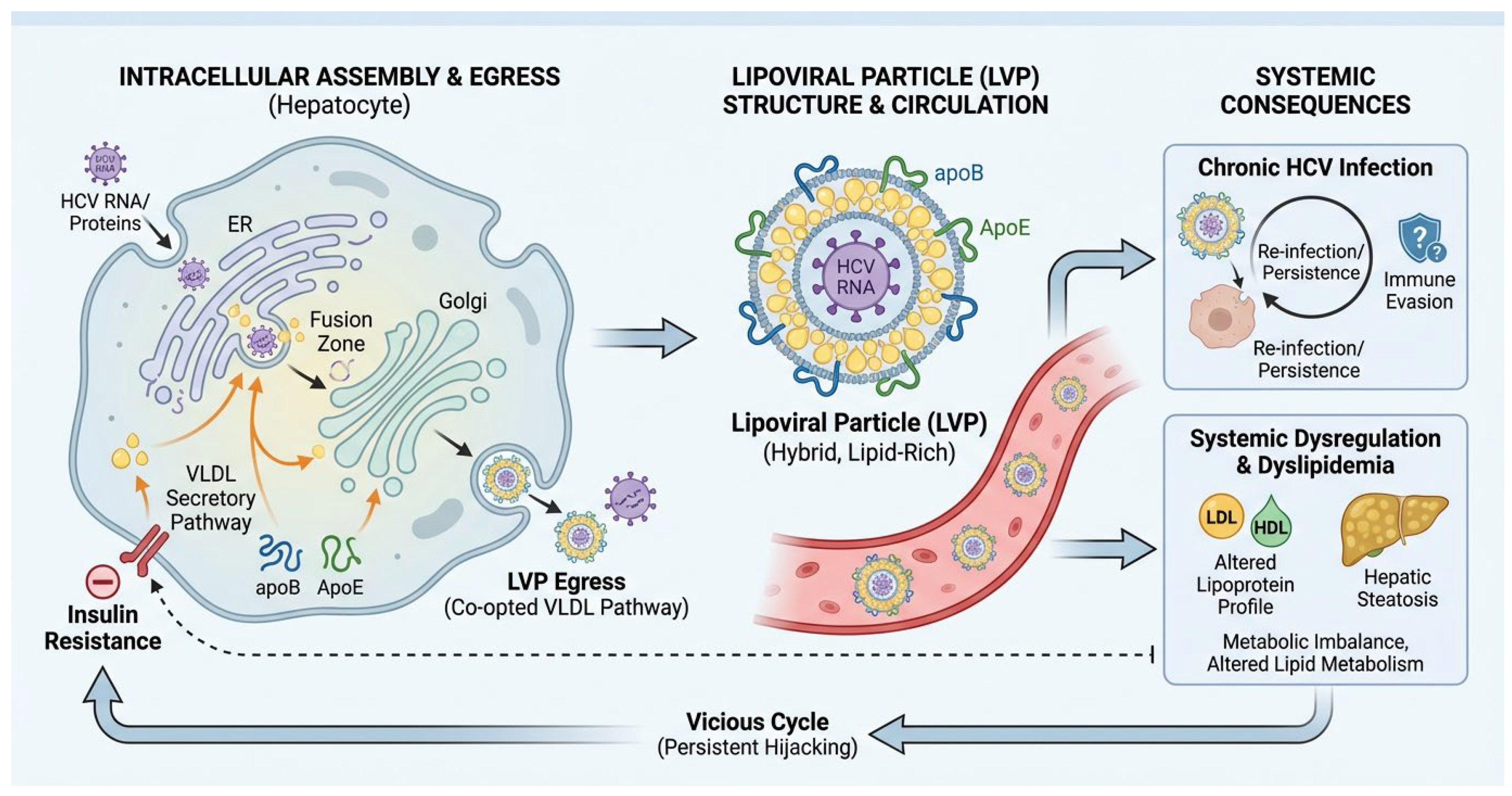
Figure 5.
Host antiviral defense through cholesterol-targeting interferon-stimulated genes (ISGs). Upon viral infection, the host innate immune system mounts an interferon (IFN) response, inducing a subset of ISGs that specifically target cholesterol metabolism to establish an antiviral cellular state. The cholesterol-targeting ISG cholesterol 25-hydroxylase (CH25H) converts cholesterol into the oxysterol 25-hydroxycholesterol (25HC), a broad-spectrum antiviral lipid mediator. 25HC blocks viral-induced lipophagy—a process exploited by viruses such as porcine deltacoronavirus (PDCoV) to liberate lipids—by inhibiting the mTORC1 pathway and suppressing TFEB-mediated lipophagy, leading to lipid droplet accumulation that sequesters lipids away from viral use. This oxysterol-mediated depletion of accessible cholesterol creates an antiviral state that restricts viral entry and replication across multiple virus families, including coronaviruses, Zika virus, influenza virus, and HIV.
Figure 5.
Host antiviral defense through cholesterol-targeting interferon-stimulated genes (ISGs). Upon viral infection, the host innate immune system mounts an interferon (IFN) response, inducing a subset of ISGs that specifically target cholesterol metabolism to establish an antiviral cellular state. The cholesterol-targeting ISG cholesterol 25-hydroxylase (CH25H) converts cholesterol into the oxysterol 25-hydroxycholesterol (25HC), a broad-spectrum antiviral lipid mediator. 25HC blocks viral-induced lipophagy—a process exploited by viruses such as porcine deltacoronavirus (PDCoV) to liberate lipids—by inhibiting the mTORC1 pathway and suppressing TFEB-mediated lipophagy, leading to lipid droplet accumulation that sequesters lipids away from viral use. This oxysterol-mediated depletion of accessible cholesterol creates an antiviral state that restricts viral entry and replication across multiple virus families, including coronaviruses, Zika virus, influenza virus, and HIV.
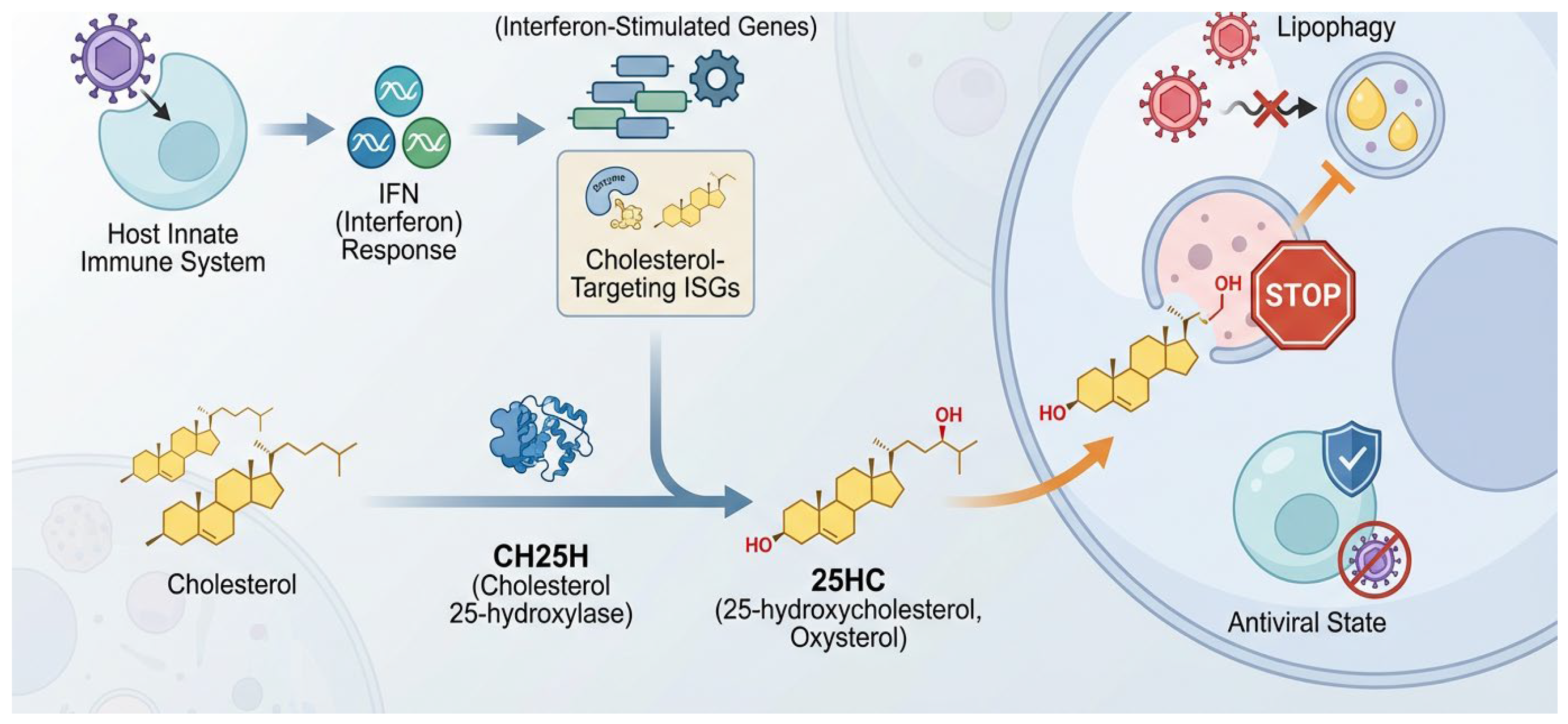
Figure 6.
Clinical consequences of virus-induced dyslipidemia. Chronic hepatitis C virus (HCV) infection drives hepatic steatosis (fatty liver) through viral hijacking of host lipid metabolism in hepatocytes. Hepatic steatosis and insulin resistance (IR) form a bidirectional pathogenic loop that promotes type 2 diabetes. Elevated HOMA-IR serves as an independent predictor of advanced hepatic fibrosis. Beyond liver-specific pathology, this virus-induced metabolic dysregulation extends to broader comorbidities and disease severity, encompassing cardiovascular disease, neurological disorders, and metabolic syndrome. These systemic manifestations stem from the direct manipulation of hepatocyte cholesterol and lipid homeostasis by the virus, illustrating the far-reaching clinical impact of the virus–cholesterol axis.
Figure 6.
Clinical consequences of virus-induced dyslipidemia. Chronic hepatitis C virus (HCV) infection drives hepatic steatosis (fatty liver) through viral hijacking of host lipid metabolism in hepatocytes. Hepatic steatosis and insulin resistance (IR) form a bidirectional pathogenic loop that promotes type 2 diabetes. Elevated HOMA-IR serves as an independent predictor of advanced hepatic fibrosis. Beyond liver-specific pathology, this virus-induced metabolic dysregulation extends to broader comorbidities and disease severity, encompassing cardiovascular disease, neurological disorders, and metabolic syndrome. These systemic manifestations stem from the direct manipulation of hepatocyte cholesterol and lipid homeostasis by the virus, illustrating the far-reaching clinical impact of the virus–cholesterol axis.
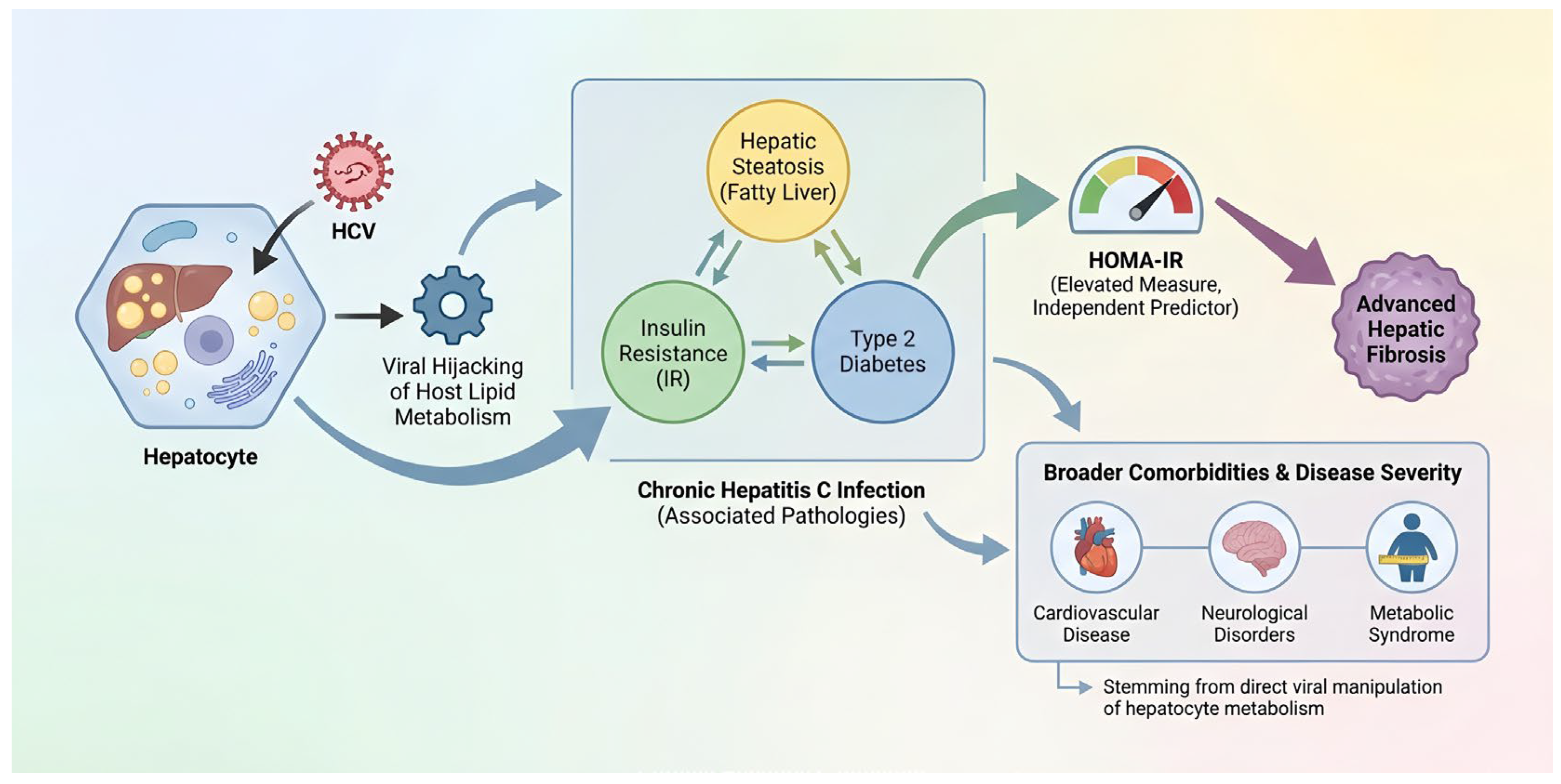
Figure 7.
Therapeutic strategies targeting the virus–cholesterol axis. Host-directed therapeutic approaches exploit the conserved dependence of diverse viruses on host cholesterol and lipid metabolism. Three major strategies are depicted: (Top) Lipid synthesis inhibition: small molecule inhibitors (e.g., repurposed statins) target cholesterol biosynthesis enzymes, disrupting viral membrane formation. (Middle) Lipid transport blockade: transport inhibitors disrupt the intracellular trafficking of cholesterol to viral replication sites. (Bottom) Membrane composition modulation: lipid-modulating agents alter the plasma membrane lipid environment to make it unfavorable for viral entry and budding. These host-directed strategies offer two key advantages over direct-acting antivirals: (Right, Top) Broad-spectrum activity, as they target conserved host pathways exploited by multiple virus families; and (Right, Bottom) A high barrier to viral resistance, since mutating host targets is not feasible for the virus, reducing the emergence of escape mutants.
Figure 7.
Therapeutic strategies targeting the virus–cholesterol axis. Host-directed therapeutic approaches exploit the conserved dependence of diverse viruses on host cholesterol and lipid metabolism. Three major strategies are depicted: (Top) Lipid synthesis inhibition: small molecule inhibitors (e.g., repurposed statins) target cholesterol biosynthesis enzymes, disrupting viral membrane formation. (Middle) Lipid transport blockade: transport inhibitors disrupt the intracellular trafficking of cholesterol to viral replication sites. (Bottom) Membrane composition modulation: lipid-modulating agents alter the plasma membrane lipid environment to make it unfavorable for viral entry and budding. These host-directed strategies offer two key advantages over direct-acting antivirals: (Right, Top) Broad-spectrum activity, as they target conserved host pathways exploited by multiple virus families; and (Right, Bottom) A high barrier to viral resistance, since mutating host targets is not feasible for the virus, reducing the emergence of escape mutants.
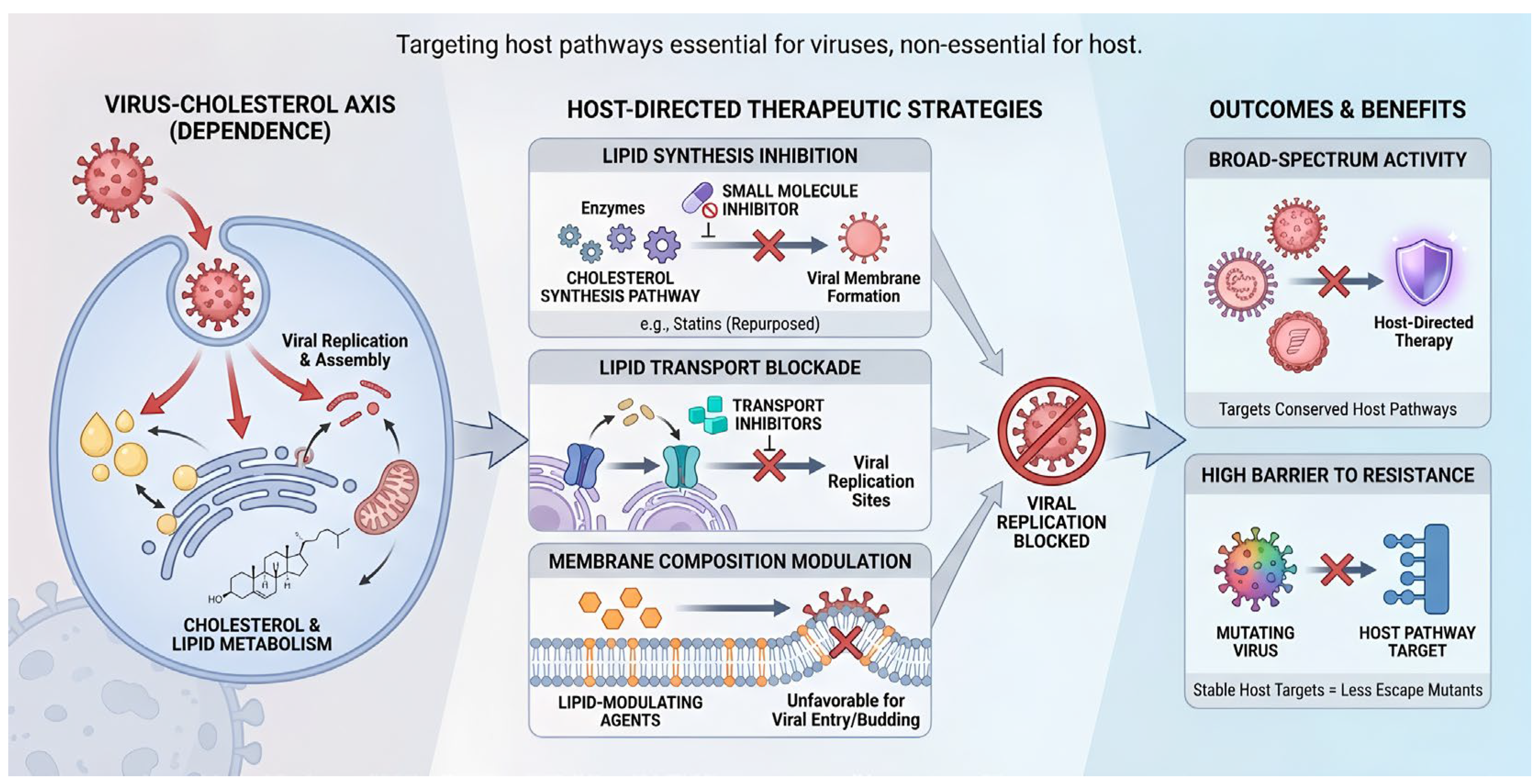
Figure 8.
Repurposed drugs modulating cholesterol and lipid homeostasis as antiviral agents. Bioinformatic analyses of anti-SARS-CoV-2 compounds reveal that 36% of active candidates share a dual signature regulating both cholesterol homeostasis and microtubule dynamics. A prominent mechanistic class comprises functional inhibitors of acid sphingomyelinase (FIASMAs), including fluoxetine, amiodarone, and imipramine. These drugs inhibit acid sphingomyelinase (ASM), leading to impaired endolysosomal acidification through disruption of proton pump function. The resulting cholesterol accumulation in endolysosomes blocks the endocytic entry pathway of SARS-CoV-2, including the Omicron variant. This mechanism is relevant for variants that rely on endocytic entry, demonstrating the potential of cholesterol-modulating repurposed drugs as broad-spectrum antiviral agents.
Figure 8.
Repurposed drugs modulating cholesterol and lipid homeostasis as antiviral agents. Bioinformatic analyses of anti-SARS-CoV-2 compounds reveal that 36% of active candidates share a dual signature regulating both cholesterol homeostasis and microtubule dynamics. A prominent mechanistic class comprises functional inhibitors of acid sphingomyelinase (FIASMAs), including fluoxetine, amiodarone, and imipramine. These drugs inhibit acid sphingomyelinase (ASM), leading to impaired endolysosomal acidification through disruption of proton pump function. The resulting cholesterol accumulation in endolysosomes blocks the endocytic entry pathway of SARS-CoV-2, including the Omicron variant. This mechanism is relevant for variants that rely on endocytic entry, demonstrating the potential of cholesterol-modulating repurposed drugs as broad-spectrum antiviral agents.
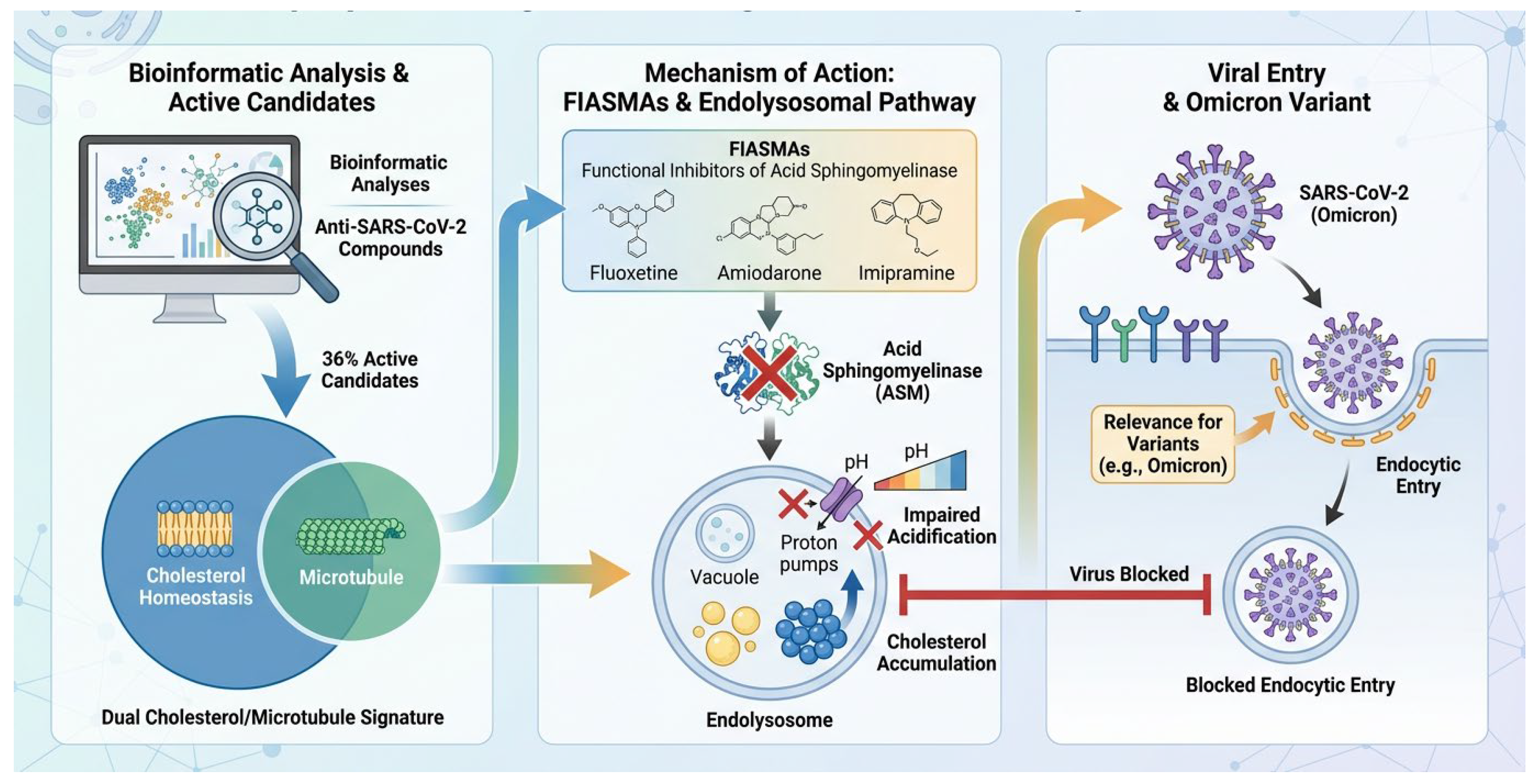
Figure 9.
Novel therapeutic targets in the virus–cholesterol axis. (Left) Host lipid metabolism is regulated at multiple levels by microRNAs (miRNAs), which post-transcriptionally modulate cholesterol homeostasis genes (enzymes, transporters). The resulting cellular cholesterol pool is a shared resource contested between the host and infecting viruses. This miRNA-mediated regulatory network presents therapeutic opportunities: miRNA mimics or antagomiRs can be designed to either suppress pro-viral cholesterol pathways or enhance antiviral cholesterol efflux. (Right) Targeting endosomal lipid composition and trafficking: the phospholipid bis(monoacylglycero)phosphate (BMP) is essential for the endosomal entry of viruses including SARS-CoV-2 and HIV. Therapeutic agents such as progesterone that increase BMP levels can disrupt viral trafficking and block membrane fusion, preventing viral entry. The endosome thus represents a druggable checkpoint where modulation of lipid composition can intercept diverse enveloped viruses.
Figure 9.
Novel therapeutic targets in the virus–cholesterol axis. (Left) Host lipid metabolism is regulated at multiple levels by microRNAs (miRNAs), which post-transcriptionally modulate cholesterol homeostasis genes (enzymes, transporters). The resulting cellular cholesterol pool is a shared resource contested between the host and infecting viruses. This miRNA-mediated regulatory network presents therapeutic opportunities: miRNA mimics or antagomiRs can be designed to either suppress pro-viral cholesterol pathways or enhance antiviral cholesterol efflux. (Right) Targeting endosomal lipid composition and trafficking: the phospholipid bis(monoacylglycero)phosphate (BMP) is essential for the endosomal entry of viruses including SARS-CoV-2 and HIV. Therapeutic agents such as progesterone that increase BMP levels can disrupt viral trafficking and block membrane fusion, preventing viral entry. The endosome thus represents a druggable checkpoint where modulation of lipid composition can intercept diverse enveloped viruses.
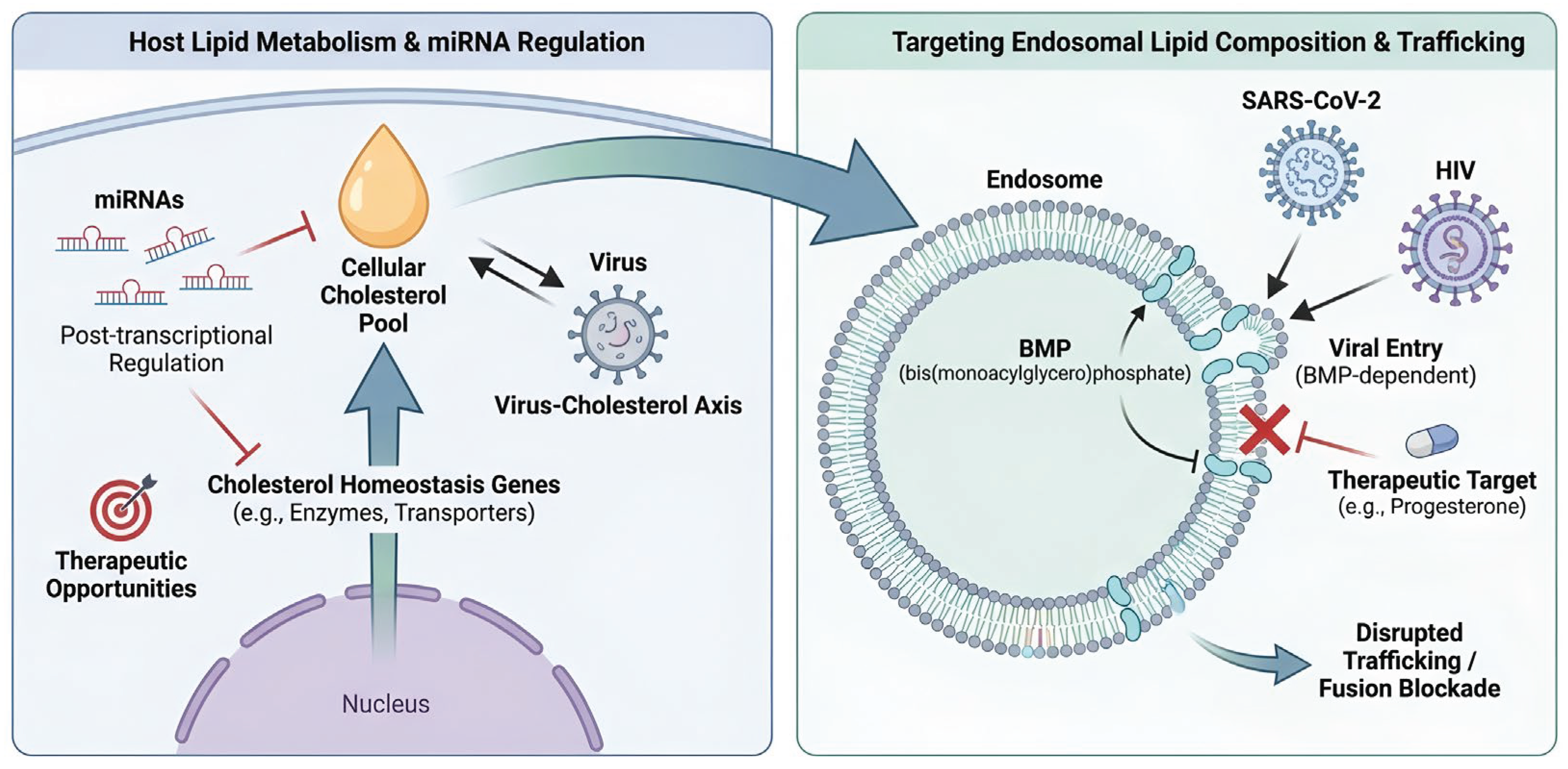
Disclaimer/Publisher’s Note: The statements, opinions and data contained in all publications are solely those of the individual author(s) and contributor(s) and not of MDPI and/or the editor(s). MDPI and/or the editor(s) disclaim responsibility for any injury to people or property resulting from any ideas, methods, instructions or products referred to in the content. |
© 2026 by the authors. Licensee MDPI, Basel, Switzerland. This article is an open access article distributed under the terms and conditions of the Creative Commons Attribution (CC BY) license (http://creativecommons.org/licenses/by/4.0/).
Copyright: This open access article is published under a Creative Commons CC BY 4.0 license, which permit the free download, distribution, and reuse, provided that the author and preprint are cited in any reuse.