

Submitted:
13 November 2026
Posted:
16 November 2026
You are already at the latest version
Abstract
Bambara groundnut (Vigna subterranea) and finger millet (Eleusine coracana) are underutilised African crops whose combination could improve the protein quality and micronutrient density of cereal-based instant complementary foods. This review examines the molecular constituents that determine their nutritional and technological value, as well as the chemical changes induced by processing. Bambara groundnut supplies lysine-rich protein and starch; nonetheless, its use is limited by phytic acid, phenolic compounds, a hard-to-cook defect linked to pectin–phytate interactions and cell wall lignification, and beany volatiles such as hexanal and 2-pentylfuran. Finger millet provides starch, calcium and phenolic acids, a large share of which are bound to cell wall polysaccharides, together with phytate and tannins that chelate minerals and bind proteins. Soaking, germination, fermentation and malting activate phytases and amylases, lowering phytate by up to 67% and finger millet paste viscosity from 1305 to 18 cP, while microwave and infrared heating gelatinise starch, aggregate proteins and shorten cooking time. Evidence for a finished product is limited to one instant porridge reported in a doctoral thesis. Future studies should link processing conditions to molecular outcomes, including phenolic and phytate profiles, starch and protein structure, volatile composition and in vitro digestibility, in a reconstituted Bambara groundnut–finger millet porridge
Keywords:
Bambara groundnut
; finger millet
; complementary foods
; phytic acid
; phenolic compounds
; starch gelatinisation
; protein digestibility
; volatile compounds
; microwave processing
; instant foods
1. Introduction
Complementary feeding begins at about six months of age, when breast milk alone no longer meets all nutritional requirements and continues through the second year of life. This period coincides with rapid growth and a high risk of nutrient deficiencies and growth faltering [1]. The nutritional quality, digestibility, safety, and acceptability of complementary foods are determinants of child health, and they are also the properties that food formulators and product developers must optimise. In many African settings, complementary foods are commonly based on cereals, roots or tubers, which provide energy but are often limited in protein quality and selected micronutrients. Reviews of African complementary foods have highlighted formulation strategies that combine cereals with legumes and other locally available nutrient-rich ingredients [2,3]. Cereal–legume complementation is attractive because the cereal supplies energy, fibre and micronutrients while the legume improves protein quantity and amino acid balance.
Bambara groundnut (BGN; Vigna subterranea) and finger millet (Eleusine coracana) are well suited to this approach. Bambara groundnut is an underutilised African legume with substantial protein and mineral value, and finger millet is a nutrient-dense cereal notable for dietary fibre, calcium and bioactive compounds [4,5,6]. However, both crops present processing challenges hard-to-cook behaviour, antinutritional factors and, for Bambara groundnut, beany flavour that must be resolved before they can be used in convenient, acceptable products. Processing is the enabling step that connects favourable raw-material composition to a usable food product [7].
The constraints and the opportunities are both molecular. The nutritional value of the blend depends on the amino acid composition and digestibility of its proteins, the structure and digestibility of its starch, and the balance between minerals and the compounds that bind them, chiefly phytic acid (myo-inositol hexakisphosphate) and phenolic compounds such as condensed tannins [8]. Its technological and sensory behaviour depends on starch gelatinisation and hydrolysis, protein denaturation and aggregation, cell wall changes that govern cooking time and volatile compounds formed by lipid oxidation [9,10]. Processing modifies each of these constituents, and understanding these chemical changes is the basis for designing an effective process.
This review synthesises evidence on Bambara groundnut and finger millet as ingredients for instant complementary foods. It focuses on the molecular composition of both crops, the chemistry of their antinutritional factors, the chemical changes produced by processing technologies (with attention to microwave and infrared pretreatments), instant food functionality and sensory quality. Sustainability and food-system aspects are outside the scope of this review. The aim is to identify how processing can convert these underutilised crops into nutritionally adequate, functional and acceptable complementary foods and to define the food science evidence still required.
2. Review Scope and Approach
This article is a narrative critical review of Bambara groundnut and finger millet for instant complementary foods, prepared with reference to the Scale for the Assessment of Narrative Review Articles (SANRA) [11]. Literature was identified by searching PubMed, Web of Science, , and ScienceDirect for English-language publications from 1 January 2000 to 31 August 2026, by backward citation searching of the retrieved studies and reviews, and by targeted searches for specific studies. The search concepts combined each crop name with terms for complementary, infant and instant foods, composition, antinutritional factors, processing, digestibility, functionality, safety and sensory quality; the database-specific search strings are given in Table 1 so that the search can be repeated or updated. Furthermore, targeted searches conducted covered the phenolic profile, phytate chemistry, starch structure and volatile compounds of the two crops. Because the review is narrative, the search aimed to identify the principal evidence on each topic rather than every eligible record and record and screening counts were not kept.
Sources were eligible when they reported the chemical composition, molecular structure, antinutritional factors, processing effects, digestibility, functional or reconstitution properties, safety or sensory acceptability of Bambara groundnut, finger millet or products containing either crop. Studies of other cereal legume complementary foods were used only where target crop evidence was lacking and are labelled as analogous evidence. Guidelines, standards, and regulations were used to establish nutritional and safety benchmarks, and recent reviews were used for background. Product format was not an exclusion criterion: evidence from biscuits, beverages or gels was retained when it informed ingredient or process behaviour, but it was not treated as evidence of the performance of an instant porridge.
Evidence was organised into four levels of relevance: (i) studies of a product containing both target crops; (ii) single crop ingredient or processing studies; (iii) analogous cereal legume products; and (iv) guidelines, standards and contextual sources. The 53 cited sources comprise 21 primary studies (2 on both target crops, 8 on Bambara groundnut alone or with other cereals, 6 on finger millet, and 5 on analogous cereals or legumes), 2 postgraduate theses, 18 reviews, and 12 guidelines, standards, regulations, or methodological sources. Table S1 lists every cited source with its type, level of evidence relevance, the basis on which it was used (full text, abstract or thesis) and the sections in which it is cited, so that the evidence base can be checked source by source.
The narrative synthesis considers nutritional requirements, crop composition and complementarity, processing effects, instant-food functionality and sensory quality. Primary studies that tested Bambara groundnut or finger millet, and whose full methods sections could be assessed, were appraised against the seven domains in Table 2, which adapt the JBI Checklist for Quasi-Experimental Studies [12] to laboratory processing and formulation experiments. Four studies met this criterion (Venter et al. [13]; Mukwevho and Emmambux [14]; James et al. [15]; Jan et al. [16]); each was appraised against its full text and the results are given in Table 3. Other primary studies were used for their reported results and studies available only as abstracts were used for the direction of effects only; the basis of each is shown in Table 6 and Table 7 and in Table S1. Analogous studies whose results were available only as abstracts were not used for study level extraction. No overall risk-of-bias grade was assigned because several JBI items, such as blinding of outcome assessment, apply only partially to laboratory processing experiments, and no study was excluded based on the appraisal. Heterogeneous crops, processes and outcomes were synthesised narratively without being together.
3. Complementary Foods: Nutritional Requirements and Formulation Challenges
Complementary feeding is a key interface between household food systems and child nutrition. The World Health Organization recommends the introduction of complementary foods at six months while breastfeeding continues and emphasises that diets during this period should be diverse and nutrient-dense [1,17]. Energy density, protein quality, and adequate iron, zinc, and calcium are priorities because requirements per unit body weight are high and gastric capacity is small.
Cereal-dominant complementary foods can meet energy needs but may fall short on protein quality and micronutrient density; phytate, tannins and other antinutritional factors can further reduce mineral and protein utilisation. Formulation must integrate nutrient density, bioavailability, reconstitution and sensory acceptance. A nutritionally promising blend that is too viscous, poorly reconstituting, or unacceptable will not be adopted [18].
3.1. Food Safety and Regulatory Requirements
Products intended for infants and young children require hazard control from raw-material procurement through preparation and storage. Relevant hazards include Salmonella, Bacillus cereus and Cronobacter; aflatoxins and fumonisins; lead, cadmium and arsenic; pesticide residues; legume allergenicity; residual antinutritional factors; oxidation; moisture uptake and mould growth. Controls should include approved suppliers, good agricultural and storage practices, sorting and cleaning, validated processing, hygienic post-process handling, water-activity and moisture specifications, protective packaging, shelf-life testing and verification against applicable microbiological and contaminant criteria. Processing must not be assumed to eliminate mycotoxins or other contaminants unless the reduction is measured. Codex CXS 74-1981 provides the international product benchmark for processed cereal based foods for infants and young children, while South African compliance requires attention to the Regulations Relating to Foodstuffs for Infants and Young Children (R.991 of 2012), applicable labelling rules and other food control requirements [19,20,21]. Codex CXS 193-1995 specifies a maximum level of 5 µg/kg total aflatoxins for cereal based foods for infants and young children [22]. This international benchmark must be distinguished from applicable South African legal limits; current national contaminant requirements and relevant microbiological criteria must be checked for the intended product category before trials or marketing.

Table 4.
Safety and regulatory evidence required for product development.
| Hazard or requirement | Relevance | Control or design response | Verification |
|---|---|---|---|
| Microbial pathogens | Dry powders can be contaminated after heating; reconstituted foods may support growth. | Validated lethality step, hygienic zoning, safe water and preparation instructions. | Pathogen criteria, indicator counts and challenge/shelf-life testing. |
| Aflatoxins and fumonisins | Cereals and legumes may acquire field or storage mycotoxins. | Supplier controls, drying, sorting, moisture control and rejection limits. | Accredited analysis against Codex CXS 193-1995 (5 µg/kg total aflatoxins for cereal-based infant foods) [22] and applicable national limits. |
| Heavy metals and pesticide residues | Contamination may arise from soil, water, or crop protection. | Source approval and compliance specifications. | Periodic accredited contaminant/residue testing. |
| Allergenicity and residual antinutrients | Legume proteins may be allergenic; phytate, tannins and inhibitors may remain after processing. | Allergen risk management and validated processing. | Label review and measurement of residual antinutritional factors. |
| Shelf life and packaging | Moisture, oxygen and heat can impair safety and quality. | Moisture/oxygen barriers, sealed packs and realistic storage conditions. | Water activity, moisture, oxidation, microbial and sensory stability over time. |
| Regulatory compliance | Infant foods have composition, labelling, hygiene and marketing requirements. | Map product claims and specifications to Codex and South African requirements. | Documented regulatory review before trials or marketing. |
3.2. Instant Complementary Foods and Product Functionality
Instant powdered foods are attractive because preparation time is reduced and the products can be designed for rapid reconstitution with hot or cold water. Their functionality depends on particle structure, composition, water absorption, wettability and interactions among starch, protein and other components [23]. These properties are particularly important for complementary foods because texture, viscosity and preparation convenience strongly influence caregiver acceptance and feeding practices.
A key technological challenge for cereal-legume instant foods is balancing energy density and viscosity. Gelatinised starch can produce high paste viscosity at low solids, limiting the dry matter, energy and nutrients consumed per feed. Processing strategies that hydrolyse or restructure starch, including malting, fermentation and thermal pretreatments, may permit a higher solids concentration at a spoonable viscosity. Product studies should report the powder-to-water ratio, serving temperature, reconstitution time, dispersibility or wettability, lump formation, bulk density (g/mL), water absorption index or capacity, solubility, particle-size distribution, pasting profile, and apparent viscosity at defined shear rate, temperature, and solids content. Shelf-life studies should specify packaging, storage temperature and humidity, water activity, moisture, lipid oxidation, microbial quality and retention of sensory acceptance.
4. Finger Millet: Composition, Bioactives and Functional Properties
Finger millet is a small-grained cereal cultivated widely in Africa and Asia. Its nutritional profile includes carbohydrates, dietary fibre and minerals, with calcium being a notable strength and recent reviews highlight its polyphenols and functional potential [5,24]. These constituents make finger millet a valuable base for nutrient-dense complementary foods, specifically where dietary calcium and fibre intakes are otherwise low [25].
The nutritional benefits of finger millet must be explained alongside processing constraints. Phytates, tannins and related compounds can reduce mineral bioavailability and affect protein digestibility. Processing methods, including germination, fermentation, roasting and other thermal treatments, can modify these components, reduce antinutritional factors and improve functionality [16,26,27,28]. From a product development perspective, finger millet starch and its behaviour on cooking also control paste viscosity and reconstitution, so processing choices affect both nutritional and textural quality.
At the molecular level, finger millet protein is gluten-free and contains about twice as much methionine as maize and rice [29], which partly compensates for the sulfur amino acid limitation of legumes. Its phenolic compounds occur in free, esterified, and insoluble bound forms; in millets, a substantial share of the phenolic content and antioxidant capacity resides in the bound fraction, dominated by hydroxycinnamic acids such as ferulic and p-coumaric acid, which are ester-linked to cell wall polysaccharides [30]. This distribution matters because bound phenolics are released mainly by enzymatic or alkaline hydrolysis, so processing that hydrolyses cell wall esters can change both antioxidant activity and the amount of phenolic compound available to interact with proteins and minerals. Phytic acid carries six phosphate groups that are negatively charged at physiological pH and form insoluble complexes with Fe²⁺/Fe³⁺, Zn²⁺ and Ca²⁺; humans lack sufficient intestinal phytase to hydrolyse these complexes, so phytate lowers mineral bioavailability unless it is degraded during processing [8]. Calcium content is also strongly genotype-dependent, ranging from 117.5 to 1400 mg/100 g among unreleased finger millet genotypes [31], so the mineral and phytate contents of the actual grain lot must be analysed before molar ratios are interpreted.
5. Bambara Groundnut: Composition, Antinutritional Factors and Utilisation Constraints
Bambara groundnut is a promising legume for improving the protein quality of cereal-based foods. A major review describes it as an underutilised African legume with potential contributions to food and nutrition security and to equity in food availability [4]. It supplies protein, carbohydrate, fat, fibre and minerals and its amino acid profile makes it particularly useful as a complement to cereal proteins [4,32]. Recent South African research further demonstrates its potential contribution to protein intake in sub-Saharan African food systems [32].
Despite these advantages, Bambara groundnut remains underutilised. From a food-science perspective, the principal constraints are technological: hard-to cook-behaviour that lengthens cooking time and energy use, antinutritional factors that limit mineral and protein utilisation, beany flavour that affects acceptability and variable functional properties [4,33]. A recent review of bioprocessing shows that soaking, germination and fermentation can reduce antinutritional factors and modify the functional properties and metabolite profile of Bambara groundnut, improving its suitability for food applications [33]. Microwave and infrared pre-treatments also modify the pasting and solubility properties of flour [13,14]. Resolving the hard to cook and flavour constraints is the key to unlocking the crop’s nutritional value in convenient products.
The chemistry of these constraints is now better understood. Starch is the major component of the Bambara groundnut seed and its granule morphology, amylose content, pasting and thermal properties and response to physical and chemical modification have been characterised [34]. The hard-to-cook defect develops when seeds are stored at 30–40 °C and relative humidity above about 75%, through mechanisms that include the pectin–phytate pathway, in which phytate hydrolysis releases divalent cations that cross-link pectin into insoluble pectates, lignification of the middle lamella, and interactions between phenolic compounds and proteins; the defect extends boiling to about 3–4 h and makes the seed harder to mill [9]. The beany note is associated with volatile compounds such as hexanal, 2-pentylfuran, 1-hexanol and 1-octen-3-ol, which arise from the oxidation of linoleic acid and other polyunsaturated fatty acids; in alkaline-fermented Bambara groundnut, hexanal was present in all samples at concentrations above its odour threshold [10]. These molecular mechanisms identify the targets for processing: inactivating or bypassing cell-wall hardening, lowering phytate and limiting lipid-oxidation products.
6. Nutritional Complementarity and Protein Quality
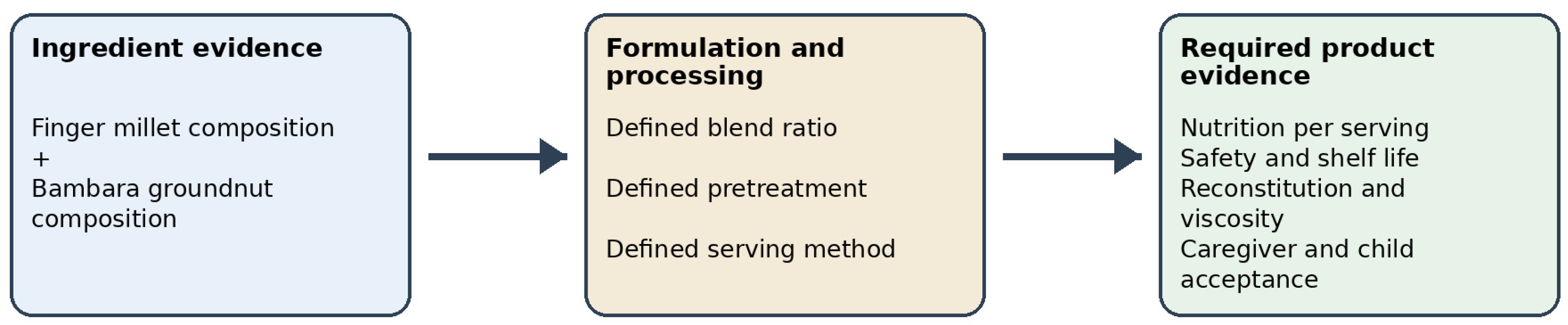
Cereal-legume complementation can improve plant-based food quality. Finger millet provides carbohydrate, fibre and minerals, whereas Bambara groundnut contributes more protein and lysine, an amino acid commonly limiting in cereals (Table 5). Legumes may be relatively limited in sulfur-containing amino acids, so adequacy must be demonstrated from the amino acid profile of the final blend rather than inferred from ingredient pairing. Studies of finger-millet and Bambara-groundnut products report formulation and process-dependent differences in proximate composition, in vitro digestibility, antioxidant activity, functionality, and consumer acceptability [35,36].
The combination should not be presented as automatically nutritionally complete. Evaluation should include amino-acid composition, the first limiting amino acid, digestible indispensable amino-acid score (DIAAS) when appropriate digestibility data are available and standardised in vitro protein digestion as supportive evidence [37]. Mineral evaluation should extend beyond total iron, zinc and calcium to bioaccessibility after digestion and where feasible, phytate: mineral molar ratios. Results should be calculated for a realistic, prepared serving at a specified powder-to-water ratio and compared with relevant age-specific requirements [38,39], while avoiding adequacy claims until a final formulation and serving size are defined. Quantitative data on DIAAS and mineral bioaccessibility for processed Bambara groundnut-finger millet blends remain scarce. Serving calculations should multiply the nutrient concentration per 100 g of dry product by the dry powder mass per serving, then divide by 100. Added water changes concentration and serving volume, but not the total nutrient amount supplied by the powder. A measured final formulation and defined serving are required before comparison with age-specific requirements.
The six sources cited in Table 5 ([4,5,6,24,32,33]) are reviews that compile values from several primary studies; Tan et al. [4] note that protein and mineral values vary with cultivar and growing conditions. The ranges are review-reported and indicative. They were compared with three primary analyses: Mabitsela et al. [40] (70 Bambara groundnut landraces), Sharma et al. [41] (raw finger millet) and Mudau and Adebo [42] (raw finger millet and Bambara groundnut). Bambara groundnut values agreed with Table 5 for most components, whereas finger millet carbohydrate exceeded the Table 5 value in both primary sources that reported it, and their fat values differed in opposite directions. The finger millet values in Table 5 should therefore be read as approximate, and formulation calculations should use analyses of the actual ingredient lots.
Figure 1.
Conceptual nutritional complementarity and evidence requirements for a Bambara groundnut-finger millet blend. The diagram is conceptual and contains no quantitative bars. Ingredient complementarity is a formulation hypothesis that must be tested in the processed blend using amino acid, digestibility, mineral bioaccessibility, viscosity, and serving-based analyses.
7. Processing Technologies for Cereal–Legume Complementary Foods
7.1. Traditional and Biological Processing
Soaking, germination, fermentation, malting and roasting are widely used to improve cereal and legume foods. These treatments can reduce antinutritional factors, modify starch and protein structures and improve sensory properties [16,26,27,28]. Malting and fermentation are valuable for complementary foods because amylolytic activity lowers paste viscosity, allowing higher solids and greater energy and nutrient density per feed. In addition, fermentation can generate desirable metabolites and alter mineral and protein characteristics. The key limitations are the time, water, labour and controlled conditions these methods can require (Table 6 and Table 7).
Table 6.
Study-level evidence on processing effects relevant to complementary-food development.
| Study/material | Access basis | Cultivar | Processing conditions | Comparator | Outcome and numerical result | Significance | Evidence relevance |
|---|---|---|---|---|---|---|---|
| Jan et al. [16], finger millet | Full-text access | GPHCPB-17 (university experimental farms) | L. brevis, L. plantarum, S. cerevisiae, S. cerevisiae + 2% (NH₄)₂SO₄ or S. cerevisiae + L. brevis; 20 g flour in 120 mL water; 37 °C for 12, 24 or 36 h; dried at 50 °C | Raw (unfermented) flour | Phytic acid 629.00 to 207.94 mg/100 g (L. brevis, 36 h; −66.9%); tannins 1.64 to 0.69 mg/g (yeast + activator, 36 h; −57.9%); protein 9.10% to 13.13% (L. brevis, 36 h); Fe 4.56 to 6.95 mg/100 g (yeast + activator, 36 h); Zn 3.31 to 5.53 mg/100 g (L. brevis, 36 h); total phenolics 1.07 to 2.10 mg GAE/g and DPPH inhibition 74.35% to 99.35% (yeast + activator, 36 h). Percentage changes calculated as (treated − control)/control × 100. | One-way ANOVA, P ≤ 0.05 | Direct: finger millet flour; appraised in Table 3; not a blend or complementary porridge |
| Mashau et al. [33], BGN review | Contextual (narrative review, not primary data) | Multiple/NR | Soaking, germination and fermentation across reviewed studies | Untreated BGN | Direction varies by process and study; no pooled estimate | Not pooled | Direct crop review; heterogeneous |
| Venter et al. [13], presoaked brown and red BGN seeds | Full-text access | Brown and red seeds from a commercial supplier; cultivar not named | Presoaked to 40% moisture; ≈50 g batches; 900 W or 1200 W for 5 or 8 min; air temperature 130 °C (microwave frequency not stated in the primary report) | Untreated presoaked seeds | Cooking time reduced from 219-369 min (untreated presoaked) to 29-60 min across treatment combinations; the paired 1200 W/5 min result was 219 to 45 min for brown seeds (-79.5%) and 369 to 31 min for red seeds (-91.6%), calculated as (treated-control)/control x 100. WSI decreased by up to 66% and NSI by up to 81% across treatments; pasting viscosity and enthalpy decreased; 1200 W retained higher viscosity/WSI/NSI than 900 W; phenolic changes were variety-dependent (brown seeds showed up to 39% decrease in ABTS radical-scavenging activity, red seeds up to 26% increase). | p ≤ 0.05 for cooking-time reduction | Direct BGN ingredient evidence. Treatments in triplicate (Table 3); no finished BGN–finger-millet porridge tested; not independently replicated. |
| Mukwevho and Emmambux [14], Bambara groundnut seeds | Full-text access | Not named (commercial seed) | 20% or 53% moisture; infrared, microwave or combined heating; surface temperature 130 °C; 5 or 10 min | Untreated and moisture-conditioned controls | Nitrogen-solubility index (NSI) at 20% moisture fell from 145.7 +/- 3.6% (raw) to 32.7 +/- 2.3% after 10-minute combined infrared+microwave treatment; at 53% moisture, NSI fell from 172.4 +/- 7.3% (raw) to 78.3 +/- 1.3% after the same treatment. Control values above 100% are not explained in the source, so percentage reductions are not calculated. Pasting viscosity decreased most under the combined treatment at both moisture levels, reported graphically only; microscopy supported starch gelatinisation and protein aggregation. | P < 0.05 for nitrogen-solubility reductions and selected pasting comparisons | Direct BGN ingredient evidence; no finished instant BGN–finger-millet porridge tested. |
Table 7.
Study-level evidence on processing effects relevant to complementary-food development (continued).
Table 7.
Study-level evidence on processing effects relevant to complementary-food development (continued).
| Study/material | Access basis | Processing conditions | Outcome and numerical result | Evidence relevance | Caveat |
|---|---|---|---|---|---|
| Chinma et al. [35], germinated finger millet-BGN biscuits | Full-text access | Germinated finger millet blended with 0–40% germinated BGN flour; biscuit product | Numeric results across five blend ratios (100:0, 90:10, 80:20, 70:30, 60:40 germinated finger-millet:germinated-BGN flour). Using 100:0 (finger-millet-only) as the paired comparator and (treated-control)/control x 100: at the 80:20 ratio used elsewhere in this review (Section 7.1), in vitro protein digestibility rose from 80.52% to 85.44% (+6.1%); resistant starch rose from 7.21 to 9.43 g/100 g (+30.8%); rapidly digestible starch fell from 20.44 to 15.60 g/100 g (-23.7%); estimated glycaemic index fell from 58.20% to 55.42% (-4.8%); phytic acid fell from 241.20 to 176.44 mg/100 g (-26.8%). At the most BGN-rich ratio tested, 60:40, these changes were larger (protein digestibility +10.8%, resistant starch +106.7%, rapidly digestible starch -38.6%, glycaemic index -11.8%, phytic acid -60.9%). The 80:20 blend was reported as sensorially acceptable. | Direct two-crop evidence, different product | Biscuits do not establish instant-porridge reconstitution |
| Mudau and Adebo [42], finger millet and Bambara groundnut flours | Published article and abstract; raw FRAP values from the corresponding thesis [43] | Fermentation (0.4 g Lactococcus lactis subsp. lactis starter per 100 g flour, 48 h at 35 degrees C), malting (steep 24 h at 28 degrees C, germinate 48 h at 28 degrees C, dry 40 degrees C for 24 h) and ultrasonication (30 g flour + 100 mL water, 50 kHz, 15 min), each applied separately to finger-millet and Bambara-groundnut flours, not as a blend. | Finger-millet peak viscosity: raw 1305 cP; fermented 835.20 cP (−36.0%); malted 18.40 cP (−98.6%); ultrasonicated 1020 cP (−21.8%), calculated as (treated − control)/control × 100. Raw proximate composition (g/100 g, as-is): finger millet moisture 9.4, protein 7.08, fat 0.65, fibre 2.71, ash 1.55, carbohydrate 78.62; Bambara groundnut moisture 8.88, protein 19.94, fat 6.90, fibre 3.56, ash 3.30, carbohydrate 56.42. Finger-millet total phenolic content: fermented 2.53, ultrasonicated 2.18 and malted 1.84 mg GAE/g. FRAP: finger millet 19.77 µmol TE/g raw and 22.69 fermented (+14.8%); Bambara groundnut 18.67 raw, 37.40 fermented (+100.3%) and 49.90 ultrasonicated (+167.3%) [42,43]. | Direct two-crop evidence (finger millet and Bambara groundnut), but each flour processed and analysed separately, not as a blend | Flours processed and analysed separately, not as a blend; raw FRAP values taken from the corresponding thesis [43]; not methodologically comparable to the microwave and infrared studies. |
| Mudau [43], instant porridge from finger millet, Bambara groundnut and Moringa leaf powder | Thesis abstract | Fermentation, malting or ultrasonication of the individual flours; composite flours with Moringa leaf powder | Protein 18.80–20.60%; ash 2.18–3.14%; fibre 2.88–3.26%; resistant starch 7.17–9.62 g/100 g; slowly digestible starch 11.47–13.98 g/100 g; total phenolics 7.18–8.48 mg GAE/g; porridges from processed flours moderately accepted | Direct two-crop instant porridge (with Moringa) | Doctoral thesis, not peer reviewed; reconstitution, feeding viscosity and child acceptance not reported in the abstract |
| James et al. [15], pearl millet–Bambara nut infant formula | Full text | Millet and Bambara nut fermented (48 h, 28 °C) or sprouted (48 h), oven-dried at 60 °C; 95:5 blends | Bulk density 0.33–0.43 g/mL; peak viscosity 62.10–64.95 RVU (no significant difference among samples); swelling at 90 °C 8.77–18.13; general acceptability 6.95–8.05 on a 9-point scale (20 nursing mothers), highest for fermented millet alone | Analogous: Bambara nut with pearl millet in an infant food | 5% Bambara nut only; caregiver rather than child acceptance; no ethics statement |
BGN = Bambara groundnut; FM = finger millet; WSI = water-solubility index; NSI = nitrogen-solubility index; FRAP = ferric reducing antioxidant power; GAE = gallic acid equivalents; TE = Trolox equivalents; RVU = rapid visco units; NR = not reported. Direct rows concern Bambara groundnut or finger millet; analogous rows (other cereals or legumes) provide context only and are not evidence that a BGN–finger-millet complementary food will behave similarly. Mukwevho and Emmambux [14] report NSI values above 100% for raw and control flours although NSI is expressed as a percentage of total flour nitrogen; the values are reproduced as published. Estimated glycaemic index values for Chinma et al. [35] are given as percentages, as in the source.
The molecular basis of these effects differs between treatments. Soaking leaches water-soluble phytate, tannins and oligosaccharides into the steep water. Germination and fermentation activate endogenous and microbial phytases that dephosphorylate phytic acid, thereby lowering inositol phosphates, which bind minerals less strongly [8]; in finger millet, 36 h of Lactobacillus brevis fermentation reduced phytic acid from 629.00 to 207.94 mg/100 g [16]. Germination also generates α- and β-amylases that hydrolyse starch to dextrins and maltose, which explains the near-complete loss of paste viscosity of malted finger millet flour (1305 to 18.4 cP) [42]. Fermentation increased total phenolic content and radical-scavenging activity of finger millet [16], consistent with the enzymatic release of bound phenolic acids [30]. Thermal treatments act mainly by gelatinising starch and denaturing and aggregating proteins, which lowers nitrogen solubility and gelatinisation enthalpy [13,14].
The two direct crop evidence remains product-specific. Chinma et al. [35] reported in vitro protein digestibility of 80.52–89.20% across germinated finger millet–Bambara-groundnut biscuits. Increasing the Bambara groundnut proportion increased slowly digestible and resistant starch while reducing rapidly digestible starch, estimated glycaemic index and phytic acid. The 80:20 flour blend was acceptable in that biscuit study; it is a formulation lead, not a validated ratio for infant porridge. A further direct two crop study [42] compares traditional (fermentation, malting) and novel (ultrasonication) processing of finger millet and Bambara groundnut flours separately (not as a blend): fermentation reduced finger-millet peak viscosity from 1305 cP (raw) to 835.2 cP, and malting to 18.4 cP; Bambara-groundnut antioxidant activity (FRAP) rose from 18.67 µmol TE/g in the raw flour to 37.40 µmol TE/g after fermentation and 49.90 µmol TE/g after ultrasonication [42,43]. This strengthens the direct two-crop evidence base beyond Chinma et al. [35] and Venter et al. [13], though it still does not test a combined finger millet-Bambara-groundnut blend or a reconstituted instant porridge.
The same research group developed instant porridge from conventionally processed and novel-processed finger millet and Bambara groundnut flours with Moringa oleifera leaf powder [43]. Across the porridge formulations, protein ranged from 18.80% to 20.60%, ash from 2.18% to 3.14%, fibre from 2.88% to 3.26%, resistant starch from 7.17 to 9.62 g/100 g, slowly digestible starch from 11.47 to 13.98 g/100 g and total phenolic content from 7.18 to 8.48 mg GAE/g, with higher values for formulations made from processed flours and porridges made from processed flours were reported as moderately accepted [43]. This is the only finished instant porridge containing both target crops identified for this review. It also contains Moringa, it is reported in a doctoral thesis rather than a peer-reviewed article and its summary does not report reconstitution, viscosity at feeding consistency or child acceptance, so it demonstrates feasibility rather than an optimised complementary food.
7.2. Microwave and Infrared Pretreatment
Microwave pretreatment has been studied mainly to shorten the long cooking time of Bambara groundnut. Venter et al. [13] hydrated brown and red seeds to 40% moisture and heated approximately 50 g batches at 900 or 1200 W for 5 or 8 min. At 1200 W for 5 min, cooking time fell from 219 to 45 min for brown seeds and from 369 to 31 min for red seeds and water and nitrogen-solubility indices, pasting viscosity and gelatinisation enthalpy decreased (Table 6). The treatments were performed in triplicate and analysed by multifactorial analysis of variance, but the comparator was untreated presoaked seed, no conventionally cooked flour was included, and the independence of the triplicate batches was not stated (Table 3).
Mukwevho and Emmambux [14] conditioned seeds to 20% or 53% moisture and applied infrared, microwave, or combined heating at a surface temperature of 130 °C for 5 or 10 min. Pasting viscosity decreased most under the combined treatment, nitrogen solubility fell and microscopy showed starch gelatinisation and protein aggregation (Table 6). The two studies come from the same research group but use different designs and they agree on the direction of change in solubility and pasting, which supports a consistent mechanism. Neither tested a blend with finger millet or a reconstituted porridge, and neither has been replicated by an independent laboratory, so the evidence supports microwave pretreatment as a single process rather than a validated one.
For finger millet, microwave treatment has been examined for its effects on the functional and pasting properties and the storage stability of flour [44], as well as on functional characteristics relevant to bakery products [45]. In other legumes, it has been studied for its effects on antinutritional factors, protein digestibility and pasting properties of guar flour [46], compared with infrared heating and autoclaving in soybeans [47] and applied to soy-flour-enriched noodles [48]. Energy consumption in microwave processing depends on the equipment and the load [49]. Microwave conditions need to be specified and validated for each ingredient and moisture level (Section 11).
Figure 2.
Effect of processing methods on instant food quality.
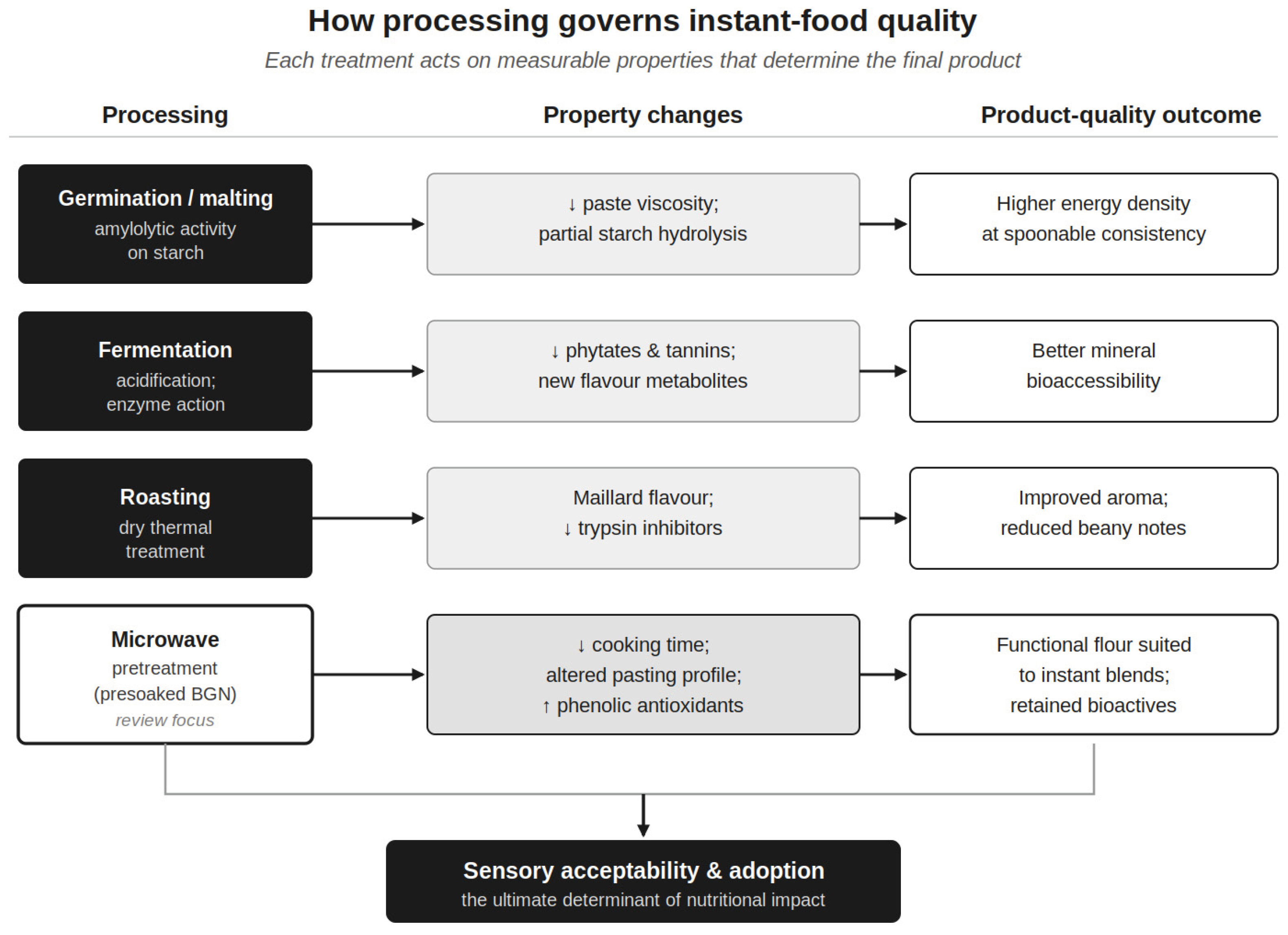
Each processing method acts on measurable properties (paste viscosity, antinutritional factors, flavour compounds, phenolics) that are expected to determine product quality; microwave pretreatment of presoaked Bambara groundnut (BGN) is a focus of this review. The arrows represent mechanistic links drawn from single-ingredient evidence (Section 7); they are not quantitative and have not been tested end-to-end in a finished BGN–finger-millet porridge.
8. Functional, Structural and Reconstitution Quality of Instant Foods
A complementary food must be both usable and nutritious. Reconstitution should be measured under defined household relevant conditions. Wettability is the time required for powder to become fully wetted; dispersibility describes the proportion that disperses without persistent lumps; reconstitution time is the time to a homogeneous serving; bulk density (g/mL) affects package volume and solids dosing; water absorption and solubility describe powder-water interactions; particle-size distribution influences hydration, graininess and segregation; and pasting or rheological tests quantify viscosity under controlled temperature, shear and solids concentration [23]. Results should report method, units, powder-to-water ratio, and serving temperature, and energy density on a dry-weight basis should be compared with the Codex minimum of 400 kcal/100 g dry weight for formulated complementary foods [50]. Evidence specific to an instant BGN-finger millet porridge remains limited, so no performance threshold should be inferred from analogous powders alone. Measured functional changes are available mainly for individual ingredients (Table 6 and Table 7): Venter et al. [13] report water-solubility index falling by up to 66% and nitrogen-solubility index by up to 81% after microwave pretreatment of Bambara groundnut, alongside decreased pasting viscosity and enthalpy; Mukwevho and Emmambux [14] similarly report pasting viscosity decreasing most under combined infrared-microwave treatment; and Mudau and Adebo [42] report finger-millet peak viscosity falling from 1305 cP (raw) to 18.4 cP (malted). These measurements show the direction and scale of change that processing can produce in individual flours. For an infant food containing Bambara nut and millet, James et al. [15] reported bulk densities of 0.33–0.43 g/mL and peak viscosities of 62.10–64.95 RVU and the only instant porridge containing both target crops [43] reported composition and starch digestibility fractions. Reconstitution, viscosity at feeding consistency and shelf-life data for a Bambara groundnut-finger millet porridge were not identified.
Scanning electron microscopy, Fourier transform infrared spectroscopy and X-ray diffraction can link process-induced changes in starch organization, protein matrices and crystallinity to measured reconstitution and texture. Shelf-life evaluation should integrate water activity, moisture, microbial counts, lipid oxidation, colour, flavour, viscosity and package-barrier performance at stated temperature and relative humidity. These data are required before claims of instant quality or storage stability are made. Chemical characterisation should accompany these structural methods: phenolic profiles of the free and bound fractions by HPLC with diode-array and mass spectrometric detection [30], phytate and lower inositol phosphates by chromatographic methods so that phytate: mineral molar ratios can be calculated [8] and volatile compounds by headspace solid phase microextraction with gas chromatography mass spectrometry [10]. Table 8 summarises the main molecular constituents, their processing responses and suitable analytical methods.
9. Sensory Quality and Consumer Acceptability
A nutrient-rich food that is rejected by caregivers or children cannot achieve meaningful nutritional impact. Reviews of food product development emphasise the role of sensory evaluation in understanding product acceptance and market potential [51]. For Bambara groundnut, beany flavour and processing characteristics have historically been identified as utilisation constraints [4,33]. Because the beany note is caused by specific lipid-oxidation volatiles [10], instrumental volatile profiling can be used alongside sensory panels to verify whether a treatment removes or masks these compounds. Thermal treatments, including microwave and roasting, may influence flavour compounds and functional properties, but consumer research is needed to establish whether technical improvements translate into actual acceptance.
One product-specific sensory study is available as a dissertation: Denhere [52], a Master’s dissertation (University of KwaZulu-Natal, 2016), substituted Bambara groundnut flour (brown and red varieties) for provitamin A biofortified maize flour at 0, 10, 20 and 30% in an instant complementary porridge and evaluated it with a 55-member untrained panel on a 9-point hedonic scale across taste, colour, aroma, texture, appearance and overall acceptability. No significant difference (p>0.05) was found between the Bambara-groundnut substituted porridges and the maize-only control on any attribute up to 30% substitution, with the author suggesting Bambara groundnut may have masked undesirable sensory characteristics of the maize base. This is analogous rather than direct evidence for the Bambara-groundnut-finger-millet combination specifically reviewed here (Bambara groundnut paired with maize, not finger millet), and it is an unpublished dissertation rather than peer-reviewed journal literature, so it is reported with both qualifications rather than as confirmation that a Bambara-groundnut-finger-millet blend would be equally acceptable. In a peer-reviewed study, Ayo and Aba [53] added Bambara-nut flour to pearl-millet ogi at five ratios (100:0 to 80:20) in madidi, a Nigerian solid gel food, and reported full numeric sensory scores (20-panelist, 9-point hedonic scale; taste, colour, texture, firmness, odour, overall acceptability) alongside proximate and mineral composition by ratio; the 85:15 millet:Bambara-nut ratio scored highest overall (7.45 of 9), with protein rising from 1.76 to 2.64 g/100g and fat from 0.26 to 0.82 g/100g between the 100:0 control and the 85:15 blend. This is also analogous rather than direct evidence (pearl millet, not finger millet, and stiff gel food, not instant porridge), but it adds blend-ratio-level numeric detail, sensory scores and composition varying together across five ratios - of the kind this synthesis has otherwise lacked. In a millet-based infant formula, James et al. [15] evaluated 95:5 blends of fermented or sprouted pearl millet and Bambara nut with a panel of 20 nursing mothers; general acceptability ranged from 6.95 to 8.05 on a 9-point scale, and fermented millet without Bambara nut scored highest. Because the panel consisted of caregivers, this study reflects caregivers rather than child acceptance. In the only study of a finished finger millet–Bambara groundnut instant porridge, products made from processed flours were reported as moderately accepted [43].
Sensory assessment should distinguish product description, caregiver acceptability and child acceptance. A trained panel can use descriptive analysis to quantify appearance, cooked or beany aroma, bitterness, cereal flavour, graininess, adhesiveness, lumpiness and aftertaste; instrumental viscosity and particle size should be measured on the same samples. Caregivers can complete blinded hedonic or preference tests and preparation-usability assessments, with preference mapping used when several formulations are compared. Child acceptance requires ethics approval, age-appropriate safe portions, and observation of intake, refusal, facial or behavioural response, and feeding duration; caregiver liking must not be used as a proxy. WHO complementary feeding guidance provides the feeding context [1], while established sensory methods guide panel design [51].
10. An Integrated Framework for Product Development
The literature supports an integrated product development framework with the following four interacting dimensions: 1) Nutritional adequacy: the product must provide meaningful amounts of protein and micronutrients and support appropriate complementary feeding, 2) Technological functionality: processing must produce a safe, stable, reconstitutable and spoonable food of appropriate energy density, 3) Sensory acceptability: caregivers and children must accept the appearance, flavour and texture and 4) Feasibility, including resource use and cost, which provides the sustainability and economic context.
This can be pursued as a multi-criteria characterisation. Nutritional indicators include protein, iron, zinc, calcium, amino acid quality, and in vitro digestibility. Technological indicators include water absorption, bulk density, viscosity, pasting and thermal properties and shelf stability. Sensory indicators include caregiver acceptability and descriptive attributes. Feasibility indicators include energy and water processing, ingredient and processing costs and affordability. Assessing these together, on a realistic serving basis, moves research beyond simply demonstrating that an underutilised crop is nutritious toward showing that it can be converted into an acceptable, functional product.
11. Research Gaps and Future Directions
Priority 1 - Integrated processing and formulation experiment. Research question: Which BGN pretreatment and BGN:finger-millet ratio produces the greatest solids content at a safe, spoonable viscosity without reducing protein digestibility? Hypothesis: microwave-pretreated BGN flour blended with finger millet will reduce apparent viscosity at equivalent dry-matter concentration while maintaining or improving in vitro protein digestibility relative to an untreated blend. Design: a factorial experiment comparing untreated, soaked, germinated, fermented and microwave-/infrared-pretreated BGN at prespecified blend ratios, with untreated BGN-finger millet as the primary comparator. Primary outcome: apparent viscosity at a defined solids concentration, shear rate and serving temperature. Secondary outcomes: reconstitution time, wettability, dispersibility, bulk density, water absorption, pasting profile, protein digestibility, mineral bioaccessibility, residual phytate and tannins, sensory acceptance and storage stability. Use independently prepared process batches and randomised analytical order. Determine replication and sample size from the expected primary-outcome difference and variance obtained from pilot or directly comparable published data; do not assign an arbitrary sample size. Analyse factorial main effects and interactions with an appropriate mixed or fixed-effects model, followed by multiplicity-controlled comparisons and reporting of estimates with confidence intervals.
Priority 2 - Microwave and infrared process validation. Prespecify cultivar, hydration, frequency, power, time, load, geometry and post-treatment drying. Test the hypothesis that microwave treatment improves cooking or instant functionality relative to presoaked non-microwaved and conventionally cooked controls. The primary outcome should be selected before experimentation; secondary measures should include energy use, temperature distribution, antinutritional factors, digestibility, and safety. Replication must be based on independent process batches, not repeated readings from a single batch [13,14,46,48,49].
Priority 3 - Serving-based nutritional adequacy. Analyse the optimised product per prepared serving and test whether it meets a prespecified contribution to age-specific energy, protein, indispensable amino-acid, iron, zinc and calcium requirements without exceeding an age-appropriate viscosity. Report limiting amino acids, standardised in vitro digestion [37], mineral bioaccessibility and phytate: mineral molar ratios.
Priority 4 - Safety and shelf life. Conduct a hazard-based study of microbiological quality, mycotoxins, heavy metals, pesticide residues where relevant, residual antinutritional factors, water activity and storage stability. Define acceptance criteria based on applicable Codex and South African requirements [19,20,21] and validate packaging under realistic temperature and humidity conditions.
Priority 5 - Sensory and feeding acceptance. First use trained descriptive analysis and caregiver acceptance testing to select safe prototypes; then, with ethics approval, test child intake and behavioural acceptance using age-appropriate textures. The primary endpoint, clinically or practically meaningful difference and variance should determine sample size [1,51].
Priority 6 - Molecular characterisation of processing effects. For each candidate treatment, quantify phytic acid and lower inositol phosphates, free and bound phenolic profiles, amino acid composition, starch structure (amylose, crystallinity and gelatinisation enthalpy) and lipid-derived volatiles before and after processing, and relate these molecular changes to in vitro protein and starch digestibility, mineral bioaccessibility, paste viscosity and sensory acceptance of the reconstituted porridge [10,16,30,37].
12. Conclusions
Published ingredient and processing studies support the potential of Bambara groundnut and finger millet for the development of complementary foods. At the molecular level, the main targets for processing are phytic acid and tannins that limit mineral and protein utilisation, cell wall changes that cause the hard-to-cook defect, starch that governs paste viscosity, and lipid oxidation volatiles that cause beany flavour. Their nutritional complementarity does not establish adequacy of a finished serving. Microwave and infrared treatments can modify Bambara groundnut flour properties [13,14], however, acceptable reconstitution, digestibility, nutrient bioaccessibility, safety, shelf life and child acceptance must be demonstrated in the final porridge. The only finished instant porridge containing both crops has been reported in a doctoral thesis [43] and the appraisal in Table 3 shows that the microwave evidence comes from well described but unreplicated single laboratory experiments. Because this narrative review was based on a non-exhaustive search, these conclusions summarise the principal evidence rather than all published studies.
Supplementary Materials
The following supporting information can be downloaded at: Preprints.org, Table S1: Type, level of evidence relevance, basis of use and location of each cited source.
Author Contributions
Conceptualization, O.P.A., S.E.R., K.R.M. and B.N.; literature analysis and synthesis, O.P.A.; writing original draft preparation, O.P.A.; writing—review and editing, K.R.M., S.E.R. and B.N.; supervision, S.E.R., K.R.M. and B.N. All authors have read and agreed to the published version of the manuscript.
Funding
This research received no external funding.
Institutional Review Board Statement
Not applicable.
Informed Consent Statement
Not applicable.
Data Availability Statement
Acknowledgments
Not Applicable.
Conflicts of Interest
The authors declare no conflicts of interest.
References
- World Health Organization. WHO Guideline for Complementary Feeding of Infants and Young Children 6–23 Months of Age; World Health Organization: Geneva, Switzerland, 2023; Available online: https://www.who.int/publications/i/item/9789240081864 (accessed on 31 August 2026).
- Oladiran, D.A.; Emmambux, N.M. Locally Available African Complementary Foods: Nutritional Limitations and Processing Technologies to Improve Nutritional Quality—A Review. Food Rev. Int. 2022, 38, 1033–1063. [Google Scholar] [CrossRef]
- Ogunniran, O.P.; Ayeni, K.I.; Shokunbi, O.S.; Krska, R.; Ezekiel, C.N. A 10-Year (2014–2023) Review of Complementary Food Development in Sub-Saharan Africa and the Impact on Child Health. Compr. Rev. Food Sci. Food Saf. 2024, 23, e70022. [Google Scholar] [CrossRef]
- Tan, X.L.; Azam-Ali, S.; Goh, E.V.; Mustafa, M.; Chai, H.H.; Ho, W.K.; Mayes, S.; Mabhaudhi, T.; Azam-Ali, S.; Massawe, F. Bambara Groundnut: An Underutilized Leguminous Crop for Global Food Security and Nutrition. Front. Nutr. 2020, 7, 601496. [Google Scholar] [CrossRef]
- Kaur, S.; Kumari, A.; Seem, K.; Kaur, G.; Kumar, D.; Verma, S.; Singh, N.; Kumar, A.; Kumar, M.; Jaiswal, S.; Bhardwaj, R.; Singh, B.K.; Riar, A. Finger Millet (Eleusine coracana L.): From Staple to Superfood—A Comprehensive Review on Nutritional, Bioactive, Industrial, and Climate Resilience Potential. Planta 2024, 260, 75. [Google Scholar] [CrossRef]
- Saini, H.K.; Sharma, A.; Vaidya, D.; Kaushal, M.; Anand, A.; Verma, R.; Sharma, A. Bambara Groundnut (Vigna subterranea L.): An Underutilised Source of Plant Protein. S. Afr. J. Bot. 2024, 174, 495–509. [Google Scholar] [CrossRef]
- Germerdonk, T.; Bach, A.; Marangoni, A.G.; Mishra, K.; Rühs, P.A. Unrefined Plant Raw Materials Are Key to Nutritious Food. Nat. Food 2025, 6, 657–663. [Google Scholar] [CrossRef]
- Gupta, R.K.; Gangoliya, S.S.; Singh, N.K. Reduction of Phytic Acid and Enhancement of Bioavailable Micronutrients in Food Grains. J. Food Sci. Technol. 2015, 52, 676–684. [Google Scholar] [CrossRef]
- Mubaiwa, J.; Fogliano, V.; Chidewe, C.; Linnemann, A.R. Hard-to-Cook Phenomenon in Bambara Groundnut (Vigna subterranea (L.) Verdc.) Processing: Options to Improve Its Role in Providing Food Security. Food Rev. Int. 2017, 33, 167–194. [Google Scholar] [CrossRef]
- Akanni, G.B.; De Kock, H.L.; Naudé, Y.; Buys, E.M. Volatile Compounds Produced by Bacillus Species Alkaline Fermentation of Bambara Groundnut (Vigna subterranea (L.) Verdc) into a Dawadawa-Type African Food Condiment Using Headspace Solid-Phase Microextraction and GC × GC–TOFMS. Int. J. Food Prop. 2018, 21, 930–942. [Google Scholar] [CrossRef]
- Baethge, C.; Goldbeck-Wood, S.; Mertens, S. SANRA—A Scale for the Quality Assessment of Narrative Review Articles. Res. Integr. Peer Rev. 2019, 4, 5. [Google Scholar] [CrossRef]
- Joanna Briggs Institute (JBI). Checklist for Quasi-Experimental Studies (Non-Randomized Experimental Studies); JBI: Adelaide, Australia, 2020; Available online: https://jbi.global/sites/default/files/2020-08/Checklist_for_Quasi-Experimental_Appraisal_Tool.pdf (accessed on 1 October 2026).
- Venter, A.; Emmambux, M.N.; Duodu, K.G. Microwave Pretreatment of Presoaked Bambara Groundnut Seeds Enhances the Functionality and Phenolics-Related Antioxidant Properties of the Resultant Flour. J. Food Biochem. 2024, 2024, 8866089. [Google Scholar] [CrossRef]
- Mukwevho, P.; Emmambux, M.N. Effect of Infrared and Microwave Treatments Alone and in Combination on the Functional Properties of Resulting Flours from Bambara Groundnut Seeds. LWT 2022, 153, 112448. [Google Scholar] [CrossRef]
- James, S.; Akosu, N.I.; Maina, Y.C.; Baba, A.I.; Nwokocha, L.; Amuga, S.J.; Audu, Y.; Omeiza, M.Y.M. Effect of Addition of Processed Bambara Nut on the Functional and Sensory Acceptability of Millet-Based Infant Formula. Food Sci. Nutr. 2018, 6, 783–790. [Google Scholar] [CrossRef]
- Jan, S.; Kumar, K.; Yadav, A.N.; Ahmed, N.; Thakur, P.; Chauhan, D.; Rizvi, Q.H.; Dhaliwal, H.S. Effect of Diverse Fermentation Treatments on Nutritional Composition, Bioactive Components, and Anti-Nutritional Factors of Finger Millet (Eleusine coracana L.). J. Appl. Biol. Biotechnol. 2022, 10, 46–52. [Google Scholar] [CrossRef]
- World Health Organization; Pan American Health Organization. Guiding Principles for Complementary Feeding of the Breastfed Child; PAHO/WHO: Washington, DC, USA, 2003; Available online: https://media.tghn.org/articles/WHO_2003_1.pdf (accessed on 1 October 2026).
- Løvdal, T.; Skaret, J.; Drobac, G.; Okole, B.; Sone, I.; Rosa-Sibakov, N.; Varela, P. Canned Complementary Porridges for Infants and Young Children (6–23 Months) Based on African Indigenous Crops; Nutritional Content, Consistency, Sensory, and Affordability Compared to Traditional Porridges Based on Maize and Finger Millet. Matern. Child Nutr. 2025, 21, e13752. [Google Scholar] [CrossRef]
- Codex Alimentarius Commission. Standard for Processed Cereal-Based Foods for Infants and Young Children, CXS 74-1981; FAO/WHO: Rome, Italy, 1981; revised 2006; amended 2017, 2019 and 2023. Available online: https://www.fao.org/fao-who-codexalimentarius/ (accessed on 24 September 2026).
- South African Department of Health. Regulations Relating to Foodstuffs for Infants and Young Children, Government Notice R.991 of 6 December 2012. Available online: https://www.health.gov.za/ (accessed on 24 September 2026).
- South African Department of Health. Regulations Relating to the Labelling and Advertising of Foodstuffs, Government Notice R.146 of 1 March 2010, as amended. Available online: https://www.health.gov.za/ (accessed on 24 September 2026).
- Codex Alimentarius Commission. General Standard for Contaminants and Toxins in Food and Feed, CXS 193-1995; FAO/WHO: Rome, Italy, 1995; Available online: https://www.fao.org/fao-who-codexalimentarius/codex-texts/list-standards/ (accessed on 30 September 2026).
- Ren, Y.; Jia, F.; Li, D. Ingredients, Structure and Reconstitution Properties of Instant Powder Foods and the Potential for Healthy Product Development: A Comprehensive Review. Food Funct. 2024, 15, 37–61. [Google Scholar] [CrossRef]
- Kumar, A.; Rani, M.; Mani, S.; Shah, P.; Singh, D.B.; Kudapa, H.; Varshney, R.K. Nutritional Significance and Antioxidant-Mediated Antiaging Effects of Finger Millet: Molecular Insights and Prospects. Front. Sustain. Food Syst. 2021, 5, 684318. [Google Scholar] [CrossRef]
- Bham, M.; Lamula, S.Q.N.; Buwa, L.V.; Kambizi, L.; Bvenura, C. Exploring Finger Millet as an Underutilised African Indigenous Grain Crop for Functional Food Development, Sustainable Nutrition, and Health. Front. Nutr. 2026, 13, 1893035. [Google Scholar] [CrossRef]
- Ikegwu, T.M.; Ikediashi, B.A.; Okolo, C.A.; Ezembu, E.N. Effect of Some Processing Methods on the Chemical and Functional Properties of Complementary Foods from Millet–Soybean Flour Blends. Cogent Food Agric. 2021, 7, 1918391. [Google Scholar] [CrossRef]
- Forsido, S.F.; Hordofa, A.A.; Ayelign, A.; Belachew, T.; Hensel, O. Effects of Fermentation and Malt Addition on the Physicochemical Properties of Cereal-Based Complementary Foods in Ethiopia. Heliyon 2020, 6, e04606. [Google Scholar] [CrossRef]
- Zhou, J.; Li, M.; Bai, Q.; de Souza, T.S.P.; Barrow, C.; Dunshea, F.; Suleria, H.A.R. Effects of Different Processing Methods on Pulses Phytochemicals: An Overview. Food Rev. Int. 2024, 40, 1138–1195. [Google Scholar] [CrossRef]
- Wright, H.; Devos, K.M. Finger Millet: A Hero in the Making to Combat Food Insecurity. Theor. Appl. Genet. 2024, 137, 139. [Google Scholar] [CrossRef]
- Chandrasekara, A.; Shahidi, F. Content of Insoluble Bound Phenolics in Millets and Their Contribution to Antioxidant Capacity. J. Agric. Food Chem. 2010, 58, 6706–6714. [Google Scholar] [CrossRef]
- Anitha, S.; Rajendran, A.; Botha, R.; Baruah, C.; Mer, P.; Sebastian, J.; Upadhyay, S.; Kane-Potaka, J. Variation in the Nutrient Content of Different Genotypes and Varieties of Millets, Studied Globally: A Systematic Review. Front. Sustain. Food Syst. 2024, 8, 1324046. [Google Scholar] [CrossRef]
- Veldsman, Z.; Pretorius, B.P.; Schönfeldt, H.C. Examining the Contribution of an Underutilized Food Source, Bambara Groundnut, in Improving Protein Intake in Sub-Saharan Africa. Front. Sustain. Food Syst. 2023, 7, 1183890. [Google Scholar] [CrossRef]
- Mashau, M.E.; Ramatsetse, K.E.; Takalani, T.; Bamidele, O.P.; Ramashia, S.E. Effect of Bioprocessing on the Nutritional Composition, Antinutrients, Functional Properties, and Metabolites of Bambara Groundnut and Its Prospective Food Applications: A Review. Molecules 2025, 30, 2356. [Google Scholar] [CrossRef]
- Oyeyinka, S.A.; Oyeyinka, A.T. A Review on Isolation, Composition, Physicochemical Properties and Modification of Bambara Groundnut Starch. Food Hydrocoll. 2018, 75, 62–71. [Google Scholar] [CrossRef]
- Chinma, C.E.; Ibrahim, P.A.; Adedeji, O.E.; Ezeocha, V.C.; Ohuoba, E.U.; Kolo, S.I.; Abdulrahman, R.; Anumba, N.L.O.; Adebo, J.A.; Adebo, O.A. Physicochemical Properties, In Vitro Digestibility, Antioxidant Activity and Consumer Acceptability of Biscuits Prepared from Germinated Finger Millet and Bambara Groundnut Flour Blends. Heliyon 2022, 8, e10849. [Google Scholar] [CrossRef]
- Ujiroghene, O.J.; Izuwa, I.; Jennifer, A. Evaluation of the Quality Characteristics of Complementary Food from Whole Maize Fortified with Bambara Groundnut and Tiger Nut. Asian Food Sci. J. 2021, 20, 41–51. [Google Scholar] [CrossRef]
- Brodkorb, A.; Egger, L.; Alminger, M.; et al. INFOGEST Static In Vitro Simulation of Gastrointestinal Food Digestion. Nat. Protoc. 2019, 14, 991–1014. [Google Scholar] [CrossRef]
- World Health Organization; Food and Agriculture Organization of the United Nations. Vitamin and Mineral Requirements in Human Nutrition, 2nd ed.; World Health Organization: Geneva, Switzerland, 2004. [Google Scholar]
- World Health Organization; Food and Agriculture Organization of the United Nations; United Nations University. Protein and Amino Acid Requirements in Human Nutrition: Report of a Joint WHO/FAO/UNU Expert Consultation; WHO Technical Report Series 935; World Health Organization: Geneva, Switzerland, 2007. [Google Scholar]
- Mabitsela, M.M.; Mavengahama, S.; Booysen, M.J.; Phiri, E.E. Characterisation of Bambara Groundnut Landraces: Nutritional and Proximate Composition. S. Afr. J. Sci. 2025, 121(7/8), Art. #18925. [Google Scholar] [CrossRef]
- Sharma, S.; Anurag; Garg, A.P. Effect of Germination on the Physicochemical and Antinutritional Properties of Finger Millet (Eleusine coracana), Pearl Millet (Pennisetum glaucum), and Sorghum (Sorghum bicolor). Pharma Innov. J. 2023, 12(3), 4763–4772. [Google Scholar]
- Mudau, M.; Adebo, O.A. Effect of Traditional and Novel Processing Technologies on the Thermo-Pasting, Microstructural, Nutritional, and Antioxidant Properties of Finger Millet and Bambara Groundnut Flours. Int. J. Food Sci. Technol. 2025, 60, vvae037. [Google Scholar] [CrossRef]
- Mudau, M. Development of Nutritious Instant Porridge and Three-Dimensional (3D) Printed Biscuits from Conventional and Novel-Processed Finger Millet, Bambara Groundnut and Moringa oleifera Leaf Powder Blends. Ph.D. Thesis, University of Johannesburg, Johannesburg, South Africa, 2025. Available online: https://ujcontent.uj.ac.za/esploro/outputs/doctoral/Development-of-nutritious-instant-porridge-and/9963006607691 (accessed on 13 October 2026).
- Ananthu, R.; Buvaneswaran, M.; Meena, L.; Sunil, C.K. Microwave Treatment Effect on Functional and Pasting Properties, and Storage Stability of White Finger Millet. J. Food Process Eng. 2023, 46, e14341. [Google Scholar] [CrossRef]
- Kumar, Y.; Dey, S.; Swetha, A. Effect of Microwave Treatment on Functional Characteristics of Finger Millet for the Development of Millet Cake. Cereal Chem. 2025, 102, 1068–1078. [Google Scholar] [CrossRef]
- Manikpuri, S.; Kheto, A.; Sehrawat, R.; Gul, K.; Routray, W.; Kumar, L. Microwave Irradiation of Guar Seed Flour: Effect on Anti-Nutritional Factors, Phytochemicals, In Vitro Protein Digestibility, Thermo-Pasting, Structural, and Functional Attributes. J. Food Sci. 2024, 89, 2188–2201. [Google Scholar] [CrossRef]
- Belov, A.; Savenko, E.; Storchevoy, V. Effect of Microwave Treatment versus Infrared Heating and Autoclaving on Physicochemical Properties and Antinutrients of Soybeans. J. Food Meas. Charact. 2025, 19, 3374–3383. [Google Scholar] [CrossRef]
- Javed, M.R.; Ahmad, Z.; Waseem, M.; Mehmood, T.; Hussain, A.; Adil, M.; Manzoor, M.F.; Abdi, G. Effect of Microwave Heat Processing on Nutritional, Antioxidant, Antinutrient, and Sensory Indices of Soy Flour Enriched Functional Noodles. J. Agric. Food Res. 2024, 18, 101426. [Google Scholar] [CrossRef]
- Atuonwu, J.C.; Tassou, S.A. Energy Issues in Microwave Food Processing: A Review of Developments and the Enabling Potentials of Solid-State Power Delivery. Crit. Rev. Food Sci. Nutr. 2019, 59, 1392–1407. [Google Scholar] [CrossRef]
- Codex Alimentarius Commission. Guidelines on Formulated Complementary Foods for Older Infants and Young Children, CAC/GL 8-1991 (Revised 2013); FAO/WHO: Rome, Italy, 2013; Available online: https://www.fao.org/input/download/standards/298/CXG_008e.pdf (accessed on 1 October 2026).
- Mihafu, F.D.; Issa, J.Y.; Kamiyango, M.W. Implication of Sensory Evaluation and Quality Assessment in Food Product Development: A Review. Curr. Res. Nutr. Food Sci. 2020, 8, 690–702. [Google Scholar] [CrossRef]
- Denhere, S. The Effect of Adding Bambara Groundnut (Vigna subterranea L.) on the Nutritional, Functional and Sensory Quality of a Provitamin A-Biofortified Maize Complementary Instant Porridge. M.Sc. Dissertation, University of KwaZulu-Natal, Pietermaritzburg, South Africa, 2016. Available online: http://hdl.handle.net/10413/15120 (accessed on 1 October 2026).
- Ayo, J.A.; Aba, F. Effect of Bambara Nut Flour Addition on Proximate, Mineral Composition and Sensory Quality of Millet-Based Madidi: A Nigerian Solid Gel Food. Asian Food Sci. J. 2020, 16(4), 1–10. [Google Scholar] [CrossRef]
Table 1.
Database-specific search strings covering the scope of the review.
| Database | Search strategy | Filters | Publication window | Notes |
|---|---|---|---|---|
| PubMed | Search 1 (Bambara groundnut): (“Bambara groundnut”[Title/Abstract] OR “Vigna subterranea”[Title/Abstract] OR “Bambara bean”[Title/Abstract]) AND (“complementary food*”[Title/Abstract] OR “weaning food*”[Title/Abstract] OR “infant food*”[Title/Abstract] OR “instant food*”[Title/Abstract] OR processing[Title/Abstract] OR composition[Title/Abstract] OR digestibility[Title/Abstract] OR functional*[Title/Abstract] OR sensory[Title/Abstract] OR antinutrient*[Title/Abstract] OR phytate[Title/Abstract] OR tannin*[Title/Abstract] OR “shelf life”[Title/Abstract] OR “shelf-life”[Title/Abstract] OR safety[Title/Abstract] OR microwave[Title/Abstract] OR fermentation[Title/Abstract] OR germination[Title/Abstract] OR malting[Title/Abstract] OR roasting[Title/Abstract]). Search 2 (finger millet): (“finger millet”[Title/Abstract] OR “Eleusine coracana”[Title/Abstract] OR ragi[Title/Abstract]) AND (“complementary food*”[Title/Abstract] OR “weaning food*”[Title/Abstract] OR “infant food*”[Title/Abstract] OR “instant food*”[Title/Abstract] OR processing[Title/Abstract] OR composition[Title/Abstract] OR digestibility[Title/Abstract] OR functional*[Title/Abstract] OR sensory[Title/Abstract] OR antinutrient*[Title/Abstract] OR phytate[Title/Abstract] OR tannin*[Title/Abstract] OR “shelf life”[Title/Abstract] OR “shelf-life”[Title/Abstract] OR safety[Title/Abstract] OR microwave[Title/Abstract] OR fermentation[Title/Abstract] OR germination[Title/Abstract] OR malting[Title/Abstract] OR roasting[Title/Abstract]). Filters: English; Publication date from 2000/01/01 to 2026/08/31. | English; 1 Jan 2000–31 Aug 2026 | 1 January 2000–31 August 2026 | Combined with citation searching; record counts not kept (narrative review) |
| Web of Science | Search 1 (Bambara groundnut): TS=((“Bambara groundnut” OR “Vigna subterranea” OR “Bambara bean”) AND (“complementary food*” OR “weaning food*” OR “infant food*” OR “instant food*” OR processing OR composition OR digestibility OR functional* OR sensory OR antinutrient* OR phytate OR tannin* OR “shelf life” OR “shelf-life” OR safety OR microwave OR fermentation OR germination OR malting OR roasting)). Search 2 (finger millet): TS=((“finger millet” OR “Eleusine coracana” OR ragi) AND (“complementary food*” OR “weaning food*” OR “infant food*” OR “instant food*” OR processing OR composition OR digestibility OR functional* OR sensory OR antinutrient* OR phytate OR tannin* OR “shelf life” OR “shelf-life” OR safety OR microwave OR fermentation OR germination OR malting OR roasting)). Filters: English language; Timespan 2000-01-01 to 2026-08-31; Document types: Article OR Review. | English; 1 Jan 2000–31 Aug 2026 | 1 January 2000–31 August 2026 | Combined with citation searching; record counts not kept (narrative review) |
| ScienceDirect | Search 1 (Bambara groundnut): TITLE-ABSTR-KEY((“Bambara groundnut” OR “Vigna subterranea” OR “Bambara bean”) AND (“complementary food” OR “weaning food” OR “infant food” OR “instant food” OR processing OR composition OR digestibility OR functional OR sensory OR antinutrient OR phytate OR tannin OR “shelf life” OR “shelf-life” OR safety OR microwave OR fermentation OR germination OR malting OR roasting)). Search 2 (finger millet): TITLE-ABSTR-KEY (“finger millet” OR “Eleusine coracana” OR ragi) AND (“complementary food” OR “weaning food” OR “infant food” OR “instant food” OR processing OR composition OR digestibility OR functional OR sensory OR antinutrient OR phytate OR tannin OR “shelf life” OR “shelf-life” OR safety OR microwave OR fermentation OR germination OR malting OR roasting)). Filters: Research articles and review articles; English; 2000–2026. | Research and review articles; English; 1 Jan 2000–31 Aug 2026 | 1 January 2000–31 August 2026 | Combined with citation searching; record counts not kept (narrative review) |
| Manual searching | Backward searching of eligible reports and relevant reviews. | Same eligibility criteria | 1 January 2000–31 August 2026 | Applied to included studies and recent reviews |
Table 2.
Appraisal domains applied to primary processing studies, adapted from the JBI checklist [12].
Table 2.
Appraisal domains applied to primary processing studies, adapted from the JBI checklist [12].
| Domain | Question used in interpretation | Consequence when not reported |
|---|---|---|
| Material and sample | Are species, cultivar/source, sample size and preparation described? | Limits reproducibility and generalisability |
| Replication and comparator | Are independent replicates and an appropriate untreated or standard comparator reported? | Weakens causal interpretation |
| Process definition | Are time, temperature, moisture, power/load and other relevant conditions reported? | Prevents process replication and cross-study comparison |
| Measurements | Are validated analytical methods and units specified? | Reduces confidence in outcome comparability |
| Statistics | Are the analysis, variability and statistical significance reported? | Direction alone cannot establish magnitude or certainty |
| Outcome completeness | Are all prespecified or relevant outcomes reported? | Raises concern about selective or incomplete reporting |
| Applicability | Does the study evaluate either target crop or a finished complementary food? | Analogous evidence supports plausibility only |
Table 3.
Appraisal of primary processing studies whose full methods sections were assessed.
| Domain | Venter et al. [13] | Mukwevho and Emmambux [14] | James et al. [15] | Jan et al. [16] |
|---|---|---|---|---|
| Material and sample | Brown and red seeds from a commercial supplier; cultivar not named; approximately 50 g batches. | Seeds from a commercial supplier; cultivar not named. | Pearl millet and Bambara nut bought at a local market; varieties not named. | Finger millet cultivar GPHCPB-17 from university experimental farms; 20 g flour per fermentation flask. |
| Replication and comparator | Treatments in triplicate; untreated presoaked seeds as comparator; independence of batches not stated; no conventionally cooked control. | Treatments in triplicate in a 2 × 3 × 3 factorial design; raw and 0-min controls at each moisture level; independence of batches not stated. | Triplicate determinations; millet-only samples as comparators; preparation batches not described. | Triplicate determinations (mean ± SD); raw unfermented flour as comparator; independence of batches not stated. |
| Process definition | Hydration (40% moisture, 37 °C, 24 h), power, time and air temperature reported; microwave frequency not reported. | Moisture, surface temperature and time reported; microwave and infrared power stated differently in the Methods and Results. | Soaking, fermentation, and sprouting times, and drying temperature are reported; drying times are inconsistent within the text. | Inoculum volumes, 37 °C incubation for 12, 24 or 36 h and drying at 50 °C reported; starter cell counts not reported. |
| Measurements | Standard methods with units for cooking time, WSI, NSI, pasting, DSC, total phenolics and ABTS. | Methods and units for WAC, WSI, NSI, pasting, DSC and microscopy; NSI values above 100% not explained; pasting viscosity units not stated. | Methods stated for functional, pasting and sensory properties; water absorption reported in g/cm³. | Units reported for all outcomes (phytic acid, tannins, protein, minerals, total phenolics, DPPH). |
| Statistics | Multifactorial ANOVA with LSD test (p ≤ 0.05). | MANOVA (GLM) with LSD test (P ≤ 0.05). | ANOVA with Duncan’s multiple range test (5%); software not named. | One-way ANOVA (SPSS) with post hoc comparison (P ≤ 0.05). |
| Outcome completeness | All listed outcomes reported; pasting curves and enthalpy shown graphically only. | Most outcomes tabulated; pasting reported graphically only, so the stated rise in pasting temperature lacks numerical support. | All outcomes reported, except peak time listed in the Methods. | All listed outcomes tabulated; the abstract attributes the highest phenolic content to L. plantarum fermentation, whereas the Results report the highest value after yeast + activator fermentation. |
| Applicability | Direct Bambara groundnut ingredient evidence; no blend or porridge tested. | Direct Bambara groundnut ingredient evidence; no blend or porridge tested. | Bambara nut with pearl millet in an infant formula; analogous for finger millet; caregiver panel (20 nursing mothers, random presentation, no ethics statement). | Direct finger millet ingredient evidence; fermented flour only, no blend or porridge tested. |
| Implication for this review | Supports a consistent processing effect within one laboratory; independent replication is lacking. | Supports the mechanism (starch gelatinisation, protein aggregation); NSI magnitudes uncertain. | Shows that 5% fermented or sprouted Bambara nut can be acceptable to caregivers; the low inclusion level limits protein gain. | Supports fermentation to lower phytate and tannins in finger millet; magnitudes are treatment- and time-dependent and come from a single laboratory. |
ABTS = 2,2′-azino-bis(3-ethylbenzothiazoline-6-sulfonic acid) radical-scavenging assay; ANOVA = analysis of variance; DPPH = 2,2-diphenyl-1-picrylhydrazyl radical-scavenging assay; DSC = differential scanning calorimetry; GAE = gallic acid equivalents; GLM = general linear model; LSD = least significant difference; MANOVA = multivariate analysis of variance; NSI = nitrogen-solubility index; WAC = water absorption capacity; WSI = water-solubility index.
Table 5.
Indicative nutritional composition of Bambara groundnut and finger millet, with source mapping.
Table 5.
Indicative nutritional composition of Bambara groundnut and finger millet, with source mapping.
| Component (per 100 g, dry basis as stated by cited sources) | Bambara groundnut | Sources | Finger millet | Sources |
|---|---|---|---|---|
| Protein (g) | 17–25 | [4,6,32,33] | 6–14 | [5,24] |
| Carbohydrate (g) | 55–70 | [4,6,33] | ~72 | [5,24] |
| Fat (g) | 1.4–12 (commonly 6–8) | [4,6,33] | ~1.5 | [5,24] |
| Dietary fibre (g) | 5.2–6.4 | [4,6,33] | 3.5–13 | [5,24] |
| Ash (g) | 1.9–4.7 | [4,6,33] | 1.8–2.8 | [5,24] |
| Calcium (mg) | 40–95 | [4,6,32] | 273–380 | [5,24] |
| Iron (mg) | 4.0–9.3 | [4,6,32] | ~4.3 | [5,24] |
| Zinc (mg) | 2.1–5.0 | [4,6,32] | 2.1–3.0 | [5,24] |
Note: g = gram; mg = milligram.
Table 8.
Key molecular constituents of Bambara groundnut (BGN) and finger millet (FM), their response to processing and suitable analytical methods.
Table 8.
Key molecular constituents of Bambara groundnut (BGN) and finger millet (FM), their response to processing and suitable analytical methods.
| Constituent | Relevance and processing response | Analytical approach |
|---|---|---|
| Proteins and amino acids | BGN lysine complements cereal protein; FM methionine is about twice that of maize and rice [29]. Heating aggregates protein and lowers nitrogen solubility [13,14]; fermentation raised FM protein from 9.10% to 13.13% [16] | Amino acid analysis after acid hydrolysis; standardised in vitro digestion [37] |
| Starch | Main energy source and determinant of viscosity [34]; malting lowered FM peak viscosity from 1305 to 18.4 cP [42]; BGN inclusion raised resistant and slowly digestible starch in biscuits [35] | Rapid visco-analysis, differential scanning calorimetry, X-ray diffraction, in vitro starch digestion |
| Phytic acid | Chelates Fe, Zn and Ca [8]; L. brevis fermentation lowered FM phytate from 629.00 to 207.94 mg/100 g [16] | Chromatographic analysis of inositol phosphates; phytate: mineral molar ratios |
| Phenolic acids and tannins | Antioxidant; bind proteins and minerals; bound hydroxycinnamic acids predominate in millets [30]; fermentation raised FM total phenolics from 1.07 to 2.10 mg GAE/g and lowered tannins by 57.9% [16] | Folin–Ciocalteu assay; HPLC-DAD-MS of free and bound fractions |
| Cell-wall pectin and lignin | Hard-to-cook defect after warm, humid storage [9]; microwave pretreatment cut BGN cooking time from 219 to 45 min [13] | Cooking time, texture analysis, cell-wall fractionation |
| Lipid-derived volatiles | Beany notes from hexanal, 2-pentylfuran, 1-hexanol and 1-octen-3-ol [10] | HS-SPME with GC–MS or GC×GC–TOFMS |
| Minerals | FM calcium 117.5–1400 mg/100 g across genotypes [31]; bioavailability depends on phytate and phenolics [8] | ICP-OES or AAS; in vitro bioaccessibility |
AAS = atomic absorption spectrometry; GAE = gallic acid equivalents; GC–MS = gas chromatography–mass spectrometry; GC×GC–TOFMS = comprehensive two-dimensional gas chromatography–time-of-flight mass spectrometry; HPLC-DAD-MS = high-performance liquid chromatography with diode-array and mass-spectrometric detection; HS-SPME = headspace solid-phase microextraction; ICP-OES = inductively coupled plasma optical emission spectrometry.
Disclaimer/Publisher’s Note: The statements, opinions and data contained in all publications are solely those of the individual author(s) and contributor(s) and not of MDPI and/or the editor(s). MDPI and/or the editor(s) disclaim responsibility for any injury to people or property resulting from any ideas, methods, instructions or products referred to in the content. |
© 2026 by the authors. Licensee MDPI, Basel, Switzerland. This article is an open access article distributed under the terms and conditions of the Creative Commons Attribution (CC BY) license (http://creativecommons.org/licenses/by/4.0/).
Copyright: This open access article is published under a Creative Commons CC BY 4.0 license, which permit the free download, distribution, and reuse, provided that the author and preprint are cited in any reuse.