

Submitted:
13 November 2026
Posted:
16 November 2026
You are already at the latest version
Abstract
Background: Continuous physiologic monitoring produces large volumes of high-resolution data in neonatal intensive care units (NICUs), but clinicians do not rou-tinely convert these data into automated longitudinal assessments of infant physiologic wellness. Objective: To evaluate the technical and implementation feasibility of an in-tegrated digital platform (iNICU) incorporating the digital Review of Oxygen Saturation and Events (dROSE) algorithm for automated daily infant wellness reporting. Methods: We conducted a prospective, three-phase feasibility study in a quaternary NICU using seven instrumented beds. We collected heart rate, respiratory rate, and oxygen saturation data at 1 Hz. dROSE applied predefined oxygen saturation and desaturation-frequency thresholds to classify daily physiologic wellness as stable, watcher, or unstable. We evaluated pre-specified feasibility criteria, compared dROSE classifications with inde-pendent bedside nurse assessments, descriptively examined subsequent clinical dete-rioration and improvement events, and assessed requirements for broader deployment using Technology Readiness Level (TRL) criteria. Results: Fifty-nine infants and 25 nurses participated. Physiologic data capture completeness was 86%, below the pre-specified 90% threshold. Following technical refinement, concordance with the reference monitoring system reached 92% for desaturation events, 91% for bradycardia events, and 90% for oxygen saturation histograms. The system auto-generated 451 eligible daily infant wellness reports. Among 126 paired assessments from 18 infants, exact agreement be-tween dROSE and bedside nurse classifications was 49.2%, with dROSE assigning a higher-severity category in 45.2%. Subsequent deterioration-event rates across nurse-assigned stable, watcher, and unstable states were 3.2, 13.2, and 15.0 events per 10 observation-days, compared with 1.4, 4.0, and 3.1 following the corresponding dROSE classifications. The team created a roadmap for broader deployment but did not carry out testing at full-unit scale. The team achieved TRL 6 with the integrated system and con-sidered it to be progressing toward TRL 7. Conclusions: The iNICU-dROSE system demonstrated pilot-scale feasibility for automated physiologic data acquisition, pro-cessing, and reporting, but limitations in acquisition reliability, high-volume reporting, and clinical concordance remain. The TRL-based assessment supports a “CONDITIONAL GO” for continued technical development, outcome-based refinement and validation of the wellness-classification approach, and targeted retesting before broader operational or clinical implementation
Keywords:
infant wellness reports
; neonatal intensive care unit
; digital health
; technological feasibility
1. Introduction
Continuous physiologic monitoring is a cornerstone of neonatal intensive care. Continuous assessment of heart rate, respiratory rate, temperature, blood pressure, and oxygen saturation enables recognition of clinically important abnormalities such as apnea, bradycardia, hypotension, temperature instability, and hypo- or hyperoxemia (1), particularly in preterm infants with cardiorespiratory and neurologic immaturity (2–4). Beyond detection of individual events, continuous monitoring supports goal-directed therapies and allows clinicians to evaluate physiologic trends and changes in an infant’s overall trajectory (1,5).
Patterns derived from continuously acquired data may provide information beyond isolated measurements. For example, time spent outside target oxygen saturation ranges and the frequency of intermittent hypoxemic events have been associated with important neonatal outcomes, including bronchopulmonary dysplasia and retinopathy of prematurity (6–8). Continuous monitoring therefore has three complementary applications: identifying longitudinal trends, detecting deviations beyond predefined physiologic limits, and summarizing an infant’s physiologic status over a clinically meaningful time interval.
Although the NICU generates a large volume of physiologic data, clinicians do not routinely receive this information in concise, longitudinal summaries that are easy to interpret (9–11). Reviewing longitudinal physiologic trends requires clinicians to gather, integrate, and interpret large volumes of information from multiple sources, a task constrained by the limits of human working memory and cognitive processing (12,13). In high-acuity settings, this complexity can make a consistent synthesis of continuous data challenging (14). Structuring related physiologic information into concise summaries and clinically meaningful categories may reduce cognitive complexity and support recognition of important patterns and changes over time (12,14).
Review of Oxygen Saturation and Events (ROSE) tool (10), a paper-based clinical surveillance tool developed by our team to summarize daily oxygen saturation distribution and desaturation frequency and translate physiological data into three infant wellness states: stable, watcher, and unstable (Supplemental Figure 1). ROSE uses predefined IF-THEN rules to provide a common language for describing physiologic wellness and, in previous quality-improvement work, (9,10) supported structured discussion of infant status and changes in clinical state during bedside rounds.
Digital aggregation and automated processing of bedside physiologic data provide an opportunity to address this gap. Instead of presenting each parameter independently, clinicians might integrate continuously acquired data over a defined interval and translate it into standardized physiologic summaries that describe an infant’s current status and trajectory (10). Such an approach may provide clinicians with a consistent framework for longitudinal surveillance while preserving access to the underlying physiologic information.
AIM
The aim of this study was to evaluate the feasibility of a digital health approach that automatically aggregates and processes continuous physiologic data from the preceding 24 hours to generate a standardized daily infant wellness report at a predefined time each day.
The specific objectives were to assess: (i) Technical feasibility, including the ability of digital health system to acquire, process, and summarize continuous physiologic data and generate automated infant wellness reports. (ii)Implementation feasibility, including the technical, operational, contractual, and personnel support required to establish and maintain the system within routine NICU care. (iii) Reporting capability, and data management capability, including automated report generation, longitudinal data retrieval, data export, customization, and management of clinical and demographic information. (iv) Exploratory clinical concordance, including an agreement between automated wellness categorizations by digital health system and bedside nurse assessments, and the descriptive relationship between wellness categories and subsequent clinical deterioration or improvement events; and (v) Scalability and sustainability including the technical, infrastructure, privacy, data governance, operational, and economic requirements for broader implementation.
2. Materials and Methods
We conducted a prospective feasibility study in a quaternary NICU using a multidomain feasibility evaluation approach. The study received institutional Research Ethics Board approval (REB No. H22-02954). Participating families and bedside nurses provided informed consent. We structure our report informed by Strengthening the Reporting of Observational Studies in Epidemiology (STROBE) guidelines (15) for observational studies.
2.1. NICU Setting and Physiological Monitoring Before the Pilot
We conducted the study in the NICU, which has a single-family room design. Clinicians continuously monitored infants with bedside cardiorespiratory monitors during most of their NICU stay, excluding selected times like parent-led care just before discharge. The Neonatal Event Review (NER) application, Revision 3.0, captured physiologic events automatically within the Event Surveillance functionality of Philips IntelliVue MX800 bedside monitors running IntelliVue software Release N.0005 (16). The system identified and archived events using predefined combinations of physiologic thresholds, validation delays, and multi-parameter correlation rules configured independently of routine bedside audible alarm thresholds. In the unit’s Philips monitors, Neonatal Event Review had been setup, with the oxygen desaturation defined as saturation of oxygen (SpO2) remaining under 80% for a minimum of 10 seconds. Bradycardia as a heart rate below 80 beats per minute lasting at least 5 seconds, and apnea as a respiratory rate of zero breaths per minute lasting at least 20 seconds.
2.2. Pilot Study Setup and Phases
We conducted the study in three phases, with a clinical concordance subset nested within Phase 2.
2.2.1. Phase 1
(February to May 2023) established the technical and operational requirements for the seven-bed pilot. We equipped seven adjacent beds in the 70-bed NICU with NEO data-aggregation devices linked to the integrated Neonatal Intensive Care Unit (iNICU) platform (11,17). The system acquired continuous physiologic data from bedside monitors, stored and processed these data locally, applied predefined ROSE clinical rules, and generated automated visual wellness reports. We converted ROSE (10) into a digital algorithm (dROSE) that classified daily physiologic wellness as stable, watcher, or unstable; the iNICU platform and dROSE algorithm are described in greater detail later in the Methods. Hospital biomedical engineering and information technology teams supported installation and troubleshooting, while the industry partner supported device-data acquisition, software configuration, implementation of study-specific rules, and development of the automated report display. During Phase 1, we evaluated data flow, storage, processing, automated reporting, and the technical and operational requirements for maintaining the pilot. Infants cared for in the seven study beds during active study periods constituted the study population.
2.2.1.1. Study-Specific Adaptation of the iNICU Platform
For continuous recording, the NEO data aggregator connected to the medical interface bus (MIB)/RS232 serial port of each Philips MX800 bedside monitor and acquired numerical heart rate, respiratory rate, and SpO2 values at 1 Hz. The iNICU platform, developed by Child Health Imprints (11,17) was designed for longitudinal physiologic data integration, storage, analysis, and reporting For this feasibility study, the platform was adapted to operate in an isolated local environment rather than through the hospital enterprise network.
The industry partner provided an HP laptop running Ubuntu/Linux with a 10-core CPU and initially 8 GB RAM, configured as the local application and database host. NEO devices connected over Wi-Fi through a Cisco Small Business 24-port switch, while the Philips monitor-to-NEO connections used physical cables. They connected the switch directly to the study laptop because the hospital did not permit connection to the hospital enterprise network. The laptop supported physiologic data ingestion, database operations, rule-based processing, report generation, and data retrieval across the seven study beds.
The NEO/iNICU device-integration layer captured physiologic data from supported bedside devices but did not contain patient clinical context or interface with the hospital electronic medical record. The research team entered study-specific demographic information, nurse wellness assessments, and clinical improvement and deterioration events separately, and they manually linked the physiologic data with the clinical context. The research team configured the NEO/iNICU system to use the same physiologic event definitions and thresholds as the existing Philips bedside monitors during the pilot study.
During Phase 1 troubleshooting, the team investigated episodes of missing iNICU data by comparing the bedside monitor display, NEO connectivity status, and Philips IntelliVue X2 module (multi-measurement portable patient-monitoring module that can operate either connected to the bedside monitor or independently on battery power) connection state. We undertook these investigations in response to observed data loss rather than as a pre-specified analysis, and we did not prospectively quantify individual causes of missing data.
2.2.2. Phase 2
(August 2023 to April 2024) evaluated system functionality and concordance between iNICU-derived measures and the Philips bedside monitoring system, including SpO2 distributions, bradycardia events, and desaturation frequency. During this phase, the team developed and refined demographic and daily clinical event-entry screens, and the programmer optimized automated physiologic report prototypes for content and visual presentation. Industry-partner involvement in bedside device-data access and related technical support continued through January 2024; subsequent study activities used the established configuration and were undertaken by the research team.
2.2.2.1. A Phase 2 Clinical Concordance Subset
(November 2023 to April 2024) evaluated automated reporting, data-management processes, and exploratory clinical concordance. Researchers collected daily physiologic and clinical information prospectively from infants in the seven study beds. Bedside nurses independently classified each infant’s overall wellness as stable, watcher, or unstable based on their integrated clinical judgment from handover, bedside rounds, examination, and direct care, and separately classified change from the previous day as unchanged, improved, or deteriorated. The team blinded the nurses to the corresponding dROSE classification. We also descriptively examined predefined clinical deterioration and improvement events occurring on the classification day and during the following 48 hours, representing a 72-hour observation window.
2.2.3. Phase 3
(November 2024 to February 2025) focused on requirements for broader implementation beyond the seven-bed pilot. The assessment considered scalability, infrastructure and computing requirements, privacy and security, data-governance readiness, operational support, training, and resource needs. Relevant institutional and technical experts contributed to this planning exercise, which informed the progression decision of whether the system should advance to the next stage of development and testing.
2.3. Data Sources
Besides continuous physiologic data, we collected infant demographic characteristics, respiratory and medication support, and predefined clinical deterioration and improvement events (18). Additional data sources included the electronic health record, institutional discharge databases, patient-safety reporting systems, field notes, and study-team deliberations.
2.4. Digital ROSE Algorithm for Automated Infant Wellness Classification
The dROSE algorithm assessed data over a rolling 24-hour period and classified infant wellness as stable, watcher, or unstable using predefined thresholds. Our team created it as a structured physiologic surveillance and common-language tool to support a longitudinal assessment of infant wellness, facilitate recognition of changes in clinical trajectory, and help clinicians evaluate physiologic responses to interventions (9,10,18). The resulting summaries aimed to inform bedside review and help decide whether to escalate, de-escalate, or continue current care, rather than serve as a stand-alone predictive model or treatment-directive tool (9,10).
2.4.1. Primary Components of the dROSE Classification
The primary dROSE classification was based on three oxygenation-related measures derived from the preceding 24 hours and consistent with previous neonatal studies (19) using continuous SpO2 histograms; (1) percentage of valid monitoring time within the target SpO2 range (WTR); (2) percentage of valid monitoring time below the target SpO2 range (BTR); and (3) the frequency of desaturation events standardized to 24 hours. The applicable SpO2 target range differed according to whether the infant was receiving supplemental oxygen.
For infants not receiving supplemental oxygen, the target SpO2 range was 91–100%. We classified WTR ≥91% as stable, 75% to 90% as watcher, and <75% as unstable. BTR represented the proportion of valid monitoring time with SpO2 <91%; BTR ≤10% was classified as stable, >10% to <25% as watcher, and ≥25% as unstable. For infants receiving supplemental oxygen, the target SpO2 range was 91–95%. We applied the same WTR thresholds: they classified ≥91% as stable, 75% to <91% as watcher, and <75% as unstable. BTR remained defined as the proportion of valid monitoring time with SpO2 <91%, with ≤10% classified as stable, >10% to <25% as watcher, and ≥25% as unstable. Desaturation burden was determined from the number of desaturation events occurring during the valid monitoring interval. Since the duration of valid monitoring could vary within a 24-hour assessment window, we standardized the observed event count to an equivalent 24-hour frequency: we calculated standardized desaturation events per 24 hours by dividing observed desaturation events by valid monitoring hours and then multiplying by 24. For example, 12 desaturation events occurring during 12 hours of valid monitoring corresponded to a standardized frequency of 24 events per 24 hours.
Consistent with previous neonatal studies that quantify intermittent hypoxemia as the number or frequency of desaturation events over a 24-hour period, we expressed desaturation burden as standardized events per 24 hours (1). Within the predefined dROSE algorithm, standardized desaturation frequency was classified as stable at ≤5 events/24 hours, watcher at >5 to ≤30 events/24 hours, and unstable at >30 events/24 hours.
2.4.2. Minimum Valid Monitoring Time
dROSE generated a wellness classification only if at least 50% of the preceding 24-hour period contained valid monitoring data. We used the valid SpO2 monitoring time as the denominator to calculate WTR and BTR. We removed intervals of unavailable or technically invalid signal instead of interpreting them as normal or abnormal physiology. When <12 hours of valid data were available, the algorithm did not assign a stable, watcher, or unstable category and instead reported insufficient data for classification.
2.4.3. Determination of the Overall dROSE Infant Wellness State
We assigned each primary component to a category of stable, watcher, or unstable independently. We determined overall dROSE wellness by applying a highest-severity rule. Any unstable component resulted in an overall classification of unstable. In the absence of an unstable component, one or more watcher components resulted in an overall watcher classification. We classified an infant as stable only when all three primary components satisfied the stable criteria. Thus, we ordered severity as stable < watcher < unstable, and the overall dROSE category represented the highest severity identified across WTR, BTR, and standardized desaturation frequency.
2.4.4. Time Spent Above the Oxygen Saturation Target Range
We also calculated the percentage of valid monitoring time above the target SpO2 range (>95%) for infants receiving supplemental oxygen. We categorized time above the target range (ATR) as stable if it was ≤10%, as watcher if it was >10% to <25%, and as a high-ATR state if it was ≥25%. We showed ATR as an additional measure of oxygen exposure but excluded it from the determination of the primary dROSE wellness state. We made this distinction because prolonged time above the target range may indicate excessive oxygen exposure or an opportunity to reduce supplemental oxygen rather than physiologic deterioration. Therefore, we intended an ATR ≥25% to prompt clinicians to review oxygen requirements, consider oxygen weaning when appropriate, and confirm that they set the upper SpO2 alarm limit correctly.
2.4.5. Handling of Zero Events and Missing Data
We explicitly categorized the absence of an abnormal physiologic finding as stable. Accordingly, we treated BTR of 0%, zero desaturation events, and absence of tachypnea or tachycardia during valid monitoring as stable observations.
2.4.6. Longitudinal Interpretation of dROSE Wellness States
dROSE was designed to provide both a current wellness category and a longitudinal representation of change in physiologic status. We considered transitions from stable to watcher or unstable, or from watcher to unstable, as deterioration. We considered transitions from unstable to watcher or stable, or from watcher to stable, as improvements. Changes in dROSE category served as potential surveillance cues for clinicians to review, not as instructions for treatment. The study team withheld dROSE results from clinicians for decision-making and did not assess their potential impact on investigation, treatment, or monitoring.
2.5. Manual Categorization of Infant Wellness States
During the clinical concordance subset of Phase 2, bedside nurses independently categorized participating infants’ daily overall wellness as stable, watcher, or unstable based on their clinical judgment. A study team member approached the nurse caring for each participating infant between approximately 12:00 and 14:00 each study day. The study coordinator informed the nurses that the infant was participating in the study and asked them to classify the infant’s current wellness without access to the corresponding dROSE result. The coordinator subsequently entered the nurse-assigned category into the study database alongside the automated dROSE classification. Nurses were occasionally on break or providing direct patient care at the time of data collection, which made manual assessments unavailable. We did not routinely obtain assessments on weekends, statutory holidays, or during study team member absences.
2.6. Data Collection, Definitions and Recruitment
Data collection differed by study phase. During Phases 1 and 2, the study team collected technical, implementation, and system-performance data, and during the clinical concordance portion of Phase 2, we collected infant-level demographic characteristics along with pre-specified clinical deterioration and improvement events. Demographic variables included gestational age, birth weight, sex, inborn or outborn status, and mode of delivery.
Pre-specified deterioration events included intubation or reintubation; initiation of systemic corticosteroids, inhaled nitric oxide, antiseizure medication, antibiotics, muscle relaxants, fluid bolus, inotropes, or fresh frozen plasma; unplanned emergency surgery; cardiopulmonary resuscitation; blood gas pH <7.20; manual positive-pressure ventilation; and a ≥10% increase in supplemental oxygen requirement during the preceding 24 hours.
Pre-specified improvement events included planned extubation, transition to a less intensive mode of ventilatory support, and discontinuation of systemic corticosteroids, inotropes, muscle relaxants, or antibiotics.
For event counting, we counted repeated occurrences of the same event type within a single day only once because a single occurrence demonstrated that the corresponding deterioration or improvement criterion met the requirement. For example, we counted two episodes of manual positive-pressure ventilation on the same day as a single deterioration event. In contrast, we counted different event types occurring on the same day separately because they represented distinct clinical events. Thus, an infant who received both manual positive-pressure ventilation and initiation of inotropes contributed two deterioration events, while an infant who underwent extubation and discontinuation of inotropes contributed two improvement events.
Additional data sources included the electronic health record, institutional discharge databases, patient-safety reporting systems, field notes, and study-team deliberations. We defined active study periods as intervals when the system operated, and the team recruited participants and collected data. We considered periods devoted to software modification, technical troubleshooting, or awaiting institutional approvals as passive study periods.
2.7. Sample Size Estimation
We used a convenience sample, consistent with the feasibility study design. Assuming approximately 80% occupancy of seven beds, we anticipated approximately 160 patient-days per month and approximately 4–6 medication or respiratory escalation/de-escalation events per 100 patient-days. Based on these assumptions, we expected the seven study beds to provide sufficient exposure to assess system functionality and capture clinically relevant escalation and de-escalation events during the study period.
2.8. Evaluation Framework, Technology Readiness and Progression Assessment
We adapted the feasibility framework described by Bowen et al. (20) and studies and organized feasibility domains based on the framework outlined by Bowen et al. and Shore et al. (20,21) to evaluate technological feasibility, implementation, practicality and reporting capability, data-management capability, exploratory clinical concordance, and scalability and sustainability. We also assessed implementation readiness by identifying the operational structures and approval processes required for stewardship, review of future data-access requests, and release of VISION data for approved secondary uses. For each domain, we specified predefined feasibility questions, measures, indicators, and outputs (Table 3). We did not formally assess, whether clinicians could efficiently access and interpret dROSE reports and we did not incorporate them into bedside rounds and routine decision-making.
As part of the multidomain feasibility evaluation, we assessed technology maturity using the nine-level Technology Readiness Level (TRL) framework (22). The framework describes a progression from basic technology development (TRL 1) through prototype demonstration in operational environments (TRL 7) to qualification and routine operational deployment (TRLs 8–9). The TRL tool guided the assignment of the development stage of the integrated iNICU-dROSE system, identified the environment in which testers had evaluated it, and confirmed completion of the corresponding TRL criteria. Consistent with TRL guidance, we assigned the lower level when the system only partially met the requirements for a higher level and distinguished between the TRL achieved and the next TRL toward which we were progressing in development (22).
We also applied five pre-specified feasibility criteria as minimum performance benchmarks for progression beyond pilot testing. Four were considered critical: (i) reliable data acquisition, defined as capture of ≥90% of expected continuous HR, RR, and SpO2 monitoring data; (ii) data validity, defined as ≥90% concordance between system-generated and reference measures for pre-specified outputs, including SpO2 histogram distributions and detected bradycardia and desaturation events; (iii) automation, defined as a successful generation of ≥90% of expected daily reports without manual physiologic data processing; and (iv) safety and security, defined as absence of unresolved critical cybersecurity, privacy, data-governance, or patient-safety concerns. The fifth criterion, scale-up readiness, assessed whether the team could identify a technically feasible and financially credible pathway to expand from seven study beds to approximately 70 NICU beds.
At the study’s completion, we considered TRL findings and feasibility criteria together to assign a progression decision of GO, CONDITIONAL GO, or NO-GO (22,23). GO indicated that the relevant feasibility benchmarks had been achieved and evidence supported progression toward the next TRL. CONDITIONAL GO indicated that the team justified continued development but needed to correct and retest one or more remediable technical, data-quality, automation, workflow, or scale-up limitations before achieving the next TRL. NO-GO indicated persistent or non-remediable limitations that did not support progression without substantial redesign. These assessments aimed to guide technology development and subsequent evaluation, rather than establish clinical effectiveness, clinical readiness, or suitability for routine NICU implementation.
2.9. Statistical Analysis
We summarized categorical variables as counts and percentages, while we presented continuous variables as means with standard deviations or medians with interquartile ranges. We used exact agreement overall and within nurse-assigned wellness categories to summarize clinical concordance between dROSE and bedside nurse classification. Additionally, we described the direction of discordance depending on whether dROSE assigned a higher- or lower-severity category than the nurse. Agreement in daily change in wellness was similarly summarised as exact directional agreement for unchanged, improved, and deteriorated states. Clinical deterioration and improvement events occurring on the classification day or within the following 48 hours were summarized according to baseline dROSE and nurse-assigned wellness state, expressed as events per 10 observation-days. These analyses explored the data without aiming to establish predictive validity or causal effectiveness.
3. Results
This section may be divided by subheadings. It should provide a concise and precise description of the experimental results, their interpretation, and the experimental conclusions that can be drawn.
3.1. Study Flow and Participant Characteristics
Fifty-nine infants and 25 nurses participated across the study phases (Figure 1). The Phase 2 subset for clinical concordance analysis included 18 infants with paired automated and bedside clinical wellness assessments. The median (IQR) gestational age at birth was 35+0 (30+2 to 38+4) weeks. Overall, the cohort represented a heterogeneous NICU population with a broad range of gestational ages, birth weights, and respiratory support needs (Table 1).
3.2. Improvement and Deterioration Events During the Paired Assessment Period
During the paired assessment period of 126 patient-days, we recorded 251 predefined clinical improvement and deterioration events. Table 2 shows the distribution of event types. Overall, treatment discontinuation or respiratory de-escalation largely caused improvement events, whereas treatment escalation, increased cardiorespiratory support, or physiologic instability more commonly caused deterioration events.
3.3. Technical Feasibility
The iNICU platform captured approximately 86% of expected continuous HR, RR, and SpO2 data, below the pre-specified 90% data-acquisition threshold (Table 3). Data continuity was 96%; gaps occurred on 10 of 114 patient-days and accounted for approximately 4% of monitored time. Technical troubleshooting identified two recurring patterns associated with missing data: transient interruptions in NEO data flow and absence of SpO2 transmission to iNICU when the X2 module operated wirelessly, despite continued SpO2 display within the Philips monitoring system. During Phase 1, researchers identified these patterns but did not separately quantify their individual contributions to overall data loss.
When the system successfully transmitted physiologic values, the source-data fidelity compared with the Philips bedside monitor reached 100%. Median monitor-to-platform data availability latency was 2 minutes (IQR 1–4). During initial testing, concordance between iNICU and Philips event detection was 61.2% for desaturation events and 41.5% for bradycardia events, with overall event concordance of 59.0%. SpO2 histogram values were within ±1 percentage point of the reference calculation on 89 of 101 patient-days (88.1%); among discordant observations, the median absolute difference was 1.5 percentage points and 82.4% were within 2 percentage points. Following refinement of signal selection, event definitions, and data-flow processes, concordance increased to 92% for desaturation events, 91% for bradycardia events, and 90% for SpO2 histograms. The system completed automated physiologic processing for all 451 eligible patient-days without requiring manual intervention (100%) without requiring manual intervention. We identified data-flow interruptions on 24 of 325 evaluated patient-days, with the NEO device and iNICU dashboard interruption indicators agreeing on every occasion.
3.4. Implementation Feasibility
The installation and technical operation of the system was integrated into routine NICU activities without causing any interruption to bedside care or clinical rounds. This assessment covered system installation, initiation of data transmission, and technical troubleshooting (Table 3). Initial participant setup required approximately 15 minutes for demographic data entry and approximately 15 seconds to initiate physiologic data transmission. When data-flow interruptions occurred, transmission remained unavailable until the NEO device was reset. The reset procedure itself required approximately 45 seconds; however, the total duration of interruption depended on when the loss of transmission was detected and when technical support was available and could therefore extend beyond the reset time.
Establishing the industry partnership and operational framework required approximately six months and involved the institutional privacy office, technology development office, and neonatal program. Initial implementation required approximately 8 hours of network-specialist time, 4 hours of biomedical engineering support, and 30 hours of industry software-engineering support for network configuration, device installation, and verification of data flow across the seven beds. Thereafter, hospital information technology and biomedical engineering involvement was minimal, while industry software support required approximately 2–3 hours per week. Manual entry of demographic and clinical improvement and deterioration data, which were not automatically integrated into the platform, required approximately 6 hours of research personnel time per week.
3.5. Practicality, Reporting, and Data-Management Feasibility
The platform automatically generated daily wellness reports and physiological summaries (Supplemental Figures 2 & 3) for all 451 eligible patient-days (100%), and it produced all 9 predefined components of the 24-hour report as specified (Table 3). Users could define the 24-hour reporting interval and retrieve reports over 3-day, 7-day, and user-defined periods. The system generated reports covering 1–3 days in under 2 minutes. Moving longitudinal trend displays were not available.
The system supported Excel and CSV export, and the exported reports retained the intended tables, figures, labels, and values for all 126 evaluated patient-days (100%). However, export reliability decreased with larger datasets and longer reporting periods. The software lacked support for generating cohort-level reports and filtering by demographic or clinical cohorts.
The programmer made all research team requested demographic, clinical improvement and deterioration, and outcome fields available in the iNICU platform, and integrated all requested data-validation rules. Creating or modifying custom fields required help from the industry software programmer. The study found that a user-visible audit trail was unavailable or unconfirmed, and although study users could enter, edit, view, and export data, the researchers did not evaluate more detailed role-based access controls.
3.6. Exploratory Clinical Concordance Results
Among 126 paired assessments, dROSE and bedside nurse wellness classifications agreed exactly in 62 cases (49.2%). Agreement varied by nurse-assigned category: 57.1% for stable, 4.0% for watcher, and 90.0% for unstable classifications. dROSE assigned a higher-severity category than the bedside nurse in 57/126 assessments (45.2%) and a lower-severity category in 7/126 (5.6%) (Table 3).
Among 116 evaluable paired assessments of day-to-day change in wellness, exact directional agreement between dROSE and bedside nurse assessment was 75.9%. We observed 91.5% agreement when the status was judged unchanged, 20.0% for improvement, and 0% for deterioration (Supplemental Tables 1 and 2).
Deterioration events occurring on the classification day or during the subsequent 48 hours also differed according to the method used to assign the baseline wellness category. For nurse-assigned classifications, deterioration-event rates were 3.2, 13.2, and 15.0 events per 10 observation-days following day one categorization of stable, watcher, and unstable classifications, respectively. Corresponding rates following dROSE classifications were 1.4, 4.0, and 3.1 events per 10 observation-days (Supplemental Table 3). Improvement-event rates following dROSE-assigned stable, watcher, and unstable classifications were 4.2, 6.0, and 6.5 events per 10 observation-days, respectively; corresponding rates following nurse-assigned classifications were 3.3, 12.8, and 6.0 events per 10 observation-days. The overall improvement-event rate was 5.4 events per 10 observation-days for both classification approaches, although the distribution across wellness categories differed (Supplemental Table 4).
3.7. Scalability, Sustainability, and Implementation Readiness
During the seven-bed pilot, the implementation team established bedside physiologic data aggregation, local processing, automated report generation, and data export within the NICU environment (Table 3). The team completed automated processing for all 451 eligible patient-days, providing the operational basis for assessing requirements for expansion beyond the pilot.
The team created a scale-up roadmap to deploy across approximately 70 NICU beds. The proposed approach used existing bedside data drops connected to a centralized production virtual server and identified requirements for network, VLAN/IP and firewall configuration, secure vendor connectivity, user access, backup, and remote administration. The networking staff considered the existing bedside cabling and communication-room infrastructure sufficient to support activation of up to 70 data connections. However, they did not formally test bandwidth, packet loss, latency, and system performance during simultaneous 70-bed data transmission.
The estimated storage requirements varied substantially depending on the type of physiologic data retained, ranging from approximately 133 GB/year for numeric trend data alone to approximately 46 TB/year when continuous waveforms were retained across 70 beds. They proposed a production-server configuration with 8 CPUs, 32 GB RAM, 100 GB system storage, and 250 GB additional storage, but they did not assess its adequacy under the full-unit workload. The information technology team also identified requirements for institutional approvals, privacy and security review, maintenance, technical support, and training.
The study team partially defined data governance readiness. The study identified requirements for stewardship, access control, storage and backup, review of secondary data-use requests, and institutional and research. However, did not complete operational governance processes for future data access, retention, secondary use, and vendor-exit responsibilities. Thus, the study generated a roadmap for broader implementation but did not test the proposed configuration under full-unit operating conditions.
3.8. Feasibility Assessment Against Pre-Specified Progression Criteria
The platform met three of the four pre-specified critical feasibility criteria. The pilot showed that automation and post-refinement data validity exceeded their target thresholds, and the team identified no unresolved critical patient-safety, privacy, cybersecurity, or data-governance issues. Institutional review, contractual provisions defining data ownership and responsibilities, and local deployment within the hospital environment addressed privacy and data governance readiness requirements for the pilot study. Reliable data acquisition did not meet the predefined threshold, with 86% of expected physiologic data captured compared with the 90% target.
We partially reached scale-up readiness. The study identified a technically plausible pathway for expansion beyond the seven-bed pilot, but the team did not test the proposed whole-unit architecture under full-scale operating conditions. Additional remediable limitations included reduced performance with longer report-retrieval intervals, lack of cohort-level reporting, and dependence on vendor support for some system modifications.
Overall, the integrated locally adapted system achieved TRL 6, representing pilot-scale demonstration of the core technology, and was progressing toward TRL 7, which would require demonstration of a more mature system configuration under broader operational conditions. The overall progression decision was therefore CONDITIONAL GO, supporting continued technical refinement and targeted retesting rather than immediate broader clinical implementation.
4. Discussion
This prospective feasibility study evaluated an automated approach for transforming continuous NICU physiologic data into standardized daily wellness summaries. At pilot scale, the system demonstrated technical promise but also identified important limitations in data acquisition, reporting performance, clinical concordance, and readiness for broader deployment.
4.1. Technical, Implementation, and Practical Feasibility
Maintaining reliable data acquisition and supporting the operational requirements needed for routine use presented the principal technical challenge, not automated processing itself. Implementation required coordinated support from hospital technical teams and the industry partner. During troubleshooting, we also identified that SpO2 displayed through the Philips wireless telemetry pathway was not consistently available through the wired MIB/RS232 pathway used by the locally adapted NEO/iNICU configuration, highlighting an important limitation of the study-specific interface.
Automated reporting and data export were reliable for individual patients, but performance declined with longer retrieval periods, larger data requests, cohort-level reporting, and some data-management tasks. Increasing RAM did not resolve these limitations, and the researchers did not design the study to identify the specific technical bottleneck or compare alternative deployment architectures. Since a single laptop handled acquisition, storage, processing, reporting, and study-related data entry for seven beds, we should interpret these findings within the context of the pilot-adapted configuration, which is different from the standard iNICU system (11,17). Future development will require formal load and performance testing in a more scalable production environment.
4.2. Exploratory Clinical Concordance
Concordance between dROSE and bedside nurse assessment was limited, in part because the two approaches assessed related but different constructs. dROSE relied predominantly on predefined SpO2 and desaturation thresholds, whereas nurses integrated examination findings, handover, investigations, treatments, recent clinical trajectory, and observations such as appearance and responsiveness. Therefore, clinicians should consider nurse assessment as an independent clinical comparator rather than a reference standard, and clinical context and subjective judgment may influence it (24,25).
dROSE more frequently assigned higher-severity categories and showed poor agreement for the watcher state. In addition, nurse-assigned categories demonstrated a clearer gradient in subsequent deterioration-event rates than dROSE. This suggests that the current fixed-threshold three-state model does not effectively replicate integrated bedside assessment or distinguish clinical trajectory, and therefore clinicians should avoid using it as stand-alone clinical decision support.
Future refinement should therefore focus on outcome-linked physiologic models rather than primarily improving agreement with clinician-assigned categories. Age-adjusted models incorporating SpO2 histograms and desaturation frequency in extremely preterm infants may provide a more appropriate foundation for recalibration (26). Future models could also incorporate additional physiologic and clinical variables while remaining transparent, interpretable, and prospectively validated against predefined clinical outcomes (27).
4.3. Scalability, Sustainability, and Data-Governance Readiness
The scale-up work was a planning exercise rather than a test of full-unit scalability. It identified infrastructure, computing, governance, operational support, and resource requirements that would need to be addressed before expansion beyond the seven-bed pilot. These findings therefore provide a practical implementation roadmap rather than evidence of performance at 70 beds. Even if the dROSE classification approach is subsequently modified or replaced, the roadmap still applies to the underlying data-aggregation and reporting platform.
4.4. Feasibility Assessment Against Pre-Specified Progression Criteria
The pre-specified progression framework helped distinguish successful pilot-scale development from readiness for broader clinical implementation. Overall, the findings were consistent with achievement of TRL 6 and progression toward TRL 7. The CONDITIONAL GO decision therefore supports continued development and targeted retesting rather than clinical deployment. Progression will require improved data-acquisition reliability, broader-scale performance testing, resolution of remaining operational limitations, and outcome-based refinement and validation of the wellness-classification approach.
4.5. Strengths
A major strength was the pragmatic evaluation of the system under routine NICU operating conditions, allowing technical and operational limitations to emerge that may not be apparent in retrospectively curated datasets. The study assessed multiple feasibility domains, including data acquisition, automated reporting, clinical concordance, implementation requirements, governance, and scale-up planning. Pre-specified thresholds and transparent dROSE rules reduced post-hoc interpretation, while comparison with bedside monitor data and independent nurse assessments helped distinguish technical performance from clinical concordance. These features increase the practical relevance of the findings for other NICUs considering similar physiologic data technologies.
4.6. Limitations
This was a single-centre study involving seven instrumented beds and a small, heterogeneous convenience sample, limiting precision, generalizability, and subgroup analysis. Repeated patient-days from the same infants were analyzed descriptively, and the study was not designed to establish predictive validity or clinical effectiveness. Nurse assessment incorporated substantially more contextual information than dROSE, limiting direct comparability.
The clinical-event analysis counted repeated occurrences of the same event type within a day once, while different event types were counted separately. Standardizing desaturation frequency from 12 to <24 hours of valid monitoring to a 24-hour rate also assumed that the observed interval was representative of the missing period.
Technical limitations included incomplete data capture, interface-related interruptions, reduced performance with larger retrieval requests, limited cohort-level functionality, and dependence on vendor support for some configuration changes. Clinical usability and workflow integration were not evaluated because dROSE reports were not used for routine clinical decision-making. Finally, the 70-bed scale-up assessment was not an operational test, so full-unit network, computing, storage, maintenance, governance, and cost requirements remain to be demonstrated.
4.7. Implications
Future development should prioritize outcome-based recalibration and validation of the wellness-classification approach. Subsequent evaluation should also assess clinical usability, reliable automation at larger scale, and the infrastructure, privacy, data-governance, and sustainability requirements needed for broader operational deployment.
5. Conclusions
The iNICU-dROSE system demonstrated pilot-scale feasibility for automated physiologic data aggregation and reporting, but important limitations remained in data acquisition, higher-volume reporting, and clinical concordance of the dROSE classification. The team identified requirements for broader deployment but did not validate them on a full-unit scale. Overall, the system achieved TRL 6 and is progressing toward TRL 7, supporting a CONDITIONAL GO for further technical refinement, outcome-based validation of the wellness-classification approach, and targeted retesting before broader clinical implementation.
Supplementary Materials
The following supporting information can be downloaded at the website of this paper posted on Preprints.org.
Author Contributions
Conceptualization, S.S., M.G., J.W.,; methodology, S.S., M.G., J.W., H.S.; formal analysis, S.S.; curation, S.S., MG, J.W., and G.K.S.; writing—original draft preparation, S.S; writing—review and editing, S.S., M.G., J.W., H.S., and G.K.S.; visualization, S.S.; supervision, S.S., M.G., J.W.; project administration, S.S.; funding acquisition, S.S., M.G, and J.W.. All authors have read and agreed to the published version of the manuscript.
Funding
The study was supported, in part, by a 20203 BC Children’s Hospital Research Institute Digital Health Research Accelerator grant - Tier 1 (awarded to SS). MG held a Michael Smith Health Research BC scholar award (SCH-2020-0494) during the conduct of the study. Additionally, the study received in-kind technical support from the industry partner responsible for the iNICU platform, including software engineering support, system configuration, troubleshooting, implementation of study-specific functionality, and technical assistance with physiologic data acquisition and reporting. The industry partner did not provide any direct financial support for conducting the study.
Institutional Review Board Statement
The study was conducted in accordance with the Declaration of Helsinki and approved by the Institutional Review of University of British Columbia (NAME OF INSTITUTE (REB No. H22-02954).
Informed Consent Statement
Informed consent was obtained from all subjects involved in the study.
Data Availability Statement
The data presented in this study are available on request from the corresponding author because of restrictions from the hospital on sharing individual patient data due to privacy concerns.
Acknowledgments
We would also like to thank Jeff Bone and Jeneesha Dhaliwal for their support. We would also like to thank T Munzner for her support during funding acquisition, Sujan J, and Payne B, and Van roij Tibor for project management; Gupta S, for health technology support; Lisa Candeias for scheduling assistance, Bui T for biomedical support, and Kieran E and Charlton J for operational support, and bedside nurses and families for participation and feedback.
Conflicts of Interest
H.S., a coauthor of this manuscript, was previously associated with Child Health Imprints (CHIL), where he was a key developer of the iNICU platform evaluated in this study. H.S. contributed technical expertise and implementation support during his involvement with CHIL and left the company in January 2024. CHIL subsequently discontinued operations and was fully dissolved across its operating jurisdictions by June 2025. CHIL provided in-kind technical support during the feasibility study, as described in the funding and industry-partner sections. The investigators retained responsibility for study design, data analysis, interpretation of findings, and manuscript preparation. Other authors declare no personal financial interests, equity ownership, consultancy payments, or other financial relationships with the company. The investigators retained responsibility for study design, data interpretation, and reporting of the findings.
Abbreviations
The following abbreviations are used in this manuscript:
| Abbreviation | Definition |
| ATR | Above target range |
| BTR | Below target range |
| CAD | Canadian dollars |
| CHIL | Child Health Imprints |
| CPU | Central processing unit |
| CSV | Comma-separated values |
| dROSE | Digital Review of Oxygen Saturation and Events |
| FiO2 | Fraction of inspired oxygen |
| GB | Gigabyte |
| HR | Heart rate |
| Hz | Hertz |
| iNICU | Integrated Neonatal Intensive Care Unit |
| I/O | Input/output |
| IP | Intellectual property or Internet Protocol, as contextually applicable |
| IQR | Interquartile range |
| IT | Information technology |
| MIB | Medical Interface Bus |
| NER | Neonatal Event Review |
| NICU | Neonatal intensive care unit |
| PHI | Protected/personal health information |
| PIA | Privacy impact assessment |
| RAM | Random-access memory |
| REB | Research Ethics Board |
| RHEL | Red Hat Enterprise Linux |
| RN | Registered nurse |
| ROSE | Review of Oxygen Saturation and Events |
| RR | Respiratory rate |
| RS232 | Recommended Standard 232 serial communication interface |
| SpO2 | Peripheral oxygen saturation |
| SSL | Secure Sockets Layer |
| STROBE | Strengthening the Reporting of Observational Studies in Epidemiology |
| STRA | Security Threat and Risk Assessment |
| TB | Terabyte |
| TRL | Technology Readiness Level |
| VLAN | Virtual local area network |
| WTR | Within target range |
References
- Di Fiore JM. Neonatal cardiorespiratory monitoring techniques. Semin Neonatol. 2004 Jun;9(3):195–203. [CrossRef]
- Baird TM. Clinical correlates, natural history and outcome of neonatal apnoea. Semin Neonatol. 2004 Jun;9(3):205–11. [CrossRef]
- Eichenwald EC, Aina A, Stark AR. Apnea Frequently Persists Beyond Term Gestation in Infants Delivered at 24 to 28 Weeks. Pediatrics. 1997 Sep 1;100(3):354–9. [CrossRef]
- Eichenwald EC, COMMITTEE ON FETUS AND NEWBORN, Watterberg KL, Aucott S, Benitz WE, Cummings JJ, et al. Apnea of Prematurity. Pediatrics. 2016 Jan 1;137(1):e20153757. [CrossRef]
- Sweet DG, Carnielli VP, Greisen G, Hallman M, Klebermass-Schrehof K, Ozek E, et al. European Consensus Guidelines on the Management of Respiratory Distress Syndrome: 2022 Update. Neonatology. 2023;120(1):3–23. [CrossRef]
- Di Fiore JM, Bloom JN, Orge F, Schutt A, Schluchter M, Cheruvu VK, et al. A Higher Incidence of Intermittent Hypoxemic Episodes Is Associated with Severe Retinopathy of Prematurity. J Pediatr. 2010 Jul;157(1):69–73. [CrossRef]
- Fairchild KD, Lake DE, Kattwinkel J, Moorman JR, Bateman DA, Grieve PG, et al. Vital signs and their cross-correlation in sepsis and NEC: a study of 1,065 very-low-birth-weight infants in two NICUs. Pediatr Res. 2017 Feb;81(2):315–21. [CrossRef]
- Flynn JT, Bancalari E, Snyder ES, Goldberg RN, Feuer W, Cassady J, et al. A Cohort Study of Transcutaneous Oxygen Tension and the Incidence and Severity of Retinopathy of Prematurity. N Engl J Med. 1992 Apr 16;326(16):1050–4. [CrossRef]
- Middleton K, Williams C, Bernard D, Suresh Gautham K, Shivananda S. Designing behavioral interventions using the capability-opportunity-motivation-behavior model and the theoretical domains framework to optimize oxygen saturation maintenance by NICU providers. Can J Respir Ther. 2022 Jun 22;58:77–83. [CrossRef]
- Shivananda S, Thomas S, Dutta S, Fusch C, Williams C, Gautham KS. Care Bundle to Improve Oxygen Maintenance and Events. Pediatr Qual Saf. 2023 Mar;8(2):e639. [CrossRef]
- Singh H, Kaur R, Gangadharan A, Pandey AK, Manur A, Sun Y, et al. Neo-Bedside Monitoring Device for Integrated Neonatal Intensive Care Unit (iNICU). IEEE Access. 2019;7:7803–13. [CrossRef]
- Sweller J. Cognitive load theory, learning difficulty, and instructional design. Learn Instr. 1994 Jan;4(4):295–312. [CrossRef]
- George A M. The Magical Number Seven, Plus or Minus Two: Some Limits on Our Capacity for Processing Information. Psychol Rev. 1956;63(2):81–97.
- Pickering BW, Herasevich V, Ahmed A, Gajic O. Novel Representation of Clinical Information in the ICU: Developing User Interfaces which Reduce Information Overload. Appl Clin Inform. 2010;01(02):116–31. [CrossRef]
- Von Elm E, Altman DG, Egger M, Pocock SJ, Gøtzsche PC, Vandenbroucke JP. The Strengthening the Reporting of Observational Studies in Epidemiology (STROBE) Statement: Guidelines for Reporting Observational Studies. Epidemiology. 2007 Nov;18(6):800–4. [CrossRef]
- Philips Medizin Systeme Böblingen GmbH. IntelliVue Patient Monitor: MX800, MP2/5/20/30/40/50/60/70/80/90, MP5T/MP5SC/X2, Cableless Measurements: Configuration Guide [Configuration Guide] [Internet]. Böblingen, Germany: Philips Medizin Systeme Böblingen GmbH; 2023 [cited 2026 Sep 29]. Configuration Guide Release J.0. Available from: https://www.documents.philips.com/doclib/enc/fetch/2000/4504/577242/577243/577247/582636/582882/MP2-90%2C_X2%2C_MX800%2C_Cableless_Patient_Monitors_Configuration_Guide_Rel._J.0_4535_643_22741_%28ENG%29.pdf.
- Singh H, Yadav G, Mallaiah R, Joshi P, Joshi V, Kaur R, et al. iNICU – Integrated Neonatal Care Unit: Capturing Neonatal Journey in an Intelligent Data Way. J Med Syst. 2017 Aug;41(8):132. [CrossRef]
- Shivananda S, Twiss J, Paterson D, Dyck G, Becker S, Razack A, et al. Development and Validation of Early Warning Criteria to Identify Escalated Care Events in Neonatal Intensive Care Unit Patients. Am J Perinatol. 2020 Jun;37(07):754–61. [CrossRef]
- Van Kaam AH, Hummler HD, Wilinska M, Swietlinski J, Lal MK, Te Pas AB, et al. Automated versus Manual Oxygen Control with Different Saturation Targets and Modes of Respiratory Support in Preterm Infants. J Pediatr. 2015 Sep;167(3):545-550.e2. [CrossRef]
- Bowen DJ, Kreuter M, Spring B, Cofta-Woerpel L, Linnan L, Weiner D, et al. How We Design Feasibility Studies. Am J Prev Med. 2009 May;36(5):452–7. [CrossRef]
- Shore J, Hwang AS, Wang RH. Evaluating the Feasibility of Technology-Based Interventions in Disability and Rehabilitation: Definitions, Considerations, and Dimensions. JMIR Rehabil Assist Technol. 2026 Apr 14;13:e79026–e79026. [CrossRef]
- Clean Growth Hub, G of C. Technology Readiness Level (TRL) Assessment Tool [Government publication] [Internet]. Ottawa, ON: Government of Canada; 2021. Available from: https://ised-isde.canada.ca/site/clean-growth-hub/en/technology-readiness-level-trl-assessment-tool.
- Carbonell-Foulquié P, Munuera-Alemán JL, Rodrı́guez-Escudero AI. Criteria employed for go/no-go decisions when developing successful highly innovative products. Ind Mark Manag. 2004 May;33(4):307–16. [CrossRef]
- Peringa IP, Cox EGM, Wiersema R, Van Der Horst ICC, Meijer RR, Koeze J. Human judgment error in the intensive care unit: a perspective on bias and noise. Crit Care. 2025 Feb 24;29(1):86. [CrossRef]
- Saposnik G, Redelmeier D, Ruff CC, Tobler PN. Cognitive biases associated with medical decisions: a systematic review. BMC Med Inform Decis Mak. 2016 Dec;16(1):138. [CrossRef]
- Ambalavanan N, Weese-Mayer DE, Hibbs AM, Claure N, Carroll JL, Moorman JR, et al. Cardiorespiratory Monitoring Data to Predict Respiratory Outcomes in Extremely Preterm Infants. Am J Respir Crit Care Med. 2023 Jul 1;208(1):79–97. [CrossRef]
- McAdams RM, Kaur R, Sun Y, Bindra H, Cho SJ, Singh H. Predicting clinical outcomes using artificial intelligence and machine learning in neonatal intensive care units: a systematic review. J Perinatol. 2022 Dec;42(12):1561–75. [CrossRef]
Figure 1.
Study flow diagram.
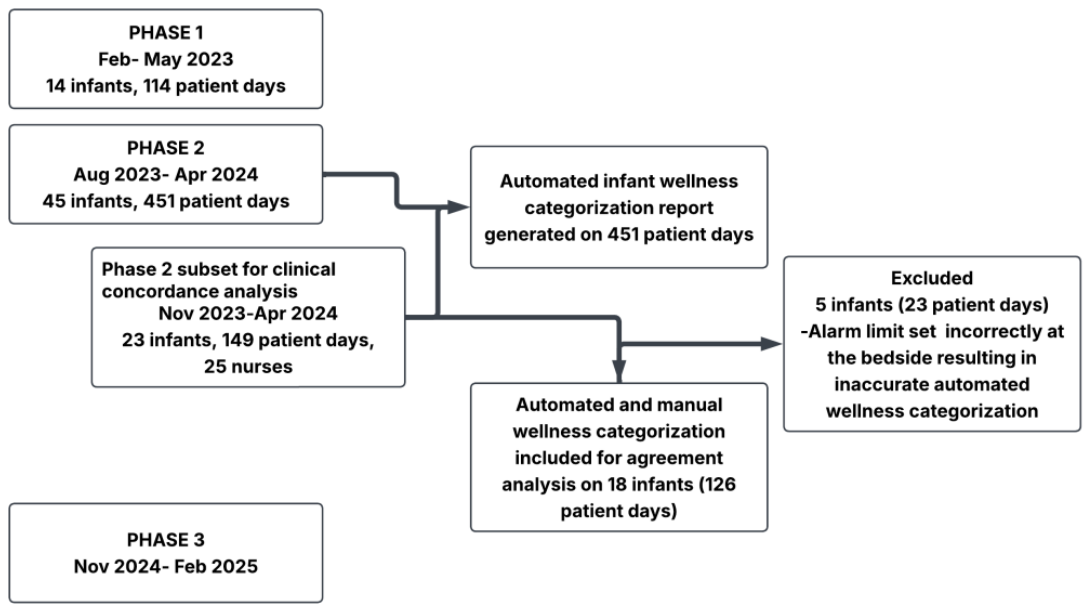

Table 1.
Demography of participants (n=18).
| Gestational age, weeks, Median (IQR) | 35+0 (30+2 to 38+4) |
| Birthweight, grams, Median (IQR) | 2012 (1434-3122) |
| Term infants | 7 (38.9) |
| Preterm infants | 11 (61.1) |
| Female | 12 (66.7) |
| Inborn | 10 (55.6) |
| Intubated & ventilated | 10 (55.6) |
| Data collected per patient, days, Median (IQR) | 4.5 (1.25–10.75) |
| Study enrollment, day of life, Median (IQR) | 9 (6.5–25) |
| Maternal age, years, median (IQR) | 31 (30–33) |
| Apgar score at 1 min, median (IQR) | 6 (3–8) |
| Apgar score at 5 min, median (IQR) | 8 (6–9) |
| C-section delivery | 11 (61) |
| Twins | 3 (16.6) |
n (%) unless specified, IQR= interquartile range.
Table 2.
Details of improvement and deterioration events.
| Event | Count |
| Discontinuation of systemic steroids, inotropes, muscle relaxants, antibiotics* | 89 |
| Antibiotics initiation | 49 |
| Fluid bolus initiation | 24 |
| Muscle relaxant initiation | 23 |
| Extubation* | 15 |
| Reintubation/Intubation | 12 |
| Change ventilation to a de-escalation mode* | 10 |
| pH < 7.2 | 8 |
| FiO2 10% increase in last 24 hours | 7 |
| Systemic steroids initiation | 7 |
| Seizures | 5 |
| Inotrope initiation | 1 |
| Manual Positive pressure ventilation event | 1 |
| Grand total | 251 |
* Improvement events, FiO2 = fraction of inspired oxygen.
Table 3.
Feasibility assessment under various domains.
| Technical feasibility domain | Measure | Result | ||
| Physiologic data acquisition | Completeness of HR, RR, and SpO2 capture at 1 Hz | ~86% of expected continuous data captured; losses mainly related to transient data-flow interruptions and X2 telemetry not transmitted through the wired iNICU interface | ||
| Data continuity | Uptime and data gaps | 96% uptime; gaps occurred on 10/114 patient-days, accounting for ~4% data loss; flow was restored by resetting the NEO device | ||
| Source-data fidelity | Agreement with Philips monitor | 100% fidelity when data were successfully transmitted | ||
| Event concordance, initial testing | iNICU vs Philips event detection | Desaturation 61.2%; bradycardia 41.5%; overall events 59.0% | ||
| SpO2 histogram concordance | Agreement within ±1 percentage point | 89/101 patient-days (88.1%); among discordant observations, median difference 1.5 percentage points, with 82.4% within 2 percentage points | ||
| Event concordance after refinement | Agreement following signal/definition harmonization and reduced dropouts | Desaturation 92%; bradycardia 91%; SpO2 histogram 90% | ||
| Latency | Monitor-to-platform availability | Median 2 min (IQR 1–4) | ||
| Automated processing | Eligible patient-days processed without manual intervention | 451/451 (100%) | ||
| Data-flow interruption detection | Agreement between NEO and dashboard indicators | Interruption identified on 24/325 patient-days; device and dashboard indicators agreed on 100% of occasions | ||
| Implementation feasibility domain | Measure | Result | ||
| Workflow integration | Setup time and disruption to routine care | Implementation did not interrupt bedside care or rounds. Initial participant setup required ~15 min for demographic entry and ~15 sec to initiate data flow. Data-flow interruptions were managed by a ~45-sec device reset. | ||
| Industry contract establishment | Administrative and governance requirements | Contract development required approximately 6 months and involved the privacy office, technology development office, and neonatal division. | ||
| Contractual framework | Operational, IP, data, termination and publication provisions | Installation, setup, and training were provided without additional charge. CHIL retained ownership of iNICU hardware/software; the health authority retained ownership of patient data and project-generated IP, including dROSE. Termination, confidentiality, data-management, and publication restrictions were defined in the agreement. | ||
| Initial IT and biomedical support | Personnel time required for installation | Network specialist: ~8 h; biomedical technician: ~4 h; industry software programmer: ~30 h. Activities included network configuration, device mounting, and verification of data flow across seven beds. | ||
| Ongoing technical support | Maintenance burden | Ongoing hospital IT and biomedical involvement was minimal; industry software support required approximately 2–3 h/week. | ||
| Manual workflow burden | Research personnel time | Manual entry of demographic and clinical improvement/deterioration data required approximately 6 h/week because these data were not automatically integrated into the platform. | ||
| Practicality and reporting capability domain | Feasibility measure | Result | ||
| Individual daily report | Successful automated report generation | 451/451 eligible patient-days (100%) | ||
| Static 24-hour summary | Predefined report elements generated correctly | 9/9 elements (100%), including wellness category, change from previous day, SpO2 histogram measures, time <81%, Borenstein-Lewin histogram type, and desaturation frequency | ||
| Custom report timing | Ability to define the 24-hour reporting interval | Supported; reporting period could be aligned with user-defined clinical time windows | ||
| Longitudinal reporting | Multi-day trend retrieval | 3-day, 7-day, and user-defined date ranges were available; retrieval >7 days was slow and could result in system crashes; moving trend displays were not supported | ||
| Report-generation performance | Time to generate individual reports | 1–3 days: generally <2 min; longer intervals could require up to 10 min or fail | ||
| Cohort reporting | Reports for selected groups of infants | Not supported; reports could generally be generated for only one infant at a time | ||
| Cohort filtering | Demographic, clinical, or date-based filters | Demographic and clinical cohort filtering was not available; date-based selection was available for individual patients | ||
| Export capability | Supported export formats | Excel and CSV supported; reliability decreased with larger datasets and longer reporting periods | ||
| Export fidelity | Preservation of report content following export | 126/126 patient-days (100%) retained tables, figures, labels, and values correctly | ||
| Data management capability domain | Feasibility measure | Result | ||
| Demographic and outcome fields | Availability of required data fields | 100% of requested fields supported, including demographic, deterioration, improvement, and outcome variables | ||
| Custom clinical fields | Ability to create and modify fields | Custom fields were supported, but creation and modification required assistance from the industry software programmer | ||
| Data validation | Required fields, data types, and plausibility checks | 100% of requested validation rules implemented; implausible and missing values could be flagged | ||
| Auditability | User-visible audit trail | Not available or not confirmed at the user level; possible backend functionality was not evaluated | ||
| Access control | Role-based permissions | Study users could enter, edit, view, and export data; additional role-based restrictions appeared configurable but were not formally tested | ||
| Exploratory clinical concordance domain | Feasibility question | Metric/indicator | Result | |
| Daily wellness categorization | Do dROSE-generated stable, watcher, and unstable categories agree with bedside nurse assessment? | Exact agreement between dROSE and RN classification | 62/126 (49.2%) overall agreement. By RN category: stable 57.1%, watcher 4.0%, unstable 90.0%. dROSE assigned a higher-severity category in 57/126 (45.2%) assessments and a lower-severity category in 7/126 (5.6%). | |
| Change in wellness state | Does dROSE identify improvement, deterioration, or unchanged status similarly to bedside nurses? | Exact directional agreement | Among 116 evaluable paired assessments, overall agreement was 75.9%. Agreement was 91.5% for unchanged status, 20.0% for improvement, and 0% for deterioration. | |
| Subsequent deterioration | Are baseline wellness categories associated with deterioration events occurring on the same day or within 48 hours? | Deterioration events per 10 observation-days | dROSE: stable 1.4, watcher 4.0, unstable 3.1. RN: stable 3.2, watcher 13.2, unstable 15.0. RN categories demonstrated a clearer stepwise increase in deterioration-event rate with increasing severity. | |
| Subsequent improvement | Are baseline wellness categories associated with improvement events occurring on the same day or within 48 hours? | Improvement events per 10 observation-days | dROSE: stable 4.2, watcher 6.0, unstable 6.5. RN: stable 3.3, watcher 12.8, unstable 6.0. Overall improvement-event rate was 5.4 per 10 observation-days for both classification approaches. | |
| Decision-support relevance | Were reports formally assessed for their relevance to clinical decisions regarding escalation, maintenance, or de-escalation of support? | Clinician-rated relevance or documented influence on clinical discussion | Not formally assessed. No causal or effectiveness inference regarding clinical decision-making was made. | |
| Scalability, sustainability and data governance readiness domain | Structured feasibility question | Metric/indicator | Findings/proposed measurement | |
| Scale-up architecture | What technical changes are required to expand from 7 beds to approximately 70 beds? | Scale-up requirements | A scale-up architecture was developed for up to 76 NICU beds, using existing bedside data drops connected to a centralized production virtual server. Requirements included activation/configuration of up to 76 data drops, network/VLAN/IP and firewall configuration, a new RHEL virtual server, secure vendor connectivity, backups, user access and remote administration. Existing communication-room infrastructure and bedside cabling were considered sufficient, although bedside data-aggregation hardware and application-level implementation remained separate dependencies. | |
| Network capacity | Can the hospital network support continuous high-resolution data transmission from 70 beds? | Bandwidth and network performance | Existing network infrastructure was considered capable of supporting activation of up to 76 bedside data drops without new cabling or communication-room infrastructure. However, average and peak bandwidth, packet loss, and latency under simultaneous 70-76-bed high-resolution data transmission were not formally tested and require scale testing before deployment. | |
| Storage | What storage is required for raw, processed and summarized data at 7 and 70 beds? | Storage requirement | Storage requirements were highly dependent on whether full waveforms or numeric trends were retained. For a continuously occupied 76-bed NICU, preliminary estimates were approximately 46 TB/year when waveforms were retained, compared with approximately 133 GB/year for numeric trend data alone. Both institutional storage with backup/disaster recovery and Canadian cloud-storage options were identified; final storage architecture remains dependent on data-retention and real-time access requirements. | |
| Computing capacity | What compute resources are required to process data and generate reports at 70-bed scale? | Compute utilization/performance | The proposed centralized production server configuration included 8 CPUs, 32 GB RAM, 100 GB system storage and 250 GB additional storage, with backup at the health authority Data Centre. The adequacy of this configuration for 70-76 simultaneous beds remains uncertain: the feasibility system previously required an increase from 8 to 32 GB RAM to improve performance, and the same 32-GB specification was initially proposed for full scale. Formal load testing of CPU, memory, storage I/O and report-generation time is therefore required. | |
| Hospital permissions | What hospital approvals and technical permissions are required for deployment and scale-up? | Approval requirements | Scale-up requires coordinated approvals involving hospital IT/infrastructure, network and security teams, operational leadership, procurement, biomedical engineering and privacy/security. Required processes include infrastructure technical review, request-for-change documentation, Change Advisory Board approval when applicable, network/firewall and user-access authorization, and completion of PIA and STRA before go-live. Research ethics and consent pathways for the larger study also remain to be finalized. | |
| Privacy & security | Does the solution meet institutional requirements for PHI security, encryption, authentication and data residency? | Security compliance | Required safeguards were identified, including PIA/STRA approval, SSL configuration, secure vendor connectivity, firewall controls, role-based access, vulnerability scanning, institutional backups and disaster recovery. Canadian-hosted storage options were identified, including institutional storage with off-site disaster recovery and Azure storage in Canada. Full compliance at scale remains dependent on completion of institutional privacy and security review. | |
| Data governance readiness | Are ownership, stewardship, access, retention, secondary use and vendor-exit responsibilities defined? | Governance readiness | Governance requirements were partially defined. Privacy/security review, access control, storage location, backup/disaster recovery, operational oversight, REB review and consent for secondary data use were identified as necessary. However, the scale-up documents did not fully specify all policies for data stewardship, retention, secondary use and vendor exit, indicating that a formal data-governance framework remains necessary before widespread implementation. | |
| Maintenance & support | What resources are required to maintain hardware, software, interfaces and clinical rules at scale? | Operational burden | Responsibilities were divided between institutional IT and the application/vendor team. Institutional support would include server maintenance, patching, updating, rebooting, networking, security and access management, with ServiceNow-based escalation available. Application installation, configuration, data migration, testing, remediation, training and ongoing application support were outside the CTIS infrastructure scope and would require separate vendor/client resources. Ongoing maintenance hours and expected downtime at 70-76 beds were not quantified. | |
| Training | What training is required for clinical, research and technical users? | Training burden | Clinical staff orientation and participation were identified as requirements for scale-up, while application-specific training was assigned to the client/vendor rather than institutional infrastructure services. Role-specific training duration, competency requirements and completion rates were not yet defined and would need to form part of the implementation plan. | |
| Cost/economic feasibility | What is the cost to implement and operate the solution at 7 beds and at 70 beds? | Total cost of ownership | A preliminary three-year scale-up budget was developed, with costs encompassing platform setup, devices/software, implementation and training, personnel, privacy/security compliance, data infrastructure, ongoing operating costs and knowledge translation. The proposal estimated an overall three-year requirement of approximately CAD $830,000, while a separate institutional IT infrastructure proposal estimated approximately CAD $36,000 for the centralized server/network implementation component. Funding had not yet been secured, and the scale-up was explicitly contingent on resource availability. | |
| Incremental scale-up cost | What additional cost is required to expand from 7 to 70 beds? | Incremental cost | A specific incremental 7-to-70-bed cost and recurring cost per additional bed-year were not calculated. Major scale-up cost drivers identified were additional bedside devices/interfaces, software licensing, infrastructure, storage, compute capacity, privacy/security requirements, implementation personnel and ongoing support. Costs could potentially be reduced by limiting deployment to the 62 Level 3 beds, negotiating procurement, or leveraging in-kind resources. | |
Abbreviations: CHIL, child health imprints; dROSE, digital review of oxygen saturation and events; HR, heart rate; I/O, input/output; iNICU, integrated neonatal intensive care unit; IP, intellectual property or Internet Protocol as contextually applicable; IQR, interquartile range, IT, information technology; NICU, neonatal intensive care unit; PIA, privacy impact assessment; PHI, protected/personal health information; REB, research ethics board; RN, registered nurse; RR, respiratory rate; SpO2, peripheral oxygen saturation; SSL, security sockets layer; STRA, security threat and risk assessment; VLAN, virtual local area network.
Disclaimer/Publisher’s Note: The statements, opinions and data contained in all publications are solely those of the individual author(s) and contributor(s) and not of MDPI and/or the editor(s). MDPI and/or the editor(s) disclaim responsibility for any injury to people or property resulting from any ideas, methods, instructions or products referred to in the content. |
© 2026 by the authors. Licensee MDPI, Basel, Switzerland. This article is an open access article distributed under the terms and conditions of the Creative Commons Attribution (CC BY) license (http://creativecommons.org/licenses/by/4.0/).
Copyright: This open access article is published under a Creative Commons CC BY 4.0 license, which permit the free download, distribution, and reuse, provided that the author and preprint are cited in any reuse.