
Submitted:
13 November 2026
Posted:
13 November 2026
You are already at the latest version
Abstract
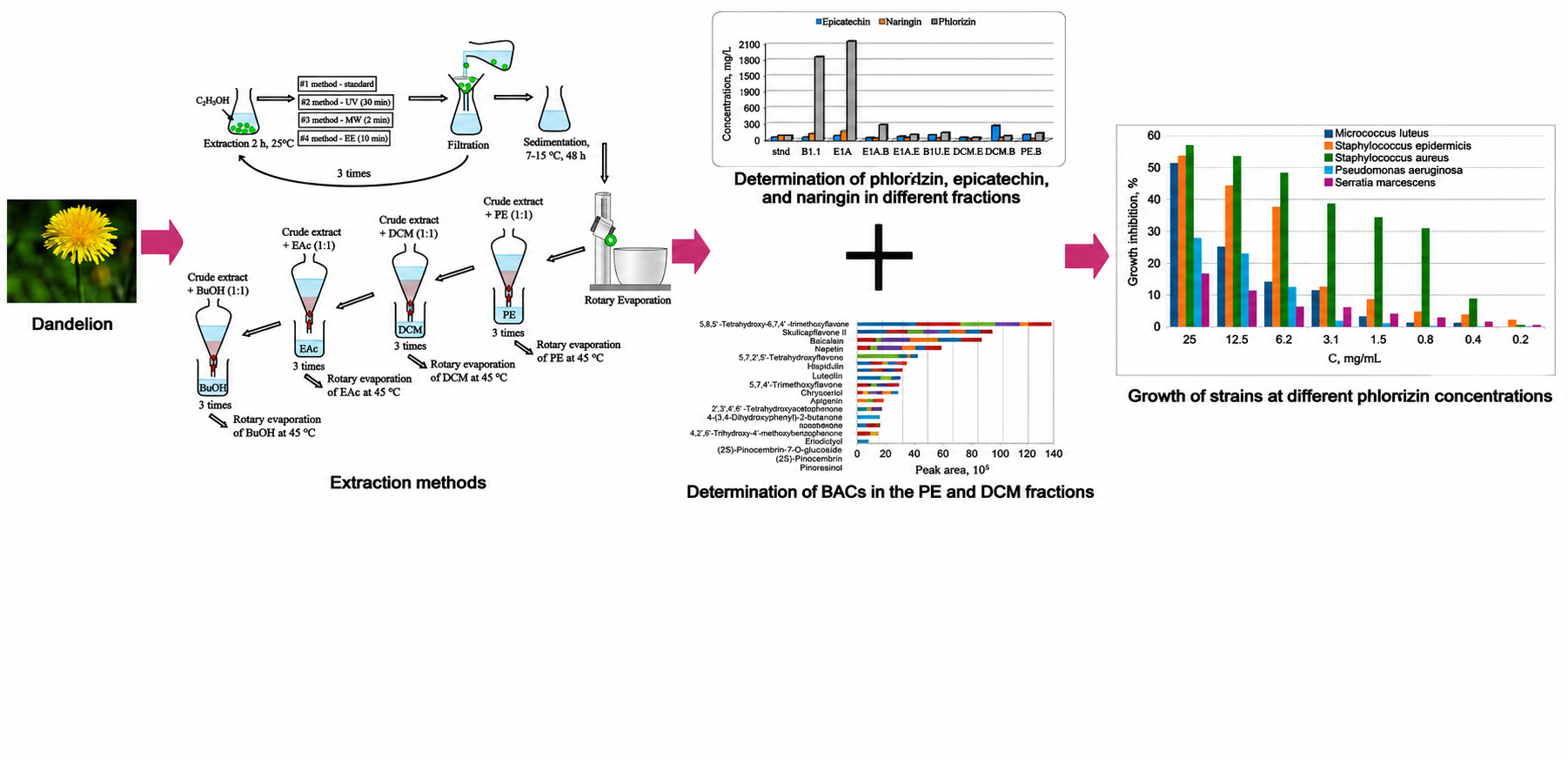
The recovery of natural antibacterial compounds from medicinal plants is important for pharmaceutical research because extraction efficiency affects both phytochemical yield and their biological activity. This study compared four extraction methods—maceration, ultrasound-assisted extraction, microwave-assisted extraction, and electrically assisted extraction—for recovering antibacterial phytochemicals from Taraxacum officinale F.H.Wigg. Crude extracts were fractionated using solvents of different polarity and their phytochemical compositions were analyzed by high-performance liquid chromatography coupled with mass spectrometry (HPLC–MS). Phloridzin, a phenolic compound with reported antibacterial activity, was selected as a marker of extraction efficiency. Ultrasound-assisted extraction produced an ethyl acetate fraction with the highest phloridzin concentration (3.131 mg/L) and generally achieved higher phytochemical recovery than other methods. Comparative analysis identified ultrasound-assisted extraction as the most promising approach for obtaining antibacterial phytochemicals from T. officinale. These findings support the rational selection of extraction methods for developing plant-derived antibacterial agents and formulations for pharmaceutical, cosmetic, food, and herbal medicine applications.
Keywords:
antibacterial activity
; extraction method
; Taraxacum officinale Wigg
; phloridzin
; epicatechin
; naringin
Copyright: This open access article is published under a Creative Commons CC BY 4.0 license, which permit the free download, distribution, and reuse, provided that the author and preprint are cited in any reuse.