

Submitted:
12 November 2026
Posted:
13 November 2026
You are already at the latest version
Abstract
Indoor air quality (IAQ) directly impacts occupant health, particularly for individuals with asthma, migraines, or multiple chemical sensitivity (MCS). Emerging research has identified humans as sources of volatile organic compounds (VOCs) emissions, highlighting the need for greater investigation of sampling conditions and human-associated VOC sources. While technical IAQ testing protocols, such as those provided by the United States Environmental Protection Agency (EPA), Health Canada, and ASHRAE, provide guidance for sampling, they do not address technician-related sources of VOCs. Personal products, laundering, smoking, and fragrances emit VOCs and can persist on clothing and skin that may be reflected in IAQ sampling. Although fragrance-free alternatives reduce VOC emissions, such technician-related source-control measures are not consistently documented in IAQ testing, representing a potential gap in IAQ quality assurance. This paper examines IAQ testing protocols used in Canadian office buildings, synthesizing evidence on human pollutant sources, and susceptibility of vulnerable populations, while proposing a preliminary precautionary framework for technician preparation, informed by operational experience, to minimize technician-related VOC emissions during IAQ sampling. This paper aims to provide a foundation for future evaluation of technician-related VOC contamination during IAQ monitoring and to support environmental health decision-making. The proposed precautionary measures are informed by VOC literature and practical experience rather than experimental validation and are presented as a preliminary framework for future research aimed at improving environmental monitoring and assessment methods.
Keywords:
indoor air quality (IAQ)
; multiple chemical sensitivity (MCS)
; volatile organic compounds (VOCs)
; indoor air quality testing
; fragrances
; indoor accessibility
; disability inclusion
1. Introduction
Scent/fragrance-free policies are increasingly being adopted across disciplines to restrict the use of fragranced consumer products such as perfumes, lotions, and antiperspirants [1]. These policies are designed to accommodate individuals adversely affected by fragrances, including those living with Multiple Chemical Sensitivity (MCS) [1,2]. MCS, a condition with rising prevalence in Canada [3], is characterized by debilitating symptoms such as headaches, nausea, respiratory distress and cognitive impairment, triggered by exposure to fragranced products including low concentrations of chemicals commonly tolerated by the general population [4,5]. Further, exposure to fragranced consumer products has been reported among the circumstances associated with the onset of MCS in a recent cross-sectional survey [6]. Other susceptible groups, including individuals with asthma, chronic obstructive pulmonary disease (COPD), migraine disorders, autism, and dermatological conditions, may also experience adverse effects from fragrance exposure, highlighting the broader public health importance of fragrance-free policies [7,8,9,10]. For the purposes of this paper, the term ‘fragrance-free policy’ encompasses scent and fragrance-free policies that promote lowest-emission, least-toxic product use, ecological solutions, and smoke-free environments. These policies also exclude products labelled with the terms fragrance, perfume, or parfum to improve indoor air accessibility for susceptible populations. Throughout this paper, the term fragrance encompasses scented consumer products such as perfumes, colognes, essential oils, and incense.
Fragrance-free environments are particularly important for workplace accessibility among individuals with MCS and related conditions [11]. In a recent Canadian study, fragrance exposures were identified as significant environmental barriers to accessibility for individuals living with MCS [12]. Similarly, a nationally distributed online survey in the United States (n= 1,136) found that 34.7% of respondents experienced at least one adverse health effect following exposure to fragranced products, including migraines, respiratory and skin problems, asthma attacks, cognitive impairment, and cardiovascular symptoms [13]. As a result, 15.2% of the general population reported lost workdays, while 59.4% of individuals with autism reported losing workdays or employment [13,14]. These findings highlight the substantial health, accessibility, and socioeconomic impacts associated with fragrance exposure, including barriers to participation in society. Fragranced products can release a complex mixture of chemicals into indoor air, including fragrance ingredients, solvents, carriers, preservatives, and other formulation components [15]. Some of these compounds can react with indoor oxidants such as ozone to generate secondary pollutants, including oxidized organic compounds and ultrafine particles [15]. Many of these are volatile organic compounds (VOCs) or semi-volatile organic compounds (SVOCs) which are carbon-based chemicals that readily vaporize under normal conditions and contribute to poor indoor air quality (IAQ) [10,15]. Furthermore, chemical ingredients and emissions may not be fully disclosed to consumers, including in products marketed with ‘green’ labelling or where chemical ingredients are undisclosed on ingredient labels [16].
With a growing body of research on IAQ, the monitoring and testing of indoor air pollutants, including VOCs, has become increasingly sophisticated. Accurate measurement of IAQ, especially in fragrance-free environments, requires minimizing additional sources of contamination [17]. Emerging research shows that humans produce measurable VOCs through breath, skin, clothing, and fragranced personal care products [18,19]. Recognition of humans as potential sources of VOCs has been shown to influence experimental approaches used in indoor air research [20]. Studies characterizing human VOC emissions have standardized participant clothing, skin, laundering practices, and personal care product use to reduce variability from external chemical sources and improve characterization of human-associated emissions [21,22]. For example, a controlled human-emission study has provided participants with standardized clothing and fragrance-free personal care products during VOC measurements [21]. These studies demonstrate an existing methodological precedent for controlling human-associated chemical sources when conducting sensitive VOC measurements and encourage future testing and standardized guidelines for human-related VOCs [20]. However, comparable preparation guidance specifically addressing IAQ technicians has received little attention, specifically in IAQ testing protocols. While existing protocols, such as those provided by Health Canada and the U.S Environmental Protection Agency (EPA), often control for building materials and occupant activities, potential VOC contributions associated with technicians remain largely undocumented.
Though technician-related VOC emissions in IAQ assessments have not been validated to date, the sensitivity of modern IAQ testing equipment has increased [17,23,24], possibly representing technician-related emissions as a potential source of contamination when measuring low-concentration compounds, especially in fragrance-free environments. This evidence may support consideration of technicians as a plausible source of VOC contamination during IAQ assessments.
During planning of the Accessible Air in the Built Environment research, funded by Accessibility Standards Canada, Government of Canada, and led by the Environmental Health Association of Quebec (ASEQ-EHAQ), a previously overlooked methodological issue became apparent. The project examined the impact of fragrance-free policies on IAQ in Canadian workplaces. During study planning, it became evident that, despite rigorous quality assurance procedures for equipment and sampling methods, no standardized guidance could be identified to minimize potential VOC contamination originating from IAQ technicians themselves. Because the study involved sampling in fragrance-free workplaces and environments accessed by individuals living with MCS, ASEQ-EHAQ developed a precautionary technician preparation framework, implemented as a protocol, to help reduce potential technician-related VOC contamination. For the purposes of this paper, technician preparation refers to practical measures undertaken before IAQ sampling to minimize avoidable technician-associated VOC emissions, including sources associated with personal care products, laundering products, clothing, hair, skin, transportation, and other potential sources introduced into the sampling environment. Consistent with this development, emerging evidence indicates that VOCs emitted from skin, clothing, hair, and fragranced personal care products may contribute to indoor VOC concentrations [18,19,20,21,22]. This raises the possibility that technicians may unintentionally influence IAQ measurements, while simultaneously exposing occupants who require fragrance-free environments.
The paper does not report or analyze original empirical data. Instead, it draws on two separate targeted reviews of existing literature pertaining to existing IAQ guidance, human-related sources of VOCs, as well as operational experience to help identify technician-associated VOC emissions as a potential source of contamination during IAQ investigations and to propose a precautionary technician preparation framework for future evaluation. This paper also explores the implications of these methodological gaps for accessibility and the health of vulnerable populations, including individuals with MCS, in fragranced environments.
The technician preparation framework described in this paper was developed by ASEQ-EHAQ during the planning of the Accessible Air in the Built Environment project and was operationally implemented by technicians from the contracted IAQ firm during field investigations. The framework was implemented as a formal protocol throughout IAQ sampling across 34 office sites to help standardize technician preparation and minimize potential technician-related VOC contamination, while protecting those most vulnerable to VOC exposures associated with fragrances, laundering and other chemical sources. This real-world implementation demonstrates that the protocol could be operationally incorporated within this specific professional IAQ investigation; however, the project was exploratory in nature and was not designed as a formal feasibility or validation study. The protocol is therefore intended as a preliminary source-control framework rather than a validated methodology or requirement for routine IAQ practice. It provides a foundation for future research to evaluate technician-related VOC contamination and test the effectiveness of the proposed preliminary framework in reducing contamination and improving measurement accuracy for IAQ testing.
2. Existing IAQ Protocols and Gaps
This section presents a targeted review of IAQ guidance documents to identify recommendations related to sampling procedures and technician preparation protocols. Searches were conducted on Google databases between January 2025 and March 2025. Search results and organizational webpages were screened for documents. Guidance documents were obtained from the websites of the U.S. Environmental Protection Agency (EPA), Health Canada, the American Society of Heating, Refrigerating and Air-Conditioning Engineers (ASHRAE), and other relevant organizations. Search terms included indoor air quality, IAQ sampling, sampling protocols, quality assurance, field contamination, technician contamination, decontamination, fragrance, volatile organic compounds (VOCs), and indoor environmental quality. Given the Canadian focus of the Accessible Air in the Built Environment project, the targeted review prioritized IAQ guidance documents commonly applied or referenced in Canadian workplaces, including Health Canada guidance, ASHRAE standards referenced by Health Canada, and U.S. EPA protocols, which are widely used in IAQ investigations. Documents were reviewed to identify guidance related to quality assurance, sampling preparation, and technician preparation. Documents were screened by title and content for relevance. Sources were eligible if they addressed IAQ sampling procedures, quality assurance, contamination control, and technician practices. Documents focusing exclusively on analytical laboratory methods or unrelated environmental monitoring applications were excluded. Findings were synthesized to identify gaps in current technician preparation practices that informed the development of a precautionary technician preparation protocol. See Figure 1 for further screening details
2.1. Current IAQ Protocols Used for Testing in Office Buildings Across Canada
IAQ assessments in office buildings typically follow recognized technical protocols such as the U.S. Environmental Protection Agency (EPA) IAQ protocols for large office buildings [25] and Health Canada’s Indoor Air Quality in Office Buildings: A Technical Guide [26]. Health Canada also references ASHRAE standards, which are widely applied to IAQ parameters in commercial office settings [26,27,28]. These frameworks provide comprehensive protocols covering sampling strategies for different IAQ parameters, measurement techniques, quality assurance, technician practices, and interpretation of results. A summary of these protocols in relation to key IAQ parameters, target settings, and technician guidance is presented in Table 1.
2.2. Gaps in Technician Preparation for IAQ Testing and Indoor Spaces
While the mentioned protocols emphasize sampling accuracy, calibration, equipment handling, and the identification of pollutant sources related to occupant complaints, they do not explicitly address technician-related sources of potential VOC contamination, who are present throughout the sampling process. Specifically, current protocols lack instructions regarding fragranced personal care products and standardized technician preparation procedures prior to IAQ testing. Although the extent to which technician-related VOCs interfere with IAQ measurements has not been experimentally evaluated, these emissions represent a plausible source of contamination that may warrant precautionary consideration and future investigation.
For buildings operating under fragrance-free policies, existing IAQ assessment guidance, such as that provided by Health Canada, U.S. EPA, and ASHRAE, does not provide specific procedures to minimize technicians’ introduction of VOCs from personal products, laundering items, clothing, perfumes/colognes or other personal sources of VOCs during sampling. Similarly, previous research on IAQ testing in office environments has not documented whether technicians use protocols to minimize VOCs associated with personal products or other technician-related sources prior to sampling, highlighting a potential limitation in methodological transparency and reporting [e.g., 29-30]. This gap is particularly relevant given evidence that humans can contribute measurable VOCs to indoor air through breath, skin, clothing, fragrances, and personal care products [18,19,20,21,22,31,32,33]. Controlled human-emissions studies have therefore controlled for factors such as clothing and fragrance-free personal care product use to reduce variability from external chemical sources during VOC measurements [21]. Therefore, emerging evidence demonstrating human-associated VOC emissions, together with the sensitivity of modern analytical methods for detecting VOCs at low concentrations [17,20,24], supports consideration of technicians as a potential source of measurement interference during IAQ sampling, especially in environments expected to have low background VOC concentrations, such as fragrance-free environments. The preliminary technician preparation framework proposed in this paper and implemented in the Accessible Air in the Built Environment project [34], was developed in response to this methodological gap and provides a foundational protocol that can be validated in future research.
When technicians enter environments that require a fragrance-free policy, such as certain hospitals and intensive care units (ICUs), where visitors and staff are prohibited from wearing fragrances, using fragranced products, or carrying tobacco residues due to patient vulnerability [35,36,37,38], fragrance-free preparation may not occur unless explicitly requested by clients. In the absence of clear protocols and instructions, technicians may not undertake measures to decontaminate or reduce residual fragrances and chemical residues from personal care and other products, including laundry products (i.e., detergents, scent boosters, dryer sheets), or air fresheners used in homes and vehicles for a period of time prior to IAQ testing [25,26]. Additionally, current infection control guidelines in healthcare settings do not address fragrances in relation to patient care [39], despite its growing recognition of fragrance-free spaces as an important accessibility measure for vulnerable populations [40,41].
The absence of standardized technician preparation protocols creates the potential for technician-related VOC emissions to influence IAQ measurements. For example, controlled chamber studies have shown that lotion-on-skin exposure produces high VOC emission rates, with compounds such as phenoxyethanol accounting for two-thirds of the emissions [33]. Fragranced products, including air fresheners and laundry detergents, have been documented to emit hazardous VOCs such as toluene, benzene, acetone, ethylbenzene, and xylenes [42,43], which can react with ozone to form additional harmful byproducts, including nonanal, hexanal, and acetaldehyde [33,44]. Other studies have linked fragranced laundry products to the emission of numerous VOCs, including D-limonene [43,44], with evidence showing that VOCs can persist on clothing for weeks after contact with fragranced items [45]. Personal care products such as lotions, deodorants, and shampoos have been shown to emit hundreds of different VOCs behind terms such as “fragrances” or “parfum”, with one single product emitting 1-8 toxic or hazardous chemicals [46]. Despite claims of being environmentally friendly, many products labelled as “green” or “natural” can emit VOCs that can be harmful to health [47]. Additionally, some “green” products contain masking agents designed to cover up odors, which can still cause irritation and may not be truly eco-friendly, highlighting the importance of scrutinizing product labels and being aware of potential greenwashing tactics [48,49]. Importantly, switching to verified eco-friendly, fragrance-free products can substantially reduce VOC emissions by as much as 99.7% in some cases [44]. Collectively, this evidence establishes that personal care products, laundering products, and clothing can represent human-associated VOC sources, providing a scientific rationale for evaluating whether controlling these sources among technicians can reduce potential measurement interference during IAQ sampling.
2.3. Equality Implications of Technician Preparation Gaps in IAQ Testing for Persons with Disabilities
Domestic and International human rights laws aim to protect persons with disabilities from discrimination, which includes persons whose disabilities are impacted by chemical exposures. The United Nations Convention on the Rights of Persons with Disabilities [11,50], establishes rights-based protections for persons with disabilities, including the identification and removal of environmental barriers to accessibility. For individuals living with MCS, exposure to chemicals and fragrances can constitute such barriers, restricting access to workplaces, healthcare facilities, public spaces, and other environments. From a disability rights framing, these issues are examined within an accessibility and duty to accommodate framework. Thus, within this framing, fragrance-free policies are considered to be an important accessibility measure, and may be an appropriate form of accommodation, for individuals and groups impacted by fragrance exposures, including those with MCS [11]. These obligations may apply to government, employers, service providers, and others subject to human rights and accessibility legislation.
Fragrance-free policies are an important tool in the realization of human rights, accessibility, and full inclusion. In fact, fragrance-free policies have been associated with a reduction of total volatile organic compounds (TVOCs), and specific VOCs, known to exacerbate MCS symptoms, such as acetone, indicated in a companion study under peer-review [34]. Thus, the accuracy of IAQ testing is important where fragrance-free policies are used to support accessibility for groups impacted by fragrances and poor IAQ.
Including precautionary measures such as the omission of fragrances from technicians may also help protect occupants who require fragrance-free environments from additional fragrance exposure during IAQ investigations. Establishing technician preparation procedures may support scientific rigor while aligning with principles of equity and accessibility by reducing the potential for testing activities themselves to introduce barriers for susceptible populations. Incorporating technician preparation considerations into IAQ protocols may also strengthen contamination-control practices and support the reproducibility of IAQ measurements. The following section therefore presents ASEQ-EHAQ’s proposed preliminary precautionary framework for technician preparation, in the form of a protocol, supported by evidence from a targeted literature review of human-associated VOC sources that is intended to provide a foundation for future empirical evaluation and validation.
3. A Path Forward in IAQ Protocols: Proposed Preliminary Technician Preparation Framework
To minimize technician-related VOC contamination during IAQ testing, ASEQ-EHAQ developed a structured technician preparation framework that was implemented as a protocol during the Accessible Air in the Built Environment research study [34]. The protocol was implemented throughout IAQ sampling across all study sites to standardize technician preparation and minimize potential technician-related VOC contamination. Although the protocol was operationally implemented during the field investigations, the present commentary does not evaluate its effectiveness through controlled experimental comparisons with standard IAQ practice.
Beyond the protocol’s implementation in real-world settings, a second targeted review was conducted to reinforce the rationale for the proposed protocol. This part of the targeted review focused on identifying peer-reviewed evidence relevant to human-related VOC emissions. To our knowledge, no standardized protocols addressing technician preparation were identified, as described in Section 2 of this paper. Thus, this study extracted literature pertaining to VOC emissions from human sources.
Literature was synthesized using a targeted search of peer-reviewed literature conducted between January 2025 and March 2025 in PubMed, Scopus, and Google Scholar. Peer-reviewed literature was identified using combinations of search terms related to IAQ measurement (e.g., “indoor air quality,” “IAQ testing,” “indoor air sampling,” “VOC sampling”), human-associated VOC sources (e.g., “human emissions,” “human bioeffluents,” “occupant emissions,” “skin emissions,” “dermal emissions”, “odour reduction”), and potential technician-associated sources, including fragrances, personal care products, laundering products, clothing and textiles, third-hand smoke, dry-cleaning residues, vehicle interiors, vehicle air fresheners, and traffic- or fuel-related VOC exposures. Additional methodological terms included “technician contamination,” “field personnel,” “measurement interference,” and “quality assurance.” Vehicle-related searches incorporated combinations of terms such as “vehicle cabin,” “vehicle interior,” “car air freshener,” “vehicle fragrance,” “vehicle emissions,” “traffic emissions,” “gasoline,” “diesel,” and “fuel vapours.” Boolean operators (AND/OR) were used to combine concepts and related synonyms. Reference lists of relevant publications were also screened to identify additional studies. Titles and abstracts were screened for relevance, followed by full-text review of potentially eligible articles. Articles were included if they addressed VOC emissions from human sources (e.g., skin, clothing, personal care or fragranced products), laundering sources, environment, or examined adsorption, transferrence, and re-emission processes of VOCs. Studies were included if they examined VOC emissions from people, clothing, or personal products, adsorption and re-emission of VOCs from materials, or residual chemical emissions relevant to indoor environments. Studies unrelated to indoor VOC or human-associated emissions were excluded. The identified literature was synthesized narratively to summarize potential human-related sources of VOC contamination and inform the scientific rationale for the proposed protocol. This targeted review identified 27 relevant articles [16,18,19,20,21,22,23,31,32,33,42,44,45,46,51,52,53,54,55,56,57,58,59,60,61,62,63] that helped to inform the proposed precautionary technician preparation framework, intended to be empirically validated as a protocol. See Figure 2 for screening details.
3.1. Proposed Precautionary Technician Preparation Protocol and Supporting Literature-Informed and Organizational Practice-Based Recommendations
The following proposed precautionary preparation framework balances scientific rigor with practical feasibility for technicians, while drawing on the lived experiences of individuals with MCS and other individuals who are intolerant to fragrances [5,14,40]. Recommendations are based on available evidence regarding indoor human-related VOC sources, emissions from personal care and household products, fragrance residues, laundering products, tobacco-related residues, building materials, and other occupant sources of VOCs. The proposed protocol and recommended time intervals were developed as precautionary organizational recommendations informed by the ASEQ-EHAQ’s experience supporting individuals with MCS. Through its work with affected individuals, the organization has consistently identified these practices as practical approaches for reducing persistent odours and residual chemical exposures. Accordingly, the recommended timeframes are intended as operational guidance rather than experimentally validated thresholds and require future validation.
The proposed technician preparation protocol was implemented under real-world conditions in a companion study [34]. However, no formal participant data were collected specifically for this commentary, and the protocol was not independently evaluated to determine its effectiveness in reducing technician-related VOC emissions or improving measurement accuracy. Accordingly, while the protocol was operationally implemented within the field investigation, its effectiveness needs to be experimentally validated.
Refer to S1 for a formal checklist of the proposed protocol.

Table 2.
Proposed Technician Preparation Protocol Literature-Informed Recommendations.
| Protocol Category | Recommendation |
| Smoking prohibition | Technicians should not smoke or vape prior to IAQ testing to minimize tobacco-related VOC contamination off-gassing into sampling sites, as tobacco emits numerous VOCs [57]. |
| Laundering practices | Dry-cleaned garments should not be worn during IAQ testing, as they can introduce residual chemical emissions into the testing environment [58]. |
| Fragrance and VOC elimination at home, in vehicles, and en route to testing site | Technicians should avoid home renovation activities prior to IAQ testing, as these activities may produce numerous VOCs [60]. |
| To maintain optimal air quality, it is preferable to open windows for ventilation and remove garbage regularly to avoid unwanted odours [56]. | |
| Avoid any vehicle maintenance/repair activities, as this may emit many VOCs [54]. |
Source classification: Literature-informed recommendations are supported directly by published evidence.
Table 3.
Proposed Technician Preparation Protocol Literature-Informed and Organizational-Practice Based Recommendations requiring Future Validation.
Table 3.
Proposed Technician Preparation Protocol Literature-Informed and Organizational-Practice Based Recommendations requiring Future Validation.
| Protocol Category | Recommendation | |
| Clothing selection |
Clothing should be purchased from non-fragranced, low- or lowest-emission clothing merchandise whenever possible (eg. organic or cotton clothing); if this is not feasible, refer to laundering practices below for used textiles [51]. Note: Clothing fabrics can absorb and re-emit fragrances into the air [51,61,62] |
|
| New textiles, that are non-organic, will emit formaldehyde and other VOCs; pre-washing and adequate airing (see details below) are required [59]. | ||
| Laundering practices |
Clothing, new or used, should be laundered well in advance of IAQ testing. As an organizational practice-based precaution, a 14-day preparation period is recommended prior to testing to allow time for fragrance-related and other residual VOC emissions to dissipate; fragrance compounds have been reported to persist on clothing for several weeks [46]. Note: The 14-day period has not been experimentally validated as a minimum preparation interval. |
|
| If clothes are scented, before washing them, hang them outside for a few days to off-gas the scents as much as possible. Then proceed to wash them to remove the scents and other chemicals (presented below) [61-63]. | ||
|
Before using your washing machine, if conventional fragranced products are usually used, run the washing machine (more than once if necessary) with hot water and fragrance-free laundry products to reduce residual odours. Baking soda and, where compatible with the appliance manufacturer’s instructions, vinegar may also be used as organizational practice-based measures [56]. When fragrance emissions from the washing machine have been eliminated, proceed with laundering clothes. This process of cleaning out the washing machine is done to remove residual fragrances or VOCs from previously used laundry products; if this is not done, chemicals present in fragrances may be picked up by your clothes that are used during IAQ testing [44,45]. Note: If you have bought non-fragranced clothes, and your washing machine is fragranced, it is preferable to wash them by hand using only fragrance-free soap (Refer to Figure 3). Baking soda and vinegar may also be used as organizational practice-based measures to help reduce residual odours. Hang textiles to dry outside or in a well-ventilated fragrance-free area [32,44,45,50,53,55,61,62]. | ||
| When laundering, fragranced articles should be washed until odours have been eliminated using fragrance-free, lowest-emission laundry products as this can reduce VOCs emitted from fragranced laundry products [44]; Baking soda and, where compatible with the appliance manufacturer’s instructions, vinegar may also be used as organizational practice-based measures to help reduce residual odours [55]. | ||
| After laundering, clothes should be air-dried either indoors or outdoors until dry as dryers may be contaminated with chemicals from regular conventional products, including softeners [18,32]. | ||
| Clothes can be hung outside to dry, which helps increase the off-gassing process. Areas preferred indoors to dry clothes could be any room that is non-perfumed to avoid fragrance contamination [18,45]. | ||
| In highly urbanized areas, clothes should be dried indoors, in a non-perfumed, adequately ventilated area with no recent renovations [18,45,60]. | ||
|
Store in a sealed fragrance-free plastic bag in a fragrance-free space, until the testing date to prevent the transfer of neighboring sources of VOCs. Note: Do not store the sealed plastic bag in a drawer with clothes that have been laundered in regular fragranced detergents as they release many different VOCs that have the ability to persist on clothing [44,45]. | ||
| Fragrance and VOC elimination at home, in vehicles, and en route to testing site |
Technicians should refrain from using perfumes, fragrances, and scented or other high-emission products, such as lotions, hair products, incense, candles, and air fresheners. As an organizational practice-based precaution, this recommendation extends to use of such products by others within the technician’s living space for at least 14 days prior to testing, to reduce potential transfer and subsequent emission of fragrance-related and other VOCs [8,16,18,32,33,42,44,46,51,52,63]. Note: The 14-day period has not been experimentally validated as a minimum preparation interval. |
|
|
As an organizational practice-based precaution, vehicles used for transport to testing sites should be free from air fresheners and fragranced products for four weeks prior to testing to reduce potential fragrance-related and other VOC emissions [16,46,53,63]. Note: The four-week period has not been experimentally validated as a minimum preparation interval. | ||
| As an organizational practice-based precaution, a new Tyvek suit (see below for details) may be worn in the vehicle from the technician's home to testing sites to reduce potential transfer of vehicle-related VOCs to the technician’s clothing. The effectiveness of this measure for reducing technician- related VOC contamination during IAQ sampling has not been experimentally validated [53]. | ||
| Awareness of greenwashing and product selection | Many products labeled “unscented,” “eco-friendly,” or “green” still contain fragrance masking agents or VOCs [47]. Only use products with clear ingredient disclosure and, where available, credible third-party fragrance-free certification to support informed product selection (refer to Figure 3). | |
| Avoid products with terms on the label such as “perfume”, “parfum”, “fragrance” or “essential oils” [48]. |
Source classification: Literature-informed and organizational practice-based recommendations combine published evidence with ASEQ-EHAQ’s field experience accumulated over more than 20 years of work in environmental health and accessibility. These recommendations are precautionary in nature and require future validation.
3.2. Greenwashing and ECO-certified Personal Products
As part of the precautionary protocol, technicians are encouraged to select fragrance-free and ECO-certified products that are recognized by third-party environmental certifications (Figure 3), where available. Although these certifications do not guarantee the absence of VOC emissions, they may assist in identifying products with reduced environmental impacts, greater ingredient transparency, or lower-emission characteristics, thereby supporting source-control measures during IAQ sampling [47,48,49,64]. The below certifications are presented as examples of resources that may assist technicians in selecting fragrance-free or lower-emission cleaning, laundry, and personal care products as part of the precautionary technician preparation protocol. Their inclusion does not imply endorsement or guarantee the absence of VOC emissions, but is a guide for product selection.
3.3. Tyvek Suits
A Tyvek suit is a disposable one-piece coverall made from DuPont’s Tyvek® fabric, a tough, non-woven material that provides protection against particulates [65]. In some environments, particularly those with elevated ozone levels, such as certain office buildings [66], clothing can react with ozone to produce aldehydes, including nonanal and formaldehyde, which can alter the indoor air composition and affect IAQ measurements [31,67]. While clothing may reduce emissions from skin-ozone reactions, it can contribute to VOCs originating from the textiles themselves [31,50,61]. As a precautionary measure, the use of clean, disposable Tyvek suits is proposed to minimize potential technician-related contamination coming from clothing, skin, and hair [19,20,21,22,23]. It is important to note that the effectiveness of Tyvek suits in reducing VOC emissions has not been experimentally validated, and Tyvek materials themselves may adsorb, emit, or re-release VOCs. Therefore, this recommendation should be considered precautionary and requires evaluation through controlled studies before being adopted as a standard practice.
- Before entering the testing site, the Tyvek suit worn during transport should be discarded outside of the testing area to reduce potential transfer of vehicle-related VOCs into the sampling area.
- As a precautionary measure to reduce potential technician-related VOC contamination during sampling, all technicians must wear a new Tyvek suit before entering the testing area and prior to setting up sampling equipment.
- Once the sampling equipment is set up and operational, technicians should exit the testing area, remove the Tyvek suit, and package it in a sealed non-fragranced bag while they wait for the sampling to be completed.
- The Tyvek suit must be worn again any time before re-entering the testing area for periodic checks on the sampling equipment and for takedown of the equipment. Anytime the suit is removed between checks, it should be placed in the sealed non-fragranced bag to avoid contamination from outside sources.
- A new Tyvek suit is to be used for each sampling site and not reused. Once sampling is completed for the day, discard the suit, and repeat the above steps for the next site.
3.4. Technical Experience and Framework Implementation
Following completion of the Accessible Air in the Built Environment IAQ investigation, the technical lead responsible for field implementation provided a retrospective professional account of the preliminary technician preparation framework. The account addressed implementation of the requirements, operational feasibility, time and resource considerations, QA/QC practices, technician-specific preparation, and practical experiences encountered during sampling. The technical lead reviewed and approved the account for inclusion in the Supplementary Material. These observations are presented as documentation of operational experience and were not collected as part of a feasibility or validation study. Accordingly, they should not be interpreted as evidence of protocol effectiveness. Based on the technical lead’s retrospective account, the protocol was operationally implemented in this investigation, and the technical lead indicated that the requirements could be implemented again in a comparable field study. The technical lead reported no notable increases in time or resources beyond those anticipated, although implementation required technician education and appropriate product selection. The technical lead’s retrospective professional account is provided in Supplementary Material S2, and a summary of the post-data-collection implementation review and lessons identified for future IAQ studies is provided in Supplementary Material S3.
4. Discussion and Conclusions
This commentary may help to advance the field of IAQ assessment by introducing a precautionary technician preparation framework that addresses a methodological gap in current IAQ testing protocols in buildings. Through a targeted review of peer-reviewed evidence on VOC emissions from human sources, including skin, clothing, and fragranced products, and lived experiences of populations impacted by fragrance exposures, to our knowledge, this study proposes a novel precautionary technician preparation framework that can be validated as a protocol to help reduce technician-related contamination and off gassing of personal VOCs.
Beyond its methodological contribution, this paper links IAQ testing to the accessibility, equality, and non-discrimination principles established under the United Nations Convention on the Rights of Persons with Disabilities (UNCRPD), particularly Article 9, which addresses barriers to accessibility in indoor and outdoor environments. This framing is further supported by the UN Committee on the Rights of Persons with Disabilities, which explicitly identified discrimination against people with multiple chemical sensitivity under Article 5 (Equality and Non-discrimination) in its 2025 concluding observations on Canada [50]. The proposed protocol aligns scientific evidence with inclusive practice, offering a foundation for future IAQ standards, technician training curriculums, and IAQ assessments in a variety of different environments. Importantly, the potential influence of technician-related contamination is likely to depend on the analytical method employed. Sampling methods designed to quantify VOCs at low concentrations, including sorbent tube sampling with thermal desorption-gas chromatography-mass spectrometry (TD-GC/MS), passive VOC samplers, and evacuated canisters, may be particularly susceptible because they are intended to detect low ambient concentrations of VOCs [17,24]. Existing guidance emphasizes rigorous quality assurance to minimize contamination from sampling equipment and handling, highlighting the sensitivity of these methods to external VOC sources [17]. Human occupants, which would include IAQ technicians, have been demonstrated in this paper as potential sources of VOCs through emissions from skin, clothing, hair, and personal care products, supporting the rationale for precautionary measures during VOC sampling [16,18,19,20,21,22,23,31,32,33,42,44,45,46,50,51,52,53,54,55,56,57,58,59,60,61,62,63]. A strength of this work is that the proposed framework was operationally implemented across 34 office sites, providing real-world evidence that it could be incorporated within this specific professional investigation and providing a foundation for future empirical validation. Some limitations, presented below, are worth noting.
Findings from a related mixed-methods investigation of Canadian office environments provide additional context for the importance of source control in IAQ monitoring [68]. The investigation identified differences in measured VOC concentrations between scent-free and non-scent-free environments, as well as residual VOCs in scent-free spaces that overlapped with emissions from products reported to be in use, including potentially hazardous VOCs such as acetone, acetaldehyde, benzene, toluene, and xylenes [69]. Although these findings do not establish technician-related contamination or demonstrate the effectiveness of technician preparation measures, they support the rationale for investigating technician-associated VOC emissions as a potentially controllable source of interference during environmental sampling. Future controlled studies should determine whether technician preparation reduces such contributions and improves the reliability of IAQ measurements.
4.1. Limitations
The proposed technician preparation protocol is precautionary in nature, thereby representing a framework, rather than an experimentally validated protocol. Although it was implemented during real-world IAQ sampling conditions in a companion field study [34], no controlled comparisons were conducted to determine whether it reduced technician-related contamination or improved measurement accuracy. Future validation of the framework should examine the individual contribution of measures such as laundering intervals, vehicle decontamination, and the use of Tyvek suits, as well as implementation costs and other resource requirements. These recommendations are derived from the available literature, precautionary source-control principles, and over 20 years of organizational experience working with individuals living with MCS, rather than having been experimentally tested as measures to reduce VOC interference during IAQ procedures. The technical lead’s retrospective account indicates that the protocol was operationally implemented within this investigation, although implementation involved practical challenges, including technician education and communication, personnel selection, scheduling, and product requirements. An early communication issue concerning the scent-free requirements resulted in resampling at one pilot location and subsequent strengthening of communication procedures. The technical lead reported no notable increases in time or resources beyond those anticipated and indicated that product-related costs were not significant within this investigation. These observations document implementation experience but do not constitute a formal feasibility or cost-effectiveness evaluation (Supplementary Materials S2 and S3). Future research should compare IAQ measurements collected with and without implementation of the protocol to evaluate the effectiveness of individual protocol components across different analytical methods (particularly VOC sampling), and assess the operational feasibility, resource requirements, and cost-effectiveness of implementation to inform decisions about broader adoption. Further, some components of the protocol may require additional preparation time, the use of disposable materials (e.g., Tyvek suits), and additional resources compared with standard IAQ sampling procedures. Where disposable protective clothing is used, appropriate handling and disposal practices should be followed to minimize unnecessary waste and reduce potential environmental impacts.
Nevertheless, this commentary addresses an important and previously underexplored potential methodological gap in IAQ assessment and presents a precautionary approach that was operationally implemented in a real-world field investigation. To our knowledge, no previous studies have specifically considered technician-related VOC emissions as a potential source of contamination during IAQ sampling or proposed standardized technician preparation protocols that simultaneously protect populations impacted by poor IAQ. By identifying this gap and presenting a precautionary preparation framework, this work provides a foundation for future experimental validation to determine whether, and under what conditions, technician preparation influences the reliability and reproducibility of IAQ measurements. Collectively, by strengthening source control during VOC sampling, this framework may support more reliable environmental monitoring and evidence-informed approaches to IAQ management and policy.
Future Validation of the Proposed Framework
Although literature has characterized humans as a source of indoor VOC emissions, and the respective preliminary technician preparation requirements were operationally implemented throughout the Accessible Air in the Built Environment IAQ investigation (Supplementary Material S2), their effectiveness and the individual requirements have not been experimentally validated. The implementation experience therefore identifies several questions for future validation:
- Adherence and implementation: To what extent can technicians consistently implement the individual preparation requirements across different IAQ investigations and field conditions, and what modifications, if any, may be required?
- Feasibility and burden: Which preparation requirements present practical difficulties or burdens for technicians, and under what circumstances?
- Technician education: Does standardized technician education, including instructional training on potential VOC sources and appropriate product selection, improve understanding of and adherence to technician preparation requirements?
- Cost and resources: What additional costs, staff time, materials, transportation, storage, or organizational resources are associated with implementation of the technician preparation framework?
- Measurement interference: To what extent can VOCs introduced by technicians or other external sources influence VOC/TVOC measurements and the interpretation of the indoor environment being assessed?
- Quality assurance and contamination control: How can technician preparation measures complement existing contamination-control and quality-assurance procedures used in professional IAQ investigations?
- Generalizability of implementation: To what extent can the technician preparation framework be operationally incorporated into different professional IAQ investigations, organizations, and field settings?
- Source contribution: Which personal-care, household, laundry, clothing, transportation and other technician-associated sources contribute most substantially to technician-associated VOC emissions?
- Analytical susceptibility: Which VOCs and analytical methods are most susceptible to technician-associated contamination or measurement interference?
- Component effectiveness and preparation timeframes: Which individual preparation measures measurably reduce technician-associated VOC contamination, and what preparation intervals are supported experimentally for laundering, fragrance, vehicle-related, and other sources?
- Overall value: To what extent does implementation improve the representativeness, reliability, or accuracy of IAQ measurements, and how do these benefits compare with the associated implementation requirements, burden, and costs?
Supplementary Materials
The following supporting information can be downloaded at the website of this paper posted on Preprints.org, S1: Technician Preparation Checklist for IAQ Testing; S2:Letter Regarding the Retrospective Technical Account of Protocol Implementation; S3: Post-Data-Collection Implementation Review: Lessons to Inform Future IAQ Studies.
Author Contributions
Conceptualization, R.P.; methodology, R.P., A.T., and N.A.D.; formal analysis, A.T.; investigation, R.P., J.M., A.T., and R.B.; data curation, A.T.; writing—original draft preparation, A.T.; review and editing, R.P., J.M., M.G., R.B., R.L., N.A.D., S.R, and A.T.; visualization, A.T.; supervision, R.P.; project administration, R.P.; funding acquisition, R.P. All authors have read and agreed to the published version of the manuscript.
Funding
This research was part of a broader research project that was funded in part by Accessibility Standards Canada and the Association pour la santé environnementale du Québec-Environmental Health Association of Québec (ASEQ-EHAQ).
Institutional Review Board Statement
Not applicable.
Informed Consent Statement
Not applicable.
Data Availability Statement
No datasets were generated or analyzed during the current study.
Acknowledgments
The authors sincerely thank the Steering Committee and project partners, who contributed their time, experience, and perspectives to the broader Accessible Air in the Built Environment project.
Conflicts of Interest
Some authors received remuneration from ASEQ-EHAQ in connection with their respective roles in the research and manuscript preparation. ASEQ-EHAQ was also a funder of the research, as disclosed in the Funding statement. The remaining authors declare no conflicts of interest.
References
- Canadian Human Rights Commission. Environmental sensitivities and scent-free policies: A guide for federally regulated employers and service providers. Government of Canada. 2026. Available online: https://www.chrc-ccdp.gc.ca/resources/publications/environmental-sensitivities-and-scent-free-policies.
- Steinemann, A. Ten questions concerning fragrance-free policies and indoor environments. Build. Environ. 2019, 159, 106054. [Google Scholar] [CrossRef]
- Robins, S.; Molot, J.; Peris, R. Prevalence of multiple chemical sensitivity in Canada between 2000 and 2020. Int. J. Environ. Res. Public Health 2026, 23(2), 236. [Google Scholar] [CrossRef] [PubMed]
- L’Association pour la santé environnementale du Québec/Environmental Health Association of Quebec. Health Impacts. ASEQ-EHAQ. n.d. Available online: https://aseq-ehaq.ca/en/health-impacts/.
- Molot, J.; Sears, M.; Anisman, H. Multiple chemical sensitivity: It’s time to catch up to the science. Neurosci. Biobehav. Rev. 2023, 151, 105227. [Google Scholar] [CrossRef] [PubMed]
- Diallo, N.A.; Molot, J.; Bray, R.; Trifunovski, A.; Peris, R. Self-Reported Chemical Exposures at Onset and Symptom Provocation in Adults with Multiple Chemical Sensitivity: A Descriptive Cross-Sectional Survey. Int. J. Environ. Res. Public Health 2026, 23, 1092. [Google Scholar] [CrossRef]
- Steinemann, A. Health and societal effects from exposure to fragranced consumer products. Prev. Med. Rep. 2017, 5, 45–47. [Google Scholar] [CrossRef] [PubMed]
- Rádis-Baptista, G. Do synthetic fragrances in personal care and household products impact indoor air quality and pose health risks? J. Xenobiotics 2023, 13(1), 121–131. [Google Scholar] [CrossRef] [PubMed]
- Steinemann, A. International prevalence of chemical sensitivity, co-prevalences with asthma and autism, and effects from fragranced consumer products. Air Qual. Atmos. Health 2019, 12, 519–527. [Google Scholar] [CrossRef]
- Bhoonah, R.; Mendez, M.; Maury-Micolier, A. Human health impacts and indoor chemical reactions of vocs from cleaning products and occupants. Atmos. Environ. 2024, 338, 120846. [Google Scholar] [CrossRef]
- Canadian Centre for Occupational Health and Safety. Scent-free policy for the workplace. 2024. Available online: https://www.ccohs.ca/oshanswers/hsprograms/scent_free.html.
- Diallo, N.A.; Molot, J.; Bray, R.; Trifunovski, A.; Peris, R. When Disability Recognition Fails: Accommodation Refusals and Socioeconomic Challenges Among Canadians with Multiple Chemical Sensitivity. Int. J. Environ. Res. Public Health 2026, 23, 1076. [Google Scholar] [CrossRef] [PubMed]
- Steinemann, A. Fragranced consumer products: Exposures and effects from emissions. Air Qual. Atmos. Health 2016, 9(8), 861–866. [Google Scholar] [CrossRef] [PubMed]
- Steinemann, A. National prevalence and effects of multiple chemical sensitivities. J. Occup. Environ. Med. 2018, 60(3), e152–e156. [Google Scholar] [CrossRef] [PubMed]
- Steinemann, A. The fragranced products phenomenon: air quality and health, science and policy. Air Qual. Atmos. Health 2021, 14, 235–243. [Google Scholar] [CrossRef]
- Steinemann, A.; MacGregor, I. C.; Gordon, S. M.; Gallagher, L. G.; Davis, A. L.; Ribeiro, D. S.; Wallace, L. A. Fragranced consumer products: Chemicals emitted, ingredients unlisted. Environ. Impact Assess. Rev. 2011, 31(3), 328–333. [Google Scholar] [CrossRef]
- Gallego, E.; Perales, J. F.; Navarro, A.; Teixidor, P. Evaluation of potential sample contamination from a self-designed automatic device for volatile organic compounds (VOCs) active air sampling. J. Chromatogr. A 2025, 1762, 466380. [Google Scholar] [CrossRef] [PubMed]
- Steinemann, A. Volatile emissions from common consumer products. Air Qual. Atmos. Health 2015, 8, 273–281. [Google Scholar] [CrossRef]
- Tang, X.; Misztal, P. K.; Nazaroff, W. W.; Goldstein, A. H. Volatile organic compound emissions from humans indoors. Environ. Sci. Technol. 2016, 50(23), 12686–12694. [Google Scholar] [CrossRef] [PubMed]
- Irga, P.J.; Mullen, G.; Fleck, R.; Matheson, S.; Wilkinson, S.J.; Torpy, F.R. Volatile organic compounds emitted by humans indoors—A review on the measurement, test conditions, and analysis techniques. Build. Environ. 2024, 255, 111442. [Google Scholar] [CrossRef]
- Bekö, G.; Wargocki, P.; Wang, N.; Li, M.; Weschler, C.J.; Morrison, G.; Langer, S.; Ernle, L.; Licina, D.; Yang, S.; Zannoni, N.; Williams, J. The Indoor Chemical Human Emissions and Reactivity (ICHEAR) project: Overview of experimental methodology and preliminary results. Indoor Air 2020, 30, 1213–1228. [Google Scholar] [CrossRef] [PubMed]
- Zou, Z.; He, J.; Yang, X. An experimental method for measuring VOC emissions from individual human whole-body skin under controlled conditions. Build. Environ. 2020, 181, 107137. [Google Scholar] [CrossRef]
- You, Bo; Zhou, Wei; Li, Junyao; Li, Zhijie; Sun, Yele. A review of indoor Gaseous organic compounds and human chemical Exposure: Insights from Real-time measurements. Environ. Int.>, Vol. 170 2022, 2022, 107611. [Google Scholar] [CrossRef] [PubMed]
- Papapostolou, V.; Kuang, M.; Mui, W.; Low, J. C.; Polidori, A. Laboratory Evaluation of VOC Sensors: Laboratory Testing Protocol [Technical report]. South Coast Air Quality Management District. 2023. Available online: https://www.aqmd.gov/docs/default-source/aq-spec/protocols/voc-sensors-laboratory-testing-protocol.pdf.
- U.S. Environmental Protection Agency. 2003. A standardized EPA protocol for characterizing indoor air quality in large office buildings (Report No. EPA/600/R-03/060). Retrieved September 5, 2025, from. Available online: https://www.epa.gov/sites/default/files/2016-04/documents/standardized_iaq_base_protocol_for_characterizing_iaq_in_large_buildings-pdf.pdf.
- Health Canada. Indoor air quality in office buildings: A technical guide (Cat. H46-2/93-166Erev). 1995. Available online: https://publications.gc.ca/collections/collection/h46-2-93-166e-rev.pdf.
- American Society of Heating; Refrigerating and Air-Conditioning Engineers (ASHRAE). Addendum d to ANSI/ASHRAE Standard 55-2017: Thermal Environmental Conditions for Human Occupancy. PDF. 2020. Available online: https://www.ashrae.org/file%20library/technical%20resources/standards%20and%20guidelines/standards%20addenda/55_2017_d_20200731.pdf.
- American Society of Heating; Refrigerating and Air-Conditioning Engineers (ASHRAE). Addendum p to ANSI/ASHRAE Standard 62.1-2013: Ventilation for acceptable indoor air quality [PDF]. 2015. Available online: https://www.ashrae.org/file%20library/technical%20resources/standards%20and%20guidelines/standards%20addenda/62_1_2013_p_20150707.pdf.
- Jung, C.; El Samanoudy, G.; Alqassimi, N. Indoor air quality in educational institutions: A comparative study of vocs and bacterial contaminants in Dubai schools. Front. Built Environ. 2024, 10. [Google Scholar] [CrossRef]
- Mansor, A.; Abdullah, S.; Ahmad, A.; Ahmed, A.; Zulkifli, M.; Jusoh, S.; Ismail, M. Indoor air quality and sick building syndrome symptoms in administrative office at public university. Dialogues Health 2024, 4, 100178. [Google Scholar] [CrossRef] [PubMed]
- Wang, N.; Ernle, L.; Bekö, G.; Wargocki, P.; Williams, J. Emission rates of volatile organic compounds from humans. Environ. Sci. Technol. 2022, 56(8), 4838–4848. [Google Scholar] [CrossRef] [PubMed]
- Wu, T.; Müller, T.; Wang, N.; Byron, J.; Langer, S.; Williams, J.; Licina, D. Indoor emission, oxidation, and new particle formation of personal care product related volatile organic compounds. Environ. Sci. Technol. Lett. 2024, 11(10), 1053–1061. [Google Scholar] [CrossRef] [PubMed]
- Wang, N.; Müller, T.; Ernle, L.; Bekö, G.; Wargocki, P.; Williams, J. How does personal hygiene influence indoor air quality? Environ. Sci. Technol. 2024, 58(22), 9750–9759. [Google Scholar] [CrossRef] [PubMed]
- Trifunovski, A.; Lattanzio, R.; Molot, J.; Bray, R.; Barakat, C.; Chan, A. W.; Diallo, N. A.; Peris*, R. Scent-Free Policies with Reported Use of Scent-free Products and Indoor Air Quality: Associations with Reduced Volatile Organic Compound Concentrations in Office Environments. Under Peer-review. 2026. [Google Scholar]
- Women’s College Hospital. Fragrance/scent-free workplace environment. Retrieved September 5, 2025, from Women’s College Hospital website. 2023. Available online: https://www.womenscollegehospital.ca/fragrance-scent-free-workplace-environment/.
- University Health Network. Smoke-Free & Scent-Free. n.d. Available online: https://www.uhn.ca/OurHospitals/Pages/smoke_scent_free_UHN.aspx.
- American Medical Association (AMA). a. A-25 Handbook: Informational Reports and Reference Committee Reports. PDF. 2025. Available online: https://www.ama-assn.org/system/files/a25-handbook-combined.pdf.
- American Medical Association (AMA). 2025. Fragrance Regulation (Policy H-135.902). Report of the Council on Science and Public Health. (Resolution 501-A-24). Available online: https://policysearch.ama-assn.org/policyfinder/detail/%22Fragrance%20Regulation%20H-135.902%22?uri=%2FAMADoc%2FHOD.xml-H-135.902.xml.
- Health Canada. Hand washing, cleaning, disinfection and sterilization in health care (Canada Communicable Disease Report. Suppl. 8 1998, Vol. 24. Available online: https://publications.gc.ca/collections/collection_2016/aspc-phac/HP3-1-24-S8-eng.pdf.
- Yousufzai, S. J.; Psaradellis, E.; Peris, R.; Barakat, C. A qualitative exploration of policy, institutional, and social misconceptions faced by individuals with multiple chemical sensitivity. Int. J. Environ. Res. Public Health 2025, 22(9), 1383. [Google Scholar] [CrossRef] [PubMed]
- Flegel, K.; Martin, J. G. Artificial scents have no place in our hospitals. Can. Med. Assoc. J. 2015, 187(16), 1187–1187. [Google Scholar] [CrossRef] [PubMed]
- Lin, K.-H.; Tsai, J.-H.; Cheng, C.-C.; Chiang, H.-L. Emission of volatile organic compounds from consumer products. Aerosol Air Qual. Res. 2022, 22(9), 220250. [Google Scholar] [CrossRef]
- Steinemann, A.; Gallagher, L.G.; Davis, A.L.; et al. Chemical emissions from residential dryer vents during use of fragranced laundry products. Air Qual. Atmos. Health 2013, 6, 151–156. [Google Scholar] [CrossRef]
- Goodman, N. B.; Wheeler, A. J.; Paevere, P. J.; Agosti, G.; Nematollahi, N.; Steinemann, A. Emissions from dryer vents during use of fragranced and fragrance-free laundry products. Air Qual. Atmos. Health 2018, 12(3), 289–295. [Google Scholar] [CrossRef]
- Gherghel, S.; Morgan, R. M.; Arrebola-Liébanas, J. F.; Blackman, C. S.; Garrido-Frenich, A.; Parkin, I. P. Persistence of transferred fragrance on fabrics for forensic reconstruction applications. Sci. Justice 2020, 60(1), 53–62. [Google Scholar] [CrossRef] [PubMed]
- Potera, C. Indoor air quality: Scented products emit a bouquet of vocs. Environ. Health Perspect. 2011, 119(1). [Google Scholar] [CrossRef] [PubMed]
- Harding-Smith, E.; Shaw, D. R.; Shaw, M.; Dillon, T. J.; Carslaw, N. Does green mean clean? volatile organic emissions from regular versus green cleaning products. Environ. Sci. Process. Impacts 2024, 26(2), 436–450. [Google Scholar] [CrossRef] [PubMed]
- Fella, S.; Bausa, E. Green or greenwashed? examining consumers’ ability to identify greenwashing. J. Environ. Psychol. 2024, 95, 102281. [Google Scholar] [CrossRef]
- Temkin, A. M.; Geller, S. L.; Swanson, S. A.; Leiba, N. S.; Naidenko, O. V.; Andrews, D. Q. Volatile organic compounds emitted by conventional and "green" cleaning products in the u.s. market. Chemosphere 2023, 341, 139570. [Google Scholar] [CrossRef] [PubMed]
- United Nations Committee on the Rights of Persons with Disabilities. Concluding Observations on the Combined Second and Third Periodic Reports of Canada Document No. CRPD/C/CAN/CO/2-3; United Nations: Geneva, Switzerland, 2025; Available online: https://documents.un.org/api/symbol/access?l=en&s=CRPD%2FC%2FCAN%2FCO%2F2-3&t=pdf (accessed on 3 November 2026).
- Lakey, P.S.J.; Morrison, G.C.; Won, Y.; et al. The impact of clothing on ozone and squalene ozonolysis products in indoor environments. Commun. Chem. 2019, 2, 56. [Google Scholar] [CrossRef]
- Duffy, E.; Albero, G.; Morrin, A. Headspace Solid-Phase Microextraction Gas Chromatography-Mass Spectrometry Analysis of Scent Profiles from Human Skin. Cosmetics 2018, 5, 62. [Google Scholar] [CrossRef]
- Anderson, Rosalind C.; And, Julius H. Respiratory toxicity of fabric softener emissions. J. Toxicol. Environ. Health Part A 2000, 60(2), 121–136. [Google Scholar] [CrossRef] [PubMed]
- Wilson, M. P.; Hammond, S.; Nicas, M.; Hubbard, A. E. Worker exposure to volatile organic compounds in the vehicle repair industry. J. Occup. Environ. Hyg. 2007, 4(5), 301–310. [Google Scholar] [CrossRef] [PubMed]
- Environmental Health Association of Québec (ASEQ-EHAQ). How to Manage—Clothing. Available online: https://aseq-ehaq.ca/en/environmental-sensitivities/how-to-best-manage-environmental-sensitivities-es/how-to-manage-clothing/ (accessed on 3 November 2026).
- Agapiou, A.; Vamvakari, J. P.; Andrianopoulos, A.; Pappa, A. Volatile emissions during storing of green food waste under different aeration conditions. Environ. Sci. Pollut. Res. 2016, 23(9), 8890–8901. [Google Scholar] [CrossRef] [PubMed]
- Jacob, P.; Benowitz, N. L.; Destaillats, H.; Gundel, L.; Hang, B.; Martins-Green, M.; Matt, G. E.; Quintana, P. E.; Samet, J. M.; Schick, S. F.; Talbot, P.; Aquilina, N. J.; Hovell, M. F.; Mao, J.-H.; Whitehead, T. P. Thirdhand smoke: New evidence, challenges, and future directions. Chem. Res. Toxicol. 2016, 30(1), 270–294. [Google Scholar] [CrossRef] [PubMed]
- Ceballos, D. M.; Fellows, K. M.; Evans, A. E.; Janulewicz, P. A.; Lee, E.; Whittaker, S. G. Perchloroethylene and dry cleaning: It’s time to move the industry to safer alternatives. Front. Public Health 2021, 9. [Google Scholar] [CrossRef] [PubMed]
- Herrero, M.; González, N.; Rovira, J.; Marquès, M.; Domingo, J.; Nadal, M. Early-life exposure to formaldehyde through clothing. Toxics 2022, 10(7), 361. [Google Scholar] [CrossRef] [PubMed]
- Mai, J.-L.; Yang, W.-W.; Zeng, Y.; Guan, Y.-F.; Chen, S.-J. Volatile organic compounds (vocs) in residential indoor air during interior finish period: Sources, variations, and health risks. Hyg. Environ. Health Adv. 2024, 9, 100087. [Google Scholar] [CrossRef]
- Salthammer, Tunga; Uhde, Erik; Omelan, Alexander; Morrison, Glenn C. Sorption of semi-volatile organic compounds to clothing textiles. In Science of The Total Environment; ISSN 0048-9697, 2025; Volume 981. 179578. [Google Scholar] [CrossRef] [PubMed]
- Zou, J.; Zhang, S.; Duan, S.; Winniford, B. Development of a flow-cell coupled to dynamic SPME technique for automated measurement of fragrance emission from fabric. Flavour Fragr. J. 2022, 37, 293–301. [Google Scholar] [CrossRef]
- Steinemann, A.; Nematollahi, N.; Weinberg, J.L.; et al. Volatile chemical emissions from car air fresheners. Air Qual. Atmos. Health 2020, 13, 1329–1334. [Google Scholar] [CrossRef]
- Competition Bureau Canada. Environmental claims and greenwashing. Retrieved. 2025. [Google Scholar] [CrossRef]
- from Competition Bureau Canada website. Available online: https://competition-bureau.canada.ca/en/how-we-foster-competition/education-and-outreach/environmental-claims-and-greenwashing.
- DuPont. Tyvek® for PPE [Web page]. DuPont. n.d. Available online: https://www.dupont.com/personal-protection/tyvek-for-ppe.html.
- Salonen, H.; Salthammer, T.; Morawska, L. Human exposure to ozone in school and office indoor environments. Environ. Int. 2018, 119, 503–514. [Google Scholar] [CrossRef] [PubMed]
- Weschler, C. J. Roles of the human occupant in indoor chemistry. Indoor Air 2016, 26(1), 6–24. [Google Scholar] [CrossRef] [PubMed]
- Diallo, N.A.; Trifunovski, A.; Lattanzio, R.; Molot, J.; Bray, R.; Gaudet, M.; Roy, S.; Peris, R. A mixed-method assessment of environmental accessibility in Canadian office spaces: A triangulation of IAQ testing, occupant health surveys, scent-free policy implementation, and lived experience. Environments, manuscript submitted for peer review. 2026. [Google Scholar]
- Trifunovski, A.; Lattanzio, R.; Molot, J.; Bray, R.; Gaudet, M.; Diallo, N.A.; Roy, S.; Peris, R. Hidden hazards: Conventional fragranced vs. green fragrance-free cleaning product testing. Environments, manuscript submitted for peer review. 2026. [Google Scholar]
Figure 1.
Flow diagram of targeted review screening process related to IAQ protocols.
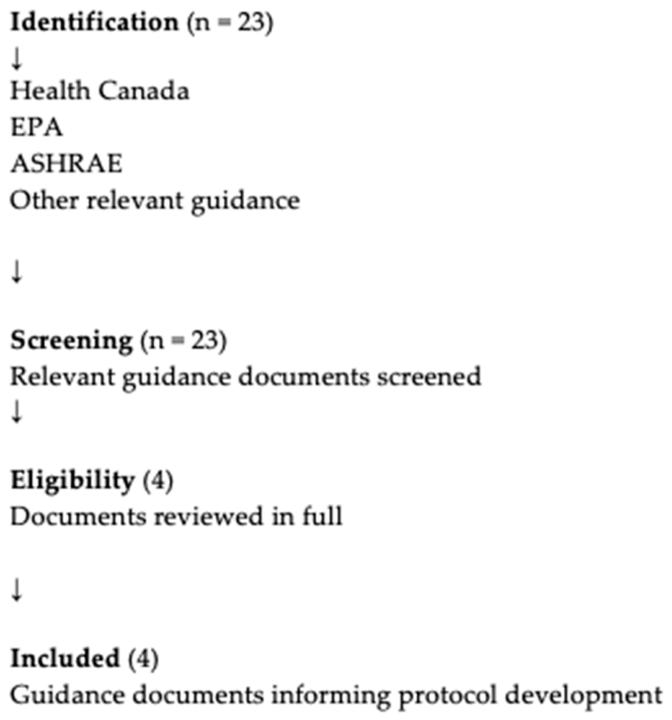
Figure 2.
Flow diagram of targeted review screening process related to human sources of VOCs.
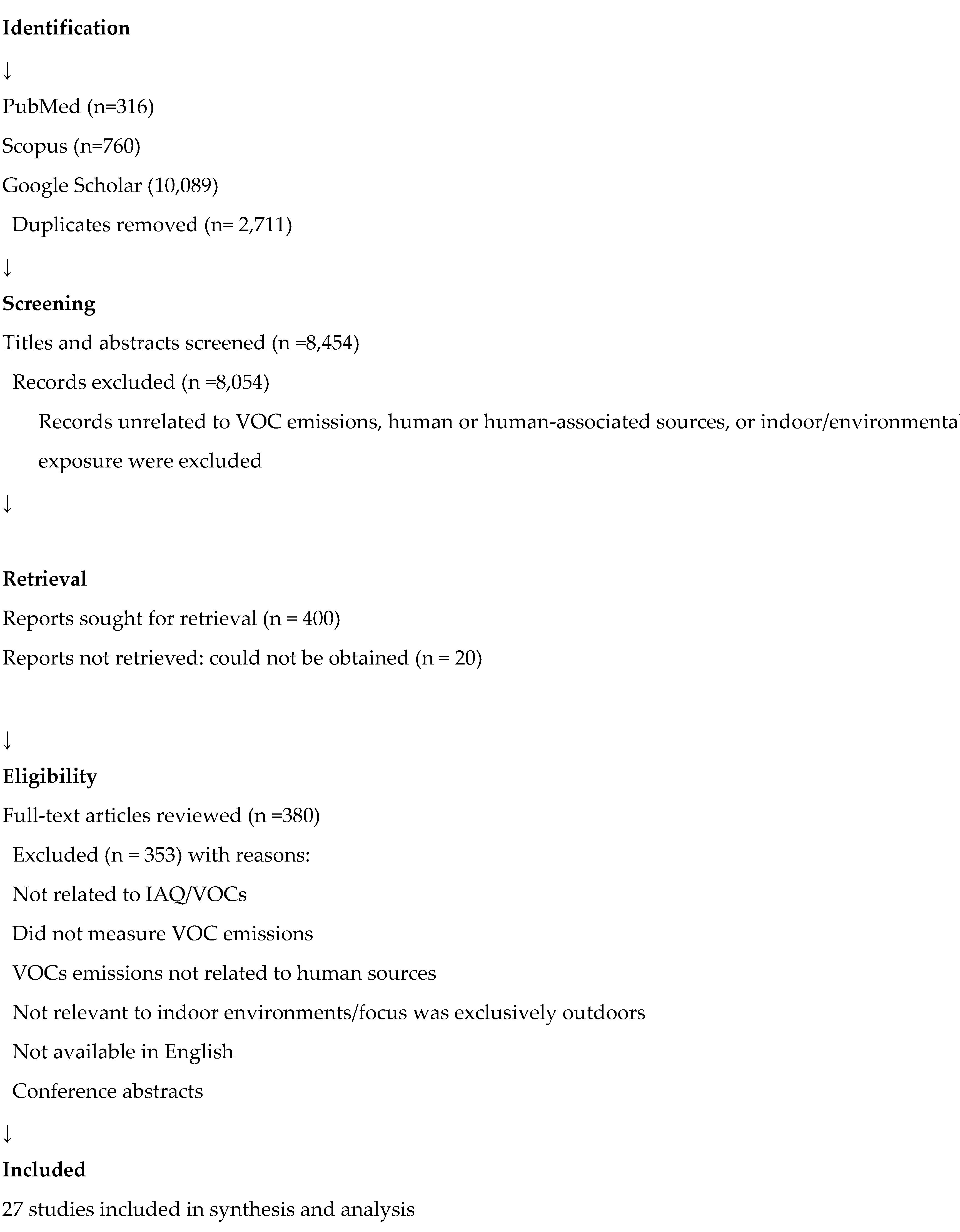
Figure 3.
Examples of Recognized Eco-Logo (Examples include UL ECOLOGO®, Environmental Choice Program (Canada), EU Ecolabel, MADE SAFE®, Green Seal®, ECOCERT®, USDA Organic®, and EPA Safer Choice®).
Figure 3.
Examples of Recognized Eco-Logo (Examples include UL ECOLOGO®, Environmental Choice Program (Canada), EU Ecolabel, MADE SAFE®, Green Seal®, ECOCERT®, USDA Organic®, and EPA Safer Choice®).
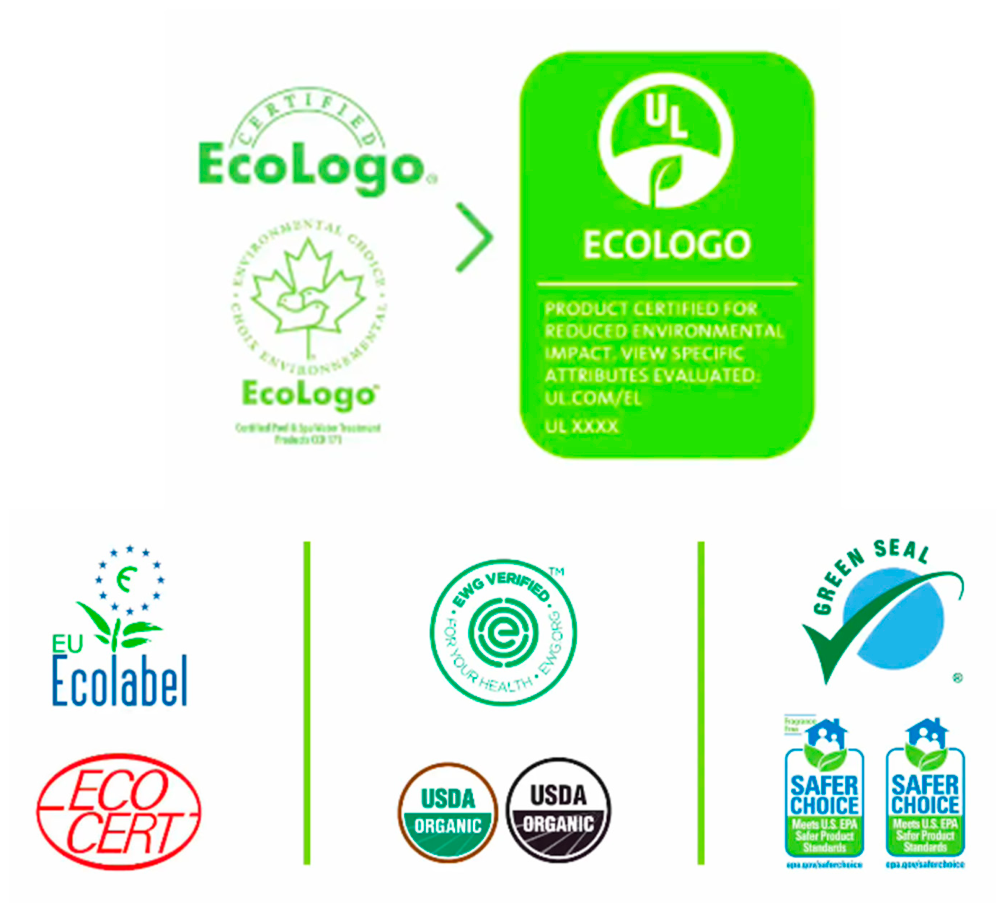
Table 1.
Comparison of Different IAQ Testing Protocols.
| Standard/Protocol | Settings | Key IAQ Parameters | Technician Guidance |
| Health Canada Indoor Air Quality in Office Buildings: A Technical Guide |
Office buildings |
|
|
| U.S. Environmental Protection Agency EPA A Standardized EPA Protocol for Characterizing Indoor Air Quality in Large Office Buildings |
Office buildings |
|
|
| ASHRAE Standard 55-2017 Thermal Environmental Conditions for Human Occupancy |
Residential, commercial and office buildings |
|
|
| ASHRAE Standard 62.1-2013 Ventilation for Acceptable Indoor Air Quality |
Non-residential buildings, including office buildings |
|
|
Disclaimer/Publisher’s Note: The statements, opinions and data contained in all publications are solely those of the individual author(s) and contributor(s) and not of MDPI and/or the editor(s). MDPI and/or the editor(s) disclaim responsibility for any injury to people or property resulting from any ideas, methods, instructions or products referred to in the content. |
© 2026 by the authors. Licensee MDPI, Basel, Switzerland. This article is an open access article distributed under the terms and conditions of the Creative Commons Attribution (CC BY) license (http://creativecommons.org/licenses/by/4.0/).
Copyright: This open access article is published under a Creative Commons CC BY 4.0 license, which permit the free download, distribution, and reuse, provided that the author and preprint are cited in any reuse.