

Submitted:
02 November 2026
Posted:
10 November 2026
You are already at the latest version
Abstract
Background/Objectives: Advanced nursing roles are increasingly required to operate across clinical, relational, and organizational boundaries in healthcare systems characterized by interdependence and uncertainty. This integrative review aimed to synthesize advanced and system-oriented nursing competencies and to develop an NTCAS-informed framework describing how these capabilities may support adaptive system functioning. Methods: An integrative review was conducted using the Whittemore and Knafl framework. Searches were undertaken in PubMed/MEDLINE, CINAHL, Scopus, Web of Science, and DANS EASY using database-specific strategies. Eligibility was defined by the presence of advanced, leadership, adaptive, or system-oriented nursing competencies with implications beyond task-specific clinical skills. A verification step re-examined the alignment between each included article and the extracted competency construct; two previously misclassified records were removed, leaving six studies for final synthesis. Results: The corrected synthesis supported four interrelated domains: clinical expertise and advanced practice capability; systems thinking and adaptive decision-making; relational and collaborative leadership; and resilience-supporting organizational practice. The domains were integrated with the Nursing Theory of Complex Adaptive Systems (NTCAS) to propose a framework in which competencies operate as interacting adaptive capabilities rather than isolated individual attributes. Conclusions: The available evidence supports a systems-oriented interpretation of advanced nursing competence, but it does not establish a causal effect on organizational resilience. The proposed NTCAS-informed framework should therefore be regarded as a theory-generating model requiring prospective empirical validation. Registration: This study was not registered.
Keywords:
advanced nursing competencies
; advanced nursing practice
; complex adaptive systems
; systems thinking
; nursing leadership
; organizational resilience
; NTCAS
; integrative review
1. Introduction
The contemporary healthcare landscape is undergoing profound transformation, shaped by demographic transitions, epidemiological shifts, technological innovation, workforce shortages, and escalating demands for high-quality, person-centered care (Atento, Quinto, & Espelita, 2025). Population aging and the growing prevalence of chronic conditions have intensified care complexity, requiring healthcare systems to operate beyond traditional linear models of service delivery (Jane Osareme et al., 2024; Majnarić, L. T., Babič, O’Sullivan, & Holzinger, 2021). At the same time, rapid digitalization, the expansion of telehealth, and the integration of artificial intelligence are redefining professional roles and decision-making processes, compelling organizations to adopt more adaptive and learning-oriented structures (Ricciardelli, & Mercurio, 2026).
These evolving dynamics have exposed the limitations of reductionist approaches to healthcare management and have increasingly positioned health organizations as complex adaptive systems characterized by interdependence, uncertainty, emergent behaviors, and continuous transformation (Riaz, Morgan, & Kimberley, 2023; Wilson et al., 2023). Within such environments, professional competence can no longer be conceptualized solely as the execution of technical skills. Instead, competence must be understood as a multidimensional and context-sensitive capability that enables professionals to interpret complexity, respond to unpredictability, and contribute to organizational adaptation (Pourkarimi, Abili, & Azizi, 2025).
This paradigm shift necessitates a critical reevaluation of nursing roles, particularly concerning the advanced competencies required to navigate and lead within complex healthcare ecosystems. Nurses represent the largest segment of the global health workforce and play a central role in ensuring care continuity, patient safety, and system responsiveness (Glarcher et al., 2025; WHO, 2021). However, the increasing volatility of healthcare environments demands a level of professional preparation that extends beyond clinical expertise toward leadership, systems thinking, relational coordination, and strategic agency.
Advanced Practice Nurses (APNs) are uniquely positioned to address these challenges due to their expanded scope of practice, advanced education, and integrative clinical capabilities. Advanced practice nursing encompasses roles such as Nurse Practitioners, Clinical Nurse Specialists, Certified Nurse Midwives, and Certified Registered Nurse Anesthetists, all of whom are prepared to deliver comprehensive care that includes diagnosis, treatment, health promotion, and disease prevention (ICN, 2020). Over time, these roles have evolved beyond traditional clinical boundaries to incorporate organizational leadership, policy advocacy, interprofessional collaboration, and innovation facilitation (Whitney, & Tucker, 2025).
A growing body of evidence indicates that the integration of APNs into healthcare systems is associated with improved patient outcomes, reduced mortality, enhanced access to services, and greater cost-effectiveness (Nashwan, Shaban, & Kamugisha, 2024; Sichieri, & Regina Secoli, 2022). Moreover, APNs have demonstrated a strong capacity to support care coordination, reduce hospital readmissions, and enhance chronic disease management, particularly in underserved settings (Festa et al., 2025). Despite these advances, the successful implementation and sustainability of advanced practice roles depend heavily on a clear conceptualization of the competencies required to function effectively within complex organizational contexts (Hako, Turunen, & Jokiniemi, 2023).
Current literature, however, reveals a persistent fragmentation in how advanced nursing competencies are defined, operationalized, and evaluated. Many frameworks emphasize individual attributes, such as clinical judgment or technical proficiency, while giving comparatively less attention to the systemic and relational dimensions of competence (Zumstein-Shaha, & Grace, 2023). This individualistic orientation risks underestimating the collective and adaptive functions that nurses perform within healthcare systems, particularly during periods of disruption or crisis.
Healthcare organizations are increasingly recognized as complex adaptive systems composed of multiple interacting agents whose behaviors generate nonlinear and often unpredictable outcomes (Ratnapalan, & Lang, 2020). In such systems, resilience emerges not from rigid control but from flexibility, distributed expertise, and the capacity for continuous learning (Hollnagel et al., 2006). Nurses, situated at the intersection of clinical care, organizational processes, and patient experience, play a pivotal role in enabling these adaptive responses.
The application of complexity science to nursing has underscored the importance of interconnectivity, self-organization, and emergent leadership (Notarnicola et al., 2024). Rather than functioning as passive implementers of protocols, nurses act as sensemakers who interpret evolving situations, coordinate responses across professional boundaries, and generate micro-level innovations that sustain system performance (Schudde, Pack-Cosme, & Brown, 2026). This perspective aligns with contemporary leadership theories that emphasize adaptability, relational influence, and shared governance as essential components of effective healthcare organizations (Gichuhi, 2021).
Within complex adaptive systems, competence therefore becomes inseparable from context. It involves not only what professionals know but how they mobilize knowledge in dynamic environments characterized by uncertainty and competing priorities. Nurses operating within such systems must demonstrate the ability to recognize patterns, anticipate risks, facilitate communication, and support collaborative problem-solving (Matlhaba, 2025). These capabilities are particularly critical in high-reliability organizations, where the early detection of weak signals can prevent adverse events and strengthen safety cultures (Jabłoński, & Jabłoński, 2021).
Organizational resilience further reinforces the relevance of advanced nursing competencies. Resilience refers to the capacity of systems to absorb shocks, adapt to changing conditions, and maintain core functions under pressure (Grygorenko, & Naydonova, 2023). The COVID-19 pandemic provided a dramatic illustration of this concept, highlighting how frontline professionals, especially nurses, serve as adaptive stabilizers during systemic turbulence (Knutsen Glette et al., 2023). Nurses rapidly reconfigured workflows expanded scopes of practice, and supported emotional coping among patients and colleagues, demonstrating competencies that extended far beyond traditional role expectations.
Key competencies associated with resilience include adaptive leadership, critical thinking, emotional intelligence, effective communication, and the ability to implement evidence-based innovations (Shandilya, & Bansal, 2025). Importantly, these competencies are not static traits but dynamic capabilities that evolve through experience, reflective practice, and organizational support. As such, their development requires intentional educational strategies that integrate systems thinking, interprofessional learning, and complexity awareness into professional preparation (Pesut et al., 2023).
Educational institutions and healthcare organizations therefore share responsibility for cultivating environments that promote continuous learning and professional growth. Programs grounded in transformational learning theory encourage practitioners to question assumptions, embrace ambiguity, and develop the cognitive flexibility required for complex decision-making (Chasokela, 2025). Similarly, organizations that foster psychological safety and shared leadership create conditions in which adaptive competencies can flourish (Jasubhai, 2025).
Despite increasing recognition of complexity, the literature still lacks a focused synthesis explaining how advanced and system-oriented nursing competencies may combine as adaptive capabilities. Existing competency frameworks often remain role-specific or list-based, while complexity-oriented nursing literature has more often emphasized leadership, organizational behavior, or conceptual applications of complex adaptive systems rather than the architecture of advanced competence itself.
This review is intentionally distinct from two recent syntheses by members of the present group. A 2025 Nursing Reports systematic review mapped broad future nursing competencies and the sociocultural, demographic, and technological forces shaping them, whereas a 2026 Journal of Advanced Nursing review examined nurse leadership specifically through a systems-thinking lens. The present review addresses a narrower mechanistic question: how advanced and system-oriented nursing competencies can be integrated as interacting adaptive capabilities, and how NTCAS may explain their potential contribution to organizational adaptability. Its novelty therefore lies in theory-informed integration rather than in re-enumerating future competencies or leadership attributes.
Addressing this limitation requires a synthesis that moves beyond descriptive categorization toward conceptual integration. An integrative review offers a particularly suitable methodological approach for this purpose, as it allows for the inclusion of diverse evidence sources, including empirical studies, theoretical analyses, and policy frameworks, to generate new conceptual understandings (Whittemore & Knafl, 2005). By combining methodological rigor with interpretive depth, integrative reviews support theory development and provide a foundation for future empirical investigation.
Accordingly, this integrative review critically examines how advanced and system-oriented nursing competencies are conceptualized in the international literature and develops an NTCAS-informed framework describing their proposed relationships with adaptability in complex healthcare systems. The framework is intended as a theory-generating structure, not as evidence of a causal effect on resilience.
The evolving complexity of healthcare systems makes such a reconceptualization both timely and necessary. As care environments become increasingly unpredictable, the capacity of nurses to function as adaptive leaders, knowledge brokers, and system connectors will play a decisive role in shaping the sustainability of health services. Understanding these competencies through a complexity-informed lens can therefore provide valuable guidance for education, workforce planning, and governance.
By integrating diverse strands of scholarship into a coherent conceptual structure, this review intends to advance theoretical discourse while offering practical insights for strengthening organizational resilience. Aligning advanced nursing competencies with the realities of complex adaptive systems represents not only an academic endeavor but also a strategic imperative for the future of healthcare delivery.
2. Materials and Methods
2.1. Aim
The aim of this integrative review was to synthesize advanced and system-oriented nursing competencies relevant to complex healthcare environments and to develop an NTCAS-informed framework describing how these capabilities may interact to support adaptive system functioning.
2.2. Design
An integrative review methodology was adopted to allow for the inclusion and synthesis of diverse forms of evidence, including quantitative, qualitative, and theoretical studies. This approach was selected because it enables a comprehensive understanding of complex phenomena while supporting theory development. The review followed the five-stage framework proposed by Whittemore and Knafl (2005), consisting of problem identification, literature search, data evaluation, data analysis, and presentation. Reporting was informed by the Preferred Reporting Items for Systematic Reviews and Meta-Analyses (PRISMA) guidelines to enhance transparency and methodological rigor. Given the theoretical orientation of this review, particular emphasis was placed on interpretive synthesis to facilitate conceptual integration rather than mere aggregation of findings.
2.3. Search Strategy
The original search was conducted across four bibliographic databases—CINAHL, PubMed/MEDLINE, Scopus, and Web of Science—and supplemented by a search of the DANS EASY repository. Because indexing structures and controlled vocabularies differ across sources, database-specific strings were used. The conceptual scope was enforced primarily through the eligibility criteria and full-text screening rather than by requiring identical syntax across databases. The exact strategies as executed are reported transparently in Table 1; raw database yields should therefore not be interpreted as directly comparable measures of database performance.
To facilitate reproducibility, the search procedure was standardized at the process level even though the syntax differed by source. For each database or repository, the query shown in Table 1 was entered as reported, including database-specific field tags where used (e.g., MH/TX in CINAHL and TS in Web of Science). The common eligibility limits were publication from January 2005 through March 2026, English language, and peer-reviewed publication status; these limits were applied as database filters where supported and otherwise during screening. No country or care-setting restrictions were applied. All retrieved records were exported before deduplication in Covidence. Accordingly, Table 1 reports the search strings as executed rather than retrospectively harmonized, preserving database-specific syntax and improving reproducibility.
Search strings were database-specific and were designed to maximize sensitivity for advanced nursing roles and competency-related concepts. Systems-thinking and complexity terms were incorporated where supported by the original strategy. This heterogeneity is acknowledged as a methodological limitation and is considered when interpreting the review as an integrative, theory-generating synthesis rather than an exhaustive systematic effectiveness review.
The search was limited to English-language peer-reviewed literature published from January 2005 through March 2026. Reference lists of potentially eligible papers were also examined to identify additional relevant sources. No restrictions were applied by country or care setting.
2.4. Search Outcomes
All identified records were exported into Covidence systematic review software, where duplicate studies were removed. Titles and abstracts were independently screened by two reviewers to assess eligibility. Full-text articles were then retrieved and evaluated against the inclusion criteria. Any disagreements were resolved through discussion until consensus was reached. When necessary, a third reviewer was consulted to ensure methodological consistency. The study selection process is illustrated in the PRISMA flow diagram (Figure 1).
2.5. Eligibility Criteria
Studies were eligible when they examined advanced, leadership, adaptive, system-oriented, or higher-order nursing competencies with relevance beyond task-specific technical performance. Eligible evidence could address advanced practice roles, system-level decision-making, leadership capabilities, competency frameworks, or transition-of-care/system-thinking capabilities. Studies focused exclusively on undergraduate skill acquisition, isolated technical procedures, non-nursing self-management interventions, or crisis-response descriptions without explicit analysis of nursing competencies were excluded. Empirical and conceptual/framework papers were eligible when they made a substantive contribution to competency development or theory building.
Eligibility was operationalized using three decision rules. First, nursing had to be the target profession or population, or the framework had to be explicitly intended for nursing. Second, the competency construct had to be central to the study, defined as a stated aim, measured variable, framework component, or explicit analytic theme rather than a passing contextual reference. Third, the competency had to extend beyond an isolated technical task to include advanced clinical judgment, leadership, systems thinking, adaptation, coordination, or organizational capability. Records failing any of these conditions were excluded. These rules were applied during full-text assessment and again during the final study-to-construct verification.
2.6. Quality Appraisal
Methodological quality was evaluated to inform the weight given to individual sources during synthesis rather than to generate a pooled score. Quantitative empirical studies were appraised using design-appropriate Joanna Briggs Institute criteria. Conceptual and framework-oriented papers were evaluated for clarity of purpose, conceptual grounding, internal coherence, transparency of development, and relevance to the review question, consistent with the evaluative principles of integrative review methodology. Appraisal judgments were discussed by two reviewers and used interpretively rather than as an automatic basis for exclusion.
Appraisal was conducted at item level by two reviewers using the checklist appropriate to the empirical design; item judgments were interpreted as yes, no, unclear, or not applicable and were not converted into an aggregate quality score. For conceptual and framework-oriented papers, a structured qualitative appraisal addressed clarity of purpose, conceptual grounding, internal coherence, transparency of development, and relevance to the review question. Disagreements were resolved through discussion. No minimum appraisal score was used as an exclusion threshold; instead, appraisal findings informed the relative interpretive weight assigned to each source and are summarized in Table 3.
2.7. Data Abstraction and Verification
A structured extraction matrix captured author, year, country/context, design, aim, target nursing role, competency construct, theoretical basis, and findings relevant to system functioning. Before final synthesis, each included full text was rechecked against the eligibility criteria and against the wording used in the extraction table to confirm that the article actually addressed the competency construct attributed to it. This verification identified two records that had been misclassified during the earlier extraction stage; they were removed before the corrected synthesis.
The verification step also documented the reason for the two exclusions. Bleazard et al. (2021) described a pediatric nursing professional development team’s COVID-19 response but did not analyze advanced or system-oriented nursing competency as an outcome, framework component, or analytic theme. Sohl et al. (2023) evaluated Systems Support Mapping to guide patient-driven self-management in colorectal cancer survivors; despite the use of the term “systems,” the study did not examine nursing competencies. Both records therefore failed the operational criterion requiring the nursing competency construct to be central to the study.
2.8. Data Analysis and Synthesis
Data were analyzed using a constant comparative approach involving data reduction, display, comparison, and theory-oriented integration. Extracted competency statements were first grouped inductively; conceptually overlapping categories were then consolidated into higher-order domains. NTCAS was applied only after this descriptive synthesis as an interpretive lens to examine possible relationships among domains, adaptation, feedback, and system-level functioning. Thus, the four-domain framework combines evidence-derived categories with a theory-informed explanatory layer and should be interpreted as a proposition for future testing rather than a validated causal model.
To make the synthesis auditable, analysis proceeded in five steps. First, competency-relevant statements were entered into the extraction matrix and retained with a direct link to the source study. Second, semantically similar statements were normalized into provisional codes while preserving their substantive meaning. Third, codes were compared across studies and grouped according to their principal functional level: advanced clinical practice, system/cognitive adaptation, relational leadership, or organizational practice. Fourth, overlapping categories were merged through iterative team discussion until agreement was reached on four higher-order domains; individual studies could contribute to more than one domain. Fifth, only after the evidence-derived domains had been established were NTCAS concepts—interdependence, feedback, adaptation, emergence, and multilevel interaction—used to interpret possible relationships among the domains. No competency domain was created solely from NTCAS. Table 4 provides the study-to-domain audit trail.
2.9. Rigor
Methodological rigor was enhanced through independent screening, transparent documentation of search decisions, structured appraisal processes, and iterative team discussions throughout the analytic phase. Reflexivity was maintained by acknowledging the interpretive nature of integrative synthesis while grounding conceptual development firmly in the reviewed evidence.
2.10. Ethical Considerations
As this study involved the analysis of previously published literature, ethical approval was not required. Nevertheless, principles of scientific integrity, transparency, and accurate reporting were upheld throughout the review process.
3. Results
3.1. Study Selection
The original search identified 2,545 records across PubMed/MEDLINE, Scopus, Web of Science, CINAHL, and DANS EASY. After removal of 698 duplicates, 1,847 titles and abstracts were screened and 1,709 were excluded. A total of 138 full-text reports were assessed for eligibility.
Following full-text assessment and a subsequent verification of study-to-construct alignment, 132 reports were excluded and six studies were retained for the corrected analytic synthesis. Bleazard et al. (2021) was excluded at verification because it described a professional-development response to COVID-19 without analyzing advanced or system-oriented nursing competence. Sohl et al. (2023) was excluded because Systems Support Mapping targeted patient-driven self-management rather than nursing competence. These two records were therefore counted among the 132 full-text exclusions, yielding six included studies. The corrected study-selection process is shown in Figure 1.
3.2. Characteristics of Included Studies
The six studies retained in the corrected synthesis represented a heterogeneous but conceptually relevant set of empirical, framework-development, and role-focused contributions concerning advanced or system-oriented nursing competencies.
Geographically, the retained studies represented North America, Asia, and sub-Saharan Africa, spanning clinical, public-health, and educational contexts. This diversity highlights the growing global interest in defining and strengthening advanced nursing competencies to respond to increasingly complex healthcare demands.
Across the included studies, several areas of focus were identified. Some studies concentrated on the development of competency frameworks aimed at defining leadership and advanced practice capabilities for nurses. Others investigated the measurement and evaluation of professional competencies using quantitative instruments. Additional studies examined educational models and leadership development strategies designed to support nurses in advanced roles within complex healthcare systems.
Despite variations in research design and objectives, the literature consistently emphasized the multidimensional nature of advanced nursing competencies. These competencies were described as extending beyond technical clinical expertise and including broader capabilities related to leadership, interprofessional collaboration, adaptive decision-making, and system-level thinking.
The characteristics of the six studies included in the corrected analytic synthesis are summarized in Table 2. Because the evidence base is small and heterogeneous, the table distinguishes the original study purpose from the competency contribution used in this review.
3.3. Quality Appraisal of Included Studies
Quality appraisal was used to characterize the strength and limitations of the evidence contributing to each competency domain. Given the mix of empirical and conceptual/framework sources, appraisal focused on design-appropriate methodological criteria for empirical studies and on clarity, coherence, grounding, and transparency for conceptual contributions.
The evidence base was judged adequate for theory-generating synthesis but insufficient for strong causal inference. The strongest contributions came from studies with explicit competency measures or structured framework development, whereas conceptual and role-focused papers were used more cautiously to support interpretation.
Most studies demonstrated clearly defined research aims, appropriate methodological approaches, and coherent reporting of results. Conceptual and framework-based studies provided detailed descriptions of competency structures and theoretical foundations, although some lacked extensive empirical validation. Quantitative studies generally reported appropriate research designs, clearly described data collection procedures, and transparent analytical strategies. Across designs, appraisal judgments were retained at item level and used to qualify interpretation rather than to create a summary quality rank.
No study was excluded solely because of appraisal findings. Instead, methodological strengths and limitations informed the relative interpretive weight assigned during synthesis. Table 3 summarizes the appraisal approach and the contribution of each retained study.

Table 3.
Methodological appraisal and evidentiary contribution of included studies.
| Author(s) | Year | Evidence Type | Appraisal Approach | Main Strengths / Limitations | Role in Synthesis |
| Bonham & Kwasky | 2021 | Conceptual role analysis | Integrative-review conceptual appraisal | Clear advanced-practice role focus; limited empirical testing | Contextual support for clinical/relational role expansion |
| Cariaso et al. | 2024 | Cross-sectional survey | JBI-informed quantitative appraisal | Defined sample and competency assessment; self-report and context-specific | Empirical support for leadership/training capability |
| Day et al. | 2014 | Framework development | Framework coherence appraisal | Explicit competency structure; limited external validation | Leadership-domain development |
| Dela Christmals et al. | 2019 | Conceptual curriculum framework | Framework coherence appraisal | Strong educational logic; limited outcome validation | Advanced-practice education and competency architecture |
| Kalb et al. | 2006 | Competency framework/evaluation | JBI-informed quantitative appraisal | Structured competency indicators; older and context-specific | Competency measurement and public-health systems perspective |
| Phillips et al. | 2019 | Reliability/psychometric study | JBI-informed quantitative appraisal | Direct measurement of systems thinking; limited setting/generalizability | Empirical support for systems-thinking domain |
3.4. Thematic Synthesis
The corrected synthesis generated four recurring domains of advanced and system-oriented nursing competence. These domains were subsequently interpreted through NTCAS to examine how competencies might interact within complex healthcare systems. The framework therefore separates what was derived from the reviewed literature from what is proposed theoretically.
The four domains were: (1) clinical expertise and advanced practice capability; (2) systems thinking and adaptive decision-making; (3) relational and collaborative leadership; and (4) resilience-supporting organizational practice.
Table 4 shows how the competency contribution extracted from each of the six studies was mapped to the four evidence-derived domains before NTCAS was applied. This mapping distinguishes the descriptive synthesis from the subsequent theory-informed interpretation.
Table 4.
Evidence-to-domain audit trail for the corrected six-study synthesis. Domain assignment preceded NTCAS interpretation.
Table 4.
Evidence-to-domain audit trail for the corrected six-study synthesis. Domain assignment preceded NTCAS interpretation.
| Study | Competency contribution used in synthesis | Mapped domain(s) |
| Bonham & Kwasky (2021) | Advanced-practice clinical leadership and family-centered coordination | 1. Clinical expertise and advanced practice; 3. Relational and collaborative leadership |
| Cariaso et al. (2024) | Public-health nursing competencies, leadership development, and training needs | 3. Relational and collaborative leadership; 4. Resilience-supporting organizational practice |
| Day et al. (2014) | Oncology nursing leadership competencies and professional development | 3. Relational and collaborative leadership; 4. Resilience-supporting organizational practice |
| Dela Christmals et al. (2019) | Advanced-practice education and competency development | 1. Clinical expertise and advanced practice; 4. Resilience-supporting organizational practice |
| Kalb et al. (2006) | Public-health nursing performance appraisal and system-oriented competency indicators | 2. Systems thinking and adaptive decision-making; 4. Resilience-supporting organizational practice |
| Phillips et al. (2019) | Systems-thinking competency in transitions of care | 2. Systems thinking and adaptive decision-making |
Clinical expertise and advanced practice capability represent the advanced clinical knowledge and diagnostic reasoning required to manage complex patient conditions and support high-quality care delivery. Several studies emphasized that advanced practice nurses must possess highly developed clinical judgment and the ability to integrate multiple sources of clinical information when managing patients with complex health needs.
Systems thinking and adaptive decision-making emerged as another critical domain of advanced nursing competence. Within complex healthcare systems, nurses in advanced roles are required to interpret interdependencies among clinical processes, organizational structures, and patient care pathways. This capability enables nurses to anticipate potential system-level consequences of clinical decisions and to adapt their practices accordingly.
Relational and collaborative leadership also appeared consistently across literature. Advanced practice nurses were frequently described as key facilitators of interdisciplinary collaboration, supporting communication among healthcare professionals and contributing to the coordination of care across multiple levels of healthcare delivery.
The fourth domain concerned organizational practices that may support resilience, including knowledge translation, coordination, learning, role adaptation, and the capacity to sustain function under changing conditions. Because the included studies did not directly test organizational resilience as an outcome, this domain is interpreted as resilience-supporting rather than as evidence that advanced nursing competencies cause resilience.
Taken together, the domains are best understood as interacting capabilities spanning individual clinical judgment, team relationships, and organizational processes. NTCAS provides a theoretical explanation for why their interaction may matter: local actions can generate feedback, adaptation, and emergent effects across levels of the system. This interpretation remains a hypothesis to be tested empirically. Figure 2 presents the proposed NTCAS-informed framework linking the four competency domains with adaptive system functioning. The framework is intentionally non-linear. Bidirectional relationships indicate potential interaction and feedback rather than a fixed sequence of effects.
The framework proposes that clinical expertise, systems thinking, relational leadership, and resilience-supporting organizational practice may operate recursively. Their combined contribution to healthcare system resilience remains a theoretical proposition requiring prospective validation.
4. Discussion
The corrected synthesis supports a systems-oriented interpretation of advanced nursing competence but also shows that the empirical base remains limited. Across the retained studies, competence extended beyond technical proficiency to encompass clinical judgment, systems awareness, leadership, coordination, and capabilities relevant to organizational adaptation. The central contribution of this review is therefore not the claim that a new set of competencies has been definitively established, but the integration of these recurring capabilities into an explicit NTCAS-informed explanatory framework.
This contribution should be distinguished from related work by the authors. The 2025 Nursing Reports review addressed future nursing competencies broadly and identified environmental, technological, sociocultural, and demographic forces shaping the profession; the 2026 Journal of Advanced Nursing review focused specifically on leadership through a systems-thinking lens. In contrast, the present review concentrates on advanced and system-oriented competencies and proposes how clinical, cognitive, relational, and organizational capabilities may interact across levels of a complex adaptive system. The three reviews therefore address different units of analysis: future competency demand, leadership as a systems process, and—here—the architecture of advanced adaptive capability.
Within such environments, professional competence cannot be reduced to the execution of technical tasks. Instead, competence must be understood as the capacity to interpret complex situations, coordinate responses across professional boundaries, and support adaptive organizational processes. The synthesis conducted in this review identified four interconnected domains of advanced nursing competence, clinical expertise, systems thinking, relational leadership, and organizational resilience facilitation, each contributing to the broader functioning and sustainability of healthcare systems.
Within complex adaptive systems, professional capabilities are distributed across interactions among clinicians, teams, organizational structures, and technologies. Contemporary nursing scholarship increasingly supports the relevance of complex adaptive systems to nursing practice and research, including emergency nursing, nursing education, and broader complexity-informed inquiry (Göransson et al., 2025; Liu et al., 2026; Hall & Stanley, 2026). From this perspective, advanced nursing competencies can be examined as adaptive resources that shape how nurses interpret signals, coordinate responses, and participate in organizational learning.
Clinical expertise remains a foundational component of advanced nursing roles. However, the reviewed studies suggest that clinical knowledge alone is insufficient to address the growing complexity of contemporary healthcare environments. Advanced practice nurses must also possess the ability to integrate clinical judgment with organizational awareness and strategic decision-making. This integrative capability allows nurses to manage complex patient conditions while simultaneously navigating the systemic constraints and opportunities present within healthcare organizations (Llamzon, & Matney, 2025; Lavoie, 2026).
A particularly important theme emerging from the synthesis concerns the role of systems thinking as a core competence for advanced nursing practice. System thinking enables professionals to understand the interdependencies that characterize healthcare processes and to anticipate how local decisions may generate broader system-level consequences (Silburn, 2025). In complex healthcare environments, where clinical outcomes often depend on interactions among multiple actors and processes, the ability to interpret these interdependencies becomes essential for effective decision-making.
This interpretation also aligns with recent nursing scholarship on systems thinking and adaptive leadership. Rather than equating leadership with hierarchical authority, complexity-informed approaches emphasize distributed expertise, relational influence, local adaptation, and the ability to connect clinical decisions with system consequences (Notarnicola et al., 2026; Göransson et al., 2025).
The synthesis also highlighted the significance of relational and collaborative leadership competencies. Several studies emphasized that advanced practice nurses frequently act as coordinators and connectors within healthcare systems, supporting communication among professionals and facilitating collaboration across disciplinary boundaries. Such relational competencies are increasingly recognized as essential for maintaining effective healthcare teams, particularly in environments characterized by high levels of uncertainty and rapid change (Beyene et al., 2024).
These relational capabilities may contribute to organizational resilience, but the direction and magnitude of that relationship remain uncertain. Resilience should therefore be treated as an organizational outcome to be measured, not assumed. Future studies should examine whether advanced nursing competencies predict resilience-related indicators after accounting for staffing, organizational climate, resources, and context.
The COVID-19 pandemic further highlighted the importance of these adaptive competencies. During periods of systemic disruption, nurses demonstrated the ability to rapidly reorganize care processes, support interdisciplinary collaboration, and implement innovative solutions in response to unprecedented challenges (Alaseeri et al., 2024). These adaptive behaviors reflect the broader concept of resilience engineering, which emphasizes the capacity of systems to anticipate, monitor, respond, and learn from changing conditions (Reddy, 2020).
From a theoretical perspective, the review supports conceptualizing advanced nursing competencies as multilevel capabilities rather than solely individual attributes. NTCAS is useful because it directs attention to feedback, interdependence, nonlinearity, and adaptation; however, the present synthesis does not validate NTCAS or demonstrate that the proposed competency domains cause resilient outcomes. The framework should be used to generate testable hypotheses.
This distinction also clarifies the relationship with existing capability literature. Hako et al. (2023) synthesized advanced practice nurse capabilities across clinical, educational, leadership, and research-related dimensions. The present review adds a systems-oriented interpretation by asking how such capabilities may interact with organizational adaptation and by explicitly separating evidence-derived domains from the NTCAS-informed mechanism proposed to connect them.
Educational programs designed to cultivate advanced nursing competencies should therefore emphasize experiential learning, reflective practice, and exposure to complex decision-making scenarios. Such approaches can support the development of adaptive expertise, enabling nurses to interpret evolving clinical and organizational conditions while maintaining high standards of patient care. At the organizational level, healthcare institutions must also create environments that support professional development, psychological safety, and collaborative leadership.
Despite the insights generated by this review, several limitations should be acknowledged. The relatively small number of included studies reflects the limited empirical literature explicitly addressing advanced nursing competencies within complexity-informed healthcare frameworks. Additionally, the heterogeneity of study designs and conceptual approaches made direct comparison across studies challenging. Nevertheless, the integrative methodology adopted in this review allowed for the synthesis of diverse forms of evidence, supporting the development of a theory-informed conceptual framework.
Future research should aim to further validate and operationalize the competency domains identified in this review. Empirical studies examining the relationship between advanced nursing competencies and organizational outcomes, such as patient safety, workforce sustainability, and system resilience, would provide valuable evidence to support policy and educational initiatives. Additionally, further exploration of complexity-informed leadership models may help to clarify how advanced nursing roles can contribute to the adaptive capacity of healthcare systems.
In conclusion, this integrative review underscores the importance of reconceptualizing advanced nursing competencies through a complexity-informed lens. As healthcare systems continue to evolve in response to demographic, technological, and organizational transformations, the ability of nurses to function as adaptive leaders, system connectors, and resilience facilitators will become increasingly central to the sustainability of healthcare delivery.
The framework proposed in this review extends existing competency models by positioning advanced nursing competencies within a systems perspective. Rather than conceptualizing competence as an individual attribute, the framework illustrates how competencies interact across clinical, relational, and organizational domains to support healthcare system resilience. This systemic interpretation contributes to the theoretical integration of nursing competence literature with complexity science and resilience theory.
5. Limitations
Several limitations should be considered. First, the corrected analytic corpus comprised only six studies, reflecting both the narrow intersection of advanced nursing competence with systems-oriented concepts and the removal of two records that did not align with the review question. The small evidence base limits the certainty with which the four-domain structure can be generalized.
Second, the included studies were heterogeneous in design, population, role definition, and conceptual language. Some addressed advanced practice explicitly, whereas others examined leadership, public health nursing, or systems-thinking competencies. The synthesis therefore identifies cross-cutting capability domains rather than a universally validated advanced-practice competency standard.
Third, the search strategies were not conceptually identical across databases. Although database-specific adaptation is often necessary, the degree of variation in the original searches may have influenced retrieval and may have caused relevant studies to be captured unevenly. This limitation is reported transparently and should be addressed in future confirmatory reviews using prospectively harmonized concept blocks across databases.
Finally, the search was restricted to English-language peer-reviewed literature and the framework combines empirical synthesis with theory-informed interpretation. Consequently, the proposed links with organizational resilience should not be interpreted as causal findings. External validation using longitudinal, multilevel, and implementation-focused designs is required.
6. Implications for Nursing Practice
For practice, the review suggests that advanced clinical expertise alone is unlikely to be sufficient in complex healthcare environments. Professional development should also cultivate systems thinking, adaptive decision-making, relational coordination, and the capacity to learn from feedback across care processes.
One of the most significant implications concerns the integration of systems thinking into advanced nursing practice. Nurses working in advanced roles are frequently required to make decisions that extend beyond individual patient care and influence broader organizational processes. Developing systems thinking capabilities can enable nurses to better understand the interdependencies within healthcare systems, anticipate potential risks, and support more coordinated and effective care delivery.
The review also underscores the importance of relational and collaborative leadership competencies. Advanced practice nurses often function as intermediaries between clinical teams, organizational leadership, and patients. Strengthening communication, coordination, and collaborative decision-making skills can enhance team functioning and contribute to more resilient healthcare organizations.
Advanced nursing roles may contribute to organizational resilience by supporting coordination, knowledge translation, early recognition of system pressures, and adaptive responses. These mechanisms should be evaluated explicitly rather than assumed, using organizational and patient-level outcomes.
From an educational perspective, these findings highlight the need for professional development programs that integrate leadership training, systems thinking, and complexity awareness alongside advanced clinical preparation. Preparing nurses to operate effectively within complex healthcare environments requires educational approaches that foster critical thinking, adaptive expertise, and interdisciplinary collaboration.
Taken together, the findings support a competency-development agenda that links advanced clinical preparation with system-level reasoning and collaborative leadership while preserving the need for empirical testing of organizational effects.
7. Conclusions
This integrative review, after verification of study eligibility and extraction accuracy, identified six studies supporting four cross-cutting domains of advanced and system-oriented nursing competence: clinical expertise and advanced practice capability, systems thinking and adaptive decision-making, relational and collaborative leadership, and resilience-supporting organizational practice.
The NTCAS-informed framework developed from these domains proposes that competence operates through interaction across clinical, relational, and organizational levels. Its principal value is explanatory and hypothesis-generating: it offers a structure for studying how advanced nursing capabilities may influence adaptation in complex healthcare systems without assuming a causal effect on resilience.
Future research should operationalize the four domains, test their dimensional structure, examine multilevel associations with patient and workforce outcomes, and determine whether the proposed relationships vary by role, setting, staffing model, and organizational context.
For nursing education and workforce policy, the framework supports moving beyond isolated skill lists toward integrated capability development that combines advanced clinical judgment with systems awareness, collaborative leadership, and organizational learning.
Supplementary Materials
The following supporting information can be downloaded at the website of this paper posted on Preprints.org.
Use of Generative Artificial Intelligence
During manuscript revision, ChatGPT (OpenAI) was used to support language refinement, structural organization, and editorial revision. The tool was not used to generate or analyze primary research data. All AI-assisted content was critically reviewed, verified, and approved by the authors, who remain fully responsible for the manuscript.
Conflicts of Interest
The authors declare no conflicts of interest.
Acknowledgments
None.
Data Availability Statement
All evidence analyzed in this review is derived from published sources cited in the manuscript. The review extraction matrix may be made available by the corresponding author on reasonable request.
Informed Consent Statement
Not applicable.
Institutional Review Board Statement
Not applicable. This study synthesized previously published literature and involved no human participants or identifiable data.
Author Contributions
Conceptualization, I.N., N.G., A.S. and B.D.; Methodology, I.N., N.G., A.S. and B.D.; Literature search and investigation, N.G., E.G., E.P. and B.A.; Data curation, N.G., E.G., E.P. and B.A.; Validation, I.N., A.S., G.R. and B.D.; Formal analysis and synthesis, I.N., N.G., A.S. and B.D.; Visualization, S.Car. and S.Cap.; Writing—original draft preparation, N.G., I.N., E.G., E.P. and B.A.; Writing—review and editing, I.N., A.S., B.D., S.Car., S.Cap. and G.R.; Supervision, I.N., A.S. and G.R.; Project administration, I.N. and N.G. All authors have read and agreed to the published version of the manuscript.
Funding
This research received no external funding.
Public Involvement Statement
No public involvement in any aspect of this research.
Guidelines and Standards Statement
This manuscript was prepared with reference to the PRISMA 2020 statement for transparent reporting of the literature identification and selection process, adapted to the methodological characteristics of an integrative review.
References
- Atento, R. G., Quinto, L., & Espelita, C. A. M. (2025). Bridging Global Health Workforce Gaps 2050: A Multilevel Analysis of Global Demand, Philippine Supply Fragilities, and Competency Alignment. International Journal of Health & Business Analytics, 1(2).
- Jane Osareme, O., Muonde, M., Maduka, C. P., Olorunsogo, T. O., & Omotayo, O. (2024). Demographic shifts and healthcare: A review of aging populations and systemic challenges. Int J Sci Res Arch, 11(1), 383-95.
- Majnarić, L. T., Babič, F., O’Sullivan, S., & Holzinger, A. (2021). AI and big data in healthcare: towards a more comprehensive research framework for multimorbidity. Journal of Clinical Medicine, 10(4), 766.
- Ricciardelli, A., & Mercurio, L. (2026). New Horizons for Health and Care: From Digital Innovation and Ageing to Integrated Systems: Organizational Challenges and Opportunities. Building Innovation in Ageing and Health Policy: Interdisciplinary Management Mechanisms and Strategies, 3-33.
- Riaz, S., Morgan, D., & Kimberley, N. (2023). Managing organizational transformation (OT) using complex adaptive system (CAS) framework: future lines of inquiry. Journal of Organizational Change Management, 36(3), 493-513.
- Wilson, W., McLachlan, S., Dube, K., Potter, K., & Jayamaha, N. (2023). Uncertainty, emergence and adaptation: a complex adaptive systems approach to quality improvement. Quality Management Journal, 30(3), 168-186.
- Pourkarimi, J., Abili, K., & Azizi, M. (2025). Educational Managers’ Competencies in Turbulent Environments (A Meta-Synthesis Study). Interdisciplinary Journal of Management Studies, 18(3).
- Glarcher, M., Ferguson, C., Patch, M., Steven, A., & Vaismoradi, M. (2025). Addressing nurse shortages and pandemic responses to enhance patient safety within global health challenges. Journal of advanced nursing, 81(9), 5227-5230.
- World Health Organization. (2021). Global patient safety action plan 2021-2030: towards eliminating avoidable harm in health care. World Health Organization.
- International Council of Nurses. (2020). Guidelines on advanced practice nursing.
- Whitney, K., & Tucker, P. (2025). Interprofessional Leadership: Strategies for Engagement, Sustainability, and Influence. Nurse Leader, 102569.
- Nashwan, A. J., Shaban, M. M., & Kamugisha, J. B. (2024). Bridging the gap: How investing in advanced practice nurses could transform emergency care in Africa. International nursing review, 71(2), 285-290.
- Sichieri, K., & Regina Secoli, S. (2022). Cost-effectiveness analysis of the implementation of advanced practice nursing: how to move forward?. Revista da Escola de Enfermagem da USP, 56, e20210463.
- Festa, P., Amodio, R., Lauritano, M., Bruno, C., Coticelli, F., Di Lauro, V., ... & Galluzzo, F. (2025). The Role of Advanced Practice Nurses in Chronic Disease Management. Journal of Advanced Health Care.
- Hako, L., Turunen, H., & Jokiniemi, K. (2023). Advanced practice nurse capabilities: A mixed methods systematic review. Scandinavian Journal of Caring Sciences, 37(1), 3-19.
- Zumstein-Shaha, M., & Grace, P. J. (2023). Competency frameworks, nursing perspectives, and interdisciplinary collaborations for good patient care: Delineating boundaries. Nursing Philosophy, 24(1), e12402.
- Ratnapalan, S., & Lang, D. (2020). Health care organizations as complex adaptive systems. The health care manager, 39(1), 18-23.
- Notarnicola, I., Lommi, M., Ivziku, D., Carrodano, S., Rocco, G., & Stievano, A. (2024, October). The nursing theory of complex adaptive systems: a new paradigm for nursing. In Healthcare (Vol. 12, No. 19, p. 1997). MDPI.
- Schudde, L., Pack-Cosme, K., & Brown, K. Q. (2026). Collective sensemaking during state-mandated dev-ed reforms: Variation in policy signals and collective deliberations across actors’ role responsibilities. Educational Evaluation and Policy Analysis, 48(1), 138-163.
- Gichuhi, J. M. (2021). Shared leadership and organizational resilience: a systematic literature review. International Journal of Organizational Leadership, 10(1), 67-88.
- Matlhaba, K. (2025). Managing Complex Situations. In Enhancing Clinical Competence of Graduate Nurses (pp. 161-172). Cham: Springer Nature Switzerland.
- Jabłoński, M., & Jabłoński, A. (2021). Shaping the safety culture of high reliability organizations through digital transformation. Energies, 14(16), 4721.
- Grygorenko, Z., & Naydonova, G. (2023). The concept of “resilience”: history of formation and approaches to definition. Public administration and law review, (2), 76-88.
- Knutsen Glette, M., Ludlow, K., Wiig, S., Bates, D. W., & Austin, E. E. (2023). Resilience perspective on healthcare professionals’ adaptations to changes and challenges resulting from the COVID-19 pandemic: a meta-synthesis. BMJ open, 13(9), e071828.
- Shandilya, P., & Bansal, D. (2025). Emotional resilience in times of crisis: Leveraging emotional intelligence for effective response. In Emotional Intelligence in the Digital Era (pp. 159-178). Auerbach Publications.
- Pesut, D. J., Headrick, L. A., Holmboe, E., & Moore, S. M. (2023). Systems and complexity thinking to master leadership challenges in interprofessional health professionals education. Journal of Medical Education and Curricular Development, 10, 23821205231175205.
- Chasokela, D. (2025). Transformative learning theory. In Exploring Adult Education Through Learning Theory (pp. 99-134). IGI Global.
- Jasubhai, S. (2025). Leadership dynamics: the interplay of cognition, emotion, and resilience. International Journal of Research in Medical and Clinical Science (IJRMCS), 3(1), 134-140.
- Whittemore, R., & Knafl, K. (2005). The integrative review: Updated methodology. Journal of Advanced Nursing, 52(5), 546–553.
- Bleazard, M., Baker, A. C., Crumpler, C. L., Dwyer, E. C., Garver, D., Gossman, J. W., Haut, C. M., Jenkins, P. S., Lietzke, L. M., Nusspickel, K. J., & Watson, N. (2021). A Pediatric Nursing Professional Development Team’s COVID-19 Response. J Nurses Prof Dev, 37(6), E27-e34. https://doi.org/10.1097/nnd.0000000000000753.
- Bonham, E., & Kwasky, A. (2021). Caring for the Mental Health of Youth and Families: What is the Role of the Psychiatric Mental Health Advanced Practice Nurse? Clinical Nurse Specialist: The Journal for Advanced Nursing Practice, 35(5), 246-252. https://doi.org/10.1097/NUR.0000000000000620.
- Cariaso, J. E., Bonito, S. R., Dones, L. B. P., Melendres, J. C. N., & Sebastian, C. J. B. (2024). Perceived Competencies and Training Needs of Public Health Nurses in the Philippines: Basis for the Development of NurseLEAD: A Leadership Course on Advanced Practice Nursing in Public Health. Acta Med Philipp, 58(12), 78-85. https://doi.org/10.47895/amp.v58i12.9301.
- Day, D. D., Hand, M. W., Jones, A. R., Kay Harrington, N., Best, R., & LeFebvre, K. B. (2014). The Oncology Nursing Society Leadership Competency Project: Developing a Road Map to Professional Excellence. Clinical Journal of Oncology Nursing, 18(4), 432-436. https://doi.org/10.1188/14.CJON.432-436.
- Dela Christmals, C., Crous, L., & Armstrong, S. J. (2019). The Development of Concepts for a Concept-Based Advanced Practice Nursing (Child Health Nurse Practitioner) Curriculum for Sub-Saharan Africa. International Journal of Caring Sciences, 12(3), 1410-1422. https://research-ebsco-com.ezproxy.uniroma1.it/linkprocessor/plink?id=f1b92e6c-b769-36fd-bf3c-2f6466392069.
- Kalb, K. B., Cherry, N. M., Kauzloric, J., Brender, A., Green, K., Miyagawa, L., & Shinoda-Mettler, A. (2006). A competency-based approach to public health nursing performance appraisal. Public Health Nurs, 23(2), 115-138. https://doi.org/10.1111/j.1525-1446.2006.230204.x.
- Phillips, J. M., Stalter, A. M., Ruggiero, J. S., Bonnett, P. L., Brodhead, J., Merriam, D. H., Scardaville, D. L., Wiggs, C. M., & Winegardner, S. (2019). Systems Thinking for Transitions of Care: Reliability Testing for a Standardized Rubric. Clin Nurse Spec, 33(3), 128-135. https://doi.org/10.1097/nur.0000000000000443.
- Sohl, S. J., Befus, D., Tooze, J. A., Levine, B., Golden, S. L., Puccinelli-Ortega, N., Pasche, B. C., Weaver, K. E., & Lich, K. H. (2023). Feasibility of Systems Support Mapping to guide patient-driven health self-management in colorectal cancer survivors. Psychology & Health, 38(5), 602-622. https://doi.org/10.1080/08870446.2021.1979549.
- Araja, D. (2022). Resilience and complex adaptive systems: a perspective on healthcare. Journal of Business Management, 20.
- Lv, K., Luo, X., Shan, J., Guo, Y., & Xiang, M. (2023). Research on the collaborative evolution process of information in public health emergencies based on complex adaptive system theory and social network analysis: a case study of the COVID-19 pandemic. Frontiers in Public Health, 11, 1210255.
- Pacheco-Cubillos, D. B., Boria-Reverter, J., & Gil-Lafuente, J. (2024). Transitioning to agile organizational structures: A contingency theory approach in the financial sector. Systems, 12(4), 142.
- Abujder Ochoa, W. A., Iarozinski Neto, A., Vitorio Junior, P. C., Calabokis, O. P., & Ballesteros-Ballesteros, V. (2025). The theory of complexity and sustainable urban development: A systematic literature review. Sustainability, 17(1), 3.
- Llamzon, J., & Matney, S. (2025). Strategic Synergy: The Dyadic Relationship of Executive Nurse and Physician in Service Line Management Within Complex Health Systems. Nurse Leader, 23(1), 72-76.
- Lavoie, P. (2026). Exploring Nurses’ Decision-Making Through the Lens of Capability: A Framework for Understanding Autonomy in Complex Care Environments. Journal of Advanced Nursing, 82(2), 1614-1627.
- Silburn, A. (2025). Systems thinking in public health policy development. Frontiers in Health Services, 5, 1555284.
- Boikanyo, D. H. (2025). Adaptive Leadership in Times of Organizational Change Driven by. Contemporary perspectives on organizational behaviour, 37.
- Beyene, L. S., Strand, E. B., Misund, A. R., Barder, H. E., Brente, T. L., & Størksen, H. T. (2024). Conceptualizing healthcare professionals’ relational competence in mental healthcare: An integrative review. International Journal of Nursing Studies Advances, 7, 100266.
- Karman, A. (2020). Flexibility, coping capacity and resilience of organizations: between synergy and support. Journal of Organizational Change Management, 33(5), 883-907.
- Elizondo Rodriguez, N., Ambrosio, L., La Rosa-Salas, V., Domingo-Osle, M., & Garcia-Vivar, C. (2022). Role of the nurse in the design, delivery, monitoring and coordination of cancer survivorship care plans: an integrative review. Journal of Advanced Nursing, 78(1), 48-62.
- Alaseeri, B. A., Alahmari, A. A. M., Al Turkey, A. O. A., Al-Faifi, A. A. M., Alonizi, A. M., Jlal, R. S., ... & Aldawsari, B. S. M. (2024). Enhancing Healthcare Resilience through Nurse-Health Assistant Collaboration during Crises: A Multidisciplinary Approach. Journal of International Crisis and Risk Communication Research, 7(S3), 687.
- Reddy, T. A. (2020). Resilience of complex adaptive systems: a pedagogical framework for engineering education and research. Journal of Engineering for Sustainable Buildings and Cities, 1(2), 021004.
- Notarnicola, I., Duka, B., Grosha, E., Gioiello, G., Rocco, G., & Stievano, A. (2026). Exploring the role of nurse leadership through a systems thinking lens: a systematic review of conceptual and empirical evidence. Journal of advanced nursing, 82(3), 2036-2047.
- Notarnicola, I., Dervishi, A., Duka, B., Grosha, E., Gioiello, G., Carrodano, S., Rocco, G., & Stievano, A. (2025). A systematic review of nursing competencies: Addressing the challenges of evolving healthcare systems and demographic changes. Nursing Reports, 15(2), 56. https://doi.org/10.3390/nursrep15020056.
- Göransson, K. E., Drennan, J., Mainz, H., Skov, N. F., Amritzer, M., Berg, L. M., Andersen, K. V., & Lisby, M. (2025). The scope of emergency nursing viewed through the lens of complex adaptive systems: A discussion paper. International Journal of Nursing Studies Advances, 8, 100270. https://doi.org/10.1016/j.ijnsa.2024.100270.
- Liu, J., Qu, W., Liu, Q., & Zhang, W. (2026). Navigating complexity: A scoping review of complex adaptive systems theory in nursing research. Nursing Outlook, 74(2), 102697. https://doi.org/10.1016/j.outlook.2026.102697.
- Hall, K., & Stanley, M. J. (2026). Nursing education for complex adaptive systems: Redesigning education and practice. Nursing Outlook, 74(1), 102607. https://doi.org/10.1016/j.outlook.2025.102607.
Figure 1.
Corrected PRISMA-style flow diagram for study selection.
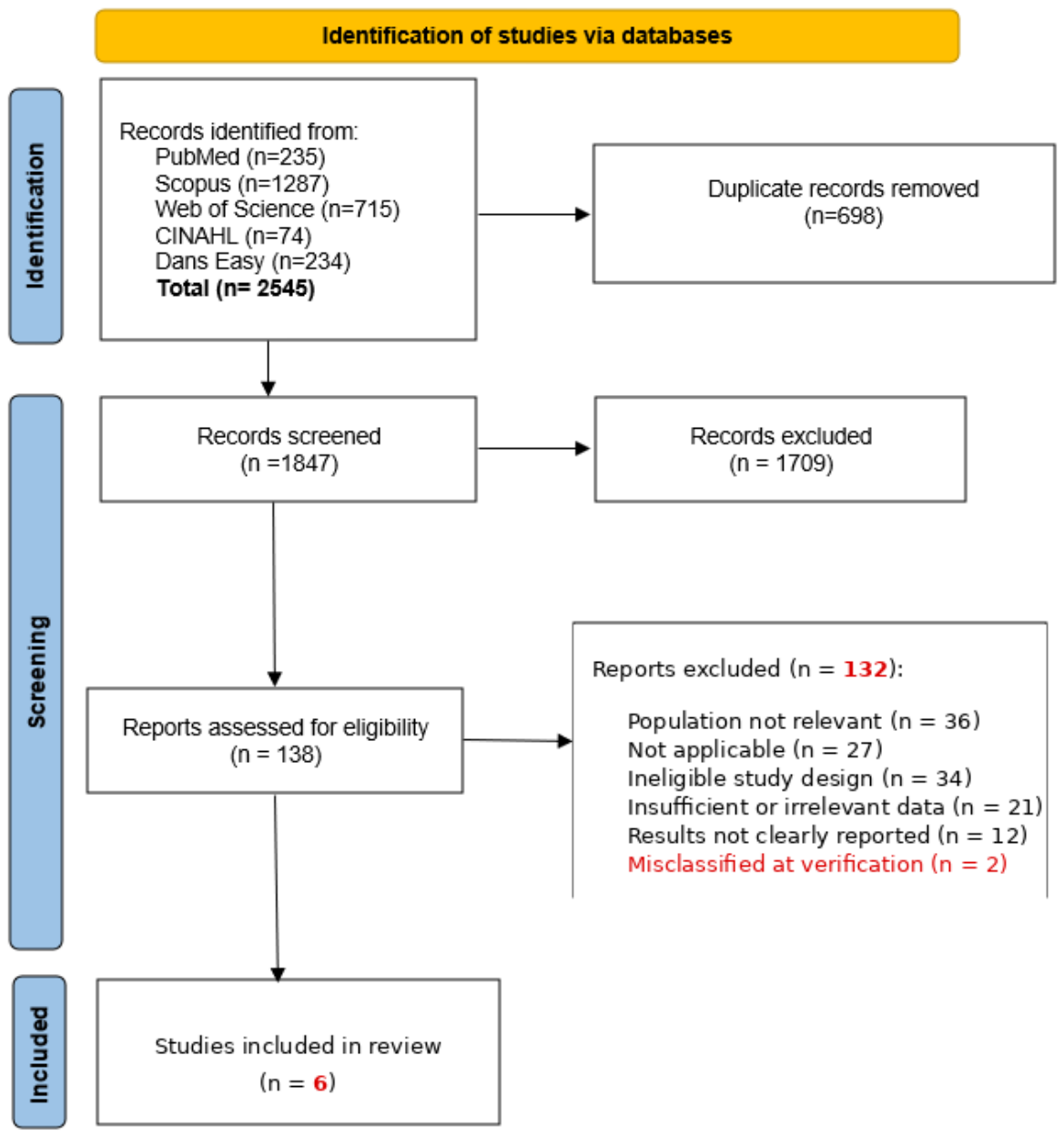
Figure 2.
Proposed NTCAS-informed framework of advanced nursing competencies in complex healthcare systems. Arrows represent hypothesized interactions and do not imply demonstrated causal effects.
Figure 2.
Proposed NTCAS-informed framework of advanced nursing competencies in complex healthcare systems. Arrows represent hypothesized interactions and do not imply demonstrated causal effects.
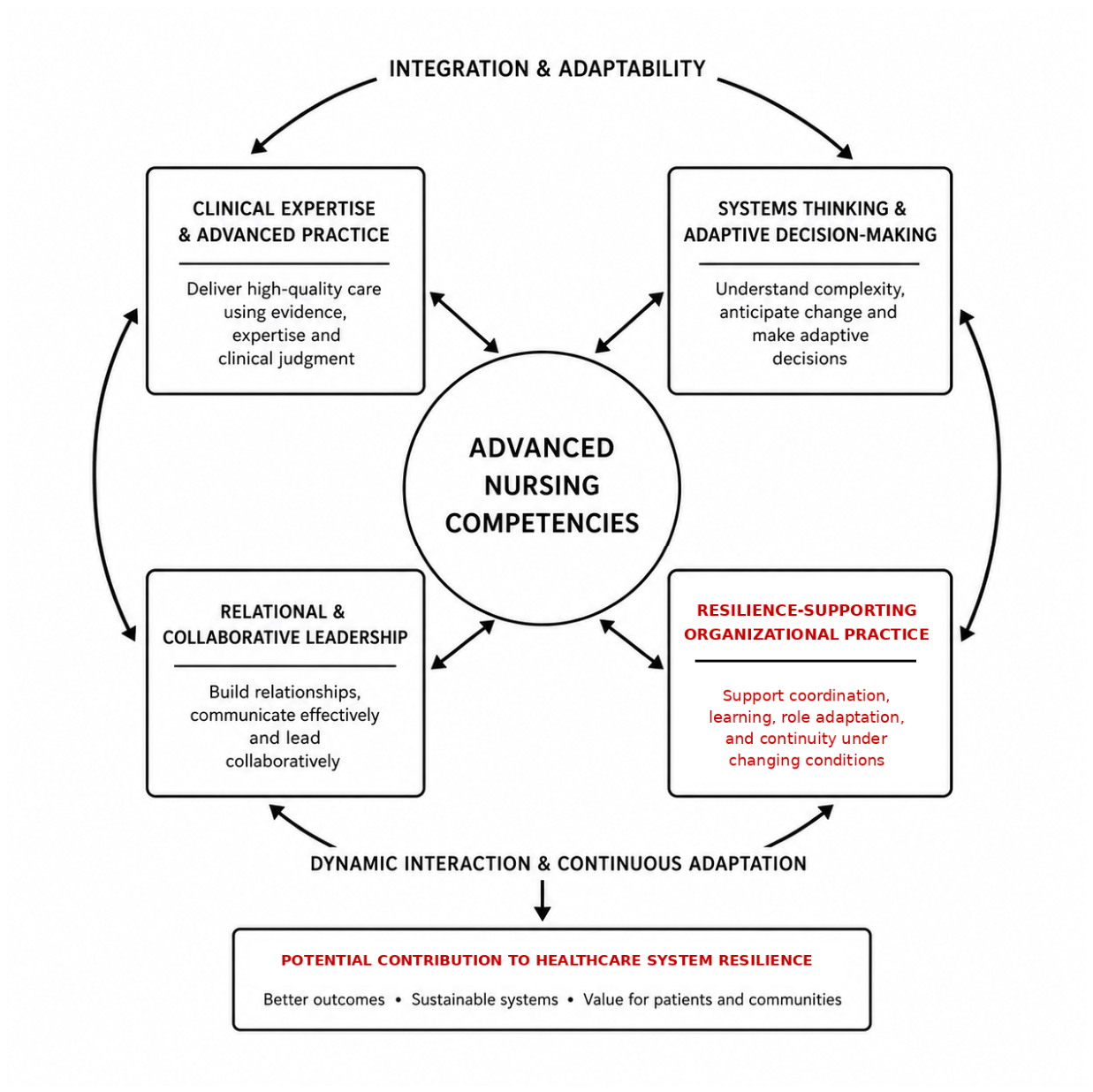
Table 1.
Database-specific search strategy as originally executed.
| DATABASE | SEARCH STRINGS | RECORDS |
| Pubmed |
(“advanced practice nursing” OR “advanced practice nurse*” OR “clinical nurse specialist*” OR “nurse practitioner*” OR “advanced nursing role*”) AND (“competenc*” OR “leadership” OR “capabilit*” OR “expertise”) AND (“systems thinking” OR “organizational resilience” OR “complex adaptive system*” OR “healthcare system*”) |
235 |
| CINAHL |
(MH “Advanced Practice Nursing”) OR TX “advanced practice nurs*” AND TX “systems thinking” |
74 |
| Scopus |
“advanced practice nursing” OR “nurse practitioner” OR “clinical nurse specialist” AND leadership OR “professional competence” OR expertise OR “advanced role” |
1287 |
| Web of science |
TS=(“advanced practice nursing” OR “nurse practitioner” OR “clinical nurse specialist”) AND TS=(leadership OR “professional competence” OR expertise OR “advanced role”) |
715 |
| Dans Easy |
“advanced practice nursing” OR “nurse practitioner” OR “clinical nurse specialist” leadership competence |
234 |
Table 2.
Characteristics of studies included in the corrected synthesis.
| Author(s) | Year | Country / Context | Study Design | Aim of the Study | Key Focus |
| Bonham & Kwasky | 2021 | United States | Conceptual / clinical role analysis | To examine the role of psychiatric mental health advanced practice nurses in care of youth and families | Advanced practice role, clinical leadership, family-centered coordination |
| Cariaso et al. | 2024 | Philippines | Quantitative survey | To assess perceived competencies and training needs of public health nurses as a basis for an advanced-practice leadership course | Public health nursing competencies, leadership development, training needs |
| Day et al. | 2014 | United States | Framework development | To develop and describe oncology nursing leadership competencies | Leadership competency framework and professional development |
| Dela Christmals et al. | 2019 | Sub-Saharan Africa / educational context | Conceptual curriculum framework | To develop concepts for a concept-based advanced practice nursing child-health curriculum | Advanced practice education and competency development |
| Kalb et al. | 2006 | United States | Competency framework / evaluation | To develop a competency-based approach to public health nursing performance appraisal | Competency appraisal and public health nursing performance |
| Phillips et al. | 2019 | United States | Reliability / psychometric study | To test reliability of a standardized rubric for systems thinking in transitions of care | Systems thinking, transitions of care, competency measurement |
Disclaimer/Publisher’s Note: The statements, opinions and data contained in all publications are solely those of the individual author(s) and contributor(s) and not of MDPI and/or the editor(s). MDPI and/or the editor(s) disclaim responsibility for any injury to people or property resulting from any ideas, methods, instructions or products referred to in the content. |
© 2026 by the authors. Licensee MDPI, Basel, Switzerland. This article is an open access article distributed under the terms and conditions of the Creative Commons Attribution (CC BY) license.
Copyright: This open access article is published under a Creative Commons CC BY 4.0 license, which permit the free download, distribution, and reuse, provided that the author and preprint are cited in any reuse.