
Submitted:
03 November 2026
Posted:
05 November 2026
You are already at the latest version
Abstract
The formation of asphalt-resin-paraffin (ARP) deposits in oilfield gathering systems is a major operational challenge, particularly during the final stages of field development when temperature and pressure variations intensify structural changes in crude oils. These deposits significantly increase hydraulic resistance, reduce well productivity, and complicate transportation processes. This study addresses the need for a rapid and reliable method to predict the transition temperature at which structural formation begins in rheologically complex oils containing paraffin, resin, and asphaltene compounds. Laboratory investigations were conducted on crude oils from Azerbaijan’s offshore fields-specifically Bulla-Deniz (Well No. 89) and Alat-Deniz (Well No. 64)-as well as their mixtures and commercial variants. Rheological parameters-shear stress (τ) and dynamic viscosity (μ)-were measured using a “Reotest-2” rotational viscometer at temperatures ranging from -10 °C to 50 °C and various shear rates. The experimental data were processed using a double logarithmic transformation to construct ln(lnμ) = f(t) dependencies, enabling the determination of the transition temperature through the intersection of linear segments. Results indicate that the proposed graph-analytical method provides accurate predictions of structural formation temperature, which coincides with values obtained experimentally. The developed diagnostic approach allows for timely identification of critical temperature ranges during oil extraction and transportation, facilitating preventive measures against ARP deposition. This method offers practical applicability for optimizing oilfield operations and reducing maintenance costs associated with paraffin-related complications.
Keywords:
asphalt-resin-paraffin deposit
; rheology
; structural formation
; transition temperature
; paraffinic oils
1. Introduction
It is well known that in Azerbaijan, as well as in other oil-producing countries, the formation of asphalt-resin-paraffin (ARP) deposits within the well-gathering system is characterized by numerous factors and becomes a more serious and pressing issue during the final stage of oil field development [1,2,3]. Long-term research has established that, since the factors influencing the formation of ARP deposits in oil extraction, collection, preparation, and transportation systems continuously vary at the bottom of the well, along the wellbore, and within the surface gathering and transportation system, the quantity and nature of the resulting deposits also do not remain constant. Consequently, the precipitation of these compounds may occur at different depths of the well depending on the operating regime. In this context, the primary causes of deposit formation include pressure and temperature reduction, as well as oil degassing, with temperature being considered the dominant factor [4,5,6].
Oilfield practice demonstrates that the accumulation of asphalt-resin-paraffin (ARP) deposits primarily occurs in well pumps, pump-compressor pipes, flowlines, field technological pipelines, and gathering tanks. The most frequent occurrence of deposition is observed in the production tubing within wells. In such cases, the roughness of the pipe walls and the presence of solid impurities in the system accelerate the process of paraffin separation from crude oil and its subsequent crystallization and precipitation.
The chemical composition of crude oil also significantly influences the formation of ARP deposits. It is no coincidence that these deposits, formed in different wells, vary in chemical composition depending on the hydrocarbon group of the oil - namely, aromatic, naphthenic, and paraffinic hydrocarbons [3,7].
Depending on the type and nature of the crude oil and the amount of solid hydrocarbons present, the composition of the resulting deposits may include the following: Paraffins: 9 - 77%; Resins: 5 - 30%; Asphaltenes: 0.5 - 70%; Associated oil: up to 60%; Mechanical impurities: 1 - 10%; Water: from 0 to several percent; Sulfur: up to 2%.
Currently, the crude oils produced in Azerbaijan - both offshore and onshore - are highly diverse in terms of their physicochemical properties and rheological characteristics. In most cases, oils from the exploited fields share common features such as high viscosity and the presence of asphalt, resin, and paraffin compounds [2,8]. During the production of such oils, these compounds tend to precipitate in the near-wellbore zone, which leads to a reduction in the permeability of this zone and a decline in the productivity of producing wells. To prevent and eliminate these occurrences, numerous scientific research studies have been conducted by various researchers over time. The precipitation of ARP compounds is widespread not only in the near-wellbore zone but also along the wellbore, in flowlines, and within the field gathering systems [9].
During the extraction, storage, and transportation of paraffinic crude oil from wells, complications associated with paraffin deposition typically occur in the near-wellbore zone, production tubing, and transportation lines. These complications negatively affect the operational performance and normal functioning of wells and necessitate additional subsurface and surface maintenance operations [10,11].
During well operation, the precipitation of asphalt-resin-paraffin (ARP) compounds in the production tubing can lead to a decline in output and, in some cases, even a gradual cessation of production. Analysis shows that temperature and pressure factors have a significant impact on the precipitation process of these compounds. The complications caused by ARP in the well-gathering system, as well as the difficulties encountered in their prevention and removal, are closely related to their specific rheological, structural-mechanical, chemical, and colloid-chemical properties [7,12]. These challenges are further intensified by the wide variety of compositions and characteristics of the deposits. Practically, these deposits consist mainly of organic compounds that are insoluble and tend to disintegrate under crude oil production and transportation conditions.
One of the promising methods for combating ARP during oil production and other technological processes is the application of various chemical reagents that inhibit paraffin precipitation [12].
As pressure and temperature decrease within the well, paraffin begins to separate in the form of crystals. Depending on pressure, temperature, daily production rate, water cut, and gas factor, paraffin precipitates in the reservoir, near-wellbore zone, on the inner surface of production tubing, and on surface equipment. As the liquid-gas mixture moves toward the surface, the reduction in pressure and temperature accelerates the crystallization and deposition of paraffin. It is therefore not surprising that the thickness of deposited paraffin increases as it approaches the wellhead. Based on numerous research studies, it has been established that the crystallization temperature of paraffin varies widely, ranging from 42 °C to 55 °C, depending on the chemical composition of the crude oil [13].
High-paraffin oils are heterogeneous, non-equilibrium rheologically complex substances that undergo structural changes (thixotropy) when the temperature decreases. A considerable number of scientific studies have been devoted to the rheological investigation of such oils [7,8,13].
The disruption of normal well operation due to ARP deposition, along with the costly and labor-intensive tasks of cleaning equipment and pipelines from these deposits, leads to additional expenses for oil production enterprises, including increased energy consumption [11]. It should be noted that these costs rise significantly during the final stage of field development as a result of changes in oil composition, a decrease in reservoir temperature, and the influence of several anthropogenic factors.
According to the results of deposit composition analysis, the formation of paraffin deposits is based on studies using micro-imaging techniques: the mechanism of resin-paraffin deposition on equipment surfaces does not depend on well operating parameters. In fact, it is confirmed to be a molecular process associated with the formation and subsequent growth of crystallites on surfaces in contact with crude oil. Thus, the analysis of ARP deposits collected from the surfaces of pump-compressor pipes, sucker rods, and oil gathering pipeline systems validates earlier findings, reaffirming that the mechanism of resin and paraffin deposition on equipment surfaces is fundamentally linked to molecular processes.
Significant work has been carried out to study the mechanism of ARP deposition, the conditions under which it forms, and methods for its removal. Literature sources generally identify two main factors that explain the mechanism of paraffin separation from crude oil and its subsequent precipitation [14,15]:
- A decrease in the fluid temperature below the solubility temperature of paraffin in oil;
- The adhesion of paraffin crystals to each other within the flow, forming aggregates that eventually settle on the surfaces of pipes and equipment.
The primary cause of paraffin deposition on the inner surface of production tubing is the reduction in oil flow temperature as it approaches the wellhead (surface). When well productivity is high, the high flow velocity of the fluid in the tubing prevents ARP deposition; however, as productivity declines, paraffin precipitation can occur even at greater depths. In paraffinic wells, ARP deposition combined with the high viscosity of crude oil results in reduced oil production and disruption of the operating principles of technological equipment.
The effect of water presence in well production on the intensity of paraffin deposition is not explained unambiguously [16,17]. On one hand, water reduces the suspension temperature, thereby increasing the intensity of paraffin deposition on equipment surfaces; on the other hand, in highly watered wells, paraffin precipitation is almost not observed. This is explained by the fact that in wells with high water content, a layer forms on the inner surface of the pipe, and as a result, the intensity of paraffin crystal deposition on the hydrophilic surface decreases. The wetting of the surface by water is also influenced by the flow velocity of the oil-gas mixture. Sand and mechanical impurities, inorganic salt crystals, and water droplets present in the oil also precipitate, which increases the intensity of paraffin deposition and complicates the process of cleaning the surfaces from these deposits.
For wells producing paraffinic oils, the nature of paraffin deposition varies. Nevertheless, despite its dependence on the rheological and physicochemical properties of the extracted oil, the thermodynamic conditions of the flow, production rate, and other parameters, there are general patterns in the paraffin deposition process. Specifically, the thickness of paraffin deposits increases from the bottom of the well toward the wellhead; initially, deposits appear as isolated spots on the inner surface of the pipes, later forming a continuous layer that thickens toward the wellhead.
At the final stage of field development, the sharp decline in production-primarily the main carrier of heat-due to reservoir pressure reduction in paraffinic wells causes paraffin particles to precipitate at deeper sections of the lift pipes. The zone of intensive paraffin deposition, depending on the exploited field, is generally observed within the depth interval of 1000–1200 m in production wells. Overall, the composition of ARP deposits varies widely depending on the oil composition, the amount of solid hydrocarbons, and the sampling location. In samples taken from different sections of the production tubing, the content of asphaltenes and resins is usually similar. This is explained by the fact that during the formation of deposits, the first to crystallize are paraffins that are poorly soluble in oil. The precipitation characteristics of ARP compounds also largely depend on the interaction forces between the crystal particles of these compounds and the inner surface of the pump-compressor pipes. The smoother the inner surface of the pipes, the lower the likelihood of paraffin adhering and depositing on the pipe walls.
In flowlines, the intensity of paraffin deposition increases as the ambient temperature decreases. Lower temperatures accelerate the precipitation of paraffin from the fluid, leading to greater deposit accumulation. As the temperature drops, the deposits become more consolidated, making their removal by flow washing increasingly difficult. The amount of deposited paraffin decreases with distance from the wellhead; although paraffin crystals may still be present in the flow at some distance, their quantity eventually becomes negligible. This pattern is observed both in well flowlines and in technological and main oil pipelines.
In deep oil reservoirs where formation temperatures reach 100 °C or higher, during the operation of gas-lift wells, it is possible to achieve an increase in wellhead temperature due to the high upward velocity of the production stream and the utilization of the formation’s thermal energy. Consequently, a higher wellhead temperature helps prevent paraffin deposition.
The asphalt-resin-paraffin (ARP) compounds present in crude oil influence the adhesion of paraffin particles to each other and to equipment surfaces, as well as the shape and size of the resulting crystals. After crystallization, paraffin particles exhibit high structural-mechanical properties, which in turn determine the structural-mechanical characteristics of paraffinic oils. Oils with high structural-mechanical properties tend to experience more intensive paraffin deposition.
Studies [11,12,16,17,18] have examined the effect of a composition containing kaolin clay (with aluminum compounds) and condensate in combating ARP deposits, and its inhibitory properties have been confirmed. Chemical methods for preventing paraffin deposition include the use of various inhibitors, depressants, wetting agents, dispersants, and solvents. In addition to chemical reagents of different compositions, thermal and thermochemical methods are widely applied to address complications associated with ARP deposition in wells. Among the methods used to prevent deposits on the inner surfaces of lift pipes, the application of chemical reagents is considered the most cost-effective and efficient. Hundreds of reagents for paraffin control are known, and extensive research has been conducted on their effectiveness.
The primary stage in developing formulations that affect ARP involves the application of chemical methods. Studies on the preparation of these formulations and their mechanisms of action have shown that the use of polymer-based compositions prevents ARP precipitation. The application of polymer solutions improves well operating conditions, increases productivity, and reduces the consumption of working agents.
To improve the transportation of paraffinic crude oils, polymer additives-known as pour point depressants-are currently used to prevent the formation of paraffin crystal lattices and to lower the freezing point of the oil. For this purpose, a formulation has been developed that ensures long-term protection of downhole equipment and the near-wellbore zone [8,12]. Oilfield researchers who have worked for many years on combating paraffin and other deposits have also developed inhibitors and composite formulations containing surface-active components.
To enhance the transportability of high-viscosity and paraffinic oils, technologies involving the use of various solvents, including blending with light oils, are well known [19,20,21]. These technologies are often combined with thermal treatment methods. Analysis of existing methods has shown that efficient mechanical mixing of high-paraffin oils with light oils disrupts the crystalline structure of paraffin, enabling the transportation of oil even at temperatures below its crystallization point.
The composition, which mainly consists of surface-active substances, has been studied for its ability to dissolve deposits depending on temperature and surfactant concentration over a certain period, and its high activity has been confirmed. It is currently used in offshore oil fields.
The efficiency of using condensate and other hydrocarbon solvents for washing paraffin from lift pipes and preventing paraffin deposition has been investigated by several researchers. In gas-lift wells, the second set of lift pipes often has varying diameters (stepped design), and at depths where the transition occurs from smaller to larger diameters, the increase in cross-sectional area, reduction in flow velocity, and relative decrease in temperature significantly increase the likelihood of paraffin separating from the fluid and depositing on the inner surfaces of the pipes.
Studies based on field materials have examined the dependence of paraffin removal using “hot” condensate on the depth of these transition zones in the second lift pipes [12,16,17,18,19,20,21]. It has been established that injecting condensate into wells has a significant impact on the productivity of compressor wells. After condensate treatment, well production is restored for a short period until paraffin deposition resumes in the lift pipes. However, condensate injection reduces the interval between well maintenance operations.
Researchers have correctly noted the relevance of preventive methods against paraffin deposition by regulating the technical and technological parameters of the well. For newly commissioned fields, to prevent ARP precipitation, the wellhead temperature must be maintained above the precipitation temperature of ARP compounds.
Technologies applied to prevent and eliminate intensive ARP deposition during well operation increase operating costs and the production cost of crude oil. The actual thickness of deposits is determined when well equipment is lifted to the surface; a thickness of 2 cm on pipe walls is considered intensive paraffin deposition.
To reduce the likelihood of ARP precipitation, it is more effective to apply chemical reagents during the initial stage of pipeline operation. Depending on the composition of the well product and the length of the pipeline, the contact time, frequency, and volume of solvents for each case are determined individually.
As observed in operational practice, the first solid deposits to form in pump-compressor pipes are paraffin and sericin compounds. The composition and properties of these deposits, as well as the ARP samples separated from oil, vary at different heights within the pipes. To predict the interval of ARP deposition, well thermometry data must be analyzed and temperature ranges determined. In this case, it is essential to know the temperature at which paraffin begins to crystallize for each well, which largely depends on pressure.
Analysis indicates that the most promising method for combating ARP deposits is the creation of a polymer protective hydrophilic layer on metal surfaces. On such coated surfaces, ARP deposits do not accumulate, which justifies the application of these protective coatings to prevent deposits on the internal surfaces of oilfield equipment. Phenol-formaldehyde and oxide resins, as well as various compositions based on them, are used to develop these coatings. Typically, polar (hydrophilic) materials with adhesion resistance and a smooth surface are applied as protective coatings against paraffin in wells. For this purpose, bakelite varnish, epoxy resin, and its composites with other materials are commonly used.
To study the role of electrokinetic phenomena during paraffin deposition on the inner surfaces of pipes, it is necessary to specifically determine the parameters of electrification depending on the physicochemical properties of the oil, the pipe surface, and the operating conditions of the well.
In connection with the use of varnish and paint coatings, along with investigating electrokinetic phenomena in the paraffin deposition process during oil production, their mechanical, physicochemical, and chemical properties must also be examined. In general, varnish and paint coatings applied in the oil industry should possess the following characteristics: Resistance to oil and moisture; High mechanical strength; Minimal aging effect; High chemical resistance.
Thus, based on the above, it can be concluded that one of the main complications in oil production is associated with paraffin (or ARP compound) deposition within the well-gathering system-specifically in production and lift pipes, flowlines, technological pipelines, and other oilfield equipment. Despite numerous methods proposed by various researchers to eliminate these difficulties, the problem has not yet been fully resolved.
In general, methods for combating ARP deposits have been implemented in two main directions:
1. Preventing or at least reducing the formation of deposits. This includes measures such as applying smooth protective coatings to the inner surfaces of pipelines, using chemical methods, and applying physical effects (vibration, ultrasound, electric fields, etc.).
2. Removing already formed ARP deposits. Methods in this category include thermal treatments (washing deposits with hot oil, hot water, or steam; using electric heaters; applying various reagents and composite formulations that create exothermic reactions), mechanical cleaning with scrapers of different designs, and chemical methods (solvents and other cleaning agents).
Despite all the measures mentioned, the diversity of reservoir operating conditions, the multiphase and multicomponent nature of the produced fluids, their varying quality indicators, and rheological properties require an individualized approach to effectively combat ARP deposits under specific conditions. Experience shows that the most efficient measure among these is the early prediction of ARP deposition. This is because timely forecasting ensures the safe and stable operation of oilfield equipment and the entire well-gathering system, preventing increased costs for oil production and transportation.
In addition to the above, the analysis highlights two important factors: water cut and the mixing of different types of crude oils. Recent research has established that the physicochemical and rheological properties of oils are significantly influenced by these factors [16,17,22]. Key parameters such as viscosity, density, and pour point undergo anomalous changes depending on water content and the composition of mixed oils [8,19,23]. For example, although mixing heavy oil with kerosene is advantageous for reducing viscosity, it undesirably increases the pour point by 8-10 °C when the kerosene content reaches up to 15% [19] . In certain oil mixtures, antagonism and synergism effects occur, and depending on the mixing ratio of the oils, the amount of initial ARP compounds in their composition also changes [20]. From this perspective, the study of paraffinization and ARP precipitation phenomena in oils, as well as the development of diagnostic methods for monitoring these processes, is of great importance. Since such changes in the well-gathering system are inevitable, the significance of periodic monitoring methods cannot be overstated.
Thus, based on the results of this review, it can be concluded that research aimed at preventing ARP deposition and removing existing deposits remains highly relevant and carries significant scientific and practical importance. Furthermore, forecasting paraffinization and precipitation phenomena in advance-taking into account the prevailing conditions, as well as water cut and mixing factors-should be considered highly valuable and essential.
2. Materials and Methods
Currently, the majority of oil fields in Azerbaijan’s overall balance are in the final stage of development. As a result, significant deterioration of reservoir structure, an increase in the proportion of hard-to-recover reserves, and a high degree of water cut in formations and well products are observed. During the production of paraffinic oils, serious problems frequently arise due to ARP deposition in oilfield equipment and pipeline communications within the well-gathering system. These issues lead to the formation of stable oil emulsions and intensify the deposition process, thereby reducing well productivity and negatively affecting the operation of the gathering system.
As noted earlier, combating ARP during oil production and transportation is carried out in two directions:
- Preventive measures aimed at avoiding the formation of these deposits;
- Remedial actions focused on removing deposits that have already formed.
The selection of optimal methods for combating ARP deposits and the efficiency of the applied techniques depend on numerous factors, including the oil production method, the thermobaric regime of the flow, and the composition and properties of the produced fluids. Therefore, despite the existence of a wide range of different approaches, the problem remains unresolved and continues to be one of the major challenges in oil production.
In Azerbaijan, many of the exploited fields produce oils that are highly viscous, prone to rapid solidification, and exhibit thixotropic and other non-Newtonian properties. Depending on their composition and water cut, these oils can have viscosities reaching thousands of centipoise and pour points ranging from 5 °C to 30 °C. During the production, gathering, and transportation of such oils, the accumulation (precipitation) of ARP compounds on the inner surfaces of lift pipes and oil-gathering collectors significantly reduces pipeline throughput. Field experience shows that when the thickness of deposits on the inner walls of oil-gathering collectors reaches approximately 1 cm-depending on pipeline length-the hydraulic resistance in the system increases, causing pressure losses to rise from 0.2 MPa to as much as 1 MPa. Due to structural formation, the deterioration of the rheological properties of crude oils significantly affects the efficient and optimal operating regime of the well-gathering system. Therefore, in systems for the production, gathering, and transportation of rheologically complex oils containing ARP compounds, it is crucial to determine in advance the initial temperature range at which structural formation of the main components-paraffins, resins, and asphaltenes-is likely to occur, in order to reduce the intensity of deposit formation.
Considering that well-gathering systems in oilfields primarily involve the movement of heterogeneous mixtures (oil-water-gas, mechanical impurities, etc.), and that oil quality indicators continuously change from the wellhead to the processing facilities due to mixing, water cut, and thermodynamic factors, it is evident that the temperature responsible for structural changes will also inevitably vary.
Considering these factors, a comprehensive investigation was conducted into the physicochemical properties and rheological characteristics of various crude oils containing asphalt-resin-paraffin (ARP) compounds, their mixtures, and prepared commercial oils under a wide temperature range (–10, –5, 0, 5, 10, 20, 30, 40, and 50 °C). Crude oil samples were obtained from Well No. 89 of the Bulla-Deniz field and Well No. 64 of the Alat-Deniz field, both located in Azerbaijan. Based on these primary samples, additional mixtures were prepared in different ratios (50:50%, 75:25%, and 25:75%) and examined separately. For comparative purposes, tests were also performed on the commercial variants of these oils following standard preparation procedures. In total, seven oil samples were analyzed for their rheological and physicochemical behavior. The following parameters were measured for the oils and their mixtures: Water content, %; Oil density, kg/m3; Chloride salt content, mg/dm3; Pour point temperature, °C; Mechanical impurities, %; Paraffin content, %; Resin content, %; Asphaltene content, %.
The physicochemical properties of Bulla-Deniz (Well No. 89) and Alat-Deniz (Well No. 64) oils, as well as their various mixtures, are presented in Table 1. This table also includes the physicochemical characteristics determined for the purified (prepared) variants of these well oils-i.e., the commercial oils.
As shown in Table 1, Bulla-Deniz oil (B.89) and Alat-Deniz oil (A.64) are distinct crude oils in terms of physicochemical properties and water cut. While B.89 oil (first oil) has a water cut of 75%, A.64 oil (second oil) has a water cut of 34%. Furthermore, these oils differ significantly in the content of asphaltenes, resins, and paraffins. Their commercial variants exhibit even greater differences in the amounts of these compounds. The table also reflects the variations in physicochemical indicators for mixtures of these oils prepared in different ratios. One of the key findings, as shown in Table 1, is that the pour point values for commercial oils are significantly higher than those for crude oils and their mixtures. While the pour point for B.89 and A.64 crude oils and their mixtures is equal to zero, the pour point for B.89 commercial oil and A.64 commercial oil is 12 °C and 6 °C, respectively.
Subsequently, the rheological properties of these oils and their mixtures were investigated. The oil samples were tested using a “Reotest-2” rotational viscometer, and rheological parameters such as shear stress (τ) and effective viscosity (μ) were determined at various shear rates (γ̇) and temperatures (-10, 0, 5, 10, 20, 30, 40, and 50 °C). Based on the results of the viscometer tests, rheological flow curves τ = f(γ̇) were constructed.
The rheological study revealed that for all oils, viscosity decreases with increasing temperature and increases with higher water content. For the second oil (A.64) and the third sample (B.89–50% : A.64–50%), the temperature-dependent variations of these rheological parameters are presented in Table 2 and Table 3.
Based on the experimental data presented in Table 3 and Table 4, rheological flow curves for the tested oil samples were constructed and are shown in Figure 1, Figure 2, Figure 3 and Figure 4. These flow curves demonstrate that shear stress increases monotonically with increasing shear rate, indicating that both oils exhibit non-Newtonian behavior at low temperatures (below 20 °C). At relatively lower temperatures (−10, −5, and 0 °C), the flow curves tend to intersect or approach the stress axis, suggesting significant structural changes in the fluid under these conditions.
Using the same data, viscosity–temperature dependency graphs at different shear rates were developed for the second and third oil samples (Figure 3 and Figure 4). These graphs illustrate the variation of viscosity with temperature. Although the rate of viscosity reduction with increasing temperature differs slightly between the first and second oils, the overall trend conforms to the classical pattern. The viscometric diagrams reveal that the decrease in viscosity is most pronounced at lower initial temperatures, after which the rate of reduction gradually stabilizes.
3. Results and Discussion
Operational experience in oil fields demonstrates that, during the movement of extracted products from the wellbore through pump-compressor pipes to the surface and their subsequent transportation via in-field pipelines, significant changes occur in their physicochemical and rheological properties. One of the primary factors driving these changes-from the well bottom to the gathering station or processing facility-is temperature, which varies across a wide range. As temperature decreases within the well-gathering system, the component composition of the oil is altered, and the precipitation of ARP (asphaltene–resin–paraffin) compounds becomes increasingly pronounced. To mitigate or prevent such undesirable processes, it is essential to determine at least the probable value of the transition temperature (ttr.) at which structural formation begins due to the presence of these compounds.
Currently, as most producing fields have entered the final stage of development, issues related to ARP deposition have become more severe and widespread [90,96]. The formation of these compounds is influenced by numerous factors, including the operating conditions of technological equipment during extraction, transportation, and storage (thermobaric parameters, flow dynamics, water content of the product), as well as the intrinsic properties of the oil (physicochemical and rheological characteristics, group chemical composition). Research has established that among the factors governing the tendency of oils to form such deposits, the composition, structure, and ratios of high-molecular-weight components play a decisive role.
At low temperatures, rheologically complex oils generally turn into dispersed systems formed by high-molecular components, and therefore, depending on the ratio of these compounds, their interactions will vary. It is no coincidence that by influencing the nature of the interaction between asphaltenes, paraffins, and resins, it is possible to control the structural formation process in oil systems.
Structural formation in oils sharply increases hydraulic resistance in the well-gathering system and also facilitates the formation of stable emulsions. As the temperature drops, these compounds act as ‘black’ emulsifiers, significantly increasing the likelihood of forming highly viscous and hard-to-break oil emulsions not only in technological gathering and discharge lines but even inside wellbores.
In addition to the temperature factor, until the preparation of crude oils produced in the fields-i.e., until processes such as degassing, stabilization, dehydration, desalting, and removal of mechanical impurities-other factors such as water content and mixing also cause significant physical-chemical and rheological changes in oils. All these factors affect and alter the initial temperature of structural formation in oils.
Therefore, in oilfield practice, it is of great importance to periodically clarify and determine in advance the transition temperature corresponding to the precipitation of these compounds. The determination of this temperature is generally associated with sampling oil from the fields and testing and analyzing it under laboratory conditions, which is labor-intensive and time-consuming.
Most importantly, it should be noted that the determined temperature is carried out according to GOST and standards for commercial oils, not crude oils. That is, oils are fully dehydrated, stabilized, and cleaned from other ballast substances before their quality indicators, including freezing and crystallization temperatures of paraffin compounds, are determined. Naturally, the results obtained in this way do not accurately reflect the real situation and differ significantly, since the factors of oils being multiphase and multicomponent are not taken into account.
Taking the above into account, the issue of developing a diagnostic method for determining the transition temperature to structural formation in the wellbore and surface oilfield equipment during the extraction, transportation, and storage of rheologically complex oils has been considered. For this purpose, the results of tests conducted on various rheologically complex oils and their mixtures containing paraffin, asphaltene, and resin compounds using the ‘Reotest-2’ viscometer were used (Table 2 and Table 3). As an example, the 3rd oil sample (B.89–50% : A..64–50%) was selected, and its rheological study data were taken as the basis. Table 4 shows how the shear stress (τ) and dynamic viscosity (μ) of this oil change at different shear rates depending on temperature.
The results obtained for the mentioned 3rd oil sample, i.e., the μ = f(t) viskogram, were mathematically processed using double logarithmic transformation, and the dependencies ln(lnμ) = f(t) were constructed. These dependencies for shear rate values γ̇ = 3; 9; 27; 81; 243 are presented in Table 4 and Figure 5. As seen from Figure 5, in the ln(lnμ) = f(t) dependencies, two straight lines are obtained in the cases considered due to the presence of non-Newtonian characteristics. The temperature corresponding to the intersection point of these straight lines is precisely the transition temperature to structural formation. For the studied oil, this temperature, as seen from Figure 5, is approximately t = 17 °C, regardless of the shear rate values.
Considering that the value of the transition temperature to structural formation determined based on the mathematical interpretation of rheological flow curves remains unchanged for the examined shear rate values, the determination of this temperature for other oil samples was carried out for only one shear rate value. Calculations were also performed for other oil samples (1, 2, 3, 5, and 6). Based on the rheological research data for these oil samples, Table 5 shows how the calculated values of μ and ln(lnμ) parameters change with temperature at a single shear rate (γ̇ = 434.4 s−1). Using the values in Table 5, the dependencies ln(lnμ) = f(t) were constructed and analyzed for individual oil samples.
For the 1st (B.89), 2nd (A.64), 3rd (B.89-50% : A.64-50%), 5th (B.89-25% : A.64-75%), and 6th (B.89-commercial) oil samples, the mentioned ln(lnμ) = f(t) dependencies are shown in Figure 6, Figure 7, Figure 8 and Figure 9, respectively. As seen from Figure 6, Figure 7, Figure 8 and Figure 9, the oil most prone to rapid structural formation is the 6th oil sample (B.89-commercial). For this oil, the transition temperature is t₍tr₎ = 24 °C. In the 2nd oil sample (A.64), the lowest transition temperature to structural formation is t₍tr₎ = 11 °C.
The influence of oil water content and mixing factors on the change in the mentioned temperature value is clearly seen from the interpretation graphs. For example, a high water content in B.89 oil reduces this temperature from 24 °C to 17 °C.
It should be noted that the value of the transition temperature determined based on the interpretation of rheological curves coincides with the value determined experimentally under laboratory conditions. Thus, the proposed graph-analytical method makes it possible to quickly determine the probable value of the unfavorable transition temperature to structural formation during oil extraction from the well and its movement through in-field gathering and transportation pipelines, and to implement preventive measures in time to avoid ARP compound deposition in pipelines and equipment.
4. Conclusions
- Asphalt-resin-paraffin (ARP) deposition is one of the main complications in producing and transporting paraffinic oils, and it gets worse at the final stage of field development. A review of the literature shows that prevention and removal methods (chemical, thermal, mechanical, protective coatings, physical effects) depend heavily on specific conditions. Early prediction of the temperature at which structural formation begins is the most effective of these measures.
- Seven samples were studied: crude oils from Bulla-Deniz (Well No. 89) and Alat-Deniz (Well No. 64), three mixtures (50:50, 75:25, 25:75) and the two commercial oils. They differ markedly in water content, density, and paraffin, resin and asphaltene content. The pour point of the crude oils and their mixtures is 0 °C, while the commercial oils reach 12 °C (B.89) and 6 °C (A.64).
- The oils were measured with the “Reotest-2” viscometer at –10 to 50 °C. Viscosity decreases as temperature rises and increases with water content. The flow curves τ = f(γ̇) show non-Newtonian behavior below about 20 °C.
- A graph-analytical diagnostic method was proposed. The viscosity-temperature data are transformed to ln(lnμ) = f(t), which gives two linear segments. Their intersection is the transition temperature to structural formation. For the 50:50 mixture this temperature was about 17 °C and did not depend on shear rate (γ̇ = 3–243 s−1). The other samples could therefore be analyzed at a single shear rate.
- The transition temperature depends strongly on oil type, water content and mixing ratio. It is highest for B.89 commercial oil (24 °C) and lowest for A.64 crude oil (11 °C). High water content lowers it from 24 °C to 17 °C.
- The temperatures from the graphs agree with those found experimentally in the laboratory. Unlike the standard GOST procedure, which tests dehydrated and stabilized commercial oil, the method works on the crude oil as produced.
- The method is fast and needs only routine viscometric data. It can be used to find the critical temperature range along the well, flowlines and gathering pipelines, and to plan inhibitor dosing, heating and flushing in time. This should reduce ARP deposition and the related maintenance costs.
Author Contributions
Project administration, outline, structure, guidance, G.I.; supervision, expertise, data curation, visualization, writing - original draft preparation, G.I. and F.I. All authors have read and agreed to the published version of the manuscript.
Funding
This research received no external funding.
Data Availability Statement
The original contributions presented in the study are included in the article; further inquiries can be directed to the corresponding author.
Conflicts of Interest
The authors declare no conflicts of interest.
References
- Elkatory, M.R.; Soliman, E.A.; El Nemr, A.; Hassaan, M.A.; Ragab, S.; El-Nemr, M.A.; Pantaleo, A. Mitigation and Remediation Technologies of Waxy Crude Oils’ Deposition within Transportation Pipelines: A Review. Polymers 2022, 14, 3231. [Google Scholar] [CrossRef] [PubMed]
- Wang, X.; Gurbanov, H.; Adygezalova, M.; Alizade, E. Investigation of Removing Asphaltene-Resin-Paraffin Deposits by Chemical Method for Azerbaijan High-Paraffin Oil Production Process. Energies 2024, 17, 3622. [Google Scholar] [CrossRef]
- Hasanvand, M.Z.; Montazeri, M.; Salehzadeh, M.; Amiri, M.; Fathinasab, M. A Literature Review of Asphaltene Entity, Precipitation, and Deposition: Introducing Recent Models of Deposition in the Well Column. J. Oil Gas Petrochem. Sci. 2018, 1, 83–89. [Google Scholar] [CrossRef]
- Wang, W.; Huang, Q.; Wang, C.; et al. Effect of operating conditions on wax deposition in a laboratory flow loop characterized with DSC technique. J. Therm. Anal. Calorim. 2015, 119, 471–485. [Google Scholar] [CrossRef]
- Weingarten, J. S.; Euchner, J. A. Methods for Predicting Wax Precipitation and Deposition. SPE Prod. Eng. 1988, 3, 121–126. [Google Scholar] [CrossRef]
- Brown, T. S.; Niesen, V. G.; Erickson, D. D. Measurement and Prediction of the Kinetics of Paraffin Deposition. Paper presented at the SPE Annual Technical Conference and Exhibition, Houston, Texas, October 1993. [Google Scholar] [CrossRef]
- Venkatesan, R.; Östlund, J.; Chawla, H.; Wattana, P.; Nydén, M.; Fogler, H.S. The Effect of asphaltenes on the gelation of waxy oils. Energy Fuels 2003, 17, 1630–1640. [Google Scholar] [CrossRef]
- Gasimzade, A.V.; Nurullayev, V.K. Low-Temperature Rheological Behavior and Wax Deposition Control in High-Paraffin Blended Crude Oils Using Chemical Additives. Chem. Biochem. Eng. Q. 2026, 40(2), 75–94. [Google Scholar] [CrossRef]
- Sousa, A.L.; Matos, H.A.; Guerreiro, L.P. Preventing and removing wax deposition inside vertical wells: A review. J. Pet. Explor. Prod. Technol. 2019, 9, 2091–2107. [Google Scholar] [CrossRef]
- Turbakov, M.S.; Riabokon, E.P. Improving of Cleaning Efficiency of Oil Pipeline from Paraffin. In Proceedings of the SPE Russian Oil and Gas Exploration and Porudction Technical Conference and Exhibition, Moscow, Russia, 14–16 October 2014. [Google Scholar]
- Thota, S.T.; Onyeanuna, C.C. Mitigation of wax in oil pipelines. Int. J. Eng. Res. Rev. 2016, 4, 39–47. [Google Scholar]
- Ragunathan, T.; Husin, H.; Wood, C.D. Wax Formation Mechanisms, Wax Chemical Inhibitors and Factors Affecting Chemical Inhibition. Appl. Sci. 2020, 10, 479. [Google Scholar] [CrossRef]
- Hongying, Li; Jinjun, Zhang. A generalized model for predicting non-Newtonian viscosity of waxy crudes as a function of temperature and precipitated wax. Fuel 2003, Volume 82(Issue 11), Pages 1387–1397. Available online: https://www.sciencedirect.com/science/article/abs/pii/S0016236103000358. [CrossRef]
- Wen, J.; Jia, Y.; Lu, Y.; Luo, H.; Huang, Z.; You, C.; He, Z.; Xiao, X. Progress in Wax Deposition Characteristics and Prediction Methods for High Pour Point and Viscous Crude Oil Water System. Processes 2025, 13, 1115. [Google Scholar] [CrossRef]
- Chen, Y.; Jing, J.; Sun, J.; Wang, K.; Wang, S. Progress and perspectives of wax deposition in oil-gas systems: A review. Chem. Eng. Res. Des. 2024, 208, 348–358. [Google Scholar] [CrossRef]
- Gurbanov, G.R.; Nurullayev, V.K.; Gasimzade, A.V. The effect of formation temperature and constituent components on rheological parameters of water-oil emulsions. Nafta-Gaz 2024, no. 5, 301–311. [Google Scholar] [CrossRef]
- Wang, X.; Ismayilov, G.; Adygezalova, M.; Alizade, E. A Mathematical Model for Predicting the Viscosity of Oil Emulsions as a Function of Water Cut. Energies 2026, 19, 3823. [Google Scholar] [CrossRef]
- Alade, O.S.; Hassan, A.; Mahmoud, M.; Al-Shehri, D.; Al-Majed, A. Novel approach for improving the flow of waxy crude oil using thermochemical fluids: Experimental and simulation study. ACS Omega 2020, 5, 4313–4321. [Google Scholar] [CrossRef] [PubMed]
- Wang, X.; Ismayilov, G.; Iskandarov, E.; Alizade, E.; Ismayilova, F. Study of Specific Problems Arising in the Blending Processes of Crude Oils (Based on the Examples of Azerbaijan Oils). Processes 2025, 13, 1500. [Google Scholar] [CrossRef]
- Han, Z.; Ma, L.; Li, X.; Zhu, H.; Li, W.; Xia, X.; Zhang, X.; Guo, R. Determination of Wax Deposition Rate Model of Blended Oils with Different Blending Ratios. Processes 2024, 12, 772. [Google Scholar] [CrossRef]
- Gao, X.; Dong, P.; Cui, J.; Gao, Q. Prediction Model for the Viscosity of Heavy Oil Diluted with Light Oil Using Machine Learning Techniques. Energies 2022, 15, 2297. [Google Scholar] [CrossRef]
- Ismayilova, F.; Zeynalova, G. Impact of Cooling Rate on the Rheological Properties of Flooded Crude Oils. Her. Azerbaijan Eng. Acad. 2024, 16(4), 52–59. [Google Scholar] [CrossRef]
- Ismayilov, G.G.; Ismayilovaç, F.B.; Musaev, S.F. Forecasting the viscosity properties of water-oil systems. SOCAR Proc. 2021, 109–115. [Google Scholar] [CrossRef]
Figure 1.
Rheological flow curves for the 2nd oil sample (A. 64).
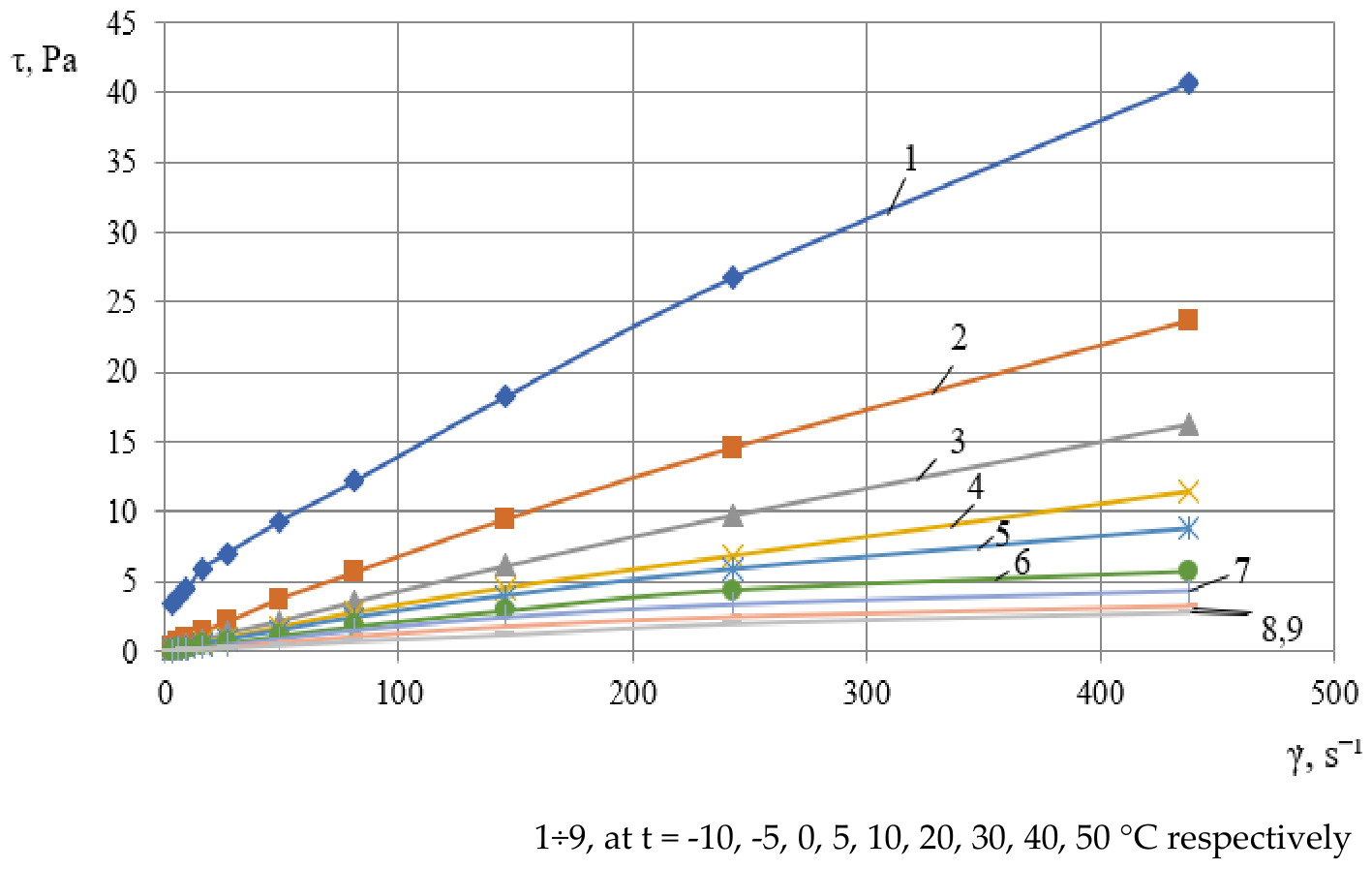
Figure 2.
Rheological flow curves for the 3rd oil sample (B.89 – 50% : A.64 – 50%).
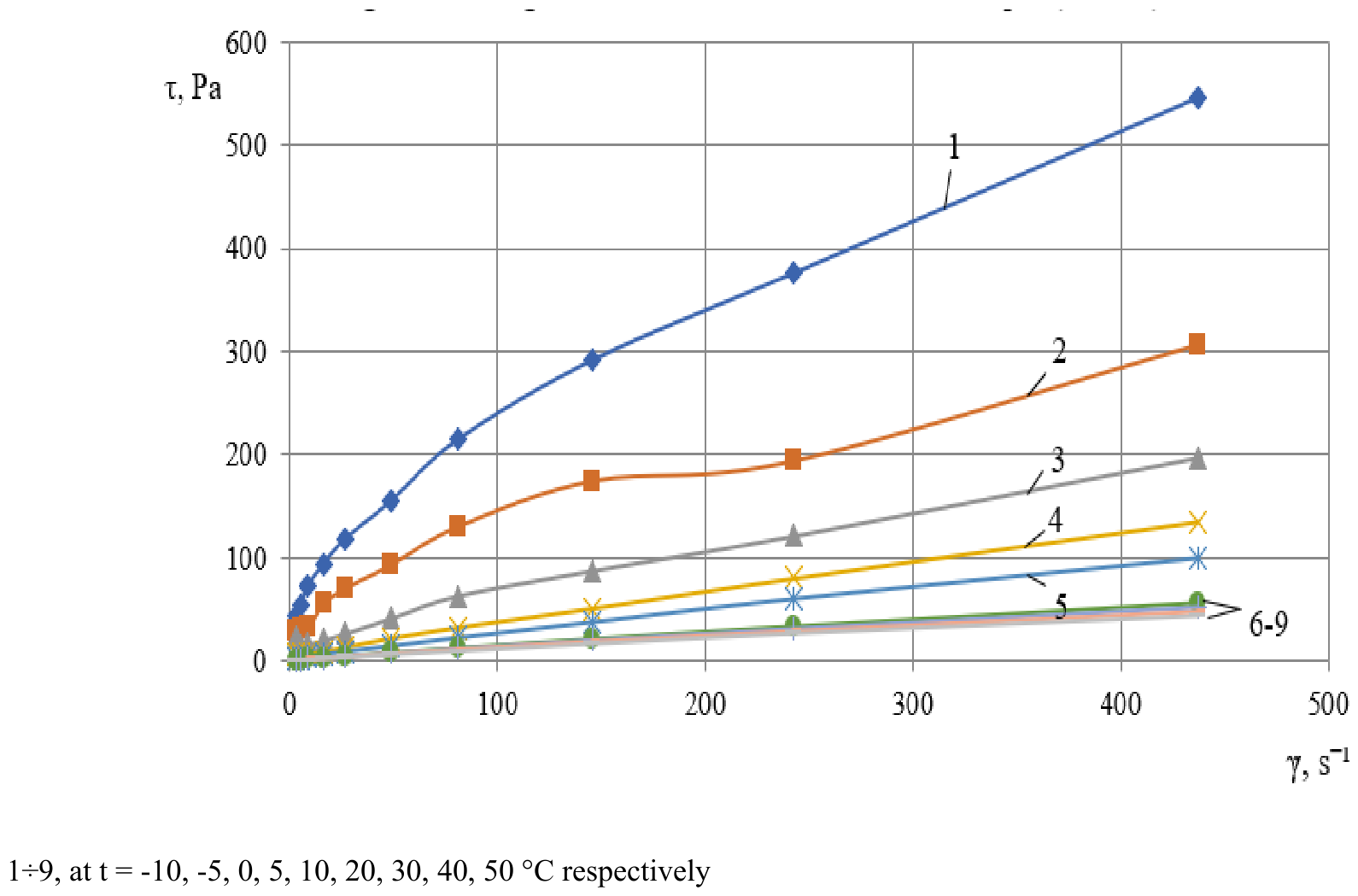
Figure 3.
Dependence of viscosity on temperature for the 2nd oil sample.
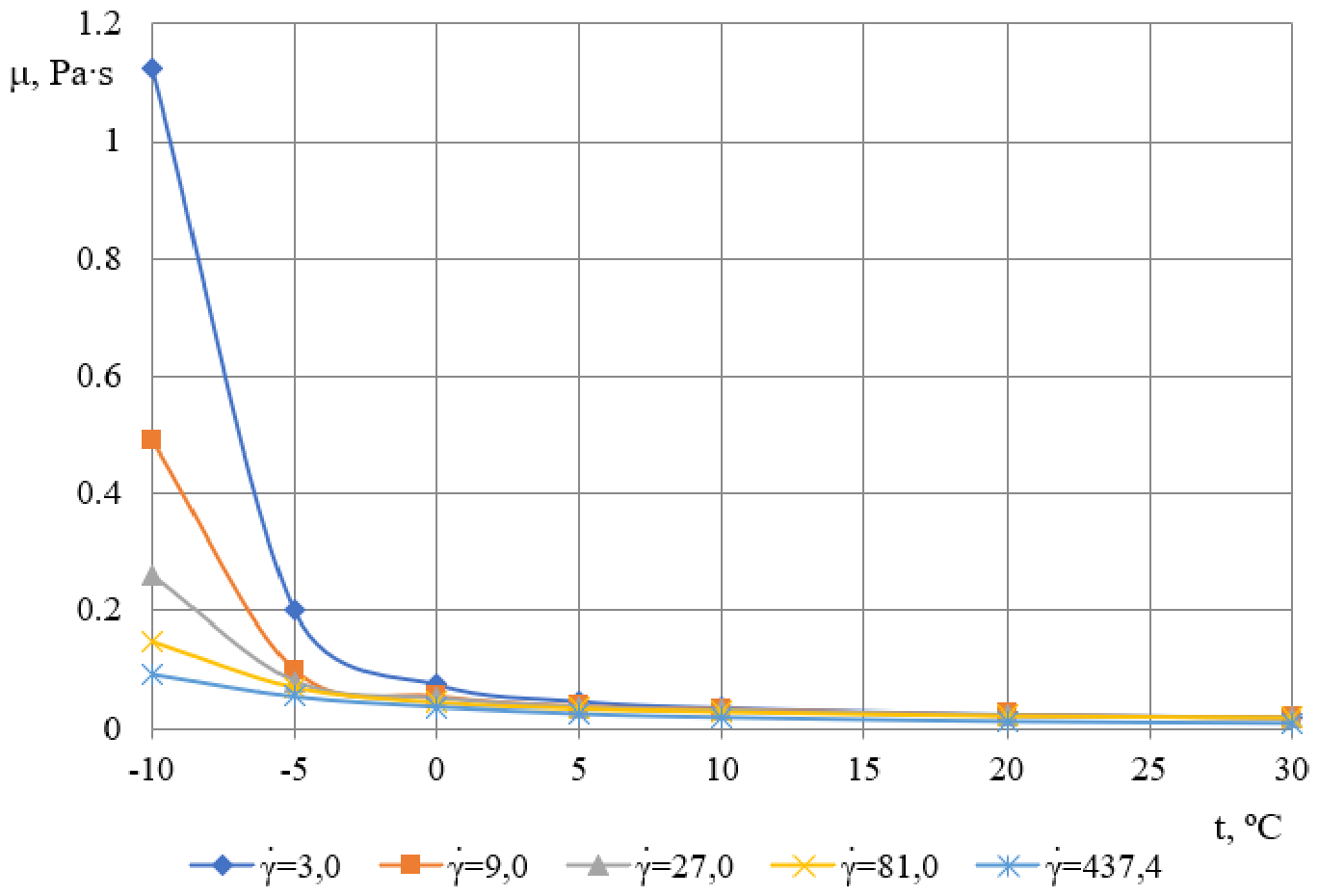
Figure 4.
Dependence of viscosity on temperature for the 3rd oil sample.
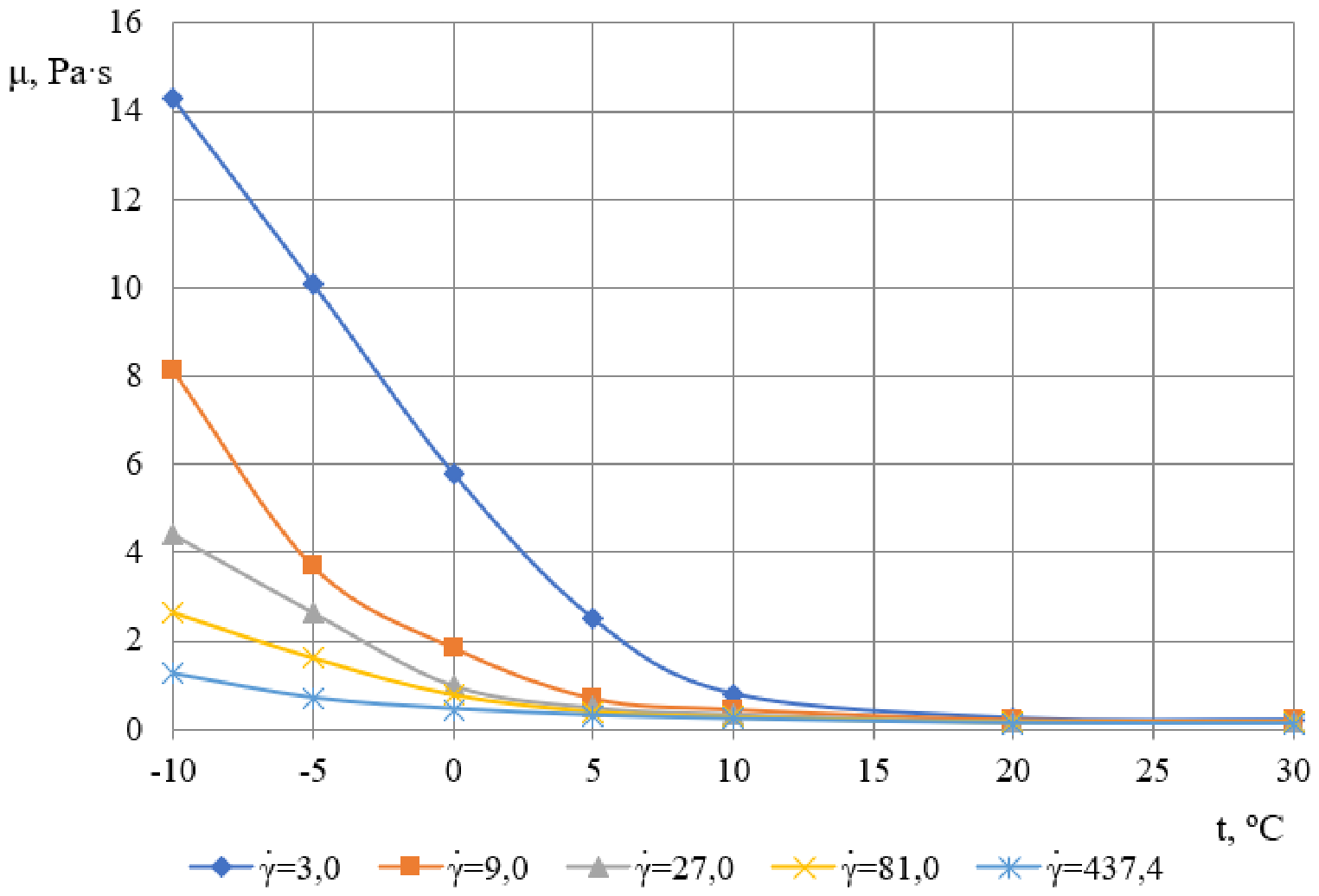
Figure 5.
Determination of the transition temperature to structural formation for the 3rd oil sample (B.89–50% : A.64%) at different shear rates.
Figure 5.
Determination of the transition temperature to structural formation for the 3rd oil sample (B.89–50% : A.64%) at different shear rates.
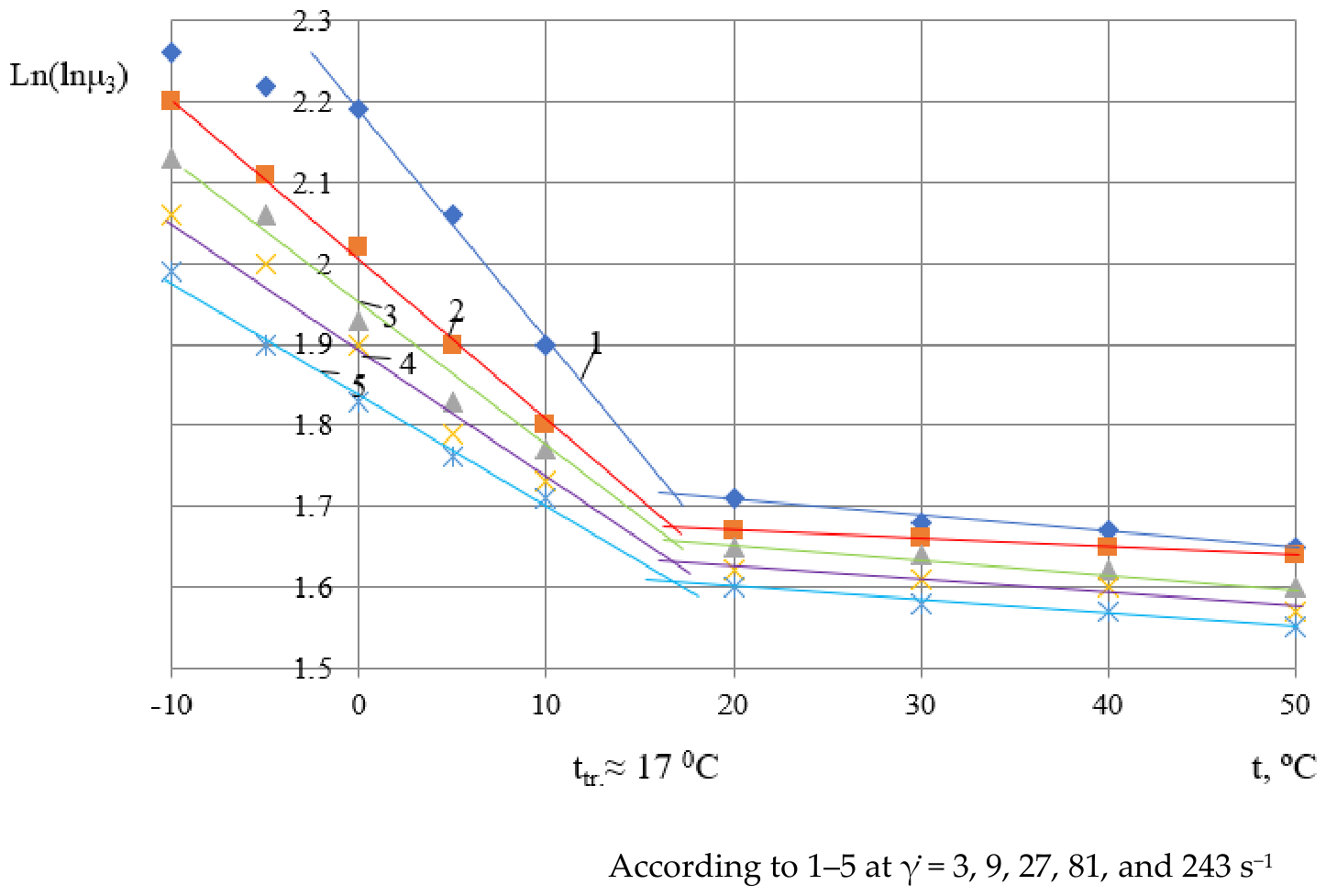
Figure 6.
Determination of the transition temperature to structural formation for the 1st oil sample (B.89).
Figure 6.
Determination of the transition temperature to structural formation for the 1st oil sample (B.89).
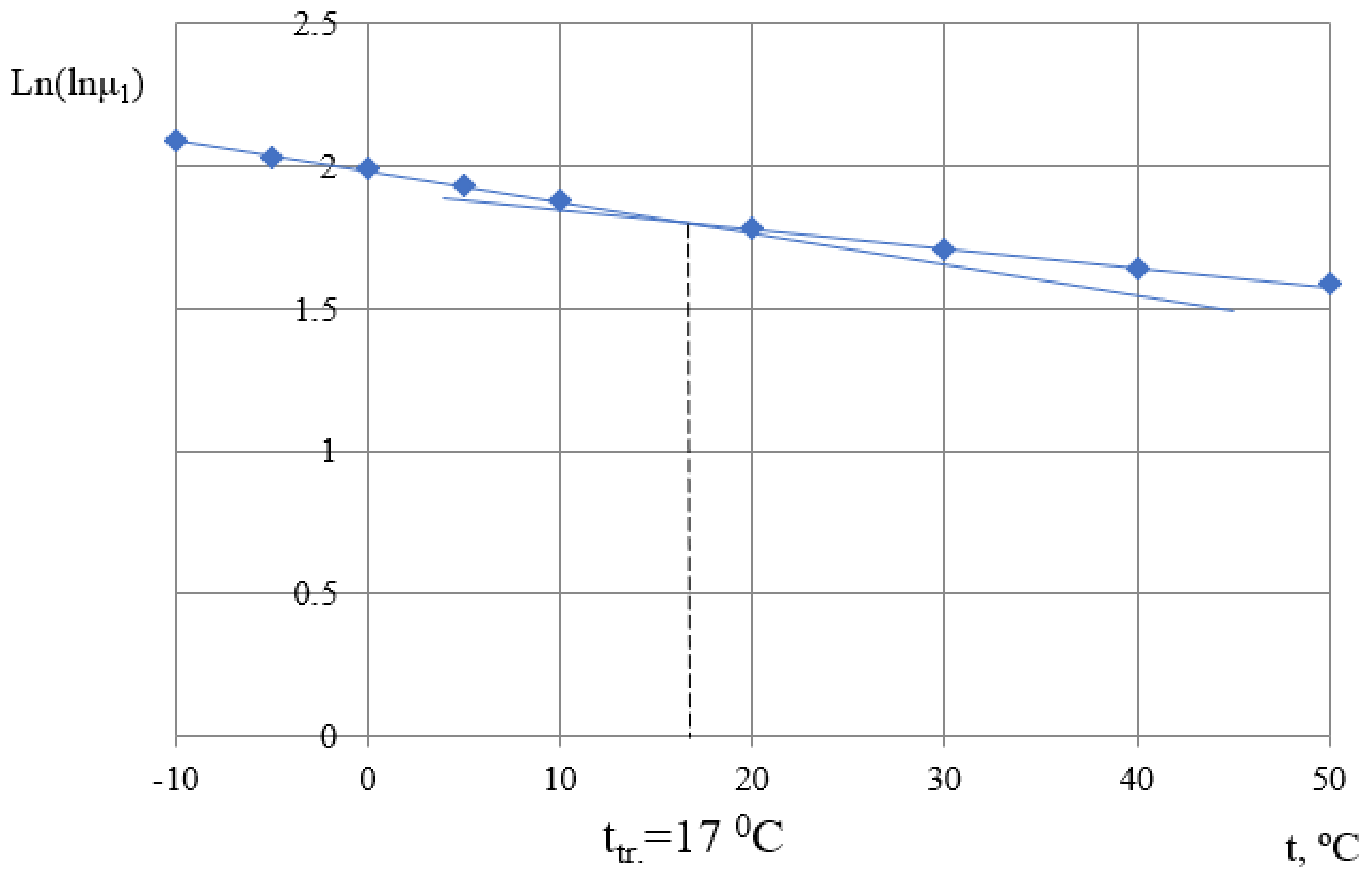
Figure 7.
Determination of the transition temperature to structural formation for the 2nd oil sample (A.64).
Figure 7.
Determination of the transition temperature to structural formation for the 2nd oil sample (A.64).
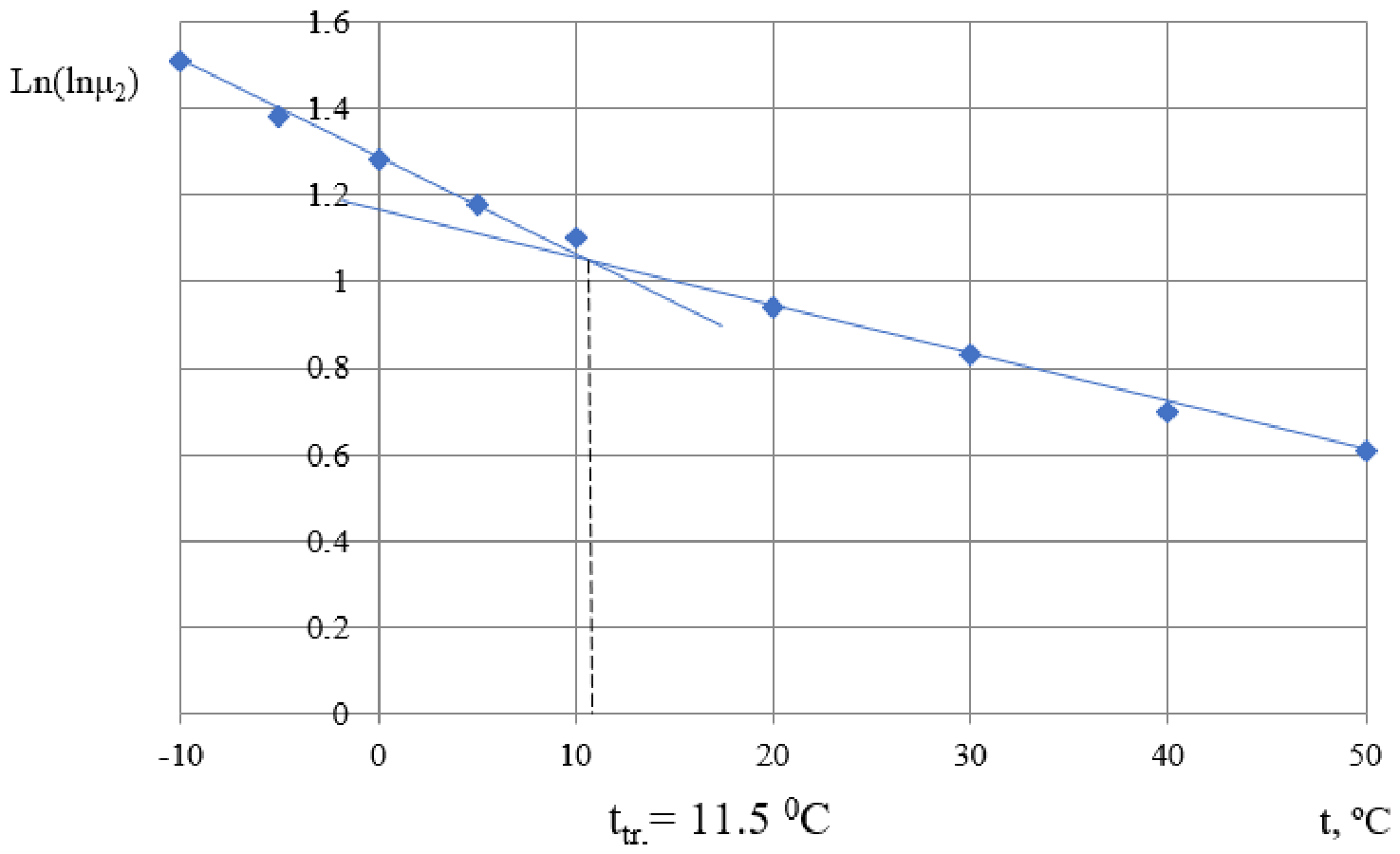
Figure 8.
Determination of the transition temperature to structural formation for the 3rd oil sample (B.89–50% : A.64–50%).
Figure 8.
Determination of the transition temperature to structural formation for the 3rd oil sample (B.89–50% : A.64–50%).
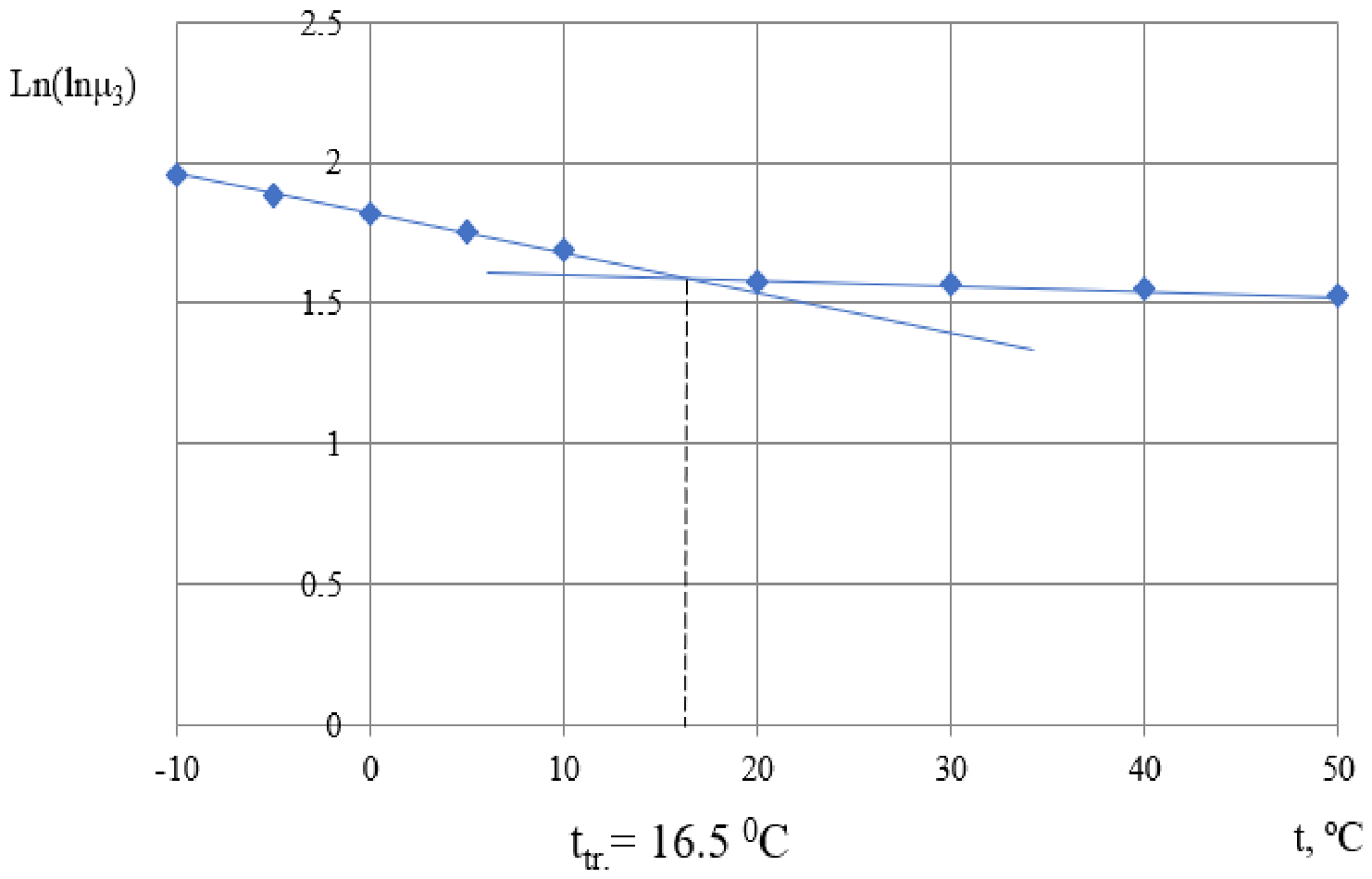
Figure 9.
Determination of the transition temperature to structural formation for the 6th oil sample (B.89–commercial oil).
Figure 9.
Determination of the transition temperature to structural formation for the 6th oil sample (B.89–commercial oil).
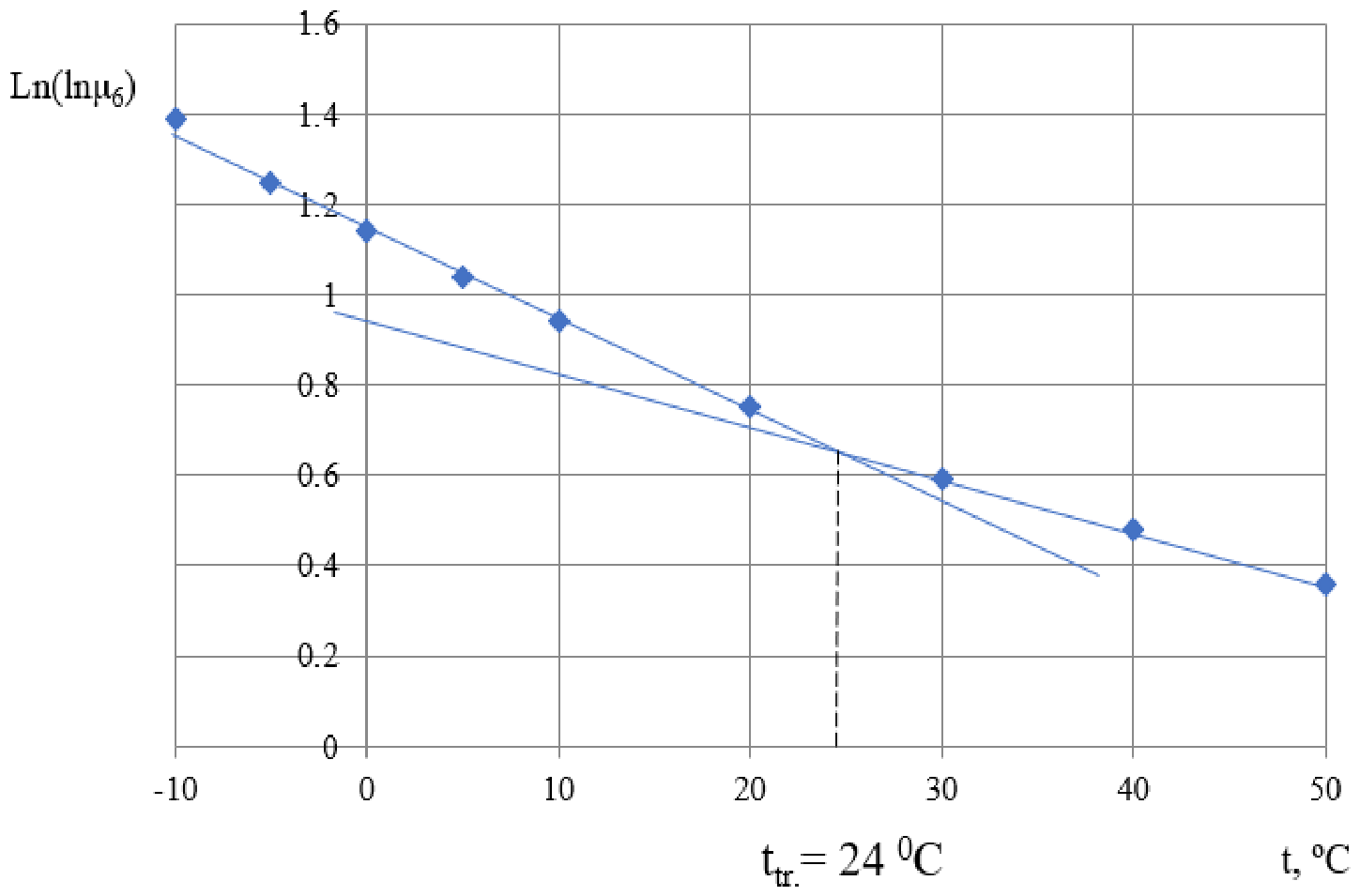

Table 1.
Physicochemical properties of Bulla-Deniz (Well No. 89) and Alat-Deniz (Well No. 64) oils and their mixtures.
Table 1.
Physicochemical properties of Bulla-Deniz (Well No. 89) and Alat-Deniz (Well No. 64) oils and their mixtures.
| № | Oil samples | Water content, % | Density, kq/m3 | Chloride salt content, mq/dm3 | Pour point temperature, 0C | Mechanical impurities, % | Paraffin | Resin | Asphaltene | |
|---|---|---|---|---|---|---|---|---|---|---|
| 20 0C | 5 0C | % | ||||||||
| 1 | Bulla-Deniz (B.89) | 75 | 958 | 961 | 270,4 | 0 | 0,1213 | 3,24 | 3,16 | 0,05 |
| 2 | Alat-Deniz (A.64) | 34 | 931 | 939 | 186,3 | 0 | 0,0976 | 1,52 | 11,11 | 2,62 |
| 3 | B.89-50% : A.64-50% | 54 | 943 | 948 | 231,3 | 0 | 0,1106 | 2,38 | 7,14 | 1,33 |
| 4 | B.89-75% : A.64-25% | 64 | 948 | 954 | 261,2 | 0 | 0,1148 | 2,81 | 5,15 | 0,68 |
| 5 | B.89-25% : A.64-75% | 43 | 936 | 944 | 201,9 | 0 | 0,1013 | 1,95 | 9,12 | 1,97 |
| 6 | B.89 commercial oil | 0,2 | 839 | 851 | 63,8 | 12 | 0,0097 | 12,97 | 12,64 | 0,19 |
| 7 | A.64 commercial oil | 0,3 | 898 | 912 | 78,8 | 6 | 0,0126 | 2,31 | 16,84 | 3,97 |
Table 2.
Variation of rheological parameters (τ, mPa and μ, mPa∙s) with temperature for the 2nd oil sample (A.64).
Table 2.
Variation of rheological parameters (τ, mPa and μ, mPa∙s) with temperature for the 2nd oil sample (A.64).
| , s-1 | Temperatur, 0C | |||||||||||||||
| -10 | 0 | 5 | 10 | 20 | 30 | 40 | 50 | |||||||||
| τ | μ | τ | μ | τ | μ | τ | μ | τ | μ | τ | μ | τ | μ | τ | μ | |
| 3.0 | 3375 | 1125 | 225 | 75 | 138 | 46 | 105 | 35 | 75 | 25 | 60 | 20 | 45 | 15 | 30 | 10 |
| 5.4 | 3909 | 724 | 324 | 60 | 216 | 40 | 184 | 34 | 135 | 25 | 108 | 20 | 81 | 15 | 54 | 10 |
| 9.0 | 4410 | 490 | 495 | 55 | 342 | 38 | 297 | 33 | 216 | 24 | 180 | 20 | 126 | 14 | 90 | 10 |
| 16.2 | 5913 | 365 | 842 | 52 | 599 | 37 | 518 | 32 | 389 | 24 | 308 | 19 | 227 | 14 | 146 | 9 |
| 27.0 | 7020 | 260 | 1377 | 51 | 972 | 36 | 837 | 31 | 621 | 23 | 513 | 19 | 378 | 14 | 243 | 9 |
| 48.6 | 9234 | 190 | 2187 | 45 | 1701 | 35 | 1458 | 30 | 1118 | 23 | 923 | 19 | 632 | 13 | 437 | 9 |
| 81.0 | 12150 | 150 | 3564 | 44 | 2757 | 34 | 2379 | 29 | 1782 | 22 | 1539 | 19 | 1053 | 13 | 729 | 9 |
| 145.8 | 18225 | 125 | 6124 | 42 | 4520 | 31 | 3937 | 27 | 2916 | 20 | 2479 | 17 | 1750 | 12 | 1166 | 8 |
| 243.0 | 26730 | 110 | 9720 | 40 | 6804 | 28 | 5832 | 24 | 4374 | 18 | 3402 | 14 | 2430 | 10 | 1944 | 8 |
| 437.4 | 40678 | 93 | 16184 | 37 | 11372 | 26 | 8742 | 20 | 5686 | 13 | 4374 | 10 | 3193 | 7.3 | 2756 | 6 |
Table 3.
Variation of rheological parameters (τ, mPa and μ, mPa∙s) with temperature for the 3rd oil sample (B.89–50% : A.64–50%).
Table 3.
Variation of rheological parameters (τ, mPa and μ, mPa∙s) with temperature for the 3rd oil sample (B.89–50% : A.64–50%).
| , s-1 | Temperatur, 0C | |||||||||||||||
| -10 | 0 | 5 | 10 | 20 | 30 | 40 | 50 | |||||||||
| τ | μ | τ | μ | τ | μ | τ | μ | τ | μ | τ | μ | τ | μ | τ | μ | |
| 3.0 | 42900 | 14300 | 22500 | 7500 | 7500 | 2500 | 2400 | 800 | 750 | 250 | 630 | 210 | 600 | 200 | 540 | 180 |
| 5.4 | 54540 | 10100 | 14580 | 2700 | 6750 | 1250 | 3240 | 600 | 1188 | 220 | 1080 | 200 | 1026 | 190 | 945 | 175 |
| 9.0 | 73350 | 8150 | 16650 | 1850 | 7200 | 700 | 4050 | 450 | 1800 | 220 | 1710 | 190 | 1620 | 180 | 1530 | 170 |
| 16.2 | 93960 | 5800 | 20412 | 1260 | 8910 | 550 | 6804 | 420 | 3078 | 190 | 2916 | 180 | 2754 | 170 | 2430 | 150 |
| 27.0 | 118800 | 4400 | 27000 | 1000 | 13500 | 500 | 9450 | 350 | 4860 | 180 | 4590 | 170 | 4320 | 160 | 3780 | 140 |
| 48.6 | 154548 | 3180 | 41310 | 850 | 21870 | 450 | 14580 | 300 | 8262 | 170 | 7776 | 160 | 7290 | 150 | 6318 | 130 |
| 81.0 | 214650 | 2650 | 63180 | 780 | 32400 | 400 | 22680 | 280 | 12960 | 160 | 12150 | 150 | 11340 | 140 | 9720 | 120 |
| 145.8 | 291600 | 2000 | 87480 | 600 | 51030 | 350 | 37908 | 260 | 21870 | 150 | 20412 | 140 | 18954 | 130 | 16767 | 115 |
| 243.0 | 376650 | 1550 | 121500 | 500 | 80190 | 330 | 60750 | 250 | 34020 | 140 | 31590 | 130 | 29160 | 120 | 26730 | 110 |
| 437.4 | 546750 | 1250 | 196830 | 450 | 135594 | 310 | 100602 | 230 | 56862 | 130 | 52488 | 120 | 48114 | 110 | 43740 | 100 |
Table 4.
Variation of μ3 və ln(lnμ3)values with temperature at various shear rate (γ̇) values for the 3rd oil sample (B.89 - 50% : A.64 - 50%).
Table 4.
Variation of μ3 və ln(lnμ3)values with temperature at various shear rate (γ̇) values for the 3rd oil sample (B.89 - 50% : A.64 - 50%).
|
t, 0C |
3 s-1 | 9 s-1 | 27 s-1 | 81 s-1 | 243 s-1 | |||||
| , mPa∙s | ln(ln | , mPa∙s | ln(ln | , mPa∙s | ln(ln | , mPa∙s | ln(ln | , mPa∙s | ln(ln | |
| -10 | 14300 | 2.26 | 8150 | 2.20 | 4400 | 2.13 | 2650 | 2.06 | 1550 | 1.99 |
| -5 | 10100 | 2.22 | 3700 | 2.11 | 2640 | 2.06 | 1615 | 2.00 | 800 | 1.90 |
| 0 | 7500 | 2.19 | 1850 | 2.02 | 1000 | 1.93 | 780 | 1.90 | 500 | 1.83 |
| 5 | 2500 | 2.06 | 800 | 1.90 | 500 | 1.83 | 400 | 1.79 | 330 | 1.76 |
| 10 | 800 | 1.90 | 450 | 1.80 | 350 | 1.77 | 280 | 1.73 | 250 | 1.71 |
| 20 | 250 | 1.71 | 200 | 1.67 | 180 | 1.65 | 160 | 1.62 | 140 | 1.60 |
| 30 | 210 | 1.68 | 190 | 1.66 | 170 | 1.64 | 150 | 1.61 | 130 | 1.58 |
| 40 | 200 | 1.67 | 180 | 1.65 | 160 | 1.62 | 140 | 1.60 | 120 | 1.57 |
| 50 | 180 | 1.65 | 170 | 1.64 | 140 | 1.60 | 120 | 1.57 | 110 | 1.55 |
Table 5.
Variation of the values of the parameters μ and ln(lnμ) with temperature for oil samples at a shear rate of γ̇ = 437.4 s−1.
Table 5.
Variation of the values of the parameters μ and ln(lnμ) with temperature for oil samples at a shear rate of γ̇ = 437.4 s−1.
| t, 0C |
1st oil sample | 2nd oil sample | 3rd oil sample | 5th oil sample | 6th oil sample | |||||
| , mPa∙s | ln(ln | , mPa∙s | ln(ln | , mPa∙s | ln(ln | , mPa∙s | ln(ln | , mPa∙s | ln(ln | |
| -10 | 3163 | 2.09 | 93.0 | 1.51 | 1250 | 1.96 | 798 | 1.90 | 55.0 | 1.39 |
| -5 | 2000 | 2.03 | 54.0 | 1.38 | 700 | 1.88 | 491 | 1.82 | 32.4 | 1.25 |
| 0 | 1500 | 1.99 | 37.0 | 1.28 | 450 | 1.82 | 220 | 1.69 | 23.0 | 1.14 |
| 5 | 980 | 1.93 | 26.1 | 1.18 | 310 | 1.75 | 135 | 1.59 | 17.1 | 1.04 |
| 10 | 700 | 1.88 | 20.0 | 1.10 | 230 | 1.69 | 88 | 1.50 | 13.0 | 0.94 |
| 20 | 371 | 1.78 | 13.0 | 0.94 | 130 | 1.58 | 45 | 1.34 | 8.3 | 0.75 |
| 30 | 250 | 1.71 | 9.9 | 0.83 | 120 | 1.57 | 27 | 1.19 | 6.1 | 0.59 |
| 40 | 170 | 1.64 | 7.3 | 0.70 | 110 | 1.55 | 18 | 1.06 | 5.0 | 0.48 |
| 50 | 140 | 1.59 | 6.3 | 0.61 | 100 | 1.53 | 13 | 0.94 | 4.2 | 0.36 |
Disclaimer/Publisher’s Note: The statements, opinions and data contained in all publications are solely those of the individual author(s) and contributor(s) and not of MDPI and/or the editor(s). MDPI and/or the editor(s) disclaim responsibility for any injury to people or property resulting from any ideas, methods, instructions or products referred to in the content. |
© 2026 by the authors. Licensee MDPI, Basel, Switzerland. This article is an open access article distributed under the terms and conditions of the Creative Commons Attribution (CC BY) license (http://creativecommons.org/licenses/by/4.0/).
Copyright: This open access article is published under a Creative Commons CC BY 4.0 license, which permit the free download, distribution, and reuse, provided that the author and preprint are cited in any reuse.