

Submitted:
02 November 2026
Posted:
05 November 2026
You are already at the latest version
Abstract
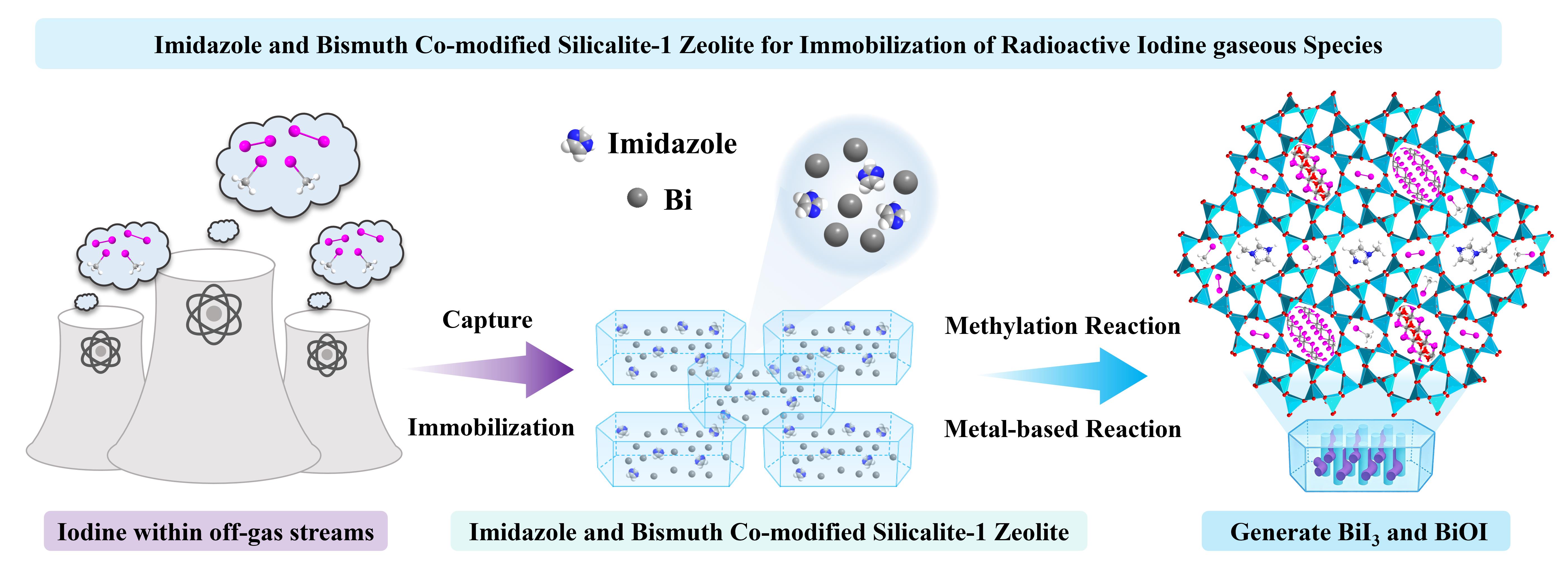
The efficient capture of both I2 and CH3I is of critical importance for environmental remediation due to their high toxicity and environmental mobility. In this study, an imidazole and bismuth co-loaded silicalite-1 zeolite (Im@Bi-TSL-1) was synthesized by a combined hydrothermal reduction and solid-phase adsorption method. Based on the dual function strategy, Im@Bi-TSL-1 exhibited a maximum adsorption capacity of 2494.5 mg/g for I2 and 568.6 mg/g for CH3I, with BiI3 and BiOI identified as the final adsorption products resulting from the synergistic methylation reaction and metal-based reaction. Moreover, the Im@Bi-TSL-1 after CH3I adsorption (Im@Bi-TSL-1-CH3I) exhibited a maximum iodide leaching rate of 39.2% in pure water at 72 h, surpassing that of commercial Ag-loaded zeolite (AgZ). The TSL-1-based composite delivered superior performance across multiple evaluation metrics, underscoring its potential for iodine capture. This study provides a design reference for the development of high-performance radioactive iodine adsorbents, aiming to achieve efficient removal and immobilization of iodine gaseous species.
Keywords:
silicalite-1 zeolite
; imidazole and bismuth co-modified
; iodine gaseous species
; adsorption
; leakage-resistant immobilization
1. Introduction
Nuclear energy is widely regarded as a crucial pillar of energy transition and sustainable development [1]. Within the nuclear fuel cycle, the shearing and acid dissolution stages of spent fuel reprocessing inevitably generate substantial volumes of radioactive iodine, which primarily include 129I and 131I [2,3]. Among them, 129I is a fission product with an extremely long half-life (1.6×10⁷ y), characterized by high volatility, fluidity, and toxicity [4]. Iodine within off-gas streams occurs predominantly in two forms: elemental iodine (I2) and organic iodides (mainly methyl iodide, CH3I) [5,6]. It is worth noting that CH3I exhibits a higher bond dissociation energy than I2 and lacks intermolecular interactions, which makes the removal of CH3I more difficult. Thus, developing adsorbents that can synergistically capture and stabilize gaseous radioactive I2 and CH3I has emerged as a critical challenge.
Currently, the treatment technology for radioactive waste gas containing iodine is mainly divided into two categories: liquid adsorption and solid adsorption. Compared with liquid absorption, solid adsorption prevails as the mainstream treatment technology for its simple operation, high reliability, and wide applicability [7]. There are various solid adsorbents that have been developed and utilized to capture radioactive gaseous iodine, including activated carbon (AC) [8,9], graphene [10,11], metal-organic frameworks (MOFs) [12], covalent-organic frameworks (COFs) [13,14], layered double hydroxides (LDHs) [15,16], aerogels [17,18,19,20], and zeolites. Among these, the zeolite-based materials exhibit broad application prospects in iodine adsorption due to their large specific surface area, uniformly tunable pore size distribution, and excellent structural stability. For instance, Ag-loaded zeolite (AgZ) and silver-containing mordenite (Ag-MOR) are commonly used to remove I2 and CH3I from industrial off-gas streams by forming AgI [21,22]. However, the inherent toxicity and high cost of silver limit the further development of this adsorbent.
Bismuth, as a non-toxic metal, has a strong interaction with iodine and removes iodine by forming BiI3 or BiOI. Due to its excellent stability, ease of handling, and low cost, it is expected to replace silver-based materials. Al-Mamoori et al. [23] reported that bismuth-loaded mordenite (Bi5@Mordenite, content of 5 wt%) exhibited a maximum I2 adsorption capacity as high as 538 mg/g, representing a 2.5-fold improvement over mordenite. However, the material system was evaluated for I2 instead of CH3I, and within 24 hours, up to 36% of the captured iodine was released into deionized water, indicating the need for further solidification into durable waste forms. Moreover, bismuth is difficult to effectively remove CH3I due to the lower adsorption activity. To address this limitation, Tian et al. [24] synthesized a composite material anchored on a bismuth-based hollow mesoporous silica (HMS) shell (Bi@HMS-Al2O3) with γ-Al2O3 coating. Bi@HMS-Al2O3 achieved efficient removal of CH3I by utilizing the catalytic conversion of CH3I to I2 and C2H6 through adjacent unsaturated aluminum sites on the surface of γ-Al2O3, and then efficiently capturing I2 with bismuth. Nevertheless, the capture of CH3I in this system depends on the previous catalytic conversion step. In addition, another method of catalytic preconversion is to directly capture CH3I through methylation reaction [25]. The N sites in nucleophilic amines have been shown to effectively remove CH3I by forming stable quaternary ammonium salts (R3N-CH3)+ I–. Imidazole, as a typical small molecule nucleophilic amine, is often used to modify materials to effectively remove CH3I through methylation reactions. In the previous work, we encapsulated imidazole in the pores of UiO-66, effectively increasing the adsorption capacity of CH3I by 7.9 times compared to UiO-66 [26]. Spectral analysis attributed I2 capture to charge transfer interactions with N sites in imidazole and attributed CH3I capture to methylation reaction. Therefore, it is worth studying the integration of CH3I catalytic preconversion and bismuth capture catalytic iodine into a single zeolite framework to achieve simultaneous capture and chemical stability of two iodine species.
In this work, silicalite-1 zeolite (TSL-1) was employed as the porous support framework to prepare bismuth-modified (Bi-TSL-1) and imidazole-bismuth co-modified (Im@Bi-TSL-1) composites successfully via hydrothermal reduction combined with solid-phase adsorption. The as-prepared Im@Bi-TSL-1 exhibited exceptional adsorption performance for I2 and CH3I, driven by metal-based reaction and methylation processes. The post-adsorption products were identified as BiI3 and BiOI, which effectively inhibited secondary iodine migration. Consequently, a notably low iodide leaching rate was observed in subsequent leaching experiments.
2. Materials and Methods
2.1. Materials
Tetraethyl orthosilicate (TEOS, ≥98%), ethylene glycol (EG, ≥98%), ethyl alcohol (C2H6O, ≥99.8%), elemental iodine (I2, 99.8%), magnesium chloride hexahydrate (MgCl2·6H2O, AR), and potassium chloride (KCl, 99.5%) were all bought from Shanghai Aladdin Biochemical Technology Co., Ltd. Nitric acid (HNO3, 65%) was purchased from ChengDu Chron Chemicals Co,.Ltd. Tetrapropyl ammonium hydroxide (TPAOH, 2.0 M aqueous solution), imidazole (C3H4N2, 99%), Bismuth nitrate pentahydrate (Bi(NO3)3·5H2O, 99.0%) and sodium bromide (NaBr, 99%) were purchased from Shanghai Macklin Biochemical Co., Ltd. Methyl iodide (CH3I, 99.5%) was purchased from Anhui Senrise Technologies Co., Ltd.. Sodium chloride (NaCl, 99.99%), sodium sulfate (Na2SO4, ≥99.0%), and sodium phosphate dodecahydrate (Na3PO4·12H2O, ≥98%) were purchased from Alfa Aesar (China) Chemical Co., Ltd., Sinopharm Chemical Reagent Co.Ltd. and Tianjin Kemiou Chemical Reagent Co., Ltd., respectively. All reagents were used directly without further purification.
2.2. Synthesis of Bi-TSL-1 and Im@Bi-TSL-1
The silicalite-1 zeolite (TSL-1) was synthesized based on previous literature [27]. Add Bi(NO3)3·5 H2O (0.4851 g, 1 mmol) and the as-prepared TSL-1 (0.4876 g, equivalent to 8.1 mmol of SiO2) to a mixed solution consisting of 6 mL of ethylene glycol and 12 mL of ethyl alcohol. After stirring for 2 h, transfer the mixture to the reactor and react at 200 ℃ for 6 h. The obtained precipitate was repeatedly washed with deionized water, filtered, and dried to obtain the bismuth-loaded silicalite-1 (Bi-TSL-1). To calculate the content of bismuth in Bi-TSL-1, the specific calculation method is as follows.
where ωBi is the content of bismuth in Bi-TSL-1, mBi-TSL-1 and mTSL-1 are the mass of the material before and after loading, respectively. The mass increases of the four independently prepared batches were 29.30, 29.66, 29.29, and 27.99 wt.%, respectively, with corresponding average values of 29.06±0.73 wt.%.
The as-prepared Bi-TSL-1 was placed in a vial, which was then positioned inside a larger bottle with imidazole (equivalent to twice the mass of Bi-TSL-1). And seal the bottle and heat it to 120 ℃ for 72 h to afford the imidazole-bismuth loaded silicalite-1 zeolite (Im@Bi-TSL-1).
2.3. Characterization
Morphological characterization and elemental distribution analysis were performed via scanning electron microscopy (SEM, Gemini SEM 300) and energy-dispersive spectrometer (EDS), respectively. The X-ray diffraction (XRD) patterns were conducted on a X’Pert Pro diffractometer, with scanning range of 5° to 80° (2θ) and a step of 0.02°. The Fourier transform infrared (FTIR) spectrum were measured using Spectrum One, and the wavenumber range was 400-4000cm−1. Thermogravimetric analysis (TGA, Netzsch STA449F3, Germany) was performed under a nitrogen atmosphere, with the temperature increasing from room temperature to 800 ℃ at a heating rate of 10 ℃/min. The concentrations of I− were determined using a UV-Vis spectrophotometer at wavelength of 226 nm. X-ray photoelectron spectroscopy (XPS) spectra of the Im@Bi-TSL-1, Im@Bi-TSL-1-I2, and Im@Bi-TSL-1-CH3I were carried out on a Thermo Fisher Scientific K-Alpha.
2.4. Adsorption Experiments
Accurately weigh 35 mg of prepared adsorbent into a 2 mL vial, and transfer excess I2 (1 g) or CH3I (3 mL) into separate vials. Then seal the two small bottles and the third empty bottle with the same specifications as a control in a 250ml bottle together. In the kinetic absorption experiment, the samples are weighed at different times (0, 1, 2, 3, 7, 17, 31, 48, 60, and 72 h) at 75 ℃. For the equilibrium adsorption experiments conducted at different humidity levels, the environmental humidity was adjusted by adding saturated salt solutions of MgCl2 (~27% RH) or NaBr (~50% RH) at 75 ℃. The saturation adsorption experiments were also conducted at different temperatures (100 or 120 ℃). The adsorption capacities of I2 and CH3I were determined based on the difference in mass of the adsorbent before and after adsorption. Calculate the adsorption capacity of three bottles and subtract the adsorption capacity of the control group from the adsorption capacity of the experimental group to obtain the final adsorption capacity. All adsorption experiments in the paper were repeated three times and the average value was taken.
where qe is the adsorption capacity, m0 and mt are the mass of the material before and after adsorption, respectively.
2.5. Leaching Experiment
The methyl iodide immobilization capacity of Im@Bi-TSL-1 was evaluated through leaching experiments under simulated environmental conditions. Firstly, the static adsorption saturated material mentioned above was subjected to a 12 hours heat treatment at 75 ℃, with the aim of eliminating the physically adsorbed CH3I and I2. Im@Bi-TSL-1-CH3I (equilibrium adsorption, 20 mg) were separately soaked and stirred in 20 mL deionized water, 0.01 M NaCl, 0.1 M NaCl, and a mixed solution containing 0.01 M NaCl, 0.01 M Na2SO4, and 0.01 M Na3PO4. Aliquots (1 mL) were withdrawn at different times (1, 3, 7, 12, 24, 48, 72 h), diluted with pure water. Then the iodide concentration was analyzed via UV spectrophotometry. The solution volume was normalized to the initial volume through equation (3) to compensate for variations caused by repeated sampling [28]. All leaching experiments were conducted with two control groups, and the average was taken as the final result.
where Cr is the real concentration, Ct is the test concentration, Va is the remaining volume before sampling, and Vt is the total volume at the beginning of the experiment.
At the same time, 20 mg of Im@Bi-TSL-1-CH3I was immersed and stirred in 20 mL of 50% nitric acid solution. After dilution, the iodide ion concentration (Ca) was determined to calculate the iodide ion leaching rate according to equation (4).
3. Results and Discussion
3.1. Characterization
Figure 1a showed the synthesis schematic of Im@Bi-TSL-1, which mainly utilized hydrothermal reduction and solid-phase adsorption methods for dual modification of TSL-1.
According to XRD studies, Bi-TSL-1 and Im@Bi-TSL-1 almost retained all the characteristic peaks of TSL-1, indicating that the crystallinity of the zeolite remained unchanged after loading bismuth and confined imidazole. It was evident that Bi-TSL-1 and Im@Bi-TSL-1 had a morphology and crystal phase similar to TSL-1 without loaded bismuth and confined imidazole. In comparison with pristine TSL-1, the XRD patterns of Bi-TSL-1 and Im@Bi-TSL-1 exhibited enhanced diffraction peaks at 27.16°, 37.95°, 39.62°, 48.70°, 56.03° and 64.51° (Figure 1b). These characteristic peaks were indexed to elemental bismuth (Bi, PDF#85-1329) [29,30], confirming the successful loading of Bi, which afforded active sites for metal-based reaction. The FT-IR spectrum of Im@Bi-TSL-1 exhibited a peak at 1098 and 1595 cm–1, originating from the stretching vibration of C–N bonds and ring stretching of C=N and C=C in imidazole (Figure 1c) [31,32,33,34,35]. In Figure 1d, characteristic peaks at 398.91 and 400.90 eV corresponded to C=N–C and C–NH–C, respectively [36]. The results of FT-IR and N 1s spectrum confirmed that imidazole had been successfully confined in Bi-TSL-1.
Bi-TSL-1 exhibited a wide range of multi-step mass loss processes, with maximum DTG values of approximately 169.8, 231.7, and 286.5 ℃ (Figure S1a). Low temperature mass loss below approximately 200 ℃ is temporarily attributed to the removal of physically adsorbed water, which is consistent with previous observations that dehydration of hydrated MFI-type silicalite-1 mainly occured below 200 ℃ [37,38]. Considering that Bi-TSL-1 is synthesized from Bi(NO)3·5H2O in a mixed solution of ethylene glycol and ethanol at 200 ℃ without subsequent calcination, the mass loss at approximately 200-350 ℃ is more reasonably related to the overlapping decomposition or desorption of ethylene glycol derived substances and bismuth polyol intermediates produced after the reaction [39]. Minor contributions from residual nitrate or bismuth oxynitrate species cannot be ruled out [40]. The gradual loss of high-temperature quality may also include the contribution of silanol defect condensation [38,41]. For Im@Bi-TSL-1, the main DTG peak at approximately 218.6 ℃ is attributed to multiple processes involving imidazole desorption and volatilization, as well as the decomposition of the above-mentioned host-derived surface species [39,42]. Compared to Bi-TSL-1, the additional 3.2% mass loss in Im@Bi-TSL-1 is attributed to the volatilization of imidazole, which is equivalent to approximately three imidazole molecules per framework unit of Bi-TSL-1. (Figure 1e and Figure S1).
Our previous research showed that TSL-1 possesses a highly crystalline MFI structure [27,43]. The plate-like morphology depicted in Figure 2a-d was a typical MFI structure. Combined with the XRD characteristic peaks similar to Im@Bi-TSL-1 and TSL-1 in Figure 1b, it indicated that the framework of TSL-1 remained intact after the loading of bismuth and imidazole. The thickness of crystals was approximately 1.62 μm. In addition, elemental mapping images confirmed that the particulate matters consisted of two elements (N and Bi), verifying the successful and uniform loading of bismuth and imidazole (Figure 2e-h).
3.2. Iodine Capture Properties
The kinetic adsorption curves of three as-prepared adsorbents for I2 adsorption are presented in Figure 3a. Both TSL-1 and Bi-TSL-1 achieved adsorption equilibrium within 7 h, with equilibrium adsorption capacities of 546.3 mg/g and 608.2 mg/g, respectively. In contrast, Im@Bi-TSL-1 attained adsorption equilibrium at 60 h, delivering an equilibrium adsorption capacity of 2494.5 mg/g, corresponding to 4.5-fold and 4-fold enhancements relative to TSL-1 and Bi-TSL-1, respectively. As depicted in Figure 3b, TSL-1 and Bi-TSL-1 both reached adsorption equilibrium for CH3I within 1 h. TSL-1 exhibited an equilibrium adsorption capacity of 307.5 mg/g, whereas Bi-TSL-1 delivered a substantially lower capacity of only 178.2 mg/g. The chemical inertness of bismuth to CH3I, coupled with the distribution of bismuth and its oxides on the inner and outer surfaces of zeolite pores, hindered the entry of CH3I into the adsorption sites of zeolite, resulting in a decrease in adsorption capacity. By comparison, Im@Bi-TSL-1 attained CH3I adsorption equilibrium at 9 h, with an equilibrium adsorption capacity of 568.6 mg/g, which was nearly 2.0-fold and 3.0-fold higher than those of TSL-1 and Bi-TSL-1, respectively. These results collectively demonstrated that only bismuth loading failed to effectively improve the adsorption performance of TSL-1, whereas the loading of imidazole exerted a pronounced promoting effect on both I2 and CH3I adsorption. Therefore, Im@Bi-TSL-1 was selected as the primary subject for subsequent investigations of mechanism and stability evaluations.
To further elucidate the adsorption process of I2 and CH3I on the prepared materials, pseudo-first-order equation and pseudo-second-order kinetic equation were used to fit the kinetic adsorption data. The results were shown in Figure S2-S4 and Table S2.
where k1 and k2 represent the equilibrium rate constants of pseudo-first-order and pseudo-second-order kinetic models. qe and qt correspond to the equilibrium adsorption capacity and the adsorption capacity for a given reaction time.
ln(qe − qt) = lnqe − k1t
The R2 values of pseudo-second-order fitting for TSL-1-I2, Bi-TSL-1-I2, and Im@Bi-TSL-1-I2 (or TSL-1-CH3I, Bi-TSL-1-CH3I, and Im@Bi-TSL-1-CH3I) were consistently higher than those of pseudo-first-order fitting, suggesting that these processes were better described by the pseudo-second-order kinetic model. The adsorption processes of I2 and CH3I were primarily chemical adsorption.
The radioactive iodine waste gas was exposed to high temperature and high humidity environments at actual operating conditions [44]. Therefore, it was essential to systematically evaluate the adsorption performance of Im@Bi-TSL-1 towards I2 and CH3I under varying temperature and humidity. As the temperature increased from 75 ℃ to 100 ℃, the adsorption capacities of Im@Bi-TSL-1 for I2 and CH3I decreased to 2375.3 mg/g and 461.1 mg/g, corresponding to performance retention of 95.22% and 81.09%, respectively. Even when the temperature is further elevated to 120 ℃, the adsorption capacities for I2 and CH3I still remained 1325.9 mg/g and 445.2 mg/g, which outperformed both TSL-1 and Bi-TSL-1 (Figure 3c). With respect to humidity influences, when the relative humidity raised from dry conditions to 27% RH, the adsorption capacities for I2 and CH3I decreased to 2049.2 mg/g and 432.3 mg/g, corresponding to performance reductions of merely 17.85% and 23.99%, respectively. Even at a relative humidity of 50% RH, the adsorption capacities for I2 and CH3I still remained 1159.0 mg/g and 403.1 mg/g, which maintain a marked advantage over those of TSL-1 and Bi-TSL-1 (Figure 3d).
It is worth noting that I2 and CH3I exhibit significantly different reactions between 100 and 120 ℃. The intake of I2 decreased by 44.2%, while the intake of CH3I only decreased by 3.4%. This difference was due to the different adsorption mechanisms of Im@Bi-TSL-1 for two iodine species. In addition to polyiodide species generated by charge transfer and the chemical fixation of bismuth active sites [26], the total I2 absorption included the pore physical adsorption of TSL-1. Raising the temperature was not conducive to the physical adsorption of the pores and relatively weak charge transfer, and promoted their desorption, which was the reason for the significant reduction in I2 absorption [45]. However, the residual capacity at 120 ℃ indicated that the transformation of the bismuth iodide phase in the material had retained a significant proportion of strongly bound iodine [46].
High concentration static I2 adsorption was significantly influenced by pore volume and intermolecular interactions between I2 molecules, while the CH3I capacity depended more on strong reaction sites, which had been supported by systematic research [47]. The nucleophilic N site of imidazole could react with CH3I through methylation reaction to generate quaternary ammonium salts (R3N-CH3)+ I–. Furthermore, the iodine in the quaternary ammonium salts reacted with bismuth to form more stable bismuth iodide compounds [48]. Once the weakly adsorbed CH3I was removed at high temperatures, the CH3I that had been converted into the bismuth iodide phase exhibited relative resistance to further thermal desorption, resulting in little change in adsorption capacity as the temperature rises from 100 to 120 ℃.
Furthermore, Figure 3e and Table S4 presented a comparative overview of the I2 and CH3I adsorption capacities of Im@Bi-TSL-1 against various reported bismuth-based adsorbents, metal-organic frameworks (MOFs) and covalent organic frameworks (COFs) [10,21,26,49,50,51,52,53,54,55,56,57,58]. Notably, the iodine adsorption performance of Im@Bi-TSL-1 outperformed that of most previously reported silver-based adsorbents and bismuth-based materials. With the above discussion, Im@Bi-TSL-1 achieved excellent adsorption performance for both I2 and CH3I, offering the insight to overcome the inherent inertness of bismuth-based materials towards CH3I capture.
3.3. Iodide Leaching Experiments
Figure 4 illustrated the iodide leaching behavior of Im@Bi-TSL-1-CH3I in various aqueous solution environments. After 72 h of leaching, the cumulative iodide leaching percentages in deionized water was merely 39.2%, with values of 58.3% and 57.7% recorded for 0.01 M and 0.1 M NaCl solutions, respectively. For a simulated groundwater system that better simulated natural geological conditions (a mixed solution composed of 0.01 M NaCl, 0.01 M Na2SO4, and 0.01 M Na3PO4), the iodine leaching rate was still as low as 58.9%. The similar final leaching percentages obtained in the three salt-containing media suggested that these media had comparable effects on iodide release under the tested conditions. Compared with most of the reference adsorbents listed in Table S5, including AgZ, which exhibited complete iodine release under the same reported test conditions [28], Im@Bi-TSL-1-CH3I retained a larger fraction of the captured iodine.
The observed leaching behavior may be related to the different aqueous stabilities of the bismuth phases containing iodine. BiI3 is susceptible to water induced hydrolysis and conversion to BiOI [59], while leaching experiments have shown that BiOI is more resistant to leaching than BiI3 [60]. Therefore, the presence or formation of BiOI helped retain the iodine portion, while the aqueous conversion of BiI3 was a part of the release of iodide.
3.4. Adsorption Mechanism
To clarify the mechanism, spectral characterization of XRD, FT-IR, and XPS was collected. In Figure 5a, the absorption peak generated by C–N stretching vibration at 1098 cm–1 shifted to 1101 and 1096 cm–1 after adsorbing I2 and CH3I, respectively. In addition, the peaks generated by the ring stretching of C=N and C=C in the five-membered heterocyclic ring of imidazole shifted from 1595 to 1583 cm–1 (Im@Bi-TSL-1-I2) and 1571 cm–1 (Im@Bi-TSL-1-CH3I). It was worth noting that Im@Bi-TSL-1-CH3I exhibited an asymmetric stretching vibration characteristic peak corresponding to –CH3 at 2973 cm–1, due to the occurrence of methylation reaction [61].
At the same time, XPS spectra further confirmed the I2 and CH3I adsorption mechanism of Im@Bi-TSL-1. For the I 3d spectra of Im@Bi-TSL-1-I2, the peaks at 619.05 eV and 630.50 eV corresponded to I–, while the additional pair of peaks at 620.98 and 632.48 eV are ascribed to I2, respectively [62,63]. For Im@Bi-TSL-1-CH3I, two characteristic peaks appear at 618.91 eV and 630.36 eV, which can be assigned to I– species (Figure 5b) [30]. After the adsorption of I2, the two characteristic peaks of C=N–C and C–NH–C in N 1s of Im@Bi-TSL-1 shifted from 398.91 eV and 400.90 eV to 399.26 eV and 401.32 eV, respectively. This was due to charge transfer between Im@Bi-TSL-1 and I2, which leaded to the formation of anionic polynuclear iodides [64]. However, the binding energy of C=N–C and C–NH–C increased from 398.91 and 400.90 eV to 400.01 and 401.65 eV after CH3I adsorption (Figure 5c). This significant transition was due to methylation reaction, which was consistent with the FT-IR results [65].
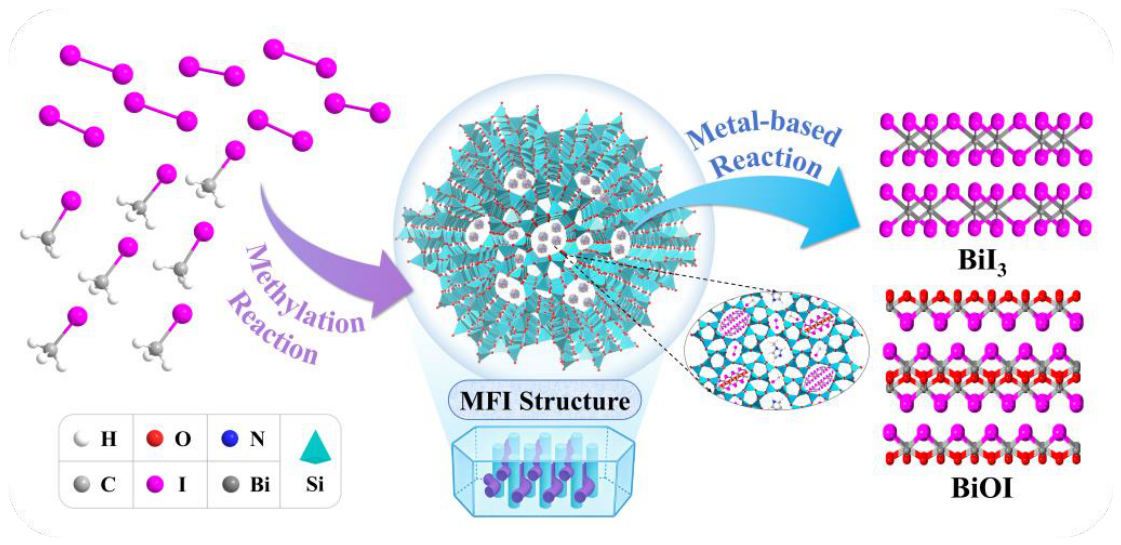
As presented in Figure 5d, XRD analysis revealed that the diffraction peak intensities of TSL-1, Bi-TSL-1, and Im@Bi-TSL-1 all declined after I2 adsorption, which indicated a reduction in crystallinity. In addition, distinct diffraction peaks that originated from BiI3 (PDF#48-1795) and BiOI (PDF#10-0445) were clearly observed in both Bi-TSL-1-I2 and Im@Bi-TSL-1-I2 [29,66]. For the adsorption of CH3I, the XRD of Im@Bi-TSL-1-CH3I also showed distinct diffraction peaks of BiOI (PDF#10-0445) and BiI3 (PDF#89-0307, PDF#48-1795) (Figure 5e) [67]. Moreover, the characteristic peaks centered at 159.00 eV, 164.30 eV and 159.12 eV, 164.42 eV were assigned to Bi3+ species in both Im@Bi-TSL-1-I2 and Im@Bi-TSL-1-CH3I, respectively, indicated that bismuth underwent a valence transition from Bi0 to Bi3+ during the adsorption process of I2 and CH3I, which was consistent with the chemical states of iodine in the BiI3 and BiOI (Figure S6) [50,68].Under conditions of sufficient oxygen, BiI3 underwent in situ transformation to generate BiOI [69,70]. However, the distinct peaks of Bi were observed in the XRD pattern of Bi-TSL-1-CH3I, indicating that no reaction occurred between Bi and CH3I, which explained the lowest CH3I adsorption capacity of Bi-TSL-1 (Figure 3b). To sum up, the adsorption and immobilization mechanism of Im@Bi-TSL-1 on I2 and CH3I was more intuitively observed in Figure 6.
The relative contents of the two Bi phases (BiI3 and BiOI) in the mixtures after iodine adsorption were quantitatively analyzed by using Jade software (Figure 5f). The Jade analysis shown in Figure 5f and Table S6 was based on the relative intensity ratios (RIR) of different phases and primarily involved a normalized fit of the content of the two bismuth-containing crystalline phases, BiI3 and BiOI. Since no internal standard or amorphous phase correction was used, these values did not represent the absolute phase content of the entire composite material [71,72]. Notably, compared to Bi-TSL-1-I2 (BiI3: 88.1%, BiOI: 11.9%), the generated BiOI (73.2%) in Im@Bi-TSL-1-I2 reached approximately 3-fold that of BiI3 (26.8%). It was also observed that the relative content of BiOI (57.8%) was higher than that of BiI3 (42.2%) in Im@Bi-TSL-1-CH3I. These differences indicated that the introduction of imidazole might render bismuth in Im@Bi-TSL-1 more prone to reacting with iodine to form the more stable BiOI (Table S6).
4. Conclusions
In summary, we constructed an imidazole and bismuth co-modified silicalite-1 zeolite composite material (Im@Bi-TSL-1) by combining hydrothermal reduction with solid-phase adsorption. Mechanism analysis revealed that imidazole not only provided abundant N active sites for I2 and CH3I, but also promoted the reaction of iodine species with Bi to form stable BiI3 and BiOI, especially enhancing the formation of more stable BiOI. This significantly improved iodine capture capability through the synergistic effect of methylation and bismuth chemical immobilization. Im@Bi-TSL-1 exhibited a high equilibrium adsorption capacity of 2494.5 and 568.7 mg/g for I2 and CH3I at 75 °C, respectively, which was 4.0 and 4.5 times higher than that of TSL-1 and superior to most reported bismuth-based and silver-based adsorbents. Meanwhile, this material maintained high efficiency under high temperature and humidity conditions. Leaching tests showed that the iodine leaching rate in deionized water over 72 h was only 39.2%, much lower than that of commercial AgZ, and it effectively retained iodine in simulated groundwater, significantly reducing the risk of secondary release. Im@Bi-TSL-1 combined high adsorption efficiency, broad applicability of iodine, and excellent leaching resistance stability, providing a low-toxic and economical alternative for the removal of radioactive iodine from nuclear industry waste gases.
Supplementary Materials
The following supporting information can be downloaded at the website of this paper posted on Preprints.org, Figure S1: TG and DTG curves of Bi-TSL-1 and Im@Bi-TSL-1; Figure S2-5, Table S1: Materials; Table S2 and Table S6: Fitting results; Figure S6: XPS spectra of Im@Bi-TSL-1, Im@Bi-TSL-1-I2, and Im@Bi-TSL-1-CH3I; Table S3: Relative proportions of various elements in EDS; Table S4 and Table S5: Comparison of different iodine adsorption materials.
Author Contributions
Conceptualization, methodology, and software, S.L.; validation, data curation and writing – original draft preparation, C.T. and Y.T.; visualization and investigation, S.H., H.X. and F.S.; writing-reviewing and editing, funding acquisition and supervision, T.D. and L.Z. All authors have read and agreed to the published version of the manuscript.
Funding
This research was funded by grants from the National Natural Science Foundation of China (22476164), the construction project of the Fujiang Laboratory Nuclear Medicine Artificial Intelligence Research Center (2023ZYDF074), Sichuan Science and Technology Program (2024YFCY0006), Southwest University of Science and Technology Innovation Fund Precision Support Program (JZ26-080).
Data Availability Statement
The data supporting the findings of this study are available in the article’s main text and supplementary material.
Acknowledgments
All support for our work is gratefully acknowledged.
Conflicts of Interest
The authors declare no conflicts of interest.
References
- Brook, B.W.; Alonso, A.; Meneley, D.A.; Misak, J.; Blees, T.; van Erp, J.B. Why nuclear energy is sustainable and has to be part of the energy mix. Sustain. Mater. Technol. 2014, 1-2, 8–16. [Google Scholar] [CrossRef]
- Gou, L.-Q.; Wang, Y.-H.; Wang, S.-L.; Liu, J.-Y.; Xin, X.; Xu, X.-H.; Qin, S.; He, L.; Tao, G.-H. Enhanced iodine capture by the hydrogen bond reconstruction strategy. J. Mater. Chem. A 2024, 12, 8747–8756. [Google Scholar] [CrossRef]
- Wu, X.; Wang, Z.; Wang, M.; Zheng, X.; Pan, J.; Han, B.; Ji, Z. Regenerable and stable calix [4]pyrrole-based porous organic polymer networks for highly effective iodine capture. J. Mater. Chem. A;J. Mater. Chem. A 2026, 14, 13658–13668. [Google Scholar] [CrossRef]
- Ahad, J.; Ahmad, M.; Farooq, A.; Waheed, K.; Irfan, N. Removal of iodine by dry adsorbents in filtered containment venting system after 10 years of Fukushima accident. Environ. Sci. Pollut. Res. 2023, 30, 74628–74670. [Google Scholar] [CrossRef] [PubMed]
- Riley, B.J.; Vienna, J.D.; Strachan, D.M.; McCloy, J.S.; Jerden, J.L. Materials and processes for the effective capture and immobilization of radioiodine: A review. J. Nucl. Mater. 2016, 470, 307–326. [Google Scholar] [CrossRef]
- Zhang, X.R.; Maddock, J.; Nenoff, T.M.; Denecke, M.A.; Yang, S.H.; Schröder, M. Adsorption of iodine in metal-organic framework materials. Chem. Soc. Rev. 2022, 51, 3243–3262. [Google Scholar] [CrossRef] [PubMed]
- Yu, Z.; Lu, Y.; Lu, Y.; Xiong, T.; Gao, Y.; Xiao, X. A cucurbit [6]uril-based supramolecular framework material for highly effective iodine adsorption. J. Mater. Chem. A;J. Mater. Chem. A 2025, 13, 37358–37366. [Google Scholar] [CrossRef]
- Chien, C.C.; Huang, Y.P.; Wang, W.C.; Chao, J.H.; Wei, Y.Y. Efficiency of Moso Bamboo Charcoal and Activated Carbon for Adsorbing Radioactive Iodine. Clean-Soil Air Water 2011, 39, 103–108. [Google Scholar] [CrossRef]
- Sun, H.X.; La, P.Q.; Zhu, Z.Q.; Liang, W.D.; Yang, B.P.; Li, A. Capture and reversible storage of volatile iodine by porous carbon with high capacity. J. Mater. Sci. 2015, 50, 7326–7332. [Google Scholar] [CrossRef]
- Chee, T.-S.; Lee, S.; Ng, W.J.; Akmal, M.; Ryu, H.J. Bi0–Reduced Graphene Oxide Composites for the Enhanced Capture and Cold Immobilization of Off-Gas Radioactive Iodine. ACS Appl. Mater. Interfaces 2023, 15, 40438–40450. [Google Scholar] [CrossRef] [PubMed]
- Scott, S.M.; Hu, T.; Yao, T.; Xin, G.; Lian, J. Graphene-based sorbents for iodine-129 capture and sequestration. Carbon 2015, 90, 1–8. [Google Scholar] [CrossRef]
- Wang, Z.-W.; Chen, K.-W.; Gu, A.-T.; Zhou, X.-Y.; Wang, P.; Gong, C.-H.; Mao, P.; Jiao, Y.; Chen, K.; Lu, J.-G.; et al. Adsorption performance study of bismuth-doped ZIF-8 composites on radioactive iodine in the vapor and liquid phases. J. Solid State Chem. 2023, 325. [Google Scholar] [CrossRef]
- Farooq, N.; Taha, A.; Hashmi, A.A. Facile synthesis of a nitrogen-rich covalent organic framework for the efficient capture of iodine. J. Mater. Chem. A 2024, 12, 10539–10553. [Google Scholar] [CrossRef]
- P, P.; K R, A.; V, S.; S, K. Iodine adsorption by thiophene-based covalent organic polymer: a study of structural influence on performance. J. Mater. Chem. A;J. Mater. Chem. A 2025, 13, 32362–32374. [Google Scholar] [CrossRef]
- Lin, G.; Zhu, L.; Duan, T.; Zhang, L.; Liu, B.; Lei, J. Efficient capture of iodine by a polysulfide-inserted inorganic NiTi-layered double hydroxides. Chem. Eng. J. 2019, 378. [Google Scholar] [CrossRef]
- Ma, S.; Islam, S.M.; Shim, Y.; Gu, Q.; Wang, P.; Li, H.; Sun, G.; Yang, X.; Kanatzidis, M.G. Highly Efficient Iodine Capture by Layered Double Hydroxides Intercalated with Polysulfides. Chem. Mater. 2014, 26, 7114–7123. [Google Scholar] [CrossRef]
- Wang, R.; Tan, Y.; Xiao, H.; Zeng, Z.; Liu, S.; Tan, C.; Liu, C.; Chen, G.; Yang, J.; Duan, T.; et al. Recent advances in aerogel materials for the capture of radioactive iodine. Sep. Purif. Technol. 2025, 376. [Google Scholar] [CrossRef]
- Liu, B.; Ren, X.; Chen, L.; Ma, X.; Chen, Q.; Sun, Q.; Zhang, L.; Si, P.; Ci, L. High efficient adsorption and storage of iodine on S, N co-doped graphene aerogel. J. Hazard. Mater. 2019, 373, 705–715. [Google Scholar] [CrossRef] [PubMed]
- Tang, S.; Choi, S.; Nan, Y.; Tavlarides, L.L. Adsorption of methyl iodide on reduced silver-functionalized silica aerogel: Kinetics and modeling. AIChE J. 2021, 67. [Google Scholar] [CrossRef]
- Riley, B.J.; Chun, J.; Ryan, J.V.; Matyáš, J.; Li, X.S.; Matson, D.W.; Sundaram, S.K.; Strachan, D.M.; Vienna, J.D. Chalcogen-based aerogels as a multifunctional platform for remediation of radioactive iodine. RSC Adv. 2011, 1, 1704–1715. [Google Scholar] [CrossRef]
- Yu, J.; Chen, X.; Ren, H.; Li, X.; Shi, X.; Chen, Z.; Liang, S.; Li, Y. Study on adsorption characteristics of radioactive gaseous iodine on Ag ion exchange molecular sieve. J. Radioanal. Nucl. Chem. 2023, 332, 2269–2277. [Google Scholar] [CrossRef]
- Chapman, Karena W.; Chupas, Peter J.; Nenoff, T.M. Radioactive Iodine Capture in Silver-Containing Mordenites through Nanoscale Silver Iodide Formation. J. Am. Chem. Soc. 2010, 132, 8897–8899. [Google Scholar] [CrossRef] [PubMed]
- Al-Mamoori, A.; Alsalbokh, M.; Lawson, S.; Rownaghi, A.A.; Rezaei, F. Development of bismuth-mordenite adsorbents for iodine capture from off-gas streams. Chem. Eng. J. 2020, 391. [Google Scholar] [CrossRef]
- Tian, Z.; Xu, X.; Wang, S.; Cao, Y.; Xiao, C. Synergistic role of adjacent unsaturated aluminum sites in the decomposition of CH3I for radioiodine removal. Chem. Eng. J. 2025, 518, 164366. [Google Scholar] [CrossRef]
- Wang, J.; Fan, D.; Jiang, C.; Lu, L. Host-guest interaction-mediated nanointerface engineering for radioiodine capture. Nano Today 2021, 36. [Google Scholar] [CrossRef]
- Tan, C.; Jiang, L.; Xiong, R.; Wang, H.; Yan, C.; Wang, R.; Liu, C.; Liu, Y.; Dai, X.; Duan, T.; et al. Imidazole Encapsulation Enabled by Confinement for I2 and CH3I Coremoval. Inorg. Chem. 2024, 63, 23877–23885. [Google Scholar] [CrossRef] [PubMed]
- Zhao, Q.; Li, X.; Chen, G.; Wang, Z.; Tan, C.; Liu, C.; Zou, H.; Ma, J.; Zhu, L.; Duan, T. Hydrophobic nanosheet silicalite-1 zeolite for iodine and methyl iodide capture. J. Hazard. Mater. 2024, 472, 134496. [Google Scholar] [CrossRef] [PubMed]
- Li, Z.; Zhou, D.; He, L.; Fan, Y.; Mei, S.; Ma, Z.; Tang, S.; Peng, Z.; Chen, L.; Zhu, L.; et al. Reaction-Induced Post-Activated Nanotrap Strategy for Leakage-Resistant Immobilization of Radioactive Organic Iodide. In Journal of the American Chemical Society; Journal of the American Chemical Society, 2025; Volume 147, pp. 47421–47427. [Google Scholar]
- Tian, Z.; Chee, T.-S.; Meng, R.; Hao, Y.; Zhou, X.; Ma, B.; Zhu, L.; Duan, T.; Xiao, C. Incipient wetness impregnation to prepare bismuth-modified all-silica beta zeolite for efficient radioactive iodine capture. Environ. Funct. Mater. 2022, 1, 92–104. [Google Scholar] [CrossRef]
- Cao, J.; Duan, S.; Zhao, Q.; Chen, G.; Wang, Z.; Liu, R.; Zhu, L.; Duan, T. Three-Dimensional-Network-Structured Bismuth-Based Silica Aerogel Fiber Felt for Highly Efficient Immobilization of Iodine. Langmuir 2023, 39, 12910–12919. [Google Scholar] [CrossRef] [PubMed]
- Griffiths, P.R. The Handbook of Infrared and Raman Characteristic Frequencies of Organic Molecules. Vib. Spectrosc. 1992, 4, 121. [Google Scholar] [CrossRef]
- Peshoria, S.; Narula, A.K. One-pot synthesis of porphyrin@polypyrrole hybrid and its application as an electrochemical sensor. Mater. Sci. Eng. B 2018, 229, 53–58. [Google Scholar] [CrossRef]
- Huang, N.; Zhai, L.; Xu, H.; Jiang, D. Stable Covalent Organic Frameworks for Exceptional Mercury Removal from Aqueous Solutions. In Journal of the American Chemical Society; Journal of the American Chemical Society, 2017; Volume 139, pp. 2428–2434. [Google Scholar] [CrossRef]
- Luo, H.-B.; Ren, Q.; Wang, P.; Zhang, J.; Wang, L.; Ren, X.-M. High Proton Conductivity Achieved by Encapsulation of Imidazole Molecules into Proton-Conducting MOF-808. ACS Appl. Mater. Interfaces 2019, 11, 9164–9171. [Google Scholar] [CrossRef] [PubMed]
- Ye, Y.; Zhang, L.; Peng, Q.; Wang, G.-E.; Shen, Y.; Li, Z.; Wang, L.; Ma, X.; Chen, Q.-H.; Zhang, Z.; et al. High Anhydrous Proton Conductivity of Imidazole-Loaded Mesoporous Polyimides over a Wide Range from Subzero to Moderate Temperature. J. Am. Chem. Soc. 2015, 137, 913–918. [Google Scholar] [CrossRef] [PubMed]
- Zhang, F.-M.; Dong, L.-Z.; Qin, J.-S.; Guan, W.; Liu, J.; Li, S.-L.; Lu, M.; Lan, Y.-Q.; Su, Z.-M.; Zhou, H.-C. Effect of Imidazole Arrangements on Proton-Conductivity in Metal–Organic Frameworks. J. Am. Chem. Soc. 2017, 139, 6183–6189. [Google Scholar] [CrossRef] [PubMed]
- Palčić, A.; Moldovan, S.; El Siblani, H.; Vicente, A.; Valtchev, V. Defect Sites in Zeolites: Origin and Healing. 2022, 9, 2104414. [Google Scholar] [CrossRef] [PubMed]
- Huve, J.; Daou, T.J.; Nouali, H.; Patarin, J.; Ryzhikov, A. The effect of nanostructures on high pressure intrusion–extrusion of water and electrolyte solutions in hierarchical nanoboxes of silicalite-1. In New Journal of Chemistry; New Journal of Chemistry, 2020; Volume 44, pp. 273–281. [Google Scholar] [CrossRef]
- Goia, C.; Matijevic’, E.; Goia, D.V. Preparation of colloidal bismuth particles in polyols. J. Mater. Res. 2005, 20, 1507–1514. [Google Scholar] [CrossRef]
- Kodama, H. Synthesis of a New Compound, Bi5O7NO3, by Thermal Decomposition. J. Solid State Chem. 1994, 112, 27–30. [Google Scholar] [CrossRef]
- Kappert, E.J.; Bouwmeester, H.J.M.; Benes, N.E.; Nijmeijer, A. Kinetic Analysis of the Thermal Processing of Silica and Organosilica. J. Phys. Chem. B 2014, 118, 5270–5277. [Google Scholar] [CrossRef] [PubMed]
- Jiménez, P.; Roux, M.V.; Turrión, C.; Gomis, F. Thermochemical properties of N-heterocyclic compounds I. Enthalpies of combustion, vapour pressures and enthalpies of sublimation, and enthalpies of formation of pyrazole, imidazole, indazole, and benzimidazole. J. Chem. Thermodyn. 1987, 19, 985–992. [Google Scholar] [CrossRef]
- Zhao, Q.; Liao, C.; Chen, G.; Liu, R.; Wang, Z.; Xu, A.; Ji, S.; Shih, K.; Zhu, L.; Duan, T. In Situ Confined Synthesis of a Copper-Encapsulated Silicalite-1 Zeolite for Highly Efficient Iodine Capture. Inorg. Chem. 2022, 61, 20133–20143. [Google Scholar] [CrossRef]
- Chen, G.; Wu, L.; Wang, Z.; Liu, R.; Tan, C.; Tan, Y.; Liu, Y.; He, M.; Zhang, H.; Huang, Y.; et al. Aluminum-based MOF for efficient iodine and methyl iodide capture from NO2-containing gas streams. Chem. Eng. J. 2025, 507, 160829. [Google Scholar] [CrossRef]
- Pan, T.; Yang, K.; Dong, X.; Han, Y. Adsorption-based capture of iodine and organic iodides: status and challenges. J. Mater. Chem. A 2023, 11, 5460–5475. [Google Scholar] [CrossRef]
- Xian, Q.; Gan, Y.; Yu, J.; Xiao, X.; Chen, Q.; Dan, H.; Zhu, L.; Ding, Y.; Duan, T. Scalable and economical Bi0-SiO2 for the high efficient capture of iodine gas. J. Nucl. Mater. 2022, 567, 153849. [Google Scholar] [CrossRef]
- Xie, Y.; Pan, T.; Lei, Q.; Chen, C.; Dong, X.; Yuan, Y.; Maksoud, W.A.; Zhao, L.; Cavallo, L.; Pinnau, I.; et al. Efficient and simultaneous capture of iodine and methyl iodide achieved by a covalent organic framework. Nat. Commun. 2022, 13, 2878. [Google Scholar] [CrossRef] [PubMed]
- Tian, Z.; Cao, Y.; Xiao, C. Bismuth-based amine-functionalized mesoporous silica core-shell sorbents for efficient co-removal of radioactive I2 and CH3I. Chem. Eng. J. 2025, 525, 170108. [Google Scholar] [CrossRef]
- Peng, L.; Gao, J.; Zhu, D.; Ni, M.; Lv, F.; Liu, X.; Chen, T.; Duan, C.; Liu, S.; Qi, K.; et al. Construction of metal–organic frameworks with tunable porosity and electron-rich groups for enhanced iodine capture. J. Radioanal. Nucl. Chem. 2026. [Google Scholar] [CrossRef]
- Tian, Z.; Hao, Y.; Chee, T.S.; Cai, H.; Zhu, L.; Duan, T.; Xiao, C. Hollow Core–Shell Bismuth Based Al-Doped Silica Materials for Powerful Co-Sequestration of Radioactive I2 and CH3I. Small 2023, 20. [Google Scholar] [CrossRef] [PubMed]
- She, W.-Z.; Wen, Q.-L.; Zhang, H.-C.; Liu, J.-Z.; Li, R.S.; Ling, J.; Cao, Q. Nanoporous N-Rich Covalent Organic Frameworks with High Specific Surface Area for Efficient Adsorption of Iodine and Methyl Iodide. ACS Appl. Nano Mater. ACS Applied Nano Materials. 2023, 6, 18177–18187. [Google Scholar] [CrossRef] [PubMed]
- Kolay, S.; Jagannath. I2 and CH3I capture in a γ-radiation stable metal-organic framework: CAU-21-ODB. J. Solid State Chem. 2022, 312. [Google Scholar] [CrossRef]
- Pan, T.; Yang, K.; Dong, X.; Zuo, S.; Chen, C.; Li, G.; Emwas, A.-H.; Zhang, H.; Han, Y. Strategies for high-temperature methyl iodide capture in azolate-based metal-organic frameworks. Nat. Commun. 2024, 15, 2630. [Google Scholar] [CrossRef] [PubMed]
- Tian, Z.; Cao, Y.; Xiao, C. Bismuth-based amine-functionalized mesoporous silica core-shell sorbents for efficient co-removal of radioactive I2 and CH3I. Chem. Eng. J. 2025, 525. [Google Scholar] [CrossRef]
- Xian, Q.; Chen, L.; Fan, W.; Liu, Y.; He, X.; Dan, H.; Zhu, L.; Ding, Y.; Duan, T. Facile synthesis of novel Bi0-SBA-15 adsorbents by an improved impregnation reduction method for highly efficient capture of iodine gas. J. Hazard. Mater. 2022, 424. [Google Scholar] [CrossRef] [PubMed]
- Tian, Z.; Chee, T.-S.; Zhu, L.; Duan, T.; Zhang, X.; Lei, L.; Xiao, C. Comprehensive comparison of bismuth and silver functionalized nickel foam composites in capturing radioactive gaseous iodine. J. Hazard. Mater. 2021, 417. [Google Scholar] [CrossRef] [PubMed]
- Li, J.; zhu, L.; Yan, C.; Mou, Z.; Wang, Z.; Wei, S.; Su, Y.; Chen, Y.; Chen, Z.; Li, X.; et al. Highly efficient iodine capture by hydrophobic bismuth-based chrysotile membrane from humid gas streams. Sep. Purif. Technol. 2023, 312. [Google Scholar] [CrossRef]
- Tan, C.; Wang, H.; Liu, S.; Wang, R.; Chen, G.; Liu, C.; Duan, T.; Zhu, L. Polyoxometalate-based bismuth-organic frameworks for catalytic decomposition-assisted immobilization of methyl iodide. Inorg. Chem. Commun. 2026, 190. [Google Scholar] [CrossRef]
- Wagner, B.; Huttner, A.; Bischof, D.; Engel, A.; Witte, G.; Heine, J. Chemical Surface Reactivity and Morphological Changes of Bismuth Triiodide (BiI3) under Different Environmental Conditions. Langmuir 2020, 36, 6458–6464. [Google Scholar] [CrossRef]
- Oshiro, J.M.; Fujii Yamagata, A.L.; Sharma, S.K.; Asmussen, R.M.; Chong, S.; Riley, B.J.; Crum, J.V.; Silverstein, J.A.; Canfield, N.L.; Lian, J. Pelletization with Spark Plasma Sintering and Characterization of Metal Iodides: An Assessment of Long-Term Radioiodine Immobilization Options. In Industrial & Engineering Chemistry Research; Industrial & Engineering Chemistry Research, 2024; Volume 63, pp. 20009–20019. [Google Scholar] [CrossRef] [PubMed]
- Kucuk, C.; Yurdakul, S.; Erdem, B. Experimental and theoretical Fourier transform infrared and Raman spectroscopy, density functional theory, antibacterial activity and molecular docking studies on 1-(4-methoxyphenyl)-1H-imidazole. Chem. Pap. 2022, 76, 2833–2854. [Google Scholar] [CrossRef]
- Wang, Z.-W.; Chen, K.-W.; Gu, A.-T.; Zhou, X.-Y.; Wang, P.; Gong, C.-H.; Mao, P.; Jiao, Y.; Chen, K.; Lu, J.-G.; et al. Adsorption performance study of bismuth-doped ZIF-8 composites on radioactive iodine in the vapor and liquid phases. J. Solid State Chem. 2023, 325, 124186. [Google Scholar] [CrossRef]
- Jiang, M.; Zhu, L.; Zhao, Q.; Chen, G.; Wang, Z.; Zhang, J.; Zhang, L.; Lei, J.; Duan, T. Novel synthesis of NaY-NH4F-Bi2S3 composite for enhancing iodine capture. Chem. Eng. J. 2022, 443. [Google Scholar] [CrossRef]
- Liu, Y.; Tan, C.; Li, X.; Jia, Y.; Zhu, L.; Li, Z.; Liu, W. Deposition of Imidazole into Mesoporous Zirconium Metal–Organic Framework for Iodine Capture. Inorg. Chem. 2024, 63, 21541–21547. [Google Scholar] [CrossRef]
- Xie, Y.; Rong, Q.; Mao, F.; Wang, S.; Wu, Y.; Liu, X.; Hao, M.; Chen, Z.; Yang, H.; Waterhouse, G.I.N.; et al. Engineering the pore environment of antiparallel stacked covalent organic frameworks for capture of iodine pollutants. Nat. Commun. 2024, 15, 2671. [Google Scholar] [CrossRef] [PubMed]
- Xian, Q.; Xiao, X.; Yu, J.; Gan, Y.; Chen, L.; He, X.; Wang, E.; Dan, H.; Zhu, L.; Ding, Y.; et al. High Retention Immobilization of Iodine in B–Bi–Zn Oxide Glass Using Bi2O3 as a Stabilizer under a N2 Atmosphere. Inorg. Chem. 2022, 61, 19633–19641. [Google Scholar] [CrossRef] [PubMed]
- Zhang, H.; Chen, G.; He, M.; Tang, K.; Li, H.; Liang, X.; Song, Y.; Tan, C.; Zhang, L.; Duan, T.; et al. Bismuth-based organic ionic polymers for effective co-sequestration of iodine and methyl iodide. Sep. Purif. Technol. 2025, 371. [Google Scholar] [CrossRef]
- Ding, Y.; Fan, W.; Xian, Q.; Dan, H.; Zhu, L.; Duan, T. Capture of iodine gas by Bi0 modified silica with different morphologies: Influence of pore characteristic on the stable and unstable forms of adsorption. Chem. Eng. J. 2023, 451. [Google Scholar] [CrossRef]
- Fedyaeva, O.N.; Grebennikov, A.P.; Vostrikov, A.A. Features of Oxidation of Bismuth by High-Density Water-Oxygen Fluid. J. Eng. Thermophys. 2024, 33, 467–477. [Google Scholar] [CrossRef]
- Mato, M.; Cornella, J. Bismuth in Radical Chemistry and Catalysis. Angew. Chem.-Int. Ed. 2024, 63. [Google Scholar] [CrossRef] [PubMed]
- Madsen, I.C.; Scarlett, N.V.Y.; Cranswick, L.M.D.; Lwin, T. Outcomes of the International Union of Crystallography Commission on Powder Diffraction Round Robin on Quantitative Phase Analysis: samples 1a to 1h. J. Appl. Crystallogr. 2001, 34, 409–426. [Google Scholar] [CrossRef]
- De La Torre, A.G.; Bruque, S.; Aranda, M.A.G. Rietveld quantitative amorphous content analysis. J. Appl. Crystallogr. 2001, 34, 196–202. [Google Scholar] [CrossRef]
Figure 1.
(a) Schematic synthesis of Im@Bi-TSL-1.The (b) XRD patterns and (c) FT-IR spectra of TSL-1, Bi-TSL-1, and Im@Bi-TSL-1. (d) N1 s spectra of Im@Bi-TSL-1. (e) TGA curves of Bi-TSL-1 and Im@Bi-TSL-1.
Figure 1.
(a) Schematic synthesis of Im@Bi-TSL-1.The (b) XRD patterns and (c) FT-IR spectra of TSL-1, Bi-TSL-1, and Im@Bi-TSL-1. (d) N1 s spectra of Im@Bi-TSL-1. (e) TGA curves of Bi-TSL-1 and Im@Bi-TSL-1.
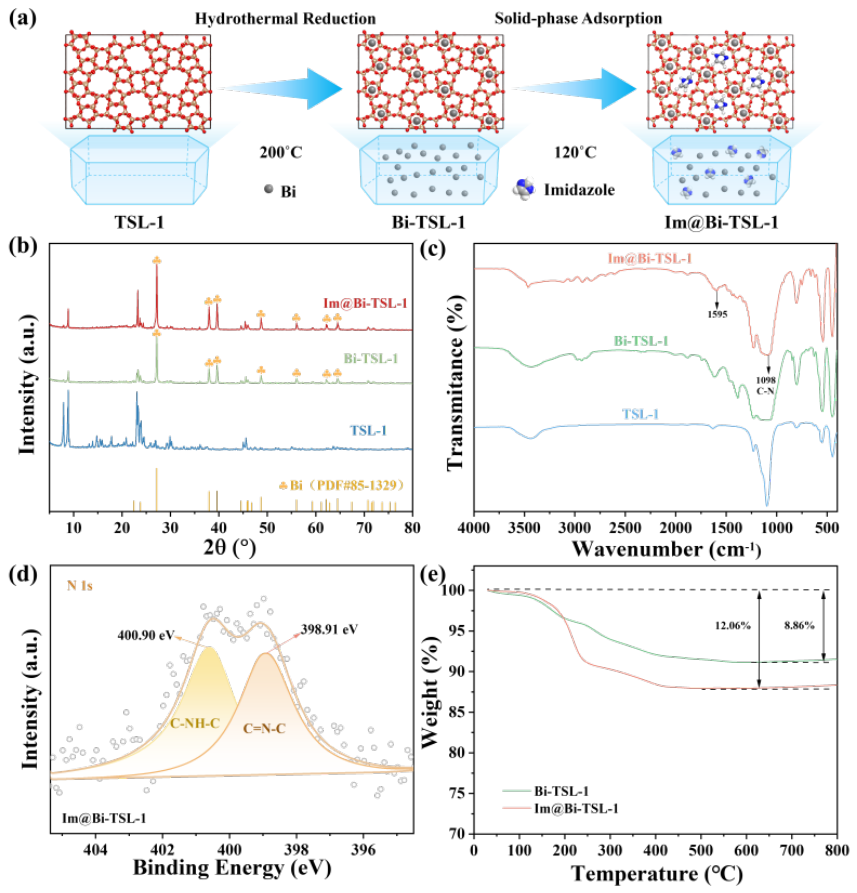
Figure 2.
SEM images of Im@Bi-TSL-1 at (a) 2 μm, (b) 1 μm, and (c) 200 nm. (d) SEM images of Im@Bi-TSL-1 at 1 μm and (e-h) their corresponding mapping images.
Figure 2.
SEM images of Im@Bi-TSL-1 at (a) 2 μm, (b) 1 μm, and (c) 200 nm. (d) SEM images of Im@Bi-TSL-1 at 1 μm and (e-h) their corresponding mapping images.
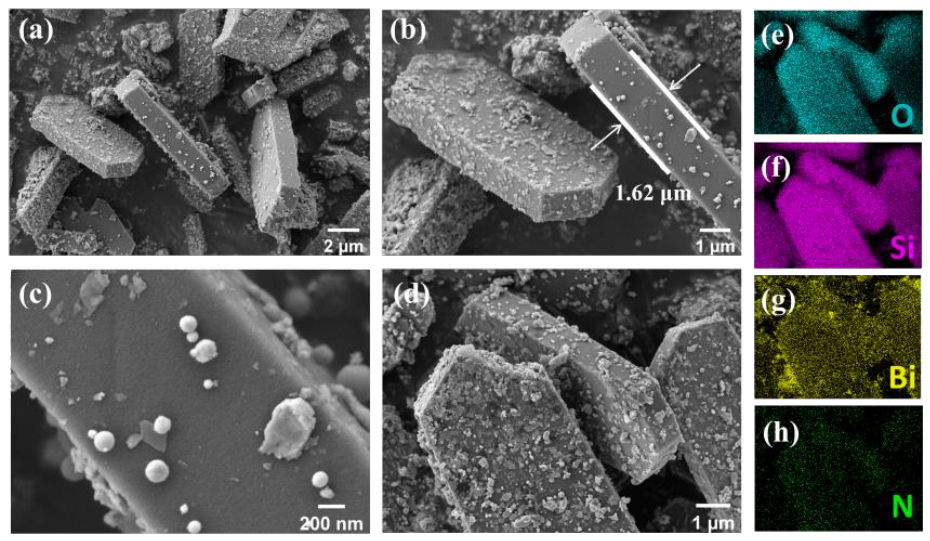
Figure 3.
Adsorption kinetics of (a) I2 and (b) CH3I. Adsorption capacity of (c) I2 and (d) CH3I under varying temperature and humidity conditions. (e) The comparison of gaseous iodine adsorption capacities across diverse reported materials.
Figure 3.
Adsorption kinetics of (a) I2 and (b) CH3I. Adsorption capacity of (c) I2 and (d) CH3I under varying temperature and humidity conditions. (e) The comparison of gaseous iodine adsorption capacities across diverse reported materials.
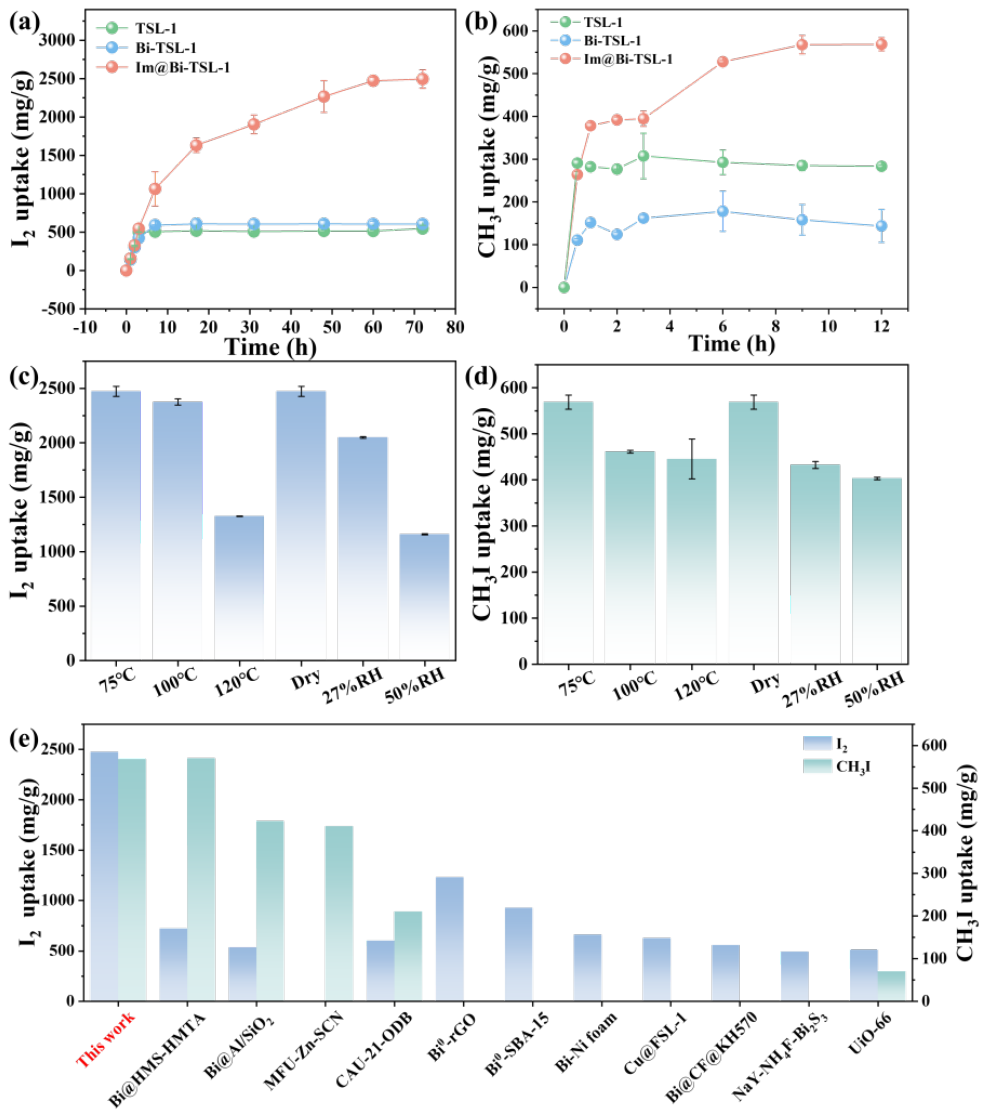
Figure 4.
Iodide leaching curves of Im@Bi-TSL-1-CH3I in (a) deionized water, (b) 0.01 M NaCl solution, (c) 0.1 M NaCl solution, and (d) 0.01 M mixed salt solution composed of NaCl, Na2SO4, and Na3PO4.
Figure 4.
Iodide leaching curves of Im@Bi-TSL-1-CH3I in (a) deionized water, (b) 0.01 M NaCl solution, (c) 0.1 M NaCl solution, and (d) 0.01 M mixed salt solution composed of NaCl, Na2SO4, and Na3PO4.
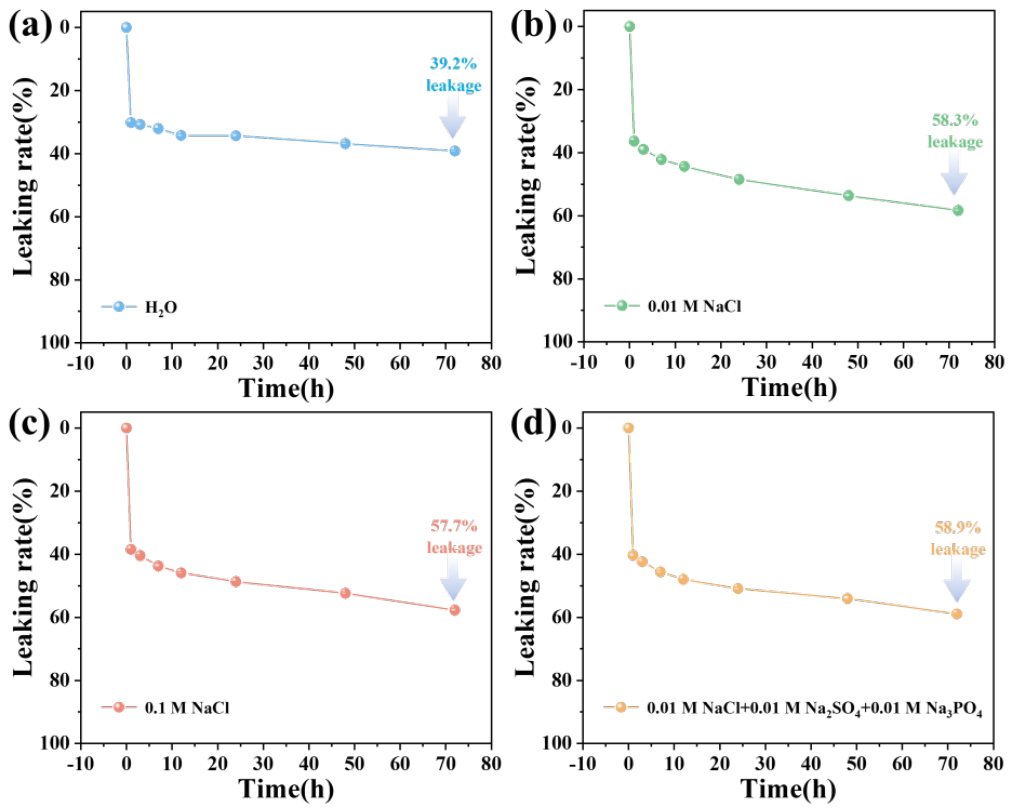
Figure 5.
(a) FT-IR spectra of Im@Bi-TSL-1 before and after adsorption of I2 and CH3I. (b) Deconvolution of I 3d spectra of Im@Bi-TSL-1-I2 and Im@Bi-TSL-1-CH3I. (c) Deconvolution of N 1s of Im@Bi-TSL-1, Im@Bi-TSL-1-I2, and Im@Bi-TSL-1-CH3I. XRD patterns of TSL-1, Bi-TSL-1, and Im@Bi-TSL-1 before and after adsorption of (d) I2 and (e) CH3I. (f) Phase composition of Bi-TSL-1 and Im@Bi-TSL-1 after adsorption of iodine.
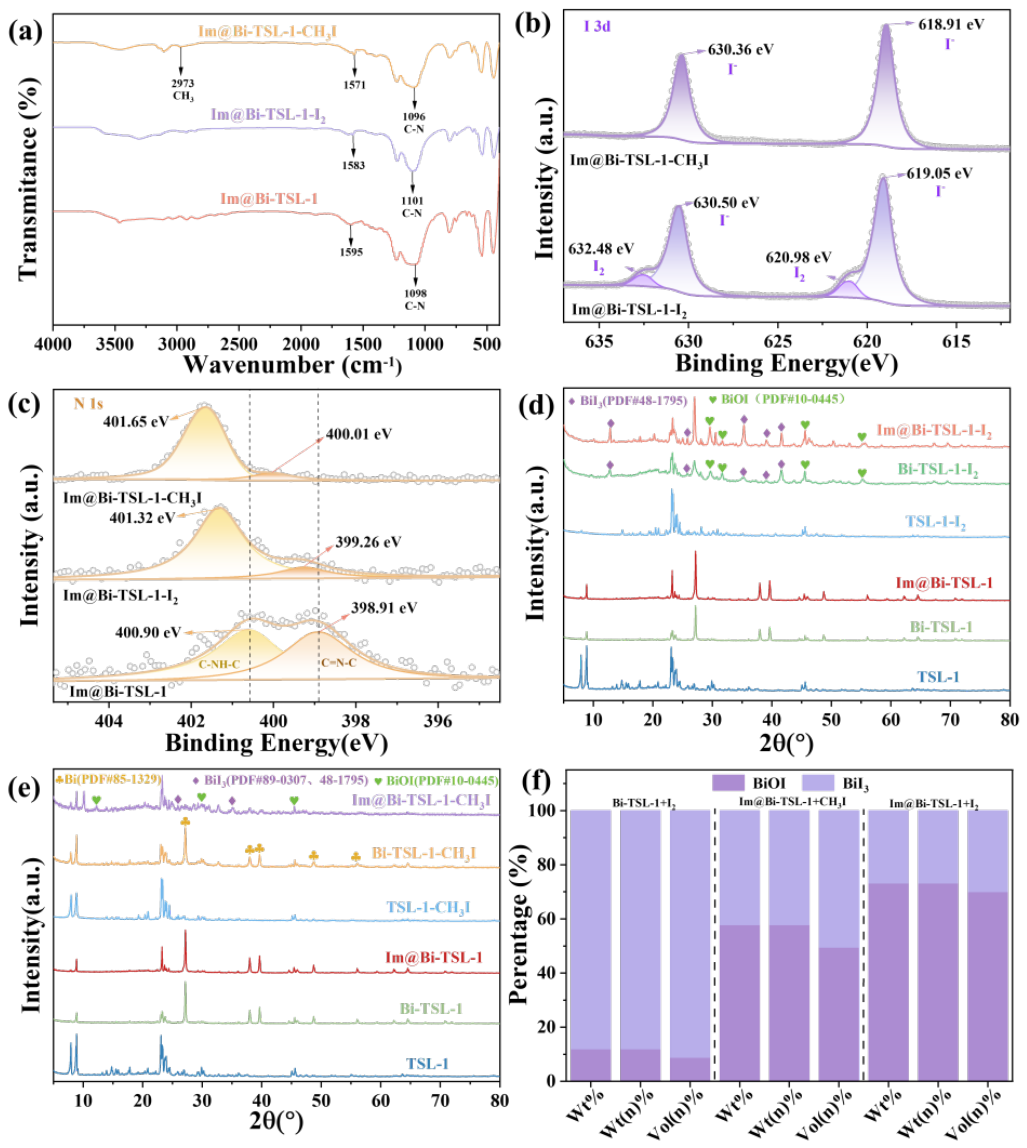
Figure 6.
Adsorption mechanism diagram of Im@Bi-TSL-1 for I2 and CH3I.
Disclaimer/Publisher’s Note: The statements, opinions and data contained in all publications are solely those of the individual author(s) and contributor(s) and not of MDPI and/or the editor(s). MDPI and/or the editor(s) disclaim responsibility for any injury to people or property resulting from any ideas, methods, instructions or products referred to in the content. |
© 2026 by the authors. Licensee MDPI, Basel, Switzerland. This article is an open access article distributed under the terms and conditions of the Creative Commons Attribution (CC BY) license (http://creativecommons.org/licenses/by/4.0/).
Copyright: This open access article is published under a Creative Commons CC BY 4.0 license, which permit the free download, distribution, and reuse, provided that the author and preprint are cited in any reuse.