

Submitted:
03 November 2026
Posted:
05 November 2026
You are already at the latest version
Abstract
Lettuce drop caused by Sclerotinia minor Jagger is among the most economically important diseases affecting lettuce production worldwide. The present study aimed to evaluate the response of 51 lettuce genotypes originating from the gene banks of the Institute of Plant Genetic Resources, Sadovo, Bulgaria, and the Centre for Genetic Resources (CGN), Wageningen, the Netherlands, to artificial infection with S. minor. Field experiments were conducted during 2025 and 2026 under open-field conditions. Plants were inoculated with isolate 35A of S. minor, and survival rates were assessed 30 days after inoculation. Significant differences among genotypes were observed regarding their response to pathogen infection. No immune genotypes were identified. The highest survival rates were recorded for the genotypes Lollo Rossa, Bianka, Belokriska-16260 and Therna Gyumurdjaska-13312, which were classified as slightly susceptible. These accessions may serve as valuable sources of partial resistance in future breeding programs. The results confirm the scarcity of highly resistant lettuce germplasm and emphasize the necessity of integrating genetic resistance with other disease management strategies.
Keywords:
Lactuca sativa
; Sclerotinia minor
; lettuce drop
; disease resistance
; germplasm evaluation
; breeding
1. Introduction
Lettuce (Lactuca sativa L.) is one of the most important vegetable crops cultivated in Bulgaria and is well adapted to both open-field and protected cultivation systems. Conventional production technologies are primarily based on late autumn and spring planting; however, during recent years cultivation in unheated greenhouses and plastic tunnels during winter and other cold periods of the year has become increasingly widespread [1,2]. Its relatively high tolerance to low temperatures and short growing cycle make lettuce a competitive crop among vegetable species. Furthermore, lettuce production requires comparatively low production costs and provides products characterized by excellent nutritional, dietary and sensory qualities [3,4].
Lettuce drop, caused by the soil-borne pathogen Sclerotinia minor Jagger, is one of the most destructive diseases affecting lettuce production regardless of the crop growth stage [5]. Severe yield losses have been reported in several lettuce-growing regions worldwide. In Essex County, Ontario, Canada, disease incidence has reached up to 50% under favorable environmental conditions [6]. The severity of lettuce drop is strongly influenced by crop developmental stage, air temperature and soil moisture [7,8]. Among these factors, plant developmental stage is considered the most critical because disease symptoms often remain unnoticed until harvest [9].
The pathogen infects host plants primarily through myceliogenic germination of sclerotia. Apothecial production is rarely observed in nature and is generally considered of minor importance in the disease cycle of S. minor [10] (Whipps and Budge, 2002). Sclerotia measuring between 0.5 and 2.0 mm serve as the primary inoculum source and initiate infections leading to rapid wilting, tissue necrosis and eventual plant death [9].
The increasing adoption of lettuce cultivation in unheated protected structures creates favorable conditions for pathogen survival and disease development. S. minor is a typical soil-borne fungal species that thrives under cool and humid environmental conditions. Disease symptoms are characterized by the development of a dense white cottony mycelium accompanied by numerous small black sclerotia on infected tissues. As infection progresses, affected plants become soft, water-soaked and eventually collapse. The formation of abundant sclerotia on infected tissues is considered a key diagnostic characteristic of the pathogen [11,12]. Sclerotia may develop within stem cavities, fruits and intercellular spaces of host tissues and remain viable in soil for several years, serving as an inoculum reservoir for future infections [13,14].
Despite the economic significance of lettuce drop, information concerning resistance of cultivated lettuce germplasm to S. minor remains limited. Effective sources of resistance have not yet been identified, and relatively little information is available regarding the use of conventional and biological approaches for disease control [15]. Therefore, additional investigations are needed to identify resistant germplasm and to improve our understanding of resistance mechanisms. These considerations motivated the present study.
The objective of this research was to evaluate a diverse collection of lettuce genotypes for resistance to S. minor Jagger and to identify potential sources of resistance for future breeding programs.
2. Materials and Methods
Plant Material and Experimental Conditions
The study was conducted at the experimental field of the Department of Crop Science, Faculty of Agriculture, Trakia University, Stara Zagora, Bulgaria, during 2025 and 2026. A total of 51 lettuce genotypes were evaluated, including 31 accessions obtained from the gene bank of the Institute of Plant Genetic Resources, Sadovo, Bulgaria, and 20 accessions from the Centre for Genetic Resources (CGN), Wageningen, the Netherlands.
The experiment was performed under open-field conditions during the spring growing season. Seeds were sown in seedling trays containing 45 cells filled with a peat-perlite substrate mixture. Sowing was carried out on 28 February, while seedlings were transplanted to the field on 9 May. Plants were established at a spacing of 20 × 20 cm.
Pathogen Maintenance and Inoculation
Artificial inoculation was performed using isolate 35A of S. minor, originally isolated from infected plant material collected in the village of Gradina, Plovdiv region, Bulgaria. The pathogen was maintained on potato dextrose agar (PDA) medium in sterile Petri dishes with a diameter of 90 mm. Cultures were incubated under dark conditions at 18-20 °C and transferred onto fresh culture medium every 21 days.
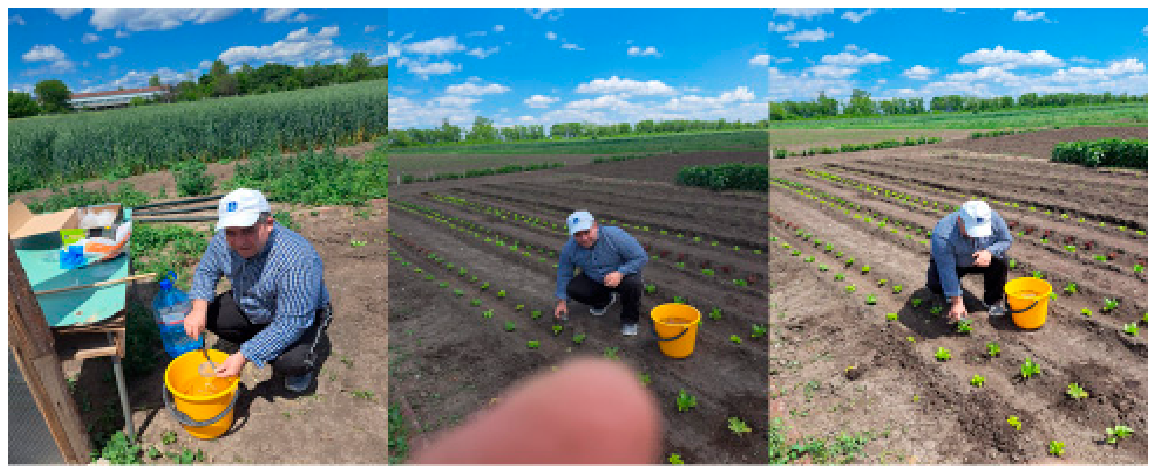
Artificial inoculation was carried out by washing fungal mycelium from Petri dishes with sterile distilled water to prepare a mycelial suspension. Approximately 50 mL of suspension was applied around the root zone of each plant. Additional inoculum consisting of colonized PDA fragments was placed at the base of plant leaves. Inoculation was performed on 19 May.
Disease Assessment
Plant survival was assessed 30 days after inoculation. The number of healthy and dead plants was recorded, and genotypes were classified according to the following disease reaction scale:
1.0 = Immune; 0.8 = Resistant; 0.6 = Slightly susceptible; 0.4 = Susceptible; 0.2 = Highly susceptible; 0.0 = Completely dead
Experimental Design and Statistical Analysis
The experiment was established as a randomized complete block design with five replications, each consisting of five plants. Data were analyzed using Jamovi version 2.6.17 [16]. Analysis of variance (ANOVA) was performed to determine genotype effects. Mean comparisons were conducted using Tukey’s test.
Figure 1.
Artificial inoculation of 51 lettuce genotypes with isolate 35A of S. minor.
3. Results
Analysis of Variance
Analysis of variance revealed significant differences among the evaluated lettuce genotypes in their response to S. minor infection during the 2025 growing season (Table 1). The genotype effect was significant (F = 2.09, P = 0.017), indicating the presence of genetic variability for survival after artificial inoculation. In contrast, no significant genotype effect was detected in 2026 (F = 0.54, P > 0.05), suggesting a stronger influence of environmental conditions on disease development and symptom expression during that season.
The average survival score across all evaluated accessions increased from 0.19 in 2025 to 0.49 in 2026, indicating lower disease pressure during the second experimental year. The coefficient of variation was high in both years, reaching 150.7% in 2025 and 96.5% in 2026, which reflects the substantial heterogeneity of the evaluated germplasm collection (Table 2).
Survival Response of Lettuce Genotypes
Considerable variation in survival after inoculation was observed among the 51 lettuce genotypes (Table 2). None of the tested accessions expressed complete immunity (score 1.0) or stable resistance (score 0.8 or higher in both years). Most genotypes were classified as susceptible or highly susceptible to S. minor.
The highest average survival values were recorded for the accessions Lollo Rossa (9385), Bianka (43184), Belokriska (16260), and Therna Gyumurdjaska (13312), which showing a mean disease reaction score of 0.5 and 0.6. Similar levels of performance were observed for SN 406, VERGU, Zlatna Gyumyurdzinska, Batavia Blonde de Paris, SN 407, SN 304, Winter Butterkopf, Krolowa Majowych and several local accessions, which also reached average values around 0.5. However, according to the adopted classification scale, these genotypes could only be categorized as slightly susceptible.
Among all evaluated materials, Lollo Rossa (9385) exhibited the highest survival score during 2026 (0.8) and achieved the highest overall average value (0.6). Despite this favorable response, its performance was not sufficiently stable across years to permit classification as resistant.
Several accessions displayed extremely high susceptibility. Complete mortality during the first experimental year was recorded for Local-31173, Local-44263, Galta Gyumyurdjaska-11406 and Galta Krassavitcha-11405, resulting in average survival values of only 0.1. Similarly, Local-28202, SN90-19251, Zhalta Gyumyurdzinska-14171, Local-44262, Zlatna Negovanska-5842, Domaca Salata-16264, Celtuce-5292, SADOPR-10940 and Marulia-13381 exhibited average scores of 0.2, indicating high susceptibility to lettuce drop.
Distribution of Genotypes According to Disease Reaction
The distribution of the evaluated genotypes among disease reaction classes further illustrated the generally high susceptibility of the collection (Figure 2). During 2025, 19 genotypes exhibited complete mortality (score 0.0), whereas only three accessions reached a score of 0.6 and none achieved a score of 0.8 or higher. In 2026, disease severity was lower and a larger proportion of genotypes displayed intermediate reaction scores of 0.4 and 0.6. Nevertheless, resistant or immune accessions were not identified in either year.
The average distribution across years showed that the majority of accessions were concentrated within the susceptible classes (0.2-0.6), confirming the limited availability of effective resistance sources within the evaluated lettuce germplasm.
Response of Inoculated Plants Under Field Conditions
Typical symptoms of lettuce drop developed following artificial inoculation with isolate 35A of S. minor (Figure 3). Infected plants exhibited wilting, tissue softening, collapse and plant death under favorable environmental conditions. Disease development was associated with the appearance of characteristic white mycelial growth and plant decay in susceptible accessions. The observed symptom expression confirmed the effectiveness of the inoculation procedure and enabled reliable discrimination among genotypes based on survival response.
4. Discussion
The response of 51 lettuce genotypes to artificial inoculation with S. minor was evaluated under field conditions during two consecutive growing seasons. Analysis of variance revealed significant differences among genotypes only in 2025 (F = 2.09; P = 0.017), whereas no statistically significant differences were detected in 2026 (Table 1). This indicates that environmental conditions strongly influenced disease development and the expression of host susceptibility.
A considerable difference in disease severity was observed between the two experimental years (Table 2). During 2025, disease pressure was substantially higher. Nineteen genotypes showed complete mortality (score 0.0), sixteen were classified as highly susceptible (0.2), thirteen as susceptible (0.4), and only three genotypes reached a score of 0.6. No genotype attained resistant (0.8) or immune (1.0) status. In contrast, disease severity was considerably lower in 2026, when no completely dead genotypes were observed, twenty-one accessions scored 0.4, twenty-one scored 0.6, and four genotypes reached 0.8 survival. This contrasting behaviour clearly demonstrates a strong genotype × environment interaction and confirms that environmental conditions play a major role in the epidemiology of lettuce drop.
The frequency distribution of genotypes according to disease reaction classes further illustrates the marked differences between years (Figure 2). During the first year, the majority of accessions were concentrated in the highly susceptible and completely susceptible groups, whereas in the second year most genotypes exhibited intermediate survival levels. This pattern suggests that disease pressure in 2025 provided better discrimination among genotypes and therefore represented a more suitable environment for identifying potential sources of tolerance.
When the average performance over both years was considered, no genotype achieved a resistance score of 0.8 or higher. The highest average value was recorded for Lollo Rossa (9385), with a mean score of 0.6. Although this genotype cannot be considered resistant according to the adopted scale, it exhibited the most favourable overall response and therefore represents the best source of partial tolerance identified in the present study.
A second group of promising accessions included Bianka, Belokriska-16260, SN 406, VERGU, Local-44258, Zlatna Gyumyurdzinska, Local-44260, Hohlblattriger, Batavia Blonde de Paris, SN 407, SN 304, Winter Butterkopf, Local-43182, Krolowa Majowich, Local-44261, Zolta Gjumjurdzinska and Therna Gyumurdjaska-13312, all of which exhibited an average score of 0.5. These accessions maintained relatively stable survival across years despite substantial differences in disease pressure and therefore may be considered valuable sources of quantitative resistance.
The generally low survival observed in most accessions confirms previous reports that high levels of resistance to S. minor are uncommon in cultivated lettuce. Grube [17] (2004) and Simko et al. [18] reported that resistance to lettuce drop is quantitatively inherited and controlled by numerous loci with relatively small effects. Under such circumstances, complete resistance is rarely observed, while partial resistance is more frequently encountered and usually represents the main target in breeding programmes.
The superior performance of Lollo Rossa may be associated with specific morphological and biochemical characteristics related to anthocyanin accumulation. Recent studies have demonstrated a close linkage between loci regulating anthocyanin content and resistance to S. minor. Anthocyanins may contribute to disease suppression through antioxidant activity and inhibition of fungal growth, thereby enhancing plant defence mechanisms [19,20]. The comparatively good performance of Lollo Rossa supports the hypothesis that anthocyanin-rich germplasm may contain useful alleles contributing to enhanced tolerance.
The relatively favourable performance of Bianka, Belokriska and Therna Gyumurdjaska indicates that different horticultural groups may contain complementary resistance mechanisms. Bianka is characterized by vigorous vegetative growth, Belokriska develops large semi-closed heads, whereas Therna Gyumurdjaska belongs to the romaine type and possesses firmer leaf tissues. Previous studies indicate that plant architecture, tissue firmness, stem lignification and cell-wall characteristics can influence the progress of infection caused by Sclerotinia species [21,22]. Consequently, these accessions may represent valuable breeding material despite their moderate susceptibility.
The complete absence of resistant and immune genotypes based on the two-year average demonstrates that available cultivated germplasm alone is unlikely to provide satisfactory control of lettuce drop. Future breeding programs should aim to accumulate multiple resistance factors through pedigree selection, repeated hybridization, and inclusion of new germplasm sources. The use of low-susceptibility genotypes identified in the present study may serve to gradually improve resistance levels and contribute to more sustainable integrated disease management strategies.
Practical Implications for Lettuce Breeding
The results obtained in this study provide valuable information for the development of breeding strategies aimed at improving resistance to lettuce drop caused by S. minor. Although no immune or resistant genotypes were identified, significant differences in survival among accessions demonstrated the existence of exploitable genetic variability within the evaluated germplasm collection.
The genotypes Lollo Rossa, Bianka, Belokriska-16260 and Therna Gyumurdjaska-13312 exhibited the most favorable response to artificial inoculation and should be considered priority parental forms for future hybridization programmes. Their comparatively higher survival under pathogen pressure suggests the presence of favorable alleles contributing to quantitative resistance.
Since the identified sources of low susceptibility belong to different varietal groups, they provide opportunities to expand the genetic base of lettuce breeding populations. Crosses involving these accessions and elite commercial cultivars may facilitate the accumulation of resistance-associated loci while simultaneously improving agronomic performance and market quality.
The substantial year-to-year variation observed in disease response further indicates that resistance screening should be conducted over multiple environments and growing seasons to ensure the identification of stable resistance sources. Future breeding efforts should focus on recurrent selection, pedigree breeding and marker-assisted selection when molecular markers linked to resistance loci become available.
The predominance of susceptible genotypes within the evaluated collection also highlights the need to expand germplasm screening by including local landraces, primitive cultivars and wild relatives of lettuce, which may represent valuable reservoirs of novel resistance alleles against S. minor.
5. Conclusions
Significant variability in the response of the evaluated lettuce genotypes to S. minor was established under artificial infection conditions. No immune or resistant genotypes were identified among the 51 tested accessions. The genotypes Bianka, Belokriska-16260 and Therna Gyumurdjaska-13312 exhibited the highest survival rates and represent valuable sources of partial resistance. These accessions could be used as parental material in breeding programmes aimed at improving tolerance to lettuce drop in cultivated lettuce.
Suggested Scientific Contribution Statement
This study represents one of the first comparative evaluations of Bulgarian and international lettuce germplasm for response to S. minor under field conditions in Bulgaria. The identification of three genotypes with low susceptibility provides new information for lettuce breeding programs and contributes to the development of sustainable disease control strategies in lettuce production.
Author Contributions
Conceptualization, P.C. and N.V.; methodology, P.C.; formal analysis, N.V.; investigation, M.K.; resources, P.C.; data curation, M.K.; writ-ing—original draft preparation, M.K.; writing—review and editing, N.V.; visualization, M.K.; su-pervision, P.C. and N.V.; project administration, M.K.; funding acquisition, M.K., P.C. and N.V. All authors have read and agreed to the published version of the manuscript.
Funding
This research received no external funding.
Data Availability Statement
The original contributions presented in this study are included in the article. Further inquiries can be directed to the corresponding author.
Acknowledgments
The authors acknowledge the Institute of Plant Genetic Resources “K. Malkov”, Sadovo, Bulgaria, and the Centre for Genetic Resources (CGN), Wageningen, The Netherlands, for providing seed material used in the present investigation.
Conflicts of Interest
The authors declare no conflicts of in-terest.
References
- Giménez, A.; Fernández, J.A.; Pascual, J.A.; Ros, M.; Saez-Tovar, J.; Martinez-Sabater, E.; Gruda, N.S.; Egea-Gilabert, C. PromisingComposts as Growing Media for the Production of Baby Leaf Lettuce in a Floating System. Agronomy 2020, 10, 1540. [Google Scholar] [CrossRef]
- Thomas, T.; Biradar, M.S.; Chimmad, V.P.; Janagoudar, B.S. Growth and Physiology of Lettuce (Lactuca Sativa L.) Cultivars under Different Growing Systems. Plant Physiol. Rep. 2021, 26, 526–534. [Google Scholar] [CrossRef]
- Das, R.; Bhattacharjee, C. Chapter 9—Lettuce. In Nutritional Composition and Antioxidant Properties of Fruits and Vegetables; Jaiswal, A.K., Ed.; Academic Press: Cambridge, MA, USA, 2020; pp. 143–157. ISBN 9780128127803. [Google Scholar]
- Shi, M.; Gu, J.; Wu, H.; Rauf, A.; Emran, T.B.; Khan, Z.; Mitra, S.; Aljohani, A.S.M.; Alhumaydhi, F.A.; Al-Awthan, Y.S.; et al. Phytochemicals, Nutrition, Metabolism, Bioavailability, and Health Benefits in Lettuce—A Comprehensive Review. Antioxidants 2022, 11, 1158. [Google Scholar] [CrossRef] [PubMed]
- Wu, B. M.; Subbarao, K. V. Analyses of lettuce drop incidence and population structure of Sclerotinia sclerotiorum and S. minor. Phytopathology 2006, 96, 1322–1329. [Google Scholar] [CrossRef] [PubMed]
- Jarvis, W. R. Sclerotinia minor as the cause of lettuce drop in southwestern Ontario. Can. Plant Dis. Surv. 1985, 65, 1. [Google Scholar]
- Merriman, P.R. Survival of sclerocia of Sclerotinia sclerotiorum in soil//Soil Boil. Biochem. 1976, 8(2), 385–389. [Google Scholar]
- Reich, J.; Chatterton, S. Predicting field diseases caused by Sclerotinia sclerotiorum: A review. Plant Pathol. 2023, 72, 3–18. [Google Scholar] [CrossRef]
- Abawi, G.S.; Grogan, R.G. Epidemiology of diseases caused by Sclerotinia species. Phytopathology 1979, 69, 889–904. [Google Scholar] [CrossRef]
- Whipps, J.M.; Budge, S. P.; McClement, S.; Pink, D. A. A glasshouse cropping method for screening lettuce lines for resistance to Sclerotinia sclerotiorum. Eur. J. Plant Pathol. 2002, 108, 373–378. [Google Scholar] [CrossRef]
- Adams, P.B. The potential of mycoparasites for biological control of plant diseases. Annu. Rev. Phytopathol. 1990, 28, 59–72. [Google Scholar] [CrossRef] [PubMed]
- Clarkson, J.P.; Phelps, K.; Whipps, J.M.; Young, C.S.; Smith, J.A.; Watling, M. Forecasting Sclerotinia disease on lettuce: a predictive model for carpogenic germination of Sclerotinia sclerotiorum sclerotia. Phytopathology 2007, 97, 621–631. [Google Scholar] [CrossRef] [PubMed]
- Abreu, G.S.; Grogn, R.G. Epidemiology of diseases caused by Sclerotinia species. Phytopathology 2011, 69, 899–903. [Google Scholar]
- Piven, V.T.; Alifirova, T.P. Morphogenesis characteristics of the sunflower white rot pathogen. Plant Prot. Quar. 2001, 2, 33–36. [Google Scholar]
- Chitrampalam, P.; Figuli, P.J.; Matheron, M.E.; Subbarao, K.V.; Pryor, B.M. Biocontrol of lettuce drop caused by Sclerotinia sclerotiorum and S. minor in desert agroecosystems. Plant Dis. 2008, 92(12), 1625–1634. [Google Scholar] [CrossRef] [PubMed]
- The jamovi project jamovi (Version 2.6.17) [Computer software. 2024. Available online: https://www.jamovi.org.
- Grube, R. Genetic analysis of resistance to lettuce drop caused by Sclerotinia minor. Acta Hortic. 2004, 637, 49–55. [Google Scholar] [CrossRef]
- Simko, I.; Kandel, J. Sthapit; Peng, H. Genetic determinants of lettuce resistance to drop caused by Sclerotinia minor identified through genome-wide association mapping frequently co-locate with loci regulating anthocyanin content. Theor. Appl. Genet 2023, 136, 180. [Google Scholar] [CrossRef] [PubMed]
- Liu, R.; Ding, L.-N.; Li, M.; Cao, W.; Wang, Y.-K.; Wang, W.-J.; Yu, Y.-K.; Wang, Z.; Zhu, K.-M.; Tan, X.-L. Characterization of a rapeseed anthocyanin-more mutant with enhanced resistance to Sclerotinia Sclerotiorum. J. Plant Growth Regul. 2020, 39(2), 703–716. [Google Scholar] [CrossRef]
- Simko, I.; Subbarao, K. V.; Hayes, R. Breeding lettuce for resistance against Sclerotinia minor. HortScience 2023, 58(12), 1526–1532. [Google Scholar] [CrossRef]
- Peltier, A.J.; Hatfield, R. D.; Grau, C. R. Soybean stem lignin concentration relates to resistance to Sclerotinia Sclerotiorum. Plant Dis. 2009, 93(2), 149–154. [Google Scholar] [CrossRef] [PubMed]
- Mamo, B.E.; Eriksen, R. L.; Adhikari, N.; Hayes, R. J.; Mou, B.; Simko, I. Epidemiological characterization of lettuce drop (Sclerotinia spp.) and biophysical features of the host identify soft stem as a susceptibility factor. PhytoFrontiers 2021, 1, 182–204. [Google Scholar] [CrossRef]
Figure 2.
Distribution of 51 lettuce genotypes among disease reaction classes following inoculation with S. minor in 2025 and 2026.
Figure 2.
Distribution of 51 lettuce genotypes among disease reaction classes following inoculation with S. minor in 2025 and 2026.
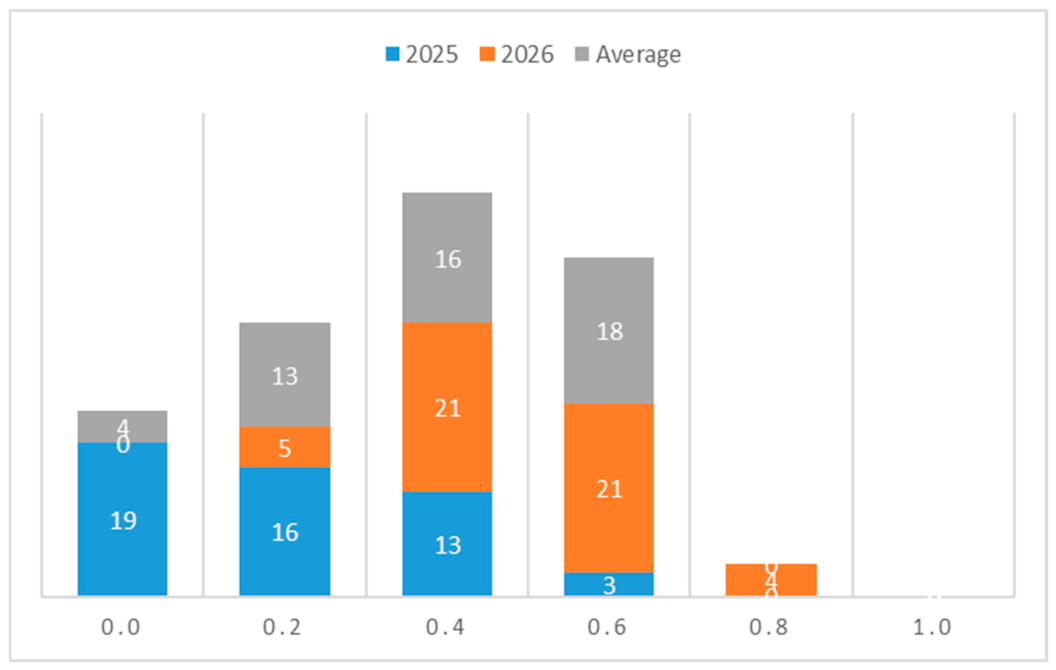
Figure 3.
Survival response of 51 lettuce genotypes to artificial infection with S. minor.
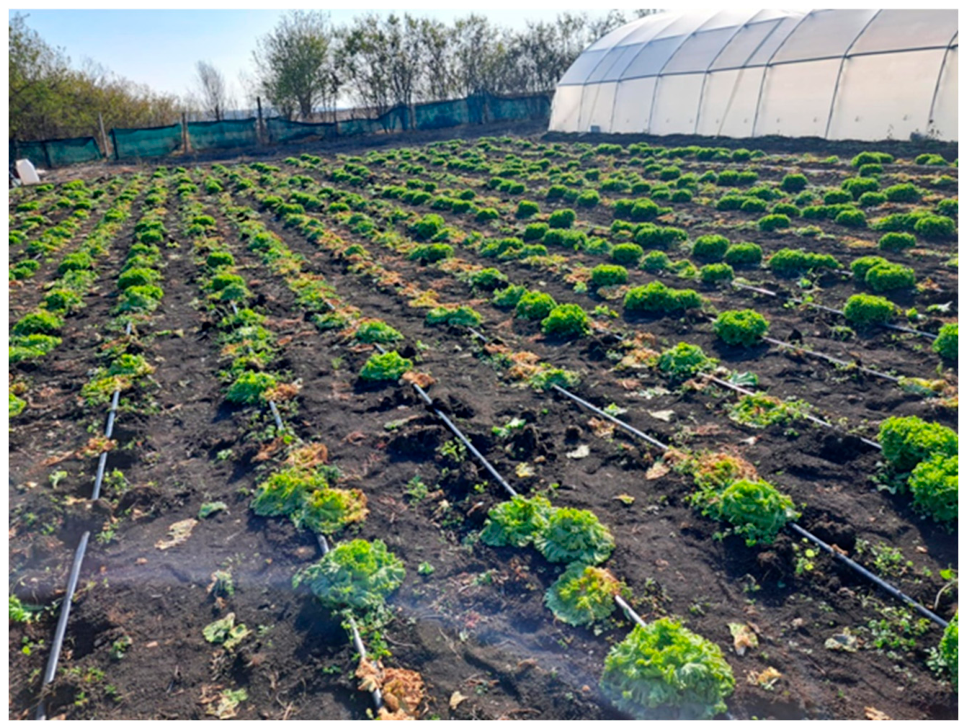

Table 1.
Analysis of variance (ANOVA) for survival of 51 lettuce genotypes following artificial inoculation with S. minor.
Table 1.
Analysis of variance (ANOVA) for survival of 51 lettuce genotypes following artificial inoculation with S. minor.
| SV | DF | SS | MS | F | Probability(%) |
|---|---|---|---|---|---|
| 2025 | |||||
| Blocks | 4 | 14.01569 | 3.503922 | ||
| Genotypes | 50 | 8.784314 | 0.175686 | 2.0935 | 0.017* |
| Residual | 200 | 16.78431 | 0.083922 | ||
| Total | 254 | 39.58431 | |||
| 2026 | |||||
| Blocks | 4 | 12.13333 | 3.033333 | ||
| Genotypes | 50 | 6.141176 | 0.122824 | 0.5403 | 100 ns |
| Residual | 200 | 45.46666 | 0.227333 | ||
| Total | 254 | 63.74117 |
* p≥0.05; ns – Not significant.
Table 2.
Disease reaction and survival scores of 51 lettuce genotypes inoculated with S. minor during 2025 and 2026.
Table 2.
Disease reaction and survival scores of 51 lettuce genotypes inoculated with S. minor during 2025 and 2026.
| No | Catalog number | Genotype | 2025 | 2026 | Average |
|---|---|---|---|---|---|
| 1 | 43184 | Bianka | 0.6 | 0.4 | 0.5 |
| 2 | 43183 | Triebsalat Presto | 0.4 | 0.4 | 0.4 |
| 3 | 28250 | SN 406 | 0.4 | 0.6 | 0.5 |
| 4 | 28202 | Local | 0.0 | 0.4 | 0.2 |
| 5 | 19251 | SN 90 | 0.0 | 0.4 | 0.2 |
| 6 | 16960 | VERGU | 0.4 | 0.6 | 0.5 |
| 7 | 31173 | Local | 0.0 | 0.2 | 0.1 |
| 8 | 16912 | SN 60 | 0.0 | 0.4 | 0.2 |
| 9 | 28200 | Local | 0.2 | 0.2 | 0.2 |
| 10 | 44258 | Local | 0.2 | 0.8 | 0.5 |
| 11 | 37225 | Zlatna gyumyurdzinska | 0.4 | 0.6 | 0.5 |
| 12 | 44260 | Local | 0.4 | 0.6 | 0.5 |
| 13 | 38493 | Hohlblattriger | 0.2 | 0.8 | 0.5 |
| 14 | 43189 | Batavia Blonde de Paris | 0.4 | 0.6 | 0.5 |
| 15 | 19245 | SN 407 | 0.4 | 0.6 | 0.5 |
| 16 | 44259 | Local | 0.2 | 0.6 | 0.4 |
| 17 | 44264 | Local | 0.2 | 0.6 | 0.4 |
| 18 | 44272 | Chang fengjie gin | 0.2 | 0.6 | 0.4 |
| 19 | 26962 | Local | 0.2 | 0.4 | 0.3 |
| 20 | 39571 | IRA | 0.2 | 0.6 | 0.4 |
| 21 | 29793 | SN 304 | 0.4 | 0.6 | 0.5 |
| 22 | 43188 | Winter Butterkopf | 0.4 | 0.6 | 0.5 |
| 23 | 43182 | Local | 0.4 | 0.6 | 0.5 |
| 24 | 37226 | Cherna gyumyurzinska | 0.0 | 0.6 | 0.3 |
| 25 | 14171 | Zhalta gyumyurzinska | 0.0 | 0.4 | 0.2 |
| 26 | 44263 | Local | 0.0 | 0.2 | 0.1 |
| 27 | 44262 | Local | 0.0 | 0.4 | 0.2 |
| 28 | 16920 | SN 405 | 0.2 | 0.4 | 0.3 |
| 29 | 43289 | Krolowa majowich | 0.2 | 0.8 | 0.5 |
| 30 | 44261 | Local | 0.4 | 0.6 | 0.5 |
| 31 | 19243 | SN 44 | 0.2 | 0.6 | 0.4 |
| 32 | 4840 | Romaine Verte d Hiv | 0.0 | 0.4 | 0.2 |
| 33 | 16260 | Belokriska | 0.6 | 0.4 | 0.5 |
| 34 | 5842 | Zlatna negovanska | 0.0 | 0.4 | 0.2 |
| 35 | 13384 | SadvPR89E530 | 0.2 | 0.4 | 0.3 |
| 36 | 505058 | Vir 1250 | 0.2 | 0.4 | 0.3 |
| 37 | 16264 | Domaca Salata | 0.0 | 0.4 | 0.2 |
| 38 | 50557 | Zolta Gjumjurdzinska | 0.4 | 0.6 | 0.5 |
| 39 | 18628 | IHR10,011632 | 0.0 | 0.6 | 0.3 |
| 40 | 5292 | Celtuce | 0.0 | 0.4 | 0.2 |
| 41 | 9385 | Lollo Rossa | 0.4 | 0.8 | 0.6 |
| 42 | 10940 | SADOPR | 0.0 | 0.4 | 0.2 |
| 43 | 10942 | Cos Green Longstandi | 0.2 | 0.4 | 0.3 |
| 44 | 11406 | Galta Gyumyurdjaska | 0.0 | 0.2 | 0.1 |
| 45 | 19013 | Lollo | 0.0 | 0.4 | 0.2 |
| 46 | 11407 | Simna maslena Glava | 0.2 | 0.6 | 0.4 |
| 47 | 13381 | Marulia | 0.0 | 0.4 | 0.2 |
| 48 | 20111 | Grazer Eishauptel | 0.2 | 0.6 | 0.4 |
| 49 | 13312 | Therna Gyumurdjaska | 0.6 | 0.4 | 0.5 |
| 50 | 11405 | Galta Krassavitcha | 0.0 | 0.2 | 0.1 |
| 51 | 9373 | Grazer Krauthauptel | 0.0 | 0.6 | 0.3 |
| Experiment average | 0.19 | 0.49 | |||
| CV(%) | 150.7 | 96.49 | |||
| SMD-Tukey(5%) | 0.5 | 1.0 | |||
| SMD-Tukey(1%) | 0.6 | 1.3 |
Disclaimer/Publisher’s Note: The statements, opinions and data contained in all publications are solely those of the individual author(s) and contributor(s) and not of MDPI and/or the editor(s). MDPI and/or the editor(s) disclaim responsibility for any injury to people or property resulting from any ideas, methods, instructions or products referred to in the content. |
© 2026 by the authors. Licensee MDPI, Basel, Switzerland. This article is an open access article distributed under the terms and conditions of the Creative Commons Attribution (CC BY) license (http://creativecommons.org/licenses/by/4.0/).
Copyright: This open access article is published under a Creative Commons CC BY 4.0 license, which permit the free download, distribution, and reuse, provided that the author and preprint are cited in any reuse.