
Submitted:
02 November 2026
Posted:
04 November 2026
You are already at the latest version
Abstract
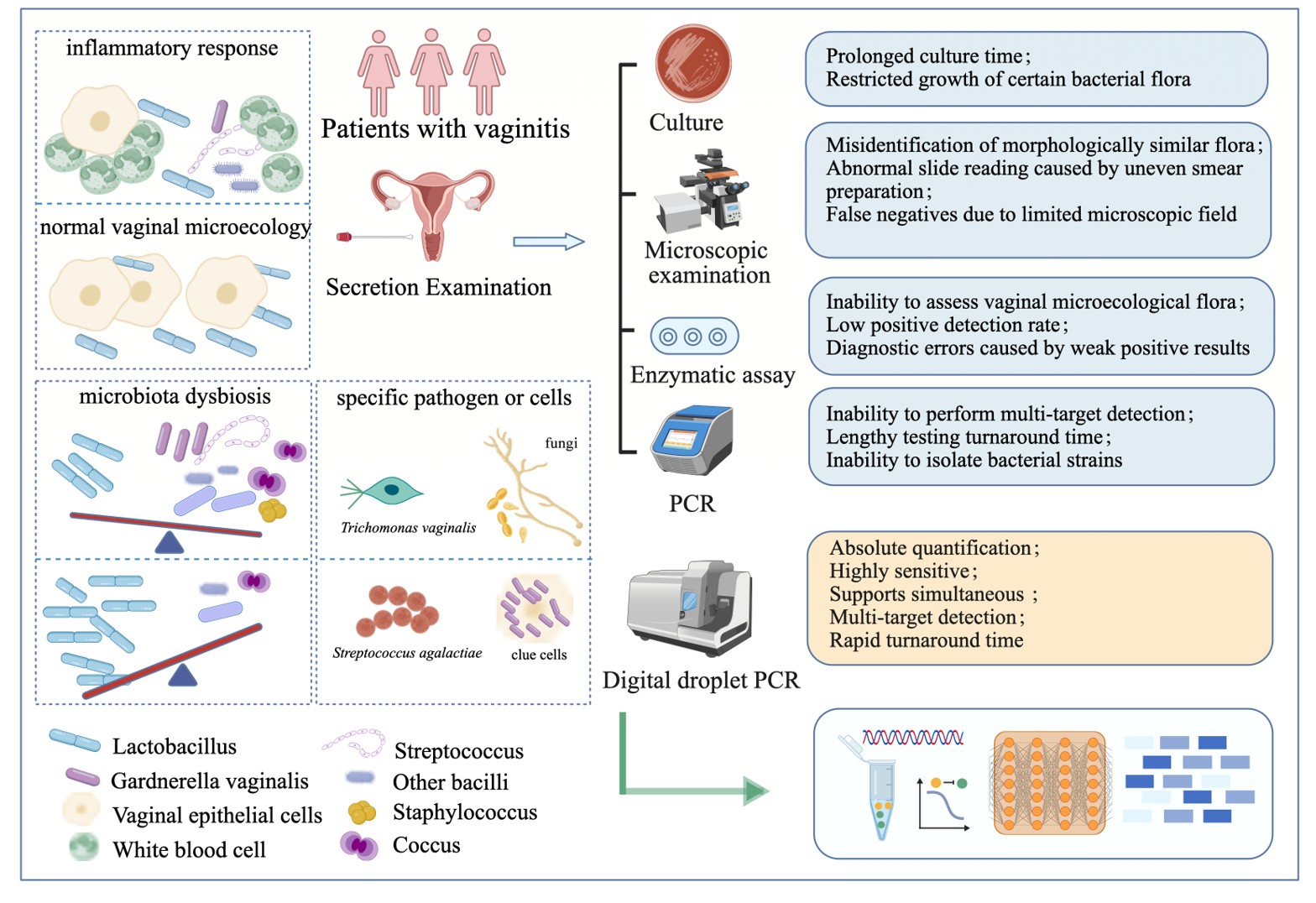
Background: Vaginal microbiome dysbiosis is associated with chronic inflammation, pathogen infections, adverse pregnancy outcomes, and increased susceptibility to sexually transmitted infections. However, the current detection methods mainly rely on microscopic examination, enzymology, and culture techniques, lacking precise detection of the species of the pathogen. Methods: A multiplex Droplet digital PCR (ddPCR) detection method of the most common targets related to vaginal diseases-related pathogens were established by retrospective study at Shanghai East Hospital. Swabs of 112 vaginosis patients and 102 non-non-vaginosis patients were detected and quantified the pathogen load of targets in vaginal swabs, targeting Lactobacillus, Gardnerella vaginalis, Candida species, Streptococcus agalactiae, and vaginal Trichomonas to comprehensively describe the vaginal microecological status and compared the results with existing cultivation methods and the double fluorescence staining method. Results: ddPCR test possesses a low limit of detection (LOD) of 5 CFU/mL, achieving PPA values of 87.50%-100.00% across all five targets and significantly increases the detection rate of Candida species (NPA 73.46%, Kappa=0.524 P<0.001), Gardnerella vaginalis (NPA 100%, Kappa=0.241 P<0.001) and Streptococcus agalactia (NPA 89.18%, Kappa=0.606 P<0.001). Excellent inter-assay agreement was observed for Trichomonas (Kappa=0.865, P=1.000) and Lactobacillus (Kappa=0.801, P=0.002). In addition, this assay enables further classification and confirmation of the microbiota in specimens showing “increased small bacilli” or “flora inhibition” on conventional assays. Conclusions: Our study is the first to develop a droplet digital PCR method for multi-target detection and absolute quantification of vaginal microbiome. This method balances both detection efficiency and test convenience. It enables accurate target detection while permitting comprehensive evaluation of the overall vaginal microecology, demonstrating favorable analytical performance and broad clinical application prospects.
Keywords:
vaginosis
; vaginal microecology
; droplet digital PCR
; absolute quantitation assay
; vaginal microbiome dysbiosis
Copyright: This open access article is published under a Creative Commons CC BY 4.0 license, which permit the free download, distribution, and reuse, provided that the author and preprint are cited in any reuse.