Preprint
Article

This version is not peer-reviewed.

Effect of Hemp Variety (Cannabis sativa L.) and Addition Timing on Beer Aroma and Bitterness

Submitted:

02 November 2026

Posted:

04 November 2026

You are already at the latest version

Abstract

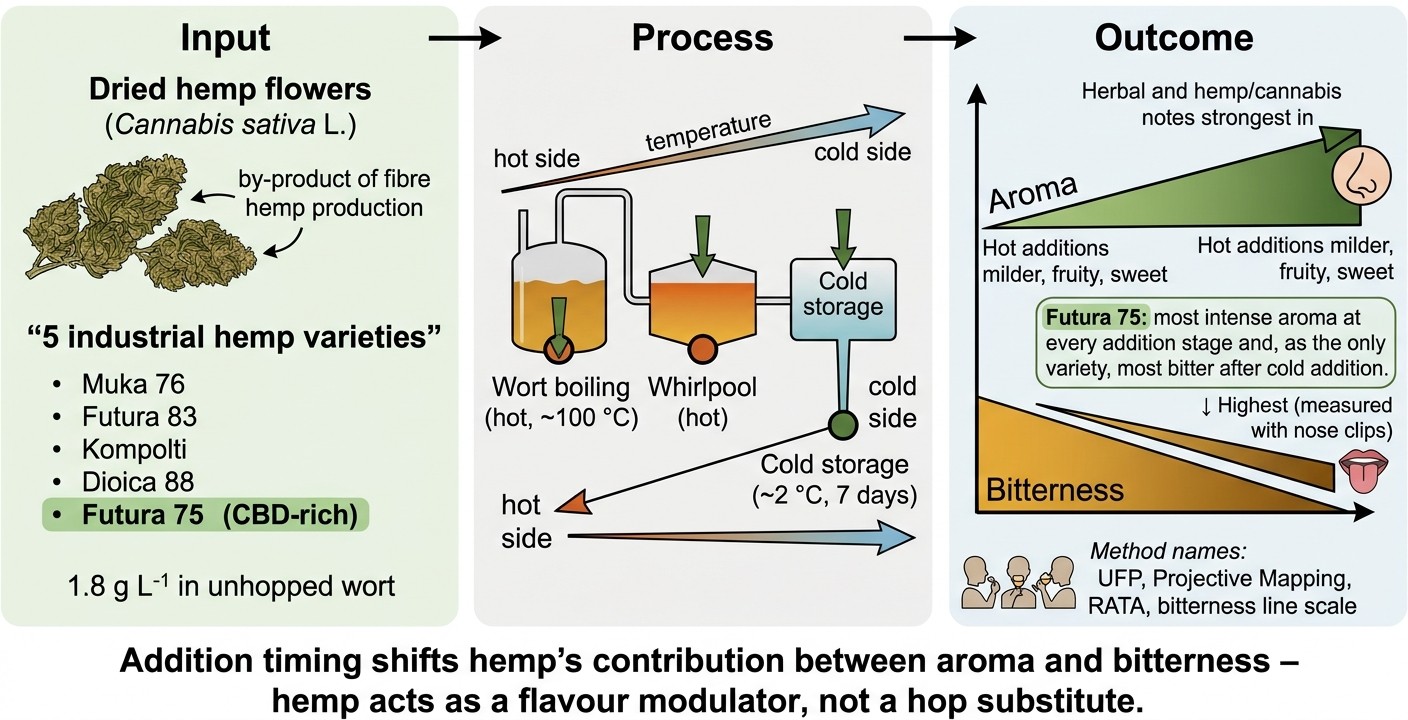
Hemp (Cannabis sativa L.) inflorescences are a by-product of fibre hemp production and share aroma-active and potentially bitter compounds with hops. This study investigated how hemp variety and addition timing affect beer aroma and bitterness. Five industrial hemp varieties (Muka 76, Futura 83, Kompolti, Dioica 88 and the CBD-rich variety Futura 75) were added at 1.8 g L−1 to unhopped malt extract wort at wort boiling, whirlpool or cold storage. Aroma was characterised by Ultra-Fast Profiling, Projective Mapping and Rate-All-That-Apply (RATA); bitterness intensity was rated with nose clips on a line scale anchored at 0 and ≈11 mg L−1 iso-α-acids and analysed by aligned rank transform ANOVA. Cold-storage additions produced the most pronounced herbal and hemp/cannabis aromas, whereas hot-side additions gave milder profiles; Futura 75 was the most aroma-intense variety at all stages. Perceived bitterness was low overall (group means 3.1–5.6 on a 0–10 scale) and lower after cold-storage than after hot-side additions, with a significant variety × timing interaction; only Futura 75 was most bitter after cold addition. All effect sizes were small. Addition timing thus shifts the contribution of hemp between aroma and bitterness, positioning hemp inflorescences as a flavour modulator rather than a hop substitute.
Keywords: 
;  ;  ;  ;  ;  ;  ;  ;  ;  

1. Introduction

The aroma of beer is strongly influenced by hops, which contribute bitterness, microbial stability and a broad range of volatile aroma compounds [1,2]. However, hop cultivation is increasingly challenged by climate change and requires comparatively high inputs of water, fertilisers and pesticides [1,3]. In the search for alternative and sustainable aroma sources for brewing, plants related to hops are of particular interest. One such plant is Cannabis sativa L., which belongs to the Cannabaceae family and shares several aroma-active compounds with Humulus lupulus L. [4,5,6].
Previous studies identified approximately 140–200 terpenes in cannabis, including myrcene, limonene, linalool, β-caryophyllene and α-humulene [6,7,8]. Many of these compounds are also characteristic constituents of hop essential oil and contribute citrus, fruity, woody, herbal and resinous aroma impressions in beer [1,4,7]. Because of these similarities, hemp flowers have gained increasing attention as a potential flavouring ingredient in brewing [9,10].
Industrial hemp is cultivated worldwide for fibre, food, cosmetic and pharmaceutical applications [11,12]. During fibre production, hemp flowers are often generated as a by-product and may represent an underutilised source of aroma-active compounds [6]. Compared with hops, industrial hemp is considered less resource-intensive and more tolerant to environmental stress, requiring lower inputs of fertilisers, pesticides and irrigation [3,11,12]. These properties make hemp flowers an interesting raw material in the context of sustainable brewing and circular economy approaches.
Although previous studies demonstrated that hemp addition can influence beer aroma [9,10], systematic sensory investigations comparing different hemp varieties and addition timings during brewing remain limited. In brewing, the timing of aroma addition influences the retention of volatile aroma compounds. During wort boiling, volatile compounds may evaporate or bind to trub material, whereas later additions in the whirlpool or during fermentation and maturation are associated with higher aroma retention [1,4]. Similar effects may occur when using hemp flowers in beer production. In addition, differences between CBD-rich and other industrial hemp varieties regarding aroma expression in beer remain insufficiently characterised.
Besides aroma, hops are the principal source of beer bitterness, which is mainly caused by iso-α-acids formed by thermal isomerisation of α-acids during wort boiling [13,14]. Hemp does not contain α-acids, but it contains several compound classes associated with bitter taste, including flavonoids such as quercetin, kaempferol, naringenin, orientin and vitexin and terpenoids such as camphor and fenchone [15]. These compounds are listed as bitter tastants in BitterDB, several of them with known activation of human bitter taste receptors (TAS2Rs) [16]. Habschied et al. [10] reported that the addition of industrial hemp inflorescences to hopped beer did not change the analytically determined bitterness, although the total polyphenol content increased. As the spectrophotometric determination of bitterness units targets hop-derived iso-α-acids [13], it may not capture bitter compounds originating from hemp; sensory evaluation is therefore required to assess whether hemp contributes to perceived bitterness. To our knowledge, it has not yet been investigated whether such a contribution depends on the hemp variety and on the temperature at which hemp is added.
Therefore, the aim of this study was to investigate the effect of hemp variety and addition timing on beer aroma and bitterness. Five industrial hemp varieties, one of which was CBD-rich, were added during wort boiling, in the whirlpool or during cold storage. Aroma was characterised using Ultra-Fast Profiling (UFP), Projective Mapping and Rate-All-That-Apply (RATA), and perceived bitterness was rated by a separate panel with nose clips, in order to evaluate how variety and addition timing shape the aroma and bitterness contributions of hemp in beer.

2. Materials and Methods

2.1. Brewing Trials

Five industrial hemp varieties were investigated: Muka 76, Futura 83, Kompolti, Dioica 88 and the CBD-rich variety Futura 75. Muka 76, Futura 83, Kompolti and Dioica 88 were provided by the University of Hohenheim, while Futura 75 was obtained from a commercial supplier. All hemp material was harvested no more than six months before the start of the experiments and was dried before brewing. Muka 76, Futura 83, Kompolti and Dioica 88 were supplied already ground, whereas Futura 75 was supplied and stored as whole inflorescences and was ground only before brewing. All material was stored under vacuum in aluminium bags.
Small-scale brewing trials were conducted using unhopped malt extract (Bavarian Pilsner; Weyermann, Bamberg, Germany). Wort was prepared from demineralised water and malt extract to a target original gravity of 12% (w/w). Brewing trials were performed in 3 L batches and fermented with Saccharomyces cerevisiae (SafAle US-05; Fermentis, Marcq-en-Barœul, France) at 18 °C for approximately 7–10 days.
Hemp was added at three different brewing stages: wort boiling (KB), whirlpool (WP) and cold storage after fermentation (GL). A dosage of 1.8 g L−1 hemp material was applied for all treatments, based on preliminary trials showing a good intensity rating without oversaturation. During the 60 min boil, C. sativa was added 5 min after the start of boiling. For the whirlpool treatment, it was added after a 5 min cooling period, just before swirling; the wort was then left to settle for 20 min to allow trub sedimentation, and the clear wort was decanted. For the cold-storage treatment, C. sativa was placed in the plastic bottle before the fully attenuated beer was transferred; the mixture was then matured at approximately 2 °C for 7 days before beer and hemp were separated by decanting.
Each treatment was brewed in duplicate, giving 30 individual brews. For the aroma study (Section 2.2.1 and Section 2.2.2), the two replicate brews of each treatment were blended 1:1, resulting in 15 hemp beers and one control beer without hemp addition (Table 1). For the bitterness study (Section 2.2.3), the 30 individual brews were evaluated separately. The beers were frozen and thawed for the tastings and were not carbonated separately. This was necessary, given the large number of samples, to ensure that the beers were of comparable quality across the tasting sessions.
Beer samples were analysed for original gravity, alcohol content, real and apparent extract, apparent degree of fermentation and pH using a DMA 4500 M density meter with Alcolyzer Beer ME and pH ME modules (Anton Paar, Graz, Austria) according to MEBAK method B-590.10.181 and TU Berlin standard operating procedures.

2.2. Sensory Analysis

Sensory evaluation of aroma was conducted with a panel of 30 participants in individual tasting booths at Technische Universität Berlin. All panellists had previously undergone sensory training. Preliminary trials were performed for panel familiarisation and method selection. The panel did not have a fixed age or gender composition; at least 12 panellists took part in each tasting session. The beer was served at room temperature in opaque plastic cups labelled with random three-digit codes, and water was available for neutralisation.

2.2.1. Ultra-Fast Profiling and Projective Mapping

Projective Mapping and Ultra-Fast Profiling (UFP) were conducted with 11 samples, namely WP1–5, GL1–5 and the control beer. The boil-stage samples (KB1–5) were excluded from this test because of the size of the sample set and because preliminary tests had shown that their flavour intensity was lowest. Participants arranged the samples on unstructured A2 sheets according to aroma similarity and subsequently generated descriptive aroma terms for the samples. The resulting descriptors were grouped into aroma categories and used to establish a sensory vocabulary for the subsequent analyses. Data were analysed by Multiple Factor Analysis (MFA) in XLSTAT (Lumivero, Denver, CO, USA).

2.2.2. Rate-All-That-Apply (RATA)

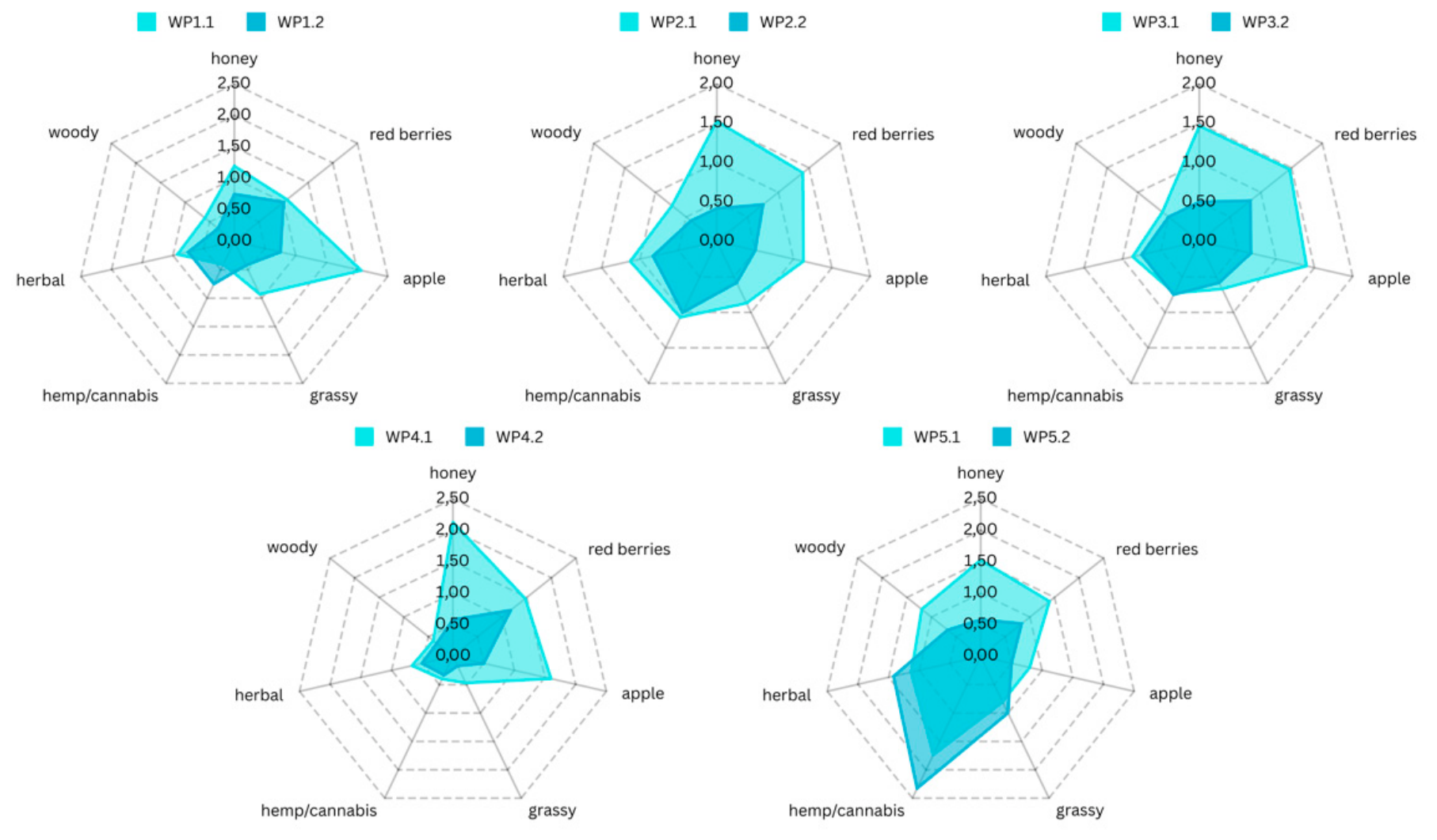
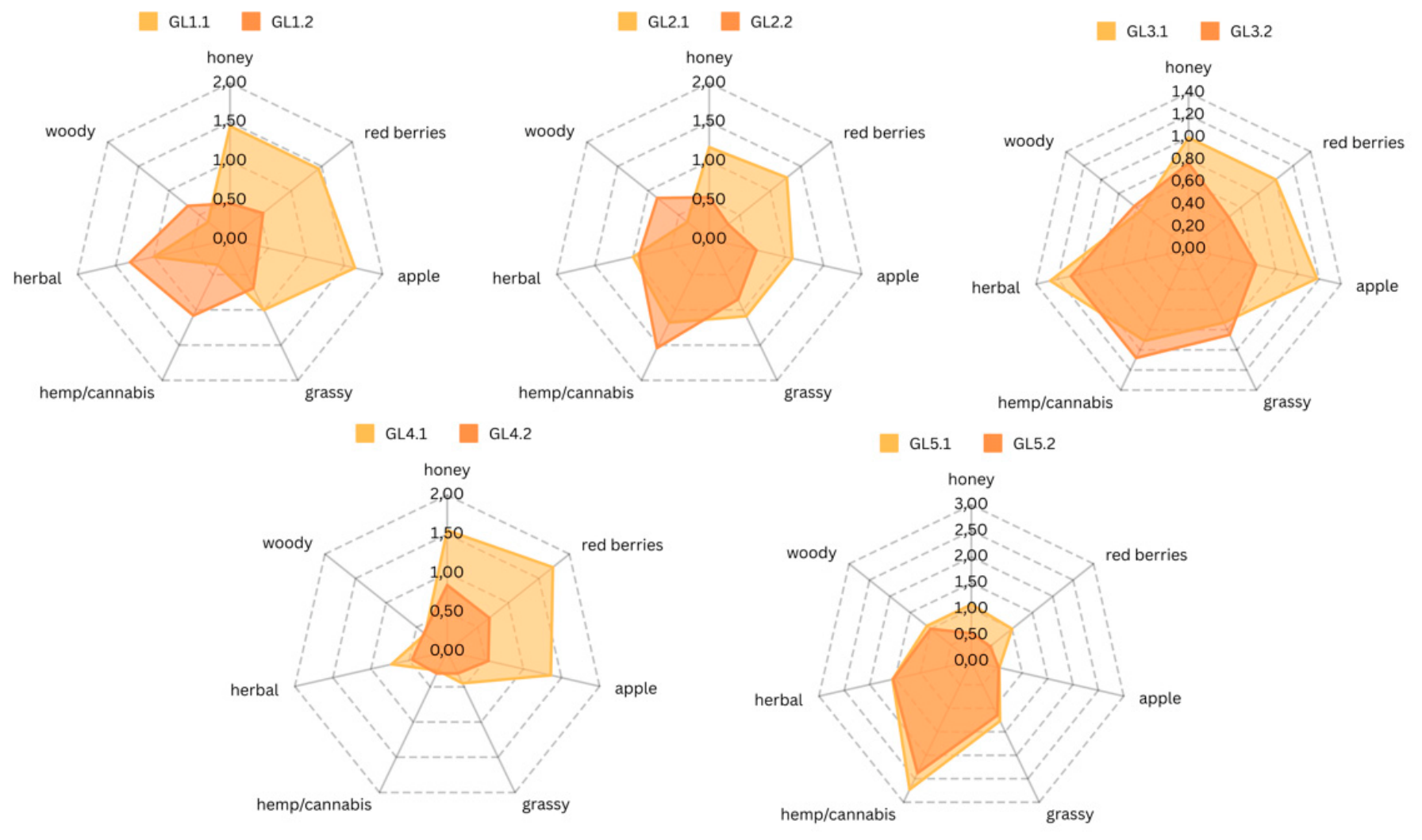
RATA was performed to evaluate the aroma intensity of the beer samples. The attributes woody, honey, red berries, apple, grassy, hemp/cannabis and herbal were derived from the preceding UFP test on the basis of their number of mentions and category affiliation. Aroma intensity was rated on a four-point scale from 0 (not perceived) to 3 (strong). The test was carried out twice: in the first evaluation (x.1), the control beer was part of the sample set, whereas in the second evaluation (x.2), the control beer was served separately and was not part of the sample set. This was done to investigate the influence of beer aromas not induced by hemp.

2.2.3. Bitterness Evaluation

The perceived bitterness of the hemp beers was evaluated in a separate series of tasting sessions [17]. Semi-trained panelists were first familiarised with bitter taste by triangle tests [18] and ranking tests [19] using caffeine (0.05–0.35 g L−1; Merck, Darmstadt, Germany) and iso-α-acids (1.5–15 mg L−1), initially in demineralised water and subsequently in fermented unhopped wort. Both trained and untrained panellists took part in the subsequent evaluation sessions.
In each session, five hemp beers were presented in randomised order together with two references: a zero reference (fermented unhopped wort without hemp or bitter additions) and a bitter reference containing 42 µL L−1 of an iso-α-acid preparation (30% iso-α-acids; Hopsteiner, Mainburg, Germany), corresponding to approximately 11 mg L−1 iso-α-acids at the stated yield of 85–90%. Bitterness intensity was rated on an unstructured 10 cm line scale anchored by the zero reference (0) and the bitter reference (10). All samples were coded with random three-digit numbers and tasted with nose clips to minimise the contribution of retronasal aroma. In contrast to the aroma study, the two replicate brews of each treatment were not blended but evaluated individually, and each brew was assessed twice. The 30 brews thus yielded 60 sensory samples and a total of 654 individual ratings (38–53 per variety × timing combination).

2.3. Statistical Analysis

For the aroma data, normality was assessed using the Shapiro–Wilk test. As most data sets were not normally distributed, differences between samples were analysed using the Kruskal–Wallis test (p < 0.05), and significant results were further examined by pairwise post hoc comparisons with Holm correction. These analyses were performed in Python.
The bitterness ratings deviated from normality in most variety × timing groups (Shapiro–Wilk and Anderson–Darling tests). They were therefore analysed with the aligned rank transform (ART) for nonparametric factorial designs [20] using the ARTool package (version 0.11.2) in R (version 4.5.0; R Foundation for Statistical Computing, Vienna, Austria). A two-factor ART ANOVA with hemp variety, addition timing and their interaction was computed. Partial eta-squared (ηp2), calculated with the effectsize package (version 1.0.1), was used as effect size and interpreted according to Cohen’s benchmarks of 0.01 (small), 0.06 (medium) and 0.14 (large) [21]. Pairwise contrasts on the aligned ranks (art.con) were adjusted with the Holm procedure. Because the interaction was significant, simple effects (variety within each addition timing and addition timing within each variety) were analysed in the same way. The significance level was set at α = 0.05 for all tests.

3. Results

3.1. Beer Analysis

All beers were analysed for alcohol content, extract, original gravity, attenuation and pH to ensure a comparable beer matrix (Table 2). Original gravity was consistent across samples at approximately 12% (w/w) ± 0.5%. The apparent degree of fermentation ranged from 71.29% to 77.58%, resulting in alcohol contents between 4.48% and 5.12% (v/v). Overall, only minor differences between the beers were observed.

3.2. Ultra-Fast Profiling

In UFP, the 11 beer samples (WP1–5, GL1–5 and the control beer) were described by the panellists with a total of 487 terms. The panellists provided the attributes in German or English; where necessary, these were translated into English. The 487 attributes were analysed according to their number of mentions, and on this basis, 48 descriptors grouped into five categories were selected. Many of the attributes not selected were mentioned only once or could be assigned to other attributes. The results are presented as an aroma wheel (Figure 1).

3.3. Projective Mapping

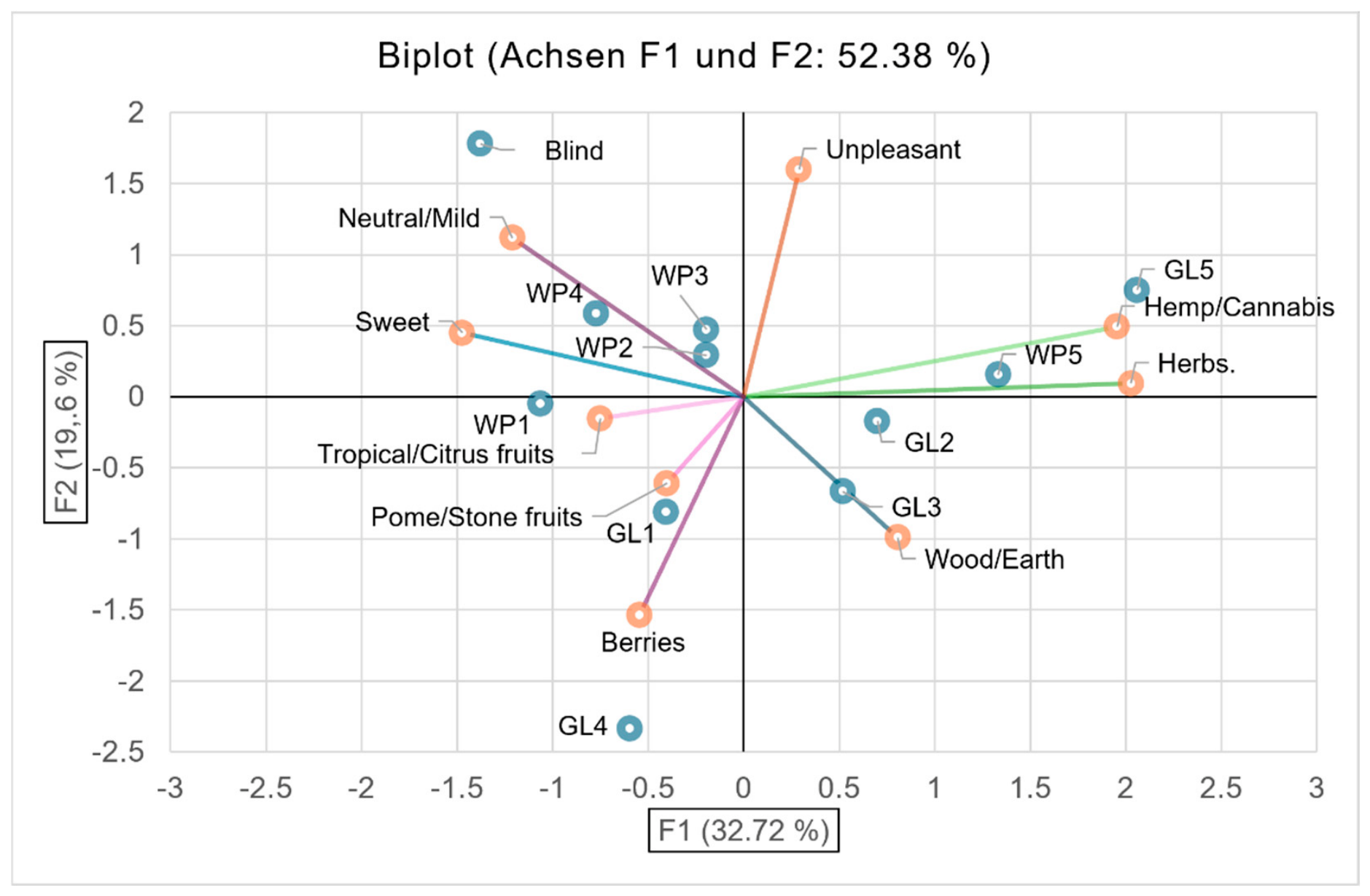
The Projective Mapping data, i.e., the positions of the cups on the unlabelled A2 sheets, were evaluated by MFA (Figure 2). The first two dimensions explained 32.72% (F1) and 19.66% (F2) of the variance, together 52.38%, which is roughly half of the sensory differences between the samples. The attributes mentioned during the mapping were assigned to the aroma categories of the aroma wheel (Figure 1); two additional categories, hemp/cannabis and neutral/mild, were added because of their frequent mention. In the biplot, the arrows represent the aroma categories: the length of an arrow indicates how strongly a category contributes to the differentiation of the samples, and its direction indicates along which dimension the category is most strongly expressed. WP5 and GL5 were located strongly in the direction of hemp/cannabis and herbs. WP1 and GL1 lay close to each other in the direction of the categories tropical/citrus fruits and pome/stone fruits. WP2, WP3 and WP4 were located near neutral/mild and sweet. GL2 and GL3 lay in the direction of wood/earth and herbs, and GL4 was located far out in the direction of berries. The control beer was also located far out, between sweet, neutral/mild and unpleasant.

3.4. RATA Analysis

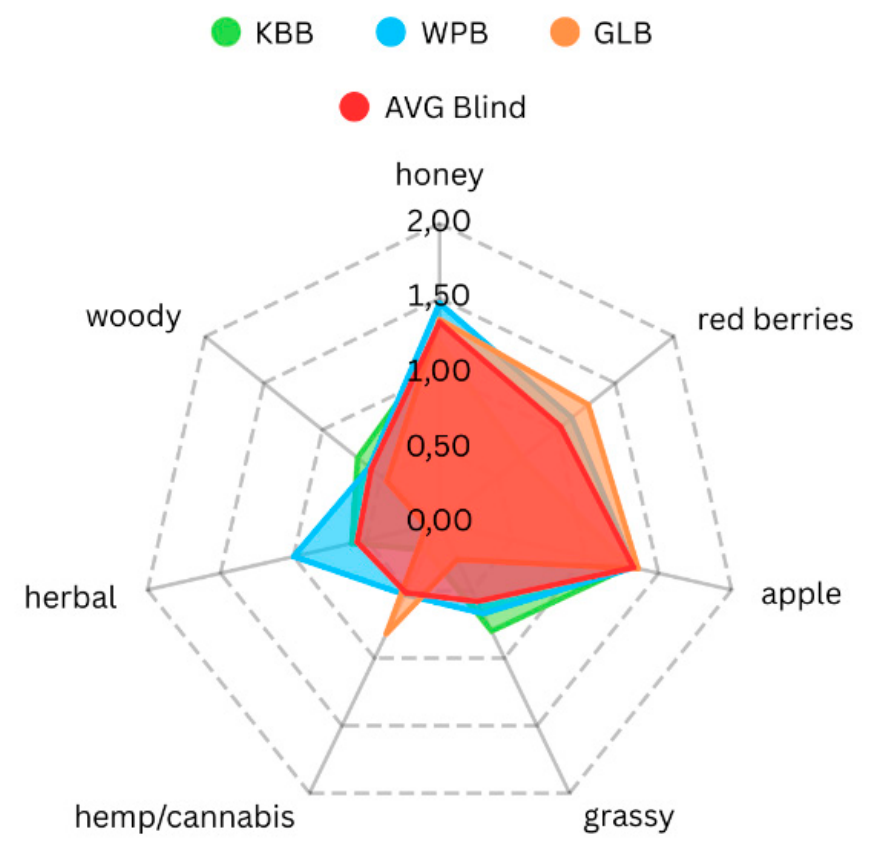
RATA analysis was conducted using the attributes woody, honey, red berries, apple, grassy, hemp/cannabis and herbal, rated on a four-point intensity scale from 0 (not perceived) to 3 (strong). The control beer, included in the first tasting series (x.1), was mainly associated with fruity and sweet attributes, particularly apple and honey aromas, while cannabis-related descriptors showed only low intensity (Figure 3).
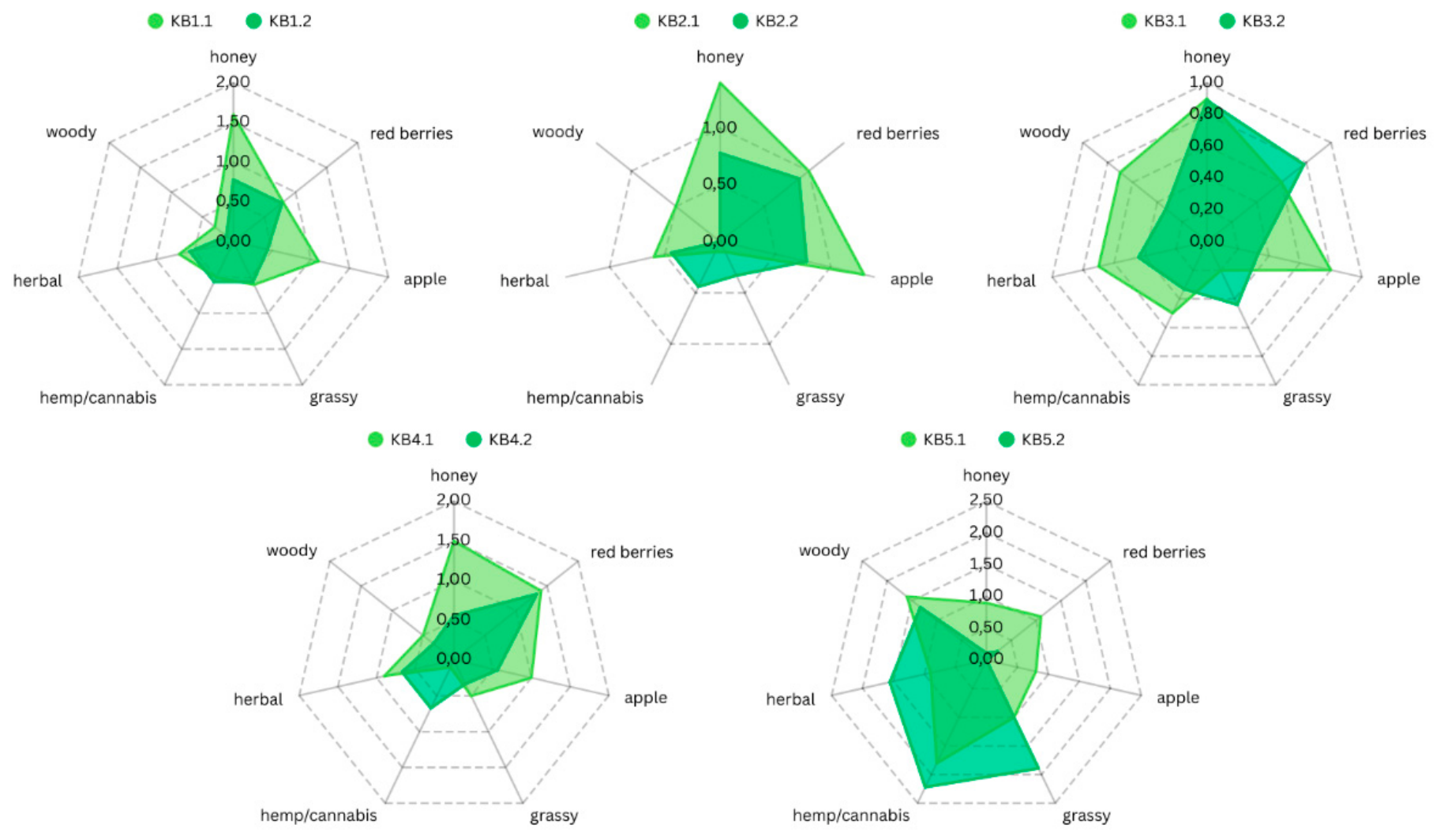
Boil-stage samples (KB1–4) displayed generally mild, fruity and sweet aroma profiles characterised by apple, honey and red berry attributes. In contrast, the CBD-rich sample KB5 exhibited a more pronounced herbal and hemp/cannabis aroma profile with lower intensities of fruity descriptors (Figure 4).
Similar trends were observed for the whirlpool samples. WP1–4 showed relatively homogeneous aroma profiles with fruity and mild characteristics, whereas WP5 exhibited distinctly stronger herbal and hemp/cannabis attributes than the other varieties (Figure 5).
Cold-storage samples (GL) showed the greatest sensory variation within a sample group. GL2 and GL5 were strongly associated with herbal and hemp/cannabis aromas, with GL5 showing the highest overall intensity of these attributes. In contrast, GL3 and GL4 displayed stronger fruity characteristics, particularly apple and red berry aromas, while GL1 showed an intermediate profile with slight herbal and woody notes (Figure 6).

3.5. Statistical Evaluation of the RATA Data

Statistical analysis of the RATA data using the Kruskal–Wallis test revealed significant differences mainly in cannabis-related aroma attributes. For the boil-stage samples (KB), significant differences were observed for the attributes grassy and hemp/cannabis. In the whirlpool samples (WP), significant differences occurred only in the hemp/cannabis category. Cold-storage samples (GL) showed significant differences in the grassy, hemp/cannabis and herbal attributes.
Post hoc comparisons with Holm correction indicated that these differences were primarily associated with the CBD-rich variety Futura 75. In both KB and WP samples, the CBD-rich beers differed significantly from the other varieties in the hemp/cannabis attribute. Similar effects were observed for the cold-storage samples, where GL5 showed the strongest differentiation in herbal and hemp/cannabis aroma characteristics.

3.6. Perceived Bitterness

3.6.1. Bitterness Intensity

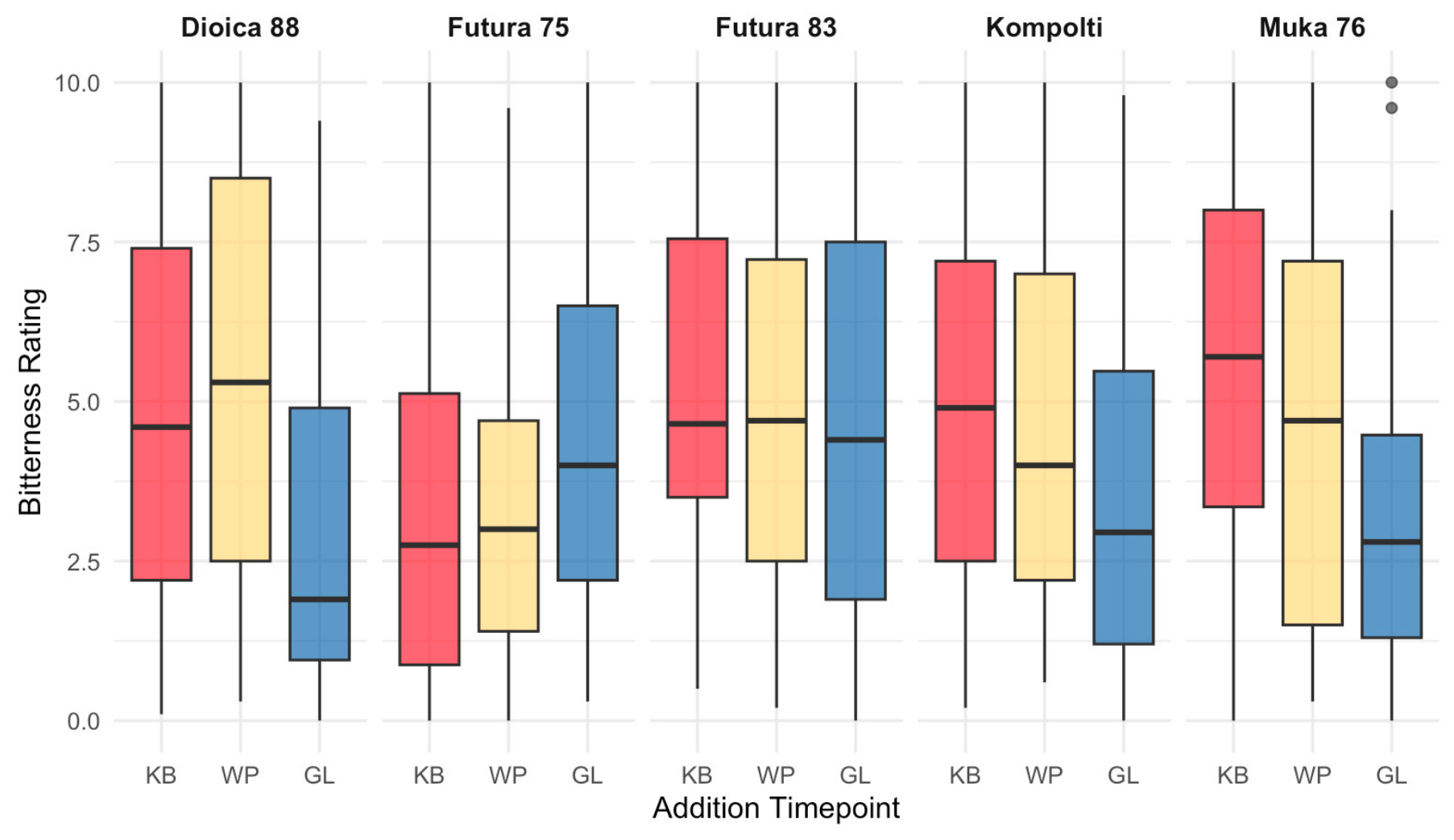
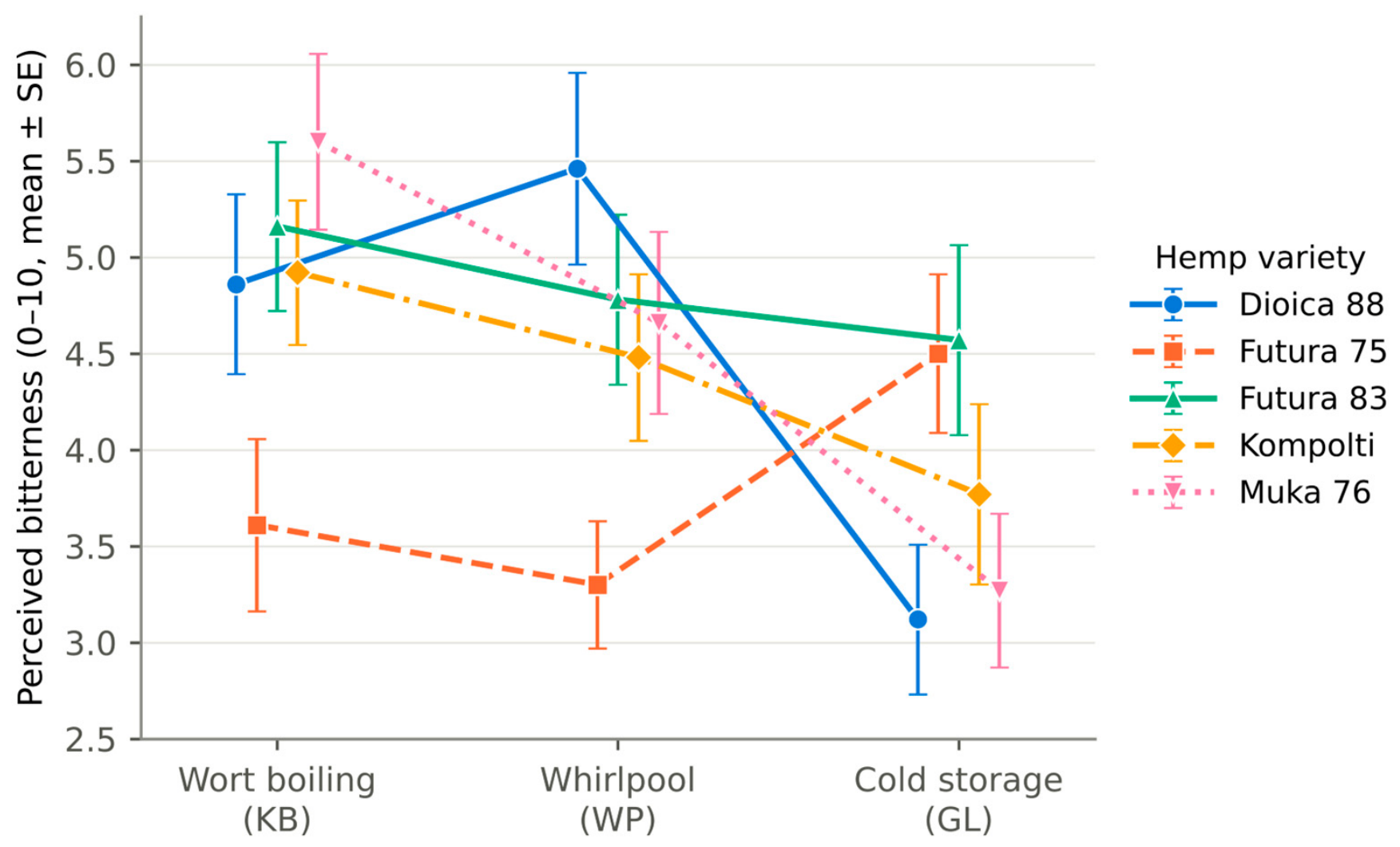
All hemp beers were perceived as bitter relative to the zero reference. The mean ratings of the 15 variety × timing combinations ranged from 3.12 to 5.60 on the 0–10 scale (Table 3). The highest means were observed for Muka 76 added during wort boiling (5.60 ± 2.96) and Dioica 88 added in the whirlpool (5.46 ± 3.19), and the lowest for Dioica 88 (3.12 ± 2.66) and Muka 76 (3.27 ± 2.59) added during cold storage. No group mean approached the bitter reference. Standard deviations between 2.38 and 3.20 indicate considerable inter-individual variation in the perception of hemp-derived bitterness; the distributions of the ratings are shown in Figure A1 (Appendix A).

3.6.2. Effects of Addition Timing and Variety

The ART ANOVA revealed significant main effects of addition timing (F(2, 639) = 6.79, p = 0.001) and hemp variety (F(4, 639) = 2.52, p = 0.040) as well as a significant variety × timing interaction (F(8, 639) = 3.05, p = 0.002) (Table 4). All effect sizes were small (ηp2 = 0.016–0.037), with the interaction showing the largest effect.
Averaged over all varieties, hemp added during cold storage resulted in significantly lower bitterness (3.85 ± 2.80) than hemp added during wort boiling (4.83 ± 2.91, p < 0.001) or in the whirlpool (4.53 ± 2.87, p = 0.037), whereas boiling and whirlpool additions did not differ (p = 0.198). Among the varieties, Futura 83 produced the highest (4.84 ± 2.92) and Futura 75 the lowest (3.80 ± 2.66) mean bitterness; after Holm correction, this was the only significant pairwise difference between varieties (p = 0.025).

3.6.3. Simple Effects

The interaction is illustrated in Figure 7, and the simple effects are summarised in Table 5. The variety effect was significant at each addition timing. During wort boiling, Futura 75 was rated significantly less bitter than Muka 76 (3.61 ± 2.97 vs. 5.60 ± 2.96; p = 0.012), and in the whirlpool, significantly less bitter than Dioica 88 (3.30 ± 2.38 vs. 5.46 ± 3.19; p = 0.008). After cold-storage addition, none of the pairwise comparisons remained significant after Holm correction.
The effect of addition timing was variety-specific. Dioica 88 (p < 0.001) and Muka 76 (p = 0.001) showed significant timing effects, with markedly lower bitterness after cold-storage addition than after addition during wort boiling (both p ≤ 0.007) and, for Dioica 88, also than after whirlpool addition (p < 0.001). Futura 83 was rated almost equally bitter at all three addition stages (4.57–5.16; p = 0.619), and Kompolti showed no significant timing effect (p = 0.117). Futura 75 was the only variety whose bitterness was highest after cold-storage addition (4.50 ± 2.64) and lowest after whirlpool addition (3.30 ± 2.38), i.e., the reverse of the pattern of the other varieties, although its timing effect did not reach significance (p = 0.064).

4. Discussion

4.1. Aroma Profile of Hemp-Infused Beers

The sensory analyses showed that hemp addition influenced the aroma profile of the beers. The control beer was consistently separated from the hemp-treated beers and was mainly associated with sweet and fruity attributes, while the hemp-treated samples were more frequently associated with herbal and hemp/cannabis descriptors.
Ultra-Fast Profiling identified 48 aroma descriptors grouped into five aroma categories: fruits, herbs, potent, wood/earth and sweet. The identified aroma categories correspond with aroma compounds previously described in the literature [22,23,24]. In addition to typical beer-related aromas, descriptors such as hemp/cannabis, herbal, grassy and skunky were mentioned frequently during the sensory evaluation.
The Projective Mapping analysis showed sensory differences between both hemp varieties and addition timings. Whirlpool samples were generally associated with mild and sweet attributes, while cold-storage samples showed stronger associations with herbal, grassy and hemp/cannabis descriptors. The CBD-rich variety Futura 75 formed a separate sensory group characterised by pronounced herbal and hemp/cannabis aromas.
The RATA analysis confirmed these observations. Boil-stage samples generally showed lower cannabis-related aroma intensities, whereas cold-storage samples displayed stronger herbal and hemp/cannabis attributes. Significant differences were mainly observed for the attributes grassy, herbal and hemp/cannabis, while fruity and sweet descriptors showed fewer differences between samples. Most significant differences occurred between the CBD-rich variety Futura 75 and the other varieties.

4.2. Bitterness Contribution of Hemp

The bitterness evaluation showed that all hemp additions contributed perceptible bitterness to the unhopped base beer, but at a low level. Assuming a linear relationship between scale position and iso-α-acid concentration, which is a simplification for bitter perception, group means of 3.12–5.60 correspond to roughly 3.4–6.2 mg L−1 iso-α-acid equivalents. This is in the range of the detection threshold of iso-α-acids in beer of approximately 5–7 mg L−1 [25,26] and well below the bitterness of typical hopped beers. At a dosage of 1.8 g L−1, hemp inflorescences therefore provide a measurable but low basic bitterness rather than a bitterness comparable to that of hops.
Addition timing had the strongest main effect. Despite a contact time of several days, cold-storage additions yielded lower bitterness than the short hot-side additions, indicating that temperature rather than contact time governs the transfer of bitter-active hemp constituents into beer. Several mechanisms may contribute. Higher temperatures enhance the extraction of non-volatile phenolic compounds [27], and Habschied et al. found a higher total polyphenol content after hemp addition during boiling (339 mg L−1) than after dry hemping (272 mg L−1) or in the control beer (180 mg L−1) [10]. Heat also promotes the decarboxylation and degradation of cannabinoid acids, which could yield compounds with different taste properties; however, decarboxylation proceeds rapidly only above approximately 105 °C [28], and a direct contribution of cannabinoids to beer bitterness has not been demonstrated. Unlike hops, for which the thermal isomerisation of α-acids provides a well-defined mechanism [13,14], the bitter-active compounds of hemp and their transformation during brewing remain to be identified.
The variety effect was weaker than the timing effect: overall, only Futura 83 and Futura 75 differed significantly, and the simple effects revealed few significant pairwise differences, indicating a considerable overlap in the bittering potential of the varieties. Futura 83 was remarkably stable across addition timings, which would make its contribution more predictable in practice, whereas Dioica 88 and Muka 76 responded strongly to the addition temperature. Such differences are plausibly related to variety-specific contents of flavonoids and terpenoids [15], which depend on genotype, environment and cultivation and have not been a breeding target in industrial hemp. Notably, the CBD-rich variety Futura 75 had the lowest overall bitterness, although CBD-enriched cannabis extracts have been described as distinctly bitter [29]; under the conditions applied here, cannabinoids therefore do not appear to be the main driver of hemp-derived bitterness. The low overall intensity may also reflect mutual suppression of several weak bitter compounds, as bitter–bitter mixtures are often perceived as less intense than the sum of their components [30].
Although statistically significant, all effects were small (ηp2 ≤ 0.037), and the large number of ratings (n = 654) contributed to their significance; the practical relevance of individual differences between varieties should therefore not be overestimated. The comparison with Habschied et al. [10], who found no change in analytical bitterness after hemp addition to beers containing 25 mg L−1 iso-α-acids, suggests that hemp-derived bitterness is either not captured by the bitterness unit method or masked in hopped beers. The present sensory approach in an unhopped base beer reveals the intrinsic, albeit low, bitterness contribution of hemp; whether it remains perceptible in hopped beers requires further investigation.

4.3. Interplay Between Aroma and Bitterness

Combining both sensory data sets reveals opposite effects of addition timing on aroma and bitterness (Table 6). Cold-storage additions produced the most pronounced herbal, grassy and hemp/cannabis aromas but the lowest bitterness, whereas additions during wort boiling and in the whirlpool led to milder, predominantly fruity and sweet aroma profiles but higher bitterness. This pattern resembles established hopping practice, in which early additions primarily provide bitterness and late or dry additions provide aroma, although the compounds involved in hemp are different. For brewers, addition timing is thus a lever to shift the contribution of hemp between aroma and bitterness rather than a parameter to be optimised in one direction.
The CBD-rich variety Futura 75 stood out in both data sets. It showed the most intense herbal and hemp/cannabis aroma at all addition stages and was the only variety whose bitterness was highest after cold-storage addition. As bitterness was rated with nose clips, a cross-modal enhancement of perceived bitterness by aroma, as described for hop aroma [31], was largely excluded. The parallel increase of aroma intensity and bitterness after cold addition therefore suggests that Futura 75 contains bitter-active constituents that are volatile or heat-labile and are lost during hot-side processing; terpenoids such as camphor and fenchone, which activate human bitter taste receptors [16], are possible candidates. Alternatively, the different origin and freshness of the Futura 75 material and its storage as whole inflorescences, which may have preserved volatile compounds better than the pre-ground material of the other varieties, may account for its distinct behaviour. Chemical analyses of volatile and non-volatile compounds are required to distinguish between these explanations.

5. Limitations

Several limitations should be considered when interpreting the results. First, the Futura 75 material differed from that of the other varieties in origin, freshness and processing (whole inflorescences versus pre-ground material), which may have influenced aroma and bitterness intensity independently of the variety. Second, the beers were brewed at 3 L scale from unhopped malt extract wort with a single hemp dosage (1.8 g L−1); the transferability of the results to hopped beers, other dosages and industrial scale remains to be shown. Third, the beers were frozen and thawed prior to the tastings and were not carbonated, which may have affected aroma perception. Fourth, no chemical analyses of volatile compounds, polyphenols, cannabinoids or analytical bitterness units were performed, so that the sensory differences cannot be attributed to specific compounds.
Further limitations concern the sensory designs. Aroma and bitterness were assessed by different panels, on blended versus individual brews and without versus with nose clips. These designs are complementary, as they separate aroma from taste, but they do not allow a direct sample-by-sample correlation of the two data sets. The bitterness panel comprised both trained and untrained assessors, group sizes were unbalanced (38–53 ratings), and repeated ratings by the same assessors were treated as independent observations; mixed models with the assessor as a random factor would be preferable in future work. The bitterness scale was anchored with iso-α-acid references, so panellists may have judged hemp bitterness within a hop-derived frame of reference, and the conversion into iso-α-acid equivalents assumes linearity and is therefore approximate. Only bitterness intensity was assessed, not qualitative attributes such as lingering, harshness or astringency, which may distinguish hemp-derived from hop-derived bitterness. Finally, all panellists were recruited from a university environment; their perception and acceptance of hemp-derived flavours may differ from those of consumers.

6. Conclusions

Both hemp variety and addition timing influenced the sensory properties of hemp-infused beer, but with opposite effects on aroma and bitterness. Cold-storage additions produced the most pronounced herbal and hemp/cannabis aromas and the lowest bitterness, whereas additions during wort boiling and in the whirlpool resulted in milder, fruity and sweet aroma profiles and higher, albeit still low, bitterness. Clear sensory differences were observed between the CBD-rich variety Futura 75 and the other varieties; Futura 75 showed the strongest herbal, grassy and hemp/cannabis aroma expression at all addition stages and, unlike the other varieties, its highest bitterness after cold addition.
Overall, Cannabis sativa inflorescences can contribute to both the aroma and the bitterness of beer, with addition timing determining which contribution prevails. At the dosage applied, the bitterness contribution was low and the effects were small, so hemp should be regarded as a flavour modulator that may complement rather than replace hops. Future studies should include chemical analyses of volatile compounds, polyphenols and cannabinoids, hemp-specific bitterness references and qualitative bitterness attributes, as well as investigations in hopped beers and on processing, dosage and consumer acceptance.

Author Contributions

Conceptualization, S.L. and P.W.; methodology, S.L. and P.W.; software, S.L.; validation, S.L., P.W. and M.R.; formal analysis, S.L. and M.R.; investigation, S.L. and M.R.; resources, P.W.; data curation, S.L.; writing—original draft preparation, S.L. and P.W.; writing—review and editing, S.L., P.W. and M.R.; visualization, S.L.; supervision, P.W.; project administration, P.W. All authors have read and agreed to the published version of the manuscript.

Funding

This research received no external funding.

Institutional Review Board Statement

Ethical review and approval were waived for this study because the sensory evaluation was non-invasive and posed no risk to the participants. All panelists were adult volunteers who participated after giving informed consent and could withdraw at any time. The beers were produced from food-grade raw materials in compliance with applicable food regulations; the industrial hemp used complied with the legal limits for THC content. No personal or health-related data were collected, and all data were recorded and analyzed anonymously. Under German law, such sensory studies with food products do not require approval by an ethics committee.

Data Availability Statement

The data presented in this study are available on request from the corresponding author.

Acknowledgments

The authors thank the University of Hohenheim for providing the hemp material of Muka 76, Futura 83, Kompolti and Dioica 88, Stefan Meyer for providing the Futura 75 samples, the late Jürgen Neumeyer for his initial support, and all panellists for their participation. During the preparation of this manuscript, the authors used Claude (Opus 5.5, Anthropic) for the purposes of language editing. The authors have reviewed and edited the output and take full responsibility for the content of this publication.

Conflicts of Interest

The authors declare no conflicts of interest.

Abbreviations

The following abbreviations are used in this manuscript:
ANOVA Analysis of variance
ART Aligned rank transform
CBD Cannabidiol
CI Confidence interval
GL Cold storage (hemp addition after fermentation)
KB Wort boiling (hemp addition at the start of boiling)
MFA Multiple Factor Analysis
RATA Rate-All-That-Apply
SD Standard deviation
SE Standard error
TAS2R Bitter taste receptor (taste receptor type 2)
UFP Ultra-Fast Profiling
WP Whirlpool

Appendix A

Figure A1. Distribution of the bitterness ratings (0–10 line scale) by hemp variety and addition timing (KB, wort boiling; WP, whirlpool; GL, cold storage). Boxes show the interquartile range and median; whiskers extend to 1.5 times the interquartile range; points are outliers. Reproduced from [17].
Preprints 241958 g0a1

References

  1. Schönberger, C.; Kostelecky, T. 125th Anniversary Review: The Role of Hops in Brewing. J. Inst. Brew. 2011, 117, 259–267. [Google Scholar] [CrossRef]
  2. Almaguer, C.; Schönberger, C.; Gastl, M.; Arendt, E.K.; Becker, T. Humulus lupulus—A Story That Begs to Be Told. A Review. J. Inst. Brew. 2014, 120, 289–314. [Google Scholar] [CrossRef]
  3. Sidler, C. Kommt bald das Hanfbier? 2024. Available online: www.vogel.de.
  4. Ramírez, A.; Viveros, J.M. Brewing with Cannabis sativa vs. Humulus lupulus: A Review. J. Inst. Brew. 2021, 127, 201–209. [Google Scholar] [CrossRef]
  5. Roell, M.-S. Terpenes in Cannabis: Solving the Puzzle of How to Predict Taste and Smell. Plant Physiol. 2020, 184. [Google Scholar] [CrossRef] [PubMed]
  6. Sommano, S.R.; Chittasupho, C.; Ruksiriwanich, W.; Jantrawut, P. The Cannabis Terpenes. Molecules 2020, 25, 5792. [Google Scholar] [CrossRef] [PubMed]
  7. Mediavilla, V.; Steinemann, S. Essential Oil of Cannabis sativa L. Strains. J. Int. Hemp Assoc. 1997, 4, 80–82. [Google Scholar]
  8. Abrams, J.S.; Ellyson, W.J.T.; Gomez, V.J.; Talleyrand, J.L. Aroma in Cannabis: A Foundation for Chemotype Classification. In Recent Advances in the Science of Cannabis; Strongin, R.M., Meehan-Atrash, J., Vialpando, M., Eds.; CRC Press: Boca Raton, FL, USA, 2021; pp. 31–48. [Google Scholar] [CrossRef]
  9. Cárdenas-Pinto, S.; Gazaleh, J.E.; Budner, D.; Keene, S.; Dhoble, L.R.; Sharma, A.; Pearson, B.; Jia, Z.; Zhang, B.; Thompson-Witrick, K.A. Influence of Ethanol Concentration on the Extraction of Cannabinoid and Volatile Compounds for Dry-Hemped Beer. Beverages 2024, 10, 65. [Google Scholar] [CrossRef]
  10. Habschied, K.; Jokić, S.; Aladić, K.; Šplajt, I.; Krstanović, V.; Mastanjević, K. Addition of Industrial Hemp (Cannabis sativa L.) Dry Inflorescence in Beer Production. Appl. Sci. 2025, 15, 624. [Google Scholar] [CrossRef]
  11. Al Ubeed, H.M.S.; Brennan, C.S.; Schanknecht, E.; Alsherbiny, M.A.; Saifullah, M.; Nguyen, K.; Vuong, Q.V. Potential Applications of Hemp (Cannabis sativa L.) Extracts and Their Phytochemicals as Functional Ingredients in Food and Medicinal Supplements: A Narrative Review. Int. J. Food Sci. Technol. 2022, 57, 7542–7555. [Google Scholar] [CrossRef]
  12. Ascrizzi, R.; Flamini, G.; Rossi, A.; Santini, A.; Angelini, L.G.; Tavarini, S. Inflorescence Yield, Essential Oil Composition and Antioxidant Activity of Cannabis sativa L. cv ‘Futura 75’ in a Multilocation and On-Farm Study. Agriculture 2024, 14, 225. [Google Scholar] [CrossRef]
  13. Klimczak, K.; Cioch-Skoneczny, M. Changes in Beer Bitterness Level during the Beer Production Process. Eur. Food Res. Technol. 2023, 249, 13–22. [Google Scholar] [CrossRef]
  14. Dresel, M.; Dunkel, A.; Hofmann, T. Sensomics Analysis of Key Bitter Compounds in the Hard Resin of Hops (Humulus lupulus L.) and Their Contribution to the Bitter Profile of Pilsner-Type Beer. J. Agric. Food Chem. 2015, 63, 3402–3418. [Google Scholar] [CrossRef] [PubMed]
  15. Radwan, M.M.; Chandra, S.; Gul, S.; ElSohly, M.A. Cannabinoids, Phenolics, Terpenes and Alkaloids of Cannabis. Molecules 2021, 26, 2774. [Google Scholar] [CrossRef] [PubMed]
  16. Ziaikin, E.; David, M.; Uspenskaya, S.; Niv, M.Y. BitterDB: 2024 Update on Bitter Ligands and Taste Receptors. Nucleic Acids Res. 2025, 53, D1645–D1650. [Google Scholar] [CrossRef] [PubMed]
  17. Rudolph, M. Potential of Hemp (Cannabis sativa L.) as an Additive in Beer Production for Enhancement of Bitterness. Bachelor’s Thesis, Technische Universität Berlin, Berlin, Germany, 15 August 2025. [Google Scholar]
  18. DIN EN ISO 4120:2007-10; Sensory Analysis—Methodology—Triangle Test. Beuth: Berlin, Germany, 2007.
  19. DIN ISO 8587:2010-08; Sensory Analysis—Methodology—Ranking. Beuth: Berlin, Germany, 2010.
  20. Wobbrock, J.O.; Findlater, L.; Gergle, D.; Higgins, J.J. The Aligned Rank Transform for Nonparametric Factorial Analyses Using Only ANOVA Procedures. In Proceedings of the SIGCHI Conference on Human Factors in Computing Systems (CHI ’11), Vancouver, BC, Canada, 7–12 May 2011; pp. 143–146. [Google Scholar]
  21. Richardson, J.T.E. Eta Squared and Partial Eta Squared as Measures of Effect Size in Educational Research. Educ. Res. Rev. 2011, 6, 135–147. [Google Scholar] [CrossRef]
  22. Kneubühl, M.; André, A.; Chetschik, I. Characterisation of the Key-Aroma Compounds among the Volatile Constituents in Different Hemp Strains (Cannabis sativa L.). In Proceedings of the 16th Weurman Flavour Research Symposium, Online, 4–6 May 2021. [Google Scholar] [CrossRef]
  23. Gonzalez Viejo, C.; Fuentes, S.; Torrico, D.D.; Godbole, A.; Dunshea, F.R. Chemical Characterization of Aromas in Beer and Their Effect on Consumers Liking. Food Chem. 2019, 293, 479–485. [Google Scholar] [CrossRef] [PubMed]
  24. Ovidi, E.; Laghezza Masci, V.; Taddei, A.R.; Torresi, J.; Tomassi, W.; Iannone, M.; Tiezzi, A.; Maggi, F.; Garzoli, S. Hemp (Cannabis sativa L., Kompolti cv.) and Hop (Humulus lupulus L., Chinook cv.) Essential Oil and Hydrolate: HS-GC-MS Chemical Investigation and Apoptotic Activity Evaluation. Pharmaceuticals 2022, 15, 976. [Google Scholar] [CrossRef] [PubMed]
  25. Kolpin, K.M.; Shellhammer, T.H. The Human Bitterness Detection Threshold of Iso-α-Acids and Tetrahydro-Iso-α-Acids in Lager Beer. J. Am. Soc. Brew. Chem. 2009, 67, 200–205. [Google Scholar] [CrossRef]
  26. Caballero, I.; Blanco, C.A.; Porras, M. Iso-α-Acids, Bitterness and Loss of Beer Quality during Storage. Trends Food Sci. Technol. 2012, 26, 21–30. [Google Scholar] [CrossRef]
  27. Antony, A.; Farid, M. Effect of Temperatures on Polyphenols during Extraction. Appl. Sci. 2022, 12, 2107. [Google Scholar] [CrossRef]
  28. Hartsel, J.A.; Eades, J.; Hickory, B.; Makriyannis, A. Cannabis sativa and Hemp. In Nutraceuticals: Efficacy, Safety and Toxicity; Gupta, R.C., Ed.; Academic Press: Boston, MA, USA, 2016; pp. 735–754. [Google Scholar]
  29. Bilge, S.; Ekici, B. CBD-Enriched Cannabis for Autism Spectrum Disorder: An Experience of a Single Center in Turkey and Reviews of the Literature. J. Cannabis Res. 2021, 3, 53. [Google Scholar] [CrossRef] [PubMed]
  30. Keast, R.S.J.; Breslin, P.A.S. An Overview of Binary Taste–Taste Interactions. Food Qual. Prefer. 2003, 14, 111–124. [Google Scholar] [CrossRef]
  31. Oladokun, O.; James, S.; Cowley, T.; Dehrmann, F.; Smart, K.; Hort, J.; Cook, D. Perceived Bitterness Character of Beer in Relation to Hop Variety and the Impact of Hop Aroma. Food Chem. 2017, 230, 215–224. [Google Scholar] [CrossRef] [PubMed]
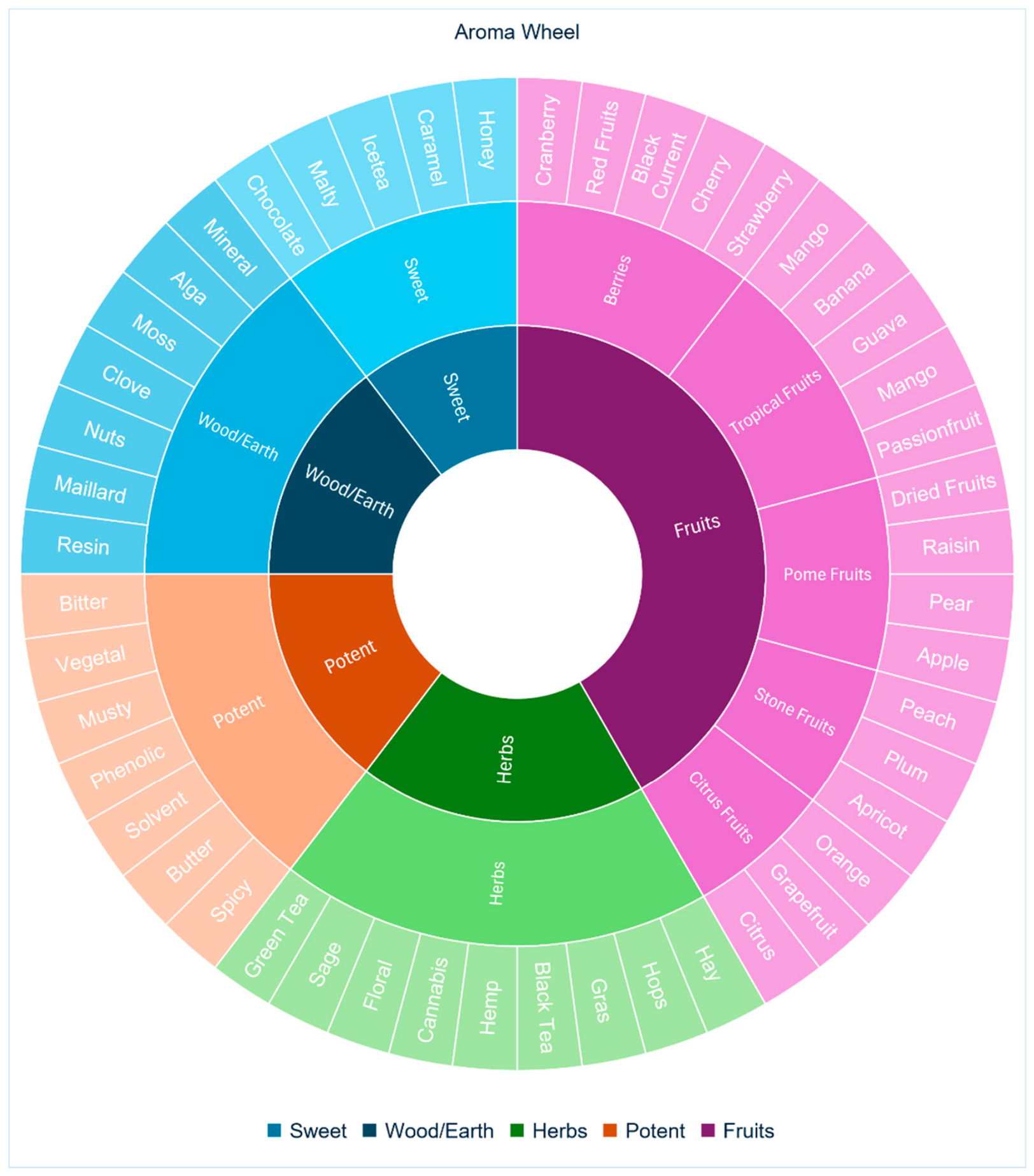
Figure 1. Aroma wheel of the sensory attributes generated by Ultra-Fast Profiling (UFP), grouped into aroma categories.
Preprints 241958 g001
Figure 2. Biplot of the Multiple Factor Analysis (MFA) of the Projective Mapping data (F1: 32.72%; F2: 19.66%), showing the whirlpool (WP1–5) and cold-storage (GL1–5) beers, the control beer and the aroma categories.
Preprints 241958 g002
Figure 3. Radar chart of the mean RATA intensities of the control beer (no hemp addition).
Preprints 241958 g003
Figure 4. Radar charts of the mean RATA intensities for hemp addition during wort boiling (KB) in tasting 1 (x.1, control beer included in the sample set) and tasting 2 (x.2, control beer served separately).
Preprints 241958 g004
Figure 5. Radar charts of the mean RATA intensities for hemp addition in the whirlpool (WP) in tasting 1 (x.1, control beer included in the sample set) and tasting 2 (x.2, control beer served separately).
Preprints 241958 g005
Figure 6. Radar charts of the mean RATA intensities for hemp addition during cold storage (GL) in tasting 1 (x.1, control beer included in the sample set) and tasting 2 (x.2, control beer served separately).
Preprints 241958 g006
Figure 7. Interaction of hemp variety and addition timing on perceived bitterness (0–10 line scale; mean ± standard error; 38–53 ratings per combination). KB, wort boiling; WP, whirlpool; GL, cold storage.
Preprints 241958 g007
Table 1. Experimental design: assignment of the trial codes to hemp variety and addition timing.
Trial Code Hemp Variety Addition Timing
KB1 Muka 76 Wort boiling
KB2 Futura 83 Wort boiling
KB3 Kompolti Wort boiling
KB4 Dioica 88 Wort boiling
KB5 Futura 75 Wort boiling
WP1 Muka 76 Whirlpool
WP2 Futura 83 Whirlpool
WP3 Kompolti Whirlpool
WP4 Dioica 88 Whirlpool
WP5 Futura 75 Whirlpool
GL1 Muka 76 Cold storage
GL2 Futura 83 Cold storage
GL3 Kompolti Cold storage
GL4 Dioica 88 Cold storage
GL5 Futura 75 Cold storage
Control – No hemp addition
KB, wort boiling; WP, whirlpool; GL, cold storage after fermentation. All varieties are industrial hemp varieties; Futura 75 is the CBD-rich variety.
Table 2. Analytical parameters of the hemp beers.
Beer Alcohol (% v/v) Real Extract (% w/w) Apparent Extract (% w/w) Original Gravity (% w/w) Apparent Degree of Fermentation (%) pH
KB1 4.91 4.60 2.82 12.03 76.60 4.09
KB2 4.89 4.63 2.86 12.03 76.25 3.98
KB3 5.04 4.68 2.86 12.30 76.78 4.07
KB4 5.12 4.62 2.77 12.37 77.58 4.10
KB5 4.68 4.63 2.93 11.74 75.02 3.97
WP1 4.94 4.65 2.86 12.13 76.44 4.05
WP2 4.78 4.42 2.68 11.67 77.01 4.11
WP3 4.92 4.60 2.82 12.06 76.59 4.08
WP4 4.66 4.50 2.81 11.58 75.75 4.06
WP5 4.67 5.05 3.36 12.11 72.24 4.06
GL1 4.79 4.52 2.78 11.79 76.42 4.05
GL2 4.99 4.85 3.05 12.37 75.31 4.02
GL3 4.88 4.89 3.13 12.27 74.53 4.03
GL4 4.48 5.01 3.39 11.79 71.29 4.29
GL5 4.48 4.95 3.32 11.73 71.73 4.11
Trial codes as in Table 1.
Table 3. Perceived bitterness of the hemp beers by variety and addition timing (0–10 line scale; mean ± SD, number of ratings in parentheses).
Variety Wort Boiling (KB) Whirlpool (WP) Cold Storage (GL) All Timings
Dioica 88 4.86 ± 3.13
(45)
5.46 ± 3.19
(41)
3.12 ± 2.66
(47)
4.48 ± 2.99ab
(133)
Futura 75 3.61 ± 2.97
(44)
3.30 ± 2.38
(52)
4.50 ± 2.64
(41)
3.80 ± 2.66b
(137)
Futura 83 5.16 ± 2.77
(40)
4.78 ± 2.79
(40)
4.57 ± 3.20
(42)
4.84 ± 2.92a
(122)
Kompolti 4.92 ± 2.73
(53)
4.48 ± 2.83
(43)
3.77 ± 2.89
(38)
4.39 ± 2.81ab
(134)
Muka 76 5.60 ± 2.96
(42)
4.66 ± 3.13
(44)
3.27 ± 2.59
(42)
4.51 ± 2.89ab
(128)
All varieties 4.83 ± 2.91A
(224)
4.53 ± 2.87A
(220)
3.85 ± 2.80B
(210)
n = 654
0 = zero reference (fermented unhopped wort); 10 = bitter reference (≈11 mg L−1 iso-α-acids). Marginal means with different lowercase (varieties) or uppercase (addition timings) letters differ significantly (ART contrasts, Holm correction, p < 0.05).
Table 4. Aligned rank transform (ART) ANOVA of the bitterness ratings.
Effect df dfres F p ηp2 (95% CI)
Hemp variety 4 639 2.52 0.040 0.016 (0.000–1.000)
Addition timing 2 639 6.79 0.001 0.021 (0.005–1.000)
Variety × timing 8 639 3.05 0.002 0.037 (0.008–1.000)
ηp2, partial eta-squared; one-sided 95% confidence intervals (upper limit fixed at 1).
Table 5. Simple effects of hemp variety and addition timing on perceived bitterness (ART ANOVA with Holm-adjusted contrasts).
Factor Tested Within F (df) p Significant Pairwise Contrasts
Variety KB 3.01 (4, 219) 0.019 Futura 75 < Muka 76 (p = 0.012)
Variety WP 3.25 (4, 215) 0.013 Futura 75 < Dioica 88 (p = 0.008)
Variety GL 2.60 (4, 205) 0.038 None
Timing Dioica 88 7.88 (2, 130) <0.001 GL < KB (p = 0.007); GL < WP (p < 0.001)
Timing Futura 75 2.80 (2, 134) 0.064 None
Timing Futura 83 0.48 (2, 119) 0.619 None
Timing Kompolti 2.18 (2, 131) 0.117 None
Timing Muka 76 7.03 (2, 125) 0.001 GL < KB (p < 0.001); GL vs. WP: p = 0.052
KB, wort boiling; WP, whirlpool; GL, cold storage.
Table 6. Synopsis of aroma characteristics and perceived bitterness by addition timing.
Addition Timing Aroma Characteristics (RATA, Projective Mapping) Bitterness, All Varieties Bitterness, Futura 75
Wort boiling (KB) Mild, fruity and sweet (apple, honey, red berries); KB5 more herbal and hemp/cannabis 4.83 ± 2.91 A 3.61 ± 2.97
Whirlpool (WP) Homogeneous, fruity and mild; WP2–4 near neutral/mild and sweet; WP5 distinctly herbal and hemp/cannabis 4.53 ± 2.87 A 3.30 ± 2.38
Cold storage (GL) Largest variation; GL2 and GL5 strongly herbal and hemp/cannabis (GL5 most intense); GL3 and GL4 fruity (apple, red berries) 3.85 ± 2.80 B 4.50 ± 2.64
Bitterness: mean ± SD on the 0–10 line scale; different uppercase letters indicate significant differences between addition timings (ART contrasts, Holm correction, p < 0.05). Projective Mapping covered WP and GL samples only.
Disclaimer/Publisher’s Note: The statements, opinions and data contained in all publications are solely those of the individual author(s) and contributor(s) and not of MDPI and/or the editor(s). MDPI and/or the editor(s) disclaim responsibility for any injury to people or property resulting from any ideas, methods, instructions or products referred to in the content.
Copyright: This open access article is published under a Creative Commons CC BY 4.0 license, which permit the free download, distribution, and reuse, provided that the author and preprint are cited in any reuse.