
Submitted:
29 October 2026
Posted:
30 October 2026
You are already at the latest version
Preprints on COVID-19 and SARS-CoV-2
Abstract
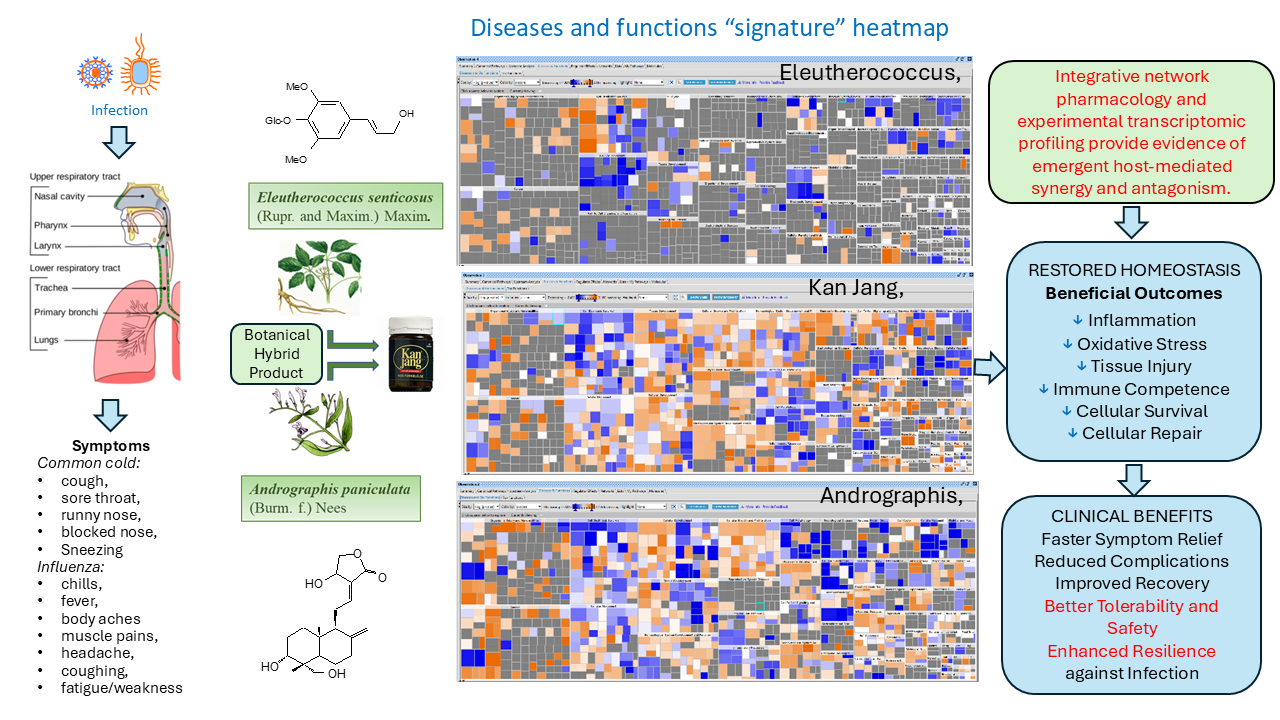
Background/Objectives: The same medicinal plant can interact differently with other plants in their combinations, with expectations of higher efficacy and improved safety. Kan Jang® is a fixed combination of standardized extracts of Herba Andrographidis and Radix Eleutherococci used to treat upper respiratory tract infections (URTIs), influenza, sinusitis, pharyngotonsillitis, and, more recently, mild COVID-19. However, recent pharmacovigilance signals indicate that Andrographis paniculata leaf extracts in combination with Radix Echinacea-containing preparations can unexpectedly cause serious allergic reactions, including anaphylaxis. The Australian Therapeutic Goods Administration (TGA) warning to exclude Andrographis from the list of low-risk products assumes its product-specific pharmacological profile remains the same when combined with other plant extracts. However, 9 clinical trials of Kang Jang involving 1544 patients with URTIs, along with post-marketing reports from 1989 to the present, show it to be harmless despite containing Andrographis. This review aims to explain why Kang Jang may be less harmful than other Andrographis-containing products. Methods: We conducted a mixed-methods narrative review using evidence from clinical trials, systematic reviews, transcriptomic investigations, network-pharmacology analyses, mechanistic studies, toxicology reports, and pharmacovigilance assessments, retrieving literature published between 1980 and 2026 from major scientific databases and regulatory sources. Results: Several factors explain Kan Jang's superior safety compared with other Andrographis-containing preparations. Kan Jang fundamentally differs by: (i) its chemical composition (presence of Eleutherococcus extract and lack of possible impurities forming as a result of other extractive solvents), (ii) pharmaceutical characteristics (different raw materials - leaves vs. aerial parts; solvents - 70% vs. methanol and water), (iii) clinical and postmarketing safety, and (iv) synergistic and antagonistic interactions of components of Kan Jang (Andrographis and Eleuthero-coccus) in the cells of the human body. Transcriptomic studies demonstrated that the combination produces a distinct gene-expression profile characterized by both synergistic and antagonistic interactions, including regulation of genes not affected by either constituent alone. Mechanistic analyses identified effects on interferon signaling, immune regulation, inflammatory pathways, KEAP1–Nrf2-mediated oxidative stress responses, cytoprotective mechanisms, and host-defense networks. Across clinical studies and post-marketing surveillance, Kan Jang exhibited a favorable safety profile with predominantly mild adverse events and no validated pharmacovigilance signal for serious hypersensitivity reactions. Conclusions: Kan Jang has a favorable observed clinical and post-marketing safety profile, in contrast to a validated pharmacovigilance signal for anaphylaxis associated with some other polyherbal products, including Andrographis and Radix Echinacea extracts. Preclinical transcriptomic and mechanistic findings provide a plausible biological basis for differences between the Kan Jang combination and Andrographis monotherapy. Clinical studies indicate that Kan Jang improves symptoms and recovery in URTIs, influenza, and mild COVID-19, with reported benefits including accelerated symptom resolution and improved physical functioning.
Keywords:
Kan Jang
; Andrographis paniculata
; Eleutherococcus senticosus
; mild COVID-19
; URTI. clinical efficacy and safety
; anaphylaxis
; pharmacovigilance
; network pharmacology
; transcriptomics
Copyright: This open access article is published under a Creative Commons CC BY 4.0 license, which permit the free download, distribution, and reuse, provided that the author and preprint are cited in any reuse.