

Submitted:
29 October 2026
Posted:
30 October 2026
You are already at the latest version
Preprints on COVID-19 and SARS-CoV-2
Abstract
Background/Objectives: The same medicinal plant can interact differently with other plants in their combinations, with expectations of higher efficacy and improved safety. Kan Jang® is a fixed combination of standardized extracts of Herba Andrographidis and Radix Eleutherococci used to treat upper respiratory tract infections (URTIs), influenza, sinusitis, pharyngotonsillitis, and, more recently, mild COVID-19. However, recent pharmacovigilance signals indicate that Andrographis paniculata leaf extracts in combination with Radix Echinacea-containing preparations can unexpectedly cause serious allergic reactions, including anaphylaxis. The Australian Therapeutic Goods Administration (TGA) warning to exclude Andrographis from the list of low-risk products assumes its product-specific pharmacological profile remains the same when combined with other plant extracts. However, 9 clinical trials of Kang Jang involving 1544 patients with URTIs, along with post-marketing reports from 1989 to the present, show it to be harmless despite containing Andrographis. This review aims to explain why Kang Jang may be less harmful than other Andrographis-containing products. Methods: We conducted a mixed-methods narrative review using evidence from clinical trials, systematic reviews, transcriptomic investigations, network-pharmacology analyses, mechanistic studies, toxicology reports, and pharmacovigilance assessments, retrieving literature published between 1980 and 2026 from major scientific databases and regulatory sources. Results: Several factors explain Kan Jang's superior safety compared with other Andrographis-containing preparations. Kan Jang fundamentally differs by: (i) its chemical composition (presence of Eleutherococcus extract and lack of possible impurities forming as a result of other extractive solvents), (ii) pharmaceutical characteristics (different raw materials - leaves vs. aerial parts; solvents - 70% vs. methanol and water), (iii) clinical and postmarketing safety, and (iv) synergistic and antagonistic interactions of components of Kan Jang (Andrographis and Eleuthero-coccus) in the cells of the human body. Transcriptomic studies demonstrated that the combination produces a distinct gene-expression profile characterized by both synergistic and antagonistic interactions, including regulation of genes not affected by either constituent alone. Mechanistic analyses identified effects on interferon signaling, immune regulation, inflammatory pathways, KEAP1–Nrf2-mediated oxidative stress responses, cytoprotective mechanisms, and host-defense networks. Across clinical studies and post-marketing surveillance, Kan Jang exhibited a favorable safety profile with predominantly mild adverse events and no validated pharmacovigilance signal for serious hypersensitivity reactions. Conclusions: Kan Jang has a favorable observed clinical and post-marketing safety profile, in contrast to a validated pharmacovigilance signal for anaphylaxis associated with some other polyherbal products, including Andrographis and Radix Echinacea extracts. Preclinical transcriptomic and mechanistic findings provide a plausible biological basis for differences between the Kan Jang combination and Andrographis monotherapy. Clinical studies indicate that Kan Jang improves symptoms and recovery in URTIs, influenza, and mild COVID-19, with reported benefits including accelerated symptom resolution and improved physical functioning.
Keywords:
Kan Jang
; Andrographis paniculata
; Eleutherococcus senticosus
; mild COVID-19
; URTI. clinical efficacy and safety
; anaphylaxis
; pharmacovigilance
; network pharmacology
; transcriptomics
1. Introduction
Andrographis paniculata (Burm. f.) Wall. ex Nees (Herba Andrographidis) is widely used in China, India, and Southeast Asia to treat various health conditions, predominantly in infectious respiratory diseases [1]. Monographs on Andrographis are included in WHO Monographs on Selected Medicinal Plants [2], Indian Herbal Pharmacopeia [3], A Handbook of Medicinal Plants of Nepal [4], Pharmacopeia of the People’s Republic of China [4], Thai Herbal Pharmacopeia (Thai Pharmacopeia Section, 1995) [5], and United States Pharmacopeia (USP, 2014) [6]. More than 510 dietary supplements containing A. paniculata are listed in the Dietary Supplement Label Database (DSLD, 2026) [7] as commercially available in the United States, about 258 natural health products containing A. paniculata are available in Canada as per the Licensed Natural Health Products Database (LNHPD, 2026) [8], but have recently been excluded from the Australian Federal Register of Legislation of Therapeutic Goods (Permissible Ingredients) [9,10] due to concerns over allergy risk, and significantly increased cases of anaphylaxis [11,12,13,14,15,16] during last decade, Figure A1. Notably, the Australian Therapeutic Goods Administration (TGA) safety review that led to the Australian delisting was unusually large because Australia’s high use of a polyherbal combination of Andrographis with Echinacea accounted for 83% of anaphylaxis reports [12,13].
The core regulatory problem is that regulators treat herbal medicinal products and dietary supplements containing Andrographis under the same umbrella, assuming their therapeutic efficacy, safety, and quality are identical. In fact, their active ingredients (APIs) differ by chemical composition and bioactivity because herb-herb, herb-drug, and compound-compound interactions in the host organism can change overall outcome, particularly during pathogen invasion, disease progression, resolution of inflammatory symptoms, and recovery. Assuming that the pharmacological activity and safety of an individual or complex API ingredients remain the same can lead to misleading conclusions because of numerous synergistic and antagonistic interactions within molecular networks of intracellular and extracellular communication. In this review, we aim to explain why herb-herb interactions can unexpectedly produce contradictory safety outcomes, depending on many factors and circumstances, including the identity of co-ingredients in botanical hybrid products: Andrographis-Eleutherococcus vs Andrographis-Echinacea.
Kan Jang® is a fixed combination of standardized extracts of the dried aerial parts of Herba Andrographidis and roots and rhizomes of Eleutherococcus senticosus (Rupr. & Maxim.) Maxim (Radix Eleutherococci) has been used clinically to treat the common cold, influenza, acute upper respiratory tract infections, sinusitis, pharyngotonsillitis, and, more recently, mild COVID-19 [1,17,18,19,20,21,22,23,24,25,26,27].
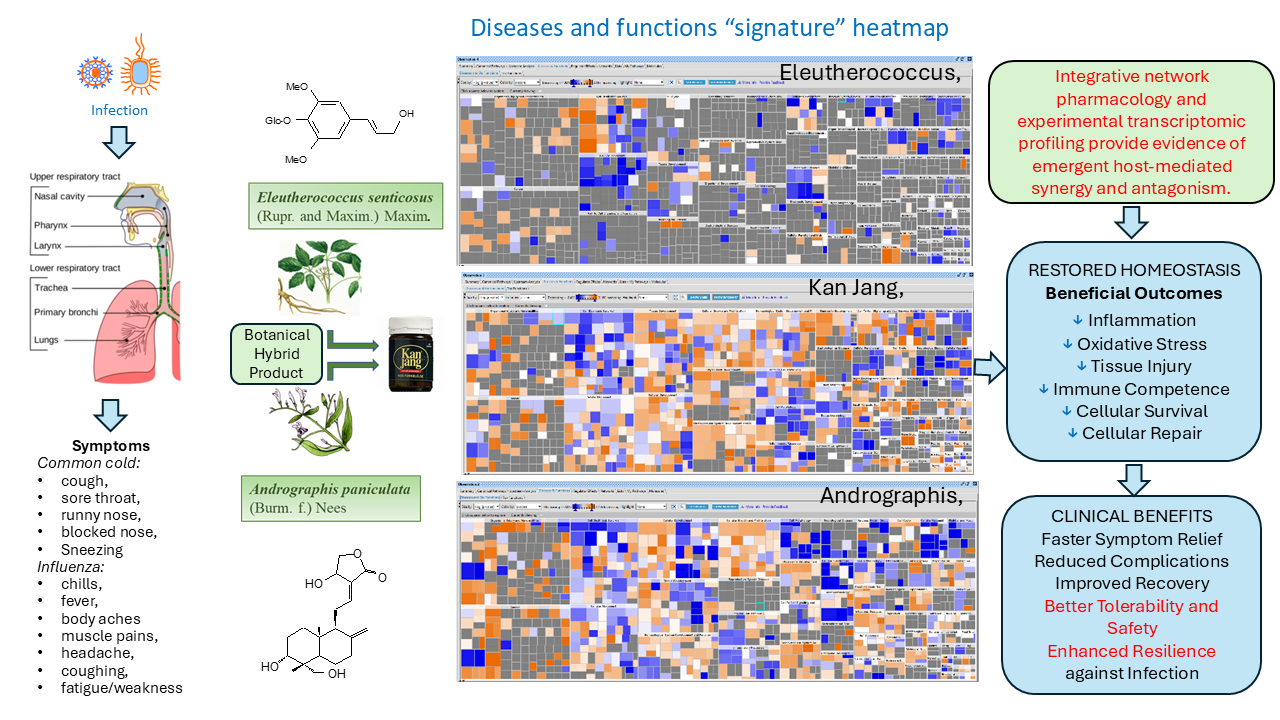
Clinical trials and pharmacological studies show that the therapeutic profile of the combination cannot be explained solely by the activity of andrographolide or by Andrographis monotherapy but rather reflects synergistic and antagonistic interactions between the two botanical components that create health-beneficial effects on the efficacy and safety of this botanical hybrid product, Kan Jang [1,28,29,30,31,32,33,34,35,36,37]. This concept was first proposed in early clinical and pharmacological analyses of Kan Jang [1,28,29,30,31] and later supported by experimental transcriptomics and network pharmacology studies showing the combination’s emergent biological activities [32,33,34,35,36,37].
This review evaluates clinical efficacy, postmarketing safety, and molecular mechanisms of action, with particular emphasis on transcriptomic and network pharmacology evidence supporting Kan Jang’s superior safety compared with other Andrographis preparations in infectious diseases.
2. Clinical efficacy of Kan Jang in URTI and COVID
A comprehensive review [1] summarized early preclinical and clinical studies of Kan Jang, showing that Kan Jang improves symptoms and accelerates recovery in upper respiratory tract infections, influenza, sinusitis, and the common cold [17,18,19,20,21,22,23,24], Table A1, Table A2 and Table A3, and Figure 1.
These benefits exceeded what was expected from Andrographis or Eleutherococcus monotherapy alone. They were accompanied by favorable tolerability [1], suggesting that the combination simultaneously modulates antiviral defense, inflammation, and host resistance mechanisms rather than acting solely through direct antimicrobial effects [1,28]—Figure 2, Figure A2 and Figure A3, and Figure A4.
More recently, a randomized, placebo-controlled study in patients with mild COVID-19 showed that Kan Jang accelerated symptom recovery, reduced viral persistence, improved physical functioning, and decreased progression to more severe disease [25,26,27] (Table A1; Figure A5). These findings support the hypothesis that the formulation acts as a host-directed therapeutic that enhances resilience during viral infection, rather than functioning exclusively as a direct antiviral agent [1,28,29]; Figure 1, Figure 2 and Figure A5.
3. Molecular mechanisms of pharmacological action
3.1. Transcriptomic Evidence for Synergy Between Andrographis and Eleutherococcus in Kan Jang®
The first systematic attempt to assess the synergistic interaction of Herba Andrographidis and Radix Eleutherococci extracts used transcriptome-wide microarray profiling rather than conventional pharmacological endpoints, directly challenging the assumption that a fixed herbal combination’s biological effects are simply the sum of its constituents’ effects. The central hypothesis was defined as follows: Synergy should be detectable as novel transcriptional responses in the combination that are absent in either parent extract alone. This idea became the foundation for subsequent Kan Jang systems biology studies. The strongest evidence for target network-mediated interactions between Andrographis and Eleutherococcus comes from genome-wide transcriptomic analyses (Figure 3 and Figure A6).
The most important finding concerns the number and identity of deregulated genes.
Thus, Andrographis extract, consisting of 39 compounds (API-1), regulated 207 genes, whereas Eleutherococcus extract, consisting of 35 compounds (API-2), regulated 211 genes. Only 36 genes were common to both extracts. If their effects were purely additive, we would expect about 382 deregulated genes. Instead, Kan Jang, consisting of 39 compounds (API-3), regulated 250 genes, including 111 that neither constituent affected alone. At the same time, 243 genes regulated by the individual extracts interacted antagonistically (Andrographis – 73 genes, and Eleutherococcus – 188 genes) and were not affected by Kan Jang [32], Figure 3. The combination did not merely increase activity. Instead, it generated a completely new transcriptional signature; a novel biology, pharmacology, and toxicology emerged. Importantly, isolated and purified API-4, andrographolide, deregulates 626 genes, with a distinct transcriptomic signature and a pharmacological and toxicological profile (Figure 3).
An equally important, often overlooked observation follows. Kan Jang did not simply add new activities. It also eliminated some activities of the parent extracts. The combination failed to regulate many genes affected by Andrographis alone and by Eleutherococcus alone, which was interpreted as beneficial antagonism within the network. This is one of the earliest demonstrations [32] that herbal synergy involves simultaneous gain and loss of function.
This finding strongly supports our earlier discussion of Kan Jang’s potentially improved safety and tolerability. These observations show that Kan Jang involves both gains and losses in biological function. Together, they generate a novel transcriptional signature distinct from either parent extract [32,33,34,35,36]. The combination, Kan Jang, behaves as a botanical hybrid formulation with emergent systems-level biological properties. The study explicitly rejects the idea that the combination’s biological activities should mirror those of its ingredients, providing the strongest scientific justification for describing Kan Jang as a Botanical hybrid product rather than merely a fixed herbal combination. This concept aligns with later transcriptomic studies showing unique effects on DNA repair, cell survival, neuroprotection, Nrf2 regulation, and host resilience, suggesting that Kan Jang behaves as a biologically unique “hybrid” entity rather than a simple mixture of ingredients [32,37], Figure 3.
3.2. Network Pharmacology and Disease-Relevant Pathways
Pathway analysis revealed that Kan Jang selectively modulates molecular networks associated with infectious diseases, inflammatory disorders, oxidative stress, immune regulation, and tissue injury (Figure 3 and Figure A6, Figure A7, Figure A8, Figure A9, Figure A10 and Figure A11).
The most significantly affected pathways included interferon signaling, NRF2-mediated oxidative stress responses, inflammatory signaling pathways, and immune regulatory networks. Collectively, these pathways form a systems-level framework that influences both pathogen-directed and host-directed responses during infection.
3.2.1. Nrf2-Centered Redox Homeostasis
A key observation is that Kan Jang significantly affected Nrf2-mediated canonical oxidative stress response pathways. One of the most important mechanistic discoveries emerged from the Nrf2-focused transcriptomic investigations. Kan Jang prevented toxic-stress-induced deregulation of genes involved in the KEAP1–Nrf2 signaling axis, including transcriptional regulators, antioxidant enzymes, glutathione synthesis pathways, and detoxification systems. Specifically, the combination influenced the expression of KEAP1, MAFF, MAFG, NQO1, GCLC, GSR, and related antioxidant-response genes.
These findings identify redox regulation as a central hub linking antioxidant protection, detoxification, immune regulation, tissue protection, and recovery from infection-associated stress. In retrospect, identifying NRF2-mediated oxidative stress responses in the original synergy study foreshadowed later mechanistic investigations focused on redox homeostasis.
3.2.2. Cytoprotective and Antitoxic Mechanisms
The series of transcriptomic studies investigating chemotherapy-induced cognitive dysfunction unexpectedly provided some of the strongest evidence for Kan Jang’s host-protective properties. The combination prevented deregulation of genes associated with organismal death, impaired cellular survival, DNA repair deficiency, and toxic stress responses. At the same time, it preserved the antineoplastic activity of chemotherapeutic agents.
These findings suggest that Kan Jang possesses intrinsic cytoprotective and antitoxic activities independent of direct antimicrobial effects. Such mechanisms may be particularly relevant during severe infections, where oxidative stress, inflammation, and tissue injury contribute substantially to disease pathology.
3.2.3. Synergy in Infectious Disease Networks
The antiviral effects of Kan Jang appear to involve complementary pathogen-directed and host-directed mechanisms. Andrographis contributes direct antiviral activity by inhibiting viral replication, interfering with viral-host interactions, and suppressing virus-induced inflammatory signaling.
At the same time, the combination regulates interferon-associated pathways and immune defense networks, which may improve host control of viral infection. This dual mechanism is consistent with the broad clinical activity of Kan Jang against respiratory viral infections and supports its classification as a host-directed anti-infective intervention.
One of the most striking findings concerns infection-associated networks. In this study, the authors identified a network linked to Encephalitis: Eleutherococcus alone was essentially inactive, and Andrographis alone regulated only a limited number of relevant genes, while Kan Jang regulated eleven genes predicted to inhibit the disease-associated network, suggesting that the combination may have superior therapeutic potential because it affects more disease-relevant targets simultaneously (Figure A9). These findings suggest that synergy occurs at the level of disease-associated molecular networks rather than isolated pharmacological targets for Kan Jang.
3.2.4. Immunomodulatory Activity and Host Defense
Another major finding was the regulation of interferon signaling pathways, which emerged as one of the strongest transcriptomic signatures of both Andrographis and Kan Jang and may be relevant to severe inflammatory states, autoimmune diseases, and dysregulated immune responses. Although interpretation requires caution, this study foreshadowed the concept that Kan Jang acts by modulating host-response pathways rather than solely through direct antimicrobial effects.
Experimental and review studies consistently indicate that Kan Jang functions as an immunomodulator rather than a simple immunostimulant. The formulation regulates genes involved in antigen presentation, leukocyte trafficking, interferon signaling, innate immune responses, and adaptive immunity. Transcriptomic analyses showed preservation of pathways associated with antigen-presenting cell migration and host defense functions under toxic stress.
3.2.5. Anti-Inflammatory and Antimicrobial Network Synergy
Molecular network analyses showed that the combination produced broader predicted effects on anti-inflammatory, antimicrobial response, and chronic inflammatory disorders than either constituent alone. This finding is consistent with clinical URTI studies [1,17,18,19,20,21,22,23,24], influenza trials [21], and the later COVID-19 trial [25,26,27].
A substantial portion of Kan Jang’s anti-inflammatory activity comes from Andrographis paniculata. Previous pharmacological studies have shown inhibition of NF-κB signaling (Figure A4), suppression of pro-inflammatory cytokines (Figure A2, Figure A3 and Figure A4), reduced nitric oxide production, and modulation of cyclooxygenase pathways [1], Figure A2 and Figure A4.
Incorporating Eleutherococcus broadens these activities by introducing adaptogenic stress-response pathways and promoting immune balance. Consequently, Kan Jang regulates both inflammation initiation and the downstream processes responsible for tissue injury. This integrated anti-inflammatory profile is consistent with its clinical efficacy in respiratory infections characterized by excessive inflammatory activation.
3.2.6. Role of Eleutherococcus in Synergy
Another major finding was the regulation of interferon signaling pathways, which emerged as one of the strongest transcriptomic signatures of both Andrographis and Kan Jang and may be relevant to severe inflammatory states, autoimmune diseases, and dysregulated immune responses. Although interpretation requires caution, this study foreshadowed the concept that Kan Jang acts by modulating host-response pathways rather than solely through direct antimicrobial effects.
3.2.7. Taken together, the available evidence supports a multi-layered model of action in which Kan Jang simultaneously regulates immune responses, inflammatory signaling, oxidative stress pathways, detoxification systems, cellular survival programs, and tissue-repair mechanisms. Through these coordinated actions, the formulation suppresses excessive inflammation while preserving antiviral defense, promotes antioxidant protection through KEAP1–Nrf2 signaling, enhances DNA repair and cellular recovery, and improves resilience during infectious stress. This integrated host-directed mechanism coherently explains Kan Jang’s broad clinical efficacy across multiple respiratory infections.
4. Safety of Kan Jang
4.1. Non-Clinical Pharmacokinetic and Pharmacodynamic Interactions
Results from acute, genotoxicity, reproductive toxicity, and other toxicological studies on Andrographis paniculata extract and its fixed combination with Eleutherococcus senticosus extract suggest that Kan Jang can likely be used therapeutically as intended with sufficient safety [1,38,39,40,41,42,43,44,45].
In vitro evidence suggests possible P450 inhibition at high concentrations for Andrographis monotherapy, but not at clinically relevant concentrations. Literature data on possible interactions of Andrographis monodrug [44] and Eleutherococcus monodrugs [45] with drugs show that none of the extracts and bioactive compounds exhibited CYP450 induction activity in human-derived cell lines [44]. In summary, these studies suggest that the eleutherosides tested are unlikely to inhibit the metabolism of coadministered medications whose primary route of elimination is via cytochrome P450 [45]. Concomitant use of Kan Jang and warfarin did not significantly affect warfarin pharmacokinetics and had practically no effect on its pharmacodynamics in rats [42,43]. Limited in vitro and human clinical data with eleutherococcus alone indicate a low risk for interactions, and whilst there is no clinical evaluation of drug-herb interactions with the herbs in combination, market experience to date with the Kan Jang product (~800,000 packs shipped over 17 years) and the herbs alone points to a good safety profile and indicates low risk for herb-drug interactions per se.
4.2. Clinical Safety Overview
Overall, 571 patients have received Kan Jang treatment for 7-14 consecutive days across nine clinical studies [1,17,18,19,20,21,22,23,24,25,26,27]. The most recent study [24] recorded only 4 adverse events (AEs) in 179 patients with URTI (94/85 Kan Jang/placebo); across all 9 studies [1,17,18,19,20,21,22,23,24,25,26,27], 571 patients received Kan Jang (Table A1). In that study [24], the only common adverse reaction was mild pruritus, observed in 4 patients in the Kan Jang® group and 6 patients in the placebo group (odds ratio 1.6588, z-statistic 0.764, p = 0.4450), and no severe adverse reactions were observed. No serious adverse reactions, such as allergic reactions (e.g., urticaria, angioedema, paresthesia, anaphylactic reactions, or rash), were observed [24].
Overall, 0.70% of adverse events occurred in 571 patients treated with Kan Jang across 9 clinical studies, vs 1.02% in 983 patients in the control/placebo groups (p=0.2518; observed power 21.07%; z-score 0.6698). That is significantly less than the 131 mild to moderate adverse events observed in 690 (19%) patients from ten studies on A. paniculata herbal preparations that are essentially safe [46], and the 383 (4.04%) adverse events in 9490 participants using andrographolide derivative injections, which can be life-threatening, mainly due to gastrointestinal, skin, and subcutaneous tissue disorders, as well as anaphylaxis [46]. 131/690=18.96%;
This evidence of the safety of the Kan Jang combination shows that the pharmacological activity and toxicity of multi-component drugs differ from those of their ingredients, and the effects observed with purified compounds cannot be extrapolated to their combinations with other substances, and vice versa, due to their multiple synergistic and antagonistic interactions in the organism. In other words, the results obtained in Kan Jang studies are product-specific and can not be applied to mono-herbal drugs, e.g., Andrographis extract, which in turn is a mixture of 39 compounds, such as andrographolides, flavonoids, etc., and deregulates quite a different number of genes than expected from a simple calculation of the number of constituents of the plant extracts [32].
4.3. Overview of Pharmacovigilance Assessment Reports
Kan Jang® tablets have been on the Swedish market since their introduction in 1981. They have been sold in both health food shops and supermarkets. Denmark registered the drug as a medical product (herbal medicinal product), while Sweden, Norway, Iceland, and Italy in the EU registered it as a food supplement. Outside the EU, Kan Jang was also marketed as a food supplement in the USA. The Swedish Herbal Institute also registered the Kan Jang brand as a Nontraditional Natural Health Product in Canada, but it has never been marketed there. Denmark first approved Kan Jang on 28 February 1997.
4.3.1. Interim Scientific Review and Framework for Ongoing Post-Market Surveillance for Kan Jang [47].
The first independent review, conducted by Kingston and LeMaster at SafetyCall International (2008), evaluated published clinical studies and spontaneous adverse event reports submitted to the Swedish Board of Health and the WHO Program for International Drug Monitoring [47].
SafetyCall reviewed 38 spontaneous adverse event reports associated with Kan Jang tablets. The review concluded that:
- none of the cases fulfilled criteria for a Probable causal relationship;
- 42% were classified as having an Inconsistent Relationship with Kan Jang exposure;
- approximately 34% involved only minor symptoms;
- 71% did not meet U.S. FDA criteria for a serious adverse event;
- no deaths were reported. [47]
Most reports lacked sufficient clinical documentation to establish causality, limiting their value for signal detection.
The SafetyCall review developed detailed diagnostic criteria for Type I (IgE-mediated) hypersensitivity and concluded that many spontaneous reports lacked the clinical information necessary to distinguish genuine allergic reactions from unrelated or pseudo-allergic events. Consequently, no convincing evidence supported a probable causal relationship between Kan Jang and anaphylaxis [47].
The SafetyCall review identified ten clinical studies, including three studies of Andrographis monodrug therapy and other indications, involving 513 patients treated with Kan Jang tablets. Across these studies, only 6 adverse events were reported, consisting primarily of isolated headache, nausea/abdominal pain, nasal congestion, nasal discharge, and one report of an unpleasant chest sensation. No serious or life-threatening adverse events were reported, and most studies reported none [47]. These findings established a favorable clinical safety profile that has remained consistent with subsequent post-marketing experience.
SafetyCall clinicians have been collecting, analyzing, and monitoring spontaneously reported AE’s for the dietary supplement industry for more than 8 years. The cumulative experience has led experts to conclude that the “Kan Jang product has a relatively wide margin of safety as compared to its product class and does not appear to pose an unreasonable safety risk. Again, the reviewed experience related to Kan Jang does not suggest that this nature of adverse effect would either be expected or disproportionately represented in the ongoing surveillance of incidents associated with full scale marketing and sale of this product”[47].
In the final analysis of the Safety of Kan Jang, SafetyCall Clinicians have considered the following:
- Medical Literature (field trials and case reports): Despite centuries of anecdotal and historical use of the individual ingredients in Kan Jang, there are relatively few reported adverse effects or anecdotal case reports suggesting these herbal ingredients pose a significant risk of injury with routine use. There are even fewer medically confirmed cases of serious effects following routine use of the ingredients either singly or in combination with one another.
- Spontaneous Reports to Regulatory Bodies: Despite systems of government documentation and surveillance, encouragement of clinicians to report suspected incidents of consequence, and sharing of regulatory experience between governments, there has been almost no focus of concern on either of the ingredients in Kan Jang, either singly or in combination, from a “safety” perspective by any regulatory body.
- Spontaneous Reports to Regulatory Bodies specifically shared by P&G: Subsequent to an intensive review and analysis utilizing a robust and sensitive scoring system and outcome classification system, SafetyCall clinicians were unimpressed with the inconsistent trending analysis and lack of consistent comparative analysis between spontaneously reported events and clinical trials.
- Aggregate Incidence of Reported Adverse Events Relative to Market and Historical Use Patterns: In addition to a very favorable “Consistency” rating from the applied SafetyCall scoring system, the overall incidence of reported events compared to likely market penetration appears quite low, suggesting the majority of reported events are representative of “background noise”[47].
4.3.2. Cumulative Post-Marketing Assessment of Kan Jang
A cumulative post-marketing pharmacovigilance review was conducted using the Swedish Herbal Institute safety database, covering reports received between 1989 and 2021 and an estimated cumulative exposure of 61,780,398 patient treatment days (PTDs) from 1990 to 2020. The total safety database comprised 50 individual case reports containing 88 adverse drug reactions (ADRs) Figure 4. Hypersensitivity-related reactions were the predominant safety category, accounting for 72% of all reported cases. The most frequently reported events were angioneurotic edema (n=10), urticaria (n=10), pruritus (n=6), and anaphylactic cases (n=9; reporting frequency rate 0.146 per million PDT), including anaphylactic reaction (n=6) and anaphylactic shock (n=3), Table A4. This falls within the range of very rare events (< 1/10,000), assuming that the CIOMS/EMA classification can be applied: 1.46 per 10 million PTD (< 1/10,000)/= 0.0000146% [48,49,50,51]. Frequencies of adverse reactions from clinical trials, post-authorization safety studies, and spontaneous reporting listed by MedDRA system organ classification [52] have been evaluated according to the following convention: very common (≥1/10); common (≥1/100 to <1/10); uncommon (≥1/1 000 to <1/100); rare (≥1/10 000 to <1/1 000); very rare (<1/10 000), not known (cannot be estimated from the available data) [51].
Application of MedDRA Standardized MedDRA Queries (SMQs) [52] identified 34 cases within the broad Anaphylactic Reaction SMQ and 36 cases within the broad Hypersensitivity SMQ. Narrow-scope analysis retrieved nine reports coded specifically as anaphylactic reaction (n=5) or anaphylactic shock (n=4). Among these nine reports, five fulfilled seriousness criteria, including four hospitalizations and one life-threatening event Figure 4.
A detailed case review showed substantial heterogeneity among the reported anaphylaxis cases. Several reports involved concomitant medications or pre-existing allergic conditions capable of contributing to or independently causing hypersensitivity reactions. Examples included quinapril (Accupro®), acetylsalicylic acid (Trombyl®), diltiazem (Cardizem Retard®), xylometazoline (Otrivin®), and a documented history of multiple allergies. In addition, some reports provided limited clinical information or lacked sufficient detail to support a robust causality assessment. Only one of the nine narrow-scope anaphylaxis cases was specifically identified in the formal confounding analysis as involving a co-suspect medicinal product, although individual case narratives reveal additional concomitant medications with recognized hypersensitivity liabilities.
Despite these limitations, several reports described temporal relationships compatible with hypersensitivity reactions after Kan Jang administration, including rapid onset after dosing and, in some cases, recurrence following re-exposure. Consequently, the available evidence does not exclude Kan Jang as a potential contributor to the reported events. However, the small number of reports, confounding factors, incomplete case documentation, and the lack of consistent mechanistic evidence prevent definitive causal attribution.
Disproportionality analysis performed using EudraVigilance Data Analysis System (EVDAS) data [53] identified no signal of disproportionate reporting. No adverse reaction met the predefined threshold for a Signal of Disproportionate Reporting (SDR), and no new reports were recorded during the most recent monitoring period. Anaphylactic reaction and anaphylactic shock remained below regulatory signaling thresholds.
Overall, the cumulative pharmacovigilance evidence indicates that hypersensitivity reactions, including rare reports of anaphylaxis, have been observed during post-marketing use of Kan Jang. Nevertheless, the available data do not meet the criteria to establish a validated pharmacovigilance signal of increased anaphylaxis risk specifically attributable to the Andrographis-Eleutherococcus combination, and the observed reporting pattern remains compatible with background occurrence, reporting bias, concomitant medication effects, or a combination of these factors.
4.4. Causal Association and Mechanistic Evidence for Safety of Kan Jang
The fixed combination of Andrographis paniculata and Eleutherococcus senticosus is pharmacologically distinct from either constituent alone, as transcriptomic studies show both synergistic and antagonistic interactions between the two extracts [32]. The contribution of E. senticosus to the combination’s overall pharmacological profile is therefore of particular interest.
Preclinical studies have described cytoprotective and antitoxic effects of E. senticosus, including protection against experimentally induced chemical toxicity and attenuation of selected toxic effects of cytostatic agents [54,55,56,57,58,59,60,61,62]. These findings provide a potential mechanistic basis for some historical observations about the tolerability of adaptogenic preparations. However, most of these studies were conducted in experimental animals, and their relevance to Kan Jang’s clinical safety should not be overstated.
The available clinical and post-marketing evidence on hypersensitivity is particularly relevant. Despite extensive clinical use, available surveillance data have not identified a validated pharmacovigilance signal for anaphylaxis or another serious hypersensitivity syndrome for Kan Jang. This observation does not establish that anaphylaxis cannot occur, but it indicates that no consistent signal has emerged that would suggest a clinically important excess risk associated with the combination.
Information from nine sources, including anaphylaxis cases (defined as “signals”), in Kan Jang post-marketing reports suggests a potentially new causal association. However, the signal validation process concluded that the available documentation at that time did not provide sufficient evidence of a new potentially causal association, or a new aspect of a known association, and therefore further analysis of the signal was not warranted.
Indeed, the Kan jang nine anaphylaxis signals cannot survive a formal Bradford-Hill causality assessment, including the following:
Concomitant medication(s), Table A5, included in anaphylaxis reports for Kan jang, had concomitant drugs known to cause anaphylaxis — NSAIDs, amoxicillin, ACE inhibitors, other herbal anaphylaxis triggers — taken for the same cold and other indications.
Chemical composition — Kan Jang is not one substance that invalidates allergen attribution. In fact, no publication shows that purified oral andrographolide causes IgE anaphylaxis in a controlled human provocation study. In contrast, Andrographis significantly reduced pro-inflammatory (NO, IL-1 beta, and IL-6), inflammatory (PGE2 and TXB2), and allergic (LTB4) mediators and did not inhibit histamine release in J774A.1 stimulant-induced murine macrophages and HL-60 promyelocytic leukemic cells [64]. In an in vitro study of purified andrographolides and flavones isolated from A. paniculata leaves, only skullcapflavone-I and 7-O-methylwogonin inhibited A23187-induced LTB4 production in HL-60 cells, and only the flavone 7-O-methylwogonin dose-dependent inhibits of histamine release in RBL-2H3 basophilic cells, suggest that these phytoconstituents exhibit potent anti-inflammatory/anti-allergic effects by modulating different inflammatory/allergic mediators [65]. Importantly, methanolic extracts inhibited all inflammatory mediators except PGE2 and TNF-alpha, while hydroalcoholic extracts inhibited IL-1 beta and TXB2 but did not inhibit other mediators. However, water extracts showed no inhibitory activity against any inflammatory mediators at the tested concentrations [66]. The inhibitory effect of A. paniculata extracts depends on andrographolide content, although it does not appear to affect LTB4 production [66].
Total andrographolides may have sensitizing potential in andrographis injection [67], while Dehydroandrographolide inhibits IgE-mediated anaphylactic reactions via the calcium signaling pathway [68], targeting Leukocyte mono-immunoglobulin-like receptor 3 (CD300f) and negatively regulating MAS-related G protein-coupled receptor X2 (MRGPRX2)-induced pseudo-allergic reactions [69]. Moreover, andrographolides inhibit Platelet-Activating Factor (PAF)-induced platelet aggregation [70] and downregulate LTC4 signaling pathways [71,72]. Both PAF and LTC4 are powerful mediators of anaphylaxis [73,74,75,76].
Indication — protopathic bias: Andrographis is taken for upper respiratory tract infection with sore throat, urticaria, rhinitis. Early symptoms of anaphylaxis [throat tightness, dyspnoea, rash] are identical to infection symptoms for which the herb is taken. Case narrative: patient takes Andrographis for sore throat → develops throat swelling → coded as anaphylaxis to Andrographis. Could be progression of infection, not ADR.
Coding inflation of preferred terms: drift of anaphylaxis and related symptoms [77,78,79,80]. Worldwide, anaphylaxis definitions in common use are: “a serious, life-threatening generalized or systemic hypersensitivity reaction” and “a serious allergic reaction that is rapid in onset and might cause death.” The WAO grading system was originally designed to classify systemic reactions to allergen immunotherapy, but it has been adapted to classify systemic reactions from any cause. In this classification, only some grade 3 reactions and grades 4–5 meet the definition of anaphylaxis, while grades 1–2 are non-anaphylaxis [79,80]. For example, urticaria, pruritus, and throat tightness alone were often upgraded in summaries to “anaphylactic reaction” because the reporter wrote “allergic reaction.” MedDRA hierarchy does not distinguish innate histamine release vs IgE anaphylaxis. Meanwhile, IgE-mediated anaphylaxis is considered the classic and most frequent mechanism. In this type, anaphylaxis is triggered when an allergen (usually a protein) interacts with the allergen-specific IgE/high-affinity receptor (FcεRI) complex expressed on effector cells, predominantly mast cells and basophils [81]. This triggers intracellular signaling, leading to the release of preformed mediators and the de novo synthesis of others [82]. So endotoxin-like, pseudo-allergic reactions from contaminated leaf powder or from high-dose Eleutherococcus saponins are lumped as anaphylaxis.
Frequency denominator: <0.01 per million PDT over 30 years of marketing Kan Jang, Figure 4. That is below the background rate of idiopathic anaphylaxis in the population, 50-112 per million person-years [51,63]. A signal with incidence < background and with RR <1 in controlled trials cannot be classified as causative. For Kan Jang, post-marketing data meet the EMA definition of “very rare” but not of causality, especially with the confounders above.
What would be needed to prove Kan Jang as an allergen and does not exist:
- Positive skin prick test/basophil activation test with purified andrographolide GMP grade in patients with history — negative in Chandrasekaran study
- Positive controlled oral provocation with pure andrographolide — not done for ethical reasons
- Dose-response and hapten-protein adduct demonstration in human serum — not published
Without that clinical and experimental pharmacology data, the pharmacovigilance signal remains an unverified association, heavily confounded by multi-component variability and concomitant anaphylactogenic drugs.
Nonetheless, some unpublished clinical data from internal expert reports at the Swedish Herbal Institute are encouraging. Prof. Bert Björkner, Chief Physician at the Dept. of Occupational Dermatology, University Hospital MAS, Malmö, Sweden, investigated three patients who had previously exhibited contact allergic reactions to andrographolide mix 0,1% in vaseline. These three patients had negative patch test results for andrographolide and Herba Andrographidis standardized extracts, but these data cannot assess type I allergic responses after oral exposure. No further test details are available, but the researchers state that the three patients did not show any contact allergy reactions to the test substances. About 20 patients who did not show contact allergic symptoms to standardized Andrographis paniculata extracts also had negative test results.
The mechanistic data provide additional, complementary evidence. Transcriptomic studies indicate that E. senticosus modulates genes involved in leukotriene biosynthesis and signaling [71,72]. Because cysteinyl leukotrienes mediate bronchoconstriction, vascular permeability, and allergic inflammation, modulating this pathway is biologically relevant to hypersensitivity mechanisms [71]. However, these transcriptomic findings should be regarded as mechanistic and hypothesis-generating rather than as evidence that E. senticosus or Kan Jang prevents anaphylaxis.
Taken together, the clinical, post-marketing and preclinical evidence supports a favorable overall safety profile for Kan Jang. Clinical and post-marketing data support the absence of a validated clinical hypersensitivity signal, while experimental studies provide a biologically plausible context in which the effects of E. senticosus on inflammatory and leukotriene-related pathways may be further investigated.
4.4.1. Transcriptomic Studies
A. paniculata and andrographolide exhibit an extremely wide array of pharmacological actions [1,83], including adaptogenic [84], renoprotective [85], and chemopreventive [86] activities. In addition to andrographolide, researchers have isolated and identified several groups of bioactive compounds from the herb, including over 20 diterpene lactones (andrographolides), their glycosides, over 20 flavonoids, sesquiterpene lactones Paniculides A, B, and C, dimeric bis-andrographolides, and polyphenols [1].
Transcriptomic studies show that E. senticosus and the fixed combination of A. paniculata and E. senticosus produce characteristic molecular responses that cannot necessarily be predicted from either constituent alone [32,71].
Studies examining the cytoprotective effects of A. paniculata, E. senticosus, and their combination have demonstrated substantial changes in gene-expression profiles in T98G neuroglial cells exposed to chemotherapeutic stress [33,34,35,36]. These studies identified changes in genes associated with neuronal development, cell morphology, synaptic function, mitochondrial function, and other cellular processes. These findings have been interpreted as evidence of potential cytoprotective effects of adaptogenic treatment in experimental models [33,34,35,36].
A separate transcriptome-wide study examined how several anti-inflammatory and adaptogenic plant extracts affect genes involved in eicosanoid signaling. Researchers treated T98G neuroglial cells with plant extracts, then performed RNA sequencing and in silico pathway analysis [71]. In the E. senticosus treatment group, the study identified downregulation of ALOX5AP, DPEP2, and LTC4S, genes involved in leukotriene biosynthesis and metabolism. The authors used pathway analysis to predict inhibition of leukotriene signaling [71]. Importantly, this study measured changes in gene expression and computationally inferred pathway effects; it did not directly measure leukotriene concentrations, mast-cell degranulation, bronchoconstriction, or anaphylactic responses.
Nevertheless, these findings have considerable biological relevance. ALOX5AP encodes 5-lipoxygenase-activating protein (FLAP) and is required for efficient leukotriene biosynthesis. LTC4S, which encodes leukotriene C4 synthase, catalyzes the conversion of LTA₄ to LTC₄. DPEP2 participates in cysteinyl leukotriene metabolism. Thus, modulating these genes provides a plausible molecular basis for reduced cysteinyl-leukotriene pathway activity [71].
Cysteinyl leukotrienes—LTC₄, LTD₄ and LTE₄—are potent lipid mediators involved in allergic inflammation and airway responses. They promote bronchoconstriction and vascular permeability and contribute to inflammatory cell recruitment and amplification of type-2 inflammatory responses [75]. Experimental studies also support a role for cysteinyl leukotrienes in some manifestations of anaphylaxis, although anaphylaxis is a multifactorial process involving several mediators and signaling pathways [75].
Accordingly, the transcriptomic findings with E. senticosus provide a mechanistically plausible hypothesis that the extract may attenuate leukotriene-mediated inflammatory and bronchoconstrictive responses. However, they should not be interpreted as direct evidence that E. senticosus prevents allergic reactions or anaphylaxis. Demonstrating such an effect would require functional studies that measure leukotriene production and/or allergic responses in appropriate cellular and in vivo models.
This distinction matters when interpreting Kan Jang’s apparent favorable hypersensitivity profile. Clinical and pharmacovigilance evidence indicates no validated signal for anaphylaxis or serious hypersensitivity, while the transcriptomic studies provide a possible mechanistic context for modulating inflammatory pathways. These two types of evidence are therefore complementary but not equivalent.
The transcriptomic studies also show that the fixed combination of A. paniculata and E. senticosus elicits a molecular response that differs from that produced by either constituent alone [32]. This supports viewing Kan Jang as a fixed botanical combination with its own pharmacological profile, rather than simply an additive combination of two independent monodrugs.
Overall, the available evidence supports the following interpretation: E. senticosus produces measurable changes in genes associated with leukotriene pathways in a preclinical cellular model, and pathway analysis predicts attenuation of leukotriene signaling [71]. Because these pathways are biologically relevant to allergic inflammation and bronchoconstriction, the findings provide a rationale for further investigation of E. senticosus as a potential modulator of hypersensitivity-associated inflammatory responses. They do not, by themselves, establish clinical protection against anaphylaxis.
In conclusion, experimental, transcriptomic, network pharmacology, and clinical evidence consistently support that Kan Jang is a botanical hybrid formulation with emergent, systems-level biological properties. Synergistic interaction between Andrographis paniculata and Eleutherococcus senticosus is evident not only in increased activity but also in novel transcriptional signatures, regulation of disease networks, enhanced antioxidant defense, improved cellular resilience, and coordinated modulation of immune and inflammatory pathways. This is achieved through simultaneous effects on antiviral defense, inflammation, oxidative stress, detoxification, tissue protection, and recovery. Available clinical evidence supports Kan Jang’s host-directed pharmacological effects in respiratory infections, while clinical and post-marketing data indicate a favorable observed safety profile.
5. Discussion
5.1. Comparative Safety and Efficacy of Botanical Hybrid Combination Kan Jang vs Herba Andrographis Monotherapy
5.1.1. Safety of Andrographis Monotherapy
The safety profile of oral Andrographis paniculata extracts (Table A5, Table A6, Table A7, Table A8 and Table A9) appears relatively favorable in clinical trials, with most reported adverse events being mild and self-limited (gastrointestinal symptoms, headache, rash, fatigue, and taste disturbances) [87,120,121]. However, substantial pharmacovigilance and regulatory evidence now links Andrographis paniculata extracts to serious allergic reactions, including anaphylaxis [9,10,11,12,13,14,15,16,46,87,88,89,90,91,92,93,94,95]. The strongest evidence for severe reactions comes from National pharmacovigilance databases (Thailand, Australia, New Zealand) [9,10,11,12,13,14,15,16,88,89,90,91,92,93,94], published case reports of anaphylaxis, regulatory safety reviews, and systematic reviews of andrographolide-derived injectable products [10,11,12,13,14,15,16,46,87,88,89,90,91,92,93,94,95]. Notably, the risk profile differs substantially between Oral herbal preparations of AP, which generally show low rates of serious adverse events, and injectable andrographolide derivatives (e.g., Xiyanping and related products), which have been associated with life-threatening anaphylaxis and rare deaths [46].
Pharmacovigilance consistently links oral A. paniculata products to hypersensitivity reactions, including anaphylaxis. The absolute risk appears very low, but the seriousness of the outcome warrants product labeling, consumer warnings, continued signal monitoring, and prompt discontinuation if signs of allergy appear. The totality of evidence—including Thai HPVC analyses, WHO VigiBase reports, TGA reviews (2015, 2024, 2026), Medsafe evaluations, published case reports, and systematic reviews—supports the existence of a genuine but rare risk of hypersensitivity and anaphylaxis associated with oral A. paniculata products [10,11,12,13,14,15,16]. The mechanistic study by Richard et al. (2017) does not demonstrate intrinsic anaphylactogenicity of andrographolide in experimental models; however, this does not negate the clinical signal observed in humans [93]. The most plausible regulatory interpretation is that severe allergic reactions occur rarely in susceptible individuals and are best characterized as an idiosyncratic hypersensitivity risk rather than a predictable pharmacological effect [93].
For an EMA-quality dossier, this section would normally conclude with a Risk Management Plan (RMP) safety specification, classifying anaphylaxis as an Important Identified Risk and mechanism of hypersensitivity as an Important Potential Risk pending further mechanistic investigation.
Based on currently available clinical trials, systematic reviews, post-marketing data, and regulatory assessments, Kan Jang has a substantially stronger clinical safety record than oral A. paniculata monotherapy, particularly regarding hypersensitivity and anaphylaxis.
The critical distinction is that the anaphylaxis signal observed for oral Andrographis paniculata has been repeatedly reported in national pharmacovigilance systems (Australia, New Zealand, Thailand, and WHO databases). In contrast, no comparable signal has been identified for Kan Jang despite decades of marketing in Nordic countries [47]. However, because Kan Jang contains A. paniculata, it is not scientifically possible to exclude risk entirely (Table A4, Table A5, Table A6, Table A7, Table A8 and Table A9).
5.1.2. Comparative Adverse Event Incidence
Clinical studies on COVID-19 suggest that both Andrographis paniculata and Kan Jang® are generally safe and well tolerated [25,26,27,96,97,98,99,100,119]. High-dose Andrographis preparations (180–360 mg/day andrographolide equivalent) have demonstrated favorable safety profiles with mainly mild gastrointestinal adverse effects and no clinically significant hepatic or renal toxicity [98,99,100]. The COVID-19 literature reveals an interesting pattern. Andrographis Monotherapy provides the strongest evidence for symptom relief, anti-inflammatory effects, excellent safety, and possible antiviral activity. However, results on preventing progression, pneumonia, and hospitalization remain inconsistent [98,99,100].
The clinical signal appears stronger for Kan Jang [25,26,27] than for Andrographis monotherapy [96,97,98,99,100]. While studies on Andrographis mainly demonstrate symptom relief and anti-inflammatory activity, the Kan Jang randomized controlled trial also showed reduced progression to severe disease, faster recovery, reduced viral persistence, and improved physical functioning [25,26,27]. The Kan Jang trial also showed benefits beyond symptom relief, including reduced progression to severe disease, faster recovery, reduced viral persistence, improved physical recovery, and reduced inflammatory symptoms [25,26,27]. These broader clinical effects align well with the mechanistic model derived from transcriptomic studies, including immune homeostasis, antigen presentation, redox regulation, cellular resilience, stress adaptation, and host-directed therapy [71,72].
The difference in incidence of adverse events in clinical studies of Kan Jang [25,26,27] and Andrographis monotherapy [46] was significant:
- Observed adverse event incidence in Kan Jang clinical studies, conversion rate (CR Kan Jang): 4/571=0.70%
- Observed adverse event incidence in Andrographis monotherapy: conversion rate (CR Andrographis): 131/690=18.96%;
Relative uplift in Conversion Rate (CR Andrographis – CR Kan Jang / CR Kan Jang) =2606.26%.
Significant difference (Std. Error of difference= 0.015314; Z-score=11.9219)
One intriguing observation is that Kan Jang appears safer than AP monotherapy despite containing AP.
Several authors have proposed that:
- Eleutherococcus contributes cytoprotective effects.
- Adaptogenic activity may modulate inflammatory responses.
- Combination products cannot be assumed to exhibit toxicity profiles identical to their individual constituents.
5.1.3. Causal Association and Mechanistic Evidence for Safety
In the present comparison, Andrographis paniculata monotherapy meets multiple Bradford–Hill criteria and shows a consistent signal of rare hypersensitivity reactions and anaphylaxis in pharmacovigilance data. In contrast, Kan Jang does not meet these criteria because no corresponding signal has been identified despite substantial clinical use (Table A8 and Table A9) [101,102,103,104,105,106].
Consequently, the Bradford–Hill assessment strengthens the conclusion that the current evidence supports a causal association for AP monotherapy but not for Kan Jang, while acknowledging that a very rare risk cannot be definitively excluded for the combination product. A Bradford–Hill assessment cannot prove the absence of risk. However, when considering:
- the established anaphylaxis signal for Andrographis paniculata monotherapy,
- the absence of a corresponding signal in Kan Jang clinical studies,
- the absence of published case reports,
- the absence of validated signals during approximately ten years of routine MAH signal detection and post-marketing surveillance,
- and the unchanged benefit–risk assessment following repeated signal reviews, the current evidence suggests that Kan Jang’s safety profile differs from that of Andrographis paniculata monotherapy with respect to hypersensitivity risk.
For Kan Jang, the Bradford–Hill assessment yields a fundamentally different result. The lack of a reproducible pharmacovigilance signal, documented case reports, temporality evidence, and experimental support means the available evidence does not support a causal association between Kan Jang and anaphylaxis. However, because Kan Jang contains active constituents extracted from Andrographis, a theoretical risk cannot be completely excluded. Nevertheless, the Bradford–Hill assessment does not support classification of anaphylaxis as an Important Identified Risk for Kan Jang. At most, anaphylaxis may be considered an Important Potential Risk based solely on the presence of the Herba Andrographidis component and the established safety signal observed with Herba Andrographidis monotherapy.
In the case of Kan Jang, the transcriptomic evidence studies provide something more substantial:
- Transcriptomic evidence of synergistic and antagonistic interactions between Andrographis paniculata and Eleutherococcus senticosus, demonstrating that Kan Jang behaves as a pharmacologically distinct entity rather than a simple sum of its constituents.
- Transcriptomic evidence of downregulation of leukotriene biosynthesis pathways (ALOX5AP, LTC4S, DPEP2), which are directly relevant to allergic inflammation and mechanistically relevant to anaphylaxis.
- Long-term pharmacovigilance evidence showing no validated hypersensitivity or anaphylaxis signal despite routine signal detection and post-marketing surveillance.
When these three lines of evidence are integrated using a Bradford–Hill framework, the conclusion becomes more nuanced than “absence of evidence.” Instead, one can reasonably argue that the absence of a pharmacovigilance signal for Kan Jang is biologically coherent with experimental evidence showing modulation of pathways implicated in allergic and anaphylactic responses; therefore, the observed safety profile is not merely an unexplained absence of reports but is supported by mechanistic plausibility. This is a considerably stronger scientific position, which is why the botanical hybrid combination of Herba Andrographis with Radix Eleutherococci – Kan Jang – is a safe medication despite warning signals in the literature, based on post-market surveillance of adverse event management for the mono-drug Herba Andrographis (Table A7 and Table A8).
A key advantage of Kan Jang over both purified andrographolide and Andrographis monotherapy appears to be the adaptogenic cytoprotection provided by Eleutherococcus senticosus. While andrographolide and Andrographis primarily target pathogen-related inflammation and immune responses, Eleutherococcus contributes stress-adaptive, antioxidant, and Hsp70-mediated protective mechanisms. Together, they activate broader networks governing cellular survival, DNA repair, redox homeostasis, and tissue resilience. Consequently, Kan Jang may be viewed not only as an anti-infective and anti-inflammatory preparation but also as a host-protective, antitoxic therapeutic system, in which Eleutherococcus broadens the pharmacological profile from pathogen control to preserving cellular integrity and recovery during infectious and inflammatory stress.
Various adaptogenic preparations have shown cytoprotective, antioxidant, and antitoxic effects in isolated cells (in vitro) and in animals (ex vivo) [55]. Extensive research on E. senticosus shows antitoxic, neuroprotective, hepatoprotective, cardioprotective, antioxidant, immunomodulatory, and antiviral activities, as well as stress-protective, antifatigue, hypoglycaemic, antidepressant, and antiproliferative effects.[56]. For example, E. senticosus inhibits cadmium-induced apoptosis and mitosis in mouse hepatocytes and significantly decreases cadmium concentrations in the liver and blood [57]. The hepatoprotective effect of E. senticosus extract [107] is triggered by upregulation of Nrf2 expression and activation of innate antioxidant enzymes, which increase the ratio of reduced to oxidized glutathione in liver homogenate and serum [108]. Repeated administration of E. senticosus preparation decreased isoproterenol-induced cardiotoxicity and increased ventricular fibrillation threshold in rats with post-infarction cardiosclerosis [109]. Eleutherococcus reduces the toxic effects of cytostatic drugs (cyclophosphamide, etimidine, benzotef, sarcolisyne, ribomicine, 6-mercaptopurine, dapsone, thiopurines, trichlortriethylamin) as chemotherapy, including loss of body weight, increased mortality, decreased life span, reduction of tumor growth, thymic involution, hematopoiesis, and immunosuppression. Adjuvant treatment with Eleutherococcus significantly increases rodent survival following etimidine treatment for carcinoma (100% survival vs. 70% control [etimidine]). Similarly, adjuvant treatment with Eleutherococcus significantly increases survival after thiophosphamide treatment (85% vs. 47% in control [thiophosphamide])[59,60,61].
EMA assessment reports reviewed the antioxidant and hepatoprotective activity of Eleutherococcus and Andrographis paniculata preparations [56,83]. Previous studies demonstrated the chemopreventive effects of A. paniculata and Andrographolide against cyclophosphamide (CTX)-induced urothelial toxicity [86]. Both substantially lowered elevated IL-2 and IFN-γ levels and reduced CTX-induced toxicity during CTX treatment [86]. In another study, the aqueous extract of A. paniculata attenuated gentamicin-induced nephrotoxicity, decreasing blood levels of urea, creatinine, and urea nitrogen in rats [85].
Taken together with the transcriptomic and network-pharmacology studies, these findings support the hypothesis that incorporating Eleutherococcus senticosus transforms Kan Jang from a predominantly anti-inflammatory herbal medicine into a broader host-directed adaptive response modifier, capable of enhancing resilience, promoting recovery, and reducing the clinical consequences of infectious stress [25,26].
The available transcriptomic, network pharmacology, and clinical evidence suggests that Kan Jang should not be viewed merely as a combination of Andrographis and Eleutherococcus, but rather as a botanical hybrid formulation with emergent systems-level biological properties distinct from those of its individual constituents.
That statement is well supported by the evidence we assembled.
The COVID-19 data also fit this framework rather nicely:
- Andrographis alone shows mainly symptom relief and anti-inflammatory effects.
- Kan Jang exhibits symptom relief plus reduced progression, improved recovery, enhanced physical functioning, and broader host-response effects.
This is exactly what one would expect if the combination influences immune homeostasis, redox regulation, stress adaptation, and cellular survival. Pathway analysis revealed coordinated regulation of networks associated with infectious diseases, inflammation, interferon signaling, immune homeostasis, oxidative stress responses, cellular survival, DNA repair, and tissue recovery [32]. Subsequent studies showed that the combination attenuates transcriptomic signatures linked to chemotherapy-induced neuronal injury, organismal death, impaired DNA repair, and organ toxicity, while preserving antineoplastic cytotoxicity [33,34,35,36,71]. These findings identify a previously unrecognized cytoprotective and antitoxic component of Kan Jang pharmacology [1] consistent with the redox-regulatory mechanisms described above, including KEAP1–Nrf2-mediated antioxidant and cytoprotective responses [36].
Kan Jang modulates the expression of genes encoding Nrf2-related transcription factors, antioxidant enzymes, glutathione synthesis enzymes, and detoxification proteins, thereby helping maintain redox homeostasis and protect against oxidative stress-induced cellular damage [36]. In parallel, Andrographis-derived anti-inflammatory and antiviral mechanisms interact with Eleutherococcus-mediated adaptogenic, stress-protective, and resilience-promoting activities [71,72].
5.1.4. Drug Regulatory-Style Conclusion
The available evidence supports a causal association between oral Andrographis paniculata monotherapy and rare hypersensitivity/anaphylaxis, whereas no validated product-specific signal has been identified for Kan Jang. Because Kan Jang includes phytochemicals derived from Andrographis paniculata, we cannot completely exclude an extremely rare risk. However, transcriptomic, network pharmacology, and clinical evidence suggest that Kan Jang should not be viewed merely as a phytochemical sum of Andrographis and Eleutherococcus, but as a botanical hybrid substance with an emergent systems-level biological signature pharmacologically and toxicologically distinct from its individual constituents. Kan Jang safely enhances host resilience to infection by coordinating immune, inflammatory, oxidative stress, and cellular repair networks.
5.2. Comparison of Product Pharmaceutical Characterizations of Kan Jang with Botanical Hybrid Combination ArmaForce
In 2015, TGA issued a public alert, and in 2019 required mandatory warning labels: “Andrographis may cause allergic reactions...” [15]. On 8 April 2026, TGA began consultation on removal, and the Therapeutic Goods (Permissible Ingredients) Amendment (Removal of Andrographis Paniculata) Determination 2026 is now listed as In Force. [9,10,11]. While the risk of anaphylaxis associated with Andrographis paniculata is a legitimate safety concern, it does not necessitate complete removal from therapeutic use via listed medicine restrictions [9,10,11]. In response, the Australian Traditional Medicine Society (ATMS) asked the TGA to reconsider this proposal and pursue a risk-managed, evidence-informed alternative that preserves both patient access and practitioners’ scope of practice, since removing Andrographis paniculata as a low-risk ingredient does not achieve this balance [110]. Currently, Andrographis can no longer be included in listed (over-the-counter, self-administered) complementary medicines/dietary supplements sold in supermarkets and pharmacies. So the TGA safety review that led to the Australian delisting was unusually large because of Australia’s high use, especially ArmaForce Andrographis + Echinacea combos (83% of anaphylaxis reports), and its stimulated reporting project.
For ArmaForce (Natural Remedies Pvt Ltd.), the product that drives ∼80% of Australian anaphylaxis reports is the combination of dried methanol and water extracts of Andrographis paniculata leaf (Ap-Bio®, Natural Remedies Pvt Ltd.), standardized to 35% andrographolide and 6 other phytoconstituents, including Echinacea purpurea root, Olea europaea olive leaf extracts, Vitamin C, Zinc, and amino acid chelate [111,112,113,114].
TGA noted anaphylaxis can occur on first exposure and without prior atopy. The protein/allergenic fraction is not the andrographolide itself, but co-extracted plant proteins. Leaf extracts retain more of those. Anaphylaxis is IgE-mediated, dose-independent for elicitation but dose-dependent for sensitization load. Leaf extracts present a different allergen repertoire than herba. Also, Echinacea root is in the Asteraceae family, which is already known for anaphylaxis. The TGA flagged the combination of two Asteraceae-related allergenic sources in one tablet: >80% of reports were multi-ingredient preparations with both Andrographis + Echinacea. However, Kan Jang and other cold & flu Andrographis products in Scandinavia and India use dried aerial parts. ArmaForce specifically declares leaf, which is the essential characterization issue the TGA safety review focused on (Table A1).

Table 1.
Comparison of pharmaceutical characteristics, pharmacovigilance findings, clinical study reporting, and proposed pharmacological mechanisms of Kan Jang® and Andrographis-containing products combined with Echinacea.
Table 1.
Comparison of pharmaceutical characteristics, pharmacovigilance findings, clinical study reporting, and proposed pharmacological mechanisms of Kan Jang® and Andrographis-containing products combined with Echinacea.
| Characteristics | Kan Jang® [24,25,26] | ArmaForce® |
|---|---|---|
| Herbal substance | Herba Andrographidis (aerial parts) Radix Eleutherococci |
Folia Andrographidis (leaf only) Radix Echinaceae, Folia Oleae |
| Extract brand name and type | SHA-10, DER 4.5–8.1: 1, 70% ethanol 5.8- 6.2% andrographolides |
Ap-Bio®/KalmCold® [111,112,113,114], DER 10.7:1, methanol and water, 35% andrographolides |
| Manufacturer/country | Swedish Herbal Institute AB/Sweden | Natural Remedies Private Limited, India; BioCeuticals, Australia |
| Regulatory classification and the Authority | Herbal medicine, Danish Medicines Agency | Complementary medicine, specifically a listed medicine in the Australian Register of Therapeutic Goods (ARTG ID 340712, removed on 17 Sept 2026) [9,10] |
| Daily dose | 30-90 mg andrographolides | 62.5-125 mg andrographolides |
| Concomitant components |
Eleutherococcus senticosus extract, Std., to eleutherosides B and E [1] |
Olea europaea leaf extract, std. to oleuropein Echinacea purpurea root extract, std. to cichoric acid, vitamin C, Zinc amino acid chelate*** |
| Transcriptomic signature | Synergistic activation of interferon [32] KEAP1–Nrf2 signaling, cytoprotective; antagonistic down-regulation of NF-κB, IL-1, IL-8 [36]. |
Unexplored |
| Network effect | Balanced host-directed response: antiviral, anti-inflammatory, and anti-allergic buffering | Unexplored |
| Period of a manufacturer’s postmarketing reporting | 1989-2026 | Unavailable in public |
| Post-marketing assessment |
Very rare anaphylactic shock and reactions (0,081 and 0.097 per million PDT) |
189 of 287 anaphylaxis cases (66%) from 5 products of the same formulation, 83% with Echinacea [56,57,58,59] |
| Mechanistic rationale for safety | Adaptogenic activity mitigates hypersensitivity pathways. | Unexplored |
| Compliance with CONSORT checklist |
Yes [24,25,26] | Lack of CONSORT checklist [111,112,113,114], |
Of the total 287 anaphylaxis reports for Andrographis, 83% (237/287) involved medicines that contained both Andrographis and Echinacea, 12% (35/287) involved multi-ingredient Andrographis-containing medicines that did not contain Echinacea, and 5% (15/287) contained Andrographis as a single active ingredient Figure A1 [12,58]. The high frequency of AE reports specifically related to Echinacea-containing Andrographis dietary supplements (Figure A1) may reflect a synergistic effect on anaphylaxis that has not been systematically studied and should be experimentally demonstrated, presumably using a network pharmacology approach. Finally, TGA reports do not include results from Kan Jang clinical safety studies [1,17,18,19,20,21,22,23,24,25,26].
The key issue is that Herba Andrographis and Folia Andrographis are different herbal substances used in herbal medicines, with different pharmacological and toxicological profiles, efficacy, and safety. The core regulatory issue is that two different active substances have different benefit-risk profiles, and one specific pharmaceutical form—high-dose leaf extract + Echinacea purpurea root in ArmaForce-type combinations —drives the anaphylaxis signal. That regulatory gap is precisely what made the Australian case possible.
The EMA HMPC assessment in 2014 focused on Andrographis paniculata folium and herba, but clinical safety data came mainly from Kan Jang (herba + Acanthopanax), not leaf mono-extracts. TGA in its 2015 safety review explicitly said: “A search of international agencies did not locate associations” because other markets were not using this high-dose leaf + Echinacea root fixed combo at this dose.
A critical finding of this review is that the term Andrographis paniculata in regulatory documents and in the Permissible Ingredients Determination does not correspond to a single herbal substance. According to Ph. Eur. and EMA HMPC principles, Herba Andrographidis (dried aerial parts, including stem, leaf, flower and fruit) and Folia Andrographidis (leaf only) are distinct herbal substances with different DER, extraction solvents and phytochemical profiles. They should therefore be assessed separately for benefit-risk.
Pharmaceutical distinction. Kan Jang® is a fixed combination (API-Kan jang, see glossary below) of a dried extract of Herba Andrographidis (SHA-10, DER 5.8-6.2:1, andrographolide content 5.8-6.2%) produced by extracting the aerial part with 70% ethanol, and Radix Eleutherococci (DER 17-30:1), provided in a daily dose of 30-90 mg andrographolides [17,18,19,20,21,22,23,24,25,26,27,28,47], Table 1. In contrast, ArmaForce®, is a fixed combination (API-Ap-Bio®/KalmCold®), of Folia Andrographidis (leaves) extract, produced by a two-step methanol and water extraction (DER 10.7:1) containing 35% andrographolides, and Echinacea purpurea radix 750 mg, vitamin C, and zinc amino acid chelate, delivering 62.5 mg andrographolides per dose [15], Table 1.
The TGA safety review of 2015 already identified two formulation-specific risk factors for anaphylaxis: (i) methanol extracts vs aqueous extracts, with significantly more ADR reports for methanol-extracted products, and (ii) concentration ratio >10:1 with higher quantity of equivalent herb per dosage unit [15]. Ap-Bio® meets both criteria, while SHA-10 meets neither.
However, an essential flaw of the TGA assessment report on Andrographis safety is a lack of differentiation of the quality and safety of API Andrographis-containing preparations, including: (i) Chemical composition of mono- versus various poly-herbal ingredients, and (ii) nutraceutical vs pharmaceutical-grade products, which ensure reproducible quality, efficacy, and safety of evidence-based herbal medicines Table 1, as EMA implements it. Also, TGA assessed various risk factors, including extraction solvents, plant parts, co-extracted plants, and manufacturing processes, and compared them with positive and negative control drugs, without assessing manufacturers’ post-marketing PSUR reports of AEs per million sold defined daily doses. This heterogeneous sample comparison, including a variety of active pharmaceutical ingredients, different product specifications across manufacturers, and many concomitant medications and confounding factors, leads to misleading conclusions about risk factor assessment.
5.2.1. Pharmacovigilance Distinction.
Updated TGA data provides strong evidence for a product-specific, not species-specific signal. From 2005 to 31 December 2025, the TGA received 1217 adverse event reports and 287 anaphylaxis cases linked to Andrographis-containing medicines, including one fatal case in June 2024 [TGA Updated Safety Review 2024-2025, Supplementary Report March 2026]. Of these, 483 tradenames were involved, but five products supplied by one sponsor with the same ingredient formulation and tradename (ArmaForce® group, AUST L 144432) accounted for 189 cases (66%) of anaphylaxis. The majority (237/287, 83%) of anaphylaxis cases involved medicines that also contained Echinacea species, which is known to cause anaphylaxis [TGA Supplementary Report].
In contrast, Kan Jang® has been marketed in Scandinavia since the 1980s and in the EU as a Herbal Medicinal Product, with over 60 million PDT exposures. Danish Medical Products Agency and the EMA HMPC assessment report EMA/HMPC/320433/2012 show no validated signal for anaphylaxis, with adverse events predominantly mild gastrointestinal discomfort. No cases of anaphylaxis have been reported for the Herba Andrographidis + Radix Eleutherococci combination in EudraVigilance or WHO VigiBase.
5.2.2. Mechanistic Plausibility.
Two factors may explain the difference. First, co-sensitization: a fixed combination with Echinacea, a member of Asteraceae containing sesquiterpene lactones, provides dual allergenic stimulus. Second, leaf-specific proteins and methanol-extractable lipophilic constituents enriched in Folium extracts may contain thermostable allergens absent in aqueous Herba extracts. This is consistent with the observation that rapid onset within 30 minutes, even on first exposure or after previous uneventful use, suggests pre-sensitization to cross-reactive plant proteins.
5.2.3. Regulatory Consequence and Implication
The current TGA proposal to remove Andrographis paniculata as a low-risk ingredient from the Permissible Ingredients Determination under the Therapeutic Goods Act 1989 does not distinguish Herba vs Folia, aerial parts vs leaf, aqueous vs methanol extract, or presence vs absence of Echinacea. This class-based approach is inconsistent with Ph. Eur. monograph principles and with EMA’s differentiated assessment. Our analysis suggests that sustained reporting despite strengthened warnings since 2019 [11,12] indicates that label warnings are insufficient for high-risk Folium + Echinacea combinations, but does not justify withdrawing low-risk Herba preparations such as Kan Jang®.
Unfortunately, the TGA Permissible Ingredients List only had one entry: “Andrographis paniculata”. It made no distinction between leaf, herb, aerial parts, or extract type, unlike the EMA and EP. So a product with Folium Andrographolide equivalent was regulated the same as Herba Andrographidis. The proposed deletion of all Andrographis from the low-risk list penalizes Herba preparations with established safety.
In the EU, this would be unacceptable and not allowed. European Pharmacopeia (Ph.Eur.curr. eds.) has separate definitions, and a listed medicine would have to declare precisely: Andrographis paniculata (Nees) leaf dry extract, DER 6-10:1, vs. herb dry extract, extraction solvent – methanol and water.
As demand grows to reformulate Andrographis-containing products, Kan Jang® provides a model for a safer botanical hybrid preparation with host-directed mechanisms, coordinated modulation of interferon signaling, KEAP1-Nrf2 and inflammatory pathways, and a favorable safety profile.
5.3. Overall Conclusions on Safety of Kan Jang
The evidence shows that Kan Jang®, a fixed combination of standardized extracts of Andrographis paniculata and Eleutherococcus senticosus, has a favorable safety profile when used within the recommended therapeutic indications and dosage. This conclusion is supported by a consistent body of evidence comprising GLP-compliant non-clinical toxicology studies, controlled clinical trials, long-term post-marketing, mechanistic investigations, and regulatory safety assessments.
Available non-clinical studies identified clinically relevant acute toxicity, mutagenicity, reproductive toxicity, or irreversible target-organ toxicity at therapeutically relevant exposure levels. Repeated-dose studies demonstrated good tolerability with reversible adaptive findings only at high multiples of the intended human dose, supporting an adequate non-clinical safety margin for clinical use. Likewise, pharmacokinetic investigations indicate a low potential for clinically relevant CYP450-mediated herb–drug interactions at recommended doses.
Clinical evidence is similarly reassuring. Across nine controlled clinical studies involving 571 patients receiving Kan Jang, adverse events were infrequent, predominantly mild. They occurred at rates comparable to or lower than those with placebo or comparator treatments. No serious treatment-related adverse reactions, including anaphylaxis, angioedema, or severe hypersensitivity reactions, were observed in the clinical development program. Safety findings were consistent across adults and children and remained stable irrespective of indication or treatment duration.
Long-term post-marketing surveillance independently confirms this favorable clinical safety profile. Three decades of commercial use found no validated safety signals requiring regulatory action. Routine review of spontaneous Individual Case Safety Reports, published literature, regulatory communications, and other pharmacovigilance sources consistently concluded that Kan Jang’s benefit–risk profile remains favorable and unchanged.
Particular attention has been directed towards hypersensitivity reactions because oral Andrographis paniculata monotherapy has been associated with regulatory safety warnings concerning rare cases of anaphylaxis in several jurisdictions. In contrast, despite prolonged worldwide use and dedicated pharmacovigilance review, no validated post-marketing signal for hypersensitivity or anaphylaxis has been identified for Kan Jang. Although isolated spontaneous reports have been recorded, these lacked sufficient clinical documentation to establish a probable causal relationship, did not demonstrate disproportionality, and showed no temporal increase or consistent clinical pattern indicative of an emerging safety signal. Consequently, available post-marketing evidence does not support a product-specific anaphylaxis signal for Kan Jang.
Importantly, emerging mechanistic evidence provides biological plausibility for the observed differences between Kan Jang and Andrographis paniculata monotherapy. Transcriptomic studies demonstrate that the fixed herbal combination is pharmacologically distinct from either constituent alone, producing unique synergistic and antagonistic gene-expression profiles rather than merely additive effects. Furthermore, downregulation of leukotriene biosynthesis pathways, including ALOX5AP and LTC4S, which regulate leukotrienes C4 and D4, principal mediators of immediate hypersensitivity and anaphylaxis, offers an experimentally supported mechanism by which the combination may differ from Andrographis monotherapy with respect to hypersensitivity risk. These mechanistic findings complement, but do not replace, the stronger evidence from clinical studies and post-marketing surveillance.
Taken together, the available evidence indicates that Kan Jang’s safety profile cannot be assumed to be identical to that of Andrographis paniculata monotherapy, despite containing standardized Herba Andrographidis extract. Rather, the fixed combination behaves as a distinct botanical medicinal product with product-specific pharmacological and toxicological characteristics. Convergent evidence from non-clinical studies, controlled clinical trials, long-term post-marketing, systems pharmacology, transcriptomic analyses, and regulatory signal assessments supports this conclusion.
Although the available evidence cannot exclude an extremely rare risk of hypersensitivity or anaphylaxis, the absence of a validated signal despite decades of clinical use, together with favorable clinical safety data and supportive mechanistic evidence, indicates that any such risk is likely to be very low. From a regulatory perspective, the totality of evidence supports the conclusion that the benefit–risk balance of Kan Jang remains favorable, and that the currently approved product information and routine pharmacovigilance activities remain appropriate without the need for additional risk-minimization measures.
6. Limitations
Several limitations should be considered when interpreting the evidence synthesized in this review. First, the evidence base is heterogeneous and includes clinical trials, experimental pharmacology, transcriptomic studies, network-pharmacology analyses, toxicological investigations, and pharmacovigilance data. These approaches address different questions and do not have equivalent evidentiary strength. In particular, transcriptomic and network-pharmacology findings provide important mechanistic information but, by themselves, do not establish that a predicted molecular pathway drives a clinical effect.
Second, many mechanistic studies were performed in cellular systems or experimental models rather than in patients with infectious diseases. The transcriptomic studies provide particularly strong evidence that combining Andrographis and Eleutherococcus produces a molecular response that differs from either extract alone, including both synergistic and antagonistic gene-expression effects. However, the biological significance of individual differentially expressed genes or enriched pathways cannot necessarily be extrapolated directly to clinical outcomes. The observation of 111 genes uniquely regulated by the combination supports an emergent transcriptional response, but it does not establish that each gene contributes causally to therapeutic efficacy.
Third, the mechanistic evidence is not uniformly specific to infectious diseases. Some evidence supporting cytoprotective, antitoxic, DNA-repair, and redox-regulatory effects comes from studies of chemotherapy-induced cellular stress rather than infection. These findings support broader host-protective properties of the formulation, but their relevance to infectious disease should be regarded as mechanistic support rather than directly demonstrated clinical evidence.
Fourth, researchers cannot always quantitatively separate the contribution of individual botanical constituents. Kan Jang contains standardized extracts rather than a single purified molecule, so the observed biological effects may reflect interactions among multiple constituents in Andrographis and Eleutherococcus. Consequently, mechanisms identified for andrographolide or individual compounds should not automatically be attributed to the complete formulation.
Fifth, although transcriptomic studies provide compelling evidence for synergy at the gene-expression level, the precise molecular basis of the interaction between the two botanical extracts remains incompletely defined. The available evidence demonstrates emergent transcriptional effects, including genes regulated only by the combination, as well as antagonistic suppression of responses produced by the individual extracts. However, the upstream molecular interactions responsible for these effects remain experimentally unestablished.
Sixth, interpretation of the safety comparison with Andrographis monotherapy requires particular caution. Available clinical and pharmacovigilance evidence supports a favorable safety profile for Kan Jang and has not identified a validated, product-specific anaphylaxis signal. Nevertheless, the absence of a detected signal cannot demonstrate the absence of risk, particularly for an extremely rare event. The manuscript appropriately recognizes that Kan Jang contains an Andrographis component, so a very rare hypersensitivity risk cannot be completely excluded.
Finally, this is a narrative mixed-methods review rather than a formal systematic review or meta-analysis. Consequently, we did not quantitatively pool mechanistic or clinical outcomes, and the synthesis necessarily depends on the quality, design, and reporting of the underlying publications.
Overall, these limitations do not invalidate the evidence for emergent pharmacological activity of the fixed combination, but they indicate that mechanistic plausibility, experimental validation, and clinical evidence should remain explicitly distinguished when interpreting individual pathways and proposed mechanisms of action.
7. Future Perspectives
The available evidence provides several directions for future research. The top priority is to move from transcriptomic association to causal mechanistic validation. Genes and pathways that are uniquely regulated by Kan Jang should be investigated using targeted perturbation approaches to determine whether they are necessary for the observed biological effects. Particular attention should be given to the pathways repeatedly identified across studies, including KEAP1–Nrf2-mediated redox regulation, interferon signaling, inflammatory networks, cellular survival, DNA repair, and leukotriene-related pathways. Current studies already identify these networks as key components of the combination’s biological response.
A second priority is to clarify how Andrographis and Eleutherococcus interact at the molecular level. Transcriptomic evidence shows the combination is not simply additive: Andrographis regulated 207 genes and Eleutherococcus 211 genes, whereas Kan Jang regulated 250 genes, including 111 genes not regulated by either extract alone; conversely, some responses produced by the individual extracts were not retained in the combination. Future studies should therefore investigate the upstream molecular determinants of these synergistic and antagonistic interactions rather than focusing exclusively on individual downstream targets.
Third, future work should establish how molecular signatures relate to clinical outcomes. Prospective translational studies combining transcriptomics or other systems-biology approaches with clinical phenotyping could determine whether specific host-response signatures correlate with symptom duration, viral clearance, progression to severe disease, recovery of physical function, or adverse events. This would directly bridge molecular evidence and the clinical observations already reported for respiratory infections and mild COVID-19.
Fourth, further investigation of Kan Jang’s host-directed component is warranted. The present evidence suggests that the formulation simultaneously modulates antiviral defense, inflammatory responses, oxidative stress, cellular protection, and recovery mechanisms. Future studies should determine whether these effects represent coordinated restoration of host homeostasis and whether they contribute independently to clinical recovery.
Fifth, the proposed cytoprotective and antitoxic effects warrant further investigation in clinically relevant infectious disease models. Chemotherapy-related transcriptomic studies provide evidence that Kan Jang can attenuate signatures of cellular injury, impaired DNA repair, and toxic stress while preserving chemotherapy’s antineoplastic activity. Whether analogous protective effects occur during infection-associated oxidative and inflammatory injury remains an important unanswered question.
Sixth, future clinical studies should evaluate Kan Jang using standardized formulations and predefined mechanistic endpoints, allowing researchers to link the botanical hybrid product’s clinical effects more directly to its molecular signatures. This would also help distinguish effects attributable to the complete formulation from those attributable to individual constituents such as andrographolide.
Finally, continued long-term post-marketing surveillance remains important, particularly for rare hypersensitivity reactions. The absence of a validated Kan Jang signal to date is reassuring. Still, continued surveillance is appropriate because clinical trials and existing spontaneous-report databases cannot exclude very rare adverse events. The manuscript’s current post-marketing evidence supports maintaining this surveillance rather than assuming zero risk.
Taken together, future research should progress from descriptive systems pharmacology toward experimentally validated, clinically anchored network pharmacology. Integrating transcriptomics with proteomics, metabolomics, functional perturbation studies, and prospective clinical phenotyping could identify which emergent molecular responses causally drive the therapeutic effects of Kan Jang. Such studies would also clarify how the interaction between Andrographis and Eleutherococcus produces a biological response that differs from either constituent alone and whether this systems-level interaction contributes simultaneously to efficacy, host resilience, and tolerability.
8. Materials and Methods
This mixed-methods review explores evidence from 9 systematic clinical studies and 37 network pharmacology studies on A. paniculata, E. senticosus, Kan Jang, and andrographolide, extracting active compounds, disease indications, predicted targets, enriched signaling pathways, and mechanistic conclusions to elucidate their molecular actions in diseases treated in TCM. We conducted a systematic review of meta-analyses of randomized controlled trials (RCTs) to evaluate efficacy, safety, quality control practices, and compliance with EMA criteria for well-established herbal medicinal products. Data synthesis included pooled effect-size estimation and risk-of-bias assessment using Cochrane methods. We used a structured umbrella review approach to synthesize peer-reviewed reviews on URTI, COVID-19, inflammation, stress physiology, adaptogens, and regulatory science. We examined regulatory guidance from EFSA, EMA, FDA, and Australian authorities and narratively synthesized the findings.
8.1. Literature Search
This review explores current evidence on network pharmacology studies of A. paniculata, E. senticosus, Kan Jang, and andrographolide, covering publications from 1980 to 2026 and addressing inflammation, stress physiology, adaptogens, and regulatory science. We examined regulatory guidance from EFSA, EMA, FDA, and Australian authorities. Findings were narratively synthesized. A search was conducted using several major databases and platforms, including PubMed, Google Scholar, ScienceDirect, Scopus, CNKI, and Web of Science, as well as the Google search engine, the National Library of Medicine, regulatory documents from EFSA, EMA, FDA, and Australian health authorities, and the ChatGPT AI technology.
The search strategy used targeted keywords such as “Andrographis paniculata”, “Eleutherococcus senticosus”, “andrographolide”, “network pharmacology”, “randomized” AND “health claims”, “indications” AND “pharmacopeia”, and “dietary supplements”. The search was limited to English-language and Russian-language publications within the specified period. The review followed EMA guidelines, and we evaluated study quality using CONSORT and Cochrane standards.
8.2. Inclusion and Exclusion Criteria
8.2.1. Inclusion Criteria.
For network pharmacology synthesis:
- Studies explicitly performing target prediction and pathway analyses.
- Studies identifying protein–protein interaction (PPI) networks.
- Studies involving A. paniculata, E. senticosus, Kan Jang, and andrographolide as the primary exposure.
For experimental validation:
- In vitro or in vivo confirmation of predicted targets/pathways.
- Clear reporting of biological endpoints.
- Mechanistic linkage to predicted signaling hubs.
For clinical evaluation:
- Randomized controlled trials (RCTs).
- Systematic reviews or meta-analyses.
- Clearly defined preparation type.
8.2.2. Exclusion Criteria.
- Reviews without primary mechanistic data.
- Studies lacking explicit pathway enrichment methods.
- Case reports without mechanistic evaluation.
8.3. Data Extraction
Data extraction covered: major active compounds, disease indications, predicted molecular targets, signaling pathways, and presence of experimental validation.
Included studies used network-pharmacology tools such as target prediction algorithms and Ingenuity Pathway Analysis (IPA) software (QIAGEN Bioinformatics transcriptomics), or integrated multi-omics where gene expression was measured and expressed as fold changes compared to control. IPA performs different calculations based on the Ingenuity Knowledge Base, a large gathering of observations with approximately 5 million findings manually curated from biomedical literature or integrated from third-party databases.
We also included reviews on viral infectious diseases, inflammation resolution, stress biology, adaptogens, or regulatory frameworks. We narratively integrated findings across biological, clinical, and regulatory domains.
We extracted pharmacovigilance data from the publicly accessible TGA Database of Adverse Event Notifications (DAEN) and TGA Safety Reviews 2015, 2024-2025, which are freely available under the Therapeutic Goods Act 1989. We used no confidential manufacturer data except the author’s Signal Detection Report of Swedish Herbal Institute AB [47].
8.4. Data Integration and Evidence Integration Strategy
We manually verified all AI-assisted frequency aggregation against original publications to prevent duplication or misclassification. We aggregated targets and pathways across studies.
9. Conclusions
The safety signal for anaphylaxis in Australia is not attributable to Andrographis paniculata herba in the broad sense, but to a specific pharmaceutical form: a high-concentration methanol/water extract of the leaf (Folia) standardized to 35% andrographolide (Ap-Bio®), formulated in fixed combination with Echinacea purpurea radix. Folia and Herba are different herbal substances with different phytochemical and allergenic profiles and should be regulated accordingly, consistent with European Pharmacopeia principles.
Herba Andrographidis and Folia Andrographidis are not interchangeable. They must be assessed as different herbal preparations with different benefit-risk.
The anaphylaxis signal driving Australian regulatory action is attributable to a specific pharmaceutical form: high-dose leaf extract (Ap-Bio®) in fixed combination with Echinacea purpurea radix, not to Andrographis herba per se.
Kan Jang® (Herba Andrographidis + Radix Eleutherococci, SHA-10 aqueous extract) shows a more favorable safety profile, likely due to a lower andrographolide dose, inclusion of aerial parts rather than leaf-only, aqueous extraction, and absence of Echinacea.
Future monographs and permissible ingredient lists should distinguish plant part, DER, and extraction solvent to avoid class-wide bans based on formulation-specific risks.
Other regulators have kept it on the market with label warnings. Products that contain it must be reformulated. Fortunately, the botanical hybrid combination of Andrographis with Eleutherococcus (Kan Jang) meets this emerging demand.
The post-marketing events were reported very rarely but to mitigate the risk of such events and to understand the cause of such events:
- -
- the labeling allergy warning for Kan Jang fixed combination was proposed as follows: “May cause allergic reaction. If you experience chest pain, hives, vomiting, difficulty swallowing or difficulty breathing after taking this product, seek immediate medical attention.”
- -
- A robust post-marketing surveillance plan must be put in place and every attempt should be made to follow up on suspected allergy cases to gather as much information as possible including medical history and history of previous allergies, and where possible evaluation of the causative agent of the allergic response via skin/blood testing in the case of medically confirmed/significant events.
The mechanism of Kan Jang against respiratory infections is not attributable to one molecular target but rather to simultaneous effects on pathogens, inflammation, innate immunity, adaptive immunity, tissue protection, and symptom generation by polyvalent multi-target action, including suppression of TNF-α, IL-1β, IL-6, IL-12, COX-2, PAF, LTB4, and NO, as well as modulation of NF-κB signaling to suppress inflammatory gene transcription. In respiratory infections, this affects sore throat, mucosal inflammation, airway swelling, fever, and systemic inflammatory symptoms. Later transcriptomic studies show that Kan Jang not only suppresses inflammation but also activates protective and repair pathways. One mechanism contributing to bronchoconstriction, leukocyte recruitment, vascular permeability, and airway inflammation is PAF antagonism, which Andrographis constituents have been described as mediating [70,76]. This mechanism may substantially reduce nasal congestion, mucosal edema, and inflammatory symptoms in upper respiratory tract infections. This mechanism is largely unique among botanical respiratory medicines. The combined experimental, transcriptomic, network pharmacology, and clinical and pharmacovigilance evidence supports the concept that Kan Jang is a botanical hybrid formulation with emergent systems-level biological properties distinct from those of its individual constituents. Synergy between Andrographis paniculata and Eleutherococcus senticosus is expressed through unique transcriptional signatures, regulation of disease-associated molecular networks, activation of antioxidant and detoxification pathways, enhanced cellular survival and repair mechanisms, and coordinated modulation of immune and inflammatory responses. Eleutherococcus extracts inhibited experimental mast-cell-mediated anaphylaxis and histamine release. E. senticosus altered expression of ALOX5AP, LTC4S, and DPEP2, with computational prediction of reduced leukotriene signaling. Cysteinyl leukotrienes are established mediators of bronchoconstriction and allergic inflammation and contribute to some experimental manifestations of anaphylaxis. Kan Jang clinical studies have not demonstrated a meaningful allergic/anaphylactic signal; for example, a randomized clinical study reported no allergic reactions, including urticaria, angioedema, or anaphylaxis, among 140 participants. These findings support a biologically plausible hypothesis that Eleutherococcus may modulate hypersensitivity-related signaling pathways, but they do not establish that Eleutherococcus prevents anaphylaxis in humans. Rather than acting solely as an antiviral or anti-inflammatory preparation, Kan Jang functions as a host-directed therapeutic system that enhances resilience, promotes recovery, and restores homeostasis during infectious stress.
Overall, available clinical, transcriptomic, network-pharmacology, and post-marketing evidence supports the view that Kan Jang is a biologically distinct botanical combination in which host-directed synergistic and antagonistic interactions between Herba Andrographidis and Radix Eleutherococci define both efficacy and safety. Its effects appear to involve coordinated modulation of immune, inflammatory, oxidative stress, and cellular-protective pathways, while maintaining a favorable safety profile.
Author Contributions
AP: Conceptualization, Data curation, Investigation, Methodology, Writing–original draft, Writing–review and editing.
Funding
The author(s) declare that no financial support was received for the research, authorship, and/or publication of this article.
Institutional Review Board Statement
Not applicable.
Informed Consent Statement
Not applicable.
Data Availability Statement
No new data was created.
Acknowledgments
The author thanks the manufacturers of Kan Jang (Swedish Herbal Institute AB), particularly Georg Wikman, Daniel Tornbrink, and Ewa Lyzell, for providing periodic safety update reports and other confidential information. The author acknowledges using generative artificial intelligence (AI) technology (ChatGPT for iOS, version 1.202, model 2025, Grammarly, Meta AI (Muse Spark), and Microsoft 365 Copilot). All scientific interpretations and conclusions are those of the author. No AI-generated text is included in the final manuscript without author verification.
AI Declaration
The authors used ChatGPT, Microsoft 365 Copilot, and Grammarly AI solely to improve the manuscript’s language, grammar, readability, and clarity. The AI tools did not generate scientific interpretations, conceptual frameworks, data analyses, or conclusions. The authors performed all scientific reasoning, synthesis, and editorial decisions. The author reviewed, verified, and edited all AI-generated text for accuracy, completeness, and impartiality and accepts full responsibility for the accuracy, originality, and integrity of the final content of this manuscript. All concepts and interpretations are solely the author’s and originate from practical observations. The authors remain responsible for all scientific interpretation, synthesis, and final editorial decisions.
Conflicts of Interest
Author AP holds the position of Chief Medical and Scientific Adviser at Swedish Herbal Institute AB. The author supported various projects without funding but had received funding in previous years from Swedish Herbal Institute to develop herbal medical products. The company had no role in the writing of the manuscript. The author declared that they were editorial board members of Pharmaceuticals at the time of submission. This had no impact on the peer review process and the final decision.
Abbreviations
The following abbreviations are used in this manuscript: AE, adverse event; AI, artificial intelligence; ALOX5AP, arachidonate 5-lipoxygenase activating protein; AMSTAR-2, A MeaSurement Tool to Assess systematic Reviews 2; AND, andrographolide; BUN, blood urea nitrogen; CCL8, C-C motif chemokine ligand 8; CIM-MEG19, standardized Andrographis paniculata formulation used in a clinical study; CNKI, China National Knowledge Infrastructure; CONSORT, Consolidated Standards of Reporting Trials; COVID-19, coronavirus disease 2019; COX-1, cyclooxygenase-1; COX-2, cyclooxygenase-2; CYP450, cytochrome P450; CYP2D6, cytochrome P450 2D6; CYP3A4, cytochrome P450 3A4; DC, dendritic cell; DOAJ, Directory of Open Access Journals; DOI, digital object identifier; DPEP2, dipeptidase 2; EFSA, European Food Safety Authority; EMA, European Medicines Agency; EVDAS, EudraVigilance Data Analysis System; FDA, U.S. Food and Drug Administration; FEC, fixed combination of 5-fluorouracil, epirubicin, and cyclophosphamide; GI, gastrointestinal; GLP, Good Laboratory Practice; GM-CSF, granulocyte-macrophage colony-stimulating factor; GO, Gene Ontology; GSR, glutathione-disulfide reductase; GCLC, glutamate-cysteine ligase catalytic subunit; Hsp70, heat shock protein 70; HPVC, Health Product Vigilance Center; ICAM-1, intercellular adhesion molecule 1; ICSR, Individual Case Safety Report; IL, interleukin; JAK, Janus kinase; JNK, c-Jun N-terminal kinase; KEAP1, Kelch-like ECH-associated protein 1; KEGG, Kyoto Encyclopedia of Genes and Genomes; LD, linear dichroism; LTC4, leukotriene C4; LTC4S, leukotriene C4 synthase; LTD4, leukotriene D4; LTE4, leukotriene E4; LTB4, leukotriene B4; MAH, Marketing Authorization Holder; MAFF, MAF bZIP transcription factor F; MAFG, MAF bZIP transcription factor G; MAPK, mitogen-activated protein kinase; MCP-1, monocyte chemoattractant protein-1; MDPI, Multidisciplinary Digital Publishing Institute; MedDRA, Medical Dictionary for Regulatory Activities; MIP-1, macrophage inflammatory protein-1; NF-κB, nuclear factor kappa B; NK, natural killer; NO, nitric oxide; NQO1, NAD(P)H quinone dehydrogenase 1; NSAID, nonsteroidal anti-inflammatory drug; Nrf2/NRF2, nuclear factor erythroid 2-related factor 2; OCEBM, Oxford Centre for Evidence-Based Medicine; PAF, platelet-activating factor; PGE2, prostaglandin E2; PPI, protein–protein interaction; PRAC, Pharmacovigilance Risk Assessment Committee; PRISMA, Preferred Reporting Items for Systematic Reviews and Meta-Analyses; PTDs, patient treatment days; RCT, randomized controlled trial; RANTES, regulated upon activation, normal T-cell expressed and secreted; RMP, Risk Management Plan; SHI, Swedish Herbal Institute; STAT, signal transducer and activator of transcription; STAT5A, signal transducer and activator of transcription 5A; SYRCLE, Systematic Review Centre for Laboratory animal Experimentation; TCM, traditional Chinese medicine; TGA, Therapeutic Goods Administration; TLA, three-letter acronym; TLR, Toll-like receptor; TLR4, Toll-like receptor 4; TLR8, Toll-like receptor 8; TNF, tumor necrosis factor; TNFRSF6, tumor necrosis factor receptor superfamily member 6; TNFSF14, tumor necrosis factor superfamily member 14; TXB2, thromboxane B2; UMC, Uppsala Monitoring Centre; URTI, upper respiratory tract infection; VCAM-1, vascular cell adhesion molecule 1; WOA, World Allergy Organization.
Glossary
Active Pharmaceutical Ingredient (API) (or Drug Substance) refers to a substance or mixture intended for use in manufacturing a medicinal product that becomes an active ingredient and provides pharmacological activity or another specified direct effect. [115,116]
“Active substance” refers to a substance or mixture intended for use in manufacturing a medicinal product that becomes an active ingredient and is intended to exert a pharmacological, immunological, or metabolic action. [117].
Application to Kan Jang
| Finished product | Active substance(s) / drug substance(s) |
| Product A: | API-A = the fixed combination of Herba Andrographis extract and Radix Eleutherococcus extract. [118] |
| Product B: | API-B = Herba Andrographis extract. |
API-A and API-B have different compositions and therefore are not the same API preparation.
API-A and API-B are compositionally distinct active preparations
Anaphylaxis refers to a serious, life-threatening generalized or systemic hypersensitivity reaction and a serious allergic reaction that is rapid in onset and might cause death [119].
Appendix A
Table A1.
Summary of Kan Jang® (A. paniculata and E. senticosus extracts) treatment outcomes in clinical studies.
Table A1.
Summary of Kan Jang® (A. paniculata and E. senticosus extracts) treatment outcomes in clinical studies.
| First author name | Melchior | Melchior | Gabrielian | Kulichenko | Kulichenko | Spasov | Narimanyan | Melchior | Ratiani |
|---|---|---|---|---|---|---|---|---|---|
| Year | 2000 | 2000 | 2002 | 2003 | 2003 | 2004 | 2012/2021 | 2021 | 2023 |
| Type of study | R-PC-DB | R-PC-DB | PC-DB | R-PC-OL pilot | R-PC-OL | R-C-DB | R-PC-QB prospective |
R-PC-DB Multi-center |
R-PC-QB |
| Number of patients verum/control | 23/23 46 |
89/90 179 |
95/90 185 |
71/469 540 |
35/31 66 |
53/41/39 133 children | 94/85 179 |
43/43 86 |
68/72 140 |
| Negative control | Placebo | Placebo | Placebo | Placebo | Placebo | Placebo | Placebo | Placebo | |
| Positive control |
Amantadine paracetamol and vit. C | Amantadine paracetamol and vit. C | Immunal (Echinacea extract) |
||||||
| Daily dose | 12 tablets |
12 tablets |
12 tablets |
6 tablets |
9 tablets |
6 tablets |
6 capsules |
6 capsules |
6 capsules |
| DER, extraction solvent of SHA-10 | NS | NS | NS | NS | NS | NS | 6.7: 1 70% ethanol |
NS | 4.5–8.1: 1 70% ethanol |
| Content of andrographolides in SHA-10 extract |
6.17% | 6.17% | 6.17% | NS | NS | 6.17% | 5.1% |
NS |
5.77% |
| SHA-10 content in one tablet or capsule |
85 mg | 85 mg | 85 mg | 88.8 mg | 88.8 mg | 85 mg | 195 mg |
180 mg |
260 mg |
| Content of andrographolides in one tablet or capsule |
5.25 mg | 5.25 mg | 5.2 mg | NS | NS | 5.25 mg | 10 mg |
NS |
15 mg |
| Daily dose of andrographolides, | 60 mg | 60 mg | 60 mg | 30 mg | 45 mg | 30 mg | 60 mg |
NS |
90 mg |
| Duration of treatment (days) | 5 | 5 | 5 | 3–5 | 5 | 10 | 5 | 8 | 14 |
| Diagnosis |
URTI | URTI | URTI, sinusitis | Influenza | Influenza | influenza | URTI | URT | Mild Covid-19 |
| Cough | ⓪ | ⓿ | ⓿ | ⓪ | ⓿ dos | ⓪ | ⓿ | ⓪ | ⓿ |
| Sore throat | ⓿ | ⓿ | ⓿ | ⓪ | ⓿ dos | ⓪ | ⓿ | ⓪ | ⓿ |
| Nasal secretion | ⓪ | ⓪ | ⓿ | ⓪ | ⓿ dos | ⓿ | ⓿ | ⓪ | ⓿ |
| Nasal congestions | ⓪ | ⓪ | ⓿ | ⓪ | ⓿ | ⓿ | ⓿ | ⓿ | ⓪ |
| Hoarseness | ⓪ | ⓪ | ⓿ | ⓪ | ⓿ | ⓪ | ⓿ | ⓿ | ⓪ |
| Headache | ⓪ | ⓪ | ⓿ | ⓿ | ⓿ dos | ⓪ | ⓿ | ⓪ | ⓿ |
| Muscle soreness | ⓿ | ⓿ | ⓪ | ⓿ | ⓪ | ⓪ | ⓿ | ||
| Eye discharge | ⓪ | ⓪ | ⓪ | ⓿ | ⓿ dos | ⓪ | ⓪ | ||
| Temperature | ⓪ | ⓪ | ⓪ | ⓿ | ⓪ | ⓪ | ⓿ | ⓪ | ⓪ |
| Malaise/fatigue | ⓿ | ⓪ | ⓪ | ⓿ | ⓪ | ⓿ | |||
| Total symptoms | ⓪ | ⓿ | ⓿ | ⓿ | ⓿ | ||||
| Duration of sick leave at home, days | ⓿ 7.2 vs. 9.8 |
⓿ 7.2 vs. 9.8 |
⓿ 2.4 vs. 3.0 |
⓿ 1.78 vs. 0.44 |
|||||
| Patients at home, median Placebo/ Kan Jang® ratio | ⓿ 1.5 |
||||||||
| Post-influenza Complications | ⓿ | ||||||||
| Blood hematology | ⓪ | ⓿ | |||||||
| IL-8, IgA, IgG | ⓪ | ||||||||
| Duration of symptoms, days; decreasing sick days at the clinic | ⓿ | ||||||||
| Patients recovered, n; the rate of cases turning to severe | ⓿ | ||||||||
| Virus clearance, days; Negative conversion rate of SARS CoV-2 virus detection | ⓿ | ||||||||
| Immune response marker: IL-6 | ⓿ | ||||||||
| Inflammatory marker: C-reactive protein | ⓪ | ||||||||
| Hypercoagulation marker: Dimer-D | ⓪ | ||||||||
| The severity of Respiratory symptoms - Wisconsin URS score | ⓿ | ||||||||
| Cognitive performance test (d2-test) for memory and attention | ⓪ | ||||||||
| Physical activity | ⓿ | ||||||||
| Workout | ⓿ | ||||||||
| Quality of Life | ⓪ | ||||||||
| Adverse events |
0 | 0 | 0 | NS | NS | 0 | Mild pruritus 4 patients |
0 | 0 |
Statistical significance of differences between Kan Jang® and placebo: ⓪ –p > 0.05, ⓿ –p < 0.05, ⓿ - not assessed; DER – Drug/Extract Ratio, NS – not specified,.
- R-PC-DB, randomized, placebo-controlled, double-blind
- R-PC-QB, randomized, placebo-controlled, quadruple-blind
- R-PC-OL, randomized, placebo-controlled, open-label
- R-C-DB, randomized, controlled, double-blind
- PC-DB, placebo-controlled, double-blind
Table A2.
Pharmacological activity of Andrographis and Eleutherococcus in URT infections [1].
Table A2.
Pharmacological activity of Andrographis and Eleutherococcus in URT infections [1].
| Functional claims of Kan Jang | Pharmacological activity of andrographolides from herba Andrographidis |
Pharmacological activity of eleutherosides from radix Eleutherococci |
|---|---|---|
| Immuno-supporting | Stimulation of immunostimulatory/inflammatory gene expression in blood mononuclear cells. Modulation of antigen-specific and nonspecific immune function by induction of lymphocytes, natural killer cells, and macrophage function. Modulation of cytokine formation, including activation of gamma interferon formation. Selective down-regulation of the expression of genes involved in immune and inflammatory processes, such as cytokines and cytokine receptors (TNFSF14, TNF, TNFRSF6, and IL1A), chemokines (CCL8 and CXCL11), JAK/STAT signaling (JAK3 and STAT5A), TLR family (TLR4 and TLR8), and NF-κB (NFKB1). |
Improves nonspecific and humoral immune responses and modulates interleukin production. Stimulates host innate immunity via up-regulation of Hsp70. Modulates the release of arachidonic acid and biosynthesis of eicosanoids In isolated human PMNL. |
| Anti-inflammatory/ anti-allergy |
Inhibition of endotoxin- or 2,4-dinitrophenol-induced fever, carrageenin-, kaolin-, egg white, and nystatin-induced paw edema, croton oil-induced acute exudation, xylene- or acetic acid-induced cutaneous or peritoneal capillary permeability, restores phenylephrine-induced vasoconstriction. Inhibition of NF-kappaB. Inhibition of PAF. Inhibition of i-NO synthase. Inhibition of oxidative stress. inhibiting inflammatory (PGE2 and TXB2) and allergic (LTB4) mediators. Inhibition of COX-1 and COX-2 in human blood. Down-regulation of MAPK pathways. Analgesic and antipyretic effects. |
Antihistamine-like effect. Inhibition of Akt and JNK pathways in macrophages. Inhibition of NO formation. Antioxidant effect. |
| Antibacterial | Inhibition of bacterial growth of both Gram-negative and Gram-positive bacteria. | |
| Antiviral | Effective against influenza A Virus in vivo and in vitro. Inhibition of herpes and hepatitis viruses. Inhibition of proprotein convertases. |
Direct inhibition of replication of rhinovirus, respiratory syncytial virus, and influenza A virus in cell culture. |
| Anti- fatigue/ stress-protective |
Modulates cortisol and stress protein (Hsp70, JNK)formation. Anti-fatigue effect. |
Table A3.
Mediators of inflammation involved in inflammatory symptoms are mostly affected by Kan Jang [1].
Table A3.
Mediators of inflammation involved in inflammatory symptoms are mostly affected by Kan Jang [1].
| Cell | Mediator | Target tissue, cells | Effect | Inflammatory symptoms | Effect of Kan Jang on days 3 and 4 Reference |
|---|---|---|---|---|---|
| Mast cells, eosinophils, | histamine PAF leukotrienes |
Vessels | Vascular permeability increases Vasodilatation-blood stream decreases Leukocyte extravasation increases |
Sneezing Edema Reddenings/ warming |
|
| Neurons | Activation of nociceptors | Pain | Caceres, 1997 | ||
| airway epithelium | airway sensory nerve endings | cough | Melchior, 2000 Caceres, 1997 |
||
| macrophages | IL-1, IL-6, TNF-α, |
Brain |
fatigue, headche, malaise, anorexia sleep disturbance |
Caceres, 1997 Caceres, 1997 Caceres, 1997 |
|
| Hypothalamus | interact with the vagus nerve endings to signal the temperature control center |
fever |
Melchior, 2000 | ||
| prostaglandins | skin blood vessels | vasoconstriction | chilliness | ||
| skeletal muscle | effects on peripheral pain receptors | muscle ache and pain | Melchior, 2000 | ||
| Muscles | catabolism | Weight loss | |||
|
leukotrienes |
Fat tissue | lipolysis | |||
| neutrophils monocytes |
Chemotaxis, phagocytosis |
Nasal discharge Mucous secretion |
Caceres, 1997 Melchior, 2000 Caceres, 1997 |
||
| PAF | Bacteria, virus | phagocytosis | |||
| Immune system | Immune defence | All symptoms | |||
| prostaglandins bradykinin | Nerve endings in the airway | Pain mediated by the cranial nerves supplying the nasopharynx and pharynx. | Sore troat | Caceres, 1997 Melchior, 2000 |
|
| blood plasma globulins | bradykinin | large veins in the nasal epithelium (venous sinuses) | vasodilation |
Nasal congestion |
Table A4.
Concomitant medications reported in cases of anaphylaxis (AR – anaphylactic reaction, AS – anaphylactic shock) of postmarketing of Kan Jang in the period 1990-2026 in Sweden (SE) and Denmark (DK).
Table A4.
Concomitant medications reported in cases of anaphylaxis (AR – anaphylactic reaction, AS – anaphylactic shock) of postmarketing of Kan Jang in the period 1990-2026 in Sweden (SE) and Denmark (DK).
| Cases | Concomitant medications |
|---|---|
| Case SE-1994, AR: | Levaxin (levothyroxine), flunitrazepam, tartrazine (E 102), and food coloring in saffron |
| Case SE-1996, AS: | Premarina (estrogens, conjugates), Cardizem Retard (diltiazem) and Accupro (quinapril) |
| Case SE-1996, AR: | Plendil (felodipine). |
| Case SE-2000, AR | Zocord (simvastatin), Trombyl (acetylsalicylic acid). |
| Case DK-2007, AR: | Otrivin (xylometazoline), Medical history: allergy to perfume, Band-Aid, and penicillin. |
| Case SE-1995, AS: | Unspecified antioxidant tablets. |
| Case SE-1996, AS: | Patient with history of hypertension treated with unknown medication. |
| Case SE-1996, AR: | Concomitant medications not reported. |
| Case DK-2005, AS: | Concomitant medications and medical history not reported. |
| Outcome | Strength of Evidence | Regulatory Confidence |
|---|---|---|
| Mild GI adverse events | Strong | High |
| Rash/pruritus | Strong | High |
| Urticaria | Strong | High |
| Angioedema | Moderate–Strong | High |
| Hypersensitivity reactions | Strong | High |
| Anaphylaxis | Moderate–Strong | High |
| Fatal anaphylaxis | Limited but plausible | Moderate |
| Anaphylaxis (injectable derivatives) | Strong | Very High |
| Death (injectable derivatives) | Strong | Very High |
Table A6.
Safety Outcomes and Quality Rating of Systematic Reviews and Meta-Analyses of Andrographis Studies.
Table A6.
Safety Outcomes and Quality Rating of Systematic Reviews and Meta-Analyses of Andrographis Studies.
| Study | Design | N | Product | Safety Outcome | Quality Tool | Quality Rating |
|---|---|---|---|---|---|---|
| Coon & Ernst 2004 [87] |
Systematic review | ~900 | Oral AP | Mild AEs only | AMSTAR-derived | Moderate |
| Hu et al. 2017 [120] | Systematic review/meta-analysis | >700 | Oral AP | Mild GI events | AMSTAR-derived | High |
| Worakunphanich et al. 2021 [121] | Systematic review/meta-analysis | 5,185 | Oral AP | Rare serious AEs | AMSTAR-2 | High |
| Shang et al. 2022 [46] |
Systematic review/meta-analysis | 262 studies | AP + injectable derivatives | Anaphylaxis signal | AMSTAR-2 | High |
| Suwankesawong et al. 2014 [88] | Pharmacovigilance database analysis | 248 reports | Oral AP | Hypersensitivity | Newcastle– Ottawa adapted | High |
| Richard et al. 2017 [93] |
Preclinical toxicology | Animal studies + review | AP extract, andrographolide | No evidence of intrinsic anaphylactic potential | SYRCLE RoB | Moderate |
| TGA 2015, [15] | Regulatory review | National database | Oral AP | Anaphylaxis signal | Regulatory assessment | High |
| TGA 2024, [13] | Regulatory review | Updated national database | Oral AP | Persistent signal | Regulatory assessment | High |
| TGA 2026, [12] | Regulatory review | Updated national database | Oral AP | Persistent signal despite warnings | Regulatory assessment | High |
Causality was evaluated using the Bradford–Hill considerations described by Hill (1965), including strength, consistency, specificity, temporality, biological gradient, plausibility, coherence, experiment, and analogy. We applied the framework qualitatively to evidence from clinical trials, pharmacovigilance databases, regulatory assessments, and published case reports [101,102,103,104,105].
Table A7.
Evidence level of reported adverse events in randomized clinical studies, systematic meta-analysis, pharmacovigilance and regulatory review of Kan Jang fixed combination and Andrographis monotherapy.
Table A7.
Evidence level of reported adverse events in randomized clinical studies, systematic meta-analysis, pharmacovigilance and regulatory review of Kan Jang fixed combination and Andrographis monotherapy.
| Study | Product | N*) | Design | Adverse Events | Serious AEs | Anaphylaxis Reports | Evidence Level**) |
|---|---|---|---|---|---|---|---|
| Gabrielian et al., 2002 | Kan Jang | 95/185 | PC-DB | No adverse events | None | None | II |
| Melchior et al., 2000 | Kan Jang | 155/311 | RCT | No adverse events | None | None | II |
| Narimanyan et al.,2021 | Kan Jang | 94/179 | RCT | 4 mild cases of pruritus | None | None | II |
| Ratiani et al., 2003 | Kan Jang | 68/140 | RCT | No adverse events | None | None | II |
| Kulichenko et al.,2003 | Kan Jang | 106/606 | R-PC-OL | No adverse events | None | None | II |
| Spasov et al., 2004 | Kan Jang | 53/133 | RCT | No adverse events | None | None | II |
| Kan Jang pooled clinical studies | Kan Jang | 571/1,554 | Pooled trials | 4 mild cases of pruritus | None | None | I–II |
| Worakunphanich et al., 2021 | AP monotherapy | 5,185 | Meta-analysis | GI, rash, urticaria | Rare | Reported | I |
| Suwankesawong et al., 2014 | AP monotherapy | 248 AE reports | Pharmacovigilance | Hypersensitivity | Multiple serious | Yes | IV |
| TGA Review 2026 | AP monotherapy | 1217 AE reports | Regulatory review | Ageusia, dysgeusia, hypersensitivity | Yes | 254 anaphylaxis-related reports | VI |
*) – Number of patients in Kan Jang treatment groups/number of patients in the study. **)- a simplified Oxford levels (1a, 1b, 2a, 2b, 3a, 3b, etc.) into the following five-tier system [106]:
| Dossier Level | Corresponding OCEBM Category | Typical Study Design |
| Level I | 1a–1b | Systematic reviews, meta-analyses, high-quality RCTs |
| Level II | 1b–2b | Individual RCTs, prospective cohort studies |
| Level III | 2b–3b | Cohort studies, case-control studies |
| Level IV | 4 | Case series, pharmacovigilance database analyses, spontaneous-report analyses |
| Level V | 5 | Case reports, expert opinion, mechanistic hypotheses |
| Level VI*** | Not part of original OCEBM | Regulatory reviews and health authority assessments |
***) A Level VI category pharmacovigilance dossiers frequently include regulatory assessments from agencies such as the Therapeutic Goods Administration, European Medicines Agency, and Health Canada. These do not fit neatly into traditional evidence hierarchies but often carry substantial regulatory weight.
Table A8.
Regulatory questions regarding evidence of the safety of Kan Jang compared with Andrographis monotherapy.
Table A8.
Regulatory questions regarding evidence of the safety of Kan Jang compared with Andrographis monotherapy.
| Question | Conclusion |
|---|---|
| Is oral AP associated with anaphylaxis? | Yes, supported by multiple pharmacovigilance systems and regulatory reviews. |
| Is Kan Jang associated with anaphylaxis? | No signal currently demonstrated. |
| Can Kan Jang be considered safer than AP monotherapy? | Yes, based on available clinical and post-marketing evidence. |
| Can anaphylaxis risk be excluded for Kan Jang? | No. Current evidence is insufficient to rule out a very rare risk because the product contains AP, but it is rather unlikely, given transcriptomic studies supporting an anti-allergic effect. |
| Benefit–risk profile | More favorable for Kan Jang than AP monotherapy based on presently available evidence. |
Table A9.
Evidence currently supporting the hierarchy of confidence in conclusions regarding Kan Jang’s superior safety compared with Andrographis monotherapy. The evidence currently supports the following hierarchy of confidence:.
Table A9.
Evidence currently supporting the hierarchy of confidence in conclusions regarding Kan Jang’s superior safety compared with Andrographis monotherapy. The evidence currently supports the following hierarchy of confidence:.
| Conclusion | Confidence |
|---|---|
| Oral Andrographis paniculata can cause rare hypersensitivity reactions | High |
| Oral Andrographis paniculata can cause rare anaphylaxis | Moderate–High |
| Regulatory warnings regarding AP are justified. | High |
| Kan Jang has a favorable safety profile in clinical studies | High |
| Kan Jang has a lower observed rate of adverse events than AP monotherapy | Moderate-High*) |
| Kan Jang does not cause anaphylaxis. | Low **) |
| Kan Jang has a lower true risk of anaphylaxis than AP monotherapy | Moderate-High ***) |
*) - Rationale: Supported by clinical studies, pooled safety analyses, approximately ten years of signal-detection activities, and mechanistically plausible evidence from gene expression studies. **) - Even very extensive pharmacovigilance cannot demonstrate zero risk. ***) - Rationale: AP monotherapy has a validated pharmacovigilance signal, while Kan Jang has no validated signal; long-term MAH signal detection has identified no signal; experimental evidence supports biological plausibility for a different safety profile; synergistic and antagonistic interactions demonstrate that Kan Jang should not be assumed to have the same risk profile as AP monotherapy [17].
Figure A1.
Australian TGA reports of anaphylactic reactions associated with medicines containing Andrographis and/or Echinacea, through 31 December 2025. The figure shows annual spontaneous-reporting counts classified by the reported ingredient composition. Five products with the same formulation supplied by one sponsor accounted for 189 of 287 anaphylaxis reports (66%), and 237 reports (83%) involved medicines containing both Andrographis and Echinacea. These figures represent reported cases rather than incidence rates and do not establish the causal contribution of individual ingredients. Source: TGA supplementary report, March 2026 [12]. The increase in reports of anaphylactic reactions is likely associated to dietary supplements predominantly containing ArmaForce® (Bioceuticals, Australia), containing Folia Andrographidis methanol/water dried extract (Ap-Bio®/KamCold®, Natural Remedies Pvt Ltd., India), Echinacea purpurea root, Olea europaea olive leaf extracts, Vitamin C, Zinc, and amino acid chelate [111,112,113,114] during 2019-2025 in Australia [12].
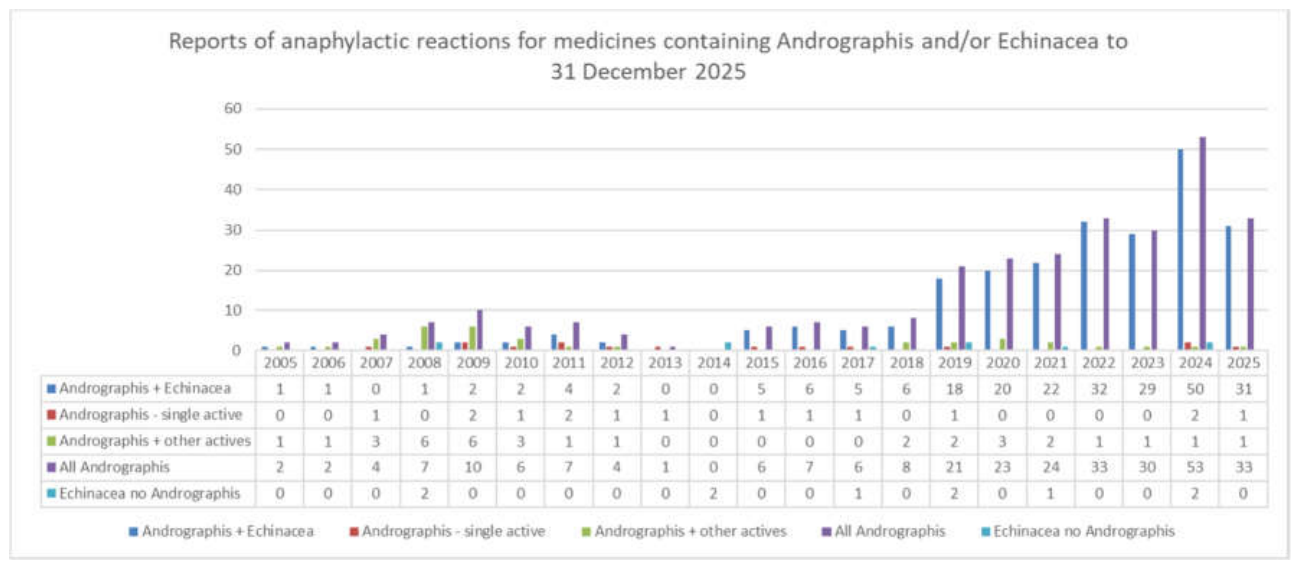
Figure A2.
Schematic diagram of reported effects of Andrographis and Eleutherococcus elucidated in animal and cell culture models: (i) modulatory effects on immune response (blue block), (ii) anti-inflammatory activity (green block), (iii) detoxification and repair of oxidative-stress-induced damage in compromised cells (brown block), and (iv) direct antiviral effect via infection with viral docking or replication (red block), modified from Panossian and Brendler (2020) [28].
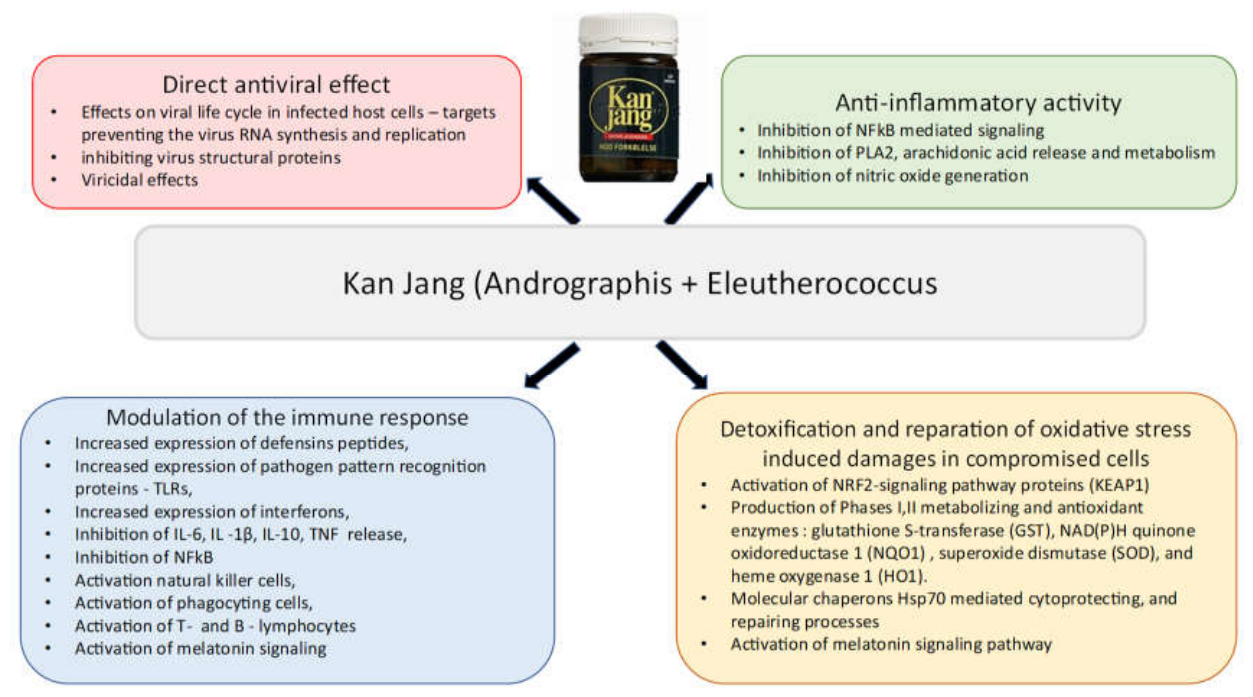
Figure A3.
(a) – Stimulation of the immune system via up-regulation of molecular chaperone Hsp70. Extracellular Hsp70 activates the immune system of multicellular organisms to kill viruses and bacteria. One of the mechanisms contributing in overall effect of Kan Jang, specifically of Eleutherococcus extract, is associated with Stimulation of Hsp70, which is known to bind with high affinity and avidity to specific cells of the immune system, including natural killer (NK) cells, dendritic cells (DC), macrophages, peripheral blood monocytes, and B cells. It activates specific signal transduction cascades, namely NF-κB (30 minutes), upregulates the expression of proinflammatory cytokines in human monocytes (2 h post-challenge), and stimulates the host’s immune response, including a plethora of mediators such as TNF-α, IL-1β, IL-6, IL-12, GM-CSF, nitric oxide, chemokines including MIP-1, MCP-1, RANTES, etc., in an attempt to rid the host of infection [1]. (b) - Effects of andrographolide on activated i-NO synthase and oxidative stress induced in macrophages.
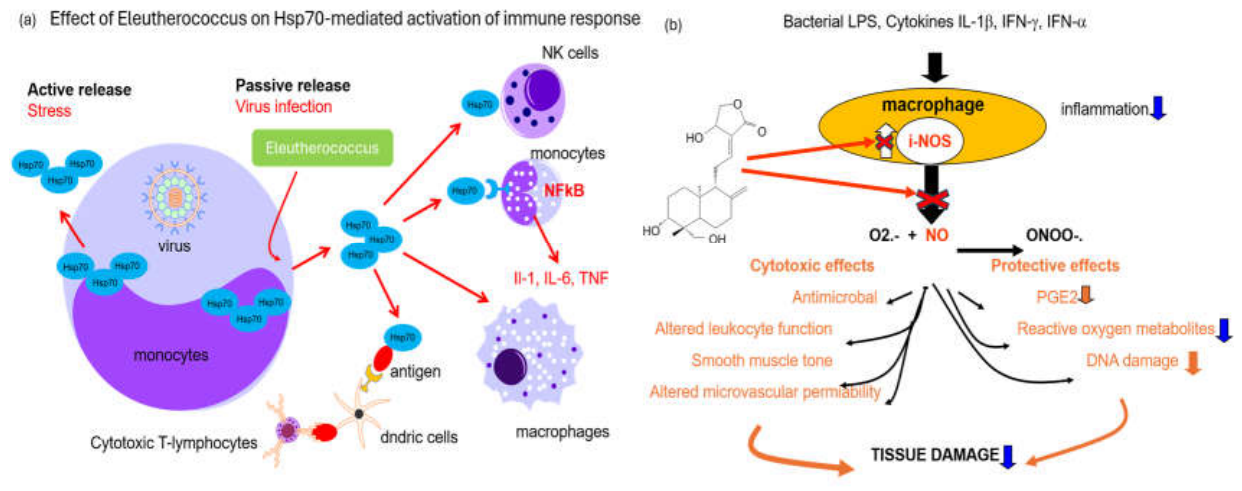
Figure A4.
Immunosuppressive effect of andrographolide and anti-inflammatory effect of Eleutherococcus; effects of andrographolide on NFkB-mediated inhibition of iNOS, COX2, and proinflammatory cytokines. The subunits of p50(NFkB1) and p65 (RelA) form a transcriptionally active dimer. In resting cells, p50/p60 dimers are bound to an inhibitory protein, IκB, and retained in an inactive form in the cytoplasm. Upon Stimulation, IκB is phosphorylated mainly by the IκB kinases (IKKs) and degraded. The degradation of IκB proteins exposes the nuclear localization signal, resulting in nuclear shuttling of the p50/p65 heterodimer for the transcription of multiple target genes, such as those for cytokines (IL-1, IL-2, IL-6, IL-8, and TNF- ), cell adhesion molecules (E-selectin, ICAM-1, and VCAM-1), cyclooxygenase II, inducible NO synthase, immunoreceptors, hemopoietic growth factors, growth factor receptors, and several cell survival genes. The specific recognition sequence (–Arg, Tyr, Val, Cys 62 position, Glu, Gly, Pro, Ser, His, Gly, Gly, Leu, Pro - amino acid residues 59-71) in the p50 subunit is important for interacting with the kB site DNA. By binding to kB-site DNA, NF-kB (p50 subunit) can initiate transcription. Andrographolide covalently binds to the reduced cysteine 62 residue of the NF-κB p50 subunit, preventing NF-κB binding to DNA. Additionally, andrographolide blocks tumor necrosis factor-α–induced phosphorylation of inhibitory IκB kinase-β, downstream inhibitory IκBα degradation, phosphorylation of the p65 subunit of NF-κB, and p65 nuclear translocation and DNA-binding activity. Similarly, andrographolide blocks p65 nuclear translocation and DNA-binding activity in the nuclear extracts from lung tissues of OVA-challenged mice [1].
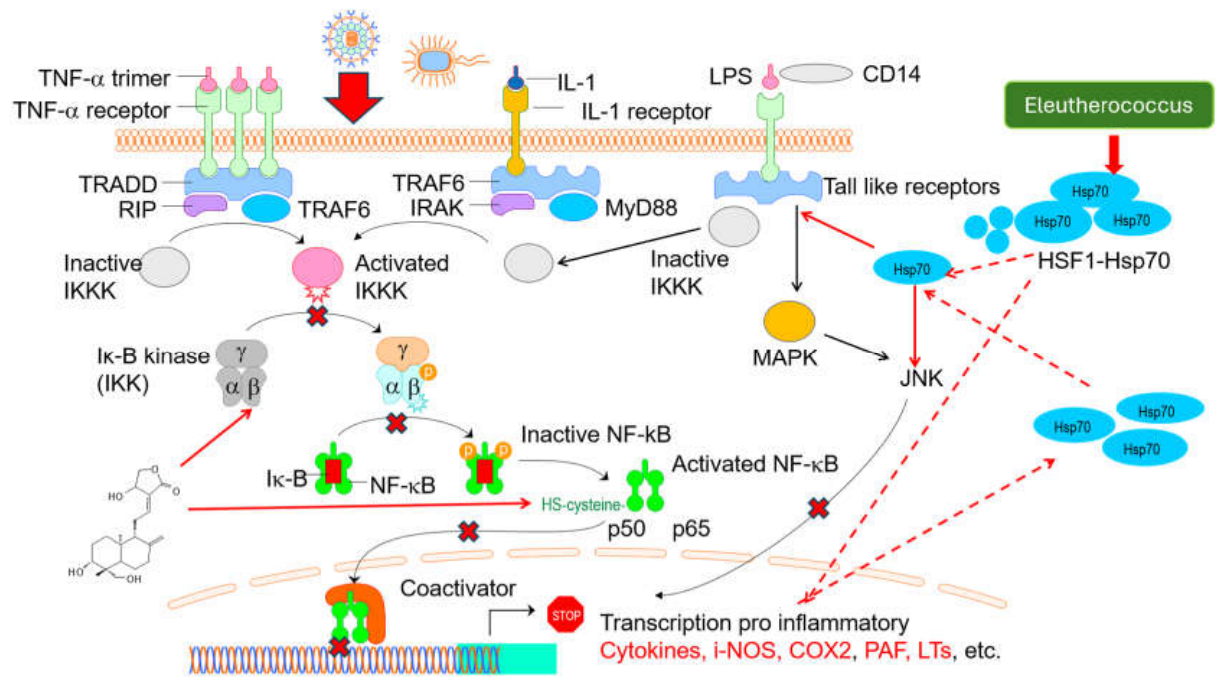
Figure A5.
The changes from the baseline the inflammatory symptoms (a-f), market IL-6 (g), physical activity (h), workout (i), time to resolution (j), recovery rate (k), the the rates of patients with clinical deterioration in the treatment and control groups (l), and the virus clearance (m) in the treatment and control groups: Kaplan–Meier curves show the percent of patients with SARSCoV-2 virus over the time from randomization (Day 1) to the end of the treatment (Day 14) and the follow-up period for one week (Day 21) in the treatment and control groups; hazard ratio Kan Jang/placebo = 1.686, 95% CI of ratio from 0.8698 to 3.269. * p < 0.05 [26].
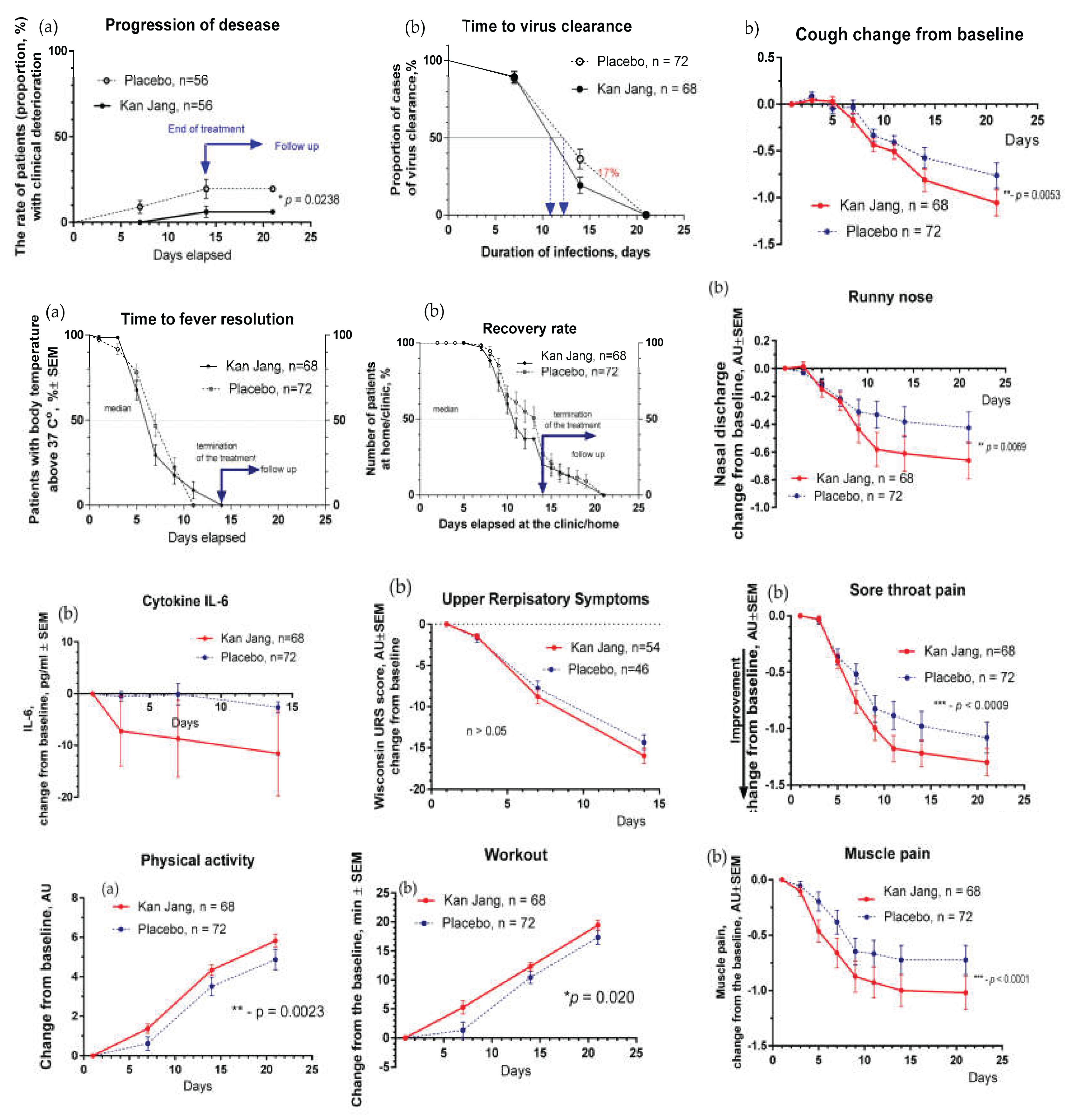
Figure A6.
Transcriptome-mediated targets of andrographolide and downstream effects on proteomics and metabolites in host cells.
Figure A6.
Transcriptome-mediated targets of andrographolide and downstream effects on proteomics and metabolites in host cells.
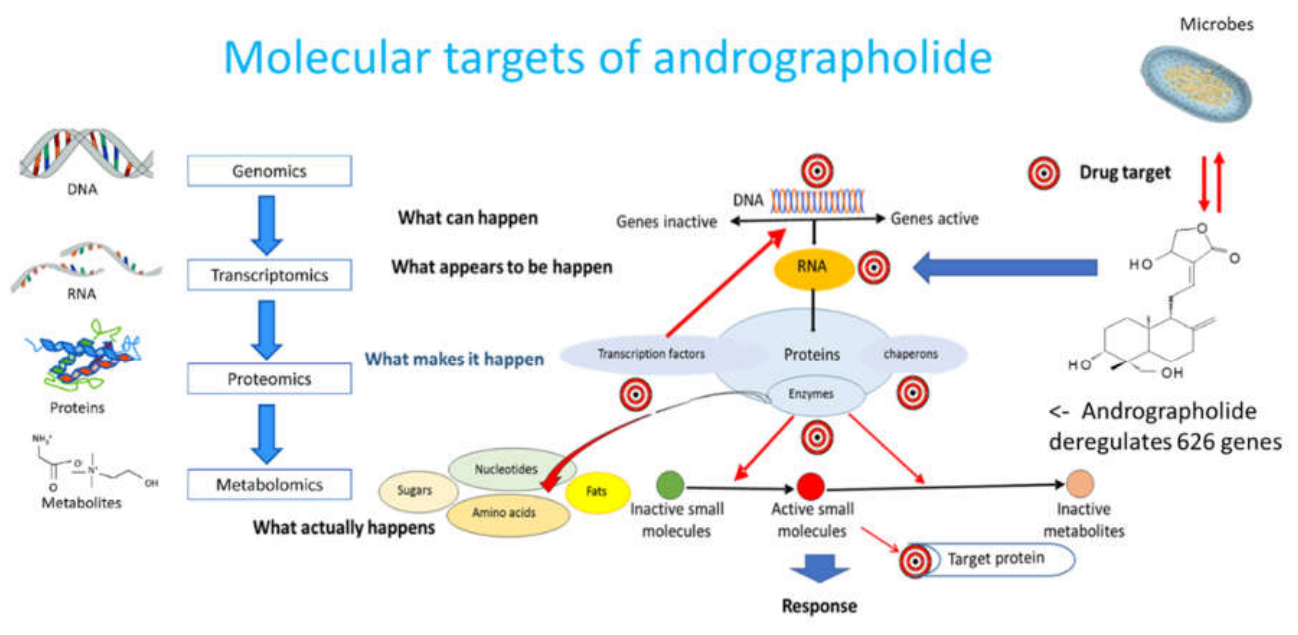
Figure A7.
Effects of Kan Jang on the adaptive stress system.
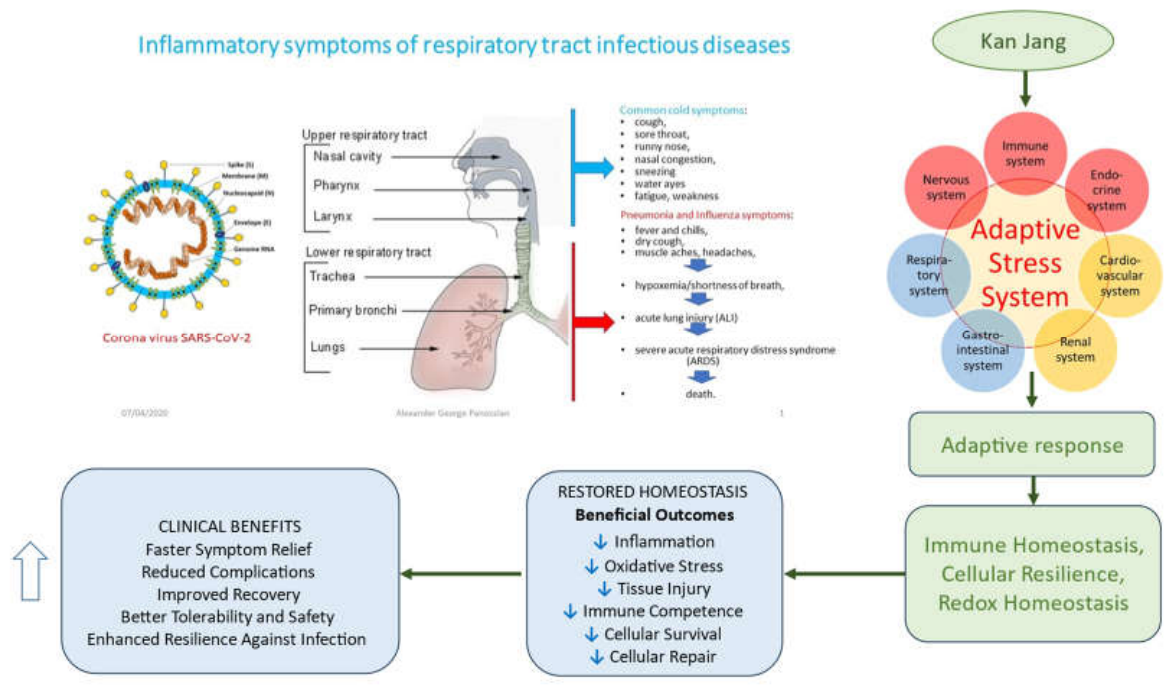
Figure A8.
Synergistic effects of Andrographis and Eleutherococcus on the networks inhibiting alpha-interferon.
Figure A8.
Synergistic effects of Andrographis and Eleutherococcus on the networks inhibiting alpha-interferon.
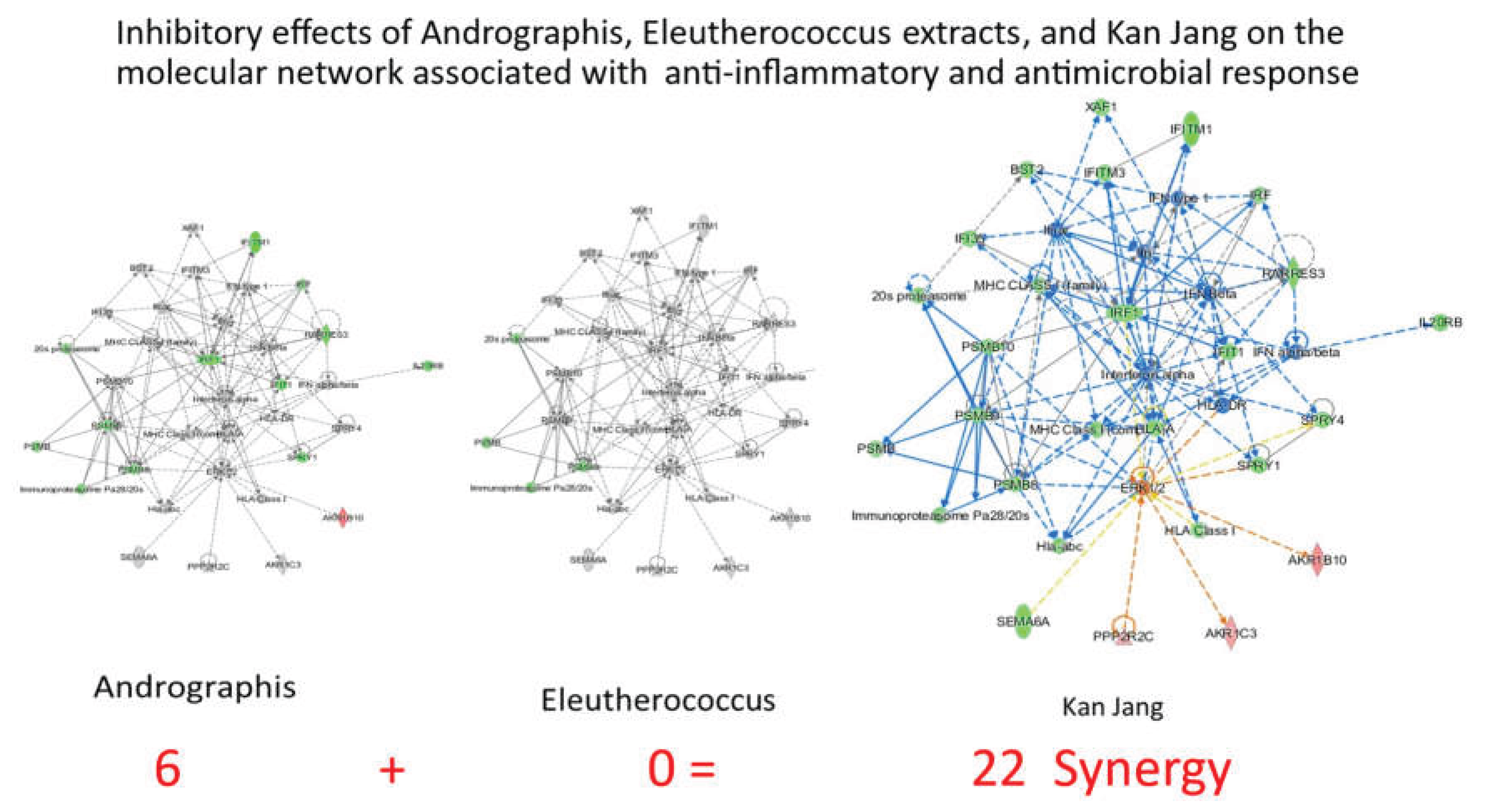
Figure A9.
Synergistic effects of Andrographis and Eleutherococcus on the networks inhibiting encephalitis.
Figure A9.
Synergistic effects of Andrographis and Eleutherococcus on the networks inhibiting encephalitis.
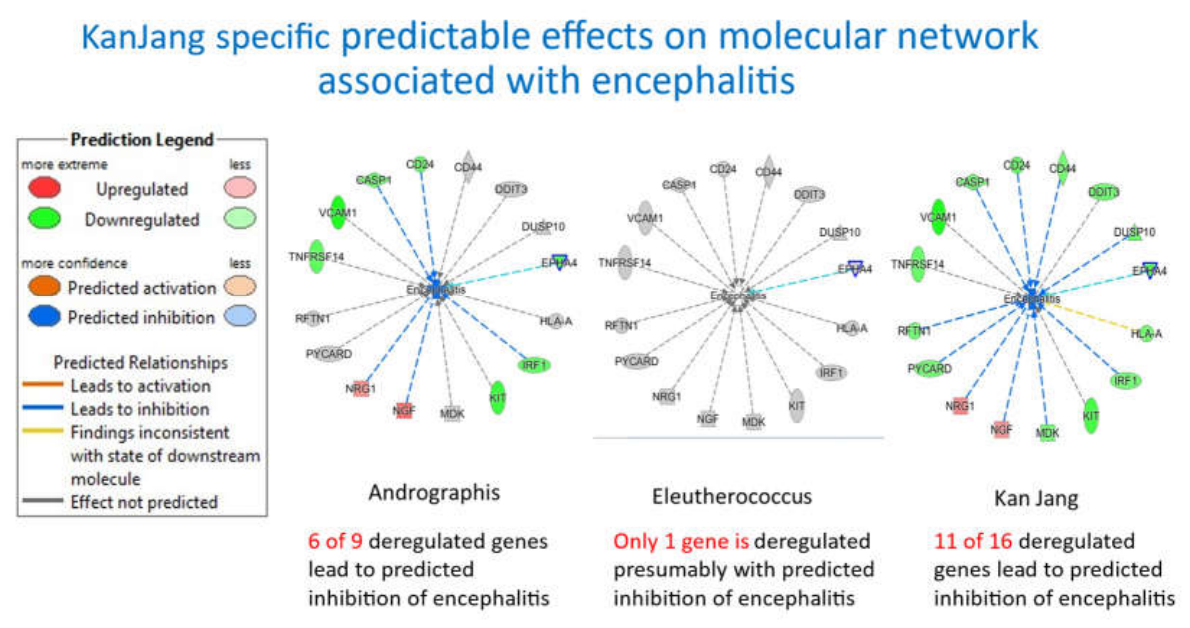
Figure A10.
The predicted modulation of leukotriene signaling by E. senticosus. Transcriptome-wide RNA sequencing of T98G neuroglial cells identified downregulation of ALOX5AP, LTC4S, and DPEP2 following treatment with E. senticosus. ALOX5AP encodes 5-lipoxygenase-activating protein (FLAP), an essential component of the 5-lipoxygenase pathway, whereas LTC4S encodes leukotriene C4 synthase, which catalyzes the formation of LTC₄. The ALOX5AP gene encodes arachidonate 5-lipoxygenase-activating protein (FLAP), an integral nuclear membrane protein [73,74]. FLAP is essential for leukotriene production, which mediates inflammatory responses and has an established pathological role in allergic and respiratory diseases [75]. DPEP2 participates in cysteinyl-leukotriene metabolism. In silico pathway analysis predicted that inhibiting DPEP2 would reduce leukotriene signaling [71]. Cysteinyl leukotrienes (LTC₄, LTD₄ and LTE₄) are important mediators of allergic inflammation and bronchoconstriction. The figure therefore illustrates a proposed mechanistic link between E. senticosus–associated changes in gene expression and attenuation of leukotriene signaling.
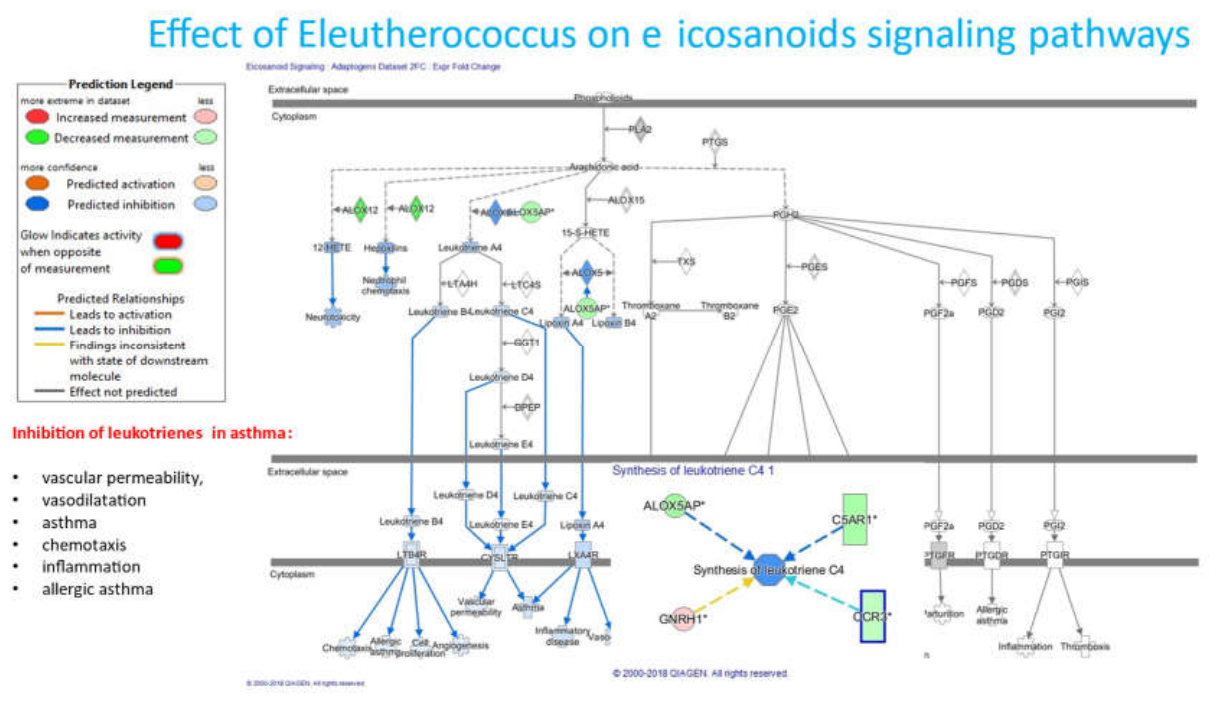
Figure A11.
Eleutherococcus regulates the expression of deregulated genes in URTI, rhinitis, sinusitis, and bronchospasm.
Figure A11.
Eleutherococcus regulates the expression of deregulated genes in URTI, rhinitis, sinusitis, and bronchospasm.
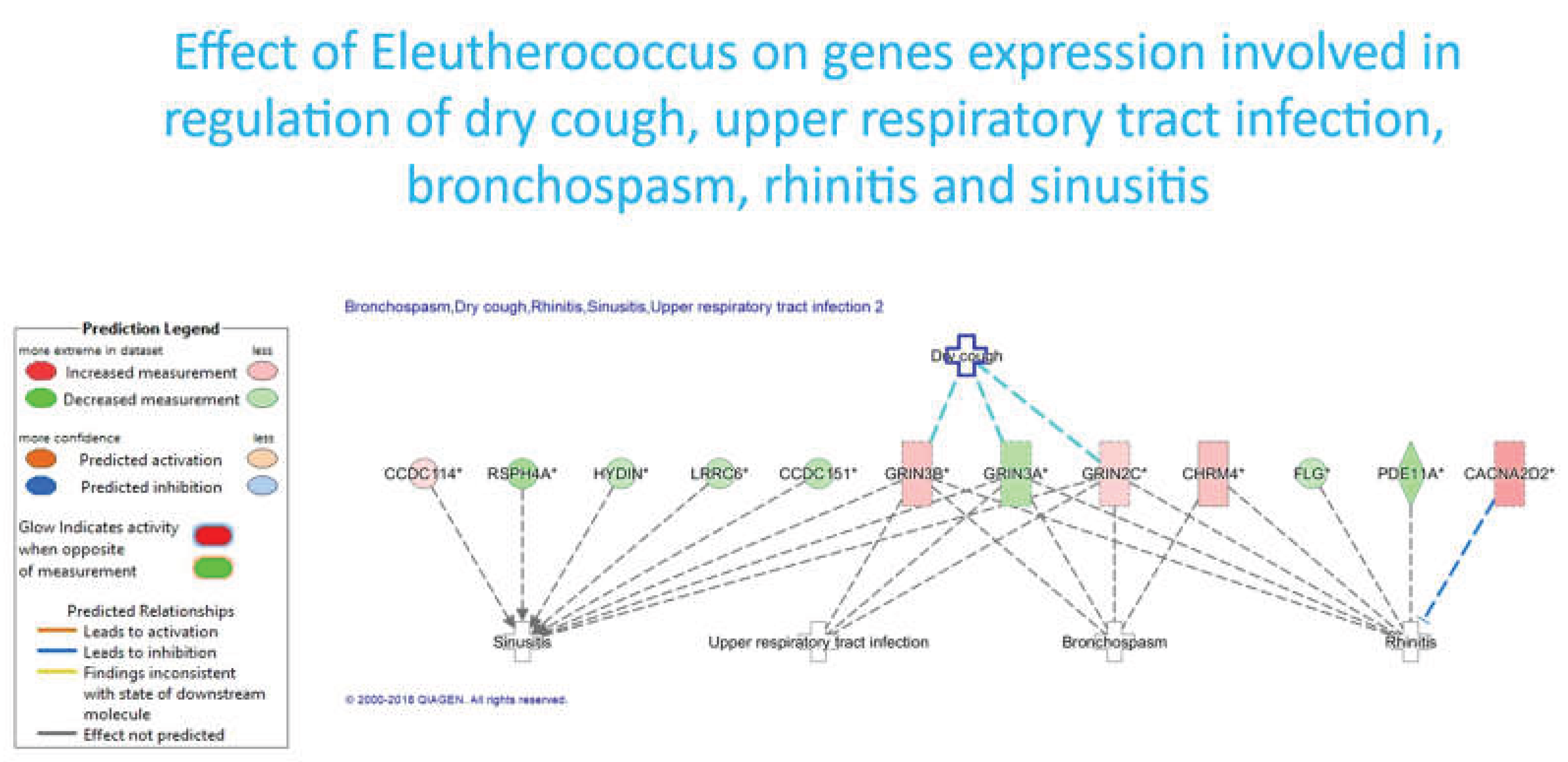
References
- Panossian, A.; Wikman, G. Efficacy of Andrographis paniculata in upper respiratory tract (URT) infectious diseases and the mechanism of action. In: Evidence- and rationale-based research on Chinese Drugs, Ed. H. Wagner and G. Ulrich Merzenich (Eds.), Springer Publ. Comp. 2012. Pp. 137-180 ; https://link.springer.com/chapter/10.1007/978-3-7091-0442-2_4. [CrossRef]
- Herba Andrographidis (2002). In WHO Monographs on Selected Medicinal Plants; World Health Organization: Geneva, Switzerland, 2002; Volume 2, pp. 12–24.
- Andrographis paniculata. In: The Indian Herbal Pharmacopeia (2002); Revised New Edition 2002; Indian Drug Manufacturers’ Association: Mumbai, India. 2002; pp. 57–69; Available online: https://www.scribd.com/document/59798407/Indian-Herbal-Pharmacopoeia-Vol-i (accessed on 3 September 2025).
- Andrographis paniculata (Burm. f.) Wall. ex Nees. In: A Handbook of Medicinal Plants of Nepal; Eds. In: Watanabe, T.; Rajbhandari, K.K.; Malla, K.J.; Yahara, S. Kobfa Publishing Project: Bangkok, Thailand, 2005; pp. 72–73. Available online: https://www.vedamsbooks.com/books/a_hand_book_of_medicinal_plants_of_nepal (accessed on 24 April 2025).
- Andrographis Herba. Chuanxinlian. In: Chinese Pharmacopoeia Commission. (2010). Pharmacopoeia of the People’s Republic of China. China Medical Science Press. Pp 32-33. https://www.hceis.com/home/book_view.aspx?id=9911 ;https://catalog.nlm.nih.gov/discovery/fulldisplay/alma9916781023406676/01NLM_INST:01NLM_INST.
- US Pharmacopeia. (2014). 37th revision. United States of America Pharmacopeia Convention: United States of America Pharmacopeia Convention. United States Pharmacopeia.
- NIH Dietary Supplement Label Database. United States Department of Health and Human Services, National Institutes of Health, Office of Dietary Supplements. https://dsld.od.nih.gov/ https://ods.od.nih.gov/Research/Dietary_Supplement_Label_Database.aspx https://dsld.od.nih.gov/search/Andrographis/bWFya2V0X3N0YXR1cz1hbGwvZW50cnlfZGF0ZT0yMDExLDIwMjUvYXBwbHlfc3lub255bXM9eWVzL3NvcnQ9bWF0Y2gvcGFnZV9zaXplPTIwLw==.
- LNHPD. (2022). Licensed natural health products database (LNHPD). Natural and Nonprescription Health Products Directorate. Retrieved from https://health-products.canada.ca/lnhpd-bdpsnh/index-eng.jsp.
- Federal Register of Legislation. Australian Government. Therapeutic Goods (Permissible Ingredients) Amendment (Removal of Andrographis Paniculata) Determination 2026. https://www.legislation.gov.au/F2026L01211/asmade/text.
- Therapeutic Goods Administration. Andrographis removed from listed medicines framework because of allergy risk. Canberra: Australian Government Department of Health, Disability and Ageing; 2026 Sep 17 [cited 2026 Oct 13]. Available from: https://www.tga.gov.au/news/news-articles/andrographis-removed-listed-medicines-framework-because-allergy-risk.
- Therapeutic Goods Administration. High-moderate risk changes to permissible ingredients - Andrographis paniculata 2026. Canberra: Australian Government Department of Health, Disability and Ageing; 2026 Sep 18 [cited 2026 Oct 13]. Available from: https://www.tga.gov.au/news/regulatory-decision-notices/high-moderate-risk-changes-permissible-ingredients-andrographis-paniculata-2026.
- Therapeutic Goods Administration. (2026). Andrographis paniculata (Andrographis) and anaphylaxis: Supplementary report with adverse event figures to 31 December 2025. Canberra, ACT: Australian Government Department of Health. URL https://www.tga.gov.au/sites/default/files/2026-04/andrographis-paniculata-andrographis-anaphylaxis-supplementary-report.pdf (accessed on 25 August 2026).
- Therapeutic Goods Administration. (2024). Andrographis paniculata (Andrographis) and anaphylaxis: Updated safety review with adverse event data to 31 December 2024. Canberra, ACT: Australian Government Department of Health. https://www.tga.gov.au/sites/default/files/2026-04/andrographis-paniculata-andrographis-anaphylaxis-updated-safety-review.pdf Available online: URL (accessed on 25 August 2026).
- Therapeutic Goods Administration. Andrographis recalls: Concerns over allergy risk. Canberra: Australian Government Department of Health, Disability and Ageing; 2026 Oct 16 [cited 2026 Oct 13]. Available from: https://www.tga.gov.au/safety/recalls-and-other-market-actions/market-actions/andrographis-recalls-concerns-over-allergy-risk.
- Therapeutic Goods Administration. (2015). Andrographis paniculata (Andrographis) and anaphylaxis: Safety review and public safety alert. Canberra, ACT: Australian Government Department of Health. Version 1.0. https://www.tga.gov.au/sites/default/files/safety-review-andrographis.pdf?utm_source=chatgpt.com Available online: URL (accessed on 25 August 2026).
- Therapeutic Goods Administration. Andrographis paniculata (Andrographis) and anaphylaxis - updated safety review and supplementary report. Canberra: Australian Government Department of Health, Disability and Ageing; 2026 Apr 8 [cited 2026 Oct 13]. Available from: https://www.tga.gov.au/products/medicines/listed-medicines/monitoring-and-compliance/compliance-and-education-listed-medicines/andrographis-paniculata-andrographis-and-anaphylaxis-updated-safety-review-and-supplementary-report.
- Melchior, J.; Palm, S.; Wikman, G. Controlled clinical study of standardized Andrographis paniculata extract in common cold - a pilot trial. Phytomedicine 1997, 3, 315-318. [CrossRef]
- Cáceres, D.D.; Hancke, J.L.; Burgos, R.A.; Sandberg, F.; Wikman, G.K. Use of visual analogue scale measurements (VAS) to asses the effectiveness of standardized Andrographis paniculata extract SHA-10 in reducing the symptoms of common cold. A randomized double blind-placebo study. Phytomedicine 1999, 6, 217-223. [CrossRef]
- Melchior, J.; Spasov, A.A.; Ostrovskij, O.V.; Bulanov, A.E.; Wikman, G. Double-blind, placebo-controlled pilot and phase III study of activity of standardized Andrographis paniculata Herba Nees extract fixed combination (Kan jang) in the treatment of uncomplicated upper-respiratory tract infection. Phytomedicine 2000, 7, 341-350. [CrossRef]
- Gabrielian, E.S.; Shukarian, A.K.; Goukasova, G.I.; Chandanian, G.L.; Panossian. A.G.; Wikman, G.; Wagner, H. A double blind, placebo-controlled study of Andrographis paniculata fixed combination Kan Jang in the treatment of acute upper respiratory tract infections, including sinusitis. Phytomedicine 2002, 9, 589-597. [CrossRef]
- Kulichenko, L.L.; Kireyeva, L.V.; Malyshkina, E.N.; Wikman, G. A randomized, controlled study of Kan Jang versus amantadine in the treatment of influenza in Volgograd. J Herb Pharmacother. 2003, 3, 77-93. PMID: 15277072.
- Spasov, A.A.; Ostrovskij, O.V.; Chernikov, M.V.; Wikman, G. Comparative controlled study of Andrographis paniculata fixed combination, Kan Jang and an Echinacea preparation as adjuvant, in the treatment of uncomplicated respiratory disease in children. Phytother Res. 2004, 18, 47-53. [CrossRef]
- Melchior, J.; Barth, A.; Hoheisel, O.; Palm, S.; Wikman, G. A randomized, Double-Blind, Placebo-Controlled Multicenter Study of Kan Jang® Capsules in Patients with URTI Infection with the Primary Outcome of Sick Leave Days. J Altern Complement Integr Med. 2021, 7, 161. https://www.heraldopenaccess.us/openaccess/a-randomized-double-blind-placebo-controlled-multicenter-study-of-kan-jang-capsules-in-patients-with-urti-infection-with-the-primary-outcome-of-sick-leave-days.
- Narimanyan, M.; Jamalyan, K.; Balyan, A.; Barth, A.; Palm, S.; Wikman, G.; Panossian A. Early intervention with Kan Jang® to treat upper-respiratory tractinfections: A randomized, quadruple-blind study. J Tradit Complement Med. 2021, 11, 552-562. [CrossRef]
- Ratiani, L.; Pachkoria, E.; Mamageishvili, N.; Shengelia, R.; Hovhannisyan, A.; Panossian, A. Efficacy of Kan Jang® in Patients with Mild COVID-19: Interim Analysis of a Randomized, Quadruple-Blind, Placebo-Controlled Trial. Pharmaceuticals 2022, 15, 1013. [CrossRef]
- Ratiani, L.; Pachkoria, E.; Mamageishvili, N.; Shengelia, R.; Hovhannisyan, A.; Panossian, A. Efficacy of Kan Jang® in Patients with Mild COVID-19: A Randomized, Quadruple-Blind, Placebo-Controlled Trial. Pharmaceuticals 2023, 16, 1196. [CrossRef]
- Panossian et al., 2021. Assessment of efficacy of KAN-JANG® in mild COVID-19. ClinicalTrials.gov Identifier: NCT04847518 https://clinicaltrials.gov/ct2/show/NCT04847518.
- Panossian, A.; Brendler, T. The Role of Adaptogens in Prophylaxis and Treatment of Viral Respiratory Infections. Pharmaceuticals 2020, 13, 236. [CrossRef]
- Brendler, T.; Al-Harrasi, A.; Bauer, R.; Gafner, S.; Hardy, M.L.; Heinrich,M.; Hosseinzadeh, H.; Izzo, A.A.; Michaelis, M.; Nassiri-Asl, M.; Panossian, A.; Wasser, S.P.; Williamson, E.M. Botanical drugs and supplements affecting the immune response in the time of COVID-19: Implications for research and clinical practice. Phytother Res. 2020, 35, 3013-3031. [CrossRef]
- Panossian, A.; Davtyan, T.; Gukassyan, N.; Gukasova, G.; Mamikonyan, G.; Gabrielian, E.; Wikman, G. Effect of Andrographolide and Kan Jang--fixed combination of extract SHA-10 and extract SHE-3--on proliferation of human lymphocytes, production of cytokines and immune activation markers in the whole blood cells culture. Phytomedicine 2002, 9, 598-605. [CrossRef]
- Asea, A.; Kaur, P.; Wikman, K.G. Antiviral activity and synergy of Herba Andrographidis and radix eleutherococci preparations against SARSCoV-2 infected vero E6 human primary embryonic kidney epithelial cells. J. Altern Complement Integr. Med. 2021, 6, 148. [CrossRef]
- Panossian, A.; Seo, E.J.; Wikman, G.; Efferth, T. Synergy assessment of fixed combinations of Herba Andrographidis and Radix Eleutherococci extracts by transcriptome-wide microarray profiling. Phytomedicine 2015, 22, 981–992. [CrossRef]
- Seo, E.J.; Klauck, S.M.; Efferth, T.; Panossian, A. Adaptogens in chemobrain (Part I): Plant extracts attenuate cancer chemotherapy-induced cognitive impairment - Transcriptome-wide microarray profiles of neuroglia cells. Phytomedicine 2019, 55, 80-91. [CrossRef]
- Seo, E.J.; Klauck, S.M.; Efferth, T.; Panossian, A. Adaptogens in chemobrain (Part II): Effect of plant extracts on chemotherapy-induced cytotoxicity in neuroglia cells. Phytomedicine 2019, 58, 152743. [CrossRef]
- Seo, E.J.; Klauck, S.M.; Efferth, T.; Panossian, A. Adaptogens in chemobrain (Part III): Antitoxic effects of plant extracts towards cancer chemotherapy-induced toxicity - transcriptome-wide microarray analysis of neuroglia cells. Phytomedicine 2019, 56, 246-260. [CrossRef]
- Seo, E.J.; Klauck, S.M.; Efferth, T.; Panossian, A. Adaptogens in chemobrain (part IV): adaptogenic plants prevent the chemotherapeutics-induced imbalance of redox homeostasis by modulation of expression of genes encoding Nrf2-mediated signaling proteins and antioxidant, metabolizing, detoxifying enzymes in neuroglia cells; Longhua Chin Med 2020, 3, 4 |. [CrossRef]
- Panossian, A.; Lemerond, T.; Efferth, T. State-of-the-Art Review on Botanical Hybrid Preparations in Phytomedicine and Phytotherapy Research: Background and Perspectives. Pharmaceuticals 2024, 17, 483. [CrossRef]
- Hossain, S.; Urbi, Z.; Karuniawati, H.; Mohiuddin, R.B.; Moh Qrimida, A.; Allzrag, A. M. M.; Ming, L.C.; Pagano, E.; Capasso, R. Andrographis paniculata (Burm. f.) Wall. ex Nees: An Updated Review of Phytochemistry, Antimicrobial Pharmacology, and Clinical Safety and Efficacy. Life 2021, 11, 348. [CrossRef]
- Tan, W. S. D.; Liao, W.; Zhou, S.; Wong, W.S.F. (2017). Is there a future for andrographolide to be an anti-inflammatory drug? Deciphering its major mechanisms of action. Biochem. Pharmacol. 2017, 139, 71–81. [CrossRef]
- Burgos, R.A.; Caballero, E.; Sanchez, N.; Schroeder, R.; Wikman, G.; Hancke, J. Testicular toxicity assessment of Andrographis paniculata dried extract in rats. J Ethnopharmacol 1997, 58, 219-224. [CrossRef]
- Panossian, A.; Kochikian, A.; Gabrielian, E.; Muradian, R.; Stepanian, H.; Arsenian, F.; Wagner, H. Effect of Andrographis paniculata extract on progesterone in blood plasma of pregnant rats. Phytomedicine 1999, 6, 157–161. [CrossRef]
- Panossian, A.; Hovhannisyan, A.; Mamikonyan, G.; Abrahamian, H.; Hambardzumyan, E.; Gabrielian, E.; Goukasova, G.; Wikman, G.; Wagner, H. Pharmacokinetic and oral bioavailability of andrographolide from Andrographis paniculata fixed combination Kan Jang in rats and humans. Phytomedicine 2000, 7, 351-364. [CrossRef]
- Hovhannisyan, A.S.; Abrahamyan, H.; Gabrielyan, E.S.; Panossian, A.G. The effect of Kan Jang extract on the pharmacokinetics and pharmacodynamics of warfarin in rats. Phytomedicine 2006, 13, 318–323. [CrossRef]
- Tan, M.L.; Lim, L.E. The effects of Andrographis paniculata (Burm.f.) Nees extract and diterpenoids on the CYP450 isoforms’ activities, a review of possible herb-drug interaction risks. Drug Chem Toxicol. 2015, 38, 241–253. [CrossRef]
- Donovan, J.L.; DeVane, C.L.; Chavin, K.D.; Taylor, R.M.; Markowitz, J.S. Siberian ginseng (Eleutheroccus senticosus) effects on CYP2D6 and CYP3A4 activity in normal volunteers. Drug Metab Dispos.2003, 31, 519–522. [CrossRef]
- Shang, Y.X.; Shen, C.; Stub, T.; Zhu, S.J.; Qiao, S.Y.; Li, Y.Q.; Wang, R.T.; Li, J.; Liu, J.P. Adverse Effects of Andrographolide Derivative Medications Compared to the Safe use of Herbal Preparations of Andrographis paniculata: Results of a Systematic Review and Meta-Analysis of Clinical Studies. Front Pharmacol. 2022, 13, 773282. [CrossRef]
- Kingston, R.; LeMaster, S. Kan Jang: Scientific Review and a Framework for Ongoing Post-market Surveillance for Herbal Products. Safety Call International, Safety Call International, PLLC; July 31, 2008, pp.1-104.
- Council for International Organizations of Medical Sciences. Guidelines for preparing core clinical-safety information on drugs: Second edition - Report of CIOMS Working Groups III and V. Geneva: CIOMS; 1999 [cited 2026 Oct 13]. Available from: https://cioms.ch/publications/product/guidelines-preparing-core-clinical-safety-information-drugs-second-edition-report-cioms-working-groups-iii-v/.
- European Medicines Agency. Guideline on good pharmacovigilance practices (GVP) - Module IX – Signal management (Rev 1). Reference Number: EMA/827661/2011. London: European Medicines Agency; 2017 [cited 2026 Oct 15]. Available from: https://www.ema.europa.eu/en/documents/scientific-guideline/guideline-good-pharmacovigilance-practices-gvp-module-ix-signal-management-rev-1_en.pdf.
- European Medicines Agency. Guideline on good pharmacovigilance practices (GVP) Module IX Addendum I – Methodological Aspects of Signal Detection from Spontaneous Reports of Suspected Adverse Reactions. Reference Number: E EMA/209012/2015. London: European Medicines Agency; 2016 [cited 2026 Oct 15]. Available from: https://www.ema.europa.eu/en/documents/scientific-guideline/guideline-good-pharmacovigilance-practices-gvp-module-ix-addendum-i-methodological-aspects-signal-detection-spontaneous-reports-suspected-adverse-reactions_en.pdf.
- EMA/CHMP/BPWP/143744/2011 rev.2 12 December 2024. Committee for Medicinal Products for Human Use (CHMP) Guideline on core SmPC for human normal immunoglobulin for subcutaneous and intramuscular administration (SCIg/IMIg). https://www.ema.europa.eu/system/files/documents/scientific-guideline/guideline-core-smpc-human-normal-immunoglobulin-subcutaneous-intramuscular-administration-scig-imig_en.pdf.
- Medical Dictionary for Regulatory Activities (MedDRA) Maintenance and Support Services Organisation (MSSO). Introductory Guide for Standardised MedDRA Queries (SMQs) Version 29.1. McLean, VA: MSSO; 2026. Available from: https://www.meddra.org.
- European Medicines Agency . EudraVigilance. https://www.ema.europa.eu/en/human-regulatory-overview/research-development/pharmacovigilance-research-development/eudravigilance.
- Brekhman, I.I. On antitoxic action of Eleutherococcus. Moscow: Meditsina; 1982, 1-37.
- Panossian, A.G.; Efferth, T.; Shikov, A.N.; Pozharitskaya, O.N.; Kuchta, K.; Mukherjee, P. K.; Banerjee, S.; Heinrich, M.; Wu, W.; Guo, D.A.; Wagner, H. Evolution of the adaptogenic concept from traditional use to medical systems: Pharmacology of stress- and aging-related diseases. Med Res Rev. 2021, 41, 630–703. [CrossRef]
- EMA/HMPC/680615/2013. Assessment report on Eleutherococcus senticosus (Rupr. et Maxim.) Maxim., radix. Based on Article 16d (1), Article 16f and Article 16h of Directive 2001/83/EC as amended (traditional use). Final. 25 March 2014.
- Smalinskiene, A.; Lesauskaite, V.; Zitkevicius, V.; Savickiene, N.; Savickas, A.; Ryselis, S.; Sadauskiene, I.; Ivanov, L. Estimation of the combined effect of Eleutherococcus senticosus extract and cadmium on liver cells. Ann N Y Acad Sci. 2009, 1171,314-320. [CrossRef]
- Goldberg, E.D.; Shubina, T.S.; Shternberg, I.B. (1971) Protective role of Eleutherococcus during the administration of rubomycia under experimental conditions. Antibiotiks 1971, 16, 113–114.
- Monakhov, B.V. Extract of Eleutherococcus senticosus maxim and the therapeutic activity of cyclophosphane, ethymidine, and benzo-TEPA. Vopr Onkol. 1967, 13, 94-97.
- Monakhov, B.V. Influence of the liquid extract from the roots of Eleutherococcus senticosus on the toxicity and antitumor activity of cyclophosphan [in Russian]. Vopr Onkol. 1965, 11, 60-63.
- Monakhov, B.V. The reduction of the toxic effect of some antiblastomic preparations with the Eleutherococcus extract. Vopr Oncl. 1967, 3, 71–76.
- Elkin, A.I. Influence of Rhodosine and Eleutherococcus extract on certain toxic effects of chlorophosis. Medicines of the Soviet Far East 1972 11, 94–97.
- Tejedor Alonso, M. A., Moro Moro, M., Múgica García, M. V. (2015). Epidemiology of anaphylaxis. Clin Exp Allergy 2015, 45, 1027-1039. [CrossRef]
- Chandrasekaran, C. V., Gupta, A., & Agarwal, A. (2010). Effect of an extract of Andrographis paniculata leaves on inflammatory and allergic mediators in vitro. Journal of ethnopharmacology, 129(2), 203–207. [CrossRef]
- Chandrasekaran, C. V., Thiyagarajan, P., Deepak, H. B., & Agarwal, A. (2011). In vitro modulation of LPS/calcimycin induced inflammatory and allergic mediators by pure compounds of Andrographis paniculata (King of bitters) extract. International immunopharmacology, 11(1), 79–84. [CrossRef]
- Chandrasekaran, C. V., Murali, B., Deepak, M., & Agarwal, A. (2012). In vitro comparative evaluation of non-leaves and leaves extracts of Andrographis paniculata on modulation of inflammatory mediators. Anti-inflammatory & anti-allergy agents in medicinal chemistry, 11(2), 191–197. [CrossRef]
- Hu, X., Wen, Y., Liu, S., Luo, J., Tan, X., Li, Z., Lu, X., & Long, X. (2015). Evaluation of the anaphylactoid potential of Andrographis paniculata extracts using the popliteal lymph node assay and P815 cell degranulation in vitro. Journal of translational medicine, 13, 121. [CrossRef]
- Che, D., Hou, Y., Zeng, Y., Li, C., Zhang, Y., Wei, D., Hu, S., Liu, R., An, H., Wang, Y., & Zhang, T. (2019). Dehydroandrographolide inhibits IgE-mediated anaphylactic reactions via calcium signaling pathway. Toxicology and applied pharmacology, 366, 46–53. [CrossRef]
- Che, D., Zheng, Y., Hou, Y., Li, T., Du, X., & Geng, S. (2022). Dehydroandrographolide targets CD300f and negatively regulated MRGPRX2-induced pseudo-allergic reaction. Phytotherapy research : PTR, 36(5), 2173–2185. [CrossRef]
- Amroyan, E., Gabrielian, E., Panossian, A., Wikman, G., & Wagner, H. (1999). Inhibitory effect of andrographolide from Andrographis paniculata on PAF-induced platelet aggregation. Phytomedicine : international journal of phytotherapy and phytopharmacology, 6(1), 27–31. [CrossRef]
- Panossian, A.; Seo, E.J.; Efferth, T. Effects of anti-inflammatory and adaptogenic herbal extracts on gene expression of eicosanoids signaling pathways in isolated brain cells. Phytomedicine 2019, 60, 152881. [CrossRef]
- Panossian, A.; Seo, E.J.; Efferth, T. Novel molecular mechanisms for the adaptogenic effects of herbal extracts on isolated brain cells using systems biology. Phytomedicine 2018, 50, 257-284. [CrossRef]
- Peters-Golden, M.; Brock, T.G. 5-lipoxygenase and FLAP. Prostaglandins Leukot Essent Fatty Acids. 2003, 69, 99-109. [CrossRef]
- Brink, C.; Dahlén, S. E.; Drazen, J.; Evans, J. F.; Hay, D. W.; Nicosia, S.,; Serhan, C. N.; Shimizu, T.; Yokomizo, T. International Union of Pharmacology XXXVII. Nomenclature for leukotriene and lipoxin receptors. Pharmacol Rev. 2003, 55, 195–227. [CrossRef]
- Serhan, C.N.; Chiang, N.; Dalli, J.; Levy, B.D. “Lipid mediators in the resolution of inflammation”. Cold Spring Harb Perspect Biol. 2015, 7, a016311. [CrossRef]
- Vignini, A., Costanzo, S., Martini, M., Alia, S., Membrino, V., Di Crescenzo, T., Buti, E., & Bilò, M. B. (2026). The Platelet Activating Factor-Platelet Activating Factor Acetylhydrolase Enzyme Axis in Anaphylaxis: Current Evidence and Future Perspectives. International journal of molecular sciences, 27(17), 7783. [CrossRef]
- Simons, F. E., Ardusso, L. R., Bilò, M. B., El-Gamal, Y. M., Ledford, D. K., Ring, J., Sanchez-Borges, M., Senna, G. E., Sheikh, A., Thong, B. Y., & World Allergy Organization (2011). World allergy organization guidelines for the assessment and management of anaphylaxis. World Allergy Organ J. 2011;4(2):13-37. [CrossRef]
- Simons, F. E., Ardusso, L. R., Bilò, M. B., Dimov, V., Ebisawa, M., El-Gamal, Y. M., Ledford, D. K., Lockey, R. F., Ring, J., Sanchez-Borges, M., Senna, G. E., Sheikh, A., Thong, B. Y., Worm, M., & World Allergy Organization (2012). 2012 Update: World Allergy Organization Guidelines for the assessment and management of anaphylaxis. Curr Opin Allergy Clin Immunol. 2012, 12, 389-399. [CrossRef]
- Cardona, V., Ansotegui, I. J., Ebisawa, M., El-Gamal, Y., Fernandez Rivas, M., Fineman, S., Geller, M., Gonzalez-Estrada, A., Greenberger, P. A., Sanchez Borges, M., Senna, G., Sheikh, A., Tanno, L. K., Thong, B. Y., Turner, P. J., & Worm, M. World allergy organization anaphylaxis guidance 2020. World Allergy Organ 2020, 13, 100472. [CrossRef]
- Cox LS, Sanchez-Borges M, Lockey RF. World Allergy Organization systemic allergic reaction grading system: is a modification needed? J Allergy Clin Immunol Pract. 2017, 5, 58–62. e5. [CrossRef]
- Peavy RD, Metcalfe DD. Understanding the mechanisms of anaphylaxis. Curr Opin Allergy Clin Immunol. 2008;8:310–315. https://onlinelibrary.wiley.com/doi/10.1111/j.1398-9995.2010.02422.x.
- Ben-Shoshan M, Clarke AE. Anaphylaxis: past, present and future. Allergy. 2011;66:1–14. https://onlinelibrary.wiley.com/doi/10.1111/j.1398-9995.2010.02422.x.
- EMA/HMPC/320433/2012. Assessment report on Andrographis paniculata Nees, folium. Based on Article 10a of Directive 2001/83/EC as amended (well-established use). Based on Article 16d (1), Article 16f and Article 16h of Directive 2001/83/EC as amended (traditional use). Final. 27 August 2014.
- Thakur, A.K.; Chatterjee, S.S.; Kumar, V. Adaptogenic potential of andrographolide: an active principle of the king of bitters (Andrographis paniculata). J Tradit Complement Med. 2015, 5, 42-50. [CrossRef]
- Singh, P.; Srivastava, M.M.; Khemani, L.D. Renoprotective effects of Andrographis paniculata (Burm. f.) Nees in rats. Ups J Med Sci. 2009, 114, 136-139. [CrossRef]
- Sheeja, K.; Kuttan, G. Ameliorating effects of Andrographis paniculata extract against cyclophosphamide-induced toxicity in mice. Asian Pac J Cancer Prev. 2006, 7, 609-614. https://journal.waocp.org/?sid=Entrez:PubMed&id=pmid:17250437&key=2006.7.4.609.
- Coon, J.T.; Ernst, E. Andrographis paniculata in the treatment of upper respiratory tract infections: a systematic review of safety and efficacy. Planta Medica 2004, 70, 293–298. [CrossRef]
- Suwankesawong, W.; Saokaew, S.; Permsuwan, U.; Chaiyakunapruk, N. Characterization of hypersensitivity reactions reported among Andrographis paniculata users in Thailand using Health Product Vigilance Center (HPVC) database. BMC Complement Altern Med. 2014, 14, 515. [CrossRef]
- Wechwithan, S.; Suwankesawong, W.; Sornsrivichai, V.; McNeil, E. B.; Jiraphongsa, C.; Chongsuvivatwong, V. Signal detection for Thai traditional medicine: examination of national pharmacovigilance data using reporting odds ratio and reported population attributable risk. Regul Toxicol Pharmacol. 2014, 70, 407–412. [CrossRef]
- Gunawardana N. C. Risk of anaphylaxis in complementary and alternative medicine. Curr Opin Allergy Clin Immunol. 2017, 17, 332–337. [CrossRef]
- Worakunphanich, W.; Thavorncharoensap, M.; Youngkong, S.; Thadanipon, K.; Thakkinstian, A. (2021). Safety of Andrographis paniculata: A systematic review and meta-analysis. Pharmacoepidemiol Drug Saf. 2021, 30, 727–739. [CrossRef]
- Chandan, N.; Barvaliya, M.; Patel, T.; Ac, C.; Hegde, H.; Unger, B. Analysis of suspected serious adverse drug reactions reported with traditional medicines from the United Nations Asia region in WHO vigibase. BMC Complement Med Ther. 2025, 25, 424. [CrossRef]
- Richard, E.J.; Murugan, S.; Bethapudi, B.; Illuri, R.; Mundkinajeddu, D.; Chinampudur Velusami, C. Is Andrographis paniculata extract and andrographolide anaphylactic?. Toxicology reports, 2017, 4, 431–437. [CrossRef]
- Ahn, Y.; Brewerton, M. P2: When the common cold turns deadly: anaphylaxis with Andrographis paniculata. Intern Med J 2017, 47, 5-5. [CrossRef]
- Hypersensitivity reactions, including anaphylaxis, reported with oral use of Andrographis paniculata-containing natural health products. Health Product InfoWatch, Government of Canada, September 2020. https://www.canada.ca/en/health-canada/services/drugs-health-products/medeffect-canada/health-product-infowatch/september-2020.html?utm_source=chatgpt.com Available online: URL (accessed on 25 August 2026).
- Shanker, K.; Rangnekar, H.; Wele, A.; Soni, P.; Gaikwad, P.; Pal, A.; Bawankule, D.U.; Chanda, D. A randomized controlled pilot study of add-on therapy of CIM-MEG19 (standardized Andrographis paniculata formulation) in mild to moderate COVID-19. Phytomedicine Plus 2023, 3, 100398. [CrossRef]
- Tanwettiyanont, J.; Piriyachananusorn, N.; Sangsoi, L.; Boonsong, B.; Sunpapoa, C.; Tanamatayarat, P.; Na-Ek, N.; Kanchanasurakit, S. Use of Andrographis paniculata (Burm.f.) Wall. ex Nees and risk of pneumonia in hospitalised patients with mild coronavirus disease 2019: A retrospective cohort study. Front Med (Lausanne). 2022, 9, 947373. [CrossRef]
- Kanokkangsadal, P.; Mingmalairak, C.; Mukkasombat, N.; Kuropakornpong, P.; Worawattananutai, P.; Khawcharoenporn, T.; Sakpakdeejaroen, I.; Davies, N. M.; Itharat, A. Andrographis paniculata extract versus placebo in the treatment of COVID-19: a double-blinded randomized control trial. Res Pharm Sci. 2023, 18, 592–603. [CrossRef]
- Songvut, P.; Akanimanee, J.; Suriyo, T.; Pholphana, N.; Rangkadilok, N.; Panomvana, D.; Puranajoti, P.; Satayavivad, J. Non-linear oral bioavailability and clinical pharmacokinetics of high-dose Andrographis paniculata ethanolic extract: relevant dosage implications for COVID-19 treatment. Pharm Biol. 2025, 63, 42–52. [CrossRef]
- Songvut, P.; Payoong, P.; Okada, P.A.; Rittapai, N.; Suntararuks, S.; Akanimanee, J.; Rangkadilok, N.; Panomvana, D.; Puranajoti, P.; Satayavivad, J. Exploratory pharmacokinetic-pharmacodynamic characterization and safety of standardized Andrographis paniculata aqueous extract capsules in patients with mild COVID-19. Front Pharmacol. 2026, 17, 1781740. [CrossRef]
- Bradford Hill criteria | UMC; https://who-umc.org/signal-management/bradford-hill-criteria/?utm_source=chatgpt.com.
- Hill, A.B. (1965). The environment and disease: Association or causation? Proc R Soc Med. 1965, 58, 295–300. [CrossRef]
- Fedak, K.M.; Bernal, A.; Capshaw, Z.A.; Gross, S. Applying the Bradford Hill criteria in the 21st century: How data integration has changed causal inference in molecular epidemiology. Emerg Themes Epidemiol. 2015, 12, 14. [CrossRef]
- Höfler, M. The Bradford Hill considerations on causality: A counterfactual perspective. merg Themes Epidemiol. 2005, 2, 11. [CrossRef]
- Uppsala Monitoring Centre. (2026). Bradford Hill criteria. WHO Programme for International Drug Monitoring. https://www.who.int/teams/regulation-prequalification/regulation-and-safety/pharmacovigilance/networks/pidm Available online: URL (accessed on 25 August 2026).
- Burns, P.B.; Rohrich, R.J.; Chung, K.C. The levels of evidence and their role in evidence-based medicine. Plast Reconstr Surg. 2011, 128, 305–310. [CrossRef]
- Lin, C.C.; Huang, P.C. Antioxidant and hepatoprotective effects of Acanthopanax senticosus. Phytother Res. 2000, 14, 489-494.
- Wang X, Hai CX, Liang X, Yu SX, Zhang W, Li YL. The protective effects of Acanthopanax senticosus Harms aqueous extracts against oxidative stress: role of Nrf2 and antioxidant enzymes. J Ethnopharmacol. 2010;127:424-432.
- Maslov, L.N.; Guzarova, N.V. Cardioprotective and antiarrhythmic properties of preparations from Leuzea carthamoides, Aralia mandshurica, and Eleutherococcus senticosus. Eksp Klin Farmakol. 2007, 70, 48-54.
- Gibbins, A. ATMS Response to Consultation on Andrographis paniculata – Practitioner Access and Public Health Implications. Australian Traditional Medicine Society (ATMS). 29 April 2026. https://www.atms.com.au/wp-content/uploads/2026/05/ATMS-Response-to-Consultation-on-Andrographis-paniculata.pdf.
- Saxena, R.C.; Singh, R.; Kumar, P.; Yadav, S.C.; Negi, M.P.; Saxena, V.S.; Joshua, A.J.; Vijayabalaji, V.; Goudar, K.S.; Venkateshwarlu, K.; Amit, A. A randomized double-blind, placebo-controlled clinical evaluation of extract of Andrographis paniculata (KalmCold) in patients with uncomplicated upper respiratory tract infection. Phytomedicine 2010, 17, 178–185. [CrossRef]
- Rajanna, M.; Bharathi, B.; Shivakumar, B.R.; Deepak, M.; Prashanth, D.; Prabakaran, D.; Vijayabhaskar, T.; Arun, B. Immunomodulatory effects of Andrographis paniculata extract in healthy adults - An open-label study. Journal of J Ayurveda Integr Med. 2021, 12, 529–534. [CrossRef]
- Raj, J.P.; Maurya, M.R.; Nair, N.; Marfatia, H.; Hadaye, R.; Gogtay, N. J. Efficacy and safety of AP-Bio®(KalmCold®) in participants with uncomplicated upper respiratory tract viral infection (common cold) - A phase III, double-blind, parallel group, randomized placebo-controlled trial. Complement Ther Med. 2023, 73, 102934. [CrossRef]
- Murugan, S. K.; Bethapudi, B.; Rao, A. N.; Allan, J. J.; Mundkinajeddu, D.; D’Souza, P. Toxicological safety assessment of AP-Bio®, a standardized extract of Andrographis paniculata in Sprague Dawley rats. J Appl Toxicol. 2023, 43, 1630–1644. [CrossRef]
- ICH Q7 Good manufacturing practice for active pharmaceutical ingredients - Scientific guideline. https://www.ema.europa.eu/en/scientific-guidelines/ich-q7-good-manufacturing-practice-active-pharmaceutical-ingredients?utm_source=chatgpt.com.
- Q7 Good Manufacturing Practice Guidance for Active Pharmaceutical Ingredients: Guidance for Industry. Glossary; https://www.fda.gov/files/drugs/published/Q7-Good-Manufacturing-Practice-Guidance-for-Active-Pharmaceutical-Ingredients-Guidance-for-Industry.pdf.
- EU Directive 2001/83/EC — Community code relating to medicinal products for human use. Article 1(3a); https://eur-lex.europa.eu/eli/dir/2001/83?utm_source=chatgpt.com.
- EMEA/HMPC/CHMP/CVMP/214869/2006. GUIDELINE ON QUALITY OF COMBINATION HERBAL MEDICINAL PRODUCTS1 / TRADITIONAL HERBAL MEDICINAL PRODUCTS. London, 23 June 2008 https://www.ema.europa.eu/en/documents/scientific-guideline/guideline-quality-combination-herbal-medicinal-productstraditional-herbal-medicinal-products_en.pdf.
- ICD-11 for Mortality and Morbidity Statistics. https://icd.who.int/browse/2025-01/mms/en#1868068711.
- Hu, X.Y.; Wu, R.H.; Logue, M.; Blondel, C.; Lai, L.Y.W.; Stuart, B.; Flower, A.; Fei, Y.T.; Moore, M.; Shepherd, J.; Liu, J.P.; Lewith, G. Andrographis paniculata (Chuān Xīn Lián) for symptomatic relief of acute respiratory tract infections in adults and children: A systematic review and meta-analysis. PLoS One. 2017, 12, e0181780. [CrossRef]
- Worakunphanich, W.; Thavorncharoensap, M.; Youngkong, S.; Thadanipon, K.; Thakkinstian, A. Safety of Andrographis paniculata: A systematic review and meta-analysis. Pharmacoepidemiol Drug Saf. 2021, 30, 727–739. [CrossRef]
Figure 1.
The scheme captures the novel scientific contribution emerging from the Kan Jang studies: synergy through resilience biology and host-directed network pharmacology, rather than merely additive antimicrobial activity.
Figure 1.
The scheme captures the novel scientific contribution emerging from the Kan Jang studies: synergy through resilience biology and host-directed network pharmacology, rather than merely additive antimicrobial activity.
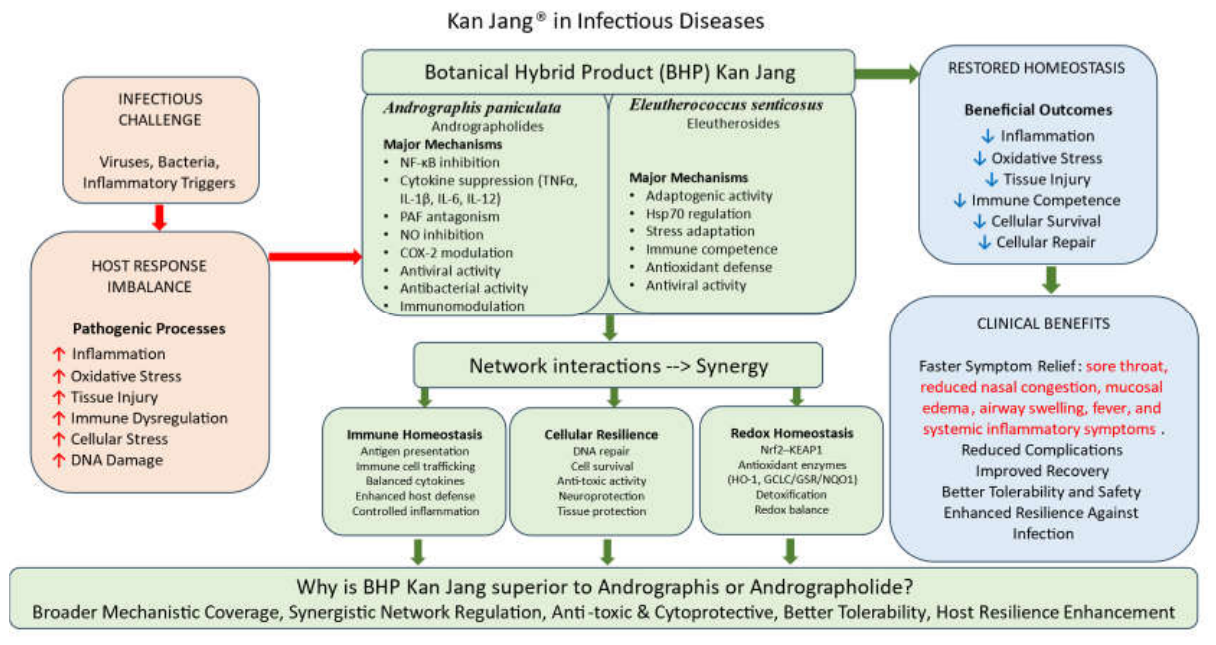
Figure 2.
Andrographis contributes pathogen-directed and inflammation-resolving mechanisms, whereas Eleutherococcus contributes adaptive stress-response and resilience mechanisms. Together, they generate emergent network effects not demonstrated by either constituent alone.
Figure 2.
Andrographis contributes pathogen-directed and inflammation-resolving mechanisms, whereas Eleutherococcus contributes adaptive stress-response and resilience mechanisms. Together, they generate emergent network effects not demonstrated by either constituent alone.
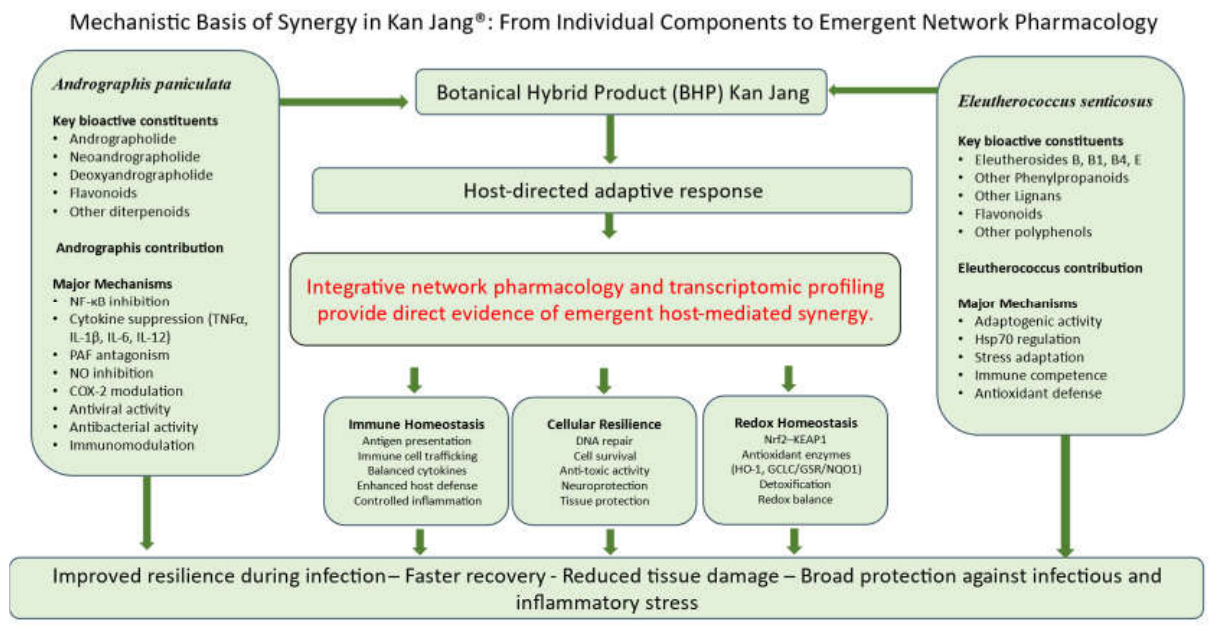
Figure 3.
Venn diagrams illustrate synergy and antagonism, showing the number of dysregulated genes in neuroglial cells in response to active pharmaceutical ingredients (APIs) from Herba Andrographidis, Radix Eleutherococci, extracts, and their fixed combination, Kan Jang (KJ). The diagram includes overlapping sections and sections associated with synergistic interactions of Andrographis and Eleutherococcus in Kan Jang (111 unique genes) [32]. Conditional “biological signatures” are shown as color-coded heatmaps that identify the diseases and biological functions associated with gene expression in response to Andrographis, Eleutherococcus, and Kan Jang. The color-coded heatmaps identify functions and diseases that are expected to increase or decrease. (The Venn diagram illustrates this synergy and antagonism).
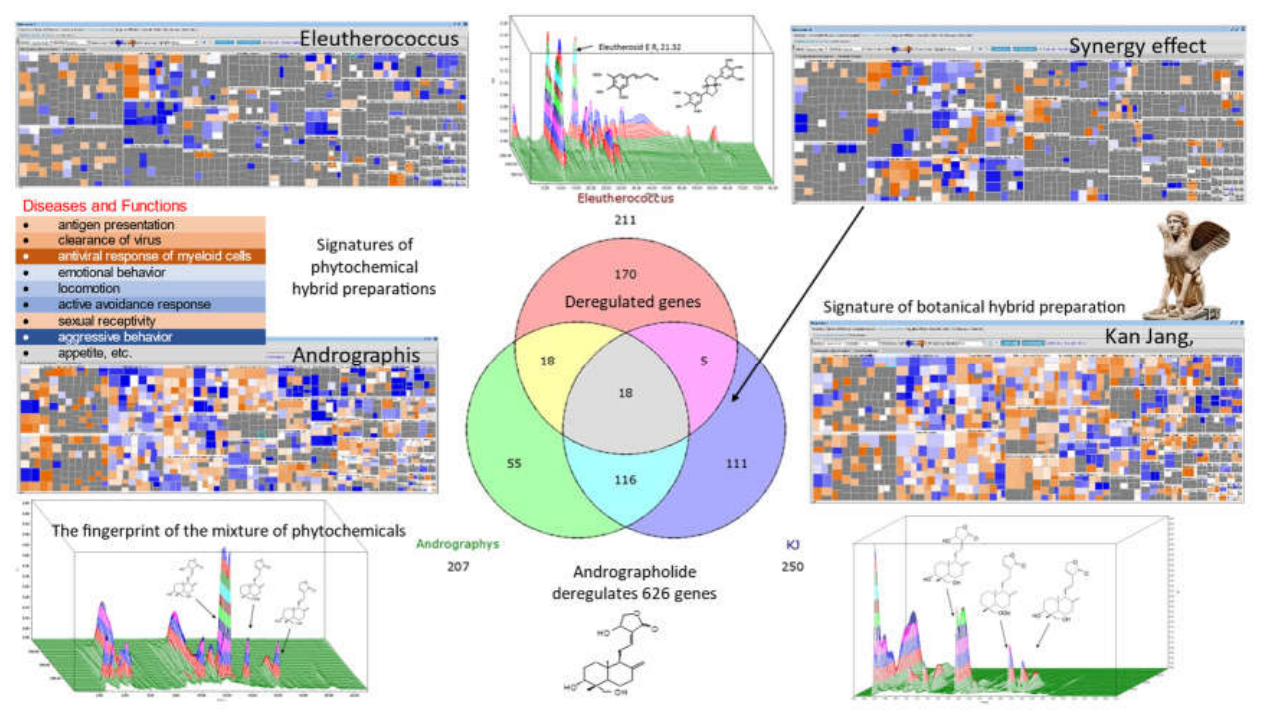
Figure 4.
Results of Kan Jang postmarketing reports presenting the annual numbers of reported (a) adverse events and (b) anaphylaxis-related events for 30 years from 1990 to 2020 in Sweden and Denmark. The periods and product classifications are based on the source dataset [90]. These reporting counts are descriptive and should not be interpreted (see limitations in section 6 below) as comparative incidence rates or evidence of a causal safety difference between Kan Jang Andrographis monotherapy in the periods 1990-2000 and Kan Jang combination in 2000-2020 [48], despite a substantial relative reduction (RR) in frequencies of reporting rate ratio (RR)=KJ/AND both for 66.8% anaphylaxis (66.8%) and 52.6% in all reported adverse (52.6%) cases.
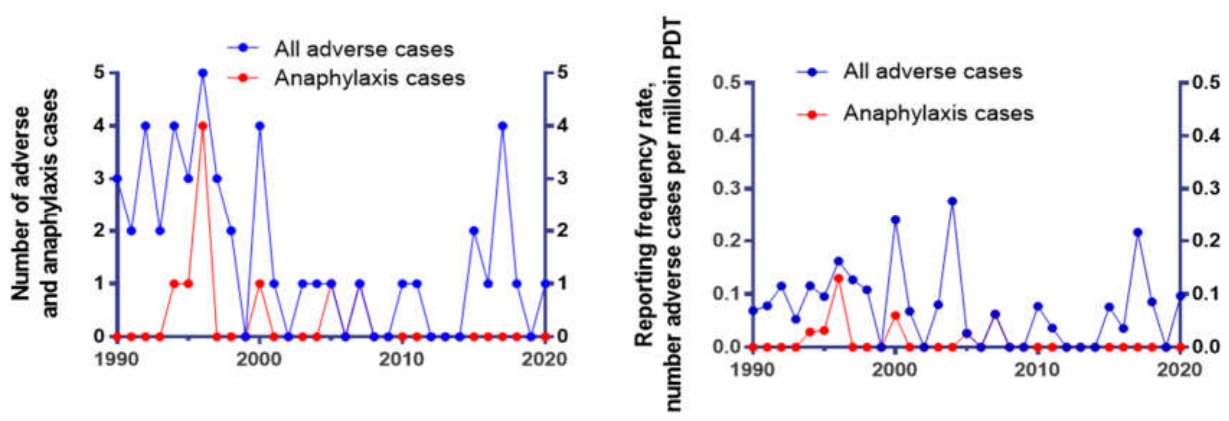
Disclaimer/Publisher’s Note: The statements, opinions and data contained in all publications are solely those of the individual author(s) and contributor(s) and not of MDPI and/or the editor(s). MDPI and/or the editor(s) disclaim responsibility for any injury to people or property resulting from any ideas, methods, instructions or products referred to in the content. |
© 2026 by the authors. Licensee MDPI, Basel, Switzerland. This article is an open access article distributed under the terms and conditions of the Creative Commons Attribution (CC BY) license (http://creativecommons.org/licenses/by/4.0/).
Copyright: This open access article is published under a Creative Commons CC BY 4.0 license, which permit the free download, distribution, and reuse, provided that the author and preprint are cited in any reuse.