

Submitted:
26 October 2026
Posted:
28 October 2026
You are already at the latest version
Abstract
The mechanical performance of parts manufactured using fused deposition modeling (FDM) is often limited by weak interlayer bonding, residual stresses, and the predominantly amorphous structure of rapidly cooled polymers. This study investigates a simple and low cost post processing method aimed at improving the mechanical properties of FDM printed PLA components without the use of reinforcing additives or composite materials. Based on a review of commonly used printing materials and processing parameters, a thermal post treatment procedure employing compacted table salt as a supporting medium was developed. The salt bed prevented geometric distortion during annealing while enabling controlled thermal exposure above the glass transition temperature of PLA. The proposed process was applied to specimens manufactured in both vertical and horizontal build orientations and subsequently evaluated using static tensile testing and Charpy impact testing. The experimental results showed that salt supported annealing had only a minor effect on tensile properties, while producing a clear improvement in impact resistance. The average tensile strength of vertically printed specimens remained essentially unchanged (30.05 MPa → 30.01 MPa), and horizontally printed specimens exhibited a modest increase of approximately 3% (53.31 MPa → 54.93 MPa). Elongation at break decreased slightly in both orientations. In contrast, Charpy impact strength increased by 28.9% for vertically printed specimens (5.23 → 6.74 kJ/m²) and by 224% for horizontally printed specimens (5.30 → 17.19 kJ/m²). FTIR analysis confirmed that the thermal treatment did not alter the chemical structure of the PLA. The observed improvement in impact performance is therefore attributed primarily to physical changes, most likely including residual stress relaxation, possible improvement of interlayer bonding, and reduced moisture content. An increase in crystallinity is also possible, but was not directly verified in this study.
Keywords:
FDM
; PLA
; additive manufacturing
; thermal annealing
; tensile strength
; impact strength
1. Introduction
Fused deposition modeling (FDM), a material-extrusion additive manufacturing process, is widely used for prototyping and low-volume polymer production owing to its relatively low equipment and material costs, ease of operation, and ability to fabricate complex geometries directly from digital models [15,16]. Polylactic acid (PLA) is among the most commonly used FDM thermoplastics because of its good printability, dimensional stability, relatively low processing temperature, and renewable feedstock origin. Despite these advantages, FDM-printed components frequently exhibit inferior or direction-dependent mechanical properties compared with conventionally manufactured polymer products. This behavior is primarily associated with the layer-by-layer deposition process, which can result in internal voids, incomplete interlayer bonding, residual thermal stresses, and anisotropic bead arrangements. Consequently, the mechanical strength and impact resistance of printed components may be reduced, particularly when the applied load acts perpendicular to the deposited layers [1,3,13,14,15,16]. The mechanical performance of FDM-printed PLA depends on both the material characteristics and the selected printing parameters. Numerous studies have investigated the effects of raster orientation, layer height, nozzle temperature, infill strategy, and build orientation on the mechanical behavior of printed components [1,4,22]. Previous research has indicated that specimens printed horizontally may exhibit higher tensile strength than vertically printed specimens, primarily because the loading direction and deposited filament paths favor more effective load transfer and reduce the influence of interlayer interfaces [8,9,10]. These findings highlight the importance of considering build orientation when evaluating strategies intended to improve the mechanical performance of FDM-printed components.In addition to optimizing printing parameters, post-processing techniques have been investigated as potential means of modifying the internal structure and mechanical properties of printed polymers. Thermal annealing has attracted particular attention because it can promote molecular rearrangement, stress relaxation, and crystallization in semi-crystalline polymers such as PLA [2,5,6,7,8,9,10,14]. Depending on the material grade, processing temperature, treatment duration, and printing architecture, these changes may improve selected mechanical properties. However, annealing can also induce shrinkage, warping, dimensional distortion, embrittlement, or deterioration of interlayer performance. Consequently, the reported effects are not uniform, and improvements in one mechanical property cannot be assumed to correspond to improvements in all other properties [6,7,8,9,10,17,18,19,20,21].
A particular challenge in the thermal post-processing of FDM-printed PLA is maintaining dimensional stability during heating. As the material approaches or exceeds its glass transition temperature, its resistance to deformation decreases, potentially resulting in changes in specimen geometry. The use of an external supporting medium may therefore help constrain deformation during thermal treatment. Salt-assisted approaches, including salt remelting and salt-supported thermal processing, have already been investigated, demonstrating that the general concept of using salt in polymer post-processing is not itself novel [4,11,12]. Nevertheless, the effects of a particular salt-bed configuration and thermal treatment protocol require evaluation under clearly defined experimental conditions.
The present study investigates a salt-supported thermal post-processing method in which FDM-printed PLA specimens are embedded in mechanically ground and compacted table salt and heated at 100 ± 5 °C for 160 min. The holding period begins only after the salt bed reaches the target temperature, providing a defined reference point for the treatment duration. Specimens manufactured in two build orientations are examined to assess whether their mechanical responses to the treatment differ. The evaluation includes tensile strength, elongation at break, Charpy impact strength, and Fourier-transform infrared (FTIR) spectroscopy. The results are used to characterize the observed mechanical changes and examine their relationship to the specimens’ build orientations and the spectroscopic findings. The contribution of this study lies in the experimental evaluation of a specific salt-supported treatment configuration and its associated time–temperature protocol, together with an orientation-dependent assessment of tensile and impact properties. The method is investigated as a potentially accessible approach to thermal post-processing without the incorporation of reinforcing additives or the production of composite materials.
Accordingly, the objectives of this study are to characterize the mechanical changes observed after salt-supported thermal treatment, compare the direction and magnitude of these changes between horizontal and vertical build orientations, and discuss the implications and limitations of the proposed procedure in terms of interpretation and reproducibility.
2. Materials and Methods
2.1. Specimen Manufacture
Tensile and impact test specimens were manufactured using an Ender 3 FDM 3D printer and commercially available PLA filament supplied by Plast Spaw. PLA was selected due to its widespread use in additive manufacturing and its well documented response to thermal post processing. The tensile specimens were designed according to ISO 527-1 Type 1B, while the impact specimens were manufactured in accordance with PN-EN ISO 179 requirements for Charpy impact testing using U-notched samples. The printing parameters were maintained constant throughout the study. The nozzle temperature was set to 205 °C, the build plate temperature to 60 °C, and the layer height to 0.20 mm. All specimens were printed with 100% concentric infill. The printing speeds were 25 mm/s for the first and last layers, 35 mm/s for the outer walls, and 50 mm/s for the infill region. No support structures were used during fabrication. The tensile and Charpy standards used in the study are cited as [11] and [12], respectively.
2.2. Mechanical Testing Methods
The manufactured specimens were divided into four experimental groups according to build orientation and post processing condition: vertically printed specimens, horizontally printed specimens, thermally treated vertically printed specimens, and thermally treated horizontally printed specimens. Five specimens were tested for each experimental condition (n = 5). Mechanical characterization was performed using static tensile testing and Charpy impact testing. The tensile tests were conducted in accordance with ISO 527 using Type 1B specimens. The primary objective was to determine the tensile strength and elongation at break of the investigated materials.
During data processing, one tensile test result was excluded from the analysis due to a measurement error that occurred during specimen mounting. In addition, one specimen exhibited premature failure caused by a manufacturing defect that resulted in significant geometric distortion. Since this behavior was not representative of the remaining specimens within the same experimental group, the result was treated as an outlier and excluded from the calculation of average values. The reported results therefore represent the average mechanical performance of specimens that satisfied the predefined experimental quality criteria.Following tensile testing, fracture surfaces were visually examined to identify differences in failure behavior between untreated and thermally treated specimens. Particular attention was paid to the fracture location, fracture morphology, and the apparent integrity of interlayer bonding. Impact resistance was evaluated using the Charpy impact method. The obtained results were subsequently compared to assess the influence of thermal treatment on the mechanical performance of the printed PLA specimens. The tensile testing device used in the experiments is shown in Figure 1a, while the Charpy impact testing machine is shown in Figure 1b.
2.3. Mechanical Testing Methods
Four experimental groups were investigated: (1) vertically printed, unthermally treated specimens; (2) horizontally printed, unthermally treated specimens; (3) vertically printed, thermally treated specimens; and (4) horizontally printed, thermally treated specimens. Five specimens were tested for each experimental condition (n = 5).
Tensile tests were conducted at a stretching speed of 0.1 mm/s (6 mm/min). Tensile strength was calculated as:
where Rₘ is tensile strength, Fₘ is the maximum tensile force, and S0 is the cross-sectional area of the specimen. The cross-sectional area was calculated as S0 = B × H, where B is the width of the narrow part of the specimen and H is its thickness.
Rₘ = Fₘ / S0
The Charpy impact test was performed on full sized specimens with a U-shaped notch of 5 mm depth. Impact strength was calculated as U = Kᵤ/S0, where Kᵤ is the energy spent on breaking the specimen and S0 is the cross sectional area. The fracture energy was determined from Kᵤ = K_initial − K_after fracture.
2.4. FTIR Analysis
Fourier Transform Infrared Spectroscopy (FTIR) was used to compare untreated and thermally treated PLA specimens and to assess whether the thermal treatment produced detectable changes in the chemical structure. The spectra were compared with particular attention to the characteristic carbonyl, CH3 and C–O absorption bands and to spectral regions associated with absorbed moisture.
2.5. Statistical Treatment and Data Screening
Five specimens were tested for each experimental condition (n = 5). Results are reported as average values. One tensile result was excluded because of a measurement error during specimen mounting, and one specimen was excluded because a manufacturing defect caused substantial geometric distortion. For horizontally printed thermally treated specimens, specimen No. 5 was excluded because of measurement errors identified during data processing. These exclusions were made before calculation of the reported average values. No inferential statistical test was performed in the present study.
2.6. Salt Assisted Thermal Annealing Methods
Commercial table salt (sodium chloride) was selected as the supporting medium. Prior to use, the salt was mechanically ground to reduce particle size and improve packing density. The resulting fine grained material enabled more uniform support of the specimens during thermal treatment. A layer of compacted salt approximately 50 mm thick was placed at the bottom of a heat resistant container. The printed specimens were positioned on this layer and subsequently covered with additional salt. The recovered salt was dried and stored for potential reuse in subsequent experiments. Figure 2 presents the Salt supported thermal annealing setup.
The salt was compacted in successive layers to ensure complete support of the specimen geometry and to minimize deformation during heat treatment. After complete embedding, an additional salt layer approximately 50 mm thick was applied above the specimens. The thermal treatment was performed in a laboratory oven preheated to 100 °C. The container containing the embedded specimens was placed inside the oven, and the process duration was measured only after the temperature within the salt bed reached 100 ± 5 °C. This temperature was maintained for 160 min. After completion of the thermal treatment, the oven was switched off and the specimens were allowed to cool gradually inside the furnace to room temperature. Following cooling, the specimens were removed from the salt bed and cleaned using warm water to eliminate residual sodium chloride from the surface.
3. Results
3.1. Tensile Properties Results
Figure 3 summarizes the specimen geometries and the stress–strain responses obtained for the four tensile testing groups. The specimen geometries used for tensile and Charpy testing are shown in Figure 3a. The vertically printed unthermally treated specimens reached an average ultimate tensile strength of 30.05 MPa and an average elongation at break of 8.88% (Figure 3b). Horizontally printed unthermally treated specimens reached 53.31 MPa and 10.21%, respectively (Figure 3c). Vertically printed thermally treated specimens reached 30.01 MPa and 8.29% (Figure 3d), whereas horizontally printed thermally treated specimens reached 54.93 MPa and 10.13% (Figure 3e).
The average tensile strength values for all investigated groups are summarized in Figure 4a. The comparison of thermally treated and unthermally treated specimens is shown in Figure 4b and Table 1. Vertically printed specimens showed virtually no change in ultimate tensile strength, whereas horizontally printed specimens exhibited an increase of approximately 3%. Elongation at break decreased slightly in both orientations.
3.2. Impact Properties Results
The average Charpy impact results are given in Table 2. A comparison of impact strength before and after thermal treatment is presented in Figure 5a. Impact strength increased by 28.9% for vertically printed specimens and by 224% for horizontally printed specimens.

Table 2.
Average Charpy impact strength.
| Sample type | Average U [kJ/m2] |
|---|---|
| Vertical, not thermally treated | 5.23 |
| Horizontal, not thermally treated | 5.30 |
| Vertical, thermally treated | 6.74 |
| Horizontal, thermally treated | 17.19 |
Table 3.
Relative change in Charpy impact strength.
| Print direction | Increase in impact strength |
|---|---|
| Vertical | +28.9% |
| Horizontal | +224% |
3.3. FTIR Characterization Results
FTIR analysis was performed on untreated and thermally treated PLA samples. The overlaid spectra exhibited nearly identical characteristic absorption bands. The carbonyl stretching vibration associated with ester groups appeared at approximately 1757 cm−1 in both spectra. CH3 stretching vibrations at approximately 2996 and 2946 cm−1 and C–O stretching bands around 1187 cm−1 remained essentially unchanged. These observations indicate that the thermal treatment did not alter the chemical composition of the PLA and did not produce detectable thermal degradation under the applied conditions. The main spectral differences were associated with regions related to absorbed moisture, with reduced water related absorption after thermal treatment.
4. Discussion
The tensile test results revealed that the thermal treatment had only a minor effect on static tensile properties. Vertically printed specimens showed virtually no change in ultimate tensile strength, while horizontally printed specimens exhibited a modest increase of approximately 3%. Elongation at break decreased slightly in both orientations. In contrast, the Charpy impact tests demonstrated a clear positive effect of the treatment. Impact strength increased by 28.9% for vertically printed specimens and by 224% for horizontally printed specimens. These findings indicate that the applied salt supported annealing method primarily improves the impact resistance of FDM printed PLA, while its influence on tensile strength remains limited under the conditions investigated.
Additionally, thermal annealing can reduce residual stresses generated during the FDM printing process. Rapid cooling of deposited layers produces frozen internal stresses and weak interlayer interfaces. Prolonged thermal exposure may allow stress relaxation and limited chain diffusion across layer interfaces, which could improve bonding between adjacent printed layers. Another important factor is moisture removal. Water molecules absorbed by PLA may act as localized plasticizers and may contribute to hydrolytic degradation. The reduction in absorbed moisture observed in the FTIR spectra likely contributed to the stabilization of the polymer structure and improved mechanical behavior. Therefore, the clear improvement in Charpy impact strength (and the minor changes in tensile behaviour) can be attributed primarily to physical processes occurring during annealing. The most plausible contributing factors are:
- -
- relaxation of residual stresses generated during printing,
- -
- possible improvement of interlayer bonding through limited chain diffusion,
- -
- reduction of absorbed moisture.
An increase in the degree of crystallinity is also possible under the applied conditions (100 ± 5 °C for 160 min), but this mechanism remains hypothetical because no direct measurements by DSC or XRD were performed. The present results do not allow the individual contributions of these mechanisms to be quantified.
The improvement in the mechanical properties of the thermally treated PLA specimens can be attributed to several physical and structural phenomena occurring simultaneously during the annealing process. The specimens were maintained at 100 ± 5 °C for 160 min, which is above the glass transition temperature of PLA, typically reported in the range of 55–65 °C. Under these conditions, the increased molecular mobility of the polymer chains enables structural reorganization without reaching the melting temperature of PLA.
FTIR analysis was performed to determine whether the applied thermal treatment resulted in chemical changes in the PLA structure. The spectra obtained for untreated and thermally treated specimens exhibited nearly identical characteristic absorption bands. The carbonyl stretching vibration associated with ester groups was observed at approximately 1757 cm−1 in both samples. Similarly, the CH3 stretching vibrations at approximately 2996 and 2946 cm−1 and the C–O stretching bands around 1187 cm−1 remained essentially unchanged. These results indicate that the thermal treatment did not cause significant chemical modification or detectable thermal degradation of the PLA under the applied conditions. The observed changes in the FTIR spectra were mainly associated with regions related to absorbed moisture, with a reduction in water related absorption bands observed after thermal treatment.
The mechanical results suggest that the observed improvement is therefore primarily associated with physical and structural changes within the polymer rather than chemical modification. Thermal exposure above the glass transition temperature increases molecular mobility and may promote rearrangement of polymer chains into more ordered configurations. In semi crystalline polymers such as PLA, such molecular reorganization may contribute to an increase in the degree of crystallinity. However, direct measurements of crystallinity using differential scanning calorimetry (DSC) or X-ray diffraction (XRD) were not performed in the present study. Therefore, the possible increase in crystallinity should be regarded as a proposed mechanism rather than a directly measured structural parameter. The very limited change in tensile strength accompanied by a slight reduction in elongation at break is consistent with a modest increase in material stiffness, possibly related to structural reorganization and moisture removal.
Another possible contribution to the improved mechanical performance is the relaxation of residual stresses generated during FDM printing. The repeated heating and cooling cycles associated with layer by layer deposition can result in internal stresses that remain within the printed structure. Prolonged exposure to an elevated temperature allows these stresses to relax and redistribute, which may reduce local stress concentrations and the tendency for premature crack initiation. This effect may be particularly important for the vertically printed specimens, in which the mechanical response is strongly influenced by the interfaces between deposited layers.
Thermal treatment may also improve the cohesion between adjacent deposited layers. When PLA is heated above its glass transition temperature, increased molecular mobility can facilitate additional diffusion of polymer chains across existing layer interfaces. This may increase molecular entanglement and improve load transfer between adjacent layers, thereby reducing some of the anisotropy associated with FDM fabrication. Since interlayer diffusion and adhesion were not directly characterized by microscopic or interfacial measurements in this study, this mechanism should be considered a plausible explanation for the observed mechanical response rather than a directly demonstrated effect. Figure 5b shows superimposed spectra showing differences in water content in the samples.
The FTIR results also suggest that moisture removal may have contributed to the observed changes in mechanical performance. PLA can absorb moisture from the surrounding environment, and absorbed water may influence polymer mobility and mechanical behavior. The reduction in water related absorption bands after thermal treatment indicates that some moisture was removed during annealing. This effect may have contributed to the stabilization of the polymer structure and may partially explain the changes observed in the tensile and impact properties. Nevertheless, the present study did not include an independent quantitative determination of specimen moisture content; therefore, the contribution of moisture removal cannot be separated from the other mechanisms described above.
The use of compacted salt played an important role in the post processing procedure by providing mechanical support to the specimens during heating. Because the treatment temperature exceeded the glass transition temperature of PLA, the printed components were susceptible to warping, shrinkage, and other forms of dimensional deformation. The densely compacted salt surrounding the specimens acted as a physical support medium, restricting deformation while allowing the thermal treatment to proceed. The embedding of the specimens in the salt bed therefore enabled the potential structural benefits of annealing while maintaining the geometry of the printed components.
The substantial increase in Charpy impact strength is the most noteworthy result of this study. This improvement, together with the only minor changes in tensile strength and elongation at break, indicates that the annealing treatment altered the fracture behaviour of the FDM printed PLA more strongly than its quasi static tensile response. The improvement in impact resistance may be associated with a combination of reduced residual stresses, possible improvement of interlayer cohesion, changes in molecular ordering, and reduced moisture content. These mechanisms could make crack initiation and propagation more difficult and consequently increase the energy required to fracture the specimens. However, because fracture morphology and internal structural changes were not quantitatively characterized using techniques such as scanning electron microscopy (SEM), these mechanisms should be interpreted as plausible explanations supported by the mechanical and FTIR results.
The interpretation of the mechanisms underlying the improved impact resistance is limited by the lack of direct structural characterization. No differential scanning calorimetry (DSC) or X-ray diffraction (XRD) measurements were performed; therefore any increase in crystallinity remains a hypothesis rather than a confirmed result. Similarly, scanning electron microscopy (SEM) of fracture surfaces was not carried out, so changes in interlayer bonding and crack propagation paths could not be directly observed. In the absence of these data, the proposed mechanisms (residual stress relaxation, limited chain diffusion across layer interfaces, and moisture removal) should be regarded as plausible explanations supported by the mechanical results and FTIR analysis, rather than as definitively proven.
Overall, the experimental findings indicate that salt supported thermal annealing can improve the mechanical performance of FDM printed PLA without producing detectable changes in its principal chemical structure. The observed effects are most reasonably interpreted as the result of several interacting physical phenomena, including molecular reorganization, possible crystallization, residual stress relaxation, improved interlayer diffusion, and moisture removal. The compacted salt medium additionally provides geometric constraint during thermal treatment, which is essential when processing FDM printed PLA above its glass transition temperature. Further investigations incorporating DSC, XRD, SEM, and quantitative moisture measurements would be valuable for determining the individual contribution of these mechanisms and for establishing a direct relationship between structural changes and the resulting mechanical properties.
5. Conclusions
1. The proposed salt supported thermal annealing method produced a clear improvement in the impact resistance of FDM printed PLA specimens, while its effect on tensile strength remained limited.
2. Static tensile tests showed that the ultimate tensile strength remained essentially unchanged for vertically printed specimens and increased by only approximately 3% for horizontally printed specimens. Elongation at break decreased slightly in both orientations.
3. Charpy impact tests revealed a substantial enhancement in impact resistance, with increases of 28.9% for vertically printed specimens and 224% for horizontally printed specimens.
4. FTIR analysis confirmed that the thermal treatment did not cause detectable chemical degradation of PLA. The improvement in impact performance is attributed primarily to physical changes, including residual stress relaxation, possible improvement of interlayer bonding, and moisture reduction. An increase in crystallinity remains a possible but unverified contributing factor.
5. The results indicate that the proposed low cost post processing approach may extend the applicability of FDM technology in engineering applications requiring enhanced mechanical performance and impact resistance.
6. Environmental factors, particularly moisture content, may influence the mechanical properties of FDM printed components and should be investigated in future studies.
References
- Chacón, J. M.; Caminero, M. A.; García-Plaza, E.; Núñez, P. J. Additive manufacturing of PLA structures using fused deposition modelling: effect of process parameters on mechanical properties and their optimal selection. Mater. Des. 2017, 124, 143–157. [Google Scholar] [CrossRef]
- Mazzanti, V.; Malagutti, L.; Mollica, F. FDM 3D printing of polymers containing natural fillers: a review of their mechanical properties. Polymers 2019, 11, 1094. [Google Scholar] [CrossRef] [PubMed]
- Khosravani, M. R.; Reinicke, T. Mechanical properties of FDM printed PLA parts before and after thermal treatment. Polymers 2021, 13, 1239. [Google Scholar] [CrossRef] [PubMed]
- Szust, A.; Adamski, G. Using thermal annealing and salt remelting to increase tensile properties of 3D FDM prints. Eng. Fail. Anal. 2022, 132, 105932. [Google Scholar] [CrossRef]
- Kahya, Ç.; Tunçel, O.; Çavuşoğlu, O.; Tüfekci, K. Thermal annealing optimization for improved mechanical performance of PLA parts produced via 3D printing. Polym. Test. 2025, 144, 108735. [Google Scholar] [CrossRef]
- Ghasemkhani, A.; Pircheraghi, G.; Rashidi Mehrabadi, N.; Eshraghi, A. Effects of heat treatment on the mechanical properties of 3D-printed polylactic acid: study of competition between crystallization and interlayer bonding. Mater. Today Commun. 2024, 39, 109266. [Google Scholar] [CrossRef]
- Yu, N.; Sun, X.; Wang, Z.; Zhang, D.; Li, J. Effects of auxiliary heat on the interlayer bonds and mechanical performance of polylactide manufactured through fused deposition modeling. Polym. Test. 2021, 104, 107390. [Google Scholar] [CrossRef]
- Hart, K. R.; Dunn, R. M.; Wetzel, E. D. Increased fracture toughness of additively manufactured semi-crystalline thermoplastics via thermal annealing. Polymer 2020, 211, 123091. [Google Scholar] [CrossRef]
- Simmons, H.; Tiwary, P.; Colwell, J. E.; Kontopoulou, M. Improvements in the crystallinity and mechanical properties of PLA by nucleation and annealing. Polym. Degrad. Stab. 2019, 166, 248–257. [Google Scholar] [CrossRef]
- Tábi, T.; Hajba, S.; Kovács, J. G. Effect of crystalline forms (α′ and α) of poly(lactic acid) on its mechanical, thermo-mechanical, heat deflection temperature and creep properties. Eur. Polym. J. 2016, 82, 232–243. [Google Scholar] [CrossRef]
- Polski Komitet Normalizacyjny. Tworzywa sztuczne: oznaczanie właściwości mechanicznych przy statycznym rozciąganiu; Warszawa, 2020. [Google Scholar]
- Polski Komitet Normalizacyjny. Tworzywa sztuczne: oznaczanie udarności metodą Charpy’ego: instrumentalne badanie udarności; Warszawa, 2012. [Google Scholar]
- Medibew, T. M. A comprehensive review on the optimization of the fused deposition modeling process parameter for better tensile strength of PLA-printed parts. Adv. Mater. Sci. Eng. 2022, 2022, 5490831. [Google Scholar] [CrossRef]
- Wang, L.; et al. Improving the impact strength and heat resistance of 3D printed models: structure, property, and processing correlations during fused deposition modeling (FDM) of poly(lactic acid). ACS Omega 2019, 4, 4400–4411. [Google Scholar] [CrossRef] [PubMed]
- Ngo, T. D.; Kashani, A.; Imbalzano, G.; Nguyen, K. T. Q.; Hui, D. Additive manufacturing (3D printing): A review of materials, methods, applications and challenges. Compos. Part B Eng. 2018, 143, 172–196. [Google Scholar] [CrossRef]
- Dizon, J. R. C.; Espera, A. H.; Chen, Q.; Advincula, R. C. Mechanical characterization of 3D-printed polymers. Addit. Manuf. 2018, 20, 44–67. [Google Scholar] [CrossRef]
- Wach, R. A.; Wolszczak, P.; Adamus-Włodarczyk, A. Enhancement of mechanical properties of FDM-PLA parts via thermal annealing. Macromol. Mater. Eng. 2018, 303, 1800169. [Google Scholar] [CrossRef]
- Farah, S.; Anderson, D. G.; Langer, R. Physical and mechanical properties of PLA, and their functions in widespread applications—A comprehensive review. Adv. Drug Deliv. Rev. 2016, 107, 367–392. [Google Scholar] [CrossRef] [PubMed]
- Ahn, S. H.; Montero, M.; Odell, D.; Roundy, S.; Wright, P. K. Anisotropic material properties of fused deposition modeling ABS. Rapid Prototyp. J. 2002, 8, 248–257. [Google Scholar] [CrossRef]
- Griffiths, P. R.; de Haseth, J. A. Fourier Transform Infrared Spectrometry, 2nd ed.; Wiley-Interscience: Hoboken, 2007. [Google Scholar]
- ISO 527-1:2019; Plastics—Determination of tensile properties—Part 1: General principles. ISO: Geneva, 2019.
- ISO 179-1:2023; Plastics—Determination of Charpy impact properties—Part 1: Non-instrumented impact test. ISO: Geneva, 2023.
Figure 1.
Mechanical testing equipment. (a) Tensile testing device. (b) Charpy impact testing machine.
Figure 1.
Mechanical testing equipment. (a) Tensile testing device. (b) Charpy impact testing machine.
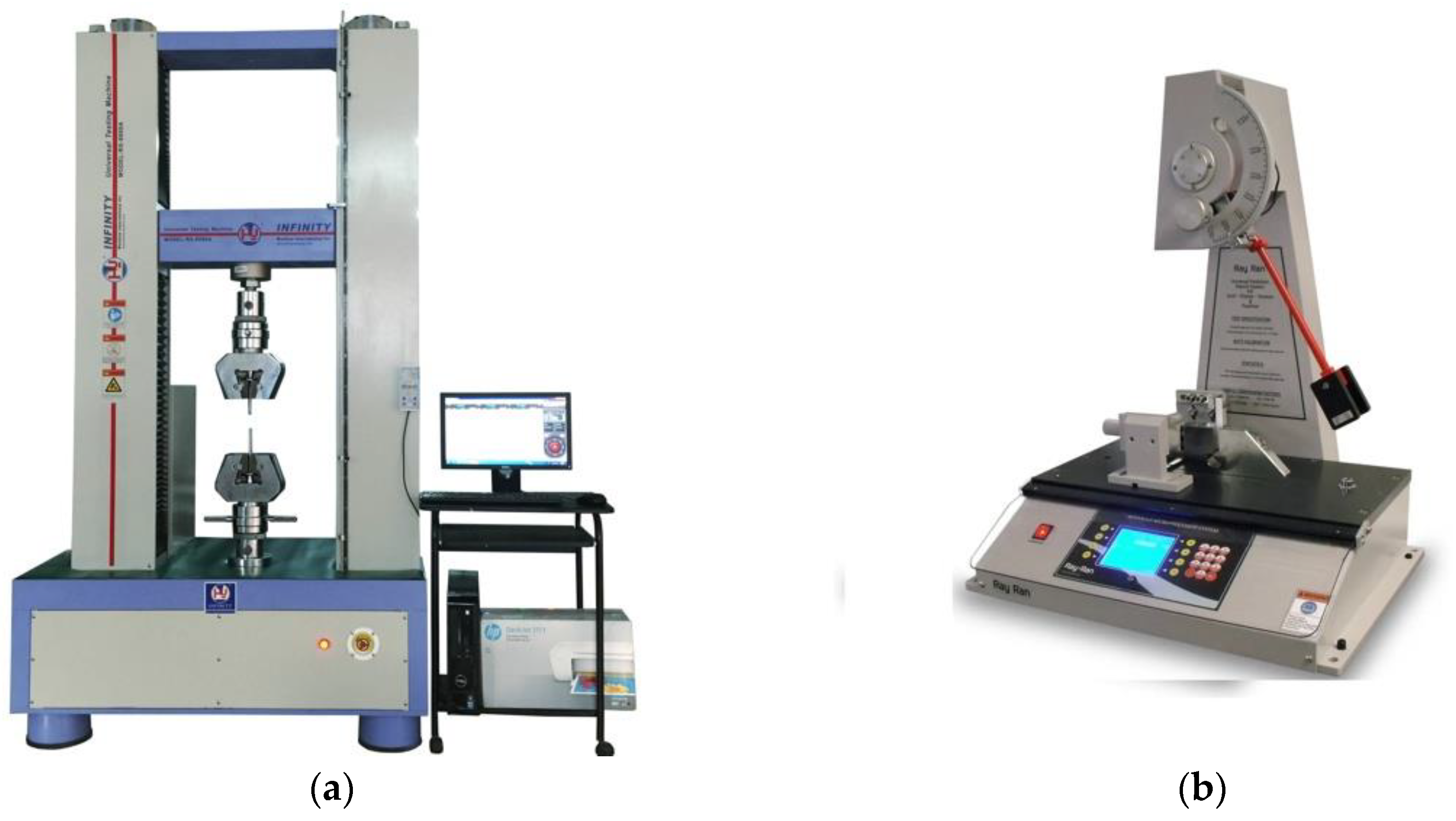
Figure 2.
Salt supported thermal annealing setup.
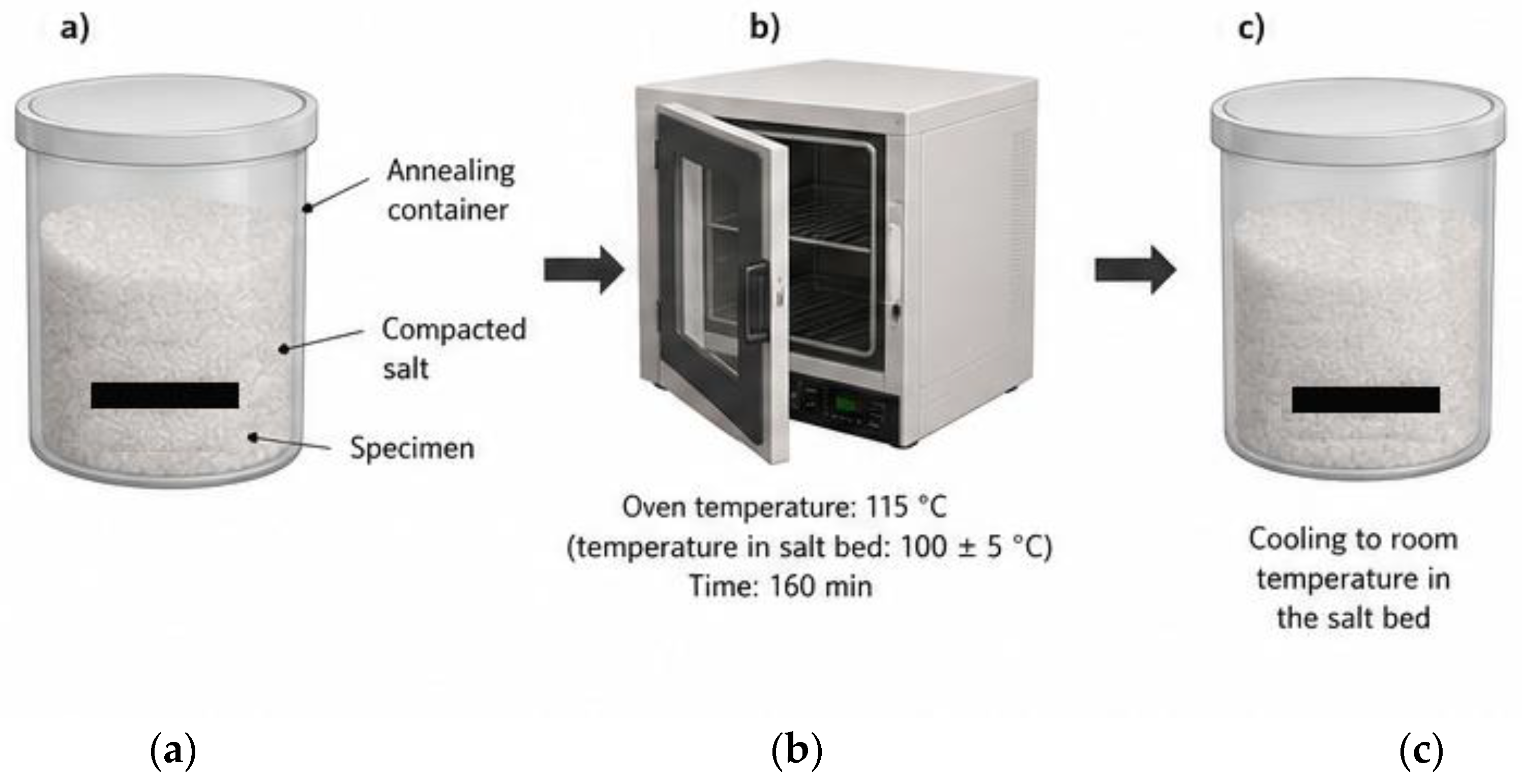
Figure 3.
Specimen geometry and tensile responses. (a) Specimen geometries and build orientations. (b–e) Stress–strain results for Groups 1–4, respectively.
Figure 3.
Specimen geometry and tensile responses. (a) Specimen geometries and build orientations. (b–e) Stress–strain results for Groups 1–4, respectively.
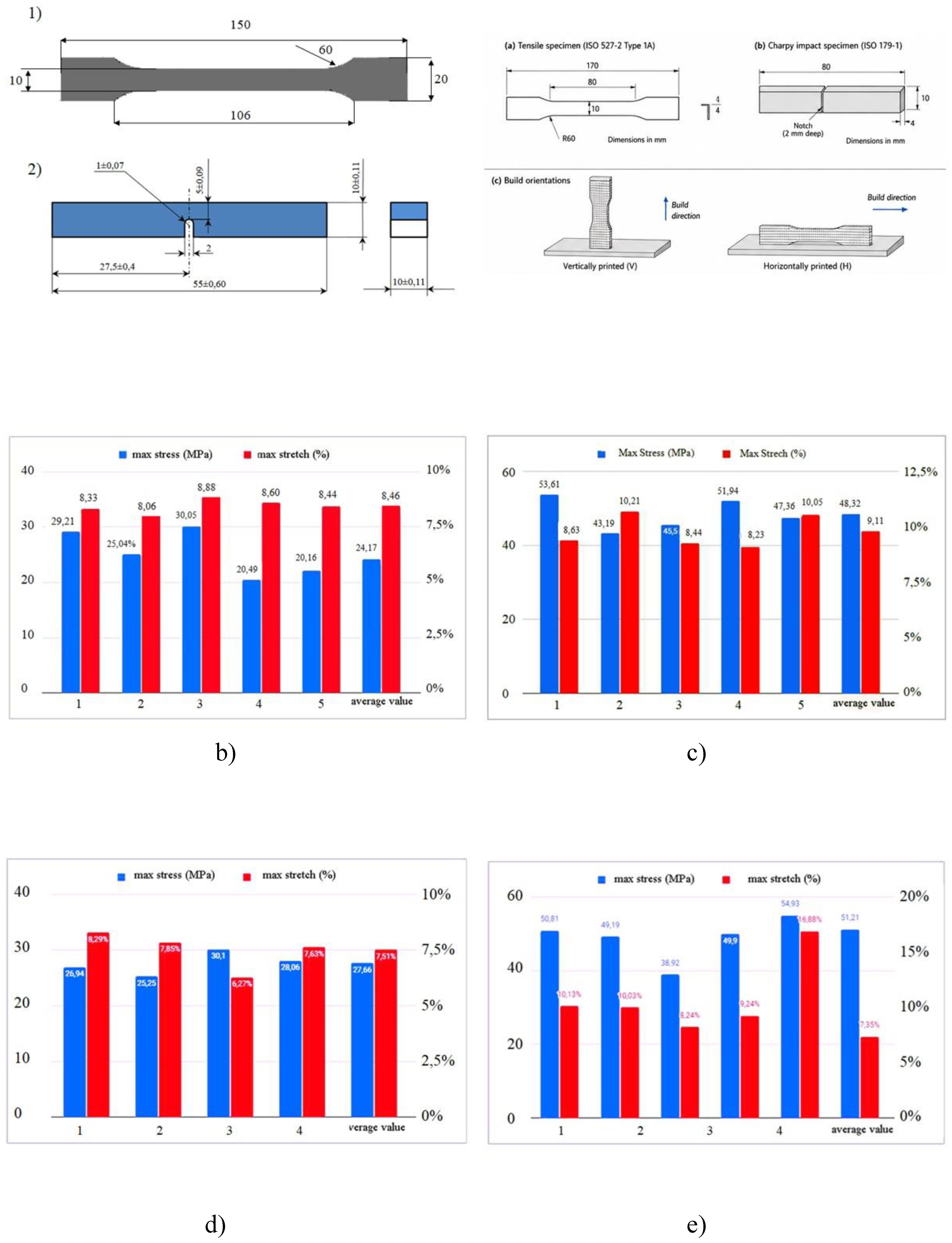
Figure 4.
Tensile property comparison. (a) Average tensile strength of the tested specimens. (b) Tensile strength of thermally treated and unthermally treated specimens.
Figure 4.
Tensile property comparison. (a) Average tensile strength of the tested specimens. (b) Tensile strength of thermally treated and unthermally treated specimens.
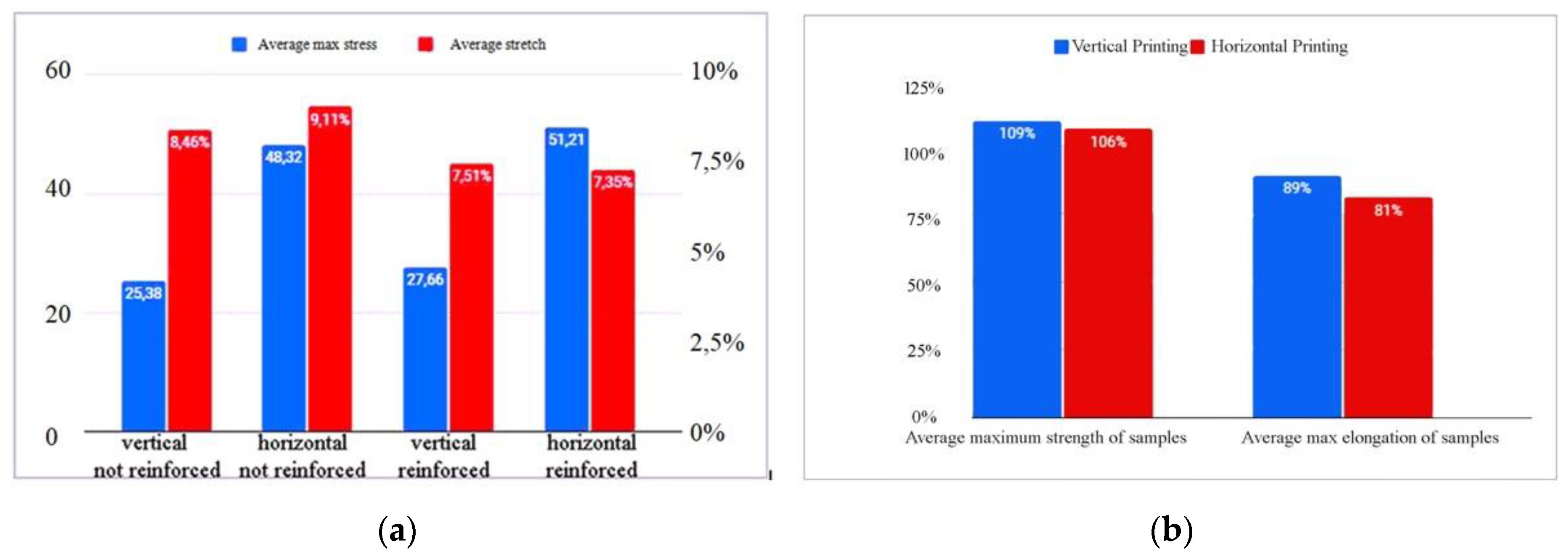
Figure 5.
Impact performance and FTIR characterization. (a) Comparison of impact strength values before and after thermal treatment. (b) Superimposed FTIR spectra of untreated and thermally treated PLA.
Figure 5.
Impact performance and FTIR characterization. (a) Comparison of impact strength values before and after thermal treatment. (b) Superimposed FTIR spectra of untreated and thermally treated PLA.
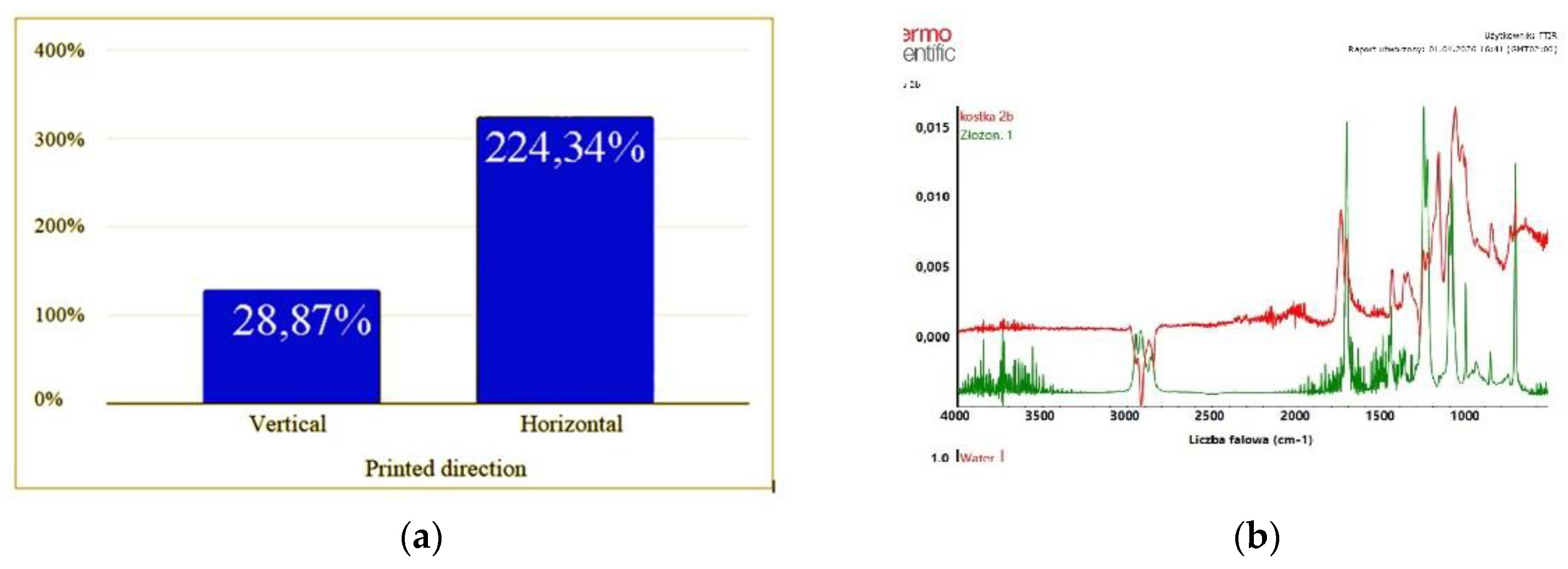
Table 1.
Relative tensile properties after thermal treatment.
| Print direction | Relative tensile strength | Relative elongation at break |
|---|---|---|
| Vertical printing | 99.9% | 93.4% |
| Horizontal printing | 103.0% | 99.2% |
Disclaimer/Publisher’s Note: The statements, opinions and data contained in all publications are solely those of the individual author(s) and contributor(s) and not of MDPI and/or the editor(s). MDPI and/or the editor(s) disclaim responsibility for any injury to people or property resulting from any ideas, methods, instructions or products referred to in the content. |
© 2026 by the authors. Licensee MDPI, Basel, Switzerland. This article is an open access article distributed under the terms and conditions of the Creative Commons Attribution (CC BY) license (http://creativecommons.org/licenses/by/4.0/).
Copyright: This open access article is published under a Creative Commons CC BY 4.0 license, which permit the free download, distribution, and reuse, provided that the author and preprint are cited in any reuse.