
Submitted:
23 October 2026
Posted:
26 October 2026
You are already at the latest version
Abstract
The growing demand for healthier and more sustainable meat products has encouraged the devel-opment of alternative feeding strategies that improve resource efficiency while potentially enhancing meat quality. Among these strategies, the incorporation of agro-industrial by-products into pig diets represents a promising approach to promoting circular economy principles and reducing dependence on conventional feed ingredients. This review critically examines the effects of sustainable feeding strategies, particularly those involving olive cake, grape pomace, tomato pomace, and citrus-derived by-products, on pork quality and their potential contribution to the development of healthier tradi-tional meat products. Available evidence indicates that these ingredients can be incorporated into pig diets at appropriate inclusion levels without substantially compromising animal performance, carcass characteristics, or the physicochemical and sensory properties of pork. Furthermore, certain dietary interventions may modify fatty acid composition, enhance antioxidant status, and improve oxidative stability, although responses depend on the composition of the by-product, dietary inclu-sion level, and experimental conditions. Importantly, some diet-induced modifications, particularly those affecting lipid composition, may persist after processing into traditional meat products, in-cluding dry-cured products. Nevertheless, the limited number of studies evaluating the entire pro-duction chain and the variability in reported results highlight the need for further research. An in-tegrated feed-to-food approach, combining nutritional, technological, sensory, environmental, and economic assessments, is essential to determine the practical applicability of these strategies. Over-all, sustainable feeding strategies offer opportunities to improve the nutritional characteristics of pork and traditional meat products while promoting resource efficiency and preserving their tech-nological quality, sensory acceptance, and cultural identity.
Keywords:
olive cake
; pork quality
; circular economy
; sustainable feeding
; by-products
1. Introduction
Food is increasingly recognized as extending beyond its basic nutritional role to encompass important social, emotional, cultural, and economic dimensions. In this context, interest in traditional foods has grown considerably in recent years, both from a scientific perspective and in terms of their broader social, cultural, and economic significance. Eating is a way to share, express affection, celebrate collectively, and preserve and transmit family traditions across generations. For this reason, traditional foods are frequently associated with festive occasions, specific cultural practices, and the identity of the communities from which they originate. Consequently, traditional foods remain strongly connected to local populations and regional gastronomic heritage, representing distinctive elements of the cultural identity of many countries and regions. However, globalization, urbanization, and population migration have expanded and commercialized these products beyond their original geographical areas. As a result, many traditional foods have gradually become industrialized to meet increasing market demand and ensure greater commercial stability. Initially, the industrialization of traditional foods was primarily aimed at extending shelf life and improving product preservation [1,2].
Over time, however, innovation in this sector has increasingly focused on improving overall product quality, including nutritional, technological, sensory, and convenience-related aspects. More recently, growing attention has been directed toward the development of healthier traditional products through the reduction of components associated with adverse health effects, particularly sodium and saturated fat, while preserving the authenticity, sensory characteristics, and cultural value of these foods. Simultaneously, advances in food technology have enabled the development of novel reformulation and preservation strategies, contributing to the sustainable modernization of traditional foods and to the valorization of regional food heritage [1,2].
Consumers are becoming increasingly concerned about the impact of food on human health and are paying greater attention to ethical and environmental issues. Consequently, the demand for more natural foods produced using sustainable methods has grown substantially in recent years. Meanwhile, incorporating agro-industrial by-products into animal feed has emerged as a promising way to support circular-economy principles, making systems more resource-efficient and sustainable [3,4].
However, the relevance of these feeding strategies extends beyond their environmental and economic benefits, as changes in animal diets may also influence the characteristics and nutritional composition of the resulting meat. Indeed, sustainable feeding strategies can have a significant impact on meat quality and nutritional composition. Incorporating alternative feed resources and agro-industrial by-products can modify pork carcass and meat traits, including intramuscular fat content, fatty acid composition, oxidative stability, and sensory characteristics. Consequently, animal nutrition is increasingly recognized as a valuable tool for improving the sustainability of livestock production systems and the nutritional values and technological quality of meat intended for further processing. In response to consumer expectations and public health recommendations, the food industry has been encouraged to reformulate food products, particularly by reducing the levels of saturated fat and sodium. Excessive consumption of these components has been associated with an increased risk of cardiovascular diseases, hypertension, and other non-communicable diseases, prompting the implementation of various strategies and policies aimed at improving the nutritional profile of processed foods. At the same time, consumers are showing a growing preference for products formulated with natural ingredients and shorter, simpler, and more transparent ingredient lists, further reinforcing the clean-label trend. In this context, food reformulation has emerged as a key strategy for enhancing the nutritional quality of food products while maintaining their safety, sensory characteristics, technological performance, and consumer acceptance [4,5,6].
However, reducing saturated fat and sodium levels in processed meat products remains a major technological challenge, as these ingredients play essential roles in texture, flavor, water-holding capacity, oxidative stability, and microbiological safety.
Therefore, this review aims to critically examine how sustainable feeding strategies, particularly the use of agro-industrial by-products and alternative feed resources, influence pork quality and composition. Furthermore, the review discusses how these nutritional modifications may support the development and reformulation of healthier traditional pork products, contributing simultaneously to consumer health, environmental sustainability, and the preservation of traditional meat products.
2. Sustainable Feeding Strategies in Pig Production
The circular economy has emerged as a promising approach to improving resource efficiency and reducing waste generation across agro-food systems. By promoting recovery, reuse, and valorization of resources throughout the food supply chain. This model contributes to the development of more sustainable production systems. One of its most relevant applications in livestock production is the incorporation of agro-industrial by-products into animal diets, transforming materials traditionally regarded as waste into valuable feed ingredients with nutritional and economic potential. Agro-industrial by-products originate primarily from crop processing and food manufacturing activities and include a wide range of materials such as brewer’s grains, maize gluten feed, sugar beet pulp, tomato pomace, distillery residues, oilseed cakes, and sunflower meal. Many of these by-products possess considerable nutritional value and can partially replace conventional feed ingredients, thereby reducing dependence on edible feed resources and mitigating feed-food competition [7].
Among agro-industrial by-products, olive cake has attracted considerable attention due to its wide availability in Mediterranean countries and its potential application in animal nutrition. Olive cake is generated during olive oil extraction and consists of varying proportions of olive pulp, skin, stone fragments, and residual oil, depending on the extraction technology employed. Traditionally regarded as a low-value residue, olive cake is currently recognized as a valuable feed resource owing to its fibre content, residual lipids rich in oleic acid, and a wide range of bioactive compounds, particularly polyphenols with antioxidant activity. The incorporation of olive cake into livestock diets represents an effective strategy for valorizing a major agro-industrial by-product while simultaneously reducing the environmental burden associated with its disposal [3].
In addition to olive cake, fruit and vegetable processing residues remain largely underutilized despite their abundance and nutritional potential. These materials are frequently disposed of through landfilling or incineration, generating environmental burdens and contributing to resource inefficiency. Their incorporation into animal feeding systems represents an effective strategy to reduce waste, promote circularity within the agro-food sector, and generate added value from underexploited biomass streams. Beyond their nutritional value, many agro-industrial by-products contain bioactive compounds, including polyphenols, flavonoids, and other antioxidant substances, which may positively influence animal health and performance. These compounds have been associated with improved oxidative status, enhanced immune responses, and greater oxidative stability of animal-derived products. Consequently, the valorization of agro-industrial by-products in livestock production has gained increasing attention as a sustainable solution capable of simultaneously addressing environmental, economic, and resource management challenges. By reducing waste generation, decreasing reliance on conventional feed ingredients, and improving resource-use efficiency, the use of agro-industrial by-products aligns closely with the principles of the circular economy and sustainable livestock production [8,9]. Among the wide range of agro-industrial by-products currently investigated, several have shown promising results in pig production. The following sections summarize the most relevant alternative feed ingredients and discuss their effect on productive performance, carcass characteristics, meat quality, and the nutritional value of pork.
Over the last two decades, numerous studies have evaluated the use of agro-industrial by-products as sustainable pig feed ingredients. The chemical composition, nutritional value, and bioactive compounds of these materials vary, resulting in different effects on productive performance, carcass characteristics, and meat quality. Nevertheless, the available evidence suggests that many of these by-products can be used to partially replace conventional feed ingredients without compromising animal productivity, while also contributing to the valorization of agricultural residues within a circular economy framework.
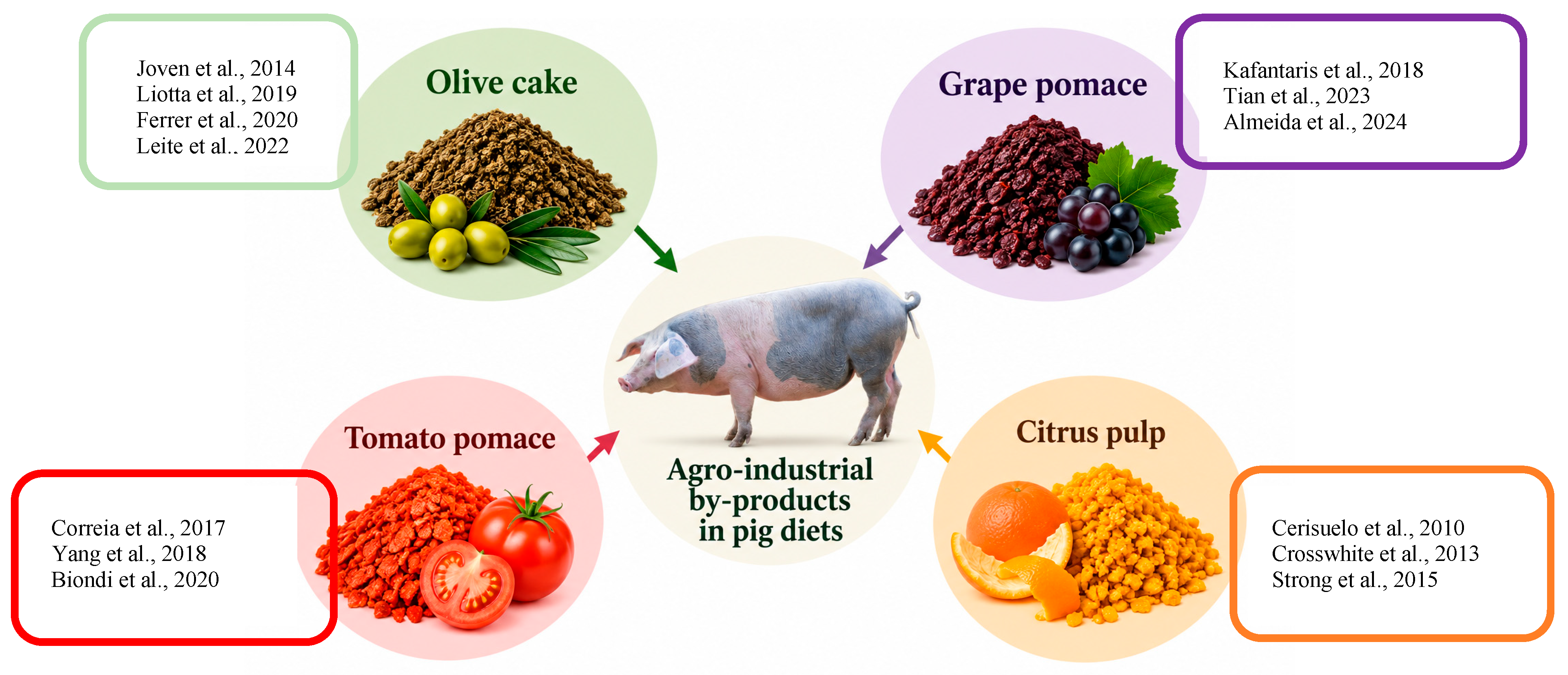
Among the wide range of agro-industrial by-products investigated in pig nutrition, olive cake [10,11,12,13], grape pomace [14,15,16], tomato pomace [17,18,19] and citrus pulp [20,21,22] have received particular attention due to their nutritional and bioactive composition and their potential effects on pork quality (Figure 1).
3. Effects of Sustainable Feeding Strategies on Pork Quality
Beyond their potential to improve the sustainability of pig production, alternative feed resources and agro-industrial by-products may influence the characteristics of the resulting meat. These effects are particularly relevant when pork is intended for further processing, since the composition and technological properties of the raw material can directly affect the quality, stability, and nutritional characteristics of processed meat products. Although responses vary by feed ingredient type and composition, inclusion level, duration of dietary supplementation, and animal-related factors, the main effects reported in the literature concern carcass characteristics, physicochemical properties, lipid content and fatty acid composition, oxidative stability, and sensory quality. Understanding these strategies can contribute not only to more resource-efficient pig production but also to the development of pork with improved nutritional and technological characteristics.
The incorporation of agro-industrial by-products into pig diets may influence carcass characteristics and the basic chemical composition of pork, although the magnitude and direction of these effects depend on the nutritional characteristics of the by-product and its dietary inclusion level. Overall, the available evidence suggests that moderate inclusion levels can be used without major detrimental effects on carcass traits, provided that the nutritional requirements of the animals are adequately met. However, responses may become more evident at higher inclusion levels, particularly when highly fibrous ingredients substantially modify dietary energy density and nutrient availability. Olive oil industry by-product provides a good example of this variability. Liotta et al. [11] evaluated the inclusion of 5 and 10% of olive cake in growing finishing pigs and reported no detrimental effects on productive performance, while carcass weight, dressing percentage, and backfat thickness were also evaluated as indicators of carcass quality. Similarly, different types of olive cake have been investigated in Bísaro pigs, with particular attention to carcass characteristics and the physicochemical composition of meat and fat [13]. These findings support the possibility of incorporating olive by-products into pig diets without necessarily compromising the basic characteristics of the resulting carcass and meat, although differences in the type and processing of olive cake should be considered when comparing studies.
The effects of other plant-processing by-products are similarly dependent on their composition and level of incorporation. In Nero Siciliano pigs. Replacement of 15% of dietary corn with tomato processing waste for 86 days did not affect growth performance but reduced intramuscular fat content [19]. This observation is particularly relevant because it demonstrates that the absence of effects on animal performance does not necessarily imply an unchanged meat composition. In contrast, citrus pulp appears to be well tolerated at moderate inclusion levels. Replacement of 15% of dietary dry matter with different forms of citrus pulp had only marginal effects on carcass traits and did not affect overall carcass composition or objective loin quality [21]. However, increasing the inclusion of ensiled citrus pulp to 150g/kg was associated with a reduction in carcass yield, whereas inclusion levels up to 100 g/kg did not negatively affect carcass yield [23].
Grape-processing by-products have also been investigated as alternative feed ingredients, with studies generally indicating that their inclusion at moderate levels can be achieved without major detrimental effects on growth performance or carcass characteristics. However, responses may vary according to the composition of the grape pomace and its inclusion level, particularly because of its high fibre and polyphenol contents.
Taken together, these studies indicate that the use of agro-industrial by-products does not produce a uniform response in carcass characteristics or basic meat composition. Rather, the effect is determined by the nutritional composition of the by-products, their processing method and inclusion level, and the extent to which it replaces conventional dietary ingredients. From a meat processing perspective, maintaining carcass yield and the basic composition of pork is important, but changes in intramuscular fat are particularly relevant because they may subsequently influence technological properties, sensory quality, and the nutritional characteristics of processed meat products [14].
Beyond carcass characteristics and basic composition, sustainable feeding strategies may also affect the physicochemical and technological properties of pork. Parameters such as ultimate pH, color, water-holding capacity, cooking loss, and tenderness are particularly relevant, as they influence both consumer perception of fresh meat and its suitability for further processing. Dietary effects on these characteristics may occur through changes in muscle composition, lipid deposition, antioxidant status, and post-mortem biochemical processes. Nevertheless, compared with changes in lipid composition, the effects of agro-industrial by-products on conventional physicochemical properties of pork appear to be less consistent across studies [11,22].
Meat pH is a key indicator of post-mortem muscle metabolism and is closely associated with color, water-holding capacity, and technological functionality. Although responses depend on dietary treatment, the incorporation of agro-industrial by-products generally produces limited changes in these parameters when used at appropriate inclusion levels. For example, dietary tomato pomace did not significantly affect meat color in young pigs [17], while [19] Biondi et al. similarly reported no effect of tomato processing waste on the instrumental color of backfat. In contrast, higher levels of dietary citrus pulp affected some color attributes, with increased lean redness and reduced fat lightness being observed at inclusion levels of 22-30% (Strong et al., 2015). Water-holding capacity and tenderness are particularly important for pork intended for further processing, as excessive water losses may reduce processing yield and negatively affect juiciness, whereas tenderness directly influences eating quality. Available evidence suggests these properties can generally be maintained when agro-industrial by-products are incorporated at moderate dietary levels. For example, Crosswhite et al. [21] found no significant adverse effects on objective loin quality from replacing 15% of dietary dry matter with different forms of citrus pulp, while sensory evaluation indicated similar or greater juiciness and tenderness than the control treatment. Dietary grape pomace has also been associated with improvements in some meat quality characteristics, including tenderness, although responses depend on the by-product form and feeding conditions.
Overall, these findings suggest that sustainable feeding strategies based on agro-industrial by-products can generally be implemented without substantially compromising the physicochemical and technological quality of pork, particularly when appropriate inclusion levels are used. Importantly, the absence of pronounced changes in pH, color, water-holding capacity, or tenderness should not be interpreted as an absence of dietary effects on meat quality. Indeed, dietary interventions may induce more marked changes in lipid composition and oxidative stability than in conventional technological traits, as reported for olive cake, grape pomace, and tomato processing by-products [11,14,17,19].
In contrast to the relatively limited effects observed for conventional physicochemical traits, pork lipid composition appears to be particularly responsive to dietary manipulation. This is especially relevant because the fatty acid composition of pork tissues reflects, to a considerable extent, the lipid composition of the diet. Consequently, the incorporation of agro-industrial by-products containing residual oils, saturated (SFA), monounsaturated (MUFA), and polyunsaturated (PUFA) in pork and adipose tissue. Such changes are nutritionally relevant but may also affect fat consistency and susceptibility to lipid oxidation, which are important considerations when meat is subsequently used for processing [11]. Olive oil industry by-products are particularly interesting in this context because their residual lipid fraction is generally rich in oleic acid. Dietary inclusion of olive oil has therefore been investigated as a means of modifying the lipid composition of pork. Liotta et al. [11] reported changes in the fatty acid composition of meat from pigs receiving olive cake, supporting the transfer of dietary lipid characteristics to animal tissues. Similarly, Leite et al. [13] observed modifications in the lipid composition of both meat and backfat when different types of olive cake were used in Bísaro pigs’ diets, although the magnitude of the response depended on the type of olive cake used. The response is not, however, consistent across all agro-industrial by-products. Tomato processing waste provides a contrasting example. Bionde et al. [19] reported that replacing 15% of the corn in a pig’s diet with tomato processing waste decreased the levels of SFA and MUFA and increased the levels of PUFA, including both n-3 and n-6, in the pork. However, the n-6: n-3 ratio also increased, illustrating that changes in individual fatty acid classes should be interpreted together with nutritional lipid indices rather than considering an increase in PUFA alone as necessarily beneficial. In contrast, Correia et al. [17] found that the inclusion of 5% tomato pomace did not significantly modify the fatty acid profile of pork, whereas the dietary fat source had a much stronger influence. These contrasting findings suggest that the effect of tomato by-products on pork lipid composition depends not only on their presence in the diet but also on their inclusion level and on the composition of the basic diet.
Grape-derived by-products may also influence the nutritional quality of pork lipids, although the response appears to depend on the form of the by-product and the experimental conditions. Kafantaris et al. [14] reported that dietary grape pomace supplementation increased the concentrations of n-3 fatty acids in piglet muscle, resulting in a lower n-6: n-3 ratio. However, these effects are not consistently observed across studies. More recently, the inclusion of grape pomace preserved as silage did not significantly modify the fatty acid profile of pork, despite improving other meat quality attributes, including tenderness and oxidative stability. These contrasting findings indicate that the effects of grape by-products on lipid composition may depend on factors such as the form and composition of the ingredient, dietary inclusion level, and feeding conditions [14]. Citrus by-products have been less extensively investigated in relation to pork fatty acid composition, but available evidence suggests that they may also induce changes in tissue lipids. Cerisuelo et al. [20] evaluated the inclusion of ensiled citrus pulp in growing pig diets and reported a tendency towards an increased proportion of oleic acid in subcutaneous fat, while meat color remained unaffected. Although this response was less pronounced than the changes reported for some olive and grape derived by-products, it suggests that citrus processing residues may influence lipid deposition when incorporated into pig diets. Nevertheless, the limited number of studies specifically addressing fatty acid composition prevents firm conclusions regarding the consistency and nutritional relevance of this effect [20].
Overall, these studies demonstrate that changes in the fatty acid composition of pork cannot simply be attributed to the inclusion of an agro-industrial by-product. The response depends on the lipid composition of the basic diet, and the tissue considered. By-products containing substantial amounts of residual unsaturated lipids may directly modify fatty acid deposition, whereas ingredients primarily characterized by fiber or bioactive compounds may exert less pronounced effects on the fatty acid profile. Therefore, evaluation of sustainable feeding strategies should consider not only changes in total SFA, MUFA, and PUFA, but also individual fatty acids and nutritionally relevant indices, particularly the balance between n-6 and n-3 [11,13,14,19]. Changes in fatty acid composition should be considered together with oxidative stability, since the degree of lipid unsaturation is an important factor in the susceptibility of meat to oxidative deterioration. This aspect is particularly relevant when dietary strategies increase the deposition of PUFA, which are more susceptible to oxidation than SFA and MUFA. Lipid oxidation can adversely affect meat quality by promoting the development of undesirable flavors and odors, color deterioration, loss of nutritional value, and reduced shelf life. However, many agro-industrial by-products used as alternative feed ingredients are also sources of bioactive compounds with antioxidant activity, including polyphenols, tocopherols, carotenoids, and flavonoids. Consequently, their incorporation into pig diets may simultaneously modify tissue lipid composition and enhance antioxidant protection, potentially counteracting the greater oxidative susceptibility associated with increased lipid unsaturation [14,17,24,25]. Grape pomace provides one of the clearest examples of this potential antioxidant effect. Due to its high content of polyphenolic compounds, its dietary inclusion has been associated with changes in systemic and tissue antioxidant status. Kafantaris et al. [14] reported that supplementing the diet of weaned piglets with grape pomace enhanced antioxidant defence mechanisms in several tissues, as indicated by increased levels of reduced glutathione, total antioxidant capacity, and hydrogen peroxide decomposition activity. At the same time. Markers of oxidative damage were reduced, including thiobarbituric acid (TBARS) reactive substances and protein carbonyls. These effects are particularly noteworthy because grape pomace supplementation also increased n-3 in muscle and decreased the n-6: n-3 ratio, suggesting that a nutritionally favorable modification of fatty acid composition does not necessarily result in greater oxidative deterioration when accompanied by enhanced antioxidant protection [14].
Tomato pomace represents a different but equally relevant example. Its antioxidant potential is mainly associated with carotenoids, tocopherols, and other bioactive compounds, although their transfer to animal tissues is not always evident. Correia et al. [17] found that dietary inclusion of 5% tomato pomace did not significantly affect meat lipid oxidation and did not result in detectable deposition of lycopene or β-carotene. Nevertheless, α-tocopherol concentrations increased significantly in both meat and liver. Interestingly, the fatty acid profile of pork was also unaffected by tomato pomace supplementation. These findings indicate that dietary by-products may influence the antioxidant composition of animal tissues without necessarily inducing concomitant changes in fatty acid composition or measurable lipid oxidation, highlighting the importance of considering several complementary indicators when evaluating oxidative stability [17]. Citrus-derived by-products have also shown potential to improve the nutritional and oxidative characteristics of pork. Scerra et al. [24] reported that replacing 15% of dietary dry matter with ensiled bergamot pulp increased α-linolenic acid and total n-3 in meat without compromising oxidative stability in either raw or cooked pork. Interestingly, the protective effect became more evident after processing, as salami produced from pigs receiving bergamot pulp showed lower TBARS values after five days of storage. More recent evidence further supports the antioxidant potential of these feeding strategies. Scerra et al. [25] evaluated diets containing 20% ensiled bergamot pulp, olive leaves, or a 1:1 mixture of both by-products and found lower TBARS values in raw and cooked pork from all supplemented groups compared with the control. The experimental diets contained higher levels of phenolic compounds and tocopherols, and meat from supplemented pigs showed higher α-tocopherol concentrations, suggesting that dietary antioxidant compounds contributed to the improved oxidative stability observed during storage [24,25].
Olive oil industry by-products are also of particular interest because of their residual phenolic compounds and unsaturated lipid fraction. Dietary olive cake has been extensively investigated for its effects on pig performance, carcass, and pork lipid composition, with several studies demonstrating modifications in the fatty acid profile of meat and adipose tissue. However, compared with grape pomace and some citrus-derived by-products, direct evidence of improved pork oxidative stability following olive cake supplementation remains limited. Interestingly, studies using other olive-derived materials, such as olive leaves, have shown improved oxidative stability in raw and cooked pork, along with increased dietary phenolic compounds and tissue α-tocopherol concentrations [25]. These findings support the antioxidant potential of olive-derived feed resources but also highlight the need for further studies directly evaluating lipid and protein oxidation in pork from pigs fed olive cake.
Overall, the available evidence indicates that the relationship between sustainable feeding strategies and pork oxidative stability is more complex than a direct association between lipid unsaturation and oxidation. The final response reflects the balance between tissue fatty acid composition and the antioxidant protection provided by dietary bioactive compounds. Grape pomace, tomato pomace, citrus-derived by-products, and olive-derived feed resources illustrate different mechanisms through which this balance may be modulated, including enhancement of endogenous antioxidant defence, increased tissue concentrations of antioxidant compounds, and maintenance or improvement of oxidative stability despite changes in lipid unsaturation. Nevertheless, these responses depend on the chemical composition and processing of the by-product, dietary inclusion level and duration, and the bioavailability and metabolism of its bioactive compounds. Therefore, the presence of antioxidant compounds in a feed ingredient should not, by itself, be interpreted as evidence of improved meat oxidative stability; this effect should be demonstrated directly through appropriate biomarkers in animal tissues and meat [14,17,24,25].
Sensory quality is an important consideration when evaluating the use of alternative feed resources in pig production, since dietary-induced changes in meat composition, particularly in the lipid fraction and oxidative stability, may ultimately influence attributes such as flavor, aroma, tenderness, juiciness, and overall acceptability. Compared with physicochemical and compositional traits, however, sensory responses to the dietary inclusion of agro-industrial by-products have been less extensively investigated. Overall, the available evidence suggests that the incorporation of these ingredients at nutritionally appropriate levels generally does not compromise the sensory quality of pork, although improvements in specific attributes, particularly tenderness and juiciness, have occasionally been reported [14,21]. Nevertheless, the relationship between dietary composition and sensory perception is complex, as potential effects may arise indirectly through changes in fatty acid composition, oxidative stability, or the formation of flavor-related compounds during storage and cooking. Further studies integrating instrumental meat quality measurements with trained sensory panels and consumer-based evaluation are therefore needed to determine whether the nutritional improvements achieved through sustainable feeding strategies are accompanied by maintained sensory acceptance.
4. Sustainable Feeding as a Strategy to Support Healthier Traditional Pork Products
The effects of sustainable feeding strategies should not only be considered in relation to the quality of fresh pork. Pork and adipose tissue are main ingredients in a wide range of traditional meat products, so diet-induced changes in their composition may influence the nutritional, technological, oxidative, and sensory characteristics of the final product. This is particularly relevant for changes in the lipid fraction, since the fatty acid composition established during animal production may remain detectable, at least partially, after processing. Consequently, using agro-industrial by-products and other alternative feed resources could support the development of traditional pork products with a more favorable nutritional profile. However, any improvements observed in the fresh meat cannot be assumed to persist after processing, since salting, fermentation, drying, ripening, cooking, and storage all involve substantial physicochemical and biochemical changes that can alter the initial characteristics of raw material.
While many studies have investigated the effects of agro-industrial by-products in pig diets on productive performance, carcass traits and fresh meat quality, fewer studies have evaluated their impact on processed pork products. Previous studies using locally available alternative feed resources have shown that the effects of the diet can be detected even after prolonged processing. For example, the inclusion of chestnuts and sugar beet pulp in pig diets influenced the lipid characteristics of dry-cured “Lacón Gallego” [26]. Dietary strategies incorporating these ingredients have also been shown to affect the characteristics of “Chorizo Gallego”, including the sensory properties of the final product [27]. These findings provide early evidence that modifications introduced during animal production can affect not only fresh meat, but also the compositional and sensory characteristics of traditional processed products.
More recent studies that use agro-industrial by-products provide further support for this relationship. Citrus processing residues are a particularly interesting example of this. Scerra et al. [24] found that adding ensiled bergamot pulp to pig feed altered the pork’s lipid composition, notably increasing the deposition of n-3. Notably, these effects were still evident after the salami was processed, demonstrating that nutritional changes induced through feeding can be transferred to the final meat product. The resulting salami exhibited a more favorable fatty acid profile and enhanced oxidative stability during storage. This is especially relevant given that increasing lipid unsaturation can make meat more susceptible to oxidation. Therefore, the simultaneous presence of antioxidant compounds derived from the dietary ingredient may help preserve the nutritional benefits of modifying the fatty acid profile.
The olive oil industry provides another example of how dietary effects can be transferred to traditional meat products. Different types of olive cake have been incorporated into the finishing diets of Bísaro pigs and evaluated in fresh pork, as well as in traditional dry-cured loin and cachaço. While dietary treatments did not significantly alter the proportions of SFA, MUFA, and PUFA in the dry-cured products overall, variations were noted in nutritionally significant fractions, particularly n-3 and the n-6/n-3 ratio [3]. Notably, using olive cake during the finishing period did not significantly affect the volatile or sensory characteristics of the resulting dry-cured products [28]. These findings are significant in the context of traditional foods, as they imply that dietary strategies can influence the nutritional properties of raw materials, with some effects persisting after curing without altering the product’s sensory profile.
Overall, the available studies suggest that the impact of sustainable feeding strategies can be seen throughout the production chain, from the animal to fresh meat and on to processed products. However, the magnitude and persistence of these effects vary considerably between studies. Whether changes observed in fresh pork remain detectable in the final product may be determined by the composition of the feed ingredient, dietary inclusion level and duration, characteristics of the raw material, and processing conditions. This is particularly important for traditional dry-cured and fermented products, where prolonged ripening involves extensive lipolysis and lipid oxidation, as well as proteolytic and microbial processes that contribute to the development of the characteristic flavors, aroma, and texture. Therefore, nutritional improvements attributed to dietary intervention should ideally be demonstrated directly in the processed product, rather than being inferred solely from the composition of fresh meat. Evidence obtained with feeding strategies other than agro-industrial by-products further demonstrates the potential of animal nutrition to influence the characteristics of processed pork products. Manipulation of dietary lipid sources, for example, has been shown to modify the fatty acid composition of porcine muscle and adipose tissue, with some of these differences remaining detectable after prolonged curing and ripening [29,30]. Pastorelli et al. [29] demonstrated that different dietary fat sources affected the fatty acid composition and sensory characteristics of Parma ham after 16 months of ripening. Santos et al. [30] showed that dietary linseed oil could enrich Spanish dry-cured ham with α-linolenic acid, while Musella et al. [31] reported increased n-3 and a markedly lower n-6/ n-3 ratio in dry-cured ham from pigs fed extruded linseed. However, both studies also identified potential sensory or technological limitations associated with increased lipid unsaturation. These findings reinforce the broader principle that the characteristics of meat products are determined not only by formulation and processing but also by the composition of the raw material entering the processing chain.
Within this context, sustainable feeding strategies based on agro-industrial by-products offer potential because they combine the partial replacement of conventional feed ingredients with the possibility of modifying the composition and quality of pork. By-products from olive oil, grape, tomato, citrus, and other agro-food industries provide nutrients and bioactive compounds that, depending on their composition, processing method, and dietary inclusion level, may influence lipid deposition, fatty acid composition, antioxidant status, and other quality characteristics in porcine tissues [11,13,14,17,19]. Importantly, the evidence available for traditionally processed products indicates that at least some diet-induced modifications can persist after processing, supporting the use of animal feeding as an upstream strategy to obtain raw materials with a more favorable composition for subsequent transformation [24,25,26,27].
From a feed-to-food perspective, the challenge is therefore not simply to increase the incorporation of agro-industrial by-products in pig diets, but to identify which conventional feed ingredients can be effectively replaced, which by-products are most suitable for this purpose, and the inclusion levels at which nutritional an environment benefits can be achieved without adversely affecting animal performance or meat quality. The considerable variability in the nutritional composition of agro-industrial by-products also needs to be considered, as differences in fibre content, residual lipids, fatty acid composition, and bioactive compounds may result in markedly different responses even among by-products originating from the same agro-industrial sector. Establishing appropriate substitution levels and characterizing these feed resources before dietary incorporation are therefore essential for translating experimental results into practical feeding strategies. Ultimately, the potential contribution of sustainable feeding to healthier traditional pork products should be evaluated across the entire production chain. Future studies should integrate detailed characterization of the alternative feed resource, the extent to which it replaces conventional dietary ingredients, animal performance, carcass characteristics, fresh meat composition, and the nutritional, technological, oxidative, and sensory properties of the final processed product. Such an approach would make it possible to determine whether improvements achieved during primary production are maintained after processing and to identify feeding strategies capable of simultaneously contributing to more sustainable pig production and to the development of traditional pork products with a more favorable nutritional profile, without compromising technological quality, sensory characteristics, or product identity.
5. Challenges and Future Perspectives
Despite the potential of agro-industrial by-products as alternative feed resources for pigs, their practical application remains challenging. One of the main limitations is the considerable variability in their nutritional composition, which may depend on raw material characteristics, processing methods, geographical origin, and storage conditions. Differences in fibre, residual lipids, protein, minerals, and bioactive compounds can affect nutrient digestibility and, consequently, animal performance, carcass characteristics, and pork quality. Detailed characterization of these feed resources is therefore essential for establishing appropriate inclusion levels and formulating nutritionally balanced diets that ensure predictable animal responses. In addition to their nutritional value, the potential presence of antinutritional compounds, contaminants, or undesirable residues must be considered to ensure feed safety and consistency.
A further challenge is determining the extent to which agro-industrial by-products can effectively replace conventional feed ingredients, rather than merely being added to experimental diets. From a sustainability perspective, replacing cereals and other human-edible feed resources is particularly relevant, as it may reduce competition between human food and animal feed while promoting circular bioeconomy approaches. Nevertheless, high inclusion levels of fibrous or nutritionally unbalanced ingredients may reduce nutrient availability and productive performance. Future studies should therefore clearly identify the conventional ingredients being replaced and establish optimal substitution levels based on nutritional value, digestibility, animal performance, carcass characteristics, and meat quality. Recent evidence with former food products demonstrates the feasibility of partially replacing cereals in pig diets without necessarily compromising meat quality, supporting further investigation of this approach with other alternative feed resources [32,33,34]. Attention should also be given to the effects of alternative feed resources on lipid metabolism and fatty acid deposition, since these changes may provide opportunities to improve the nutritional profile of pork, including its fatty acid composition. However, such benefits must be evaluated alongside potential effects on lipid oxidation, colour stability, flavour development, and shelf life, particularly in products with a high degree of unsaturation or extended storage periods.
Another important limitation is the scarcity of studies that follow dietary effects throughout the entire production chain. Most research evaluates animal performance, carcass characteristics, or fresh pork quality, whereas considerably less information is available on whether diet-induced changes persist after processing into traditional meat products. Future studies should therefore adopt an integrated feed-to-food approach, linking by-product composition and dietary substitution level with animal performance, fresh meat quality, and the nutritional, technological, oxidative, and sensory characteristics of the final product. This is particularly important because dietary strategies that improve fatty acid composition or antioxidant status in fresh pork may not necessarily provide the same benefits after curing, fermentation, ripening, or prolonged storage [24,28,29]. Increasing the proportion of polyunsaturated fatty acids, for example, may improve certain nutritional indicators but also increase susceptibility to lipid oxidation, potentially affecting the development of desirable aroma and flavour compounds and the stability of colour during processing and storage. Consequently, the effects of feeding strategies should be assessed in relation to the specific processing conditions and characteristics of each traditional product, including dry-cured hams, loins, and traditional sausages. Combining sustainable feeding with appropriate processing conditions, natural antioxidant strategies, and suitable packaging may offer complementary opportunities to improve nutritional quality while preserving technological performance and sensory acceptance.
These challenges are particularly relevant to traditional pork products derived from indigenous breeds and regionally distinctive production systems. Breed, genotype, rearing conditions, and the characteristics of the raw material may influence the response to dietary interventions and the extent to which changes in fresh meat quality are reflected in the final product. Future research should therefore investigate breed-specific and product-specific feeding strategies, particularly in systems based on local pig breeds, while ensuring that nutritional improvements do not compromise the characteristic sensory properties and cultural identity of traditional products. A multidimensional assessment of nutritional quality is also needed, extending beyond individual fatty acid indicators to include the overall fatty acid profile, relevant omega-3 fatty acids, oxidative stability, and other nutritional attributes. These assessments should be complemented by consumer studies addressing sensory acceptance, perceptions of products obtained from pigs fed agro-industrial co-products, and willingness to purchase or pay for products associated with improved nutritional quality and environmental sustainability. Such evidence would help determine whether the potential benefits of sustainable feeding can translate into meaningful product differentiation and market opportunities.
Finally, the sustainability of using agro-industrial by-products should not be assumed solely based on their classification as residues or secondary resources. Their collection, stabilization, drying, storage, transport, processing, and incorporation into animal feeds may influence both their environmental and economic viability. Feed safety, seasonal variability, consistent availability, and the feasibility of scaling up production must also be considered before experimental strategies can be transferred to commercial systems. Future research should therefore combine nutritional and meat quality assessment with life-cycle assessment and economic analysis to quantify the actual environmental benefits, identify potential trade-offs, and establish the conditions under which these strategies are most effective. In parallel, the development of rapid analytical techniques, predictive modelling, and precision-feeding approaches could improve the characterization of alternative feed resources, optimize their inclusion levels, and support more consistent animal and product responses. Overall, an integrated assessment of feed composition, dietary substitution, animal performance, processing behavior, final product quality, environmental impacts, and economic feasibility is essential to identify sustainable feeding strategies that reduce dependence on conventional feed resources while maintaining the nutritional, technological, sensory, and cultural value of traditional pork products [32,33]
Author Contributions
Conceptualization, S.S.Q.R.; writing—original draft preparation, S.S.Q.R., A.L., L.V. and A.T.; writing—review and editing, S.S.Q.R., A.L., L.V. and A.T. All authors have read and agreed to the published version of the manuscript.
Institutional Review Board Statement
Not applicable.
Informed Consent Statement
Not applicable.
Data Availability Statement
No new data were created or analyzed in this study.
Acknowledgments
The authors declare that artificial intelligence tools were used solely to improve the language, grammar, and readability of this manuscript. These tools did not contribute to the study design, data analysis, interpretation of results, or the generation of scientific content. The authors take full responsibility for the content of this work.
Conflicts of Interest
The authors declare no conflict of interest.
References
- Teixeira, Alfredo; Álvarez-Rodríguez, Javier (2024). Improving the Meat and Meat Product Quality of Rare Pork Breeds and Genetic Types. Foods. eISSN 2304-8158. 13:12, p. 1-4.
- Rodrigues, S.S.Q.; Leite, A.; Vasconcelos, L.; Teixeira, A. Exploring the Nexus of Feeding and Processing: Implications for Meat Quality and Sensory Perception. Foods. 2024, 13, 3642. [CrossRef] [PubMed]
- Leite, A.; Vasconcelos, L:, Rodrigues, S.; Pereira, E.; Domínguez-Valencia, R.; Lorenzo, J. M.; Teixeira, A. Effect of olive cake in Bísaro pig feed on physicochemical composition and fatty acid profile of three different muscles of dry-cured shoulder. Animals. 2024, 14, 1697. [CrossRef] [PubMed]
- Asioli, D.; Aschemann-Witzel, J.; Caputo, V.; Vecchio, R.; Annunziata, A.; Naes, T.; Varela, P. Making sense of the “clean label” trends: A review of consumer food choice behavior and discussion of industry implications. Food Research International. 2017, 99, 58-71. [CrossRef] [PubMed]
- Delgado-Pando, G.; Pintado, T. Towards more sustainable meat products: extenders as a way of reducing meat content. Foods. 2020, 9, 1044. [CrossRef] [PubMed]
- World Health Organization (WHO), 2023. WHO Global report on sodium intake reduction. Geneva, Switzerland: World Health Organization. Available at: https://www.who.int/publications/i/item/9789240069985 (accessed 08 June 2026).
- Van Hal, O.; Boer, I. J.M.; Muller, A.; Vries, S.; Erb, K. H.; Schader, C.; Gerrits, W. J. J.; Zanten, H. H. E. Upcycling food leftovers and grass resources through livestock: Impact of livestock system and productivity. J. Clean. Prod. 2019, 219, 485-496. [CrossRef]
- Georganas, A.; Giamouri, E.; Pappas, A. C.; Zoidis, E.; Goliomytis, M.; Simitzis, P. Utilization of agro-industrial by-products for sustainable poultry production. Sustainability. 2023, 15, 3679. [CrossRef]
- Vastolo, A.; Calabrò, S.; Cutrignelli, M. I. A review on the use of agro-industrial co-products in animals’ diets. Ital. J. Anim. Sci. 2022, 21, 577-594. [CrossRef]
- Joven, M.; Pintos, E.; Latorre, M. A.; Suárez-Belloch, J.; Guada, J. A.; Fondevila, M. Effect of replacing barley by increasing levels of olive cake in the diet of finishing pigs: Growth performances, digestibility, carcass, meat and fat quality. Animal Feed Science and Technology. 2014, 197, 185-193. [CrossRef]
- Liotta, L.; Chiofalo, V.; Presti, V.; Chiofalo. In vivo performances, carcass traits, and meat quality of pigs fed olive cake processing waste. Animals, 2019, 9, 1155. [CrossRef] [PubMed]
- Ferrer, P.; Calvet, S.; García-Rebollar, P.; Blás, C.; Jiménez-Belenguer, A. I.; Hernández, P.; Piquer, O.; Cerisuelo, A. Partially defatted olive cake in finishing pig diets: implications on performance, faecal microbiota, carcass quality, slurry composition and gas emission. Animal. 2020, 14, 426-434. [CrossRef] [PubMed]
- Leite, A.; Domínguez, R.; Vasconcelos, L.; Ferreira, I.; Pereira, E.; Pinheiro, V.; Outor-Monteiro, D.; Rodrigues, S.; Lorenzo, J. M.; Teixeira, A. Can the introduction of different olive cakes affect the carcass, meat and fat quality of Bísaro pork?. Foods. 2022, 11, 1650. [CrossRef] [PubMed]
- Kafantaris, I.; Stagos, D.; Kotsampasi, B.; Hatzis, A.; Kypriotakis, A.; Gerasopoulos, K.; Makri, S.; Goutzourelas, N.; Mitsagga, C.; Giavasis, I.; Petrotos, K.; Kokkas, S.; Goulas, P.; Christodoulou, V.; Kouretas, D. Grape pomace improves performance, antioxidant status, fecal microbiota and meat quality of piglets. Animals. 2018, 12, 246-255. [CrossRef] [PubMed]
- Tian X, Li D, Zhao X, Xiao Z, Sun J, Yuan T, Wang Y, Zuo X, Yang G and Yu T (2023) Dietary grape pomace extract supplementation improved meat quality, antioxidant capacity, and immune performance in finishing pigs. Front. Microbiol. 14:1116022. [CrossRef] [PubMed]
- Almeida, B. C. S.; Ludke, M. C. M. M.; Bertol, T. M.; Ludke, J. V.; Bernardi, D. M.; Jr, A. C.; Coldebella, A. Growth performance, meat quality, and lipid oxidation in pigs fed diets containing grape pomace. Applied Biosciences. 2024, 3, 378-391. [CrossRef]
- Correia, C. S.; Alfaia, C. M.; Madeira, M. S.; Lopes, P. A.; Matos, T. J. S.; Cunha, L. F.; Prates, J. A. M.; Freire, J. P. B. Dietary inclusion of tomato pomace improves meat oxidative stability of young pigs. Journal of Animal Physiology and Animal Nutrition. 2017, 101, 1215-1226. [CrossRef] [PubMed]
- Yang, P.; Fan, Y.; Zhu, M.; Yang, Y.; Ma, Y. Energy content, nutrient digestibility coefficient, growth performance and serum parameters of pigs fed diets containing tomato pomace. Journal of Applied Animal Research. 2019, 46, 1. [CrossRef]
- Biondi, L.; Luciano, G.; Cutello, D.; Natalello, A.; Mattioli, S.; Priolo, A.; Lanza, M.; Morbidini, L.; Gallo, A.; Valenti, B. Meat quality from pigs fed tomato processing waste. Meat Science. 2020, 159, 107940. [CrossRef] [PubMed]
- Cerisuelo, A.; Castelló, L.; Moset, V.; Martínez, M.; Hernández, P.; Piquer, O.; Gómez, E.; Gasa, J.; Lainez, M. The inclusión of ensiled citrus pulp in diets for growing pig: Effect on voluntary intake, growth performance, gut microbiology and meat quality. Livestock Science. 2010, 134, 180-182. [CrossRef]
- Crosswhite, J. D.; Mysers, N. B.; Adesogan, A. T.; Brendemuhl, J. H.; Johnson, D. D.; Carr, C. C. The effect of dietary citrus pulp growth, feed efficiency, carcass merit, and lean quality of finishing pigs. The Professional Animal Scientist. 2013, 29, 345-358. [CrossRef]
- Strong, C. M.; Brendemuhi, J. H.; Johnson, D. D.; Carr, C. C. The effect of elevated dietary citrus pulp on the growth, feed efficiency, carcass merit, and lean quality of finishing pigs. The Professional Animal Scientist. 2015, 31, 191-200. [CrossRef]
- Moset, V.; Piquer, O.; Cervera, C.; Fernández, C. J.; Hernández, P.; Cerisuelo, A. Ensiled citrus pulp as a by-product feedstuff for finishing pigs: nutritional value and effects on intestinal microflora and carcass quality. Spanish Journal of Agricultural Research. 2015, 13, 12. [CrossRef]
- Scerra, M.; Foti, F.; Caparra, P.; Cilione, C.; Rao, R.; Priolo, A.; Natalello, A.; Luciano, G.; Chies, L. Effect of feeding pigs with bergamot by-product on fatty acid composition and oxidative stability of meat and salami. Meat Science. 2022, 183, 108662. [CrossRef] [PubMed]
- Scerra, M.; Foti, F.; Caparra, P.; Cilione, C.; Bognanno, M.; Paolo, F.; Paolo, C.; Natalello, A.; Musati, M.; Chies, L. Effects of feeding bergamot pulp and olive leaves on performances and meat quality in Apulo-Calabres pig. Veterinary and Animal Science. 2024, 23, 100336. [CrossRef] [PubMed]
- Cobos, A.; Veiga, A.; Díaz, O. Influencia de un pienso con castañas y pulpa de remolacha azucarera en la composición lipídica del lacón gallego. Grasas y Aceites. 2008, 59, 121-127. ISSN: 0017-3495. [CrossRef]
- Díaz, O.; Ros, C.; Veiga, A.; Cobos, A. Including chestnuts and sugar beet pulp in diets for pigs: The effects on the quality of pork meat and the sensory properties of dry-cured sausage (chorizo Gallego). Journal of Muscle Foods. 2009, 20, 449-464. [CrossRef]
- Leite, A.; Vasconcelos, L.; Ferreira, I.; Domínguez, R.; Pateiro, M.; Rodrigues, S.; Pereira, E.; Campagnol, P. C. B.; Pérez-Alvarez, J. A.; Lorenzo, J. M.; Teixeira, A. Did the addition of olive cakes obtained by different methods of oil extraction in the finishing diet of Bísaro pigs affect the volatile compounds and sensory characteristics of dry-cured loin and “cachaço”?. Foods. 2023, 12, 2499. [CrossRef] [PubMed]
- Pastorelli, G.; Magni, S.; Rossi, R.; Pagliarini, E.; Baldini, P.; Dirinck, P. Influence of dietary fat, on fatty composition and sensory properties of dry-cured Parma ham. Meat Science. 2003, 65, 571-580. [CrossRef]
- Santos, C.; Hoz, L.; Cambero, M. I.; Cabeza, M. C.; Ordóñez, J. A. Enrichment of dry-cured ham with α-tocopherol by the use of linseed oil and α-tocopheryl acetate in pig diets. Meat Science. 2008, 80, 668-674. [CrossRef] [PubMed]
- Musella, M.; Cannata, S.; Rossi, R.; Mourot, J.; Baldini, P.; Corino, C. Omega-3 polyunsaturated fatty acid from extruded linseed influences the fatty acid composition and sensory characteristics of dry-cured ham from heavy pigs. Journal of Animal Science. 2009, 87, 3578-3588. [CrossRef] [PubMed]
- Zijlstra, R. T.; Beltranena, E. Feeding coproducts to pigs to reduce feed cost and reach sustainable food production. Animal Frontiers. 2022, 12, 6. [CrossRef] [PubMed]
- Pinotti, L.; Ferrari, L.; Fumagalli, F.; Luciano, A.; Manoni, M.; Mazzoleni, S.; Govoni, C.; Rulli, M. C.; Lin, P.; Bee, G.; Tretola, M. Animal. 2023, 17, 100918. [CrossRef] [PubMed]
- Tretola, M.; Mazzoleni, S.; Silacci, P.; Dubois, S.; Proserpio, C.; Pagliarini, E.; Bernardo, C. E. M.; Pinotti, L.; Bee, A. Sustainable pig diets: partial grain replacement with former food products and its impact on meat quality. Journal of Animal Science. 2024, 102. [CrossRef] [PubMed]
Figure 1.
Main agro-industrial by-products used as alternative feed ingredients in pig diets.
Disclaimer/Publisher’s Note: The statements, opinions and data contained in all publications are solely those of the individual author(s) and contributor(s) and not of MDPI and/or the editor(s). MDPI and/or the editor(s) disclaim responsibility for any injury to people or property resulting from any ideas, methods, instructions or products referred to in the content. |
© 2026 by the authors. Licensee MDPI, Basel, Switzerland. This article is an open access article distributed under the terms and conditions of the Creative Commons Attribution (CC BY) license (http://creativecommons.org/licenses/by/4.0/).
Copyright: This open access article is published under a Creative Commons CC BY 4.0 license, which permit the free download, distribution, and reuse, provided that the author and preprint are cited in any reuse.