

Submitted:
20 October 2026
Posted:
21 October 2026
You are already at the latest version
Abstract
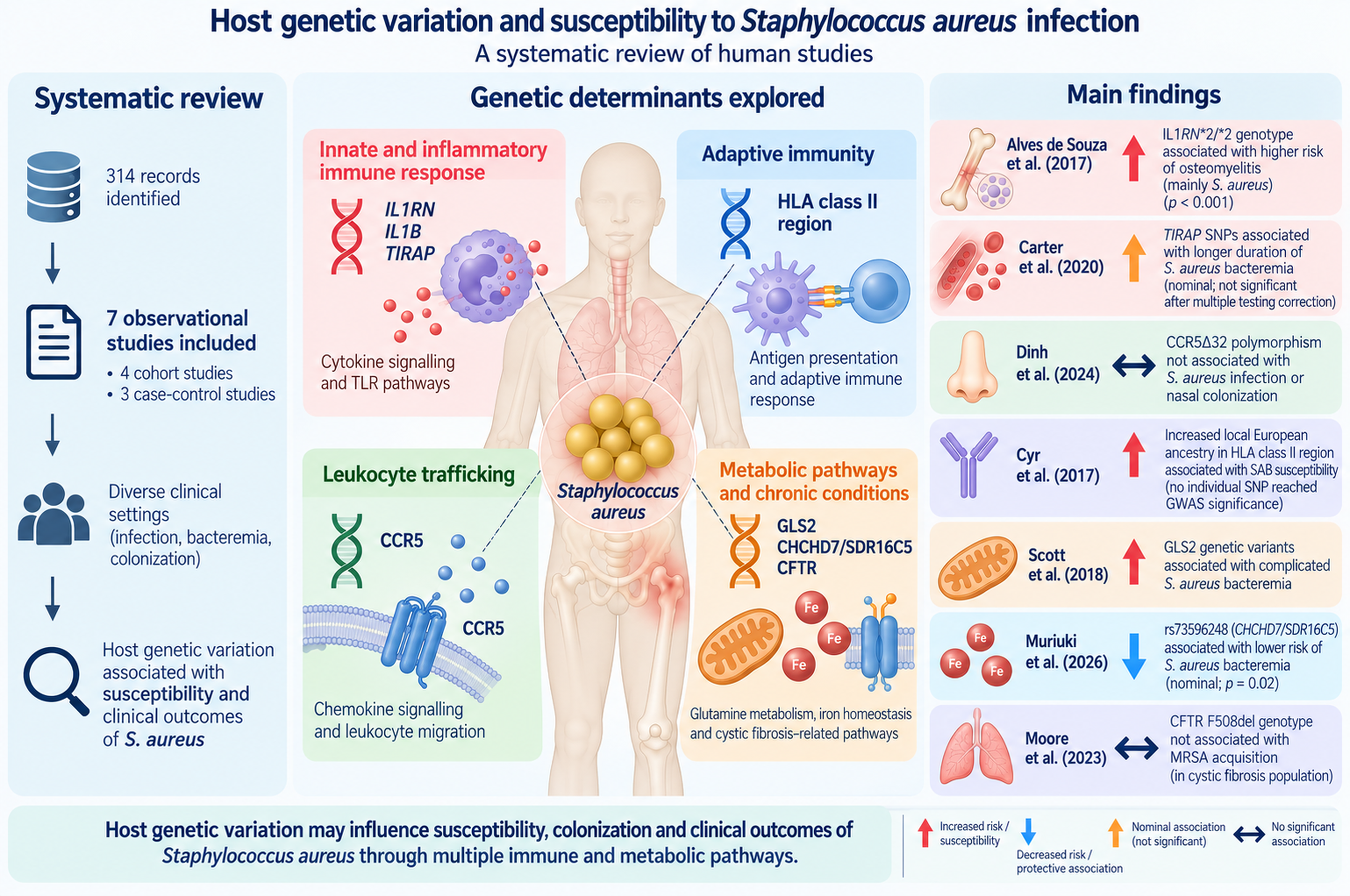
Staphylococcus aureus causes diverse clinical manifestations, from asymptomatic colonization to severe invasive disease. Host genetic factors influencing infection susceptibility and severity remain incompletely understood. This systematic review, conducted according to PRISMA 2020 guidelines and registered in PROSPERO, evaluated human genetic variants associated with susceptibility to S.aureus infection and colonization, with subsequent clinical outcomes. Bibliographic databases and grey literature sources were searched for observational studies (2015-2026), with risk of bias assessed using the Newcastle-Ottawa Scale. Regarding innate immunity, IL1RN*2/*2 was associated with post-traumatic S. aureus osteomyelitis, whereas the TIRAP association lost significance after adjustment. In adaptive immunity, admixture mapping linked European ancestry at HLA class II locus to bacteremia in African Americans, while CCR5Δ32 altered circulating chemokines levels without altering clinical risk. Regarding metabolism and iron regulation, GLS2 variant (rs937115) was associated with complicated bacteremia, and an intergenic CHCHD7/SDR16C5 variant (rs73596248) was linked to higher hepcidin levels and a lower risk of bacteremia. CFTR F508del genotype showed no significant association with methicillin-resistant S. aureus (MRSA) acquisition. These findings support a multifactorial host genetic network in S. aureus infection and underscore the need for larger, multi-ancestry, independently replicated studies to validate genetic markers for future risk stratification.
Keywords:
Staphylococcus aureus
; host genetic
; genetic susceptibility
; genetic polymorphisms
; bacteremia
; colonization
1. Introduction
Staphylococcus aureus (S. aureus) is a Gram-positive coccus and a common commensal of human skin and mucous membranes [1,2,3]. However, it is also an important human pathogen capable of causing a wide spectrum of clinical manifestations ranging from superficial skin and soft tissue infections to severe invasive diseases, including pneumonia, osteomyelitis, infective endocarditis, fulminant sepsis, and bacteremia [4,5]. S. aureus bacteremia (SAB) is associated with a mortality rate of approximately 20-40% [5]. The transition from asymptomatic colonization to invasive disease occurs when the host’s epithelial barrier is breached, triggering a complex immune and inflammatory response [1,4].
Standard treatment relies on antimicrobial therapy. Infections caused by methicillin-susceptible S. aureus (MSSA) are typically managed with beta-lactams such as oxacillin or cefazolin [4]. Nevertheless, treatment has become increasingly challenging due to the widespread emergence of antimicrobial resistance [4,5]. Methicillin-resistant S. aureus (MRSA) and isolates with reduced glycopeptide susceptibility, Vancomycin-intermediate S. aureus/Vancomycin-resistant S. aureus (VISA/VRSA), may require alternative antimicrobial agents including vancomycin, daptomycin, linezolid, or trimethoprim-sulfamethoxazole [4]. Antimicrobial resistance is associated with higher rates of treatment failure, prolonged hospitalizations, and increased healthcare costs [1,4].
Host genetic factors may contribute to both individual susceptibility to S. aureus infection and to the risk of subsequent clinically relevant outcomes [2,4]. Therefore, identifying host genetic variants associated with susceptibility to S. aureus infection and with specific clinical outcomes may help elucidate the biological mechanisms underlying interindividual differences in infection risk and disease manifestations [6]. Previous studies have identified host genetic variants associated with different S. aureus-related outcomes [6]. These include genes involved in antigen presentation and adaptive immunity, such as the human leukocyte antigen (HLA) class II region [7], as well as genes regulating inflammatory responses like interleukin 1 beta (IL1β) and interleukin 1 receptor antagonist (IL1RN) [8]. Host immunometabolism may also contribute to antibacterial defense. Specifically, glutamine metabolism and glutaminase activity regulate leukocyte activation and macrophage functional responses, including the modulation of IL-1β transcription and nitric oxide (NO) signaling during inflammatory and bacterial challenges [9]. Innate immune recognition is additionally mediated by Toll-like receptor (TLR) pathways, in which TIR domain-containing adaptor protein (TIRAP) functions as an adaptor in TLR2 and TLR4-associated signaling, and TLR2 polymorphisms modulate cellular cytokine responses to microbial recognition [10,11]. Although the progression of S. aureus infection is multifactorial and concomitantly modulated by bacterial virulence factors and patient comorbidities [6], existing literature exhibits significant methodological limitations. Most studies are pilot studies conducted on small cohorts or restricted to a limited number of variants [8]. Consequently, many of the described associations fail to retain statistical significance after adjustment for multiple comparisons or lack of external validation in independent cohorts [6,7]. Additionally, significant knowledge gaps persist regarding the contribution of human genetics versus other clinical factors, as well as whether the genetic variants associated with susceptibility to S. aureus infection differ from those associated with the risk of subsequent clinically relevant outcomes [6,7,8].
Moreover, existing literature does not incorporate genomic evidence published subsequently [6,8]. Most publications have focused on bacterial virulence factors or general inflammatory biomarkers, leaving the contribution of host genetic variation comparatively underexplored [6,7]. Previous reviews also present notable limitations, as they largely rely on candidate-gene studies, do not consistently distinguish susceptibility to infection or colonization from subsequent clinical outcomes, and fail to incorporate more recent evidence from whole-exome sequencing (WES) and large-scale genomic studies [6,7,8].
To address the lack of consolidated data, the primary objective of this systematic review is to rigorously evaluate and synthesize the available evidence regarding human genetic variants associated with susceptibility to S. aureus infection and with clinically relevant outcomes. By distinguishing genetic factors associated with susceptibility from those related to subsequent clinical outcomes, this review provides an updated overview of the role of host genetic variation across different stages of S. aureus infection and identifies current gaps in the evidence, with potential implications for future research and precision medicine.
2. Materials & Methodology
2.1. Search Strategy
This systematic review was conducted according to the Preferred Reporting Items for Systematic Reviews and Meta-Analyses (PRISMA 2020) guidance [12]. A comprehensive literature search was conducted in Pubmed and Scopus to identify open access studies published between January 2015 to August 2026 investigating the association between host genetic variants and susceptibility or risk related to S. aureus infection or colonization. In addition, we also conducted a search in grey literature using the sources Clinicaltrials.gov (https://clinicaltrials.gov), Clinical Trials EU (https://euclinicaltrials.eu/), TESEO database (Spanish Ministry of Education database for doctoral thesis), and Base (Bielefeld Academic Search Engine).
The Patient problem, Intervention/Exposure, Comparison, and Outcome (PICO/PECO) framework was used to develop the literature search strategy. The search combined terms related to S. aureus infection or colonization, host genetic variation, and susceptibility or risk, as follow: (“Staphylococcus aureus infection” OR “Staphylococcus aureus colonization” OR “Staphylococcus aureus bacteremia”) AND (“polymorphism” OR “variant” OR “mutation” OR “SNP” OR “single nucleotide polymorphism” OR “GWAS” OR “genome-wide association study” OR “WES” OR “whole exome sequencing” OR “whole genome sequencing” OR “WGS” OR “NGS”) AND ("susceptibility" OR "predisposition" OR "risk" OR "protection"). The complete search strategies and terms used for each database are detailed in the protocol registered in the PROSPERO database (www.crd.york.ac.uk/prospero/; registration number CRD420261496070).
2.2. Eligibility Criteria
Studies were considered eligible if they met the following criteria: (i) studies involving human participants evaluated in relation to S. aureus infection, colonization, bacteremia, or other relevant S. aureus-related phenotypes, regardless of sex, ethnic origin, geographical location, social context, or associated comorbidities; (ii) studies evaluating host genetic variants, including single-nucleotide polymorphisms (SNPs) and variants identified through candidate-gene approaches, genome-wide association studies (GWAS), WES, whole-genome sequencing (WGS), or other next-generation sequencing (NGS) approaches; and (iii) studies assessing the association of these genetic variants with susceptibility, predisposition, risk, or protection against S. aureus infection or colonization, as well as subsequent clinically relevant outcomes among affected individuals. Regarding the study design, randomized and non-randomized controlled trials, cohort-based studies, case-control studies, cross-sectional studies, and relevant grey literature sources were included. Only studies published between January 2015 and August 2026, with full text freely available in English or Spanish, were considered eligible. No restrictions were applied based on sex, ethnicity, geographical location, or associated comorbidities. When these variables were reported, their inclusion as covariates or adjustment factors in the statistical analyses was checked.
This systematic review included two distinct areas of evidence: (i) associations between host genetic variation and susceptibility to S. aureus infection or colonization, and (ii) associations between host genetic variation and subsequent clinically relevant outcomes among affected individuals. Susceptibility-related outcomes were defined as genetic associations with the acquisition, colonization, or development of S. aureus infection, including increased or reduced risk, whereas subsequent clinical outcomes referred to genetic associations with clinically relevant events occurring after infection was established, such as complicated or persistent/prolonged bacteremia.
Studies were excluded if they met any of the following criteria: case reports or case series; systematic reviews, meta-analyses, narrative or literature reviews; editorials, opinion articles, or book chapters; qualitative studies; preclinical studies, including animal and in vitro studies; studies that did not investigate host genetic variants in relation to S. aureus infection or colonization or relevant clinical outcomes; studies published outside the predefined date range or in languages other than English or Spanish; and studies for which the full text was not freely available.
2.3. Study Selection
All records identified through the database searches were downloaded and uploaded to the Rayyan online collaborative systematic review platform [13]. Duplicate records were identified and removed using the same platform. Two reviewers (NGD and BTB) independently screened the titles and abstracts of all studies identified through the search strategy to assess their eligibility. Subsequently, the same two reviewers independently assessed the full texts of potentially eligible studies to determine their final inclusion. The disagreements between reviewers were resolved through discussions, and any remaining discrepancies were resolved by the third reviewer (LSMP).
2.4. Data Extraction and Analysis
Data from the included studies were initially extracted using a standardized data extraction form implemented in Rayyan.
The following variables were systematically extracted from each eligible study using a structured data collection form:
- Study and Bibliographic Metadata: title, authors, journal, year, month, and day of publication, volume, issue, pages, ISSN, publisher, location, URL, language, Digital Object Identifier (DOI), Pubmed ID (PMID), and PMC ID.
- Study Characteristics and Methodology: study keywords, a comprehensive study summary, the specific methodology or genotyping technique employed, and the comparison groups evaluated.
- Population and S. aureus-related characteristics: type of S. aureus-related phenotype evaluated, including infection, colonization, bacteremia, or other clinically relevant manifestations, together with the definitions of cases, controls, and clinical outcomes used in each study.
- Genetic Data: gene name, gene function, number of identified genetic variants, specific genetic variants or Reference SNP cluster IDs (rsID), and Minor Allele Frequency (MAF), when reported.
- Clinical Outcomes and Statistical Significance: reported associations between host genetic variants and susceptibility, predisposition, risk, or protection related to t S. aureus infection or colonization, as well as subsequent clinically relevant outcomes among affected individuals, including complicated, persistent, or prolonged bacteremia, when applicable. Effect estimates such as odds ratios (ORs) or other measures of association, together with their corresponding p-values and/or 95% confidence intervals (95% CIs), when available.
Given the substantial methodological and clinical heterogeneity among the included studies, a quantitative meta-analysis was not performed [14]. Differences across studies in population characteristics, S. aureus-related phenotypes, genetic variants, genotyping or sequencing approaches, genetic models, and statistical adjustment strategies precluded the calculation of meaningful pooled estimates. Therefore, the findings were synthesized narratively, with subsequent clinically relevant outcomes considered separately. For each study, the synthesis considered the genes and genetic variants investigated, the direction and magnitude of the reported associations, and the corresponding effect estimates, 95% confidence intervals, and p-values, when available.
2.5. Risk of Bias Assessment
The methodological quality and risk of bias (RoB) of the included studies were assessed using the nine-star Newcastle-Ottawa Scale (NOS) [15]. The quality assessment comprised three components: the selection of the study groups (with a maximum of four stars), comparability (two stars), and evaluation of either the outcome for cohort studies (three stars) or the exposure for case-control studies. The thresholds for NOS interpretation were as follows: a total score of 7–9 was categorised as 'high quality/low RoB', 4–6 stars as 'moderate quality/RoB', and 0–3 stars as 'poor quality/high RoB' [16].
Two independent reviewers (NGD and BTB) performed the risk of bias assessment, and any disagreements were resolved by consensus.
3. Results
3.1. Study Selection
The initial search identified 314 records in PubMed and Scopus databases. Following screening and full-text assessment, 7 observational studies were finally included in the systematic review, comprising 4 cohort-based studies and 3 case-control studies. The study selection process is presented in the PRISMA flow diagram (Figure 1).
3.2. Study Characteristics
The systematic review encompassed seven studies, comprising three case-control [17,18,19], and four observational cohort designs [20,21,22,23]. The reviewed studies included patients with SAB, patients with bone trauma followed for the development of osteomyelitis, individuals with cystic fibrosis, blood donors, and other populations evaluated for S. aureus-related outcomes. Sample sizes ranged from 100 to more than 95,000 participants. The geographical distribution, sample sizes, and study designs of the included studies are illustrated in Figure 2. The studies investigated host genetic variation across genes and genomic regions involved in immune and inflammatory responses, leukocyte trafficking and antigen presentation, iron homeostasis, and cellular and metabolic processes. Genetic analyses included candidate-gene genotyping, genome-wide genotyping, admixture mapping, WES, targeted sequencing, and GWAS. The evaluated outcomes encompassed two distinct areas of evidence: susceptibility-related outcomes, including susceptibility to SAB, S. aureus osteomyelitis, hospital-treated S. aureus infection, nasal carriage, and MRSA acquisition and time-to-first isolation (TTFI); and subsequent clinically relevant outcomes among patients with established SAB, including complicated SAB and bacteremia duration or persistence. Detailed characteristics and main genetic findings of the included studies are presented in Table 1.
3.3. Host Genetic Variants Associated with S. aureus Infection
Given the diversity of the genes and genetic variants investigated across the included studies, the results were grouped according to their main biological role. Four main categories were considered: (i) innate immunity and inflammatory response; (ii) adaptive immunity and immune-cell trafficking; (iii) metabolic and iron-related genetic determinants, and (iv) CFTR genotype and MRSA acquisition. This grouping provides a clearer overview of the different genetic factors explored in relation to S. aureus susceptibility and clinical outcomes.
3.3.1. Innate Immune and Inflammatory Response
This section includes two studies evaluating the association between genetic variation in innate immune response pathways and S. aureus infection outcomes [20,21].
Alves de Souza et al. (2017) evaluated two genetic variants in the interleukin 1 (IL-1) gene family (IL1RN VNTR, rs2234663; IL1B-511C>T, rs16944), specifically linked to regulation of the inflammatory response on susceptibility to developing post-traumatic osteomyelitis due to S. aureus in a prospective cohort of 153 patients who underwent surgery for bone trauma in Brazil, including 39 patients who developed osteomyelitis and 114 controls without osteomyelitis [20]. This was identified as the predominant pathogen, isolated in 89.7% of all osteomyelitis cases (35/39). The IL1RN*2/*2 genotype was associated with an increased risk of osteomyelitis (OR = 6.9; 95% CI: 2.5-18.7; p < 0.001) and was also significantly associated with osteomyelitis caused by S. aureus (12/22; p < 0.001) [20].
Carter et al. (2020) evaluated a cohort of 202 patients with SAB of European ancestry recruited at UW Health (Madison, Wisconsin, USA), including 158 patients with short-term bacteremia (≤4 days) and 44 with persistent bacteremia (>4 days). The authors investigated the association between 28 potentially functional SNPs in seven innate immune response genes (TLR2, TLR4, TIRAP, IRAK4, TRAF6, NOD2 and CISH) and the length of SAB. SAB duration was evaluated both as a binary outcome (short-term vs. persistent) and as a quantitative trait based on the time to definitive negative blood culture [21].
Analysis of individual SNPs identified nominal associations concentrated exclusively in the TIRAP gene. The minor alleles of rs655540, rs563011 and, rs8177376 were nominally associated with persistent SAB (p = 0.020, p = 0.020, and p = 0.021, respectively), whereas rs8177342, rs4937114, rs3802813, and rs4937115 were nominally associated with short-term SAB (p = 0.037, p = 0.042, p = 0.037, and p = 0.043, respectively). Haplotype analysis showed that CCGGGACGCGGCA was associated with persistent SAB (p = 0.037), whereas TGTGTACGCATCG was associated with short-term SAB (p = 0.045). When SAB duration was analysed as a quantitative trait, the TCTGGGCGCGTCA haplotype was nominally associated with shorter bacteremia duration (p = 0.032). No variants in the other genes showed an association with SAB duration, and none of the SNP or haplotype associations remained statistically significant after correction for multiple comparisons [21].
3.3.2. Adaptive Immunity and Immune-Cell Trafficking
The following analysis evaluates two studies investigating host genetic variation in cell-surface chemokine receptors and the HLA class II region in relation to S. aureus infection susceptibility [18,22].
Dinh et al. (2024) investigated the association between the functional CCR5Δ32 polymorphism (rs333), a 32-base-pair deletion in the CCR5 gene, and susceptibility to S. aureus infection and nasal carriage [22]. The study included 95,406 healthy blood donors from the Danish Blood Donor Study, with findings for S. aureus infection further evaluated in an Icelandic cohort of 345,996 individuals. The authors assessed hospital-treated S. aureus infections, including abscesses, skin and soft tissue infections and invasive infections, as well as S. aureus nasal carriage and the prescription of anti-staphylococcal antibiotics. CCR5Δ32 was not associated with hospital-treated S. aureus infection, nasal carriage or the prescription of dicloxacillin or topical fusidic acid. The absence of an association with S. aureus infection was also supported by the Icelandic cohort. In addition, the authors evaluated circulating chemokines and found higher plasma CCL4 concentrations in both CCR5Δ32 heterozygotes (1.26-fold; 95% CI:1.23-1.30) and homozygotes (2.64-fold; 95% CI:2.41-2.90) compared with wild-type homozygotes. Slightly lower concentrations of CCL2, CXCL10 and CCL11 were observed in heterozygous carriers [22].
Cyr et al. (2017) investigated whether differences in European and African ancestry were associated with susceptibility to SAB in 565 African American adults, including 390 SAB cases and 175 age-matched controls recruited at Duke University Medical Center (Durham, North Caroline, USA) [18].
Mean global European ancestry was similar between SAB cases (20.4%, SD: 1.5%) and controls (20.9%, SD: 2.4%). However, admixture mapping identified a significant increase in local European ancestry within the HLA class II region on chromosome 6, spanning 52 SNPs, which was associated with susceptibility to SAB (p = 4.56 x 10⁻⁵). This association exceeded the empirical genome-wide significance threshold (p < 9.46 x 10⁻⁵). In contrast, no individual SNP reached the conventional genome-wide significance threshold (p < 5.00 x 10⁻⁸) in single SNP association analysis [18].
3.3.3. Metabolic and Iron-Related Genetic Determinants
In this context, Scott el al. (2018) investigated host genetic variation associated with complicated versus uncomplicated SAB using a two-stage genetic association design comprising a discovery cohort (n = 168) analyzed by WES and an independent replication cohort (n = 240) analyzed by targeted sequencing [19]. In the replication cohort, gene-based analysis identified GLS2 as significantly associated with complicated SAB, remaining significant after Bonferroni correction (p = 1.2 × 10⁻⁴). At the individual-variant level, the missense variant rs2657879 was associated with increased odds of complicated SAB (OR = 2.0; p = 0.004). In the combined meta-analysis of the discovery and replication datasets, the intronic variant rs937115 showed the strongest genetic association (OR = 8.01; p = 2.0 × 10⁻⁴). The associations did not remain significant after multiple-testing correction. In the microarray-based gene-expression analysis, GLS2 expression was reduced in patients with bacteremia and in macrophages exposed to S. aureus [19].
Muriuki et al. (2026) conducted a GWAS on six iron-related biomarkers (transferrin, hepcidin, soluble transferrin receptor (sTfR), ferritin, serum iron and transferrin saturation) in 3,928 children recruited from Kenya, Uganda, Burkina Faso, South Africa and Gambia, with replication in 2,868 African American adults. Among the genetic signals, variant rs73596248, an intergenic variant located between CHCHD7 and SDR16C5 was associated with increased hepcidin concentrations in the discovery cohort (β = 0.27, SE = 0.05, p = 4.15 x 10⁻⁸). The rs73596248 variant was further nominally associated with protection against S. aureus infection (OR = 0.56; 95% CI 0.33-0.92; p = 0.02) in the African case-control GWAS [17].
3.3.4. CFTR Genotype and MRSA Acquisition
Moore et al. (2023) evaluated the utility of the TTFI metric to characterize the acquisition of MRSA in a retrospective cohort of 100 adult patients with cystic fibrosis (50 females and 50 males; predominantly Caucasian/European ancestry) [23]. The authors further analyzed the relationship between the TTFI and genotypic variability in the CFTR gene, classifying the population into F508del/F508del homozygotes (n = 45), F508del/other mutation heterozygotes (n = 45), and carriers of non-F508del mutation (n = 10). Among the 23 patients with at least one MRSA-positive respiratory culture, all carried at least one copy of F508del (F508del/F508del homozygous: 43.5% (10/23) and F508del/other heterozygous: 56.5% 13/23)); however, there were no significant differences in MRSA acquisition between F508del/F508del homozygotes and F508del/other variant heterozygotes (p = 0.14), nor in TTFI (p = 0.39) [23].
3.4. Methodological Quality and Risk of Bias
The methodological quality and risk of bias (RoB) of the observational included studies were assessed using the nine-star NOS (Figure 3 and Table S1 and Table S2). One cohort study achieved the maximum score of nine stars, indicating high methodological quality and a low RoB [21]. Two additional studies received eight stars, while two studies obtained seven stars, also reflecting high methodological quality and low RoB [17,20,22,23]. The remaining two case-control studies received six stars and were therefore considered to have moderate methodological quality and moderate RoB [18,19].
4. Discussion
S. aureus remains a major cause of community and hospital acquired infections, ranging from localized bone and soft tissue infections to potentially life-threatening invasive bacteremia. However, marked interindividual variability in susceptibility to infection, clinical severity and disease duration suggests that host genetic factors may contribute to the heterogeneity of clinical outcomes. In this systematic review, we synthesized current evidence on the impact of host genetic variation on susceptibility to S. aureus infection, clinical severity, and colonization dynamics across diverse clinical settings. Following an initial assessment of 314 records, we identified seven observational studies evaluating genetic determinants across four main pathophysiological mechanisms: innate and inflammatory immune response; adaptive immunity and leukocyte trafficking; metabolic pathways related to iron homeostasis; and susceptibility associated with underlying chronic conditions. Among these, studies investigating innate immunity candidate genes (IL1RN, IL1B and TIRAP) reported significant or nominal associations with localized tissue infections and the duration of bacteremia, whereas broader genomic approaches identified genetic signals involving the HLA class II region, glutamine metabolism (GLS2), iron homeostasis (CHCHD7/SDR16C5) and CFTR mutational status.
Among the innate immune pathways investigated, variation in IL-1-related genes emerged as a potential contributor to susceptibility to osteomyelitis. Alves de Souza et al. (2017) identified an association between the IL1RN*2/*2 genotype and osteomyelitis, predominantly caused by S. aureus [20]. This finding is consistent with broader evidence implicating IL1B and IL1RN variation in osteomyelitis susceptibility, although associations have varied according to the specific variant and population studied [24]. Further human evidence comes from a study of hematogenous osteomyelitis in which IL1B rs16944 was associated with susceptibility [25]. However, this study was not restricted to S. aureus infection and therefore provides supportive evidence for the involvement of the IL-1 pathway rather than direct replication of the findings reported by Alves de Souza et al. Experimental evidence further supports a role for IL-1 signaling in S. aureus osteomyelitis. In a murine model, IL-1R/MyD88 signaling contributed to local bacterial control but also promoted osteoclastogenesis and bone loss, suggesting a dual role in host defense and inflammatory tissue damage [26]. These findings support the biological relevance of IL-1 signaling in S. aureus osteomyelitis, although the functional consequences of the specific IL1RN and IL1B variants identified in human studies remain unclear.
Evidence regarding genetic variation in the TLR signaling pathway is less conclusive. Carter et al. (2020) identified nominal associations between TIRAP variants and SAB duration, but none remained statistically significant after correction for multiple comparisons, limiting the strength of the evidence and highlighting the need for independent replication [21]. Studies examining other infectious phenotypes have also reported associations with TIRAP, although results have been inconsistent. The functional S180L variant was associated with reduced susceptibility to several infectious diseases, including bacteremia, in one large study [10], whereas this protective association was not reproduced in patients with sepsis [27]. Although these studies evaluated different infectious phenotypes, they illustrate the variability of TIRAP associations across populations and clinical settings. Experimental evidence nevertheless supports the biological relevance of this pathway in S. aureus infection. TLR2-dependent signaling involving MyD88, Mal/TIRAP and TRAF6 has been implicated in the interaction between S. aureus and human monocytes and may contribute to intracellular bacterial survival [28]. However, these findings support pathway-level plausibility rather than a functional effect of the specific variants reported by Carter et al. Thus, the contribution of TIRAP genetic variation to SAB persistence remains uncertain.
In contrast, CCR5Δ32 illustrates how a clear biological effect does not necessarily translate into altered clinical susceptibility. Dinh et al. (2024) found that CCR5Δ32 markedly influenced circulating chemokine levels but was not associated with S. aureus infection, nasal carriage or anti-staphylococcal antibiotic use [22]. Previous human evidence suggesting a protective effect against osteomyelitis was also inconclusive and based on a much smaller cohort [29]. Together, these findings do not support CCR5Δ32 as a major determinant of susceptibility to S. aureus infection. This lack of genetic association contrasts with the established interaction between CCR5 and S. aureus virulence mechanisms. CCR5 acts as a receptor for the leukotoxin LukED, and experimental disruption of CCR5 can reduce LukED-mediated cytotoxicity [30]. However, LukED can also target other chemokine receptors, including CXCR1 and CXCR2 [31]. This receptor versatility, together with the complexity of chemokine signaling, may partly explain why loss of functional CCR5 affects chemokine homeostasis without producing a detectable protective effect against S. aureus infection at the population level.
Beyond candidate-gene approaches, admixture mapping provided evidence implicating the HLA class II region in susceptibility to SAB. Cyr et al. (2017) identified increased local European ancestry within this region among african american patients with SAB despite similar global ancestry between cases and controls. Although no individual SNP reached conventional GWAS significance, the local ancestry signal remained significant at the genome-wide level, suggesting that genetic variation within the HLA class II region may contribute to SAB susceptibility without identifying a specific causal variant [18]. This interpretation is supported by independent genomic evidence. A large GWAS identified genome-wide significant variants near HLA-DRB1 and HLA-DRA in relation to S. aureus infection [7], while smaller studies have also linked HLA variation to S. aureus nasal carriage [32]. Although these studies differ in population and phenotype, their convergence strengthens the evidence implicating the HLA class II region in susceptibility to S. aureus. Associations between HLA class II alleles and antibody responses to the S. aureus superantigen TSST-1 provide further biological plausibility [33], although the causal variants and mechanisms underlying susceptibility to SAB remain unresolved.
Beyond classical immune-related genes, recent genomic studies using WES and GWAS have revealed novel metabolic and nutritional immunity mechanisms that may influence infection severity and progression [17,19]. In this context, GLS2 emerges as a relevant factor in glutamine metabolism, which is an important biological process for proliferation and activation of immune cells, including neutrophils, macrophages, and T cells, during the host response to S. aureus infection [19,34]. Consistently, transcriptomic analyses carried out by Scott et al. (2018) showed reduced GLS2 expression in patients with bloodstream infection, while experimental exposure of mouse macrophages to S. aureus similarly suppressed GLS2 expression [19,35]. Furthermore, GLS2 silencing altered the macrophage response to infection by decreasing IL-1β transcription and increasing NO production, supporting a potential immunomodulatory role for this gene [19]. This finding is consistent with recent evidence showing that S. aureus infection induces marked immunometabolic reprogramming in macrophages involving IL-1β signaling and NO metabolism [36].
In relation to GLS2 genetic variation, rs2657878, located in intron 14, showed the strongest single-variant association with complicated SAB in a replication cohort of 240 patients [19]. Besides the fact that it is a common variant, its functional consequence remains unknown. Importantly, this variant is in strong linkage disequilibrium with the missense variant rs2657879 in exon 18, whose minor G allele has previously been associated with lower plasma glutamine levels in several GWAS [37,38,39]. Besides, these findings support GLS2 as a promising novel candidate gene for SAB burden, a biological mechanism for strengthening the association of GLS2 variants with S. aureus remains to be elucidated.
In parallel, in a meta-analysis of hepcidin GWAS involving 3,928 children from five African populations, Muriuki et al. (2026) identified for the first time an intergenic CHCHD7/SDR16C5 rs73596248 variant in association with increased plasma hepcidin levels and reduced risk of SAB [17].
These findings are biologically plausible in terms of nutritional immunity, since iron is an essential nutrient for both humans and pathogens [40]. During inflammation and infection, hepcidin is in charge of inhibiting intestinal iron absorption and iron export from macrophages and thereby restricting iron availability for invading microorganisms growth [40,41]. Experimental evidence further supports a role for hepcidin in host defense against bloodstream S. aureus infection, as hepcidin-deficient mice display increased bacteremia and poorer survival following S.aureus entrance [42]. However, the molecular mechanism linking rs73596248 to hepcidin regulation remains unresolved. This variant acts as an eQTL associated with reduced CHCHD7 expression, although no established link between CHCHD7 and iron homeostasis has been described [17]. Conversely, SDR16C5 participates in retinoid metabolism which has been shown to suppress hepcidin expression [43,44]. Thus, rather than identifying a causal gene, these findings implicate the CHCHD7/SDR16C5 locus as a novel genetic determinant shaping iron homeostasis and susceptibility to SAB.
Host genetic predisposition not only modulates susceptibility to acute infection but may also influence pathogen acquisition dynamics in the context of underlying chronic conditions. In a study performed in patients with cystic fibrosis, MRSA was detected exclusively among individuals carrying at least one F508del allele within the CFTR gene [23]. However neither MRSA acquisition nor TTFI differed significantly among genotype groups, providing no clear evidence for a genotype-specific effect of F508del on MRSA susceptibility [23]. Cystic fibrosis is a genetic disorder caused by mutations in the CFTR gene, and S. aureus is one of the two most common bacterial pathogens [45]. Interestingly, CFTR dysfunction creates an airway microenvironment that favors colonization and persistence of S. aureus by impairing ion transport and mucociliary clearance [45,46]. Thus, the presence of MRSA among F508del carriers observed by Moore et al. is biologically compatible with the broader effect of CFTR deficiency on airway host defense, although the study does not establish F508del itself as an independent genetic determinant of MRSA acquisition [23].
Collectively, these findings underscore that host susceptibility to S. aureus is governed by a multifactorial genetic network integrating immune defense, cellular metabolism, nutritional immunity and disease-specific microenvironments. The inclusion of African, African-descended, European, and admixed populations also suggests that some genetic signals appear to be ancestry-dependent. Larger multi-ancestry studies using harmonized clinical phenotypes and functional validation will therefore be essential to distinguish shared genetic determinants from population-specific susceptibility mechanisms.
5. Conclusion
This review evaluates seven studies to highlight the potential of host genomic approaches for precision medicine strategies in S. aureus infection. The analysis also identifies key methodological hurdles across the literature, including differences in study design, population and ethnicity, outcomes definitions (ranging from localized osteomyelitis and nasal carriage to complicated bacteremia), genetic testing approaches and statistical power. These findings underscore the need for larger, well designed, multi ancestry and independently replicated studies to validate reliable host genetic markers that could ultimately support more personalized risk stratification and management strategies in staphylococcal infections.
Limitations and strengths
This review has some limitations that should be acknowledged. First, the small number of eligible studies and the substantial heterogeneity in study designs, participant populations, genetic variants and clinical outcomes, ranging from post-traumatic osteomyelitis and bacteremia duration to complicated bacteremia, nasal carriage and MRSA acquisition, precluded a quantitative synthesis. Second, several included studies had relatively small sample sizes, particularly candidate-gene analyses and genotype-defined subgroups, which may have limited statistical power to detect modest variant effects. In addition, some reported associations were exploratory and independent replication of significant findings was limited or failed to survive correction for multiple testing. Finally, eligibility criteria, including the restriction to English and Spanish language publications, may have limited the identification of all relevant evidence and introduced selection bias.
Conversely, several key strengths of this study deserve emphasis. First, it addresses a highly relevant clinical question regarding precision medicine and the host genetic determinants of interindividual variability in S. aureus susceptibility and disease severity. Second, this review provides an up-to-date synthesis of available evidence through 2026, incorporating recent advances in immunometabolism (GLS2), nutritional iron immunity (CHCHD7/SDR16C5) and colonization kinetics (CFTR). Third, a rigorous systematic methodology was implemented in accordance with PRISMA 2020 guidelines, including PROSPERO registration, independent dual-blind screening and data extraction via Rayyan. Fourth, the review incorporates very large genomic and population based datasets, including registry cohorts comprising over 95,000 individuals, multi-cohorts african GWAS, WES and admixture mapping in appraised using NOS, confirming that most included studies exhibited high methodological quality while allowing a transparent recognition of inconsistent or non replicated signals.
Funding sources: This study was supported by Duponte Investigación y Desarrollo S.L. The funder contributed to the study conception, manuscript preparation, and the decision to submit the article for publication.
Supplementary Materials
The following supporting information can be downloaded at the website of this paper posted on Preprints.org.
Author Contributions
Author Contributions (CRediT): Conceptualization: CPS. Methodology and Investigation (literature search, study selection and data analysis): NGD and BTB. Writing-original draft: NGD, BTB,VR, MAS, and LSMP. Writing-Review & Editing: NGD, CPS, BTB, VR, MAS, and LSMP. Supervision: LSMP. Project administration: LSMP. Funding acquisition: CPS.
Institutional Review Board Statement
Not applicable.
Informed Consent Statement
Not applicable.
Conflicts of Interest
All authors were employed by Duponte Investigación y Desarrollo S.L. at the time this review was prepared. The authors declare that the review was conducted in the absence of any additional commercial or financial relationships that could be construed as a potential conflict of interest.
References
- Lakhundi, S.; Zhang, K. Methicillin-Resistant Staphylococcus aureus: Molecular Characterization, Evolution, and Epidemiology. Clin. Microbiol. Rev. 2018, 31(4). [Google Scholar] [CrossRef] [PubMed]
- Sakr, A.; Brégeon, F.; Mège, J.-L.; Rolain, J.-M.; Blin, O. Staphylococcus aureus Nasal Colonization: An Update on Mechanisms, Epidemiology, Risk Factors, and Subsequent Infections. Front Microbiol. 2018, 9, 2419. [Google Scholar] [CrossRef] [PubMed]
- Tong, S.Y.C.; Davis, J.S.; Eichenberger, E.; Holland, T.L.; Fowler, V.G. Staphylococcus aureus infections: epidemiology, pathophysiology, clinical manifestations, and management. Clin. Microbiol. Rev. 2015, 28(3), 603–61. [Google Scholar] [CrossRef] [PubMed]
- Linz, M.S.; Mattappallil, A.; Finkel, D.; Parker, D. Clinical Impact of Staphylococcus aureus Skin and Soft Tissue Infections. Antibiotics 2023, 12(3). [Google Scholar] [CrossRef] [PubMed]
- Cheung, G.Y.C.; Bae, J.S.; Otto, M. Pathogenicity and virulence of Staphylococcus aureus. Virulence 2021, 12(1), 547–69. [Google Scholar] [CrossRef] [PubMed]
- Messina, J.A.; Thaden, J.T.; Sharma-Kuinkel, B.K.; Fowler, V.G. Impact of Bacterial and Human Genetic Variation on Staphylococcus aureus Infections. PLoS Pathog. 2016, 12(1), e1005330. [Google Scholar] [CrossRef] [PubMed]
- DeLorenze, G.N.; Nelson, C.L.; Scott, W.K.; Allen, A.S.; Ray, G.T.; Tsai, A.-L.; et al. Polymorphisms in HLA Class II Genes Are Associated With Susceptibility to Staphylococcus aureus Infection in a White Population. J. Infect. Dis. 2016, 213(5), 816–23. [Google Scholar] [CrossRef] [PubMed]
- Zhou, J.-Q.; Liu, Z.-X.; Zhong, H.-F.; Liu, G.-Q.; Ding, M.-C.; Zhang, Y.; et al. Single nucleotide polymorphisms in the development of osteomyelitis and prosthetic joint infection: a narrative review. Front Immunol. 2024, 15, 1444469. [Google Scholar] [CrossRef] [PubMed]
- Cruzat, V.; Macedo Rogero, M.; Noel Keane, K.; Curi, R.; Newsholme, P. Glutamine: metabolism and immune function, supplementation and clinical translation. Nutrients 2018, 10(11). [Google Scholar] [CrossRef]
- Khor, C.C.; Chapman, S.J.; Vannberg, F.O.; Dunne, A.; Murphy, C.; Ling, E.Y.; et al. A Mal functional variant is associated with protection against invasive pneumococcal disease, bacteremia, malaria and tuberculosis. Nat. Genet. 2007, 39(4), 523–8. [Google Scholar] [CrossRef] [PubMed]
- Ioana, M.; Ferwerda, B.; Plantinga, T.S.; Stappers, M.; Oosting, M.; McCall, M.; et al. Different patterns of Toll-like receptor 2 polymorphisms in populations of various ethnic and geographic origins. Infect. Immun. 2012, 80(5), 1917–22. [Google Scholar] [CrossRef] [PubMed]
- Page, M.J.; McKenzie, J.E.; Bossuyt, P.M.; Boutron, I.; Hoffmann, T.C.; Mulrow, C.D.; et al. The PRISMA 2020 statement: an updated guideline for reporting systematic reviews. BMJ 2021, n71. [Google Scholar] [CrossRef] [PubMed]
- Ouzzani, M.; Hammady, H.; Fedorowicz, Z.; Elmagarmid, A. Rayyan-a web and mobile app for systematic reviews. Syst. Rev. 2016, 5(1), 210. [Google Scholar] [CrossRef] [PubMed]
- Campbell, M.; McKenzie, J.E.; Sowden, A.; Katikireddi, S.V.; Brennan, S.E.; Ellis, S.; et al. Synthesis without meta-analysis (SWiM) in systematic reviews: reporting guideline. BMJ 2020, 368, l6890. [Google Scholar] [CrossRef] [PubMed]
- Newcastle-Ottawa Scale (NOS) | Ottawa Hospital Research Institute [Internet]. 13 Jul 2026. Available online: https://ohri.ca/en/who-we-are/core-facilities-and-platforms/ottawa-methods-centre/newcastle-ottawa-scale.
- Sahu, V. NOS-TLPlot: A Specialized Python Tool for Visualizing Newcastle–Ottawa Scale Risk-of-Bias Assessments. JORS 2026, 14(1), 7. [Google Scholar] [CrossRef]
- Muriuki, J.M.; Mentzer, A.J.; Band, G.; Chong, A.Y.; Macharia, A.W.; Mogire, R.M.; et al. African-specific genetic loci determine iron status and risk of severe malaria and bacteremia in African children. Nat. Commun. 2026, 17(1). [Google Scholar] [CrossRef] [PubMed]
- Cyr, D.D.; Allen, A.S.; Du, G.J.; Ruffin, F.; Adams, C.; Thaden, J.T.; et al. Evaluating genetic susceptibility to Staphylococcus aureus bacteremia in African Americans using admixture mapping. Genes Immun. 2017, 18(2), 95–9. [Google Scholar] [CrossRef] [PubMed]
- Scott, W.K.; Medie, F.M.; Ruffin, F.; Sharma-Kuinkel, B.K.; Cyr, D.D.; Guo, S.; et al. Human genetic variation in GLS2 is associated with development of complicated Staphylococcus aureus bacteremia. PLoS Genet. 2018, 14(10), e1007667. [Google Scholar] [CrossRef] [PubMed]
- Alves De Souza, C.; Queiroz Alves De Souza, A.; Queiroz Alves De Souza M do, S.; Dias Leite, J.A.; Silva De Morais, M.; Barem Rabenhorst, S.H. A link between osteomyelitis and IL1RN and IL1B polymorphisms-a study in patients from Northeast Brazil. Acta Orthop. 2017, 88(5), 556–61. [Google Scholar] [CrossRef] [PubMed]
- Carter, T.C.; Ye, Z.; Ivacic, L.C.; Budi, N.; Rose, W.E.; Shukla, S.K. Association of variants in selected genes mediating host immune response with duration of Staphylococcus aureus bacteremia. Genes Immun. 2020, 21(4), 240–8. [Google Scholar] [CrossRef] [PubMed]
- Dinh, K.M.; Kaspersen, K.A.; Mikkelsen, S.; Kjerulff, B.D.; Boldsen, J.K.; Petersen, M.S.; et al. Impact of CCR5Δ32 on the risk of infection, Staphylococcus aureus carriage, and plasma concentrations of chemokines in Danish blood donors. EBioMedicine 2024, 109, 105406. [Google Scholar] [CrossRef] [PubMed]
- Moore, J.E.; Rendall, J.C.; Millar, B.C. Time-to-first-isolation of methicillin-resistant Staphylococcus aureus (MRSA) in cystic fibrosis (CF): An underutilised metric in infection control? Infect. Dis. Health 2023, 28(4), 265–70. [Google Scholar] [CrossRef] [PubMed]
- Xie, X.; Li, J.; Gu, F.; Zhang, K.; Su, Z.; Wen, Q.; et al. Genetic determinants for bacterial osteomyelitis: A focused systematic review of published literature. Front Genet. 2021, 12, 654792. [Google Scholar] [CrossRef] [PubMed]
- Osman, A.E.; Mubasher, M.; ElSheikh, N.E.; AlHarthi, H.; AlZahrani, M.S.; Ahmed, N.; et al. Association of single nucleotide polymorphisms in pro-inflammatory cytokine and toll-like receptor genes with pediatric hematogenous osteomyelitis. Genet Mol. Res. 2016, 15(2). [Google Scholar] [CrossRef] [PubMed]
- Putnam, N.E.; Fulbright, L.E.; Curry, J.M.; Ford, C.A.; Petronglo, J.R.; Hendrix, A.S.; et al. MyD88 and IL-1R signaling drive antibacterial immunity and osteoclast-driven bone loss during Staphylococcus aureus osteomyelitis. PLoS Pathog. 2019, 15(4), e1007744. [Google Scholar] [CrossRef] [PubMed]
- Hamann, L.; Kumpf, O.; Schuring, R.P.; Alpsoy, E.; Bedu-Addo, G.; Bienzle, U.; et al. Low frequency of the TIRAP S180L polymorphism in Africa, and its potential role in malaria, sepsis, and leprosy. BMC Med. Genet. 2009, 10, 65. [Google Scholar] [CrossRef] [PubMed]
- Musilova, J.; Mulcahy, M.E.; Kuijk, M.M.; McLoughlin, R.M.; Bowie, A.G. Toll-like receptor 2-dependent endosomal signaling by Staphylococcus aureus in monocytes induces type I interferon and promotes intracellular survival. J. Biol. Chem. 2019, 294(45), 17031–42. [Google Scholar] [CrossRef] [PubMed]
- de Souza M do, S.Q.A.; de Souza, C.A.; Cunha, L.M.P.; de Souza, A.Q.A.; de Morais, M.S.; Rabenhorst, S.H.B. A new look at osteomyelitis development--focus on CCR5delta32. Study in patients from Northeast Brazil. Infect. Genet Evol. 2015, 31, 61–3. [Google Scholar] [CrossRef] [PubMed]
- Alonzo, F.; Kozhaya, L.; Rawlings, S.A.; Reyes-Robles, T.; DuMont, A.L.; Myszka, D.G.; et al. CCR5 is a receptor for Staphylococcus aureus leukotoxin ED. Nature 2013, 493(7430), 51–5. [Google Scholar] [CrossRef] [PubMed]
- Reyes-Robles, T.; Alonzo, F.; Kozhaya, L.; Lacy, D.B.; Unutmaz, D.; Torres, V.J. Staphylococcus aureus leukotoxin ED targets the chemokine receptors CXCR1 and CXCR2 to kill leukocytes and promote infection. Cell Host Microbe 2013, 14(4), 453–9. [Google Scholar] [CrossRef] [PubMed]
- Giarola, L.B.; Dos Santos, R.R.; Bedendo, J.; da Silva Júnior, W.V.; Borelli, S.D. HLA molecules and nasal carriage of Staphylococcus aureus isolated from dialysis and kidney transplant patients at a hospital in Southern Brazil. BMC Res. Notes 2012, 5, 90. [Google Scholar] [CrossRef] [PubMed]
- Weiss, S.; Holtfreter, S.; Meyer, T.C.; Schmiedeke, F.; Cammann, C.; Dörr, M.; et al. Toxin exposure and HLA alleles determine serum antibody binding to toxic shock syndrome toxin 1 (TSST-1) of Staphylococcus aureus. Front Immunol. 2023, 14, 1229562. [Google Scholar] [CrossRef] [PubMed]
- Berkova, N.; Guedon, E.; Le Loir, Y.; Otto, M. Host DNA damage and cellular fate in bacterial infections, with a focus on Staphylococcus aureus. FEMS Microbiol. Rev. 2025, 49. [Google Scholar] [CrossRef] [PubMed]
- Ahn, S.H.; Tsalik, E.L.; Cyr, D.D.; Zhang, Y.; van Velkinburgh, J.C.; Langley, R.J.; et al. Gene expression-based classifiers identify Staphylococcus aureus infection in mice and humans. PLoS ONE 2013, 8(1), e48979. [Google Scholar] [CrossRef] [PubMed]
- Reynolds, M.B.; Klein, B.; McFadden, M.J.; Judge, N.K.; Navarrete, H.E.; Michmerhuizen, B.C.; et al. Type I interferon governs immunometabolic checkpoints that coordinate inflammation during Staphylococcal infection. Cell Rep. 2024, 43(8), 114607. [Google Scholar] [CrossRef] [PubMed]
- Chen, Y.; Lu, T.; Pettersson-Kymmer, U.; Stewart, I.D.; Butler-Laporte, G.; Nakanishi, T.; et al. Genomic atlas of the plasma metabolome prioritizes metabolites implicated in human diseases. Nat. Genet. 2023, 55(1), 44–53. [Google Scholar] [CrossRef] [PubMed]
- Karjalainen, M.K.; Karthikeyan, S.; Oliver-Williams, C.; Sliz, E.; Allara, E.; Fung, W.T.; et al. Genome-wide characterization of circulating metabolic biomarkers. Nature 2024, 628(8006), 130–8. [Google Scholar] [CrossRef] [PubMed]
- Kettunen, J.; Demirkan, A.; Würtz, P.; Draisma, H.H.M.; Haller, T.; Rawal, R.; et al. Genome-wide study for circulating metabolites identifies 62 loci and reveals novel systemic effects of LPA. Nat. Commun. 2016, 7, 11122. [Google Scholar] [CrossRef] [PubMed]
- Ganz, T.; Nemeth, E. Hypoferremia of inflammation: Innate host defense against infections. Blood Cells Mol. Dis. 2024, 104, 102777. [Google Scholar] [CrossRef] [PubMed]
- Ganz, T. Systemic Iron Metabolism. Adv. Exp. Med. Biol. 2025, 1480, 33–45. [Google Scholar] [CrossRef] [PubMed]
- Pan, Y.; Shen, L.; Wu, Z.; Wang, X.; Liu, X.; Zhang, Y.; et al. Hepcidin sustains Kupffer cell immune defense against bloodstream bacterial infection via gut-derived metabolites in mice. J. Clin. Invest. 2025, 135(17). [Google Scholar] [CrossRef] [PubMed]
- Adams, M.K.; Lee, S.-A.; Belyaeva, O.V.; Wu, L.; Kedishvili, N.Y. Characterization of human short chain dehydrogenase/reductase SDR16C family members related to retinol dehydrogenase 10. Chem. Biol. Interact. 2017, 276, 88–94. [Google Scholar] [CrossRef] [PubMed]
- Han, L.; Liu, Y.; Lu, M.; Wang, H.; Tang, F. Retinoic acid modulates iron metabolism imbalance in anemia of inflammation induced by LPS via reversely regulating hepcidin and ferroportin expression. Biochem Biophys. Res. Commun. 2018, 507(1–4), 280–5. [Google Scholar] [CrossRef] [PubMed]
- Fairholm, J.D.; Paul, G.T.; Birket, S.; Rada, B. Microbial and host innate immune factors affecting the persistence of Staphylococcus aureus in cystic fibrosis airways. Front Cell Infect. Microbiol. 2026, 16, 1797869. [Google Scholar] [CrossRef] [PubMed]
- Wu, M.; Chen, J.-H. CFTR dysfunction leads to defective bacterial eradication on cystic fibrosis airways. Front Physiol. 2024, 15, 1385661. [Google Scholar] [CrossRef] [PubMed]
Figure 1.
PRISMA workflow of screening and selection process following their guidelines.
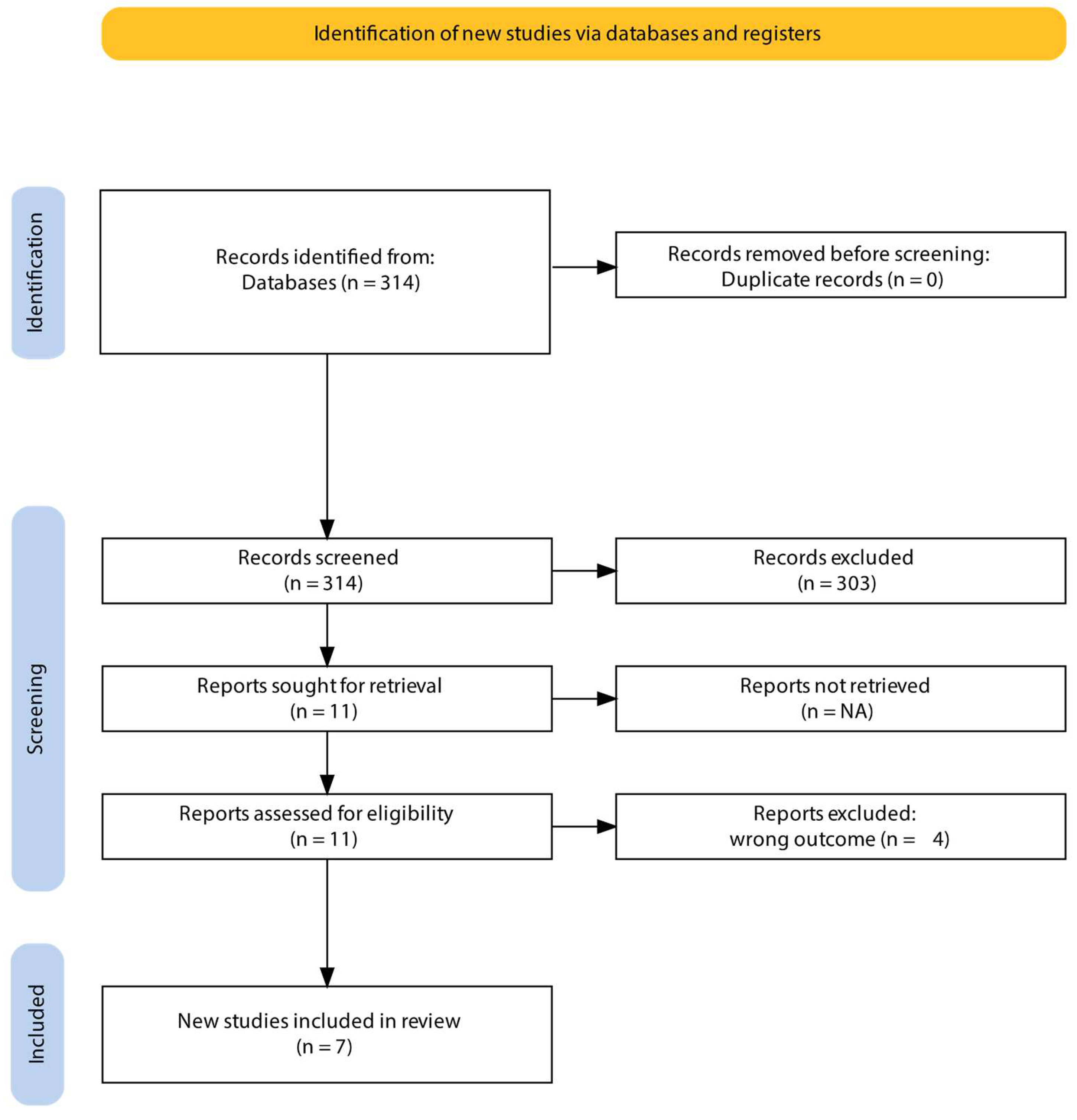
Figure 2.
Geographical distribution and sample sizes of the included studies. Overview of the countries, sample sizes, and study designs of the seven observational studies.
Figure 2.
Geographical distribution and sample sizes of the included studies. Overview of the countries, sample sizes, and study designs of the seven observational studies.
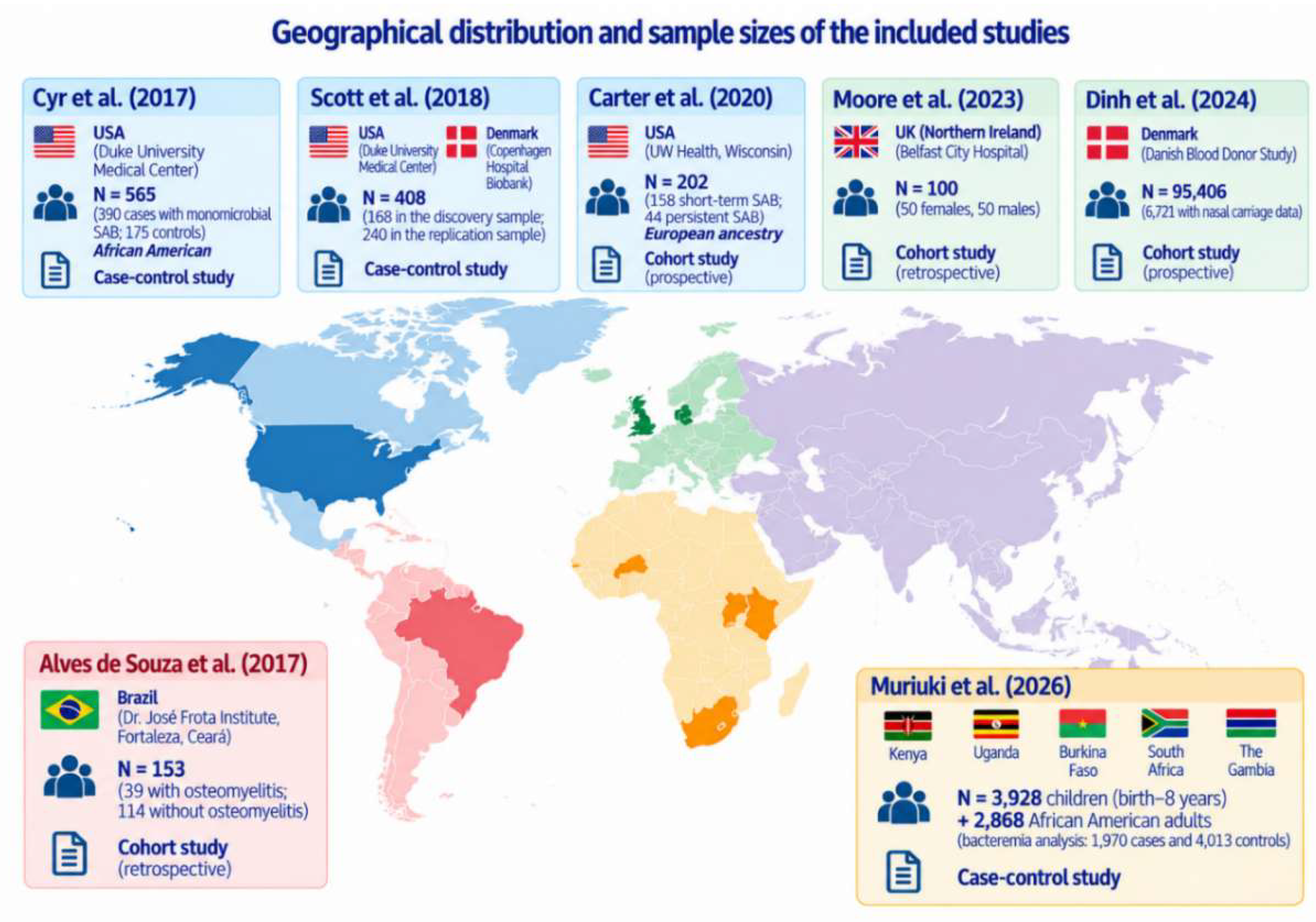
Figure 3.
Risk of bias assessment of the included studies using the Newcastle–Ottawa Scale (NOS).
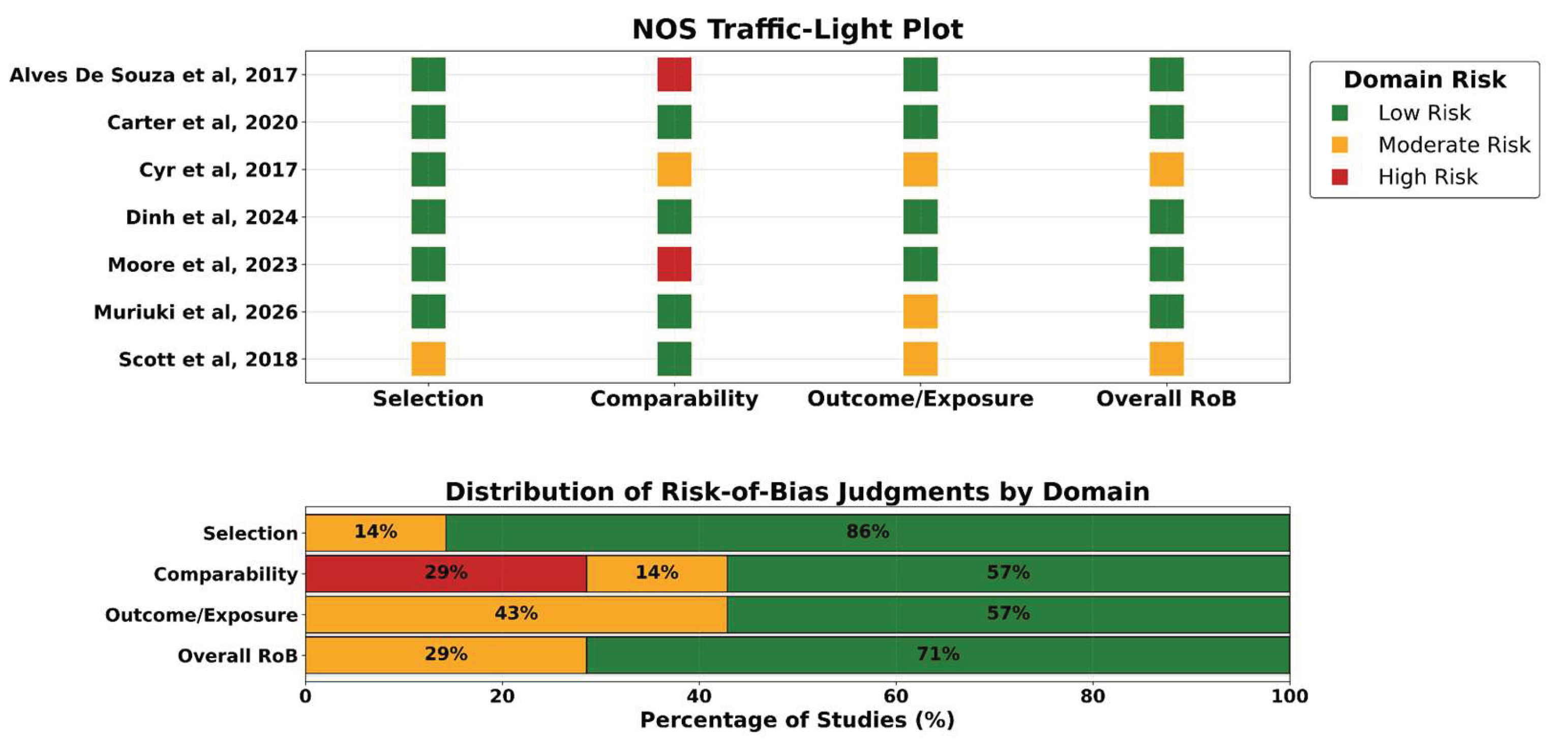

Table 1.
Characteristics and main findings of studies investigating host genetic variants associated with Staphylococcus aureus infection.
Table 1.
Characteristics and main findings of studies investigating host genetic variants associated with Staphylococcus aureus infection.
| Study design | Population | Genetic analysis | Genes & Genetic Variants | MAF | Clinical outcomes | Main findings | Ref. |
| Observational cohort study | 153 patients (39 patients with osteomyelitis and 114 patients without osteomyelitis) from Northeast Brazil, classified according to the development of post-traumatic osteomyelitis | IL1RN VNTR genotyping by PCR and IL1B −511C>T genotyping by PCR-RFLP |
IL1RN VNTR rs2234663 IL1B −511C>T rs16944 |
NR | Susceptibility to S. aureus osteomyelitis. S. aureus infection was identified by microbiological culture and was detected in 35/39 osteomyelitis cases. | The IL1RN *2/*2 genotype was significantly associated with osteomyelitis due to S. aureus (12/22 patients; p < 0.001) | [20] |
| Observational cohort study | 202 patients with S. aureus bacteremia from an UW Health (EEUU): 158 with short-term S. aureus bacteremia (SAB) (≤4 days) and 44 with persistent SAB (>4 days) | Candidate-gene SNP genotyping using DNA extracted from archived blood samples collected at bacteremia presentation | 28 SNPs in 7 host immune-response genes: TLR2, TLR4, TIRAP, IRAK4, TRAF6, NOD2, and CISH. | Minor alleles of the analyzed SNPs were evaluated. (see Table 2 of the original article) | Duration of SAB, classified as short-term (≤4 days) or persistent (>4 days), based on the number of days with positive blood cultures. | Three TIRAP SNPs (rs655540, rs563011, and rs8177376) had higher MAFs in persistent SAB (p < 0.05), and a haplotype containing all three minor alleles was associated with persistent SAB (p = 0.037). Four other TIRAP SNPs (rs8177342, rs4937114, rs3802813, and rs4937115) had higher MAFs in short-term SAB (p < 0.05), with the corresponding minor-allele haplotype associated with short-term SAB (p = 0.045). None of these associations remained significant after correction for multiple comparisons. | [21] |
| Case-control study | 565 African American adult inpatients: 390 cases with monomicrobial SAB and 175 age-matched controls with no current or previous S. aureus infection | Genome-wide genotyping and admixture mapping; local ancestry and SNP association analyses using MIXSCORE. | HLA class II region on chromosome 6; 52 SNPs spanning chr6:32,377,284–32,660,943 (hg19). | NR | Susceptibility to SAB, defined by case-control status: cases were adult inpatients with monomicrobial SAB, whereas controls were age-matched inpatients with no current or previous S. aureus infection | A 52-SNP region within the HLA class II locus showed significantly increased European local ancestry associated with susceptibility to SAB (p =4.56×10⁻⁵; empirical genome-wide significance threshold p < 9.46 × 10⁻⁵). No individual SNP reached genome-wide significance in the case-control association analysis (p < 5×10⁻⁸) | [18] |
| Observational prospective cohort study | 95,406 participants from the Danish Blood Donor Study (DBDS). Data on S. aureus nasal carriage were available for a subgroup of 6,721 participants | Genome-wide genotyping (>650,000 SNPs); CCR5Δ32 was imputed from a reference panel and subsequently validated. | CCR5Δ32 (rs333), a 32-bp deletion in the CCR5 gene. | 0.12 (12%) in Danish cohort; 11.96% in Icelandic cohort | Susceptibility to S. aureus-associated infection and S. aureus nasal carriage. Hospital-treated S. aureus infections were identified using national health-register diagnosis codes; nasal carriage was assessed by nasal swab culture | CCR5Δ32 was not associated with hospital-treated S. aureus infection. Compared with wild-type homozygotes, adjusted HRs were 1.01 (95% CI 0.93–1.10) for heterozygotes and 0.92 (95% CI 0.68–1.24) for Δ32 homozygotes. No association was observed with S. aureus nasal carriage (heterozygotes: OR = 0.99, 95% CI 0.87–1.13; homozygotes: OR = 0.89, 95% CI 0.53–1.47). Findings were corroborated in the Icelandic cohort (additive model: OR = 1.017, 95% CI 0.995–1.039; p = 0.13). | [22] |
| Observational retrospective cohort study | 100 adults (≥18 years) with cystic fibrosis (50 females and 50 males; mean age 24.6 ± 6.25 years), representing 2,455 patient-years of microbiological follow-up from birth. Methicillin-resistant S. aureus (MRSA) was isolated in 23 patients (23%) | Patients were stratified according to CFTR mutation type. | CFTR: F508del/F508del (homozygous) and F508del/other (heterozygous) genotypes. | NR | MRSA acquisition and time-to-first isolation (TTFI) of MRSA from respiratory specimens. TTFI was defined as the time from birth to the first positive MRSA isolation | No significant association was found between CFTR mutation type (F508del homozygous vs heterozygous) and MRSA acquisition (p = 0.14) or time-to-first isolation (TTFI) of MRSA (p = 0.39). | [23] |
| Case-control study | 3,928 African children (birth–8 years) from Kenya, Uganda, Burkina Faso, South Africa, and The Gambia; genetic findings were additionally evaluated in 2,868 African American adults. The bacteremia case-control analysis included 1,970 cases and 4,013 controls. | GWAS-based association analysis using an additive logistic regression model adjusted for age, sex, and principal components. |
TF: rs6762719 rs4854748 GTF3C5: rs2905094 CHCHD7/SDR16C5: rs73596248 SMARCA5: rs552439837 DUP4 structural variant (Dantu blood group haplotype) rs141274959 (tag SNP in strong LD with rs552439837/DUP4) |
NR for the SAB population (effect allele frequency = 0.06 in the African iron-GWAS discovery population) | Susceptibility to SAB, defined as culture-confirmed community-acquired bacteremia | The CHCHD7/SDR16C5 rs73596248 variant was associated with reduced susceptibility to S. aureus bacteremia (OR = 0.56, 95% CI 0.33–0.92; p = 0.02). | [17] |
| Case-control study | White, non-Hispanic individuals of European descent with SAB from Duke University Medical Center, the Danish Staphylococcal Bacteremia Study Group, and Copenhagen Hospital Biobank. N = 408 (168 in the discovery sample and 240 in the replication sample). | Whole-exome sequencing (WES) in the discovery sample; targeted sequence capture and sequencing in the replication sample; variant calling using GATK UnifiedGenotyper. |
GLS2: rs2657878 rs2657879 rs937115 |
rs937115: 1.6% rs2657879 and rs2657878: NR |
Severity of SAB: complicated versus uncomplicated SAB. Complicated SAB was defined as infective endocarditis (native or device-associated) or hematogenous bone and joint infection; uncomplicated SAB was defined as the absence of these complications. | GLS2 genetic variation was significantly associated with complicated SAB, with the gene-based association remaining significant after correction for multiple testing (p = 1.2 × 10⁻⁴). The individual variants rs2657879 (OR = 2.0; p = 0.004) and rs937115 (OR = 8.01; p = 2.0 × 10⁻⁴) were associated with increased risk of complicated SAB, although individual variant associations did not remain significant after multiple-testing correction. | [19] |
Disclaimer/Publisher’s Note: The statements, opinions and data contained in all publications are solely those of the individual author(s) and contributor(s) and not of MDPI and/or the editor(s). MDPI and/or the editor(s) disclaim responsibility for any injury to people or property resulting from any ideas, methods, instructions or products referred to in the content. |
© 2026 by the authors. Licensee MDPI, Basel, Switzerland. This article is an open access article distributed under the terms and conditions of the Creative Commons Attribution (CC BY) license (http://creativecommons.org/licenses/by/4.0/).
Copyright: This open access article is published under a Creative Commons CC BY 4.0 license, which permit the free download, distribution, and reuse, provided that the author and preprint are cited in any reuse.