

Submitted:
15 October 2026
Posted:
20 October 2026
You are already at the latest version
Abstract
Structured patient partnership is increasingly recognised in oncology research, yet how trial groups and charities can collaborate to sustain it system-wide is less well described. Cancer Trials Ireland (CTI) established a patient partnership model supported by the Irish Cancer Society (ICS). This paper reviews the model’s development since its inception, aligned with the International Association for Public Participation’s (IAP2) Spectrum of Public Participation. The review draws on institutional records, co-author recollection, organisational learnings, barriers and facilitators, research and strategic outputs, and national and international collaborations. By 2026, 33 patient partners were embedded across all adult disease-specific sub-groups (DSSGs), with patient representation on CTI governance. Facilitators included a funded coordination role, enhanced recruitment, aligned messaging, structural scaffolding, and shared advocacy; barriers included patient diversity, competing commitments, perceptions, and sustainable funding. Patient partners have contributed to investigator-initiated trial concepts and grant applications, and to policy activity, including the National Clinical Trials Oversight Group, the Climate Change Charter, data protection legislation, government general election manifesto advocacy, and public campaigns. Patient-initiated, designed, and led research projects have resulted in international presentations and publications. A structured trials partnership can accelerate and sustain patient partnership beyond individual studies, embedding patient perspectives across trial selection, development, and dissemination, and in shaping policy.
Keywords:
patient and public involvement (PPI)
; patient partnership
; cancer clinical trials
; stakeholder engagement
; IAP2 spectrum of public participation
; patient-centred research
1. Introduction
Patient and public involvement (PPI) in research is increasingly recognised as a pivotal component of the design, conduct and analysis of clinical trials [1,2,3,4]. Patient involvement in cancer research has evolved organically from research fundraising in the 1930s and peer support among patients in the 1950s to collective advocacy in the 1980s, alongside the broader rise of rights-based movements in society [5]. Today, several frameworks and initiatives provide structure for patient and public partnerships [6,7,8]. In the United States, examples include the Clinical Trials Transformation Initiative (CTTI, 2007) and the Patient-Centered Outcomes Research Institute (PCORI, 2010) [7,8]; in Europe, examples include the United Kingdom’s INVOLVE (now the NIHR Centre for Engagement and Dissemination) and the European Patients’ Academy on Therapeutic Innovation (EUPATI, 2012) [9,10]. Within oncology, pioneering frameworks and models for PPI engagement in cancer clinical trials include those developed by the SWOG Cancer Research Network, the Canadian Cancer Trials Group (CCTG) and the Breast International Group (BIG) [11,12,13].
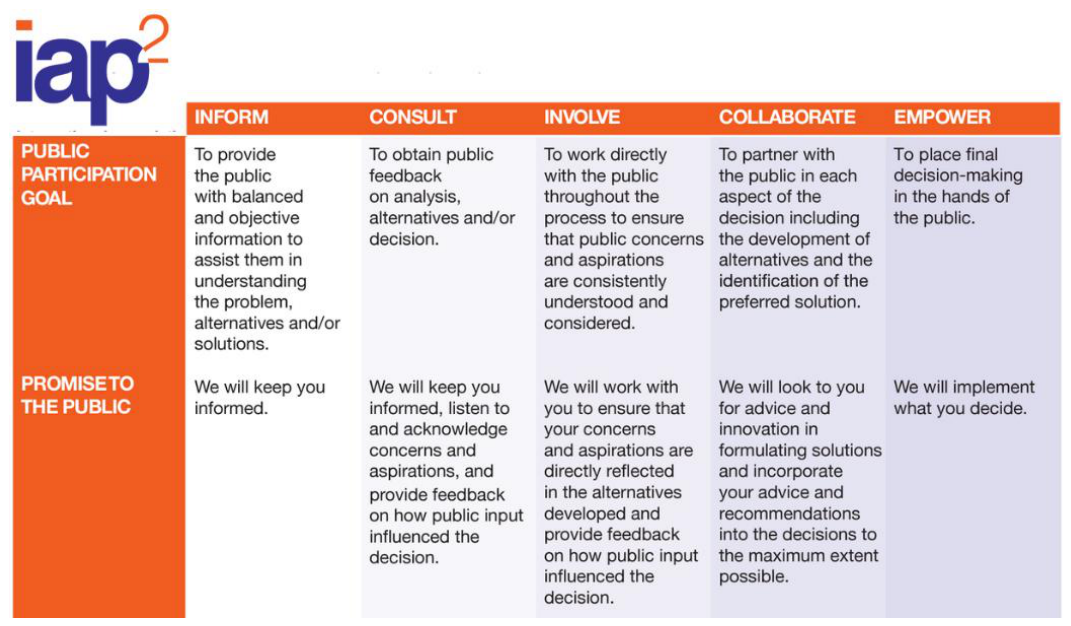
Underpinning many of these is the International Association for Public Participation (IAP2), which developed a ‘Spectrum of Public Participation’ based on concepts from the 1960s and originally published in 1999 (Figure 1). Applying the spectrum aims to define patients’ role in the decision-making process, set expectations for organisations and patients alike, and enhance transparency between the organisation and patients [14]. IAP2’s spectrum has been utilised in health and care research [12,15,16,17,18,19]. Collectively, these developments reflect recognition of the ethical and moral justification for patients’ rights and underpin their inclusion in research [20,21]. These developments have been accelerated by recognition that PPI enhances the quality, appropriateness, and relevance of research, with researchers reporting a greater understanding of their work and patients feeling empowered and valued [8,22,23,24,25,26]. Incorporating PPI interventions significantly increases the odds of participant enrolment, especially when those with lived experience of the condition are included, thereby reducing the potential for study milestone delays, financial losses, biased results, and early termination [21,24,27,28].
However, hurdles to meaningful PPI implementation can be significant. For patients, barriers include time commitments, power asymmetry, perceived underqualification, lack of recognition or payment, and limited knowledge and accessibility [22,26,29,30,31]. Clinical obstacles are also a concern, with impediments including a lack of infrastructure and resources, institutional culture, and scepticism about its impact [22,29,32,33,34]. Alongside the initially organic evolution of patient involvement, the concept of ‘tokenism’ has developed from its original description in Arnstein’s 1969 “ladder of citizen participation”, which described participation that appears meaningful but confers no actual power [35]. Over the past decade, Cancer Trials Ireland (CTI), the leading cancer research trials organisation in Ireland, has identified addressing barriers and moving from symbolic to genuine involvement, partnership, and influence as a priority [36]. However, the literature on practical measures and implementation methods can be limited [6]. In the present paper, the learning points from CTI’s experience of integrating PPI across all levels of the organisation using the IAP framework are discussed. This integration was co-created with patients, including patient partner groups from other cooperative cancer trial organisations, and with a charity partner – the Irish Cancer Society, Ireland’s national cancer charity.
2. Materials and Methods
Co--creation of a patient partnership within Ireland’s national cancer trials network was achieved by developing and implementing patient engagement processes aligned with the International Association for Public Participation’s (IAP2) Spectrum of Public Participation. Applying the spectrum aimed to define patients’ roles in decision-making, set expectations for CTI and patients alike, and enhance transparency between the organisation and patients [14].
This account draws on CTI institutional records, including meeting minutes, annual reviews, strategy and Terms of Reference documents, and correspondence, and is supplemented by the recollections of co-authors directly involved in the programme’s development from 2015 onwards. Publicly available materials, including CTI’s website archive and published outputs, were used to corroborate dates and sequencing.
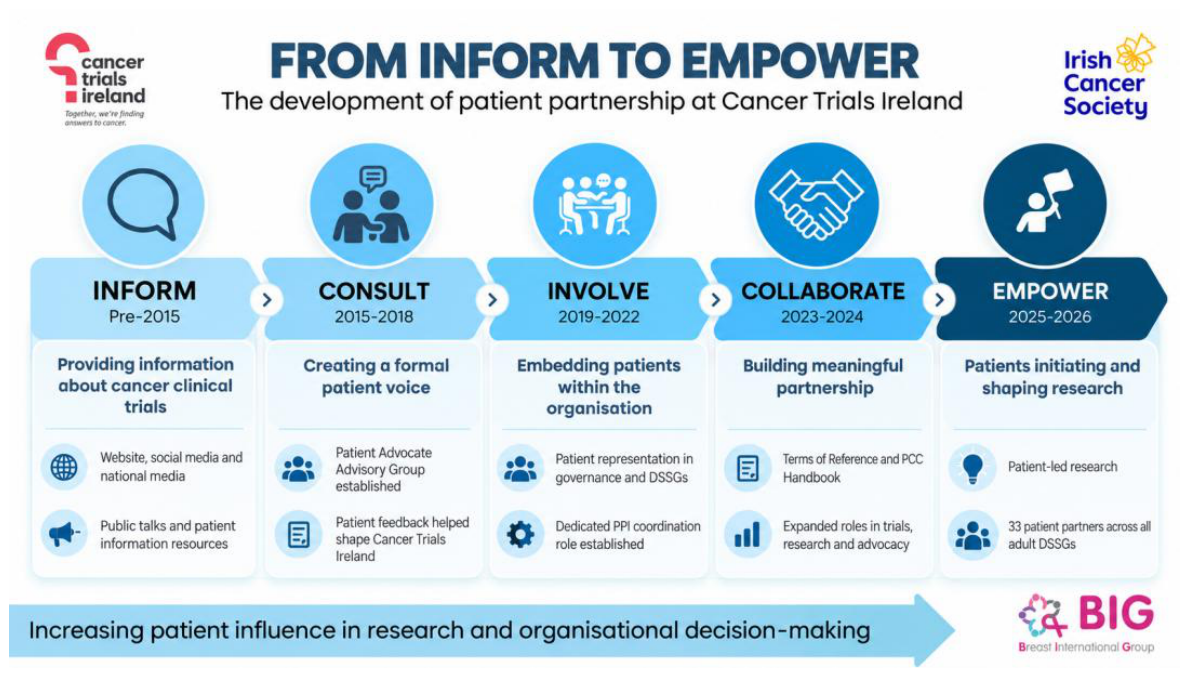
Figure 2.
The development of patient partnership at Cancer Trials Ireland.
2.1. Phase I: Pre-2015 – ‘Inform’
Ireland’s first national cancer treatment research group was formed in 1996 as the All-Ireland Cooperative Oncology Research Group (ICORG) [36]. Over the following two decades, patient and public engagement was limited to providing information through the ICORG website, social media, or national media outlets to help patients understand clinical trials and identify available trials [37,38,39,40]. Patients attended talks by invited international oncologists; ICORG promoted materials from other organisations, such as the Partnership between Patient Organisations, Science and Industry (IPPOSI); and ICORG received funding through the national charity Irish Cancer Society [41,42,43]. However, clearer role definitions and further structure were needed to improve measurable, patient-centric contributions to research.
2.2. Phase II: 2015-2018 – ‘Consult’
Physicians and academics within the organisation recognised the need to seek appropriate consultation on how to achieve meaningful patient and public involvement. With this in mind, the recruitment of a chief executive officer (CEO) with a relevant background enabled work towards tangible patient partnership. In June 2015, the ICORG CEO appointed had extensive experience and engagement with patients and the public in multiple capacities. She had been the first CEO of the Irish Platform for Patients’ Organisations, Science and Industry (IPPOSI); chair of the European Patient Academy for Therapeutic Innovation (EUPATI) task force; patient representative on the Health Information and Quality Authority (HIQA) Research Ethics Advisory Board and on the Legal Consultative Panel of the Irish Medicines Board; and a member of the Irish national health care service’s ‘Patient’s Forum’.
In 2015, patients were invited to consult on and contribute to public promotional information campaigns on an ad hoc basis [44,45]. Building on this, the following year ICORG expanded its engagement with patient and public feedback by attending the launch of University College Dublin’s Patient Voice in Cancer Research initiative in 2016 and participating in roundtable discussions with cancer survivors and their families [46,47]. In 2016, ICORG members and six patients met with the Northern Ireland Cancer Research Consumer Forum (NICRCF). This experience marked a shift in ICORG’s approach to patient involvement, as it proactively sought to consult patients and ascertain their views. As a result, the need for a formal patient voice within CTI was recognised, leading to the establishment of the Patient Advocate Advisory Group (PAAG) in 2016 [48]. The terms of reference for NICRCF members became the foundation for the PAAG’s terms of reference. Shortly after its establishment, PAAG members elected to rename it the Patient Consultant’s Committee (PCC) to reflect the importance of their role.
Feedback and consultation from the PCC led to a pivotal name change to Cancer Trials Ireland (CTI), moving away from the medical jargon of ‘All-Ireland Cooperative Oncology Research Group’ and improving the organisation’s accessibility and visibility for the public [36,48]. Stakeholder Engagement and Patient Advocate Advisory Group meetings became a permanent feature of CTI’s Scientific Meetings, and PCC members joined the closed melanoma- and breast disease-specific sub-groups (DSSGs) meetings to bring the patient perspective to important conversations about the progress and development of the trials portfolio [48]. PCC membership grew slowly, and engagement remained limited to meeting attendance and providing feedback, with no measurable contributions to patient-centred research. CTI identified that further structure and guidance were needed to advance the patient partnership.
2.3. Phase III: 2019-2022 – ‘Involve’
Although the COVID-19 pandemic initially slowed progress, two key steps were taken to involve patients in ways that delivered measurable contributions and tangible impact. First, the Board of Directors appointed the PCC as a subgroup of the Board to integrate the patient voice and experience into the organisation’s governance structure. The PCC comprises people directly affected by cancer, members of the public, and family members and carers. The PCC aimed to ensure that patient and public perspectives were built into trial activity. To amplify this development, the first National Cancer Retreat, held in May 2021, focused on the importance of PPI and was attended by Judy Needham from CCTG [49,50]. The PCC has taken part in every retreat since the first, which has been held annually. Significantly, the PCC Chair sits on the CTI Board, so patient and public perspectives are represented at the highest level of decision-making and governance and contribute to the Board of Directors’ role in providing independent leadership, governance, and oversight [51].
The second significant measure was funding from the Irish Cancer Society and the subsequent appointment of a PPI Programme Manager [51]. Their role is to embed the patient voice and lived experience throughout cancer clinical trial operations, development, and delivery. Together, the PCC and the PPI Programme Manager supported CTI’s annual strategic planning and regular Stakeholder Engagement events, and facilitated PCC meetings [51]. It became clear that, to achieve the goals of expanding the patient partnership network, clarifying the roles and responsibilities of PCC members was vital to enable collaboration and involvement in each aspect of the organisation’s activities.
During this period, online recruitment processes were used to increase PCC membership, which ultimately facilitated patient representation on most DSSGs [51]. Digital recruitment advertisements featured PCC members describing PPI work and their own experiences of cancer. Educating the general population about PPI was an additional aim alongside PPI recruitment. These campaigns have continued and been refined, resulting in increasing applications year on year.
2.4. Phase IV: 2023-2024 – ‘Collaborate’
The PCC, PPI Programme Manager, and the Head of Communications attended a strategy workshop to collaboratively develop the CTI PCC’s Terms of Reference. A document was created outlining the PCC’s objectives, accountability, values and conduct, structure and membership, roles and responsibilities, meetings and communications, expenses and honouraria, operational mechanisms for engagement, new initiatives and leadership, and representation. With greater clarity and structure, the PCC’s ability to collaborate and contribute increased, including greater participation in DSSGs, review of studies, and participation in advocacy and policy [52].
As the number of members and responsibilities of the PCC increased, further structure and governance were needed to facilitate expanding collaborative opportunities within the growing patient partnership. The ‘PCC Handbook: A Guide to PPI at Cancer Trials Ireland’ was designed to guide new members on how to use their voice and experience in the organisation’s different roles [53]. The organisation introduced a peer mentoring system to support new members. The PCC structure changed with the launch of an executive committee, a small leadership group comprising the chair, vice-chair, and up to five other PCC members, responsible for setting agendas, liaising with the Board, and ensuring strategic objectives are met [52].
2.5. Phase V: 2025-2026 – ‘Empower’
Whilst significant progress was made, empowerment of patient partners was realised when patient-led research was recognised as a priority and appropriate funding, resources, and supports were put in place to achieve it [52]. Cross-departmental cooperation was required, and collaboration with those in data management, statistics, ethics, communications, marketing, and clinical operations was essential. Patients initiated, co-designed, and delivered these projects, representing true patient empowerment and yielding impactful, practice-changing outcomes. There are now 33 patient partners across all adult DSSGs.
3. Results
Over the past decade, applying the IAP2 Spectrum of Public Participation has facilitated the creation of a robust patient partnership within CTI, and patients are no longer merely included or informed but are now empowered and influential. This has resulted in the following:
3.1. Research Outputs
- Patient-Led Research Programme – CTRIAL-IE 23-05 (Metastatic Breast Cancer Survey study) is the first patient-led study examining the information, communication, psychological, and financial needs of patients living with metastatic breast cancer. It was awarded the Irish Cancer Society’s PPI Project of the Year in 2025. The trial has been featured in national and international media, highlighting the importance of PPI. Participants were from the Republic of Ireland and Northern Ireland, representing a unique cross-border collaboration and a comparison of practices across both jurisdictions. CTRIAL-IE 24-45 (PRO-ACT study) is a patient-led study of the sexual wellbeing and mental health of prostate cancer survivors and their partners, conducted in 2025-2026. Other patient-led research initiatives are being developed, including studies on cancer-related menopause and patient barriers to accessing clinical trials.
- International conference presentations – results of CTRIAL-IE 23-05 were presented at the European Society for Medical Oncology (ESMO) 2024 congress and the American Society of Clinical Oncology (ASCO) 2025 annual meeting [54,55,56]. Findings from CTRIAL-IE 24-45 were presented at the European Association of Urology (EAU) Congress 2026 [57]. A poster at the American Society of Clinical Oncology (ASCO) 2026 annual meeting detailed the co-creation of patient partnerships within the Irish cancer trials network [58]. PCC members were instrumental in the design, delivery, and presentation of the project.
- Peer-reviewed publications – results of CTRIAL-IE 23-05 have been published in high-impact, international, peer-reviewed journals, including Breast and BMJ Open Quality, which disseminate the findings of this trial to an international academic audience and can inform practices in other institutions and countries [59,60]. PCC members co-authored and contributed to the published articles.
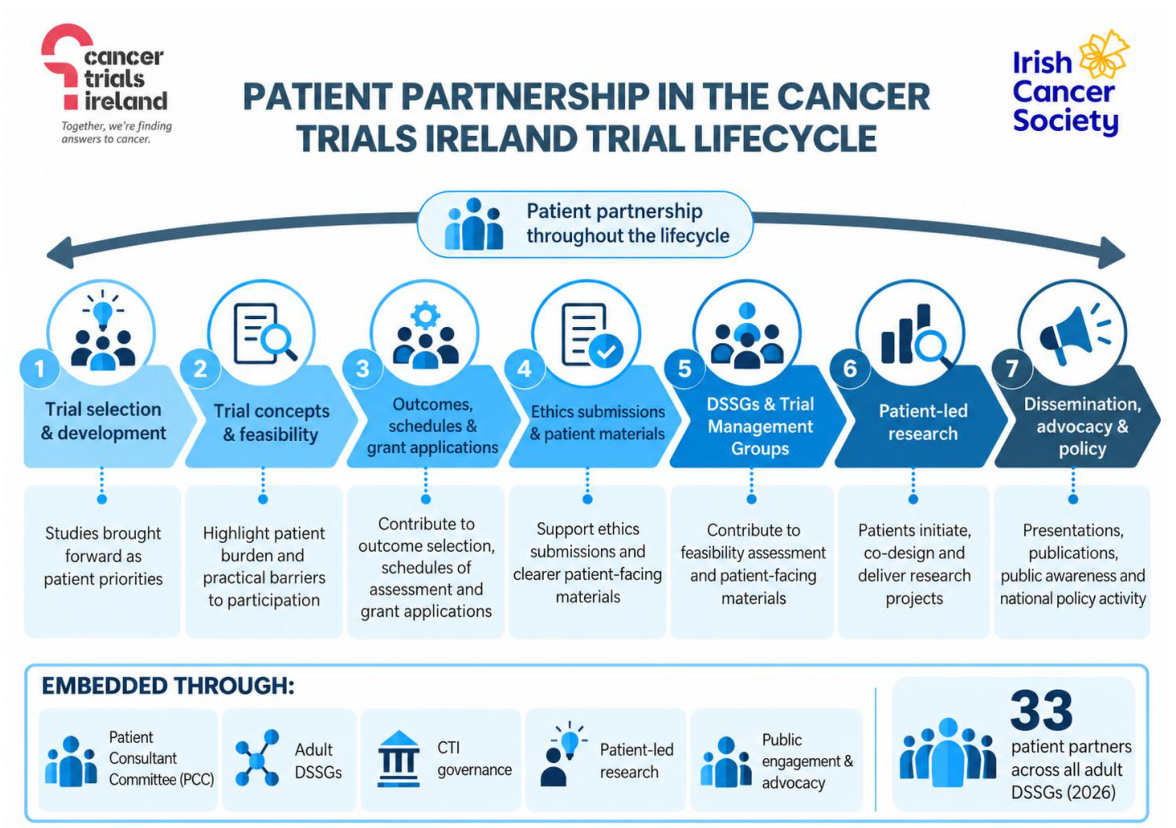
- Investigator-initiated trial (IIT) concepts – input into IITs, for example, CTRIAL-IE 24-72 INSPIRE Trial (an all-Island study of stereotactic ablative radiotherapy for prostate cancer), reviewed the schedule of assessments and trial outcomes, and lived experience feedback led to the inclusion of a new patient-prioritised Patient-Reported Outcome Measures (PROM) [52].
- Trial selection and development – studies brought forward and proposed by members of the PCC as patient priorities, for example, the international MSLT-3 Trial (CTRIAL-IE 25-09), which examines different surgical approaches for clinical Stage III melanoma; input into national funding and grant applications, ethics submissions, and concept generation for new trials [52].
- Trial documentation review – feedback on trial proposals, study design, and patient-facing materials through their involvement in disease-specific sub-groups to ensure clearer language and information that is easier to understand, for example, redesigning the clinical Patient Information Leaflet template [52].
3.2. Advocacy Outputs
- National policy – the PCC collaborated on a CTI position paper addressing barriers to research under data protection legislation and submitted it to the Irish Government in 2024. The PCC was represented on the Government’s newly developed National Clinical Trials Oversight Group, which convened during 2024-2025 and ultimately published a report outlining recommendations for ‘Transforming Ireland’s Clinical Trials Landscape: A Blueprint for Implementation’ [61,62].
- Increasing public awareness – the PCC is central to the design, planning and execution of campaigns such as ‘The Value of Cancer Trials’ as described above and ’Just Ask’, which runs annually and aims to empower people to initiate information-rich conversations with their medical teams [63,65]. The PCC is a co-creator and host of CTI’s annual ‘Cancer Retreat’, which began in 2022 and provides a forum for Ireland’s cancer clinical research community to collaborate on strategy, future clinical trials, and relevant issues such as funding and geographical access, among other topics relevant to the retreat’s annual theme, which changes to reflect the dynamic landscape of clinical trials.
3.3. Strategic Outputs
- Grant applications – consulted on applications to ensure the patient perspective is reflected and considered in the proposed research design, and that predicted findings are relevant to patients, thereby aiming to strengthen grant application success. Recent examples include contributions to a grant call for the Investigator-Led Clinical Trials Programme run by the Health Research Board in Ireland, as well as the Irish Cancer Society’s (ICS) Cancer Clinical Study Seed Award 2026: Funding for Non-Regulated Interventional Clinical Studies.
- CTI Climate Change Charter – key contributor to a climate charter, a living document outlining actionable areas that provide a structure to facilitate sustainability integration at CTI [66].
Figure 3.
Patient partnership in the Cancer Trials Ireland trial lifecycle.
4. Discussion
4.1. Summary of Findings
Over a decade, Cancer Trials Ireland (CTI) evolved from an informal, information-only relationship with patients to a partnership in which patient partners co-design trials, sit on governance bodies, and influence national trials activity and policy. This progression is evident in CTI’s institutional history: from ICORG’s early information-only relationship with patients, through a rebranding driven directly by patient feedback, to patient-initiated research—mirroring the broader historical arc of patient involvement in cancer research, from fundraising-era participation and peer support to rights-based advocacy [5]. Mapped against the IAP2 Spectrum, this trajectory spans the full arc from “Inform” to “Empower” and illustrates the elements necessary for successful integration of patients and the public into a clinical trials network, several of which draw on progress made by comparable initiatives, including the NIHR’s patient and public involvement and engagement checklists, Ovarian Cancer Canada’s Patient Partners in Research co-developed best practices, and the Canadian Institutes of Health Research Institute of Musculoskeletal Health and Arthritis’s patient-led engagement model [67,68,69,70]. While frameworks and high-level recommendations for patient partnership are now well documented, published accounts of the implementation processes and practical scaffolding required remain comparatively sparse [6].
This structural maturation, marked by the establishment of the Patient Consultant’s Committee (PCC), a funded PPI Programme Manager role, formal Terms of Reference, and a sustained partnership with the Irish Cancer Society (ICS), culminated in 33 patient partners embedded across all adult disease-specific sub-groups by 2026, with patient and ICS representation at the governance level.
4.2. Benefits of Patient Partnership
Within the CTI network, patient partnership has facilitated patient input into trial concepts, assessment schedules, and outcome selection (e.g., the INSPIRE trial), supporting growing recognition among investigators that lived experience improves the relevance and feasibility of trial design, consistent with prior evidence that substantive engagement is associated with improved researcher understanding of their own work [7,23,24,25]. Patient partner involvement in DSSGs has influenced patient-facing materials and feasibility assessments, highlighting patient burden and practical barriers to participation that are not always apparent from a purely clinical perspective. This institutional maturation has also strengthened CTI’s standing within international cooperative oncology research, such as with Breast International Group (BIG), as well as among national clinical sites and research teams.
Patient-led research (CTRIAL-IE 23-05, CTRIAL-IE 24-45) has been presented at major international meetings (ESMO, ASCO, EAU) and published in peer-reviewed journals, establishing a citable evidence base for the programme’s output. The magnitude of response rates demonstrates the importance of patient-led research, and the findings highlight core issues patients and their partners face that may otherwise not have been prioritised or characterised. Benchmarking against SWOG, CCTG, and BIG has enabled CTI to draw on established international approaches while contributing novel elements back to the field, most notably the charity–trials-network funding model [11,12,13]. Furthermore, patient-led and patient-designed research is increasingly important as trials increasingly enrol biomarker-defined populations under precision oncology approaches. More efficacious therapies have extended survival, such that patients may now live with advanced disease for years [71]. As a result, trial endpoints have changed, and quality of life, symptom burden, and patient-reported outcomes now sit alongside conventional measures of efficacy [72]. Patient-led research ensures that the outcomes measured, and how they are best captured, are most relevant to patients, as shown in CTRIAL-IE 23-05 and CTRIAL-IE 24-45 [57,59]. The information and communication needs in metastatic breast cancer and sexual wellbeing and mental health after prostate cancer treatment are consequences of living longer with or after cancer, and are areas in which conventionally designed trials have generated comparatively little evidence.
4.3. Facilitating Factors
CTI’s journey illustrates a point increasingly made in the PPI literature but rarely demonstrated longitudinally: meaningful partnership is an organisational capability built over years and phases, rather than a policy adopted or a mandate fulfilled. CCTG’s integration of patient-centred research over time served as a guiding comparator; however, an external charity partnership also shaped CTI’s progression [12,73]. Sustained ICS funding for a dedicated coordination role, combined with ICS’s public engagement and advocacy capacity and with their own patient partnership strategy, was key to the success of a trials organisation-charity partnership. This support strengthened patient recruitment to the PCC, gave the programme a consistent public voice, and created shared patient partnership and advocacy opportunities.
4.4. Challenges to Integration
Barriers persisted across all phases of development rather than being resolved definitively at any single point. Securing sustainable funding has been a challenge to progress, and while it remains an ongoing consideration, ringfencing appropriate funds to support successful patient partnership has proven essential. Reliance on a single coordination role and a single charity partnership represents a structural vulnerability. Diversifying funding sources—through research grants that explicitly fund PPI activity, additional philanthropic partnerships, and potential industry contributions—will be required to sustain and expand the model.
Time constraints were a persistent barrier: patient partners managing ongoing treatment, caregiving responsibilities, or a return to employment faced limits on availability that formal role definition alone did not address, while competing demands on clinical and research staff constrained the rate at which new engagement touchpoints could be embedded.
Perception was an equally persistent barrier. Despite defined roles and governance representation, some members of the research community were slow to regard patient partners as substantive contributors rather than symbolic presences, a pattern consistent with the risk of tokenism described in prior literature [30,35]. Mitigating this barrier appeared to depend less on formal policy than on the sustained, visible accumulation of patient-led outputs that demonstrate the practical value of engagement.
Patient diversity remains a challenge for representation globally. This can occur due to selection bias, as participants are often motivated, part of dominant demographic groups, and may have an education level or professional background that enables them to become involved and articulate their opinions [74,75,76]. Strategies to enhance recruitment and outreach for diverse representation include unified communication and shared advocacy with ICS. However, further progress is needed to address this ongoing challenge and move beyond passive online recruitment, which can introduce selection bias and exclude those with limited access to technology. Active recruitment of people from a mixture of backgrounds, ethnic groups, abilities and areas through media used by those people is needed to address practical barriers to participation, including geographic access, digital literacy, caregiving responsibilities, and language [77].
4.5. Future Directions
Clinical research increasingly incorporates artificial intelligence and adaptive or optimisation study designs. Without deliberate investment in training and support, the growing technical complexity of these methodologies risks narrowing the scope for meaningful patient partnership. This will be a key focus for CTI to ensure the longevity and resilience of its patient partnerships.
Furthermore, while medical oncology research increasingly involves patients, other areas, such as internal medicine and general surgery, lag [78,79,80,81]. When these areas of medicine interface with oncology, the lack of patient involvement results in a loss of PPI benefits, including the applicability and relevance of results for patients [82]. Tangible support and active engagement with other specialities related to oncology to support PPI involvement are priorities for CTI going forward.
As funding agencies increasingly expect demonstrable patient engagement, CTI’s model is well positioned to adapt to industry-supported and investigator-initiated research. Additionally, the recent International Council for Harmonisation of Technical Requirements for Pharmaceuticals for Human Use’s (ICH) Guideline for Good Clinical Practice E6(R3) explicitly references public involvement and participant diversity [83]. Whilst current patient partnerships within CTI provide a strong foundation for the patient engagement required ethically and operationally, further work is needed to ensure their empowerment continues to evolve. Potential future directions include expanding their role, such as serving as a study principal investigator and being mandatorily involved in all protocols. Additionally, clinical researchers, particularly those early in their careers, should receive formal training and preparation not only in working with patient partners but also in the broader methodological complexities of trial design to ensure collaborative partnerships continue to strengthen.
5. Conclusions
Over a decade, patient involvement at CTI has evolved from providing information to patients through the organisation’s website and national media to a partnership in which patient partners hold representation on governance bodies, contribute to trial selection, design and documentation, participate in national policy development, and initiate and deliver research. The sustained partnership with the Irish Cancer Society was central, as it resourced coordination, extended recruitment reach, and created shared opportunities. Mapped against the IAP2 Spectrum, the trajectory of co-creating a patient partnership spans from Inform to Empower [14]. Elements that enabled each transition included leadership with relevant patient engagement experience, defined terms of reference, structured recruitment and orientation, written guidance and peer mentoring for new members, and a dedicated, funded coordination role. This experience is consistent with the broader literature on advocate-researcher collaboration, which highlights both its practical challenges and its value to research quality [84]. This retrospective, single-organisation account draws on institutional records and the recollections of those involved. Nevertheless, the development and success of CTI’s partnership may offer lessons and serve as a useful reference point for other cooperative groups.
References
- Pii, K.H.; Schou, L.H.; Piil, K.; Jarden, M. Current trends in patient and public involvement in cancer research: A systematic review. Health Expect. 2019, 22, 3–20. [Google Scholar] [CrossRef] [PubMed]
- Colomer-Lahiguera, S.; Steimer, M.; Ellis, U.; Eicher, M.; Tompson, M.; Corbière, T.; et al. Patient and public involvement in cancer research: A scoping review. Cancer Med. 2023, 12, 15530–15543. [Google Scholar] [CrossRef] [PubMed]
- Tobiano, G.; Gillespie, B.M.; Carlini, J.; Muir, R.; Rasiah, J.; Wan, C.S.; et al. Establishing patient partners’ roles on research teams: A scoping review. Res. Involv Engagem. 2024, 10, 129. [Google Scholar] [CrossRef] [PubMed]
- Tregear, M.L.; Verduzco-Aguirre, H.C.; Shkabari, B.; Koven, R.; Scowcroft, H.; Venkatash, V.; et al. Common sense oncology values to action: A patient-led framework for randomized clinical trial design. J. Natl. Cancer Inst. 2026, 118, 1648–1656. [Google Scholar] [CrossRef] [PubMed]
- Perlmutter, J.; Bell, S.K.; Darien, G. Cancer research advocacy: Past, present, and future. Cancer Res. 2013, 73, 4611–4615. [Google Scholar] [CrossRef] [PubMed]
- Domecq, J.P.; Prutsky, G.; Elraiyah, T.; Wang, Z.; Nabhan, M.; Shippee, N.; et al. Patient engagement in research: A systematic review. BMC Health Serv. Res. 2014, 14, 89. [Google Scholar] [CrossRef] [PubMed]
- Boote, J.; Wong, R.; Booth, A. ‘Talking the talk or walking the walk?’ A bibliometric review of the literature on public involvement in health research published between 1995 and 2009. Health Expect. 2015, 18, 44–57. [Google Scholar] [CrossRef] [PubMed]
- Brett, J.; Staniszewska, S.; Mockford, C.; Herron-Marx, S.; Hughes, J.; Tysall, C.; et al. Mapping the impact of patient and public involvement on health and social care research: A systematic review. Health Expect. 2014, 17, 637–650. [Google Scholar] [CrossRef] [PubMed]
- Palm, M.E.; Evans, D.; Staniszewska, S.; Brady, L.M.; Hanley, B.; Sainsbury, K.; et al. Public involvement in UK health and care research 1995-2020: Reflections from a witness seminar. Res. Involv Engagem. 2024, 10, 65. [Google Scholar] [CrossRef] [PubMed]
- Sessa, C.; Schmid, C.; Tolotti, A.; Magnin, A.; Haerry, D.; Bonetti, L.; et al. The role of EUPATI CH in promoting patient involvement in clinical research: A multi-stakeholder research project. Front Med. 2021, 8, 795659. [Google Scholar] [CrossRef] [PubMed]
- Deverka, P.A.; Bangs, R.; Kreizenbeck, K.; Delaney, D.M.; Hershman, D.L.; Blanke, C.D.; et al. A new framework for patient engagement in cancer clinical trials cooperative group studies. J. Natl. Cancer Inst. 2018, 110, 553–559. [Google Scholar] [CrossRef] [PubMed]
- Needham, J.; Taylor, J.; Nomikos, D. Integrating patient-centred research in the Canadian Cancer Trials Group. Curr. Oncol. 2021, 28, 630–639. [Google Scholar] [CrossRef] [PubMed]
- Caballero, C.; Adam, V.; Birta, O.; Meheus, L.; Needham, J.; Hodgdon, C.; et al. The Breast International Group (BIG) Patient Partnership: Embedding meaningful patient involvement in the design and conduct of breast cancer clinical research. Breast 2026, 85, 104642. [Google Scholar] [CrossRef] [PubMed]
- International Association for Public Participation. IAP2 Spectrum evolution [Internet]; International Association for Public Participation, 2026; Available online: https://www.iap2.org/page/SpectrumEvolution.
- Houssein Ali, F.; Njah, M.; Martin Milot, D.; Hassouni, K. Successes and challenges related to community participation in primary health care and health programs in the IGAD region: A scoping review. Tunis. Med. 2025, 103, 167–178. [Google Scholar] [CrossRef] [PubMed]
- Abejirinde, I.O.; Itanyi, I.U.; Kornas, K.; Zaim, R.; Guha, S.; Chui, V.; et al. Principles and practices of community engagement in AI for population health: Formative qualitative study of the AI for Diabetes Prediction and Prevention Project. J. Particip Med. 2025, 17, e69497. [Google Scholar] [CrossRef] [PubMed]
- Pillai, M.; Griffin, A.C.; Kronk, C.A.; McCall, T. Toward community-based natural language processing (CBNLP): Cocreating with communities. J. Med. Internet Res. 2023, 25, e48498. [Google Scholar] [CrossRef] [PubMed]
- Ng, P.L.; Mehta, R.; Ramsay, A.I.G.; Fulop, N.J.; Shand, J. Balancing trade-offs in patient and public involvement and engagement in rapid evaluation: Reflections and lessons. Health Expect. 2026, 29, e70749. [Google Scholar] [CrossRef] [PubMed]
- Munthe-Kaas, H.M.; Oxman, A.D.; von Lieres, B.; Gloppen, S.; Ohren, A. Public participation in decisions about measures to manage the COVID-19 pandemic: A systematic review. BMJ Glob. Health 2024, 9, e014404. [Google Scholar] [CrossRef] [PubMed]
- Wicks, P.; Richards, T.; Denegri, S.; Godlee, F. Patients’ roles and rights in research. BMJ 2018, 362, k3193. [Google Scholar] [CrossRef] [PubMed]
- Crocker, J.C.; Ricci-Cabello, I.; Parker, A.; Hirst, J.A.; Chant, A.; Petit-Zeman, S.; et al. Impact of patient and public involvement on enrolment and retention in clinical trials: Systematic review and meta-analysis. BMJ 2018, 363, k4738. [Google Scholar] [CrossRef] [PubMed]
- Brett, J.; Staniszewska, S.; Mockford, C.; Herron-Marx, S.; Hughes, J.; Tysall, C.; et al. A systematic review of the impact of patient and public involvement on service users, researchers and communities. Patient 2014, 7, 387–395. [Google Scholar] [CrossRef] [PubMed]
- Jagosh, J.; Macaulay, A.C.; Pluye, P.; Salsberg, J.; Bush, P.L.; Henderson, J.; et al. Uncovering the benefits of participatory research: Implications of a realist review for health research and practice. Milbank Q. 2012, 90, 311–346. [Google Scholar] [CrossRef] [PubMed]
- Farah, E.; Kenney, M.; Kica, A.; Haddad, P.; Stewart, D.J.; Bradford, J.P. Beyond participation: Evaluating the role of patients in designing oncology clinical trials. Curr. Oncol. 2023, 30, 8310–8327. [Google Scholar] [CrossRef] [PubMed]
- Johnston, K.E.; Medved, K.; Raigal-Aran, L.; Crowley, E.K.; Corkery, S.; Cahill, A.; et al. Patient and public panel involvement to optimise a patient information leaflet format. Ir. Med. J. 2024, 117, 945. [Google Scholar] [PubMed]
- Medved, K.; Johnston, K.; Thomas, S.S.; Hegarty, J.; Casey, G.; Connolly, R.M.; et al. Patient and public involvement in randomised controlled trial design and implementation: A process evaluation of the linking you to support and advice (LYSA) trial. Res. Involv Engagem. 2025, 11, 74. [Google Scholar] [CrossRef] [PubMed]
- Carlisle, B.; Kimmelman, J.; Ramsay, T.; MacKinnon, N. Unsuccessful trial accrual and human subjects protections: An empirical analysis of recently closed trials. Clin. Trials 2015, 12, 77–83. [Google Scholar] [CrossRef] [PubMed]
- Briel, M.; Olu, K.K.; von Elm, E.; Kasenda, B.; Alturki, R.; Agarwal, A.; et al. A systematic review of discontinued trials suggested that most reasons for recruitment failure were preventable. J. Clin. Epidemiol. 2016, 80, 8–15. [Google Scholar] [CrossRef] [PubMed]
- Shippee, N.D.; Domecq Garces, J.P.; Prutsky Lopez, G.J.; Wang, Z.; Elraiyah, T.A.; Nabhan, M.; et al. Patient and service user engagement in research: A systematic review and synthesized framework. Health Expect. 2015, 18, 1151–1166. [Google Scholar] [CrossRef] [PubMed]
- Ocloo, J.; Matthews, R. From tokenism to empowerment: Progressing patient and public involvement in healthcare improvement. BMJ Qual. Saf. 2016, 25, 626–632. [Google Scholar] [CrossRef] [PubMed]
- Ocloo, J.; Garfield, S.; Franklin, B.D.; Dawson, S. Exploring the theory, barriers and enablers for patient and public involvement across health, social care and patient safety: A systematic review of reviews. Health Res. Policy Syst. 2021, 19, 8. [Google Scholar] [CrossRef] [PubMed]
- Heckert, A.; Forsythe, L.P.; Carman, K.L.; Frank, L.; Hemphill, R.; Elstad, E.A.; et al. Researchers, patients, and other stakeholders’ perspectives on challenges to and strategies for engagement. Res. Involv Engagem. 2020, 6, 60. [Google Scholar] [CrossRef] [PubMed]
- Kavanagh, B.; Grealis, S.; Haslett, D.; Kearney, P.M.; Masterson, L.; Skeffington, S.; et al. Exploring staff and students’ understanding and experience of public and patient involvement (PPI) in an Irish university. Res. Involv Engagem. 2026, 12, 101. [Google Scholar] [CrossRef] [PubMed]
- Biddle, M.S.Y.; Gibson, A.; Evans, D. Attitudes and approaches to patient and public involvement across Europe: A systematic review. Health Soc. Care Community 2021, 29, 18–27. [Google Scholar] [CrossRef] [PubMed]
- Arnstein, S.R. A ladder of citizen participation. J. Am. Inst. Plan. 1969, 35, 216–224. [Google Scholar] [CrossRef]
- Cancer Trials Ireland. Our History [Internet]; Cancer Trials Ireland: Dublin, 2026; Available online: https://cancertrials.ie/about-us/our-history/.
- Cancer Trials Ireland. ICORG Article in the Irish Times [Internet]; Cancer Trials Ireland: Dublin, 2001; Available online: https://cancertrials.ie/2001/09/icorg-article-in-the-irish-times/.
- Cancer Trials Ireland. Re-launch of ICORG Website [Internet]; Cancer Trials Ireland: Dublin, 2007; Available online: https://cancertrials.ie/2007/09/re-launch-of-icorg-website/.
- Cancer Trials Ireland. Follow ICORG on Twitter [Internet]; Cancer Trials Ireland: Dublin, 2012; Available online: https://cancertrials.ie/2012/07/follow-icorg-on-twitter/.
- Cancer Trials Ireland. ICORG on RTE Radio 1 - Today with Sean O’Rourke Show (29th October 2013) [Internet]; Cancer Trials Ireland: Dublin, 2013; Available online: https://cancertrials.ie/2013/10/icorg-on-rte-radio-1-today-with-sean-orourke-show-29th-october-2013/.
- Cancer Trials Ireland. Dr. Dennis Slamon Talk in Herbert Park Hotel [Internet]; Cancer Trials Ireland: Dublin, 2012; Available online: https://cancertrials.ie/2012/03/dr-dennis-slamon-talk-in-herbert-park-hotel/.
- Ireland, C.T. Irish Cancer Society Decide to Provide More Substantial Funding for the ICORG Central Office [Internet]; Cancer Trials Ireland: Dublin, 2000; Available online: https://cancertrials.ie/2000/03/irish-cancer-society-decide-to-provide-more-substantial-funding-for-the-ico/.
- Ireland, C.T. Want to Know More About Clinical Trials? Cancer Trials Ireland: Dublin, 2012; Available online: https://cancertrials.ie/2012/09/want-to-know-more-about-clinical-trials/.
- Cancer Trials Ireland. ICORG Celebrates Clinical Trial Champions on International Clinical Trials Day [Internet]; Cancer Trials Ireland: Dublin, 2015; Available online: https://cancertrials.ie/2015/05/icorg-celebrates-clinical-trial-champions-on-international-clinical-tr/.
- Ireland, C.T. ICORG Video Launch for Cancer Week Ireland 2015 September 14th-20th [Internet]; Cancer Trials Ireland: Dublin, 2015; Available online: https://cancertrials.ie/2015/09/icorg-video-launch-for-cancer-week-ireland-2015-september-14th-20th/.
- Cancer Trials Ireland. The Patient Voice in Cancer Research [Internet]; Cancer Trials Ireland: Dublin, 2016; Available online: https://cancertrials.ie/2016/04/the-patient-voice-in-cancer-research/.
- University College Dublin Medicine Research. The Patient Voice in Cancer Research: Patient Engagement Event [Internet]; University College Dublin: Dublin, 2016; Available online: https://www.ucd.ie/patientvoicecancer/t4media/Patient_Voice_Report_May16.pdf.
- Ireland, C.T. Annual Review 2016 [Internet]; Cancer Trials Ireland: Dublin, 2016; Available online: https://www.cancertrials.ie/wp-content/uploads/2018/04/Annual-Review-2016.pdf.
- O’Reilly, S.; Carroll, H.; Murray, D.; Burke, L.; McCarthy, T.; O’Connor, R.; et al. Impact of the COVID-19 pandemic on cancer care in Ireland - perspectives from a COVID-19 and Cancer Working Group. J. Cancer Policy 2023, 36, 100414. [Google Scholar] [CrossRef] [PubMed]
- O’Reilly, S.; Murphy, V.; Mulroe, E.; Tucker, L.; Carragher, F.; Marron, J.; et al. The SARS-CoV-2 pandemic and Cancer Trials Ireland: Impact, resolution and legacy. Cancers 2022, 14, 2247. [Google Scholar] [CrossRef] [PubMed]
- Cancer Trials Ireland. Annual Review 2022 [Internet]; Cancer Trials Ireland: Dublin, 2023; Available online: https://www.cancertrials.ie/wp-content/uploads/2023/09/2022-Annual-Report-v11.pdf.
- Cancer Trials Ireland. Patient and Public Involvement (PPI) Impact Report 2023-2025; Cancer Trials Ireland: Dublin, 2025. [Google Scholar]
- Cancer Trials Ireland. PCC Handbook: A Guide to PPI at Cancer Trials Ireland; Cancer Trials Ireland: Dublin, 2024. [Google Scholar]
- Keogh, R.; Gaynor, S.; Mulvaney, E.; Duane, F.K.; Weadick, C.; Greally, H.; et al. Financial and time burden associated with living with a metastatic breast cancer (MBC) diagnosis in Ireland: An all-Ireland patient-led survey (CTRIAL-IE 23-05) [abstract]. ESMO Open 2024, 9, 103268. [Google Scholar] [CrossRef]
- Weadick, C.; Gaynor, S.; Mulvaney, E.; Duane, F.K.; Keogh, R.; Greally, H.; et al. Identifying the communication needs of people living with metastatic breast cancer (MBC) in Ireland: An all-Ireland patient-led survey (CTRIAL-IE 23-05) [abstract]. ESMO Open 2024, 9, 243. [Google Scholar] [CrossRef]
- Gaynor, S.; Mulvaney, E.; Weadick, C.; Greally, H.; Keogh, R.J.; O’Meara, Y.; et al. Self-expressed needs and gaps in our care of metastatic breast cancer (MBC): An all-Ireland patient-led online survey (CTRIAL-IE 23-05) [abstract]. J. Clin. Oncol. 2024, 42, 12058. [Google Scholar] [CrossRef]
- Sweeney, M.; Flynn, C.R.; Mulvaney, E.; Daly, J.; Hopkins, C.; Kiely, M.; et al. Patient and partner experiences of prostate cancer care in Ireland: Findings from the co-created PRO-ACT study (CTRIAL-IE 24-45) [abstract]. Eur. Urol. 2026, 89, S1–2. [Google Scholar] [CrossRef]
- Mulvaney, E.; Kivlehan, P.; Kilty, C.; Forrest, C.; Hopkins, C.; Clayton-Lea, A.; et al. Co-creating patient partnership within a national cancer trials network: Experience from Cancer Trials Ireland in partnership with the Irish Cancer Society [abstract]. J. Clin. Oncol. 2026, 44, 11061. [Google Scholar] [CrossRef]
- Gaynor, S.; O’Meara, Y.; Mulvaney, E.; Keogh, R.J.; Weadick, C.S.; Duane, F.K.; et al. A patient-led survey on information and communication needs of patients with metastatic breast cancer in Ireland and Northern Ireland (CTRIAL-IE 23-05). Breast 2025, 79, 103837. [Google Scholar] [CrossRef] [PubMed]
- Flynn, C.R.; McBrien, A.; Gaynor, S.; O’Meara, Y.; Mulvaney, E.; Keogh, R.J.; et al. Regional differences in experiences of patients with metastatic breast cancer in the Republic of Ireland and Northern Ireland: A comparative analysis (CTRIAL-IE 23-05). BMJ Open Qual. 2025, 14, e003254. [Google Scholar] [CrossRef] [PubMed]
- Cancer Trials Ireland. GDPR Position Paper [Internet]; Cancer Trials Ireland: Dublin, 2024; Available online: https://cancertrials.ie/wp-content/uploads/2024/10/Digital-Use-GPDR-Position-Paper-FINAL.pdf.
- Department of Health. Transforming Ireland’s Clinical Trials Landscape: A Blueprint for Implementation [Internet]; Department of Health: Dublin, 2025; Available online: https://assets.gov.ie/static/documents/9ba19a09/DOH_National_Clinical_Trials_Oversight_Group_Final_Report_V4.pdf.
- Cancer Trials Ireland. The Value of Cancer Trials [Internet]; Cancer Trials Ireland: Dublin, 2025; Available online: https://www.cancertrials.ie/wp-content/uploads/2025/11/The-Value-of-Cancer-Trials-Report-13.11-Digital.pdf.
- Cancer Trials Ireland. Election Manifesto [Internet]; Cancer Trials Ireland: Dublin, 2024; Available online: https://www.cancertrials.ie/wp-content/uploads/2024/11/CTI-Clinical-Trials-Manifesto-Call-to-Action-for-print-1.pdf.
- Cancer Trials Ireland. Just Ask Your Doctor! [Internet]; Cancer Trials Ireland: Dublin, 2026; Available online: https://cancertrials.ie/just-ask/.
- O’Reilly, S.; Weadick, C.; Murphy, L.; Kivlehan, P.; Clayton-Lea, A.; Mulroe, E. Climate therapy: Developing a climate change charter for Cancer Trials Ireland (CTI) [abstract]. J. Clin. Oncol. 2024, 42, e23214. [Google Scholar] [CrossRef]
- Aiyegbusi, O.L.; McMullan, C.; Hughes, S.E.; Turner, G.M.; Subramanian, A.; Hotham, R.; et al. Considerations for patient and public involvement and engagement in health research. Nat. Med. 2023, 29, 1922–1929. [Google Scholar] [CrossRef] [PubMed]
- Farrell, A.C.; Lawson, J.A. Ovarian Cancer Canada’s Patient Partners In Research Team Advancing research alongside patient partners: Next-generation best practices for effective collaboration in health research. In Curr Oncol.; Ross, A., Tone, A.A., Eds.; 2024; Volume 31, pp. 6956–6978. [Google Scholar]
- Richards, D.P.; Twomey, R.; Flynn, T.; Hunter, L.; Lui, E.; Stordy, A.; et al. Patient engagement in a Canadian health research funding institute: Implementation and impact. BMJ Open 2024, 14, e082502. [Google Scholar] [CrossRef] [PubMed]
- Richards, D.P.; Mulhall, H.; Belton, J.; de Souza, S.; Flynn, T.; Haagaard, A.; et al. Co-creating and hosting PxP: A conference about patient engagement in research for and by patient partners. Res. Involv Engagem. 2024, 10, 77. [Google Scholar] [CrossRef] [PubMed]
- Zafar, A.; Khatoon, S.; Khan, M.J.; Abu, J.; Naeem, A. Advancements and limitations in traditional anti-cancer therapies: A comprehensive review of surgery, chemotherapy, radiation therapy, and hormonal therapy. Discov. Oncol. 2025, 16, 607. [Google Scholar] [CrossRef] [PubMed]
- Osoba, D. Health-related quality of life and cancer clinical trials. Ther. Adv. Med. Oncol. 2011, 3, 57–71. [Google Scholar] [CrossRef] [PubMed]
- Michaud, S.; Needham, J.; Sundquist, S.; Johnson, D.; Hanna, S.; Hosseinzadeh, S.; et al. Patient and patient group engagement in cancer clinical trials: A stakeholder charter. Curr. Oncol. 2021, 28, 1447–1458. [Google Scholar] [CrossRef] [PubMed]
- Locock, L.; Boylan, A.M.; Snow, R.; Staniszewska, S. The power of symbolic capital in patient and public involvement in health research. Health Expect. 2017, 20, 836–844. [Google Scholar] [CrossRef] [PubMed]
- Eccles, A.; Bryce, C.; Turk, A.; Atherton, H. Patient and public involvement mobile workshops - convenient involvement for the un-usual suspects. Res. Involv Engagem. 2018, 4, 38. [Google Scholar] [CrossRef] [PubMed]
- Reynolds, J.; Ogden, M.; Beresford, R. Conceptualising and constructing ‘diversity’ through experiences of public and patient involvement in health research. Res. Involv Engagem. 2021, 7, 53. [Google Scholar] [CrossRef] [PubMed]
- Witham, M.D.; Anderson, E.; Carroll, C.; Dark, P.M.; Down, K.; Hall, A.S.; et al. Developing a roadmap to improve trial delivery for under-served groups: Results from a UK multi-stakeholder process. Trials 2020, 21, 694. [Google Scholar] [CrossRef] [PubMed]
- Jones, E.L.; Williams-Yesson, B.A.; Hackett, R.C.; Staniszewska, S.H.; Evans, D.; Francis, N.K. Quality of reporting on patient and public involvement within surgical research: A systematic review. Ann. Surg. 2015, 261, 243–250. [Google Scholar] [CrossRef] [PubMed]
- Arents, B.; Capozza, K.; Dlova, N.C.; Funk, M.; Koh, M.J.A.; Ogola, R. The patient voice in atopic eczema guidelines: How do we make it standard practice? Patient 2026, 19, 163–171. [Google Scholar] [CrossRef] [PubMed]
- Buerki, K.; Toitou, M.; de Wit, M.; Grealis, S.; Ludwig, S.; Britt, C.; et al. How to build a framework to establish a patient research partner network in rheumatology research: A report of a 2-year implementation project. RMD Open 2025, 11, e005263. [Google Scholar] [CrossRef] [PubMed]
- Price, A.; Schroter, S.; Snow, R.; Hicks, M.; Harmston, R.; Staniszewska, S.; et al. Frequency of reporting on patient and public involvement (PPI) in research studies published in a general medical journal: A descriptive study. BMJ Open 2018, 8, e020452. [Google Scholar] [CrossRef] [PubMed]
- Bowe, S.; O’Reilly, S.; Murphy, M.; O’Mahony, A.; Harney, S.; Zulquernain, A.; et al. Prescribing biologic immune-modifying therapies for patients with a history of cancer: A cross-specialty review. Curr. Oncol. 2026, 33, 445. [Google Scholar] [CrossRef] [PubMed]
- International Council for Harmonisation of Technical Requirements for Pharmaceuticals for Human Use. ICH Harmonised Guideline: Guideline for Good Clinical Practice E6(R3). Step 4 Final Consolidated Guideline; ICH: Geneva, 2025. [Google Scholar]
- Porter, L.D.; Goodman, K.A.; Mailman, J.; Garrett, W.S. Patient advocates and researchers as partners in cancer research: A winning combination. Am. Soc. Clin. Oncol. Educ. Book 2023, 43, e100035. [Google Scholar] [CrossRef] [PubMed]
Figure 1.
International Association for Public Participation’s Spectrum of Public Participation Framework.
Figure 1.
International Association for Public Participation’s Spectrum of Public Participation Framework.
Disclaimer/Publisher’s Note: The statements, opinions and data contained in all publications are solely those of the individual author(s) and contributor(s) and not of MDPI and/or the editor(s). MDPI and/or the editor(s) disclaim responsibility for any injury to people or property resulting from any ideas, methods, instructions or products referred to in the content. |
© 2026 by the authors. Licensee MDPI, Basel, Switzerland. This article is an open access article distributed under the terms and conditions of the Creative Commons Attribution (CC BY) license.
Copyright: This open access article is published under a Creative Commons CC BY 4.0 license, which permit the free download, distribution, and reuse, provided that the author and preprint are cited in any reuse.