

Submitted:
14 October 2026
Posted:
15 October 2026
You are already at the latest version
Abstract
Cancer predominantly affects older adults, who frequently present with frailty, sarcopenia, cachexia, multimorbidity, and functional decline that limit tolerance to conventional exercise interventions. Blood flow restriction (BFR) training has emerged as a potential low-load exercise strategy capable of promoting muscular adaptations while reducing mechanical stress. This narrative review synthesizes current evidence on the physiological rationale, clinical applications, safety considerations, and implementation of BFR training in older adults with cancer. Literature from PubMed, Scopus, and Web of Science was reviewed, with emphasis on studies investigating BFR, exercise interventions, geriatric syndromes, and oncology rehabilitation. Evidence from older adult populations demonstrates that low-load BFR training may improve muscle strength, muscle mass, and functional performance while maintaining a generally favorable safety profile when individualized and appropriately supervised. Although oncology-specific evidence remains limited, preliminary studies suggest that BFR is feasible, acceptable, and may attenuate treatment-related declines in physical function, particularly in patients with sarcopenia, frailty, and reduced exercise tolerance. However, substantial heterogeneity in study populations and intervention protocols, together with limited long-term safety data, precludes definitive clinical recommendations. BFR training represents a promising adjunct to individualized exercise programs for older adults with cancer, particularly when conventional high-load exercise is poorly tolerated. Nevertheless, adequately powered oncology-specific trials are needed to establish standardized protocols, confirm safety, and define its role in routine geriatric oncology care.
Keywords:
aging
; cancer
; exercise
; blood flow restriction training
; geriatric syndromes
; geriatric oncology
1. Introduction
Cancer is increasingly associated with aging, and demographic changes are rapidly expanding the population of older adults living with and beyond a cancer diagnosis. More than half of all newly diagnosed cancers occur in individuals aged ≥65 years, and by 2050 approximately 62–75% of new cancer cases are expected to occur in this age group [1,2]. This demographic shift has important clinical implications, as older adults with cancer frequently present with multimorbidity, polypharmacy, cognitive impairment, sarcopenia, and frailty, all of which adversely affect treatment tolerance and accelerate functional decline [3,4]. Preservation of mobility, muscle strength, balance, and independence is therefore particularly important, as deterioration in these domains is closely associated with disability, reduced quality of life, and increased healthcare utilization. Exercise is a key component of supportive cancer care, although its prescription in older adults requires an individualized approach. Recent consensus recommendations emphasize that exercise should be integrated into routine care while accounting for functional status, comorbidities, cognitive impairment, and safety considerations [5]. Similarly, ongoing studies such as ONKO-FRAIL are evaluating multicomponent exercise interventions tailored to older patients with cancer [3]. Home-based rehabilitation and remotely delivered exercise programs have also demonstrated good feasibility and adherence, highlighting the importance of individualized exercise prescription according to functional capacity, supervision, and symptom burden [6,7]. In this context, blood flow restriction (BFR) training has emerged as a potential adjunct to conventional exercise. By partially restricting arterial inflow and venous outflow during low-load exercise, BFR increases metabolic stress while reducing mechanical loading [8]. This approach may be particularly relevant for older adults with cancer, in whom conventional high-load exercise is often limited by frailty, fatigue, sarcopenia, cachexia, musculoskeletal impairments, or treatment-related deconditioning [9]. Evidence from older adult populations indicates that low-load BFR training can improve muscle strength, muscle mass, and functional performance, with a generally favorable safety profile when appropriately prescribed. [10,11,12]. Although evidence in oncology remains limited, preliminary findings suggest that BFR is feasible, acceptable, and well tolerated in patients with cancer, with the potential to attenuate treatment-related declines in physical function [13]. Important questions persist regarding appropriate patient selection, integration of geriatric syndromes into exercise prescription, safety considerations, and its implementation within routine oncological care [13,14,15]. Ongoing studies are expected to provide further evidence. However, a clinically oriented synthesis tailored to geriatric oncology is currently lacking.
1.1. Review Design and Literature Search
This narrative review was conducted to synthesize current evidence on the rationale, clinical applications, safety considerations, and future perspectives of BFR training in older adults with cancer. A structured literature search was performed using PubMed, Scopus, and Web of Science to identify relevant articles published in English between January 2000 and March 2026. Search terms included combinations of blood flow restriction, older adults, aging, cancer, oncology, aerobic exercise, resistance training, frailty, sarcopenia, cachexia, and rehabilitation. Original research articles, randomized and non-randomized clinical studies, systematic reviews, meta-analyses, consensus statements, and clinical practice guidelines relevant to BFR exercise, geriatric oncology, exercise physiology, and rehabilitation were considered. Particular emphasis was placed on contemporary evidence, with most cited studies published from 2020 onward, while landmark earlier studies were included to provide the physiological and conceptual foundations of BFR training. Literature selection was based on scientific relevance, methodological quality, and contribution to the clinical and physiological concepts discussed in this review rather than on predefined systematic review criteria.
1.2. Scope and Contribution of This Review
Unlike previous reviews, which have primarily examined BFR in general adult populations or considered aging and oncology separately, this review specifically addresses the application of BFR training in older adults with cancer. A distinctive feature of this review is the integration of geriatric syndromes, including frailty, sarcopenia, cachexia, multimorbidity, polypharmacy, and functional impairment into the rationale for individualized exercise prescription. In addition, this review synthesizes current recommendations on patient selection, contraindications, risk stratification, and clinical supervision to support the safe implementation of BFR in geriatric oncology. By combining physiological mechanisms with geriatric assessment and clinical decision-making, this review proposes a clinically oriented framework for individualized BFR prescription and highlights key priorities for future research. Most importantly, this review bridges current knowledge and provides a foundation for future clinical research on BFR training in geriatric oncology, with the aim of improving rehabilitation strategies and clinical outcomes in older adults with cancer.
2. Geriatric Syndromes Shape Exercise Prescription in Older Adults with Cancer
Older adults living with cancer represent a highly heterogeneous population, in whom chronological age alone does not adequately reflect functional reserve, vulnerability, or capacity to participate safely in exercise [5,16]. Individuals of the same age may differ substantially in frailty, comorbidity burden, physical performance, nutritional status, cognitive function, and social support, all of which influence exercise feasibility and clinical priorities [16]. Consequently, evidence from younger or fitter oncology populations cannot be directly extrapolated to older adults [5,16]. Functional age and geriatric-informed assessment may therefore provide a more meaningful basis for exercise prescription than chronological age alone [16]. Exercise planning should be individualized and integrated within a broader clinical assessment [16,17].
2.1. Frailty
Frailty, characterized by reduced physiological reserve and increased vulnerability to stressors, is highly prevalent among older adults with cancer [1,15]. It is associated with poorer treatment tolerance, functional decline, and increased risk of adverse outcomes, thereby affecting exercise feasibility and safety [15,17]. Reduced strength, impaired mobility, fatigue, and limited recovery often restrict tolerance to conventional exercise programs. Accordingly, frailty should guide exercise goals, supervision, progression, and monitoring [5]. Evidence suggests that appropriately tailored and supervised exercise remains feasible and beneficial when programs are individualized according to functional status and geriatric assessment [1,5,17]. Rather than contraindicating exercise, frailty warrants a cautious and clinically guided approach [5,17].
2.2. Sarcopenia and Cachexia
Sarcopenia, defined as the progressive loss of skeletal muscle mass and strength, and cachexia, a disease-related syndrome characterized by involuntary muscle wasting driven by systemic inflammation and metabolic disturbances, are common in older adults with cancer and contribute substantially to impaired physical performance and functional decline [1,18]. These conditions result from cancer-related catabolism, treatment toxicity, reduced physical activity, inadequate nutrition, and comorbidities [4,19]. Their presence necessitates lower initial exercise intensity, individualized progression, and consideration of nutritional and medical status [5,19]. Preservation of muscle function, mobility, and independence becomes a central therapeutic objective, although these conditions often limit tolerance to traditional exercise training [5,18,20].
2.3. Fall Risk and Functional Impairment
Falls risk is another important consideration because it directly affects exercise safety and setting [5,21]. It reflects the combined effects of frailty, muscle weakness, impaired balance, neuropathy, visual impairment, treatment toxicity, and medication burden [21]. Orthostatic intolerance may further limit exercise participation, particularly in the presence of deconditioning, dehydration, autonomic dysfunction, or medication effects [22,23]. Symptoms such as dizziness, instability, and reduced tolerance to upright activity require careful monitoring and adaptation of exercise interventions [6,23,24].
2.4. Multimorbidity and Polypharmacy
Multimorbidity and polypharmacy further contribute to clinical complexity in older adults with cancer and substantially influence exercise tolerance and safety [4,25]. Exercise-related decisions are often determined by the cumulative effects of chronic diseases, treatment-related adverse effects, functional limitations, and medication burden rather than cancer alone [3,25]. Common comorbidities and medication-related symptoms may alter physiological responses to exercise and increase the risk of adverse events [25]. Consequently, both multimorbidity and polypharmacy should be considered important modifiers of exercise selection, supervision, and progression [5,26].
2.5. Implications for Exercise Prescription
Taken together, these geriatric syndromes and clinical complexities indicate that general exercise recommendations cannot be directly applied to older adults with cancer without modification. Although existing guidelines provide an important framework, conventional exercise protocols may be poorly tolerated in this population [5,16]. Therefore, exercise strategies capable of improving strength and physical function while minimizing mechanical stress may be particularly valuable for individuals with limited physiological reserve, multimorbidity, or treatment-related deconditioning [5,16,26,27]. One such approach is BFR training, which may enhance muscular adaptations during low-load exercise by increasing metabolic stress despite lower external loads [8]. This characteristic may be especially relevant in older adults with cancer, who often have limited tolerance to high-load exercise.
3. Blood Flow Restriction Training: From Physiological Rationale to Clinical Perspective
BFR training involves applying external pressure to a limb, usually using inflatable cuffs, to partially restrict arterial inflow and limit venous outflow during exercise. Originally developed in Japan as Kaatsu training, BFR has gained attention in rehabilitation and clinical practice because it enables improvements in muscle strength and endurance while using low exercise loads [8,28]. In addition to muscular adaptations, BFR may induce cardiovascular and respiratory responses, making it relevant for populations unable to tolerate conventional high-load exercise [8,28,29]. Despite promising findings, evidence in older adults with cancer remains limited by small and heterogeneous studies, leaving uncertainties regarding optimal protocols and long-term safety. Nevertheless, BFR is increasingly considered a useful adjunct to conventional exercise for individuals with reduced exercise tolerance [29,30].
3.1. Basic Principles of Blood Flow Restriction Training
BFR is performed by applying individualized pressure to the proximal part of a limb, typically based on occlusion pressure. This creates partial restriction of blood flow, leading to localized hypoxia and metabolic stress (Figure 1) [31,32]. These conditions promote earlier recruitment of fast-twitch muscle fibers and activation of anabolic pathways, allowing low-load exercise to produce increases in muscle strength and hypertrophy comparable to high-load training while reducing mechanical stress on joints and connective tissues [32,33]. Exercise is typically performed at 20-40% of one-repetition maximum (1-RM) for resistance exercise or at low-to-moderate intensities during aerobic exercise. Protocols commonly include 3-4 sets with short rest periods [34]. BFR also induces transient increases in heart rate, blood pressure, and sympathetic activity, which should be considered in individuals with cardiovascular limitations [35].
3.2. Blood Flow Restriction Training During Aerobic Exercise
Aerobic exercise combined with BFR represents a low-load strategy capable of improving endurance and functional capacity while reducing mechanical strain [31,36]. Studies in older adults have shown that low-load interventions incorporating BFR can improve endurance and functional outcomes, suggesting potential benefits for older cancer patients with limited exercise tolerance [36]. BFR may help attenuate age-related declines in aerobic capacity and reduce treatment-related deconditioning. Evidence in cancer populations indicates that aerobic BFR can be safe and feasible when appropriately supervised and individually prescribed [37]. Exercise intensities generally range between 30-60% of maximal oxygen capacity (VO2max) or maximal heart rate (HRmax), with some studies reporting improvements comparable to traditional moderate-intensity training [29,36]. However, increased discomfort and perceived exertion may occur, making lower-intensity protocols preferable in older and clinical populations [29,36,37].
3.3. Blood Flow Restriction During Resistance Training
Resistance training is essential for preserving muscle mass, strength, and physical function in older adults, thereby reducing the risk of sarcopenia, falls, and loss of independence [38,39,40]. Traditional high-load resistance exercise (≥70% 1-RM) effectively improves neuromuscular function but may not be feasible for frail or deconditioned individuals [40]. Low-intensity BFR (LI-BFR), usually performed at 20-40% 1-RM, has been shown to produce strength and hypertrophy gains comparable to conventional high-load resistance training in some populations [41]. This approach may be particularly beneficial for cancer patients who cannot tolerate high mechanical loads due to frailty, deconditioning, or comorbidities. High-intensity BFR (HI-BFR) is less commonly recommended compared to LI-BFR, since it holds higher risk of adverse outcomes [40]. LI-BFR is associated with lower injury risk while still improving muscle mass and strength (Figure 1), making it suitable for rehabilitation and older adults with cancer [40,41]. In addition, certain meta-analyses support LI-BFR as an alternative to traditional resistance training [41,42].
3.4. Potential Physiological Effects of Blood Flow Restriction Training in Older Adults: Evidence from Older Adults and Emerging Implications for Oncology
Most evidence regarding the physiological effects of BFR training originates from studies in healthy adults and non-oncological clinical populations, whereas direct evidence in patients with cancer remains limited. Current interventional studies and systematic reviews indicate that low-load BFR can improve muscle strength, muscle mass, and functional capacity in older adults, including those affected by sarcopenia and frailty, primarily through enhanced anabolic signaling and recruitment of fast-twitch muscle fibers [41,43]. In addition, BFR has been associated with favorable effects on vascular function, microcirculation, tissue perfusion, capillarization, and pain modulation, providing a physiological rationale for its potential application in older adults with cancer (Table 1).
Resistance-based interventions, particularly LI-BFR, have consistently demonstrated improvements in muscle strength and hypertrophy in older adults, with adaptations in some studies comparable to traditional high-load resistance training. Some researchers argue that elastic band resistance exercise combined with BFR significantly increases muscle size and strength in older individuals [46]. Additional evidence suggests favorable effects on bone metabolism, extending the potential benefits beyond skeletal muscle [47]. Although these findings cannot be directly extrapolated to oncology, they are particularly relevant given the high prevalence of sarcopenia, frailty, and cancer-related muscle wasting in older patients [48].
Furthermore, cancer cachexia is increasingly recognized as a complex syndrome characterized by metabolic, inflammatory, and endocrine dysregulation [49]. Within this context, the anabolic and metabolic responses induced by BFR exercise may represent a promising therapeutic target. However, their clinical relevance in patients with cancer has not yet been established.
From a cardiovascular perspective, BFR induces transient increases in heart rate, blood pressure, and sympathetic activity during exercise [50,51]. Repeated exposure, however, has been associated with favorable vascular adaptations, including improved endothelial function, vascular reactivity, capillarization, and tissue perfusion, largely demonstrated in non-oncological populations [51,52]. Similarly, LI-BFR has been shown to induce exercise-induced hypoalgesia through activation of endogenous pain inhibitory pathways [53], although transient ischemic discomfort during exercise highlights the importance of individualized cuff pressure, exercise intensity, and clinical supervision.
Taken together, current physiological evidence supports the rationale for considering BFR as a complementary exercise strategy in older adults with cancer, although its clinical implementation requires careful patient selection and appropriate safety measures, which are discussed below.
4. Safety Considerations, Screening and Clinical Decision Making
BFR exercise is generally well tolerated when appropriately prescribed and supervised. Common adverse effects include localized discomfort, muscle soreness, paresthesia, increased perceived exertion, and ischemia-related discomfort, which are usually transient and self-limiting (Table 2) [54]. Less common but clinically relevant events include excessive pain, persistent numbness suggestive of nerve compression, and subcutaneous bleeding, potentially indicating inappropriate cuff pressure or placement [54,55]. Prolonged or excessive occlusion should be avoided because it may increase the risk of ischemia-reperfusion injury.
Particular caution is required in individuals with uncontrolled hypertension, advanced cardiovascular disease, peripheral vascular disease, previous thromboembolic events, or impaired vascular regulation. Additional considerations apply to older adults with frailty, multimorbidity, or severe functional decline, as well as oncological patients with cachexia or treatment-related cardiovascular or hematological complications [29,54,55]. BFR induces transient increases in blood pressure and heart rate that are generally well tolerated but may cause dizziness, presyncope, or excessive hemodynamic stress in susceptible individuals. Serious complications, including thromboembolic events or rhabdomyolysis, appear to be rare, although their direct relationship to BFR remains unclear [29,54,55,56]. Therefore, careful patient selection, individualized occlusion pressure, and appropriate supervision are essential.
Pre-participation screening should include assessment of comorbidities, functional capacity, limb characteristics, and baseline hemodynamic parameters, particularly in older and oncological populations (Figure 2) [55,56]. Current recommendations emphasize individualized prescription based on arterial occlusion pressure (AOP), which represents the minimum cuff pressure required to completely occlude arterial blood flow in the limb. AOP is typically assessed using Doppler ultrasound or automated devices, allowing the prescribed BFR pressure to be tailored to the individual. Supervised application of BFR training is therefore recommended to maximize safety and efficacy [56]. BFR is typically performed at 40-80% of AOP in the lower limbs and 30-50% in the upper limbs. Lower pressures are generally recommended for older adults and cancer patients to improve tolerability and reduce cardiovascular stress [29,31,55,56]. Although fixed-pressure approaches have been used, they do not account for individual differences in limb size, vascular compliance, or blood pressure and may therefore result in inconsistent levels of occlusion [31,56].
Risk stratification is essential for identifying individuals at increased risk of cardiovascular, thromboembolic, or musculoskeletal complications. According to the Australian Institute of Sport guidelines, absolute contraindications include previous venous thromboembolism, severe peripheral vascular disease, uncontrolled hypertension, severe cardiovascular disease, and active infection or open wounds in the affected limb. Relative contraindications include controlled hypertension, mild-to-moderate cardiovascular disease, diabetes with vascular complications, cancer-related conditions, reduced functional capacity, and severe frailty [56]. Following screening, exercise prescription should be individualized with respect to cuff pressure, exercise intensity, and training volume (Figure 2). Monitoring during exercise should include perceived exertion, pain, cardiovascular responses, and neurological or vascular symptoms such as numbness, pallor, dizziness, or excessive fatigue. Exercise should be discontinued if concerning symptoms occur [29,31,57,58,59].
BFR can be applied to both resistance and aerobic exercise. Resistance protocols commonly use low loads (20-30% 1-RM) with high repetitions and short rest intervals, whereas aerobic BFR is usually performed at 40-60% VO2max or HRmax using activities such as walking or cycling from 15 to 30 minutes [60,61]. Conservative exercise intensities and lower AOP values are recommended in older and clinical populations. When appropriately prescribed, monitored, and progressively implemented, BFR appears to be safe in both healthy and clinical populations [62].
5. Practical Applications and Implementation into Routine Clinical Practice
At the patient level, engagement in exercise among older adults with cancer is frequently constrained by multiple, often overlapping barriers [5,6]. These include fatigue, reduced muscle strength, impaired mobility, fear of falling, treatment-related adverse effects, and low confidence in exercising safely. In addition, geriatric-specific factors, such as frailty and functional decline, may further limit participation [5,15,25]. Practical challenges, such as transportation difficulties, limited caregiver support, and restricted access to age-appropriate programs may also hinder engagement, even among motivated individuals [6]. Importantly, non-participation often reflects cumulative clinical and social vulnerability rather than lack of motivation [5,6]. Therefore, implementation strategies should be individualized, flexible, and responsive to patient-specific limitations, rather than relying solely on standard exercise referral pathways.
At the organizational level, implementation of exercise interventions is often limited by insufficient infrastructure, workforce capacity, and integration into routine oncologic care [5]. Although the benefits of exercise are increasingly recognized, referral pathways remain inconsistent, and structured programs tailored to older or frail patients are frequently unavailable or difficult to access [3,5]. Safe delivery in this population may require closer supervision, gradual progression, and individualized prescription, which are not always feasible in standard cancer care [17]. Additional challenges include limited time in routine consultations, unclear responsibility for exercise counselling, and a shortage of professionals trained to address both oncologic and geriatric needs [5,15]. As a result, exercise is often recommended in principle but inadequately implemented in practice, particularly in patients with greater clinical complexity [5]. Addressing these gaps requires system-level solutions that support assessment, referral pathways, supervision, and continuity of care [5,6].
Given the complexity of older patients with cancer, effective implementation of exercise interventions typically requires an interdisciplinary approach rather than isolated exercise recommendations [5,15]. Exercise planning should involve collaboration among oncologists, geriatricians or internists, rehabilitation specialists, physiotherapists or exercise professionals, nurses, dietitians, and psychosocial support providers, with additional expertise as needed [15,19]. This is particularly relevant in patients with frailty, sarcopenia, multimorbidity, falls risk, polypharmacy, or advanced disease, where exercise decisions must align with treatment goals, functional capacity, and symptom burden [15,17]. Interdisciplinary care may enhance implementation by enabling individualized assessment, appropriate referral, safer supervision, and timely adaptation of exercise prescriptions. Integration of exercise into routine care should therefore be viewed as a shared clinical responsibility rather than as an optional adjunct [5].
Despite strong recommendations, translating exercise into routine practice remains a major challenge in older adults with cancer [5]. Successful implementation depends not only on demonstrated efficacy but also on feasibility, acceptability, accessibility, and adaptability to patients’ functional status, symptom burden, and evolving clinical condition [17]. Exercise should therefore be approached as a flexible clinical intervention requiring ongoing assessment, individualization, and support, rather than as a standardized prescription [5,15]. Effective integration into routine care requires alignment between patient needs, organizational capacity, and interdisciplinary coordination to ensure that exercise becomes a practical component of care delivery rather than a theoretical recommendation [5,6].
6. Limitations and Future Perspectives
Despite encouraging preliminary findings, several important limitations currently prevent the routine implementation of BFR training in geriatric oncology. First, direct evidence in older adults with cancer remains scarce, with most available data derived from healthy older adults or non-oncological clinical populations [9,13,63]. Second, considerable heterogeneity exists in patient populations, exercise protocols, cuff characteristics, occlusion pressures, and outcome measures, limiting comparisons across studies. Third, geriatric-specific factors including frailty, sarcopenia, cachexia, multimorbidity, polypharmacy, and cognitive impairment have rarely been incorporated into study design or subgroup analyses. Finally, long-term safety, implementation strategies, and real-world effectiveness remain insufficiently investigated [64,65].
Future research should prioritize adequately powered randomized controlled trials specifically involving older adults with cancer. Studies should evaluate clinically meaningful subgroups according to frailty, sarcopenia, cachexia, cancer type, treatment phase, and functional status, while incorporating comprehensive geriatric assessment into participant characterization and exercise prescription [5,12,15]. Standardization of BFR methodology, including cuff characteristics, limb occlusion pressure, exercise modality, progression criteria, adherence, and adverse event reporting, is essential to improve reproducibility and facilitate clinical implementation [64,65].
Beyond muscle strength and mass, future studies should examine outcomes directly relevant to geriatric oncology, including physical performance, falls, activities of daily living, treatment tolerance, symptom burden, hospitalization, and health-related quality of life [3,5,12,15]. Comparative studies are also needed to determine whether BFR provides additional benefits over conventional low-load resistance training, multicomponent exercise, or rehabilitation programs, and to identify the patients most likely to benefit from this approach [9,55,64,65].
Further mechanistic studies should clarify whether BFR influences anabolic resistance, inflammatory pathways, and cancer cachexia, as well as explore adaptations and exercise-induced signaling pathways relevant to tumor biology [66,67,68,69,70]. Although BFR appears to be safe when appropriately prescribed and supervised, oncology-specific safety data remain limited. Future studies should therefore incorporate standardized screening, risk stratification, prospective adverse event monitoring, and longer follow-up, particularly in patients with cardiovascular disease, thromboembolic risk, hematological abnormalities, advanced frailty, or treatment-related complications [55,64,65]. Finally, implementation research is needed to determine how BFR can be safely integrated into routine rehabilitation and supportive care across the cancer continuum [5,6,7,71]
7. Conclusions
Exercise prescriptions in older adults with cancer must be individualized, geriatric-informed, and pragmatically tailored to clinical complexity. Frailty, sarcopenia, multimorbidity, polypharmacy, balance impairment, and treatment-related adverse effects substantially constrain both feasibility and therapeutic targets, underscoring the need for adaptable and low-burden interventions. In this context, BFR training represents a promising and clinically relevant strategy, as it may enable meaningful improvements in muscle strength and functional capacity at low external loads, thereby addressing a key limitation of conventional resistance training in this population. Emerging evidence from older adults and preliminary oncology studies consistently indicate that low-load BFR can enhance muscle mass, strength, and functional performance, while mechanistic data support its capacity to stimulate anabolic signaling even in advanced age. However, evidence in oncology populations remains limited, heterogeneous, and insufficient to support broad clinical implementation. BFR should not yet be considered a standard intervention, but rather as a potential targeted adjunct within individualized exercise programs, particularly when conventional resistance training is not feasible or tolerated. Its use should remain confined to structured, multidisciplinary care settings with appropriate supervision and clinical oversight. Future research must move beyond feasibility toward robust, adequately powered trials and implementation frameworks to define its precise role in geriatric oncology.
Funding
The authors received no financial support for the authorship and/or publication of this article.
Data Availability Statement
Not applicable.
Acknowledgments
Authors declare that there are no acknowledgements for this manuscript.
Competing interests
The authors declare that they have no competing interests related to this work.
Abbreviations
AOP – arterial occlusion pressure; BFR – blood flow restriction; HI-BFR – high-intensity blood flow restriction; HRmax – maximal heart rate; LI-BFR – low-intensity blood flow restriction; 1-RM – one-repetition maximum; VO2max – maximal oxygen capacity
References
- Giallauria, F.; Testa, C.; Cuomo, G.; et al. Exercise Training in Elderly Cancer Patients: A Systematic Review. Cancers 2023, 15(6), 1671. [Google Scholar] [CrossRef] [PubMed]
- Ferlay, J.; Ervik, M.; Lam, F.; Colombet, M.; Mery, L.; Piñeros, M.; Znaor, A.; Soerjomataram, I.; Bray, F. Global Cancer Observatory: Cancer Tomorrow (version 1.1) [Internet]. International Agency for Research on Cancer: Lyon, 2024. Available online: https://gco.iarc.who.int/tomorrow (accessed on 19 April 2026).
- García-García, J.; Rodriguez-Larrad, A.; de Rituerto Zeberio, M.M.; et al. Effects of a 12-week multicomponent exercise programme on physical function in older adults with cancer: Study protocol for the ONKO-FRAIL randomised controlled trial. J. Geriatr. Oncol. 2026, 17(2), 102818. [Google Scholar] [CrossRef] [PubMed]
- Yajima, S.; Kobayashi, S.; Hashimoto, T.; Masuda, H. Physical activity in older cancer patients: evidence and clinical implications. Front Oncol. 2025, 15, 1613268. [Google Scholar] [CrossRef] [PubMed]
- Winters-Stone, K.M.; Meyers, G.; Eckstrom, E.; et al. Exercise recommendations for older adults living with and beyond cancer: A consensus statement by the Advancing Capacity to Integrate Exercise Into the Care of Older Cancer Survivors expert panel. Cancer 2026, 132(2), e70252. [Google Scholar] [CrossRef] [PubMed]
- Barnes, K.; Hladkowicz, E.; Dorrance, K.; et al. Barriers and facilitators to participation in exercise prehabilitation before cancer surgery for older adults with frailty: a qualitative study. BMC Geriatr. 2023, 23(1), 356. [Google Scholar] [CrossRef] [PubMed]
- Sattar, S.; Haase, K.; Penz, K.; et al. Feasibility of a Remotely Delivered Strength and Balance Training Program for Older Adults with Cancer. Curr. Oncol. 2021, 28(6), 4408–4419. [Google Scholar] [CrossRef] [PubMed]
- Lorenz, D.S.; Bailey, L.; Wilk, K.E.; et al. Blood Flow Restriction Training. J. Athl. Train. 2021, 56(9), 937–944. [Google Scholar] [CrossRef] [PubMed]
- Bettariga, F.; Bishop, C.; Taaffe, D.R.; Galvão, D.A.; Maestroni, L.; Newton, R.U. Time to consider the potential role of alternative resistance training methods in cancer management? J. Sport Health Sci. 2023, 12(6), 715–725. [Google Scholar] [CrossRef] [PubMed]
- Emam, M.A.; Elsayed, A.; Hortobágyi, T.; Amin, W.M.; Malik, S.; Ali, O.I. Exploring Blood Flow Restriction Exercise Protocols for Elderly Populations: A Scoping Review of Cuff Pressure, Frequency, and Duration for Muscle Strength, Hypertrophy, and Functional Abilities Outcomes. J. Clin. Med. 2025, 14(12), 4185. [Google Scholar] [CrossRef] [PubMed]
- Lim, Z.X.; Goh, J. Effects of blood flow restriction (BFR) with resistance exercise on musculoskeletal health in older adults: a narrative review. Eur. Rev. Aging Phys. Act. 2022, 19(1), 15. [Google Scholar] [CrossRef] [PubMed]
- Vechin, F.C.; Libardi, C.A.; Conceição, M.S.; et al. Comparisons between low-intensity resistance training with blood flow restriction and high-intensity resistance training on quadriceps muscle mass and strength in elderly. J. Strength Cond. Res. 2015, 29(4), 1071–6. [Google Scholar] [CrossRef] [PubMed]
- Pedon, W.R.; Lima, F.V.; Cipriano, G., Jr.; et al. Acute hemodynamic responses from low-load resistance exercise with blood flow restriction in young and older individuals: A systematic review and meta-analysis of cross-over trials. Clin. Physiol. Funct. Imaging 2022, 42(6), 396–412. [Google Scholar] [CrossRef] [PubMed]
- Waterland, J.L.; McCourt, O.; Edbrooke, L.; et al. Efficacy of Prehabilitation Including Exercise on Postoperative Outcomes Following Abdominal Cancer Surgery: A Systematic Review and Meta-Analysis. Front Surg. 2021, 8, 628848. [Google Scholar] [CrossRef] [PubMed]
- Rodríguez-Cañamero, S.; Cobo-Cuenca, A.I.; Carmona-Torres, J.M.; et al. Impact of physical exercise in advanced-stage cancer patients: Systematic review and meta-analysis. Cancer Med. 2022, 11(19), 3714–3727. [Google Scholar] [CrossRef] [PubMed]
- Campbell, K.L.; Winters-Stone, K.M.; Wiskemann, J.; et al. Exercise Guidelines for Cancer Survivors: Consensus Statement from International Multidisciplinary Roundtable. Med. Sci. Sports Exerc. 2019, 51(11), 2375–2390. [Google Scholar] [CrossRef] [PubMed]
- Sattar, S.; Haase, K.R.; Tejero, I.; et al. Exercise interventions for older adults with advanced cancer: A scoping review. J. Geriatr. Oncol. 2025, 16(4), 102237. [Google Scholar] [CrossRef] [PubMed]
- Cao, A.; Ferrucci, L.M.; Caan, B.J.; Irwin, M.L. Effect of Exercise on Sarcopenia among Cancer Survivors: A Systematic Review. Cancers 2022, 14(3), 786. [Google Scholar] [CrossRef] [PubMed]
- Forbes, C.C.; Swan, F.; Greenley, S.L.; Lind, M.; Johnson, M.J. Physical activity and nutrition interventions for older adults with cancer: a systematic review. J. Cancer Surviv. 2020, 14(5), 689–711. [Google Scholar] [CrossRef] [PubMed]
- Corrêa, R.; de Almeida, C.V.; da Fonseca, V.; Tabak, B.M. Influence of physical exercise on health improvement in older adult cancer patients: a systematic review. Front Public Health 2025, 13, 1525021. [Google Scholar] [CrossRef] [PubMed]
- Lingamaiah, D.; Bushi, G.; Gaidhane, S.; et al. Falls among geriatric cancer patients: a systematic review and meta-analysis of prevalence and risk across cancer types. BMC Geriatr. 2025, 25(1), 179. [Google Scholar] [CrossRef] [PubMed]
- Freeman, R.; Abuzinadah, A.R.; Gibbons, C.; Jones, P.; Miglis, M.G.; Sinn, D.I. Orthostatic Hypotension: JACC State-of-the-Art Review. J. Am. Coll. Cardiol. 2018, 72(11), 1294–1309. [Google Scholar] [CrossRef] [PubMed]
- Wieling, W.; Kaufmann, H.; Claydon, V.E.; et al. Diagnosis and treatment of orthostatic hypotension. Lancet Neurol. 2022, 21(8), 735–746. [Google Scholar] [CrossRef] [PubMed]
- Saedon, N.I.; Pin Tan, M.; Frith, J. The Prevalence of Orthostatic Hypotension: A Systematic Review and Meta-Analysis. J. Gerontol. A Biol. Sci. Med. Sci. 2020, 75(1), 117–122. [Google Scholar] [CrossRef] [PubMed]
- Izquierdo, M.; Ramírez-Vélez, R.; Fiatarone Singh, M.A. Integrating exercise and medication management in geriatric care: a holistic strategy to enhance health outcomes and reduce polypharmacy. Lancet Healthy Longev. 2025, 6(9), 100763. [Google Scholar] [CrossRef] [PubMed]
- Vidra, R.; Alexander, P.V.; Liposits, G. Practical Guide to Integrating Geriatric Assessment in Gastrointestinal Oncology in a Resource-Limited Setting. J. Clin. Med. 2025, 14(23), 8448. [Google Scholar] [CrossRef] [PubMed]
- Dale, W.; Klepin, H.D.; Williams, G.R.; et al. Practical Assessment and Management of Vulnerabilities in Older Patients Receiving Systemic Cancer Therapy: ASCO Guideline Update. J. Clin. Oncol. 2023, 41(26), 4293–4312. [Google Scholar] [CrossRef] [PubMed]
- Smith, N.D.W.; Scott, B.R.; Girard, O.; Peiffer, J.J. Aerobic Training With Blood Flow Restriction for Endurance Athletes: Potential Benefits and Considerations of Implementation. J. Strength Cond. Res. 2022, 36(12), 3541–3550. [Google Scholar] [CrossRef] [PubMed]
- Patterson, S.D.; Hughes, L.; Warmington, S.; et al. Blood Flow Restriction Exercise: Considerations of Methodology, Application, and Safety. Front Physiol. 2019, 10, 533. [Google Scholar] [CrossRef] [PubMed]
- Fabero-Garrido, R.; Gragera-Vela, M.; Del Corral, T.; Izquierdo-García, J.; Plaza-Manzano, G.; López-de-Uralde-Villanueva, I. Effects of Low-Load Blood Flow Restriction Resistance Training on Muscle Strength and Hypertrophy Compared with Traditional Resistance Training in Healthy Adults Older Than 60 Years: Systematic Review and Meta-Analysis. J. Clin. Med. 2022, 11(24), 7389. [Google Scholar] [CrossRef] [PubMed]
- Mušić, T.; Potočnik, N. Blood Flow Restriction Training and Its Effects. Med. Razgl. 2024, 63(3), 245–256. [Google Scholar] [CrossRef]
- Martin, P.M.; Bart, R.M.; Ashley, R.L.; Velasco, T.; Wise, S.R. An Overview of Blood Flow Restriction Physiology and Clinical Considerations. Curr. Sports Med. Rep. 2022, 21(4), 123–128. [Google Scholar] [CrossRef] [PubMed]
- Scott, B.R.; Loenneke, J.P.; Slattery, K.M.; Dascombe, B.J. Exercise with blood flow restriction: an updated evidence-based approach for enhanced muscular development. Sports Med. 2015, 45(3), 313–25. [Google Scholar] [CrossRef] [PubMed]
- Park, C.H. Effects of Acute Upper and Lower Body Resistance Exercise on Cardiovascular Response in Adult Women Through Blood Flow Restriction. J. Sports Sci. Med. 2025, 24(1), 187–194. [Google Scholar] [CrossRef] [PubMed]
- Citherlet, T.; Mota, G.R.; Carletta, M.; Hayoz, K.; Pereira, D.S.; Millet, G.P. Effectiveness of short-term cycling interventions in older adults: a randomized trial of hypoxic, blood flow restriction, and eccentric cycling. Sci. Rep. 2025, 15(1), 25914. [Google Scholar] [CrossRef] [PubMed]
- Vinolo-Gil, M.J.; García-Campanario, I.; Estebanez-Pérez, M.J.; Pastora-Bernal, J.M.; Rodríguez-Huguet, M.; Martín-Vega, F.J. Blood Flow Restriction in Oncological Patients: Advantages and Safety Considerations. Healthcare 2023, 1(14), 2062. [Google Scholar] [CrossRef] [PubMed]
- Westcott, W.L. Resistance training is medicine: effects of strength training on health. Curr. Sports Med. Rep. 2012, 11(4), 209–16. [Google Scholar] [CrossRef] [PubMed]
- Rodrigues, F.; Domingos, C.; Monteiro, D.; Morouço, P. A Review on Aging, Sarcopenia, Falls, and Resistance Training in Community-Dwelling Older Adults. Int. J. Environ. Res. Public Health 2022, 19(2), 874. [Google Scholar] [CrossRef] [PubMed]
- Rodrigo-Mallorca, D.; Loaiza-Betancur, A.F.; Monteagudo, P.; Blasco-Lafarga, C.; Chulvi-Medrano, I. Resistance Training with Blood Flow Restriction Compared to Traditional Resistance Training on Strength and Muscle Mass in Non-Active Older Adults: A Systematic Review and Meta-Analysis. Int. J. Environ. Res. Public Health 2021, 18(21), 11441. [Google Scholar] [CrossRef] [PubMed]
- Grønfeldt, B.M.; Lindberg Nielsen, J.; Mieritz, R.M.; Lund, H.; Aagaard, P. Effect of blood-flow restricted vs heavy-load strength training on muscle strength: Systematic review and meta-analysis. Scand. J. Med. Sci. Sports 2020, 30(5), 837–848. [Google Scholar] [CrossRef] [PubMed]
- Zhang, T.; Wang, X.; Wang, J. Effect of blood flow restriction combined with low-intensity training on the lower limbs muscle strength and function in older adults: A meta-analysis. Exp. Gerontol. 2022, 164, 111827. [Google Scholar] [CrossRef] [PubMed]
- Loenneke, J.P.; Wilson, J.M.; Marín, P.J.; Zourdos, M.C.; Bemben, M.G. Low intensity blood flow restriction training: a meta-analysis. Eur. J. Appl. Physiol. 2012, 112(5), 1849–59. [Google Scholar] [CrossRef] [PubMed]
- Yuan, J.; Wu, L.; Xue, Z.; Xu, G.; Wu, Y. Application and progress of blood flow restriction training in improving muscle mass and strength in the elderly. Front Physiol. 2023, 14, 1155314. [Google Scholar] [CrossRef] [PubMed]
- Anandavadivelan, P.; Cardinale, D.; Blomhoff, R.; et al. Blood flow restriction Exercise in the perioperative setting to Prevent loss of muscle mass in patients with pancreatic, biliary tract, and liver cancer: study protocol for the PREV-Ex randomized controlled trial. Trials 2024, 25(1), 356. [Google Scholar] [CrossRef] [PubMed]
- Wooten, S.V.; Wolf, J.S., Jr.; Mendoza, D.; et al. The Impact of a Multimodal Sport Science-Based Prehabilitation Program on Clinical Outcomes in Abdominal Cancer Patients: A Cohort Study. Am. Surg. 2022, 88(9), 2302–2308. [Google Scholar] [CrossRef] [PubMed]
- Yasuda, T.; Fukumura, K.; Uchida, Y.; et al. Effects of Low-Load, Elastic Band Resistance Training Combined With Blood Flow Restriction on Muscle Size and Arterial Stiffness in Older Adults. J. Gerontol. A Biol. Sci. Med. Sci. 2015, 70(8), 950–8. [Google Scholar] [CrossRef] [PubMed]
- Karabulut, M.; Bemben, D.A.; Sherk, V.D.; Anderson, M.A.; Abe, T.; Bemben, M.G. Effects of high-intensity resistance training and low-intensity resistance training with vascular restriction on bone markers in older men. Eur. J. Appl. Physiol. 2011, 111(8), 1659–67. [Google Scholar] [CrossRef] [PubMed]
- Babic, A.; Rosenthal, M.H.; Sundaresan, T.K.; et al. Adipose tissue and skeletal muscle wasting precede clinical diagnosis of pancreatic cancer. Nat. Commun. 2023, 14(1), 4317. [Google Scholar] [CrossRef] [PubMed]
- Penna, F.; Ballarò, R.; Beltrà, M.; De Lucia, S.; García Castillo, L.; Costelli, P. The Skeletal Muscle as an Active Player Against Cancer Cachexia. Front Physiol. 2019, 10, 41. [Google Scholar] [CrossRef] [PubMed]
- Sardeli, A.V.; Ferreira, M.L.V.; Santos, L.C.; et al. Cardiovascular responses during and after aerobic and strength exercises with blood flow restriction in older adults. Sci. Sports 2022, 37(1), 76.e1–76.e5. [Google Scholar] [CrossRef]
- Ozaki, H.; Miyachi, M.; Nakajima, T.; Abe, T. Effects of 10 weeks walk training with leg blood flow reduction on carotid arterial compliance and muscle size in the elderly adults. Angiology 2011, 62(1), 81–6. [Google Scholar] [CrossRef] [PubMed]
- Amorim, S.; Gaspar, A.P.; Degens, H.; et al. The effects of blood flow restriction exercise on vascular function in the elderly: A systematic review. Int. Clin. Med. 2019, 3, 1–6. [Google Scholar] [CrossRef]
- Hughes, L.; Paton, B.; Rosenblatt, B.; Gissane, C.; Patterson, S.D. Blood flow restriction training in clinical musculoskeletal rehabilitation: a systematic review and meta-analysis. Br. J. Sports Med. 2017, 51(13), 1003–1011. [Google Scholar] [CrossRef] [PubMed]
- de Queiros, V.S.; Dantas, M.; Neto, G.R.; et al. Application and side effects of blood flow restriction technique: A cross-sectional questionnaire survey of professionals. Medicine 2021, 100(18), e25794. [Google Scholar] [CrossRef] [PubMed]
- Weatherholt, A.M.; VanWye, W.R.; Patel, N.; Humphrey, L. Blood Flow Restriction Use by U.S. Physical Therapists: A Survey on Settings, Equipment, and Adverse Effects. Int. J. Exerc Sci. 2025, 18(5), 736–746. [Google Scholar] [CrossRef] [PubMed]
- Australian Institute of Sport (AIS). Blood flow restriction training guidelines [Internet]; Australian Institute of Sport: Canberra, 2021; Available online: https://www.ais.gov.au/position_statements/best_practice_content/blood-flow-restriction-training-guidelines (accessed on 17 April 2026).
- Spranger, M.D. Commentary: Blood Flow Restriction Exercise: Considerations of Methodology, Application, and Safety. Front Physiol. 2020, 11, 599592. [Google Scholar] [CrossRef] [PubMed]
- Yasuda, T.; Meguro, M.; Sato, Y.; Nakajima, T. Use and safety of KAATSU training: Results of a national survey in 2016. Int. J. KAATSU Train. Res. 2017, 13, 1–9. [Google Scholar] [CrossRef]
- Nascimento, D.D.C.; Rolnick, N.; Neto, I.V.S.; Severin, R.; Beal, F.L.R. A Useful Blood Flow Restriction Training Risk Stratification for Exercise and Rehabilitation. Front Physiol. 2022, 13, 808622. [Google Scholar] [CrossRef] [PubMed]
- Dayton, S.R.; Padanilam, S.J.; Sylvester, T.C.; Boctor, M.J.; Tjong, V.K. Blood Flow Restriction Therapy Impact on Musculoskeletal Strength and Mass. Video J. Sports Med. 2021, 1(5), 26350254211032681. [Google Scholar] [CrossRef] [PubMed]
- Anderson, A.B.; Owens, J.G.; Patterson, S.D.; Dickens, J.F.; LeClere, L.E. Blood Flow Restriction Therapy: From Development to Applications. Sports Med. Arthrosc. Rev. 2019, 27(3), 119–123. [Google Scholar] [CrossRef] [PubMed]
- Bielitzki, R.; Behrendt, T.; Behrens, M.; Schega, L. Time to Save Time: Beneficial Effects of Blood Flow Restriction Training and the Need to Quantify the Time Potentially Saved by Its Application During Musculoskeletal Rehabilitation. Phys. Ther. 2021, 101(10), pzab172. [Google Scholar] [CrossRef] [PubMed]
- Li, W.; Hu, M.; Yin, Q.; et al. Blood flow restriction training: a new approach for preventing and treating sarcopenia in older adults. Front Physiol. 2025, 16, 1616874. [Google Scholar] [CrossRef] [PubMed]
- Fry, C.S.; Glynn, E.L.; Drummond, M.J.; et al. Blood flow restriction exercise stimulates mTORC1 signaling and muscle protein synthesis in older men. J. Appl. Physiol. (1985) 2010, 108(5), 1199–209. [Google Scholar] [CrossRef] [PubMed]
- Preobrazenski, N.; Islam, H.; Drouin, P.J.; Bonafiglia, J.T.; Tschakovsky, M.E.; Gurd, B.J. A novel gravity-induced blood flow restriction model augments ACC phosphorylation and PGC-1α mRNA in human skeletal muscle following aerobic exercise: a randomized crossover study. Appl. Physiol. Nutr. Metab. 2020, 45(6), 641–649. [Google Scholar] [CrossRef] [PubMed]
- Huang, C.; Xie, Z.; Li, J.; Zhang, C. Mitochondria and tumorigenesis: Molecular basis and therapeutic implications. Genes Dis. 2025, 13(1), 101806. [Google Scholar] [CrossRef] [PubMed]
- Zou, P.; Liu, L.; Zheng, L.D.; et al. Coordinated Upregulation of Mitochondrial Biogenesis and Autophagy in Breast Cancer Cells: The Role of Dynamin Related Protein-1 and Implication for Breast Cancer Treatment. Oxid. Med. Cell Longev. 2016, 2016, 4085727. [Google Scholar] [CrossRef] [PubMed]
- Deng, J.; Pan, T.; Lv, C.; et al. Exosomal transfer leads to chemoresistance through oxidative phosphorylation-mediated stemness phenotype in colorectal cancer. Theranostics 2023, 13(14), 5057–5074. [Google Scholar] [CrossRef] [PubMed]
- LeBleu, V.S.; O'Connell, J.T.; Gonzalez Herrera, K.N.; et al. PGC-1α mediates mitochondrial biogenesis and oxidative phosphorylation in cancer cells to promote metastasis. Nat. Cell Biol. 2014, 16(10), 992–1003. [Google Scholar] [CrossRef] [PubMed]
- Liu, Y.; Wang, H.; Zhang, S.; et al. The role of mitochondrial biogenesis, mitochondrial dynamics and mitophagy in gastrointestinal tumors. Cancer Cell Int. 2025, 25(1), 46. [Google Scholar] [CrossRef] [PubMed]
- Czosnek, L.; Richards, J.; Zopf, E.; Cormie, P.; Rosenbaum, S.; Rankin, N.M. Exercise interventions for people diagnosed with cancer: a systematic review of implementation outcomes. BMC Cancer 2021, 21(1), 643. [Google Scholar] [CrossRef] [PubMed]
Figure 1.
Conceptual framework of blood flow restriction (BFR) exercise in older adults with cancer. The figure illustrates the rationale and physiological basis for the use of BFR exercise in older adults with cancer. On the left, common age- and disease-related factors associated with reduced tolerance to conventional high-load exercise are presented, including sarcopenia, treatment-related deconditioning, multimorbidity with polypharmacy, and frailty with functional decline. On the right, the main physiological mechanisms of BFR are shown partial restriction of arterial inflow together with reduced venous outflow promotes intramuscular hypoxia and metabolic accumulation, which increase metabolic stress, facilitate recruitment of fast-twitch muscle fibers, and stimulate anabolic signaling pathways. The lower panel highlights that low-load BFR exercise may mimic some of the adaptations associated with high-load resistance training, with potential benefits for muscle mass, muscle strength, and physical function. BFR – blood flow restriction; O₂ – oxygen; H⁺ – hydrogen ions; mTOR – mechanistic target of rapamycin; IGF-1– insulin-like growth factor 1. Conceptually adapted from references [31,32,33,36,40]. Created in BioRender. Music, T. (2026) https://BioRender.com/90lv7px (Accessed on May 9, 2026).
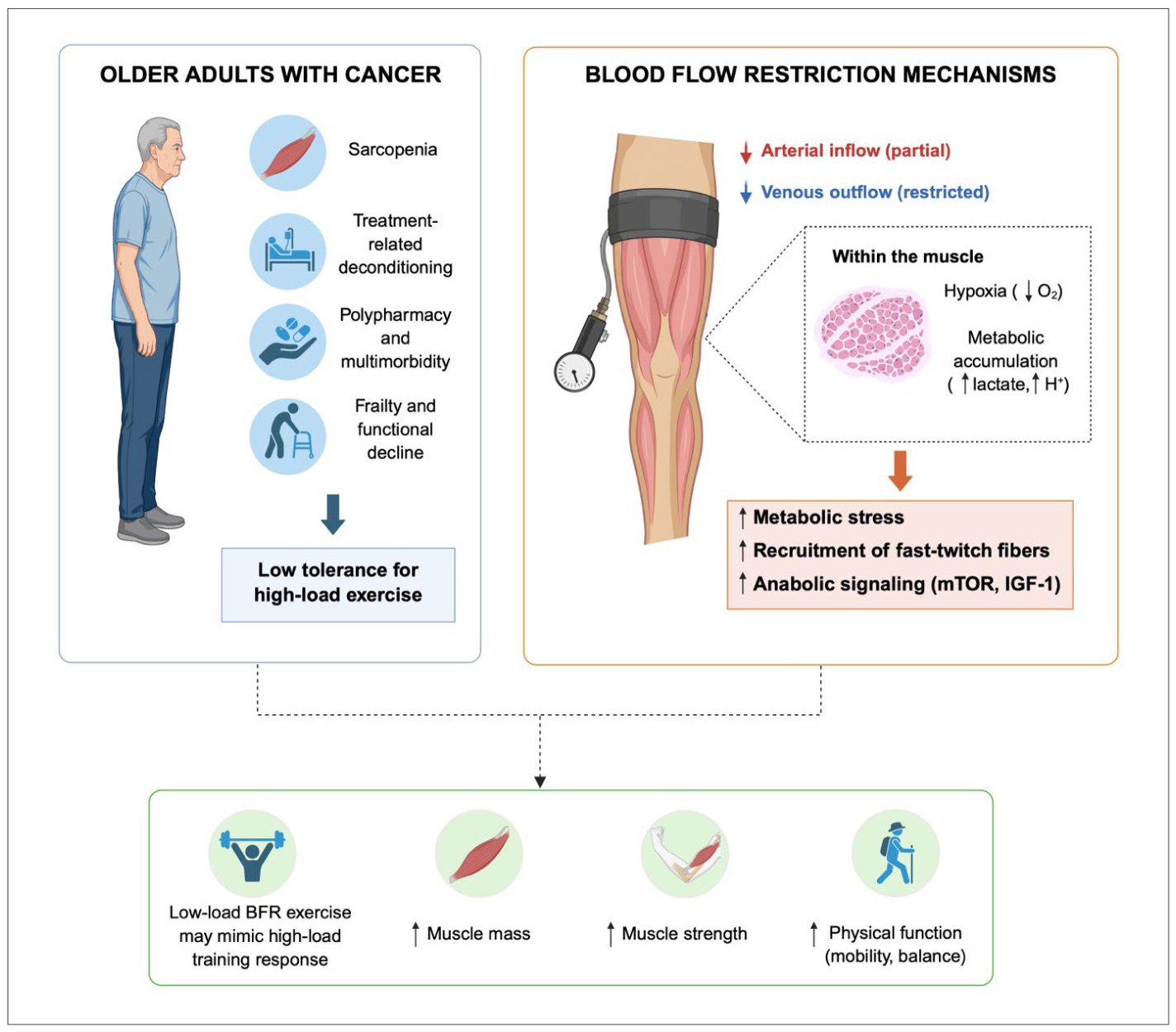
Figure 2.
Clinical implementation pathway of blood flow restriction (BFR) exercise. This figure presents a structured clinical workflow for implementing BFR exercise. The process begins with patient screening and risk assessment, including evaluation of medical history, comorbidities, contraindications, and functional status. Subsequently, the intervention is individualized by determining arterial occlusion pressure (AOP), setting appropriate cuff pressure, and assessing exercise capacity. The BFR exercise protocol includes cuff application, aerobic or resistance exercise, and short rest intervals. The lower panel highlights continuous patient monitoring and progression, including assessment of physiological responses, adjustment of exercise intensity and load, and maintenance of safety throughout the intervention. BFR − blood flow restriction; AOP − arterial occlusion pressure. Conceptually adapted from references [29,31,55,56]. Created in BioRender. Music, T. (2026) https://BioRender.com/mrl3040 (Accessed on May 9, 2026).
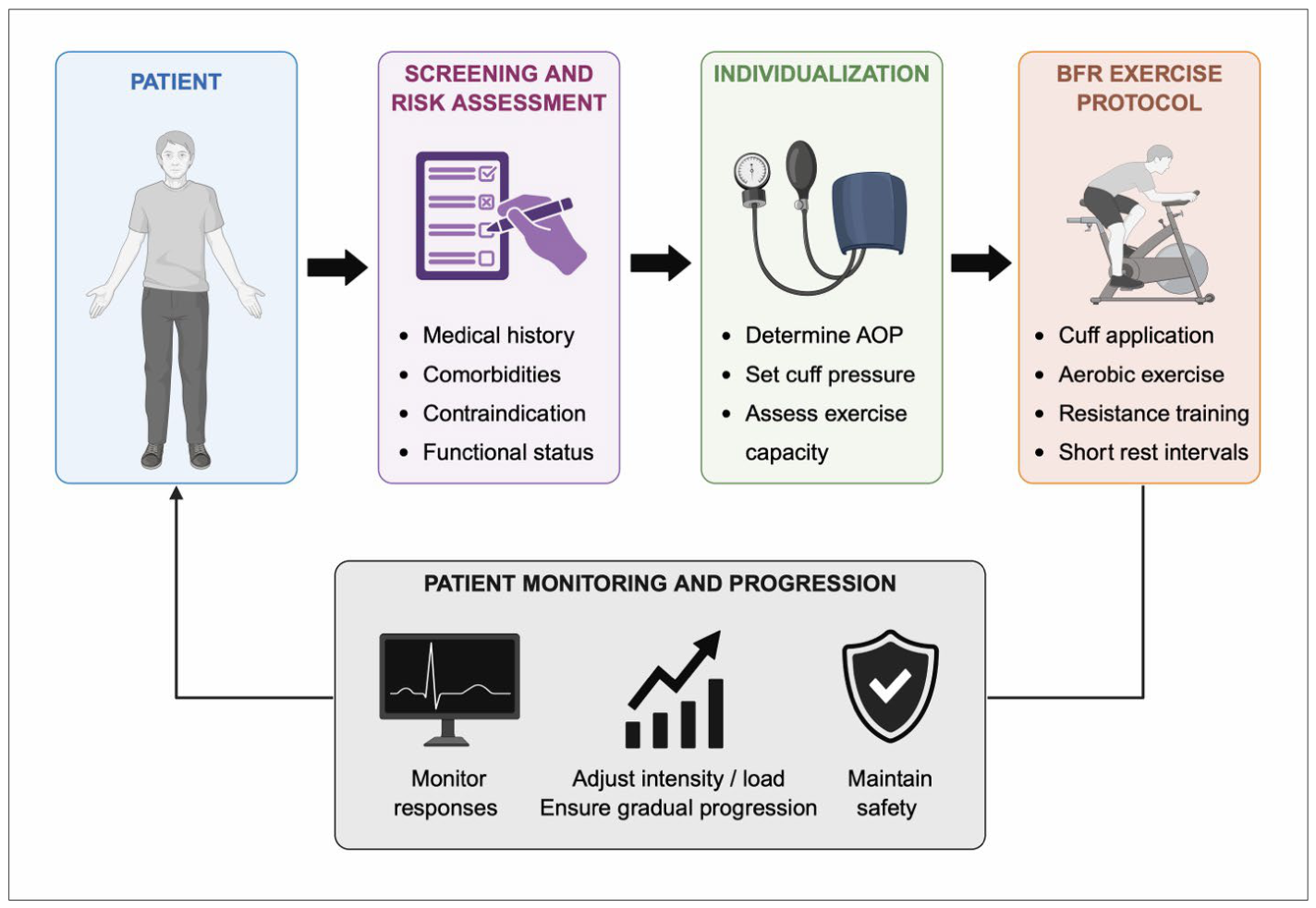

Table 1.
Potential physiological effects of blood flow restriction training and their proposed clinical implications for older adults with cancer. This table summarizes the principal physiological adaptations associated with blood flow restriction training, the underlying mechanisms, the population in which these effects have primarily been demonstrated, and their potential clinical implications for older adults with cancer. Most evidence is derived from studies in healthy older adults and non-oncological clinical populations, whereas direct evidence in oncology remains limited. Based on concepts derived from references [44,45,46,47,48,49,50,51,52,53]. GH, growth hormone; IGF-1, insulin-like growth factor-1; mTOR, mammalian target of rapamycin; VEGF, vascular endothelial growth factor.
| Organ system | Physiological effects | Proposed mechanisms | Primary evidence | Potential clinical implications |
|---|---|---|---|---|
|
Musculoskeletal system |
Increased muscle mass and strength; improved physical function; favorable effects on bone metabolism |
Activation of mTOR signaling; increased GH and IGF-1; recruitment of fast-twitch fibers; mechanical stimulation of bone tissue |
Mainly healthy older adults and non-oncological populations |
May help attenuate sarcopenia, frailty, cancer-related muscle loss, and functional decline |
|
Cardiovascular system |
Improved endothelial function and exercise tolerance |
Repeated hemodynamic stimulus; vascular adaptation |
Mainly older adults and cardiovascular populations |
May support cardiovascular function and exercise capacity in deconditioned patients |
|
Microcirculation |
Increased capillarization; improved tissue perfusion |
Hypoxia-induced VEGF expression and angiogenic signaling |
Primarily non-oncological populations |
May improve tissue oxygen delivery and rehabilitation potential |
|
Central and peripheral nervous system |
Exercise-induced hypoalgesia; improved neuromuscular activation |
Activation of endogenous pain inhibitory pathways |
Mainly musculoskeletal and older adult populations |
May improve exercise tolerance and adherence |
|
Endocrine and metabolic system |
Enhanced anabolic signaling; improved metabolic efficiency |
Metabolic stress-induced hormonal responses |
Mainly healthy adults and older adults |
May support anabolic balance in catabolic conditions, including cancer cachexia |
Aerobic BFR interventions are increasingly investigated in oncology as potential strategies for individuals with limited exercise tolerance. Preliminary oncology studies suggest that low-load aerobic BFR is feasible and may help preserve physical function, body composition, and perioperative recovery, although the lack of standardized protocols limits definitive conclusions [44,45]. However, these studies remain few, involve small heterogeneous cohorts, and use diverse exercise protocols, precluding firm conclusions regarding clinical efficacy.
Table 2.
Overview of organ system–specific adverse effects and clinical considerations in blood flow restriction exercise. This table summarizes key adverse effects associated with blood flow restriction training across organ systems, including their clinical relevance, contributing factors, and practical considerations for safe application. Based on concepts derived from references [29,54,55,56].
| Organ System | Adverse Effects | Clinical Relevance | Contributing Factors | Practical Considerations |
|---|---|---|---|---|
|
Musculoskeletal |
Muscle fatigue Muscle soreness Rhabdomyolysis (rare) |
Generally low; rare serious complications |
High training volume Inadequate recovery |
Gradual exercise progression Avoid excessive training load |
|
Nervous system |
Paresthesia Numbness Nerve compression |
Low to moderate |
Improper cuff size or placement Excessive cuff pressure |
Correct cuff positioning Individualized pressure adjustment |
|
Cardiovascular |
Increased blood pressure Increased heart rate Dizziness Presyncope or syncope |
Moderate to potentially high in high-risk individuals |
Impaired autonomic regulation |
Monitor heart rate and blood pressure Adjust intensity as needed |
|
Vascular system and microcirculation |
Petechiae Bruising Thromboembolic events (rare) Ischemia-perfusion injury |
Low; potentially high in high-risk individuals |
Capillary fragility Thrombotic predisposition Prolonged occlusion High cuff pressure |
Pre-exercise screening Limit occlusion duration Use appropriate pressures |
Disclaimer/Publisher’s Note: The statements, opinions and data contained in all publications are solely those of the individual author(s) and contributor(s) and not of MDPI and/or the editor(s). MDPI and/or the editor(s) disclaim responsibility for any injury to people or property resulting from any ideas, methods, instructions or products referred to in the content. |
© 2026 by the authors. Licensee MDPI, Basel, Switzerland. This article is an open access article distributed under the terms and conditions of the Creative Commons Attribution (CC BY) license (http://creativecommons.org/licenses/by/4.0/).
Copyright: This open access article is published under a Creative Commons CC BY 4.0 license, which permit the free download, distribution, and reuse, provided that the author and preprint are cited in any reuse.