Preprint
Review

This version is not peer-reviewed.

Tuning Hydrogen Storage Capacity in CsPbCl3 Through Systematic Anion Substitution: A First-Principles Study

Submitted:

14 October 2026

Posted:

15 October 2026

You are already at the latest version

Abstract

Background: The world of science is concerned with generating and storing energy due to the decreasing availability of finite petroleum and coal. Researchers have proposed Hydrogen (H) as a viable alternative to natural gas because of its sustainability, yet storing H remains a challenge. Hydrogen is a substitute fuel that raises security issues due to storage and transportation challenges. Scientists are interested in perovskite-based substances because they are promising materials for hydrogen storage. Objective: To thoroughly investigate the structural, mechanical, electrical, photonic, and hydrogen storage characteristics of CsPbCl3-xHx, a hydride-based substance for hydrogen (H) utilization at different levels of x = 0, 0.3, 0.9, 1.5, 2.1, 2.7, 3 is the goal of the study. Results: The density functional theory (DFT) simulations for cubic CsPbCl3-xHx are being carried out in the current study using the GGA-PBE approach, which has been included in the CASTEP software. These substances are persistent and can be synthesized through experimentation according to the synthesis thermodynamics of the substance under study at all levels. The electrical conditions in pure substances are greatly impacted by the presence of a form of hydrogen, as seen by the band arrangement & concentration of levels graphs. There was an increase in the overall number of levels following the introduction of hydrogen, and the gap between the bands has shrunk from 2.38 eV to 0 eV. The electrical band gap change impacts the substance's transparency; hence, light sensitivity measurements, including the index of refraction, insulating operation, as well as absorbency, have been made. Conclusion: The gravimetric method storage capability (Cwt%) has been determined for each of the hydrogen inclusion levels to be used in hydrogen applications such as storage. The range of measurements between 0.10% and 1.40% suggests that the compound provided is effective not exclusively for light and electrical purposes but also for overall operations involving storing hydrogen.

Keywords: 
;  ;  ;  

1. Introduction

As a result of worldwide human growth, academics have focused on two important fields to advance development: power and environmentally friendly surroundings. The world's growing usage of petroleum and gas is causing an urgent power problem[1]. As a renewable source of power, hydrogen has the following advantages: it is portable, has an elevated density of energy, & produces zero hazardous byproducts when it burns. Thomas Newcomen's invention of the engine powered by steam in 1792 marked the very first instance of a human-operated device. The power source for this hot-air motor is natural fuel. The median annual consumption of power reached 5×10¹² Kilowatts during 1860 as well as grew from 1.28 ×10¹⁴ Kilowatts every hour in that same period. In the United States as well as Europe, currently a typical household uses five to ten Kilowatts every person of electricity. The world's shortfall of natural gas will cease to be able to meet the need for power in the years to come[2]. Thus, scientists may predict this, over the coming fifty years, the utilization of energy will twice. The two gases perform a combustion process that generates power ΔH = 120 KJg-1 plus liquid 2H2 + O2 → 2H2O. Since little carbon is produced during this process, it is environmentally benign. Since hydrogen is a transporter of energy without carbon, interaction produces the highest concentration of energy. The power contributions via the two hydrogen and carbon elements in gas burning CH4 + O2 → CO2 + H2O are 120 KJg-1 and 30 KJg-1, respectively. The proportion of hydrogen over carbon content affects the electrical energy concentration range of gasoline and diesel[3,4].
This type of storage is employed throughout fixed and aboard uses, however, it is significantly more advanced especially aboard usage due to the emerging hydrogen economics. When storing hydrogen inside while recharging the car, there must be enough for the gas to go a suitable duration. It is necessary to have an exact preservation method that offers an elevated geometric as well as gravity-based power concentration. Cryo-compressed element hydrogen, metallic hydrates, fluid biological hydrates, chemically consumed gas hydrogen, compacted hydrogen, plus fluid hydrogen are some of the seven different approaches utilized for storing hydrogen[5]. The hydrogen production method is primarily employed to keep hydrogen at elevated pressures. This method yields an elevated loading and release speed for the hydrogen while requiring no additional power for the release of hydrogen as well, making hydrogen that is compressed a sophisticated approach. Widespread enhancement of volumetric density of energy occurs due to the increased density found in frozen or hydrogen-based liquids[6]. At about 253 degrees Celsius, the weight of hydrogen in solution exceeded 71 g/L, resulting in an attained energetic density of 8 MJ/LH2[5]. Elevated geometric plus gravity densities are attained in comparison to conventional methods of storage[7]. Metallic hydrides used in battery-powered cars can operate at extremely low temperatures & pressures; for the PEMFC, the ideal spectrum ranges from 25 and 293 k as well as 1 to 10 atm.
To create metallic hydrates, one must dope or add hydrogen to the element. Large-scale research on metal hydrides is initiated by researchers following Thomas Graham's discovery of absorbing hydrogen into palladium. Both of the main categories of hydrides made from metals are intermetallic as well as bipolar halides[8,9]. In contrast to the element hydrogen, intermetallic halides include at least three metallic substances, whereas binaries contain a single element. Complicated metallic hydrides are formed when the hydrogen bonded to metallic is partly bonded and constrained by an anion of polyatomic size. One important class of more complicated metallic hydrides is nitrogen as well as boron-containing hydrates, which have larger gravity storage capabilities than simpler hydrates[6].
More study is needed to increase the amount of hydrogen that can be stored by freezing along with employing an appropriate catalyst. To assess the viability of using CsPbCl3-x Hx for aboard hydrogen vehicles, more research needs to be conducted regarding its production, as it shows great promise for the storage of hydrogen. Additional study is required to fully understand transfer characteristics including electron-phonon interaction features enabling fuel cell usage. The recommended substance's lower reflectance makes it suitable not solely for storing hydrogen in its purest form but additionally to be utilized as an anti-reflective coating substance. It may additionally be applied to broadband optoelectronic equipment, and memory for data, including optoelectronic crystals.
The CsPbCl3 crystalline acts as a material with ductility. A direct band gap R–R divides the band valence spectrum bands into the conduction spectrum. Researchers identified hybridization among Pb-p levels as well as Cl-p levels in the valence coupling zone. Below P = 30 GPa enlargement, this substance will exhibit an alloy-like nature. The Quasi-harmonic Debye theory was used to forecast the thermodynamic influence on the lattice value, bulk modulus, and Debye climate, along with heat transfer Cv [10]. According to Lufaso and Woodward, a cubic perovskite can change towards additional crystalline forms. The mechanical transition between phases is absent from our CsPbCl3 perovskite within the examined stress and temperature spectrum[11]. These perovskites exhibit birefringence as well as anisotropy optical characteristics. The compound's chemical structure, stress, & heating are all related to their shape[12].
Utilizing the generalization gradients approximations (GGA, which is) and the theory of density functions (DFT), both of which band gap and density of the state CsPbCl3-x H3 are estimated in the present study. The research's computational methodology and specifics are covered in Computational Details. Hydrogen storage of CsPbCl3-x H3 is computed in conclusions as well as a discussion and its optical & mechanical characteristics are ultimately examined. The final section discusses the outcomes in great depth.

2. Computational Details

The physical characteristics of CsPbCl(3-x)Hx (0, 0.3, 0.9, 1.5, 2.1, 2.7, 3) were determined by applying the theory of density functions within the Cambridge Sequence Total Energies Packaging (CASEP) system framework. With this approach, calculations get finished more quickly without affecting efficiency[13,14]. The cubic unit cell of CsPbCl3 belonged to space group Pm - 3m. Wyckoff fractional position for atoms cesium, lead, and chlorine in CsPbCl3 unit cell is (0, 0, 0), (0.5, 0.5, 0.5), and (0.5, 0.5, 0) as shown in figure 1[15]. Lead (Pb) possesses twelve coordinates with chlorine (Cl), whereas cesium (Cs) possesses six. Lead (Pb) occupies the body-centered location, whereas cesium (Cs) occupies the face-centered location. Each of the above positions is appropriate for perfect perovskites.
For a substantial framework, a 2×2×1 supercell with 48 atoms is constructed. The first group of hydrogen (H) exchanged at the Cl-site in a manner that exchanged a single chlorine (Cl) atom with a single hydrogen atom. Following this, a completely new substance called CsPbH3 is created, with distinct optoelectronic, band disparity, density-responsive state, as well as physical features. Varying the hydrogen (replaced component) content immediately affects the nature of the material since it modifies the molecular makeup of the substance.
This is an initial investigation into the use of hydrogenide substances having variable/different proportions for hydrogen-keeping applications. The valence electron is directly responsible for the physical characteristics of a substance. Therefore, the electronic configurations of cesium, lead, chlorine, and hydrogen are as follows: Cs: 6s1, Pb: 6s2p2, Cl: 3s23p5, H: 1s1. The number of valence electrons in hydrogen, lead, cesium, and chlorine is +1, +4, +1, and -1. The tolerance factor for the stability of structure can be found as
t = r C l + r A √ 2 ( r C l + r B )
where rB is the radius of ionics of lead (B-location), rCl is the radius of ionics of chlorine, and rA is the ionic radius of cesium (A-site)[16]. Cesium's ionic radius is 1.67Å, while that of Chlorine and lead are 0.08Å and 1.49Å respectively. CsPbCl3 has a tolerance factor of t = 0.9. Regarding Gold Schmidts, the material had a cubic and stable perovskite structure when the tolerance factor was between 0.8 and 0.9[17].

3. Discussion

  • Geometry optimization
CsPbCl3 is in a highly stability cubic form at temperatures of room temperature, which is unaffected by the addition of various hydrogen element replacements. To maximize the crystal framework and determine the range of lattice variables in the smallest states, a fictional potential technique centered around DFT using the GGA-PBE methodology was applied. Also, the cubic perovskites' 2×2×1 supercell of CsPbCl3 was structurally modified in the initial phase applying GGA-PBE as shown in Figure 1.
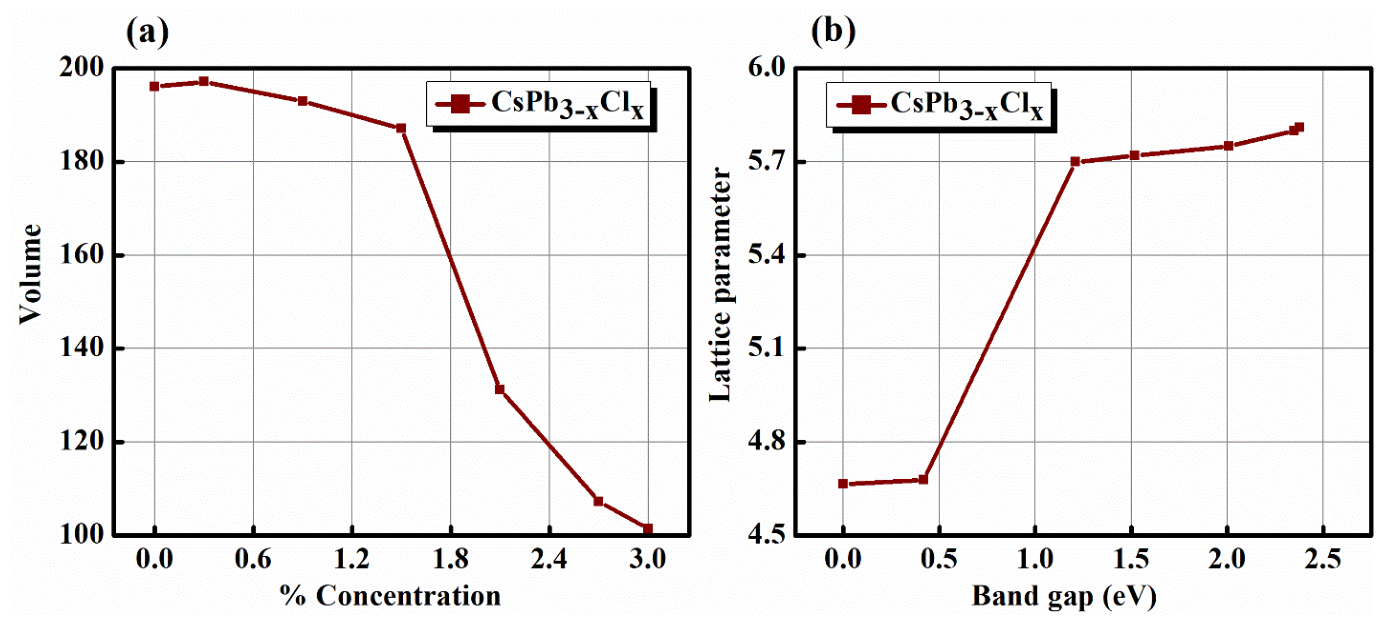
The ideal volume of a unit cell is a specific capacity at which the total energy is at its lowest. Following structure optimization, the total energy gradient of the CsPb3-xClx crystalline framework about the ideal size of cells was plotted using Birch Murnaghan's declared formulation, and also the lattice parameter is approximated using the Murnaghen phase solution to keep the material's total energy minimal as depicted in Figure 2.
The amount of space of the optimal single cell is the quantity of space at which the energy level is at its lowest[18]. All crystal unit cells are relaxed and tuned, as this plot explains. Calculating the overall volume for all substituted concentrations aids in figuring out the fundamental states of the crystal structure, including the appropriate band gap and lattice parameter values. This geometry's optimum lattice element parameter is a = b = c = 5.81Å, while previous publications' stated lattice parameters are a = b = c = 5.605Å & 5.7213Å, respectively [19,20]. Such lattice parameters are additionally analyzed.
The parameter for the lattice begins to significantly increase after hydrogen is substituted for chlorine since chlorine's ionic radius (0.08 Å) is smaller than hydrogen's (0.18Å). There isn't an investigation that contrasts these characteristics. The framework's phase does not shift from cubic, it remains a cubic structure after hydrogen doping, and the lattice parameter increases with hydrogen doping. Since hydrogen has a greater radius of ions (0.18Å) compared to chlorine (0.08Å), the entire capacity of each element substance decreases for concentrations x = 0.0 to 3.0. However, when hydrogen is added (x = 0, 0.3, 0.9, 1.5, 2.1, 2.7, 3), the volume begins to progressively drop about 196.12Å until 181.80Å, as illustrated in Diagram 2.
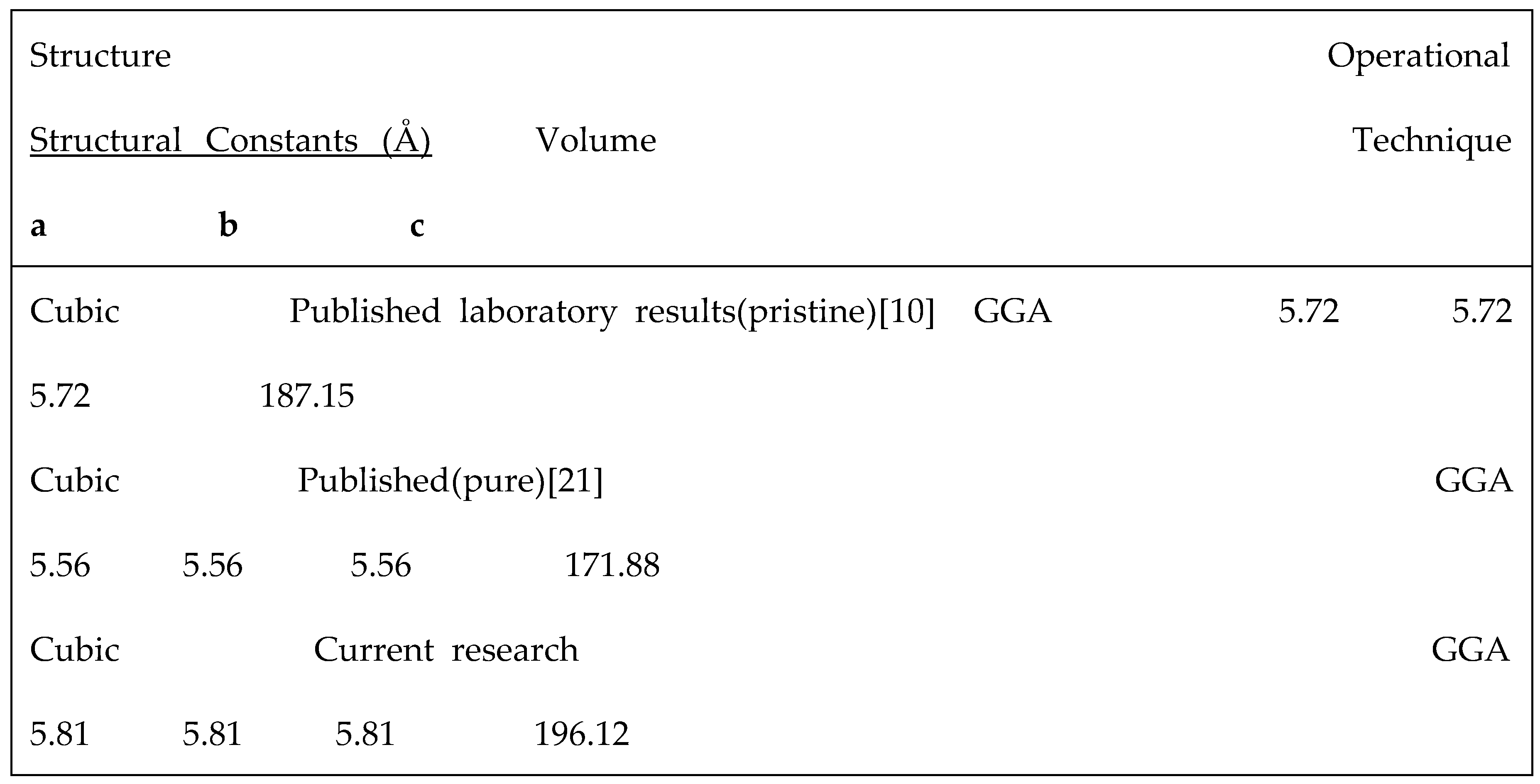
Table 1 compares the calculated versus provided crystalline variables for pure CsPbCl3.The approach used in the present research is reliable and appropriate, as evidenced by the excellent correlation between our computed stable structural variables and previously examined practical and mathematical results.
Table 2 displays these calculated lattice variables together with the dimensions and earlier research that relate to them. They could be examined in subsequent studies because there isn't a prior study that compares lattice constants other than those of virgin CsPbCl3. Since Cl's ionic radius is smaller than H's, the lattice constant value for CsPbCl3 is greater than that of CsPbH3. Lattice parameter values vary due to the host and dopant's different ionic radii, and for the addition of doping this variation should be less than 30%. Less variation in ionic radii will result in less of an impact on the supercell's lattice constant, which preserves crystal uniformity. Hence, to preserve structure uniformity, the variance among the ionic radius of the host substance and dopant species atoms should be less than 30%; if it is more than 30%, the regularity of the crystalline structure is broken.
  • Electronic properties
The analysis of the concentration of states as well as electronics band arrangement yields all significant computational data about the substance that is being represented. The electrons have moved among the bands of valence and conduction, whereas the gap between the bands is the energy difference between the band of valence peaks as well as the band of conduction lowest. When the valence and conduction bands' minima and maxima are at the same location, there is no requirement for more energy to change over; this is also known as a direct band gap, and electrons can flow between the valence and conduction bands with ease. On the other hand, changeover power is necessary when the conduction and valence band maxima and minima do not lie on the same point [22,23,24].
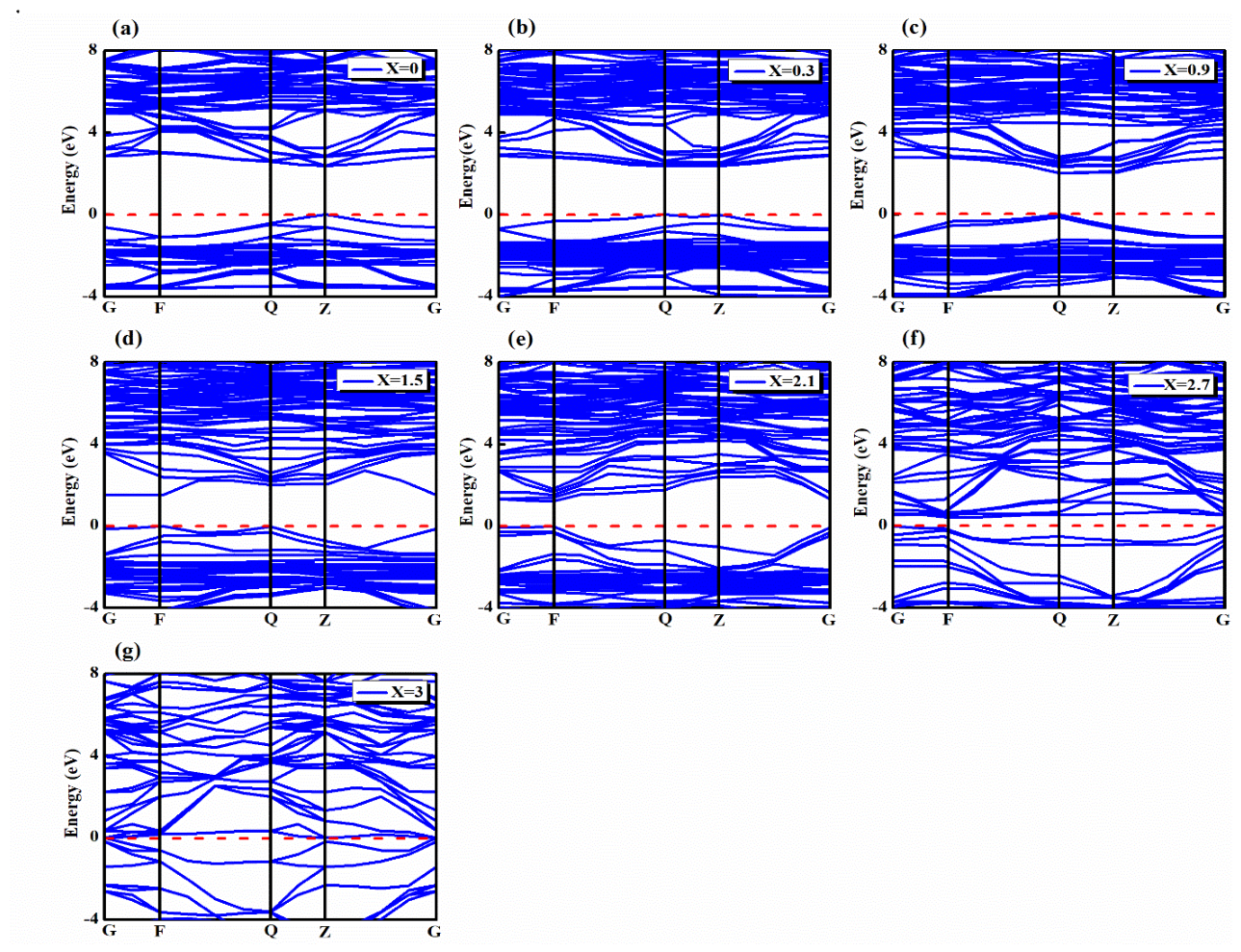
Figure 3(a) displays the band arrangement of pure cubic perovskite CsPbCl3. Both The highest points of the conduction and valence bands the lowest possible level of CsPbCl3 are located at the Z-point, indicating a direct nature of the substance with a gap between the bands of 2.38 eV. Pure CsPbCl3 has demonstrated gaps in bands of 2.2 eV and 2.98 eV[25,26]. Figures 3(b, c) display the band arrangement for CsPbCl3 following the adding hydrogen quantity x = 0.3 and x = 0.9 respectively. These show that the valence band peak lies at Q-valley, while the conduction band lows also take place at Q-point. This is because the doping effect triggered the gap between the bands to shrink and the conduction band shifted toward the Q-valley from the Z-valley. The width of 2.35 eV and 2.01 eV, correspondingly, are the direct band gaps (Z → Q). In the instance of CsPbCl3-XHX at percentage x = 1.5, 2.1 & 2.7, as illustrated in fig. 3(d), 3(e) & 3(f) accordingly; both the conduction band lowest values and the valence band maxima are located around the F-symmetry line, and the direct band gap thickness is 1.52 eV, 1.21 eV & 0.420 eV respectively. The CsPbCl3-XHX band structure is shown in Fig. 3(g) at quantity x = 3, where the conduction band and valence band overlap. Thus, the substance no longer stores hydrogen, and the material (CsPbH3) becomes a conductor, as illustrated in Figure 3(g).
The materials' fundamental partial densities of levels (EPDOS), partial densities of levels (PDOS), and overall densities of levels (DOS) have been computed to elaborate on their electrical characteristics.
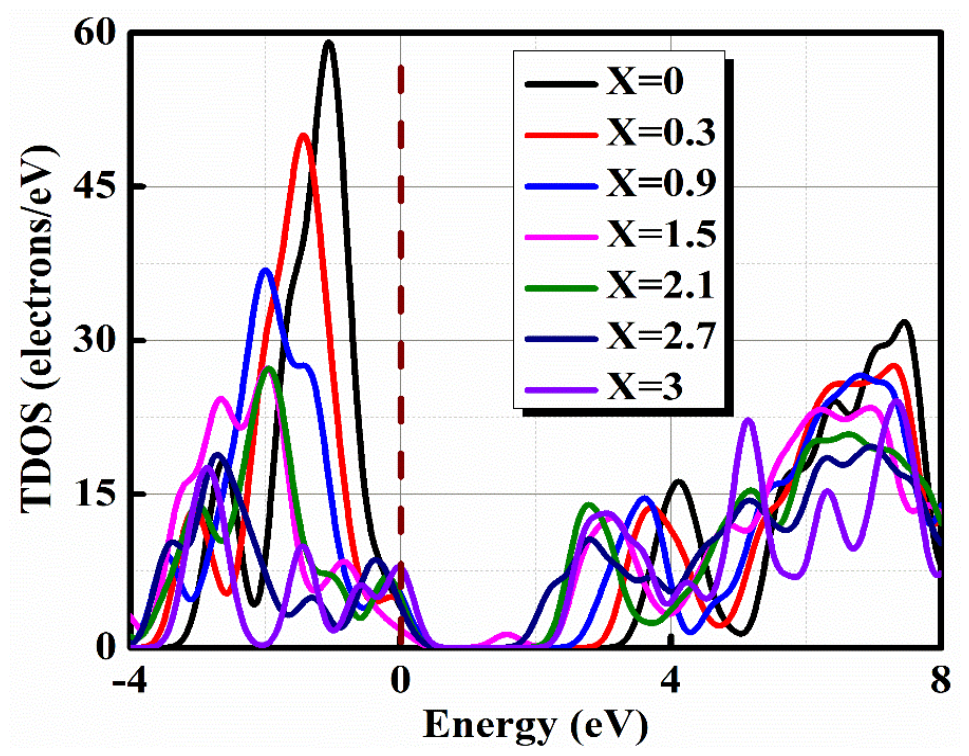
Figure 4. (Colors Online) Overall density of levels (TDOS) graphs showing hydrogen-induced as well as pure CsPbCl3 at various Hydrogen concentrations.
Preprints 238388 g004
A contrast of the overall density of levels (TDOS) of both pure and doped CsPbCl3 is shown in Fig. 4. In contrast to a pure structure, a doping structure had an overwhelming influence on its conduction band. The pure structures exhibit the largest maxima at 2.38 eV and its highest value is recorded between 2.38 eV and 0.00 eV. Heights start moving toward the band of valence after doped; the largest peak is located at 2.38 eV, 2.35 eV, 2.01 eV, 1.52 eV, 1.21 eV, 0.420 eV, and 0.00 eV for concentrations x = 0, 0.3, 0.9, 1.5, 2.1, 2.7 and 3. Heights in the conduction band rise as they drift towards it. This is happening because additional states appeared with hydrogen added and the valence band minimum drifted nearer the F-valley.
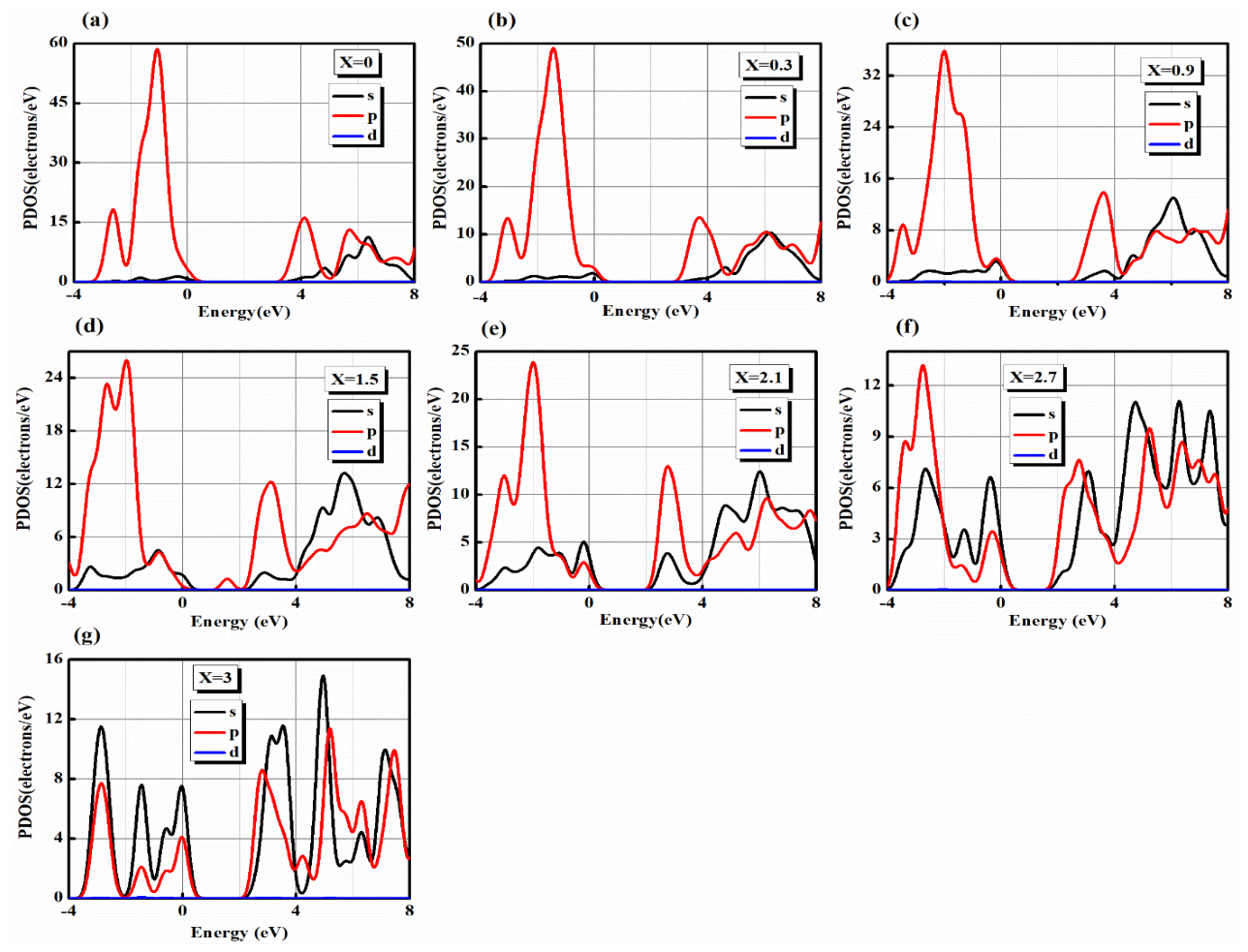
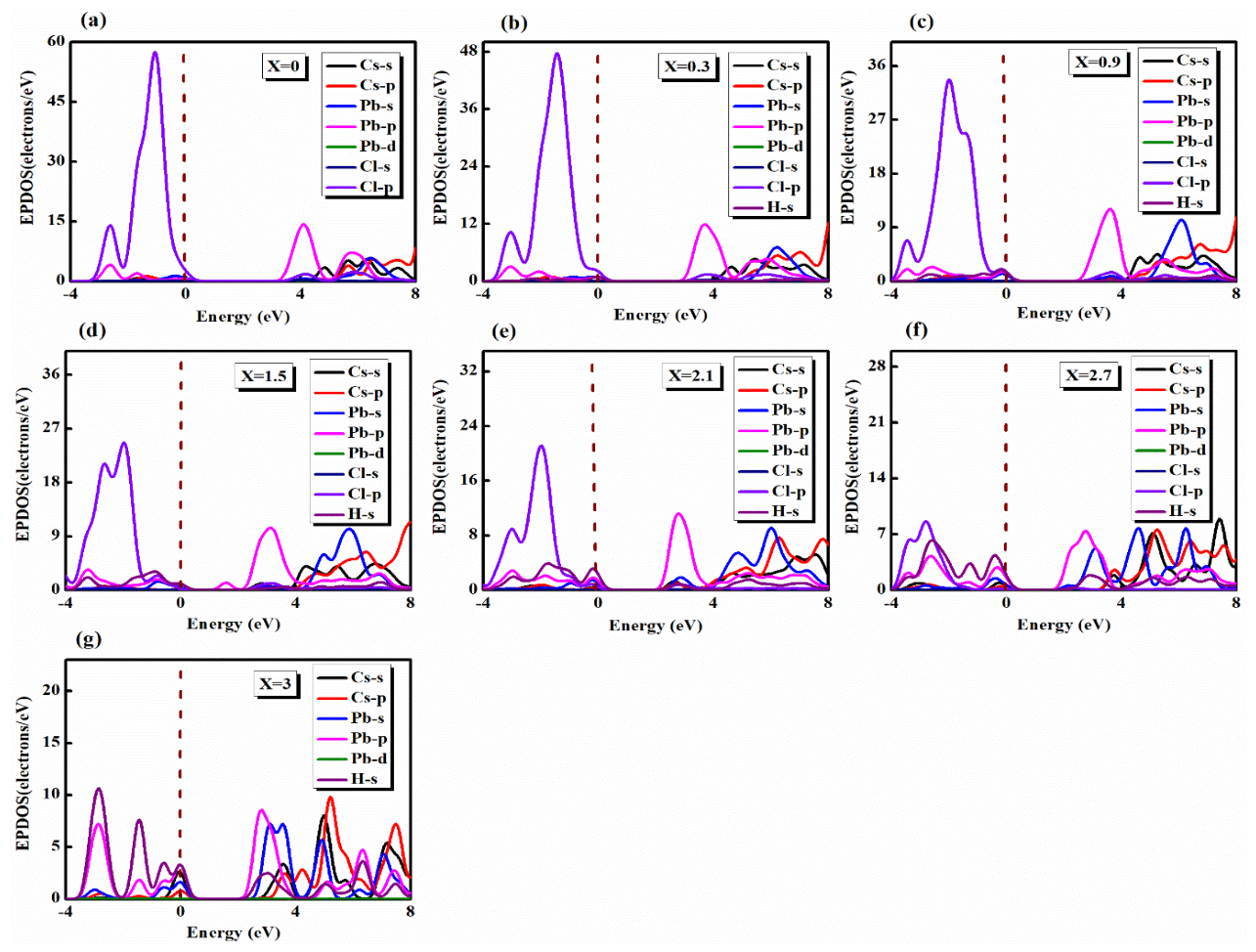
The materials' fundamental partial densities of levels (EPDOS) and partial densities of levels (PDOS) containing both enriched and pure CsPbCl3 can be observed in Figure 5 and Figure 6 respectively. Compared to the s-state, the p-state provides a key role within conduction band and valence band for pure and all levels for hydrogen. The valence shell's sharp p-state peak shifts toward the conduction band whenever the doping levels rise. Every material's ionic as well as covalent characteristics are associated with the transfer and sharing of charges among the cations along with anions. CsPbCl3's covalent nature results from hybridizing the Cs 2p-state with the Cl 2s-state at approximately 3.0 eV[27,28].
The majority of charges exist in the sequence of the Cl-Cs bonding since the most numerous charged particles are found in Cs and Cl. Pb p-states also occur in the conduction band, whereas the p-states of chlorine and cesium filled all states with energies within 4.0 eV & 0.1 eV and 6.1 eV & 0.5 eV. Band inhabited by the Cs 3s-state with energies ranging from 4.1 to 8.0 eV and Cs 2p-states are found in bands with energies higher than 5.0 eV. A little spike rises at the Fermi level as a result of Pb-2p deviating toward the conduction band while chlorine's 2p-state resides in the valence band. Its 3s and 2p states proportionally contribute to the conduction band. Between - 4.0 eV and 0.4 eV, there is a greater influence of Pb s-state. At the Fermi energy level, the H-1s peak is also visible in the state of Cl-2p. The valence band contains the Pb-2s and Pb-2p states, and the impact of the hydrogen 1s state is also discernible. The predominant function in the conduction band is played by the 2p state of Pb and Cs. Pb-2p state produces prominent maxima in both valence bands and conduction bands, while the largest peaks for hydrogen 1s-state and chlorine 2p-state are likewise found in the valence band. Whereas the 2p-level of Cs was prominent in conduction band, the 2p-level of chlorine was dominating within valence band. Pb-2s and Cs-2p hybridize having a band gap that lies between 4.5 eV and 8.0 eV. At - 3.0 eV, the hydrogen peak is the highest. The conduction band fills while the hydrogen levels increase. As we wrap up this explanation in two steps, the addition of an additional symmetrical spot following hydrogen addition caused the initial gap in the band to diminish. Secondly, the nature of the band gap does not change with the addition of hydrogen. The band gap is influenced by electronegativity in addition to hydrogen concentration[29]. The band gap changes exponentially beneath all of these variables when the GGA approach is used.
As shown in Figure 6, EPDOS offers elemental evaluation for both pure and H-substituted CsPbCl3. Figure 6 shows that the role of the H-s in conduction bands around Ef increases as the H concentration rises. At various energy levels, valence bands exhibits the maximum role of H-s for x = 0.3, 0.9, 1.5, 2.1, 2.7, and 3.
In the valence band, hybridization of several atomic orbitals is seen. In the banding framework of metallic substances, hybridization affects how the energy bands develop and spread out. As a result, atomic orbitals are mixed, hybridized orbitals are produced, and electronic levels' arrangement throughout the spectrum of energy is altered. When orbitals of atoms are mixed during hybridization, energy bands are created which coincide on a Fermi threshold, causing metal-based behaviors[30]. The electrical composition of substances can be predicted and analyzed using density functional theory (DFT) including Band Structure (BS) computations, which validate metallic behaviors as determined by partially occupied levels as well as overlapped bands.
  • Optical Characteristics
The optical features of substances were very closely related with their corresponding electrical, thermal processing, and magnetic attributes. Optical properties include the relationship between the dielectric constants [Ɛ(ω)], absorption [I(ω)], index of refractive [n(ω)], reflection [r(ω)], coefficient of extinction [K(ω)] and loss of energy function [L(ω)]. Essentially, formulae used to calculate various optical qualities are based on the dielectric constant [Ɛ(ω) = Ɛ1(ω) + iƐ2(ω)]; where actual and imaginary components of Ɛ(ω) were indicated by Ɛ1(ω) and Ɛ2(ω), respectively. It is attached to the electrical band structures of the crystal. Implementing the Kramer-Kronig relation to a hypothetical part[31], which is discovered by putting together a sizable number of unoccupied states—will yield Ɛ1(ω). All interrelated optical qualities can be calculated using the following formulas: Ɛ1 (ω), Ɛ2 (ω), r (ω), n (ω), L (ω), I (ω) and K (ω).
Ɛ1 (ω) = n2 – K2
Ɛ2 (ω) = 2nK
n   ( ω ) = ( Ɛ 1 ( ω ) ) 1 2 + (   1 2 ) ( Ɛ 2 ( ω ) 2 + Ɛ 1 ( ω ) 2 )
N   ( ω ) = iK   ( ω ) + n   ( ω ) = Ɛ ( ω )
L   ( ω ) = Ɛ 2 ( Ɛ 2 ( ω ) 2 + Ɛ 1 ( ω ) 2 )
r   ( ω ) = n + i K − 1 n + i K + 1
I   ( ω ) = 2 ω   ( Ɛ 2 ( ω ) 2 + Ɛ 1 ( ω ) 2 − Ɛ 1 ( ω ) ) 1 / 2
K   ( ω ) = I ( ω ) 2 ω
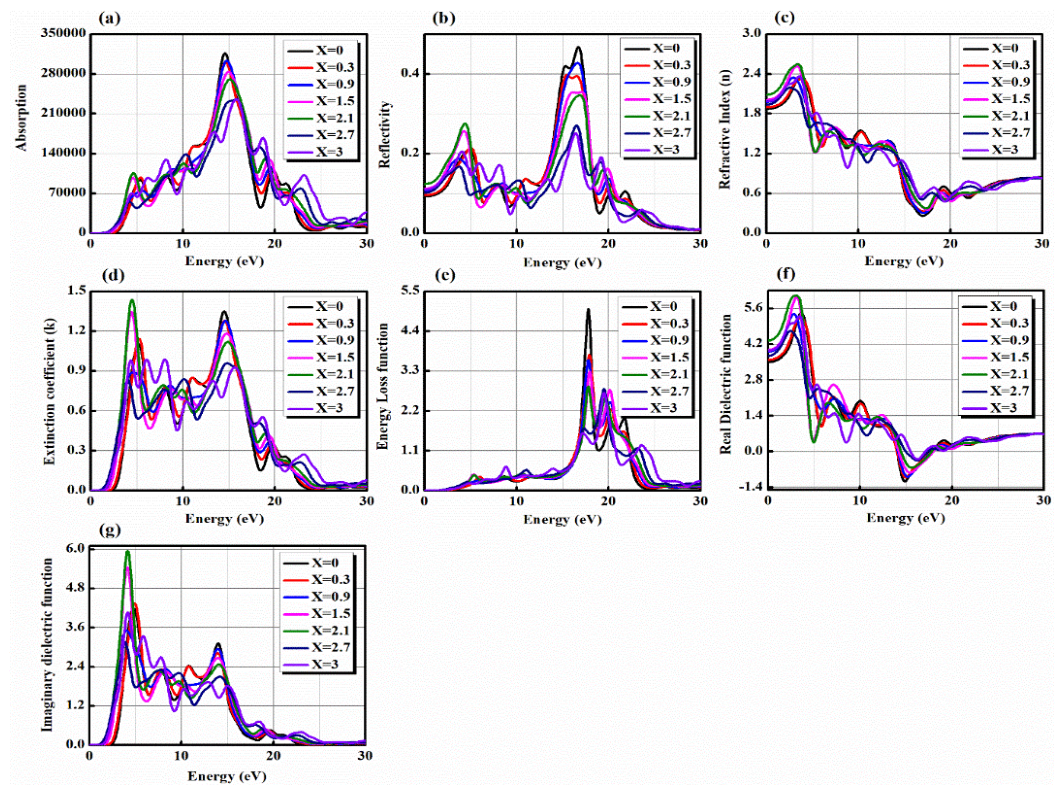
Calculating the quantity of radiation a substance soaks up whenever electromagnetic radiation penetrates requires a comprehension of its absorption. Figure 7(a) provides a detailed explanation of the CsPbCl3-xHx absorbing spectrum. When the material absorbs every bit of the light's power, the rate at which it penetrates continues to drop. This happens when the electrical field portion created by light combines with the substance's electrons and loses power as a result of absorption[32]. The reaction of free-energy entities in a substance, such as electrons, to an electromagnetic field produced by light that enters it, is known as photonic conductivity. A substance's capacity to absorb light has a direct relationship with its optical conduction[33]. A bluish change in the absorbing margin is suggested by the highest point shown in Figure 7(a) moving near greater energy as the H concentration increases. The visible absorption of all the substances starts at zero at the minimum power, as shown in Fig. 7(a), proving its metallic composition and zero band gap. At levels that vary, absorption of light is seen in the energy spectrum ranging from 0–30 eV. Absorption is lowest for CsPbCl3 at x = 3 in low-energy areas and largest for CsPbCl3 on x = 0 in greater energies areas. The greatest degree of absorb is seen for x = 0 at 14eV in the range of 0 to 15eV, as shown in Figure 7(a). Nonetheless, x = 0.9 exhibits the highest absorption in the 15–30 eV region at 15.5 eV. The highest point of more intense intensity corresponds to x = 0 in the ranges from 10 to 20eV at 14.8eV.
Reflection factor bands are displayed in Figure 7(b). The percentage of electromagnetic radiation that is bounced off the surface of a substance is measured by reflectivity. The proportion or fraction of the returned strength to the actual strength of the light is frequently used to express reflectivity. The absorption and reflection have a relationship that is opposite. Generally speaking, a substance's reflectivity and absorption are inversely correlated[34]. Lower-intensity patterns are seen at x = 2.7 and x = 0.9 for small energy areas, which are in the range of 0 to 10eV. Reflection decreases as the amount of H rises in the extremely energetic regions. As a result, at that level, the substance effectively absorbs visible light. The reflecting spectrum shows that greater reflectivity occurs wherever absorption is less.
One important measurement for assessing a substance's transparency to incoming electromagnetic waves is its reflective index (n). The coefficient of extinction, K(ω), on the other hand, provides insight into the way disintegration happens within a substance when it is exposed to sunlight. Additionally, it displays the power lost as a result of photon absorption whenever sunshine hits it. Each of these aspects is held jointly by just one parameter, which is the index of complex refraction, ñ (ω) = n (ω) + iK (ω). Each of those variables can therefore be used to measure the transmission of light and distortion brought on by light transmission. As can be shown from Figure 7(c and d), n and K are identical to the real dielectric function and absorption components. Graphical representations are used for calculating n (ω) for CsPbCl3-xHx as a result that it rises H quantity, and it fluctuates precisely according to a band gap. 8.77, 7.95, 5.99, 4.68, and 4.09 are those figures. The highest angle of refractive for CsPbCl3 is 2.42, which happens at 3.66eV and indicates minimal transparency and increased polarization, which makes the substance more suitable for hydrogen storage mechanisms.
L(ω) describes the amount of energy losses that electrons encounter when interacting with the material being studied. Plasma fluctuation from optical vibrations with electromagnetic stuff is represented by L(ω). These fluctuations release electrons to crystalline locations. The L(ω) diagram, which rises at the plasma intensity, illustrates the way electrons moving through a substance lost power while they go. The variable that determines the amount of energy rapid particles waste every unit of length must be understood to comprehend how these electrons create plasma fluctuations throughout the substance. The photons during interior shell transformations are going to be scattered as their electrical charge rises, most likely resulting in a dispersion catastrophe. The plasmonic highest point, which combines at the levels wherein the substance absorbs input photons, indicates the plasmonic power of the substance being studied. Plasmon maxima in most thin samples range from 4 to 16 eV. The best-defined plasmonic maxima are found in free-electron metallic substances because of connections to weakened conducting or valence-band electrons. The distinction among the loss attributes and the fictitious insulator attributes has an opposite correlation, as seen in Figure 7(e). Actual unreal insulating components were approaching the lowest on the location of the L(ω) peak measurement.
When the substance is exposed to a static electric field, its electrical charges become polarized. A material's charge polarizing capacity, a fundamental compound feature that can be calculated using Ɛ1(ω), explains scattering phenomena in materials. The real dielectric function (Ɛ') shown in Figure 7(f) explains the differences in polarization intensity of CsPbCl3 for different H levels. The values are 6.44, 2.27, 1.53, 0.29, and -1.38 for progressively lowering the amount of H. This shows that a substance's electronic and optical characteristics have an association with its real dielectric function. Because of the enhanced maximum moving in the motion of the low-energies region, polarizing starts at smaller incoming energy and increases as the amounts rise. Following a boost in the H level, the absolute maximum of Ɛ1 changes; it reaches the greatest value for x = 1.5, reflecting the highest polarization associated with its particles along with charges. CsPbCl0.3H2.7 substance with the smallest Ɛ1 values possesses a higher electrostatic attraction among ions hence a higher excitement binding force.
One crucial characteristic that indicates the substance's absorbing tendency and the way it reacts to interruption by incoming electromagnetic waves is the [Ɛ2(ω)] imaginary dielectric function[35]. The coefficient of extinction and its spectrum are the same. At 0 eV, minimal energy waste is shown in Figure 7(g). The infrared section of the spectra exhibits notable spikes. After that, all those in the visual spectrum's fluctuating maxima (5–16 eV) drop to lessened amounts. After that time, the oscillation pattern in the higher spectra region remains unaltered, having no impact upon the material's absorption and the smallest amount of absorbed and dispersed lost due to the addition of H.
  • Elastic and mechanical properties
One crucial factor in predicting the use of hydrogen-storing substances in applications related to transportation is their mechanical durability[31,36]. The physical features of CsPbCl3-xHx have been determined with all hydrogen replacements taken into consideration in this respect. These characteristics determine a substance's kinetic as well as structural reaction to a given pressure. Understanding the degree of strength and kind of connection in the arrangement of crystals is aided by its mechanical features. The elastic parameters that determine every aspect of the crystal arrangement are capable of being illustrated using computations of the ground-state energy in its entirety.
For various structures of crystals, Hook's equation is currently used to simulate various elastic rigidity characteristics that characterize a variety of elasticity characteristics, including particular temperatures, condensing temperatures, bulk modulus, Poisson proportions, etc[37,38]. While the crystalline arrangement evolved, those rigidity parameters decreased to just three (C11, C12 and C44). The GGA-PBE method used in CASTEP was used to determine values. Whereas the C12 constant represents transversal growth, the C11 constant represents resilience to longitudinal distortion. The C44 a constant, which is associated concerns deformation from shear during imposed stress from shear, relates directly with the material's toughness.
Elastic coefficients (Cij) have to fulfill Born durability requirements in addition to imposing weight modulus constraints for the mechanical durability of the substances under study[39,40].
C11 - C12 > 0, C11 + 2C12 > 0, C11 > 0, C44 > 0, C12 < B < C11
The data in Table 03 shows that the elasticity constants calculated for every substance under study meet the aforementioned durability requirement, demonstrating the mechanical strength of the substances whose physical characteristics were further studied. Specific elastic parameters in polycrystals are determined by applying several approximate results, including the Hill, Voigt, and Reuss approximate results, because of complicated strain-pressure interactions. With identical pressure as well as homogeneous stress concentrations over every particle, the upper and lower limits of the real efficient modulation, correspondingly, are represented by Voigt & Reuss's assumptions. In contrast, the Hill approach is derived by mathematically averaging the Voigt & Reuss approaches[41,42], which yield conclusions that are typically more comparable with the findings of the experiment. The subsequent formulas have been utilized to calculate bulk modulus utilizing the following approximate results[43,44].
B = B V = B R = C 11 + 2 C 12 3 B H = B V + B R 2
The following formulas have been employed to calculate the shear modulus of Voigt (Gv), Reuss (GR), and Hill (GH):
G V =   C 11 − C 12 + 3 C 44 5
G R = 5 C 44 ( C 11 − C 12 ) [ 4 C 44 + 3 ( C 11 − C 12 ) ]
G H = G V + G R 2
The Modulus of Young’s, the ratio of Poisson’s, and the factor of anisotropy have been calculated based on mechanical characteristics, just taking into account the outcomes of the Hill approach both volume as well as stress modulus [45].
E = 9 G B 3 B + G
V = 3 B − 2 G 2 ( 3 B + G )
A = 2 C 44 C 11 − C 12
Overall modulation, which is employed to determine a substance's flexibility as well as incompressibility along with possessing a connection to the material's ability to resist stressed conditions, describes a lot of data about a material's bonding capacity[14]. As seen in the table: 3 Bulk modulus measurements show an irregular pattern that lowers with contamination dose. The highest possible level of bulk modulus, indicating its greater durability against volume change, is achieved at 100% substitution for CsPbH3. Shear modulus is a measure of how resistant a substance is to changing structure beneath pressure from shear. It is additionally alluded to by the term the measure of stiffness since it provides a more accurate description of how hard something is compared to additional variables[16].
Since virgin CsPbCl3 has the greatest worth, it can be considered more malleable compared to its substitutes, showing greater directed coupling among atoms as well as greater durability against distortion. Young modulus is used to predict the rigidity of the substances under consideration, with an elevated Young modulus number indicating greater rigidity[38]. Understanding Young's modulus illustrates both the substance's rigidity and strength for compression within its elastic boundary [46].
Table 3 indicates that when hydrogen replacement increases, the Young modulus changes exponentially. Out of each of the substances that have been investigated, CsPbCl3 is tougher over CsPbH3 provided we simply contrast the original substance against the ultimately doping substance.
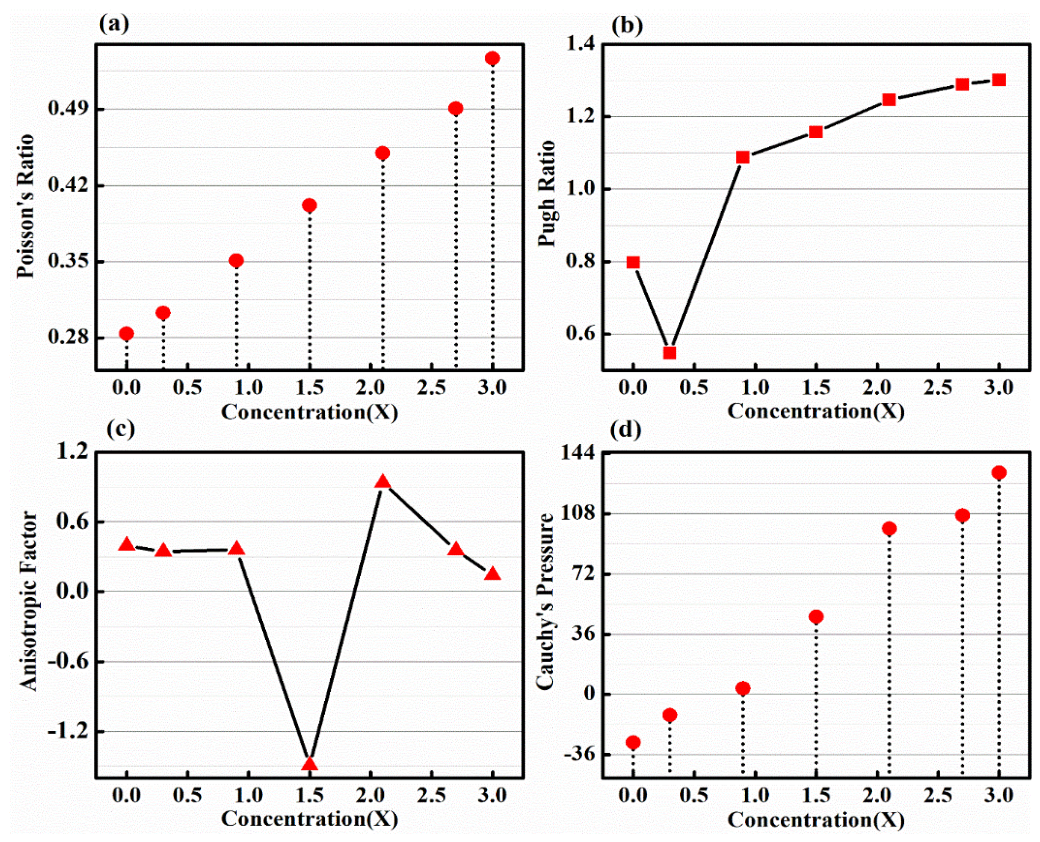
B/G proportions which Pugh stated, provide an accurate indicator of polycrystalline substance rigidity. In this case, the capacity to resist plastic stretching is represented by G and the resistance for breaking by B. When comparing the fragility and suppleness of substances, a critical point of 1.75 is considered the accepted number. Substances with a critical point larger than 1.75 are considered resilient; the opposite is true[47,48]. Pugh's measurements for every substance are lower than the threshold and approximate the crucial rate at varying hydrogen levels which renders them less fragile, as shown in Table 3 and Figure. 8(b). The Poisson proportion is an additional vital metric that is used to specify a substance's plasticity characteristics, including how much the substance is flexible or brittle. When the amount is more than 0.33, the substance is ductile; alternatively, it is brittle. In addition to axial pressure, it measures either contraction or expansion in a crosswise axis. A value of approximately 0.1 indicates the presence of covalent bonds in the substance, whereas a value of 0.25 or above indicates a mostly ionic nature [14,42,49]. All of the substances listed in Table 3 exhibit brittle propensity & ionic properties when their Poisson ratio is below or equal to 0.1. The departure of the substance along an elastic approach following H-inclusion is described in Figure 8(a), which shows a rise in Poisson ratio coefficients as one increases H-substitution.
Notwithstanding these straightforward correlations among compressive parameters, including C12 – C44, they are also possible to interpret as a sign of fractured or ductile behavior, which is recognized as Cauchy's pressure. Additionally, a rotational nature inside bonding between atoms is described by Cauchy's pressure, which for negative numbers depicts rotational binding throughout the structure of crystals whereas for positive values represents bonding between metals. Substances with a fragile character were those whose positive Cauchy's pressure readings deviated around the negative range[31,50].
Table 3 lists every one of the substances that were taken into consideration. The decreased values for every substance describe its brittleness and rotational binding; nevertheless, Figure (d) also explains the way H-substitution affects the substance's character. The precision, as well as the sufficiency of the strategy used now, are confirmed by the identical plastic property findings obtained using each of the previously described parameters.
Figure 8. (Colors Online) Variations in the proportions of the following mechanical properties parameters for all CsPbCl3-xHx (x = 0, 0.3, 0.9, 1.5, 2.1, 2.7 and 3) substances: (a) the ratio of Poisson's ; (b) the ratio of Pugh’s ; (c) coefficient of anisotropy; (d) pressure of Cauchy's.
Preprints 238388 g008
Anisotropic parameters were observed to calculate the constants of elastic and the different axes of the crystalline according to consideration. Directionally oriented mechanical parameters are essential for determining the features of a substance for deformation through plasticity, fractures, etc. A compound is considered isotropic whenever A corresponds to 1; alternatively, it is considered anisotropy[51,52]. As shown in Table 3, the working substance CsPbCl3-xHx exhibits anisotropy performance regardless of the H-substitutions taken into consideration. As H levels rise, the anisotropic parameter falls, as shown in Fig. 8(c). At the very first duration, each of these elasticity characteristics has been determined, demonstrating the fragility of each substance under study. A probably fascinating substance is CsPbH3, which is suitable for hydrogen storage purposes due to its intriguing elasticity characteristics. Its brittle environment, nevertheless may restrict its use in mobility; hence, more research on particular hydride perovskite is necessary to shift its approach to its malleable character following appropriate replacements on either cationic surface.
  • Hydrogen storage properties
The primary challenge in supporting the storage of hydrogen is the development of lighter substances; under particular circumstances, such as 1–10 bar and 298–473 k, these substances have appropriate gravimetric capacity ratings[53]. For storing hydrogen, materials with negative creation potential as well as sufficient gravimetric ability to store are preferred or appropriate. The amount of hydrogen that can be retained or replaced in a substance is known as the gravimetric capacity for retention, and it is determined by dividing the molecular weight of the hydrogen kept by the mass of the corresponding atoms[46]. Before examining the storage of hydrogen characteristics, it is essential to determine whether all replaced compounds can be synthesized. The following formula was used to determine creation enthalpies.
ΔEf = Etotal(ABH3) – [E(A) – E(B) – 3E(H3)]
Et(CsPbCl3-XHX) is the total potential to all substituted H-atoms (x = 0, 0.3, 0.9, 1.5, 2.1, 2.7, and 3). E(Cs), E(Pb), and E(Cl3-xHX) indicate the equilibrium stage energies of a single atom for each of the elements Cs, Pb, Cl, and H. Thermally, energetically, and empirically, molecules with negative production enthalpies are more stable than others. CsPbCH3 > CsPbCl3 > CsPbCl2.7H0.3 > CsPbCl0.3H2.7 > CsPbCl0.9H2.1> CsPbCl1.5H1.5 > CsPbCl2.1H0.9 is the sequence of durability. The absorption hydrogen temperatures and a gravimetric hydrogen capacity are two of the primary conceptual variables related to the hydrogen preservation area. A gravimetric hydrogen retention ability, expressed by Cwt%, is the proportion of hydrogen kept in an examined substance to weight; introducing additional hydrogen increases this quantity[54]. The gravimetric hydrogen storage capability of the material that is needed was computed and displayed in Table 2 to assess the utility of CsPbCl3-XHX as hydrogen storage. The gravimetric proportion is calculated following the formula[14].
C wt % = ( ( H M ) m H m c o m + ( H M ) m H × 100 )   %
The proportion of atoms of hydrogen compared with host atoms is denoted by H M , and the molecular masses of the hydrogen atom along with the host compound are mH and mcom. It is determined that the gravimetric storage capacity (ratio) increases between 0.10% and 1.40% when the hydrogen content of CsPbCl3-XHX increases. The adsorption temperature for hydrogen is the level of heat at which substitute H must be taken out of the material that is the host[51]. Since formation enthalpies are substantially negative, the desorption temperature becomes elevated across all hydrogen levels, and the entropy change is ΔS = 130 kJ/mol.K under typical conditions[54]. The adsorption temperature of hydrogen is capable of being computed as
ΔH = T × ΔS

4. Critical Analysis

An intriguing, though relatively unexplored variation of the pure all-inorganic perovskite CsPbCl₃ is CsPbCl₃₋ₓHₓ, especially for examining the effects of hydrogen insertion on morphological, electrical, and optical characterizations. The wide-band-gap semiconductor CsPbCl₃ itself is highly sensitive to UV light and has been reported to experience temperature-sensitive structural phase transformations, suggesting that lattice geometry and deformation have a significant influence on its characteristics[55].
A crucial problem is indicating that the terminology CsPbCl₃₋ₓHₓ fails to because of its own determine whether a particular H is placed in a corresponding chlorine-anion vacancy, an adjacent space, or develops a hydrogen-associated disorder structure. Nevertheless, the addition of hydrogen may offer a way of changing the surrounding chemical atmosphere and defect occurrence compounds. This difference is crucial due to the state of charge and structural orientation of hydrogen may result in a wide range of impacts. Research on the closely linked CsPbBr₃ system indicates that substantial electronic levels can be produced by hydrogen contaminants, indicating that it is not always the case that hydrogen inclusion can neutralize faults or enhance electronic efficiency[56].
This discovery is especially pertinent to CsPbCl₃₋ₓHₓ since defects have a significant impact on optical luminescence, ion transfer, standard carrier reconstitution, as well as device durability. Usually, lead-halide perovskites' interface and granular boundary imperfections may function as radiation-free centers of recombination and lower photoelectric efficiency[57].
Thus, when a hydrogen insertion eliminates harmful flaws, it may be advantageous; yet, if the hydrogen inserted arrangement is thermodynamic or electrically problematic, it can additionally create additional capturing configurations. Structural strength is another essential aspect. The way phases behave of CsPbCl₃ is somewhat complicated, phase-related conformity, and resonant characteristics can be affected by hydrogen-induced modifications to coupling or structural parameters. Additionally, theoretical research shows that doping alterations and morphological changes can significantly change the structural and photonic properties of CsPbCl₃, highlighting the significance of meticulously controlling the amount present and placement of the adjusting material[58].
Consequently, CsPbCl₃₋ₓHₓ is a computational system that may be used to study formation energy, favored hydrogen locations, structural characteristics, band structures, corresponding density states, band-gap fluctuation, photonic absorbing capacity, and defective formation energy levels as a factor of x. However, since the stable nature of a computed hydrogen arrangement doesn't always indicate that a similar arrangement is capable of being manufactured using experimental methods, theoretical estimations should be treated with caution. Furthermore, hydrogen substitution fails to address the toxic effect issue with Pb-containing substances, and CsPbCl₃ maintains the basic atmospheric constraint related to lead. Quality oversight, stable structure, and dependable manufacturing are still highlighted in recent investigations as the main obstacles facing inorganic perovskite innovations[59].
As a whole, the critical evaluation indicates that CsPbCl₃₋ₓHₓ is a scientifically useful substance for comprehensive study; however, precise morphological, optical, and electronic information need to be used to substantiate promises of greater efficiency. Thus, in order to determine the exact hydrogen location, concentration boundaries, phase stability, defect behavior, and consequent alterations to photonic and electrical characteristics, future investigations should integrate first-principles simulations with practical characterization.

5. Results

It is anticipated that the study of CsPbCl₃₋ₓHₓ will show that hydrogen inclusion results in quantifiable alterations to the parent CsPbCl₃ perovskite's structural, electrical, and optical properties. Pure CsPbCl₃ is a wide-band-gap semiconductor that is especially well-suited for UV and blue-light applications in optical electronics[58]. Its corresponding band gap is typically claimed to be between 2.9 and 3.1 eV. According to the level of hydrogen and its selected crystal structure location, the vicinity bonding configuration and structural characteristics may alter when hydrogen is added to the CsPbCl₃ lattice. As a result, CsPbCl₃₋ₓHₓ can observe influenced by concentration changes in photonic reactivity, density of states, electronic band symmetry, and structural durability. Because the addition of a defect can introduce localized electronic states or change the interactions among Pb as well as surrounding anions, a key anticipated outcome is an alteration of the band gap.
It is currently demonstrated that comparable structural and impurity-based manipulation can alter the electronic configuration as well as photonic absorbance of CsPbCl₃. Co inclusion, for instance, has been reported to significantly alter the predicted gap between bands using metallic impurities levels close to the band boundaries[55]. Nevertheless, since hydrogen's effects aren't always positive, it needs special consideration. In addition, interstitial hydrogen can produce significant electronic states within the band gap, according to first-principles studies of hydrogen impurities in the similar all-inorganic perovskite CsPbBr₃[58]. This implies that instead of enhancing carrier transport, hydrogen in CsPbCl₃₋ₓHₓ could produce state of the trap and boost non-radiative carrier recombination at particular levels or arrangements[60]. Significant optical phenomena and great promise for light-emitting technologies have been established in pure CsPbCl₃, and research has shown that characterization and structural alteration can improve its photonic and electrical characteristics[61]. Therefore, an ideal hydrogen percentage that ensures stability of structure and desired electrical or optical characteristics are accounted for may be revealed by a methodical rise in x.
As a whole, the anticipated outcomes show that CsPbCl₃₋ₓHₓ is a useful system for researching impurity-dependent modifications in perovskite substances; nevertheless, improved functionality cannot be inferred exclusively from hydrogen inclusion. Finding the most efficient hydrogen site, alterations in structural characteristics and formation energy, band-gap deviation, density-of-states alteration, optical absorption, and defect-related electronic state should be the most significant results. These findings would help determine if hydrogen in CsPbCl₃₋ₓHₓ predominantly functions as an imperfection passivator, a helpful modifying agent, or a generator of recombination sites[62].

6. Conclusion

Through density functional theory (DFT) using the CASTEP modeling software, which depends upon the plane-wave pseudo-potential approach, the substance features of H-incorporated and perfect CsPbCl3 were examined in the present research. Using the PBE-GGA method, structural assessments such as electrical, mechanical, elastic, and photonic properties of hydrogen included and immaculate have all been examined in this article. Hydrogen doping does not alter the cubic structure of CsPbCl3, but the lattice parameter does. Since hydrogen and chlorine have different ionic radii and volume drops up to 181.80Å as Hydrogen concentration rises, changes in lattice parameters show the effect of hydrogen doping. This means that H doping results in a decrease in total volume. Both final substances appear to be geometrically and thermally sufficiently stable enabling practical synthesis based on negative formation enthalpies and tolerances.
An analysis of elastic characteristics reveals that as the level of H-insertion grows, so do the moduli of elastic and anisotropy character. The bonding of ions and the fragile properties of the compounds under study are depicted by the plotting and computation of criteria for Pugh's, the ratio of Poisson’s, and the pressure of Cauchy's values. Direct band gap in pure substances is predicted by evaluating bands of energy topologies. While the amount of hydrogen increased from 2.38 eV to 0.00 eV (x = 0, 0.3, 0.9, 1.5, 2.1, 2.7, 3), the band gap shrank and the substance turned into a conductor. There has been a noticeable red shift, which shows the impact of the electrical change brought on by the addition of hydrogen. Because of its relatively low transparency as well as excellent insulating efficiency and polarized values, CsPbCl3-xHx is regarded as the ideal substitute substance for both photonic as well as hydrogen preservation purposes.
Moreover, since hydrogen is the clearest and easiest to modify power transporter, CsPbCl3 may be a viable option for transportation provided obstacles relating to the fragile character as well as desorption temperatures have been removed. To implement it for fuel cell uses, subsequent studies additionally need to concentrate on electron-phonon bonding features as well as transportation characteristics.

7. Recommendation

Since controlled replacement or inclusion of hydrogen may offer a further way to tune the electronic, optical, and structural characteristics of the parent CsPbCl₃ substance, CsPbCl₃₋ₓHₓ is suggested as an intriguing substituted cesium lead chloride perovskite for theoretical research. In addition to numerous applications in light-emitting devices, photo-detectors, scintillators, along with additional optoelectronic innovations, CsPbCl₃ is an entirely inorganic metal-halide perovskite that has garnered significant attention due to its thermal durability, broad band gap, and beneficial photoelectric characteristics[63].
Although hydrogen can combine directly with the perovskite structure and could potentially alter disorder development, charge arrangement, carrier level, and corresponding electronic configurations, it is especially worthwhile to investigate the incorporation of hydrogen into the CsPbCl₃ structure or at defective locations. Significant variables like the gap between bands, impedance reaction, absorbance value, photoluminescence level, and charged carrier mobility may be affected by these changes. The idea of structural engineering as a way to modify perovskite characteristics is supported by computational studies of anion substitution in CsPbCl₃, which have shown that modifications to the chemical surroundings may result in a substantial impact on stable phases as well as a typical electronic structure[64].
Thus, a systematic study of CsPbCl₃₋ₓHₓ with varying levels of hydrogen may yield valuable insights into the effects of hydrogen on the substance's structural characteristics, formation energy level, band structures, density of states, photonic absorbing capacity, and durability. Theoretical density-functional theory research can benefit greatly from this framework since it is capable of being utilized for modeling various parameters of x in order to find the optimal arrangement and spot possible alterations in photonic and electrical performance. Further experimental research could investigate if the theoretically expected hydrogen insertion is achievable and if it actually enhances the functional characteristics of CsPbCl₃. However, the terminology CsPbCl₃₋ₓHₓ needs to be handled with caution because substituting H+ directly for Cl⁻ is structurally distinct from a hydrogen located in an adjacent position or developing a defect-associated complex structure; therefore, before designating a particular structural framework, the exact position and corresponding charge position of hydrogen have to be determined. Moreover, products based on CsPbCl₃ include hazardous lead, necessitating suitable environmental as well as laboratory safety measures. All things considered, CsPbCl₃₋ₓHₓ is suggested as a viable study framework for investigating hydrogen-induced alteration of perovskite substances, especially for comprehending structure–property correlations and investigating potential for enhanced optoelectronic and optical efficiency. Experimental viability of hydrogen inclusion should be the main goal of future research[65].

References

  1. Zafar, M.; et al. Carbon nanotubes for production and storage of hydrogen: challenges and development. Chem. Pap. 2021, 1–17. [Google Scholar] [CrossRef] [PubMed]
  2. Züttel, A. Hydrogen storage methods. Naturwissenschaften 2004, 91, 157–172. [Google Scholar] [CrossRef] [PubMed]
  3. Graetz, J. New approaches to hydrogen storage. Chem. Soc. Rev. 2009, 38(1), 73–82. [Google Scholar] [CrossRef] [PubMed]
  4. Abdalla, A.M.; et al. Hydrogen production, storage, transportation and key challenges with applications: A review. Energy Convers. Manag. 2018, 165, 602–627. [Google Scholar] [CrossRef]
  5. 5. Usman, M.R., Hydrogen storage methods: Review and current status. Renew. Sustain. Energy Rev. 2022, 167, 112743.
  6. Durbin, D.J.; Malardier-Jugroot, C. Review of hydrogen storage techniques for on board vehicle applications. Int. J. Hydrogen Energy 2013, 38(34), 14595–14617. [Google Scholar] [CrossRef]
  7. Zaluski, L.; Zaluska, A.; Ström-Olsen, J. Nanocrystalline metal hydrides. J. Alloys Compd. 1997, 253, 70–79. [Google Scholar] [CrossRef]
  8. Westlake, D. Hydrides of intermetallic compounds: A review of stabilities, stoichiometries and preferred hydrogen sites. J. Less Common Met. 1983, 91(1), 1–20. [Google Scholar] [CrossRef]
  9. Matar, S.F. Intermetallic hydrides: a review with ab initio aspects. Prog. Solid State Chem. 2010, 38(1-4), 1–37. [Google Scholar] [CrossRef]
  10. Ghebouli, M.; Ghebouli, B.; Fatmi, M. First-principles calculations on structural, elastic, electronic, optical and thermal properties of CsPbCl3 perovskite. Physica B Condens. Matter 2011, 406(9), 1837–1843. [Google Scholar] [CrossRef]
  11. Lufaso, M.W.; Woodward, P.M. Prediction of the crystal structures of perovskites using the software program SPuDS. Acta Crystallogr. Sect. B Struct. Sci. 2001, 57(6), 725–738. [Google Scholar] [CrossRef] [PubMed]
  12. Ghebouli, B.; et al. First-principles study of the structural, elastic, electronic, optical and thermodynamic properties of the cubic perovskite CsCdCl3 under high pressure. Solid State Commun. 2010, 150(39-40), 1896–1901. [Google Scholar] [CrossRef]
  13. Al, S. Mechanical and electronic properties of perovskite hydrides LiCaH3 and NaCaH3 for hydrogen storage applications. Eur. Phys. J. B 2021, 94(9), 182. [Google Scholar] [CrossRef]
  14. Al, S.; Yortanlı, M.; Mete, E. Lithium metal hydrides (Li2CaH4 and Li2SrH4) for hydrogen storage; mechanical, electronic and optical properties. Int. J. Hydrogen Energy 2020, 45(38), 18782–18788. [Google Scholar] [CrossRef]
  15. Dintakurti, S. H.S.S., Phase evolution and local structure in [Cs, MA][Pb, Sr][Cl, Br] 3 perovskites. 2021. [Google Scholar] [CrossRef]
  16. Abraham, J.A. DFT-focused estimation of mechanical, thermoelectric and thermodynamic properties of ACdF3 (A= K, Rb, Cs) fluroperovskites. Int. J. Mod. Phys. B 2019, 33(27), 1950314. [Google Scholar] [CrossRef]
  17. Shannon, R.D. Revised effective ionic radii and systematic studies of interatomic distances in halides and chalcogenides. Found. Crystallogr. 1976, 32(5), 751–767. [Google Scholar] [CrossRef]
  18. Rehman, J.U.; et al. First-principles calculations to investigate ultra-wide bandgap semiconductor behavior of NaMgF3 fluoro-perovskite with external static isotropic pressure and its impact on optical properties. Optik 2022, 252, 168532. [Google Scholar] [CrossRef]
  19. Moreira, R.L.; Dias, A. Comment on “Prediction of lattice constant in cubic perovskites”. J. Phys. Chem. Solids 2007, 68(8), 1617–1622. [Google Scholar] [CrossRef]
  20. Padmavathy, R.; et al. Electronic and Optical Properties of Cubic Perovskites CsPbCl3− y Iy (y= 0, 1, 2, 3). Z. Für Naturforschung A 2019, 74(10), 905–913. [Google Scholar] [CrossRef]
  21. Murtaza, G.; Ahmad, I. First principle study of the structural and optoelectronic properties of cubic perovskites CsPbM3 (M= Cl, Br, I). Physica B Condens. Matter 2011, 406(17), 3222–3229. [Google Scholar] [CrossRef]
  22. Stowe, A.C.; et al. Neutron scattering and computational studies of the structure and dynamics of NaMgH3. J. Mater. Sci. Eng. 2009, 3(10), 35. [Google Scholar]
  23. Rizwan, M.; et al. Alteration impact of electronic properties of c-SrTiO3 on optical response due to Ca inclusion: A DFT study. Physica B Condens. Matter 2021, 602, 412553. [Google Scholar] [CrossRef]
  24. Hussain, M.I.; et al. Investigations of structural, electronic and optical properties of YInO3 (Y= Rb, Cs, Fr) perovskite oxides using mBJ approximation for optoelectronic applications: a first-principles study. Mater. Sci. Semicond. Process. 2020, 113, 105064. [Google Scholar] [CrossRef]
  25. Sebastian, M.; et al. Excitonic emissions and above-band-gap luminescence in the single-crystal perovskite semiconductors CsPbBr3 and CsPbCl3. Phys. Rev. B 2015, 92(23), 235210. [Google Scholar] [CrossRef]
  26. Idrissi, S.; et al. Band gaps of the solar perovskites photovoltaic CsXCl3 (X= Sn, Pb, or Ge). Mater. Sci. Semicond. Process. 2021, 122, 105484. [Google Scholar] [CrossRef]
  27. Bruzzi, M.; et al. Electrical and optical characterization of CsPbCl3 films around the high-temperature phase transitions. Nanomaterials 2022, 12(3), 570. [Google Scholar] [CrossRef] [PubMed]
  28. Baranowski, M.; et al. Exciton binding energy and effective mass of CsPbCl_3: a magneto-optical study. Photonics Res. 2020, 8(10), A50–A55. [Google Scholar] [CrossRef]
  29. Fatima, S.; et al. Efficient hydrogen storage in KCaF3 using GGA and HSE approach. Int. J. Hydrogen Energy 2023, 48(9), 3566–3582. [Google Scholar] [CrossRef]
  30. Mahmood, T.; et al. Elastic, electronic and optical properties of anatase TiO2 under pressure: A DFT approach. Chin. J. Phys. 2017, 55(4), 1252–1263. [Google Scholar] [CrossRef]
  31. Surucu, G.; et al. First-principle investigation for the hydrogen storage properties of NaXH3 (X= Mn, Fe, Co) perovskite type hydrides. Int. J. Hydrogen Energy 2019, 44(57), 30218–30225. [Google Scholar] [CrossRef]
  32. Rizwan, M.; et al. Effect of magnesium on structural and optical properties of CaTiO3: A DFT study. Physica B Condens. Matter 2019, 568, 88–91. [Google Scholar] [CrossRef]
  33. Ullah, M.A.; Rizwan, M.; Riaz, K.N. Mechanistic study of HER and OER catalyzing performance of Ca incorporated KMgO3 perovskite: A computational approach. J. Phys. Chem. Solids 2023, 180, 111457. [Google Scholar] [CrossRef]
  34. Hamlat, M.; et al. Half-metallic stability of the cubic perovskite KMgO3. Comput. Condens. Matter 2020, 23, e00456. [Google Scholar] [CrossRef]
  35. Ullah, M.A.; Riaz, K.N.; Rizwan, M. Computational evaluation of KMgO3-xHx as an efficient hydrogen storage material. J. Energy Storage 2023, 70, 108030. [Google Scholar] [CrossRef]
  36. Khalil, R.; et al. DFT-based first-principles study of novel combinations of perovskite-type hydrides XGaH3 (X= Rb, Cs, Fr) for hydrogen storage applications. AIP Adv. 2021, 11(2). [Google Scholar] [CrossRef]
  37. Kanchana, V.; et al. First-principles study of elastic properties of CeO2, ThO2 and PoO2. J. Phys. Condens. Matter 2006, 18(42), 9615. [Google Scholar] [CrossRef]
  38. Liu, X.; Fu, J. First principle study on electronic structure, elastic properties and Debye temperature of pure and doped KCaF3. Vacuum 2020, 179, 109504. [Google Scholar] [CrossRef]
  39. Rehmat, B.; et al. Elastic properties of perovskite-type hydrides LiBeH3 and NaBeH3 for hydrogen storage. Int. J. Hydrogen Energy 2017, 42(15), 10038–10046. [Google Scholar] [CrossRef]
  40. Campos, C.; et al. Influence of minor oxidation of the precursor powders to form nanocrystalline CdTe by mechanical alloying. J. Alloys Compd. 2008, 466(1-2), 80–86. [Google Scholar] [CrossRef]
  41. Liu, X.; et al. First-principles study on electronic structure, elasticity, Debye temperature and anisotropy of cubic KCaF3 in Materials science forum. In Trans Tech Publ.; 2020. [Google Scholar]
  42. Garara, M.; et al. Hydrogen storage properties of perovskite-type MgCoH₃ under strain effect. Mater. Chem. Phys. 2020, 254, 123417. [Google Scholar] [CrossRef]
  43. Wu, Z.-j.; et al. Crystal structures and elastic properties of superhard IrN2 and IrN3 from first principles. Phys. Rev. B—Condensed Matter Mater. Phys. 2007, 76(5), 054115. [Google Scholar] [CrossRef]
  44. Hossain, K.M.; Hasan, M.Z.; Ali, M.L. Understanding the influences of Mg doping on the physical properties of SrMoO3 perovskite. Results Phys. 2020, 19, 103337. [Google Scholar] [CrossRef]
  45. Murad, M.H.; Fatema, S. Some static relativistic compact charged fluid spheres in general relativity. Astrophys. Space Sci. 2014, 350, 293–305. [Google Scholar] [CrossRef]
  46. Hayat, S.; et al. Ab-initio study of the structural, optoelectronic, magnetic, hydrogen storage properties and mechanical behavior of novel combinations of hydride perovskites LiXH3 (X= Cr, Fe, Co, & Zn) for hydrogen storage applications. J. Comput. Electron. 2021, 20, 2284–2299. [Google Scholar] [CrossRef]
  47. Raza, H.H.; et al. First-principle investigation of XSrH3 (X= K and Rb) perovskite-type hydrides for hydrogen storage. Int. J. Quantum Chem. 2020, 120(24), e26419. [Google Scholar] [CrossRef]
  48. Al, S. Mechanical and electronic properties of perovskite hydrides LiCaH [Formula omitted] and NaCaH [Formula omitted] for hydrogen storage applications. Eur. Phys. J. B-Condens. Matter Complex Syst. 2021, 94(9), NA–NA. [Google Scholar]
  49. Gencer, A.; Surucu, G. Properties of BaYO3 perovskite and hydrogen storage properties of BaYO3Hx. Int. J. Hydrogen Energy 2020, 45(17), 10507–10515. [Google Scholar] [CrossRef]
  50. Surucu, G.; et al. CaXH3 (X= Mn, Fe, Co) perovskite-type hydrides for hydrogen storage applications. Int. J. Energy Res. 2020, 44(3), 2345–2354. [Google Scholar] [CrossRef]
  51. Gencer, A.; G. Surucu, S. Al, MgTiO3Hx and CaTiO3Hx perovskite compounds for hydrogen storage applications. Int. J. Hydrogen Energy 2019, 44(23), 11930–11938. [Google Scholar] [CrossRef]
  52. Gencer, A.; Surucu, G. Density functional theory (DFT) study of BaScO3H0.5 compound and its hydrogen storage properties. Can. J. Phys. 2019, 97(11), 1191–1199. [Google Scholar] [CrossRef]
  53. Wu, H.; et al. Crystal chemistry of perovskite-type hydride NaMgH3: implications for hydrogen storage. Chem. Mater. 2008, 20(6), 2335–2342. [Google Scholar] [CrossRef]
  54. Gencer, A.; Surucu, G. Investigation of structural, electronic and lattice dynamical properties of XNiH3 (X= Li, Na and K) perovskite type hydrides and their hydrogen storage applications. Int. J. Hydrogen Energy 2019, 44(29), 15173–15182. [Google Scholar] [CrossRef]
  55. Bhat, A.A.; et al. Optical, electrochemical and photocatalytic properties of cobalt doped CsPbCl3 nanostructures: a one-pot synthesis approach. Sci. Rep. 2021, 11(1), 16473. [Google Scholar] [CrossRef] [PubMed]
  56. Stefanski, M.; et al. Synthesis and characterization of a CsPbCl3 perovskite doped with Nd3+: structural, optical, and energy transfer properties. Inorg. Chem. Front. 2024, 11(9), 2626–2633. [Google Scholar] [CrossRef]
  57. Zhang, L.; et al. Pressure-induced structural evolution and optical properties of metal-halide perovskite CsPbCl3. J. Phys. Chem. C 2018, 122(27), 15220–15225. [Google Scholar] [CrossRef]
  58. Swift, M.W.; Lyons, J.L. Deep levels in cesium lead bromide from native defects and hydrogen. J. Mater. Chem. A 2021, 9(12), 7491–7495. [Google Scholar] [CrossRef]
  59. Ye, J.; et al. Defect passivation in lead-halide perovskite nanocrystals and thin films: toward efficient LEDs and solar cells. Angew. Chem. Int. Ed. 2021, 60(40), 21636–21660. [Google Scholar] [CrossRef] [PubMed]
  60. Liang, Y.; et al. Hydrogen-Induced Nonradiative Recombination in All-Inorganic CsPbI3 Perovskite Solar Cells. Sol. RRL 2022, 6(8), 2200211. [Google Scholar] [CrossRef]
  61. Sharma, D.; Sharma, S. Optimizing the properties of CsPbCl3 perovskites using a solvent-based synthesis approach. Opt. Mater. 2024, 157, 116250. [Google Scholar] [CrossRef]
  62. Zhang, P.; et al. Atomistic mechanism of defect self-passivation in metal halide perovskites. Nano Lett. 2025, 25(38), 14140–14146. [Google Scholar] [CrossRef]
  63. Nam, J.K.; et al. Methodologies toward efficient and stable cesium lead halide perovskite-based solar cells. Adv. Sci. 2018, 5(8), 1800509. [Google Scholar] [CrossRef] [PubMed]
  64. Mei, H.; et al. Phase stability and electronic structure of CsPbCl3 under hydrostatic stress and anion substitution. Phys. Chem. Chem. Phys. 2023, 25(2), 1279–1289. [Google Scholar] [CrossRef] [PubMed]
  65. Silva, W.A.; et al. Optical and Structural Properties of Co²⁺-Doped CsPbI₃ Nanocrystals Embedded in Borosilicate Glass. 2026. [Google Scholar]
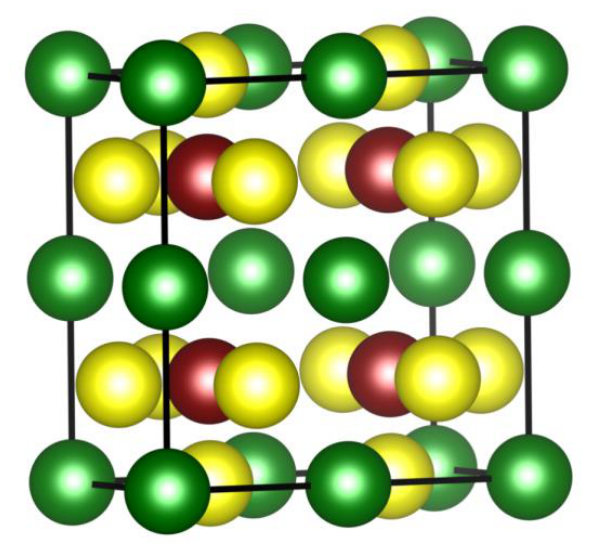
Figure 1. (Colors Online) The supercell depiction of CsPbCl3, with green for Cs, brown for Pb, & yellow spheres representing Cl.
Preprints 238388 g001
Figure 2. (Colors Online) (a) shows the volumetric variation following hydrogen insertion (b) displays the change in the lattice parameter and band gap after adding hydrogen.
Preprints 238388 g002
Figure 3. (Colors Online) CsPbCl3-xH3 band configuration graphs of various hydrogen concentration values.
Preprints 238388 g003
Figure 5. (Colors Online) The partial density of states (PDOS) varies as a consequence of the inclusion of atoms of hydrogen into CsPbCl3.
Preprints 238388 g005
Figure 6. (Colors Online) Elemental partial density of states (EPDOS) for CsPbCl3-xHx (x = 0, 0.3, 0.9, 1.5, 2.1, 2.7, 3).
Preprints 238388 g006
Figure 7. (Colors Online) CsPbCl3-xHx photonic spectra, whereas x is the Hydrogen proportion (a) Spectrum of absorption[I(ω)] (b) Reflection [r (ω)] (c) Refractive index [n (ω)] (d) Extinction coefficient [K (ω)] (e) Parameter for the loss of energy[L(ω)] (f) Dielectric constant in real terms[Ɛ1(ω)] (g) Dielectric imaginary function[Ɛ2(ω)].
Preprints 238388 g007
Table 1. Presents the optimized lattice parameters and geometry of CsPbCl3, together with comparative experimental and theoretical data from the literature.
Preprints 238388 i001
Table 2. Contrasts the desorption temperature (T), formation enthalpy (ΔEf), volume (Å)3, gravimetric storage capability (Cwt%), and predicted lattice constant (Å) of hydrogen for CsPbCl3-xHx (x = 0, 0.3, 0.9, 1.5, 2.1, 2.7, 3).
Materials Structural Parameters(Å) Quantity (Å)3 Operational ΔEf (103eV/Atoms) Cwt% T (k)
CsPbCl3 a = b = c = 5.81 196.12 GGA-PBE -0.41 0.10% 318
CsPbCl2.7H0.3 a = b = c = 5.8 195.11 GGA-PBE -0.50 0.35% 381
CsPbCl2.1H0.9 a = b = c = 5.75 190.11 GGA-PBE -2.64 0.42% 203
CsPbCl1.5H1.5 a = b = c = 5.72 187.15 GGA-PBE -2.59 0.59% 199
CsPbCl0.9H2.1 a = b = c = 5.7 185.19 GGA-PBE -2.53 0.87% 194
CsPbCl0.3H2.7 a = b = c = 5.68 183.25 GGA-PBE -1.34 0.99% 187
CsPbH3 a = b = c = 5.67 181.80 GGA-PBE -0.23 1.40% 181
Table 3. Evaluated constant of elasticity (Cij); Modulus of Bulk (B), Shear’s (G), Young’s (Y); the ratio of Pugh’s (B/G), Cauchy's pressure (C12 - C44), a factor of Anisotropic (A), and the ratio of Poisson’s ratio (V) for CsPbCl3-xHx material.
Parameters CsPbCl3 CsPbCl2.7H0.3 CsPbCl2.1H0.9 CsPbCl1.5H1.5 CsPbCl0.9H2.1 CsPbCl0.3H2.7 CsPbH3
C11 139.341 145.652 126.747 170.339 175.187 143.762 156.520
C12 47.607 43.458 58.921 92.389 140.079 142.014 148.632
C44 76.273 55.724 55.226 45.972 40.873 35.061 16.018
B 18.185 18.523 11.529 8.480 7.676 7.263 6.261
GV 10.110 10.073 11.661 3.637 11.177 12.186 19.589
GR 8.274 7.757 9.170 2713.662 11.165 9.514 18.694
GH 9.192 8.915 10.416 1358.649 11.171 10.850 19.141
E 23.599 23.047 28.148 74.919 22.566 26.912 45.063
B/G 0.798 0.548 1.088 1.158 1.246 1.289 1.301
C12-C44 -28.666 -12.266 3.695 46.417 99.206 106.953 132.614
A 0.395 0.345 0.361 -1.489 0.935 0.355 0.142
V 0.284 0.303 0.351 0.402 0.450 0.491 0.537
Disclaimer/Publisher’s Note: The statements, opinions and data contained in all publications are solely those of the individual author(s) and contributor(s) and not of MDPI and/or the editor(s). MDPI and/or the editor(s) disclaim responsibility for any injury to people or property resulting from any ideas, methods, instructions or products referred to in the content.
Copyright: This open access article is published under a Creative Commons CC BY 4.0 license, which permit the free download, distribution, and reuse, provided that the author and preprint are cited in any reuse.