

Submitted:
13 October 2026
Posted:
14 October 2026
You are already at the latest version
Abstract
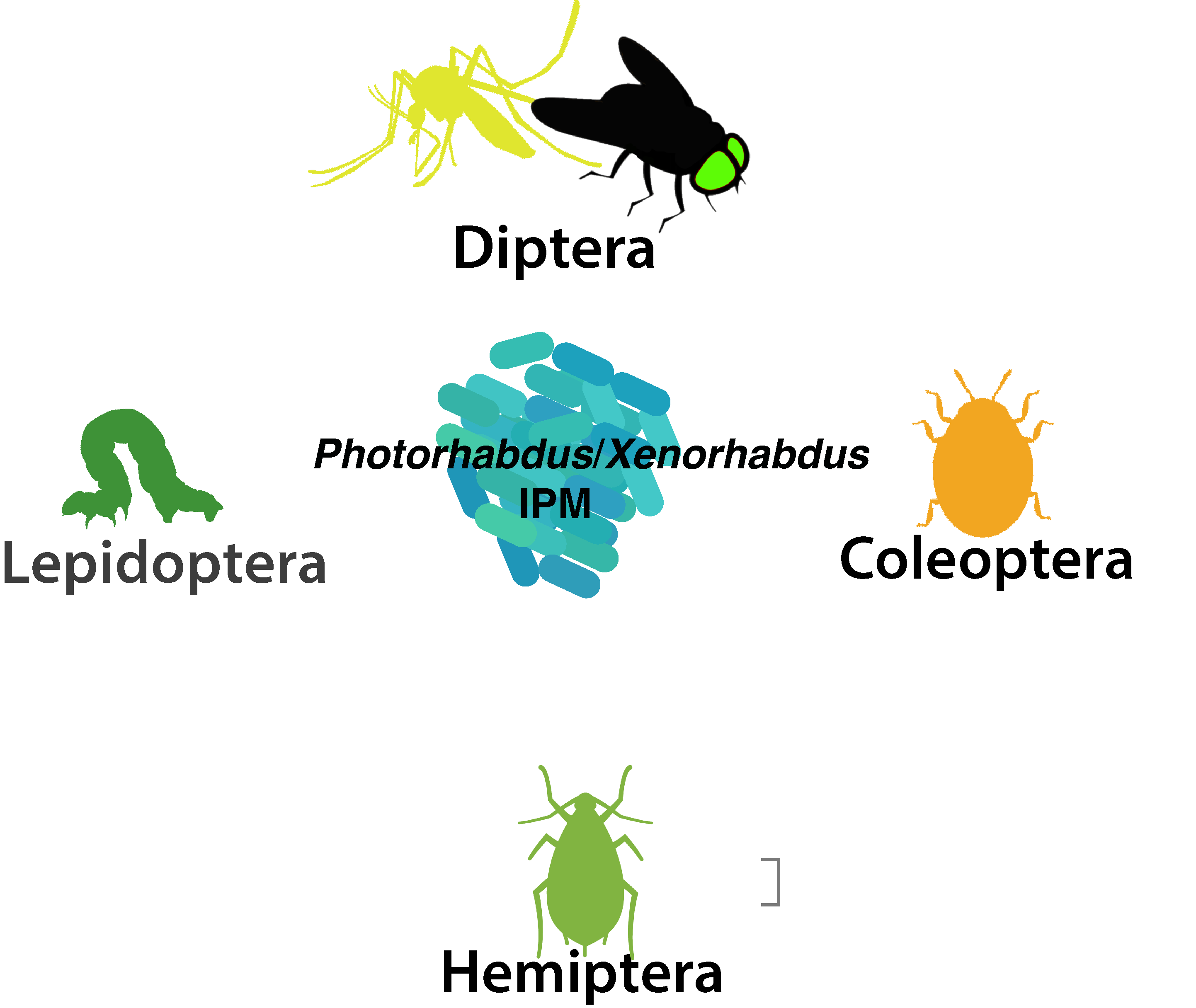
Photorhabdus and Xenorhabdus, bacterial symbionts of entomopathogenic nematodes, offer diverse biological resources for crop protection. Their activities encompass insecticidal protein systems and specialized metabolites with potential against agricultural pests and plant pathogens. This review brings together evidence on nematode ecology, bacterial diversity, genome organization and protein structure to assess the crop-protection potential of these bacteria and their products. We distinguish efficacy delivered by the nematode-bacterium association from activity demonstrated for isolated proteins, metabolites or cell-free preparations, emphasizing the importance of exposure route and target specificity. We also consider how protein nomenclature and biosynthetic gene-cluster analysis can connect molecular discovery with functional evidence. The central challenge is to translate expanding genomic inventories into reproducible crop protection. Progress requires links between strain identity, molecular composition and biological activity, together with evidence of selectivity, formulation stability and performance under relevant agricultural conditions. An integrated approach can guide the prioritization of candidates for insect pest and plant disease management.
Keywords:
Photorhabdus
; Xenorhabdus
; Heterorhabditis
; Steinernema
; pesticidal proteins
; secondary metabolites
; comparative genomics
; biological control
Copyright: This open access article is published under a Creative Commons CC BY 4.0 license, which permit the free download, distribution, and reuse, provided that the author and preprint are cited in any reuse.