

Submitted:
13 October 2026
Posted:
14 October 2026
You are already at the latest version
Abstract
Donation after circulatory death (DCD) is a rapidly growing source of transplantable organs, but warm ischemia between circulatory arrest and cold preservation limits organ quality and utilization. Normothermic regional perfusion (NRP) restores oxygenated circulation to the abdominal (A-NRP) or thoracoabdominal (TA-NRP) organs in situ after death has been declared, with the aim of reversing ischemic injury before cold preservation and permitting functional assessment before organs are accepted. This narrative review traces NRP from the Maastricht classification and the Barcelona recirculation experiments to contemporary national programs. It summarizes the pathophysiology of warm ischemia–reperfusion injury and how NRP interrupts it, describes viability assessment, and synthesizes organ-specific outcomes for kidney, liver, heart, lung, and pancreas, including recent work from our program on delayed graft function (DGF) after NRP. European and United States frameworks are contrasted, and the ethical debate over TA-NRP and cerebral exclusion is examined. Observational studies, including meta-analyses, associate NRP with higher organ utilization, markedly less ischemic cholangiopathy in liver transplantation, and heart-transplant outcomes comparable to donation after brain death; evidence for DGF in kidney transplantation is supportive but less uniform. No randomized trials exist, technique remains heterogeneous, and ethical consensus on TA-NRP is incomplete, which together define the research agenda for the coming decade.
Keywords:
normothermic regional perfusion
; donation after circulatory death
; delayed graft function
; ischemic cholangiopathy
; transplant ethics
Introduction and Background
Organ transplantation remains limited by donor shortage, and donation after circulatory death (DCD) has become one of the fastest-growing donor sources in many countries. Unlike donation after brain death (DBD), DCD organs sustain a period of warm ischemia between circulatory arrest and cold preservation. This injures energy-dependent cellular processes and predisposes to delayed graft function (DGF) in kidneys [1], ischemic cholangiopathy in livers [2,3], and graft dysfunction more generally across organs [4].
Normothermic regional perfusion (NRP) addresses warm ischemia at its source. After death is declared and a stand-off period has elapsed, the donor’s abdominal (A-NRP) or thoracoabdominal (TA-NRP) circulation is restored in situ with oxygenated, blood-based perfusate at 37 °C using an extracorporeal membrane oxygenation (ECMO) circuit, while the cerebral circulation is excluded [5,6]. Perfusion runs for a limited period (2 hours in the original UK series [5]), during which organs recover aerobic metabolism and injury markers can be measured, allowing transplant teams to assess viability before committing to retrieval [6,7].
Two decades after the first clinical series, NRP has moved from an experimental technique for uncontrolled DCD in Spain to established practice in several European countries and to rapid, if contested, adoption in the United States [8,9]. Randomized evidence is absent, practice varies widely, and TA-NRP in particular has provoked one of the most vigorous ethical debates in modern transplantation [10,11]. This narrative review synthesizes the history, pathophysiology, technique, outcomes, guidelines, ethics, and future directions of NRP. It is a non-systematic review; priority was given to meta-analyses, national registry analyses, consensus statements, and regulatory documents, and the quality of evidence was not formally graded.
Methods
This narrative review is based on searches of PubMed/MEDLINE and Embase from database inception to August 2026 using combinations of “normothermic regional perfusion”, “regional perfusion”, “donation after circulatory death”, “thoracoabdominal”, “abdominal”, and organ-specific terms. Reference lists of key reviews, society consensus statements (ESOT, ASTS, OPTN), and regulatory documents were hand-searched. Priority was given to meta-analyses, national registry analyses, consensus statements, and regulatory documents. Titles and abstracts were screened by two authors; no formal risk-of-bias assessment was performed, and the review was structured using the SANRA criteria for narrative reviews.
Review
Historical Development
The conceptual scaffold for NRP is the Maastricht classification of non-heart-beating donors, formulated in 1995[12] and revised at the 2013 Paris conference to add category V (Table 1) and in-hospital and out-of-hospital subcategories [13]. The principal milestones are summarized in Figure 1.
The technical origins of NRP lie in Barcelona. In 1998, García-Valdecasas and colleagues showed in a porcine model that normothermic recirculation after cardiac arrest could condition liver grafts [14], and Valero et al. reported that normothermic recirculation reduced primary graft dysfunction in kidneys from non-heart-beating donors [19].. In 2007, Fondevila and colleagues reported liver transplantation from donors after unexpected cardiac death maintained on normothermic ECMO before retrieval, together with the first acceptance criteria for this approach [20].
In the United States, Magliocca et al. showed in 2005 that extracorporeal support in DCD donors effectively expanded the donor pool [15]. The controlled-DCD era of NRP began with the 2014 United Kingdom experience of Oniscu and colleagues: 21 retrievals from Maastricht category III donors, with NRP established after asystole by aortic and caval cannulation at a median of 16 minutes, yielded 63 organs, of which 49 were transplanted [5].
Cardiac transplantation gave NRP its second act. Pediatric DCD heart transplantation was first reported from Denver [21], and adult DCD hearts were later transplanted in Sydney after distant procurement and ex vivo preservation [22]. TA-NRP then allowed the heart to be reanimated and assessed in situ; early series from Spain and Belgium showed that hearts recovered this way could be preserved by simple cold storage without an ex situ device [23,24]. TA-NRP heart programs began in the United States in 2020 [25], and multisociety technical standards followed in 2024 [17].
Physiological Basis and Pathophysiology
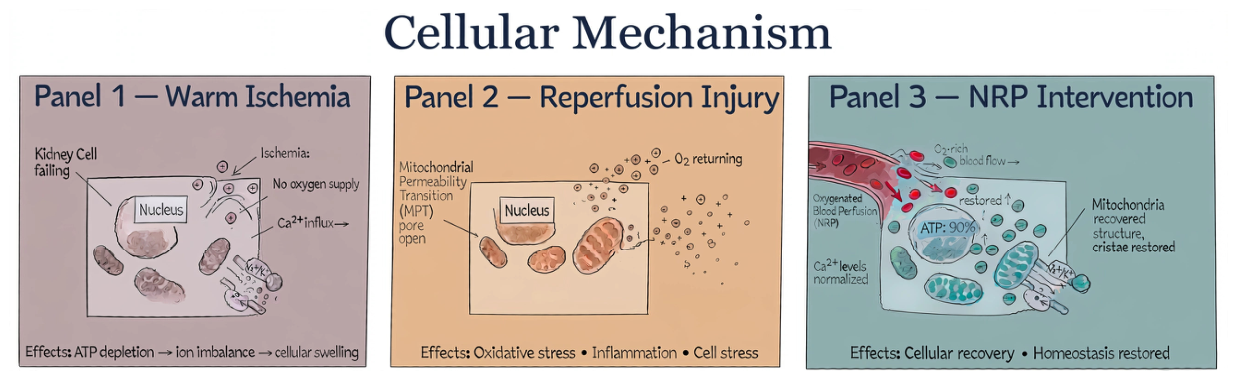
Warm ischemia injures organs through a stereotyped energy-failure cascade (Figure 2). Loss of oxygen delivery halts oxidative phosphorylation; ATP depletion forces anaerobic glycolysis with lactate accumulation and intracellular acidosis. Failure of Na+/K+-ATPase collapses ionic gradients and causes sodium and then calcium overload, while mitochondrial complex I becomes highly reduced [4,26]. At reperfusion, a burst of reactive oxygen species triggers Kupffer-cell activation, neutrophil recruitment, endothelial injury, and sterile inflammation [2,4].
The injury declares itself differently by organ. In the kidney, warm ischemia produces acute tubular injury whose clinical expression is DGF, conventionally a dialysis requirement in the first post-transplant week, which is associated with acute rejection and inferior long-term graft outcomes [1]. In the liver, the peribiliary vascular plexus, supplied solely by the hepatic artery, is exquisitely vulnerable; persistent biliary hypoxia and failed regeneration produce non-anastomotic strictures, or ischemic cholangiopathy, the most feared complication of DCD liver transplantation 2,3.
NRP interrupts this cascade by restoring oxygenated, normothermic, pulsatile flow before cold ischemia supervenes. Aerobic metabolism resumes, ATP is replenished, lactate is cleared, ionic pumps recover, and the mitochondrial redox state normalizes, which limits the substrate for the reperfusion ROS burst [4,26]. Standardized definitions of functional and total donor warm ischemia time anchor eligibility and allow comparison across studies [27]. The agonal physiology of withdrawal, with progressive hypotension and hypoxia [28], and the prospective observation that cardiac activity did not resume after more than 4 minutes 20 seconds of pulselessness [29], underpin the five-minute stand-off period used in most protocols.
Figure 2.
What NRP reverses. Warm ischemia leaves abdominal organs dusky, mottled, and unperfused as cellular ATP is depleted; normothermic regional perfusion restores oxygenated 37 °C blood flow, improving perfusion and enabling viability assessment. Illustration created with AI assistance.
Figure 2.
What NRP reverses. Warm ischemia leaves abdominal organs dusky, mottled, and unperfused as cellular ATP is depleted; normothermic regional perfusion restores oxygenated 37 °C blood flow, improving perfusion and enabling viability assessment. Illustration created with AI assistance.
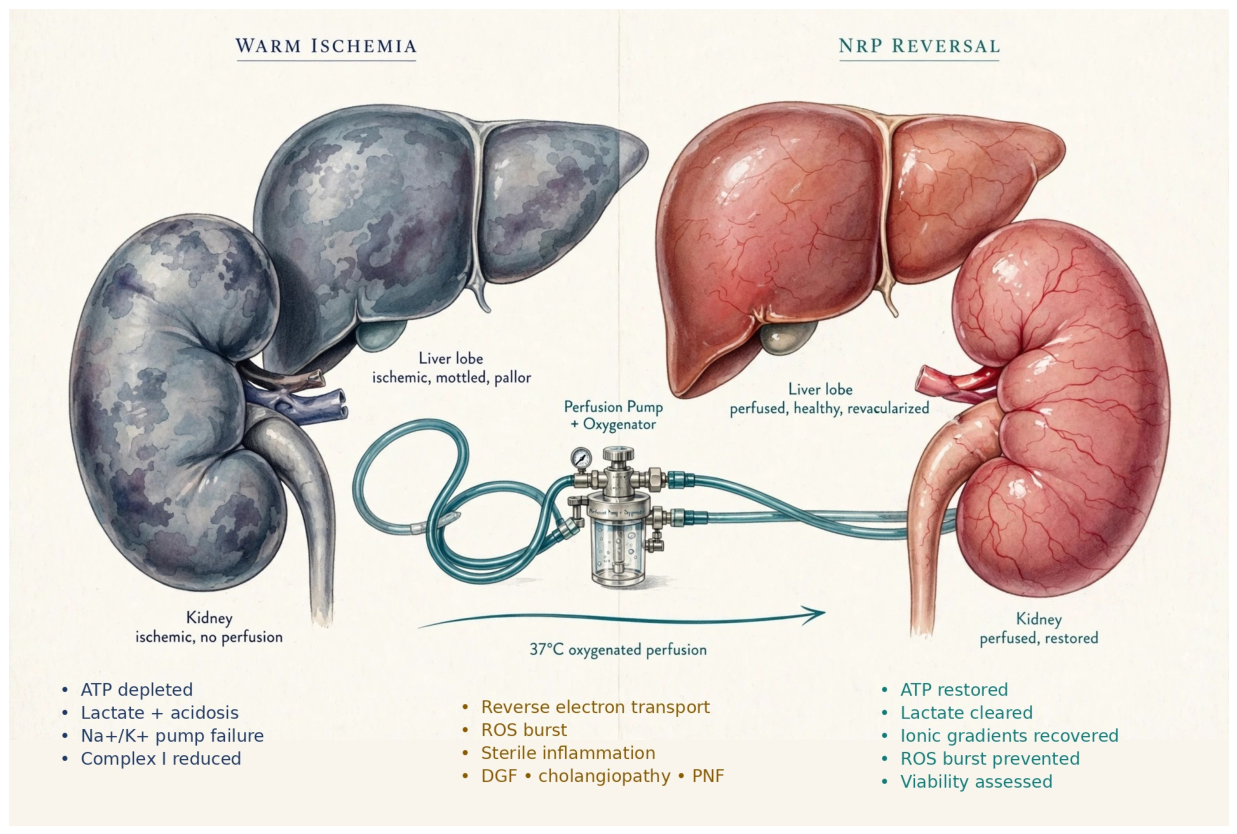
Figure 3.
Cellular mechanisms of warm ischemia–reperfusion injury and NRP intervention. Panel 1: warm ischemia depletes oxygen and ATP, causing pump failure and Ca2+ influx. Panel 2: reperfusion drives ROS burst, mitochondrial permeability transition pore opening, and inflammation. Panel 3: NRP restores oxygenated perfusion, mitochondrial recovery, and ATP. Illustration created with AI assistance.
Figure 3.
Cellular mechanisms of warm ischemia–reperfusion injury and NRP intervention. Panel 1: warm ischemia depletes oxygen and ATP, causing pump failure and Ca2+ influx. Panel 2: reperfusion drives ROS burst, mitochondrial permeability transition pore opening, and inflammation. Panel 3: NRP restores oxygenated perfusion, mitochondrial recovery, and ATP. Illustration created with AI assistance.
Biomarkers of Ischemic Stress and Cell Death
Warm ischemia activates regulated cell-death programs — apoptosis, necroptosis, ferroptosis, and pyroptosis — releasing damage-associated molecular patterns (DAMPs) such as HMGB1, mitochondrial DNA, extracellular ATP, and histones, which engage pattern-recognition receptors including TLR-4 and drive sterile inflammation [30]. During NRP, perfusate biomarkers follow a characteristic rise-and-clearance pattern: in a porcine DCD kidney model, creatinine, lactate/pyruvate ratio, LDH, AST, NGAL, KIM-1, CD40 ligand, and soluble tissue factor peaked at 2 hours and then declined, but AST, NGAL, and KIM-1 rose again at 6 hours, delineating a finite recovery window [31] (Figure 4). In clinical DCD liver NRP followed by end-ischemic machine perfusion, perfusate arginase-1 was consistently higher in discarded grafts and in recipients who developed early allograft dysfunction (AUC 0.713) [32]. No validated NRP-specific biomarker thresholds currently exist; most viability cutoffs are extrapolated from ex-situ machine perfusion.
Types of NRP and Operative Technique
Normothermic regional perfusion (NRP) is an in situ organ preservation strategy in which, after declaration of death, the donor’s blood is recirculated through the abdominal or thoracoabdominal vasculature using an extracorporeal membrane oxygenation (ECMO) circuit at 37 °C. By restoring oxygenated blood flow to the organs before retrieval, NRP reverses warm ischemic injury, allows functional assessment, and improves transplant outcomes compared with rapid recovery and cold storage alone.
Two principal forms are distinguished by the vascular territory perfused. (Table 2) A-NRP is limited to the abdominal organs, while TA-NRP extends perfusion to the heart and lungs.
Abdominal NRP
Description: A-NRP perfuses the abdominal organs through femoral or central cannulation with occlusion of the thoracic aorta, and is the workhorse for kidney, liver, and pancreas procurement [5,58].
Indications: The ESOT Bucharest panel recommends NRP routinely in all controlled DCD donors where available [58]. Specifically: expected long warm ischemic time (e.g., no-touch period >5 minutes); high donor risk index; organs needing comprehensive evaluation; donors with end-stage cardiac failure already on ECMO; donation following euthanasia; and all controlled DCD after withdrawal of life-sustaining measures [58]. A-NRP is used when only abdominal organs are recovered [6]. In uncontrolled DCD, regional perfusion has made organs from unexpected-arrest donors usable [20,58].
Contraindications: No closed list of absolute NRP-specific contraindications exists; the following combine general donation criteria with NRP prerequisites [58]. NRP should not proceed if it violates the dead-donor rule or if complete and permanent cessation of cerebral perfusion cannot be ensured [58]. Where national law prohibits required steps, or the legal framework is lacking, the procedure cannot proceed [5,58]. Standard contraindications to organ donation apply; DCD liver selection is more stringent than DBD (tighter age and BMI limits) [7]. Neoplasms or significant pathology on inspection preclude use [58]. If the aorta cannot be reliably occluded above the celiac origin, perfusion should not start [9]. A trained team of at least five competent professionals and minimal circuit equipment are required [58].
Limitations: Abdominal organs only — the heart and lungs cannot be assessed or procured. Biochemical thresholds for declining organs remain unsettled; no useful biochemical marker of kidney function during NRP has been identified [7,58].
Technique: After death declaration and the stand-off period, the femoral vessels (or the aorta and vena cava) are cannulated, a rapid laparotomy is performed, and the thoracic aorta is occluded by cross-clamp or endovascular balloon 5,6. The ECMO circuit comprises a centrifugal pump, membrane oxygenator, and heat exchanger, circulating heparinized donor blood at 37 °C (Figure 5). Where the law permits, as in Spain and parts of the United States, cannulae may be placed and heparin given before withdrawal of life-sustaining treatment 8,19; where antemortem interventions are prohibited, as in the United Kingdom, all steps follow death declaration 5. US safety guidance requires the aorta occluded above the celiac origin, with the proximal aorta transected cephalad to the occlusion and drained to atmosphere before perfusion starts 10.
Thoracoabdominal NRP
Description: TA-NRP extends the circuit to the heart and lungs through a median sternotomy, with the arch vessels occluded to exclude cerebral circulation while the heart is reanimated in situ and functionally assessed 9,34.
Indications: TA-NRP is indicated when heart, with or without lung, recovery is planned 9,22, in addition to the general NRP indications above 75.
Contraindications: In addition to the general contraindications above: for TA-NRP, an aberrant right subclavian artery must be excluded by CT or arch dissection 75. If the arch vessels cannot be individually occluded near their origin, cerebral exclusion cannot be assured and perfusion should not start 10. TA-NRP should be abandoned if cerebral blood flow or activity is detected, per a written contingency plan; heart recovery should be abandoned if the heart cannot sustain circulation after an agreed perfusion time, with the team refocusing on lungs and abdominal organs 75.
Limitations: Requires sternotomy and a specialized cardiothoracic team. The 2021 ESOT consensus noted insufficient TA-NRP experience to make recommendations 6. Ethical objections to cardiac reanimation may preclude use where local policy prohibits it.Technique: TA-NRP requires sternotomy and central cannulation, typically with arterial inflow to the ascending aorta and venous drainage from the right atrium (Figure 6). Three principal approaches to arch-vessel management have been described, differing in whether the brachiocephalic, left carotid, and left subclavian arteries are clamped, ligated, or divided, and in how the aorta is vented 34. Current US guidance requires each arch vessel to be individually occluded near its origin and transected, with the times documented; clamping several vessels with a single clamp is not considered adequate 10.
Procedural Workflow
The stepwise workflow of NRP in controlled DCD — from withdrawal of life-sustaining measures through cannulation, perfusion with viability assessment, to organ recovery is summarized in Figure 7.
Related Perfusion Strategies
NRP is an in situ strategy, distinct from ex situ machine perfusion (Table 3), in which the organ is perfused on a device after retrieval. Hypothermic oxygenated perfusion (HOPE) reduced non-anastomotic biliary strictures in a randomized trial of DCD livers [58], and normothermic machine perfusion (NMP) allows extended viability assessment. A UK comparison of static cold storage, in situ NRP, and ex situ NMP for controlled-DCD livers found better outcomes with both advanced techniques than with cold storage [58]. Sequential strategies combine the approaches: an Italian cohort study used NRP followed by hypothermic oxygenated perfusion for grafts with long donor warm ischemia [58].
The ESOT Bucharest panel noted that, if sternotomy and arch-vessel control are expected to take long, A-NRP can be started in the interim with peripheral cannulation and a descending aortic balloon positioned below the left subclavian artery [58]. On aortic transection, no consensus was reached: whether the arch vessels should also be transected and left to drain remains a point of contention requiring further study [58]. In the United States, venting above the clamp is required by the November 2025 OPTN safety communication for both A-NRP and TA-NRP [9].
Monitoring and Viability Assessment
Markers used: Intra-NRP monitoring converts the perfusion interval into a viability assessment. Lactate, transaminases, blood gases, flow and pressure, bile production, urine output, and macroscopic organ appearance are assessed serially 7.
Viability markers differ by organ. (Table 4) For the liver, assessment combines lactate kinetics, transaminase levels, bile production and composition, glucose metabolism, macroscopic appearance, and histology [7]. For the kidney, no validated NRP-specific viability score exists; assessment remains primarily macroscopic. Lung and pancreas assessment during NRP remains primarily macroscopic, with limited published quantitative criteria.
Organ-specific monitoring:
Cannula and Occlusion Devices
Successful NRP depends on cannulae and occlusion devices matched to the donor vasculature and the chosen perfusion territory (Table 5, Figure 8). For A-NRP, large-bore venous drainage and arterial return through the femoral vessels sustain flows of 1.7–4 L/min, with thoracic aortic occlusion by cross-clamp or compliant endovascular balloon. For TA-NRP, central cannulation pairs right-angled venous drainage with elongated aortic return cannulae and individual arch-vessel control
Organ-Specific Outcomes
The comparative evidence for NRP is entirely observational [58], with no randomized trial versus super-rapid recovery for any organ; Table 6 collects the key results synthesized organ by organ below.
Kidney
The kidney has the least consistent pooled evidence among the abdominal organs. The only NRP-specific kidney meta-analysis, a 2024 review of perfusion techniques (54 studies, 13 of NRP), reported lower acute rejection with NRP than with in situ cold perfusion (odds ratio 0.48, 95% CI 0.35–67) [52]. National registry analyses from Spain and the United Kingdom, in contrast, associate NRP with lower DGF and better early graft function than rapid recovery in controlled-DCD kidneys [77–58], and in uncontrolled DCD, French cohorts reported lower DGF with normothermic recirculation than with in situ cold perfusion [58], while a Lyon series found better one-year measured GFR with normothermic recirculation although DGF rates did not differ [52]. In the United States, a 2026 registry analysis of 4,792 NRP kidneys found DGF of 26.7% with hypothermic machine perfusion versus 27.0% with static cold storage after TA-NRP (adjusted OR 0.82, p=0.16), and 44.2% versus 53.8% without TA-NRP (OR 0.56; interaction p=0.039) [77].
Our own experience in a United States NRP kidney program (reported as conference abstracts) points in the same direction as the registry data. In a single-center analysis, NRP was associated with a lower incidence of DGF and with better functional recovery in those kidneys that did develop DGF [45,49]. Companion analyses from the same program examined donor Kidney Donor Profile Index (KDPI) as a predictor of DGF risk among NRP recipients [46] and recipient body mass index as a correlate of DGF after NRP [47]. Because DGF is conventionally treated as a binary outcome, we have also proposed a trajectory-based, dynamic definition of DGF that characterizes the pace of renal recovery rather than the dialysis threshold alone [48]. These data are preliminary and derive from a single program, and they require confirmation in multicenter cohorts.
Liver
The liver has the strongest NRP evidence base, anchored by consistent single-center, national, and pooled findings. Watson and colleagues’ Cambridge series showed that in situ NRP was associated with freedom from ischemic cholangiopathy and improved graft survival in controlled-DCD livers [77]. The 2024 meta-analysis of Mastrovangelis and colleagues reported, for NRP versus non-NRP controlled DCD, ischemic cholangiopathy risk ratio 0.23 (95% CI 0.11–0.49), primary nonfunction risk ratio 0.51 (0.27–0.97), and recipient death hazard ratio 0.50 (0.36–0.69), with no difference in outcomes between NRP controlled-DCD and DBD livers [58]. Spain’s national cohort described outcomes and risk factors for graft loss under A-NRP [52], and case-matched studies in France and Spain reported results comparable to DBD [18,77]. Italian programs have obtained acceptable outcomes despite the statutory 20-minute no-touch period and extended warm ischemia [16,58]. In the United States, a multicenter comparison of NRP with standard super-rapid recovery [77] and a small multicenter TA-NRP series [58] likewise support its use, and registry data show higher liver utilization from DCD donors with TA-NRP (70.6% vs 39.0%) [57]. An updated 2026 meta-analysis of 20 studies and 1,776 NRP recipients confirmed these findings, reporting ischemic cholangiopathy RR 0.16 (number needed to treat 9), graft loss RR 0.41, and recipient death RR 0.46[58].
Heart
TA-NRP has made DCD heart transplantation routine in several countries. The largest United States registry analysis compared TA-NRP, direct procurement and perfusion, and DBD heart transplants and found that graft survival did not differ significantly between the groups after adjustment [59]. Early series from Spain and Belgium showed that TA-NRP hearts could be preserved by cold storage alone, avoiding the cost of ex situ perfusion devices [23,24]. Follow-up beyond two years and randomized data are lacking. The first dedicated meta-analysis of NRP in DCD heart transplantation (2026) reported 30-day survival of 96.6% versus 94.8% (OR 1.52), severe primary graft dysfunction 7.9% versus 14.0%, and postoperative ECMO 6.5% versus 17.2% for NRP versus direct procurement and perfusion [60].
Lung
Lung procurement during NRP remains the least standardized application. During TA-NRP, lungs are apneic and unventilated before and during sternotomy, requiring recruitment maneuvers after reanimation; pulmonary edema is the principal concern [61,62]. Assessment is by inspection and bronchoscopy, with ex vivo lung perfusion as backup when in situ assessment is inconclusive [61]. No lung-specific NRP viability thresholds have been published.
Clinical data are reassuring but limited. In a US registry of 627 DCD donors, lung utilization did not differ between TA-NRP and direct procurement ([12].9% vs [11].8%), with similar six-month survival [61]. A pooled review of 987 lung transplants found no difference in PGD or survival [63]. Spanish experience with A-NRP reports comparable outcomes to DBD [64,65]. All data are retrospective from selected donors; prospective registries are needed.
Pancreas
No meta-analysis exists for pancreas NRP, and pancreas-specific graft outcomes after NRP are essentially unreported. In a United States registry analysis, utilization of pancreata from DCD donors was higher with TA-NRP than without (8.8% vs 2.2%, p = 0.06), a difference that did not reach conventional significance in a small sample [57].
Effects Across Organs
Across organs, the most consistent effect of NRP is improved utilization (Figure 9): in the original UK series NRP increased organ recovery5, a larger UK registry analysis found improved utilization and better outcomes43, and a systematic review of abdominal NRP concluded that it likely increases organ utilization while calling for higher-quality comparative data33. The evidence hierarchy is steep: liver has a meta-analysis with large, consistent effects; heart has a large registry study; kidney has registry signals for DGF but little pooled support; and lung and pancreas have no pooled evidence. Common limitations are the absence of randomized trials, unaccounted heterogeneity in protocols (duration, flow targets, cannulation strategy), and the frequent mixing of uncontrolled and controlled DCD in pooled estimates.
Guidelines and Regulatory Frameworks
The reference European document is the 2021 ESOT consensus statement (Figure 10), developed through the Transplant Learning Journey Workstream using GRADE methodology6. It provides evidence-based recommendations for NRP in both uncontrolled and controlled DCD, defining NRP as regional perfusion using extracorporeal membrane oxygenation at temperatures above 20 °C. The statement recommends abdominal NRP over in situ cooling and rapid procurement for uncontrolled DCD (Grade 1C) and controlled DCD (Grade 1B) when ethical, technical, and logistical requirements are met. For thoracoabdominal NRP, the panel recommended further exploration with strict follow-up of all transplanted organs (Grade 2D), reflecting limited evidence at the time.
Beneath the ESOT framework sit national protocols of different character. The United Kingdom performs NRP strictly after death declaration, with no antemortem cannulation or heparinization [5]. Spain pairs its national donation framework with the most developed uncontrolled-DCD infrastructure and controlled-DCD A-NRP that permits antemortem cannulation [8]. France and Italy run NRP-based controlled-DCD programs, Italy under a 20-minute no-touch law that makes it a natural test of extreme warm ischemia [77–58], and Scandinavian countries have published national protocols and early outcomes [66,67].
United States practice is guidance-based. Key contrasts between European and United States practice are summarized in Table 7. The technical anchor is the 2024 multisociety consensus statement on TA-NRP, which standardized donor evaluation, cannulation, arch-vessel management, monitoring, and team communication [17]. The OPTN reviewed the ethical and legal questions in a 2023 white paper [68] and, in November 2025, issued a safety communication calling for occlusion and transection of the aorta (A-NRP) or of each arch vessel (TA-NRP) before perfusion, with documentation of transection times [9]. An OPTN NRP Workgroup is drafting policy elements addressing arch-vessel management, authorization, and patient safety reporting [69]. The first formal OPTN NRP policy remained under development at the time of this review.
Ethical Considerations
No perfusion technology has provoked more ethical scrutiny than TA-NRP. The debate turns on four questions: whether death has truly occurred, whether the dead-donor rule is upheld, whether the brain is truly excluded, and whether the stand-off period is adequate. The dead-donor rule, that organs may be procured only from dead donors and that procurement must not cause death, is accepted by all parties; the dispute concerns its application [10-70].
Defenders of TA-NRP apply the established DCD ethical framework of respect for persons, non-maleficence, and beneficence to the procedure [70]. They argue that death is declared by an independent clinician after a hands-off period, that resuscitation is neither intended nor attempted, that restarting the heart in situ after confirmed death is organ preservation rather than resuscitation of the person, and that occluding the arch vessels after death declaration prevents the restoration of brain function that would otherwise be inconsistent with the withdrawal decision. They propose safeguards including independent death declaration, a defined hands-off period, cerebral occlusion before perfusion, and transparent disclosure to families [70]. A United Kingdom–Canadian proposal reframes the requirement as a permanence principle, that circulation will not be restored to the brain because resuscitation will not be attempted, and specifies procedural safeguards [71]. Further defenses have appeared in the bioethics literature [72].
Critics, led by the American College of Physicians’ 2021 statement of concern, counter that restored thoracoabdominal circulation contradicts the permanent cessation of circulatory function required by the Uniform Determination of Death Act, and that deliberate cerebral occlusion may itself produce the brain death being relied upon [10]. The most developed counter-position holds that NRP restores donor circulation and thereby invalidates a death declaration grounded in permanent cessation of circulation, and recommends ex situ normothermic machine perfusion under a principle of ethical parsimony [11]. Early ethical analyses flagged these consent and definitional issues before positions hardened [25], and the OPTN white paper systematically mapped the competing positions as a precursor to policy [68].
One adjacent issue modulates the debate — consent. Spain’s opt-out system accommodates specific authorization for antemortem cannulation and heparinization8, whereas the United Kingdom permits no antemortem intervention5. Reasonable disagreement is likely to persist; the practical task is to ensure that the safeguards on which both sides agree, namely independent death declaration, transparent family communication, and reliable cerebral exclusion, are standardized and auditable. These four questions can be reframed as sequential decision gates, each of which must be satisfied before perfusion begins (Figure 11).
Limitations and Criticisms
The evidence base has several important limitations:
- No randomized evidence: No randomized trial has compared NRP with standard rapid recovery for DCD organ procurement. All comparative evidence is observational and subject to confounding, selection bias favoring experienced centers, and heterogeneity [58].
- The economic case for NRP is unproven: only one single-center modeling study has examined costs [73], and no formal cost-effectiveness analysis at health-system scale exists.
- Crude kidney endpoint: studies rely on DGF defined as a binary dialysis outcome, which may obscure graded differences in recovery [58].
Innovations and Future Directions
In situ and ex situ perfusion are increasingly combined rather than compared. Sequential NRP followed by normothermic machine perfusion — for long travel distances, complex recipients, or marginal grafts needing additional recovery — yielded 0% ischemic cholangiopathy versus 16.8% with static cold storage, with lactate normalizing during NMP after remaining elevated through NRP80 (Figure 12).
Real-time viability assessment during NRP is moving beyond lactate. Flavin mononucleotide (FMN), released from mitochondrial complex I at reoxygenation, discriminated transplanted from declined livers during dual hypothermic oxygenated perfusion with AUROC 0.75, sensitivity 0.64 and specificity 0.80 at 60 minutes (~21 ng/mL threshold) [34]. NRP-specific data are exploratory: in 54 NRP donors, absolute FMN was higher in grafts developing early allograft dysfunction (peak 1.020 vs 0.496 µg/mL, p<0.001) and correlated with MEAF score (ρ=0.51), but FMN change was not associated with outcomes and lactate showed no clear association [79]— consistent with limited prognostic value of lactate in an analysis of ex situ normothermic perfusion [78]. Complementary markers include bile pH >7.45 and glucose <3 mmol/L as direct cholangiocyte readouts, and perfusate NADH as a companion complex-I signal (Figure 13).
NRP is also expanding the donor pool at both ends of the age range. Spanish multicenter experience in pediatric controlled-DCD donors reported optimal organ utilization and favorable post-transplant outcomes [74], and TA-NRP is being applied to lung procurement [75,76]. For kidney transplantation, dynamic, trajectory-based definitions of DGF may allow more sensitive detection of the graded benefit of NRP than a binary dialysis endpoint [57,58], and risk models that incorporate donor KDPI and recipient characteristics may help identify the recipients who benefit most [57,58,59,60,61,62,63,64,65,66,67,68,69,70,71,72,73,74,75,76,77].
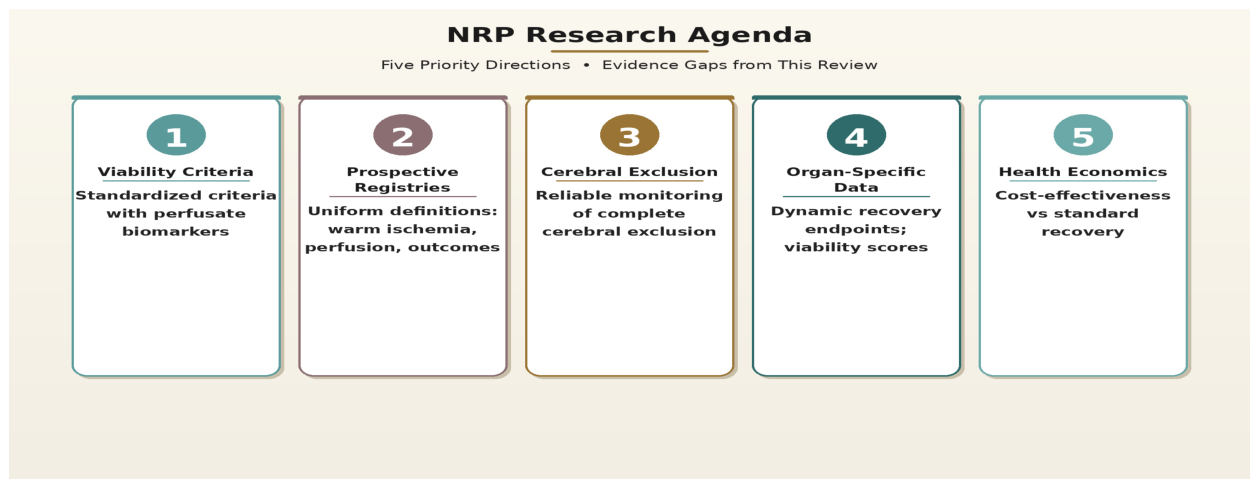
The research agenda is therefore clear: standardized viability criteria that incorporate perfusate biomarkers; prospective registries with uniform definitions of warm ischemia, perfusion parameters, and outcomes; reliable monitoring of cerebral exclusion; organ-specific analyses using dynamic recovery endpoints; and health-economic evaluation.
Figure 14.
NRP Research Agenda: Five Priority Directions. Evidence gaps identified in this review — standardized viability criteria, prospective registries, cerebral exclusion monitoring, organ-specific analyses, and health-economic evaluation.
Figure 14.
NRP Research Agenda: Five Priority Directions. Evidence gaps identified in this review — standardized viability criteria, prospective registries, cerebral exclusion monitoring, organ-specific analyses, and health-economic evaluation.
Conclusions
Normothermic regional perfusion has evolved from a Barcelona experiment in uncontrolled donation to a defining technology of modern DCD transplantation. Its rationale, reversing warm ischemic injury with oxygenated normothermic perfusion before cold preservation, is mechanistically coherent and supported by consistent observational evidence: higher organ utilization, near-elimination of ischemic cholangiopathy, DCD heart outcomes comparable to brain-dead donors, and a favorable though less uniform signal for DGF in kidney transplantation. The future of NRP depends on resolving what observational data cannot: standardized practice, credible cerebral-exclusion safeguards, and an ethical settlement on what it means to perfuse a body already declared dead. Until then, NRP will remain both one of the most effective and one of the most contested advances in deceased-donor transplantation.
Author Contributions
Malik Muhammad Makki conceived the review, interpreted the literature, drafted and revised the manuscript, and approved the final version. Samia Yunas contributed subject-matter review from a transplant-nephrology perspective, revised the manuscript critically for intellectual content, and approved the final version.
Funding
No external funding was received for this work.
Conflicts of Interest
The authors declare no conflicts of interest.
Acknowledgments
None.
Data availability
No new data were generated for this narrative review. All data discussed are available in the cited publications.
Ethics statement
Not applicable. This narrative review did not involve human participants, human data, or animal subjects.
Use of artificial intelligence
AI-assisted tools were used for language editing and figure design. All content was verified by the authors.
References
- Siedlecki, A.; Irish, W.; Brennan, D.C. Delayed graft function in the kidney transplant. Am. J. Transplant. 2011, 11(11), 2279–2296. [Google Scholar] [CrossRef] [PubMed]
- Zhai, Y.; Petrowsky, H.; Hong, J.C.; Busuttil, R.W.; Kupiec-Weglinski, J.W. Ischaemia-reperfusion injury in liver transplantation—from bench to bedside. Nat. Rev. Gastroenterol. Hepatol. 2013, 10(2), 79–89. [Google Scholar] [CrossRef] [PubMed]
- de Jong, I.E.M.; Overi, D.; Carpino, G.; Gouw, A.S.H.; van den Heuvel, M.C.; van Kempen, L.C.; et al. Persistent biliary hypoxia and lack of regeneration are key mechanisms in the pathogenesis of posttransplant nonanastomotic strictures. Hepatology 2022, 75(4), 814–830. [Google Scholar] [CrossRef] [PubMed]
- Eltzschig, H.K.; Eckle, T. Ischemia and reperfusion—from mechanism to translation. Nat. Med. 2011, 17(11), 1391–1401. [Google Scholar] [CrossRef] [PubMed]
- Oniscu, G.C.; Randle, L.V.; Muiesan, P.; Butler, A.J.; Currie, I.S.; Perera, M.T.P.R.; et al. In situ normothermic regional perfusion for controlled donation after circulatory death—the United Kingdom experience. Am. J. Transplant. 2014, 14(12), 2846–2854. [Google Scholar] [CrossRef] [PubMed]
- Jochmans, I.; Hessheimer, A.J.; Neyrinck, A.P.; Paredes, D.; Bellini, M.I.; Dark, J.H.; et al. Consensus statement on normothermic regional perfusion in donation after circulatory death: report from the European Society for Organ Transplantation’s Transplant Learning Journey. Transpl. Int. 2021, 34(11), 2019–2030. [Google Scholar] [CrossRef] [PubMed]
- Schurink, I.J.; van de Leemkolk, F.E.M.; Fondevila, C.; De Carlis, R.; Savier, E.; Oniscu, G.C.; et al. Donor eligibility criteria and liver graft acceptance criteria during normothermic regional perfusion: a systematic review. Liver Transpl. 2022, 28(10), 1563–1575. [Google Scholar] [CrossRef] [PubMed]
- Miñambres, E.; Suberviola, B.; Dominguez-Gil, B.; Rodrigo, E.; Ruiz-San Millan, J.C.; Rodríguez-San Juan, J.C.; et al. Improving the outcomes of organs obtained from controlled donation after circulatory death donors using abdominal normothermic regional perfusion. Am. J. Transplant. 2017, 17(8), 2165–2172. [Google Scholar] [CrossRef] [PubMed]
- Organ Procurement and Transplantation Network. Ensuring safety and reliability in normothermic regional perfusion protocols: a communication to the OPTN community. November 2025. Available online: https://hrsa.unos.org/media/jwmgibqq/letter_to_optn_nrp_safety_notice_251121.pdf.
- American College of Physicians. Ethics, determination of death, and organ transplantation in normothermic regional perfusion (NRP) with controlled donation after circulatory determination of death (cDCD): statement of concern. 2021. [Google Scholar]
- Omelianchuk, A.; Capron, A.M.; Ross, L.F.; et al. Neither ethical nor prudent: why not to choose normothermic regional perfusion. Hastings Cent. Rep. 2024, 54(4), 14–23. [Google Scholar] [CrossRef] [PubMed]
- Kootstra, G.; Daemen, J.H.C.; Oomen, A.P.A. Categories of non-heart-beating donors. Transpl. Proc. 1995, 27(5), 2893–2894. [Google Scholar]
- Thuong, M.; Ruiz, A.; Evrard, P.; Kuiper, M.; Boffa, C.; Akhtar, M.Z.; et al. New classification of donation after circulatory death donors: definitions and terminology. Transpl. Int. 2016, 29(7), 749–759. [Google Scholar] [CrossRef] [PubMed]
- García-Valdecasas, J.C.; Tabet, J.; Valero, R.; Taurá, P.; Rull, R.; García, F.; et al. Liver conditioning after cardiac arrest: the use of normothermic recirculation in an experimental animal model. Transpl. Int. 1998, 11(6), 424–432. [Google Scholar] [CrossRef] [PubMed]
- Magliocca, J.F.; Magee, J.C.; Rowe, S.A.; Gravel, M.T.; Chenault, R.H., 2nd; Merion, R.M.; et al. Extracorporeal support for organ donation after cardiac death effectively expands the donor pool. J. Trauma. 2005, 58(6), 1095–1101. [Google Scholar] [CrossRef] [PubMed]
- De Carlis, R.; Di Sandro, S.; Lauterio, A.; Ferla, F.; Dell’Acqua, A.; Zanierato, M.; et al. Successful donation after cardiac death liver transplants with prolonged warm ischemia time using normothermic regional perfusion. Liver Transpl. 2017, 23(2), 166–173. [Google Scholar] [CrossRef] [PubMed]
- Hoffman, J.R.H.; Hartwig, M.G.; Cain, M.T.; Rove, J.Y.; Siddique, A.; Urban, M.; et al. Consensus statement: technical standards for thoracoabdominal normothermic regional perfusion. Ann. Thorac. Surg. 2024, 118(4), 778–791. [Google Scholar] [CrossRef] [PubMed]
- Ruiz, P.; Valdivieso, A.; Palomares, I.; et al. Similar results in liver transplantation from controlled donation after circulatory death donors with normothermic regional perfusion and donation after brain death donors: a case-matched single-center study. Liver Transpl. 2021, 27(12), 1747–1757. [Google Scholar] [CrossRef] [PubMed]
- Valero, R.; Cabrer, C.; Oppenheimer, F.; Trias, E.; Sánchez-Ibáñez, J.; De Cabo, F.M.; et al. Normothermic recirculation reduces primary graft dysfunction of kidneys obtained from non-heart-beating donors. Transpl. Int. 2000, 13(4), 303–310. [Google Scholar] [CrossRef] [PubMed]
- Fondevila, C.; Hessheimer, A.J.; Ruiz, A.; Calatayud, D.; Ferrer, J.; Charco, R.; et al. Liver transplant using donors after unexpected cardiac death: novel preservation protocol and acceptance criteria. Am. J. Transplant. 2007, 7(7), 1849–1855. [Google Scholar] [CrossRef] [PubMed]
- Boucek, M.M.; Mashburn, C.; Dunn, S.M.; Frizell, R.; Edwards, L.; Pietra, B.; et al. Pediatric heart transplantation after declaration of cardiocirculatory death. N Engl. J. Med. 2008, 359(7), 709–714. [Google Scholar] [CrossRef] [PubMed]
- Dhital, K.K.; Iyer, A.; Connellan, M.; Chew, H.C.; Gao, L.; Doyle, A.; et al. Adult heart transplantation with distant procurement and ex-vivo preservation of donor hearts after circulatory death: a case series. Lancet 2015, 385(9987), 2585–2591. [Google Scholar] [CrossRef] [PubMed]
- Miñambres, E.; Royo-Villanova, M.; Pérez-Redondo, M.; Coll, E.; Villar-García, S.; Canovas, S.J.; et al. Spanish experience with heart transplants from controlled donation after the circulatory determination of death using thoraco-abdominal normothermic regional perfusion and cold storage. Am. J. Transplant. 2021, 21(4), 1597–1602. [Google Scholar] [CrossRef] [PubMed]
- Vandendriessche, K.; Tchana-Sato, V.; Ledoux, D.; et al. Transplantation of donor hearts after circulatory death using normothermic regional perfusion and cold storage preservation. Eur. J. Cardiothorac. Surg. 2021, 60(4), 813–819. [Google Scholar] [CrossRef] [PubMed]
- Parent, B.; Moazami, N.; Wall, S.; Carillo, J.; Kon, Z.; Smith, D.; et al. Ethical and logistical concerns for establishing NRP-cDCD heart transplantation in the United States. Am. J. Transplant. 2020, 20(6), 1508–1512. [Google Scholar] [CrossRef] [PubMed]
- Muller, X.; Schlegel, A.; Kron, P.; Eshmuminov, D.; Würdinger, M.; Meierhofer, D.; et al. Novel real-time prediction of liver graft function during hypothermic oxygenated machine perfusion before liver transplantation. Ann. Surg. 2019, 270(5), 783–790. [Google Scholar] [CrossRef] [PubMed]
- Kalisvaart, M.; et al. Donor warm ischemia time in DCD liver transplantation—working group report from the ILTS DCD, liver preservation, and machine perfusion consensus conference. Transplantation 2021, 105, 1156–1164. [Google Scholar] [CrossRef] [PubMed]
- Manara, A.R.; Murphy, P.G.; O’Callaghan, G. Donation after circulatory death. Br. J. Anaesth. 2012, 108 (Suppl 1), i108–i121. [Google Scholar] [CrossRef] [PubMed]
- Dhanani, S.; Hornby, L.; van Beinum, A.; Scales, N.B.; Hogue, M.; Baker, A.; et al. Resumption of cardiac activity after withdrawal of life-sustaining measures. N Engl. J. Med. 2021, 384(4), 345–352. [Google Scholar] [CrossRef] [PubMed]
- Land, W.G.; Linkermann, A. Regulated cell death and DAMPs as biomarkers and therapeutic targets in normothermic perfusion of transplant organs. Part 1: their emergence from injuries to the donor organ. Front Transplant. 2025, 4, 1571516. [Google Scholar] [CrossRef] [PubMed]
- Kerforne, T.; Allain, G.; Giraud, S.; et al. Defining the optimal duration for normothermic regional perfusion in the kidney donor: a porcine preclinical study. Am. J. Transplant. 2019, 19(3), 737–751. [Google Scholar] [CrossRef] [PubMed]
- Basta, G.; Babboni, S.; Pezzati, D.; et al. Perfusate liver arginase 1 levels after end-ischemic machine perfusion are associated with early allograft dysfunction. Biomedicines 2025, 13(1), 244. [Google Scholar] [CrossRef] [PubMed]
- van de Leemkolk, F.E.M.; Schurink, I.J.; Dekkers, O.M.; Oniscu, G.C.; Alwayn, I.P.J.; Ploeg, R.J.; et al. Abdominal normothermic regional perfusion in donation after circulatory death: a systematic review and critical appraisal. Transplantation 2020, 104(9), 1776–1791. [Google Scholar] [CrossRef] [PubMed]
- Eden, J.; Stimmeder, S.; Thorne, A.M.; et al. A diagnostic accuracy study of mitochondrial FMN during hypothermic oxygenated perfusion to guide liver utilization and avoid normothermic assessment. Liver Transpl. 2026. [Google Scholar] [CrossRef] [PubMed]
- Demiselle, J.; Augusto, J.F.; Videcoq, M.; et al. Transplantation of kidneys from uncontrolled donation after circulatory determination of death: comparison with brain death donors with or without normothermic regional perfusion. Transpl. Int. 2016, 29(4), 432–442. [Google Scholar] [CrossRef] [PubMed]
- van Rijn, R.; Schurink, I.J.; de Vries, Y.; van den Berg, A.P.; Cortes Cerisuelo, M.; Darwish Murad, S.; et al. Hypothermic machine perfusion in liver transplantation—a randomized trial. N Engl. J. Med. 2021, 384(15), 1391–1401. [Google Scholar] [CrossRef] [PubMed]
- Gaurav, R.; Butler, A.J.; Kosmoliaptsis, V.; Mumford, L.; Fear, C.; Swift, L.; et al. Liver transplantation outcomes from controlled circulatory death donors: SCS vs in situ NRP vs ex situ NMP. Ann. Surg. 2022, 275(6), 1156–1164. [Google Scholar] [CrossRef] [PubMed]
- De Carlis, R.; Schlegel, A.; Frassoni, S.; Olivieri, T.; Ravaioli, M.; Camagni, S.; et al. How to preserve liver grafts from circulatory death with long warm ischemia? A retrospective Italian cohort study with normothermic regional perfusion and hypothermic oxygenated perfusion. Transplantation 2021, 105, 2385. [Google Scholar] [CrossRef] [PubMed]
- De Beule, J.; Vandendriessche, K.; Pengel, L.H.M.; et al. A systematic review and meta-analyses of regional perfusion in donation after circulatory death solid organ transplantation. Transpl. Int. 2021, 34(11), 2046–2060. [Google Scholar] [CrossRef] [PubMed]
- Hasjim, B.J.; Sanders, J.M.; Alexander, M.; Redfield, R.R., 3rd; Ichii, H. Perfusion techniques in kidney allograft preservation to reduce ischemic reperfusion injury: a systematic review and meta-analysis. Antioxidants 2024, 13(6), 642. [Google Scholar] [CrossRef] [PubMed]
- Padilla, M.; Coll, E.; Fernández-Pérez, C.; Pont, T.; Ruiz, Á.; Pérez-Redondo, M.; et al. Improved short-term outcomes of kidney transplants in controlled donation after the circulatory determination of death with the use of normothermic regional perfusion. Am. J. Transplant. 2021, 21(11), 3618–3628. [Google Scholar] [CrossRef] [PubMed]
- Oniscu, G.C.; Mehew, J.; Butler, A.J.; et al. Improved organ utilization and better transplant outcomes with in situ normothermic regional perfusion in controlled donation after circulatory death. Transplantation 2023, 107(2), 438–448. [Google Scholar] [CrossRef] [PubMed]
- Delsuc, C.; Faure, A.; Berthoux, E.; et al. Uncontrolled donation after circulatory death: comparison of two kidney preservation protocols (in situ cold perfusion versus ex situ normothermic recirculation) on graft outcomes. BMC Nephrol. 2018, 19, 3. [Google Scholar] [CrossRef] [PubMed]
- Steinberg, I.; Patrono, D.; De Cesaris, E.; et al. Viability assessment of livers donated after circulatory determination of death during normothermic regional perfusion. Artif. Organs 2023, 47(10), 1592–1603. [Google Scholar] [CrossRef] [PubMed]
- Makki, M.M.; Kumar, K.; Davtyan, H.; Kusakabe, J.; Fernandez, E.; Refaai, K.; Pinna, A. Normothermic regional perfusion: lower delayed graft function incidence and improved functional recovery in DGF kidneys. Am. J. Transplant. 2026, 26((7) Suppl 1, S696. [Google Scholar] [CrossRef]
- Kumar, K.; Makki, M.M.; Davtyan, H.; Hussein, A.; Fernandes, E.; Refaai, K. Donor KDPI and predicted risk of delayed graft function in NRP kidney transplant recipients. Am. J. Transplant. 2026, 26((1) Suppl 1, S28. [Google Scholar] [CrossRef]
- Kumar, K.; Makki, M.M.; Davtyan, H.; Hussein, A.; Kusakabe, J.; Fernandes, E.; Refaai, K. Recipient body mass index and delayed graft function after normothermic regional perfusion. Am. J. Transplant. 2026, 26((1) Suppl 1, S88. [Google Scholar] [CrossRef]
- Makki, M.M.; Kumar, K.; Davtyan, H.; Fernandes, E.; Kusakabe, J.; Refaai, K. Redefining delayed graft function: from binary to dynamic using a trajectory-based model to evaluate renal recovery after kidney transplantation. Am. J. Transplant. 2026, 26((1) Suppl 1, S11–S12. [Google Scholar] [CrossRef]
- Makki, M.M.; Kumar, K.; Davtyan, H.; Kusakabe, J.; Fernandes, E.; Pinna, A.; Refaai, K. Creatinine trajectories: a dynamic predictor of post-kidney transplant recovery and delayed graft function. J. Urol. 2026, 215(5S), e240. [Google Scholar] [CrossRef]
- Watson, C.J.E.; Hunt, F.; Messer, S.; Currie, I.; Large, S.; Sutherland, A.; et al. In situ normothermic perfusion of livers in controlled circulatory death donation may prevent ischemic cholangiopathy and improve graft survival. Am. J. Transplant. 2019, 19(6), 1745–1758. [Google Scholar] [CrossRef] [PubMed]
- Mastrovangelis, C.; Frost, C.; Hort, A.; Laurence, J.; Pang, T.; Pleass, H. Normothermic regional perfusion in controlled donation after circulatory death liver transplantation: a systematic review and meta-analysis. Transpl. Int. 2024, 37, 13263. [Google Scholar] [CrossRef] [PubMed]
- Hessheimer, A.J.; de la Rosa, G.; Gastaca, M.; Ruíz, P.; Otero, A.; Gómez, M.; et al. Abdominal normothermic regional perfusion in controlled donation after circulatory determination of death liver transplantation: outcomes and risk factors for graft loss. Am. J. Transplant. 2022, 22(4), 1169–1181. [Google Scholar] [CrossRef] [PubMed]
- Savier, E.; Lim, C.; Rayar, M.; Orlando, F.; Boudjema, K.; Mohkam, K.; et al. Favorable outcomes of liver transplantation from controlled circulatory death donors using normothermic regional perfusion compared to brain death donors. Transplantation 2020, 104(9), 1943–1951. [Google Scholar] [CrossRef] [PubMed]
- De Carlis, R.; Di Sandro, S.; Lauterio, A.; Botta, F.; Ferla, F.; Andorno, E.; et al. Liver grafts from donors after circulatory death on regional perfusion with extended warm ischemia compared with donors after brain death. Liver Transpl. 2018, 24(11), 1523–1535. [Google Scholar] [CrossRef] [PubMed]
- Brubaker, A.L.; Sellers, M.T.; Abt, P.L.; et al. US liver transplant outcomes after normothermic regional perfusion vs standard super rapid recovery. JAMA Surg. 2024, 159(6), 677–685. [Google Scholar] [CrossRef] [PubMed]
- Brubaker, A.L.; Taj, R.; Jackson, B.; Lee, A.; Tsai, C.; Berumen, J.; et al. Early patient and liver allograft outcomes from donation after circulatory death donors using thoracoabdominal normothermic regional perfusion: a multi-center observational experience. Front Transplant. 2023, 2, 1184620. [Google Scholar] [CrossRef] [PubMed]
- Bekki, Y.; Croome, K.P.; Myers, B.; Sasaki, K.; Tomiyama, K. Normothermic regional perfusion can improve both utilization and outcomes in DCD liver, kidney, and pancreas transplantation. Transpl. Direct 2023, 9(3), e1450. [Google Scholar] [CrossRef] [PubMed]
- Miñambres, E.; Berman, M.; Antonini, M.V.; Campo-Cañaveral De La Cruz, J.L.; Croome, K.; Feltrin, G.; Hessheimer, A.; Jorns, C.; Messer, S.; Wall, A.; Domínguez-Gil, B.; Martin, D.; Oniscu, G.; Cillo, U. Normothermic regional perfusion (NRP) use in controlled donation after circulatory determination of death (cDCDD): results of the European Society for Organ Transplantation Bucharest consensus conference. Transpl. Int. 2026, 39, 16391. [Google Scholar] [CrossRef] [PubMed]
- Park, S.Y.; Lopez, R.; Kirsch, M.J.; Bashian, E.J.; Hay-Arthur, E.; Zakrzewski, J.; et al. Heart transplantation graft survival following donation after circulatory death via thoracoabdominal normothermic regional perfusion. JHLT Open 2026, 12, 100470. [Google Scholar] [CrossRef] [PubMed]
- Nakayama, T.; Fu, S.J.; Attia, A.M.; Ahn, D.J.; Pham, T.A.; Melcher, M.L.; Bozhilov, K.K.; Sasaki, K. The benefit of sequential normothermic regional perfusion and hypothermic machine perfusion in kidney transplantation from donation after circulatory death donors. Clin. Transplant. 2026, 40, e70641. [Google Scholar] [CrossRef] [PubMed]
- Malas, J.; Chen, Q.; Thomas, J.; Emerson, D.; Megna, D.; Esmailian, F.; Bowdish, M.; Chikwe, J.; Catarino, P. The Impact of Thoracoabdominal Normothermic Regional Perfusion on Early Outcomes in Donation After Circulatory Death Lung Transplantation. J. Heart Lung Transplant. 2023, 42(8), 1040–1044. [Google Scholar] [CrossRef] [PubMed]
- Cain, M.T.; Park, S.Y.; Schäfer, M.; Hay-Arthur, E.; Justison, G.A.; Zhan, Q.P.; Campbell, D.; Mitchell, J.D.; Randhawa, S.K.; Meguid, R.A.; David, E.A.; Reece, T.B.; Cleveland, J.C.; Hoffman, J.R.H. Lung recovery utilizing thoracoabdominal normothermic regional perfusion during donation after circulatory death: The Colorado experience. JTCVS Tech 2023, 22, 350–358. [Google Scholar] [CrossRef] [PubMed]
- Gorton, A.J.; Mohammadi, D.K.; Malik, M.J.; Keshavamurthy, S. Normothermic regional perfusion for donation after circulatory death in lung transplantation. Front Cardiovasc Med. 2025, 12, 41393267. [Google Scholar] [CrossRef] [PubMed] [PubMed Central]
- Mora, V.; Ballesteros, M.A.; Naranjo, S.; et al. Lung transplantation from controlled donation after circulatory death using simultaneous abdominal normothermic regional perfusion: a single center experience. Am. J. Transplant. 2022, 22(7), 1852–1860. [Google Scholar] [CrossRef] [PubMed]
- Mora-Cuesta, V.; Tello-Mena, S.; Izquierdo-Cuervo, S.; et al. Bronchial stenosis after lung transplantation from cDCD donors using simultaneous abdominal normothermic regional perfusion: a single-center experience. Transplantation 2023, 107(11), 2415–2423. [Google Scholar] [CrossRef] [PubMed]
- Foss, S.; Nordheim, E.; Sørensen, D.W.; et al. First Scandinavian protocol for controlled donation after circulatory death using normothermic regional perfusion. Transpl. Direct 2018, 4(7), e366. [Google Scholar] [CrossRef] [PubMed]
- Hagness, M.; Foss, S.; Sørensen, D.W.; Syversen, T.; Bakkan, P.A.; Dahl, T.; et al. Liver transplant after normothermic regional perfusion from controlled donors after circulatory death: the Norwegian experience. Transpl. Proc. 2019, 51(2), 475–478. [Google Scholar] [CrossRef] [PubMed]
- Organ Procurement and Transplantation Network. Ethical implications of normothermic regional perfusion: public comment white paper. August 2023. Available online: https://optn.transplant.hrsa.gov/media/unfj5nvq/ethical-implications-of-normothermic-regional-perfusion_pcsummer2023.pdf.
- Organ Procurement and Transplantation Network, NRP Workgroup. Meeting summary. 2 February 2026. Available online: https://www.hrsa.gov/sites/default/files/hrsa/optn/nrp-workgroup-meeting-summary-020226.pdf.
- Wall, A.E.; Fiedler, A.; Karp, S.; Shah, A.; Testa, G. Applying the ethical framework for donation after circulatory death to thoracic normothermic regional perfusion procedures. Am. J. Transplant. 2022, 22(5), 1311–1315. [Google Scholar] [CrossRef] [PubMed]
- Manara, A.; Shemie, S.D.; Large, S.; Healey, A.; Baker, A.; Badiwala, M.; et al. Maintaining the permanence principle for death during in situ normothermic regional perfusion for donation after circulatory death organ recovery: a United Kingdom and Canadian proposal. Am. J. Transplant. 2020, 20(8), 2017–2025. [Google Scholar] [CrossRef] [PubMed]
- Truog, R.D.; Doernberg, S.N. In defense of normothermic regional perfusion. Hastings Cent. Rep. 2024, 54(4), 24–31. [Google Scholar] [CrossRef] [PubMed]
- Alamouti-Fard, E.; Garg, P.; Wadiwala, I.J.; Yazji, J.H.; Alomari, M.; Hussain, M.W.A.; Elawady, M.S.; Jacob, S. Normothermic regional perfusion is an emerging cost-effective alternative in donation after circulatory death (DCD) in heart transplantation. Cureus 2022, 14(6), e26437. [Google Scholar] [CrossRef] [PubMed]
- Miñambres, E.; Estébanez, B.; Ballesteros, M.Á.; Coll, E.; Flores-Cabeza, E.M.; Mosteiro, F.; et al. Normothermic regional perfusion in pediatric controlled donation after circulatory death can lead to optimal organ utilization and posttransplant outcomes. Transplantation 2023, 107(3), 703–708. [Google Scholar] [CrossRef] [PubMed]
- Zhou, A.L.; Ruck, J.M.; Casillan, A.J.; Larson, E.L.; Shou, B.L.; Karius, A.K.; et al. Early United States experience with lung donation after circulatory death using thoracoabdominal normothermic regional perfusion. J. Heart Lung Transplant. 2023, 42(6), 693–696. [Google Scholar] [CrossRef] [PubMed]
- Chang, S.H.; Geraci, T.C.; Piper, G.L.; Chan, J.; James, L.; Paone, D.; et al. Outcomes of lung and heart-lung transplants utilizing donor after circulatory death with thoracoabdominal normothermic regional perfusion. JHLT Open 2024, 4, 100058. [Google Scholar] [CrossRef] [PubMed]
- Croome, K.P.; Subramanian, V.; Mathur, A.K.; et al. Outcomes of DCD liver transplant using sequential normothermic regional perfusion and normothermic machine perfusion or NRP alone versus static cold storage. Transplantation 2025, 109(7), 1184–1190. [Google Scholar] [CrossRef] [PubMed]
- Panconesi, R.; et al. Assessing lactate’s role as a predictor of post-transplant outcomes during normothermic machine perfusion. Livers 2026, 6, 67. [Google Scholar] [CrossRef]
- Fischer, R.M.J.; Cywes, C.; Ong, O.; et al. The association of flavin mononucleotide and lactate during normothermic regional perfusion with post-transplant liver outcomes: an exploratory study. Medicina 2026, 62(9), 1622. [Google Scholar] [CrossRef] [PubMed]
Figure 1.
Milestones in the development of normothermic regional perfusion (NRP), 1995–2025. DCD, donation after circulatory death; ECMO, extracorporeal membrane oxygenation; TA-NRP, thoracoabdominal NRP; ESOT, European Society for Organ Transplantation; OPTN, Organ Procurement and Transplantation Network. Original figure. Milestone sources: [5,9,12,14,15,16,17,18].
Figure 1.
Milestones in the development of normothermic regional perfusion (NRP), 1995–2025. DCD, donation after circulatory death; ECMO, extracorporeal membrane oxygenation; TA-NRP, thoracoabdominal NRP; ESOT, European Society for Organ Transplantation; OPTN, Organ Procurement and Transplantation Network. Original figure. Milestone sources: [5,9,12,14,15,16,17,18].
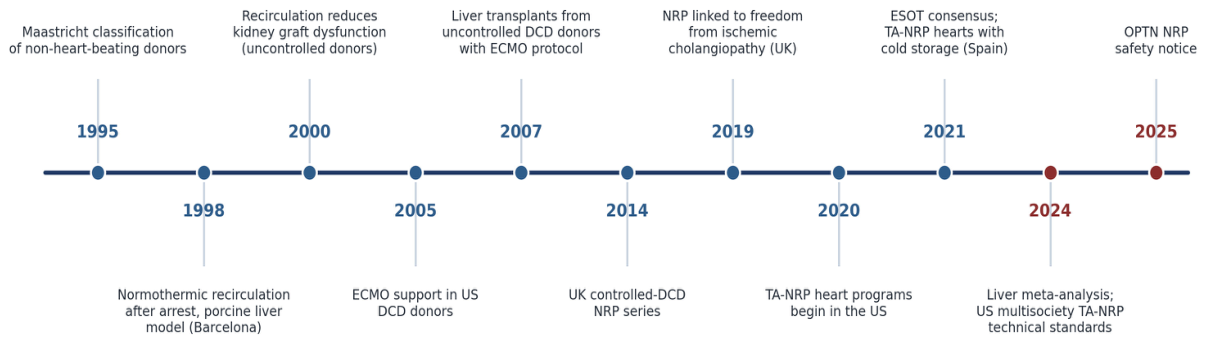
Figure 4.
Biomarkers of ischemic stress and cell death during NRP. Cell death via apoptosis, necroptosis, and ferroptosis releases DAMPs (HMGB1, mtDNA, ATP, histones). Biomarkers are measured in perfusate/blood, tissue, and bile. During NRP, markers show an early peak (~2 h) followed by clearance; AST, NGAL, and KIM-1 may rise again with prolonged perfusion (~6 h). Illustration created with AI assistance.
Figure 4.
Biomarkers of ischemic stress and cell death during NRP. Cell death via apoptosis, necroptosis, and ferroptosis releases DAMPs (HMGB1, mtDNA, ATP, histones). Biomarkers are measured in perfusate/blood, tissue, and bile. During NRP, markers show an early peak (~2 h) followed by clearance; AST, NGAL, and KIM-1 may rise again with prolonged perfusion (~6 h). Illustration created with AI assistance.
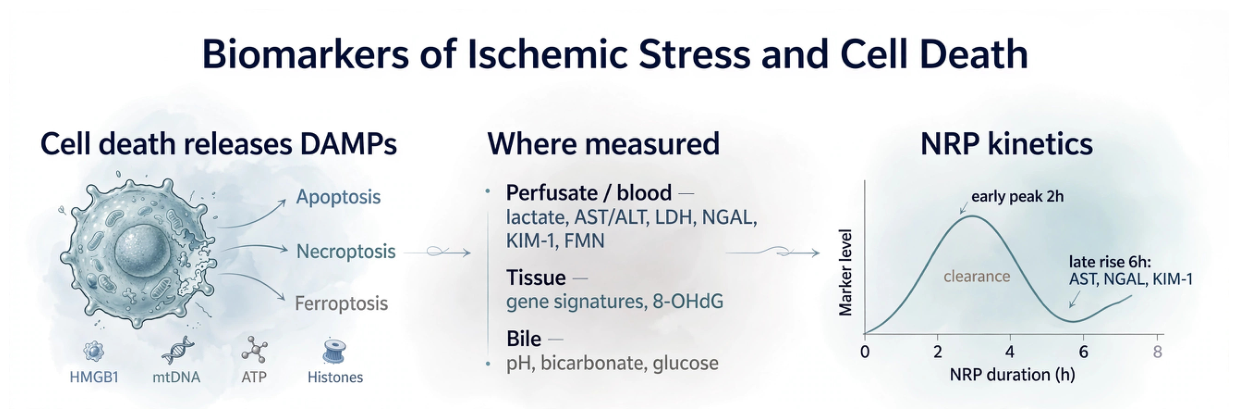
Figure 5.
Schematic of abdominal NRP. After death is declared, the femoral vessels are cannulated and the thoracic aorta is occluded, excluding the heart and brain from the circuit. An ECMO circuit (centrifugal pump, membrane oxygenator, heat exchanger) perfuses the abdominal organs at 37 °C with serial perfusate monitoring. Flow values are indicative and protocol dependent.
Figure 5.
Schematic of abdominal NRP. After death is declared, the femoral vessels are cannulated and the thoracic aorta is occluded, excluding the heart and brain from the circuit. An ECMO circuit (centrifugal pump, membrane oxygenator, heat exchanger) perfuses the abdominal organs at 37 °C with serial perfusate monitoring. Flow values are indicative and protocol dependent.
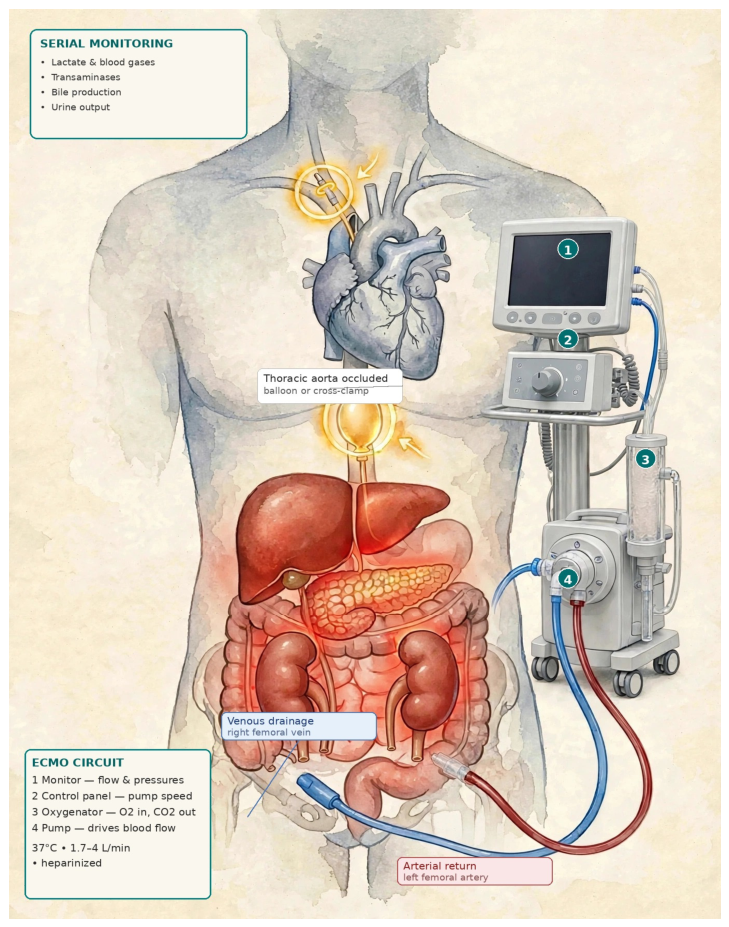
Figure 6.
Thoracoabdominal normothermic regional perfusion (TA-NRP). After sternotomy, venous drainage is established via a cannula in the right atrium and arterial inflow via a cannula in the aorta. The arch vessels are occluded (clamped and vented) to exclude the cerebral circulation, while the heart, lungs, and abdominal organs are perfused. An ECMO circuit (centrifugal pump, membrane oxygenator, heat exchanger) perfuses the abdominal organs at 37 °C with serial perfusate monitoring. Flow values are indicative and protocol dependent.
Figure 6.
Thoracoabdominal normothermic regional perfusion (TA-NRP). After sternotomy, venous drainage is established via a cannula in the right atrium and arterial inflow via a cannula in the aorta. The arch vessels are occluded (clamped and vented) to exclude the cerebral circulation, while the heart, lungs, and abdominal organs are perfused. An ECMO circuit (centrifugal pump, membrane oxygenator, heat exchanger) perfuses the abdominal organs at 37 °C with serial perfusate monitoring. Flow values are indicative and protocol dependent.
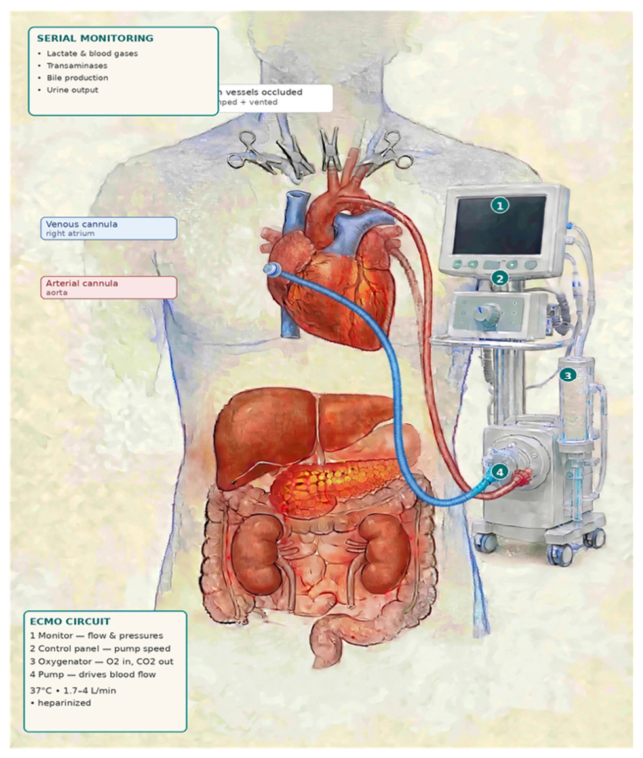
Figure 7.
Workflow of normothermic regional perfusion in controlled DCD, summarizing recommendations of the ESOT Bucharest consensus 75 and the 2025 OPTN safety communication 10. A-NRP, abdominal NRP; TA-NRP, thoracoabdominal NRP; PA, pulmonary artery. Original schematic.
Figure 7.
Workflow of normothermic regional perfusion in controlled DCD, summarizing recommendations of the ESOT Bucharest consensus 75 and the 2025 OPTN safety communication 10. A-NRP, abdominal NRP; TA-NRP, thoracoabdominal NRP; PA, pulmonary artery. Original schematic.
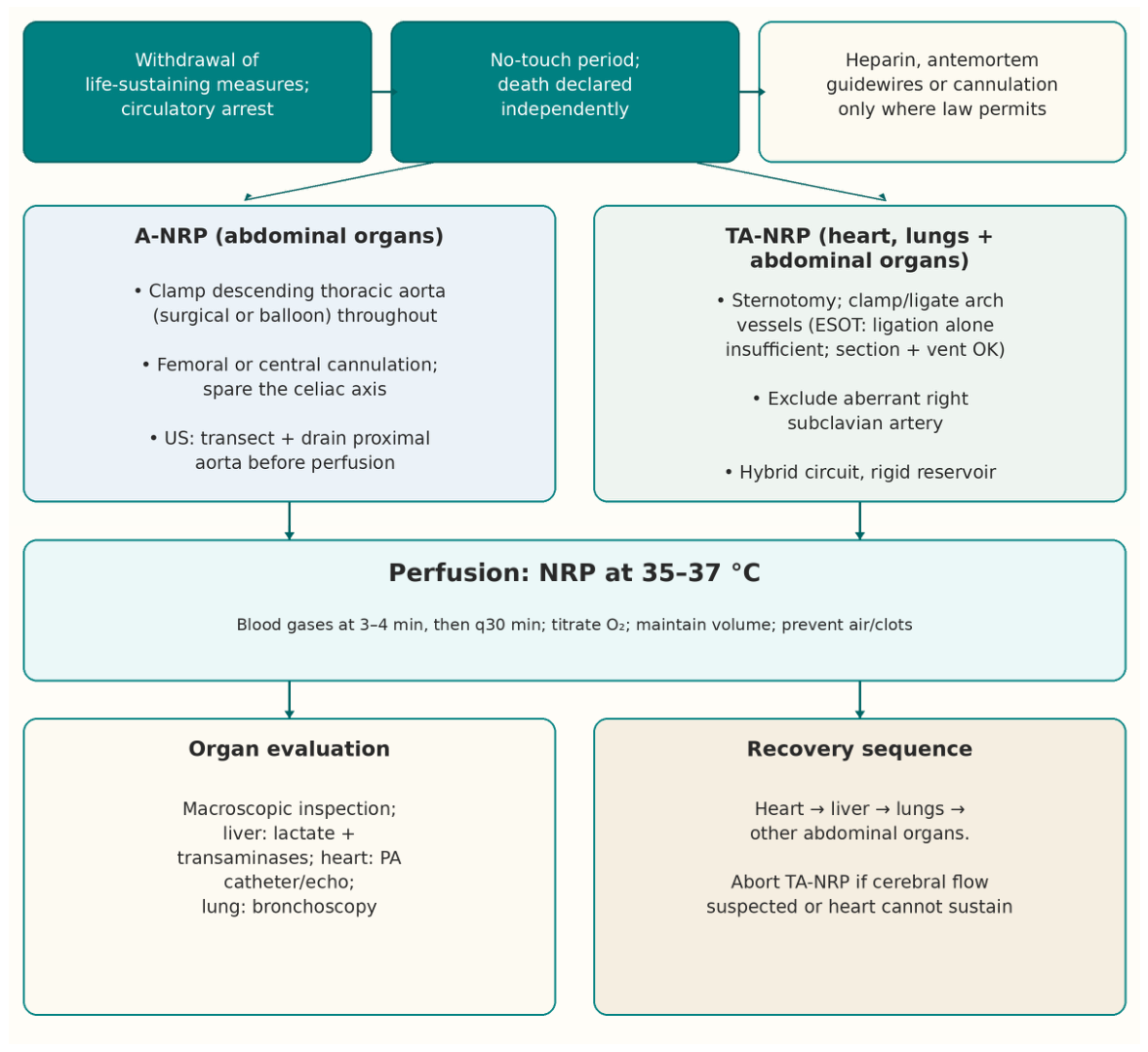
Figure 8.
Cannulae and occlusion devices for NRP. Four representative devices in a single row: arterial/venous cannulae and aortic occlusion balloon for A-NRP (left two); venous drainage cannula and dual-lumen cannula for TA-NRP (right two).
Figure 8.
Cannulae and occlusion devices for NRP. Four representative devices in a single row: arterial/venous cannulae and aortic occlusion balloon for A-NRP (left two); venous drainage cannula and dual-lumen cannula for TA-NRP (right two).
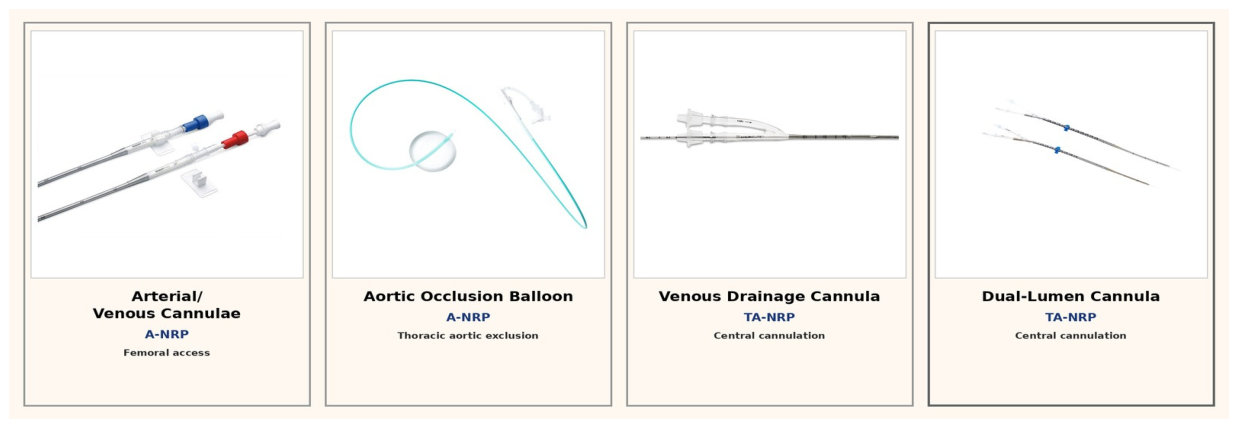
Figure 10.
Timeline of key NRP guideline and policy publications, 2021–2025. ESOT, European Society for Organ Transplantation; OPTN, Organ Procurement and Transplantation Network.
Figure 10.
Timeline of key NRP guideline and policy publications, 2021–2025. ESOT, European Society for Organ Transplantation; OPTN, Organ Procurement and Transplantation Network.
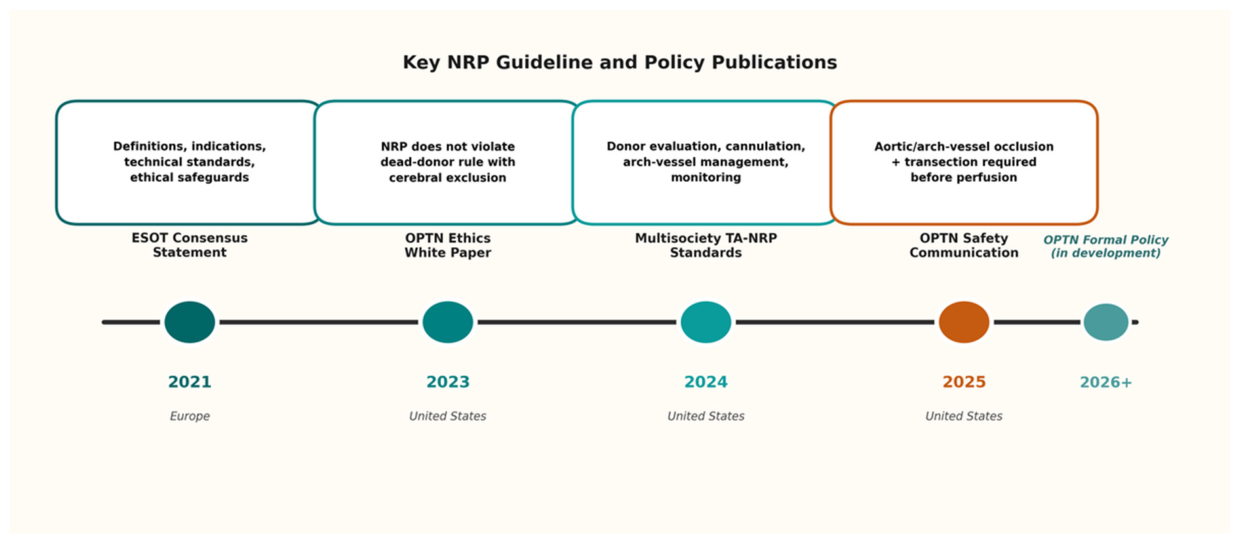
Figure 11.
Proposed ethical safeguards before initiating TA-NRP, framed as four sequential decision gates mirroring the principal questions in the ethical debate. Each gate must be satisfied before proceeding; failure at any gate halts the procedure. Sources for each gate are shown alongside.
Figure 11.
Proposed ethical safeguards before initiating TA-NRP, framed as four sequential decision gates mirroring the principal questions in the ethical debate. Each gate must be satisfied before proceeding; failure at any gate halts the procedure. Sources for each gate are shown alongside.
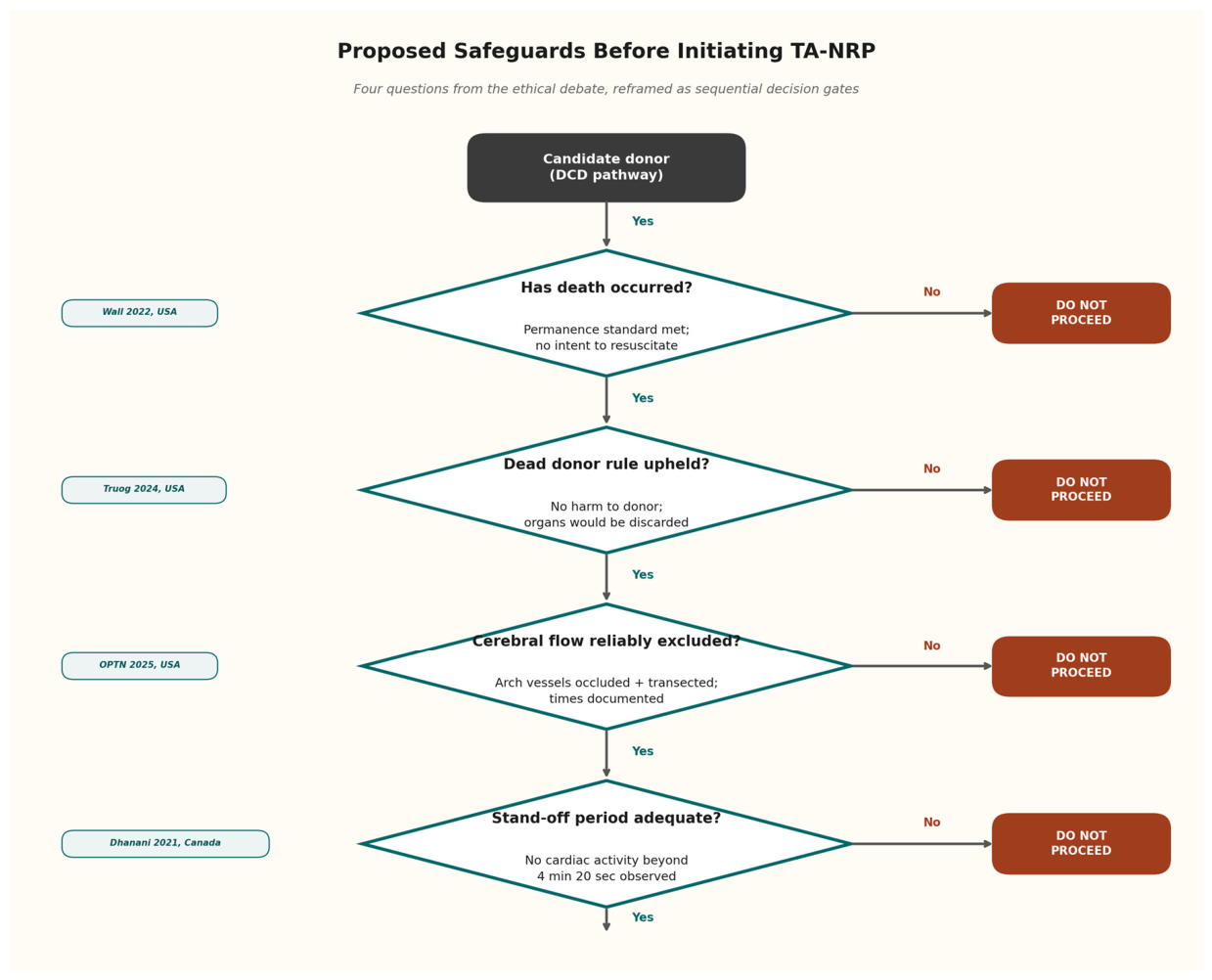
Figure 12.
Sequential perfusion as a relay: NRP resuscitates organs in situ, followed by ex situ normothermic machine perfusion for transport and extended metabolic recovery. Lactate remaining elevated at the end of NRP normalized during the NMP phase 80.
Figure 12.
Sequential perfusion as a relay: NRP resuscitates organs in situ, followed by ex situ normothermic machine perfusion for transport and extended metabolic recovery. Lactate remaining elevated at the end of NRP normalized during the NMP phase 80.
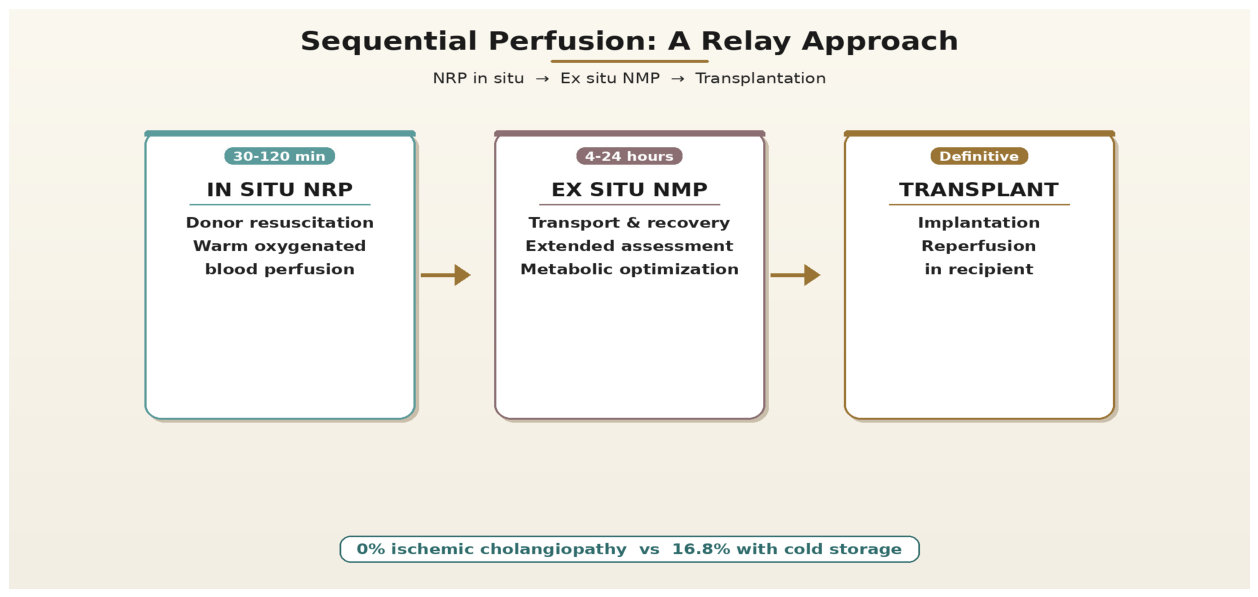
Figure 13.
FMN as a real-time biomarker of mitochondrial injury during perfusion. Warm ischemia drives succinate accumulation; at reoxygenation, injured complex I releases flavin mononucleotide (FMN) into the perfusate, quantifiable by fluorescence spectroscopy (excitation 485 nm / emission 528 nm). Lower FMN indicates less mitochondrial injury and supports a viability decision.
Figure 13.
FMN as a real-time biomarker of mitochondrial injury during perfusion. Warm ischemia drives succinate accumulation; at reoxygenation, injured complex I releases flavin mononucleotide (FMN) into the perfusate, quantifiable by fluorescence spectroscopy (excitation 485 nm / emission 528 nm). Lower FMN indicates less mitochondrial injury and supports a viability decision.
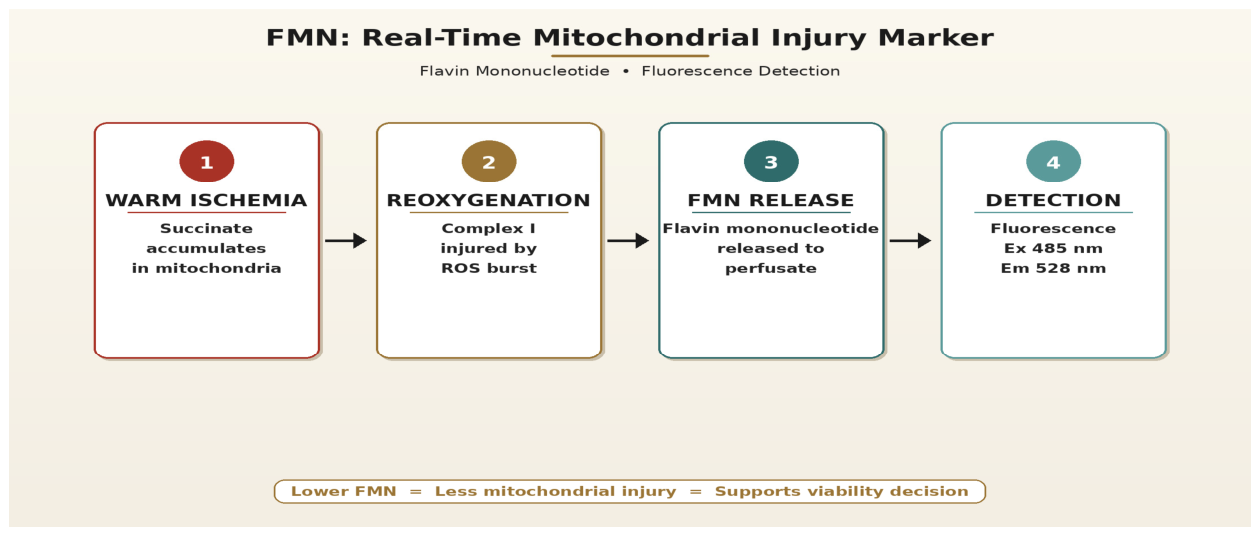

Table 1.
Maastricht classification of donation after circulatory death donors.
| Category | Description | Type |
|---|---|---|
| I | Dead on arrival: unexpected cardiac arrest without resuscitation | Uncontrolled |
| II | Unsuccessful resuscitation: unexpected arrest with failed CPR | Uncontrolled |
| III | Awaiting cardiac arrest: planned withdrawal of life-sustaining treatment | Controlled |
| IV | Cardiac arrest after brain death | Controlled/uncontrolled* |
| V | Euthanasia or medically assisted circulatory death (added 2013) | Controlled |
Table 2.
Types of normothermic regional perfusion. A-NRP, abdominal NRP; TA-NRP, thoracoabdominal NRP.
Table 2.
Types of normothermic regional perfusion. A-NRP, abdominal NRP; TA-NRP, thoracoabdominal NRP.
| Feature | A-NRP | TA-NRP |
|---|---|---|
| Organs perfused | Abdominal organs (liver, kidneys, pancreas) [6] | Heart and lungs plus abdominal organs [6,17] |
| Access | Femoral or central cannulation; descending thoracic aorta clamped by surgical clamp or intra-aortic balloon before perfusion and throughout | Median sternotomy with central cannulation; peripheral cannulation before withdrawal considered appropriate by the ESOT panel |
| Cerebral exclusion | Thoracic aortic occlusion; the celiac axis must not be blocked by the clamp. US guidance additionally requires transection of the proximal aorta with drainage to atmosphere before perfusion [9] | Arch vessels clamped or ligated; ESOT panel judged ligation alone insufficient and clamping/ligation plus section and venting sufficient; US guidance requires each arch vessel to be occluded and transected [9,58] |
| Pre-procedure checks | Team of at least five competent professionals and minimal circuit equipment [58] | CT before withdrawal, or arch dissection, to exclude an aberrant right subclavian artery; hybrid (open) circuit with rigid reservoir |
| Typical use | Liver, kidney, pancreas; also uncontrolled DCD [20] | Heart (with or without lungs) recovery; abdominal organs recovered in the same donor [17,23] |
Table 3.
Perfusion strategies for DCD organs compared.
| Strategy | Setting | Organs | Key features | Main limitation |
|---|---|---|---|---|
| A-NRP | In situ, abdomen | Kidney, liver, pancreas | Femoral or central cannulation; thoracic aorta occluded; 37 °C; viability assessment before retrieval [52] | Requires surgical team and ECMO at donor hospital |
| TA-NRP | In situ, thorax and abdomen | Heart, lung, plus abdominal organs | Sternotomy; arch vessels occluded; heart reanimated and assessed in situ [17] | Cerebral-exclusion controversy; longer functional warm ischemia |
| HOPE | Ex situ, device | Liver (kidney) | Hypothermic oxygenated perfusion after retrieval; randomized evidence in DCD livers [58] | No pre-retrieval assessment; warm injury not reversed |
| NMP | Ex situ, device | Liver, lung | Normothermic perfusion with extended viability assessment [58] | Cost; no in situ resuscitation of the donor |
| Sequential | In situ, then device | Liver | NRP followed by HOPE or NMP for highest-risk grafts [77] | Cumulative cost and complexity |
A-NRP, abdominal normothermic regional perfusion; TA-NRP, thoracoabdominal NRP; HOPE, hypothermic oxygenated perfusion; NMP, normothermic machine perfusion.
Table 4.
Organ-specific viability markers during NRP.
| Organ | Key Markers | Published Thresholds / Criteria |
|---|---|---|
| Liver | Lactate kinetics, AST/ALT, bile production & chemistry, glucose metabolism, macroscopic appearance, histology | Lactate ↓>23.4% in 2h; <8.5 mmol/L at 120 min; ALT <200–1000 IU/L (protocol-dependent) |
| Kidney | Macroscopic assessment; no validated NRP-specific score | No validated NRP-specific thresholds |
| Lung / Pancreas | Macroscopic assessment | Limited published quantitative criteria during NRP |
Quantitative viability thresholds with reported test characteristics are emerging but remain protocol-dependent and not yet standardized.
Table 5.
Representative cannulae and occlusion devices for normothermic regional perfusion, by NRP role.
Table 5.
Representative cannulae and occlusion devices for normothermic regional perfusion, by NRP role.
| NRP type | NRP role | Type | Sizes (Fr) | Manufacturer |
|---|---|---|---|---|
| A-NRP | Aortic occlusion | Aortic occlusion balloon | 8 Fr shaft, 10-46 mm | Medtronic |
| Aortic occlusion alternative | Intra-aortic occlusion balloon | 10.5 Fr | Edwards | |
| Arterial return | Percutaneous femoral arterial | 15-25 | Medtronic | |
| Percutaneous arterial | 13-23 | Getinge / Maquet | ||
| Surgical femoral arterial | 19-23 | LivaNova | ||
| Percutaneous femoral arterial | 14-20 | Edwards | ||
| Arterial return / venous drainage | Percutaneous femoral | 15-24 | LivaNova | |
| Pediatric NRP | Arterial / venous | 8-14 | Medtronic | |
| Venous drainage | Percutaneous femoral venous | 15-29 | Medtronic | |
| Percutaneous venous, multi-stage | 19-29 | Getinge / Maquet | ||
| Surgical femoral venous, dual-stage | 22/22, 23/25 | LivaNova | ||
| Percutaneous femoral venous | 14-28 | Edwards | ||
| TA-NRP | Central aortic cannulation | Surgical aortic | 18-24 | Medtronic |
| Surgical arterial | 16-22 | Edwards | ||
| Right-atrial drainage | Surgical venous | 12-40 | Medtronic |
Sizes verified against manufacturer product pages, brochures, or FDA GUDID (October 2026). Product images in Figure 8 are manufacturer or distributor photographs shown for reference Sizes shown are manufacturer product-line ranges, not clinical size guidance.
Table 6.
Organ-specific outcomes after normothermic regional perfusion: evidence summary.
| Organ | Best Evidence | Key NRP Benefit | Key Numbers | Evidence Gap |
|---|---|---|---|---|
| Kidney | 2024 meta-analysis (54 studies, 13 NRP); ES/UK registries; US registry (n=4,792) | Lower acute rejection | Rejection OR 0.48 (0.35–0.67); DGF: TA-NRP HMP vs SCS 26.7% vs 27.0% (OR 0.82, ns); non-TA-NRP 44.2% vs 53.8% (OR 0.56); interaction p=0.039 | Least consistent pooled evidence; no RCT |
| Liver | 2024 meta-analysis; 2026 update (20 studies, n=1,776); Watson Cambridge series; national cohorts | Freedom from ischemic cholangiopathy; improved graft & patient survival | IC RR 0.16–0.23; PNF RR 0.51; death HR 0.50 | Strongest evidence base; still no RCT |
| Heart | US registry (TA-NRP vs DPP vs DBD); 2026 meta-analysis | DCD heart Tx routine; comparable to DBD | 30-day survival 96.6% vs 94.8%; graft survival NS vs DBD | No RCT; follow-up >2 years lacking |
| Lung | Single-center series; no meta-analysis | Similar early outcomes to DBD | PGD3 at 72h similar to DBD; no excess bronchial stenosis | No pooled evidence; small series; selection bias |
| Pancreas | US registry only; no meta-analysis | Higher utilization (trend) | Utilization 8.8% vs 2.2% (p=0.06) | Outcomes essentially unreported |
Table 7.
European versus United States NRP practice.
| Element | Europe | United States |
|---|---|---|
| Stand-off period | Typically 5 min; 20 min by law in Italy [29,58] | Typically 5 min |
| Antemortem interventions | Permitted in Spain [8]; none in the UK [5] | Permitted where authorized by institutional and OPO policy |
| Uncontrolled DCD | Established in Spain and France | Minimal; predominantly controlled DCD |
| Key documents | ESOT consensus 2021[6]; national protocols | Multisociety TA-NRP standards 2024 [17]; OPTN safety communication 2025 [9] |
| Binding national policy | National protocols (e.g., UK, Spain, France, Italy) | Guidance-based; OPTN policy in development [69] |
OPO, organ procurement organization.
Disclaimer/Publisher’s Note: The statements, opinions and data contained in all publications are solely those of the individual author(s) and contributor(s) and not of MDPI and/or the editor(s). MDPI and/or the editor(s) disclaim responsibility for any injury to people or property resulting from any ideas, methods, instructions or products referred to in the content. |
© 2026 by the authors. Licensee MDPI, Basel, Switzerland. This article is an open access article distributed under the terms and conditions of the Creative Commons Attribution (CC BY) license (http://creativecommons.org/licenses/by/4.0/).
Copyright: This open access article is published under a Creative Commons CC BY 4.0 license, which permit the free download, distribution, and reuse, provided that the author and preprint are cited in any reuse.