
Submitted:
09 October 2026
Posted:
10 October 2026
You are already at the latest version
Abstract
Pig farming significantly supports livestock agriculture, food security, livelihoods, household income, and employment across developing countries, including Nigeria. This study characterized Gram-negative bacteria from pig production systems at Okada, Edo State, Nigeria, using a One Health approach of integrating animal, environmental and human-associated compartments. A total of 356 samples were collected and examined from the three compartments comprising, 132 pig-associated (37.08%), 124 environmental (34.83%), and 100 human-associated (28.09%). Cultural and biochemical examinations yielded 48 Gram-negative isolates, consisting of 22 isolates (45.83%) from pigs, 14 isolates (29.17%) from environmental sources, and 12 isolates (25.00%) from humans. The isolates comprised Proteus, Enterobacter, Pseudomonas, Escherichia, Klebsiella, Bordetella, Morganella, Providencia and Citrobacter, with Proteus predominating (13; 27.08%). Although bacterial genera varied numerically among compartments, Pearson’s chi-square test showed no significant association between bacterial genus and compartment (χ² = 11.25, p = 0.79). Whole-genome shotgun sequencing generated high-quality data, with mean reads exceeding 17 million and Q30 scores, with 95.50–96.50% of reads retained after filtering. Krona analysis showed predominance of Proteobacteria, Gammaproteobacteria and Enterobacterales across the compartments. Proteus spp (> 20%) and Bordetella trematum(16%), were prominent among pig-associated sequences; Proteus spp (>22%) and Escherichia coli(14%), predominated among human-associated sequences; environmental profiles were more heterogeneous, with E. coli, Citrobacter freundii, Klebsiella variicola each contributing approximately 9%. Seventeen species and a genus Halomonas were identified, with nine species shared across the three compartments. Cochran’s Q test showed no significant difference in species representation (Q = 1.14, p = 0.57). Jaccard similarity was highest between environmental and human-associated compartments (0.733), indicating substantial taxonomic connectivity. Overall, the findings support integrated One Health surveillance of Gram-negative bacteria in pig production.
Keywords:
gram-negative bacteria
; whole-genome sequencing
; one health
; pig production system
; taxonomic connectivity
1. Introduction
Pig production constitutes an important component of livestock agriculture and contributes to food supply, income generation, employment and household livelihoods in many parts of the world. The increasing demand for animal protein has encouraged the expansion and intensification of pig production, resulting in the concentration of relatively large numbers of animals within restricted spaces. Under such conditions, pigs, farm workers, feed, water, manure, housing facilities and surrounding environmental compartments are brought into frequent contact [1]. These interactions create a complex microbial ecosystem in which microorganisms can circulate between animals, humans and the environment.
The microbial ecology of pig production systems has received increasing attention because livestock production can provide conditions that support the persistence and dissemination of microorganisms of veterinary, environmental and public-health importance. In particular, bacteria associated with pigs and their production environments may include commensals, opportunistic organisms and recognized pathogens. Gram-negative bacteria are especially important because several members of this group, including species belonging to Escherichia, Klebsiella, Enterobacter, Salmonella, Proteus, Pseudomonas and Acinetobacter, have been associated with animal disease, environmental contamination, and oodborne infections [2].
The pig production environment is particularly relevant in this regard because pigs continuously release microorganisms through faeces and other biological materials. Faecal contamination can subsequently reach floors, pens, drainage channels, wastewater, soil, equipment, footwear and other farm surfaces. Wastewater and manure may further facilitate the movement of microorganisms beyond the immediate farm environment. Scicchitano et al.[3], using shotgun metagenomic sequencing of 294 samples from a swine production system, demonstrated extensive microbial connectivity between pigs and their internal and external farm environments. Their study identified 530 species-level genome bins, of which 309 were shared between animal gut microbiomes and farm-associated environments, illustrating the extent to which microorganisms can occur across different compartments of a pig production system.
Environmental compartments associated with pig production can therefore serve as important reservoirs of microorganisms. Manure, wastewater, soil, dust and contaminated surfaces may support the survival and redistribution of bacteria after their release from animals. This observation is particularly important for Gram-negative bacteria because several members of this group are environmentally persistent and may harbour antimicrobial resistance genes. Previous metagenomic investigations of pig farms have shown that microbial community composition and resistance determinants can extend beyond animal housing into surrounding soil and water. For example, a study of pig-farm wastewater and surrounding environments reported substantial concentrations of resistance genes and identified Proteobacteria, Actinobacteria and Acidobacteria among important bacterial groups associated with the detected resistome [4].
The movement of microorganisms within a pig production system may also involve humans. Farm workers and animal handlers have repeated contact with pigs, faecal material, feed, water, equipment and contaminated surfaces. Such occupational contact creates opportunities for microorganisms to be exchanged between humans and animals. A recent metagenomic study [5] involving swine farms found that farm workers had greater abundances of certain high-risk antimicrobial resistance genes than non-exposed human controls and identified occupational contact as an important interface in the distribution of resistance-associated microorganisms. The human–animal–environment interface is therefore an important consideration when investigating the microbial ecology of pig production systems [5]. Microorganisms detected in humans may originate from occupational exposure, community sources or other routes, and detection of the same organism in different compartments does not by itself demonstrate transmission. Nevertheless, identifying shared bacterial taxa among pigs, farm environments and humans provides useful information for understanding microbial connectivity and identifying organisms that warrant further investigation.
Conventional microbiological techniques have traditionally been used to investigate bacteria associated with animals and their environments [6]. Culture and biochemical characterization remain valuable approaches because they allow viable organisms to be recovered and characterized. However, culture-dependent techniques do not necessarily capture the full diversity of microorganisms present in a sample. Some bacteria may occur at low abundance, require specific growth conditions or be outcompeted by more readily cultivable organisms. Consequently, dependence on conventional culture alone can result in an incomplete representation of the microbial community. Metagenomic sequencing has expanded the capacity to investigate microbial communities by allowing genetic material from multiple organisms to be analyzed simultaneously. Shotgun metagenomic sequencing is particularly useful for microbial community analysis because it does not depend on amplification of a single taxonomic marker. Instead, genomic DNA from the microbial community is sequenced, allowing sequences originating from different organisms to be analyzed simultaneously [3]. This approach can provide information at multiple taxonomic levels and, when sequence quality and reference databases are adequate, can support species-level classification and genome reconstruction. Culture-enriched metagenomics provides a complementary strategy in which microbial enrichment or cultivation is incorporated before sequencing. The approach can increase the representation of organisms of interest and facilitate genomic characterization of organisms that may occur at low abundance in the original sample [7]. In the context of pig production systems, this approach is particularly useful when the objective is to investigate specific bacterial groups, such as Gram-negative bacteria, while retaining the broader taxonomic information obtainable through sequencing.
Taxonomic characterization is one of the fundamental applications of metagenomic sequencing. Taxonomic analysis involves assigning DNA sequences, assembled contigs or reconstructed genomes to appropriate taxonomic categories [3]. Depending on the quality of the sequence data and the availability of reference genomes, microorganisms can be assigned to levels ranging from phylum and class to order, family, genus and species. Such information allows investigators to determine which bacterial groups occur within particular environments and to compare their distribution among different sample types. The taxonomic composition of Gram-negative bacteria in pig production systems is of particular interest because these organisms occupy diverse ecological niches. Members of the Enterobacterales, for example, are frequently associated with gastrointestinal environments but can also occur in soil, water, manure and contaminated farm surfaces [8]. Other Gram-negative organisms, including Pseudomonas and Acinetobacter, can persist in environmental habitats and may possess characteristics that enable them to survive under adverse conditions. The simultaneous occurrence of these organisms across animal and environmental compartments can provide useful information about the microbial ecology of livestock production.
Recent metagenomic research has strengthened the value of taxonomic analysis across pig production systems. Scicchitano et al. (2024) demonstrated that shotgun metagenomics could identify hundreds of species-level genome bins across pigs, farm environments, surrounding soil, wastewater and slaughterhouse-associated sites. Their observation that hundreds of genome bins were shared between animal and environmental compartments highlights the importance of investigating microbial communities across the entire production system rather than restricting surveillance to the animal host alone. Similarly, recent research has extended the investigation to human-associated compartments. A 2025 metagenomic study of a swine-farm ecosystem examined paired samples from pig faeces, farm soil, farm workers and non-exposed human controls and demonstrated differences in high-risk antimicrobial resistance genes between exposed and non-exposed human groups [5]. Although resistance genes were the principal focus of that study, the findings reinforce the importance of considering humans as an integral component of the microbial ecosystem surrounding pig production.
Despite the increasing application of metagenomics in livestock research, significant geographical gaps remain. Much of the published evidence concerning pig-associated microbiomes has been generated in Europe, Asia and other regions with different production systems, environmental conditions and antimicrobial-use practices. The findings from these settings cannot necessarily be assumed to represent pig production systems in Nigeria. Local investigations are therefore necessary to establish the bacterial taxa occurring within Nigerian production environments. This need is particularly relevant in Nigeria, where pig production occurs under diverse management systems ranging from relatively intensive commercial farms to smaller-scale operations. Differences in housing, animal density, sanitation, manure management, water sources, feed, and veterinary support may influence the bacterial communities associated with individual farms. The environmental dimension is equally important. Pig manure and wastewater may introduce microorganisms into surrounding soil and water systems, particularly where waste treatment and disposal are inadequate.
Okada, Edo State, provides an appropriate setting for examining these relationships. The area contains agricultural, residential, commercial and institutional activities, and pig production forms part of the local livestock economy. Pigs, farm workers and environmental materials within production facilities may interact repeatedly, creating opportunities for microorganisms to move among different ecological compartments. However, there remains limited sequence-based information describing the Gram-negative bacterial communities associated with pigs, piggery environments and humans within pig production systems in the area. A taxonomic survey of culture-enriched metagenomes can therefore provide valuable baseline information. By identifying and comparing bacterial taxa across pigs, piggery environments and humans, it becomes possible to determine whether particular taxa are broadly distributed or associated more strongly with specific compartments. Shared taxa may indicate ecological overlap, whereas compartment-specific taxa may reflect differences in environmental conditions, host-associated microbiology or patterns of exposure. It is important, however, to distinguish taxonomic detection from biological interpretation. Detection of a bacterial sequence does not necessarily demonstrate that the organism is viable, pathogenic or responsible for disease. Similarly, the occurrence of the same taxon in two compartments does not establish direct transmission between them. Instead, taxonomic data provide an evidence base from which ecological relationships and potential transmission pathways can be investigated using additional epidemiological, genomic and experimental approaches. The One Health framework provides an appropriate conceptual basis for such investigations because it recognizes the interconnectedness of human, animal and environmental health. Within this framework, microbial surveillance considers organisms and their associated genetic characteristics across multiple ecological compartments rather than treating human, animal and environmental microbiology as completely independent fields. Recent metagenomic studies of pig production systems have increasingly adopted this integrated perspective by analyzing pigs, humans, farm environments and, in some cases, downstream stages of the pork production chain within the same investigative framework [3].
The taxonomic investigation of Gram-negative bacteria is consequently an important first step in understanding the microbial structure of pig production systems. Establishing which organisms are present provides a foundation for examining their ecological distribution and for subsequently investigating antimicrobial resistance, virulence and mobile genetic elements. In a Nigerian context, such information is particularly valuable because local data remain relatively limited compared with the expanding international literature. Against this background, the present study focuses on the taxonomic survey of culture-enriched metagenomes from Gram-negative bacteria in pigs, piggery environments and humans associated with pig production systems in Okada, Edo State, Nigeria. The study seeks to characterize the Gram-negative bacterial taxa represented in culture-enriched metagenomic samples and compare their distribution among pigs, environmental compartments and humans. The resulting information is expected to provide a baseline description of the bacterial diversity associated with the pig production system and contribute to broader One Health investigations of microbial ecology, antimicrobial resistance and potential movement of bacteria across animal–human–environment interfaces.
2. Materials and Methods
2.1. Study Area
The study was conducted in Okada, Ovia South-West Local Government Area of Edo State, Nigeria. Okada is a rural and semi-rural community in Edo State where agricultural activities, including livestock production, form an important component of local livelihoods. Pig production systems in the area comprise animal housing facilities, feeding areas, manure accumulation sites, drainage channels and other environmental compartments that can facilitate interaction between livestock, farm workers and the surrounding environment.
2.2. Study Design
A cross-sectional descriptive study was conducted to characterize Gram-negative bacteria associated with the pig production system at Okada, Edo State, Nigeria. Samples were collected from pigs, pig-associated farm environments and human-associated components of the production system. The sampling framework was designed to capture Gram-negative bacterial populations occurring at different points of contact within the pig production system. The principal sampling units included: pig skin and faecal samples; pig-associated environmental samples such as wastewater, soil, and feeds collected from piggery environments; as well as urine and nasal swab samples of consenting farm workers and other humans in close association with the piggery environment. The bacterial isolates were recovered using standard microbiological procedures and identified using conventional and molecular techniques. Representative Gram-negative isolates from each of the three compartments were pooled to create culture-enriched metagenomic samples that were sequenced using whole-genome shotgun sequencing technique, and genomic data analyzed to determine bacterial identity, thereby providing a One Health assessment of bacterial characterization within the production system.
2.3. Ethics Approval and Consent of Pig Farm Owner
Permission to conduct this study was given by the Ethical Research Committee of the Igbinedion University, Okada, with reference number IUO/Ethics/061/25. The purpose of the study was explained to the pig farm owners and informed oral consent was obtained from them.
2.4. Collection and Transportation of Samples
Sterile containers and sterile swabs were used according to sample type. The samples were collected aseptically to minimize contamination from external sources. Faecal samples were collected from rectal sampling procedures. Environmental samples were collected from relevant sites such as piggery-associated soils, feeds, and drainage or waste-disposal points. Samples were immediately labelled and placed in a cooled transport container. Samples were transported to the microbiology laboratory and processed within four hours of sample collection to preserve bacterial viability and reduce changes in the microbial population.
2.5. Culture Enrichment and Isolation of Gram-Negative Bacteria
Culture enrichment involved inoculating samples into buffered peptone water enrichment broths and incubating them overnight at 35 oC suitable for the recovery of Gram-negative bacteria [9,10]. Following enrichment, aliquots were streaked onto Chromocult Tryptone Bile-glucuronide agar medium (Techno Pharmchem Ltd, India) for the primary isolation and differentiation of Gram-negative bacteria. After inoculation, the culture plates were incubated at 35 oC for 18 to 24 hours. Following incubation, colonies displaying different morphological characteristics were selected for purification. Colony morphology, pigmentation, lactose fermentation, mucoid appearance, and other observable characteristics were recorded. Distinct colonies were repeatedly subcultured until pure cultures were obtained. Pure isolates were maintained andstored in Nutrient Agar slants (HiMedia, India) at 4 oCfor subsequent phenotypic and molecular analyses.
2.6. Identification of Bacterial Isolates
Preliminary identification was performed using standard microbiological procedures [11,12]. Isolates were examined by Gram staining and evaluated using appropriate biochemical tests. The biochemical identification scheme included relevant tests such as: lactose fermentation, indole, citrate utilization, methyl red, and Voges–Proskauer. Results were interpreted using standard bacteriological identification criteria. Because phenotypic identification can occasionally fail to distinguish closely related members of the Enterobacterales and other Gram-negative groups, genomic identification was subsequently used to provide higher-resolution taxonomic assignment.
2.7. Genomic DNA Extraction
Metagenomic DNA of the freshly cultured bacterial broth was extracted using a validated commercial bacterial genomic DNA extraction kit following the manufacturer's instructions (Zymo Research Corporation, USA).
2.8. Assessment of DNA Quantity and Quality
Extracted metagenome was evaluated for both concentration and purity before sequencing. DNA concentration was determined using a fluorometric method, while purity was assessed spectrophotometrically using absorbance ratios. DNA integrity was also evaluated using agarose gel electrophoresis. Only DNA preparations meeting the sequencing provider's or library-preparation manufacturer's quality requirements were advanced to sequencing.
2.9. Whole-Genome Shotgun Library Preparation
Metagenomic DNA was quantified fluorometrically with a Qubit® 2.0 Fluorometer (Thermo Fisher Scientific, Waltham, MA, USA) using a target specific Qubit assay (dsDNA BR Assay Kit, Thermo Fisher Scientific).The Illumina Nextera XT DNA library preparation kit (Illumina Inc, San Diego, CA, USA) was used for preparation of fragment libraries of the bacterial genomes, and index codes were added to attribute sequences to each sample, as previously described [13]. A total of 1ng of genomic DNA per sample was used for DNA fragment library preparation. Briefly, the DNA sample was fragmented by sonication to a size of 350bp, then DNA fragments were end-polished, A-tailed, and ligated with the full-length adaptor for Illumina sequencing, with further PCR amplification. The PCR products were ultimately purified (AMPure XP system) and libraries were analyzed for size distribution by Agilent2100 Bioanalyzer and quantified using real-time PCR. The clustering of the index-coded samples was performed on a cBot Cluster Generation System according to the manufacturer’s instructions.
2.10. Whole-Genome Shotgun Sequencing
The prepared libraries were subjected to whole-genome shotgun sequencing using a high-throughput sequencing platform. Sequencing generated paired-end short reads from the Illumina-type platform used [13,14]. Briefly, the library preparations were sequenced on an Illumina HiSeq platform and paired-end reads (2×150 bp) were generated. Raw sequence data were generated and FASTQ files were obtained. The quality of obtained data was assessed using FASTQC (v.0.11.5) and low-quality reads were filtered out and adapter regions were removed using Trimmomatic (v.0.36) [15]. The raw reads obtained from sequencing were assembled denovo using MEGAHIT version 1.2.9 [16], and the quality of assembled genome was determined through Quality Assessment Tool (QUAST) v5.0.2 [17]. The assembled contigs were deposited in the National Center for Biotechnological Information (NCBI) repository.
2.11. Sequencing Quality Control
Raw sequencing reads were subjected to quality assessment before downstream analysis. Quality-control procedures included assessment of: per-base sequence quality ,per-sequence quality scores, GC content, sequence length distribution, adapter contamination, duplicated reads, and other indicators of sequencing quality. FastQC was used for initial read-level quality. FastQC produces detailed quality reports for high-throughput sequencing datasets, allowing problematic libraries to be identified before downstream analysis. Low-quality bases and sequencing adapters were removed using an appropriate read-trimming program [Trimmomatic (v.0.36)]. Reads that remained below the predetermined quality or length threshold after trimming were discarded.
2.12. De novo Genome Assembly
High-quality sequencing reads were assembled de novo to reconstruct draft genomes. A short-read assembler (MEGAHIT version 1.2.9) appropriate for metagenomic WGS data was used. Assembly quality was assessed using parameters including: total assembly length, number of contigs, N50, L50, largest contig, and GC content. Assemblies with substantial contamination, excessive fragmentation or otherwise inadequate quality were excluded from downstream comparative analyses or subjected to additional processing.
2.13. Taxonomic Classification of Sequencing Reads
Taxonomic classification was performed to evaluate the composition and identity of the bacterial sequence data. Since the culture-enriched samples contained mixed sequence reads, a k-mer-based taxonomic classifier, Kraken 2, was used to classify reads against a curated reference database. Bracken was then used to estimate taxonomic abundance from Kraken-classified reads. Because the principal objective was characterization of cultured bacterial isolates, taxonomic classification was subsequently reconciled with the original culture-based identification.
2.14. Statistical Analysis
Phenotypic data were entered into a spreadsheet and subsequently analyzed using Number Cruncher Statistical Software (NCSS) ver. 12 data analysis software. Descriptive statistics were used to summarize frequency of bacterial species while Pearson chi-square test of independence, goodness-of-fit analysis, Cochran's Q and Jaccard tests were used to evaluate the bacterial distribution. Statistical significance was set at p < 0.05.
3. Results
3.1. Distribution of Samples Examined From the Pig Production System
A total of 356 samples were examined from the pig production system at Okada, Edo State, representing the three principal components of the One Health framework: animal, environmental and human-associated sources (Table 1). Pig-associated samples constituted the largest proportion of the samples collected, with 132 samples (37.08%) obtained from faecal, rectal and skin sources. Environmental samples accounted for 124 samples (34.83%), comprising wastewater, soil and feed, while 100 human-associated samples (28.09%) were obtained from farm workers and other individuals who had close contact with the piggery environment. The relatively close distribution of samples among the three compartments indicates that the investigation did not focus exclusively on pigs but incorporated the wider ecological setting in which pig production occurs. Animal samples represented the principal biological reservoir, whereas environmental samples captured potential pathways through which microorganisms and resistance determinants could persist or circulate within the production system. Human-associated samples provided an additional component for assessing the interface between occupational exposure and the piggery environment.
3.2. Phenotypic Identification and Frequency of Occurrence of Gram-Negative Bacteria
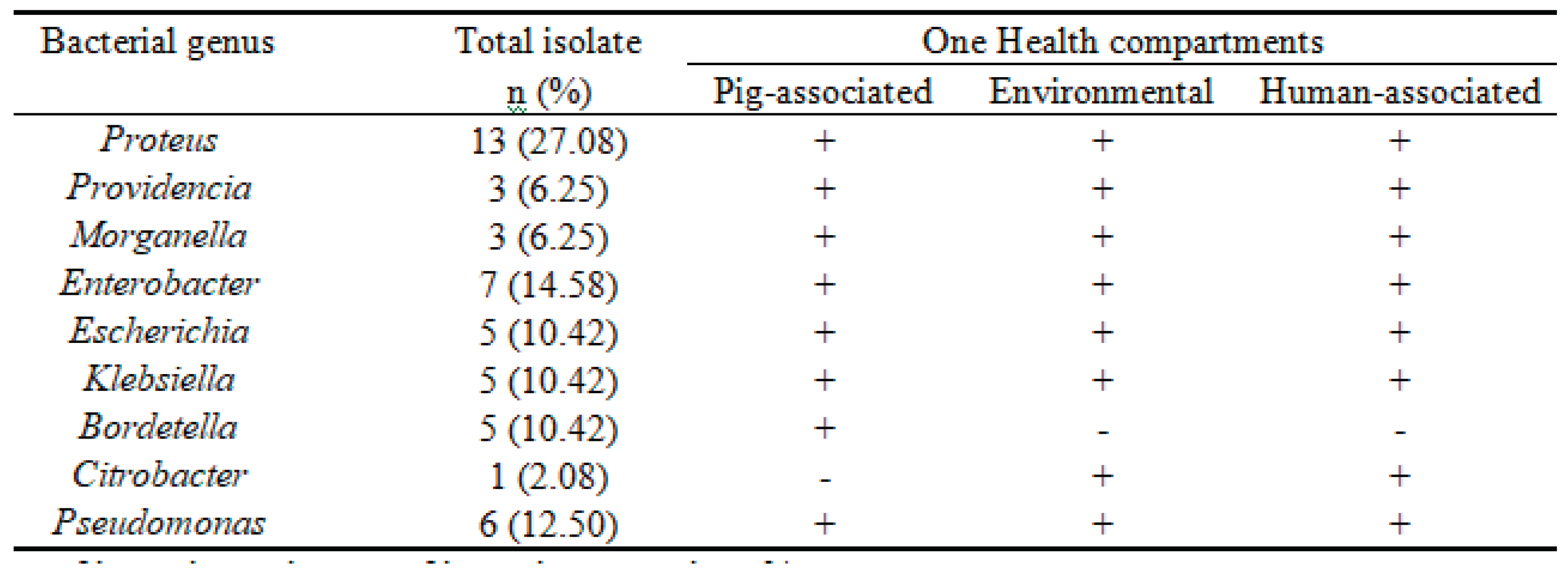
Following cultural examination, Gram staining and biochemical characterization (Table 2), Fourty-eight (48) Gram-negative bacterial isolates were recovered from the pig production system. The isolates originated from the three One Health compartments: pig-associated samples, environmental samples and human-associated samples. Pig-associated samples yielded the highest number of isolates (22; 45.83%), followed by environmental samples (14; 29.17%) and human-associated samples (12; 25.00%).The isolates were phenotypically characterized based on colonial appearance on nutrient agar, Gram reaction, citrate utilization, indole production, methyl red reaction, Voges–Proskauer reaction and lactose fermentation. The isolates were predominantly Gram-negative rods, with most producing mucoid colonies. The major genera identified were Proteus, Enterobacter, Pseudomonas, Escherichia, Klebsiella, Bordetella, Morganella, Providencia and Citrobacter.All 48 isolates demonstrated the characteristic Gram reaction of Gram-negative bacteria and appeared as Gram-negative rods on microscopic examination. Most isolates produced mucoid colonies on nutrient agar. The principal exception was Pseudomonas spp., for which green pigmentation. The predominance of mucoid colonies was particularly evident among the Enterobacterales, including;Klebsiella, Enterobacter, Escherichia, Proteus, Providencia and Morganella.The colonial and microscopic characteristics provided an initial basis for grouping the isolates before biochemical differentiation. The observation of green colonies among Pseudomonas isolates also provided a useful presumptive characteristic for separating these organisms from the predominantly mucoid Enterobacterales.The biochemical reactions demonstrated considerable phenotypic differentiation among the isolates. Proteus spp. were citrate positive, indole negative and lactose negative, with variable methyl red reactions. Providencia spp. were citrate and indole positive and methyl-red positive but VP and lactose negative. Morganella spp. were citrate negative, indole positive and methyl-red positive, with negative VP and lactose reactions.The Enterobacter and Klebsiella isolates showed a broadly similar biochemical profile, characterized by citrate positivity, indole negativity, VP positivity and lactose fermentation. Escherichia spp. were predominantly indole positive and methyl-red positive but citrate and VP negative. Pseudomonas spp. showed citrate-positive reactions with negative indole, MR, VP and lactose reactions. Citrobacter spp. were citrate positive, indole negative, MR negative, VP negative and lactose positive. These reaction patterns were used collectively for presumptive phenotypic identification rather than relying on a single biochemical test.Across all three compartments, Proteus spp. were the most frequently recovered organisms, accounting for 13 of 48 isolates (27.08%). Enterobacter spp. were the second most abundant (7; 14.58%), followed by Pseudomonas spp. (6; 12.50%). Klebsiella, Escherichia and Bordetella each accounted for 5 isolates (10.42%). Morganella and Providencia each contributed 3 isolates (6.25%), while Citrobacter spp. was the least abundant (1; 2.08%) (Table 3)
3.3. Distribution of Gram-Negative Bacteria
The distributionof Gram-negative bacteria in all three compartments is presented in Table 3.The distribution indicates that several bacterial genera occurred across more than one compartment. Proteus, Enterobacter, Pseudomonas, Klebsiella, Escherichia, Morganella and Providencia were recovered from all the three compartments. Bordetella spp. was recovered exclusively from pig-associated samples, whereas Citrobacter spp. occurred both in the environmental and human compartments. A Pearson chi-square test of independence was used to determine whether the distribution of bacterial genera was significantly associated with the One Health compartment. There was no statistically significant association between bacterial genus and compartment (χ² = 11.25, df = 16, p = 0.79). Thus, although the numerical abundance of individual genera varied between pig-associated, environmental and human-associated samples, the observed distribution did not provide statistical evidence that bacterial genus was dependent on compartment. A separate goodness-of-fit analysis indicated that the overall abundance of the nine bacterial genera was not evenly distributed (χ² = 4.00, df = 2, p = 0.135). This indicates significant variation in the overall abundance of the identified genera, with Proteus spp. occurring considerably more frequently than Citrobacter, Morganella and Providencia spp. The predominance of Proteus across the One-Health compartments suggests possible ecological connectivity, emphasizing the need for integrated surveillance and improved hygiene, waste management, and prudent antimicrobial use within pig production systems.
3.4. Whole-Genome Sequencing and Quality Assessment of Gram-Negative Isolates
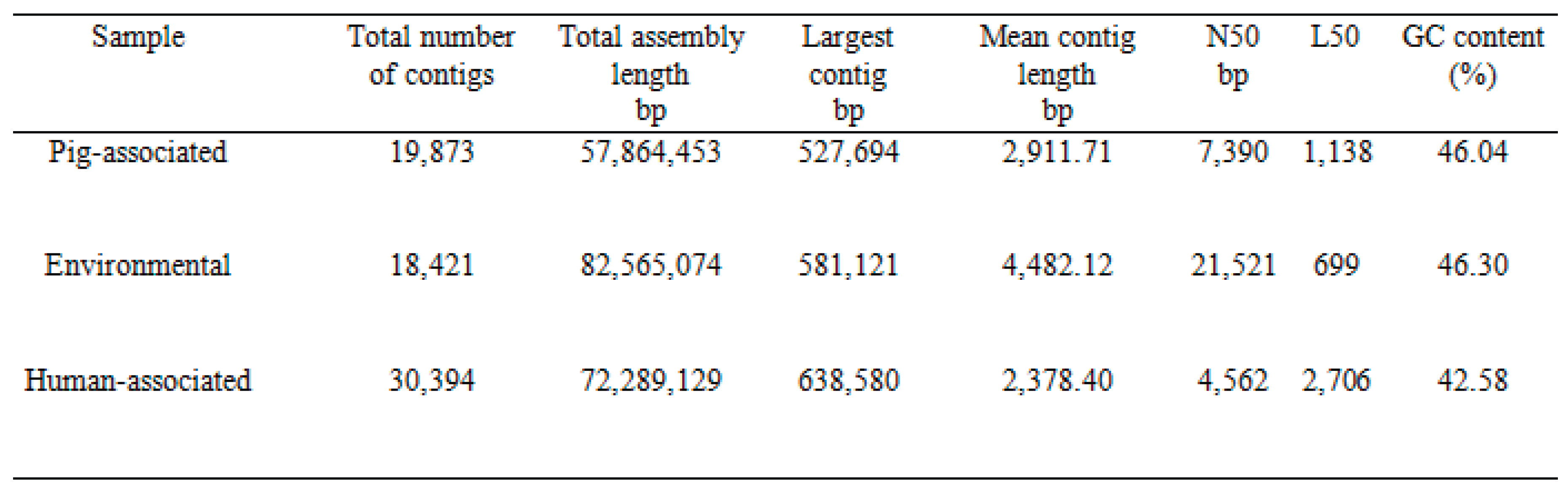
The sequencing and assembly metrics for the three One Health compartments are summarized in Table 4 and Table 5. All Gram-negative isolates recovered from the different One Health compartments were subjected to culture-enriched whole-genome shotgun sequencing. The sequenced isolates consisted of 22 from pigs, 14 from the farm environment, and 12 from human-associated samples. The sequencing libraries yielded mean numbers of 17,626,498, 20,085,052, and 23,028,031 high-quality reads for environmental, human-and pig-associated isolates, respectively, with mean Phred quality scores of at least Q30. Following quality-control filtering, 95.50% of the reads from environmental isolates, 96.50% from pig-associated isolates, and 96.00% from human-associated isolates were retained for subsequent bioinformatic analyses. The resulting genome assemblies showed mean N50 values of 21,521 bp for environmental isolates, 7,390 bp for pig-associated isolates, and 4,562 bp for human-associated isolates. The corresponding mean GC contents were 46.30%, 46.04%, and 42.58%, respectively. Overall, the whole-genome sequencing data generated a higher level of genomic resolution and discriminatory power than could be achieved through phenotypic characterization alone, thereby providing more detailed information for differentiating and characterizing the Gram-negative isolates across the One Health compartments.
3.5. Genomic Identification of Sequenced Isolates Recovered From the Pigs
The hierarchical taxonomic analysis of sequenced data obtained from pigs (Figure 1) revealed a diverse bacterial community dominated by Proteobacteria, particularly the class Gammaproteobacteria. Within this group, Enterobacterales was prominent, with Escherichia, Klebsiella, and Enterobacter representing important genera. Escherichia coli and Klebsiella pneumoniae each accounted for approximately 8% of classified sequences, while Enterobacter hormaechei, E. cloacae, and unclassified Enterobacter contributed smaller proportions. Pseudomonas aeruginosa represented approximately 6%, alongside other Pseudomonas sequences. Members of Morganellaceae, including Morganella, Providencia, and Proteus, were also detected, with several Proteus species showing relatively comparable abundances. A distinct Bordetella branch was identified, with Bordetella trematum being the most abundant explicitly labelled taxon at approximately 16%. Overall, the bacterial community demonstrated considerable taxonomic heterogeneity, with explicitly labelled taxa ranging from 2% to 16%. The relatively high abundance of B. trematum contributed to a positively skewed distribution, while numerous taxa occurred at lower proportions of 2–4%. The findings demonstrate that the bacterial population associated with the pigs was not restricted to a single taxonomic group but comprised diverse Gram-negative taxa with varying relative abundances.
3.6. Genomic Identification of Sequenced Isolates Recovered From the Piggery Environment
The taxonomic composition of the bacteria recovered from the piggery environment was assessed using whole-genome shotgun sequencing data and visualized with a Krona hierarchical classification plot (Figure 2). Whole-genome shotgun sequencing of bacteria recovered from the piggery environment revealed a diverse and heterogeneous bacterial community, with sequences predominantly assigned to the phylum Proteobacteria, class Gammaproteobacteria, and order Enterobacterales. The major families identified were Enterobacteriaceae, Morganellaceae, Pseudomonadaceae, and Halomonadaceae. Within Enterobacteriaceae, Escherichia coli, Citrobacter freundii, and Klebsiella variicola were the most prominent taxa, each accounting for approximately 9% of the classified sequences. Other important taxa included Klebsiella pneumoniae (5%), Enterobacter hormaechei (3%), and Enterobacter cloacae (2%). Morganellaceae was represented by Proteus, Providencia, and Morganella, with unclassified Proteus (6%), Proteus rettgeri (5%), P. penneri (5%), P. mirabilis (4%), and Morganella morganii (6%) contributing substantially to the profile. The Pseudomonadaceae family included Pseudomonas qingdaonensis (3%), unclassified Pseudomonas (3%), and Pseudomonas putida (2%). A small proportion of sequences was assigned to Halomonadaceae, represented by Halomonas (1%). Overall, the explicitly identified taxa displayed relative abundances ranging from 1% to 9%, with the three leading taxa collectively accounting for approximately 27% of the profile. The absence of a single overwhelmingly dominant species, together with the presence of numerous low-abundance and unclassified taxa, indicates substantial taxonomic diversity within the piggery environment.
3.7. Genomic Identification of Sequenced Isolates Recovered From the Farm Workers and Humans Living Within the Piggery Environment
The hierarchical taxonomic classification of the sequenced bacterial population is presented as a Krona plot (Figure 3). Culture-enriched whole-genome shotgun sequencing of the metagenomes recovered from farm workers and humans associated with the piggery environment revealed a diverse bacterial population dominated by Proteobacteria, particularly Gammaproteobacteria and the order Enterobacterales. The major families were Enterobacteriaceae and Morganellaceae, with Pseudomonas also represented. Escherichia coli was the most abundant explicitly identified taxon, accounting for approximately 14% of classified sequences, followed by Enterobacter cloacae (9%) and Citrobacter freundii (8%). Other notable taxa included Morganella morganii and unclassified Providencia, each contributing approximately 8%, while unclassified Proteus accounted for 7%. Several Proteus species were identified, including P. penneri and P. faecis (6% each), as well as P. vulgaris and P. mirabilis (2% each). Klebsiella pneumoniae and Pseudomonas taxa occurred at lower proportions. Overall, the explicitly labelled taxa showed relative abundances ranging from 1% to 14%, indicating considerable variation in their representation. The bacterial community was characterized by a predominance of Enterobacterales-associated organisms, particularly members of Enterobacteriaceae and Morganellaceae. However, the presence of numerous additional low-abundance and unclassified taxa demonstrated substantial taxonomic diversity. The distribution indicated that the human-associated bacterial population was not dominated exclusively by a single genus but consisted of multiple bacterial taxa occurring at different relative abundances, highlighting the diverse microbial composition associated with humans within the piggery environment.
3.8. Ncbi Accession Characteristics of Gram-Negative Bacterial Species Isolated From the Pigs
Whole-genome sequencing was used to identify the Gram-negative bacterial isolates recovered from pigs. As presented in Table 6, a total of 12 Gram-negative bacterial isolates were identified to species level. The isolates comprised members of the families Morganellaceae, Enterobacteriaceae, Pseudomonadaceae and Alcaligenaceae, demonstrating considerable taxonomic diversity among the Gram-negative bacteria recovered from the pig samples.The Morganellaceae constituted the largest group, comprising six isolates: Proteus faecis (AOC-BE22), Proteus penneri (AOC-BE23), Proteus mirabilis (AOC-BE24), Proteus vulgaris (AOC-BE25), Providencia rettgeri (AOC-BE26), and Morganella morganii (AOC-BE27). The Enterobacteriaceae were represented by four species, namely Enterobacter hormaechei (AOC-BE28), Enterobacter cloacae (AOC-BE29), Escherichia coli (AOC-BE30), and Klebsiella pneumoniae (AOC-BE31). In addition, Pseudomonas aeruginosa (AOC-BE32) and Bordetella trematum (AOC-BE33) were identified, representing Pseudomonadaceae and Alcaligenaceae, respectively.Among the identified organisms, Proteus spp. were the most represented genus, with four species (P. faecis, P. penneri, P. mirabilis and P. vulgaris), accounting for one-third of the bacterial species identified. Enterobacter was represented by two species, while each of Providencia, Morganella, Escherichia, Klebsiella, Pseudomonas and Bordetella was represented by one species. The whole-genome sequencing data were deposited in the National Center for Biotechnology Information (NCBI) database. Individual isolates were associated with WGS accession-number ranges corresponding to their assembled contigs. The accession series ranged from JCAWQV010000001–JCAWQV010000013 for P. faecis to JCAWQW010000001–JCAWQW010000018 for P. penneri. The number of accessioned contigs varied among isolates, with P. penneri having the highest number of contigs (18), followed by P. faecis, E. hormaechei and P. aeruginosa, each with 13 contigs. P. mirabilis had the lowest number of contigs (6).The variation in the number of contigs among the isolates reflects differences in genome assembly characteristics rather than differences in the number of bacterial species present.
3.9. Ncbi Accession Characteristics of Gram-Negative Bacterial Species Isolated From the Piggery Environment
The identified bacterial species, as shown in Table 7, comprised Klebsiella variicola (AOC-BE1), Klebsiella pneumoniae (AOC-BE2), Citrobacter freundii (AOC-BE3), Escherichia coli (AOC-BE4), Enterobacter hormaechei (AOC-BE5), Enterobacter cloacae (AOC-BE6), Proteus faecis (AOC-BE7), Proteus penneri (AOC-BE8), Proteus mirabilis (AOC-BE9), Proteus vulgaris (AOC-BE10), Providencia rettgeri (AOC-BE11), Morganella morganii (AOC-BE12), Pseudomonas qingdaonensis (AOC-BE13), and Pseudomonas putida (AOC-BE14).The Enterobacteriaceae group comprised six species, namely K. variicola, K. pneumoniae, C. freundii, E. coli, E. hormaechei, and E. cloacae. The Morganellaceae group comprised six species, including P. faecis, P. penneri, P. mirabilis, P. vulgaris, P. rettgeri, and M. morganii. The remaining two isolates were P. qingdaonensis and P. putida, both belonging to the genus Pseudomonas. Thus, the isolates demonstrated representation from three major bacterial lineages within the Gram-negative bacterial community recovered from the piggery environment.
3.10. NCBI Accession Characteristics of the Human-Associated Bacterial Isolates
The bacterial species in human-associated bacterial isolates identified through whole-genome sequencing, as shown in Table 8, comprised Enterobacter cloacae (AOC-BE43), Enterobacter roggenkampii (AOC-BE44), Escherichia coli (AOC-BE45), Citrobacter freundii (AOC-BE46), Klebsiella pneumoniae (AOC-BE47), Proteus faecis (AOC-BE48), Proteus penneri (AOC-BE49), Proteus vulgaris (AOC-BE50), Proteus mirabilis (AOC-BE51), Providencia rettgeri (AOC-BE52), Morganella morganii (AOC-BE53), and Pseudomonas qingdaonensis (AOC-BE54). The isolates represented 12 bacterial species distributed across several genera of Gram-negative bacteria recovered from humans within the piggery production system. The family Enterobacteriaceae comprised five species, namely E. cloacae, E. roggenkampii, E. coli, C. freundii, and K. pneumoniae. The Morganellaceaegroup comprised six species, including P. faecis, P. penneri, P. vulgaris, P. mirabilis, P. rettgeri, and M. morganii. The remaining isolate, P. qingdaonensis (AOC-BE54), belonged to the genus Pseudomonas. Thus, the sequenced isolates demonstrated considerable taxonomic diversity, with representatives of three major Gram-negative bacterial lineages recovered from the pig production system. The whole-genome assemblies were deposited in the National Center for Biotechnology Information (NCBI) database under the corresponding contig accession ranges.
3.11. Distribution of Bacterial Species Across the One Health Compartments
The distribution of bacterial species across the three compartments is presented in Table 9, and demonstrated considerable taxonomic overlap. A total of 17 bacterial species were identified, with the environmental compartment showing the highest species richness (14 species; 82.4%), compared with 12 species (70.6%) each in the pig-associated and human-associated compartments. Nine species (52.9%) were common to all three compartments, namely;Proteus faecis, P. penneri, P. mirabilis, P. vulgaris, Providencia rettgeri, Morganella morganii, Enterobacter cloacae, Escherichia coli, and Klebsiella pneumoniae. This widespread occurrence indicates substantial sharing of bacterial taxa among pigs, the environment, and humans. Several species showed compartment-specific distributions. Pseudomonas aeruginosa and Bordetella trematum were restricted to the pig-associated compartment, whereas Enterobacter roggenkampii occurred exclusively in the human-associated compartment. Klebsiella variicola and Pseudomonas putida were restricted to the environmental compartment, while Citrobacter freundii and Pseudomonas qingdaonensis occurred in both environmental and human-associated samples. Statistical analysis using Cochran's Q test showed no significant difference in the proportion of bacterial species represented across the three compartments (Q = 1.14, df = 2, p = 0.57). Although the environmental compartment recorded the greatest numerical species richness, this difference was not statistically significant at the 5% level. Pairwise Jaccard similarity analysis further demonstrated substantial taxonomic overlap. The pig-associated and environmental compartments shared 10 species, producing a Jaccard coefficient of 0.66, while pig-associated and human-associated compartments shared nine species (J = 0.60). The highest similarity occurred between environmental and human-associated compartments, which shared 11 species (J = 0.73). Overall, the findings indicate broad distribution and substantial taxonomic connectivity of bacteria across the pig production system, with the environment potentially serving as an important interface linking animal and human-associated bacterial populations.
Discussion
The present study investigated the distribution and diversity of Gram-negative bacteria within a pig production system using a One Health framework that incorporated pig-associated, environmental and human-associated compartments. A total of 356 samples were examined, comprising 37.08% animal-associated samples, 34.83% environmental samples and 28.09% human-associated samples. This sampling design provided an integrated basis for assessing bacterial occurrence across interconnected components of the pig production system. The inclusion of pigs, their surrounding environment and humans was particularly relevant because antimicrobial resistance (AMR) is increasingly recognized as a problem that extends beyond individual sectors. Ohia et al. [18] emphasized that multidrug-resistant bacterial infections in Nigeria are influenced by interactions among human, animal and environmental systems, while Adebisi et al. [19] highlighted infection prevention, antimicrobial stewardship and environmental factors as important components of AMR control. Similarly, Al-Khalaifah et al. [20] described AMR as a problem involving interconnected reservoirs in humans, animals and the environment, with resistance genes capable of spreading through horizontal gene transfer. The study used culture-enriched whole-genome shotgun sequencing and Krona-based taxonomic classification to characterize the bacterial communities recovered from the piggery environment, pigs and farm workers or humans living within the piggery environment. Across the three compartments, the bacterial profiles were dominated by members of the phylum Proteobacteria, particularly Gammaproteobacteria and the order Enterobacterales. Important genera repeatedly identified included Escherichia, Klebsiella, Enterobacter, Citrobacter, Proteus, Providencia and Morganella. The repeated occurrence of these organisms is biologically significant because many Enterobacterales are capable of occupying intestinal, environmental and extra-intestinal niches and may serve as reservoirs of antimicrobial-resistance genes. Musicha et al. [21] and Djordjevic et al. [22] emphasized that bacterial dissemination and AMR cannot be adequately understood by examining human, animal or environmental populations independently. Whole-genome sequencing therefore provides an important advantage by allowing bacterial organisms and resistance determinants to be investigated at a higher level of resolution than conventional phenotypic identification.
The pig-associated Krona profile was dominated by Proteobacteria and Gammaproteobacteria, with Enterobacterales representing a substantial component of the classified bacterial community. Bordetella trematum was the most prominent explicitly identified organism, accounting for approximately 16% of the classified abundance, followed by Escherichia coli and Klebsiella pneumoniae, each representing approximately 8%. Other notable organisms included Morganella morganii, unclassified Providencia, Pseudomonas aeruginosa and unclassified Proteus, each at approximately 6%. Several Proteus species, including P. mirabilis, P. penneri, P. vulgaris and P. hauseri, were also identified. The occurrence of E. coli, K. pneumoniae, Enterobacter, Morganella, Providencia and Proteus among pig-associated bacteria is important because these organisms can potentially move from animals into manure, wastewater, dust and other environmental matrices. Linh et al. [23], in their investigation of paired faecal samples from pigs and livestock caretakers on Vietnamese smallholder farms, reported differences between pig and human microbiota despite considerable overlap in resistance-associated features. Similarly, Bai et al. [24] provided evidence suggesting that pig faeces may contribute to AMR gene profiles detected among piggery workers.
The environmental compartment contained a particularly heterogeneous bacterial community involving Escherichia, Citrobacter, Klebsiella, Enterobacter, Proteus, Providencia, Morganella and Pseudomonas. Environmental samples are important in a One Health investigation because wastewater, soil, manure, feed, contaminated surfaces and other farm materials can serve as reservoirs or pathways for bacterial persistence and dissemination. Martak et al. [25] emphasized that animal manure and human-derived effluents can contribute to environmental contamination with resistant bacteria and resistance genes, particularly where sanitation infrastructure is inadequate. Gudda et al. [26] similarly demonstrated the importance of environmental monitoring in resource-constrained livestock systems, while Lumabao et al. [27] reported the occurrence of antimicrobial-resistance genes across smallholder swine farms. These observations reinforce the importance of considering the farm environment as an active component of bacterial and AMR surveillance rather than simply as a passive recipient of animal contamination.
The human-associated Krona profile was also dominated by Gammaproteobacteria and Enterobacterales. Particularly prominent organisms included E. coli, E. cloacae, C. freundii, M. morganii, unclassified Providencia and Proteus. The presence of these organisms among farm workers and other human-associated samples is epidemiologically relevant because individuals working or living within pig production environments may experience repeated contact with pigs, manure, contaminated surfaces, wastewater, soil, feed, equipment and environmental dust. Hibbard et al. [28] emphasized that agricultural systems can influence human health through direct animal contact, contaminated environments, food chains and antimicrobial-resistance pathways. Chen et al. [29] also showed that exposure to livestock-associated environments can influence the human microbiome and resistome, while Linh et al. [23] demonstrated considerable overlap in resistance determinants between pigs and livestock workers. Bai et al. [24] further reported evidence linking pig faecal AMR genes with those detected among workers.
An important finding was the extensive overlap of bacterial species among the three compartments. Seventeen species were identified overall, with 12 species occurring in the pig-associated compartment (70.6%), 14 in the environmental compartment (82.4%) and 12 in the human-associated compartment (70.6%). Although the environmental compartment was numerically the richest, the difference in species representation was not statistically significant. Cochran's Q test produced Q = 1.14, df = 2 and p = 0.57, indicating that the differences among the three compartments were not statistically significant at the 5% significance level. Therefore, the environmental compartment can appropriately be described as having the greatest numerical species representation, but it cannot be concluded that it was significantly more species-rich than the pig-associated or human-associated compartments. The most important ecological observation was therefore not the difference in species richness but the extent of species sharing. Nine species, representing 52.9% of the total species identified, occurred in all three compartments. These included Proteus faecis, P. penneri, P. mirabilis, P. vulgaris, P. rettgeri, Morganella morganii, Enterobacter cloacae, Escherichia coli and Klebsiella pneumoniae. The environmental and human-associated compartments showed the highest pairwise similarity, sharing 11 species and producing a Jaccard coefficient of 0.733. The pig-associated and environmental compartments shared 10 species, producing a Jaccard coefficient of 0.625, whereas the pig-associated and human-associated compartments had a coefficient of 0.600. Pandey et al. [30] described livestock, human and environmental systems as interconnected reservoirs that can support the emergence and dissemination of AMR, and Pandey et al. [30] also emphasized that AMR transmission involves feedback mechanisms among human, animal and environmental systems. The high similarity between the pig-associated and environmental compartments is consistent with the close biological relationship between pigs and their immediate surroundings. Pigs continuously deposit faeces, urine, respiratory secretions and other biological materials into their environment, while manure and wastewater can contaminate floors, drains, soil, water and equipment. At the same time, environmental microorganisms may enter pigs through contaminated feed, water, soil, surfaces and other farm materials. Consequently, the Jaccard coefficient of 0.625 should be interpreted as evidence of microbial connectivity rather than definitive proof of animal-to-environment transmission. Pandey et al. [30] emphasized that AMR is influenced by interconnected mechanisms involving livestock production, human activities and environmental contamination, while Martak et al. [25] identified manure, wastewater and other effluents as important potential vehicles for resistant organisms and resistance genes. The environmental-human similarity was even greater, with 11 shared species and a Jaccard coefficient of 0.73. Organisms such as E. coli, K. pneumoniae, P. mirabilis, C. freundii and P. qingdaonensis occurred in both compartments. This pattern may reflect continuous interaction between humans and contaminated environmental matrices, particularly in settings where sanitation and waste-management infrastructure are limited. Martak et al. [25] noted that inadequate sanitation and intensive animal farming can increase opportunities for movement of resistant organisms and resistance genes among animal, environmental and human reservoirs. Nevertheless, the high environmental-human similarity should not be interpreted as evidence that the environment was the source of human-associated bacteria. Because the study was cross-sectional, directionality cannot be established. Human-associated bacteria may have contributed to environmental contamination, just as environmental exposure may have contributed to human colonization. Five species showed restricted distributions. Pseudomonas aeruginosa and Bordetella trematum were detected only in the pig-associated compartment, Klebsiella variicola and Pseudomonas putida occurred only in the environmental compartment, while Enterobacter roggenkampii was detected only among human-associated samples. However, these restricted distributions should be interpreted cautiously because absence from a particular compartment does not establish ecological specificity. Detection can be influenced by sample size, sampling strategy, culture conditions and identification sensitivity. The detection of K. variicola in the environment is noteworthy because whole-genome approaches can help distinguish members of the closely related Klebsiella complex. Similarly, the detection of B. trematum exclusively in pigs may represent limited recovery rather than genuine ecological restriction. Consequently, the study provides an important epidemiological foundation for understanding the pig production system as a One Health microbial network and for designing future investigations into the emergence, persistence and transmission of antimicrobial-resistant Gram-negative bacteria.
Conclusion
The study demonstrated that the pig production system at Okada, Edo State, Nigeria, harboured a diverse assemblage of Gram-negative bacteria across pig-associated, environmental and human-associated compartments. Forty-eight isolates representing nine genera were recovered, with Proteus spp. predominating. Whole-genome shotgun sequencing provided greater taxonomic resolution than conventional phenotypic methods and revealed substantial representation of Proteobacteria, Gammaproteobacteria and Enterobacterales. Although bacterial distribution did not differ significantly among compartments (χ² = 11.25, df = 16, p = 0.79), considerable species overlap was observed, with nine species occurring across all three compartments. The findings highlight microbial connectivity within the pig production system and support integrated One Health surveillance, incorporating genomic and environmental monitoring approaches.
Author Contributions
MO, OI, BE and EA-O. conceptualized the study, designed experiments, and edited the final manuscript. ES, SA, OI, SI-A, EO and AM performed interviews, collected samples, performed experiments, analyzed data, and draft the manuscript.. All authors have read and agreed to the published version of the manuscript.
Funding
Not applicable.
Data Availability Statement
Please contact author for data requests.
Conflicts of Interest
The authors declare no competing interests.:
References
- Cheng, L., Zhang, X., Wang, C., Deng, O., & Gu, B. (2024). Whole-chain intensification of pig and chicken farming could lower emissions with economic and food production benefits. Nature Food, 5, 939–950. [CrossRef]
- Zhang, T., Nickerson, R., Zhang, W., Li, X., & others. (2024). The impacts of animal agriculture on One Health—Bacterial zoonosis, antimicrobial resistance, and beyond. One Health, 18, 100748. [CrossRef]
- Scicchitano, D., Leuzzi, D., Babbi, G., Palladino, G., Turroni, S., Laczny, C. C., Wilmes, P., Correa, F., Leekitcharoenphon, P., Savojardo, C., Luise, D., Martelli, P., Trevisi, P., Aarestrup, F. M., Candela, M., & Rampelli, S. (2024). Dispersion of antimicrobial resistant bacteria in pig farms and in the surrounding environment. Animal Microbiome, 6(1), Article 17. [CrossRef]
- Wang, B., Li, J., Zhang, Y., Li, X., Zhang, Y., Wang, X., Li, Y., & Wang, W. (2023). Distribution and migration of antibiotic resistance genes, as well as their correlation with microbial communities in swine farm and its surrounding environments. Environmental Pollution, 316(Part 2), 120618. [CrossRef]
- Lyu, W., Chen, Q., Xiao, X., Jin, Y., Wang, W., Xiao, Y., Yang, H., & Ma, L. (2025). High-risk and virus-linked antibiotic resistome in swine farms: Metagenomic profiling of cross-species transmission risks among humans, pigs, and soil. Environmental Technology & Innovation, 40, 104368. [CrossRef]
- Ferone, M., Gowen, A., & Marini, F. (2020). Microbial detection and identification methods: Bench top assays to omics approaches. Comprehensive Reviews in Food Science and Food Safety, 19(6), 3106–3129. [CrossRef]
- Armetta, J., Li, S. S., Vaaben, T. H., Vazquez-Uribe, R., & Sommer, M. O. A. (2025). Metagenome-guided culturomics for the targeted enrichment of gut microbes. Nature Communications, 16, 663. [CrossRef]
- Amegayibor, E. F., Larbi, R. O., Ayim-Akonor, M., Mills, R. O., Owusu, H., Sasu, B. K., Terry, R. F., Harries, A. D., & Kuukyi, F. S. (2025). Enterobacterales and antimicrobial resistance in feed, water, and slurry in pig production farms in the Greater Accra Region of Ghana, 2024. Tropical Medicine and Infectious Disease, 10(9), 239. [CrossRef]
- Ibrahim, D. R., Dodd, C. E. R., Stekel, D. J., Ramsden, S. J., & Hobman, J. L. (2016). Multidrug resistant, extended spectrum β-lactamase (ESBL)-producing Escherichia coli isolated from a dairy farm. FEMS Microbiology Ecology, 92(4), fiw013. [CrossRef]
- Margot, H., Zwietering, M. H., Joosten, H. M. L. J., O'Mahony, E., & Stephan, R. (2015). Evaluation of different buffered peptone water (BPW) based enrichment broths for detection of Gram-negative foodborne pathogens from various food matrices. International Journal of Food Microbiology, 214, 109–115. [CrossRef]
- Krieg, N. R., & Holt, J. C. (1984). Bergey’s Manual of Systematic Bacteriology, 1st ed., vol. 1. Williams and Wilkins, Baltimore.
- Eltai, N. O., Yassine, H. M., Al Thani, A. A., Abu Madi, M. A., Ismail, A., Ibrahim, E., & Alali, W. Q. (2018). Prevalence of antibiotic resistant Escherichia coli isolates from fecal samples of food handlers in Qatar. Antimicrobial Resistance & Infection Control, 7, 78. [CrossRef]
- Meijers, E., Verhees, F. B., Heemskerk, D., Wessels, E., Claas, E. C. J., & Boers, S. A. (2024). Automating the Illumina DNA library preparation kit for whole genome sequencing applications on the flowbot ONE liquid handler robot. Scientific Reports, 14, 8159. [CrossRef]
- Bearzatto, B., Durant, J.-F., Ambroise, J., & Gala, J.-L. (2025). Rapid, user-friendly, cost-effective DNA and library preparation methods for whole-genome sequencing of bacteria with varying cell wall composition and GC content using minimal DNA on the Illumina platform. BMC Genomics, 26, 396. [CrossRef]
- Andrews, S. (2010). FastQC: A quality control tool for high throughput sequence data [Computer software]. Babraham Bioinformatics.
- Li, D., Liu, C.-M., Luo, R., Sadakane, K., & Lam, T.-W. (2015). MEGAHIT: An ultra-fast single-node solution for large and complex metagenomics assembly via succinct de Bruijn graph. Bioinformatics, 31(10), 1674–1676. [CrossRef]
- Gurevich, A., Saveliev, V., Vyahhi, N., & Tesler, G. (2013). QUAST: Quality assessment tool for genome assemblies. Bioinformatics, 29(8), 1072–1075. [CrossRef]
- Ohia, C. M. D., Falodun, O. I., Adebudo, L. I., & Bakarey, A. S. (2025). A one health perspective on multidrug-resistant bacterial infections: Integrated approaches for surveillance, policy and innovation. Frontiers in Cellular and Infection Microbiology, 15, 1614232. [CrossRef]
- Adebisi, Y. A., Ogunkola, I. O., Bamisaiye, A., Adebayo, A. O., Sesay, N., Yelarge, K., & Lucero-Prisno, D. E., III. (2025). An equity-focused systematic analysis of antimicrobial resistance national action plans in 14 West African countries. Tropical Medicine & International Health, 30(12), 1295–1312. [CrossRef]
- Al-Khalaifah, H., Rahman, M. H., Al-Surrayai, T., Al-Dhumair, A., & Al-Hasan, M. (2025). A One-Health perspective of antimicrobial resistance (AMR): Human, animals and environmental health. Life, 15(10), 1598. [CrossRef]
- Musicha, P., Morse, T., Cocker, D., Mugisha, L., Jewell, C. P., & Feasey, N. A. (2024). Time to define One Health approaches to tackling antimicrobial resistance. Nature Communications, 15, Article 8782. [CrossRef]
- Djordjevic, S. P., Jarocki, V. M., Seemann, T., Cummins, M. L., Watt, A. E., Drigo, B., Wyrsch, E. R., Reid, C. J., Donner, E., & Howden, B. P. (2024). Genomic surveillance for antimicrobial resistance—A One Health perspective. Nature Reviews Genetics, 25(2), 142–157. [CrossRef]
- Linh, L. T. K., My, T. N., Thi Tran, N., Song, L. H., Nurjadi, D., Boutin, S., & Velavan, T. P. (2026). Metagenomic profiling reveals shared resistome signatures between humans and pigs in Vietnamese smallholder farms. npj Antimicrobials and Resistance, 4, 43. [CrossRef]
- Bai, X., Bi, J., Li, A., Zhu, X., Zhao, Z., Hu, H., & Pan, H. (2025). Phylosymbiosis of antibiotic resistance genes in pig feces and potential transmission to piggery workers. Ecotoxicology and Environmental Safety, 303, 118907. [CrossRef]
- Martak, D., Henriot, C. P., & Hocquet, D. (2024). Environment, animals, and food as reservoirs of antibiotic-resistant bacteria for humans: One health or more? Infectious Diseases Now, 54(4), 104895. [CrossRef]
- Gudda, F., Muloi, D., Nganga, F., Nolari, C., Gao, Y., & Moodley, A. (2024). Antibiotic ecotoxicity and resistance risks in resource-constrained chicken and pig farming environments. npj Antimicrobials and Resistance, 2, Article 51. [CrossRef]
- Lumabao, J. P. D., Otero, M. C. B., Acaso, J. T., Alviola, P. A., Jaraula, C. M. B., & Murao, L. A. E. (2024). An antimicrobial resistance gene situationer in the backyard swine industry of a Philippine City. Scientific Reports, 14, 26193. [CrossRef]
- Hibbard, R., Mendelson, M., Page, S. W., Pinto Ferreira, J., Pulcini, C., Paul, M. C., & Faverjon, C. (2024). Antimicrobial stewardship: A definition with a One Health perspective. npj Antimicrobials and Resistance, 2, Article 15. [CrossRef]
- Chen, D.-R., Cheng, K., Wan, L., Cui, C.-Y., Li, G., Zhao, D.-H., Yu, Y., Liao, X.-P., Liu, Y.-H., D’Souza, A. W., Lian, X.-L., & Sun, J. (2024). Daily occupational exposure in swine farm alters human skin microbiota and antibiotic resistome. iMeta, 3(1), e158. [CrossRef]
- Pandey, S., Doo, H., Keum, G. B., Kim, E. S., Kwak, J., Ryu, S., Choi, Y., Kang, J., Kim, S., Lee, N. R., Oh, K. K., Lee, J.-H., & Kim, H. B. (2024). Antibiotic resistance in livestock, environment and humans: One Health perspective. Journal of Animal Science and Technology, 66(2), 266–278. [CrossRef]
Figure 1.
Krona chart showing the taxonomic classification and relative abundance of Gram-negative bacteria isolated from pigs.
Figure 1.
Krona chart showing the taxonomic classification and relative abundance of Gram-negative bacteria isolated from pigs.
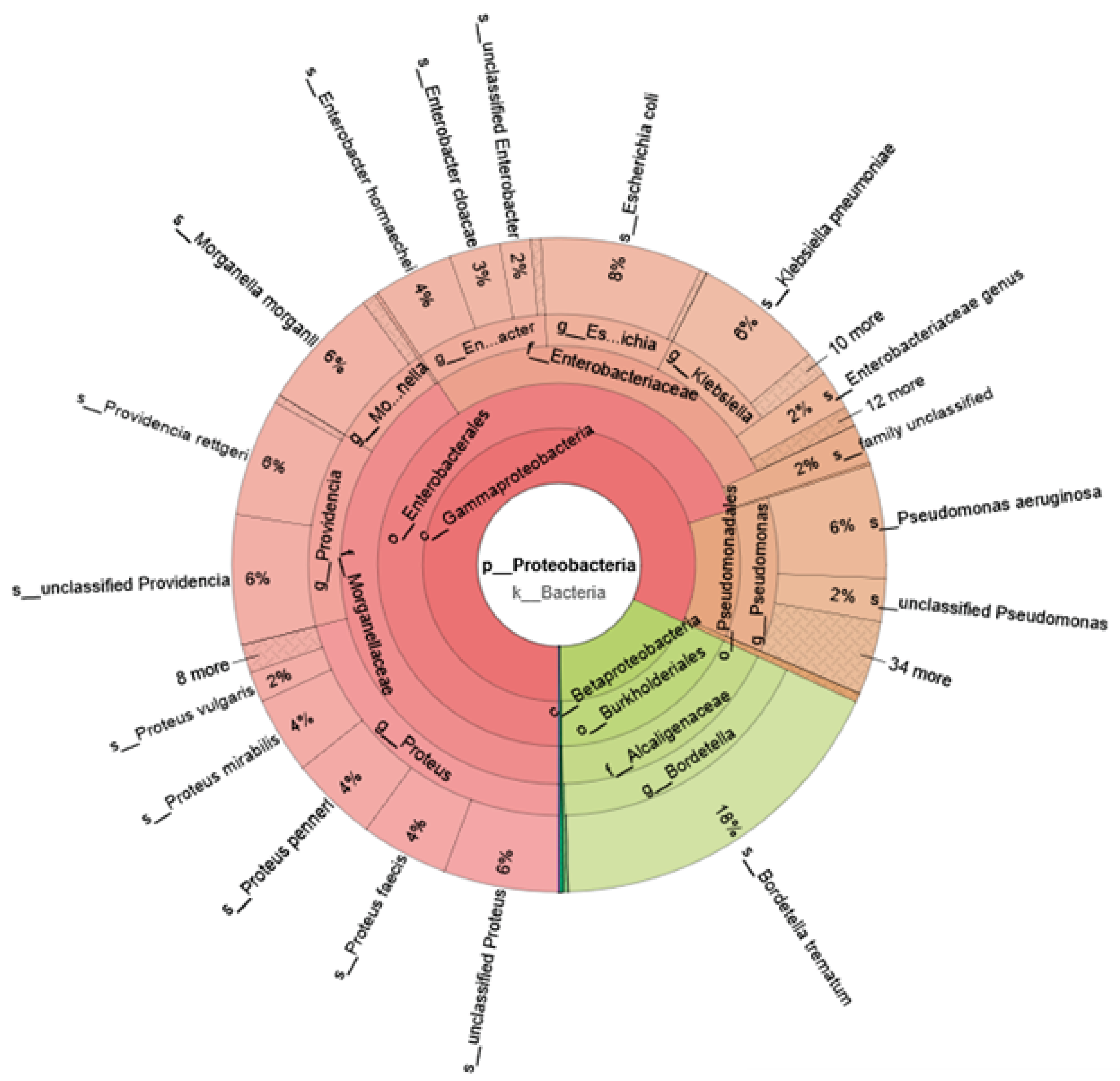
Figure 2.
Krona chart showing the taxonomic classification and relative abundance of Gram-negative bacteria isolated from the piggery environment.
Figure 2.
Krona chart showing the taxonomic classification and relative abundance of Gram-negative bacteria isolated from the piggery environment.
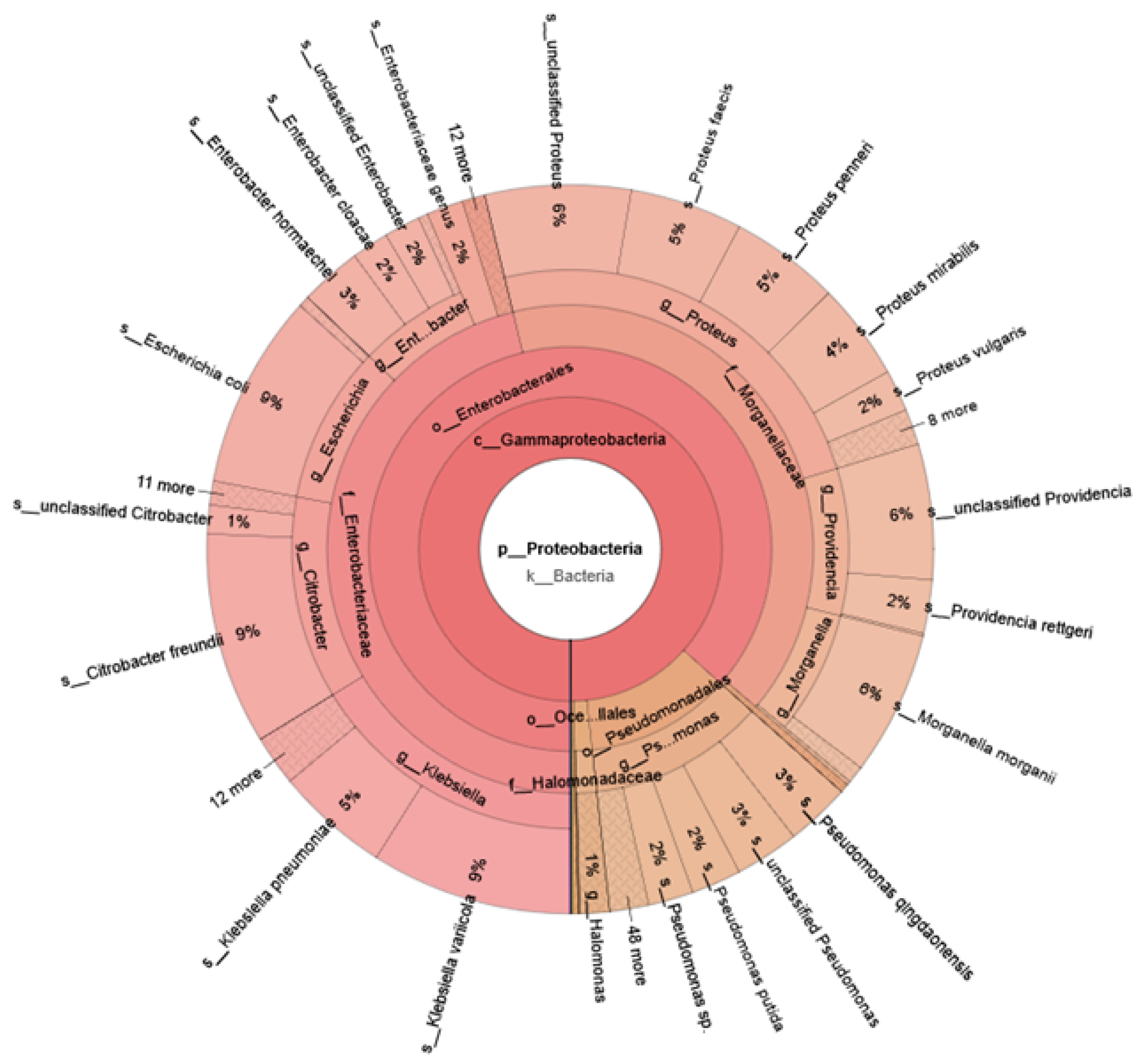
Figure 3.
Krona chart showing the taxonomic classification and relative abundance of Gram-negative bacteria isolated from farm workers and humans living within piggery environment.
Figure 3.
Krona chart showing the taxonomic classification and relative abundance of Gram-negative bacteria isolated from farm workers and humans living within piggery environment.
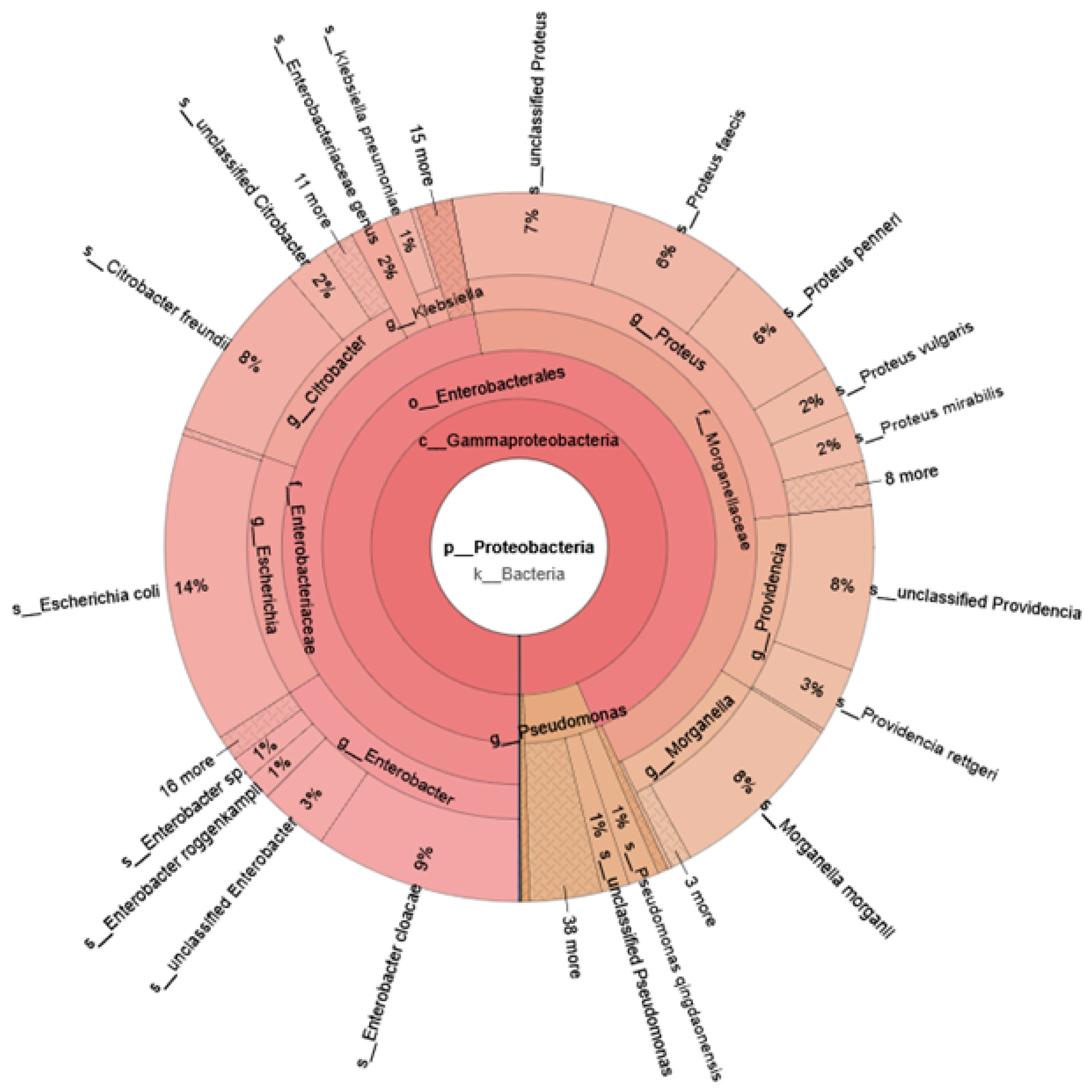

Table 1.
Distribution of samples collected from the pig production system.
| One Health compartment | Sample type | Number of samples (n) | Percentage (%) |
| Pig-associated | Faecal, rectal and skin samples | 132 | 37.08 |
| Environmental | Wastewater, soil and feed samples | 124 | 34.83 |
| Human-associated | Farm workers and other persons associated with piggery environments | 100 | 28.09 |
| Total | 356 | 100.00 |
Table 2.
Cultural, morphological, biochemical characteristics and frequency of occurrence of the Gram-negative bacteria.
Table 2.
Cultural, morphological, biochemical characteristics and frequency of occurrence of the Gram-negative bacteria.
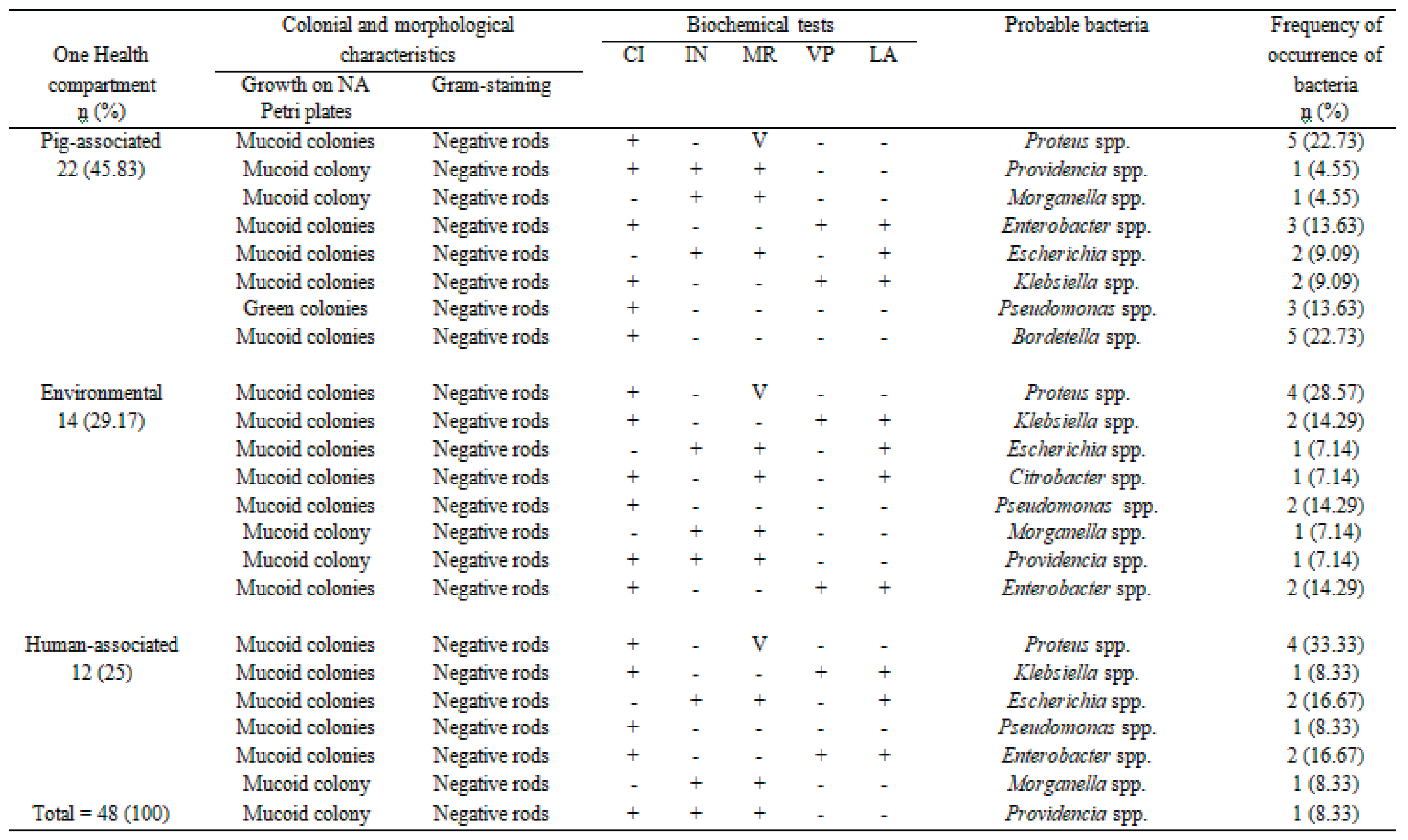 |
NA: Nutrient agar; CI: Citrate test. IN: Indole test: MR: Methyl red test. VP: Voges Proskauer test; LA: Lactose test: +: Positive results. -: Negative results; n: number; %: percentage.
Table 3.
Distribution of Gram-negative bacterial genera.
 |
+: presence of bacteria; -: absence of bacteria; n: number; %: percentage.
Table 4.
Whole Genome Sequence quality metrics of the culture-enriched metagenomic samples using FastQC report.
Table 4.
Whole Genome Sequence quality metrics of the culture-enriched metagenomic samples using FastQC report.
| Sample | Clean sequence | Total bases | Sequence | Q30 | ||
| reads | (Gbp) | length | (%) | |||
| Pig-associated | 23,028,031 | 3.40 | 50 – 150 | 96.50 | ||
| Environmental | 17,626,498 | 2.60 | 50 – 150 | 95.50 | ||
| Human-associated | 20,085,052 | 3.00 | 50 – 150 | 96.00 | ||
Gbp: gigabase pair.
Table 5.
Assembly statistics of the culture-enriched metagenomic samples using the MEGAHIT assembler.
Table 5.
Assembly statistics of the culture-enriched metagenomic samples using the MEGAHIT assembler.
 |
bp: nucleotide base pair.
Table 6.
Whole-genome identification and NCBI accession numbers of Gram-negative bacterial species isolated from pigs.
Table 6.
Whole-genome identification and NCBI accession numbers of Gram-negative bacterial species isolated from pigs.
| Bacterial species | Isolate | NCBI Genome assembly | Biosample | Bioproject | ||
| accession numbers | accession number |
accession number |
||||
| Proteus faecis | AOC-BE 22 | JCAWQV010000001 to JCAWQV010000013 | SAMN61137793 | PRJNA1482785 | ||
| Proteus penneri | AOC-BE 23 | JCAWQW010000001 to JCAWQW010000018 | SAMN61137828 | PRJNA1482785 | ||
| Proteus mirabilis | AOC-BE 24 | JCAWQX010000001 to JCAWQX010000006 | SAMN61137856 | PRJNA1482785 | ||
| Proteus vulgaris | AOC-BE 25 | JCAWQY010000001 to JCAWQY010000007 | SAMN61137951 | PRJNA1482785 | ||
| Providencia rettgeri | AOC-BE 26 | JCAWQZ010000001 to JCAWQZ010000012 | SAMN61137994 | PRJNA1482785 | ||
| Morganella morganii | AOC-BE 27 | JCAWRA010000001 to JCAWRA010000011 | SAMN61138114 | PRJNA1482785 | ||
| Enterobacter hormaechei | AOC-BE 28 | JCAWRB010000001 to JCAWRB010000013 | SAMN61138121 | PRJNA1482785 | ||
| Enterobacter cloacae | AOC-BE 29 | JCAWRC010000001 to JCAWRC010000010 | SAMN61138197 | PRJNA1482785 | ||
| Escherichia coli | AOC-BE 30 | JCAWRD010000001 to JCAWRD010000008 | SAMN61138984 | PRJNA1482785 | ||
| Klebsiella pneumoniae | AOC-BE 31 | JCAWRE010000001 to JCAWRE010000010 | SAMN61138985 | PRJNA1482785 | ||
| Pseudomonas aeruginosa | AOC-BE 32 | JCAWRF010000001 to JCAWRF010000013 | SAMN61139018 | PRJNA1482785 | ||
| Bordetella trematum | AOC-BE 33 | JCAWRG010000001 to JCAWRG010000009 | SAMN61139038 | PRJNA1482785 |
NCBI: National Center for Biotechnology Information, United States.
Table 7.
Whole-genome identification and NCBI accession numbers of Gram-negative bacterial species isolated from piggery environment.
Table 7.
Whole-genome identification and NCBI accession numbers of Gram-negative bacterial species isolated from piggery environment.
| Bacterial species | Isolate | NCBI Genome assembly | Biosample | Bioproject | ||
| accession numbers | accession number |
accession number |
||||
| Klebsiella variicola | AOC-BE1 | JCAWQA010000001 to JCAWQA010000011 | SAMN61034854 | PRJNA1480581 | ||
| Klebsiella pneumoniae | AOC-BE2 | JCAWQB010000001 to JCAWQB010000010 | SAMN61035781 | PRJNA1480581 | ||
| Citrobacter freundii | AOC-BE 3 | JCAWQC010000001 to JCAWQC010000014 | SAMN61038032 | PRJNA1480581 | ||
| Escherichia coli | AOC-BE 4 | JCAWQD010000001 to JCAWQD010000011 | SAMN61038394 | PRJNA1480581 | ||
| Enterobacter hormaechei | AOC-BE 5 | JCAWQE010000001 to JCAWQE010000010 | SAMN61039274 | PRJNA1480581 | ||
| Enterobacter cloacae | AOC-BE 6 | JCAWQF010000001 to JCAWQF010000009 | SAMN61042302 | PRJNA1480581 | ||
| Proteus faecis | AOC-BE 7 | JCAWQG010000001 to JCAWQG010000014 | SAMN61042363 | PRJNA1480581 | ||
| Proteus penneri | AOC-BE 8 | JCAWQH010000001 to JCAWQH010000014 | SAMN61042445 | PRJNA1480581 | ||
| Proteus mirabilis | AOC-BE 9 | JCAWQI010000001 to JCAWQI010000011 | SAMN61042495 | PRJNA1480581 | ||
| Proteus vulgaris | AOC-BE 10 | JCAWQJ010000001 to JCAWQJ010000011 | SAMN61047502 | PRJNA1480581 | ||
| Providencia rettgeri | AOC-BE 11 | JCAWQK010000001 to JCAWQK010000004 | SAMN61049413 | PRJNA1480581 | ||
| Morganella morganii | AOC-BE 12 | JCAWQL010000001 to JCAWQL010000016 | SAMN61053698 | PRJNA1480581 | ||
| Pseudomonas qingdaonensis | AOC-BE 13 | JCAWQM010000001 to JCAWQM010000014 | SAMN61054322 | PRJNA1480581 | ||
| Pseudomonas putida | AOC-BE 14 | JCAWQN010000001 to JCAWQN010000008 | SAMN61054586 | PRJNA1480581 |
NCBI: National Center for Biotechnology Information, United States.
Table 8.
Whole-genome identification and NCBI accession numbers of Gram-negative bacterial species isolated from farm workers and humans living within the vivinity of piggery environment.
Table 8.
Whole-genome identification and NCBI accession numbers of Gram-negative bacterial species isolated from farm workers and humans living within the vivinity of piggery environment.
| Bacterial species | Isolate | NCBI Genome assembly | Biosample | Bioproject | ||
| accession numbers | accession number |
accession number |
||||
| Enterobacter cloacae | AOC-BE 43 | JCAWRQ010000001 to JCAWRQ010000018 | SAMN61409428 | PRJNA1489733 | ||
| Enterobacter roggenkampii | AOC-BE 44 | JCAWRR010000001 to JCAWRR010000011 | SAMN61409448 | PRJNA1489733 | ||
| Escherichia coli | AOC-BE 45 | JCAWRS010000001 to JCAWRS010000029 | SAMN61409450 | PRJNA1489733 | ||
| Citrobacter freundii | AOC-BE 46 | JCAWRT010000001 to JCAWRT010000006 | SAMN61409451 | PRJNA1489733 | ||
| Klebsiella pneumoniae | AOC-BE 47 | JCAWRU010000001 to JCAWRU010000005 | SAMN61409642 | PRJNA1489733 | ||
| Proteus faecis | AOC-BE 48 | JCAWRV010000001 to JCAWRV010000022 | SAMN61409712 | PRJNA1489733 | ||
| Proteus penneri | AOC-BE 49 | JCAWRW010000001 to JCAWRW010000013 | SAMN61409762 | PRJNA1489733 | ||
| Proteus vulgaris | AOC-BE 50 | JCAWRX010000001 to JCAWRX010000003 | SAMN61410011 | PRJNA1489733 | ||
| Proteus mirabilis | AOC-BE 51 | JCAWRY010000001 to JCAWRY010000008 | SAMN61410230 | PRJNA1489733 | ||
| Providencia rettgeri | AOC-BE 52 | JCAWRZ010000001 to JCAWRZ010000005 | SAMN61412252 | PRJNA1489733 | ||
| Morganella morganii | AOC-BE 53 | JCAWSA010000001 to JCAWSA010000027 | SAMN61412284 | PRJNA1489733 | ||
| Pseudomonas qingdaonensis | AOC-BE 54 | JCAWSB010000001 to JCAWSB010000023 | SAMN61412356 | PRJNA1489733 |
NCBI: National Center for Biotechnology Information, United States.
Table 9.
Distribution of the Gram-negative bacterial species.
| Bacterial species | One Health compartments | |||||
| Pig-associated | Environmental | Human-associated | ||||
| Proteus faecis | + | + | + | |||
| Proteus penneri | + | + | + | |||
| Proteus mirabilis | + | + | + | |||
| Proteus vulgaris | + | + | + | |||
| Providencia rettgeri | + | + | + | |||
| Morganella morganii | + | + | + | |||
| Enterobacter hormaechei | + | + | ||||
| Enterobacter cloacae | + | + | + | |||
| Escherichia coli | + | + | + | |||
| Klebsiella pneumoniae | + | + | + | |||
| Pseudomonas aeruginosa | + | - | - | |||
| Bordetella trematum | + | - | - | |||
| Klebsiella variicola | - | + | - | |||
| Citrobacter freundii | - | + | + | |||
| Pseudomonas qingdaonensis | - | + | + | |||
| Pseudomonas putida | - | + | - | |||
| Enterobacter roggenkampii | - | - | + | |||
Disclaimer/Publisher’s Note: The statements, opinions and data contained in all publications are solely those of the individual author(s) and contributor(s) and not of MDPI and/or the editor(s). MDPI and/or the editor(s) disclaim responsibility for any injury to people or property resulting from any ideas, methods, instructions or products referred to in the content. |
© 2026 by the authors. Licensee MDPI, Basel, Switzerland. This article is an open access article distributed under the terms and conditions of the Creative Commons Attribution (CC BY) license (http://creativecommons.org/licenses/by/4.0/).
Copyright: This open access article is published under a Creative Commons CC BY 4.0 license, which permit the free download, distribution, and reuse, provided that the author and preprint are cited in any reuse.