

Submitted:
08 October 2026
Posted:
10 October 2026
You are already at the latest version
Abstract
Fritillaria thunbergii Miq. (Zhe Beimu) is traditionally used to clear heat, resolve phlegm, relieve cough, and disperse nodules. Its steroidal and isosteroidal alkaloids, particularly peimine, peiminine, peimisine, and sipeimine, exhibit antitussive, anti-inflammatory, anti-fibrotic, analgesic, anticancer, and metabolic activities. However, the transition from traditional multi-component preparations to clinically deployable alkaloid products remains constrained by uncertain exposure–efficacy relationships, variable disposition, and formulation-dependent safety. This review integrates evidence on the phytochemical classification, molecular pharmacology, absorption, distribution, metabolism, excretion, and toxicology of Fritillaria thunbergii alkaloids. Particular attention is given to exposure–efficacy margins, pathological changes in gastrointestinal and pulmonary disposition, hERG-mediated cardiac risk, and the contrast between isolated-monomer and standardized botanical-product development. Nanocarriers, pulmonary delivery, combination therapy, bioactivity-guided quality control, and FDA/NMPA development pathways are evaluated within a bench-to-bedside framework. The evidence supports multi-target actions involving TGF-β/Smad, NF-κB/MAPK, PI3K/Akt/mTOR, muscarinic and nicotinic receptors, voltage-gated ion channels, and P-glycoprotein. Translation is nevertheless limited by low and variable oral bioavailability, intestinal P-glycoprotein efflux, first-pass metabolism, and a mismatch between many micromolar in vitro effects and achievable systemic exposure. Inflammatory states may increase tissue penetration and systemic exposure, further narrowing the therapeutic window. hERG blockade by major alkaloids is the principal safety concern, whereas matrix interactions may partly attenuate this liability. The most credible development strategy prioritizes physiologically feasible targets, localized pulmonary delivery, exposure-controlled nanocarriers, rigorous toxicokinetic and cardiac monitoring, and product-specific standardization. Clinical advancement will require indication-specific exposure thresholds, disease-state pharmacokinetic modelling, GLP-compliant safety studies, and early-phase trials with intensive electrocardiographic surveillance. Targeted inhalation may offer the clearest route for respiratory indications by increasing local lung exposure while limiting systemic cardiotoxicity. Development should also explicitly compare a single-new-chemical-entity strategy with a standardized botanical-drug pathway capable of preserving beneficial matrix effects. Together, these priorities provide an actionable roadmap for translating Fritillaria thunbergii alkaloids into reproducible and clinically testable therapies.
Keywords:
Fritillaria thunbergii
; steroidal and isosteroidal alkaloids
; clinical translation
; pharmacokinetic barriers
; nanotechnology-based drug delivery
; bioactivity-guided standardization
1. Introduction
1.1. Ethnopharmacological Background and Therapeutic Tradition
For centuries, dried bulbs of Fritillaria thunbergii Miq. (Liliaceae), with taxonomic authorities rigorously validated against World Flora Online (WFO) and Plants of the World Online (POWO)— commonly called “Zhe Beimu” (ZBM) or “Xiang Beimu” in Chinese traditional medicine, have played a key role in treating respiratory and inflammatory conditions in East Asia [1,2]. According to Traditional Chinese Medicine (TCM) principles, ZBM is considered a cold and bitter herb that targets the Lung and Heart meridians [2]. It is used to clear pathogenic heat and dampness, dissolve phlegm, ease stubborn cough and difficulty breathing, and reduce swelling of nodes or abscesses [1,3].
Historically, it has been an essential component in numerous polyherbal formulations such as Danggui Beimu Kushen Wan, prescribed to combat severe respiratory conditions such as lung abscesses, lung atrophy, scrofula, chronic bronchitis, and deep-tissue swellings [1,4]. These traditional preparations deliver primary steroidal alkaloids alongside a complex suite of matrix co-passengers, including steroidal saponins, flavonoids, and organic acids. Today, advances in analytical chemistry and high-throughput biological screening have allowed researchers to isolate the primary active secondary metabolites responsible for these therapeutic effects, notably a diverse family of steroidal and isosteroidal alkaloids [5,6,7].
However, the modern pharmacological transition from multi-component herbal decoctions to isolated single-compound entities introduces a profound translational dichotomy. Modern drug development overwhelmingly favours the single-compound reductionist model—isolating pure New Chemical Entities (NCEs)—to achieve precise receptor-binding kinetics, unambiguous pharmacokinetic modelling, and standardized dosing [1]. Nevertheless, for Fritillaria thunbergii alkaloids, isolating individual monomers from their natural botanical matrix exposes acute liabilities absent or attenuated in traditional total extracts [1,8,9]. Single monomer isolation unmasks severe off-target cardiotoxic risks, most notably voltage-gated human ether-à-go-go-related gene (hERG) potassium channel blockade, which can precipitate QT-interval prolongation and fatal ventricular arrhythmias [8,9]. In contrast, crude extracts and total-alkaloid fractions contain complex assemblies of secondary isosteroidal analogues and non-alkaloidal matrix co-constituents [1,9]. These co-existing molecules exhibit subtle pharmacodynamic interactions—including competitive binding, altered channel-gating kinetics, and multi-target buffering—that naturally mitigate cardiotoxic liabilities while preserving systemic anti-inflammatory and anti-fibrotic efficacy [9]. Evaluating whether clinical translation should proceed via single-monomer NCE isolation or through standardized total-alkaloid botanical drug products represents a decisive milestone in bridging the gap between traditional ZBM therapeutics and modern clinical medicine [1,9].
1.2. The Knowledge Gap in Current Literature
Although publications on the chemical profiles and raw extracts of various Fritillaria species have increased, a significant knowledge gap persists in the scientific literature. Most reviews focus primarily on ethnopharmacological history or initial in vitro testing of crude, multi-component extracts [2]. While these studies provide important knowledge of the plant’s traditional uses, they do not explain the mechanism of action of its isolated bioactive alkaloids nor assess them within comprehensive biopharmaceutical frameworks [1].
The current literature is highly fragmented: network pharmacology studies often predict multiple molecular targets without testing the interactions through in-vivo disease models [3]. Conversely, pharmacokinetic research notes low systemic absorption, yet seldom links these conclusions to the chemical structure of the constituents or their active transport routes [5]. Overall, these assorted preclinical results remain largely unintegrated into an organized structure for clinical development. The pathway from basic laboratory findings to standardized, human-grade pharmaceuticals remain completely unmapped.
1.3. Problem Statement
The critical bottleneck preventing widespread clinical implementation and regulatory approval of Fritillaria thunbergii-derived alkaloids is their complex biopharmaceutical and toxicological profile. Although purified alkaloids such as peimine, peiminine, and peimisine show considerable multi-target activity in cell cultures, they possess acute liabilities that preclude standard oral or systemic dosing [10]. These liabilities include exceptionally poor and highly variable oral bioavailability, caused by poor passive membrane permeability and high affinity for active efflux transporters such as P-glycoprotein (P-gp).
Furthermore, emerging toxicological data reveal a key cardiac safety concern: several of these prominent steroidal alkaloids act as high-affinity inhibitors of the human ether-à-go-go-related gene (hERG) potassium channels, presenting a real risk of QT-interval prolongation and dangerous ventricular arrhythmias [8]. Without resolving how to achieve safe therapeutic systemic exposure while preventing these off-target cardiac interactions, these compounds will remain confined to preclinical laboratories and unable to benefit patients at the bedside.
1.4. Justification
An exhaustive bench-to-bedside review is urgently needed to bridge the gap between practical natural product chemistry and modern precision medicine. Global health systems confront a growing burden from chronic, intractable inflammatory and degenerative conditions, such as Idiopathic Pulmonary Fibrosis (IPF), multidrug-resistant non-small cell lung cancer (NSCLC), and type 2 diabetes mellitus, all of which lack completely effective standard-of-care options [3,11]. Since Fritillaria thunbergii alkaloids naturally target these multi-pathway diseases simultaneously, they offer an invaluable therapeutic repository.
This review provides a vital service by methodically consolidating the “scattered” data on chemical classification, detailed molecular pathways, drug metabolism profiles under healthy and pathological states, and cardiac toxicity parameters. By establishing a definitive “Translational Roadmap”, highlighting advanced nanotechnology delivery platforms, targeted pulmonary delivery methods, and bioactivity-guided quality control, this document provides a practical guide for pharmaceutical scientists, clinicians, and regulatory authorities to safely advance Fritillaria thunbergii alkaloids into human clinical trials.
2. Phytochemical Diversity and Structural Classification
The complex pharmacological footprint of Fritillaria thunbergii Bulbus originates from its considerable chemical space, dominated by steroidal alkaloids that reflect the Liliaceae family’s evolutionary defence mechanisms [5]. Structurally, these molecules feature a highly conserved cyclopentanoperhydrophenanthrene steroidal nucleus combined with a nitrogen-containing ring system [2]. They are broadly divided into two structural skeletons: true steroidal alkaloids and isosteroidal alkaloids, which are further subclassified by carbon-skeleton configuration into cevanine, veratramine, jervine, and solanidine types [2,12].
2.1. Cevanine-Type and Isosteroidal Frameworks
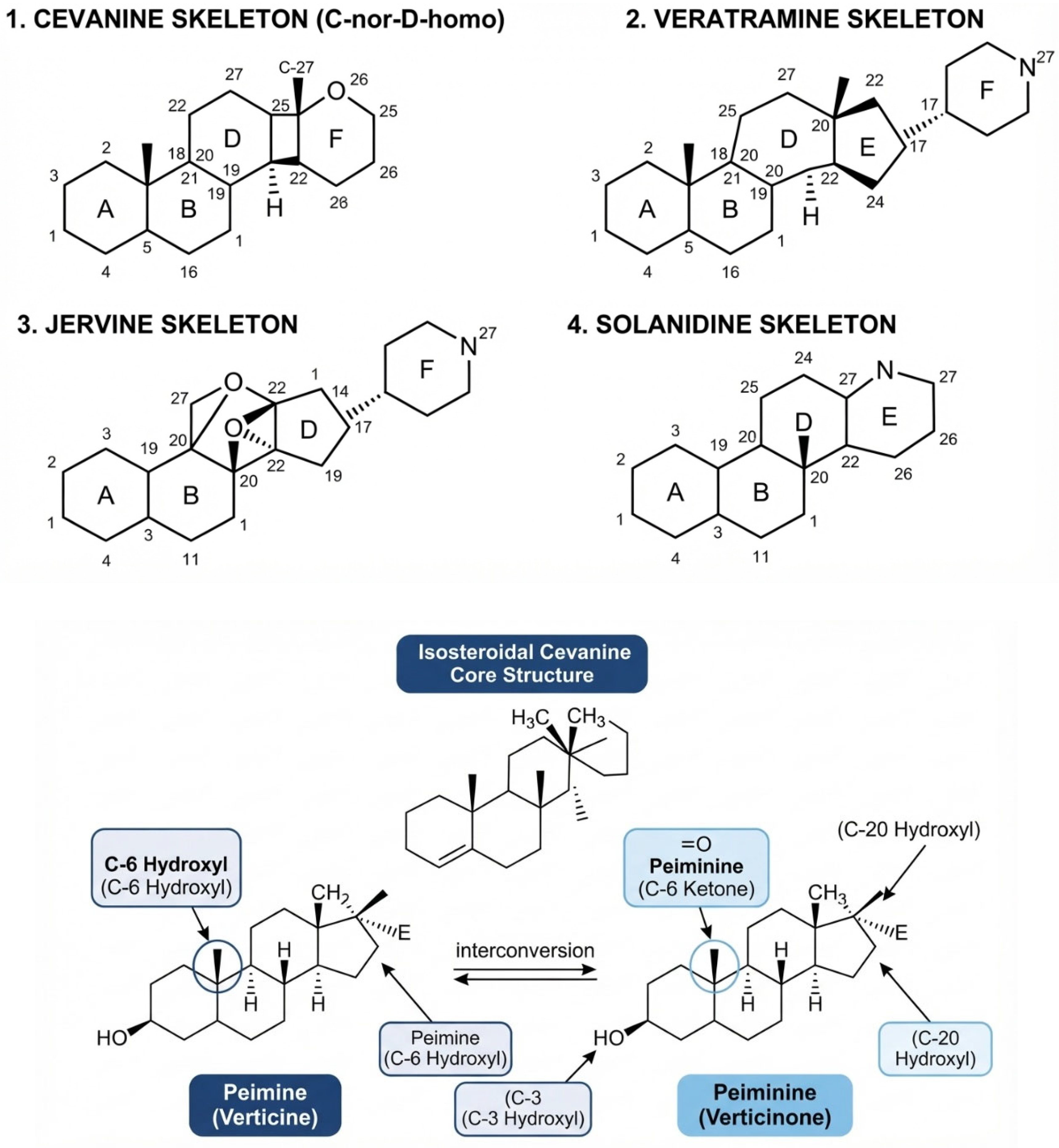
A certain majority of the dominant bioactive compounds isolated from ZBM belong to the cevanine-type isosteroidal category [2,6,7]. Unlike standard steroidal skeletons, the isosteroidal configuration involves a rearranged C-nor-D-homo steroidal ring linkage, where ring C is contracted to a five-membered ring and ring D is expanded to a six-membered ring [12]. This structural rearrangement alters the spatial orientation of the peripheral functional groups, drastically affecting their target-binding kinetics.
The primary chemical marker and most abundant alkaloid in Fritillaria thunbergii is peimine (also known in the literature as Verticine; C27H45NO3) [5,8]. Structurally, peimine features a polyhydroxylated skeleton with three distinct hydroxyl (-OH) groups at the C-3, C-6, and C-20 positions of the cevanine core, along with a tertiary nitrogen atom at the junction of the E and F rings [8]. This configuration renders the molecule weakly basic and highly polar. Related to this is peiminine (Verticinone; C27H43NO3), the oxidized form of peimine, in which the hydroxyl group at the C-6 position is replaced by a ketone (=O) [5,9,13,14]. This single structural difference significantly alters lipophilicity (log P) and electronic density distribution, leading to subtle but distinct differences in pharmacological potency and metabolic stability.
2.2. Veratramine, Jervine, and Solanidine Frameworks
Alongside the dominant cevanine framework, the other three subclasses contribute critical structural and pharmacological dimensions to the plant’s alkaloid profile:
Veratramine-Type: Characterized by a modified heterocyclic ring system fused to a standard or rearranged steroid nucleus, exhibiting unique spatial orientation and bioactivity profiles [2,6].
Jervine-Type: Distinguished by a characteristic oxygen-bridged or modified C-nor-D-homo framework containing a distinct functionalized piperidine ring, known for potent receptor-modulating activities [2,12].
Solanidine-Type: Possesses a steroidal-solasodine or solanidine skeleton featuring a condensed indolizidine-type E/F ring system, contributing to membrane interaction and multi-target properties [6,15].
Figure 1.
Comprehensive structural classification of Fritillaria thunbergii alkaloids. (A) Core carbon skeletons of the four distinct subclasses (cevanine, veratramine, jervine, and solanidine), annotated with canonical ring lettering (A–F), standard carbon numbering, stereochemical wedging/dashing at chiral centers (C-20, C-22, C-25), and nitrogen atom positions within heterocyclic rings. (B) Chemical interconversion between peimine (verticine) and peiminine (verticinone), highlighting functional group differences at C-3, C-6, and C-20 on the isosteroidal cevanine core.
Other minor but significant compounds include Peimisine (C27H41NO3), an alkaloid defined by a higher degree of unsaturation and specific carbonyl substitutions, and Sipeimine (C27H43NO3) [5,13]. These alkaloids exist within a dynamic equilibrium within the plant matrix [9,13,14]. From a biopharmaceutical perspective, the high polar surface area (PSA) created by multiple peripheral hydroxyl groups, combined with the protonation state of the tertiary amine at physiological pH, predicts that these compounds will encounter difficult challenges when passing through hydrophobic cellular membranes, directly affecting their absorption profile [8].
3. Preclinical Pharmacology and Molecular Mechanisms
Modern molecular pharmacology fully supports ZBM’s traditional attributes as a multi-targeted, systemic medicine. Purified Fritillaria thunbergii alkaloids do not interact with a single biological receptor; instead, they target multiple linked cellular pathways simultaneously [16,17,18]. This section therefore details their primary therapeutic applications across respiratory, inflammatory, oncological, and metabolic pathologies alongside a critical evaluation of translational exposure margins.
3.1. Respiratory Effects and Anti-Fibrotic Mechanisms
The primary clinical application of ZBM remains the treatment of chronic obstructive and restrictive airway disorders [1,19,20]. Idiopathic Pulmonary Fibrosis (IPF) is an age-related, lethal interstitial lung disease characterized by aberrant fibroblast proliferation, excessive extracellular matrix (ECM) deposition, and irreversible destruction of the alveolar membrane [3]. Modern systems biology and network pharmacology show that ZBM contains at least 17 highly druggable compounds that interact with key regulatory mediators of fibrogenesis [3]. Molecular docking and real-time quantitative PCR (qRT-PCR) analyses show that ZBM alkaloids directly downregulate the transcriptional expression of core pro-fibrotic targets [3].
Peimine and peiminine disrupt the Transforming Growth Factor-beta 1 (TGF-β1) signaling axis [10]. By preventing phosphorylation of Smad2 and Smad3, these alkaloids suppress lung fibroblast activation and inhibit differentiation into contractile, alpha-smooth muscle actin (α-SMA)-positive myofibroblasts. This directly attenuates the downstream synthesis of collagen types I and III, halting the progression of lung tissue remodeling. Simultaneously, ZBM alkaloids exhibit potent antitussive, expectorant, and bronchodilatory actions [1,2]. Mucus hypersecretion is a hallmark of chronic bronchitis and asthma, driven largely by overexpression of the gel-forming mucin gene MUC5AC in the human respiratory epithelium [2]. Stimulation with Epidermal Growth Factor (EGF), Tumor Necrosis Factor-alpha (TNF-α), or phorbol 12-myristate 13-acetate (PMA) strongly activates the MUC5AC promoter [2]. Alkaloids such as verticine, ebeiedine, and soengbeisine block this process by intercepting the upstream signaling pathway, significantly decreasing MUC5AC mRNA and protein expression [2]. Furthermore, these compounds promote airway smooth muscle relaxation and mucus clearance by inhibiting M2 and M3 muscarinic acetylcholine receptors, thereby reducing intracellular calcium influx (Ca2+) and preventing bronchoconstriction [8].
3.2. Anti-Inflammatory and Analgesic Cascades
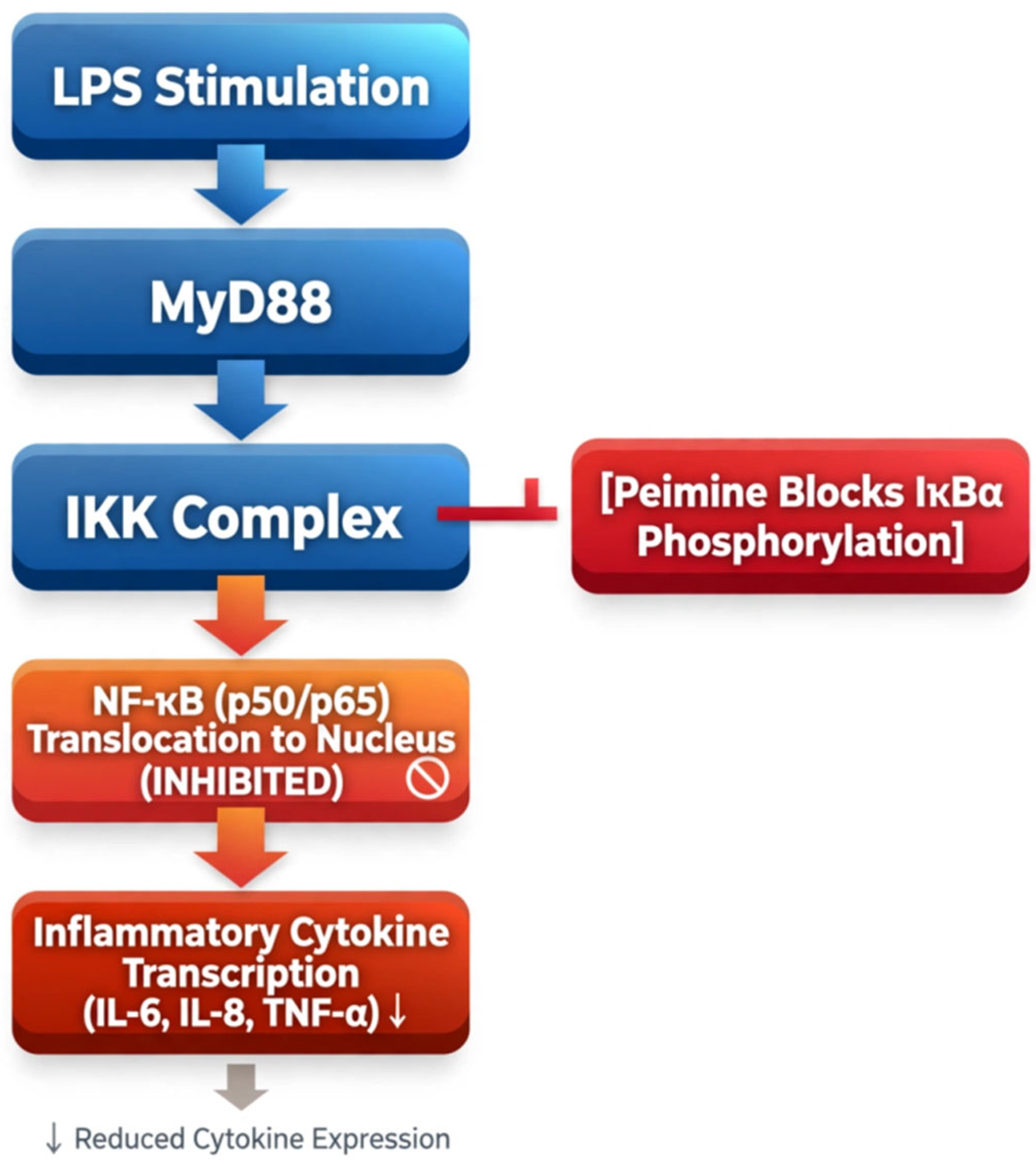
The anti-inflammatory effects of Fritillaria thunbergii alkaloids go beyond the respiratory tract [1,21,22]. Upon exposure to inflammatory triggers such as lipopolysaccharide (LPS), the Myeloid Differentiation Primary Response 88 (MyD88) adapter protein recruits Interleukin-1 receptor-Associated Kinases (IRAKs), initiating a phosphorylation cascade that activates the Mitogen-Activated Protein Kinase (MAPK) and Nuclear Factor-kappa B (NF-κB) pathways [2]. Peimine is a highly specific inhibitor of this cascade. It prevents phosphorylation and subsequent degradation of the Inhibitor of κB alpha (IκBα), keeping the NF-κB p50/p65 heterodimer sequestered in the cytoplasm in an inactive state [2,23]. This blocks transcription of pro-inflammatory cytokines, resulting in a marked, dose-dependent decrease in secretion of Interleukin-6 (IL-6), Interleukin-8 (IL-8), and TNF-α [2,22]. Concurrently, peimine attenuates phosphorylation of the three primary MAPK sub-pathways: Extracellular Signal-Regulated Kinase (ERK), c-Jun N-terminal Kinase (JNK), and p38 MAPK, thereby suppressing chronic tissue inflammation [2].
Figure 2.
A flow chart illustrating the anti-inflammatory mechanism of peimine through inhibition of LPS-induced NF-κB signaling.
Figure 2.
A flow chart illustrating the anti-inflammatory mechanism of peimine through inhibition of LPS-induced NF-κB signaling.
Recent electrophysiological and structural biology studies have revealed that these anti-inflammatory properties are closely linked to the modulation of ligand-gated and voltage-gated ion channels. Peimine interacts with high-affinity muscle-type nicotinic acetylcholine receptors (nAChRs) via three different mechanisms:
- Open-Channel Blockade: It exhibits voltage-dependent inhibition of acetylcholine-elicited membrane currents (IACh), physically blocking the receptor pore when opened [8].
- Enhanced Desensitization: It accelerates the decay of IACh and slows down receptor deactivation, trapping the channel in a non-conducting, desensitized state [8].
- Resting-State Blockade: It binds to the resting conformation of the nAChR, preventing subsequent activation by endogenous agonists [8].
Virtual docking and molecular modeling studies show that peimine inserts deep into the nAChR transmembrane domain, using hydrophobic interactions with surrounding amino acid residues to secure its position [8]. This high-affinity binding is directly associated with peripheral anti-inflammatory pathways and somatosensory modulation.
For pain management, peimine and peiminine act as potent use-dependent blockers of voltage-gated sodium channels, particularly the Nav1.7 subtype [2,24]. Because Nav1.7 is primarily distributed in peripheral sensory neurons and sympathetic ganglion neurons and operates as a critical threshold amplifier for pain signal transmission to the dorsal root ganglia (DRG), ZBM alkaloid blockade suppresses inflammatory and neuropathic pain [8,25].
In animal models, verticinone at 3 mg/kg shows strong analgesic efficacy, with data showing its peripheral stabilizing effects last longer than standard temporary blockers [26]. Furthermore, peiminine blocks voltage-gated potassium channels (Kv1.3), an ion channel highly expressed in activated T-lymphocytes and macrophages, providing an additional pathway for suppressing auto-inflammatory cascades [2,8].
3.3. Oncological Interventions: Apoptosis, Autophagy, and MDR Reversal
In oncology, Fritillaria thunbergii alkaloids show strong multi-pathway antitumor efficacy, particularly against non-small cell lung cancer (NSCLC), human breast adenocarcinoma (MCF-7), gastric cancer, and leukemia [2,11,27]. Bioinformatics-driven network pharmacology confirms that these alkaloids target over 300 distinct proteins involved in tumor cell survival and migration. They exert their primary cytotoxic effect by simultaneously activating programmed cell death (apoptosis) and cellular self-digestion (autophagy) [27,28,29].
After apoptosis is induced, these alkaloids disrupt mitochondrial membrane potential, triggering upregulation of pro-apoptotic proteins such as Bax while simultaneously downregulating anti-apoptotic proteins like Bcl-2 [10]. This altered Bax/Bcl-2 ratio leads to mitochondrial release of cytochrome C into the cytoplasm, activating initiator Caspase-9 and executioner Caspase-3, which results in proteolytic cleavage of Poly (ADP-ribose) Polymerase 1 (PARP-1) and irreversible genomic DNA fragmentation.
These compounds also activate autophagy by modulating the Phosphoinositide 3-kinase/Akt/Mechanistic Target of Rapamycin (PI3K/Akt/mTOR) signaling axis [2,27]. By suppressing Akt phosphorylation, ZBM alkaloids downregulate downstream mTOR activity, relieving baseline inhibition of the ULK1 complex and accelerating the conversion of cytosolic LC3-I to its lipidated, autophagosome-bound form (LC3-II). This combined activation of apoptosis and autophagy provides a powerful approach for overcoming apoptotic resistance in refractory solid tumors.
Besides direct cytotoxicity, these alkaloids target the tumor inflammatory microenvironment and help overcome Multidrug Resistance (MDR) [10]. Verticine significantly downregulates the secretion and mRNA expression of pro-angiogenic and metastatic factors, including Transforming Growth Factor-beta (TGF-β), Vascular Endothelial Growth Factor (VEGF), monocyte chemoattractant protein-1 (MCP-1), and urokinase-type plasminogen activator (u-PA) [10]. This suppresses tumor neo-vascularization, alters blood rheology, and reduces the infiltration of tumor-associated neutrophils and macrophages [10].
Most importantly, verticine exhibits significant multidrug resistance reversal activity [10]. In resistant cell lines (such as MCF-7/ADR and MCF-7/TAM), overexpression of ATP-binding cassette (ABC) efflux transporters, particularly P-glycoprotein (P-gp), actively pumps out chemotherapeutic agents such as cisplatin, doxorubicin, or paclitaxel, rendering them ineffective. Verticine downregulates P-gp expression on the tumor cell membrane, preventing drug efflux and restoring intracellular therapeutic concentrations, thereby acting as a potent chemosensitizer [10].
3.4. Translational Exposure-Efficacy Margins: Bridging the In Vitro-In Vivo Disconnect.
The central translational test is the exposure margin: whether achievable in vivo concentrations can reach an efficacy-associated in vitro threshold while remaining below the concentration associated with toxicity. For Fritillaria thunbergii alkaloids, this comparison reveals a profound disconnect between potent in vitro mechanistic findings and achievable pharmacokinetic profiles. Several cited in vitro studies report biological activities and receptor interactions at double-digit micromolar concentrations, notably hERG potassium channel inhibition (for peimine, for peiminine, and for sipeimine) and anti-plasmodial activity requiring [8,9].
- The Pharmacokinetic Paradox: These micromolar activity thresholds must be compared with the concentrations achievable after administration. Low absolute oral bioavailability and substantial intestinal P-glycoprotein (P-gp)-mediated efflux make sustained systemic micromolar exposure practically unachievable through standard oral dosing without approaching or exceeding cardiac toxicity limits.
- Disease-State Exposure Shifts: DNBS-induced colitis increased peimisine systemic exposure approximately fivefold through compromised tight junctions and P-gp downregulation, including increases in overall exposure and peak plasma concentration [5]. This shift may narrow the gap between in-vitro activity and in-vivo exposure, but it does not by itself establish target feasibility: the disease-state Cmax must still be compared directly with each pathway’s EC50 or IC50. Dependence on inflammation-driven absorption or toxic systemic loading is therefore not a clinically viable strategy.
- Sub-Micromolar vs Micromolar Target Thresholds: A vital distinction must therefore be drawn between pathways operating within safe, sub-micromolar physiological ranges versus high-threshold micromolar effects. While certain low-dose anti-inflammatory or localized receptor interactions may function effectively, high-concentration phenomena (such as broad anti-plasmodial screening and high-occupancy ion channel interactions) cannot be safely reached via conventional systemic circulation.
3.4.1. Pathway Categorization
- Physiologically Feasible Pathways: A pathway should be considered physiologically feasible only when its EC50 or IC50 is at or below the observed Cmax, including the approximately fivefold disease-state increase in peimisine exposure. On that basis, sub-micromolar targets such as M3 muscarinic receptor antagonism, anti-inflammatory cytokine suppression (IL-1β and TNF-α suppression at <1 μM), and targeted mucin (MUC5AC) gene-expression regulation may operate within safe therapeutic plasma concentrations.
- High-Risk/Unachievable Pathways: High micromolar activities (>15—50 μM), including broad anti-plasmodial effects and high-dose ion channel blockades, cannot be achieved via oral systemic administration without breaching the hERG toxicity threshold IC50 ≈26.1 μM. This reinforces the explicit need for localized (pulmonary) delivery strategies.
The exposure mismatch therefore supports advanced delivery strategies, such as nanoparticle encapsulation or targeted pulmonary inhalation, that can raise local concentrations at the site of disease while keeping systemic exposure below hERG cardiotoxicity thresholds.
3.5. Metabolic Pathways and Secondary Activities
Beyond their classical indications, recent studies have highlighted notable metabolic applications for Fritillaria alkaloids, particularly in managing Type 2 Diabetes Mellitus [25,30]. The minor isosteroidal alkaloid peimisine has appeared as a promising anti-diabetic lead candidate. Computational target fishing, protein-protein interaction (PPI) network analyses, and in vitro metabolic assays show that peimisine is a high-affinity inhibitor of Dipeptidyl Peptidase-IV (DPP-4) [25,30].
By inhibiting DPP-4 enzymatic activity, peimisine prevents the rapid degradation of endogenous incretin hormones, specifically Glucagon-Like Peptide-1 (GLP-1) [30]. Elevated GLP-1 levels stimulate glucose-dependent insulin secretion from pancreatic β-cells while suppressing glucagon secretion from α-cells [30].
Furthermore, peimisine directly enhances peripheral insulin sensitivity by increasing glucose uptake and suppressing active gluconeogenesis in hepatic tissues (such as HepG2 cells) through up-regulation of the Adenosine Monophosphate-Activated Protein Kinase (AMPK) pathway [25,31]. Peiminine has also been shown to support pancreatic health by modulating and stabilizing the secretory functions of pancreatic β-TC6 cells under metabolic stress [25,31].
Furthermore, these alkaloids exhibit unusual anti-parasitic activity [25,32]. Chloroform fractions of Fritillaria extracts containing peimine, peiminine, and puqiedinone show significant inhibitory activity against multidrug-resistant strains of Plasmodium falciparum at low concentrations (10–25 μM) [32]. The main mechanism of chloroquine resistance in Plasmodium falciparum malaria is mediated by the Plasmodium falciparum Chloroquine Resistance Transporter (Pf-CRT), an efflux protein located on the parasite’s digestive vacuole membrane that pumps out antimalarial drugs [32]. ZBM alkaloids bind directly to Pf-CRT, sterically blocking its efflux function [25]. This traps chloroquine inside the vacuole, restoring the parasite’s susceptibility to standard therapies and making these alkaloids effective adjuncts for treating multidrug-resistant falciparum malaria [25,32].
4. Pharmacokinetics, Bioavailability, and Disposition Barriers
Despite their strong preclinical efficacy, the clinical translation of Fritillaria thunbergii alkaloids is severely limited by unfavorable biopharmaceutical properties [1]. Understanding their Absorption, Distribution, Metabolism, and Excretion (ADME) pathways is therefore necessary to design effective clinical translation protocols.
4.1. Bioavailability Constraints and Absorption Dynamics
The main obstacle to clinical efficacy via standard oral administration is exceptionally low and unstable absolute oral bioavailability (F). Across multiple rodent and canine pharmacokinetic studies, the systemic bioavailability of the primary alkaloids ranges from a modest 12% to roughly 54% [1]. This wide variance reflects differences in dose levels, formulation vehicles, and analytical methods.
Physiochemically, cevanine-type steroidal alkaloids are complex, high-molecular-weight, polyhydroxylated molecules. Their high polar surface area (PSA) and weak basicity connote that at physiological intestinal pH, a significant portion of the drug remains ionized. This substantially limits passive, transcellular lipophilic membrane permeability across the intestinal enterocyte barrier.
Figure 3.
A schematic trace of the biopharmaceutical barriers encountered by Fritillaria alkaloids after oral ingestion.
Figure 3.
A schematic trace of the biopharmaceutical barriers encountered by Fritillaria alkaloids after oral ingestion.
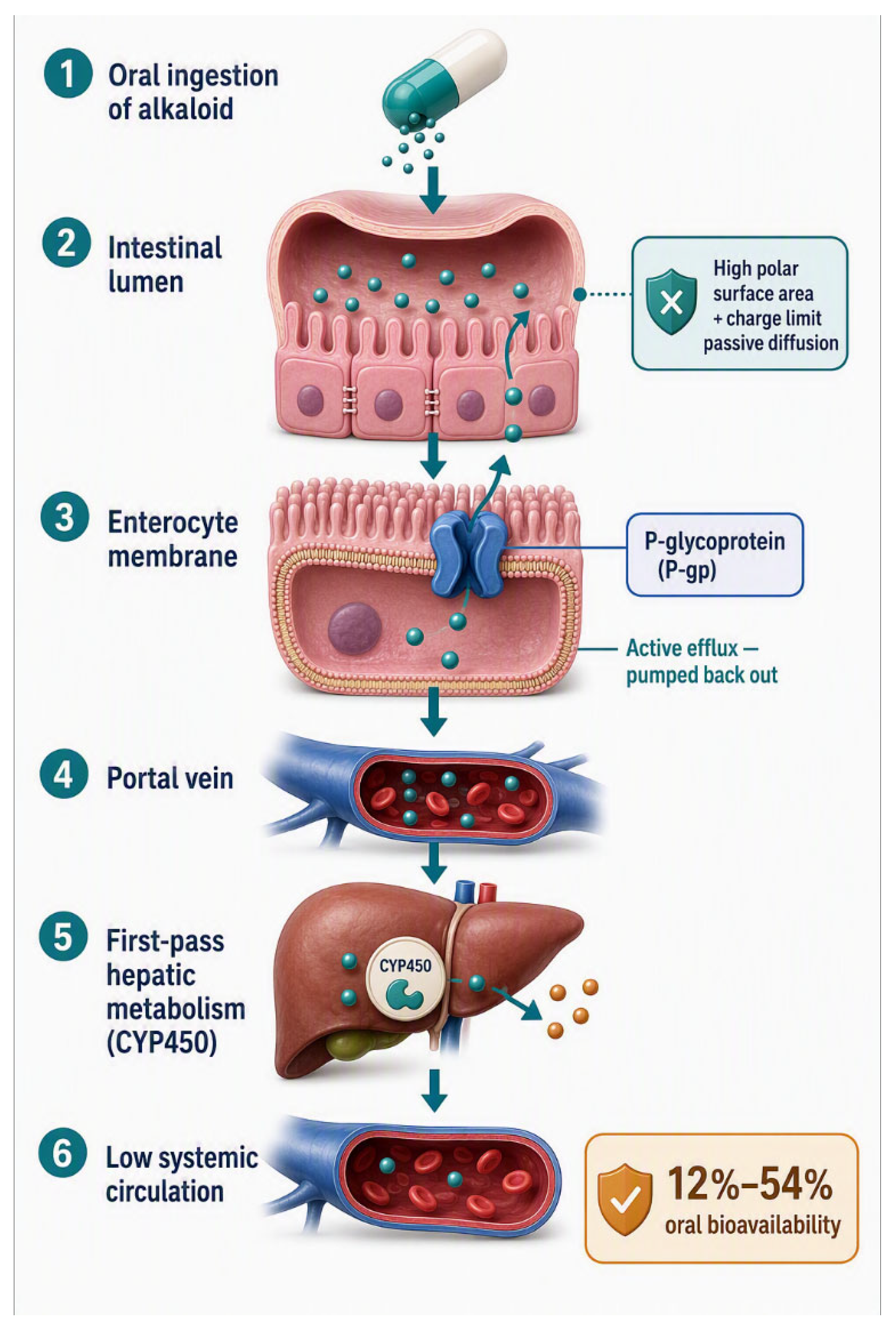
Mechanistically, active efflux systems limit transport across the intestinal wall. Evaluation in human epithelial Caco-2 cell monolayers and in vitro everted gut sac models confirms that peimine and imperialine are high-affinity substrates of the apical efflux transporter P-glycoprotein (P-gp). Once these alkaloids enter the enterocyte, membrane-bound P-gp actively pumps them back into the intestinal lumen against a concentration gradient, limiting net absorption. This active efflux, combined with substantial first-pass hepatic metabolism, dictates their erratic oral absorption profile.
4.2. Tissue Distribution, Plasma Protein Binding, and Barrier Penetration
Once a fraction of the alkaloid enters systemic circulation, it distributes rapidly across multiple compartments. For instance, sipeimine shows rapid tissue absorption and a long elimination half-life, with baseline plasma protein binding of about 30% [5]. Tissue distribution assays in rats show that peimine and peiminine distribute widely to highly perfused organs, with the highest accumulations found in the lungs, liver, kidneys, and spleen [1]. This high lung tropism supports their traditional clinical use for respiratory disorders, assuring the active compounds accumulate at the primary site of disease.
However, these alkaloids penetrate the Blood-Brain Barrier (BBB) poorly. High molecular polarity, significant water solubility, and active efflux by P-gp at the luminal membrane of brain capillary endothelial cells effectively exclude these compounds from the central nervous system (CNS). While this poor CNS permeability minimizes neurotoxic liabilities, it also precludes the therapeutic use of unmodified ZBM alkaloids for central neuroprotective indications. Furthermore, systemic pharmacokinetic parameters often show distinct sex-related differences, with male and female rodents differing in total clearance rates (CL) and area under the plasma concentration-time curve (AUC), likely driven by sex-specific differences in baseline hepatic cytochrome P450 enzyme expression.
4.3. Pathophysiological Modulation of Pharmacokinetics: Gastrointestinal and Pulmonary Inflammatory States.
Notably, a drug’s pharmacokinetic profile can change dramatically between healthy and pathological states. While initial pharmacokinetic studies evaluated Fritillaria thunbergii extracts in systemic disease models such as 2,4-dinitrobenzene sulfonic acid (DNBS)-induced colitis, emerging translational evidence demonstrates that pulmonary pathologies ranging from acute lung injury (ALI) to chronic fibrotic and obstructive airway diseases profoundly alter local tissue exposure, pulmonary vascular permeability, and biopharmaceutical disposition kinetics [5].
4.3.1. Pulmonary Pathophysiology and Alveolar Barrier Permeability
In acute lung injury models induced by lipopolysaccharide (LPS) and chronic respiratory conditions such as bleomycin-induced pulmonary fibrosis or chronic obstructive pulmonary disease (COPD), the structural and functional integrity of the alveolar-capillary membrane is severely compromised.
- Local Tissue Penetration and Systemic Leakage: This structural disruption results in widened intercellular paracellular spaces, allowing polar isosteroidal alkaloids (such as peimine and peiminine) to exhibit significantly enhanced local tissue penetration into deep lung parenchyma alongside accelerated systemic leakage into the pulmonary microvasculature.
4.3.2. Transporter Regulation in Inflammatory Lung Microenvironments
In addition to barrier disruption, pulmonary inflammation profoundly regulates the expression and function of local membrane transporter proteins in bronchial and alveolar epithelial cells:
- Apical Efflux Transporter Downregulation: Pulmonary inflammation downregulates apical P-glycoprotein (P-gp / ABCB1) expression in respiratory epithelial cells, mirroring mechanisms observed in intestinal enterocytes. This reduction in active efflux capacity significantly prolongs intra-pulmonary alkaloid retention, enhancing local drug availability at target sites while altering systemic clearance rates [5].
- Organic Cation Transporter Modulation: Furthermore, disease states alter the local expression of Organic Cation Transporters (OCT1-3 and OCTN1-2) responsible for the cellular uptake and transmembrane disposition of organic bases like cevanine alkaloids. Downregulation of efflux pumps, coupled with modulated influx transporter activity, creates a distinct pathological pharmacokinetic profile in diseased lung tissue.
4.3.3. Translational Implications for Dosing and Toxicity
These disease-state pharmacokinetic shifts carry critical implications for clinical translation. In patients suffering from active pulmonary inflammation, COPD exacerbations, or acute lung injury, standard systemic or targeted pulmonary dosing regimens may result in unexpectedly elevated local or systemic alkaloid concentrations. Because these compounds possess a narrow therapeutic window and distinct off-target cardiotoxic liabilities (such as hERG channel inhibition), accounting for pulmonary pathology-driven pharmacokinetic variability is essential for designing safe and effective clinical dosing protocols.
5. Toxicology and Safety Assessment
Although Fritillaria thunbergii has been used safely in traditional multi-herb decoctions for centuries, isolated alkaloids have distinct toxicological profiles that warrant careful evaluation before human administration [1,15,33].
5.1. The hERG Channel Conundrum and Cardiotoxicity Risks
The most notable toxicological liability of isolated Fritillaria thunbergii alkaloids is their off-target interaction with cardiac ion channels, specifically the human ether-à-go-go-related gene (hERG) potassium channels [8]. The hERG channel conducts the rapid delayed rectifier potassium current (IKr), which is responsible for the critical repolarization phase of the cardiac action potential in ventricular myocytes. Inhibition of this current delays repolarization, prolonging the QT interval on an electrocardiogram (ECG) and possibly triggering a deadly polymorphic ventricular tachycardia known as Torsades de Pointes (TdP). Electrophysiological investigations using patch-clamp techniques have shown that peimine directly inhibits hERG channels, promoting premature inactivation with an IC50 of approximately 26.1 μM. Similarly, peiminine and sipeimine block hERG currents with IC50 values of 36.8 μM and 47.6 μM, respectively. Peiminine-induced blockade increases with greater depolarizing strength, duration, and frequency, indicating preferential binding to the channel’s open or inactivated states. Structurally, the cevanine core’s spatial arrangement allows it to bind within the hydrophobic inner cavity of the hERG channel pore, utilizing aromatic interactions with key residues (such as Tyr652 and Phe656) to disrupt potassium ion conductance.
The formulation context may substantially influence the cardiotoxic risk of these alkaloids. In combination, they show subtle antagonistic interactions in hERG channel blockade, suggesting that structurally varied alkaloids in a natural matrix may partially shield the channel and reduce severe cardiotoxicity relative to isolated single-agent exposure. Conversely, advanced systemic injections or targeted formulations that deliver individual alkaloids while bypassing first-pass metabolism could produce plasma concentrations near hazardous thresholds. These contrasting effects make hERG channel inhibition a key safety parameter that must be actively monitored [9].
Figure 4.
A cardiotoxicity pathway flow trace representing a key safety barrier to the clinical translation of peimine.
Figure 4.
A cardiotoxicity pathway flow trace representing a key safety barrier to the clinical translation of peimine.
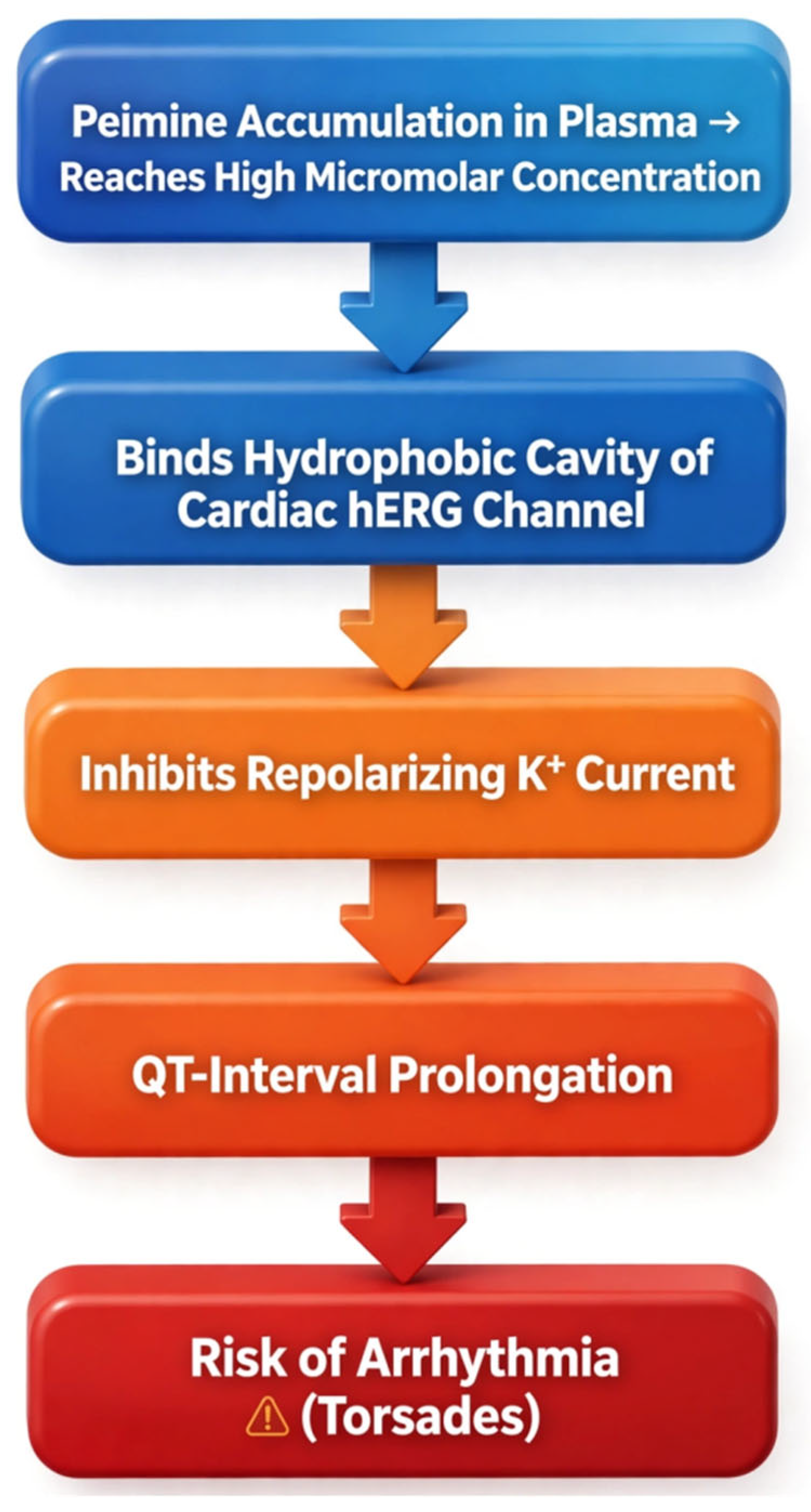
- Monotherapeutic Vulnerability: Isolated major steroidal alkaloids exhibit nanomolar to micromolar potency in blocking hERG channel inactivation states, sharply narrowing their therapeutic index when administered as single agents particularly through delivery systems that increase systemic exposure [9].
- Matrix Buffering Effect: By contrast, whole-extract decoctions and multi-herb matrices, including classical formulae such as Danggui Beimu Kushen Wan, contain co-existing constituents that create competitive binding dynamics and homeostatic physiological counter-regulation. These interactions may attenuate acute electrophysiological toxicity at the myocardial membrane level [4].
- Polypharmacological Modulation: Beyond competitive effects at the hERG channel, co-existing constituents may also modulate inward calcium currents or sodium channels. This broader channel-level activity can counterbalance action-potential shortening or prolongation induced by dominant alkaloidal fractions [34].
5.2. Systemic Toxicity Profiles and Narrow Therapeutic Indices
Beyond cardiotoxicity, high systemic doses of total Fritillaria alkaloids can induce typical symptoms of acute poisoning, principally driven by over-activation or aberrant blockade of peripheral autonomic cholinergic systems [1]. Symptoms of acute toxicity in animal models include respiratory depression, profound sedation, ataxia, generalized muscular tremors, and acute tonic-clonic convulsions [1,35]. The median lethal dose (LD50) varies widely by route of administration; systemic intravenous injection yields a significantly lower LD50 than oral administration, indicating the gastrointestinal tract’s protective barrier function and P-gp efflux [1]. As a result, these alkaloids have a relatively narrow therapeutic index when administered systemically, requiring cautious control.
6. Proposed Strategies to Bridge the Gap for a Translational Roadmap
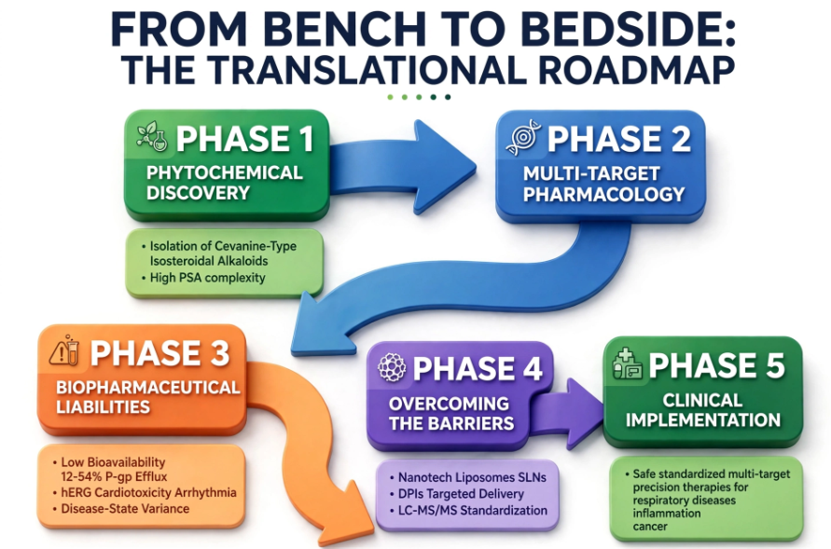
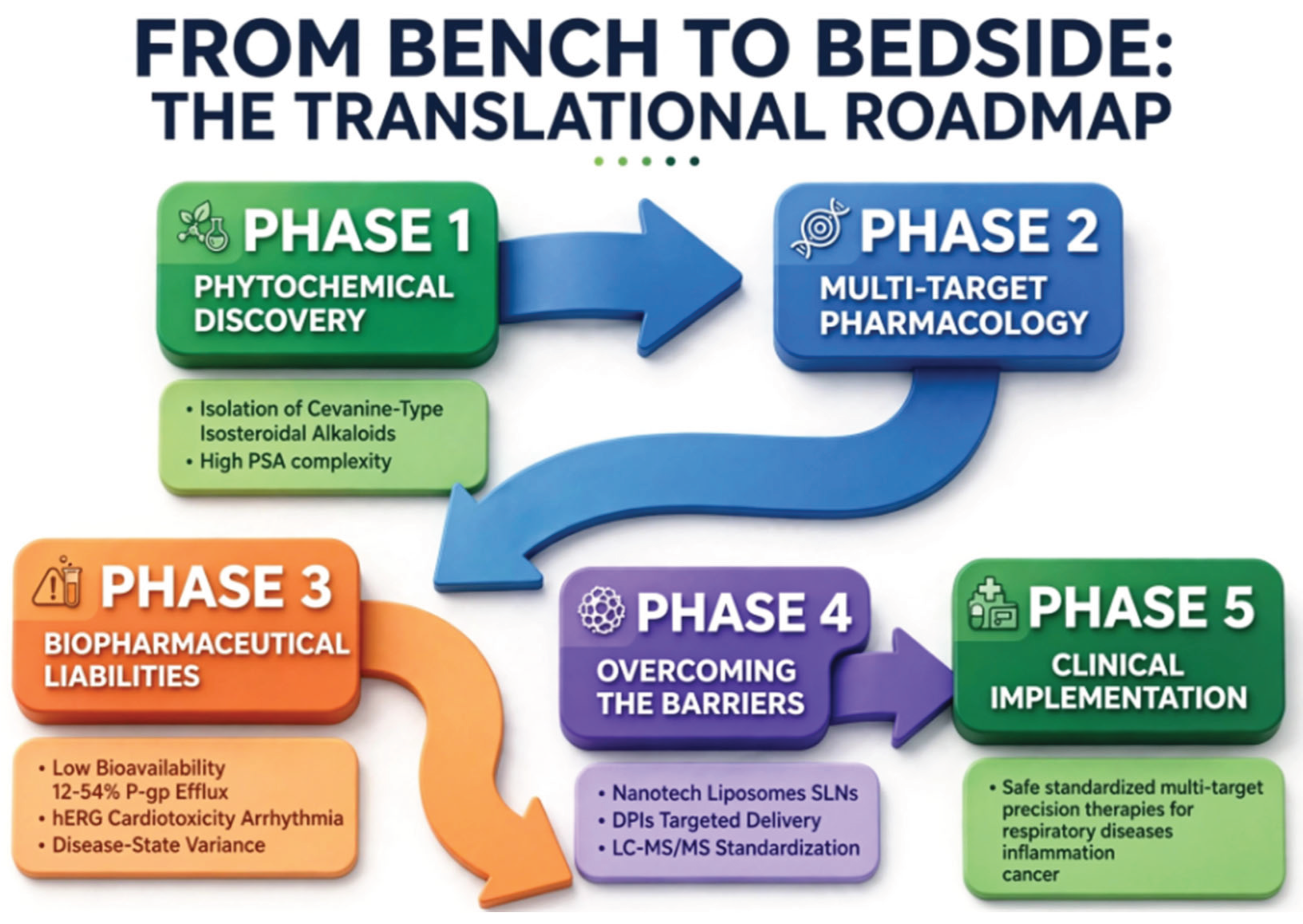
To transition Fritillaria thunbergii alkaloids from laboratory benches to patient bedsides, scientists must use an integrated, multidisciplinary translational strategy. This roadmap requires applying advanced nanotechnology, optimizing the routes of administration, developing combination therapies, and guaranteeing strict standardization of chemical properties.
Figure 5.
A comprehensive flowchart illustrates the central theme of this review article: the journey of Fritillaria thunbergii-derived alkaloids from raw laboratory findings (“Bench”) through biopharmaceutical and toxicological obstacles, and finally to safe, targeted human therapies (“Bedside”).
Figure 5.
A comprehensive flowchart illustrates the central theme of this review article: the journey of Fritillaria thunbergii-derived alkaloids from raw laboratory findings (“Bench”) through biopharmaceutical and toxicological obstacles, and finally to safe, targeted human therapies (“Bedside”).
6.1. Advanced Drug Delivery Systems (Nanotechnology)
The application of innovative nano-delivery systems is essential if the researcher must overcome poor passive permeability, protect the molecules from first-pass metabolism, and avoid active P-glycoprotein efflux pumps,
- Liposomes and Polymeric Nanoparticles: Encapsulating polar alkaloids such as peimine within biodegradable, biocompatible polymeric matrices—such as Poly (lactic-co-glycolic acid) (PLGA) or PEGylated liposomes—drastically alters their pharmacokinetics. These nanocarriers cross the enterocyte membrane via endocytic pathways rather than passive diffusion, completely bypassing P-gp efflux pumps. This provides a smoother release profile, eliminates acute plasma concentration peaks, and in turn enhances absolute oral bioavailability [36].
- Solid Lipid Nanoparticles (SLNs): Utilizing lipid-based nanocarriers improves lymphatic absorption pathways, allowing the encapsulated alkaloids to enter the systemic circulation via the thoracic lymph duct, thereby bypassing portal circulation and circumventing first-pass hepatic metabolism [37].
6.2. Route of Administration Optimization: Targeted Pulmonary Delivery
Because the primary therapeutic aims for ZBM alkaloids are respiratory conditions such as Idiopathic Pulmonary Fibrosis (IPF), asthma, and non-small cell lung cancer, modifying the route of administration may be a valuable strategy to maximize treatment benefit while reducing systemic adverse effects [3]. Formulating targeted Dry Powder Inhalers (DPIs) or metered-dose inhaler nebulization fluids containing stabilized microparticles of either peiminine or peimine offers decisive clinical advantages:
- Aerodynamic Size Requirements and MMAD Range: Engineered DPI microparticles and carrier-free dry powders must strictly maintain a Mass Median Aerodynamic Diameter (MMAD) between 1 µm and 5 µm, coupled with a Fine Particle Fraction (FPF) greater than 60% [38].
- Deposition Dynamics and Clearance Barriers: Particles exceeding 5 µm predominantly undergo upper airway impaction and oral clearance, whereas particles smaller than 1 µm risk remaining suspended within the airstream and being exhaled. Consequently, this controlled 1–5 µm aerodynamic range is important for achieving effective, targeted bronchial and deep alveolar deposition [39].
- Systemic De-risking: Direct inhalation bypasses the gastrointestinal tract entirely, avoiding absorption barriers. More importantly, it maintains systemic serum concentrations far below hERG channel cardiotoxicity thresholds (for instance, keeping serum levels under 26 μM), effectively de-risking the compound’s clinical safety profile.
6.3. Synergistic Combination Therapies
Rather than utilizing isolated alkaloids as standalone single agents, clinical translation can be accelerated by pairing them with established, standard-of-care medications to exploit therapeutic synergy.
- Oncology Applications: Combining verticine with conventional platinum-based chemotherapeutics (such as cisplatin or oxaliplatin) or antimetabolites (5-fluorouracil) presents a powerful clinical combination [10]. Because verticine actively downregulates P-glycoprotein, co-administration should prevent tumor cells from expelling the co-delivered chemotherapeutic agent. This reverses multidrug resistance, widens the therapeutic window, and allows clinicians to reduce chemotherapy doses, consequently mitigating adverse side effects like nephrotoxicity and peripheral neuropathy.
- Pulmonary Applications: In treating IPF, combining ZBM alkaloids with approved anti-fibrotic drugs like nintedanib or pirfenidone can simultaneously target different nodes of the complex fibrotic cascade, providing better stabilization of lung function compared to monotherapy [3].
6.4. Bioactivity-Guided Quality Control and Material Standardization
A major barrier to the international regulatory approval of botanical-derived drugs is batch-to-batch chemical differences [1]. To achieve conformity with regulatory agencies, for example, the FDA, SFDA, or EMA, a strict standardization protocol must be implemented:
- Good Agricultural and Collection Practices (GACP): Standardizing cultivation, harvesting, and drying procedures to eliminate chemical shifts driven by soil chemistry, climate variation, or contamination, assuring a consistent and predictable pharmaceutical product.
6.4.1. Regulatory and Development Pathways: FDA and NMPA Frameworks for Single NCE and Botanical Drugs
Translating Fritillaria thunbergii alkaloids into globally approved therapies requires a regulatory strategy that conforms to non-clinical, clinical, and quality-control evidence with the distinct expectations of the US Food and Drug Administration (FDA) and China’s National Medical Products Administration (NMPA) [40,41,42].
- US FDA Botanical Drug Development Guidance: Emphasizes rigorous batch-to-batch consistency, fingerprint chromatography, and establishing a well-documented history of safe human use. Sponsors must show that crude or partially purified extracts retain consistent chemical profiles across clinical phases, often relying on pharmacodynamic bridging studies when changing manufacturing sources [40].
- National Medical Products Administration (NMPA) Framework: Integrates traditional empirical knowledge together with modern International Council for Harmonization (ICH) technical standards. Recent NMPA modernization pathways streamline investigational new drug (IND) applications and clinical trial data acceptance for complex multi-herb preparations, provided strong quality control (QC) markers (e.g., standardized sipeimine, peimine, and peiminine quantification) are established [2].
- Within these regional frameworks, pharmaceutical engineers must then choose between a traditional single New Chemical Entity (NCE) pathway and a botanical drug pathway. The choice determines how the product is characterized, tested, standardized, and positioned for approval:
- The Single NCE Pathway: Isolating a compound such as pure peimine enables straightforward pharmacokinetic characterization, clear mass-balance tracking, and conventional Phase I–III clinical trial designs. However, this route may face substantial attrition because of narrow therapeutic windows, high first-pass clearance, and acute cardiac safety risks, including hERG-mediated QT prolongation [5,9].
- The Botanical Drug Pathway: This route treats a complex natural mixture as the active pharmaceutical ingredient rather than requiring single-molecule purity. Developers must therefore demonstrate reproducible chemical fingerprints, batch-to-batch consistency in designated marker compounds, and stable biological activity through validated assays. For multi-component ZBM extracts, this pathway may preserve synergistic and cardiotoxicity-buffering effects, provided appropriate comparative pharmacological and cardiac safety testing is conducted. This may also require following strict Good Agricultural and Collection Practices (GACP) and robust quality-marker (Q-marker) standardization [40,41,42].
7. Challenges, Future Directions, and Regulatory Perspectives
As pharmaceutical research and development of Fritillaria thunbergii alkaloids progresses, researchers must systematically tackle multiple practical and regulatory obstacles to ensure successful clinical translation.
7.1. Toxicokinetic Integration and Phase I Trial Design
The highest priority for future research is to conduct rigorous, GLP-compliant in vivo toxicokinetic studies in large animal models (e.g., beagle dogs or non-human primates) to clarify safety margins around hERG channel inhibition. Future Phase I clinical trials must include strict cardiac monitoring procedures, including continuous telemetry and intensive Holter ECG tracking, to rule out subclinical QT-interval prolongation in human volunteers.
Furthermore, because systemic absorption increases dramatically during inflammatory states like colitis, future clinical study protocols must screen for and categorize patients with underlying inflammatory bowel diseases or compromised mucosal barriers to prevent accidental toxic exposure [5].
7.2. Chemistry, Manufacturing, and Controls (CMC) Scale-Up
From a manufacturing perspective, scaling up the isolation of pure, minor alkaloids like peimisine or sipeimine remains economically difficult because of their low natural abundance in the plant bulb [9,13,14]. Future directions must explore sustainable alternative supply chains, including:
- Semi-Synthetic Optimization: Utilizing abundant primary plant sterols as precursor scaffolds and chemically converting them into the desired isosteroidal cevanine architecture via targeted functional group modifications.
- Plant Tissue Culture and Plant Biotechnology: Utilizing hairy root cultures or elicitor-stimulated bioreactors to scale up the biosynthesis of specific target alkaloids under regulated sterile laboratory conditions, eliminating the land and climate dependencies of traditional agriculture.
7.3. Harmonizing Ethnopharmacological Frameworks alongside Modern Regulatory Criteria.
The final translational challenge calls for navigating global regulatory pathways. While Asian regulatory agencies often accept historical data as a valid rationale for entering clinical protocols, Western frameworks require clear mechanistic evidence.
Closing this gap may require using modern multi-omics platforms such as transcriptomics, proteomics, and metabolomics to fully map the multi-target cellular network of Fritillaria thunbergii alkaloids. Developing these natural mixtures into validated, biomarker-guided precision medicines represents the critical nexus of ancient traditional medicinal knowledge and contemporary pharmaceutical science.
8. Conclusion
Fritillaria thunbergii-derived alkaloids represent a biologically powerful, structurally unique chemical space with considerable potential to treat chronic respiratory diseases, multidrug-resistant cancers, and complex metabolic disorders. Preclinical research has successfully elucidated their molecular mechanisms, showing their capacity to inhibit pro-fibrotic cascades, block key pro-inflammatory pathways, modulate critical ion channels like Nav1.7, and reverse P-gp-mediated chemoresistance. However, low oral bioavailability and serious cardiotoxic risks linked to hERG channel inhibition hamper their path to clinical implementation.
This review therefore proposes a practical bridge to these gaps by creating a clear, actionable translational roadmap. By adopting advanced nano-delivery platforms to overcome absorption barriers, using targeted pulmonary inhalation to confine drug exposure to diseased lung tissue, and applying strict bioactivity-guided manufacturing quality controls, these biopharmaceutical liabilities can be efficiently controlled. Safely transitioning these compounds from the laboratory bench to the patient’s bedside will unlock a valuable, multi-targeted therapeutic resource, offering a new approach for managing complex human chronic diseases.
Author Contributions
Conceptualization, T.A., X.J, ; methodology, T.A., L.H .; investigation, T.A.; Writing—original draft preparation, T.A., X.J., Writing—review and editing, L.H., F.T; Project administration, X.J., All authors have read and agreed to the published version of the manuscript.
Funding
This work was supported by the National Foreign Expert Project (Project No.: Y20250104).
Institutional Review Board Statement
Not applicable.
Informed Consent Statement
Not applicable.
Data Availability Statement
No new data were created or analyzed in this study. Data sharing is not applicable to this article.
Acknowledgments
During the preparation of this manuscript, the authors used Gemini and Co-pilot Ai tools were used to design the 2-D and 3-D image and expressions for Figure 1, Figure 2, Figure 3, Figure 4 and Figure 5 for the purposes of providing clear graphical illustrative expressions rather than a 1-D sketch. The authors have reviewed and edited the output and take full responsibility for the content of this publication.
Conflicts of Interest
The authors declare no other conflicts of interest.
Abbreviations
| PSA | Particle Size Analysis |
| SLNs | Solid Lipid Nanoparticles |
| DPIs | Dry Powder Inhalers |
| LC-MS/MS | Liquid Chromatography-Tandem Mass Spectrometry |
| P-gp | P-glycoprotein |
| hERG | Human Ether-a-go-go-Related Gene |
| K+ | Potassium Ion Current |
| CYP450 | Cytochrome P450 Enzymes |
| LPS | Lipopolysaccharide |
| NF-κB | Nuclear Factor-kappa B |
| IL-6 | Interleukin-6 |
| TNF-α | Tumor Necrosis Factor-alpha |
References
- Li, H.; Hung, A.; Li, M.; Yang, A. W. H. Fritillariae Thunbergii Bulbus: Traditional Uses, Phytochemistry, Pharmacodynamics, Pharmacokinetics and Toxicity. Int. J. Mol. Sci. 2019, 20((7)). [Google Scholar] [CrossRef]
- Wu, F.; Tian, M.; Sun, Y.; Wu, C.; Liu, X. Efficacy, chemical composition, and pharmacological effects of herbal drugs derived from Fritillaria cirrhosa D. Don and Fritillaria thunbergii Miq. Front Pharmacol. 2022, 13, 985935. [Google Scholar] [CrossRef]
- Xu, G.; Feng, S.; Sun, R.; Ding, Q.; Shi, Y. Systematic Analysis Strategy Based on Network Pharmacology to Investigate the Potential Mechanism of Fritillaria thunbergii Miq. against Idiopathic Pulmonary Fibrosis. Evid. Based Complement Altern. Med. 2022, 2022, 2996878. [Google Scholar] [CrossRef]
- Li, H.; Hung, A.; Yang, A. W. H. A Classic Herbal Formula Danggui Beimu Kushen Wan for Chronic Prostatitis: From Traditional Knowledge to Scientific Exploration. Evid. Based Complement Altern. Med. 2018, 2018, 1612948. [Google Scholar] [CrossRef]
- Jeong, J. S.; Kim, J. W.; Kim, J. H.; Chung, E. H.; Ko, J. W.; Hwang, Y. H.; Kim, T. W. Investigating Changes in Pharmacokinetics of Steroidal Alkaloids from a Hydroethanolic Fritillariae thunbergii Bulbus Extract in 2,4-Dinitrobenzene Sulfonic Acid-Induced Colitis Rats. Pharmaceuticals 2024, 17((8)). [Google Scholar] [CrossRef]
- Kumar, P.; Kumar, V.; Sharma, S.; Sharma, R.; Warghat, A. R. Fritillaria steroidal alkaloids and their multi-target therapeutic mechanisms: insights from network pharmacology. Naunyn Schmiedebergs Arch. Pharmacol. 2025, 398((3)), 2209–2228. [Google Scholar] [CrossRef]
- Tamai, K.; Sakai, K.; Yamaki, H.; Moriguchi, K.; Igura, K.; Maehana, S.; Suezawa, T.; Takehara, K.; Hagiwara, M.; Hirai, T.; Gotoh, S. iPSC-derived mesenchymal cells that support alveolar organoid development. Cell Rep. Methods 2022, 2((10)), 100314. [Google Scholar] [CrossRef]
- Alberola-Die, A.; Encinar, J. A.; Cobo, R.; Fernandez-Ballester, G.; Gonzalez-Ros, J. M.; Ivorra, I.; Morales, A. Peimine, an Anti-Inflammatory Compound from Chinese Herbal Extracts, Modulates Muscle-Type Nicotinic Receptors. Int. J. Mol. Sci. 2021, 22, 20. [Google Scholar] [CrossRef]
- Lu, H.; Hao, T.; Zhang, Z.; Jiang, C.; Xu, J.; Stalin, A.; Zhao, W. hERG Channel Blockade and Antagonistic Interactions of Three Steroidal Alkaloids from Fritillaria Species. Molecules 2025, 30, 19. [Google Scholar] [CrossRef]
- Yin, Z.; Zhang, J.; Guo, Q.; Chen, L.; Zhang, W.; Kang, W. Pharmacological Effects of Verticine: Current Status. Evid. Based Complement Altern. Med. 2019, 2019, 2394605. [Google Scholar] [CrossRef]
- Kancharla, H.; Ramayanam, N. R.; Eatakota, U. R.; Jami, D. G.; Samathoti, P. Phytochemicals and Anti-Cancer Potential of Liliaceae Medicinal Plants: A Comprehensive Review. 2025. [Google Scholar] [CrossRef]
- Morimoto, H.; Kimata, S. Studies on the Components of Fritillaria Thunbergii MIQ. I. Isolation of Peimine and its new Glycoside. Chem. Pharm. Bull. 1960, 8((4)), 302–307. [Google Scholar] [CrossRef]
- Ruan, X.; Yang, L.; Cui, W. X.; Zhang, M. X.; Li, Z. H.; Liu, B.; Wang, Q. Optimization of Supercritical Fluid Extraction of Total Alkaloids, Peimisine, Peimine and Peiminine from the Bulb of Fritillaria thunbergii Miq, and Evaluation of Antioxidant Activities of the Extracts. Materials 2016, 9, 7. [Google Scholar] [CrossRef]
- Zhou, A.; Li, X.; Zou, J.; Wu, L.; Cheng, B.; Wang, J. Discovery of potential quality markers of Fritillariae thunbergii bulbus in pneumonia by combining UPLC-QTOF-MS, network pharmacology, and molecular docking. Mol. Divers 2024, 28((2)), 787–804. [Google Scholar] [CrossRef]
- Yang, H.; Liu, J.; Wang, X.; Yu, C.; Liu, Y.; Xie, J. Peimine: A comprehensive review of its botanical distribution, biosynthesis, pharmacological effects and pharmacokinetics. Fitoterapia 2026, 190, 107140. [Google Scholar] [CrossRef]
- Cai, Z. H.; Tian, Y. G.; Li, J. Z.; Zhao, P.; Li, J. S.; Mei, X.; Bai, Y. P. Peimine ameliorates pulmonary fibrosis via the inhibition of M2-type macrophage polarization through the suppression of P38/Akt/STAT6 signals. Biosci. Rep. 2022, 42, 10. [Google Scholar] [CrossRef]
- Zhang, L.; Cui, M.; Chen, S. Identification of the Molecular Mechanisms of Peimine in the Treatment of Cough Using Computational Target Fishing. Molecules 2020, 25((5)). [Google Scholar] [CrossRef]
- Zhu, M.; Xu, W.; Jiang, J.; Wang, Y.; Guo, Y.; Yang, R.; Chang, Y.; Zhao, B.; Wang, Z.; Zhang, J.; Wang, T.; Shangguan, L.; Wang, S. Peiminine Suppresses RANKL-Induced Osteoclastogenesis by Inhibiting the NFATc1, ERK, and NF-kappaB Signaling Pathways. Front Endocrinol. 2021, 12, 736863. [Google Scholar] [CrossRef]
- Lee, W. T.; Lee, H.; Kim, J.; Jung, Y.; Choi, E.; Jeong, J. H.; Jeong, J. H.; Lee, J. H.; Youn, Y. S. Alveolar macrophage phagocytosis-evading inhaled microgels incorporating nintedanib-PLGA nanoparticles and pirfenidone-liposomes for improved treatment of pulmonary fibrosis. Bioact. Mater. 2024, 33, 262–278. [Google Scholar] [CrossRef]
- Wan, Y.; Hu, S.; Liu, K. Decoction Blood-Enter. sRNAs Fritillaria Thunbergii Miq. (Zhebeimu) Relieve Chronic Obstr. Pulm. Dis. By. PTGS2-NOS2-XPC-ABCC1: 2025. [CrossRef]
- Chelakkot, C.; Ghim, J.; Ryu, S. H. Mechanisms regulating intestinal barrier integrity and its pathological implications. Exp. Mol. Med. 2018, 50((8)), 1–9. [Google Scholar] [CrossRef]
- Kim, J. H.; Kim, M.; Hong, S.; Kwon, B.; Song, M. W.; Song, K.; Kim, E. Y.; Jung, H. S.; Sohn, Y. Anti-inflammatory effects of Fritillaria thunbergii Miquel extracts in LPS-stimulated murine macrophage RAW 264.7 cells. Exp. Ther. Med. 2021, 21((5)), 429. [Google Scholar] [CrossRef]
- Park, J. H.; Lee, B.; Kim, H. K.; Kim, E. Y.; Kim, J. H.; Min, J. H.; Kim, S.; Sohn, Y.; Jung, H. S. Peimine Inhibits the Production of Proinflammatory Cytokines Through Regulation of the Phosphorylation of NF-kappaB and MAPKs in HMC-1 Cells. Pharmacogn. Mag. 2017, 13 (Suppl 2), S359–S364. [Google Scholar] [CrossRef]
- Xu, J.; Zhao, W.; Pan, L.; Zhang, A.; Chen, Q.; Xu, K.; Lu, H.; Chen, Y. Peimine, a main active ingredient of Fritillaria, exhibits anti-inflammatory and pain suppression properties at the cellular level. Fitoterapia 2016, 111, 1–6. [Google Scholar] [CrossRef]
- Xinyu, L.; Qianxi, Q.; Soliman, M.; Cheng, D.; Liangwenyao, Z.; Gamal, E.; Chen, S.; Zhiwei, L.; Linli, C. Alkaloids from Fritillariae Cirrhosae Bulbus—progress on their pharmacological activities. Front Pharmacol. 2026, 17, 1826161. [Google Scholar] [CrossRef]
- Xu, F.; Xu, S.; Wang, L.; Chen, C.; Zhou, X.; Lu, Y.; Zhang, H. Antinociceptive efficacy of verticinone in murine models of inflammatory pain and paclitaxel induced neuropathic pain. Biol. Pharm. Bull. 2011, 34((9)), 1377–82. [Google Scholar] [CrossRef]
- Teng, M.; Zhang, M.; He, J.; Tse, W. M.; Tse, K. W. G.; Liu, C.; Ye, B. Mechanism of action of alkaloids in Fritillaria-induced autophagy and apoptosis in non-small cell lung cancer. Oncol. Lett. 2026, 31((6)), 243. [Google Scholar] [CrossRef]
- Yang, Z.; Syed Faizan Ali, S.; Huang, X.; Wei, L.; Zhong, Y.; Shi, X.; Wu, X.; Gan, C.; Wang, Z.; Yang, C. A Multi-Level Study on the Anti-Lung Cancer Mechanism of Peiminine, a Key Component of Fritillaria ussuriensis Maxim.: Integrating Quality Analysis, Network Pharmacology, Bioinformatics Analysis, and Experimental Validation. Int. J. Mol. Sci. 2025, 26((8)). [Google Scholar] [CrossRef]
- Zheng, Z.; Xu, L.; Zhang, S.; Li, W.; Tou, F.; He, Q.; Rao, J.; Shen, Q. Peiminine inhibits colorectal cancer cell proliferation by inducing apoptosis and autophagy and modulating key metabolic pathways. Oncotarget 2017, 8((29)), 47619–47631. [Google Scholar] [CrossRef]
- Stoleru, O. A.; Burlec, A. F.; Mircea, C.; Felea, M. G.; Macovei, I.; Hăncianu, M.; Corciovă, A. Multiple nanotechnological approaches using natural compounds for diabetes management. J. Diabetes Metab. Disord. 2024, 23((1)), 267–287. [Google Scholar] [CrossRef]
- Xiang, M.-L.; Hu, B.-Y.; Qi, Z.-H.; Wang, X.-N.; Xie, T.-Z.; Wang, Z.-J.; Ma, D.-Y.; Zeng, Q.; Luo, X.-D. Chemistry and bioactivities of natural steroidal alkaloids. Nat. Prod. Bioprospecting 2022, 12((1)), 23. [Google Scholar] [CrossRef]
- Martin, R. E.; Marchetti, R. V.; Cowan, A. I.; Howitt, S. M.; Bröer, S.; Kirk, K. Chloroquine transport via the malaria parasite’s chloroquine resistance transporter. Science 2009, 325((5948)), 1680–1682. [Google Scholar] [CrossRef]
- Li, Z.; Qiao, Y.; Li, J.; An, C.; Hu, K.; Tang, M. Acute and sub-chronic toxicity studies of the extract of Thunberg Fritillary Bulb. Regul. Toxicol. Pharmacol. RTP 2014, 68((3)), 370–7. [Google Scholar] [CrossRef]
- Zhou, X.; Seto, S. W.; Chang, D.; Kiat, H.; Razmovski-Naumovski, V.; Chan, K.; Bensoussan, A. Synergistic effects of Chinese herbal medicine: a comprehensive review of methodology and current research. Front. Pharmacol. 2016, 7, 201. [Google Scholar] [CrossRef]
- Miller, D. S.; Bauer, B.; Hartz, A. M. Modulation of P-glycoprotein at the blood-brain barrier: opportunities to improve central nervous system pharmacotherapy. Pharmacol. Rev. 2008, 60((2)), 196–209. [Google Scholar] [CrossRef]
- Lu, R.; Zhou, Y.; Ma, J.; Wang, Y.; Miao, X. Strategies and mechanism in reversing intestinal drug efflux in oral drug delivery. Pharmaceutics 2022, 14((6)), 1131. [Google Scholar] [CrossRef]
- Zhang, Z.; Lu, Y.; Qi, J.; Wu, W. An update on oral drug delivery via intestinal lymphatic transport. Acta Pharm. Sin. B 2021, 11((8)), 2449–2468. [Google Scholar] [CrossRef]
- Chaurasiya, B.; Zhao, Y.-Y. Dry powder for pulmonary delivery: a comprehensive review. Pharmaceutics 2020, 13((1)), 31. [Google Scholar] [CrossRef]
- Chow, M. Y.; Chang, R. Y. K.; Chan, H.-K. Inhalation delivery technology for genome-editing of respiratory diseases. Adv. Drug Deliv. Rev. 2021, 168, 217–228. [Google Scholar] [CrossRef]
- Wu, C.; Lee, S.-L.; Taylor, C.; Li, J.; Chan, Y.-M.; Agarwal, R.; Temple, R.; Throckmorton, D.; Tyner, K. Scientific and regulatory approach to botanical drug development: a US FDA perspective. J. Nat. Prod. 2020, 83((2)), 552–562. [Google Scholar] [CrossRef]
- Zhou, Y.; Yang, J.; He, Y.; Lv, Y.; Wang, C.; Deng, H.; Huang, J. Characteristic analysis of clinical trials for new traditional Chinese medicines in mainland China from 2013 to 2021. Front. Med. 2022, 9, 1008683. [Google Scholar] [CrossRef]
- Long, X.; Zhang, J.; Yang, L. Promoting the development and approval of new traditional Chinese medicines in China: a pooled analysis of data from 2013 to 2024. Front. Med. 2025, 12, 1559703. [Google Scholar] [CrossRef]
Disclaimer/Publisher’s Note: The statements, opinions and data contained in all publications are solely those of the individual author(s) and contributor(s) and not of MDPI and/or the editor(s). MDPI and/or the editor(s) disclaim responsibility for any injury to people or property resulting from any ideas, methods, instructions or products referred to in the content. |
© 2026 by the authors. Licensee MDPI, Basel, Switzerland. This article is an open access article distributed under the terms and conditions of the Creative Commons Attribution (CC BY) license (http://creativecommons.org/licenses/by/4.0/).
Copyright: This open access article is published under a Creative Commons CC BY 4.0 license, which permit the free download, distribution, and reuse, provided that the author and preprint are cited in any reuse.