

Submitted:
08 October 2026
Posted:
09 October 2026
You are already at the latest version
Abstract
Early-onset colorectal cancer (EOCRC), largely defined as the diagnosis of colorectal cancer in pa-tients younger than 50 years old, has shown a global increase in incidence, which is a growing cause of concern warranting increased awareness and preventive research. The incidence of EOCRC varies with factors like age, gender, and ethnicity, showing the greatest incidence among men, Hispanic patients, and Black patients. Associated risk factors include family history and environmental and lifestyle factors that can lead to long-term changes in the gut microbiome. In EOCRC, there is a preponderance of rectal and left-colonic involvement, a higher proportion of unfavorable histology, and an advanced stage of disease at presentation. Despite efforts to increase awareness, EOCRC patients face worse outcomes, with mortality rates increasing by 1.3% annually, mainly due to a lack of established screening methods. Challenges include financial burdens, fertility risks, and mental health struggles, necessitating multidisciplinary care. Early detection through targeted screening is vital to improve the prognosis of patients with EOCRC. Additionally, healthcare access and EOCRC awareness should be improved for better long-term outcomes.
Keywords:
early-onset colorectal cancer
; genetics
; microbiome
; environmental factors
; challenges
; screening strategies
1. Introduction
Colorectal cancer (CRC) is the third most common type of cancer diagnosed in both men and women in the United States (US) [1,2] and one of the most common causes of cancer-related deaths in both sexes. The lifetime risk of developing CRC is about 1 in 23 (4.3%) for men and 1 in 25 (4.0%) for women [3]. Despite being one of the deadliest cancers, the overall incidence of CRC has been decreasing since the mid-1980s, with an almost 1% annual decrease between 2013-2017 [4]. This decline is presumed to be secondary to effective screening programs for target populations as defined in screening guidelines [5]. Apart from the decrease in incidence, an improvement in mortality has also been noted, with the largest annual decline of 3% in individuals aged ≥65 years and 0.6% in individuals aged 50-64 years [6]. However, there has been a strikingly concerning rise in the incidence of CRC in young adults since at least the mid-1990s, representing a contrary trend in the US and Western countries [7]. It is likely that this increase is related to lifestyle changes and environmental factors, with rates rising by 2.4% per year among younger adults and by 0.4% per year among those aged 50-64 years. It is the leading cause of cancer-related death among males aged 20-49 and the second leading cause of cancer-related death among females in the same age group. This rise in incidence led to lowering the screening age to 45 instead of 50 [8].
Early-onset CRC (EOCRC) is generally defined as CRC diagnosed in patients younger than 50 years of age. Currently, around 10% of newly diagnosed cases of colon and rectal cancers are classified as EOCRC. A 2020 review of 40 studies from 12 countries found a nearly 30% increase in the incidence of EOCRC worldwide, with the largest increases in the US, Australia, and Canada. Sung et al. reported a similar rise in EOCRC incidence across countries such as Taiwan, Japan, Hong Kong, and South Korea [9]. The factors driving this rising trend need to be studied and promptly addressed to effectively counter this growing health concern [10].
The etiology of EOCRC is multifactorial and remains incompletely understood. Although a subset of cases is attributable to hereditary cancer syndromes such as Lynch syndrome and familial adenomatous polyposis, the majority occur sporadically. Environmental and lifestyle factors—including obesity, dietary patterns (e.g., high intake of processed foods and red meat), sedentary behavior, antibiotic exposure, and alterations in the gut microbiome—are increasingly implicated. Importantly, early-life and cumulative exposures may play a critical role in shaping risk [11,12]. Clinically, EOCRC demonstrates distinct characteristics compared with later-onset CRC. Younger patients are more likely to present with advanced-stage disease, frequently attributed to delayed recognition of symptoms and absence of routine screening in this population [13,14] Tumors are more commonly located in the distal colon and rectum and may be associated with adverse histopathologic features such as poor differentiation, mucinous or signet-ring morphology. Molecular profiling studies indicate differences in genomic and epigenetic landscapes, including lower rates of BRAF mutations and variable prevalence of microsatellite instability (MSI) compared with older patients, suggesting potential biological heterogeneity. Despite younger patients often having fewer comorbidities and greater tolerance for aggressive therapy, outcomes in EOCRC are heterogeneous.
The rising burden of EOCRC has prompted changes in screening guidelines, including recommendations to initiate average-risk CRC screening at age 45 rather than 50 [15]. However, these measures do not address individuals younger than 45, among whom incidence continues to rise. Consequently, there is an urgent need to better understand EOCRC risk stratification, identify high-risk populations, and develop novel prevention and early detection strategies. In this context, comprehensive evaluation of EOCRC epidemiology, risk factors, tumor biology, and clinical outcomes is essential to inform targeted interventions and optimize management of this increasingly prevalent and clinically distinct disease entity.
2. Epidemiology
Several population-based studies have demonstrated rising incidence in many high-income nations with Western-influenced culture [16]. In their comprehensive global analysis, Siegel et al. demonstrated that the incidence of EOCRC increased in 19 out of 36 countries, 9 of which had stable or declining rates of late-onset CRC (age at diagnosis >50 years) diagnoses (Australia, Canada, Denmark, Germany, New Zealand, Slovenia, Sweden, UK, and US) [17]. This global increase in EOCRC incidence points to a real-world epidemic, suggesting that changes in early-life exposures are triggering early carcinogenesis [18].
Based on the current EOCRC incidence rates, it is projected that the rates of both colon and rectal cancers diagnosed in individuals younger than 50 years of age will nearly double by the end of this decade. EOCRC will constitute about 10.9% of all colon cancers and 22.9% of all rectal cancers by 2030 [8,19]. EOCRC appears to affect males more than females, and this difference is more pronounced in rectal as compared to colon cancers [20]. Notably, the highest increase in incidence in rectal cancer has been noted in the non-Hispanic White population [17,21]. The rising EOCRC incidence also coincides with a rising mortality rate, which increased by 1.3% annually from 2008-2017 [22]. According to a recent review, the incidence of EOCRC is highest among adults between 40-49 years of age, males, non-Hispanic American Indian and Alaskan Native adults, and those who reside in non-urban areas [23]. Nevertheless, the incidence of EOCRC continues to increase steadily regardless of ethnicity.
3. Racial Disparities
There has been a notable rise in incidence among non-Hispanic White individuals, while rates among Black individuals have remained relatively stable but consistently elevated [17,21]. However, racial differences based on geographical location have been observed in the US, where EOCRC has disproportionately affected minorities and individuals, mirroring the disparities observed in older adults [24]. Black people and populations residing in specific regions of the Southern US are disproportionately affected by EOCRC [24]. Analysis of the Surveillance, Epidemiology, and End Results (SEER) database from 1973-2010 showed that, along with a significantly high prevalence of EOCRC in the Black and Hispanic populations, 5-year cancer-specific survival was also lower in Black and Hispanic people as compared to the White population [25]. The study also observed that Black and Hispanic people with nonmetastatic CRC had lower rates of surgical intervention and radiation therapy as compared to the White population [25]. Another study using the US Centers for Disease Control and Prevention (CDC) Wide-Ranging Online Data for Epidemiologic Research (WONDER) database, which provides information on public health, especially mortality data, reported the highest mortality rates among African Americans during 2012-2020 [26]. Geographically, higher mortality rates were observed in Mississippi and Alabama, while the lowest mortality rate was observed in the Midwest [26]. The negative impact of racial disparities on the survival outcomes of patients with EOCRC is reported in various studies [24,25,27]. Reasons for these disparities are likely multifactorial; however, access to high-quality health services plays a significant role [28]. Another factor hindering access to healthcare facilities is restricted health coverage and higher rates of uninsured people among the younger adult population [27]. There is a need for further research to prioritize gender-specific factors influencing the disease and to develop tailored interventions, given that men experience higher mortality and incidence rates. Addressing racial disparities requires prompt adjustments in guidelines and policies to guarantee equal healthcare access for all racial and ethnic groups. The rising death rates among individuals aged 40-49 also call for a review of CRC screening recommendations, and regional differences in health outcomes emphasize the need for location-specific healthcare strategies that account for distinct local conditions [26].
Socioeconomic deprivation is an important contributor to adverse outcomes in early-onset colorectal cancer and may partly reflect delays in diagnosis and access to care [29]. Large population-based analyses have demonstrated that patients with low socioeconomic status are significantly more likely to present with advanced-stage disease (e.g., higher rates of stage IV and metastatic disease at diagnosis), consistent with delayed presentation [21,30]. Additionally, low neighborhood socioeconomic status is independently associated with worse overall survival even after adjustment for clinical factors, supporting a meaningful impact on outcomes [31].
4. Clinical, Pathological, and Molecular Features
The clinical features in patients with EOCRC vary somewhat from those of later-onset disease. Current literature suggests that over 86% of those diagnosed with EOCRC are symptomatic at the time of diagnosis [32]. The most common symptoms at presentation are hematochezia, abdominal pain, bloating, and changes in bowel habits [33]. These symptoms are in line with the predominant symptoms seen in rectal and left-sided colon cancer. Consistently, two-thirds of EOCRC cases present with left-sided primary tumors, with the majority affecting the rectum, followed by the distal colon. This differs greatly from later-onset CRC, where the proximal and distal colon are almost equally involved. EOCRC also usually presents with a more aggressive histopathology as compared to later-onset disease. Ten to 14.5% of EOCRC cases show mucinous histology while 2-13% present with a signet ring histology, with about 27.9% of EOCRC tumors being either poorly differentiated or undifferentiated [34]. Most patients with EOCRC have advanced disease (stage III or IV) at diagnosis, as compared to patients with late-onset CRC, based on various population-based studies. However, it is uncertain how much of this is due to aggressive tumor biology in young adults (<50 years), lack of screening in this age group, or delayed diagnosis [34,35].
Various population-based analyses of patient data have suggested that EOCRC cases are more likely to be poorly differentiated and to harbor the microsatellite instability–high (MSI-H) phenotype than CRC cases in older adults (>50 years) [36]. It has also been reported that the germline mutation in mismatch repair (MMR) genes is more common in patients with MSI-H EOCRC [37] as compared to older adults, in whom epigenetic inactivation of the MLH1 MMR gene is prevalent [38].
The database of the Adjuvant Colon Cancer End Points (ACCENT) Group includes data from 33,000 patients enrolled in 25 different colon cancer trials conducted between 1997 and 2008 [39]. The pooled analysis from this database also reported a higher frequency of the MSI-H phenotype and a lower frequency of BRAF mutations in EOCRC, which is expected given the higher rates of Lynch syndrome-related CRC in young adults [40]. Lynch syndrome, also known as hereditary nonpolyposis colorectal cancer (HNPCC), is a genetic disorder that predisposes individuals to developing various cancers including colorectal, stomach, endometrial, and ovarian carcinoma, among others. These individuals are also more likely to develop these cancers at an earlier age as compared to the rest of the population [41]. It has been reported that in patients with EOCRC, a pathogenic germline variant is present in approximately 1 in 6 patients; almost half of those are in the MMR genes associated with Lynch syndrome [42]. Thus, the majority of cases are driven by sporadic molecular events, once again indicating a link between molecular phenotype and exposome. Regardless of this, the Collaborative Group of the Americas on Inherited Gastrointestinal Cancer recommends genetic testing using a germline multigene panel by next-generation sequencing (NGS) in all patients with EOCRC to identify germline variants that would impact screening and therapeutic interventions [43]. Genetic risk counseling and evaluation for hereditary CRC syndrome in patients with EOCRC is also recommended by the National Comprehensive Cancer Network (NCCN) [44].
Despite harboring a higher percentage of germline MMR-deficient cases, the majority of EOCRC patients have sporadic disease with mostly similar driver alterations with varying frequencies. Several studies have demonstrated that molecular alterations in APC, KRAS, and BRAF were significantly more common in patients 50 years of age or older, whereas alterations in TP53 and CTNNB1 were predominant in younger patients <50 years of age [45].A recent multicenter study also found EOCRC enriched in DNA damage repair gene alterations including BRCA2 (15% vs. 5.2%), ATM (14.3% vs. 7.7%), and POLE/POLD1 (11.4% vs. 2.3%) [46,47]. Another study reported that somatic mutation profiles, including driver pathway gene alterations, in microsatellite stable (MSS) CRC were identical between patients with early- and late-onset CRC [33]. No significant differences were observed in tumor mutational burden or the proportion of genomic alterations between young and older adults [33]. However, the consensus molecular subtype 1 is the most common CRC subtype in patients <40 years old [48]. Notably, recent data indicate that non-Lynch hereditary syndromes—particularly APC and MUTYH—account for up to 66.7% of identified pathogenic variants in EOCRC, highlighting the limitations of relying solely on tumor MMR/MSI testing for hereditary risk assessment [47].
Genetic Testing Recommendations:
The NCCN recommends genetic counseling and risk assessment for all individuals diagnosed with EOCRC [49]. Similarly, the Collaborative Group of the Americas on Inherited Gastrointestinal Cancer advocates for germline multigene panel testing in all patients with CRC under the age of 50 [50]. In addition, universal tumor testing for mismatch repair (MMR) deficiency or microsatellite instability (MSI) is advised for all newly diagnosed CRC cases to facilitate Lynch syndrome detection and inform immunotherapy decisions in the metastatic setting [49]. However, reliance on tumor-based MMR/MSI testing alone may fail to identify the broader spectrum of hereditary cancer syndromes increasingly recognized in EOCRC, thereby supporting the use of universal germline testing irrespective of tumor MMR status [51].
5. Nuances and Challenges in EOCRC Treatment
There are no age-specific treatment protocols for EOCRC; treatment follows the same guidelines as later-onset CRC. This is in accordance with the recommendations from the Delphi Initiative for Early-Onset Colorectal Cancer International Management Guidelines and the National Comprehensive Cancer Network guidelines [49,52,53]. EOCRC patients are more frequently treated with aggressive multimodality therapy, with higher rates of chemotherapy and radiation use in stage II/III disease (87% vs. 70%), likely due to their younger age and superior performance status [54]. Management of metastatic CRC currently relies on a range of active agents used either in combination or as monotherapy. Treatment selection is guided by therapeutic intent, prior treatment history and timing, tumor molecular profile, and the distinct toxicity profiles of the available agents. Key considerations at therapy initiation include: (1) establishing predefined strategies to modify treatment in cases of response, stable disease, or progression; and (2) planning for dose adjustments or regimen changes in the event of treatment-related toxicities. Additionally, assessment of regimen efficacy and safety should encompass not only the individual drugs used but also their dosing, scheduling, and method of administration. Consideration should also be given to the potential for surgical resection with curative intent, as well as the patient’s overall performance status. FOLFOX and FOLFIRI are the two most common regimens used, and, in a case-by-case scenario, FOLFIRINOX is used in the frontline setting, especially when potential surgical resection is being considered. With the growing importance of targeted therapies in advanced and metastatic CRC, molecular profiling should be performed given significant implications on treatment. For all patients with mCRC, testing for KRAS and NRAS mutations, BRAF mutations, HER2 amplification, and MSI/MMR status is recommended by the NCCN [49]. These assessments can be conducted as single-gene tests or through comprehensive next-generation sequencing (NGS), which is generally preferred. NGS offers the advantage of identifying less common but actionable alterations, including NTRK and RET fusions, and can be performed using either tumor tissue or circulating tumor DNA from blood-based (liquid) biopsies. In patients with BRAF V600E mutation, the BREAKWATER trial (phase 3, NCT04607421), which randomized patients with previously untreated BRAF V600E-mutant mCRC to encorafenib + cetuximab + mFOLFOX6 (EC+mFOLFOX6), encorafenib + cetuximab (EC), or standard care (chemotherapy ± bevacizumab), changed the treatment paradigm in this subgroup. The median OS of 30.3 months with EC+mFOLFOX6 is substantial, approaching the survival historically seen in BRAF wild-type mCRC and effectively closing the prognostic gap that has long characterized BRAF V600E-mutant disease [55]. For tumors with HER2 overexpression or amplification, treatment options include pertuzumab or the combination of tucatinib and trastuzumab, particularly in KRAS/NRAS/BRAF wild-type disease. Fam-trastuzumab deruxtecan-nxki is also recommended, but specifically for patients with strong HER2 overexpression (IHC 3+) and generally in later-line settings [49]. Meanwhile, anti-EGFR therapies such as cetuximab and panitumumab remain an option for KRAS/NRAS/BRAF wild-type tumors in both first-line and subsequent treatment settings, without a formal exclusion for those with HER2 amplification, particularly in left-sided tumors, given the absence of a clear predictive interaction favoring bevacizumab over anti-EGFR in this subgroup [56]. For patients with MSI-H mCRC, immunotherapy (PD-1 inhibitors, PD-L1 inhibitors, and PD-1/CTLA-4 combination) is recommended as the preferred first-line treatment [49]. Overall, the management of metastatic colorectal cancer is increasingly defined by the integration of cytotoxic chemotherapy with biologic and immunotherapy approaches, with treatment selection and sequencing guided by prior therapy and tumor molecular characteristics.
Patients with EOCRC, in addition to facing a life-altering diagnosis, encounter various unique challenges including potential lack of insurance, financial toxicity from treatment, fertility preservation, sexual dysfunction, and body image issues [57]. A recent qualitative study categorized the challenges into pre-diagnosis, diagnosis, and post-diagnosis stages. Pre-diagnosis problems mostly consisted of lack of awareness about CRC symptoms and overlooking those symptoms because of the lack of knowledge that CRC can present in younger patients. Another pre-diagnosis problem faced by patients was the taboo surrounding discussions regarding bowel health. The main problems faced during the diagnosis stage included delayed diagnosis due to disregarding symptoms and linking them to benign causes; gender-specific delays faced by female patients when their symptoms were linked to gynecological issues; and a gap in communication regarding biomarker testing. This is a major concern among many patients as there is a lack of universal guidelines concerning biomarker testing in patients diagnosed with CRC. Post-diagnosis challenges included both treatment-related problems as well as psychological and social stress [58]. CRC treatment can cause deleterious effects on both men’s and women’s reproductive potential [59]. Pelvic radiation, which is often incorporated in the treatment of rectal cancers, can damage ovaries and testes. Similarly, chemotherapy can cause premature ovarian failure, early menopause, and eventual infertility in both women and men. Early menopause further leads to problems like early osteoporosis and cardiovascular diseases [57]. Apart from treatment-related toxicities, young adult patients [60] can encounter problems with educational/work pursuits, psychological/social support, anxiety, depression, and child-rearing while undergoing therapy. In a systematic review, 69.6% of EOCRC patients reported anxiety and 37.8% reported psychosocial distress [54]. Depression risk is higher than in patients ≥50, with 17.5% of incident depression occurring within 12 months of diagnosis.
Recently, there has been an increase in the diagnosis of EOCRC cases during pregnancy or the postpartum period due to current trends in an overall increase in EOCRC incidence and delayed childbearing in Western countries, leading to additional challenges [57]. This could be overwhelming for patients, especially in situations where palliative and end-of-life care discussions become necessary. Given these unique challenges, there is a need for multidisciplinary programs to provide coordinated care focusing on the various aspects of cancer in young adults, including maintaining quality of life during and after treatment, preventing sexual dysfunction, preserving fertility, offering social support for financial toxicity and socioeconomic challenges, and discussing the long-term effects of surviving cancer. Given these unique challenges, specialized centers with reproductive health specialists, genetic counselors, psychosocial clinicians, and financial counselors are recommended. Several NCI-designated cancer centers in the United States have dedicated EOCRC programs given the growing burden and special challenges associated with EOCRC.
6. Prognosis
The mortality rate of people with EOCRC between 2008-2017 increased by 1.3% annually [22]. Patients <50 years old are more likely to present with advanced stage at diagnosis leading to worse prognosis and survival outcomes as compared to older adults. The post-hoc analysis from the IDEA collaborative trial showed that patients with high-risk (stage III) EOCRC experienced both higher 3-year relapse rates and 5-year cancer-related mortality despite better treatment adherence and intense therapy as compared to older adults (≥50 years) [61]. The study also showed no difference in clinical outcomes between 3 and 6 months of adjuvant therapy [61]. This suggests that EOCRC likely has a more aggressive disease biology. Another study, a pooled analysis of the ACCENT database, showed that after adjustment for molecular markers, MSI status, and KRAS/BRAF mutation status, there was no significant difference in overall survival between early- and late-onset CRC [40]. Similarly, in the SWOG 80502 trial, which included only patients with metastatic CRC, no age-related difference in survival was observed [53]. EOCRC patients are more frequently treated with aggressive multimodality therapy, with higher rates of chemotherapy and radiation use in stage II/III disease (87% vs. 70%), likely due to their younger age and superior performance status [54]. However, more aggressive treatment has not consistently translated into a statistically significant survival benefit [62] motivating the need for more customized therapeutic approaches. The evolving role of circulating tumor DNA (ctDNA) and minimal residual disease (MRD) detection, along with NGS and molecularly driven therapeutics in CRC, needs to be incorporated in the adjuvant treatment algorithm to understand the best treatment approach for EOCRC [63].
7. Risk Factors
The risk factors associated with the development of EOCRC can be broadly classified as modifiable and non-modifiable. Some of those risk factors include intake of a predominantly meat-based diet, obesity, a sedentary lifestyle, smoking, heavy alcohol use, metabolic syndrome, hyperlipidemia, and family history of a first-degree relative with CRC (Figure 1) [64,65,66,67,68,69]. However, the predominant risk factors accounting for EOCRC have not been clearly elucidated. The increasing incidence of EOCRC in Western countries suggests lifestyle and environmental factors directly linked to early-life exposures, leading to the initiation of early carcinogenesis. The multifactorial risk profile includes environmental exposures, dietary changes, and a sedentary lifestyle over several decades and their effect on the gut microbiome. Several studies have shown that the gut microbiome interacts with the host immune system and can influence the body’s anti-tumor immune response [70,71]. Several studies have shown that the microbial association with CRC, in general, is not solely dependent on age. The microbial interactions with tumor pathways are also stronger in EOCRC (as compared to CRC) [72,73]. A recent study examined age-related differences in the gut microbiome of patients with CRC and healthy individuals by analyzing both fecal and tumor-associated microbial species, using data from CuratedMetagenomeData and The Cancer Genome Atlas (TCGA). The findings revealed a higher prevalence of certain bacterial species—such as Akkermansia muciniphila, Bacteroides fragilis, and Methanobrevibacter smithii—alongside enrichment of less commonly reported species like Bacteroides cellulolyticus, Eubacterium siraeum, Erysipelatoclostridium ramosum, Oscillibacter sp. CAG:241, and Enterocloster bolteae [73]. Additionally, proinflammatory conditions—such as obesity, metabolic syndrome, insulin resistance, elevated levels of insulin-like growth factor 1 (IGF-1), and low-density lipoprotein (LDL)—as well as underlying inflammatory bowel disease, have been positively associated with an increased risk of EOCRC [74,75,76]. This is supported by evidence suggesting that aspirin and other nonsteroidal anti-inflammatory drugs (NSAIDs) may have a protective role against CRC [71]. The effect of early-life exposures like mode of birth delivery, early nutritional intake, and antibiotic use during infancy, along with maternal nutrition, stress, and infection, has also been linked to an increase in the incidence of EOCRC [77]. One proposed hypothesis is the exposome effect, which comprises 3 overlapping domains: the general external environment (exposure to chemicals, quality of air, synthetic dyes, monosodium glutamate, titanium dioxide); specific external environment (diet, smoking, alcohol use, infection, antibiotic exposure); and the internal environment (gut microbiota) [78,79]. The exposome effect supports the presumed birth-cohort effects of shared risk factors among individuals born after 1960 and is associated with chronic inflammation and dysbiosis [80,81]. Exposome data specific to individuals younger than 50 years are lacking; however, considering what is known about CRC overall will help elucidate the potentially unique exposome of EOCRC and identify the epidemiological underpinnings of this disease.
8. Importance of Screening
Because the EOCRC population is diverse, it is important to target higher-risk groups for interventions aimed at prevention and subsequently early detection. The identification of disparities is pivotal in developing strategies to overcome them. Another reason early detection is needed is that most EOCRC cases are sporadic. Various studies have found that only 4-21% of EOCRC cases have a hereditary predisposition [82]. Without access to healthcare, early detection is very difficult. Propagation of screening information and access to screening via medical insurance have the potential to increase awareness and combat the evolving crisis of EOCRC, especially in the Black population [83]. A recent study showed that within the US, states with Medicaid expansion showed a higher incidence of EOCRC irrespective of race, reinforcing the knowledge that access to healthcare plays an important role in timely detection [84]. Various screening options available to the general population at average risk of CRC include stool guaiac testing, fecal immunohistochemical testing (FIT), multitarget stool DNA testing, sigmoidoscopy alone or combined with FIT, and colonoscopy [85]. However, colonoscopy remains the standard for CRC screening, as it confers the additional benefit of removing precancerous polyps. A shared decision-making approach is advocated to select the screening test that the patient is most likely to undergo, as any screening is better than no screening.
Because certain racial and ethnic groups, including Black and Hispanic populations, are disproportionately affected by EOCRC, these disparities should also be considered in CRC screening decisions. Studies found that young adults with EOCRC from lower socioeconomic status (SES) have worse clinical outcomes [31] Structural factors such as completing a high school education, having commercial health insurance, and maintaining an income above the median are independent predictors of favorable survival [31]. Given the alarming rise of EOCRC, more work is needed to better understand the disparities affecting the younger population. Taking a broader perspective, it behooves health practitioners to follow the US Preventive Services Task Force (USPSTF) 2021 guidelines and the American Cancer Society recommendation that CRC screening begin at age 45, as a category B recommendation [86], as well as lifestyle changes including regular exercise and a diet that is predominantly sourced from plants and low in red meat. However, the decision to lower the starting age for CRC screening has sparked debate, as the significant relative rise in early-onset cases translates to only a modest absolute increase in overall incidence [87].Screening uptake among 45- to 49-year-olds remains low at approximately 19.7% (2021), though it has been increasing since the USPSTF guideline change [54].
Diagnosis delays can be attributed to both patients and healthcare providers [88]. Young adults are less likely to be aware of EOCRC and often ascribe their symptoms to benign conditions. They are less likely to have a primary care provider or health insurance and to seek medical attention. Healthcare providers, especially primary care physicians, may defer testing in young adults as compared to older adults. Awareness in both the public and the physician community is needed to bridge the gap between symptom onset and diagnostic workup for timely detection and treatment of EOCRC. Public awareness campaigns are needed to enhance the awareness of EOCRC and to inform primary care providers about the rising incidence of early-onset cases.
In the United States, multiple national campaigns—including the CDC’s Screen for Life initiative with recently updated messaging targeting the younger population [89], the NCI’s Screen to Save program [90], and broader efforts during Colorectal Cancer Awareness Month—aim to improve early detection through public and provider education, with newer initiatives such as “Your Colon is 45” increasingly targeting younger populations in response to the rise in early-onset disease [91]. Involvement of celebrities can have a substantial effect on public awareness and participation in cancer prevention, including colon cancer screening. Moreover, the threshold for colon cancer screening should be decreased in the younger population, and patients younger than 45 years of age should also undergo diagnostic instead of screening colonoscopies if they are symptomatic. Prompt diagnostic tests are essential for early detection of EOCRC.
Burnett-Harman et al. devised a structured approach for evaluating patient symptoms [92]. They proposed that within the first 60 days of a patient’s presentation, physicians should be able to systematically recognize symptoms, follow guidelines to determine the need for lower endoscopy, arrange regular follow-ups to assess symptom resolution, and refer patients for colonoscopy if symptoms remain unresolved or unexplained. The successful implementation of such a system would require effective collaboration of all stakeholders involved in patient care [92].
Individuals with a family history of CRC or with genetic disorders that make them susceptible to colorectal carcinoma should undergo earlier screening because they constitute a high-risk population. For such a high-risk population, there should also be effective communication between all involved specialties, including gastroenterology, pathology, oncology, genetics, and surgery, to help ensure that prompt genetic testing is done, abnormal results are worked up, and patients suffering from hereditary cancer syndromes are looked after by a multidisciplinary team [34]. Current screening guidelines are presented in Table 1 [86,93].
9. Discussion
Despite an overall global decline in the incidence of CRC, there has been a concerning rise in EOCRC across both high-income and developing countries [7,17]. The mortality rate due to EOCRC has also seen a significant rise as younger patients more frequently present with later-stage disease at the time of diagnosis. EOCRC is more prevalent in males, especially rectal cancer as opposed to colon cancer, with the most significant increase seen among non-Hispanic White individuals. This is likely influenced by dietary and environmental factors [17,21].
EOCRC shows distinct molecular features, such as higher MSI-H, TP53/CTNNB1 mutations, and a higher prevalence of Lynch syndrome, in contrast to the BRAF/APC/KRAS mutations of later-onset disease [36,38,59]. EOCRC also exhibits unique patterns like CIMP-low predominance and Wnt/β-catenin activation [95]. Some studies are investigating the roles of microbiome dysbiosis and germline polymorphisms in the etiology of EOCRC; these findings could pave the way for novel prevention strategies [73]. Patients suffering from EOCRC face lifelong challenges including financial burden, reproductive health risks from treatment (such as gonadal damage and infertility), career disruptions, and mental health issues [57,59]. In the wake of these challenges, a multidisciplinary approach to cancer care is required to address all aspects of care, including treatment, quality of life, and long-term outcomes.
Since most cases of EOCRC are sporadic, screening plays an indispensable role in early detection and improved outcomes [82]. One major challenge in the management of EOCRC is delayed diagnosis and low screening uptake in the younger population. This can be attributed to insufficient recognition of symptoms by patients as well as clinician hesitancy to test younger patients [88]. There are different CRC screening modalities While the United States relies heavily on colonoscopy as a primary tool, most global countries (UK, Canada, Australia, EU) utilize FIT as the average-risk patient population screen, with colonoscopy reserved for follow-up on positive results [96]. In Australia, Japan and South Korea, some programs begin at age 40 for FIT-based screening. Utilization of FIT testing is cost-effective, which allows these countries to manage the increased volume of younger patients entering the screening pool. The study in Australia showed that FIT testing that is started at age 40 has correlated with declining CRC incidence in the 40+ group [97].
Indeed, the CRC screening age at 45 may overlook younger adults. This problem highlights the need for risk-stratified approaches and emphasizes the importance of enhanced education and equitable healthcare access in promoting early detection and management. Personalizing CRC screening protocols—particularly by initiating screening based on an individual’s familial risk—holds promise for improving early detection and clinical outcomes.
To improve patient outcomes and given the rise of EOCRC, there is a need to fill gaps in screening strategies by practicing precision screening, an approach that helps recognize high-risk populations and/or individuals by considering aspects like genetic, environmental, and behavioral factors, as well as family history. Developing CRC screening technologies utilizing ctDNA might be further investigated for use in at-risk younger adults in a targeted and cost-effective manner [98,99,100].
Moreover, NGS-driven targeted clinical trials tailored to younger adults should be conducted to help develop better treatment strategies targeting specific tumor-driving mutations. Le et al. [101] conducted one such trial in which they outlined 12 different tumor types with mutations in the MMR pathway that responded to treatment with programmed cell death protein 1 (PD-1) blockers. This resulted in the first drug (pembrolizumab) to be approved by the US Food and Drug Administration (FDA) based entirely on a tumor’s molecular profile [102]. A review of 7 trials by Morash et al. reported markedly improved outcomes in patients who received sequencing-matched therapies as compared to those who did not [103]. Another example of targeted therapy is the use of encorafenib plus cetuximab with or without chemotherapy (oxaliplatin, leucovorin, and fluorouracil [mFOLFOX6]) for BRAF V600E-mutated metastatic CRC, which showed significantly longer progression-free survival and overall survival compared to standard treatment (chemotherapy with or without bevacizumab) in a trial conducted by Elez et al. [102] Emphasis should be placed on the need for equitable access to healthcare facilities in order to reduce racial disparities and ensure the provision of the best quality of healthcare to all populations. These strategies would not only help fill the gap in research and diagnosis, but would also improve patient prognosis, quality of life, and overall outcomes.
10. Conclusion
The rising incidence of EOCRC is concerning, warranting further research and intervention. This could be made possible by more research directed toward screening and early detection programs and awareness of both the general population and physicians regarding risk factors, symptoms, early screening, and genetic factors for early identification of at-risk populations. Personalized therapeutic approaches should be considered within a multidisciplinary approach to offer the most appropriate and advanced treatments including precision therapeutics and clinical trials. The healthcare-related challenges being faced by patients living with EOCRC also need to be addressed. These measures would help improve patients’ quality of life and prognosis, leading to better long-term outcomes.
Author Contributions
Conceptualization: SR. Data curation: SR, AZ. Formal Analysis: SR. Funding acquisition: Investigation: Methodology: Project administration: SR. Resources: Software: Supervision: SR. Validation: SR. Visualization: SR, AZ. Writing – original draft: SR, AZ. Writing – review & editing: all authors.
Funding
none.
Disclosures
None.
Data Availability Statement
No new data were created or analyzed in this study. Data sharing is not applicable to this article.
Conflicts of Interest
IHS received advisory board fees from Pfizer, Amgen, Seattle Genetics, GSK, Lumanity, and Clearview; research grants from BAYER; and speaker fees from Pfizer and Amgen. AMN received advisory board fees from Astra Zeneca and DAVA Oncology. EDM is an unpaid advisor for Oncolys Bio Pharma and serves on the data safety monitoring board and is the site PI for a clinical trial from Akamis Bio.
References
- Siegel, R.L.; Miller, K.D.; Jemal, A. Cancer statistics, 2018. CA Cancer J. Clin. 2018, 68(1), 7–30. [Google Scholar] [CrossRef] [PubMed]
- Siegel, R.L.; Miller, K.D.; Jemal, A. Cancer statistics, 2018. CA A Cancer J. Clin. 2018, 68(1), 7–30. [Google Scholar] [CrossRef] [PubMed]
- Siegel, R.L.; et al. Cancer Statistics, 2021. CA Cancer J. Clin. 2021, 71(1), 7–33. [Google Scholar] [CrossRef] [PubMed]
- Murphy, C.C.; et al. Decrease in Incidence of Colorectal Cancer Among Individuals 50 Years or Older After Recommendations for Population-based Screening. Clin. Gastroenterol. Hepatol. 2017, 15(6), 903–909.e6. [Google Scholar] [CrossRef] [PubMed]
- Brown, J.J.; et al. Decreased colorectal cancer incidence and mortality in a diverse urban population with increased colonoscopy screening. BMC Public Health 2021, 21(1), 1280. [Google Scholar] [CrossRef] [PubMed]
- Siegel, R.L.; et al. Cancer Statistics, 2021. CA A Cancer J. Clin. 2021, 71(1), 7–33. [Google Scholar] [CrossRef] [PubMed]
- Abualkhair, W.H.; et al. Trends in Incidence of Early-Onset Colorectal Cancer in the United States Among Those Approaching Screening Age. JAMA Netw. Open 2020, 3(1), e1920407, Erratum in JAMA Netw Open. 2020, 3, e201038. [Google Scholar] [CrossRef] [PubMed]
- Siegel, R.L.; et al. Cancer statistics, 2025. CA Cancer J. Clin. 2025, 75(1), 10–45. [Google Scholar] [CrossRef] [PubMed]
- Sung, J.J.Y.; et al. Increasing Trend in Young-Onset Colorectal Cancer in Asia: More Cancers in Men and More Rectal Cancers. Am. J. Gastroenterol. 2019, 114(2), 322–329. [Google Scholar] [CrossRef] [PubMed]
- Saad El Din, K.; et al. Trends in the epidemiology of young-onset colorectal cancer: a worldwide systematic review. BMC Cancer 2020, 20(1), 288. [Google Scholar] [CrossRef] [PubMed]
- O’Sullivan, D.E.; et al. Risk Factors for Early-Onset Colorectal Cancer: A Systematic Review and Meta-analysis. Clin. Gastroenterol. Hepatol. 2022, 20(6), 1229–1240.e5. [Google Scholar] [CrossRef] [PubMed]
- Wong, S.H.; Yu, J. Gut microbiota in colorectal cancer: mechanisms of action and clinical applications. Nat. Rev. Gastroenterol. Hepatol. 2019, 16(11), 690–704. [Google Scholar] [CrossRef] [PubMed]
- Abdelsattar, Z.M.; et al. Colorectal cancer outcomes and treatment patterns in patients too young for average-risk screening. Cancer 2016, 122(6), 929–934. [Google Scholar] [CrossRef] [PubMed]
- Siegel, R.L.; et al. Colorectal cancer statistics, 2020. CA A Cancer J. Clin. 2020, 70(3), 145–164. [Google Scholar] [CrossRef] [PubMed]
- Lin, J.S.; et al. Screening for Colorectal Cancer: Updated Evidence Report and Systematic Review for the US Preventive Services Task Force. JAMA 2021, 325(19), 1978–1998. [Google Scholar] [PubMed]
- Araghi, M.; et al. Changes in colorectal cancer incidence in seven high-income countries: a population-based study. Lancet Gastroenterol. Hepatol. 2019, 4(7), 511–518, Correction in Lancet Gastroenterol Hepatol. 2019, 4, e8. [Google Scholar] [CrossRef] [PubMed]
- Siegel, R.L.; et al. Global patterns and trends in colorectal cancer incidence in young adults. Gut 2019, 68(12), 2179–2185. [Google Scholar] [CrossRef] [PubMed]
- Nimptsch, K.; Wu, K. Is Timing Important? The Role of Diet and Lifestyle During Early Life on Colorectal Neoplasia. Curr. Colorectal Cancer Rep. 2018, 14(1), 1–11. [Google Scholar] [CrossRef] [PubMed]
- Bailey, C.E.; et al. Increasing disparities in the age-related incidences of colon and rectal cancers in the United States, 1975-2010. JAMA Surg. 2015, 150(1), 17–22, Erratum in JAMA Surg. 2015, 150, 277. [Google Scholar] [CrossRef] [PubMed]
- Sinicrope, F.A. Increasing Incidence of Early-Onset Colorectal Cancer. N Engl. J. Med. 2022, 386(16), 1547–1558. [Google Scholar] [CrossRef] [PubMed]
- Murphy, C.C.; et al. Racial Disparities in Incidence of Young-Onset Colorectal Cancer and Patient Survival. Gastroenterology 2019, 156(4), 958–965. [Google Scholar] [CrossRef] [PubMed]
- O’Sullivan, D.E.; et al. Detailed incidence and mortality trends of early-onset colorectal cancer in Canada. J. Clin. Oncol. 2021, 39, e15539. [Google Scholar] [CrossRef]
- Van Blarigan, E.; et al. Incidence trends of early-onset colorectal cancer (EOCRC) in the United States, by age, sex, race and ethnicity, and urbanicity (2000-2021). J. Clin. Oncol. 2025, 43, 26–26. [Google Scholar] [CrossRef]
- Abualkhair, W.H.; et al. Geographic and intra-racial disparities in early-onset colorectal cancer in the SEER 18 registries of the United States. Cancer Med. 2020, 9(23), 9150–9159. [Google Scholar] [CrossRef] [PubMed]
- Acuna-Villaorduna, A.R.; et al. Racial/ethnic disparities in early-onset colorectal cancer: implications for a racial/ethnic-specific screening strategy. Cancer Med. 2021, 10(6), 2080–2087. [Google Scholar] [CrossRef] [PubMed]
- Nawras, Y.; et al. Temporal Trends in Racial and Gender Disparities of Early Onset Colorectal Cancer in the United States: An Analysis of the CDC WONDER Database. J. Gastrointest. Cancer 2024, 55(4), 1511–1519. [Google Scholar] [CrossRef] [PubMed]
- Kamath, S.D.; et al. Racial disparities negatively impact outcomes in early-onset colorectal cancer independent of socioeconomic status. Cancer Med. 2021, 10(21), 7542–7550. [Google Scholar] [CrossRef] [PubMed]
- Available online: https://www.kff.org/racial-equity-and-health-policy/issue-brief/health-coverage-by-race-and-ethnicity/#.
- Holowatyj, A.N.; et al. Racial/Ethnic Disparities in Survival Among Patients With Young-Onset Colorectal Cancer. J. Clin. Oncol. 2016, 34(18), 2148–56. [Google Scholar] [CrossRef] [PubMed]
- Wang, J.S.; Johnson, B.; Murphy, C.C. Racial, Ethnic, and Socioeconomic Survival Disparities in Early-Onset Metastatic Colorectal Cancer. JAMA Netw. Open 2026, 9, e2553146. [Google Scholar] [CrossRef] [PubMed]
- Salem, M.E.; et al. Impact of Sociodemographic Disparities and Insurance Status on Survival of Patients with Early-Onset Colorectal Cancer. Oncologist 2021, 26(10), e1730–e1741. [Google Scholar] [CrossRef] [PubMed]
- Dozois, E.J.; et al. Young-onset colorectal cancer in patients with no known genetic predisposition: can we increase early recognition and improve outcome? Medicine 2008, 87(5), 259–263. [Google Scholar] [PubMed]
- Cercek, A.; et al. A Comprehensive Comparison of Early-Onset and Average-Onset Colorectal Cancers. J. Natl. Cancer Inst. 2021, 113(12), 1683–92. [Google Scholar] [CrossRef] [PubMed]
- Patel, S.G.; et al. The rising tide of early-onset colorectal cancer: a comprehensive review of epidemiology, clinical features, biology, risk factors, prevention, and early detection. Lancet Gastroenterol. Hepatol. 2022, 7(3), 262–274. [Google Scholar] [CrossRef] [PubMed]
- Demb, J.; et al. Red Flag Signs and Symptoms for Patients With Early-Onset Colorectal Cancer: A Systematic Review and Meta-Analysis. JAMA Netw. Open 2024, 7(5), e2413157. [Google Scholar] [PubMed]
- Holowatyj, A.N.; et al. Clinicopathologic and Racial/Ethnic Differences of Colorectal Cancer Among Adolescents and Young Adults. Clin. Transl. Gastroenterol. 2019, 10(7), e00059. [Google Scholar] [CrossRef] [PubMed]
- Mork, M.E.; et al. High Prevalence of Hereditary Cancer Syndromes in Adolescents and Young Adults With Colorectal Cancer. J. Clin. Oncol. 2015, 33(31), 3544–9. [Google Scholar] [CrossRef] [PubMed]
- Poynter, J.N.; et al. Molecular characterization of MSI-H colorectal cancer by MLHI promoter methylation, immunohistochemistry, and mismatch repair germline mutation screening. Cancer Epidemiol. Biomark. Prev. 2008, 17(11), 3208–15. [Google Scholar] [CrossRef] [PubMed]
- Renfro, L.A.; Shi, Q.; Sargent, D.J. Mining the ACCENT database: a review and update. Chin. Clin. Oncol. 2013, 2(2), 18. [Google Scholar] [CrossRef] [PubMed]
- Jin, Z.; et al. Clinicopathological and Molecular Characteristics of Early-Onset Stage III Colon Adenocarcinoma: An Analysis of the ACCENT Database. J. Natl. Cancer Inst. 2021, 113(12), 1693–704. [Google Scholar] [CrossRef] [PubMed]
- NCI. Lynch syndrome. cited 2025. Available online: https://www.cancer.gov/publications/dictionaries/cancer-terms/def/lynch-syndrome.
- Stoffel, E.M.; et al. Germline Genetic Features of Young Individuals With Colorectal Cancer. Gastroenterology 2018, 154(4), 897–905.e1. [Google Scholar] [CrossRef] [PubMed]
- Heald, B.; et al. Collaborative Group of the Americas on Inherited Gastrointestinal Cancer Position statement on multigene panel testing for patients with colorectal cancer and/or polyposis. Fam. Cancer 2020, 19(3), 223–239. [Google Scholar] [CrossRef] [PubMed]
- Gupta, S.; et al. NCCN Guidelines Insights: Genetic/Familial High-Risk Assessment: Colorectal, Version 2.2019. J. Natl. Compr. Canc Netw. 2019, 17(9), 1032–1041. [Google Scholar] [CrossRef] [PubMed]
- Lieu, C.H.; et al. Comprehensive Genomic Landscapes in Early and Later Onset Colorectal Cancer. Clin. Cancer Res. 2019, 25(19), 5852–5858. [Google Scholar] [CrossRef] [PubMed]
- Li, J.; et al. Patterns in genomic mutations among patients with early-onset colorectal cancer: an international, multicohort, observational study. Lancet Oncol. 2025, 26(8), 1055–1066. [Google Scholar] [CrossRef] [PubMed]
- Huetteman, A.; et al. Somatic and actionable genomic alterations in early-onset colorectal cancer versus late-onset disease: Experience from a western Florida tertiary referral center. J. Clin. Oncol. 2026, 44, e15718. [Google Scholar] [CrossRef]
- Magnani, G.; et al. Molecular Features and Methylation Status in Early Onset (</=40 Years) Colorectal Cancer: A Population Based, Case-Control Study. Gastroenterol. Res. Pract. 2015, 2015, 132190. [Google Scholar] [CrossRef] [PubMed]
- Benson, A.B.; et al. Colon Cancer, Version 3.2024, NCCN Clinical Practice Guidelines in Oncology. J. Natl. Compr. Cancer Netw. 2024, 22(2D), e240029. [Google Scholar] [CrossRef] [PubMed]
- Heald, B.; et al. Collaborative Group of the Americas on Inherited Gastrointestinal Cancer Position statement on multigene panel testing for patients with colorectal cancer and/or polyposis. Fam. Cancer 2020, 19(3), 223–239. [Google Scholar] [CrossRef] [PubMed]
- Syed, H.; et al. Referral, Uptake, and Outcome of Genetic Counseling and Testing in Patients With Early-Onset Colorectal Cancer. J. Natl. Compr. Cancer Netw. JNCCN 2023, 21(11), 1156–1163.e5. [Google Scholar] [CrossRef] [PubMed]
- Cavestro, G.M.; et al. Delphi Initiative for Early-Onset Colorectal Cancer (DIRECt) International Management Guidelines. Clinical gastroenterology and hepatology: the official clinical practice journal of the American Gastroenterological Association 2023, 21(3), 581–603.e33. [Google Scholar] [CrossRef] [PubMed]
- Lipsyc-Sharf, M.; et al. Survival in Young-Onset Metastatic Colorectal Cancer: Findings From Cancer and Leukemia Group B (Alliance)/SWOG 80405. J. Natl. Cancer Inst. 2022, 114(3), 427–435, Correcion in J Natl Cancer Inst. 2025, 117, 1525. [Google Scholar] [CrossRef] [PubMed]
- Jayakrishnan, T.; Ng, K. Early-Onset Gastrointestinal Cancers: A Review. JAMA 2025, 334(15), 1373–1385. [Google Scholar] [CrossRef] [PubMed]
- Elez, E.; et al. Encorafenib, Cetuximab, and mFOLFOX6 in BRAF-Mutated Colorectal Cancer. N. Engl. J. Med. 2025, 392(24), 2425–2437. [Google Scholar] [CrossRef] [PubMed]
- Germani, M.M.; et al. Impact of Human Epidermal Growth Factor Receptor 2 in Patients With Metastatic Colorectal Cancer Treated With Chemotherapy Plus Bevacizumab or Anti-EGFRs: Exploratory Analysis of Eight Randomized Trials. J. Clin. Oncol. 2025, 43(29), 3184–3197. [Google Scholar] [CrossRef]
- Rogers, J.E.; et al. Fertility discussions in young adult stage III colorectal cancer population: a single-center institution experience. Support Care Cancer 2021, 29(12), 7351–7354. [Google Scholar] [CrossRef] [PubMed]
- Vitaloni, M.; et al. Clinical challenges and patient experiences in early-onset colorectal cancer: insights from seven European countries. BMC Gastroenterol. 2025, 25(1), 378. [Google Scholar] [CrossRef] [PubMed]
- Holowatyj, A.N.; Eng, C.; Lewis, M.A. Incorporating Reproductive Health in the Clinical Management of Early-Onset Colorectal Cancer. JCO Oncol. Pract. 2022, 18(3), 169–172. [Google Scholar] [CrossRef] [PubMed]
- Numico, G.; et al. Cancer survivorship: long-term side-effects of anticancer treatments of gastrointestinal cancer. Curr. Opin. Oncol. 2015, 27(4), 351–7. [Google Scholar] [PubMed]
- Fontana, E.; et al. Early-Onset Colorectal Adenocarcinoma in the IDEA Database: Treatment Adherence, Toxicities, and Outcomes With 3 and 6 Months of Adjuvant Fluoropyrimidine and Oxaliplatin. J. Clin. Oncol. 2021, 39(36), 4009–4019. [Google Scholar] [CrossRef] [PubMed]
- Sinicrope, F.A. Increasing Incidence of Early-Onset Colorectal Cancer. N. Engl. J. Med. 2022, 386(16), 1547–1558. [Google Scholar] [CrossRef] [PubMed]
- Malla, M.; et al. Using Circulating Tumor DNA in Colorectal Cancer: Current and Evolving Practices. J. Clin. Oncol. 0(0), JCO.21.02615. [CrossRef] [PubMed]
- Larsson, S.C.; Orsini, N.; Wolk, A. Diabetes mellitus and risk of colorectal cancer: a meta-analysis. J. Natl. Cancer Inst. 2005, 97(22), 1679–87. [Google Scholar] [CrossRef] [PubMed]
- Karahalios, A.; English, D.R.; Simpson, J.A. Weight change and risk of colorectal cancer: a systematic review and meta-analysis. Am. J. Epidemiol. 2015, 181(11), 832–45. [Google Scholar] [CrossRef] [PubMed]
- Chao, A.; et al. Meat consumption and risk of colorectal cancer. Jama 2005, 293(2), 172–82. [Google Scholar] [CrossRef] [PubMed]
- Botteri, E.; et al. Smoking and colorectal cancer: a meta-analysis. Jama 2008, 300(23), 2765–78. [Google Scholar] [CrossRef] [PubMed]
- Fedirko, V.; et al. Alcohol drinking and colorectal cancer risk: an overall and dose-response meta-analysis of published studies. Ann. Oncol. 2011, 22(9), 1958–1972. [Google Scholar] [CrossRef] [PubMed]
- Wolin, K.Y.; et al. Physical activity and colon cancer prevention: a meta-analysis. Br. J. Cancer 2009, 100(4), 611–6. [Google Scholar] [CrossRef] [PubMed]
- Garrett, W.S. The gut microbiota and colon cancer. Science 2019, 364(6446), 1133–1135. [Google Scholar] [CrossRef] [PubMed]
- Hussan, H.; et al. Rising Incidence of Colorectal Cancer in Young Adults Corresponds With Increasing Surgical Resections in Obese Patients. Clin. Transl. Gastroenterol. 2020, 11(4), e00160. [Google Scholar] [CrossRef] [PubMed]
- Saus, E.; et al. Microbiome and colorectal cancer: Roles in carcinogenesis and clinical potential. Mol. Asp. Med. 2019, 69, 93–106. [Google Scholar] [CrossRef] [PubMed]
- Adnan, D.; et al. Early-onset Colon Cancer Shows a Distinct Intestinal Microbiome and a Host-Microbe Interaction. Cancer Prev. Res. (Phila) 2024, 17(1), 29–38. [Google Scholar] [CrossRef] [PubMed]
- Ma, Y.; et al. Obesity and risk of colorectal cancer: a systematic review of prospective studies. PLoS ONE 2013, 8(1), e53916. [Google Scholar] [CrossRef] [PubMed]
- Kim, J.Y.; et al. Different risk factors for advanced colorectal neoplasm in young adults. World J. Gastroenterol. 2016, 22(13), 3611–20. [Google Scholar] [CrossRef] [PubMed]
- Liu, P.H.; et al. Association of Obesity With Risk of Early-Onset Colorectal Cancer Among Women. JAMA Oncol. 2019, 5(1), 37–44, Erratum in JAMA Oncol. 2019, 5, 579. [Google Scholar] [CrossRef] [PubMed]
- Gausman, V.; et al. Evaluation of Early-Life Factors and Early-Onset Colorectal Cancer Among Men and Women in the UK Biobank. Gastroenterology 2022, 162(3), 981–983.e3. [Google Scholar] [CrossRef] [PubMed]
- Yang, Y.; et al. Dysbiosis of human gut microbiome in young-onset colorectal cancer. Nat. Commun. 2021, 12(1), 6757. [Google Scholar] [CrossRef] [PubMed]
- Lazarova, D.; Bordonaro, M. Multifactorial causation of early onset colorectal cancer. J. Cancer 2021, 12(22), 6825–6834. [Google Scholar] [CrossRef] [PubMed]
- Yang, Y.; et al. Dysbiosis of human gut microbiome in young-onset colorectal cancer. Nat. Commun. 2021, 12(1), 6757. [Google Scholar] [CrossRef] [PubMed]
- Murphy, C.C.; et al. Decrease in Incidence of Young-Onset Colorectal Cancer Before Recent Increase. Gastroenterology 2018, 155(6), 1716–1719.e4. [Google Scholar] [CrossRef] [PubMed]
- Hofseth, L.J.; et al. Early-onset colorectal cancer: initial clues and current views. Nat. Rev. Gastroenterol. Hepatol. 2020, 17(6), 352–364, Erratum in Nat Rev Gastroenterol Hepatol. 2020, 17, 517. [Google Scholar] [CrossRef] [PubMed]
- Laiyemo, A.O.; et al. Race and colorectal cancer disparities: health-care utilization vs different cancer susceptibilities. J. Natl. Cancer Inst. 2010, 102(8), 538–46. [Google Scholar] [CrossRef] [PubMed]
- Rahman, S.; et al. Medicaid expansion to reduce racial disparity in the incidence of early onset colorectal cancer. J. Clin. Oncol. 2022, 40, 24–24. [Google Scholar] [CrossRef]
- Available online: https://www.cancer.gov/types/colorectal/screening-fact-sheet.
- Force, U.P.S.T. Screening for Colorectal Cancer: US Preventive Services Task Force Recommendation Statement. JAMA 2021, 325(19), 1965–1977. [Google Scholar] [CrossRef] [PubMed]
- Ladabaum, U.; et al. Cost-Effectiveness and National Effects of Initiating Colorectal Cancer Screening for Average-Risk Persons at Age 45 Years Instead of 50 Years. Gastroenterology 2019, 157(1), 137–148. [Google Scholar] [CrossRef] [PubMed]
- Lowery, J.T.; et al. An action plan to address the rising burden of colorectal cancer in younger adults. Colorectal Cancer 2020, 9(3), CRC24. [Google Scholar] [CrossRef]
- CDC. About the Screen for Life Campaign 2025. Available online: https://www.cdc.gov/colorectal-cancer/sfl/index.html.
- NCI. Screen to Save: NCI Colorectal Cancer Outreach and Screening Initiative. Available online: https://www.cancer.gov/about-nci/organization/crchd/community-outreach/screen-to-save.
- O’Brien, J. How the Colorectal Cancer Alliance and ACS are tackling colorectal cancer. 2024. Available online: https://www.mmm-online.com/home/channel/campaigns/colorectal-cancer-alliance-acs-tackling-colorectal-cancer/.
- Burnett-Hartman, A.N.; et al. An Update on the Epidemiology, Molecular Characterization, Diagnosis, and Screening Strategies for Early-Onset Colorectal Cancer. Gastroenterology 2021, 160(4), 1041–1049. [Google Scholar] [CrossRef] [PubMed]
- NCCN. Colorectal Cancer Screening. 2025. cited 2025. Available online: https://www.nccn.org/guidelines/guidelines-detail?category=2&id=1429.
- Rex, D.K.; et al. Colorectal cancer screening: Recommendations for physicians and patients from the U.S. Multi-Society Task Force on Colorectal Cancer. Gastrointest. Endosc. 2017, 86(1), 18–33. [Google Scholar] [CrossRef] [PubMed]
- Serebriiskii, I.G.; et al. Comprehensive characterization of RAS mutations in colon and rectal cancers in old and young patients. Nat. Commun. 2019, 10(1), 3722. [Google Scholar] [CrossRef] [PubMed]
- Honrubia-López, R. Colorectal Cancer Screening at 40: Real Benefit or Justifiable Cost? GE Port. J. Gastroenterol. 2026. [Google Scholar] [CrossRef] [PubMed]
- Lew, J.B.; et al. Re-evaluating population-level screening recommendations to address increasing early-onset colorectal cancer rates in Australia: a modelling study☆. ESMO Gastrointest. Oncol. 2025, 7, 100136. [Google Scholar] [CrossRef] [PubMed]
- Chung, D.C.; et al. A Cell-free DNA Blood-Based Test for Colorectal Cancer Screening. N Engl. J. Med. 2024, 390(11), 973–983. [Google Scholar] [CrossRef] [PubMed]
- Shaukat, A.; Levin, T.R. Current and future colorectal cancer screening strategies. Nat. Rev. Gastroenterol. Hepatol. 2022, 19(8), 521–531, Correction in Nat Rev Gastroenterol Hepatol. 2022, 19, 551. [Google Scholar] [CrossRef] [PubMed]
- Carbone, F.; et al. Blood-based circulating tumour DNA (ctDNA) tests for colorectal cancer screening: Systematic review and meta-analysis of diagnostic accuracy. Crit. Rev. Oncol. 2026, 222, 105289. [Google Scholar] [CrossRef] [PubMed]
- Le, D.T.; et al. Mismatch repair deficiency predicts response of solid tumors to PD-1 blockade. Science 2017, 357(6349), 409–413. [Google Scholar] [CrossRef] [PubMed]
- Elez, E.; et al. Encorafenib, Cetuximab, and mFOLFOX6 in BRAF-Mutated Colorectal Cancer. N Engl. J. Med. 2025, 392(24), 2425–2437. [Google Scholar] [CrossRef] [PubMed]
- Morash, M.; et al. The Role of Next-Generation Sequencing in Precision Medicine: A Review of Outcomes in Oncology. J. Pers. Med. 2018, 8(3). [Google Scholar] [CrossRef] [PubMed]
Figure 1.
Mechanistic Roles of Key Risk Factors in the Pathogenesis of EOCRC. Created 2025. https://BioRender.com/cdvfgzs.
Figure 1.
Mechanistic Roles of Key Risk Factors in the Pathogenesis of EOCRC. Created 2025. https://BioRender.com/cdvfgzs.
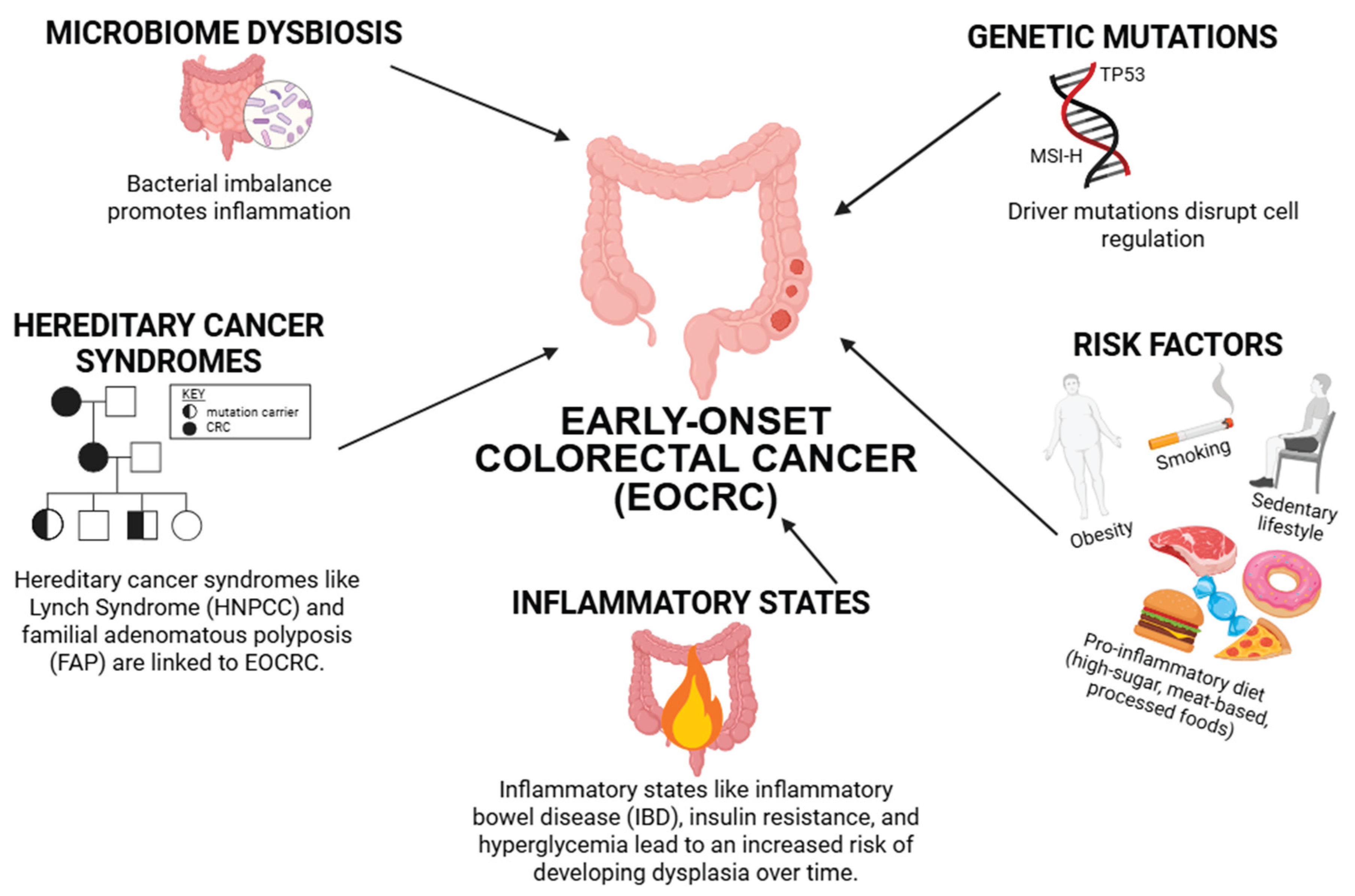

Table 1.
Current CRC Screening Guidelines.
| RISK | AGE TO BEGIN SCREENING | FREQUENCY OF SCREENING [86,93,94] |
|---|---|---|
| Average risk | 45 years | • Colonoscopy every 10 years • Sigmoidoscopy every 5 years with annual fecal immunochemical test (FIT) • Stool guaiac tests (gFOBT) annually • Sigmoidoscopy alone every 5-10 years • Capsule colonoscopy every 5 years |
| Family history of CRC or polyps | 40 years of age or 10 years before the age of diagnosis of the youngest first-degree relative (FDR) (whichever is earlier) | Colonoscopy every 5 years |
| Personal history of inflammatory bowel disease (IBD) | 8 years after the diagnosis | Colonoscopy with biopsies, every 1-2 years |
| Patients with Lynch syndrome | 20-25 years of age or 2-5 years prior to the earliest age of CRC diagnosis in the family (whichever is earlier) | Colonoscopy every 1-2 years |
| Patients with familial adenomatous polyp (FAP) | 10-15 years of age | Colonoscopy once every year |
Disclaimer/Publisher’s Note: The statements, opinions and data contained in all publications are solely those of the individual author(s) and contributor(s) and not of MDPI and/or the editor(s). MDPI and/or the editor(s) disclaim responsibility for any injury to people or property resulting from any ideas, methods, instructions or products referred to in the content. |
© 2026 by the authors. Licensee MDPI, Basel, Switzerland. This article is an open access article distributed under the terms and conditions of the Creative Commons Attribution (CC BY) license.
Copyright: This open access article is published under a Creative Commons CC BY 4.0 license, which permit the free download, distribution, and reuse, provided that the author and preprint are cited in any reuse.